Search Results(13876)

2004-12-10
PIER
Vol. 51, 197-217
Macroscopic Performance Analysis of Metamaterials Synthesized from Micrsocopic 2-d Isotropic Cross Split-Ring Resonator Array
Hai-Ying Yao , Joshua Le-Wei Li , Qun Wu and Jin Au Kong
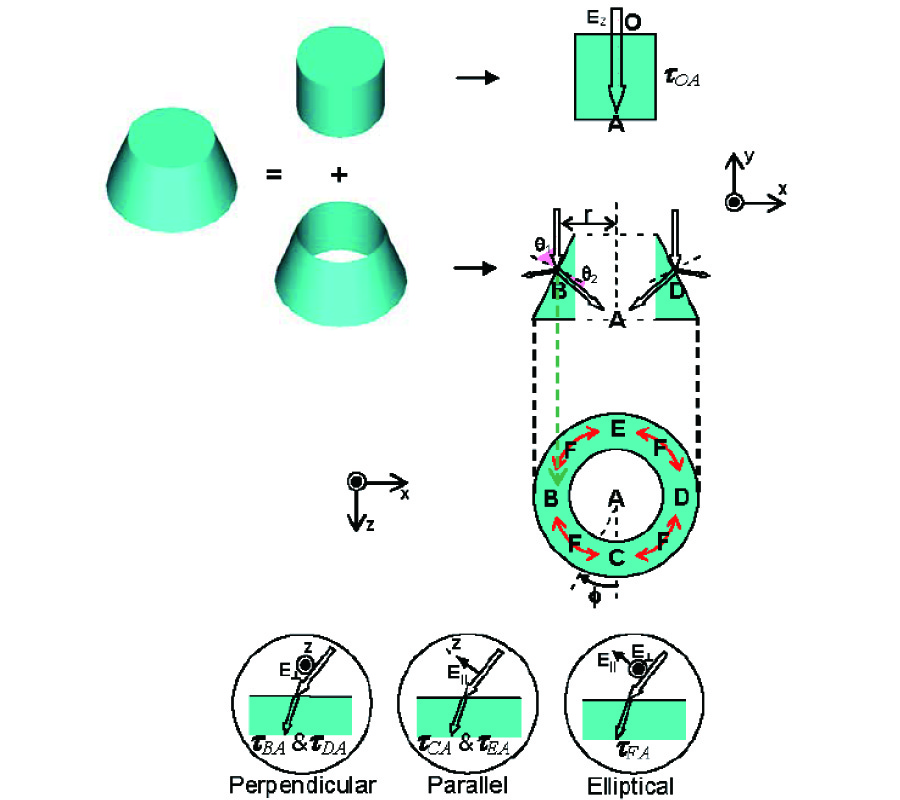
Two-dimensional isotropic metamaterials fabricated from cross split-ring resonators (CSRRs) are characterized and their constitutive relation tensors are studied in this paper. The effective constitutive parameters of the metamaterials are determined utilizing the quasi-static Lorentz theory and numerical method (i.e., the method of moments for solving the electric field integral equation). The induced current distributions of a single CSRR at the resonant frequency are presented. Moreover, the dependence of the resonant frequency on the dimensions of a single CSRR and the space distances of the CSRR array is also discussed. Reflection and transmission coefficients of a metamaterial slab versus frequency are finally discussed.
MACROSCOPIC PERFORMANCE ANALYSIS OF METAMATERIALS SYNTHESIZED FROM MICRSOCOPIC 2-D ISOTROPIC CROSS SPLIT-RING RESONATOR ARRAY
2004-12-10
PIER
Vol. 51, 187-195
Complex Guided Wave Solution of Grounded Dielectric Slab Made of Metamaterials
Chao Li , Qiang Sui and Fang Li
This paper focuses on the complex guided wave solutions of grounded slab made of metamaterials. Complex solutions of both TE and TM modes have been analyzed. It is found that they are distributed on the proper Riemann sheet. This property differs dramatically from that of a conventional grounded slab. A number of other distribution properties are studied analytically. Some numerical examples are given to verify the analytical results. It is important to take the peculiar complex solutions into account in the problems of microstrip and surface wave excitation.
COMPLEX GUIDED WAVE SOLUTION OF GROUNDED DIELECTRIC SLAB MADE OF METAMATERIALS
2004-12-10
PIER
Vol. 51, 167-185
Guided Waves in Uniaxial Wire Medium Slab
Igor Nefedov and Ari Viitanen
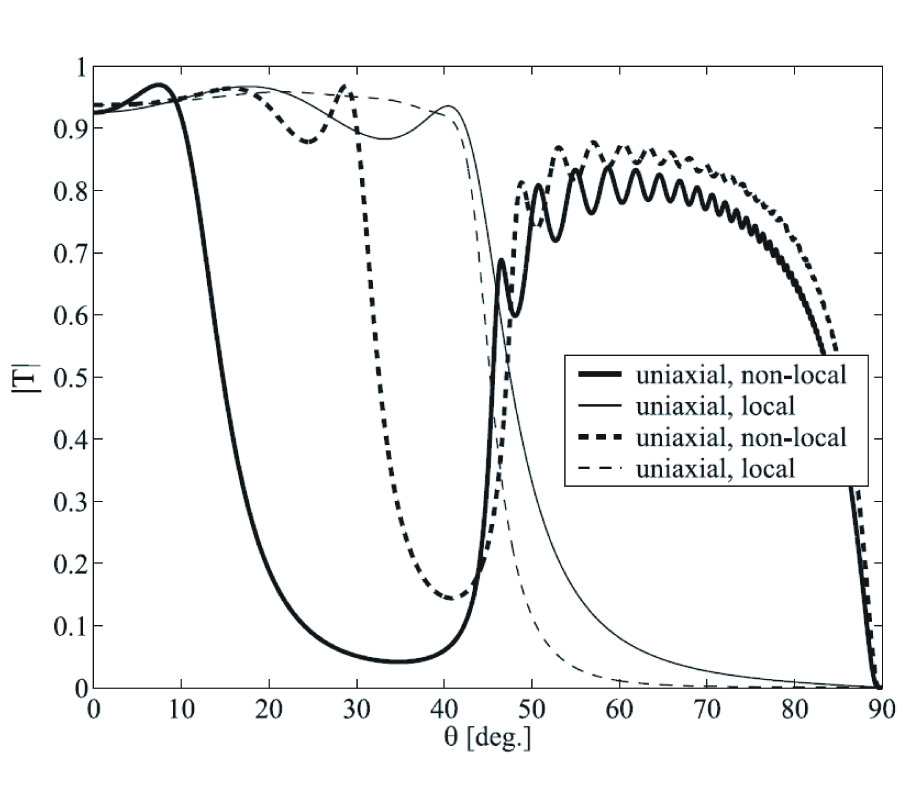
Guided waves in a wire medium slab are studied. The wire medium is considered as a continuous medium described in terms of uniaxial permittivity dyadic. Nonlocal model of the wire medium, taking into account spatial dispersion, is used in the analysis. Different cases of an arrangement of the wires are considered. Analytic expressions for the fields in unbounded media and numerical solutions for eigenmodes spectrum in wire medium slab are obtained. Comparison of the results given by old (local) and new model of wire medium is presented.
GUIDED WAVES IN UNIAXIAL WIRE MEDIUM SLAB
2004-12-10
PIER
Vol. 51, 153-165
Analysis of the Left-Handed Metamaterials Using Multi-Domain Pseudospectral Time-Domain Algorithm
Yan Shi and Chang-Hong Liang
The increasing interest in electromagnetic effects in double-negative (DNG) materials requires a formulation capable of a full analysis of wave propagation in such materials. We develop a novel technique for discretization of the Drude medium model and adopt multi-domain pseudospectral time-domain (PSTD) algorithm and well-posed PML formulation to analysis the plane wave scattering properties of a single circular cylinder and a periodic array of the circular cylinders fabricated from the Drude medium. The simulation results show accuracy of the proposed constitutive equation-discretization scheme.
ANALYSIS OF THE LEFT-HANDED METAMATERIALS USING MULTI-DOMAIN PSEUDOSPECTRAL TIME-DOMAIN ALGORITHM
2004-12-10
PIER
Vol. 51, 139-152
Generalized Surface Plasmon Resonance Sensors Using Metamaterials and Negative Index Materials
Akira Ishimaru , Sermak Jaruwatanadilok and Yasuo Kuga
nullOptical surface plasmon resonance sensors have been known for a long time. In this paper, we discuss the use of metamaterials to construct a surface plasmon sensor which can be used at microwave frequencies. We review the conditions for the existence of surface plasmon and the use of the forward and backward surface waves. A sharp dip in the reflection coefficient occurs when the propagation constant of the incident wave along the surface is nearly equal to the propagation constant of the plasmon surface wave and may be used to probe bulk material characteristics or to determine metamaterial characteristics. Numerical examples are given to illustrate the basic characteristics.
GENERALIZED SURFACE PLASMON RESONANCE SENSORS USING METAMATERIALS AND NEGATIVE INDEX MATERIALS
2004-12-10
PIER
Vol. 51, 127-137
Surface Wave Character on a Slab of Metamaterial with Negative Permittivity and Permeability
Samir Mahmoud and Ari Viitanen
Characteristics of surface wave modes on a grounded slab of negative permittivity and negative permeability parameters are investigated. It is shown that, unlike a slab with positive parameters, the dominant mode can have evanescent fields on both sides of the interface between the slab and the surrounding air. Detailed characteristics of such mode for various combinations of the slab parameters are given.
SURFACE WAVE CHARACTER ON A SLAB OF METAMATERIAL WITH NEGATIVE PERMITTIVITY AND PERMEABILITY
2004-12-10
PIER
Vol. 51, 115-126
The Effective Constitutive Parameters at Interface of Different Media
Long Gen Zheng and Wen-Xun Zhang
This paper presents a new approach to estimate effective constitutive parameters for a cell across an interface between two bianisotropic media. The work is different from those studying effective properties of bi-anisotropic mixtures in that the boundary conditions of field components are taken into consideration. The degenerated cases, including interfaces of two bi-isotropic, anisotropic and isotropic media, are discussed respectively in detail. Simulation for anisotropic media shows significant improvements can be expected from the adoption of the new approach.
THE EFFECTIVE CONSTITUTIVE PARAMETERS AT INTERFACE OF DIFFERENT MEDIA
2004-12-10
PIER
Vol. 51, 83-113
Reflection Coefficients and Goos-Hanchen Shifts in Anisotropic and Bianisotropic Left-Handed Metamaterials
Tomasz M. Grzegorczyk , Xudong Chen , Joe Pacheco , Jianbing Chen , Bae-Ian Wu and Jin Au Kong
We show in this paper that metamaterials in which some components of the permittivity and permeability tensors can have negative real values (thus associated with left-handed metamaterials) call for a reconsideration of the common concepts of critical angle and Brewster angle. By studying the reflection coefficient for isotropic and biaxial half-spaces and slabs, we show that a metamaterial for which the Brewster angle appears beyond the critical angle is realizable. In addition, we also show that the Goos-Hänchen shift induced by left-handed isotropic slabs is not necessarily negative but could be positive when the second interface of the slab supports a surface plasmon. Finally, upon studying a bianisotropic metamaterial, we show that propagation at a negative angle can occur, although it would not if only the permittivity and permeability tensors were considered. All the results have been obtained using an eigenvalue method which we extend to bianisotropic media in this paper.
REFLECTION COEFFICIENTS AND GOOS-HANCHEN SHIFTS IN ANISOTROPIC AND BIANISOTROPIC LEFT-HANDED METAMATERIALS
2004-12-10
PIER
Vol. 51, 65-82
Metamaterials and Depolarization Factors
Ari Sihvola
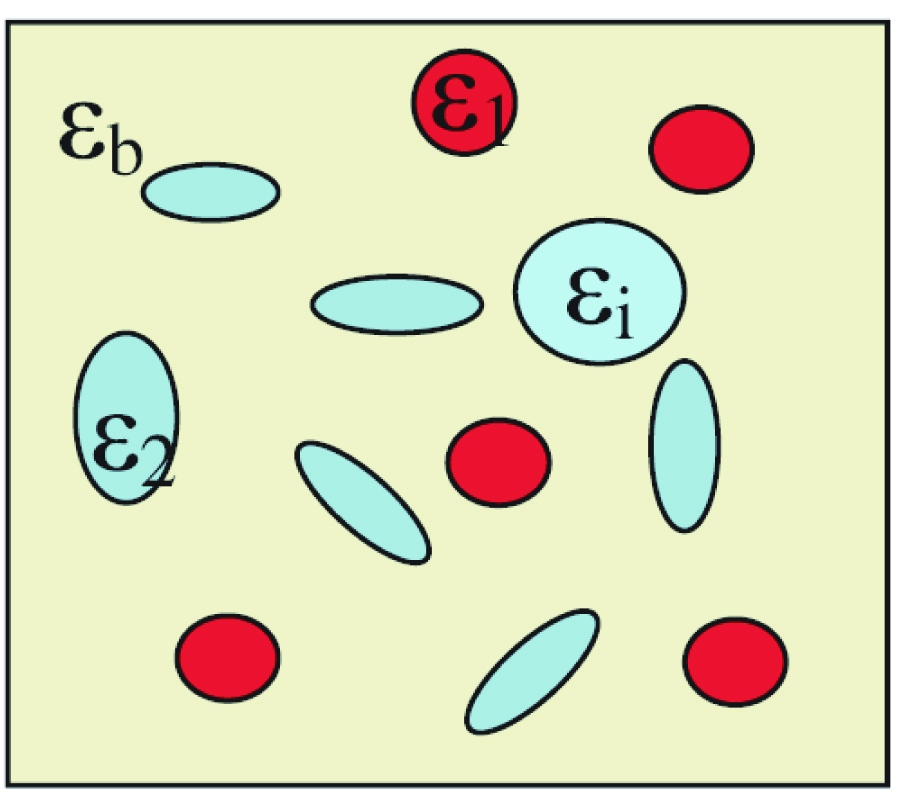
Depolarization factors of scatterers within anisotropic media are functions of not only the shape of the inclusion but also of the degree of anisotropy of the environment. In this contribution the depolarization factors are studied for anisotropic metamaterials. In such case, qualitatively new phenomena appear because the effective axial ratio of the scatterers, which determines the depolarization factors, may become complex. The negative real part of the depolatization factors is interpreted as "repolarization." The effect of the various parameters on the depolarization factors and effective dielectric parameters are analyzed and discussed for both three- and two-dimensional mixtures, with emphasis on the dissipative character of the homogenized metamaterials.
METAMATERIALS AND DEPOLARIZATION FACTORS
2004-12-10
PIER
Vol. 51, 49-63
Anomalous Properties of Scattering from Cavities Partially Loaded with Double-Negative or Single-Negative Metamaterials
Filiberto Bilotti , Andrea Alu , Nader Engheta and Lucio Vegni
In this paper, the theoretical justification and the numerical verification of the anomalous scattering from cavities partially filled with metamaterials are presented. A hybrid numerical formulation based on the Finite Element Method (FEM) and on the Boundary Integral (BI) for the analysis of cavity backed structures with complex loading metamaterials is first presented. The proposed approach allows the analysis of cavities filled with materials described by tensorial linear constitutive relations, which may well describe artificial metamaterials synthesized with proper inclusions in a host dielectric. It is found that cavities loaded with pairs of metamaterial layers with "resonant" features possess unusual scattering properties, and with judicious selection of constitutive parameters for these materials the transparency effect or significant enhancement in the backscattering from such cavities are obtained. This may be considered as a first step towards the analysis of the scattering and radiating features of cavity-backed patch antennas and reflect-arrays in presence of multilayered metamaterial loads.
ANOMALOUS PROPERTIES OF SCATTERING FROM CAVITIES PARTIALLY LOADED WITH DOUBLE-NEGATIVE OR SINGLE-NEGATIVE METAMATERIALS
2004-12-10
PIER
Vol. 51, 27-48
Surface Integral Equation Formulations for Left-Handed Materials
Douglas Smith , Louis Medgyesi-Mitschang and Donald Forester
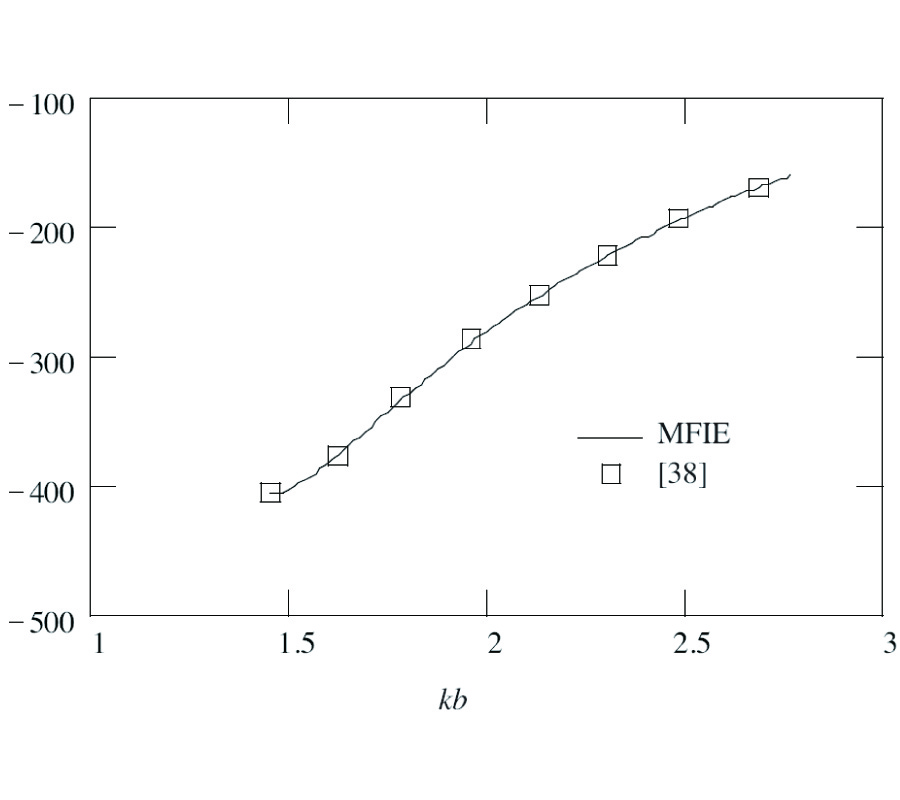
The electromagnetic interactions with left-handed material (LHM) medium postulated by Veselago are examined within the framework of surface integral equations (SIEs) solved by the method of moments (MM). The formulations are given for a general medium and then specialized for cases of LHM media. The scattering, propagation and lensing through such media are investigated. The implications and limitations of using SIE/MM formulations for lossless LHM media are also explored.
SURFACE INTEGRAL EQUATION FORMULATIONS FOR LEFT-HANDED MATERIALS
2004-12-10
PIER
Vol. 51, 1-26
Some Reflections on Double Negative Materials
Weng Cho Chew
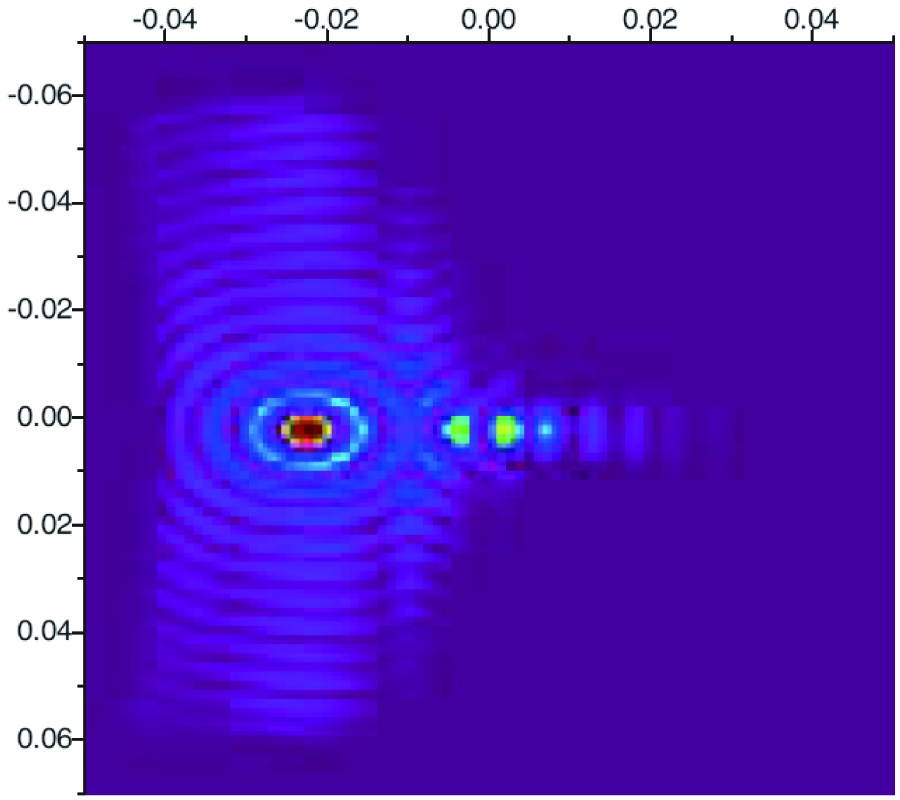
We study the energy conservation property and loss condition of a left-handed material (LHM). First we argue by energy conservation that an LHM has to be a backward-wave material (BWM). Then we derive the equivalence of the loss and the Sommerfeld far-field radiation conditions for BWM. Next, we solve the realistic Sommerfeld problem of a point source over an LHM half space and an LHM slab. With this solution, we elucidate the physics of the interaction of a point source with an LHM half space and an LHM slab. We interpret our observation with surface plasmon resonance at the interfaces as well as the resonance tunneling phenomenon. This analysis lends physical insight into the interaction of a point source field with an LHM showing that super-resolution beyond the diffraction limit is possible with a very low loss LHM slab.
SOME REFLECTIONS ON DOUBLE NEGATIVE MATERIALS
2004-10-12
PIER
Vol. 50, 299-335
A Finite-Difference Time-Domain (FDTD) Software for Simulation of Printed Circuit Board (PCB) Assembly
Fabian Kung Wai Lee and Hean-Teik Chuah
This paper describes the design of a three-dimensional (3D) finite-difference time-domain (FDTD) simulation software for printed circuit board (PCB) modeling. The flow, the dynamics and important algorithms of the FDTD simulation engine will be shown. The software is developed using ob ject-oriented programming (OOP) approach, to enable code reuse and ease of upgrade in future. The paper begins by looking at how a 3D PCB structure is created using cubes, and proceed to show the inclusion of various lumped components such as resistors, capacitor, inductor and active semiconductor components into the model. The architecture of the FDTD simulation program is then carefully explained. Finally a few sample simulation examples using the software will be illustrated at the end of the paper.
A FINITE-DIFFERENCE TIME-DOMAIN (FDTD) SOFTWARE FOR SIMULATION OF PRINTED CIRCUIT BOARD (PCB) ASSEMBLY
2004-10-12
PIER
Vol. 50, 279-298
The Masar Project: Design and Development
Voon Koo , Yee Kit Chan , Gobi Vetharatnam , Tien Sze Lim , Boon-Kuan Chung and Hean-Teik Chuah
In 2002, the MASAR (Malaysian Airborne Synthetic Aperture Radar) pro ject was initiated at Multimedia University (MMU), in collaboration with the Malaysian Centre for Remote Sensing (MACRES). The main ob jective of this pro ject is to construct an instrument for earth resource monitoring in Malaysia. The proposed SAR system is a C-band, single polarization, linear FM radar. This paper outlines the ma jor design issues and considerations for MASAR. In particular, the design and construction of the microwave system, microstrip antenna, and a high-speed data recording system are described. The SAR processing algorithm which incorporates motion compensation capability for high resolution image generation is also outlined.
THE MASAR PROJECT: DESIGN AND DEVELOPMENT
2004-10-12
PIER
Vol. 50, 267-278
Determination of Capacitance and Conductance Matrices of Lossy Shielded Coupled Microstrip Transmission Lines
Mohammad Khalaj-Amirhosseini
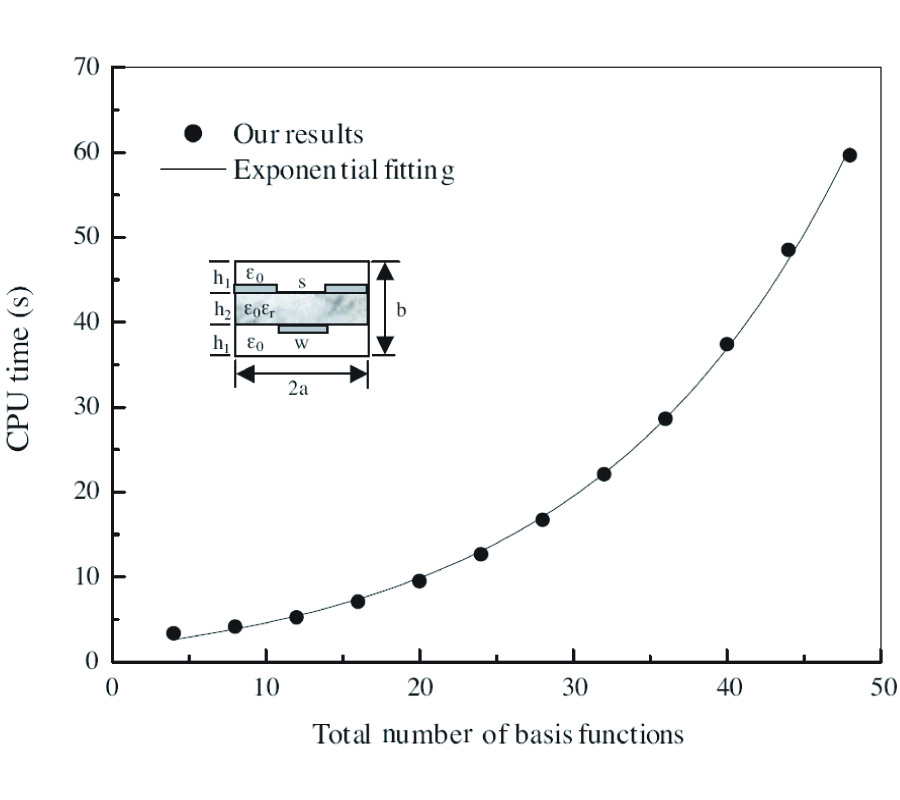
Laplace's equation is solved analytically for lossy shielded coupled microstrip transmission lines. The solution is represented in fourier series expression and is being used to determine the capacitance and conductance matrices of the structure. The method is examined using some examples and then some results are obtained.
DETERMINATION OF CAPACITANCE AND CONDUCTANCE MATRICES OF LOSSY SHIELDED COUPLED MICROSTRIP TRANSMISSION LINES
2004-10-12
PIER
Vol. 50, 231-266
Optical Soliton Perturbation with Non-Kerr Law Nonlinearities
Anjan Biswas
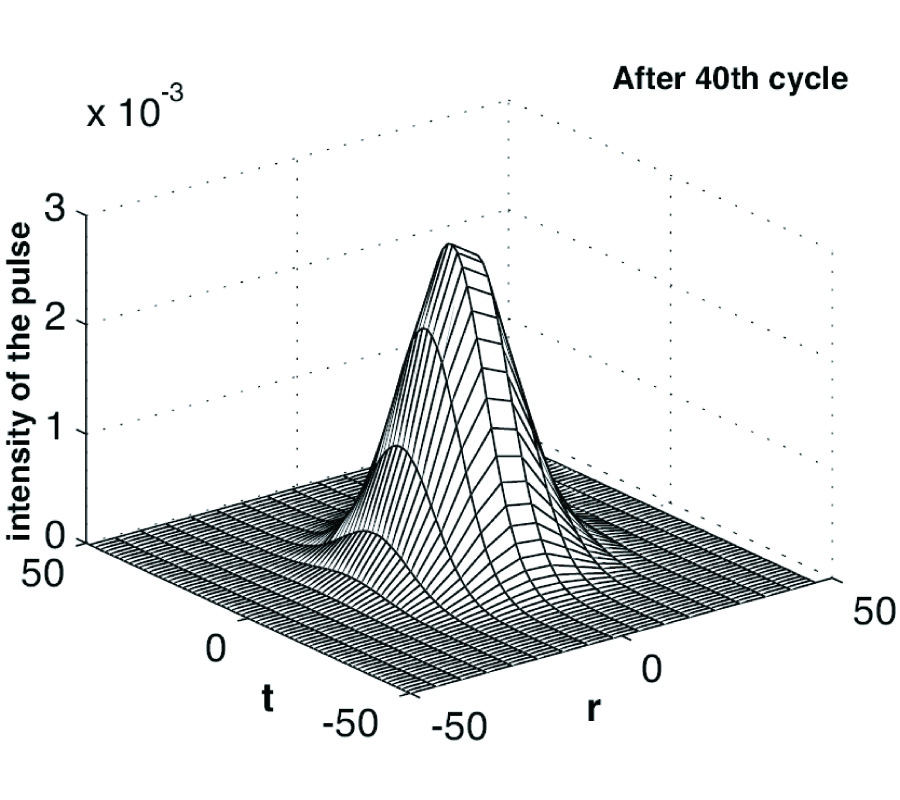
This paper studies solitons and its perturbations that is governed by the generalized nonlinear Schrödinger's equation with non-Kerr law nonlinearity. The quasi-stationarity is applied to the non-Kerr law case and an approximate solution is obtained. A few special cases of the non-Kerr law nonlinearity are considered, as examples, with the nonlinear damping type perturbation.
OPTICAL SOLITON PERTURBATION WITH NON-KERR LAW NONLINEARITIES
2004-10-12
PIER
Vol. 50, 209-229
A Complete FDTD Simulation of a Real GPR Antenna System Operating Above Lossy and Dispersive Grounds
Disala Uduwawala , Martin Norgren , Peter Fuks and Aruna Gunawardena
The finite difference time domain (FDTD) method is used to analyze a practical ground penetrating radar (GPR) antenna system operating above lossy and dispersive grounds. The antenna is of the resistor-loaded bow-tie type and the analysis is made for two known soil types, namely Puerto Rico and San Antonio clay loams. The soil is modeled by a two term Debye model with a static conductivity and it is matched to the mentioned soils by using curve fitting. The FDTD scheme is implemented by the auxiliary differential equation (ADE) method together with the uniaxial perfectly matched layer (UPML) absorbing boundary conditions (ABC). In order to model a real GPR environment, ground surface roughness and soil inhomogeneities are also included. The effect of soil properties on the GPR response and antenna input impedance is presented. Thus the ability to detect buried metal and plastic pipes is investigated.
A COMPLETE FDTD SIMULATION OF A REAL GPR ANTENNA SYSTEM OPERATING ABOVE LOSSY AND DISPERSIVE GROUNDS
2004-10-12
PIER
Vol. 50, 187-208
A Fast Analysis of Scattering from Microstrip Antennas Over a Wide Band
J. Wan and Chang-Hong Liang
An efficient algorithm combining the fast multipole method (FMM) and the characteristic basis function method (CBFM) for analysis of scattering from microstrip antennas over a wide band is introduced in this paper. In the hybrid algorithm, the characteristic basis function method is used to construct the currents on microstrip antennas by using characteristic basis functions (CBFs) which are constructed from the solution vectors at several samples using the singular value decomposition (SVD), thus obviating the need to repeatedly compute using a computational electromagnetic code and repeatedly solve a large method of moments matrix system at each point within the wide band of interest. The fast multipole method is used to obtain the solution vectors at these samples and speed up the matrix-vector product in the characteristic basis function method (CBFM). The resultant hybrid algorithm (FMM-CBFM) eliminates the need to generate and store the usual square impedance matrix and repeatedly use an iterative solver at each point and thus leads to a significant reduction in memory requirement and computational cost. Numerical examples are given to illustrate the accuracy and robustness of this method.
A FAST ANALYSIS OF SCATTERING FROM MICROSTRIP ANTENNAS OVER A WIDE BAND
2004-10-12
PIER
Vol. 50, 163-186
Electromagnetic Field for a Horizontal Electric Dipole Buried Inside a Dielectric Layer Coated High Lossy Half Space
Hong-Qi Zhang , Wei-Yan Pan , Kai Li and Kai-Xian Shen
In this paper, analytical formulas have been derived for the electromagnetic field generated by a horizontal electric dipole inside high lossy half-space coated with a dielectric layer. This problem is corresponding to the electromagnetic field generated by a horizontal antenna in a submarine under an ice layer, or the measurement of the conductivity of the oceanic lithosphere with a horizontal antenna as the source, and a layer of sediment on the sea floor. These formulas obtained for the electromagnetic field can be employed to calculated the total field including the lateral-wave term and the trapped-surface-wave term. Because the wave number of the trapped-surface-wave term is different from that of the lateral-wave term, the interference appears in the total field. Additionally, this paper has presented the approximative formulas for a thin dielectric layer, which can be used for the communication in low frequencies region.
ELECTROMAGNETIC FIELD FOR A HORIZONTAL ELECTRIC DIPOLE BURIED INSIDE A DIELECTRIC LAYER COATED HIGH LOSSY HALF SPACE
2004-10-12
PIER
Vol. 50, 135-161
Formulation of Emission from Relativistic Free Electrons in a Ring Structure for Electro-Optical Applications
Ramin Sabry and Sujeet Chaudhuri
A new scheme for high-speed electro-optical conversions with potential application to data communication is investigated. As the core of investigation, a ring model utilizing relativistic electrons is introduced and the operating characteristics such as coupled wavelengths, gain and power are derived for a circular type of interaction. Advantages are addressed and practical challenges associated with the realization of this conceptual scheme are discussed in light of advances in fundamentally similar relativistic free electron lasing schemes.
FORMULATION OF EMISSION FROM RELATIVISTIC FREE ELECTRONS IN A RING STRUCTURE FOR ELECTRO-OPTICAL APPLICATIONS