Search Results(13876)

2004-09-14
PIER
Vol. 49, 1-22
Linear Antenna Synthesis with a Hybrid Genetic Algorithm
Massimo Donelli , Salvatore Caorsi , Francesco DeNatale , Matteo Pastorino and Andrea Massa
An optimization problem for designing non-uniformly spaced, linear arrays is formulated and solved by means of an improved genetic algorithm (IGA) procedure. The proposed iterative method is aimed at minimizing the side-lobes level and thinning the array by optimizing the element positions and weights. Selected examples are included, which demonstrate the effectiveness and the design flexibility of the proposed method in the framework of electromagnetic synthesis of linear arrays.
LINEAR ANTENNA SYNTHESIS WITH A HYBRID GENETIC ALGORITHM
2004-06-22
PIER
Vol. 48, 301-333
Pulse Compression Using a Periodically Dielectric Loaded Dispersive Waveguide
Efstratios Thirios , Dimitra Kaklamani and Nikolaos Uzunoglu
The study of periodically dielectric-slab-loaded TE10 waveguide structures of conductive walls and finite length is carried out by using wave analysis techniques.The principal aim is to design and construct a highly dispersive waveguide keeping losses to a minimum. Passing a properly frequency modulated wave through this waveguide, pulse compression phenomena take place. Frequency modulated waves, incident to a finite length periodic loaded waveguide, are studied.The aim is to achieve optimum pulse compression, by taking into account all wave phenomena involved. In order to minimize the reflected (at the input) and maximize the transmitted (at the output) waves of the compressor structure, a staggered-tapered structure of dielectric slabs inside the waveguide is utilized to match the incident waves. The slab longitudinal discontinuity nature prevents the appearance of field singularity points that could hinder the operation of the compression mechanism. An exact Fourier analysis is carried out to compute the compressed wave field intensities.Optimization techniques are used to achieve the best compression and matching conditions for various realistic dielectric materials, having permittivities εr in the range of 9 to 36 and loss factors tan(δ) in the range of 0.01 to 0.00001. Experimental results, obtained by carrying out measurements on prototype waveguide structures, built in our laboratory, present pulse compression phenomena, but do not show good agreement with theory.
PULSE COMPRESSION USING A PERIODICALLY DIELECTRIC LOADED DISPERSIVE WAVEGUIDE
2004-06-22
PIER
Vol. 48, 279-299
Fast Converging and Widely Applicable Formulation of the Differential Theory for Anisotropic Gratings
Koki Watanabe
The differential method for arbitrary profiled onedimensional gratings made of anisotropic media is reformulated by taking into account Li's Fourier factorization rules [10] though the present formulation uses the intuitive Laurent rule only. The study concerns arbitrary profiled gratings with both types of electric and magnetic anisotropy, and includes the case of lossy materials. Diffraction efficiencies computed by the present formulation are compared with previous ones, and numerical results show that convergence of the present formulation is superior to the conventional one and comparable convergence with the previous works based on Li's rules.
FAST CONVERGING AND WIDELY APPLICABLE FORMULATION OF THE DIFFERENTIAL THEORY FOR ANISOTROPIC GRATINGS
2004-06-22
PIER
Vol. 48, 249-278
Non-Relativistic Scattering by Time-Varying Bodies and Media
Dan Censor
We are interested in first order v/c velocity effects in scattering problems involving motion of media and scatterers. Previously constant velocities have been considered for scattering by cylindrical and spherical configurations. Presently time-varying motion - specifically harmonic oscillation - is investigated. A firstorder quasi-Lorentz transformation is introduced heuristically, in order to establish relations to existing exact Special-Relativistic results. We then consider simple problems of plane interfaces, normal incidence, and uniform motion, in order to introduce the model: Starting with an interface moving with respect to the medium in which the excitation wave is introduced, then considering the problem of an interface at rest and a moving medium contained in a half space. The latter corresponds to a Fizeau experiment configuration. Afterwards these configurations are considered for harmonic motion. This provides the method for dealing with the corresponding problems of scattering by a circular cylinder, involving harmonic motion. The present formalism provides a systematic approach for solving scattering problems in the presence of time-varying media and boundaries.
2004-06-22
PIER
Vol. 48, 233-248
Design of Wideband Triangle Slot Antennas with Tuning Stub
Abdelnasser Eldek , Atef Elsherbeni and Charles Smith
This paper presents a novel design of a triangle slot antenna fed by a coplanar waveguide. The antenna consists of a symmetric triangle slot tuned by a metal stub and slot hat. The antenna exhibits a wide bandwidth of 57% for X-band frequencies with an average gain of 4.5 dB and cross polarization level of −10 dB. In addition to being small in size, the coupling between the two elements of this type antenna is in the order of −15 dB or less, which makes it a good candidate for a phased array system. A linear array of 8- elements is simulated and results indicated that a steering angle of 50◦ is attainable without grating lobes.
DESIGN OF WIDEBAND TRIANGLE SLOT ANTENNAS WITH TUNING STUB
2004-06-22
PIER
Vol. 48, 201-231
Bateman Conformal Transformations Within the Framework of the Bidirectional Spectral Representation
Ioannis Besieris , Amr Shaarawi and Ahmed Attiya
Four-dimensional conformal transformations due originally to Bateman have been used in the past by Hillion as alternative approaches to focus wave mode solutions to the 3D scalar wave equation. More recently, more extended families of focus wave mode solutions to the 3D scalar wave equation have been derived by Borisov and Utkin, as well as Kiselev, based on Bateman transformations together with a dimension-reduction approach, whereby the wave function is separated incompletely into a product of two functions. One particular goal in this exposition is to comment on and extend the work of Borisov and Utkin and simplify and extend the method used by Kiselev. More generally, however, the aim is to show that an already existing method, known as the bidirectional spectral representation, when examined in conjunction with Bateman conformal transformations, encompasses the Borisov-Utkin-Kiselev theories as special cases and allows a systematic derivation of extended families of FWM-type localized waves beyond the ranges of their applicability.
2004-06-22
PIER
Vol. 48, 185-200
A Multi-Source Strategy Based on a Learning-by-Examples Technique for Buried Object Detection
Emanuela Bermani , Andrea Boni , Salvatore Caorsi , Massimo Donelli and Andrea Massa
In the framework of buried object detection and subsurface sensing, some of the main difficulties in the reconstruction process are certainly due to the aspect-limited nature of available measurement data and to the requirement of an on-line reconstruction. To limit these problems, a multi-source (MS) learning-by-example (LBE) technique is proposed in this paper. In order to fully exploit the more attractive features of the MS strategy, the proposed approach is based on a support vector machine (SVM). The effectiveness of the MS-LBE technique is evaluated by comparing the achieved results with those obtained by means of a previously developed single-source (SS) SVMbased procedure for an ideal as well as a noisy environment.
A MULTI-SOURCE STRATEGY BASED ON A LEARNING-BY-EXAMPLES TECHNIQUE FOR BURIED OBJECT DETECTION
2004-06-22
PIER
Vol. 48, 145-184
Space-Time Reversal Symmetry Properties of Electromagnetic Green's Tensors for Complex and Bianisotropic Media
Victor A. Dmitriev
Space-Time reversal symmetry properties of free-Space electromagnetic Green's tensors for complex and bianisotropic homogeneous media are discussed. These properties are defined by symmetry of the medium under consideration, of the point sources and of the vector S connecting the source and the point of observation. The constraints imposed on Green's tensors by the restricted Time reversal, by the center and anticenter of symmetry are independent on the vector S orientation. Other Space-Time reversal operators lead to constraints on Green's tensors only for some special directions in Space. These directions are along the (anti)axes and (anti)planes and normal to the (anti)axes and (anti)planes. The full system of the continuous magnetic point groups for description of Space-Time reversal symmetry of Green's tensors is defined and a general group-theoretical method for calculation of simplified forms of Green's tensors is presented.
SPACE-TIME REVERSAL SYMMETRY PROPERTIES OF ELECTROMAGNETIC GREEN'S TENSORS FOR COMPLEX AND BIANISOTROPIC MEDIA
2004-06-22
PIER
Vol. 48, 125-144
A Novel Evolutionary Learning Technique for Multi-Objective Array Antenna Optimization
Yee Hui Lee , Brian Cahill , Stuart Porter and Andrew Marvin
In this paper, a neural network is used to implement an optimized objective function for a genetic algorithm (GA) for application on array antenna design optimization. Traditional GAs are inefficient because a large amount of data that describes the problem space is discarded after each generation. Using the neural network enhanced genetic algorithm (NNEGA), this redundant information is fed back into the GA's objective function via the neural network. The neural network learns the optimal weights of the objective function by identifying trends and optimizing weights depending on the knowledge that it accumulates in-situ. The NNEGA is successfully applied to challenging array antenna design problems. This use of neural network to optimize a multi-objective function for the GA is a new idea that is different from other hybridization of GA and NN.
2004-06-22
PIER
Vol. 48, 85-123
Perturbations of Dispersion-Managed Optical Solitons
Anjan Biswas
This paper studies the propagation of solitons through an optical fiber, with strong dispersion-management in presence of perturbation terms. The adiabatic parameter dynamics of the solitons in presence of such perturbation terms have been obtained by using the variational principle. In particular, the Gaussian and super-Gaussian pulses have been considered.
PERTURBATIONS OF DISPERSION-MANAGED OPTICAL SOLITONS
2004-06-22
PIER
Vol. 48, 67-83
The Electromagnetic-Wave Propagation through a Stratified Inhomogeneous Anisotropic Medium
Fridrikh G. Bass and L. Resnick
The electromagnetic-wave propagation through a medium consisting of two dielectric half-spaces with a plate in between, has been investigated. The half-spaces are isotropic with their dielectric permittivity depending only on the z coordinate. The plate is anisotropic, and the components of its dielectric permittivity tensor are also z-dependent. For the first time, the sufficient conditions allowing the transformation of the system of Maxwell's equations into two independent equations, are ascertained. For an arbitrary z-dependence of the dielectric permittivity, the plate's reflectance and transmittance coefficients are obtained, this result being a generalization of the Fresnel formulas. We have considered both determinate and random dependences of the dielectric permittivity on the z-coordinate, and the plate's full-transparency conditions are specified. For a statistically inhomogeneous plate, the conditions of its full opacity are formulated. The Faraday effect in such a medium is studied. The influence of the medium's inhomogeneity on the temporal rotation of the polarization plane of a propagating wave has been demonstrated.
2004-06-22
PIER
Vol. 48, 45-66
Symmetry Relations of the Translation Coefficients of the Spherical Scalar and Vector Multipole Fields
Kristopher Kim
We offer symmetry relations of the translation coefficients of the spherical scalar and vector multi-pole fields. These relations reduce the computational cost of evaluating and storing the translation coefficients and can be used to check the accuracy of their computed values. The symmetry relations investigated herein include not only those considered earlier for real wavenumbers by Peterson and Ström [9], but also the respective symmetries that arise when the translation vector is reflected about the xy-, yz-, and zx-planes. In addition, the symmetry relations presented in this paper are valid for complex wavenumbers and are given in a form suitable for exploitation in numerical applications.
2004-06-22
PIER
Vol. 48, 27-44
Electromagnetic Imaging for an Imperfectly Conducting Cylinder Buried in a Three-Layer Structure by the Genetic Algorithm
Yu-Shu Lee , Chien-Ching Chiu and Yi-Shiuan Lin
The imaging of an imperfectly conducting cylinder buried in a three-layer structure by the genetic algorithm is investigated. An imperfectly conducting cylinder of unknown shape and conductivity buriedin the secondla yer scatters the incident wave from the first layer or the thirdla yer. We measure the scatteredfieldin the first andthird layers. Based on the boundary condition and the recorded scattered field, a set of nonlinear integral equations is derived and the imaging problem is reformulatedin to an optimization problem. The genetic algorithm is then employedto findout the global extreme solution of the cost function. Numerical results demonstrated that, even when the initial guess is far away from the exact one, goodreconstruction can be obtained. In such a case, the gradient-based methods often get trapped in a local extreme. In addition, the effect of uniform noise on the reconstruction is investigated.
ELECTROMAGNETIC IMAGING FOR AN IMPERFECTLY CONDUCTING CYLINDER BURIED IN A THREE-LAYER STRUCTURE BY THE GENETIC ALGORITHM
2004-06-22
PIER
Vol. 48, 1-25
Propagators and Scattering of Electromagnetic Waves in Planar Bianisotropic Slabs - an Application to Frequency Selective Structures
Gerhard Kristensson , Soren Poulsen and Sten Rikte
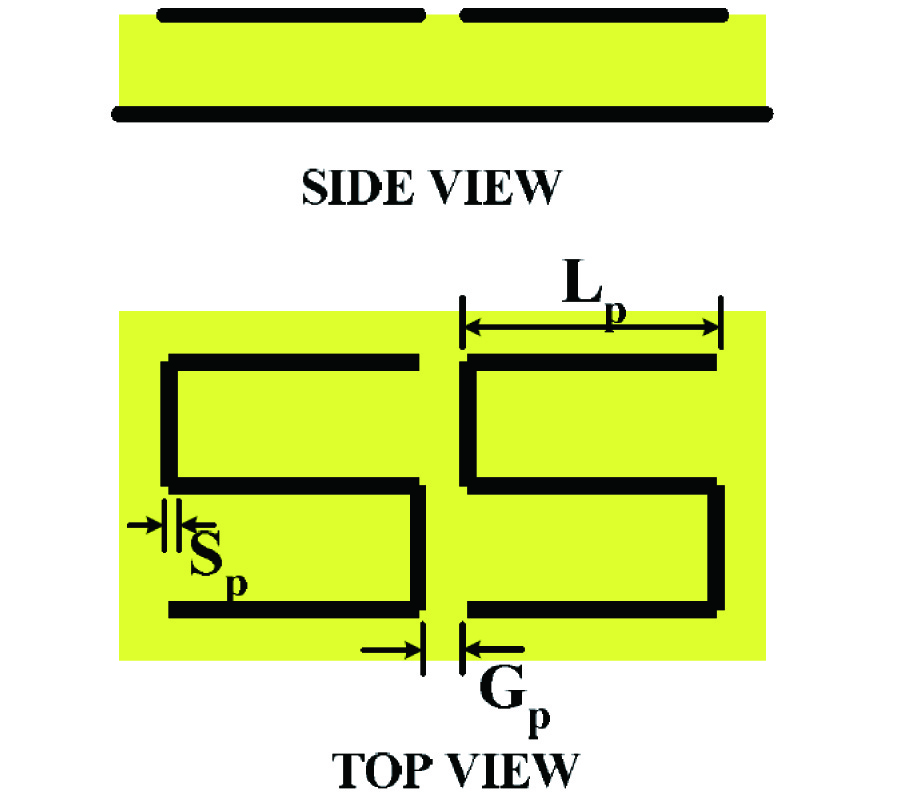
Scattering by planar geometries with plane metal inclusions are analysed. The metal inclusions can be of arbitrary shape,and the material of the supporting slabs can be any linear (bianisotropic) material. We employ the method of propagators to find the solution of the scattering problem. The method has certain similarities with a vector generalisation of the transmission line theory. A general relation between the electric fields and the surface current densities on the metal inclusions and the exciting fields is found. Special attention is paid to the case of a periodic metal pattern (frequency selective structures,FSS). The method is illustrated by a series of numerical computations.
PROPAGATORS AND SCATTERING OF ELECTROMAGNETIC WAVES IN PLANAR BIANISOTROPIC SLABS - AN APPLICATION TO FREQUENCY SELECTIVE STRUCTURES
2004-06-08
PIER
Vol. 46, 313-333
Inhomogeneous Magnetic Media: Wave Propagation and Magnetic Permeability Reconstruction
Konstantinos Baganas
In this paper we study the electromagnetic (EM) wave propagation in a perfect magnetic medium with continuously varying magnetic permeability m(z) in one direction. We consider the inhomogeneity to be arbitrary and described by an infinite power series of z and use the Frobenious method to solve the governing differential equation of the problem in the frequency domain. We also give special attention to the first cut-off frequency of the main mode TM11 and we propose a good estimation for it by means of the mean value of the magnetic permeability profile. The results from the mathematical analysis are applied to solve the direct problem of wave propagation in a system of three waveguides having two homogeneous filling materials and one that exhibits such inhomogeneous characteristics. We finally confront the inverse problem of magnetic permeability reconstruction by handling simulation data and a genetic optimization algorithm.
INHOMOGENEOUS MAGNETIC MEDIA: WAVE PROPAGATION AND MAGNETIC PERMEABILITY RECONSTRUCTION
2004-06-08
PIER
Vol. 46, 265-312
A General Framework for Constraint Minimization for the Inversion of Electromagnetic Measurements
Tarek Habashy and Aria Abubakar
In this paper, we developed a general framework for the inversion of electromagnetic measurements in cases where parametrization of the unknown configuration is possible. Due to the ill-posed nature of this nonlinear inverse scattering problem, this parametrization approach is needed when the available measurement data are limited and measurements are only carried out from limited transmitter-receiver positions (limited data diversity). By carrying out this parametrization, the number of unknown model parameters that need to be inverted is manageable. Hence the Newton based approach can advantageously be used over gradient-based approaches. In order to guarantee an error reduction of the optimization process, the iterative step is adjusted using a line search algorithm. Further unlike the most available Newton-based approaches available in the literature, we enhanced the Newton based approaches presented in this paper by constraining the inverted model parameters with nonlinear transformation. This constrain forces the reconstruction of the unknown model parameters to lie within their physical bounds. In order to deal with cases where the measurements are redundant or lacking sensitivity to certain model parameters causing non-uniqueness of solution, the cost function to be minimized is regularized by adding a penalty term. One of the crucial aspects of this approach is how to determine the regularization parameter determining the relative importance of the misfit between the measured and predicted data and the penalty term. We reviewed different approaches to determine this parameter and proposed a robust and simple way of choosing this regularization parameter with aid of recently developed multiplicative regularization analysis. By combining all the techniques mentioned above we arrive at an effective and robust parametric algorithm. As numerical examples we present results of electromagnetic inversion at induction frequency in the deviated borehole configuration.
A GENERAL FRAMEWORK FOR CONSTRAINT MINIMIZATION FOR THE INVERSION OF ELECTROMAGNETIC MEASUREMENTS
2004-06-08
PIER
Vol. 46, 245-264
Rigorous and Fast Convergent Analysis of a Rectangular Waveguide Coupler Slotted in Common Wall
Hongting Jia , Kuniaki Yoshitomi and Kiyotoshi Yasumoto
Rigorous and fast convergent analysis of a coupler slotted in common wall between two dissimilar rectangular waveguides is described by a mode-matching method combined with Fourier transform technique and consideration of the singularity of electromagnetic field around edges. Comparing with a conventional mode-matching method, the present method has two advantages. One is that it can avoid the usage of the dyadic Green's function, the other is that it can overcome the relative convergence problem. The consideration of the field singularity has greatly improved the convergence and the calculated accuracy of a solution. This analysis is rigorous and the computer cost is very low.
RIGOROUS AND FAST CONVERGENT ANALYSIS OF A RECTANGULAR WAVEGUIDE COUPLER SLOTTED IN COMMON WALL
2004-06-08
PIER
Vol. 46, 203-244
Numerical and Experimental Validations of Iem for Bistatic Scattering from Natural and Manmade Rough Surfaces
Fifame Koudogbo , Paul Combes and Henri-Jose Mametsa
The Integral Equation Method (IEM) isapplied for about ten years to model the surface scattering phenomenon. Recently, Fung published in [1] an extra improved version of the IEM model. In thispap er, numerical and experimental validationsof the model are investigated. In backscattering, as in bistatic scattering, number of numerical validationsare made on a wide frequency band, by comparing IEM predictionswith a reference method results(Method of Moments). IEM results are also compared with those of some asymptotic models such as Small Perturbation Method (SPM) and Kirchhoff Model (KM) in the frequency domainswhere these latter are applicable. The improved model validation isac hieved by presenting confrontations of the simulation results with experimental data, some of them have been collected in appropriate papers, and the others come from experimentsw e conducted at the ElectroMagnetism and Radar Department (DEMR) of the Office National d'Etudes et de Recherches Aérospatiales (ONERA)-Toulouse (France).
NUMERICAL AND EXPERIMENTAL VALIDATIONS OF IEM FOR BISTATIC SCATTERING FROM NATURAL AND MANMADE ROUGH SURFACES
2004-06-08
PIER
Vol. 46, 77-104
Contact Geometry in Electromagnetism
Matias Dahl
In the first part of this work we show that, by working in Fourier space, the Bohren decomposition and the Helmholtz's decomposition can be combined into one decomposition. This yields a completely mathematical decomposition, which decomposes an arbitrary vector field on ℜ3 into three components. A key property of the decomposition is that it commutes both with the curl operator and with the time derivative. We can therefore apply this decomposition to Maxwell's equations without assuming anything about the media. As a result, we show that Maxwell's equations split into three completely uncoupled sets of equations. Further, when a medium is introduced, these decomposed Maxwell's equations either remain uncoupled, or become coupled depending on the complexity of the medium. In the second part of this work, we give a short introduction to contact geometry and then study its relation to electromagnetism. By studying examples, we show that the decomposed fields in the decomposed Maxwell's equations always seem to induce contact structures. For instance, for a plane wave, the decomposed fields are the right and left hand circulary polarized components, and each of these induce their own contact structure. Moreover, we show that each contact structure induces its own Carnot-Carathéodory metric, and the path traversed by the circulary polarized waves seem to coincide with the geodesics of these metrics. This article is an abridged version of the author's master's thesis written under the instruction of Doctor Kirsi Peltonen and under the supervision of Professor Erkki Somersalo.
CONTACT GEOMETRY IN ELECTROMAGNETISM
2004-06-08
PIER
Vol. 46, 1-32
Non-Relativistic Scattering in the Presence of Moving Objects: the Mie Problem for a Moving Sphere
Dan Censor
Recently non-relativistic boundary conditions based on the Lorentz force formulas have been introduced. It was shown that to the first order in the relative velocity v/c the results are in agreement with the exact relativistic formalism. Specific boundary value problems have been solved to get concrete results and demonstrate the feasibility of implementing the formalism. These included examples involving plane and cylindrical interfaces. Presently the velocity-dependent Mie problem, viz. scattering of a plane wave by a moving sphere, is investigated. The sphere is assumed to move in a material medium without mechanically affecting the medium. The analysis follows closely the solution for the cylindrical case, given before. The mathematics here (involving spherical vector waves and harmonics) is more complicated, and therefore sufficient detail and references are provided. The interesting feature emerging from the present analysis is that the velocity-dependent effects induce higher order multipoles, which are not present in the classical Mie solution for scattering by a sphere at rest. The formalism is sufficiently general to deal with arbitrary moving objects.