Search Results(13876)

2004-10-12
PIER
Vol. 50, 83-134
Theory of Dispersion-Managed Optical Solitons
Anjan Biswas and Swapan Konar
The variational principle is employed to study chirped solitons that propagate through optical fibers and is governed by the dispersion-managed nonlinear Schrödinger's equation. Here, in this paper, the polarization-preserving fibers, birefringent fibers as well as multiple channels have been considered. The study is extended to obtain the adiabatic evolution of soliton parameters in presence of perturbation terms for such fibers. Both Gaussian and super-Gaussian solitons have been considered.
THEORY OF DISPERSION-MANAGED OPTICAL SOLITONS
2004-10-12
PIER
Vol. 50, 61-81
An Efficient Analysis of Large-Scale Periodic Microstrip Antenna Arrays Using the Characteristic Basis Function Method
J. Wan , Juan Lei and Chang-Hong Liang
This paper presents a novel approach for the efficient solution of large-scale periodic microstrip antenna arrays using the newly introduced characteristic basis functions (CBFs) in conjunction with the method of moments (MoM) based on the conventional RWG basis functions. The CBFs are special types of high-level basis functions by incorporating the physics of the problem, defined over domains that encompass a relatively large number of conventional subdomain basis functions. The advantages of applying the CBF method (CBFM) are illustrated by several representative examples, and the computation time as well as the memory requirements are compared to those of conventional direct computation. It is demonstrated that the use of CBFs can result in significant savings in computation time and memory requirements, with little or no compromise in the accuracy of the solution.
AN EFFICIENT ANALYSIS OF LARGE-SCALE PERIODIC MICROSTRIP ANTENNA ARRAYS USING THE CHARACTERISTIC BASIS FUNCTION METHOD
2004-10-12
PIER
Vol. 50, 41-60
Apparent Radar Cross Section of a Large Target Illuminated by a Surface Wave Above the Sea
Vincent Fabbro , Paul Combes and Nicolas Guillet
Classical assesssment of the received power by a radar leads to a decorrelation of many relevant phenomena (i.e. propagation, backscattering), which may introduce modelling errors notably in the presence of large target with respect to the wavelength. To overcome this limitation, a new hybrid approach is proposed. It combines a method of propagation calculation (the parabolic wave equation) with a method of scattering calculation (the EFIE solved by a method of moment approach) and an application of the reciprocity principle (the power coupling factor). Each method constituting the hybrid approach is described; the example of a large cargo is chosen and its apparent RCS is evaluated above the sea at low frequency. The results are discussed, studying the influence of the different parts of the boat on the apparent RCS.
APPARENT RADAR CROSS SECTION OF A LARGE TARGET ILLUMINATED BY A SURFACE WAVE ABOVE THE SEA
2004-10-12
PIER
Vol. 50, 13-39
Coherent Effects in Single Scattering and Random Errors in Antenna Technology
Daniel Sjöberg
Lack of knowledge prevents us from exactly calculating the behavior of electromagnetic fields. We study two extremes in this respect: scattering against randomly distributed particles (no idea of the position or orientation of the scatterers), and random errors in antenna technology (small deviations from what we think are the proper parameters). Random variables are used to model our lack of knowledge, and far field expressions are studied. Using the concept of characteristic functions from probability theory, results for arbitrary probability distributions are obtained. We explain an anomaly in the forward scattering direction in single scattering theory, present simple formulas for the directivity, side lobe level, and beam efficiency for a general array antenna with random errors, and a simple formula for the scattering coefficient from a general frequency selective structure with random errors.
COHERENT EFFECTS IN SINGLE SCATTERING AND RANDOM ERRORS IN ANTENNA TECHNOLOGY
2004-10-12
PIER
Vol. 50, 1-12
Loaded Microstrip Disk Resonator Exhibits Ultra-Low Frequency Resonance
Tapas Chakravarty , Sushim Roy , Salil Sanyal and Asok De
In this paper a novel method of generation of ultra-low resonance in a microstrip disk resonator is presented. The disk resonator is loaded with series L-C circuit across a selective location in the disk via a thin shorting pin. It is shown that in loaded disk resonator, the lowest resonance observed is in VHF range whereas the unloaded disk had a fundamental resonance at 1.76 GHz. This resonance is slightly offset from the series resonant frequency of L-C circuit. and it depends on the disk radius as well. Using IE3D, a commercial MoM solver, the said structure is simulated. The experimental results agree well with the simulated results. A closed form expression for computing the resonant frequency is given.
LOADED MICROSTRIP DISK RESONATOR EXHIBITS ULTRA-LOW FREQUENCY RESONANCE
2004-09-14
PIER
Vol. 49, 309-331
Electromagnetic Wave Propagation in Omega Waveguides: Discrete Complex Modes and Application to a Ridge Waveguide
Antonio Topa , Carlos Paiva and Afonso Barbosa
This paper addresses guided wave propagation in threedimensional open omega waveguides. The analysis uses a mode matching technique, is focused on the discrete modes and includes both guidance and leakage behavior. It is shown that, in some ranges of operation, the discrete surface modes turn into leaky modes due to TE-TM mode coupling, an effect already known for isotropic dielectric waveguides. The numerical results show the influence of the medium and geometrical parameters on the attenuation and phase constants of these leaky modes.
ELECTROMAGNETIC WAVE PROPAGATION IN OMEGA WAVEGUIDES: DISCRETE COMPLEX MODES AND APPLICATION TO A RIDGE WAVEGUIDE
2004-09-14
PIER
Vol. 49, 291-307
Full-Wave Analysis of Coupled Waveguides in a Two-Dimensional Photonic Crystal
Zahra Ghattan , Nasrin Hojjat and Mahmoud Shahabadi
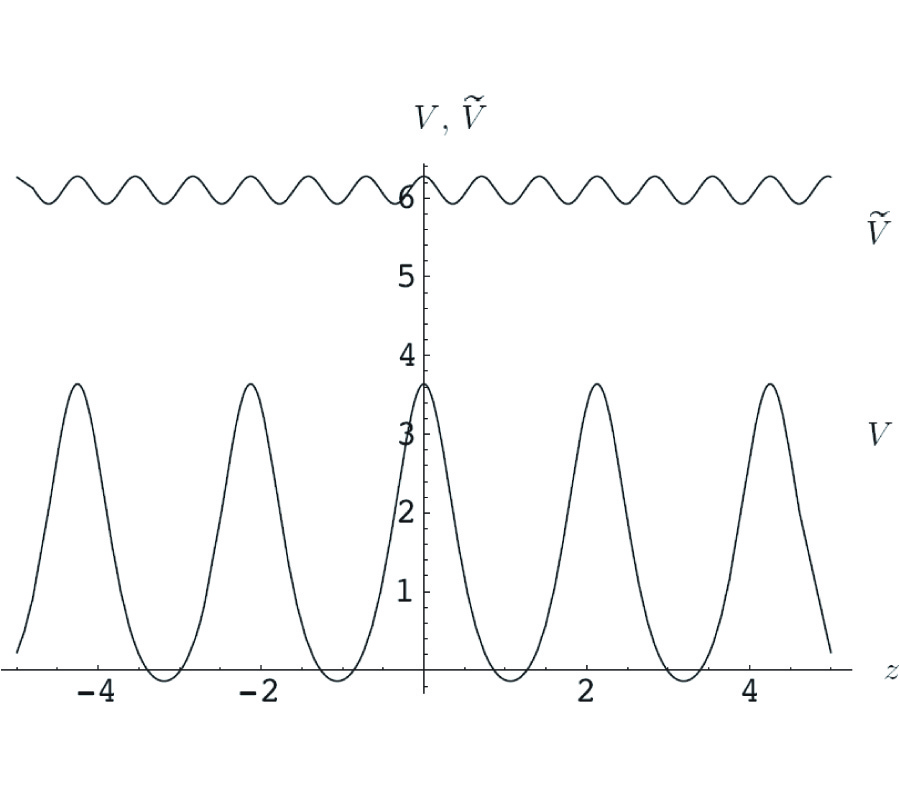
It is shown that the modal analysis of coupled waveguides in a two-dimensional photonic crystal can be reduced to the evaluation of natural frequencies of an equivalent network. This network is constituted of ideal transmission lines and transformers and is directly derived from Maxwell's equations without any simplifying assumptions. The natural frequencies of the proposed equivalent network are computed after its subdivision into a series of cascaded sub-networks. These sub-networks are then described by their multiport impedance matrices so that the entire network can be described by the cascaded connection of these matrices. Resonance conditions of this cascaded connection yield the natural frequencies and consequently the propagation constants of various modes of the original coupled photonic-crystal waveguides. Under the resonance condition, the voltages and currents of the equivalent network are nonzero, and they can be used to determine all the field components of the corresponding mode. The obtained numerical results verify the fact that the coupling length of photonic-crystal directional couplers can be reduced considerably.
FULL-WAVE ANALYSIS OF COUPLED WAVEGUIDES IN A TWO-DIMENSIONAL PHOTONIC CRYSTAL
2004-09-14
PIER
Vol. 49, 273-289
Numerical Simulation of Microwave Heating on Chemical Reaction in Dilute Solution
Kama Huang , Zhen Lin and Xiaoqing Yang
Currently, microwaves are widely used in chemical industry to accelerate chemical reactions. Some research results have shown that microwave heating can significantly accelerate the reaction. However, there is a need to develop efficient methods to improve the design of microwave applicator in chemistry. In this paper, a numerical model was presented to study the microwave heating on saponification reaction in test tube, where the reactant was considered as a mixture of dilute solution. The coupled electromagnetic field equations, reaction equation (RE) and heat transport equation (HTE) were solved by using finite difference time domain (FDTD) method. To overcome the difficulty of long time calculation with FDTD, two types of techniques were employed. To verify the methods, the temperature rising in the test tube and transmitted power through the transversal electromagnetic (TEM) cell were measured and compared with the computational results. Good agreement can be seen between the measured and calculated results.
NUMERICAL SIMULATION OF MICROWAVE HEATING ON CHEMICAL REACTION IN DILUTE SOLUTION
2004-09-14
PIER
Vol. 49, 257-271
Parabolic Equation Solution of Tropospheric Wave Propagation Using FEM
Stergios Isaakidis and Thomas Xenos
Abstract-In this work,the parabolic equation applied on radiowave and microwave tropospheric propagation, properly manipulated, and resulting in a one-dimensional form, is solved using the Finite Element Method (FEM). The necessary vertical tropospheric profile characteristics are assigned to each mesh element, while the solution advances in small and constant range segments, each excited by the solution of the previous step. This is leading to a marching algorithm, similar to the widely used Split Step formulation. The surface boundary conditions including the wave polarization and surface conductivity properties are directly applied to the FEM system of equations. Since the FEM system returns the total solution, a technique for the separation of the transmitted and reflected waves is also presented. This method is based on the application of the Discrete Fourier Transform (DFT) in the space domain, which allows for the separation of the existing wave components. Finally, abnormal tropospheric condition propagation is being employed to assess the method, while the results are compared to those obtained using the Advance Refractive Prediction System (AREPS v.3.03) software package.
PARABOLIC EQUATION SOLUTION OF TROPOSPHERIC WAVE PROPAGATION USING FEM
2004-09-14
PIER
Vol. 49, 239-255
The Fast Multipole Algorithm for Analysis of Large-Scale Microstrip Antenna Arrays
J. Wan , T. Xiang and Chang-Hong Liang
An efficient algorithm combining the fast multipole method (FMM) and the discrete complex image method (DCIM) is presented for analyzing large-scale microstrip structures. Firstly, the effect of complex images' locations on the algorithm is discussed in detail. And a simple and efficient scheme is proposed which greatly enhances the performance of this FMM-DCIM hybrid method. On the other hand, the incomplete LU (ILU) preconditioner with a dual dropping strategy is also tested to study the effect of this preconditioner on the convergence rate of microstrip structures.And experimental results show that this preconditioner reduces the number of iterations substantially.Then the solution is obtained using it in conjunction with the generalized minimal residual (GMRES).The fast multipole method is used to speed up the matrix-vector product in iterations.Numerical results for microstrip antennas are presented to demonstrate the efficiency and accuracy of this method.
THE FAST MULTIPOLE ALGORITHM FOR ANALYSIS OF LARGE-SCALE MICROSTRIP ANTENNA ARRAYS
2004-09-14
PIER
Vol. 49, 219-238
Postprocessing of the Human Body Response to Transient Electromagnetic Fields
Dragan Poljak
The post-processing of human exposure to a transient electromagnetic fields is presented in the paper. The mathematical model is based on the cylindrical representation of the human body and the corresponding space-time Hallen integral equation. The Hallen integral equation is solved via the Galerkin-Bubnov scheme of the indirect boundary element method and the equivalent space-time current distribution along the cylindrical body model is obtained. The transient current flowing through the human body is postprocessed in terms of certain measures of quantifying the transient response. These measures arise from circuit theory and they are average and root-mean square value of time-varying current, instantaneous power dissipated in the body and total absorbed energy in the body. Illustrative numerical results are presented.
POSTPROCESSING OF THE HUMAN BODY RESPONSE TO TRANSIENT ELECTROMAGNETIC FIELDS
2004-09-14
PIER
Vol. 49, 203-218
Transmitter and Receiver Design of an Experimental Airborne Synthetic Aperture Radar Sensor
Yee Kit Chan , Boon-Kuan Chung and Hean-Teik Chuah
An Experimental Airborne Synthetic Aperture Radar (SAR) Sensor has been designed and developed at Multimedia University, Malaysia. The airborne system is an inexpensive C-band, single polarization, linear-FM airborne radar sensor. An innovative cancellation network is implemented to overcome the poor isolation of the circulator thus allow a single antenna to be used for transmitting and receiving the radar signal. The system will be used for monitoring and management of earth resources such as paddy fields, oil palm plantation and soil surface. This paper highlights the design and development of the SAR transmitter and receiver, as well as the evaluation result of the sensor. Calibration has been performed in the laboratory to verify the performance of the radar sensor. External calibration is accomplished by using three artificial point targets, i.e., 12" conducting sphere, 4"x8" dihedral corner reflector and 8" trihedral corner reflector. The field measurements are conducted in an empty car park, which is a low reflection outdoor environment. Both range detection and radar cross section (RCS) measurement capability are verified in the field experiments.
TRANSMITTER AND RECEIVER DESIGN OF AN EXPERIMENTAL AIRBORNE SYNTHETIC APERTURE RADAR SENSOR
2004-09-14
PIER
Vol. 49, 189-201
Electromagnetic Coupling to Circulant Symmetric Multi-Conductor Microstrip Line
Ahmad Cheldavi , D. Ansari and Mohammad Khalaj-Amirhosseini
In this paper a method is introduced and applied to calculate the effects of an external field on a circular symmetric microstrip transmission line. The primary/secondary field idea is used for this purpose. The primary field is determined analytically for the cases of normal TMz and TEz incidence. The secondary field is determined using multi-conductor transmission line theory. The method is applied to a special structure and some useful results are obtained.
ELECTROMAGNETIC COUPLING TO CIRCULANT SYMMETRIC MULTI-CONDUCTOR MICROSTRIP LINE
2004-09-14
PIER
Vol. 49, 161-188
Development of a Three Band Radar System for Detecing Trapped Alive Humans Under Building Ruins
Matthaios Bimpas , Nikolaos Paraskevopoulos , Konstantinos Nikellis , Dimitris Economou and Nikolaos Uzunoglu
This paper shows the ability to use a continuous wave (CW) radar as an instrument to search for trapped alive persons in demolished buildings and ruins. The utilized operation principle is the detection of the Doppler frequency shift of the E/M wave when it is reflected by a slightly moving part of a living human body. The presented system has gone through several prototype development phases. Many parameters and alternative implementations have been tested in both real and simulated sites. A system analysis is carried out and presented followed by a presentation of the signal processing techniques. The inherent difficulties for the realization and practical exploitation of such a system are discussed. Results from tests of the system are also presented.
DEVELOPMENT OF A THREE BAND RADAR SYSTEM FOR DETECING TRAPPED ALIVE HUMANS UNDER BUILDING RUINS
2004-09-14
PIER
Vol. 49, 143-159
Characteristics of Ultra-Wideband Electromagnetic Missile Generated by Focused Two-Dimensional Array
Malek G. Hussain
Abstract-Ever since the concepts of "focus waves modes" and "electromagnetic missile" were introduced in the open literature almost two decades ago, extensive research work has been carried out to arrive at physically realizable applications for such concepts. In this paper, an ultra-wideband (UWB) electromagnetic missile with the time variation of a generalized Gaussian pulse (GGP) is generated based on the principle of focused-array beamforming. The radiation pattern, or array factor, of the focused-planar array is derived, and focused-energy patterns are computed to demonstrate the decaying behavior of the radiation energy of the electromagnetic missile as a function of distance travelled from the array to an observation point. The focused-energy patterns show that the depth-of-focus, or focusing bandwidth, is directly proportional to the focusing distance, and inversely proportional to the signal frequency bandwidth and array dimension. The focusing bandwidth is a measure of how well the energy is concentrated in the vicinity of the focusing point, and it is a useful parameter for radar ranging as well as imaging. In practice, the trade-off between the focusing distance, frequency bandwidth, and array dimension for improved focusing capability (or resolution) is of interest, in particular in the case of the ground-probing radar (GPR).
CHARACTERISTICS OF ULTRA-WIDEBAND ELECTROMAGNETIC MISSILE GENERATED BY FOCUSED TWO-DIMENSIONAL ARRAY
2004-09-14
PIER
Vol. 49, 113-142
Time Domain EFIE and MFIE Formulations for Analysis of Transient Electromagnetic Scattering from 3-D Dielectric Objects
Baek-Ho Jung , Tapan Kumar Sarkar and Magdalena Salazar-Palma
In this paper, we investigate various methods for solving a time-domain electric field integral equation (TD-EFIE) and a timedomain magnetic field integral equation (TD-MFIE) for analyzing the transient electromagnetic response from three-dimensional (3-D) dielectric bodies. The solution method in this paper is based on the method of moments (MoM) that involves separate spatial and temporal testing procedures. Triangular patch basis functions are used for spatial expansion and testing functions for arbitrarily shaped 3-D dielectric structures. The time-domain unknown coefficients of the equivalent electric and magnetic currents are approximated using a set of orthogonal basis functions that is derived from the Laguerre functions. These basis functions are also used as the temporal testing. Numerical results involving equivalent currents and far fields computed by the proposed TD-EFIE and TD-MFIE formulations are presented and compared.
TIME DOMAIN EFIE AND MFIE FORMULATIONS FOR ANALYSIS OF TRANSIENT ELECTROMAGNETIC SCATTERING FROM 3-D DIELECTRIC OBJECTS
2004-09-14
PIER
Vol. 49, 71-86
Bayesian Optimization Techniques for Antenna Design
Matthew Inman , John Earwood , Atef Elsherbeni and Charles Smith
Optimization and parameter estimation techniques have been employed for many years as a method of improving and exploring designs in numerous areas. As the designs of antennas and antenna arrays become more complex in nature, optimization techniques such as Bayesian estimation or genetic algorithms have become more necessary in the design process. These techniques provide methods for not only the design process, but also for operation simulations such as element failure corrections as well. This paper will deal with Bayesian optimization techniques for antenna and antenna array design as an alternative to other techniques. Through the use of Bayesian inference techniques, probability and information theory can be applied to a design problem to improve the operation within a range of specifications. Examples provided show that how this method allows for the examination of an entire parameter space of a linear array so that the best fitting solutions can be quickly and efficiently examined and improvements can be implemented.
BAYESIAN OPTIMIZATION TECHNIQUES FOR ANTENNA DESIGN
2004-09-14
PIER
Vol. 49, 53-69
Characteristics of Bow-Tie Slot Antenna with Tapered Tuning Stubs for Wideband Operation
Abdelnasser Eldek , Atef Elsherbeni and Charles Smith
The characteristics of a bow-tie slot antenna with tapered tuning stubs fed by a coplanar waveguide (CPW) are investigated. The effects of the antenna dimensional parameters are studied through simulation results and design procedure is developed and verified for different frequency bands. The antenna shows wideband characteristics for radar and wireless communication applications. Numerical simulations and measurements indicate that 73% bandwidth can be obtained using the developed design procedure.
CHARACTERISTICS OF BOW-TIE SLOT ANTENNA WITH TAPERED TUNING STUBS FOR WIDEBAND OPERATION
2004-09-14
PIER
Vol. 49, 39-52
Rapid Solutions of Scattering from Microstrip Antennas Using Well-Conditioned Asymptotic Waveform Evaluation
J. Wan and Chang-Hong Liang
The well-conditioned asymptotic waveform evaluation (WCAWE) is applied to the MoM solution of scattering from microstrip antennas so that the reduced order model is obtained to efficiently evaluate the frequency response over a broadband in this paper. In the traditional asymptotic waveform evaluation (AWE) method, the ill conditioning usually leads to stagnation in the momentmatching process.The WCAWE eliminates this difficult.A t the same time, to cover the entire bandwidth, a multipoint automatic WCAWE method is also proposed.Numerical examples are given to illustrate the accuracy and robustness of this method.
RAPID SOLUTIONS OF SCATTERING FROM MICROSTRIP ANTENNAS USING WELL-CONDITIONED ASYMPTOTIC WAVEFORM EVALUATION
2004-09-14
PIER
Vol. 49, 23-38
Modeling of Anechoic Chamber Using a Beam-Tracing Technique
Boon-Kuan Chung , Chin Hui Teh and Hean-Teik Chuah
Building an anechoic chamber involves a substantial investment both financially and in physical space. Hence, there is much interest in trying to reduce the required investment while still maintaining adequate performance. The performance of an anechoic chamber depends on the type, size, and array configuration of the absorber elements as well as the geometry of the screened room on which the inner surfaces are covered with RF absorbers. If the room geometry is designed such that an electromagnetic ray from the transmitter will only reach the receiver antenna after a few reflections, the wave energy may be sufficiently damped after a few bounces off the absorbing walls and ceiling. Hence, lower cost RF absorbers can be used to make the anechoic chamber design more economical. In this paper, a variant of beam-tracing technique is used for modeling of anechoic chamber to study the normalized site attenuation (NSA) performance of the anechoic chamber. This allows the chamber performance to be predicted prior to the actual construction. The ma jor advantage of beam-tracing over ray tracing is the path loss information at multiple receiver locations can be determined simultaneously as opposed to running a ray tracing simulation for each receiver location one at a time. As a result, the computing time is greatly reduced. This feature is particularly useful in calculating the field strength at different heights of the receiving antenna in EMC site calibration procedure. The efficient modeling tool has given rise to the successful design and construction of an asymmetrical shape anechoic chamber that supports various measurement needs including EMC tests at the Multimedia University, Malaysia.
MODELING OF ANECHOIC CHAMBER USING A BEAM-TRACING TECHNIQUE