Search Results(13789)

2021-12-23
PIER Letters
Vol. 101, 147-155
Research on Efficiency Optimization Based on Permanent Magnet Synchronous Linear Motor
Xingqiao Zhao , Cheng Wen , Mingwei Li , Qiankai Zhao , Kailin Lv and Xin Wang
In recent years, permanent magnet synchronous linear motor (PMSLM) has gained tremendous momentum in industry, especially in the high-precision field. This is mainly because it has the advantages of small size, high control precision, reliable operation. However, due to the special structure of linear motor, the control strategy of rotating motor cannot be directly applied to PMSLM. Three control strategies for reducing loss and improving efficiency of PMSLM are proposed in this paper. Firstly, the mathematical model of PMSLM is established and the loss model and efficiency equation are established. Secondly, we adopt the loss model control strategies of id=0, maximum thrust current ratio and direct thrust are used to optimize the efficiency of the motor. Finally, simulation experiments are carried out for the three proposed optimization strategies, and the effects of initial speed and load on motor efficiency are analyzed. The effectiveness of the three loss model control strategies proposed in this paper is fully verified by the simulation results, and it is found that the loss model control strategy of id=0 has the most obvious efficiency improvement.
RESEARCH ON EFFICIENCY OPTIMIZATION BASED ON PERMANENT MAGNET SYNCHRONOUS LINEAR MOTOR
2021-12-22
PIER
Vol. 172, 23-32
Tunable High-q Plasmonic Metasurface with Multiple Surface Lattice Resonances (Invited)
Nanxuan Wu , Yiyun Zhang , Hongbin Ma , Hongsheng Chen and Haoliang Qian
Micro-nano opto-electronic devices are demanded to be highly efficient and capable of multiple working wavelengths in several light-matter interaction applications, which is a challenge to surface plasmonics owing to the relatively higher intrinsic loss and larger dispersion. To cross the barriers, a plasmonic metasurface combining both high Q-factors (highest Q > 800) and multiple resonant wavelengths is proposed by arranging step-staged pyramid units in lattice modes. Different numerical relations for nonlinear frequency conversions have been constructed because of its strong tunability. Also, characteristics of high radiation efficiency (> 50%) and largelocalized optical density of state (> 104) have been proved through the numerical simulation. Such tunable high-Q metasurface can be implemented to quantum nonlinear process and enable the strong light-matter interaction devices into reality.
TUNABLE HIGH-Q PLASMONIC METASURFACE WITH MULTIPLE SURFACE LATTICE RESONANCES (INVITED)
2021-12-22
PIER M
Vol. 106, 153-165
A Continuous-Discontinuous Galerkin Method for Electromagnetic Simulations Based on an All-Frequency Stable Formulation
Su Yan
In this paper, a potential-based partial-differential formulation, called the all-frequency stable formulation, is presented for the accurate and robust simulation of electromagnetic problems at all frequencies. Due to its stability from (near) dc to microwave frequencies, this formulation can be applied to simulate wide-band and multiscale problems without encountering the infamous low-frequency breakdown issue or applying basis function decompositions such as the tree-cotree splitting technique. To provide both efficient and flexible numerical solutions to the electromagnetic formulation, a mixed continuous-discontinuous Galerkin (CDG) method is proposed and implemented. In regions with homogeneous media, the continuous Galerkin method is employed to avoid the introduction of duplicated degrees of freedom (DoFs) on the elemental interfaces, while on the interfaces of two different media, the discontinuous Galerkin method is applied to permit the jump of the normal components of the electromagnetic fields. Numerical examples are provided to validate and demonstrate the proposed numerical solver for problems in a wide electromagnetic spectrum.
A CONTINUOUS-DISCONTINUOUS GALERKIN METHOD FOR ELECTROMAGNETIC SIMULATIONS BASED ON AN ALL-FREQUENCY STABLE FORMULATION
2021-12-21
PIER C
Vol. 117, 89-98
Design and Analysis of Rectenna at 2.42 GHz for Wi-Fi Energy Harvesting
Rashmi Pandey , Ashok Kumar Shankhwar and Ashutosh Singh
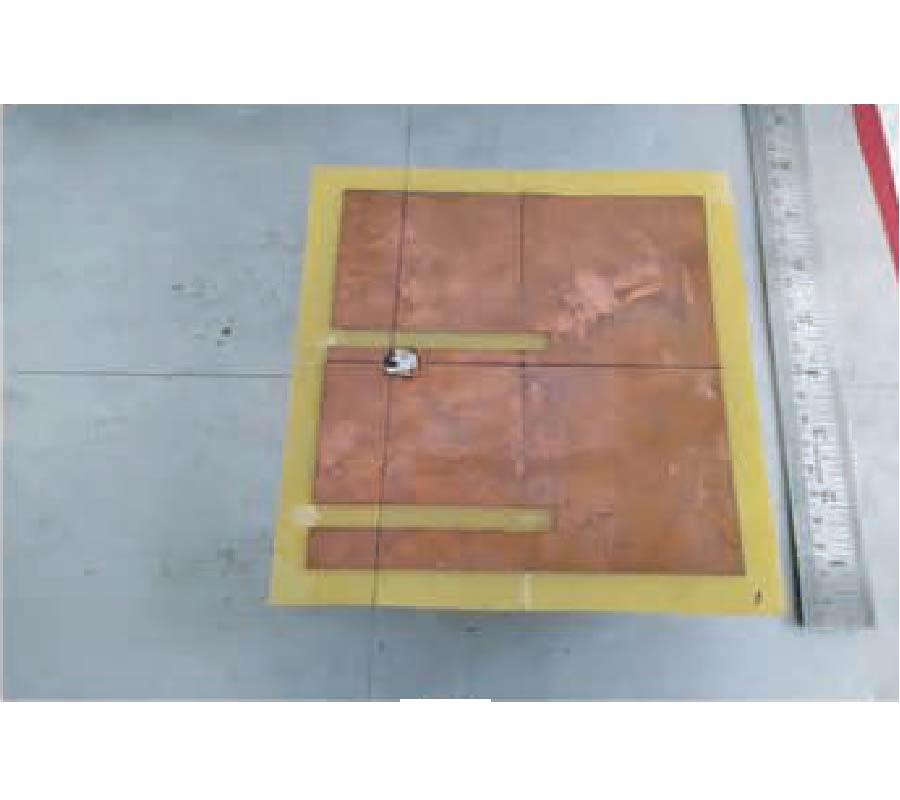
This work proposes a design of rectenna for Wi-Fi energy harvesting application at 2.42 GHz. The proposed antenna includes a modified rectangular patch and two circular radiating elements with partial ground, and adopts a total area of 80 × 80 mm2. With the partial ground structure, the proposed antenna shows a better reflection coefficient (S11) at 2.42 GHz. The proposed antenna is a modified conventional patch antenna that shows its improved suitability for Wi-Fi energy harvesting at the targeted band. For rectenna, an impedance matching circuit based on microstrip transmission lines, radial stubs, and enhanced Greinacher voltage doubler rectifier circuits are designed. The rectifier circuit occupies a total area of 25 × 25 mm2. The antenna part of the rectenna exhibits quite good S11 < -10 dB and 3.94 dB peak gain. To validate the design experimentally, a prototype of the proposed rectenna is also fabricated. The measured result indicates that at the resonant frequency the rectenna achieves the peak efficiency of 78.53%, and the output voltage is 4.7 V at 0 dBm input power.
DESIGN AND ANALYSIS OF RECTENNA AT 2.42 GHZ FOR WI-FI ENERGY HARVESTING
2021-12-21
PIER M
Vol. 106, 139-152
Analyzing Effects of Satellite Attitude and Speed Errors on Ocean Current Retrieval for a Doppler Scatterometer
Yuanjing Miao , Xiaolong Dong and Di Zhu
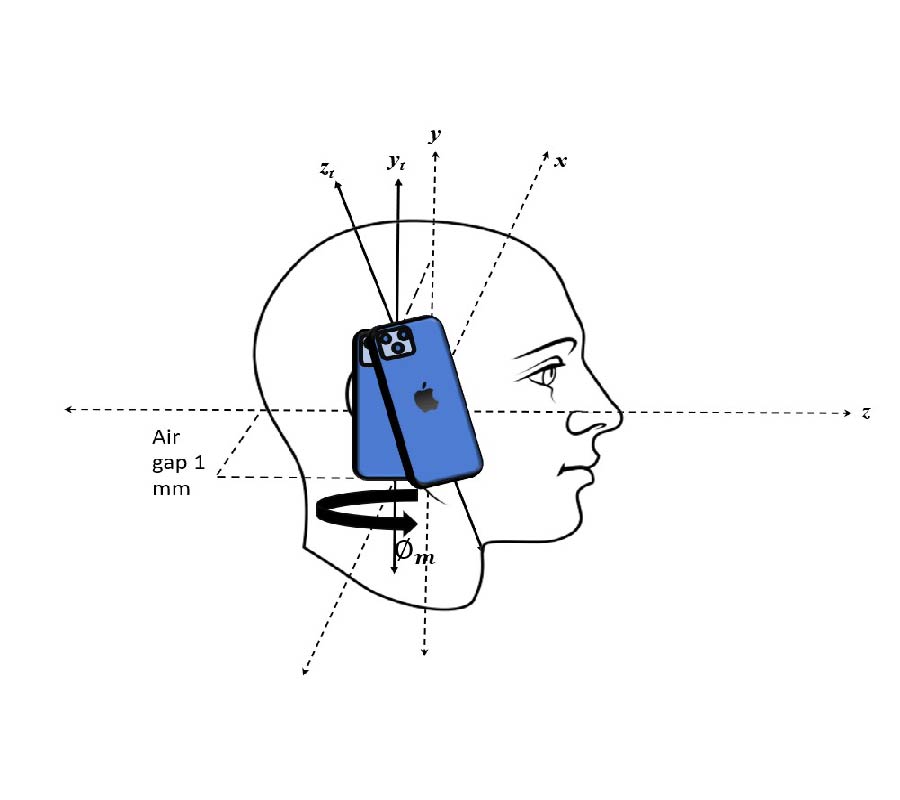
Doppler-based techniques for ocean current measurement have been demonstrated in the past years. The Doppler shift of the ocean backscattering from space-borne microwave instruments not only includes the contributions from ocean current but also includes satellite movement and the wind-wave induced. Geometrical Doppler shift induced by satellite movement is highly dependent on the accuracies of satellite attitude determinations and speed. In this study, we derive the detailed formulas to investigate how satellite attitude determination and speed errors affect ocean current retrieval for a Doppler scatterometer through the spatial correlation coefficient phase and the transformation between orbital coordinate system and satellite-carried local level frame (LLF). Our results show that ocean current speed retrieval accuracy is sensitive to the accuracies of satellite attitude determination and speed, and compared with the satellite speed error, satellite attitude error has a larger impact on ocean current retrieval. By comparisons, with the same attitude accuracy for satellite roll, pitch, and yaw, ocean current speed error induced by the roll error is found to be the smallest. With an accuracy of 0.001° satellite attitude determination and 0.01 m/s for satellite speed accuracy, the total ocean current speed retrieval error induced by satellite attitude determinations (including roll, pitch, and yaw) and speed errors reaches a maximum value of 16.37 cm/s at side-looking direction and a minimum value of 11.05 cm/s at forward and backward-looking directions. Our results confirm the importance of satellite attitude determination accuracy for future ocean current mission and will also be useful to motivate the design of future Doppler measurement instruments.
ANALYZING EFFECTS OF SATELLITE ATTITUDE AND SPEED ERRORS ON OCEAN CURRENT RETRIEVAL FOR A DOPPLER SCATTEROMETER
2021-12-21
PIER Letters
Vol. 101, 137-145
An Embroidered Passive Textile RFID Tag Based on a T-Matched Antenna
Mohamed El Bakkali , Otman El Mrabet , Mohammed Kanjaa , Ignacio Gil and Raúl Fernandez-Garcia
This paper addresses the design and fabrication of an embroidered textile RFID tag antenna. The main feature of this design is that we have embroidered an RFID chip on the textile support which avoids the use of metallic wires or soldering. The modeled equivalent circuit of the tag is presented to get physical insight into RFID tag antenna design. The detailed results given in this paper include the effect of the bending and the human body proximity on the antenna performance. It is shown that the bending does not introduce a conspicuous effect on the tags read range while the dissipative characteristics of the human body cause a gain and read range reduction. The proposed design may find applications in wearable devices dedicated to health monitoring applications.
AN EMBROIDERED PASSIVE TEXTILE RFID TAG BASED ON A T-MATCHED ANTENNA
2021-12-20
PIER
Vol. 172, 13-22
Tunable Topological Refractions in Valley Sonic Crystals with Triple Valley Hall Phase Transitions (Invited Paper)
Ding Jia , Yin Wang , Yong Ge , Shou-Qi Yuan and Hong-Xiang Sun
Topological refractions created by valley sonic crystals (VSCs) have attracted great attentions in the communities of physics and engineering owing to the advantage of zero reflection of sound and the potential for designing advanced acoustic devices. In previous works, topological refractions of valley edge states are demonstrated to be determined by the projections of the valleys K and K′, and two types of topological refractions generally exist at opposite terminals or different frequency bands. However, the realization of tunable topological refractions at the fixed frequency band and terminal still poses great challenge. To overcome this, we report the realization of tunable topological refractions by VSCs with triple valley Hall phase transitions. By simply rotating rods, we realize 3 types of topological waveguides (T1, T2 and T3) composed of two VSCs, in which the projections of the observed valley edge states can be modulated between K and K′. Additionally, based on the measured transmittance spectra, we experimentally demonstrate that these valleyedge states are almost immune to backscattering against sharp bends. More importantly, we realize tunable topological refractions at the fixed frequency band and terminal, and experimentally observe the coexistence of positive and negative refractions for T1 and T3, and negative refractions for T2. The proposed tunable topological refractions have potential applications in designing multi-functional sound antennas and advanced communication devices.
TUNABLE TOPOLOGICAL REFRACTIONS IN VALLEY SONIC CRYSTALS WITH TRIPLE VALLEY HALL PHASE TRANSITIONS (INVITED PAPER)
2021-12-20
PIER C
Vol. 117, 73-87
Compact Differential Tri-Band Bandpass Filter with Multiple Zeros Using Sext-Mode Stepped-Impedance Square Ring Loaded Resonator
Ziyue Guo , Li Tian Wang , Rong Guo , Yang Xiong , Ming He , Lu Ji and Xu Zhang
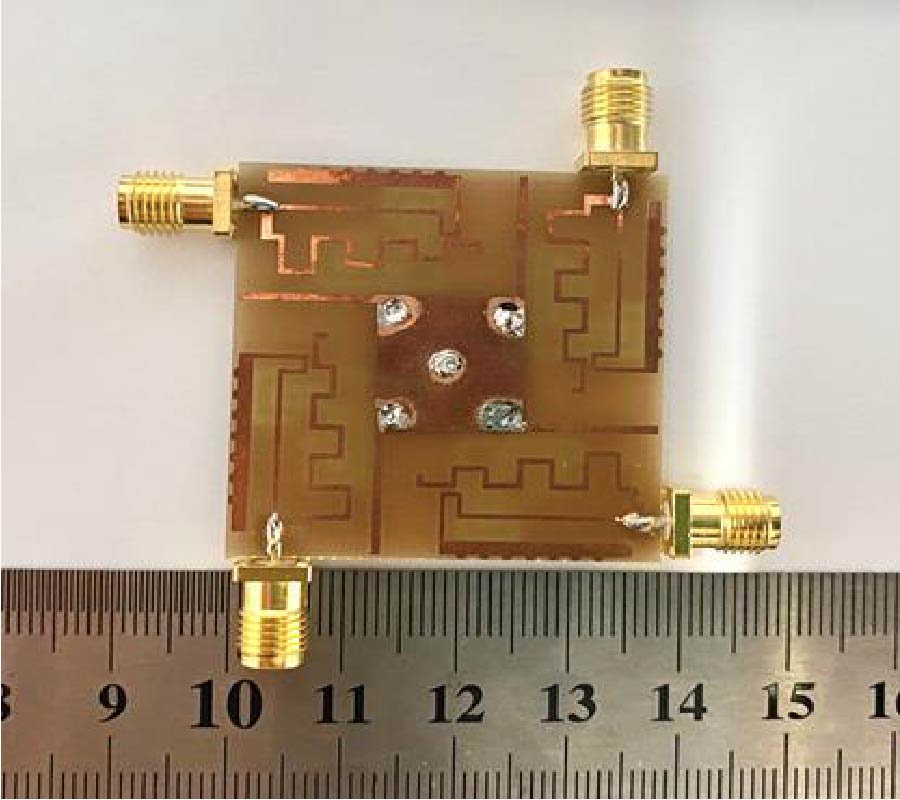
In this paper, a second-order tri-band balanced bandpass filter (BPF) with multiple transmission zeros (TZs) and compact size is presented. The structure consists of novel stepped impedance square ring loaded resonators (SI-SRLRs), which can excite six resonance modes. For design of SI-SRLR, we analysed the odd-mode equivalent circuit and obtained the electrical lengths from the design graph. Meanwhile, the wider frequency distances between differential modes (DMs) and common modes (CMs) are realized by selecting the proper admittance ratio of SI-SRLR. Then for design of BPF, six TZs are introduced by source-load coupling, which lead to band-to-band isolation of 23 dB. Additional T-shaped stubs and open stubs are loaded on the symmetric plane of SI-SRLR, which result in high CM suppressions of 43 dB, 25 dB and 37 dB at three DM centre frequencies. Finally, a tri-band differential BPF operating at 1.46 GHz, 4.45 GHz and 5.48 GHz is fabricated and measured. The measured 3-dB fractional bandwidths of three passbands are 6.8%, 7.4% and 5.6%. A wide DM and CM stopband suppression of 20 dB is achieved to 14.6 GHz (10f0). The measurements verify well the proposed structure and the design method.
COMPACT DIFFERENTIAL TRI-BAND BANDPASS FILTER WITH MULTIPLE ZEROS USING SEXT-MODE STEPPED-IMPEDANCE SQUARE RING LOADED RESONATOR
2021-12-20
PIER Letters
Vol. 101, 127-136
A Polarization Insensitive Tri-Band Bandpass Frequency Selective Surface for Wi-MAX and WLAN Applications
Sanjeev Yadav , Mahendra Mohan Sharma and Rajesh Singh
This article reports a single layer tri-band bandpass, polarization insensitive Frequency Selective Surface (FSS). The unit cell is designed by considering different square loop elements and cross dipole element to pass Wi-Max and WLAN frequency range with low loss. Three different shapes of loops and one cross dipole are arranged in a way that gives a triple-band-pass characteristic from the proposed structure. These loops and dipole are designed to pass Wi-MAX (2.5-2.7 GHz, 3.4-3.6 GHz) and WLAN (center frequency, 5.5 GHz) bands. The structure performance is independent of incidence angle of wave due to its symmetrical geometry which makes the design polarization insensitive and achieves good angular stability. A 14x14 array of proposed unit cell is realized and measured. The proposed FSS achieves a 3 dB transmission bandwidth of 25% at 2.6 GHz, 65.6% at 3.5 GHz and 65.6% at 5.5 GHz. The advantage of the proposed design is that it has a simple and compact geometry fabricated on a low-cost substrate and achieved tri-band band pass response with a wide angular stability.
A POLARIZATION INSENSITIVE TRI-BAND BANDPASS FREQUENCY SELECTIVE SURFACE FOR WI-MAX AND WLAN APPLICATIONS
2021-12-19
PIER C
Vol. 117, 55-72
Research on Shielding and Electromagnetic Exposure Safety of an Electric Vehicle Wireless Charging Coil
Wenting Mou and Mai Lu
To address the problems of large volume, heavy weight, and inconvenient installation of the shield board of a wireless charging coil (WCC) installed on the body of an electric vehicle (EV), a new shielding method is proposed in this paper. From the perspective of engineering practice, according to the principle of passive shielding, and in line with the vertical direction of WCC with ferromagnetic material shielding, this novel shielding method involves only a low permeability metal shielding ring set around the transmitting coil in the horizontal direction. Using the finite element simulation software COMSOL Multiphysics, the EV model, the magnetic coupling resonance (MCR) WCC model, and the pedestrian body model at the observation point are designed. The influence of the metal shielding ring on the self-inductance and mutual inductance of WCC is calculated. The magnetic induction strength (B) and electric field strength (E) of pedestrian body at observation points before and after adding a metal shielding in the horizontal direction are evaluated, and the electromagnetic exposure safety of a pedestrian body in this electromagnetic environment is analyzed. Compared with the shielding method of only adding ferromagnetic material in the vertical direction and after using new shielding, the maximum B of a human trunk is reduced by 43%, the maximum E reduced by 44%, the maximum B of human head reduced by 44%, and the maximum E reduced by 39%. After adding the metal shielding ring, the maximum B and E of human trunk decreased from 8.56 × 10⁻¹ times and 2.28 × 10⁻¹ times of the International Commission on Non-Ionizing Radiation Protection (ICNIRP) exposure limit to 4.89 × 10⁻¹ times and 1.27 × 10⁻¹ times, respectively, and the maximum B and E of human head decreased from 1.62 × 10⁻³ times and 8.58 × 10⁻⁴ times of the ICNIRP exposure limit to 9.18 × 10⁻⁴ and 5.25 × 10⁻⁴ times, respectively. The simulation results show that the new shielding method can significantly reduce the electromagnetic radiation of the pedestrian's trunk and head central nervous system (CNS) at the observation point. The effectiveness of the shielding method is proven, and this work provides a certain guidance for the engineering design of WCCs.
RESEARCH ON SHIELDING AND ELECTROMAGNETIC EXPOSURE SAFETY OF AN ELECTRIC VEHICLE WIRELESS CHARGING COIL
2021-12-19
PIER C
Vol. 116, 265-275
High Gain Substrate Integrated Waveguide Fed Yagi-Uda Antenna Array on Silicon Substrate for Multiband Applications
Arnab Chakraborty and Shweta Srivastava
This paper proposes a Yagi-Uda antenna array realized on a Silicon substrate and supported by a substrate integrated waveguide for multi-band operation in the K and Ka bands. The structure of the dipole and the first director of the Yagi-Uda antenna were modified and tuned for multi-band response, making it completely novel in comparison to the existing Yagi-Uda structures supporting multi-band operation. As the feed, a substrate integrated waveguide was designed to assist with multi-band operation and to overcome the challenges presented by the Silicon substrate. An array is implemented to improve the gain. The antenna array's prototype was constructed and tested to back up the claims. The proposed array operates at frequencies of 23.7, 26.3, 27.5-28.3, and 29.4 GHz. The array exhibits good end-fire radiation patterns for the resonant frequencies, with a peak gain of 19.65 dBi and an efficiency of 89.8% at 23.7 GHz. This is the first report of an antenna fed by a substrate integrated waveguide and realized on Silicon with a high gain and applications in the K and Ka bands.
HIGH GAIN SUBSTRATE INTEGRATED WAVEGUIDE FED YAGI-UDA ANTENNA ARRAY ON SILICON SUBSTRATE FOR MULTIBAND APPLICATIONS
2021-12-19
PIER M
Vol. 106, 127-137
An Integro-Differential Approach for Eddy Currents Computation in Structures Having Heterogeneous Dimensions
Lyes Aomar and Hicham Allag
The aim of this paper is to develop a hybrid modeling approach based on direct coupling between the finite element method (FEM) and the partial element equivalent circuits method (PEEC). Through this FEM-PEEC approach, we can efficiently compute the three-dimensional eddy current distribution created by a rectangular coil (exciting coil) in conductive and magnetic structures having heterogeneous dimensions. Magnetic field created by the rectangular coil is given by calculating quasi-static Green's function integrals. In goal to construct rectangular coil, the calculation is made for elementary parallelepipedic conductors oriented respectively in x and y directions. By this manner, three possible configurations are proposed and compared to show errors, especially in corners. By only meshing the active parts of the domain (without air region), we confirm through the issued results that the proposed methodology contributes to accelerate the execution time while maintaining the precision. The obtained results are validated with the numerical ones by 3D FEM (Flux 3D Software).
2021-12-17
PIER C
Vol. 117, 41-54
Accurate Fault Location for Long-Distance Electric Transmission Lines
Lihui Zhao , Jingwei Zhu , Hongzhe Yang and Tianhuai Qiao
This paper, using the distributed parameter line model, presents an accurate fault location method based on fundamental frequency positive sequence fault components for EHV transmission line. The method based on positive sequence fault components Extra-High Voltage (EHV) electric transmission line. The method based on the positive sequence fault component is robust to the operating state of the prefault system and fault path resistance. The technique proposed in the paper does not require the fault type, fault phase, and the zero-sequence parameter to be obtained in advance. In addition, due to the use of fault component protection theory, the algorithm itself is not a ected by the previous operating state of the system. The method uses a distributed parameter model, which is more accurate in positioning and smaller in error than a lumped parameter model by a large number of simulations. Accurate fault location is important for shortening the fault time and reducing the loss of the fault, so the positioning method proposed can improve the power supply quality and safety. This paper describes the characteristics of the proposed technique and assesses its performance by using Power Systems Computer Aided Design/Electromagnetic Transients including DC (PSCAD/EMTDC).
ACCURATE FAULT LOCATION FOR LONG-DISTANCE ELECTRIC TRANSMISSION LINES
2021-12-16
PIER
Vol. 172, 1-12
Hybrid Modeling and Design Optimization of Chip Level of μS Long Optical Delays for Realization of Integrated Optoelectronic Circuits
Kai Wei and Afshin S. Daryoush
Integrated time delays are important for self-forced oscillation techniques in opto-electronic oscillators (OEO). Add-drop filters (ADFs) resonators using optical waveguide coupled to micro-ring resonators (MRR) are suitable for integrated optical time delays but suffer from a limited expected delay. 2-dimensional (2-D) photonic crystals (PhCs) with line defect are employed as confined optical waveguide to realize ADF resonators where longer optical delays than standard homogenous resonators are achieved by leveraging the slow-light effect. Moreover, achieving time delay up to microseconds (μs) is envisioned by cascading multiple identical ADF based on dispersive 2-D PhC micro-resonators. The focus of this paper is to devise a hybrid modeling procedure for accurate calculations of achieved time delays in various complex structures, while a combined electromagnetic modeling and analytical calculation technique overcomes a substantial computational resources and long computation times for a brute forced full-wave design and modeling. This innovative hybrid modeling for time delay estimation of cascaded ADFs is proposed for the first time to optimize physical design within short time period. First, transfer function performance of a homogenous ADF resonator is simulated using finite-difference-time-domain (FDTD) for both the full structure and structures with bi-fold symmetry and compared against proven analytical solutions to demonstrate accuracy of bi-fold symmetry while the computational resources are economized. The same modeling procedure is then extended to predicting performance of 2-D PhC based ADF resonator by quantifying key physical parameters of coupling factor, complex optical propagation constant, and optical transfer function for ADF resonator for the ring radius of curvature about 1.5 μm with various coupling gaps between feed waveguide and resonator guide. These parameters and the effective group index calculated by OptiFDTD software are applied to the analytical expressions to estimate single 2-D PhC ADF and attain a simulated time delay of 200 ps. The estimated time delay of 70 cascaded 2-D PhC based ADF resonators with R of 100 μm is estimated to be about 925 ns for the on-resonance frequency of 1534 nm.
HYBRID MODELING AND DESIGN OPTIMIZATION OF CHIP LEVEL OF μs LONG OPTICAL DELAYS FOR REALIZATION OF INTEGRATED OPTOELECTRONIC CIRCUITS
2021-12-16
PIER
Vol. 171, 185-199
Deep Neural Networks for Image Super-Resolution in Optical Microscopy by Using Modified Hybrid Task Cascade U-Net
Dawei Gong , Tengfei Ma , Julian Evans and Sailing He
Due to the optical diffraction limit, the resolution of a wide-field (WF) microscope cannot easily go below a few hundred nanometers. Super-resolution microscopy has the disadvantages of high cost, complex optical equipment, and high experimental environment requirements. Deep-learning-based super-resolution (DLSR) has the advantages of simple operation and low cost, and has attracted much attention recently. Here we propose a novel DLSR model named Modified Hybrid Task Cascade U-Net (MHTCUN) for image super-resolution in optical microscopy using the public biological image dataset BioSR. The MHTCUN has three stages, and we introduce a novel module named Feature Refinement Module (FRM) to extract deeper features in each stage. In each FRM, a U-Net is introduced to refine the features, and the Fourier Channel Attention Block (FCAB) is introduced in the U-Net to learn the high-level representation of the high-frequency information of different feature maps. Compared with six state-of-the-art DLSR models used for single-image super-resolution (SISR), our MHTCUN achieves the highest signal-to-noise ratio (PSNR) of 26.87 and structural similarity (SSIM) of 0.746, demonstrating that our MHTCUN has achieved the state-of-the-art in DLSR. Compared with the DLSR model DFCAN used for image super-resolution in optical microscopy specially, MHTCUN has a significant improvement in PSNR and a slight improvement in SSIM on BioSR. Finally, we fine-tune the trained MHTCUN on the other biological images. MHTCUN also shows good performance on denoising, contrast enhancement, and resolution enhancement.
DEEP NEURAL NETWORKS FOR IMAGE SUPER-RESOLUTION IN OPTICAL MICROSCOPY BY USING MODIFIED HYBRID TASK CASCADE U-NET
2021-12-15
PIER M
Vol. 106, 105-115
Design of Y-Type Branch Broadband Dual-Polarization Antenna and C-Type Slot Line Notch Antenna
Yan Yan , Lan Li , Jifang Zhang , Heming Hu , Yonghao Zhu , Hua Chen and Qing Fang
In order to satisfy the requirements of 2G/3G/4G wireless communication, two kinds of base station antennas with wideband, dual-polarized and three-modes are proposed in this paper. Firstly, a pair of diamond dipoles is placed in an orthogonal way to realize dual-polarizations, then a pair of Y-shaped branches is added to generate a new mode. The Y-type coupling feeding can increase the impedance bandwidth without increasing the size of antenna. The antenna achieves an impedance bandwidth of 51.75% (1.69-2.87 GHz) with a return loss lower than -14 dB. The antenna also has a stable radiation performance. The gain is greater than 8.6 dBi, and the port isolation is less than -27 dB over the entire frequency band. Then based on above antenna, a C-type slot notched antenna is added to improve anti-interference ability. Finally, band stop characteristics are obtained by etching a C-type slot line resonator on two dipoles. The results show that the bandwidth is 1.7-2.69 GHz, and the sharp notched band is 1.8-1.95 GHz. The C-type slot line here can be regarded as a quarter wavelength resonator in series. Moreover, the isolation of the port is less than -28 dB, and the 3 dB beamwidth in the bandwidth is 66±5˚. Both antennas are fabricated and have dual polarizations, simple structure, and good radiation performance, which can be used in the next generation of wireless communication.
DESIGN OF Y-TYPE BRANCH BROADBAND DUAL-POLARIZATION ANTENNA AND C-TYPE SLOT LINE NOTCH ANTENNA
2021-12-14
PIER M
Vol. 106, 93-104
Design and Optimization of a TEM Cell Structure Suitable for Wider Bandwidth
Ting Zhou , Xinwei Peng , Shoukun Huang , Jicong Zhao and Haiyan Sun
Transverse electromagnetic (TEM) cell is usually used to evaluate the electromagnetic immunity and electromagnetic radiation disturbance of the equipment under test (EUT) and integrated circuit (IC). Affected by the structure of the TEM cell, high-order modes and reflection will be generated in the high frequency range, which will limit the higher frequency applications of the TEM cell. In this paper, the TEM cell specified in IEC61967-2 standard is improved by adopting several methods, including segmented impedance matching, slitting outer conductor, slotting inner conductor, adding absorbing materials and adding an external shielding box. The results show that the improved TEM cell voltage standing wave ratio (VSWR) is less than 1.2 in 0-3.4 GHz, less than 1.3 in 0-3.75 GHz, and less than 1.5 in 0-4.06 GHz; at the same time, the S-parameter characteristics are better.
DESIGN AND OPTIMIZATION OF A TEM CELL STRUCTURE SUITABLE FOR WIDER BANDWIDTH
2021-12-14
PIER Letters
Vol. 101, 117-125
Design and Measurement of Triple h-Slotted DGS Printed Antenna with Machine Learning
Mohammed Farouk Nakmouche , Abdemegeed Mahmoud M. A. Allam , Diaa E. Fawzy and Mahmoud Abdalla
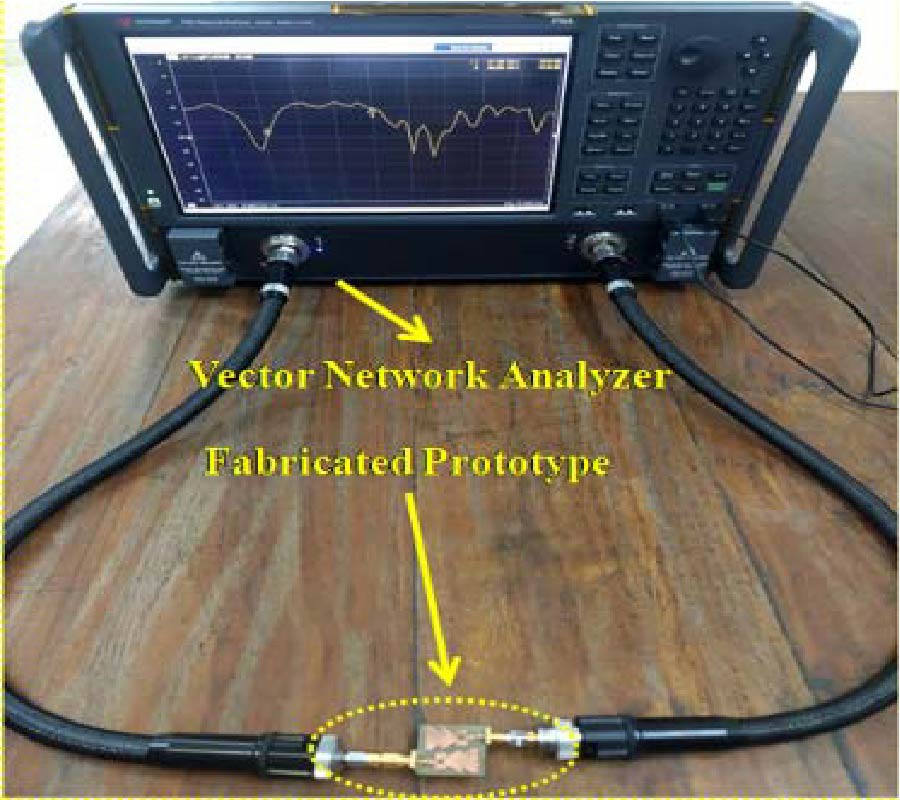
This paper presents the design and measurements of a dual-band Triple H-Defected Ground Structure (Triple H-DGS) antenna. DGS has proven to be successful in the design of multiband antennas; however because of the lack of a standard approach, the determination of the exact position of the Triple H-DGS requires rigorous and lengthy numerical computations. The aim of the current work is to present a state-of-the-art innovative, efficient, and accurate solution based on Machine Learning (ML) techniques. The design is based on Substrate Integrated Waveguide (SIW) technology which provides low cost, small size, and convenient integration with planar circuits. The antenna is fabricated on a Roger 5880 substrate with a thickness of 1.6 mm, relative dielectric constant of 2.2, and tangent loss of 0.0009. The proposed antenna was developed using a hybrid solution based on CST Microwave Studio assisted by ML, and the fabricated prototype was measured using both ROHDE & SCHWARZ ZVB20 network analyser and an anechoic chamber setting. The measurement results show good agreement with the simulation. The antenna demonstrates a dual-band performance at centre frequencies of 12.67 GHz and 14.56 GHz, for which the respective antenna gains are 7.03 dBi and 7.38 dBi, and antenna directivities of 7.77 dB and 8.13 dB, respectively. The antenna total efficiencies are 95.25% and 95.60%, at the corresponding centre frequencies. The developed ML based technique shows good accuracies of about 98% in the determination of the DGS position and saves more than 99% of the computational time. The developed antenna is compact, simple in structure, and can be used for different applications in the Ku band.
DESIGN AND MEASUREMENT OF TRIPLE H-SLOTTED DGS PRINTED ANTENNA WITH MACHINE LEARNING
2021-12-13
PIER B
Vol. 94, 127-144
A Well-Posed and Effective High-Order Impedance Boundary Condition for the Time-Harmonic Scattering Problem from a Multilayer Coated 3-D Object
Bruno Stupfel , Pierre Payen and Olivier Lafitte
The time-harmonic scattering problem from an isotropic multilayer coated 3-D object is considered. The coating is modeled by an impedance boundary condition (IBC) prescribed on the outer surface of the coating. The standard Leontovich IBC is local and constitutes a poor approximation for low index materials. A possible remedy is to employ high order IBCs (HOIBCs) involving tangential differential operators multiplied by coefficients. A generic HOIBC formulation (termed here IBC3) with five coefficients is considered here. Sufficient uniqueness conditions (SUCs) are derived for the corresponding Maxwell's problem (i.e. Maxwell's equations in free-space, radiation condition at infinity and IBC3 on the surface). The IBC3 coefficients are obtained by minimizing, with the SUCs as constraints, the error between either the exact and IBC3 impedances (local planar approximation) or the exact and IBC3 Mie series coefficients (local spherical approximation). Finally, the IBC3 is numerically implemented in a well-posed EFIE+MFIE formulation. Numerical results obtained on 3D objects demonstrate the high accuracy achieved with the constrained IBC3.
A WELL-POSED AND EFFECTIVE HIGH-ORDER IMPEDANCE BOUNDARY CONDITION FOR THE TIME-HARMONIC SCATTERING PROBLEM FROM A MULTILAYER COATED 3-D OBJECT
2021-12-13
PIER
Vol. 171, 171-184
Mechanisms and Modeling of 2D-Materials-Based Resistive Random Access Memory Devices (Invited Review)
Hao Xie , Zhili Wang , Yanbin Yang , Xiaohui Hu , Hong Liu and Wei Qi
Resistive random access memory (RRAM) devices are promising candidates for next generation high capacity data storagedue to their superior properties such ascost-effective fabrication, high operating speed, low power consumption, and long data retention. Particularly, the two dimensional (2D)-materials-based RRAM has attracted researchers' attention because of its unique physical and chemical properties without the constraint of lattice matching. In this review, the switching mechanisms and modeling of RRAM devices based on the 2D materials such as hexagonal-boron nitride (h-BN) and graphene are discussed. Firstly, the monolayer and multilayer h-BNRRAMs are introduced, and their mechanisms and compact model are further described. Then, the mechanisms of graphene electrode-based RRAM (GE-RRAM) for different applications are also introduced and compared. Furthermore, the electrical conductivity, multi-physic and compact models of GE-RRAM are introduced. This review paper provides the guidance for the design and optimization of the 2D-materials-based RRAM in the next generation memories.
MECHANISMS AND MODELING OF 2D-MATERIALS-BASED RESISTIVE RANDOM ACCESS MEMORY DEVICES (INVITED REVIEW)