Search Results(13789)

2022-01-10
PIER M
Vol. 107, 79-89
X-Band Multilayer Butler Matrix and SIW Multi-Beam Antenna: Analysis and Design
Moustapha Mbaye , Larbi Talbi , Siwar Louati , Khelifa Hettak and Halim Boutayeb
This article presents a new Butler matrix made on stacked Printed Circuit Boards (PCBs). The matrix is based on Substrate Integrated Waveguides (SIW) and microstrip lines. Transitions using through metallic vias are designed and optimized for the crossover sections of the matrix. The other components of the circuit are as follows: 3-dB SIW directional coupler, 45° phase-shifter, and SIW dual-slot linear antenna array. Different sections of the matrix were simulated, fabricated, and tested. Using the full structure with radiating elements, we obtained good numerical and experimental results in terms of radiations patterns for the different beam directions, impedance matching, and isolation between the input ports.
X-BAND MULTILAYER BUTLER MATRIX AND SIW MULTI-BEAM ANTENNA: ANALYSIS AND DESIGN
2022-01-10
PIER Letters
Vol. 102, 57-65
Linearly Polarized and Circularly Polarized Cylindrical Dielectric Resonator Antenna
Lakshminarayana Usha and Kandasamy Krishnamoorthy
This paper presents the design of a novel aperture coupled cylindrical dielectric resonator antenna with linear polarization and circular polarization. The linearly polarized cylindrical dielectric resonator antenna (LP CDRA) with proposed aperture and microstrip feed line excites three hybrid radiating modes (HEM111, HEM21δ and HEM13δ) in three impedance bands. The circularly polarized cylindrical dielectric resonator antenna (CP CDRA) with proposed aperture and flag shaped feed line excites six different hybrid radiation modes (HEM11δ, HEM21δ−like, HEM21δ, HEM12δ, HEM13δ, HEM14δ) in three impedance band and three CP bands. Different sense of CP is reported. The antennas operate in both C and X bands.
LINEARLY POLARIZED AND CIRCULARLY POLARIZED CYLINDRICAL DIELECTRIC RESONATOR ANTENNA
2022-01-09
PIER M
Vol. 107, 65-77
Combination of Dual-Model-Base Adaptive Sampling Algorithm and Adaptive Cross Approximation for Fast Computation of Broadband RCS
Ziyue Cheng , Yueyuan Zhang , Longfeng Xi and Zhiwei Liu
In this paper, a dual-model based adaptive sampling method is proposed for the fast calculation of broadband electromagnetic scattering. The difference between the rational function model (RFM) and cubic-spline (CS) based polynomial model issued to generate new frequency samples adaptively. Then, the cubic Hermite interpolation is used to approximate the final broadband RCS curve. The radar cross section (RCS) at each frequency sample is computed by the method of moment (MoM) which is accelerated by the adaptive cross approximation (ACA). Numerical results demonstrate that the proposed method is able to obtain the broadband RCS curve with high accuracy and reduce the computation time significantly. Compared with the method of moment and adaptive cross approximation method, the adaptive algorithm improves the computational efficiency by 77.13% in the sphere case, 83.79% in the rail model and nearly 90.72% in the missile example. In addition, the method proposed in this paper has the characteristics of nonuniform sampling and strong applicability and flexibility, which is able to combine other matrix compressed methods to effectively solve problems in electromagnetic field.
COMBINATION OF DUAL-MODEL-BASE ADAPTIVE SAMPLING ALGORITHM AND ADAPTIVE CROSS APPROXIMATION FOR FAST COMPUTATION OF BROADBAND RCS
2022-01-07
PIER C
Vol. 117, 251-260
Millimeter Wave Switched Beam Rectangular Loop Dipole Antenna Array Using a 4×4 Butler Matrix
Kunooru Bharath , Srujana Vahini Nandigama , Dasari Ramakrishna , Mahesh Pandurang Abegaonkar and Vijay M. Pandharipande
A four-stage switched beam antenna array at millimeter-wave (mm-wave) frequencies is designed, fabricated, and experimental results are demonstrated. A novel rectangular loop dipole antenna (RLDA) applying the quasi Yagi-Uda concept is designed to achieve high gain and wide bandwidth with end-fire radiation. This RLDA with director has a return loss better than 10 dB over a frequency range of 32 GHz to 37 GHz and a peak gain of 8.5 dB. The proposed high gain end-fire RLDA antenna in combination with a 4x4 Butler Matrix(BM) creates the switched beam configuration and generates four beams in the directions of 15˚±2˚, -45˚±4˚, 38˚±2˚, and -15˚±1˚ at 33.5 GHz, 34.5 GHz, and 35.5 GHz with successive input port excitation. The switched beam configuration has overall dimensions at 34.5 GHz is 26 mm x 25.8 mm (3.03λ x 3.0λ).
MILLIMETER WAVE SWITCHED BEAM RECTANGULAR LOOP DIPOLE ANTENNA ARRAY USING A 4×4 BUTLER MATRIX
2022-01-06
PIER C
Vol. 117, 239-249
Optimized Cancer Cells Sensor Based on 1D Photonic Crystal Vertical Slot Structure
Faiza Bounaas and Amel Labbani
This paper reports the investigation of a one-dimensional (1D) photonic crystal (PhC) sensor with improved performance for detecting different categories of cancer cells. The sensing region consists of a vertical slot (VS) introduced inside the periodic Bragg mirror. The structure operating principle is based on the change of the refractive index (RI) of the analyte incorporated in the VS, which leads to the shift in the resonant wavelength peak. The sensing properties have been numerically simulated and analyzed using the transfer matrix method (TMM). The study shows that the optimization process of the structure tends to enhance sensitivity. From the result of the numerical simulation, it is found that the final optimized sensor exhibits the higher sensitivity of 3201 nm/RIU than other similar devices. We believe that the obtained results will be valuable for designing highly sensitive PhC sensors.
OPTIMIZED CANCER CELLS SENSOR BASED ON 1D PHOTONIC CRYSTAL VERTICAL SLOT STRUCTURE
2022-01-06
PIER C
Vol. 117, 221-237
Design of a Coplanar UWB-MIMO Ground Antenna Based on the Theory of Characteristic Modes
Zhi-Jun Tang , Jie Zhan , Bin Zhong , Long Cheng and Guocai Zuo
A novel two-element UWB-MIMO ground antenna is designed by using the theory of characteristic modes. The proposed antenna has a simple and compact coplanar structure, which consists of a rectangular metal ground, a four-stage stepped patch, a double L-shaped patch with a corner cut and a rectangular substrate. By analyzing the most relevant characteristic modes of the metal ground in UWB, the expected characteristic modes are excited by the capacitive coupling elements and the hybrid loading of the capacitive and inductive coupling elements, so as to reduce the size, broaden the bandwidth and improve the isolation. The simulated and measured results show that the proposed antenna obtains ultra-wide impedance bandwidths (2.7-12.6 GHz for Port 1 and 3.0-11.0 GHz for Port 2). Furthermore, the proposed antenna also achieves high gains (3.1-7.3 dBi for Port 1 and 2.7-5.8 dBi for Port 2), stable radiation patterns and good diversity characteristics (the minimum isolation > 16 dB, the envelope correlation coefficient < 0.01, the channel capacity loss < 0.08 bps/Hz, and the total active reflection coefficient < -4.1 dB, etc.) in the whole impedance bandwidth. The research results can provide a useful reference for the design of UWB-MIMO ground antennas based on the theory of characteristic modes.
DESIGN OF A COPLANAR UWB-MIMO GROUND ANTENNA BASED ON THE THEORY OF CHARACTERISTIC MODES
2022-01-06
PIER Letters
Vol. 102, 47-55
High Performance CPW Fed Printed Antenna with Double Layered Frequency Selective Surface Reflector for Bandwidth and Gain Improvement
Harikrishna Paik , Shailendra Kumar Mishra , Chadalvada Mohan Sai Kumar and Kambham Premchand
An aperture coupled printed antenna using frequency selective surface (FSS) reflector is reported in this paper. The proposed antenna includes two layers of FSS reflectors designed with an array of 7×5 crossed elements on the top substrate to achieve wideband, high gain and improved directivity. The antenna implements an aperture coupled radiating element on the bottom substrate which serves as a source feed antenna to the FSS reflector. The proposed structure has an overall dimension of 30×32×1.6 mm3 operating between 6.5 and 8.3 GHz with an impedance bandwidth of 1.8 GHz. The results reveal that the impedance bandwidths in excess of 82.3% and 44.5% have been achieved compared to the source feed antenna and antenna with single layer FSS, respectively. Further, the peak gain of 6.25 dB is also achieved in the operational frequency band with a two-layer FSS which is 29.4% and 15.8% more than the antenna without FSS and antenna with single FSS layer. Due to compact structure, wideband, high gain, and fabrication simplicity, the proposed antenna may be suitable for long distance communication systems.
HIGH PERFORMANCE CPW FED PRINTED ANTENNA WITH DOUBLE LAYERED FREQUENCY SELECTIVE SURFACE REFLECTOR FOR BANDWIDTH AND GAIN IMPROVEMENT
2022-01-05
PIER C
Vol. 117, 203-219
Wideband Designs of Regular Shape Microstrip Antennas Using Modified Ground Plane
Venkata A. P. Chavali and Amit A. Deshmukh
Wideband designs of proximity fed regular shape microstrip antennas using bow-tie and H-shape ground plane profile are proposed in 1000 MHz frequency range. The modified ground plane alters the quality factor of the patch cavity which enhances the impedance bandwidth. In terms of the results obtained for bandwidth and gain together, circular and square patches backed by bow-tie shape ground plane, followed by circular patch backed by H-shape ground plane yield optimum results. For substrate thickness of 0.097λg, against the conventional ground plane, bow-tie shape gives 12% and 24% bandwidth increment for circular and square patches, respectively, and H-shape ground plane yields bandwidth increment by 17% in circular patch. All these wideband designs offer peak gain around 6 dBi with a broadside radiation pattern. Further, modified ground plane profile helps in optimizing the proximity fed antennas on lower substrate thicknesses. Amongst all the configurations, for ~0.03λg reduction in the substrate thickness, SMSA using bow-tie shape ground plane yields 19% increase in the impedance bandwidth against the equivalent thicker substrate design with a peak broadside gain of above 6 dBi. Thus, proposed modified ground plane antennas yields bandwidth improvement but for a smaller substrate thickness.
WIDEBAND DESIGNS OF REGULAR SHAPE MICROSTRIP ANTENNAS USING MODIFIED GROUND PLANE
2022-01-04
PIER B
Vol. 94, 175-199
Reliable Nonuniform Discretization Algorithm for Fast and Accurate Hybrid Mode Analysis of Multilayered Planar Transmission Lines
Abdelhamid Khodja , Mustapha Yagoub and Rachida Touhami
A flexible and reliable full-wave modal integral method is proposed to efficiently characterize planar transmission structures printed on multilayered isotropic/anisotropic substrates. Based on the mathematical concept of operators used in electromagnetism, it consists in determining the modal inner products obtained through the Galerkin's procedure via a proper choice of trial functions with metallic edge effects. To this aim, a fast and accurate nonuniform discretization algorithm is introduced for the first time, while using a new process to accelerate the convergence with regard to the number of areas of such inner products, thus significantly reducing the required CPU-time for planar transmission lines analysis. To demonstrate the efficiency of the proposed numerical integral approach, a successful comparison was achieved through a close agreement with published data.
RELIABLE NONUNIFORM DISCRETIZATION ALGORITHM FOR FAST AND ACCURATE HYBRID MODE ANALYSIS OF MULTILAYERED PLANAR TRANSMISSION LINES
2022-01-04
PIER C
Vol. 117, 185-201
Frequency Diverse ISAR Two-Dimensional Imaging Method and Resolution Analysis
Xiu-Ping Li , Kefei Liao and Bo Wen
Aiming at the shortcomings of complex broadband transmitter/receiver systems and inflexible bandwidth control in the existing inverse synthetic aperture radar (ISAR) imaging systems, in this paper, a novel two-dimensional imaging method based on frequency diverse ISAR (FDISAR) is proposed by combining frequency diversity technique with inverse synthetic aperture technique. In the imaging process, FDISAR is different from the stepped-frequency ISAR, which needs to transmit the same burst at different observation moments. Once the bandwidth is determined, the bandwidth of the subsequent burst synthesis cannot be changed, which reduces the flexibility of the radar system. In this method, single-frequency signals of different frequencies are transmitted to the target at different observation times, and the wideband signals are synthesized using the frequencies at different observation times to obtain the resolution capability in the range direction. In addition, the relative motion synthetic aperture of the target and radar is used to obtain the azimuth resolution capability, and finally the two-dimensional imaging capability of the moving target is formed. Specifically, we established an ISAR imaging model based on frequency diversity to synthesize a broadband signal, and used an improved backward projection algorithm (BP) to complete the two-dimensional imaging of the target. On this basis, the influence of the transmission signal frequency selection on the imaging quality is analyzed, and the half-power resolution in range and azimuth directions is derived. Furthermore, in order to eliminate side lobes and improve imaging quality, we combined compressive sensing (CS) theory with a BP imaging algorithm based on compressed sensing to obtain high-quality target 2D images. Simulation and actual measurement results show that FDISAR can achieve two-dimensional imaging of moving multi-scattering point targets. The application of this method is of great significance for reducing the complexity of the ISAR imaging system and improving the flexibility of the system's control bandwidth resources.
FREQUENCY DIVERSE ISAR TWO-DIMENSIONAL IMAGING METHOD AND RESOLUTION ANALYSIS
2022-01-04
PIER M
Vol. 107, 51-63
A Compact Dielectric Resonator Based Dual Port Circularly Polarised MIMO Antenna for Wideband Applications
Piyali Chakraborty , Utsab Banerjee , Anuradha Saha and Anirban Karmakar
In this communication, a compact Dielectric Resonator (DR) based multiple-input-multiple-output (MIMO) antenna is presented for wideband applications. The antenna consists of two modified kite-shaped monopoles where four DRs have been placed on the patch. Corners of four DRs have been etched to implement the orthogonal phase, which leads to circular polarization characteristics. Implementation of DRs also helps in bandwidth enhancement purpose. Two L-shaped parasitic strips along with a Y-shaped stub have been used in the ground plane so as to obtain high isolation, which leads to a decrease of mutual coupling between the antenna elements. The proposed antenna achieves a wide impedance bandwidth of 7.1-22 GHz (106%) along with low mutual coupling of less than -15 dB within the entire frequency range as well as circular polarization characteristics, which covers the frequency range (-3 dB) of 7.1-7.9 GHz (10.6%). Thus the antenna can be considered as a potential candidate for modern wireless communication systems.
A COMPACT DIELECTRIC RESONATOR BASED DUAL PORT CIRCULARLY POLARISED MIMO ANTENNA FOR WIDEBAND APPLICATIONS
2022-01-04
PIER M
Vol. 107, 35-49
Design of Penta-Band Notched UWB MIMO Antenna for Diverse Wireless Applications
Sadineni Ramesh Babu and Puttaraje Dinesha
In this manuscript, the realization of penta-band notches with the aid of an ultra-wideband (UWB) multiple-input multiple-output (MIMO) antenna for diverse wireless applications is demonstrated. A single port UWB antenna is utilized to construct the proposed MIMO antenna, which comprises an altered patch loaded with three U-shape slots and an inverse U-shape slot on the feed line followed by a C-shape stub adjacent to the feed line. These slots and C-shape stub are liable to generate five notches at 3.4 GHz (3.16-3.67 GHz), 4 GHz (3.88-4.10 GHz), 4.6 GHz (4.56-4.75 GHz), 5.7 GHz (5.65-5.92 GHz), and 7.8 GHz (7.39-8.12 GHz), respectively. These notches depreciate interference from WiMAX, C-band, WLAN and X-band (satellite communication) frequencies. Alternatively, the reported antenna can also be utilized as a proximity radar (8-12 GHz) in X-band. The proposed antenna engraved on a Rogers RT/Duroid 5880 substrate having an overall size of 80 × 80 × 1.6 mm3 or 0.8λ0 × 0.8λ0 × 0.016λ00 is the free-space wavelength at lowest frequency 3 GHz). Simulation and experimentation have been performed to corroborate the performance of the reported antenna. Results emphasize that the proposed MIMO antenna operates from 3 GHz to 14 GHz with measured peak gain 4.8 dBi, radiation efficiency above 82% and isolation less than -20 dB. Except at notches, the computed envelope correlation coefficient (ECC) is less than 0.03; diversity gain (DG) is approximately 10; total active reflection coefficient (TARC) is less than -10 dB; channel capacity loss (CCL) is less than 0.35 bps/Hz. These characteristics qualify it as a multifunctional antenna for wireless applications, lowering the antenna count needed in compact wireless devices.
DESIGN OF PENTA-BAND NOTCHED UWB MIMO ANTENNA FOR DIVERSE WIRELESS APPLICATIONS
2022-01-03
PIER Letters
Vol. 102, 37-45
Extra Compact Two Element Sub 6 GHz MIMO Antenna for Future 5G Wireless Applications
Issmat Shah Masoodi , Insha Ishteyaq and Khalid Muzaffar
In this paper, a single band two element MIMO antenna for future 5G wireless applications at 5 GHz is presented. The antenna consists of T over T shaped meander micro strip lines printed on the front side and defected ground structure on the back side of an RT Rogers 5880 substrate, which are able to excite a resonance mode. The antenna operates at 4900 to 5060 MHz (|S11| < -10 dB) covering the 5G NR band n79. The antennas are to be placed symmetrically along the edges at the corners of the Smartphone panel. The isolation in the case of two elements MIMO antenna is enhanced by an I-shaped ground slot. The mutual coupling reduction is facilitated by 10 mm neutralization line (NL) at both hands. The prototype is fabricated to validate the proposed model. The measured results show good accordance with simulated results. The main performance results wherever possible of the proposed design are calculated, compared and analyzed with the measured results.
EXTRA COMPACT TWO ELEMENT SUB 6 GHZ MIMO ANTENNA FOR FUTURE 5G WIRELESS APPLICATIONS
2022-01-02
PIER
Vol. 172, 77-88
A Single-Layer Focusing Metasurface Based on Induced Magnetism
Honggang Hao , Xuehong Ran , Yihao Tang , Sen Zheng and Wei Ruan
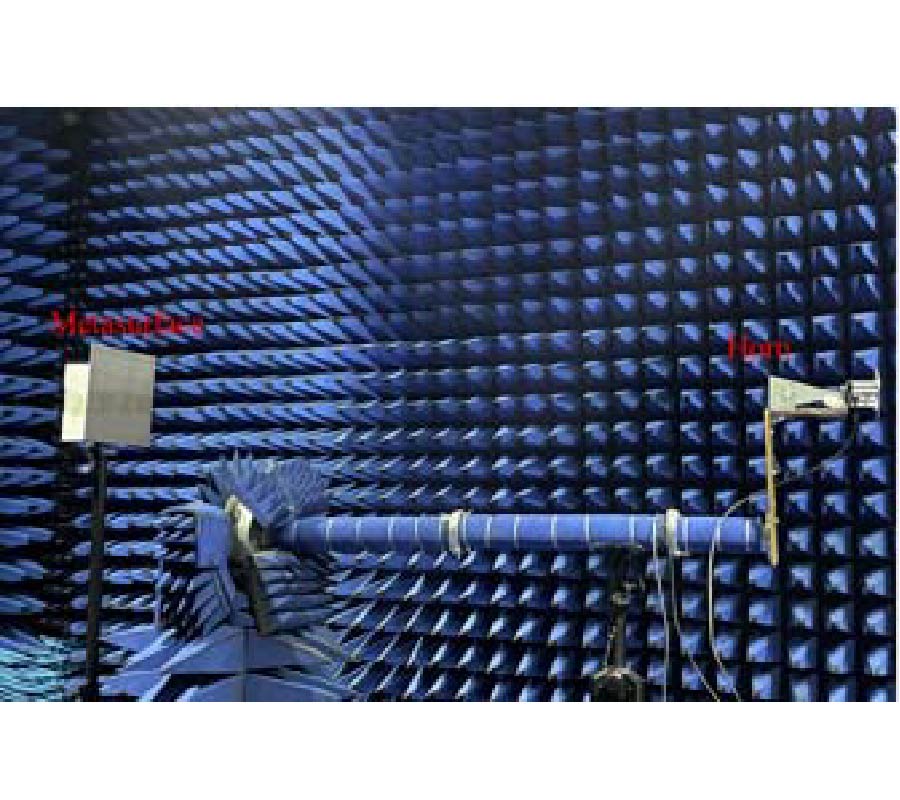
A transmissive single-layer Huygens unit cell based on induced magnetism is proposed to design low-profile and multi-focus metasurface. The Huygens unit cell consists of a pair of antisymmetric metal elements and a dielectric substrate with only 1.2 mm thickness (λ0/6.8 at 37 GHz). The surface currents flowing in the opposite directions form the circulating electric currents to induce the magnetic currents orthogonal to the electric currents. The full coverage of 2π phase is achieved through optimizing the parameters of the metal elements, which solves the problem of the incomplete phase coverage caused by layer number reduction. With Holographic theory, the compensating phase distribution on the metasurface is calculated. The incident plane wave can be converged to designated points in any desired fashion including focal number, location and intensity distribution, which exhibits outstanding manipulation capability. As the simulations and measured results show, the designed metasurface can achieve good multi-focus focusing characteristics. The focusing efficiency at the center frequency is 43.78%, and the relative bandwidth with 20% focusing efficiency exceeds 20%. The designed metasurface has the advantages of low profile, simple processing, and high efficiency, which has a wide range of application prospects in the fields of millimeter wave imaging, biomedical diagnosis and detection.
A SINGLE-LAYER FOCUSING METASURFACE BASED ON INDUCED MAGNETISM
2022-01-02
PIER C
Vol. 117, 173-184
Wideband Four-Port Compact Millimeter-Wave MIMO Antenna Configuration through Defected Ground Structure for Forthcoming 5G Handheld Devices
Abdullah Abdullah , Hamza Ahmad , Muhibur Rahman , Muhammad Haris and Muhammad Salman
We presented a miniaturized defected ground structure-based millimeter-wave (MMW) contemporary MIMO antenna for 5G smart applications devices. The proposed MIMO antenna offers many advantages including high gain, compactness, planar geometry, wide impedance bandwidth, and reduced mutual coupling effects performance. The top layer of the proposed four-port MIMO antenna design comprises 1x2 rectangular patch array structures, with each placed at the middle of a 20x20 mm2 substrate of material (RO4350B) having thickness of 0.76 mm and loss tangent of 0.0037. For miniaturization and better performance, both the ground layer and radiating patches are defected with slots of a rectangular shape while an E-shaped slot is placed at the center of the ground plane. The operating impedance bandwidth of the proposed antenna ranges from 26.4 to 30.9 GHz incorporating the dominant portion of the mm-wave band. The proposed MIMO antenna is also characterized by the fundamental MIMO performance metrics such as Envelope Correlation Coefficient (ECC) which is less than 0.12 for any two-element array that encounters the mandatory standard of <0.5, high Diversity gain (DG) reaching its ideal value of 10 as well as minimum isolation of -19 dB with a total efficiency of 85% at 28 GHz. These characteristics make the proposed compact four-port MIMO antenna one of the best candidates to be used in 5G portable devices.
WIDEBAND FOUR-PORT COMPACT MILLIMETER-WAVE MIMO ANTENNA CONFIGURATION THROUGH DEFECTED GROUND STRUCTURE FOR FORTHCOMING 5G HANDHELD DEVICES
2022-01-02
PIER C
Vol. 117, 159-171
Performance Analysis and Impedance Modeling of Rectangular and Circular Split-Ring Resonator Antennas in 2.4/5.2 GHz Bands
Puneet Sehgal and Kamlesh Patel
In this paper, impedance modeling is presented for analyzing the metallic loading effect on the performance of a split ring resonator (SRR) antenna in (2.4-2.5)/(5.1-5.8) GHz frequency bands. Two SRR antennas of rectangular and circular rings have been designed on ANSYS HFSS software, and their return losses are obtained as -16.63/-25.26 dB at 2.7/5.8 GHz and -10/-20.09 dB at 2.2/5.2 GHz, respectively. Then the metallic loadings are incorporated in both rectangular and circular SRR antennas, which move the peak resonant frequency to 2.5/5.1 GHz with simulated return losses of -14.39/-22 dB for rectangular SRR antenna and to 2.6/5.1 GHz with -17.64/-11.10 dB, respectively for circular SRR antenna. Then, to analyze the effect of metallic loading on SRR antenna performance, a set of equations are derived from the equivalent circuit of the SRR antenna without and with metallic loading to evaluate the lumped elements values. The circular SRR antenna with metallic loading is fabricated, and its measured return loss is found to be -17.94/-15.76 dB at 2.415/5.23 GHz. The lumped component values are calculated from the measured return loss using the derived equations, and these values are compared with those obtained from the simulated return loss for circular SRR antenna. A shift in resonant frequencies towards the desired bands is observed due to the inductive effect of the metallic loading. The axial ratio values higher than 15 dB confirm that the proposed SRR antennas with metallic loadings are linearly polarised. The 2D patterns in E-plane and H-plane, as well as 3D far-field patterns, confirm an omnidirectional radiation pattern for circular SRR antenna, which is useful for WLAN applications.
PERFORMANCE ANALYSIS AND IMPEDANCE MODELING OF RECTANGULAR AND CIRCULAR SPLIT-RING RESONATOR ANTENNAS IN 2.4/5.2 GHZ BANDS
2022-01-02
PIER Letters
Vol. 102, 27-36
Dual Circularly Polarized Wideband Magneto-Electric Dipole Antenna for Wireless Applications
Xiaoxiang Ding , Shinan Wu , Guoqing Yang and Hai Lan
A wideband magneto-electric (ME) dipole with characteristics of dual-circular polarization is presented in this paper. The proposed antenna is composed of four horizontal radiation patches, four pairs of vertical radiation patches, a ground plane, a pair of wideband feeding networks, and novel crossed feeding structures which work as wideband 3-stage impedance matching transitions. The feeding networks which contain a Wilkinson power divider and a coupled-line phase shifter are printed on the bottom of the ground plane, and they can provide stable two-way output wideband signals with quadrature-phase. The proposed antenna works as a ME dipole with a wide operation bandwidth of 53.2% (S11 < -10 dB, and Axial Ratio (AR) < 3 dB) from 1.71 GHz to 2.95 GHz for right-hand circular polarization (RHCP) and 62% from 1.7 GHz to 3.25 GHz for left-hand circular polarization (LHCP), respectively.
DUAL CIRCULARLY POLARIZED WIDEBAND MAGNETO-ELECTRIC DIPOLE ANTENNA FOR WIRELESS APPLICATIONS
2022-01-02
PIER Letters
Vol. 102, 19-26
Bandpass Filter Design with Stub-Loaded Uniform Impedance Resonator and L-Shaped Feed Structure
Yun Xiu Wang , Wei Chao Yang and Min Jiang
Novel microstrip single-band and dual-band bandpass filters (BPFs) are presented in this paper. Firstly, a pair of open-ended stubs of less than λ/4 in length is connected to a uniform impedance resonator (UIR) at two symmetrical positions with respect to its centre, and at the same time other two open-circuited stubs with different lengths are loaded in the middle of the resonator. By virtue of parallel-coupling structure at I/O ports, a single-band BPF is constructed centered at 2.2 GHz with 10.6% 3-dB bandwidth, and two transmission zeros are implemented at the right side of the passband. Next, the L-shaped I/O coupled lines are applied to suppress the inherent spurious response of the stubs-loaded resonator. As a result, a dual-band BPF with two passbands at 2.2 GHz and 5.2 GHz, which is self-contained with three transmission zeros between the two passbands, is constituted. Finally, the proposed bandpass filters are designed and fabricated to provide an experimental validation for the predicted performances.
BANDPASS FILTER DESIGN WITH STUB-LOADED UNIFORM IMPEDANCE RESONATOR AND L-SHAPED FEED STRUCTURE
2021-12-31
PIER
Vol. 172, 61-75
Recent Advances in Transfer Function-Based Surrogate Optimization for EM Design (Invited)
Wei Liu , Feng Feng and Qijun Zhang
This airticle provides a review of transfer function-based (TF-based) surrogate optimization for electromagnetic (EM) design. Transfer functions (TF) represent the EM responses of passive microwave components versus frequency. With the assistance of TF, the nonlinearity of the model structure can be decreased. Parallel gradient-based EM optimization technique using TF in rational format and trust region algorithm is introduced first. Following that, we review the EM optimization using adjoint sensitivity-based neuro-TF surrogate, where the neuro-TF modeling method is in pole/residue format. The adjoint sensitivity-based neuro-TF surrogate technique can reach the optimal EM responses solution faster than the existing gradient-based surrogate optimization methods without sensitivity information. As a further advancement, we discuss the multifeature-assisted neuro-TF surrogate optimization technique. With the help of multiple feature parameters, the multifeature-assisted neuro-TF surrogate optimization has a better ability of avoiding local minima and can achive the optimal EM solution faster than the surrogate optimizations without feature assistance. Three examples are used to verify the above three methods.
RECENT ADVANCES IN TRANSFER FUNCTION-BASED SURROGATE OPTIMIZATION FOR EM DESIGN (INVITED)
2021-12-31
PIER
Vol. 172, 51-60
Wideband High-Reflection Chiral Dielectric Metasurface
Zhipeng Hu , Nan He , Yuwei Sun , Yi Jin and Sailing He
Compared to natural materials, artificial subwavelength structures can enhance chiroptical effects in a stronger way, and the requirement of low material loss and wideband operation is desired in many situations. Here, we propose an all-dielectric chiral metasurface as a periodic array of centrosymmetric staggered silicon cuboid pairs to achieve strong circular dichroism in a wide band. As a demonstration, the designed chiral metasurface may strongly reflect the chosen circularly polarized light with the spin preserved in the operating wavelength range of 1.51~1.60 um while highly transmit (with an efficiency greater than 95%) the opposite circularly polarized light with the spin flipped. Then, two application cases are given for the designed chiral metasurface. A flat chiral meta-lens is constructed to produce wideband focusing in the transmission/reflection side while the disturbing from the opposite circular polarization is well blocked by high reflection/transmission. A chiral Fabry-Perot cavity is also constructed, which has an extremely high quality factor (2.1E4). The proposed method provides an efficient way to produce strong chiroptical effects and has a promising potential for various applications such as signal processing, sensing, radiation and detection.
WIDEBAND HIGH-REFLECTION CHIRAL DIELECTRIC METASURFACE