Search Results(13789)

2022-02-08
PIER
Vol. 173, 1-8
An Ultra-Thin Wideband Reflection Reduction Metasurface Based on Polarization Conversion
Tiancheng Han , Kaihuai Wen , Zixuan Xie and Xiuli Yue
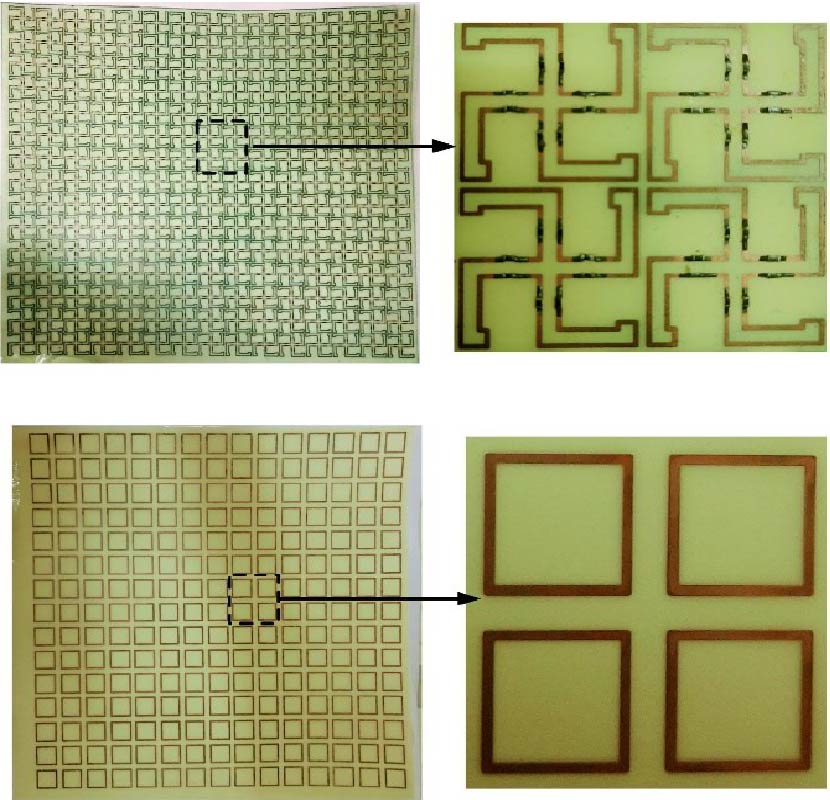
Reflection reduction metasurface is capable of suppressing the radar cross section of a target, which is of great importance in stealth technology. However, it is still a challenge to realize broadband and low-profile simultaneously within a simple design. Here, we experimentally demonstrate an ultra-thin wideband reflection reduction metasurface, which is achieved by utilizing polarization conversion instead of resonant absorption. The simple cut-wire unit cell is adopted to perform efficient cross polarization conversion, which leads to a polarization conversion ratio above 90% ranging from 8.4 to 14.7 GHz. By arranging the 0/1 units in chessboard layout, the reflection reduction reaches 10\,dB from 8.1 GHz to 14.6 GHz. Measured results agree well with simulated ones, which validates the effectiveness of the proposed structure. The ratio of thickness to maximum wavelength reaches 0.56 while the relative bandwidth reaches 57.3%, demonstrating an excellent comprehensive performance. Since our structure consists of refractory ceramic materials, it is promising for radar cross section reduction in high temperature environment.
AN ULTRA-THIN WIDEBAND REFLECTION REDUCTION METASURFACE BASED ON POLARIZATION CONVERSION
2022-02-08
PIER C
Vol. 118, 125-134
Design and Fabrication of COVID-19 Microstrip Patch Antenna for Wireless Applications
Jihan Salah Abdaljabar , Mervat Madi , Asaad Al-Hindawi and Karim Youssef Kabalan
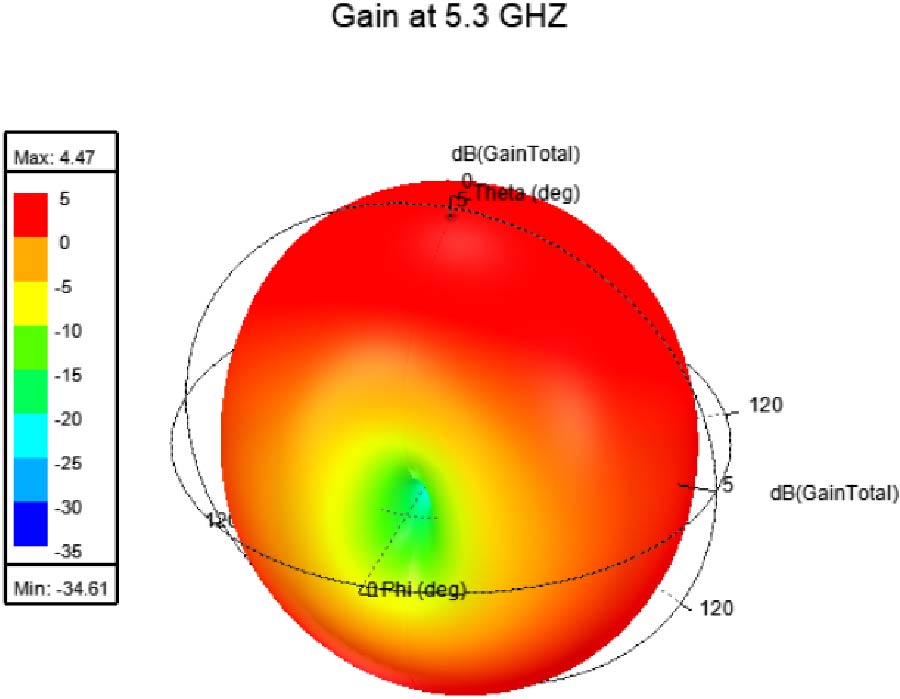
This paper presents a novel unique microstrip fractal patch antenna with a COVID-19 shape designed for wireless applications. The COVID-19 antenna is a compact, miniature size, multiband, low weight, and low-cost patch antenna; the demonstrated patch antenna, simulated using the HFSS software program, consists of a circular printed patch with a radius of 0.4 cm surrounded by 5 pairs of crowns. The antenna is implemented on a double-sided copper plate with an FR4-epoxy substrate of 1x1 cm2 area and 1.6 mm thickness. This small patch operates and resonates on two frequencies 7.5 GHz and 17 GHz within C and Ku bands, respectively. The simulated and measured gains were respectively 0.8 dB and 0.2 dB at the lower frequency and 2.21 dB and 2 dB at the higher frequency. A coaxial probe feeding method is used in the simulation, and printed prototypes showed excellent consistency between measured and simulated resonance frequencies.
DESIGN AND FABRICATION OF COVID-19 MICROSTRIP PATCH ANTENNA FOR WIRELESS APPLICATIONS
2022-02-08
PIER M
Vol. 108, 39-51
Low-Pass Negative Group Delay Modelling and Experimentation with Tri-Port Resistorless Passive Cross-Circuit
Eric Jean Roy Sambatra , Antonio Jaomiary , Samuel Ngoho , Samar S. Yazdani , Nour Mohammad Murad , George Chan and Blaise Ravelo
This paper introduces an original study of low-pass (LP) negative group delay (NGD) circuit. The family of the proposed passive network cross-topology was rarely investigated in the literature. It acts as a tri-port passive circuit presenting a cross-shaped topology. The present study of tri-port passive circuit is originally based on S-matrix modelling. The identification method of LP-NGD function type is established. The considered passive tri-port topology is innovatively constituted by a resistorless LC-passive network. Thanks to the impedance 3-D matrix modelling, the cross-circuit S-parameters are analytically expressed. Then, the NGD analysis at very low-frequencies is presented. The LP-NGD behavior existence condition of the cross-circuit in function of the L and C components is established. The relevance of the tri-port NGD circuit theory is verified by a proof-of-concept of resistorless cross-circuit. Analytical modelling, simulation, and experimentation confirmed the LP-NGD design feasibility with NGD value of about -2 ns and 6.67 MHz cut-off frequency.
LOW-PASS NEGATIVE GROUP DELAY MODELLING AND EXPERIMENTATION WITH TRI-PORT RESISTORLESS PASSIVE CROSS-CIRCUIT
2022-02-08
PIER M
Vol. 108, 27-38
Ultra-Wideband CPW Fed Band-Notched Monopole Antenna Optimization Using Machine Learning
Pinku Ranjan , Ankit Maurya , Harshit Gupta , Swati Yadav and Anand Sharma
In this article, a compact Coplanar Waveguide (CPW) fed band-notched monopole antenna is designed and optimized. The unique feature of this article is to provide an approach for designing an antenna in the best way using machine learning techniques. Machine Learning can be used to speed up the antenna design process. There are five algorithms employed: Decision Tree, Random Forest, XGB Regression, K-Nearest Neighbor (KNN), and Artificial Neural Network (ANN). Among all algorithms, KNN gives the best result with accuracy up to 98%. From the obtained result, we can estimate the dimensions of the desired parameters, which could not be done previously by High Frequency Structure Simulator (HFSS) Electromagnetic (EM) simulator. The optimized antenna design is also fabricated and tested, which confirms its frequency range between 2.9 and 21.6 GHz. Stable radiation features in between the operating frequency range makes it suitable for Ultra-Wideband (UWB) applications.
ULTRA-WIDEBAND CPW FED BAND-NOTCHED MONOPOLE ANTENNA OPTIMIZATION USING MACHINE LEARNING
2022-02-06
PIER C
Vol. 118, 113-123
A New Tunable Dual-Mode Dual-Band Square Cavity SIW Bandpass Filter
Mohammed Fadihl Abbas and Ali J. Salim
A tunable dual-mode dual-band square cavity substrate integrated waveguide (SIW) bandpass filter is proposed. Metalized via-holes are inserted into the center of the cavity as perturbations to move and control the four resonant modes to create the dual passband filter. The first passband is formed by the perturbed TE201 and TE202 modes, while the second passband is formed by the perturbed TE301 and TE302 modes. Moreover, moving the perturbed via-holes on the SIW cavity allows the first passband to be tuned separately while the second passband is almost fixed. A dual-band filter prototype with frequencies of 17 GHz and 19.36 GHz and three transmission zeros (TZs) has been designed, fabricated and measured. The measured and simulated results are in good agreement, confirming the proposed dual-band filter design concept.
A NEW TUNABLE DUAL-MODE DUAL-BAND SQUARE CAVITY SIW BANDPASS FILTER
2022-02-04
PIER C
Vol. 118, 99-112
Dual Band Compact Square Microstrip Antenna for GSM and GPS Applications
Aarti G. Ambekar and Amit A. Deshmukh
The design of a half U-slot loaded square microstrip antenna is proposed for the dual band response offering circular polarization in the second band. On a substrate with thickness of 0.06λg, the half U-slot tunes the spacing in between TM10, TM01 and TM11 resonant modes of the square patch to achieve dual band characteristics. In the two bands, measured impedance bandwidths of 6.49% and 17.36% with a broadside gain > 7.0 dBi are achieved. Against the equivalent square patch, the proposed dual band antenna offers 8% reduction in the patch area. With the achieved antenna characteristics, the proposed configurations satisfy the requirements of GSM 750/GPS L5 band applications.
DUAL BAND COMPACT SQUARE MICROSTRIP ANTENNA FOR GSM AND GPS APPLICATIONS
2022-02-04
PIER M
Vol. 108, 17-26
A Parametric Analysis of Modified Complementary Split Ring Resonator Low-Pass Notch Filter Suitable for the Coexistence of 5.8 GHz DSRC and 5.9 GHz ITS Applications
Alessandro Cidronali , Giovanni Collodi , Stefano Maddio , Lorenzo Pagnini , Marco Passafiume and Giuseppe Pelosi
We present a parametric analysis for a compact notch filter based on meta-material elements, suitable for the mitigation of interferences occurring at 5.9 GHz and impacting a 5.8 GHz DSRC receiver. The filter adopts a defected ground plane structure, which is derived by the class of complementary split ring resonator (CSRR) structures and further developed to improve the selectivity. The designed filter preserves the 5.8 GHz DSRC signal and attenuates the 5.9 GHz ITS-G5 signal of more than 20 dB, thus suited to improve dynamic range of DSRC vehicular receivers. This work introduces the new filter structure characteristics, its design principles, and the corresponding experimental validation.
A PARAMETRIC ANALYSIS OF MODIFIED COMPLEMENTARY SPLIT RING RESONATOR LOW-PASS NOTCH FILTER SUITABLE FOR THE COEXISTENCE OF 5.8 GHZ DSRC AND 5.9 GHZ ITS_ APPLICATIONS
2022-02-04
PIER M
Vol. 107, 243-257
Optimizing Turn-on Angle and External Rotor Pole Shape to Suppress Torque Ripple of a Novel Switched Reluctance Motor
Chaozhi Huang , Jinfeng Duan , Wei Liu and Yuliang Wu
The large vibration and noise of switched reluctance motor (SRM) limits development in the field of electric bicycles. The innovation of the paper lies in reducing torque ripple by advancing the turn-on angle and increasing air-gap permeability in the first half of two phase exchange region. The torque ripple of a novel Multi-Teeth External Rotor SRM (MTER-SRM) is studied in the paper. Firstly, the topology structure, working principle and optimized process of the MTER-SRM are introduced. Secondly, the method to suppress the torque ripple by advancing turn-on angle is proved theoretically. The effect of advancing turn-on angle on torque ripple is analyzed, and turn-on angle is optimized by Finite Element Method (FEM). Thirdly, the mathematical model is built to analyze the change of air-gap permeability in the aligned and unaligned position. The effect of different angles and heights of pole shoe on the torque characteristics is analyzed by FEM, and optimized parameters of single pole shoe size are obtained. Finally, the results show that torque ripple has dropped from 1.5 to 0.4, with the decrease of 73.3%. The multi-physical field results show that the vibration displacement, velocity, acceleration and noise pressure of stator decrease by 83.3%, 52.5%, 52.2%, and 54.2%, respectively. Meanwhile, the vibration test of the prototype also shows that the maximum vibration acceleration has dropped from 0.4 to 0.1, with the decrease of 75%. The vibration and noise of the MTER-SRM is decreased significantly by this method, which can provide a demonstration for developing high performance motor applied in electric bicycle.
OPTIMIZING TURN-ON ANGLE AND EXTERNAL ROTOR POLE SHAPE TO SUPPRESS TORQUE RIPPLE OF A NOVEL SWITCHED RELUCTANCE MOTOR
2022-02-04
PIER Letters
Vol. 102, 135-143
A Compact Circularly Polarized Rotated L-Shaped Antenna with j-Shaped Defected Ground Strucutre for WLAN and V2X Applications
Jayshri Kulkarni , Chow-Yen-Desmond Sim , Ajay K. Poddar , Ulrich L. Rohde and Abdullah G. Alharbi
A novel and compact microstrip-line fed printed antenna for wideband circular polarization (CP) radiation is proposed. The designed antenna utilizes a crescent-shaped substrate, rotated L-shaped monopole, and defected ground structure (DGS) to achieve a wide 3-dB axial ratio (AR) bandwidth and 10-dB impedance bandwidth (ZBW) across the entire 5 GHz Wireless Local Area Network (WLAN) and Vehicle to Everything (V2X) operational bands. As the substrate of the proposed antenna is only 0.8 mm thick, it has a very low profile of 0.014λ in terms of free space wavelength (λ) at 5.5 GHz. The proposed CP antenna exhibits overlapping 10-dB ZBW and 3-dB AR bandwidth (ARBW) of 22.05% (4.80-5.99 GHz), along with broadside far-field patterns, gain greater than 2.5 dBi and efficiency above 85%throughout the desired operating band. Therefore, it is a good candidate for WLAN and V2X communication applications.
A COMPACT CIRCULARLY POLARIZED ROTATED L-SHAPED ANTENNA WITH J-SHAPED DEFECTED GROUND STRUCUTRE FOR WLAN AND V2X APPLICATIONS
2022-02-04
PIER Letters
Vol. 102, 127-134
Noninvasive Continuous Glucose Monitoring on Aqueous Solutions Using Microwave Sensor with Machine Learning
Saeed M. Bamatraf , Maged A. Aldhaeebi and Omar M. Ramahi
In this paper, an electrically-small microwave dipole sensor is used with machine learning algorithms to build a noninvasive continuous glucose monitoring (CGM) system. As a proof of concept, the sensor is used on aqueous (water-glucose) solutions with different glucose concentrations to check the sensitivity of the sensor. Knowledge-driven and data-driven approaches are used to extract features from the sensor's signals reflected from the aqueous glucose solution. Machine learning is used to build the regression model in order to predict the actual glucose levels. Using more than 19 regression models, the results show a good accuracy with Root Mean Square Error of 1.6 and 1.7 by Matern 5/2 Gaussian Process Regression (GPR) algorithm using the reflection coefficient's magnitude and phase.
NONINVASIVE CONTINUOUS GLUCOSE MONITORING ON AQUEOUS SOLUTIONS USING MICROWAVE SENSOR WITH MACHINE LEARNING
2022-02-02
PIER C
Vol. 118, 83-97
High Gain Array Antenna Using Electromagnetic Band Gap Structures for 5G Applications
Sanae Dellaoui , Abdelmoumen Kaabal , Mustapha El Halaoui , Adel Asselman , Saida Ahyoud and Loubna Rmili
This paper proposes a high gain array antenna operating in the Ku-band at 17.5 GHz for 5G applications. This new antenna is printed on an FR-4 substrate of thickness h = 0.8 mm and realized by changing the geometric shape of a rectangular patch, obtained by inserting an L-shaped slot to enlarge the bandwidth (1.5 GHz) and to increase the gain. To further enhance the gain, we used a 1×2 patch antenna array closely spaced and powered by a 1-to-2 Wilkinson power divider. We inserted two high-impedance surface (HIS) structures between the radiating elements and added two electromagnetic band gap (EBG) layers above the antenna. The antenna gain increases from 7.56 dB to 14.8 dB. The design and simulation have been performed by CST Microwave. A minor difference was noted between the measured and simulated data, where a slight shift was observed in the antenna's resonance frequency, which can be caused by fabrication tolerances or measurement error, uncertainty of the thickness of the FR-4 substrate, and quality of SMA connector used. The final array antenna shows a directional radiation pattern with a gain of 14.8 dB and good radiation efficiency over the operating band.
HIGH GAIN ARRAY ANTENNA USING ELECTROMAGNETIC BAND GAP STRUCTURES FOR 5G APPLICATIONS
2022-02-01
PIER M
Vol. 107, 231-242
An Analytic Model for Stripline/Microstrip Potential Using Infinite Series with Mixed Boundary Conditions
James R. Nagel
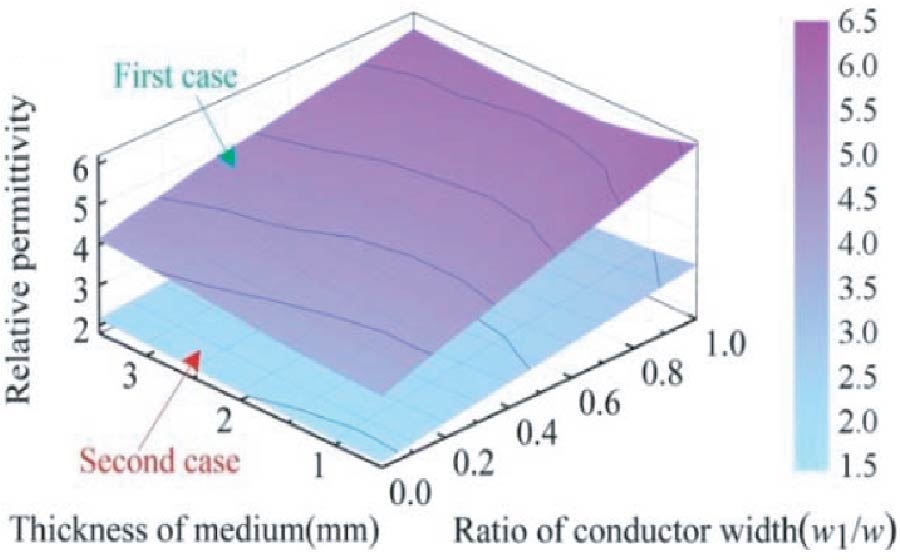
This paper derives an infinite series solution to the Laplace equation for the electric scalar potential of a stripline/microstrip transmission line. Due to the presence of a mixed Dirichlet/Neumann boundary condition, traditional solution methods involving mode orthogonality cannot be applied. Instead, three new solution methods are explored, which are collocation, minimum discrete-squared error (MDSE), and minimum mean-squared error (MMSE). Results yield excellent agreement compared to numerical simulation of capacitance per unit length. However, the Gibbs phenomenon appears to bias the outcome with a small (≈ 0.5%) under-estimation of the true result.
AN ANALYTIC MODEL FOR STRIPLINE/MICROSTRIP POTENTIAL USING INFINITE SERIES WITH MIXED BOUNDARY CONDITIONS
2022-01-31
PIER C
Vol. 118, 71-81
Compact Ultrawideband Monopole Antenna with Continuously Tunable Notch Band Characteristics
Nooshin Moradi , Farid Nazari , Hadi Aliakbarian and Farhad Azadi Namin
In this work, a planar monopole ultrawideband (UWB) antenna with continuously tunable notch band feature is presented. The designed antenna, which has a compact size of 36.6×26×1 mm3, is fabricated on a low-cost FR4 substrate and comprises a circular radiating patch with four rectangular defects, a microstrip feed line, and a partial ground plane to cover the UWB frequency band extending from 3.1 GHz to 12.5 GHz. A semi-elliptical slot is etched out from the circular patch to create the first notch band at 3.6 GHz (WiMAX) in the UWB spectrum. The second notch band is created by embedding an annular slot on the circular patch loaded with a varactor diode to continuously tune the notch frequency from 5.6 GHz to 7.7 GHz in upper WLAN and X-band. To investigate the implementation feasibility of the designed UWB antenna, a prototype is fabricated and experimentally tested.
COMPACT ULTRAWIDEBAND MONOPOLE ANTENNA WITH CONTINUOUSLY TUNABLE NOTCH BAND CHARACTERISTICS
2022-01-30
PIER M
Vol. 108, 1-15
Accurate and Efficient Evaluation of the Scattering of Bodies of Revolution Based on Magnetic Field Integral Equation
Fahimeh Sepehripour and Martijn Constant van Beurden
The integrals arising in magnetic field integral equation (MFIE) can become highly singular, rendering their numerical computation extremely challenging. Here, we propose a technique by which the singular integrals of the MFIE can be accurately and efficiently evaluated. In this technique, the corresponding integrals are separated into singular and regular parts. The regular parts are computed using a very simple Fast Fourier transform, whereas the remaining singular parts are evaluated based on two three-terms recurrence relations. The accuracy of the proposed method is demonstrated by analyzing the scattering of various bodies with smooth or non-smooth geometries and comparing the results with the literature.
ACCURATE AND EFFICIENT EVALUATION OF THE SCATTERING OF BODIES OF REVOLUTION BASED ON MAGNETIC FIELD INTEGRAL EQUATION
2022-01-30
PIER Letters
Vol. 102, 119-125
An Ultra-Broadband Unidirectional Coaxial Waveguide Based on YIG
Dechun Zheng , Zhuo-Yuan Wang , Qian Shen and Xu Li
The planar physical model of ultra-broadband unidirectional waveguide based on surface magnetoplasmons (SMPs) has been derived and calculated in detail, but the coaxial physical model of ultra-broadband unidirectional waveguide based on SMPs has not been reported. Based on the gyromagnetic properties of Ferrite (taken yttrium iron garnet as an example, abbreviated as YIG), a novel ultra-broadband unidirectional coaxial waveguide is proposed in this paper. The basic model of the waveguide is a multilayer coaxial waveguide system composed of metal-layer-YIG-YIG-metal wire. The magnetization vectors of two middle YIGs are equal and opposite. Theoretical analysis and simulation results show that the waveguide supports two unidirectional transmissions, and both unidirectional bands have excellent properties of immune scattering and back reflection. The waveguide system has the characteristics of simple structure, immune scattering, and ultra-broadband unidirectional band, which is expected to be used in all-photon communication system.
AN ULTRA-BROADBAND UNIDIRECTIONAL COAXIAL WAVEGUIDE BASED ON YIG
2022-01-28
PIER C
Vol. 118, 61-70
Analysis of UUV Whip Antenna Radiated Power and Optimal Working Frequency in Seawater Environment
Menglei Xiu , Lihua Li , Shimin Feng , Wenda Hou and Longfei Wang
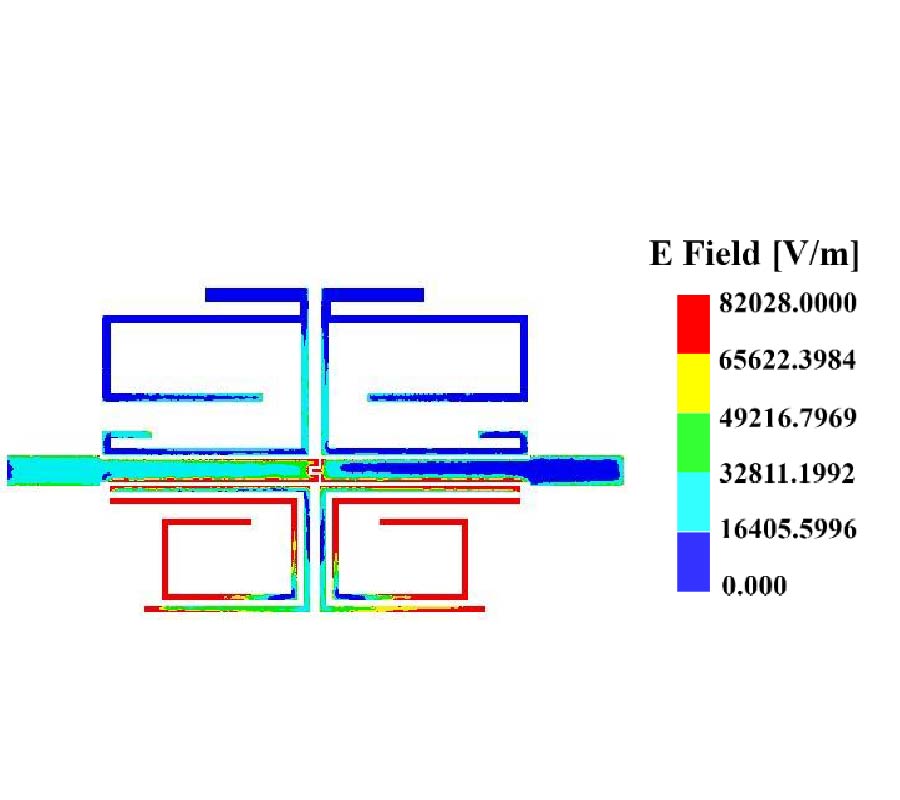
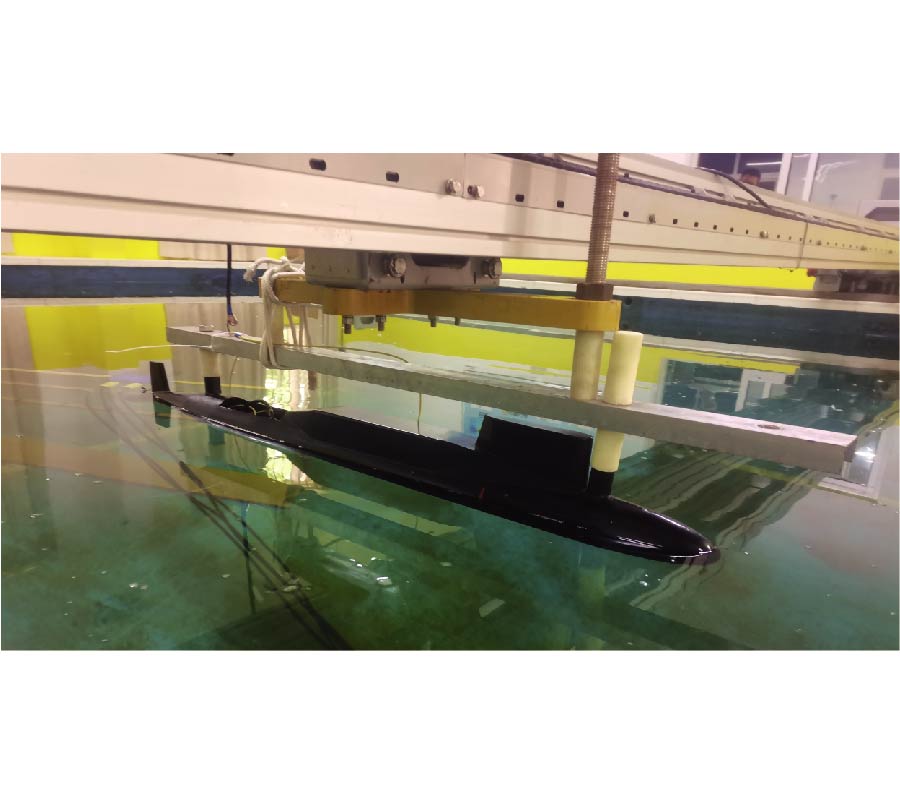
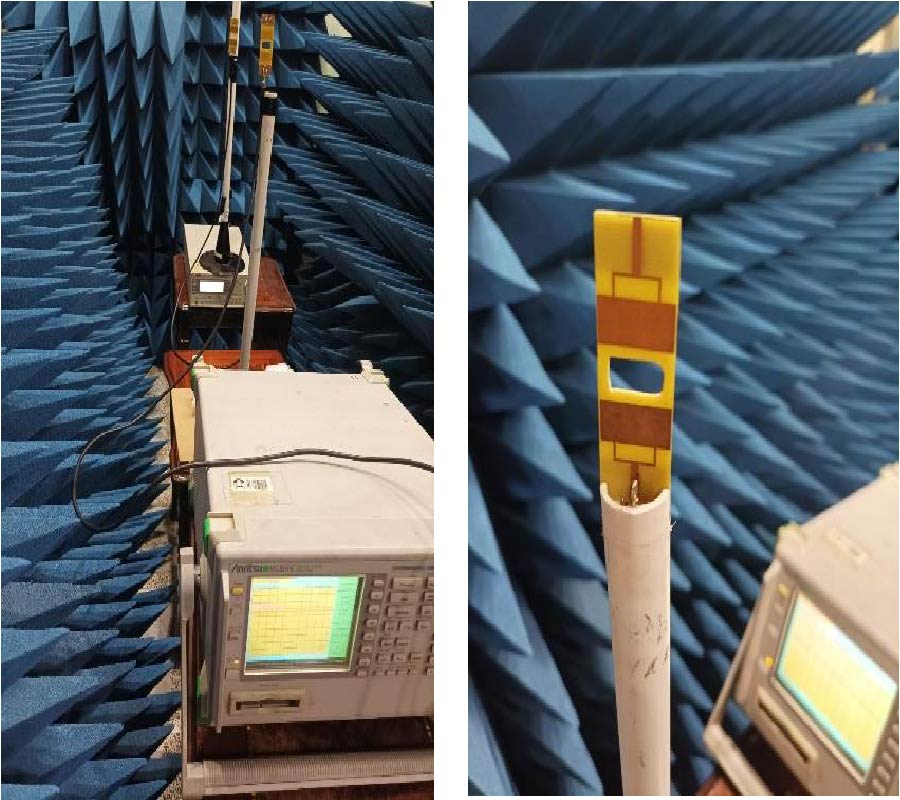
In order to analyze the working status of the underwater unmanned vehicle not fully surfaced, the optimal working frequency when the whip antenna radiates the maximum power is given. The input impedance of the antenna on the water is theoretically calculated. It is regarded as the load of the underwater part of the antenna, and the total input impedance of the whip antenna is obtained. The relationship between the antenna radiated power to the external field and the input power is analyzed, and the optimal operating frequency corresponding to the maximum radiated power is determined. Using simulation experiments and actual measurements, the radiated power of the 1 m whip antenna when being immersed in seawater at 0.25 m, 0.5 m, 0.75 m is obtained, and the corresponding optimal working frequency is calculated, which are in good agreement with the theoretical deduction results. The results show that as the depth of the antenna immersed in seawater increases, the power radiated from the antenna to the external field decreases, and the optimal working frequency increases accordingly.
ANALYSIS OF UUV WHIP ANTENNA RADIATED POWER AND OPTIMAL WORKING FREQUENCY IN SEAWATER ENVIRONMENT
2022-01-28
PIER Letters
Vol. 102, 109-117
Low Losses and Compact Size Microstrip Diplexer Based on Open-Loop Resonators with New Zigzag Junction for 5G Sub-6-GHz and Wi-Fi Communications
Souhaila Ben Haddi , Asmaa Zugari and Alia Zakriti
In this paper, a high-performance microstrip diplexer is designed and manufactured. The design is based on two pairs rectangular open-loop resonators band-pass filters and a novel zigzag junction. It operates at 3.5 GHz for fifth-generation 5G sub-6-GHz and 5 GHz for Wi-Fi communications. The proposed diplexer is considerably miniaturized with a global compact size of 30×17 mm2. In addition, it presents low insertion losses less than 0.5 dB at both channels in comparison with the previous diplexers. Moreover, the isolation is higher than 20 dB, and the return loss is better than 14 dB at the bandwidths. To confirm the simulation results, the presented diplexer is manufactured and measured where a good agreement is carried out.
LOW LOSSES AND COMPACT SIZE MICROSTRIP DIPLEXER BASED ON OPEN-LOOP RESONATORS WITH NEW ZIGZAG JUNCTION FOR 5G SUB-6-GHZ AND WI-FI COMMUNICATIONS
2022-01-27
PIER C
Vol. 118, 43-59
Ultra-Wideband Reflectarray Antenna Using Two Layers Square-Loop Frequency Selective Surfaces
Ali Mohammad and Ali Hassan
This paper aims to design an ultra-wideband reflectarray using True Time Delay technique that depends on compensate for the path differences of the electromagnetic waves between the feed and reflectarray surface, and reradiate them in-phase as a planar wave. The reflectarray surface is composed of numerous radiating elements. The reflecting surface is divided into several concentric annular zones; each of them has equal path delays of the electromagnetic waves. The radiating elements in each zone are implemented with two-layer square-loop type Frequency Selective Surface (FSS) structures. A TTD reflectarray with a diameter of 250 mm fed with a centered ku-band pyramidal horn antenna is studied and designed and fabricated to operate at the center frequency of 15 GHz. The proposed reflectarray provides a gain of 26.42±2 dB in the 12-18 GHz range achieving a fractional bandwidth of 40%. The simulated radiation patterns are stable with cross-polarization level below -40 dB and side-lobes level below -15 dB over the entire operating frequency range. The simulated phase efficiency is about 56% at the center frequency of 15 GHz.
ULTRA-WIDEBAND REFLECTARRAY ANTENNA USING TWO LAYERS SQUARE-LOOP FREQUENCY SELECTIVE SURFACES
2022-01-27
PIER M
Vol. 107, 217-229
In-Situ Measurement Method of Radiation Emission Based on Non-Uniform Array and Adaptive Noise Cancelling
Shouyang Zhai , Hezhihan Fan , Zhongyuan Zhou , Yan Chen , Dan Chen , Xiang Zhou and Li Ma
For the coexistence of SUT (System Under Test) radiative emission signal and ambient interference signal, the amplitude of SUT signal will be submerged by the amplitude of interference signal, so it is difficult to accurately measure the amplitude of SUT signal. In this paper, a two-level nested array is used as the receiving array antenna, and the mixed matrix estimation method based on Blind Source Separation (BSS) is used to separate the coherent groups of the signal. Then the Sparse Reconstruction method is used for the DOA (Degree Of Arrival) estimation of each coherent group of the signal. After the DOA information of each signal is obtained, beamforming method is used to form beams of the main channel and auxiliary channel. The beam of the main channel outputs without distortion in the direction of the SUT signal and forms zero traps in the direction of the coherent signals, while the beam of the auxiliary channel forms zero traps in both the direction of the SUT signal and the direction of the coherent signal. The data received by the array are respectively multiplied by the weights of the main channel and auxiliary channel to obtain the output signals of the two channels. The output signals of the two channels are respectively fed into the Adaptive Noise Cancellation (ANC) system, and the ANC method is used to suppress the ambient interference signals and restore the SUT signal. Simulation and experiment results show that this method can accurately estimate DOA of radiation emission signals, effectively suppress ambient signals and restore the signal of SUT in field measurement of radiation emission.
IN-SITU MEASUREMENT METHOD OF RADIATION EMISSION BASED ON NON-UNIFORM ARRAY AND ADAPTIVE NOISE CANCELLING
2022-01-26
PIER C
Vol. 118, 25-41
Wide-Band Frequency Tunable Antenna for 4G, 5G/Sub 6 GHz Portable Devices and MIMO Applications
Shivleela Mudda , K. M. Gayathri and Mudda Mallikarjun
A compact (25×28×1.57 mm3) and wide-band multimode frequency tunable antenna with defected ground structure (FRDGS) for 4G and 5G conformal portable devices and multi-band wireless systems is presented in this article. In a previous study, frequency reconfigurable antenna designs only used the method of adding slots on the patch or ground. In this study, a combination of multiple slots, partial ground, and defective ground structure techniques were utilised to attain the advantages of compactness, wide impedance bandwidth, and steady radiation pattern. Multiple slots on the top layer of the substrate and F-shaped slot etched at the bottom makes the proposed antenna. Two PIN diodes are inserted in the F-shaped slot for frequency reconfiguration, allowing the antenna to switch between different resonances. Ansys high frequency structure simulator 15.0v is used to simulate the antenna parameters. This antenna performance is demonstrated using measured and simulated data. The simulated and measured results clearly show that the proposed antenna can switch between six dissimilar resonant frequency bands via various modes of operation across the frequency spectrum from 2.3 to 8.9 GHz. The antenna works in a variety of commercial bands, such as WLAN/Bluetooth (2.4-2.5 GHz), LTE/4G (2.3-2.7 GHz), S-band (2-4 GHz), Radio Navigation (2.7-2.9 GHz), and 5G/sub-6 (3.3-4.9 GHz), according to simulations and experiments. The proposed design features narrowband, wideband, and ultra-wideband properties with a consistent radiation pattern, adequate gain (1.6 to 5.8 dB), and high radiation efficiency (86 to 94%) in a small package. Furthermore, the performance comparison of the proposed antenna with that of the state-of-the-art antennas in terms of compactness, frequency reconfigurability, number of operating bands, and impedance bandwidth demonstrates the novelty of the proposed antenna and its potential application in multiple wireless applications.
WIDE-BAND FREQUENCY TUNABLE ANTENNA FOR 4G, 5G/SUB 6 GHZ PORTABLE DEVICES AND MIMO APPLICATIONS