Search Results(13789)

2021-10-29
PIER C
Vol. 116, 157-169
17-30 GHz Reliable and Compact Analog Phase Shifter Using Lateral Micromachined SP7T Switches, and DMTL Arrays
Sukomal Dey , Shiban Kishen Koul , Ajay K. Poddar and Ulrich L. Rohde
In this work, a radio frequency (RF) micro-electromechanical system (MEMS) based analog phase shifter is presented over 17-30 GHz. The proposed phase shifter is made using two back-to-back single-pole-seven-throw (SP7T) switches and connected through seven distributed MEMS transmission lines (DMTL). The SP7T switch is designed with lateral electrostatic actuation and demonstrates measured average return loss of > 11.3 dB, insertion loss of < 5.94 dB, and isolation of > 22 dB up to 30 GHz. Total area of the SP7T switch is only 0.89 mm2 including bias lines and pads. The proposed wide-band phase shifter can be tuned at all the frequencies between 17 and 30 GHz. Phase shifter gives measured average insertion loss of < 6.94 dB, return loss of > 10 dB, and phase error of ~10 at 17 GHz to 30 GHz over 500 MHz bandwidth. All phase shifts can be tracked with a resolution of 22.50 based on predefined actuation voltages. Total area of the fabricated device is ~11.72 mm2. In addition, switches and phase shifter work satisfactorily > 1 billion cycles with 0.1-1 W of RF power. The proposed phase shifter bank gives phase shifting performances at each frequency over 17-30 GHz with a constant resolution utilizing analog tuning, and it operates > 1 billion cycles of reliability with 1 W of RF power.
17-30 GHZ RELIABLE AND COMPACT ANALOG PHASE SHIFTER USING LATERAL MICROMACHINED SP7T SWITCHES, AND DMTL ARRAYS
2021-10-29
PIER Letters
Vol. 101, 19-27
Design of a Novel Microwave Plasma Source Based on Ridged Waveguide
Pingping Deng , Wei Xiao , Fengxia Wang and Zhengping Zhang
The tapered waveguide as a microwave plasma excitation structure is widely used in the industrial field. However, it needs high input microwave power to ignite and sustain plasma because its electric field is not sufficiently focused in the discharge area. In order to solve this problem, this paper proposes a novel microwave plasma source based on a ridged waveguide. The structure of the proposed microwave plasma source is optimized to focus the electric field in the discharge region by electromagnetic calculations before the plasma excitation. Then, the equivalent circuit model is used to analyze the impedance matching characteristics of the novel device after the plasma excitation. In order to validate this device, a microwave plasma system is built to measure the plasma exciting power and sustaining power in both air and argon at atmospheric pressure. The simulation and experiment are carried out in both tapered waveguide and the proposed device. Simulation results show the electric field of the ridged waveguide is 1.9 times of that of the tapered waveguide when the input power is 1500 W. Moreover, in the experiments, the exciting power and sustaining power of the air and argon plasma in the novel device are lower than those of the tapered waveguide at different gas flow rates.
DESIGN OF A NOVEL MICROWAVE PLASMA SOURCE BASED ON RIDGED WAVEGUIDE
2021-10-29
PIER Letters
Vol. 101, 11-17
Spur Line Implanted Orthogonal Microstrip-Fed Ultra Wideband MIMO Linear Taper Slot Antenna with WLAN Band Rejection
Chittajit Sarkar and Susobhan Ray
A compact ultra-wideband Multiple-Input-Multiple Output (MIMO) orthogonal microstrip fed linear tapered slot antenna (LTSA) is planned for frequency notched applications. The projected MIMO antenna comprises of two indistinguishable linear tapered slot antennas excited by two orthogonal microstrip feeds. In this paper, double split-ring resonators (DSRRs) are suggested to develop the isolation between two linear tapered slot antenna elements. A quarter wavelength spur line is entrenched on the feeding part of the micro-strip antenna to attain the notch frequency. The L-shaped spur line adds to the notch frequency at 5.5 GHz targeted to dodge interference from 5-6 GHz WLAN band. The planned antenna is fabricated and labelled in terms of impedance and radiation parameter measurements, compliant with that of properties achieved from full wave simulation. The antenna has congruous gain and well-built radiation pattern. Radiation pattern portrayal confirms high gain in the end-fire direction.
SPUR LINE IMPLANTED ORTHOGONAL MICROSTRIP-FED ULTRA WIDEBAND MIMO LINEAR TAPER SLOT ANTENNA WITH WLAN BAND REJECTION
2021-10-29
PIER Letters
Vol. 100, 169-175
Near Field RFID Tag for IoT in Sub-Six GHz Band
Walaa Hassan , Tamer M. Ali and Ahmed Attiya
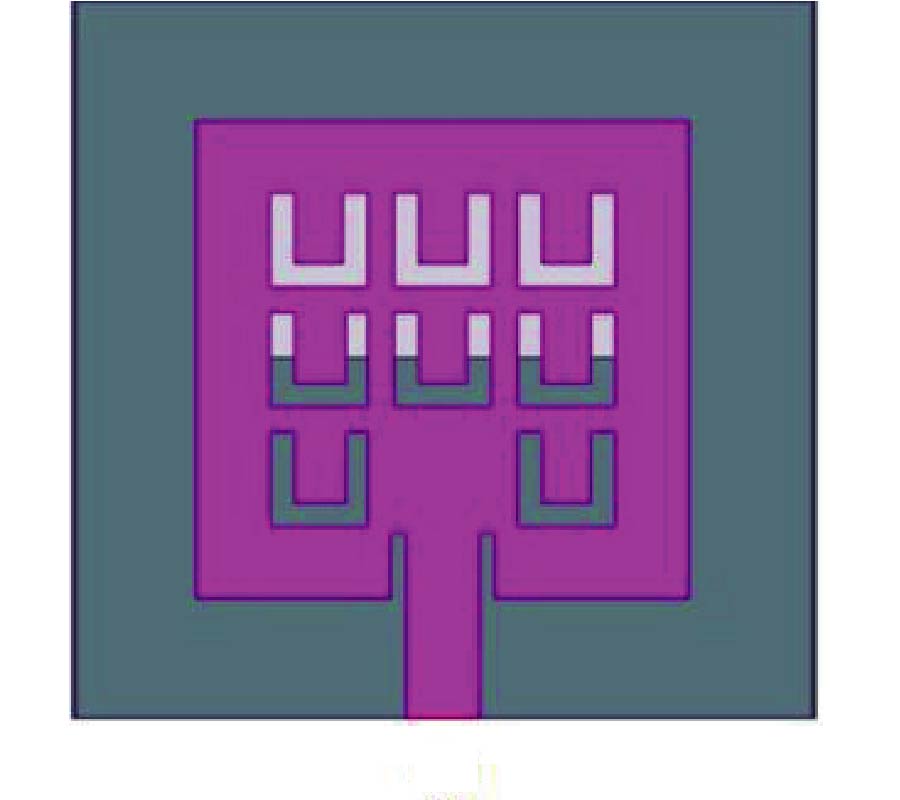
The present paper introduces the analysis and design of a near field RFID tag for IoT in sub-six GHz 5G frequency band. The proposed radio frequency identification technique is based on the near field interaction between the RFID tag and a wideband antenna reader. This near field interaction adjusts the resonances of the wideband antenna according to the used RFID tag. In addition, the far field RCS of the RFID tag is also investigated to study the relation between the near field and the far field responses of the proposed RFID tag. The proposed RFID tag is characterized with adjustable six resonances based on concentric square rings printed on a dielectric slab. For manufacturing and experimental verification, the dielectric slab is assumed to be FR-4. However, the proposed structure can be generalized to other thin and flexible substrates like paper, plastic and textile.
NEAR FIELD RFID TAG FOR IOT IN SUB-SIX GHZ BAND
2021-10-28
PIER Letters
Vol. 101, 1-10
Radio-Propagation Measurement Based on a Low-Cost Software Defined Radio
Marcelo Bender Perotoni , Felipe A. A. Silva and Marcos S. Vieira
This article reports the development and test of a radio-propagation measurement system based on an 8-bit software-defined radio. Tests are performed in an urban area at the frequency of 733 MHz and compared with numerical prediction from the Altair WinProp commercial suite. The system is portable (1.2 kg), low-cost, based on non-proprietary open-source tools and has the capability of tracking the GPS coordinates of the measured points. Frequency limit of the system is bounded by the software-defined radio in use, and the limit of this present case spans 24 MHz to 1700 MHz. The integrated system does not need user intervention after its initial setup can be operated autonomously.
RADIO-PROPAGATION MEASUREMENT BASED ON A LOW-COST SOFTWARE DEFINED RADIO
2021-10-23
PIER Letters
Vol. 100, 159-167
Highly Flexible Uniplanar Dual-Band Power Divider for Arbitrary Source and Load Impedances
Rahul Gupta , Maher Assaad and Mohammad S. Hashmi
In this paper, a dual-band impedance transforming power divider is investigated for all types of impedance environments at its ports, irrespective of the locations of the ports. The intuitive design approach utilizes conventional single-band Wilkinson Power Divider (WPD) architecture to provide the superior dual-band performance with arbitrary port impedances. The proposed power divider also accords a high degree of design flexibility with high frequency ratios (r) and impedance transformation ratios (k). The presented concept is evaluated and verified by design examples and measurements with a fabricated prototype. The agreement between the simulation and measurement results validates the working of the proposed architecture with arbitrary source and load port impedances at two arbitrary design frequencies.
HIGHLY FLEXIBLE UNIPLANAR DUAL-BAND POWER DIVIDER FOR ARBITRARY SOURCE AND LOAD IMPEDANCES
2021-10-22
PIER
Vol. 171, 137-158
Calculations of Bands and Band Field Solutions in Topological Acoustics Using the Broadband Green's Function-KKR-Multiple Scattering Method
Leung Tsang , Tien-Hao Liao and Shurun Tan
In this paper, we apply the BBGF-KKR-MST (Broadband Green's function-KKR-Multiple Scattering Theory) to calculate Band Structures and Band Field Solutions in topological acoustics. A feature of BBGF is that the lattice Green's functions are broadband, and the transformations to cylindrical waves are calculated rapidly for many frequencies for speedy calculation of the determinant of the KKR equation. For the two bands of interest, only 5 cylindrical waves are sufficient so that the dimension of the eigenvalue matrix equation is only 5. The CPU time requirement, including setup and using MATLAB on a standard laptop, is 5 milliseconds for a band eigenvalue. Using the eigenvalue and the scattered field eigenvector, the field in the cell is calculated by higher order cylindrical waves. The exciting field of higher order cylindrical waves requires only 11 coefficients to represent the band field solutions in the cell. Comparisons are made with the results of the volume integral equation method and the commercial software COMSOL. The BBGF-KKR-MST method is significantly faster.
CALCULATIONS OF BANDS AND BAND FIELD SOLUTIONS IN TOPOLOGICAL ACOUSTICS USING THE BROADBAND GREEN'S FUNCTION-KKR-MULTIPLE SCATTERING METHOD
2021-10-21
PIER
Vol. 171, 123-135
A Novel Model of Unipolar Induction Phenomena Based on Direct Interaction Between Conductor Charges
Christof Baumgärtel , Ray T. Smith and Simon Maher
Unipolar induction has been a heavily discussed phenomenon in the realm of electrodynamics, with research and experiments proposing and supporting different ways to explain the observed effects. This paper presents a novel model to predict induced electromotive forces in a Faraday generator, based on direct interaction between conductor charges. It is compared with predictions that are usually obtained through considerations of Lorentz force, flux linking or flux cutting rules. A standard apparatus provides additional experimental measurements that show good agreement with the theory.
A NOVEL MODEL OF UNIPOLAR INDUCTION PHENOMENA BASED ON DIRECT INTERACTION BETWEEN CONDUCTOR CHARGES
2021-10-21
PIER Letters
Vol. 100, 151-157
Miniaturized Broadband Quadrature Hybrid Coupler with Phase Shifter
Soheyl Soodmand , Mark Beach and Kevin Morris
A 3-dB compact hybrid coupler is presented in this paper in an ultra-wideband frequency range from 1.5 GHz to 3.2 GHz with 90˚ phase deference between the two output ports. The proposed coupler is formed by two notched elliptically shaped microstrip lines and four phase shifters, which are broadside coupled through an elliptically shaped slot. A combination of impedance matching technique and structural modification then has been employed to increase coupler efficiency. The design is demonstrated assuming a 0.51-mm-thick Rogers RO4350B substrate. Results of simulation and measurements show that the designed device exhibits a coupling of 3±1 dB across the aimed bandwidth. This ultra-wideband coupling is accompanied by smooth isolation in the order of better than 25 dB and return loss in the order of better than 17 dB. The manufactured device including microstrip ports and phase shifters occupy an area of 35 mm × 30 mm × 1.1 mm (0.27λ × 0.23λ × 0.009λ) which makes it a compact suitable device for UHF applications and measurements, specifically measuring and determining isolation in in-band full duplex transceivers, because of its smooth isolation versus frequency and ultra-wideband bandwidth.
MINIATURIZED BROADBAND QUADRATURE HYBRID COUPLER WITH PHASE SHIFTER
2021-10-20
PIER B
Vol. 94, 53-74
Enhancing Detection Performances of Nonhomogeneous Weibull Clutter by Knowledge Based Systems Exploitation
Abdellatif Rouabah , M'hamed Hamadouche , Djamal Teguig and Hamza Zeraoula
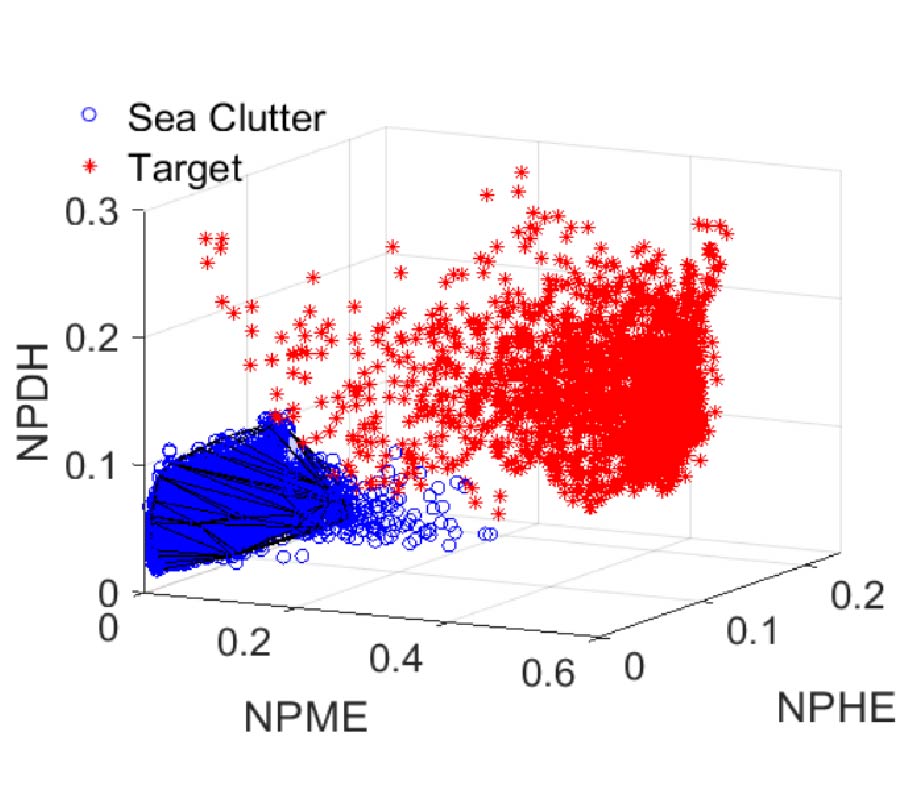
This article aims to study the behavior of Constant False Alarm Rate (CFAR) detectors for a heterogeneous Weibull clutter and its derivatives. CFAR architectures based on exploitation of the Combined Environmental Knowledge Base (CEKB) have been proposed, called Knowledge Based Systems-Maximum Likelihood-CFAR (KBS-ML-CFAR) and KBS-Log-t-CFAR for nonhomogeneous Weibull clutter at general parameters. A CFAR architecture that uses Geographic Information System (GIS) as a Knowledge Base (KB), called KBS-Forward Automatic Order Selection Ordered Statistics-CFAR (KBS-FAOSOS-CFAR) has been proposed for special Weibull parameters. The performances of the proposed detectors have been studied and analyzed by conducting MATLAB simulations. The simulation results show that the KBS-CFAR based on CEKB outperforms the ML and Log-t-CFAR in terms of clutter edge detection capability in nonhomogeneous Weibull clutter case. Compared with other KB, this KBS-CFAR based on CEKB performs well to preserve the probability of false alarm (Pfa) at a desired constant value. For special Weibull parameters, the proposed KBS-FAOSOS-CFAR based on GIS performs better than KBS-Dynamic-CFAR and KBS-Adaptive Linear Combined-CFAR (KBS-ALC-CFAR) in severe interference case. CFAR techniques have been implemented on the ADSP (Advanced Digital Signal Processor) processing board, and the results have been evaluated and discussed.
ENHANCING DETECTION PERFORMANCES OF NONHOMOGENEOUS WEIBULL CLUTTER BY KNOWLEDGE BASED SYSTEMS EXPLOITATION
2021-10-20
PIER M
Vol. 105, 131-140
A Wideband Circular Patch Antenna with Pattern Diversity and Reduced Sidelobes
Sai Radavaram and Maria Pour
A wideband circular patch antenna with broadside and conical radiation patterns is proposed. In addition to realizing a wide shared impedance bandwidth of ~48% for both the modes of operation, the unparalleled advantage of the proposed antenna is its reduced sidelobes in the E-plane broadside radiation patterns. The achieved sidelobe-free bandwidth is in the order of 39%, which is much wider than the pertinent art works on wideband pattern diversity antennas using a single radiating patch. The antenna characteristics are validated by fabricating and testing the designed prototype. The proposed antenna is also numerically investigated in front of a parabolic reflector antenna for monopulse radar applications.
A WIDEBAND CIRCULAR PATCH ANTENNA WITH PATTERN DIVERSITY AND REDUCED SIDELOBES
2021-10-20
PIER M
Vol. 105, 119-129
Compensation Effect in the Conductive Auroral Regions of the Terrestrial Atmosphere
George Jandieri , Akira Ishimaru and Nino F. Mchedlishvili
Oblique incidence of small-amplitude electromagnetic wave on an anisotropic conductive collision semi-infinite turbulent plasma slab under the influence of a homogeneous magnetic field is considered. The conditions of both the ordinary and extraordinary waves' propagation along and transversal directions with respect to the external magnetic field in a homogeneous absorbing collisional magnetoplasma are obtained. Second order statistical moments of the spatial power spectrum of a scattered radiation in the polar ionosphere are calculated for the arbitrary correlation function of electron density fluctuations using the geometrical optics approximation. External magnetic field, oblique incidence of electromagnetic wave on a plasma slab, anisotropy of both ionospheric conductivity and dielectric permittivity, also elongated plasma irregularities in the auroral region of the terrestrial atmosphere are taken into account. The direction along which these asymmetric factors compensate each other is established. The conditions of the "Compensation Effect" are obtained: the spatial power spectrum not broadens, and its maximum is not displaced. Second order statistical moments of a scattered radiation: the shift of maximum and the broadening of the spatial power spectrum in the main and perpendicular planes are investigated analytically and numerically for the power law spectrum of the anisotropic ionospheric plasmonic structures using the experimental data.
COMPENSATION EFFECT IN THE CONDUCTIVE AURORAL REGIONS OF THE TERRESTRIAL ATMOSPHERE
2021-10-20
PIER M
Vol. 105, 109-118
Frequency and Time Domain Analysis of Triple Band Notched UWB Antenna with Integrated Bluetooth Band
Brij Kumar Bharti , Abhay Kumar Singh , Raksh Pal Singh Gangwar and Reeta Verma
This paper presents, time and frequency domain analysis of a compact tri-band notched UWB (ultra-wideband) antenna with integrated Bluetooth frequency for wireless applications. Modifications in radiating element and DGS techniques are used to achieve high impedance bandwidth. The antenna operates at UWB frequency band 3.1-10.6 GHz as well as bluetooth frequency 2.4 GHz. The band notch characteristics are at Wi-MAX (3.3-3.7 GHz), WLAN (5-6 GHz), X-Band Satellite communication (7.1-7.76 GHz). These notches are obtained by etching different slots in ground plane and in radiating element. Gain, group delay, pulse transmission and radiation patterns of the proposed antenna are also investigated. A prototype of antenna is fabricated and reflection coefficient is measured. A comparison has been made between proposed antenna and previously published UWB antennas.
FREQUENCY AND TIME DOMAIN ANALYSIS OF TRIPLE BAND NOTCHED UWB ANTENNA WITH INTEGRATED BLUETOOTH BAND
2021-10-20
PIER Letters
Vol. 100, 145-150
Design and Fabrication of a Liquid Crystal-Based 94 GHz 360° Phase Shifter for Reflectarray Antennas
Rongxin Mao , Junjie Xu , Xianping Li , Shuangyuan Sun , Xiangxiang Li , Jun Yang , Zhiping Yin , Guangsheng Deng and Hongbo Lu
In this work, we propose a liquid crystal (LC)-based double-dipole phase shifter. By manipulating the electric field, we change the resonant frequency and phase of the electromagnetic wave by deflecting the orientation of LC molecules. We made the LC-based device with a 30 × 30 array of two parallel unequal dipoles on a Quartz substrate. The substrate has an area and thickness of 4×4 cm2 and 480 μm, respectively. The experimental results show that the phase shift of 0°-385.4° is achieved at 94 GHz by changing the applied bias voltage on the LC layer from 0 V to 8.4 V. The phase shift is greater than 360° in the range 91.75-94.85 GHz. When the LC molecules are most significantly affected by the electric field, the maximum precision of phase shift is 4.08° with a bias voltage of 2 mV.
DESIGN AND FABRICATION OF A LIQUID CRYSTAL-BASED 94 GHZ 360° PHASE SHIFTER FOR REFLECTARRAY ANTENNAS
2021-10-19
PIER M
Vol. 105, 99-108
Improvement of the Performance of Free Space Optics Channel Based on Optimized Systems Parameters
Haider J. Abd , Sukaina Abdullah AL-Bairmani and Mustafa Ismael
With the technology of free space optical communication, information can be transmitted from the transmitter to receiver wirelessly without the necessity of fiber optic cables. This technology offers system security, extended bandwidth, high data rate, and simple installation. This work aims to improve the optical channel based on the optimization of different optical amplifiers and filters. Performance analysis is carried out using a rectangular optical filter (ROF) and two electrical amplifiers named automatic gain control (AGC) and transimpedance amplifier (TIA). The results are presented in terms of maximum quality factor as a function of link range. The proposed systems (represented by ROF and AGC) brought better performance than traditional one (represented by TIA) via the same link range and data rates used. The findings displayed the progress of the AGC which has better quality factor than TIA and ROF. For instance, at 5 m length, the AGC achieves a maximum Q-factor of 12.29, while the ROF and ATI reveal a Q-factor in the range of 9.8 and 7.01 respectively.
IMPROVEMENT OF THE PERFORMANCE OF FREE SPACE OPTICS CHANNEL BASED ON OPTIMIZED SYSTEMS PARAMETERS
2021-10-19
PIER Letters
Vol. 100, 137-143
Broadband Surface-Mount Differential-Fed Dipole Antenna and Its Array for 5G Millimeter-Wave Applications
Xiubo Liu , Wei Zhang , Dongning Hao and Yanyan Liu
This letter proposes a differentially-fed broadband dipole and its 1×8 array. The antenna achieves cost-effectiveness by using a low-cost FR4 substrate. The antenna obtains surface mount capability due to the ball grid array (BGA) package. The measured results show that the proposed antenna array achieves a wide impedance bandwidth of 37.8% (24-35.2 GHz). The gain of the 1×8 array is greater than 10.1 dBi, and the cross-polarization level in the main beam direction is less than -20 dB. the radiation pattern of the 1×8 array is stable and unidirectional. The proposed antenna array covers the 5G N257 (26.5-29.5 GHz), N258 (24.25-27.5 GHz), and N261 (27.5-28.35 GHz) bands.
BROADBAND SURFACE-MOUNT DIFFERENTIAL-FED DIPOLE ANTENNA AND ITS ARRAY FOR 5G MILLIMETER-WAVE APPLICATIONS
2021-10-19
PIER Letters
Vol. 100, 127-135
A Low-Profile Wideband BPF for Ku Band Applications
Ambati Navya , Govardhani Immadi and Madhavareddy Venkata Narayana
A low-profile, compact size and light weight wide band BPF prototype is presented for satellite communication applications (Ku-band). The proposed wideband BPF satisfies the International Telecommunication Union's (ITU) region 3 spectrum requirement. Direct broadcast service (DBS) and fixed satellite service (FSS) in transmitting mode, respectively, employ the frequency band 11.41-12.92 GHz. The proposed filter offers an impedance bandwidth of 1.5 GHz and group delay of 0.2 ns. The proposed wideband BPF is fabricated, and various parameters such as return loss, insertion loss, group delay and quality factor are measured. Miniaturization of filter size reveals the filter's suitability to use on smaller platforms with smaller surfaces.
A LOW-PROFILE WIDEBAND BPF FOR KU BAND APPLICATIONS
2021-10-18
PIER C
Vol. 116, 145-156
Four-Element CPW-Fed UWB MIMO Slot Antenna with High Isolation and Triple Band-Notched Characteristics
Chengzhu Du , Zhi-Peng Yang , Hong-Ye Liu and Yu Nie
A novel 4-element UWB MIMO (multiple-input multiple-output) slot antenna with triple band-notched characteristics is designed and fabricated. It is composed of four rectangular slot antennas with two C-slots and a T-slot. To improve the isolation, cross-shaped branches are added. The measured results demonstrate that the antenna can operate ranging 2.51-11.07 GHz with the impedance bandwidth (S11 < -10 dB) of 856 MHz except three rejected bands, including 3.02-4.07 GHz, 4.54-5.83 GHz and 7.88-9.38 GHz, and the inter-element isolation of antenna in the range of UWB band is higher than 21 dB. The presented antenna can filter the interference of WiMAX (3.3-3.7 GHz), WLAN (5.15-5.825 GHz) and X-band (7.9-8.4 GHz). What's more, the parameters of diversity performance like envelope correlation coefficient (ECC), diversity gain (DG), efficiency, gain, channel capacity loss (CCL), mean effective gain (MEG) and total active reflection coefficient (TARC) have been analyzed. Based on the analysis on simulated and measured results, the proposed MIMO antenna is competent for UWB applications with notched bands for WiMAX, WLAN and X-band.
FOUR-ELEMENT CPW-FED UWB MIMO SLOT ANTENNA WITH HIGH ISOLATION AND TRIPLE BAND-NOTCHED CHARACTERISTICS
2021-10-16
PIER
Vol. 171, 89-121
Reconfigurable Antennas: A Review of Recent Progress and Future Prospects for Next Generation (Invited Paper)
Ryan J. Beneck , Arkaprovo Das , Galestan Mackertich-Sengerdy , Ryan J. Chaky , Yuhao Wu , Saber Soltani and Douglas Werner
Reconfigurable antennas are devices that can dynamically alter their geometry and/or electromagnetic properties tofacilitate different behaviors. Numerous approaches for achieving reconfigurability have been studied over the past 20 years, mainly consisting of mechanical, electrical, optical, and metamaterial methods. This review presents the most notable works and advancements in this field while placing a significant focus on antennas with explicit practical applications in the emerging areas of millimeter waves, 5G/6G communications, Internet-of-Things (IoT), high-throughput satellites and miniaturized systems among several others. The various reconfiguration methods mentioned will be compared, and their benefits and drawbacks discussed.
RECONFIGURABLE ANTENNAS: A REVIEW OF RECENT PROGRESS AND FUTURE PROSPECTS FOR NEXT GENERATION (Invited Paper)
2021-10-16
PIER M
Vol. 105, 89-98
A Pentagonal Slit Bow-Tie Patch Antenna with a Novelty Design for MANPADS Guiding Simulator for Defense
Geetha Palaniappan and Dhamodharan Sriram Kumar
The unique bow-tie shaped pentagonal slit microstrip patch antenna has been particularly developed, manufactured, and tested for defense applications such as gunner training systems. The substrate is made of 3.2 mm thick FR4 material with a dielectric constant of 4.3. With a conductivity of 5.96×10⁷ Siemens/m copper is used as a pentagonal bow tie patch. During the training period of MANPADS, previously wired system is used, and it is replaced by a completely wireless system with a specially designed antenna along with an ultrasonic sensor and processor unit. The innovation of antenna is pentagonal slit created on patch, and it increases fringing effects. It attains 6.523 GHz with a return loss of -22.5 dB, maximum gain of 5.84 dB, and better VSWR of 1.16. CST Microwave Studio 2016 simulates the proposed antenna characteristics such as gain, return loss, radiation pattern, and VSWR.
A PENTAGONAL SLIT BOW-TIE PATCH ANTENNA WITH A NOVELTY DESIGN FOR MANPADS GUIDING SIMULATOR FOR DEFENSE