Search Results(13789)

2021-09-18
PIER C
Vol. 115, 187-203
Design of Compact CPW-Fed Symmetrical Staircase-Shaped UWB Antenna Using Transmission Line Model
Budhadeb Maity and Sisir Kumar Nayak
A co-planar waveguide-fed symmetrical staircase-shaped ultra-wideband antenna is proposed in this work. This antenna consists of three pairs of rectangular notches, two symmetrical C-shaped slots and two pairs of quarter-circular-ring-slits which are etched on the rectangular radiator and ground plane, respectively. By sequentially inserting three pairs of rectangular notches with proper positions, an excellent impedance bandwidth of 1.55-16.95 GHz (166.51%), i.e., a 10.94:1 ratio bandwidth is obtained. The total volume of the prototype is merely 0.239×0.224×0.004λl3, λl wavelength of the free space at the lowest operating frequency (i.e., 1.55 GHz). As a result, wider impedance bandwidth, fair gain and better impedance matching of the proposed antenna are obtained. It is observed that the simulation results are in good agreement with the measurement results. The transmission line model (TLM) of the proposed antenna is presented, and it shows the antenna behavior based on the effect of each element. It is observed that the characteristics of the TLM model are close to the simulation result using the CST simulator. The prototype is successfully implemented, fabricated, and compared with the experimental results.
DESIGN OF COMPACT CPW-FED SYMMETRICAL STAIRCASE-SHAPED UWB ANTENNA USING TRANSMISSION LINE MODEL
2021-09-18
PIER Letters
Vol. 100, 27-34
Broadband Surface-Mount Dipole Antenna Array Using Highly Isolated via Fence for 5G Millimeter-Wave Applications
Xiubo Liu , Wei Zhang , Dongning Hao and Yanyan Liu
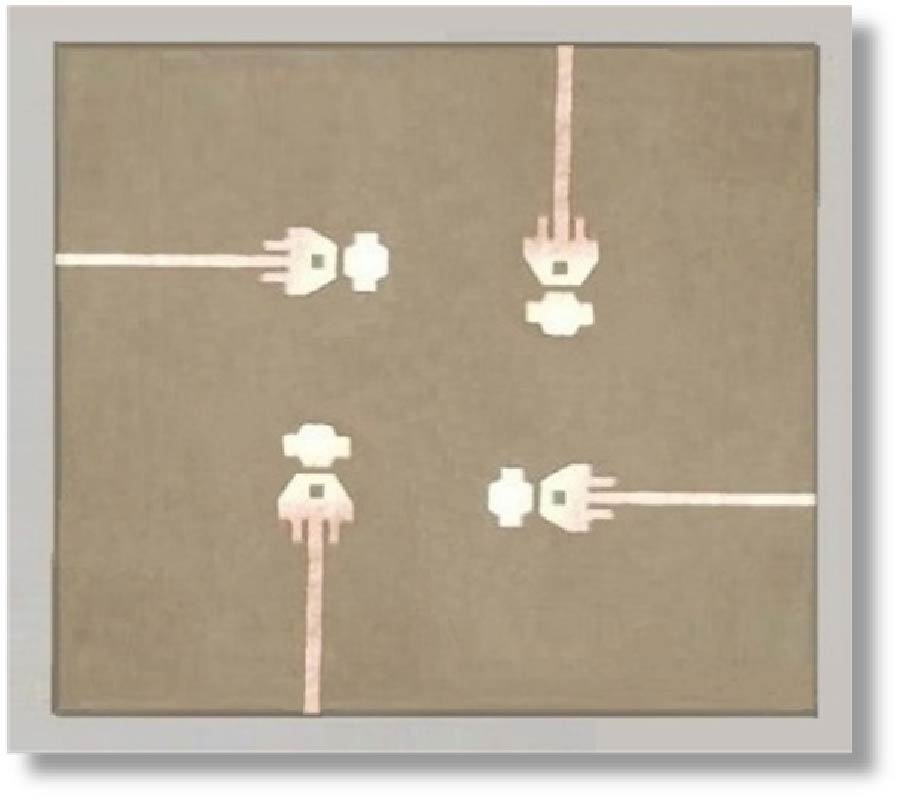
This letter proposes a 2×2 surface-mount dipole antenna array based on via fence for 5G millimeter-wave applications. The dipole antenna element was first proposed, which has a compact size and low cost. Then the via fences are introduced to reduce coupling between adjacent elements and enhance isolation. In this way, compared with a 1×2 antenna array without the via fence, the isolation of a 1×2 antenna array with a via fence is improved by 12 dB at 26 GHz. The elements are extended into 2×2 arrays with and without the via fence, and their performance is evaluated by the evaluation board. The measurement results show that the -10-dB impedance bandwidth of the antenna array is 19% (24.7-29.9 GHz), and the peak gain is 9.5 dBi at 25 GHz. The proposed 2×2 array can be used in the N257 (26.5-29.5 GHz), N258 (24.25-27.5 GHz), and N261 (27.5-28.35 GHz) frequency bands. Low cost, small size, and high isolation characteristics make it one of the candidates for 5G millimeter-wave applications.
BROADBAND SURFACE-MOUNT DIPOLE ANTENNA ARRAY USING HIGHLY ISOLATED VIA FENCE FOR 5G MILLIMETER-WAVE APPLICATIONS
2021-09-17
PIER C
Vol. 115, 175-185
Crosstalk Analysis of E-Plane Ku Band Waveguide Joints
Neelam Sharma and Debendra Kumar Panda
This paper presents crosstalk analysis of E-plane multichannel waveguide joints for high frequency. The multi-cavity modeling technique and method of moment are used to analyze the crosstalk. Waveguide has many practical uses in high powered RF systems. When two channel waveguides are joined, the phenomenon of crosstalk will certainly appear, and the reason behind is poor workmanship. The gap appearing at the flange joint causes power coupling to the neighboring ports. In this paper two channel E-plane waveguide joints for frequency range 15 GHz to 18 GHz have been analyzed. Scattering parameters data obtained from cavity model analysis have been verified and compared with CST microwave studio simulated and measured data.
CROSSTALK ANALYSIS OF E-PLANE KU BAND WAVEGUIDE JOINTS
2021-09-17
PIER M
Vol. 104, 185-197
Focalized Brain Transcranial Magnetic Stimulation with the Utilization of a Field Shaper and a Crescent Ferromagnetic Core
Xiao Fang , Wei Liu , Yaoyao Luo , Chang Liu and Zhou He
Transcranial magnetic stimulation (TMS) has been widely used in the treatment of varied physical and neuropsychiatric disorders, especially in major depression. The intracranial electromagnetic field is generated by the the time-varying current in the stimulation coil to change the potential of targeted neurons during the treatment. Since different mental disorders correspond to specific stimulation targets and broad stimulation range might raise serious side effects, stimulation focalization is very important in TMS. To achieve focalized stimulation, a novel magnetic stimulation coil with the field shaper and the crescent ferromagnetic core (the FSMC coil) is proposed and optimized in this study. The Finite-Element Method (FEM) is adopted to analyze the relationships between the design parameters of the field shaper and crescent ferromagnetic core and the characteristics of the intracranial electromagnetic field. Compared to traditional single circular coil, the focalization of the intracranial electromagnetic field generated by the optimized FSMC coil can be significantly improved both from 2D and 3D levels. To verify our method, an anatomically realistic human head model with different electrical properties assigned to each tissue of the brain is employed in this paper. We also checked the maximum induced charge density on the targeted plane generated by the optimized coil to make sure that it will not cause any induced neurologic damage.
FOCALIZED BRAIN TRANSCRANIAL MAGNETIC STIMULATION WITH THE UTILIZATION OF A FIELD SHAPER AND A CRESCENT FERROMAGNETIC CORE
2021-09-15
PIER B
Vol. 93, 151-168
Four-Objective Optimization and Multi-Physical Field Coupling Analysis of Variable-Leakage-Flux Flux-Intensifying PM Machine
Xiping Liu , Longxin Du , Siting Zhu and Jianwei Liang
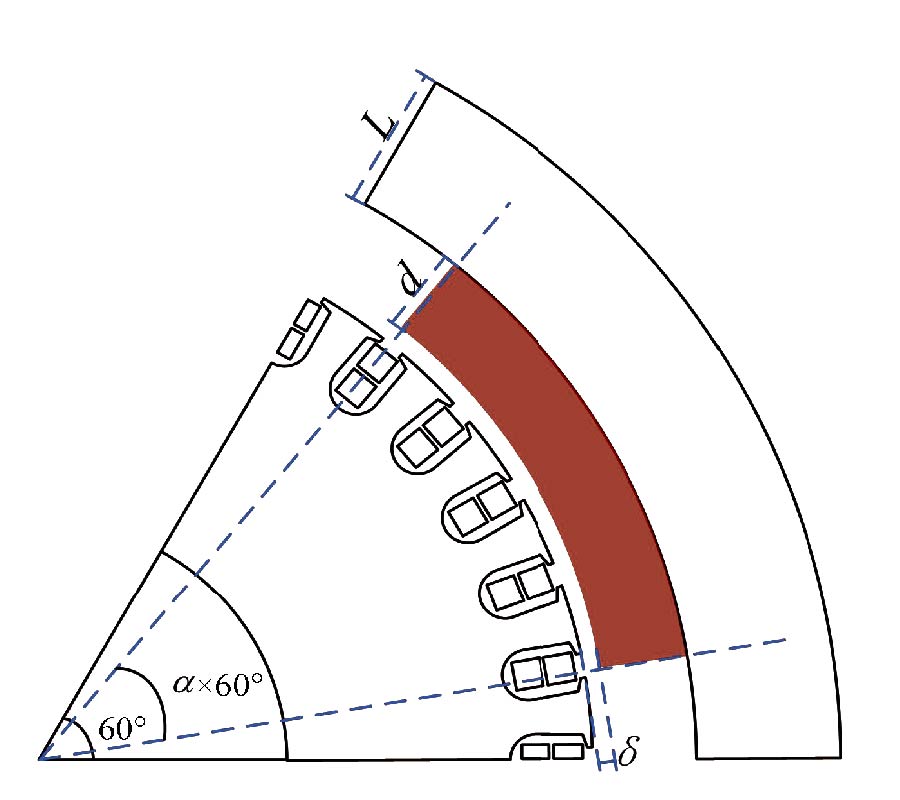
This article proposes a new type of variable-leakage-flux flux-intensifying permanent magnet (VLF-FIPM) machine and performs optimization and multi-physical field analysis on it. By designing leakage flux bypass and various magnetic barriers, the proposed machine has the variable-leakage-flux characteristic and reverse saliency characteristic of Ld>Lq. Firstly, the evolution process from the conventional interior permanent magnet (IPM) machine to the proposed machine is explained. Secondly, the output torque, torque ripple, core loss and reverse saliency ratio of the proposed machine are optimized by multi-objective comprehensive optimization method. Then the electromagnetic performance of the optimal machine is compared with that of the initial machine and conventional IPM machine. Finally, the temperature field and stress field of the optimal machine in different states are analyzed in detail. Both theoretical results and simulation analysis verify the effectiveness of the proposed design idea and optimization of the VLF-FIPM machine.
FOUR-OBJECTIVE OPTIMIZATION AND MULTI-PHYSICAL FIELD COUPLING ANALYSIS OF VARIABLE-LEAKAGE-FLUX FLUX-INTENSIFYING PM MACHINE
2021-09-15
PIER M
Vol. 105, 1-8
Evaluation of the Influence of a Field-Less Electrostatic Potential on Electron Beam Deflection as Predicted by Weber Electrodynamics
Martin Tajmar and Marcel Weikert
Assis predicted that based on Weber's electrodynamics, an alternative direct-action model formulated before Maxwell, a charge accelerating inside a sphere at constant electric potential, should have a measureable effective mass. Although initially some experiments appeared in the literature that indeed claimed such an effect, all recent studies found no evidence. All experiments so far used either discharges or electrons with non-constant accelerations that could mask the existence of Assis's prediction. We performed an experiment using a Perrin tube, which produces a beam of electrons with a constant velocity that can be deflected by Helmholtz coils to hit a Faraday cup. The tube assembly was put inside a spherical shell, which could be charged up to 20 kV. Any effective mass of the electrons would have changed their position on the Faraday cup. We found no variation of the electron position within our experimental accuracy, which rules out Assis's effect by two orders of magnitude. This confirms Maxwell's theory and the fact that electrostatic potential energy cannot be localized to individual charges.
EVALUATION OF THE INFLUENCE OF A FIELD-LESS ELECTROSTATIC POTENTIAL ON ELECTRON BEAM DEFLECTION AS PREDICTED BY WEBER ELECTRODYNAMICS
2021-09-14
PIER B
Vol. 94, 1-18
Negative Group Delay Prototype Filter Based on Cascaded Second Order Stages Implemented with Sallen-Key Topology
Miodrag Kandic and Greg E. Bridges
A Negative Group Delay (NGD) filter prototype design based on cascaded identical 2nd-order baseband stages is presented. The prototype design achieves an NGD-bandwidth product that in the upper asymptotic limit for a distributed design is a function of out-of-band gain in decibels raised to the power 3/4. This is an improvement of previous cascaded first-order designs that have an NGD-bandwidth functional dependency of out-of-band gain in decibels to the power of 1/2. The bandwidth is taken as the 3 dB amplitude response bandwidth. The corresponding NGD design upshifted to a non-zero center frequency, i.e. a Band-Stop Filter (BSF) design, is shown to be possible to implement with Sallen-Key topology, and an example is presented for a 500 MHz center frequency and a 100 MHz (20%) 3 dB bandwidth. The filter shows a 4.05 ns negative group delay with a 1.28 ns in-band variation and a 3-dB amplitude response over the bandwidth of 100 MHz, achieving an NGD-bandwidth product of 0.405. An in-band distortion metric is presented, which can be evaluated for any specified time-domain input waveform. It is shown that the bandwidth, order of filter and desired distortion for a particular input waveform are interrelated. Therefore, the proposed in-band distortion metric constitutes another trade-off quantity to be checked for any type of NGD design.
NEGATIVE GROUP DELAY PROTOTYPE FILTER BASED ON CASCADED SECOND ORDER STAGES IMPLEMENTED WITH SALLEN-KEY TOPOLOGY
2021-09-13
PIER C
Vol. 115, 161-174
Dual Band Circularly Polarized Modified Ψ-Shape Microstrip Antenna
Amit A. Deshmukh and Anuja Arun Odhekar
Single patch designs of a microstrip antenna with a U-slot or a pair of rectangular slots (E-shape) provide a single band circularly polarized response, and hence they are not useful in frequency and polarization agile applications. In this paper, a modified design of a Ψ-shape microstrip antenna is proposed for dual band and dual sense circularly polarized response. Use of unequal length rectangular slots in the modified patch, optimizes the inter-spacing between the modified TM21 and TM22 resonant modes, surface current distributions and impedance levels at them to yield dual band circularly polarized response. An impedance bandwidth of 1992 MHz (37.05%) is obtained which completely covers the axial ratio bandwidth of 11.84 and 5.67%, in the two bands with frequency ratio of 1.3 in between them, thereby satisfying the requirements of frequency agile systems. Over the impedance and axial ratio bandwidth, the antenna exhibits nearly broadside radiation pattern with a gain of around 7 dBi. A design methodology based on the simple parametric formulation is presented, which helps in realizing a similar antenna in the specific frequency band. The proposed antenna can find applications in frequency and polarization agile systems where the signal loss due to the interference and jamming can be reduced.
DUAL BAND CIRCULARLY POLARIZED MODIFIED Ψ-SHAPE MICROSTRIP ANTENNA
2021-09-13
PIER C
Vol. 115, 145-160
Design and Modelling of Ladder-Shape Topology Generating Bandpass NGD Function
Samuel Ngoho , Yves Constant Mombo Boussougou , Syed Samar Yazdani , Yuandan Dong , Nour Mohammad Murad , Sebastien Lallechere , Wenceslas Rahajandraibe and Blaise Ravelo
This paper introduces a model and design of an innovative bandpass (BP) negative group delay (NGD) distributed circuit. The passive circuit topology under study is constituted by fully distributed elements without lumped components. The NGD passive structure is implemented as a ladder shape topology composed of distributed transmission line (TL) elements. The S-matrix model is established from TL-based equivalent Z-matrix operations of TLs with respect to the ladder geometry. As a proof of concept, a two-cell ladder prototype is designed in microstrip technology, which is simulated, fabricated, and tested. The calculated and simulated measurements are in very good agreement with the validation of BP NGD behaviour. NGD value is better than -3 ns with centre frequency between 3.56 and 3.68 GHz over more than 30 MHz NGD bandwidth being observed. The circuit operates under insertion loss better than 5 dB and reflection loss better than 8 dB. This innovative BP NGD passive circuit can be useful in the RF and microwave engineering area, for example, to reduce the signal propagation delay in the upcoming and 5G telecommunication systems.
DESIGN AND MODELLING OF LADDER-SHAPE TOPOLOGY GENERATING BANDPASS NGD FUNCTION
2021-09-13
PIER C
Vol. 115, 127-144
Research on Estimation Method of Information of Multiple Charged Particles Using Electrostatic Sensor Array
Zhirong Zhong , Hongfu Zuo , Jiachen Guo and Heng Jiang
The electrostatic sensor is a rapidly developing particle monitoring sensor. This paper applies sensor array to inverse the information carried by detected multiple charged particles precisely. It breaks through the constraint that the detailed information of particles cannot be obtained in previous studies. The proposed method can be widely applied to oil line and gas path debris monitoring. The sensing mathematical model and the finite-element model are established. A compressive sensing-based method is proposed to invert the information of charged particles. Through simulation and experimental verification, the method can accurately estimate the centroid of multiple particles, the total charge quantity of the particle cluster, the spatial position of each particle and the charge quantity carried by each particle in the multiple particles with a low error rate when the multiple particles are distributed near the pipe wall of flow channel.
RESEARCH ON ESTIMATION METHOD OF INFORMATION OF MULTIPLE CHARGED PARTICLES USING ELECTROSTATIC SENSOR ARRAY
2021-09-10
PIER C
Vol. 115, 111-126
Design of MIMO/Smart Antenna Arrays Using Different Array Modules for Handheld Device
Panpan Wei and Wen Geyi
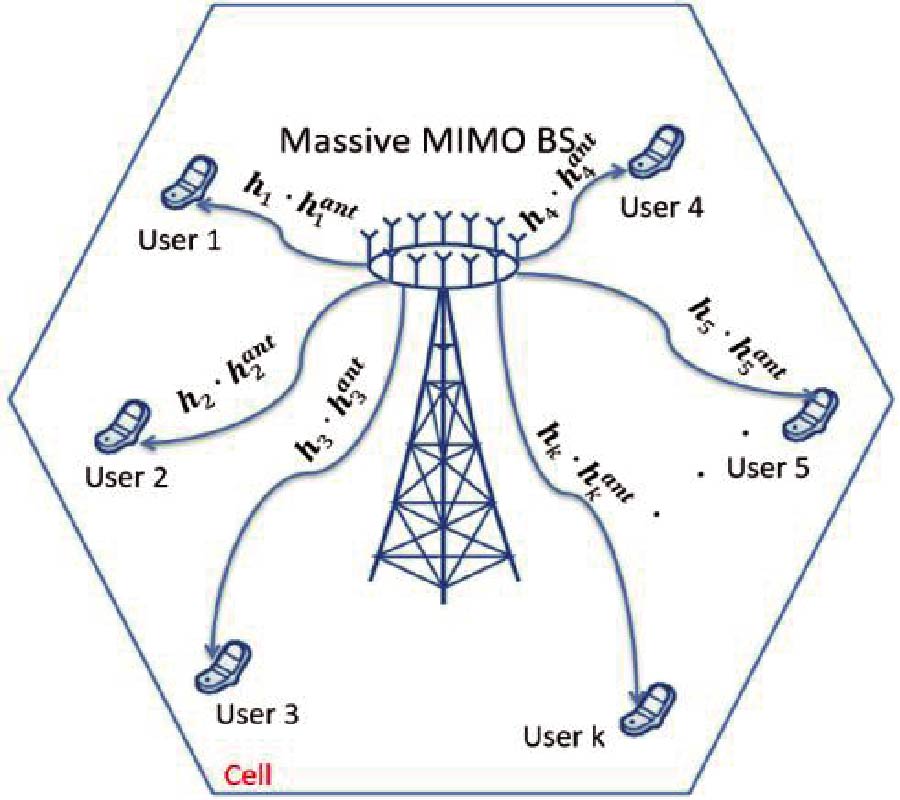
In this paper, an eight-element MIMO smart antenna system consisting of two different array modules for handheld device is proposed. The system is composed of two antenna array modules. The first module is a six-element array operating in N78 (3.3-3.8 GHz) band for 5G, which achieves MIMO functions for receiving and beam scanning for transmitting. The second module is a two-element antenna array, which operates in LTE/WWAN/N78 (0.7-0.91 GHz, 1.63-2.61 GHz, 3.3-3.8 GHz) bands. To take full advantage of the existing antenna resources in the mobile device, the six elements in the first module are combined with the two elements in the second module to form an 8-element array in the overlapping N78 band. Good isolations and envelope correlation coefficients are achieved in the receiving mode by loading L-shaped slots for the combined module. The distribution of excitations for the combined array in the transmitting mode is optimized by the method of maximum power transmission efficiency to direct the beam to the desired direction with maximum possible gain, and is realized by an in-house designed beamforming controller. The impacts of the environments on the antenna array performance are investigated.
DESIGN OF MIMO/SMART ANTENNA ARRAYS USING DIFFERENT ARRAY MODULES FOR HANDHELD DEVICE
2021-09-07
PIER M
Vol. 104, 171-183
Time-Harmonic Electromagnetic Fields with E||b Represented by Superposing Two Counter-Propagating Beltrami Fields
Ryo Mochizuki , Naoki Shinohara and Atsushi Sanada
In this paper, we present a general solution for time-harmonic electromagnetic fields with its electric and magnetic fields parallel to each other (E || B fields) in source-free vacuum and demonstrate that every time-harmonic E || B field is composed of the superposition of two counter-propagating Beltrami fields. We show that every E || B field can be categorized into one of two cases depending on the time dependence of the function that describes the proportionality between the electric and magnetic fields. After presenting the mathematical definition of a Beltrami field in electromagnetism and its handedness, we perform a detailed analysis of time-harmonic E || B fields for each case. For the first case, we find the general solution for the E || B fields using the angular-spectrum method and prove that every first-case E || B field can be generated by superposing two oppositely traveling Beltrami fields with the same handedness. For the second case, we deduce the general solution for the E || B fields by employing complex analysis and demonstrate that every time-harmonic E || B field is composed of two counter-propagating planar Beltrami fields with opposite handedness.
TIME-HARMONIC ELECTROMAGNETIC FIELDS WITH E||B REPRESENTED BY SUPERPOSING TWO COUNTER-PROPAGATING BELTRAMI FIELDS
2021-09-07
PIER M
Vol. 104, 159-170
Aircraft Classification Method Based on EEMD and Multifractal Correlation
Junyong Hu , Qiusheng Li , Qianli Zhang and Jingran Su
The research goal of low-resolution radar aircraft target classification is to analyze the category of the given low-resolution radar aircraft target echo. In existing solutions, the feature extraction methods based on rotating modulation spectrum have good performance, such as the complex cepstrum method, autocorrelation method, cycle diagram method, autoregressive model power spectrum method, and singular value decomposition method. Most of these methods are more complicated in calculations, and practical applications often require higher pulse frequencies and longer observation times, which are greatly restricted. In this paper, a classification method based on ensemble empirical mode decomposition and multifractal correlation (CMEEMDMFC) is proposed. The basic design idea is to obtain the intrinsic mode functions (IMFs) by using the signal decomposition ability of ensemble empirical mode decomposition (EEMD) and select some components which are beneficial for improving the signal-to-noise ratio (SNR) for recombination. Then extract the corresponding multifractal correlation (MFC) features from the new signals for recognition. For verifying the validity of the model, a comparison model was selected to test on the same data set. Experimental results show that the proposed model performs well in classification accuracy.
AIRCRAFT CLASSIFICATION METHOD BASED ON EEMD AND MULTIFRACTAL CORRELATION
2021-09-07
PIER M
Vol. 104, 145-158
Wave Propagation in Electric Periodic Structure in Space with Modulation in Time (2D+1)
Jose Salazar-Arrieta and Peter Halevi
We studied electromagnetic wave propagation in a system that is periodic in both space and time, namely a discrete 2D transmission line (TL) with capacitors modulated in tandem externally. Kirchhoff's laws lead to an eigenvalue equation whose solutions yield a band structure (BS) for the circular frequency ω as function of the phase advances kxa and kya in the plane of the TL. The surfaces ω(kxa, kya) display exotic behavior like forbidden ω bands, forbidden k bands, both, or neither. Certain critical combinations of the modulation strength mc and the modulation frequency Ω mark transitions from ω stopbands to forbidden k bands, corresponding to phase transitions from no propagation to propagation of waves. Such behavior is found invariably at the high symmetry X and M points of the spatial Brillouin zone (BZ) and at the boundary ω = (1/2)Ω of the temporal BZ. At such boundaries the ω(kxa, kya) surfaces in neighboring BZs assume conical forms that just touch, resembling a South American toy ``diábolo''; the point of contact is thus called a ``diabolic point''. Our investigation reveals interesting interplay among geometry, critical points, and phase transitions.
WAVE PROPAGATION IN ELECTRIC PERIODIC STRUCTURE IN SPACE WITH MODULATION IN TIME (2D+1)
2021-09-07
PIER Letters
Vol. 100, 19-25
A Compact and Narrowband Displaced Substrate Integrated E-Plane Waveguide (SIEW) Junctions Filter
Danyang Huang , Xuan Hui Wu and Qun Zhang
Substrate integrated E-plane waveguide (SIEW) was invented recently to design E-plane waveguide devices on printed circuit board, which cannot be achieved by using the conventional substrate integrated waveguide (SIW). This paper is the first time to present an E-plane displaced SIEW junctions bandpass filter. The proposed design is shorter than the recently published SIEW septa filter and has a smaller footprint than several other SIW filters. It is designed by mapping an equivalent E-plane waveguide filter to its SIEW implementation. A filter prototype is built and measured for validation.
A COMPACT AND NARROWBAND DISPLACED SUBSTRATE INTEGRATED E-PLANE WAVEGUIDE (SIEW) JUNCTIONS FILTER
2021-09-06
PIER C
Vol. 115, 95-110
Multiple Sources Localization Based on Independent Doublets Array
Jiacai Jiang
In this paper, an iterative algorithm for the location of multiple sources based on independent doublets arrays is proposed. The array brings a unified signal model for both near-field and far-field incoming sources. The signal model refrains the bias of Fresnel approximate due to the close displacement between elements of each doublet. Only exploiting the geometry of each doublet in direction-of-arrival (DOA) estimation, the proposed algorithm can avoid synchronization technology among different local oscillators of doublets, which means that elements among doublets could be independent. The proposed algorithm employs all the data received by the independent doublets arrays and can deal with more than two sources with only two coherent sensors in each doublet. The algorithm provides a simple approach and obtains acceptable results. Simulation results are illustrated to verify the effectiveness of the proposed algorithm.
MULTIPLE SOURCES LOCALIZATION BASED ON INDEPENDENT DOUBLETS ARRAY
2021-09-03
PIER M
Vol. 104, 133-144
Characteristic Research on Double Rotor Permanent Magnet Motor with Irregular Halbach Array
Yonglin Pan and Libing Jing
Dual-rotor permanent magnet motor has the characteristics of high torque density and high efficiency and has a wide range of application prospects in many fields. However, the double air-gap structure also makes the internal magnetic field distribution more complicated and torque fluctuation more serious. To improve the double-layer air-gap magnetic field distribution and reduced torque pulsation, based on the Halbach array magnetization, the inner and outer irregular Halbach array dual-rotor permanent magnet motor model was established to obtain the ideal one-sided magnetic field. By comparing the magnetic field distribution of the inner and outer layers, the no-load back-EMF, and the cogging torque, it is proved that the motor with the proposed structure can optimize the air-gap magnetic density and no-load back-EMF and reduce the cogging torque; at the same time, the torque ripple is also significantly reduced to ensure the stability of the motor operation.
CHARACTERISTIC RESEARCH ON DOUBLE ROTOR PERMANENT MAGNET MOTOR WITH IRREGULAR HALBACH ARRAY
2021-08-31
PIER C
Vol. 115, 81-93
Using a 3D Metamaterial to Enhance the Surface Wave Propagation for High Frequency Over-the-Horizon Radars: from Simulation to Outdoor Measurements
Quentin Herbette , Nicolas Bourey , Michel Menelle , Muriel Darces , Stéphane Saillant , Yves Chatelon and Marc Hélier
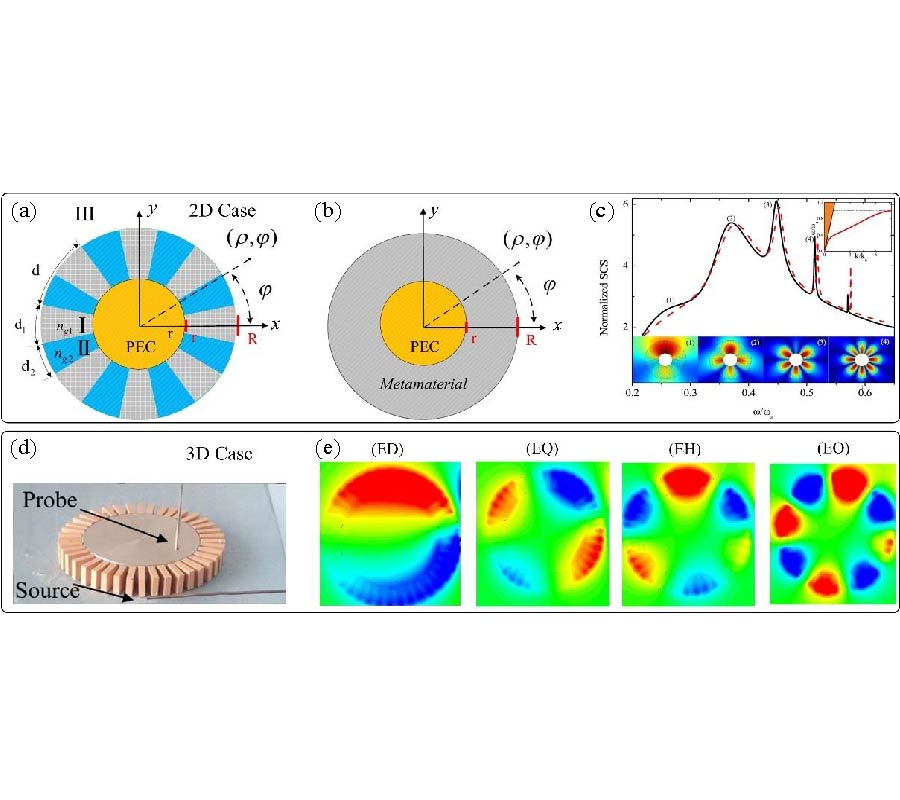
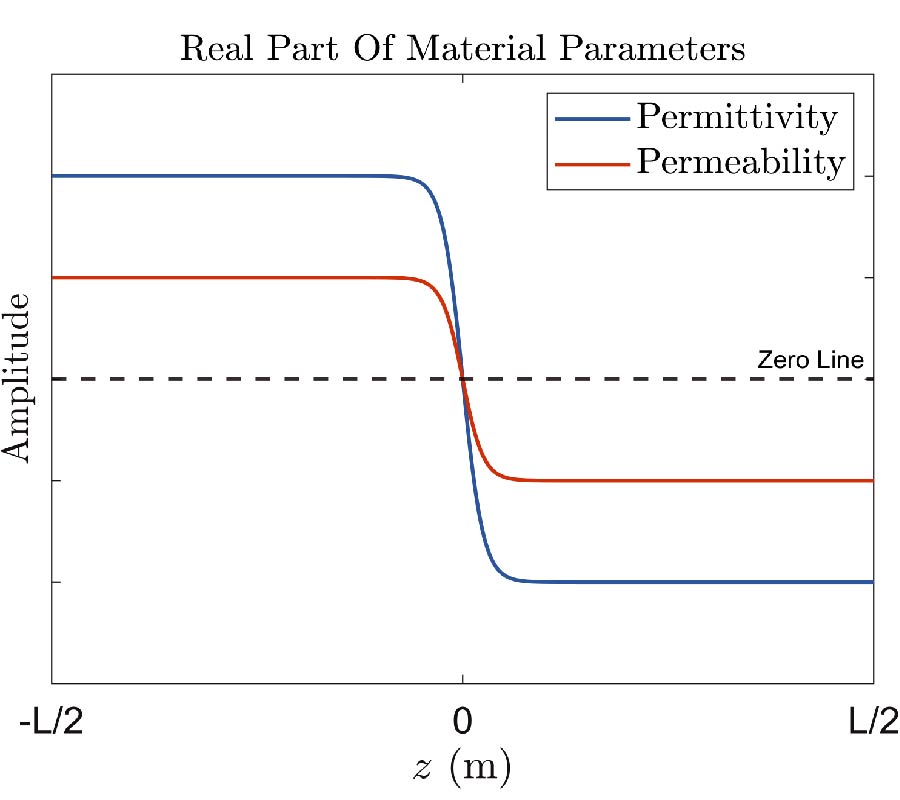
This article is about the characterization of a 3D metamaterial structure arranged to reinforce the surface wave radiation of antennas relevant to High Frequency (HF) surface wave radars. The use of a corrugated surface with a negative equivalent permittivity placed in the vicinity of the antenna increases the surface wave component of the radiated field. In order to confirm the anticipated performance of that metamaterial antenna, near-field measurements have been realized. Also, an original near far-field transformation technique, taking the surface wave into account, is applied to derive the radiation pattern of the antenna. Measurements were first achieved at reduced scale in UHF band and at full scale in HF band. At 1.1 GHz, they were operated on a small scale mock-up in a semi-anechoic chamber. An electric field acquisition setup installed in an Unmanned Aerial Vehicle (UAV) is used to characterize this antenna under outdoor conditions. This measuring system was especially designed for this application. The obtained results are discussed and enable us to validate the expected behavior of the antenna.
2021-08-30
PIER C
Vol. 115, 65-80
T-Shaped Tri-Band Antenna Based on Characteristic Mode Analysis for Satellite Applications
Fateh Lal Lohar , Indra Bhooshan Sharma , Virender Katewa and Mahendra Mohan Sharma
This article presents a T-Shaped Tri-Band (TSTB) antenna based on the Characteristic Mode Analysis (CMA) for satellite applications. Tri-band characteristics are achieved by exciting two orthogonal radiating modes for the L5-band and L1-bands, and one higher order radiating mode for the S-band. Initially, cavity model theory is applied to a rectangular antenna to calculate orthogonal modes (TMz010 & TMz001) at L5-band and S-bands, and these modes are validated using the CMA method. With the help of surface current study and modification of a rectangular antenna, the one higher order radiating mode and orthogonal modes are excited by using the CMA method. All desirable radiating modes are excited by a single coaxial feed line in full-wave simulation, which is based on FIT (Finite Integration Technique). The proposed antenna's measured operating frequencies are 1575 MHz (L1-band) for GPS (Global Positioning System) system, 1174 MHz (L5-band), and 2495 MHz (S-band) for IRNSS (Indian Regional Navigation Satellite System) applications, and corresponding impedance bandwidths at S11 ≤ -10 dB are 24 MHz (1563-1587 MHz), 24 MHz (1164-1188 MHz), and 51 MHz (2484-2535 MHz), respectively. The proposed antenna layout is printed on low-cost FR4 material and exhibits good agreement between simulated and measured results using CST and HFSS EM-tool. The proposed antenna is single feed, low profile, and economical with stable broadside radiation patterns along with good gain.
T-SHAPED TRI-BAND ANTENNA BASED ON CHARACTERISTIC MODE ANALYSIS FOR SATELLITE APPLICATIONS
2021-08-26
PIER C
Vol. 114, 279-295
Performance Evaluation of Global Ionospheric Models with Indian Regional Navigation Data Over Low Latitude Station During Low Solar Activity Year 2017
Devireddy Kavitha and Perumalla Naveen Kumar
This paper discusses the variation of ionospheric Total Electron Content (TEC) over low latitude Indian region, Hyderabad station (Lat: 17.39oN, Lon: 78.31oE) for geomagnetic quiet and disturbed days during the low solar activity period (2017 year) of the 24th solar cycle using global ionospheric models and experimental NavIC (Navigation with Indian Constellation) data. The work mainly focuses on the performance of the IRI Plas 2017 (International Reference Ionosphere) model with and without assimilation of TEC input, GIM TEC (Global Ionospheric Maps) and IRI 2016 models. In order to evaluate the performance of the models, the diurnal, monthly, and seasonal variations of Vertical TEC (VTEC) are predicted and compared with Indian regional NavIC data. From the result analysis it is observed that smaller Root Mean Square Errors (RMSEs) between NavIC VTEC and modelled VTEC are found in June and December solstice months than March and September equinox months. The VTEC predicted by the IRI Plas with assimilation of TEC input option produced smaller estimation errors than IRI Plas without assimilation of TEC input and IRI 2016 model. The same analysis has been tested for geomagnetic storm occurred during 7-9 September, 2017 for different locations. The IRI Plas 2017 with TEC input option exhibits better performance than IRI Plas and IRI 2016 models. Therefore, the VTEC predictions by assimilation of optional inputs will be helpful in applications of ionspheric studies to predict the dynamics in the ionosphere particularly for the period of disturbed geomagnetic conditions.
PERFORMANCE EVALUATION OF GLOBAL IONOSPHERIC MODELS WITH INDIAN REGIONAL NAVIGATION DATA OVER LOW LATITUDE STATION DURING LOW SOLAR ACTIVITY YEAR 2017