Search Results(13789)

2021-08-26
PIER M
Vol. 104, 123-132
A Multi-Band Cylindrical Conformal Antenna with Low Specific Absorption Rate for Wireless Medical Capsule Endoscopy
Zhong Yu , Bingwen He , Xinguo Wu and Xudong An
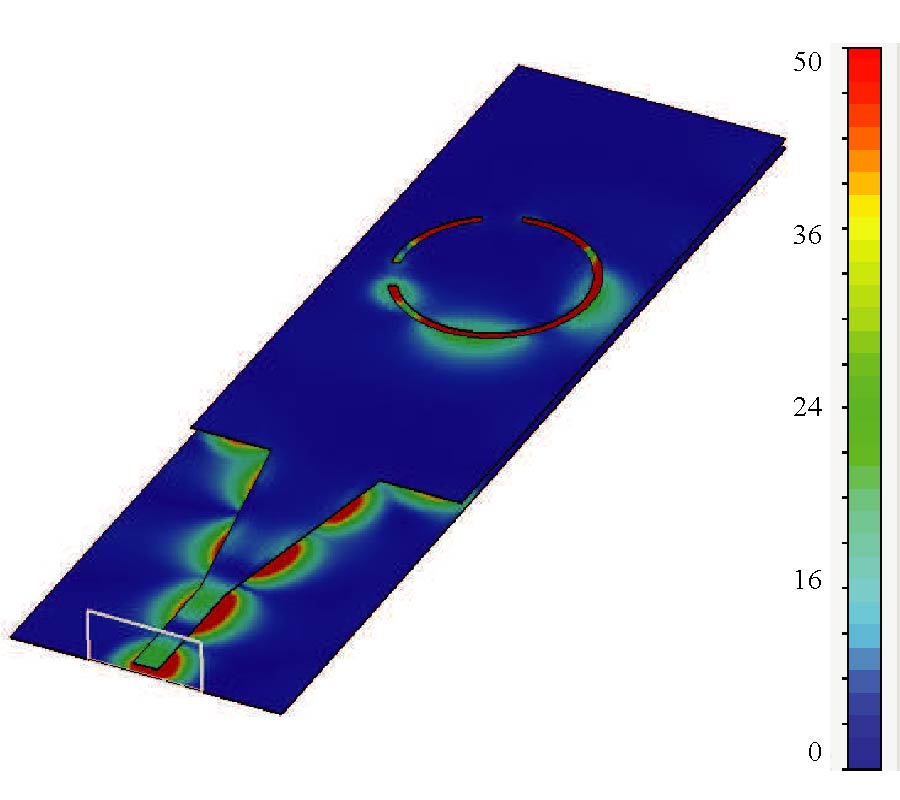
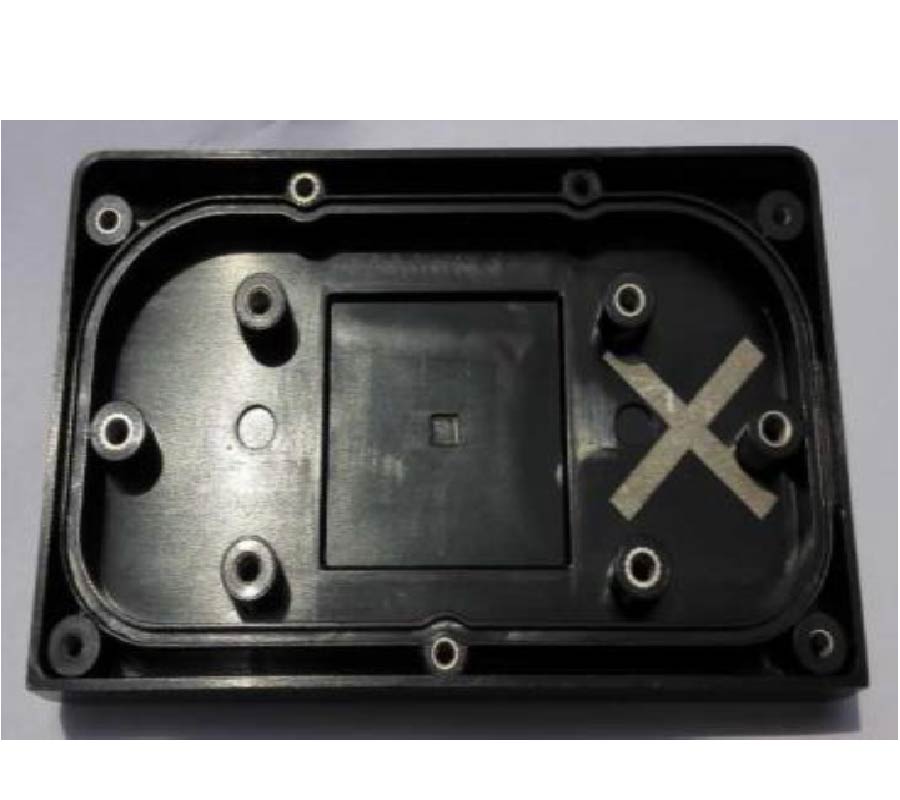
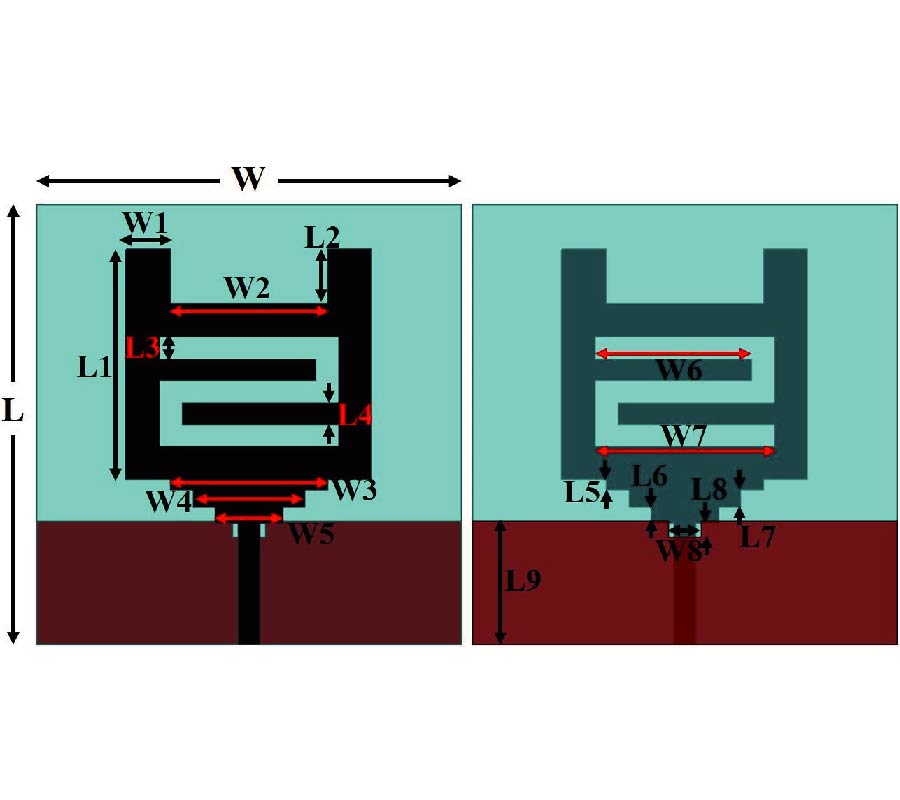
A multi-band cylindrical conformal endoscopy antenna with low specific absorption rate (SAR) is designed for endoscope applications, which covers the Industrial, Scientific and Medical bands (ISM 902-928 MHz, 2.4-2.4835 GHz), Medical Device Radio Communications Service band (MedRadio 401-406 MHz) and Wireless Medical Telemetry Service (WMTS 608-614 MHz). The proposed antenna radiates as a symmetrical meanderline structure with a center loaded parasitic opened-loop element, which is bent into the cylindrical conformal shape and wrapped onto the inner wall of the capsule shell. The parasitic opened-loop element excites low frequency resonance at 403 MHz and reduces the SAR values of the antenna. The measured relative bandwidth (|S11| < -10 dB) of the antenna implements 133% ultra-wideband, ranging from 0.35 GHz to 1.76 GHz, and 39% wideband, ranging from 2.01 GHz to 3 GHz. The peak gains and the peak 1 g SAR values at 403 MHz, 611 MHz, 915 MHz, 2.4 GHz are -26.6 dBi, -18.9 dBi, -11.8 dBi, -11.3 dBi, and 83, 82, 94, 153 W/kg, respectively. The results indicate that the proposed antenna complies well with the human safety standards.
A MULTI-BAND CYLINDRICAL CONFORMAL ANTENNA WITH LOW SPECIFIC ABSORPTION RATE FOR WIRELESS MEDICAL CAPSULE ENDOSCOPY
2021-08-26
PIER M
Vol. 104, 111-122
Torque Ripple Online Optimization of Switched Reluctance Motor Based on Torque Slope Characteristics
Hanbing Yang , Aide Xu , Jianping Cheng and Jinghao Sun
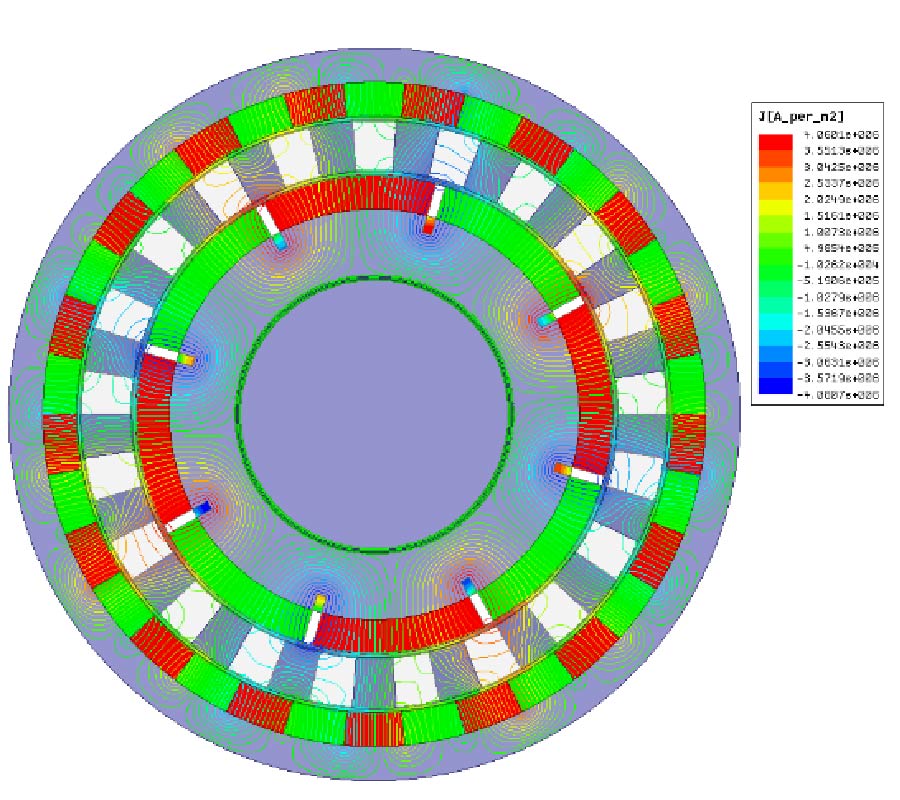
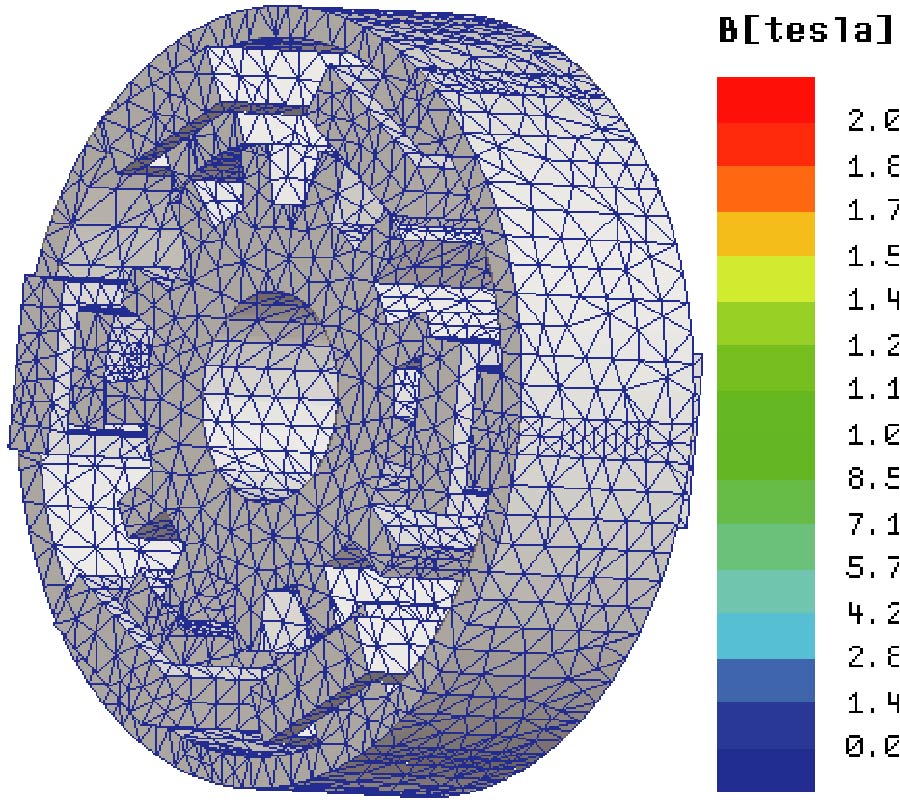
In this paper, a direct instantaneous torque control (DITC) optimization scheme based on adaptive dynamic hysteresis (ADH) strategy is proposed for switched reluctance motor (SRM) drive system. This method can further improve the torque tracking accuracy, reduce torque ripple and solve the problem of smooth transition between SRM phases. According to the torque generation characteristics and hysteresis rule of DITC, the traditional hysteresis rule is modified, and the sampled discrete torque slope data are compensated online. Taking the slope curve after compensation as the standard, the upper and lower limits of the hysteresis controller are assigned to achieve the control effect of hysteresis dynamic regulation. The effectiveness of the method is verified by simulation under diferent operating conditions.
TORQUE RIPPLE ONLINE OPTIMIZATION OF SWITCHED RELUCTANCE MOTOR BASED ON TORQUE SLOPE CHARACTERISTICS
2021-08-26
PIER Letters
Vol. 100, 9-17
Development of a Low-Profile Broadband Cavity Backed Bow-Tie Shaped Slot Antenna in SIW Technology
Bollavathi Lokeshwar , Dorai Venkatasekhar and Jammalamadugu Ravindranadh
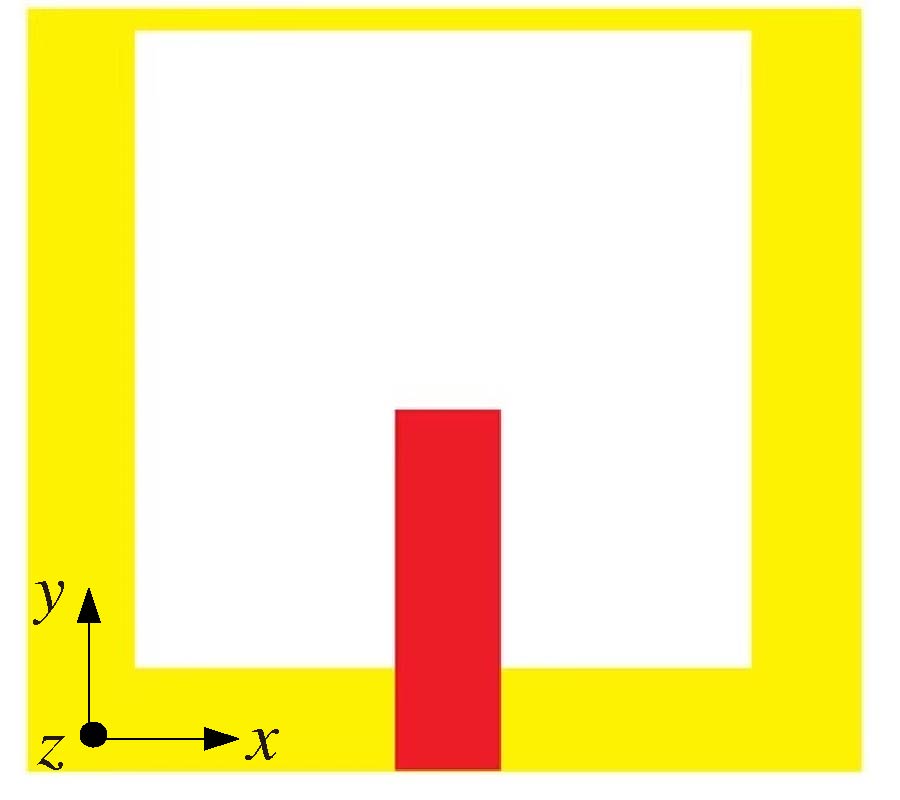
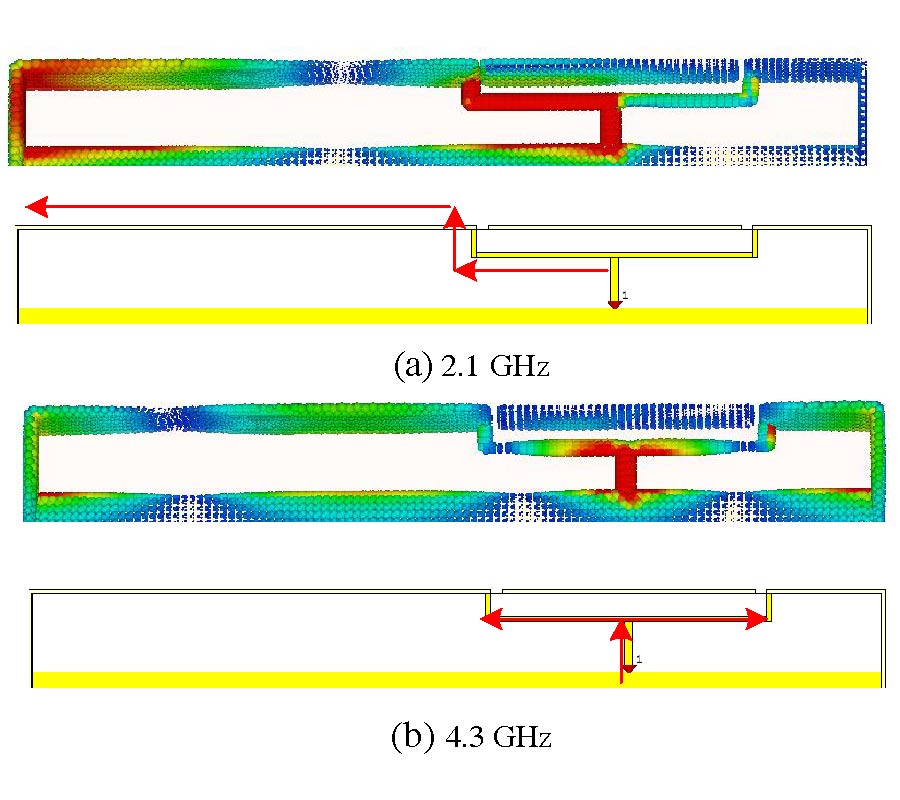
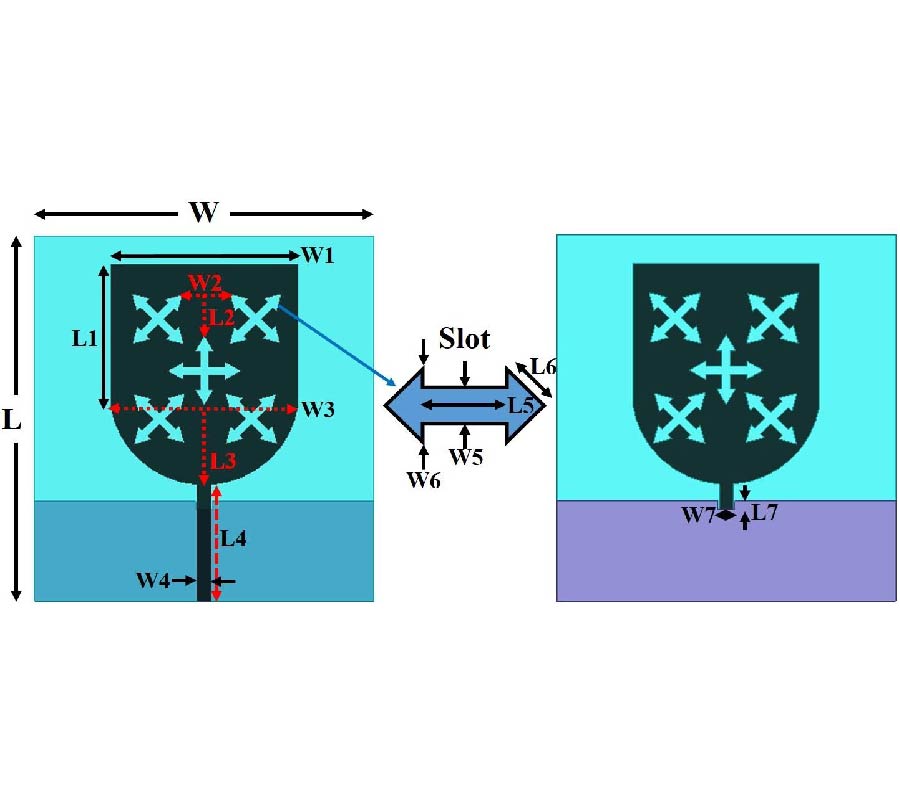
A new design of broadband cavity-backed slot antenna (CBSA) based on substrate integrated waveguide (SIW) technology is presented in this paper. An entire proposed antenna is printed on a Rogers RT/Duroid 5870 substrate, which consists of the SIW cavity, bow-tie slot, microstrip line feed. The proper position and size of the bow-tie slot on top of the SIW cavity will generate the cavity modes, which can be merged to obtain the broadband response. Moreover, to understand the effects of the geometric dimensions of the broadband antenna on S11 are examined using parametric study. The final antenna configuration operates on a frequency band ranging from 9.25 GHz to 10.5 GHz with a fractional bandwidth of about 12.65% for the simulation part. The measured bandwidth for S11 is about 12.1% (9.3 GHz to 10.5 GHz). The proposed antenna has a good measured gain of 6 dBi and 6.6 dBi, at 9.55 GHz and 10.35 GHz, respectively. The gain, the reflection coefficient, and the radiation patterns of the fabricated antenna are measured and indicated a very good agreement with simulations.
DEVELOPMENT OF A LOW-PROFILE BROADBAND CAVITY BACKED BOW-TIE SHAPED SLOT ANTENNA IN SIW TECHNOLOGY
2021-08-25
PIER M
Vol. 104, 101-110
Compact Tri-Band Dual-Polarized Shared Aperture Array
Jiachen Xu , Chen-Jiang Guo and Jun Ding
In this paper, an S/C/Ku triple-band (TB) dual-polarization (DP) shared aperture array (SAA) with an approximate frequency ratio of 1:1.8:4.5 is proposed. An S/C dual-band dual-polarized (DBDP) perforated patch antenna is designed as a shared element, and the S-band array consists of S-band-working shared elements. The C-band array interlaces with C-band-working shared element and C-band cross-patches with phase compensation. The Ku band array consists of dual-polarization rectangular dielectric resonator antennas (DRAs) for its small section area and high design freedom. In order to ensure the symmetry of the structure, all the ports adopt a vertical welding structure. A 1 × 3 prototype array is fabricated and measured, showing that the S-, C-, and Ku-bands obtain the bandwidths of 2%, 2.1%, and 1.8%, respectively. The polarization isolation is better than 20 dB in all three bands, while the cross-polarization is lower than -20 dB. The proposed array has the advantages of low cost and high integration; moreover, the proposed array owns excellent potential for expansion to large aperture benefited from its symmetry.
COMPACT TRI-BAND DUAL-POLARIZED SHARED APERTURE ARRAY
2021-08-25
PIER Letters
Vol. 100, 1-8
A No-Network Matched High Gain Vertical Array Antenna for VHF Band Applications
Wenjun Zhu and Li-Xin Guo
This paper proposes a design method of vertically polarized VHF high-gain antenna, a four-element array form. Our design improves the overall gain of the antenna and reduces its loss. In our design, the conventional impedance conversion methods are abandoned. Instead, we directly use transmission lines for impedance match which greatly reduces the loss of the antenna in the frequency range of 150 MHz-300 MHz, ensuring that the antenna provides a higher gain, and its signal transmission efficiency is also improved.
A NO-NETWORK MATCHED HIGH GAIN VERTICAL ARRAY ANTENNA FOR VHF BAND APPLICATIONS
2021-08-24
PIER C
Vol. 115, 51-64
Performance Optimization of Dual-Feed UWB Annular Ring Antenna with Circular DGS and EBG for SAR Reduction
Mahesh Munde , Anil Nandgaonkar and Shankar B. Deosarkar
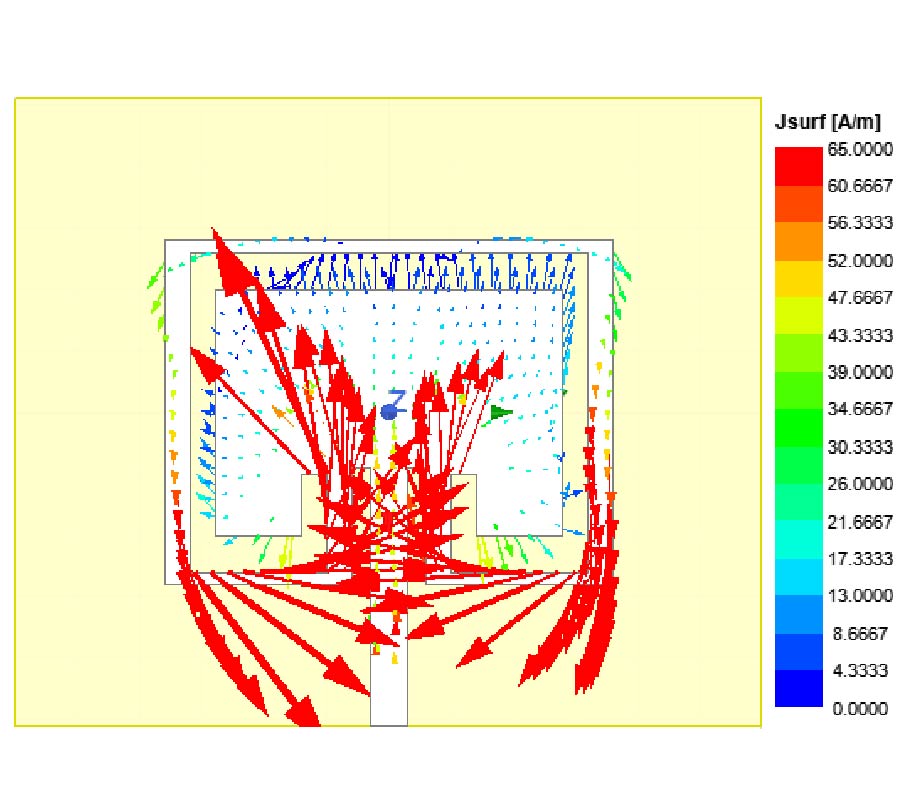
The article presents the design of an Ultra-Wideband (UWB) annular ring antenna which operates over 1.5 GHz to 12 GHz and covers most of the bands of mobile communication (GSM 1800, 1900 and 2100, UMTS, Bluetooth (2.4 GHz), WLAN 2.4/3.5/5 GHz and WiMAX 2.5/3.5/5.5 GHz). The antenna size is 40 x 36.67 x 1.6 mm3, and an FR-4 substrate of permittivity 4.3 with loss tangent of 0.025 is used for fabrication. Circular defect in ground plane of annular ring is used to achieve UWB characteristics. A wideband mushroom type Electromagnetic Band Gap (EBG) unit cell is designed which resonates at 2.3 GHz, and 8-unit cells are placed close to feeds of annular ring patch where current density is more for 2.4 GHz so as to reduce surface waves and ultimately to lower Specific Absorption Rate (SAR). SAR is evaluated with dual-feeds for single element and is lowered up to 83.64% for 1-gram of tissue mass.
PERFORMANCE OPTIMIZATION OF DUAL-FEED UWB ANNULAR RING ANTENNA WITH CIRCULAR DGS AND EBG FOR SAR REDUCTION
2021-08-23
PIER Letters
Vol. 99, 169-177
A Miniaturized Fractal Antenna with Sqare Ring Slots for Ultrawideband Applications
Harikrishna Paik , Lanke Charan Teja , Mallidi Akash Reddy and Kovvuri Sai Trinadh Reddy
In this paper, a low-profile fractal antenna with square ring slots is reported. The newly proposed fractal antenna includes circular ring radiating elements with orthogonally placed square shape slots to achieve ultra wideband operation. The compact antenna (32 × 28 × 1.6 mm3) is designed and fabricated on an FR4 dielectric substrate, and measurements are performed in the laboratory environment. The simulated and measured results demonstrate that the antenna has -10 dB impedance bandwidth of 9.4 GHz from 4.2 to 13.6 GHz in the ultra-wideband frequency. The measurement results reveal that the antenna has broadband radiation characteristics with peak gain of 5 dB in the desired band of operation. The proposed antenna has low cross polarization of -28 dB and radiation efficiency about 88% in the operating bandwidth. The large bandwidth, low cross polarization, and stable radiation characteristics of the proposed antenna confirm that the antenna may be suitable for ultra-wideband applications.
A MINIATURIZED FRACTAL ANTENNA WITH SQARE RING SLOTS FOR ULTRAWIDEBAND APPLICATIONS
2021-08-23
PIER B
Vol. 93, 131-149
Two-Channel Demultiplexer Based on 1D Photonic Star Waveguides Using Defect Resonators Modes
Youssef Ben-Ali , Ilyass El Kadmiri , Amina Ghadban , Kamal Ghoumid , Abdelfattah Mazari and Driss Bria
In this work, we give a theoretical demonstration of the possibility to realize a photonic demultiplexer. The demultiplexer consists of Y-shaped waveguides with one input line and two output lines. We consider a demultiplexer composed of a segment and two asymmetric resonators, grafted at the same position in each channel. This system creates the resonance modes that have a maximum transmission rate and low Q quality factors. To improve these results, we take each output line consisting of a periodicity of segments and grafted at its extremities by a single resonator. Such a system creates passbands separated by band gaps. On the other hand, the presence of a resonator defect in the middle of each output line allows us to create defect modes inside the gaps. The results show that our proposed demultiplexer system manages to separate two incoming mixed signals of frequencies f1 = 204.75 MHz and f2 = 208.75 MHz and guide each one of them into two different channels.
TWO-CHANNEL DEMULTIPLEXER BASED ON 1D PHOTONIC STAR WAVEGUIDES USING DEFECT RESONATORS MODES
2021-08-21
PIER Letters
Vol. 99, 159-167
A CPW Fed Clown-Shaped Super Wideband Antenna
Rahul Kumar Garg , Sarthak Singhal and Raghuvir S. Tomar
A Clown-shaped patch antenna for super wideband applications is presented. The radiator is placed on a 1.6 mm thick, RT/Duroid 5880 substrate and is fed using a 50 Ω symmetric coplanar waveguide. The size of the proposed antenna is 26 × 27 mm2 (0.256λL × 0.266λL, where λL is the wavelength at the lower band edge frequency i.e. 2.96 GHz). The radiator is a combination of an ellipse, a rectangle, and a triangle. An impedance bandwidth of 2.96 GHz to more than 100 GHz (i.e. more than 33.78:1 ratio bandwidth) is achieved. Nearly-omnidirectional radiation patterns with an average gain of 6 dBi are achieved. A fractional bandwidth greater than 188.5%, a size reduction of ~97%, and a comparable bandwidth dimension ratio of 2768 are achieved. The investigated antenna has additional advantages like compactness, planar geometry, and super-wide bandwidth.
A CPW FED CLOWN-SHAPED SUPER WIDEBAND ANTENNA
2021-08-21
PIER Letters
Vol. 99, 153-157
Topological Optimization Method for Ship Detection in SAR Images
Dianqi Pei and Meng Yang
The aim of this study is to provide a topological optimization method for ship detection in synthetic aperture radar (SAR) imagery. The method consists of three steps: pre-processing, sparse representation and classification. For the first step, the variational model is used for SAR image filtering. For the second step, the curvature of the surface manifold is constructed for sparse representation of target. For the third step, the topological derivative method is adopted to locate the target. Experiments show that the proposed method is effective in reducing false alarms, and obtains a satisfactory detection performance.
TOPOLOGICAL OPTIMIZATION METHOD FOR SHIP DETECTION IN SAR IMAGES
2021-08-20
PIER M
Vol. 104, 91-100
The Application of Artificial Magnetic Conductors in the Broadband Radar Cross Section Reduction of the Microstrip Antenna Array
Ping Yang , Jinbo Liu and Zengrui Li
A scheme for radar cross section (RCS) reduction of microstrip antenna array in wideband using artificial magnetic conductors (AMC), without compromising the radiation characteristics of the antenna array, is proposed. This design is based on the principle of passive cancellation. The novelty is that the reflection characteristics of the microstrip antenna array are also taken into consideration during the design process of AMCs. The aperiodic configuration is composed of three kinds of AMC lattices with selected dimensions and is applied to the design of microstrip antenna array for the purpose of RCS reduction. The simulated results show that the monostatic RCS is reduced over a wideband from 15.2 to 35 GHz (about 79% relative bandwidth), covering the operation band (20-20.75 GHz) of the antenna array. In addition, compared with the periodic configuration, it has about 4 dB lower maximum bistatic RCS.
THE APPLICATION OF ARTIFICIAL MAGNETIC CONDUCTORS IN THE BROADBAND RADAR CROSS SECTION REDUCTION OF THE MICROSTRIP ANTENNA ARRAY
2021-08-19
PIER C
Vol. 115, 41-50
A 28 GHz Surface-Mount Endfire Antenna Based on Ball Grid Array Packaging for 5G New Radio
Xiubo Liu , Wei Zhang , Dongning Hao and Yanyan Liu
In this article, a 28 GHz endfire antenna based on ball grid array (BGA) packaging is proposed for the 5G mmWave new radio (NR). The antenna is composed of a pair of dipole patches fed by a substrate integrated waveguide (SIW). Besides, quasi-coaxial vertical transition and transition from grounded coplanar waveguide (GCPW) to SIW are designed on the substrate to achieve compact size. The substrate is based on a single-layer printed circuit board (PCB), which can meet the cost-effectiveness requirements of the 5G application. Meanwhile, the proposed antenna can be easily integrated with other surface-mount devices by using the BGA packaging. In particular, it can be mounted near the RF front-end chipset to improve system performance. Finally, the prototype is manufactured and verified. Experimental results show that the -10 dB bandwidth of the proposed antenna is 5.35% in the range of 27.3 to 28.8 GHz, and the peak gain achieves 4.4 dBi at 29 GHz.
A 28 GHZ SURFACE-MOUNT ENDFIRE ANTENNA BASED ON BALL GRID ARRAY PACKAGING FOR 5G NEW RADIO
2021-08-18
PIER C
Vol. 115, 27-40
A Novel Multilayer EBG Structure to Reconfigure the Band-Notch of UWB Monopole Printed Antenna
Kompella S. L. Parvathi and Sudha R. Gupta
In high speed indoor communication, ultra-wideband (UWB) plays a crucial role. UWB contains several other narrow band systems, which give interference. In order to reject these narrow bands present in UWB system, a novel multilayer step via electromagnetic band gap (MS-EBG) structure to vary the band-notch of UWB monopole printed antenna is presented in this work. The proposed EBG consists of grooved substrate with step via arrangement. These grooved substrate allow for the deposition of the liquids with different dielectric constants to achieve the variations in band gap center frequency of EBG. The microstrip line based model with equivalent circuit diagram of MS-EBG is developed with experimental results using suspended micro strip line (SML) method, with different liquids like kerosene, sea water, mineral oil, without grooved substrate, etc. The simulated and experimental results show liquid sensing ability of the proposed MS-EBG structure. The application of MS-EBG to vary the band notch in UWB hexagonal monopole antenna (HMA) is also demonstrated. Simulated and experimental results show noticeable variation in the band notch center frequency with different liquids deposited in the grooved substrate. The proposed method required only liquid change arrangement to get desired band notch in UWB monopole antenna. Compared to electrical and mechanical method to get band notch in UWB monopole antenna, the proposed method works without any power supply, active devices and additional complex arrangement.
A NOVEL MULTILAYER EBG STRUCTURE TO RECONFIGURE THE BAND-NOTCH OF UWB MONOPOLE PRINTED ANTENNA
2021-08-18
PIER M
Vol. 104, 81-89
Electromagnetic Properties of a Babinet-Type Metasurface Composed of Coaxial-Sector Apertures
Alexandr V. Gribovsky , Yuliia V. Antonenko , Yevhenii O. Antonenko and Viktor A. Katrich
Electromagnetic properties of a planar metallic metasurface with the design inspired by Babinet's principle are numerically studied. The metasurface is constructed from a metal plate perforated by coaxial-sector apertures. It is shown that the chosen coaxial-sector apertures make it possible to obtain a wider operating range of the metasurface than those composed of apertures of other shapes (e.g. round or rectangle). Moreover, the proposed metasurface performs an efficient polarization conversion of the linearly polarized wave to elliptically and circularly polarized ones in the reflected field.
ELECTROMAGNETIC PROPERTIES OF A BABINET-TYPE METASURFACE COMPOSED OF COAXIAL-SECTOR APERTURES
2021-08-18
PIER M
Vol. 104, 71-80
A Rapid Microwave Imaging Approach for the Diagnosis of Traumatic Brain Injury
Bin Li , Heng Liu , Zekun Zhang and Xiang Gao
This paper presents a method for rapid microwave imaging of traumatic brain injury based on scattering parameters. The algorithm uses the integer order Bessel function and Born approximation, which converts nonlinear inverse scattering problem into linear problem. After truncated singular value decomposition, imaging can be performed without iteration. Simulations and experiments show that the algorithm can not only reduce the amount of calculation for fast imaging, but also accurately image a brain hematoma or foreign body.
A RAPID MICROWAVE IMAGING APPROACH FOR THE DIAGNOSIS OF TRAUMATIC BRAIN INJURY
2021-08-17
PIER Letters
Vol. 99, 143-151
Miniature Bowtie Antenna Elements and Arrays Based on Ball Grid Array Packaging for 5G Millimeter-Wave Applications
Xiubo Liu , Wei Zhang , Dongning Hao and Yanyan Liu
This letter proposes a miniature bow-tie antenna element and its 2 × 2 arrays based on ball grid array (BGA) packaging technology for 5G millimeter-wave new radio (NR) applications. The antenna substrate uses ultra-economical single-layer FR4 printed circuit boards (PCB) to reduce manufacturing costs. By adopting solder balls, the antenna achieves the BGA packaging and realizes the surface mounting function. One bow-tie patch is excited by a plated through-hole (PTH) connected to the feeding point. The other bow-tie patch is directly short connected to the ground plane by another PTH. Besides, the bottom ground plane can be equivalent to a reflector, allowing the antenna element and array to obtain broadside radiation. For ease of integration, the input impedance of the antenna is set to 50 Ω. The measurement results show that the -10 dB bandwidth of the antenna element is 21% covering 25.2 to 31.1 GHz. The measured peak gains of the antenna element and the 2 × 2 arrays are 7.6 and 10.75 dBi, respectively. The proposed antenna element and array cover N257 (26.5-29.5 GHz) and N261 (27.5-28.35 GHz) bands. It is very suitable for the 5G millimeter-wave application.
MINIATURE BOWTIE ANTENNA ELEMENTS AND ARRAYS BASED ON BALL GRID ARRAY PACKAGING FOR 5G MILLIMETER-WAVE APPLICATIONS
2021-08-17
PIER Letters
Vol. 99, 135-142
A 37-43 GHz Endfire Antenna Element Based on Ball Grid Array Packaging for 5G Wireless Systems
Xiubo Liu , Wei Zhang , Dongning Hao and Yanyan Liu
A 37-43 GHz endfire antenna based on ball grid array (BGA) packaging is proposed for the fifth-generation (5G) wireless system. The antenna consists of a miniaturized radiator and reflector. Besides, the radiator is fed by a substrate integrated waveguide (SIW). Furthermore, the RF transition from the SIW to grounded coplanar waveguide (GCPW) and vertical quasi-coaxial is realized on the substrate. The antenna is implemented on a single-layer substrate using standard printed circuit board (PCB) technology to reduce costs. Then, the cost-effective antenna element is reflow soldered with solder balls to form a BGA packaging. The advantages of the BGA packaging and the three-dimensional (3D) integration are discussed in detail. The miniature packaging achieves a compact size of 7 mm × 3.4 mm × 0.6 mm. Finally, a prototype was manufactured to verify the performance. The measurement results show that the proposed antenna is a good candidate for 5G millimeter-wave (mmWave) New Radio (NR) applications.
A 37-43 GHZ ENDFIRE ANTENNA ELEMENT BASED ON BALL GRID ARRAY PACKAGING FOR 5G WIRELESS SYSTEMS
2021-08-16
PIER Letters
Vol. 99, 127-133
Cost-Effective Surface-Mount Patch Antenna with Ring Slot Using Ball Grid Array Packaging for 5G Millimeter-Wave Applications
Xiubo Liu , Wei Zhang , Dongning Hao and Yanyan Liu
The letter presents a compact, cost-effective, and surface-mount patch antenna element for 5G millimeter-wave (mmWave) system integration. The antenna element adopts ball grid array (BGA) packaging technology to achieve surface mount function, which can be applied to highly integrated systems. By adding a ring slot on the radiating patch, the proposed antenna obtains a wider impedance bandwidth. The antenna prototype has been simulated, manufactured, and verified. The proposed antenna element size is 5 mm × 5 mm × 1.3 mm. The measurement results show that the proposed antenna element can be used in the N257 (26.5 to 29.5 GHz) and N261 (27.5-28.35 GHz) frequency bands.
COST-EFFECTIVE SURFACE-MOUNT PATCH ANTENNA WITH RING SLOT USING BALL GRID ARRAY PACKAGING FOR 5G MILLIMETER-WAVE APPLICATIONS
2021-08-16
PIER B
Vol. 93, 111-129
Mixed-Modulation Method for Adjusting Frequency and Voltage in the WPT Systems with Misalignments and Load Variations
Dingdou Wen , Yao Zou , Zhongqi Li and Jiliang Yi
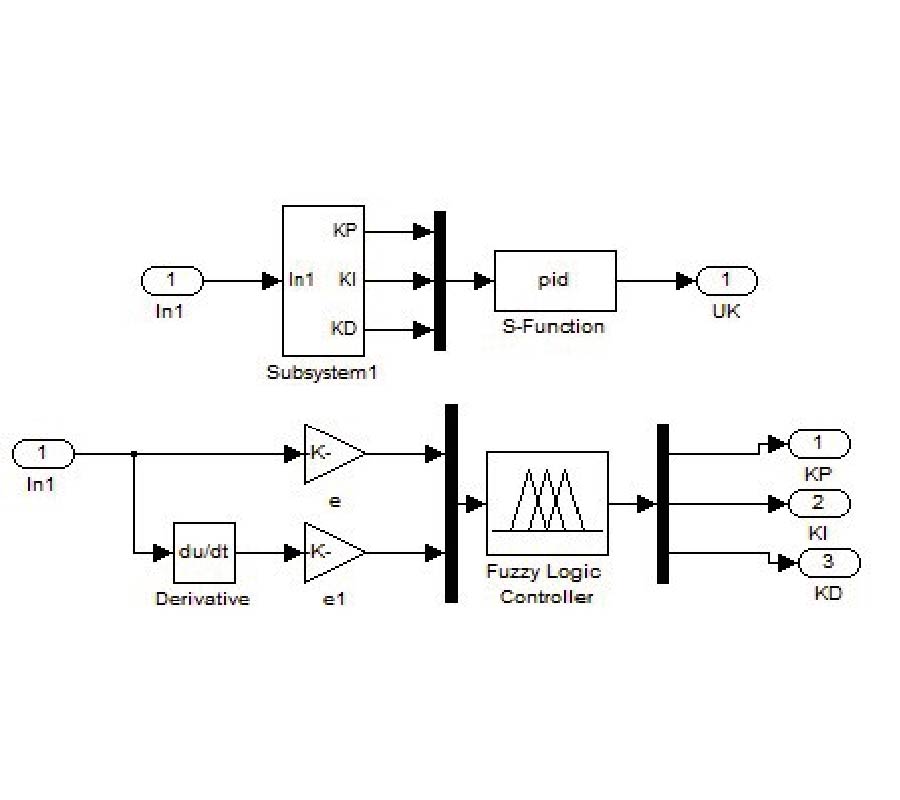
The resonant frequency will be changed, and the load voltage will be unstable with misalignments and load variations in wireless power transfer (WPT) systems. In this paper, the expression for solving the resonant frequency is obtained. The calculation result shows that the resonant frequency is changed with the changes of misalignment and load. First, a new control method of frequency tracking with a Fuzzy proportional-integral (PI) compound controller is proposed, which can eliminate the overshoot of resonant frequency and improve the speed of frequency tracking. Second, a mixed-modulation method for adjusting frequency and voltage is further proposed, which is mainly composed of the selection algorithm of the duty cycle, the phase-shifting angle calculation, and the method of frequency tracking based on the Fuzzy PI compound controller. The appropriate duty cycle is obtained by the selection algorithm of the duty cycle to adjust the load voltage. The phase-shifting angles of different duty cycles are obtained by the phase-shifting angle calculation, which play a role in adjusting the resonant frequency by combining the Fuzzy PI compound controller. The proposed method can not only make the system keep a resonant state, but also make the output voltage across the load stable. A WPT system via magnetically coupled resonance is designed. Calculation and simulation results validating the superiority of the proposed method are given.
MIXED-MODULATION METHOD FOR ADJUSTING FREQUENCY AND VOLTAGE IN THE WPT SYSTEMS WITH MISALIGNMENTS AND LOAD VARIATIONS
2021-08-16
PIER
Vol. 171, 35-73
Analytical Kirchhoff Solutions (AKS) and Numerical Kirchhoff Approach (NKA) for First-Principle Calculations of Coherent Waves and Incoherent Waves at P Band and L Band in Signals of Opportunity (SoOp)
Bowen Ren , Jiyue Zhu , Leung Tsang and Haokui Xu
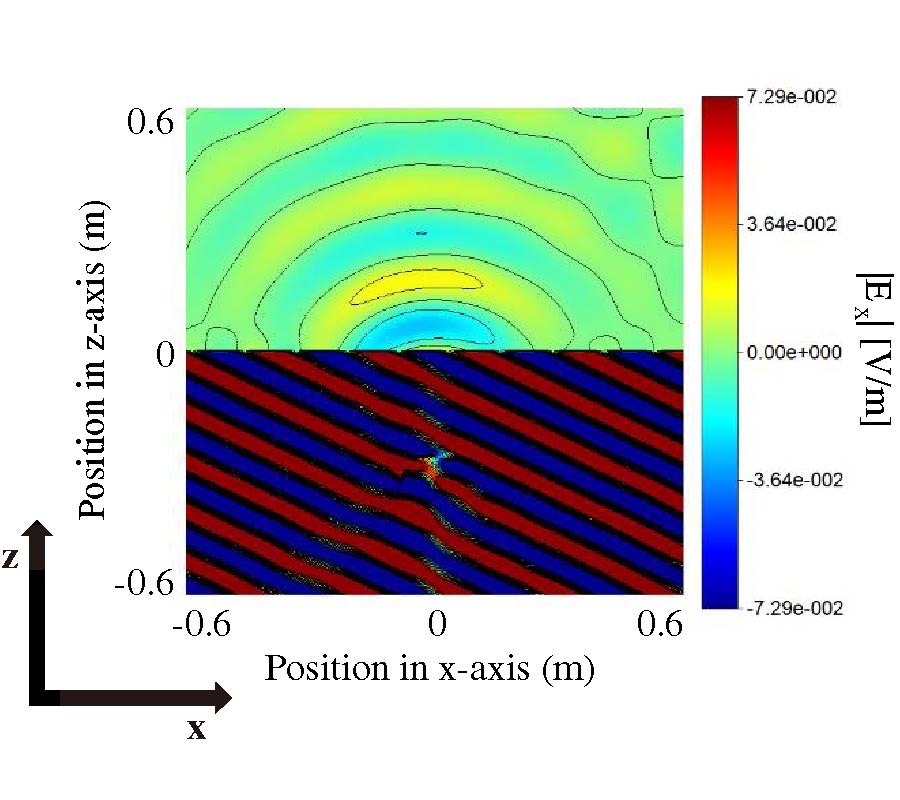
In this paper, we derived Analytical Kirchhoff Solutions (AKS) for bistatic scattering near the specular directions at P band and L band for applications in Signals of Opportunity (SoOp). The land surface profiles are divided into three scales: microwave roughness f1, fine scale topography f2, and coarse scale 30-meter DEM f3. The microwave roughness and the fine scale topography are treated as random rough surfaces, while the coarse scale topography from DEM data are treated as deterministic planar patches. The salient features of the AKS model are (i) analytical expressions are obtained for both coherent waves and incoherent waves, (ii) Monte Carlo simulations are not required making the AKS computationally efficient, (iii) the analytical solutions are expressed in terms of the spectrum, so that the dividing line between microwave roughness and fine scale topography is not required, and the rough surface spectrum derived from lidar elevation measurements can be incorporated directly. The results of the three approaches, AKS, the Numerical Kirchhoff Approach (NKA) and the Fine Scale Partial Coherent Patch (FPCP) model, are indistinguishable for both the coherent waves and the incoherent waves. The agreements validate the AKS and FPCP approaches as NKA is a brute force accurate method based on Kirchhoff integral using 2 cm discretization and high-performance computers. Results show that the f2 profiles of fine scale topography have significant effects. The results of three Kirchhoff approaches fall in-between the results of the two versions of Geometric Optics (GO) approximations to the Kirchhoff integral [1, 2]. The two GO versions are with and without attenuation due to microwave roughness. The GO with microwave attenuation is also known as the ``Improved Geometric Optics Model (IGOM)''. Numerical results of coherent waves and incoherent waves are illustrated for remote sensing of snow and soil moisture at P band and L band. For P band, the histograms of the phase are shown. Results of the coherent waves are dependent on the sizes of the area as well as topographical elevations and slopes. AKS results are used to illustrate the coherent waves at P band on area sizes up to 1.5 km using 30-meter DEM topography elevations and derived slopes at Sanford, Brazos Peak, and Lobato Tank, Colorado, USA. For L band, the AKS results of Cross-Track are in good agreement with CYGNSS data over San Luis Valley, USA. In comparing CPU, it takes merely 25 seconds on a single CPU core for AKS to compute for a 15 km by 15 km DDM pixel which has 250000 DEM 30-meter patches. The CPU for AKS is slightly more than the 20 seconds required for GO.
ANALYTICAL KIRCHHOFF SOLUTIONS (AKS) AND NUMERICAL KIRCHHOFF APPROACH (NKA) FOR FIRST-PRINCIPLE CALCULATIONS OF COHERENT WAVES AND INCOHERENT WAVES AT P BAND AND L BAND IN SIGNALS OF OPPORTUNITY (SOOP)