Search Results(13789)

2021-08-16
PIER C
Vol. 115, 17-26
Compact Asymmetric Coplanar Strip Fed MIMO Antenna with Band Dispension Characteristics for UWB Applications
Bharghava Punna and Pachiyaannan Muthusamy
A MIMO antenna with ACS- asymmetric coplanar strip feeding technique with compact size for UWB applications of band-notched features is presented. The proposed MIMO antenna contains two orthogonally placed rectangular-shaped radiating elements. The orthogonal mechanism of placement of radiating elements provides a good amount of isolation from 3.09 GHz to 11.13 GHz. The size of the antenna is 27 × 27 mm2. The isolation is more than 17 dB for most of the UWB range. The proposed MIMO antenna represents nearly omnidirectional radiation pattern and low value of envelope correlation coefficient. Because of the usage of ACS feeding techniques, the antenna size is reduced, and it is a uniplanar structure. The diversity performance of the MIMO antenna is explained in terms of ECC-Envelope Correlation Coefficient, DG-Diversity Gain, and TARC-Total Active Reflection coefficient.
COMPACT ASYMMETRIC COPLANAR STRIP FED MIMO ANTENNA WITH BAND DISPENSION CHARACTERISTICS FOR UWB APPLICATIONS
2021-08-16
PIER C
Vol. 114, 233-246
On the Role of Time-Frequency Analysis for Joint DOD-DOA Estimation for Bistatic MIMO Radars
Yashvanth Lakshminarasimhan , Roshaan Soundarapandian and Palanisamy Ponnusamy
RAdio Detection And Ranging (RADAR) is an essential tool used extensively to detect a target's presence within the vicinity characterized by the range of the RADAR. In order to localize the target, Direction of Departure (DOD) and Direction of Arrival (DOA) estimations are utilized. To make it more convenient, a bistatic multiple input multiple output (MIMO) configuration is exploited to deduce the position of a target through the triangulation method easily. Furthermore, due to the maneuvering of targets in space, more robust direction finding solutions can be derived using Time-Frequency (TF) representations. Thus, this paper aims to leverage the benefits of TF analysis for the estimation of DOD and DOA jointly for a bistatic MIMO radar. The performance of the considered method is numerically evaluated and is compared against the conventional algorithms that do not use TF tools and as well compared against the Cramer Rao Lower Bound (CRLB). The results show that TF based approach may be a promising candidate in terms of its robustness against channel noise. Also, the performance of the TF based DOD-DOA estimates is studied in terms of their consistency and resolvability of targets which measures the performance in a multi-target environment. Finally, the use-case of TF based estimation to solve the problem in the presence of coherent targets is analysed through simulations and inferred.
ON THE ROLE OF TIME-FREQUENCY ANALYSIS FOR JOINT DOD-DOA ESTIMATION FOR BISTATIC MIMO RADARS
2021-08-16
PIER M
Vol. 104, 61-70
Design and Implementation of an Integrated Switched-Oscillator Impulse Generator
Samira Mohammadzamani and Behzad Kordi
An integrated wireless impulse generator has been designed, simulated, fabricated and tested. Switched oscillator topology has been used as an impulse generator. A switched oscillator consists of a low impedance transmission line, which is charged by a DC source with a large input impedance. The transmission line is connected to a fast closing switch at one end and a high feed-point impedance antenna at the other end. After charging the transmission line, closing the fast switch short circuits the transmission line, resulting in a transient wave propagating toward the antenna. The mismatch between transmission line characteristic impedance and the antenna feed point impedance causes a reflection at the antenna terminal. Due to the short circuit at switch terminal, the reflected signal will reflect back at the switch terminal as well. This back and forth reflection generates a series of pulses at the antenna terminal which will be radiated by the antenna. The switched oscillator impulse generator is designed to operate in the industrial, scientific and medical (ISM) radio frequency band.
DESIGN AND IMPLEMENTATION OF AN INTEGRATED SWITCHED-OSCILLATOR IMPULSE GENERATOR
2021-08-13
PIER C
Vol. 115, 1-15
Hexagonal Split Ring Resonator Enclosed Circular Split Ring Resonator Inspired Dual-Band Antenna for Sub-6 GHz 5G NR and IEEE 802.11ba/Be Applications
Pitchai Rajalakshmi and Nagarajan Gunavathi
In this article, a novel Hexagonal Split-Ring Resonator enclosed Circular Split-Ring Resonator (HSRR-CSRR) inspired printed antenna is presented for sub-6 GHz 5G NR and IEEE 802.11ba/be applications. The proposed antenna comprises an HSRR-CSRR and a D-SHSRR metamaterial unit cell with a partial ground plane. The designed antenna is printed on a low-cost FR-4 substrate with dielectric constant εr of 4.4, thickness of 1.6 mm, and loss tangent of 0.02. An HSRR-CSRR metamaterial structure is designed to get the three distinct resonance frequencies at 3.5 GHz, 5.05 GHz, and 6.2 GHz, respectively. To cover the entire band of Sub-6 GHz 5G NR (5-6 GHz), a Double-slit Single Hexagonal Split Ring Resonator (D-SHSRR) is designed for 5.8 GHz and loaded along with the HSRR-CSRR. The operating principle, equivalent circuit, and parametric extraction of the HSRR-CSRR structure are examined. Compared to the conventional antenna, the proposed antenna has a compact size of (0.38λg×0.52λg×0.03λg). The antenna parameters have been investigated using Ansys HFSS 15.0 software. The measured and simulated results are in good agreement.
HEXAGONAL SPLIT RING RESONATOR ENCLOSED CIRCULAR SPLIT RING RESONATOR INSPIRED DUAL-BAND ANTENNA FOR SUB-6 GHZ 5G NR AND IEEE 802.11BA/BE APPLICATIONS
2021-08-13
PIER C
Vol. 114, 263-278
A New Analytical Redesign of a Double-Curvature Reflector Antenna Using Invasive Weed Optimization (IWO) Algorithm
Ali Vedaee , Gholamreza Askari , Hamid Mirmohammad Sadeghi and Mehdi Fadaei
This paper presents an efficient method to redesign a horn-fed, double-curvature reflector antenna. It helps reconstruct or repair the reflector according to a correct reference or analyze its radiation characteristics through full-wave electromagnetic simulations. The proposed method mainly consists of five stages. At first, it is necessary to obtain initial data in the form of three-dimensional coordinates of a sufficient number of points sampled from the reflector's different surface areas, especially from its central section curve and its peripheral contour. Then, the best-fitting surface to the sampled points is found using geometrical-optics (GO)-based formulations in an invasive weed optimization (IWO) algorithm. The GO relations extend the reflector laterally using elevation angle, horizontal, or focal point strips. As these are intrinsic formulations for designing doubly-curved reflectors, the fitted surface can resolve the possible defects in the reference reflector's geometryor inaccuracies in the sampled information partly. For this purpose, the reflector's central section curve is estimated by fitting a fifth-degree polynomial curve to the data sampled from it. Also, two kinds of errors, which are based on Euclidean distances, define the optimization algorithm cost function for more reliable surface fitting. In the third stage, the fitted surface's peripheral contour is adjusted to match the outline of the reference reflector using the points sampled from this section. In stage four, the redesigned reflector in the form of a point cloud is converted to a .stl file format for further simulation in a full-wave electromagnetic software. Finally, the similarity between the redesigned and reference reflectors' radiation patterns is examined using a radiation-based cost function in an iterative process, and the previously devised four stages repeat until appropriate results are obtained. In particular, an already designed and fabricated UHF band, doubly-curved reflector antenna, capable of generating a cosecant-squared radiation pattern in the elevation plane and narrow in the azimuth, is redesigned using 99 points sampled from it. It is found that horizontal strips can best fit the reflector with the small normalized error about 3 mm at the end of the IWO algorithm, indicating a nearly perfect geometrical similarity between the redesigned and reference reflectors. For further verification of the suggested method, the redesigned reflector's radiation pattern is simulated in CST simulation software, and the results are compared with the measured radiation pattern of the fabricated reflector and the simulated radiation pattern of the antenna's initial CAD model in the azimuth and elevation planes. Specifically for the redesigned antenna, the amounts of HPBW and sidelobe level in the azimuth plane are about 2.6° and 29.85 dB, respectively. Also, the amounts of gain, HPBW, and predefined parameters of α and β in the elevation plane are 28.25 dB, 13.5°, 5.07 dB, and 11.7°, respectively. All of the measured and simulated results are in good correspondence with each other, suggesting that the proposed method is a secure solution for redesigning double-curvature reflector antennas precisely and efficiently.
A NEW ANALYTICAL REDESIGN OF A DOUBLE-CURVATURE REFLECTOR ANTENNA USING INVASIVE WEED OPTIMIZATION (IWO) ALGORITHM
2021-08-13
PIER C
Vol. 114, 247-262
Evaluating and Monitoring Methods of HVDC Valve Radiator Blockage Based on Applied Heat Transfer
Li Zhang , Mingxing Li , Fan Yang , Wenzhen Li , Hailong Zhang and Songlin Liu
Valve radiator blockage is a serious problem endangering the safety of thyristor. At present, there are no effective methods for blockage evaluation and monitoring. This paper analyzes the heat dissipation state of a radiator under different blocking conditions and divides it into abnormal heat dissipation and normal heat dissipation. Then, based on reliability theory, the tolerance index ψ for blockage and the probability index θ for overheating are proposed to evaluate the blockage hazard of the thyristor. Also, the thermal circuit model of the valve group is established to monitor radiator blockage. According to the model, the corresponding relationship between radiator blockage and valve temperature distribution is solved, and the blockage detects index based on device temperature is given to judge radiator block. Through the infrared monitoring temperature solution, judgment of radiator blockage is consistent with the set blockage.
EVALUATING AND MONITORING METHODS OF HVDC VALVE RADIATOR BLOCKAGE BASED ON APPLIED HEAT TRANSFER
2021-08-13
PIER M
Vol. 104, 49-59
Electromagnetic Property Analysis of a Bearingless Induction Motor Using Amorphous Alloy Material
Ting Xu , Zebin Yang , Xiaodong Sun and Jingjing Jia
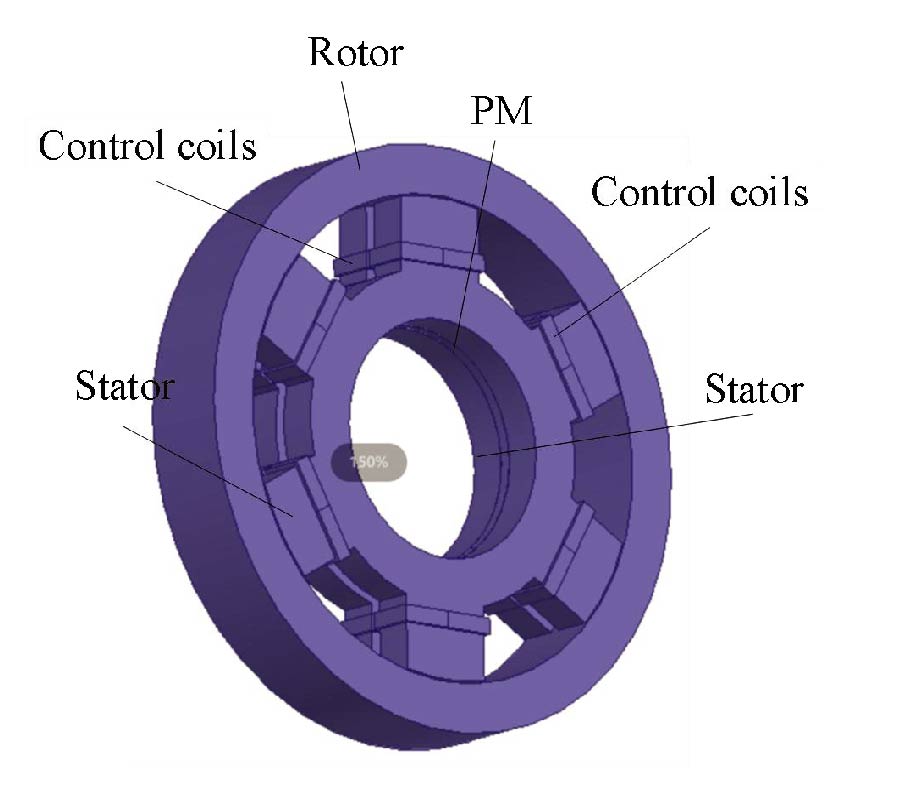
A bearingless induction motor (BL-IM) is a new type of motor integrating suspension and rotation functions. Higher requirements are put forward for its suspension performance. Due to the material advantages of a new type of amorphous alloy with high magnetic conductivity, low loss and low coercivity, it is considered to be used in the BL-IM rotor to reduce iron loss and improve the electromagnetic performance of the BL-IM. Finite element analysis software is used to analyze the performance of two different kinds of motors with the rotors made of conventional silicon steel and amorphous alloy respectively. The magnetic field density distribution, torque, speed, and radial force are compared between the two motors. The results show that the speed of amorphous alloy motor increases faster, and the rotor has better suspension characteristics. Moreover, the amorphous alloy material has a smaller density; the material properties can effectively reduce the weight of the motor; it is beneficial to the operation of the BL-IM in special environments.
ELECTROMAGNETIC PROPERTY ANALYSIS OF A BEARINGLESS INDUCTION MOTOR USING AMORPHOUS ALLOY MATERIAL
2021-08-12
PIER
Vol. 171, 21-34
Multimodal 2.5D Convolutional Neural Network for Diagnosis of Alzheimer's Disease with Magnetic Resonance Imaging and Positron Emission Tomography
Xuyang Zhang , Weiming Lin , Min Xiao and Huazhi Ji
Alzheimer's disease (AD) is a degenerative disease of the nervous system that often occurs in the elderly. As magnetic resonance imaging (MRI) and positron emission tomography (PET) reflect the brain's anatomical changes and functional changes caused by AD, they are often used to diagnose AD. Multimodal fusion based on these two types of images can effectively utilize complementary information and improve diagnostic performance. To avoid the computational complexity of the 3D image and expand training samples, this study designed an AD diagnosis framework based on a 2.5D convolutional neural network (CNN) to fuse multimodal data. First, MRI and PET were preprocessed with skull stripping and registration. After that, multiple 2.5D patches were extracted within the hippocampus regions from both MRI and PET. Then, we constructed a multimodal 2.5D CNN to integrate the multimodal information from MRI and PET patches. We also utilized a training strategy called branches pre-training to enhance the feature extraction ability of the 2.5D CNN by pre-training two branches with corresponding modalities individually. Finally, the results of patches are used to diagnose AD and progressive mild cognitive impairment (pMCI) patients from normal controls (NC). The experiments were conducted with the ADNI dataset, and accuracies of 92.89% and 84.07% were achieved in the AD vs. NC and pMCI vs. NC tasks. The results are much better than using single modality and indicate that the proposed multimodal 2.5D CNN could effectively integrate complementary information from multi-modality and yield a promising AD diagnosis performance.
MULTIMODAL 2.5D CONVOLUTIONAL NEURAL NETWORK FOR DIAGNOSIS OF ALZHEIMER'S DISEASE WITH MAGNETIC RESONANCE IMAGING AND POSITRON EMISSION TOMOGRAPHY
2021-08-11
PIER Letters
Vol. 99, 119-126
A Sensing Demonstration of a Sub THz Radio Link Incorporating a Lens Antenna
Ali Ghavidel , Sami Myllymäki , Mikko Kokkonen , Nuutti Tervo , Mikko Nelo and Heli Jantunen
We demonstrate that the future sixth generation (6G) radio links can be utilized for sub-THz frequency imaging using narrow beamwidth, high gain, lens antennas. Two different lenses, a bullet or hemispherical shape, were used in radio link setup (220-380 GHz) for an imaging application. Lenses performed with the gain of 28 dBi, 25 dBi, and narrowed the beamwidths of 1° and 2.5°. Plants were used as imaging objects, and their impacts on radio beams were studied. For assessment, the radio link path loss parameter was -48.5 dB, -53.2 dB, and -57.1 dB with the frequency 220 GHz, 300 GHz, and 330 GHz, respectively. Also, the impact of the radio link distance on the imaging was studied by 50 cm and 2 m link distances. In addition, the 3D image was acquired using the phase component of the image, and it showed the leaf surface roughness and the thickness, which was similar to the measured value.
A SENSING DEMONSTRATION OF A SUB THZ RADIO LINK INCORPORATING A LENS ANTENNA
2021-08-11
PIER C
Vol. 114, 217-231
Improved Binary Particle Swarm Optimization and Its Application to Beamforming of Planar Antenna Arrays
Yan Lv , Fei Cao , Xiaowei Feng and Huiqin Li
Beamforming can steer the mainlobe of the beam pattern towards the desired signal and set several nulls in the directions of interference signals by adjusting the excitation weights of array elements. These days, a range of meta-heuristic algorithms have been utilized for beamforming of antenna arrays. However, most of the methods are applied to linear arrays and rarely to planar arrays. In this paper, a novel variant of binary particle swarm optimization (BPSO) is proposed at first, where the global search ability and the local optimization ability are both taken into account. Then, the fitness function including the term of peak sidelobe level (PSLL) is constructed, and the improved BPSO is applied to the beamforming of uniform planar array (UPA). Finally, simulation results demonstrate that the proposed algorithm is not only able to suppress PSLL effectively, but also able to form deeper nulls than that of linearly constrained minimum variance (LCMV).
IMPROVED BINARY PARTICLE SWARM OPTIMIZATION AND ITS APPLICATION TO BEAMFORMING OF PLANAR ANTENNA ARRAYS
2021-08-10
PIER Letters
Vol. 99, 111-118
Low Profile Wide Beamwidth Antenna Fed by 1:5 Unequal Wilkinson Power Divider
Anfu Zhu , Sifan Wu , Junwei Shi , Peng Hu and Jianxing Li
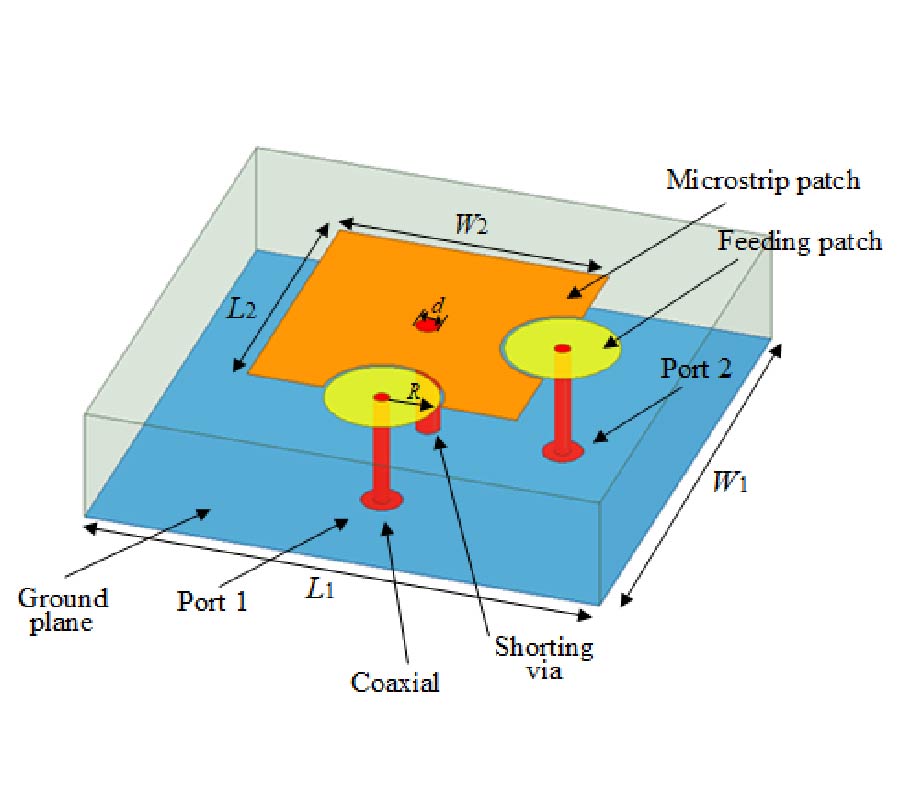
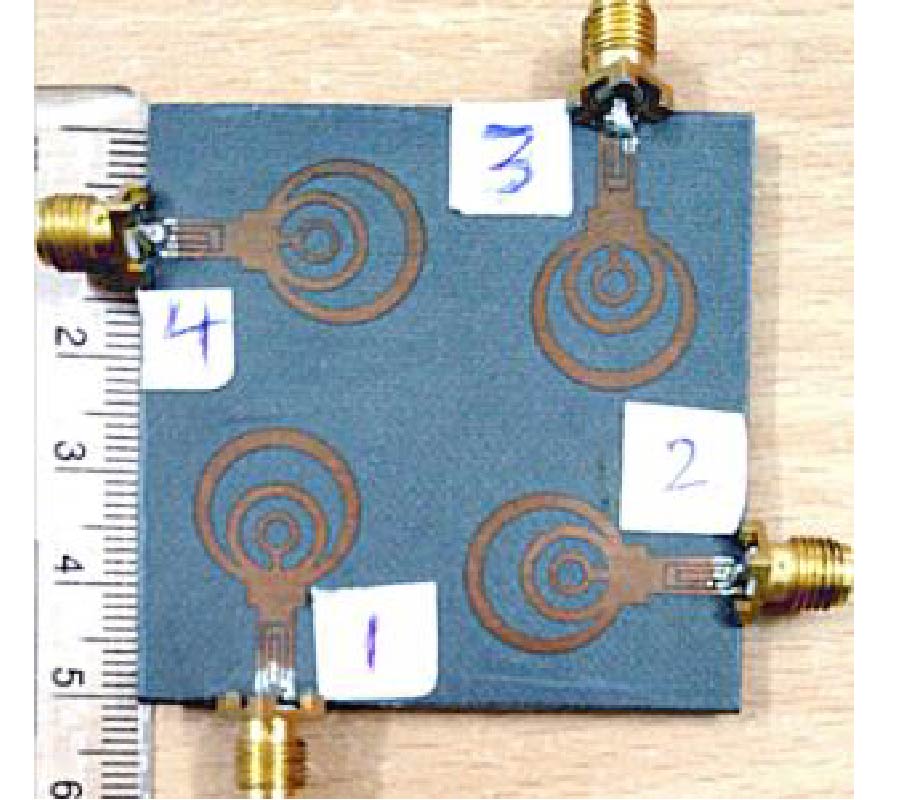
A novel wide beamwidth microstrip patch antenna fed by a 1:5 unequal Wilkinson power divider with a low profile of 0.027λ0 is presented. A circular patch and an independent feeding concentric metal ring can realize the broad half-power beamwidth (HPBW) in the far field. A 1:5 unequal Wilkinson power divider is designed as the antenna feed. The HPBWs of the antenna reach 258° and 267° in XZ-plane and YZ-plane, respectively, covering the whole upper half space at central frequency (2.54 GHz). The results of simulation and measurement show great consistency.
LOW PROFILE WIDE BEAMWIDTH ANTENNA FED BY 1:5 UNEQUAL WILKINSON POWER DIVIDER
2021-08-10
PIER C
Vol. 114, 203-216
Energy Harvesting System Using Rectenna Applied to Wireless Powered Remote Temperature Sensing
Felipe De Oliveira Silva Zanon , Ursula C. Resende , Guilherme Lopes De Figueiredo Brandão and Icaro Veloso Soares
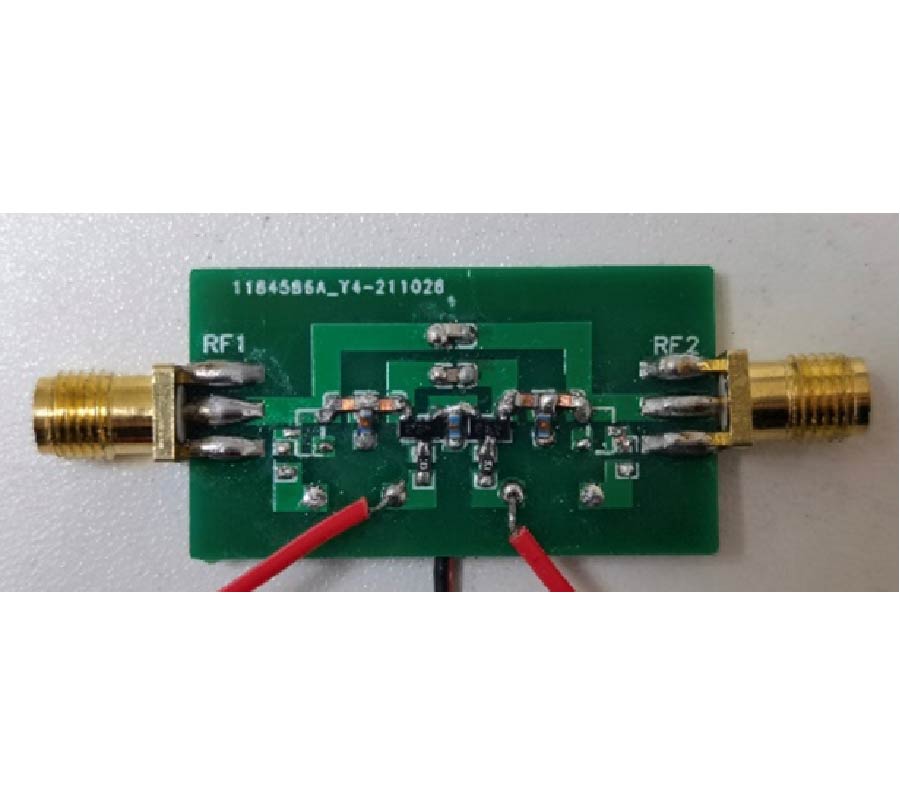
Nowadays, due to the ever-increasing number of electronic devices and communication systems that use high-frequency electromagnetic waves, a significant level of electromagnetic energy is available in the environment that is not entirely used. In this work, a complete electromagnetic harvesting system using a rectenna is proposed to collect this energy and feed a temperature measurement module. The rectenna is constituted by a combination of a microstrip antenna that captures the electromagnetic energy and a rectifier circuit that converts it into electric energy in direct current (DC) form to feed ultra-low-power loads. The proposed system uses a rectangular microstrip antenna, designed and optimized by using the Computer Simulation Technology (CST®) software to operate at 2.45 GHz. This designed antenna presents a measured reflection coefficient lower than -20 dB at the operating frequency with a maximum gain equal to 7.26 dB. In addition, a voltage doubler rectifier circuit is designed and optimized by using the Advanced Design System (ADS®) to match the impedance of the designed antenna to reduce the reflection losses between these two modules, achieving maximum measured efficiency of approximately 33%. Furthermore, a boost converter circuit is designed for the power management between collected and delivered powers to the sensor and to provide appropriate voltage levels to feed the temperature measurement module. This module consists of an ultra-low-power microcontroller and a temperature sensor that operates in the range of 1.8-3.6 V. The procedures for designing and testing each module of this system are detailed. Finally, a prototype is built and tested under different operating conditions to confirm its functionality and feasibility. These tests show that the proposed system can operate without batteries, only with the harvested electromagnetic energy dispersed in the environment, even from modulated and pulsating sources, as is the case of commercial routers.
ENERGY HARVESTING SYSTEM USING RECTENNA APPLIED TO WIRELESS POWERED REMOTE TEMPERATURE SENSING
2021-08-10
PIER M
Vol. 104, 39-47
Characterization of Dielectric Properties of Non-Magnetic Materials Using Superstrate-Loaded Antennas
Saininad Naik , Maria Pour and Curtis Hill
A free-space and non-invasive measurement technique to characterize the dielectric properties of a non-magnetic NASA-developed composite material is presented. To estimate the dielectric properties of the composite material, the material under test is placed as a superstrate over a pre-characterized benchmark antenna. The reflection coefficients and gain of the superstrate-loaded antenna are then utilized to estimate the relative permittivity and loss tangent of the composite under test, respectively. Using numerical analyses and measurements of the benchmark antenna loaded with the superstrate, the aforementioned properties are estimated to be 6 and ~0.12, respectively. To validate the accuracy of the method, a square microstrip patch antenna is also designed on a grounded NASA-developed composite material at the ISM band.
CHARACTERIZATION OF DIELECTRIC PROPERTIES OF NON-MAGNETIC MATERIALS USING SUPERSTRATE-LOADED ANTENNAS
2021-08-09
PIER B
Vol. 93, 87-109
Dual Feed Multiband Microstrip Patch Antenna Design with Circular Polarized Wave for 5G Cellular Communication
Rajiv Pathak , Biswa Binayak Mangaraj , Arun Kumar and Sushil Kumar
This paper proposes an orthogonal dual-feed microstrip patch antenna (MPA) that achieves multi-band resonance along with circular polarization at its primary band of 5G cellular communication. The proposed antenna is simpler than other designs to fulfill extreme data rates and minimum infrastructure requirements. This MPA is designed by taking most care for maintaining the isolation between ports with feasibility for physical fabrication. The HFSS based optimally designed proposed MPA resonates simultaneously at 3.48 GHz (3.3 GHz-3.7 GHz) band, 6.24 GHz (5.925 GHz-6.425 GHz) band, and 7.5 GHz (7.11 GHz-7.9 GHz) bands. The modes achieved for these three bands are TM01, TM11, and TM12 for 3.48 GHz, 6.24 GHz, and 7.5 GHz, respectively. The bandwidths achieved for the bands mentioned above are 160 MHz (4.57%), 330 MHz (5.27%), and 340 MHz (4.53%), respectively. The corresponding gains achieved are 9.8 dB, 5.06 dB, and 7.58 dB. The proposed MPA structure prototype is fabricated, and its performances are measured. The measured S11 for fabricated MPA is close to the resonating frequency found using HFSS simulation. The proposed MPA structure is also modeled and simulated in a MATLAB simulation environment. Performance parameters of the proposed MPA obtained in MATLAB and HFSS are compared and matched reasonably. The proposed MPA structure and its arrays are used for 5G cellular sites as a real-time application in a MATLAB simulation environment. Different test scenarios are created in MATLAB. SINR is visualized for the entire cellular area, and signal strengths are also fetched at the receiver sites.
DUAL FEED MULTIBAND MICROSTRIP PATCH ANTENNA DESIGN WITH CIRCULAR POLARIZED WAVE FOR 5G CELLULAR COMMUNICATION
2021-08-09
PIER C
Vol. 114, 185-202
Digitally Controlled Steered Dual Beam Pattern Synthesis of a Rectangular Planar Array Antenna in a Range of Azimuth Plane Using Evolutionary Algorithms
Sanjay Kumar Dubey and Debasis Mandal
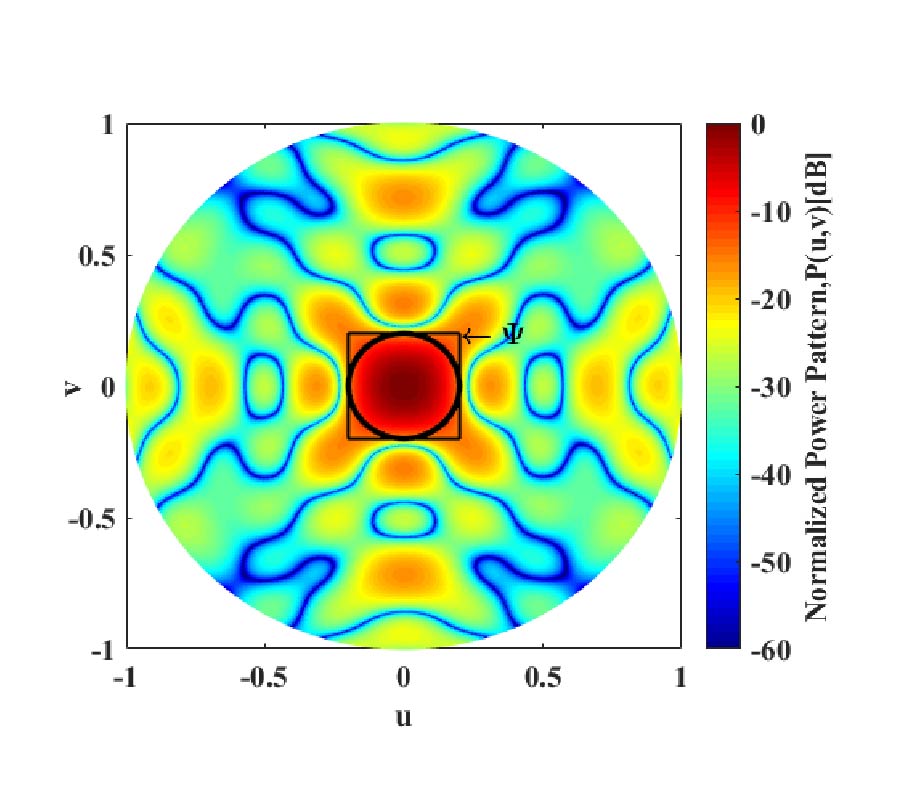
This paper presents a paattern synthesis method to generate dual-beam patterns of a rectangular planar array of isotropic antennas in a particular scanning angle using Evolution Algorithms. The dual-beam patterns are cosec2 pattern and pencil beam pattern, and both the patterns are steered to an elevation angle of 20 degrees (θ = 20˚). Moreover, each pattern is synthesized in three azimuth planes (φ = 0˚, 5˚, and 10˚). The isotropic elements are uniformly spaced, and nonuniform excitations are applied to achieve the desired patterns. These patterns are obtained by applying the optimum set of common elements amplitude and phases for the cosecant-squared pattern only. The optimum 4-bit discrete amplitudes and 5-bit discrete phases are produced using using Differential Evolutionary (DE) Algorithm, Genetic Algorithm (GA), Particle Swarm Optimization (PSO) Algorithm, and Firefly Algorithm (FA). These discrete excitations are helpful to reduce the Dynamic Range Ratio (DRR) and the design complexity of the feed networks. The excitations are also verified in a range of arbitrarily chosen azimuth planes. The patterns are generated in the same steering angle with minor variations of the desired parameters. The outcomes established the superiority of DE over PSO, GA, and the effectiveness of the proposed method.
DIGITALLY CONTROLLED STEERED DUAL BEAM PATTERN SYNTHESIS OF A RECTANGULAR PLANAR ARRAY ANTENNA IN A RANGE OF AZIMUTH PLANE USING EVOLUTIONARY ALGORITHMS
2021-08-09
PIER C
Vol. 114, 173-184
Multilayered Implantable Antenna Biosensor for Continuous Glucose Monitoring: Design and Analysis
Rahul B. Khadase , Anil Nandgaonkar , Brijesh Iyer and Abhay E. Wagh
This article reports a multilayer implantable biosensor for a continuous glucose monitoring system, tested on rats to determine the relationship between intravenous glucose level and resonance frequency of implant antenna sensor. An implantable antenna sensor with the volume 330.9 mm3 is tested in three rats as an animal model. This antenna biosensor operates in the Medical Implant Communication Service frequency band (402-405 MHz) with the simulated and measured maximum gains of -13.33 and -21.1 dB, respectively. The specific absorption rate obtained is within the standard limits. An oral glucose tolerance test is proposed to obtain the variation in blood glucose level in the animal's body during measurement. The resonance frequency shift and the corresponding blood glucose level are observed at a regular interval of 30 minutes. A frequency shift of 4.94 kHz per mg/dL is observed. Also, the results related to the reflection coefficient and the factors affecting sensor performance are discussed. The biosensor performance is validated using the proposed simple linear regression model.
MULTILAYERED IMPLANTABLE ANTENNA BIOSENSOR FOR CONTINUOUS GLUCOSE MONITORING: DESIGN AND ANALYSIS
2021-08-09
PIER C
Vol. 114, 159-172
An Electrically Small Ultra-Wideband CPW-Fed Monopole Antenna
Chaluvayalil Vinisha , Sruthi Dinesh , Rajan Vivek , Karavilavadakkethil Chellappan Prakash , Chandroth K. Aanandan , Kesavath Vasudevan and Pezholil Mohanan
An electrically small ultra-wideband (UWB) antenna to cater to the need for UWB communication suitable for today's small gadgets is presented. The antenna is realized on a substrate of relative dielectric permittivity 4.4, loss tangent 0.02 and height 1.6 mm. The overall dimension of the antenna is 21 mm×16 mm×1.6 mm (0.217λmin×0.165λmin×0.0165λmin), where λmin is the wavelength corresponding to the antenna's lowest operating frequency in free-space 3.1 GHz). The small `kmina' value of 0.856 of the antenna, where kmin is the wavenumber corresponding to λmin, and `a' is the radius of the sphere that can fully enclose the antenna, is electrically small. The antenna operates at the FCC recommended UWB frequency range from 3.1 GHz to 10.6 GHz with a reasonably good 2:1 voltage standing wave ratio (VSWR) impedance bandwidth. A prototype of the proposed antenna is fabricated, and different radiation characteristics of the antenna in the frequency and time domain are measured and validated by simulation. The high pulse fidelity for different antenna orientations and very small group delay in the operating frequency band exhibit insignificant pulse distortion. The equivalent isotropically radiated power (EIRP) of the antenna satisfies the FCC mask in the entire UWB. The maximum gain and efficiency achieved within the UWB are 3.95 dBi and 93% respectively. Radiation characteristics of the antenna in the UWB are studied in an anechoic chamber using Agilent PNA E 8362B.
AN ELECTRICALLY SMALL ULTRA-WIDEBAND CPW-FED MONOPOLE ANTENNA
2021-08-09
PIER M
Vol. 103, 221-233
Design and Analysis of Variable Leakage Flux Flux-Intensifying Motor for Improve Flux-Weakening Ability
Xiping Liu , Gaosheng Guo , Siting Zhu and Jianwei Liang
This paper presents a novel variable leakage flux flux-intensifying motor (VLF-FIM) to improve flux-weakening ability. The innovation lies in the variable leakage flux property and the characteristic of Ld>Lq. The two characteristics can be achieved by the adoption of magnetic barriers and magnetic bridges. Consequently, the flux-weakening ability is enhanced. Then, the topology structure and operation principle of the proposed machine are introduced. Based on the two-dimensional finite element method (2DFEM), the electromagnetic performances of the proposed motor are analyzed and compared with the conventional interior permanent magnet motor (CIPMM) in detail. The performances mainly include torque, flux-weakening ability, constant power speed range (CPSR), irreversible demagnetization risk of the PM, structural strength, etc. Finally, the results show that the proposed motor has some advantages, such as good flux-weakening ability, a wide constant power range, and a large high-efficiency area. In addition, it verifies the effectiveness of the proposed method in improving the flux-weakening ability of the motor.
DESIGN AND ANALYSIS OF VARIABLE LEAKAGE FLUX FLUX-INTENSIFYING MOTOR FOR IMPROVE FLUX-WEAKENING ABILITY
2021-08-07
PIER Letters
Vol. 99, 103-109
High Gain and Wideband Multi-Stack Multilayer Anisotropic Dielectric Antenna
Farhad Moayyed , Hamid Reza Dalili Oskouei and Morteza Mohammadi Shirkolaei
A multi-stack anisotropic cylindrical dielectric resonator antenna with high gain and wide bandwidth is reported. This antenna is designed with three different stacks, and each stack consists of a multilayer dielectric structure to emulate uniaxial anisotropy. Multi-stack, multilayer structure is responsible for producing wide bandwidth and high gain. In addition, the antenna is surrounded by cylindrical metallic cavity to increase directivity in broadside direction. Similar simulated and measured results indicate a wide impedance bandwidth of 37% along with a maximum gain 9.25 dB.
HIGH GAIN AND WIDEBAND MULTI-STACK MULTILAYER ANISOTROPIC DIELECTRIC ANTENNA
2021-08-05
PIER C
Vol. 114, 143-158
Multi-Resonator Variations of Circular Microstrip Antenna with Narrow Annular Sectoral Patches for Wideband Response
Venkata A. P. Chavali and Amit A. Deshmukh
Broadband variations of a proximity fed circular microstrip antenna gap-coupled with narrow annular sectoral patches are proposed. The gap-coupling of pairs of parasitic annular sectors along the x- and y-axes of the fed patch tunes the spacing in between the fundamental modes on the respective patches that yields wider bandwidth. A maximum bandwidth of 728 MHz (55%) offering peak gain of nearly 9 dBi is obtained in the circular patch gap-coupled with four pairs of annular sectors along the x-axis. This bandwidth is around 13% larger than the bandwidth offered by a single circular microstrip antenna. Instead of using multiple sectoral patches, a gap-coupled design of circular patch with a stub loaded annular sectoral patch is presented. The stub tunes TM02 mode frequency with reference to the fundamental modes on the circular and sectoral patches that yields bandwidth of 660 MHz (51%). Resonant length formulation and subsequent design methodology for all the proposed gap coupled configurations are presented, which helps in the re-designing of similar antennas at the given fundamental mode frequency. All the optimum and re-designed antennas are fabricated, and the measured results shows close agreement with the simulations.
MULTI-RESONATOR VARIATIONS OF CIRCULAR MICROSTRIP ANTENNA WITH NARROW ANNULAR SECTORAL PATCHES FOR WIDEBAND RESPONSE