Search Results(13979)

2021-12-26
PIER Letters
Vol. 101, 165-171
A 5.4 GHz Dual-Polarized Printed AMOS Antenna
Wen Luo and Yanfei Li
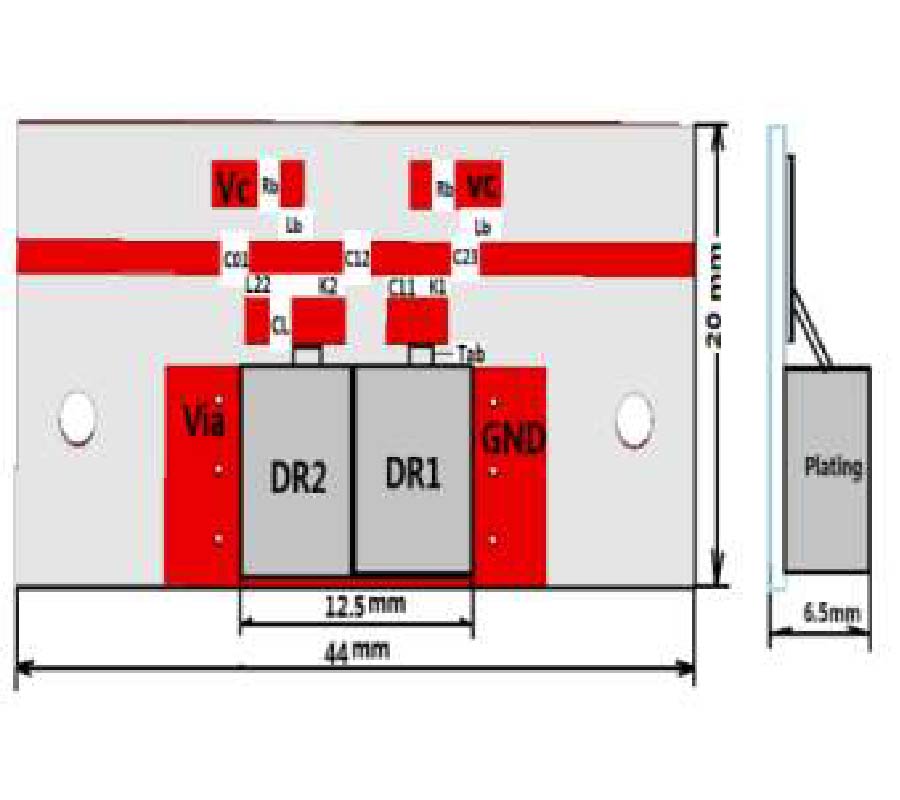
A novel dual-polarized printed AMOS antenna with high isolation operating at 5.4 GHz is proposed. The horizontal and vertical polarizations have similar radiation patterns in horizontal plane with the HPBW over 90°. In the frequency range of 5.2 GHz-5.6 GHz, the vertical polarization antenna and horizontal antenna have the gain above 7.4 dB and 10 dB, respectively. The S21 between the two input ports of the dual-polarized AMOS antenna is lower than -40 dB.
A 5.4 GHZ DUAL-POLARIZED PRINTED AMOS ANTENNA
2021-12-26
PIER Letters
Vol. 101, 157-164
Exotic Band Structures and Exceptional Points for an Electric Lattice with Periodic Modulation in Time
Alexander Gomez Rojas and Peter Halevi
We study electromagnetic wave propagation in a system that is periodic both in space and in time, namely, a discrete (``lumped'') transmission line with capacitors (``varactors'') that are modulated in time harmonically. These periodicities result in exotic electromagnetic band structures that are periodic in the angular frequency ω and in the phase advance ka of the wave. Depending on the strength of modulation m and the reduced modulation frequency Ω/ω0 (where ω0 is the resonant frequency of a unit cell of the transmission line), this band structure can display frequency or wave vector band gaps, both, or neither. Moreover, minor changes in or the modulation strength can control the aperture or closure of a gap and even transform a k-gap to an ω-gap. Such phase transitions are intimately associated with exceptional or critical points in the (ω, k, Ω, m) space.
EXOTIC BAND STRUCTURES AND EXCEPTIONAL POINTS FOR AN ELECTRIC LATTICE WITH PERIODIC MODULATION IN TIME
2021-12-25
PIER Letters
Vol. 102, 1-8
Bandpass Frequency Selective Surface with Sharp Sidebands for 5G Electromagnetic Shielding of Fixed Satellite System in C-Band
Min Tang , Qi-Kun Liu , Dong-Fang Zhou , Chen-Qing Pan and Zhen-Ning Yao
In this letter, a new bandpass frequency selective surface (FSS) with sharp sidebands is proposed to suppress electromagnetic interferences caused by the fifth generation (5G) mobile communication to fixed C-band satellite system. The proposed design is composed of three cascaded layers separated by air space, whose unit cell geometry comprises metal square loops, square slots and their evolvement. As the overall configuration yields high-order bandpass characteristics with multiple transmission poles and zeros, a flat passband covering 3.7-4.2 GHz is obtained, while the out-of-band shielding effectiveness mostly remains better than 20 dB over frequency lower than 6.5 GHz. Good angular stability and polarization independency are also achieved due to structural symmetry. A prototype was fabricated and measured, whose results agree well with the full-wave simulation.
BANDPASS FREQUENCY SELECTIVE SURFACE WITH SHARP SIDEBANDS FOR 5G ELECTROMAGNETIC SHIELDING OF FIXED SATELLITE SYSTEM IN C-BAND
2021-12-24
PIER
Vol. 172, 33-40
Non-Hermitian Skin Effect and Delocalized Edge States in Photonic Crystals with Anomalous Parity-Time Symmetry
Qinghui Yan , Hongsheng Chen and Yihao Yang
Non-Hermitian skin effect denotes the exponential localization of a large number of eigen-states at boundaries in a non-Hermitian lattice under open boundary conditions. Such a non-Hermiticity-induced skin effect can offset the penetration depth of in-gap edge states, leading to counterintuitive delocalized edge modes, which have not been studied in a realistic photonic system such as photonic crystals. Here, we analytically reveal the non-Hermitian skin effect and the delocalized edge states in Maxwell's equations for non-Hermitian chiral photonic crystals with anomalous parity-time symmetry. Remarkably, we rigorously prove that the penetration depth of the edge states is inversely proportional to the frequency and the real part of the chirality. Our findings pave a way towards exploring novel non-Hermitian phenomena and applications in continuous Maxwell's equations.
NON-HERMITIAN SKIN EFFECT AND DELOCALIZED EDGE STATES IN PHOTONIC CRYSTALS WITH ANOMALOUS PARITY-TIME SYMMETRY
2021-12-24
PIER C
Vol. 117, 99-114
Compact Dual-Band Printed MIMO Antenna with Very Low Mutual Coupling for WLAN, Wi-MAX, Sub-6 GHz 5G and X-Band Satellite Communication Applications
Kommanaboyina Vasu Babu , Sudipta Das , Soufian Lakrit , Shobhitkumar Kiritkumar Patel , Boddapati Taraka Phani Madhav and Hicham Medkour
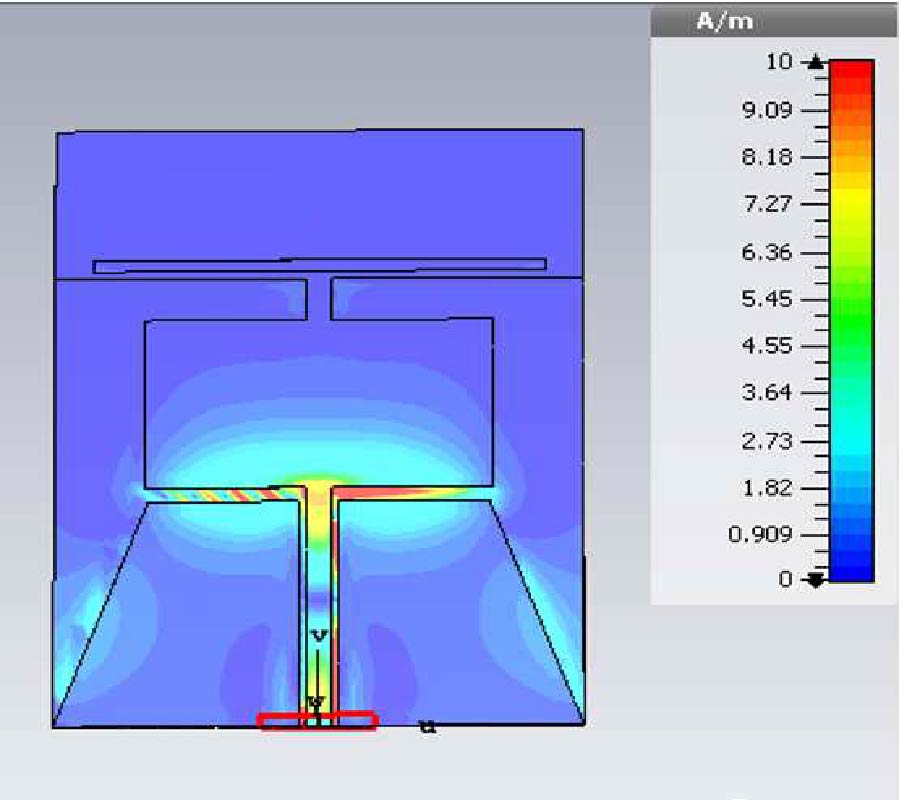
In this paper, a dual-band modified multiple-input-multiple-output (MIMO) antenna with high isolation is presented and discussed. The proposed compact structure (35 × 25 mm2) consists of two monopole elements and defected ground planes to obtain high impedance bandwidth. Two elliptical-shaped patches are placed orthogonal to each other to obtain high isolation, and a neutralization slit is integrated into the ground plane of each element to further improve the isolation between the elements. The measurement results of the proposed structure show satisfactory agreement with the simulation results. The measured bandwidths are 47.05% (2.6-4.2 GHz) and 64.72% (5.11-10 GHz) at S11 ≤ -10 dB which covers bandwidth requirements of WiMAX (3.4-3.6 GHz, 5.25-5.85 GHz), sub 6 GHz 5G band (3.4-3.8 GHz), WLAN (5.15-5.35 GHz, 5.725-5.825 GHz), and X band satellite communication systems (7.25–8.39 GHz). The designed antenna offers a peak gain of about 9.0 dBi and radiation efficiency of about 92%. The measured minimum isolation is greater than 27.3 dB across the dual band with a maximum value of 73.4 dB. The envelope correlation coefficient (ECC) is below 0.0035, channel capacity loss less than 0.37 bits/s/Hz, and peak diversity gain about 10 dBi.
COMPACT DUAL-BAND PRINTED MIMO ANTENNA WITH VERY LOW MUTUAL COUPLING FOR WLAN, WI-MAX, SUB-6 GHZ 5G AND X-BAND SATELLITE COMMUNICATION APPLICATIONS
2021-12-24
PIER M
Vol. 106, 191-203
Compensation Rotor Vibration of Outer Rotor Coreless Bearingless Permanent Magnet Synchronous Generator Using Variable Step Least Mean Square Adaptive Filter
Huangqiu Zhu , Kai Zhou and Junqi Huan
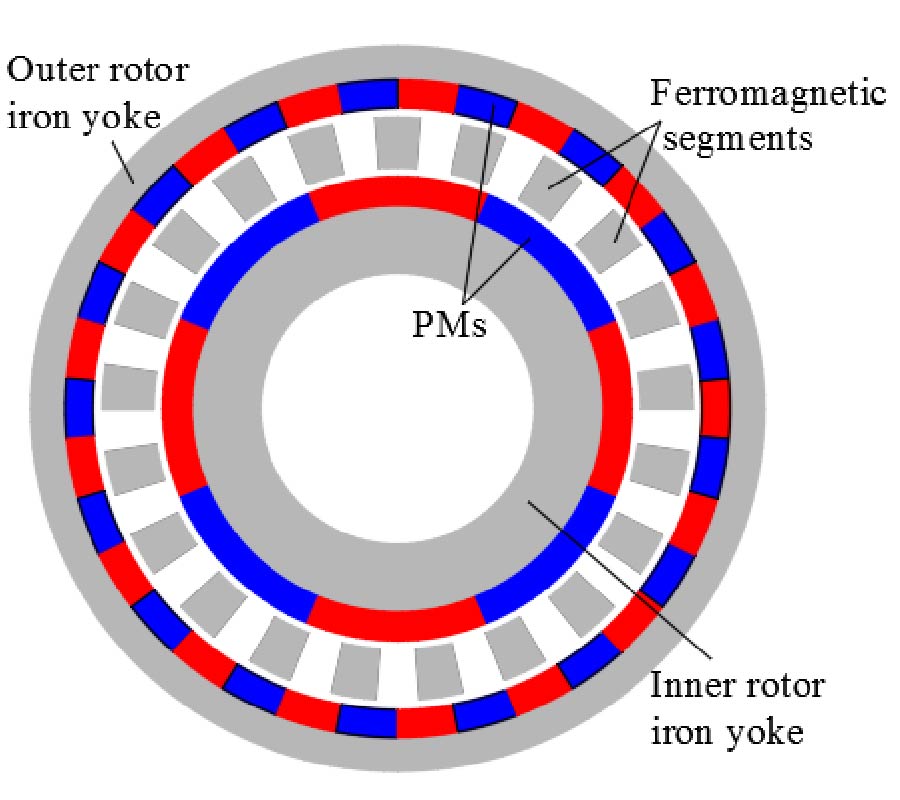
An outer rotor coreless bearingless permanent magnet synchronous generator (ORC-BPMSG) has the characteristics of long service life, high efficiency, low noise, etc. However, the stability and reliability of the system and the output voltage are affected by the rotor vibration. In this paper, the step size and error of improved variable step least mean square (VSLMS) adaptive filter using improved simplified particle swarm optimization (ISPSO) is proposed, which suppresses the vibration of the rotor. The mathematical model and working principle of the ORC-BPMSG are introduced. The performances of improved VSLMS adaptive filter parameters are optimized by the improved SPSO algorithm, which generates a compensation signal to realize vibration compensation. The simulation system for the vibration compensation of the ORC-BPMSG is constructed, and dynamic suspension experiment and variable speed experiment of the rotor are carried out, which verify the robustness and stability of the proposed method.
COMPENSATION ROTOR VIBRATION OF OUTER ROTOR CORELESS BEARINGLESS PERMANENT MAGNET SYNCHRONOUS GENERATOR USING VARIABLE STEP LEAST MEAN SQUARE ADAPTIVE FILTER
2021-12-24
PIER M
Vol. 106, 179-189
Synthesis of Wideband Reconfigurable Array Antennas for Monopulse Radar Applications
Le Trong Phuoc Bui , Nicola Anselmi , Giada Maria Battaglia , Tommaso Isernia , Paolo Rocca and Andrea Francesco Morabito
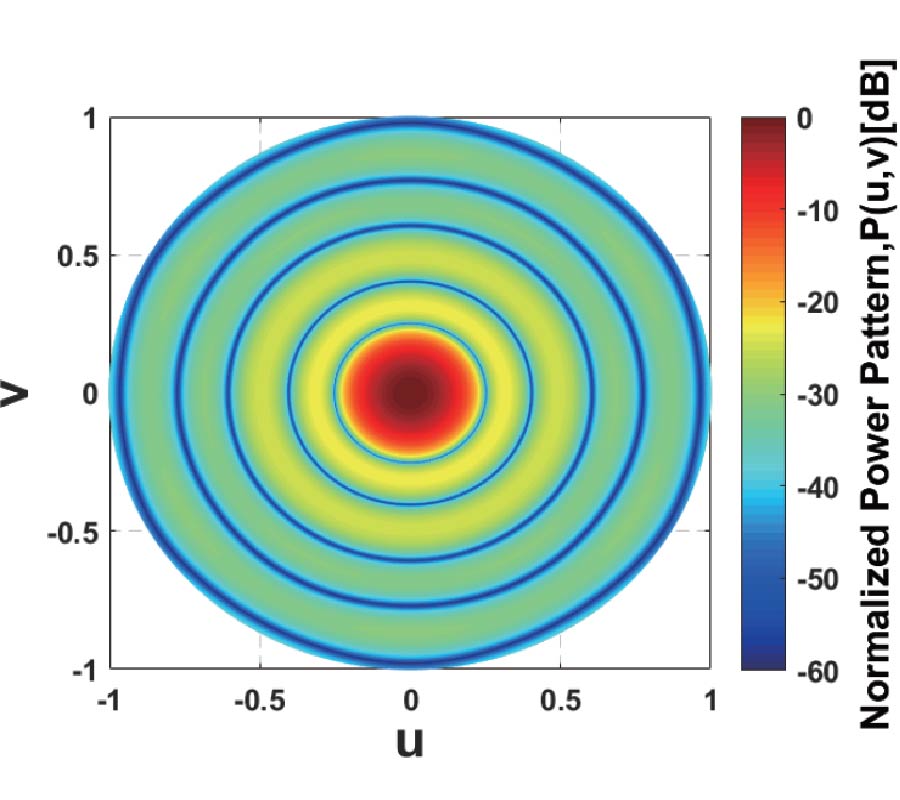
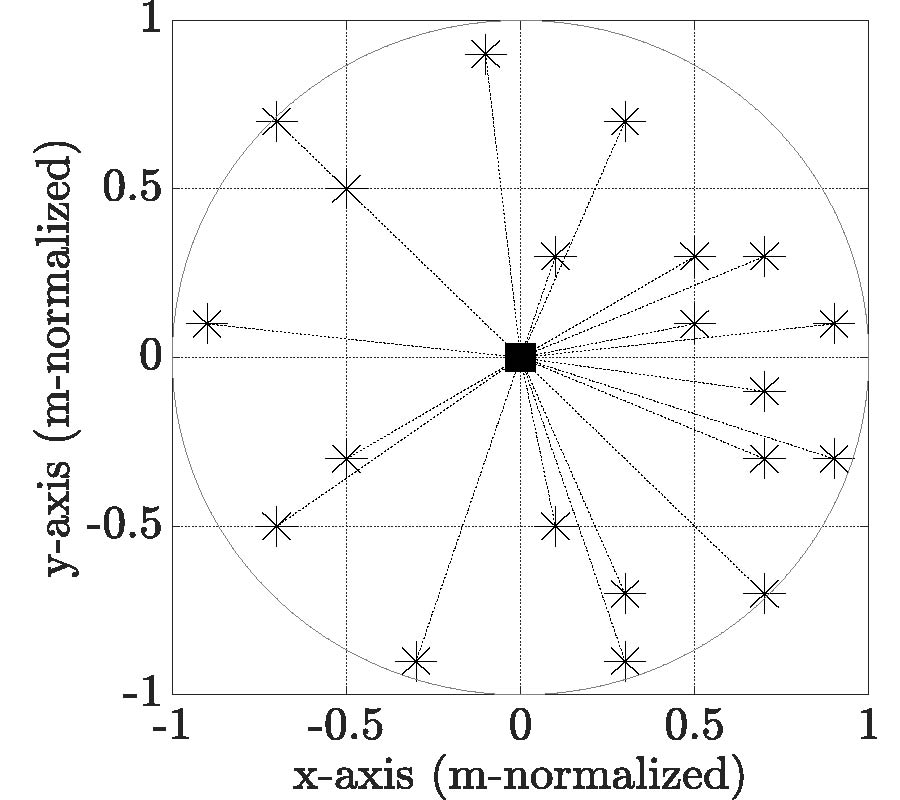
A new approach to the bandwidth maximization of reconfigurable antenna arrays for monopulse radar applications is proposed and tested. The provided radiating systems allow switching the radiation behavior from sum to difference patterns (and vice versa) while sharing the excitation amplitudes of a user-decided set of radiating elements. Furthermore, the proposed design procedure guarantees the maximum possible bandwidth performance once the overall antenna size, the desired beamwidth, sidelobe level, and slope in the target direction of the generated power patterns are fixed. The synthesis problem is cast and solved as a sequence of convex programming optimizations, and hence the maximization of performances is attained with advantages in terms of computational times as well as convergence to the global optimum. The given theory is supported by numerical experiments including arrays with ultra-wideband performances.
SYNTHESIS OF WIDEBAND RECONFIGURABLE ARRAY ANTENNAS FOR MONOPULSE RADAR APPLICATIONS
2021-12-24
PIER M
Vol. 106, 167-177
A Novel Miniaturized C-Band Bandpass Filter
Luyao Tang , Xiaoli Jiang , Hao Wei and Weiwei Liu
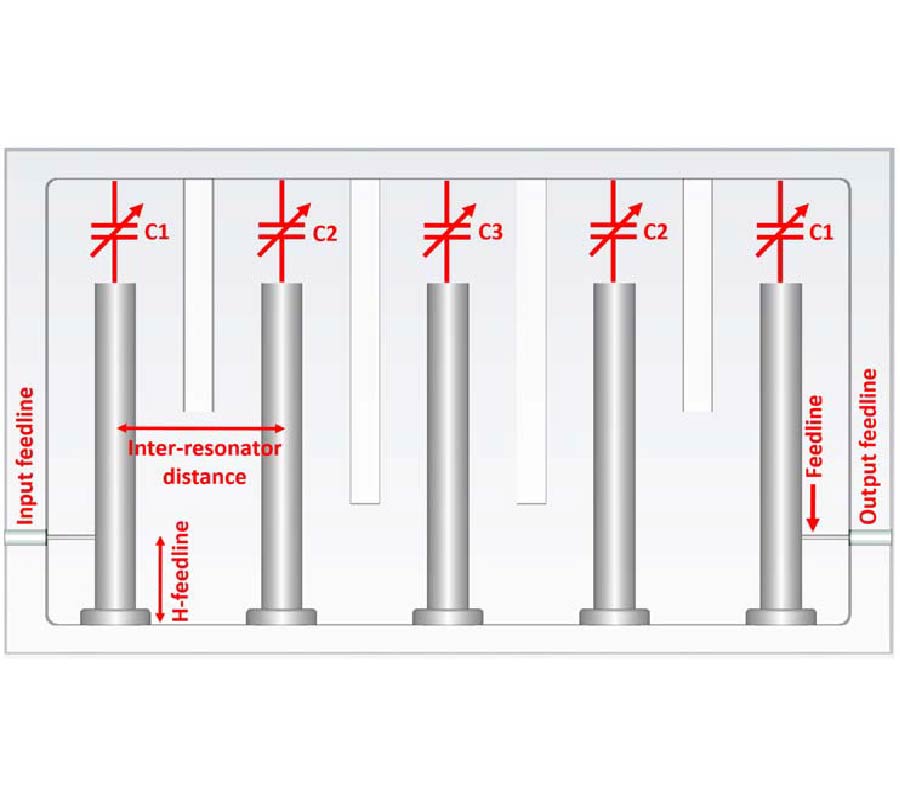
A novel miniaturized bandpass filter (BPF) is proposed, which is based on a stepped-impedance resonator (SIR) and cross-coupling theory. This filter has the characteristics of small size and high out-of-band rejection. The filter consists of four 1/2 wavelength stepped-impedance resonators and two 1/4 wavelength short-circuit microstrip resonators. By designing a new kind of structure, the cross coupling is realized between the second and the fifth resonators, and two transmission zeros are introduced out of band. Zero-degree feeding is realized due to the symmetry of the structure and feeding position, which adds two other transmission zeros outside the band. Four transmission zeros are introduced outside the passband of the filter, which greatly increase the out-of-band rejection of the filter. The passband of the filter is 3.2 GHz~4.2 GHz, and the out-of-band rejection at 2.6 GHz and 4.8 GHz reaches -60 dB. The size of the filter is only 7.2 mm * 8 mm (0.21λg*0.24λg), which realizes the miniaturization of the filter.
A NOVEL MINIATURIZED C-BAND BANDPASS FILTER
2021-12-23
PIER B
Vol. 94, 145-174
Space and Leaky Wave Radiation from Highly Lossy Biological Cylindrical Human-Limps Models
Xenophon M. Mitsalas , Theodoros Kaifas and George Kyriacou
The continuous and discrete radiation spectrum of a highly dielectric constant structure with extremely high losses is revisited herein. This work is motivated by the need of efficient electromagnetic power extraction from antenna-sources implanted into the human body. As the dielectric constant of biological tissues varies between 35 and 80 with a conductivity increasing from 0.5 to 2 S/m with frequency, the involved propagation and particularly radiation phenomena cannot be described by the current state of the art published research. Since the scope of the biomedical applications refers to the communication or energy transfer between an implanted device and an external one, the problem to be addressed involves primarily the near field and secondary the far-radiated field. Many of human body parts as the hands, legs, torso and neck can be modeled as cylinders. Indicatively, a non-magnetic infinite cylinder with an average dielectric constant εr1 = 58.1 and conductivity σ = 1.69 S/m is considered, with focus on the hand with average radius 2.75 cm. Although a plethora of excellent publications elaborates both analytically and numerically on the radiation from dielectric cylinders including losses, there is not any work studying rods with so high dielectric constants and extremely high losses, (loss tangents around unity or higher), while most of them are dealing with the far field rather than the near field. Classical works reveal radiation due to the discrete surface and leaky modes as well as a continuous spectrum, while complex modes appearing as quadruplets are found responsible for only energy storage. These are indications of discrete modes transitions as dielectric losses are increased. It is herein proved that indeed increasing losses are causing not only mode transition but also a change in their nature as surface or leaky, while the complex mode quadruplet breaks resulting in radiation in both the near and far fields, while losses have significant effects in the continuous spectrum (sky or space wave). These phenomena are exploited to serve the main purpose of this paper aiming to devise a physical mechanism supporting efficient energy and signal transferring inwards or outwards a highly lossy, high dielectric constant cylinder. The novelty of the proposed methodology stems from a Wiener-Hopf based non-meromorphic Kernel factorization resulting in a field product representation. This is composed of well defined individual terms with each one of them building on a specific pole-mode. The proposed formulation is found to be equivalent to the generalized ``multiplicative'' and ``additive'' steepest descent methods regarding the far field evaluation, but additionally is capable of providing the near field as well. The latter feature supports important biomedical applications. Due to the huge extent of the subject and in order to facilitate the continuous spectrum the analysis is restricted to the excitation by an infinitesimal electric dipole positioned at the origin and oriented along the axis of the cylinder. Studying this structure, a low attenuation low order mode is encountered which is mainly responsible for the energy transferring. This is in accordance with Frezza et al. findings for a ``deeply penetrating'' mode into highly lossy media.
SPACE AND LEAKY WAVE RADIATION FROM HIGHLY LOSSY BIOLOGICAL CYLINDRICAL HUMAN-LIMPS MODELS
2021-12-23
PIER Letters
Vol. 101, 147-155
Research on Efficiency Optimization Based on Permanent Magnet Synchronous Linear Motor
Xingqiao Zhao , Cheng Wen , Mingwei Li , Qiankai Zhao , Kailin Lv and Xin Wang
In recent years, permanent magnet synchronous linear motor (PMSLM) has gained tremendous momentum in industry, especially in the high-precision field. This is mainly because it has the advantages of small size, high control precision, reliable operation. However, due to the special structure of linear motor, the control strategy of rotating motor cannot be directly applied to PMSLM. Three control strategies for reducing loss and improving efficiency of PMSLM are proposed in this paper. Firstly, the mathematical model of PMSLM is established and the loss model and efficiency equation are established. Secondly, we adopt the loss model control strategies of id=0, maximum thrust current ratio and direct thrust are used to optimize the efficiency of the motor. Finally, simulation experiments are carried out for the three proposed optimization strategies, and the effects of initial speed and load on motor efficiency are analyzed. The effectiveness of the three loss model control strategies proposed in this paper is fully verified by the simulation results, and it is found that the loss model control strategy of id=0 has the most obvious efficiency improvement.
RESEARCH ON EFFICIENCY OPTIMIZATION BASED ON PERMANENT MAGNET SYNCHRONOUS LINEAR MOTOR
2021-12-22
PIER
Vol. 172, 23-32
Tunable High-Q Plasmonic Metasurface with Multiple Surface Lattice Resonances (Invited)
Nanxuan Wu , Yiyun Zhang , Hongbin Ma , Hongsheng Chen and Haoliang Qian
Micro-nano opto-electronic devices are demanded to be highly efficient and capable of multiple working wavelengths in several light-matter interaction applications, which is a challenge to surface plasmonics owing to the relatively higher intrinsic loss and larger dispersion. To cross the barriers, a plasmonic metasurface combining both high Q-factors (highest Q > 800) and multiple resonant wavelengths is proposed by arranging step-staged pyramid units in lattice modes. Different numerical relations for nonlinear frequency conversions have been constructed because of its strong tunability. Also, characteristics of high radiation efficiency (> 50%) and largelocalized optical density of state (> 104) have been proved through the numerical simulation. Such tunable high-Q metasurface can be implemented to quantum nonlinear process and enable the strong light-matter interaction devices into reality.
TUNABLE HIGH-Q PLASMONIC METASURFACE WITH MULTIPLE SURFACE LATTICE RESONANCES (INVITED)
2021-12-22
PIER M
Vol. 106, 153-165
A Continuous-Discontinuous Galerkin Method for Electromagnetic Simulations Based on an All-Frequency Stable Formulation
Su Yan
In this paper, a potential-based partial-differential formulation, called the all-frequency stable formulation, is presented for the accurate and robust simulation of electromagnetic problems at all frequencies. Due to its stability from (near) dc to microwave frequencies, this formulation can be applied to simulate wide-band and multiscale problems without encountering the infamous low-frequency breakdown issue or applying basis function decompositions such as the tree-cotree splitting technique. To provide both efficient and flexible numerical solutions to the electromagnetic formulation, a mixed continuous-discontinuous Galerkin (CDG) method is proposed and implemented. In regions with homogeneous media, the continuous Galerkin method is employed to avoid the introduction of duplicated degrees of freedom (DoFs) on the elemental interfaces, while on the interfaces of two different media, the discontinuous Galerkin method is applied to permit the jump of the normal components of the electromagnetic fields. Numerical examples are provided to validate and demonstrate the proposed numerical solver for problems in a wide electromagnetic spectrum.
A CONTINUOUS-DISCONTINUOUS GALERKIN METHOD FOR ELECTROMAGNETIC SIMULATIONS BASED ON AN ALL-FREQUENCY STABLE FORMULATION
2021-12-21
PIER C
Vol. 117, 89-98
Design and Analysis of Rectenna at 2.42 GHz for Wi-Fi Energy Harvesting
Rashmi Pandey , Ashok Kumar Shankhwar and Ashutosh Singh
This work proposes a design of rectenna for Wi-Fi energy harvesting application at 2.42 GHz. The proposed antenna includes a modified rectangular patch and two circular radiating elements with partial ground, and adopts a total area of 80 × 80 mm2. With the partial ground structure, the proposed antenna shows a better reflection coefficient (S11) at 2.42 GHz. The proposed antenna is a modified conventional patch antenna that shows its improved suitability for Wi-Fi energy harvesting at the targeted band. For rectenna, an impedance matching circuit based on microstrip transmission lines, radial stubs, and enhanced Greinacher voltage doubler rectifier circuits are designed. The rectifier circuit occupies a total area of 25 × 25 mm2. The antenna part of the rectenna exhibits quite good S11 < -10 dB and 3.94 dB peak gain. To validate the design experimentally, a prototype of the proposed rectenna is also fabricated. The measured result indicates that at the resonant frequency the rectenna achieves the peak efficiency of 78.53%, and the output voltage is 4.7 V at 0 dBm input power.
DESIGN AND ANALYSIS OF RECTENNA AT 2.42 GHZ FOR WI-FI ENERGY HARVESTING
2021-12-21
PIER M
Vol. 106, 139-152
Analyzing Effects of Satellite Attitude and Speed Errors on Ocean Current Retrieval for a Doppler Scatterometer
Yuanjing Miao , Xiaolong Dong and Di Zhu
Doppler-based techniques for ocean current measurement have been demonstrated in the past years. The Doppler shift of the ocean backscattering from space-borne microwave instruments not only includes the contributions from ocean current but also includes satellite movement and the wind-wave induced. Geometrical Doppler shift induced by satellite movement is highly dependent on the accuracies of satellite attitude determinations and speed. In this study, we derive the detailed formulas to investigate how satellite attitude determination and speed errors affect ocean current retrieval for a Doppler scatterometer through the spatial correlation coefficient phase and the transformation between orbital coordinate system and satellite-carried local level frame (LLF). Our results show that ocean current speed retrieval accuracy is sensitive to the accuracies of satellite attitude determination and speed, and compared with the satellite speed error, satellite attitude error has a larger impact on ocean current retrieval. By comparisons, with the same attitude accuracy for satellite roll, pitch, and yaw, ocean current speed error induced by the roll error is found to be the smallest. With an accuracy of 0.001° satellite attitude determination and 0.01 m/s for satellite speed accuracy, the total ocean current speed retrieval error induced by satellite attitude determinations (including roll, pitch, and yaw) and speed errors reaches a maximum value of 16.37 cm/s at side-looking direction and a minimum value of 11.05 cm/s at forward and backward-looking directions. Our results confirm the importance of satellite attitude determination accuracy for future ocean current mission and will also be useful to motivate the design of future Doppler measurement instruments.
ANALYZING EFFECTS OF SATELLITE ATTITUDE AND SPEED ERRORS ON OCEAN CURRENT RETRIEVAL FOR A DOPPLER SCATTEROMETER
2021-12-21
PIER Letters
Vol. 101, 137-145
An Embroidered Passive Textile RFID Tag Based on a T-Matched Antenna
Mohamed El Bakkali , Otman El Mrabet , Mohammed Kanjaa , Ignacio Gil and Raúl Fernandez-Garcia
This paper addresses the design and fabrication of an embroidered textile RFID tag antenna. The main feature of this design is that we have embroidered an RFID chip on the textile support which avoids the use of metallic wires or soldering. The modeled equivalent circuit of the tag is presented to get physical insight into RFID tag antenna design. The detailed results given in this paper include the effect of the bending and the human body proximity on the antenna performance. It is shown that the bending does not introduce a conspicuous effect on the tags read range while the dissipative characteristics of the human body cause a gain and read range reduction. The proposed design may find applications in wearable devices dedicated to health monitoring applications.
AN EMBROIDERED PASSIVE TEXTILE RFID TAG BASED ON A T-MATCHED ANTENNA
2021-12-20
PIER
Vol. 172, 13-22
Tunable Topological Refractions in Valley Sonic Crystals with Triple Valley Hall Phase Transitions (Invited Paper)
Ding Jia , Yin Wang , Yong Ge , Shou-Qi Yuan and Hong-Xiang Sun
Topological refractions created by valley sonic crystals (VSCs) have attracted great attentions in the communities of physics and engineering owing to the advantage of zero reflection of sound and the potential for designing advanced acoustic devices. In previous works, topological refractions of valley edge states are demonstrated to be determined by the projections of the valleys K and K′, and two types of topological refractions generally exist at opposite terminals or different frequency bands. However, the realization of tunable topological refractions at the fixed frequency band and terminal still poses great challenge. To overcome this, we report the realization of tunable topological refractions by VSCs with triple valley Hall phase transitions. By simply rotating rods, we realize 3 types of topological waveguides (T1, T2 and T3) composed of two VSCs, in which the projections of the observed valley edge states can be modulated between K and K′. Additionally, based on the measured transmittance spectra, we experimentally demonstrate that these valleyedge states are almost immune to backscattering against sharp bends. More importantly, we realize tunable topological refractions at the fixed frequency band and terminal, and experimentally observe the coexistence of positive and negative refractions for T1 and T3, and negative refractions for T2. The proposed tunable topological refractions have potential applications in designing multi-functional sound antennas and advanced communication devices.
TUNABLE TOPOLOGICAL REFRACTIONS IN VALLEY SONIC CRYSTALS WITH TRIPLE VALLEY HALL PHASE TRANSITIONS (INVITED PAPER)
2021-12-20
PIER C
Vol. 117, 73-87
Compact Differential Tri-Band Bandpass Filter with Multiple Zeros Using Sext-Mode Stepped-Impedance Square Ring Loaded Resonator
Ziyue Guo , Li Tian Wang , Rong Guo , Yang Xiong , Ming He , Lu Ji and Xu Zhang
In this paper, a second-order tri-band balanced bandpass filter (BPF) with multiple transmission zeros (TZs) and compact size is presented. The structure consists of novel stepped impedance square ring loaded resonators (SI-SRLRs), which can excite six resonance modes. For design of SI-SRLR, we analysed the odd-mode equivalent circuit and obtained the electrical lengths from the design graph. Meanwhile, the wider frequency distances between differential modes (DMs) and common modes (CMs) are realized by selecting the proper admittance ratio of SI-SRLR. Then for design of BPF, six TZs are introduced by source-load coupling, which lead to band-to-band isolation of 23 dB. Additional T-shaped stubs and open stubs are loaded on the symmetric plane of SI-SRLR, which result in high CM suppressions of 43 dB, 25 dB and 37 dB at three DM centre frequencies. Finally, a tri-band differential BPF operating at 1.46 GHz, 4.45 GHz and 5.48 GHz is fabricated and measured. The measured 3-dB fractional bandwidths of three passbands are 6.8%, 7.4% and 5.6%. A wide DM and CM stopband suppression of 20 dB is achieved to 14.6 GHz (10f0). The measurements verify well the proposed structure and the design method.
COMPACT DIFFERENTIAL TRI-BAND BANDPASS FILTER WITH MULTIPLE ZEROS USING SEXT-MODE STEPPED-IMPEDANCE SQUARE RING LOADED RESONATOR
2021-12-20
PIER Letters
Vol. 101, 127-136
A Polarization Insensitive Tri-Band Bandpass Frequency Selective Surface for Wi-MAX and WLAN Applications
Sanjeev Yadav , Mahendra Mohan Sharma and Rajesh Singh
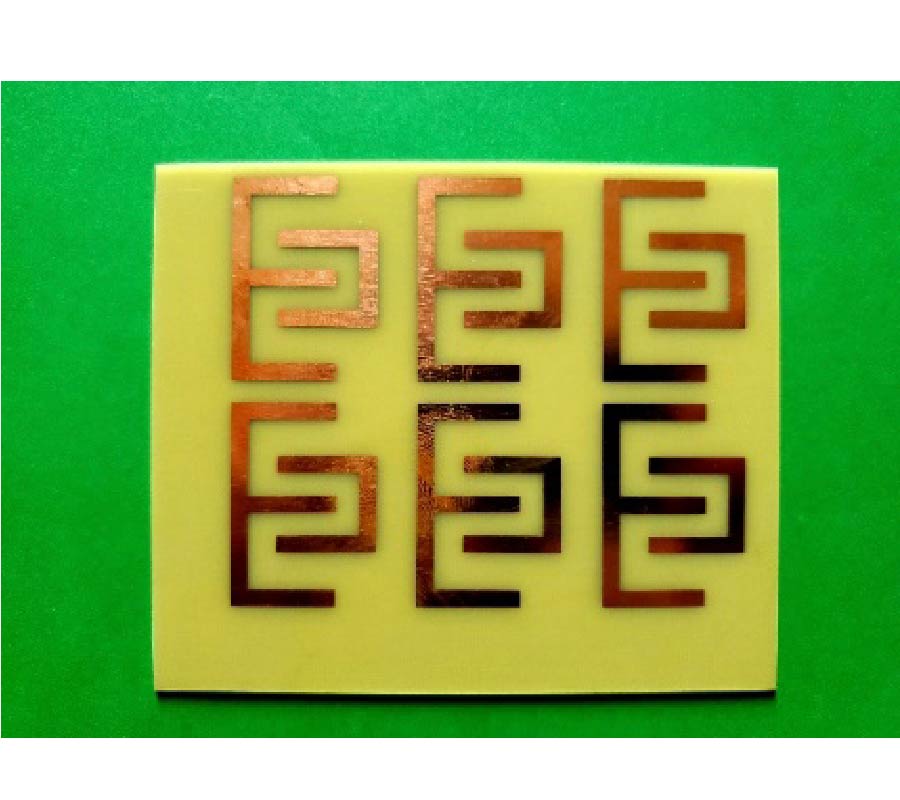
This article reports a single layer tri-band bandpass, polarization insensitive Frequency Selective Surface (FSS). The unit cell is designed by considering different square loop elements and cross dipole element to pass Wi-Max and WLAN frequency range with low loss. Three different shapes of loops and one cross dipole are arranged in a way that gives a triple-band-pass characteristic from the proposed structure. These loops and dipole are designed to pass Wi-MAX (2.5-2.7 GHz, 3.4-3.6 GHz) and WLAN (center frequency, 5.5 GHz) bands. The structure performance is independent of incidence angle of wave due to its symmetrical geometry which makes the design polarization insensitive and achieves good angular stability. A 14x14 array of proposed unit cell is realized and measured. The proposed FSS achieves a 3 dB transmission bandwidth of 25% at 2.6 GHz, 65.6% at 3.5 GHz and 65.6% at 5.5 GHz. The advantage of the proposed design is that it has a simple and compact geometry fabricated on a low-cost substrate and achieved tri-band band pass response with a wide angular stability.
A POLARIZATION INSENSITIVE TRI-BAND BANDPASS FREQUENCY SELECTIVE SURFACE FOR WI-MAX AND WLAN APPLICATIONS
2021-12-19
PIER C
Vol. 117, 55-72
Research on Shielding and Electromagnetic Exposure Safety of an Electric Vehicle Wireless Charging Coil
Wenting Mou and Mai Lu
To address the problems of large volume, heavy weight, and inconvenient installation of the shield board of a wireless charging coil (WCC) installed on the body of an electric vehicle (EV), a new shielding method is proposed in this paper. From the perspective of engineering practice, according to the principle of passive shielding, and in line with the vertical direction of WCC with ferromagnetic material shielding, this novel shielding method involves only a low permeability metal shielding ring set around the transmitting coil in the horizontal direction. Using the finite element simulation software COMSOL Multiphysics, the EV model, the magnetic coupling resonance (MCR) WCC model, and the pedestrian body model at the observation point are designed. The influence of the metal shielding ring on the self-inductance and mutual inductance of WCC is calculated. The magnetic induction strength (B) and electric field strength (E) of pedestrian body at observation points before and after adding a metal shielding in the horizontal direction are evaluated, and the electromagnetic exposure safety of a pedestrian body in this electromagnetic environment is analyzed. Compared with the shielding method of only adding ferromagnetic material in the vertical direction and after using new shielding, the maximum B of a human trunk is reduced by 43%, the maximum E reduced by 44%, the maximum B of human head reduced by 44%, and the maximum E reduced by 39%. After adding the metal shielding ring, the maximum B and E of human trunk decreased from 8.56 × 10⁻¹ times and 2.28 × 10⁻¹ times of the International Commission on Non-Ionizing Radiation Protection (ICNIRP) exposure limit to 4.89 × 10⁻¹ times and 1.27 × 10⁻¹ times, respectively, and the maximum B and E of human head decreased from 1.62 × 10⁻³ times and 8.58 × 10⁻⁴ times of the ICNIRP exposure limit to 9.18 × 10⁻⁴ and 5.25 × 10⁻⁴ times, respectively. The simulation results show that the new shielding method can significantly reduce the electromagnetic radiation of the pedestrian's trunk and head central nervous system (CNS) at the observation point. The effectiveness of the shielding method is proven, and this work provides a certain guidance for the engineering design of WCCs.
RESEARCH ON SHIELDING AND ELECTROMAGNETIC EXPOSURE SAFETY OF AN ELECTRIC VEHICLE WIRELESS CHARGING COIL
2021-12-19
PIER C
Vol. 116, 265-275
High Gain Substrate Integrated Waveguide Fed Yagi-Uda Antenna Array on Silicon Substrate for Multiband Applications
Arnab Chakraborty and Shweta Srivastava
This paper proposes a Yagi-Uda antenna array realized on a Silicon substrate and supported by a substrate integrated waveguide for multi-band operation in the K and Ka bands. The structure of the dipole and the first director of the Yagi-Uda antenna were modified and tuned for multi-band response, making it completely novel in comparison to the existing Yagi-Uda structures supporting multi-band operation. As the feed, a substrate integrated waveguide was designed to assist with multi-band operation and to overcome the challenges presented by the Silicon substrate. An array is implemented to improve the gain. The antenna array's prototype was constructed and tested to back up the claims. The proposed array operates at frequencies of 23.7, 26.3, 27.5-28.3, and 29.4 GHz. The array exhibits good end-fire radiation patterns for the resonant frequencies, with a peak gain of 19.65 dBi and an efficiency of 89.8% at 23.7 GHz. This is the first report of an antenna fed by a substrate integrated waveguide and realized on Silicon with a high gain and applications in the K and Ka bands.
HIGH GAIN SUBSTRATE INTEGRATED WAVEGUIDE FED YAGI-UDA ANTENNA ARRAY ON SILICON SUBSTRATE FOR MULTIBAND APPLICATIONS