Search Results(13789)

2021-07-09
PIER C
Vol. 113, 265-275
Metasurface Incorporated Frequency Reconfigurable Planar Antenna for Wireless Applications
Navneet Kaur , Jagtar Singh Sivia and Rajni
In this paper, the design of a Metasurface incorporated Frequency Reconfigurable Planar Antenna (MS-FRPA) for Wireless Applications is presented. The structure of projected MS-FRPA consists of a patch with a metasurface placed one above the other with no gap between them. The MS is composed of an array of alternately placed dual split ring resonators arranged periodically in both horizontal and vertical directions. Frequency reconfiguration is achieved by rotating the MS relative to the designed patch antenna. The projected reconfigurable antenna is constructed on Rogers RO4350B material with thickness 1.524 mm. High Frequency Structure Simulator software is employed for analysis of the structure. The results clearly reveal that frequency tuning is achieved in 4.35 to 5.33 GHz with a fractional tuning range of 20.2%. The proposed structure provides appreciable realized gain with stable radiation patterns at all rotation angles. Further, the measured outcomes of the developed prototype show good correlation with the simulated outcomes.
METASURFACE INCORPORATED FREQUENCY RECONFIGURABLE PLANAR ANTENNA FOR WIRELESS APPLICATIONS
2021-07-09
PIER M
Vol. 103, 115-127
The Theorem on the Magnetic Field of Rotating Charged Bodies
Sergey G. Fedosin
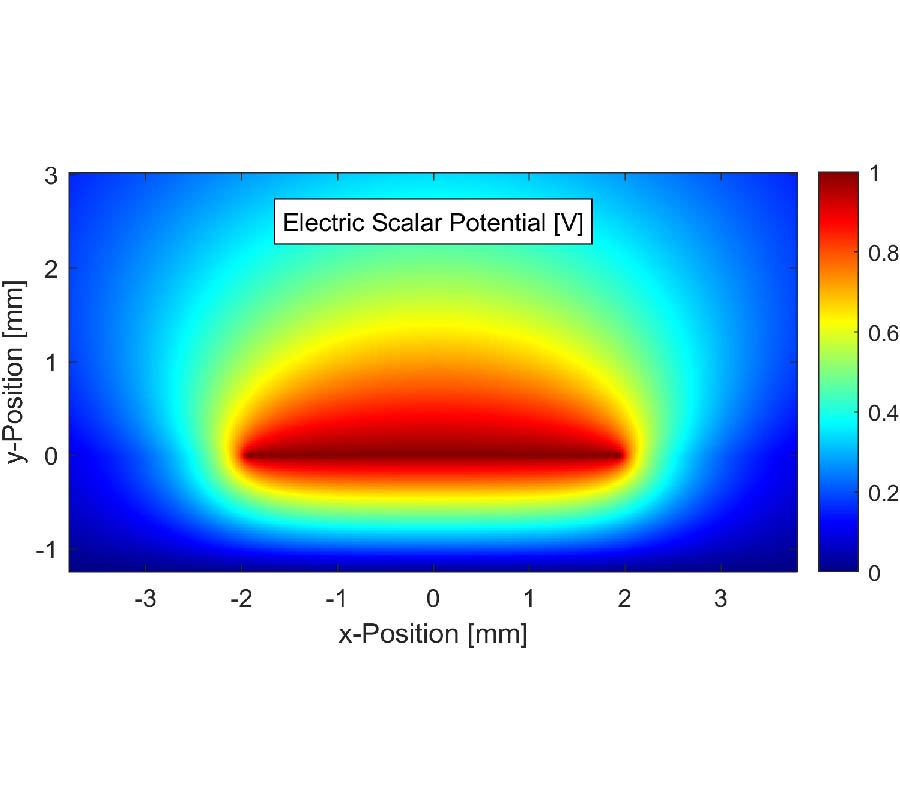
The method of retarded potentials is used to derive the Biot-Savart law, taking into account the correction that describes the chaotic motion of charged particles in rectilinear currents. Then this method is used for circular currents, and the following theorem is proved: The magnetic field on the rotation axis of an axisymmetric charged body or charge distribution has only one component directed along the rotation axis, and the magnetic field is expressed through the surface integral, which does not require integration over the azimuthal angle φ. In the general case, for arbitrary charge distribution and for any location of the rotation axis, the magnetic field is expressed through the volume integral, in which the integrand does not depend on the angle φ. The obtained simple formulas in cylindrical and spherical coordinates allow us to quickly find the external and central magnetic field of rotating bodies on the rotation axis.
2021-07-08
PIER M
Vol. 103, 103-113
Electrically Small Radiation Pattern Reconfigurable Antenna with Expanded Bandwidth and High Front-to-Back Ratio
Hui-Fen Huang and Hong-Long Bu
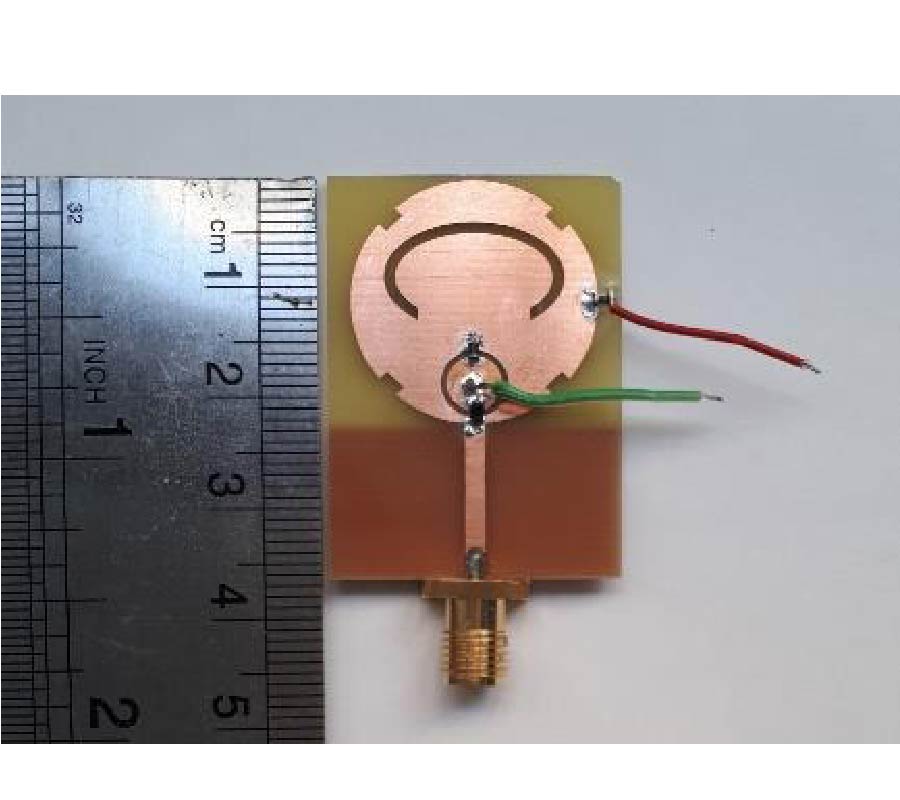
This paper presents an electrically small antenna (ka = 0.87) with ultra-low-profile 0.005λ0 and six reconfigurable endfire radiation patterns, which cover the entire 360° azimuth plane. An equivalent magnetic dipole and six switchable equivalent electric dipoles form the six reconfigurable endfire radiation patterns by switching the ON/OFF states of six PIN diodes. The designing bright point is the dual side printed loop, that is, an Alford loop and six loaded circular arc stubs, which form the equivalent magnetic dipole. This technique can reduce the size by 77% compared with single side printed loop, expand the bandwidth, and produce a strong and uniform near magnetic field, which leads to a high F/B ratio. Compared with published pattern-reconfigurable ESAs with endfire radiation characteristics, the proposed antenna has highet F/B ratio about 35.6 dB, more switchable states and expanded bandwidth. In addition, the measured peak realized gain and radiation efficiency at 1.5 GHz are 3.52 dBi and 77.6%, respectively.
ELECTRICALLY SMALL RADIATION PATTERN RECONFIGURABLE ANTENNA WITH EXPANDED BANDWIDTH AND HIGH FRONT-TO-BACK RATIO
2021-07-07
PIER C
Vol. 113, 251-263
Dual-Band Complementary Split-Ring Resonator Engraved Rectangular Monopole for GSM and WLAN/WiMAX/5G Sub-6 GHz Band (New Radio Band)
Samuel Prasad Jones Christydass and Nagarajan Gunavathi
In this paper, a rectangular monopole antenna engraved with a complementary split-ring resonator is proposed for dual-band operation. The proposed antenna is fabricated on an FR4 substrate with a dimension of 20 x 34 x 1.6 mm3. The entire simulation is done using CST EM studio software. The proposed antenna exhibits dual-band operation from 1.78 GHz to 1.90 GHz and from 3.45 GHz to 6.58 GHz. The band from 1.78 GHz to 1.90 GHz is due to the inclusion of CSRR, and its corresponding bandwidth is 120 MHz. It is validated with the quasi-static analysis. The permittivity characteristics of the proposed CSRR are retrieved using the NRW method and presented. The resonant frequency of the band created by the CSRR is 1.83 GHz with -37.68 dB as its return loss values. The second wider band is due to the combination of the mode created by the CSRR along with the radiating patch from 3.45 GHz to 6.58 GHz with 3132 MHz which has a dual resonance at 3.65 GHz and 5.59 GHz with a return loss of -30.23 dB and -29.80 dB. The optimal values are chosen with the help of parametric analysis. The designed antenna is fabricated and measured. The measured results of return loss, gain, E-plane, and H-plane are compared with simulated results, and they are complying with each other. The dual-band operation, compact size, stable radiation pattern along with gain above 2.3 dBi in the whole resonating band make it suitable for the GSM and WLAN/WiMAX/5G Sub-6 GHz band (new radio band).
DUAL-BAND COMPLEMENTARY SPLIT-RING RESONATOR ENGRAVED RECTANGULAR MONOPOLE FOR GSM AND WLAN/WIMAX/5G SUB-6 GHZ BAND (NEW RADIO BAND)
2021-07-06
PIER Letters
Vol. 98, 145-153
Four-Element Low-Band MIMO Antenna for Mobile Phones with Small Clearance
Harri Varheenmaa , Rasmus Luomaniemi , Anu Lehtovuori , Pasi Yla-Oijala and Ville Viikari
This letter presents a four-element MIMO phone antenna with a metallic rim and 2-mm ground clearance that operates in the low-frequency band. Characteristic mode analysis is used to design the metallic rim so that the structure supports four resonating modes that can be excited separately to obtain MIMO operation in the desired frequency range below 1 GHz. Four exciter elements with matching circuits are designed so that the coupling between the ports is moderate. The prototype is manufactured, and measurement results are shown to corroborate the increased capacity compared to traditional two-element MIMO solutions.
FOUR-ELEMENT LOW-BAND MIMO ANTENNA FOR MOBILE PHONES WITH SMALL CLEARANCE
2021-07-06
PIER M
Vol. 103, 91-101
Electromagnetic Environments and Wireless Channels for through-the-Earth (TTE) Communications in an Underground Coal Mine: Modeling and Measurements
Chenming Zhou and Nicholas Damiano
Through-the-earth (TTE) communication systems are useful for post-disaster emergency communications due to their likelihood of surviving a mine disaster. The wireless channel and electromagnetic environment (EME) are two primary factors that affect the performance of a TTE system and have not been well understood in a mining environment. This paper reports our recent measurements conducted in an active coal mine to characterize the wireless channel and EME of a TTE system. TTE transmissions were successfully demonstrated in a mine location with a depth of 567 m (1,860 ft) by using ground rods installed on the surface and existing roof bolts in the underground. The results show that the EME in the mine is dominated by the 60-Hz signal and its harmonics for both surface and underground environments. The signal attenuation caused by the channel increases for frequencies greater than 90 Hz, which appears to be an optimum frequency point showing the smallest attenuation. An analytical path loss model for TTE channels is developed and validated using measurement results. This paper provides a measured data set as well as a model that an electric-field TTE system operator or system designer can reference when implementing TTE technologies in a mining environment.
ELECTROMAGNETIC ENVIRONMENTS AND WIRELESS CHANNELS FOR THROUGH-THE-EARTH (TTE) COMMUNICATIONS IN AN UNDERGROUND COAL MINE: MODELING AND MEASUREMENTS
2021-07-05
PIER M
Vol. 103, 81-90
Bandpass Unconditionally Stable CE-BOR-PML Scheme with CNDG Algorithm for Rotational Symmetric Simulation
Shihong Wu , Lining Liu , Yunyun Dong , Feng Su and Xiangguang Chen
Unconditionally stable approximate Crank-Nicolson (CN) perfectly matched layer (PML) implementation is proposed to treat open region problems for a bandpass rotational symmetric structure. To be more specific, this implementation is based upon the CN Douglas-Gunn (DG) procedure and the complex envelope (CE) method in body of revolution (BOR) finite-difference time-domain (FDTD) lattice. The proposed scheme inherits the advantages of the CNDG procedure, CE method, and BOR-FDTD algorithm which can improve the efficiency, enhance the absorption, and maintain the calculation accuracy. The effectiveness which includes accuracy, efficiency, occupied resources, and absorption is illustrated through a numerical example. The numerical results reveal that the proposed scheme provides considerable accuracy, creditable absorption and outstanding efficiency. Meanwhile, it can also verify that the proposed scheme is stable without the limitation of Courant-Friedrich- Levy (CFL) condition.
BANDPASS UNCONDITIONALLY STABLE CE-BOR-PML SCHEME WITH CNDG ALGORITHM FOR ROTATIONAL SYMMETRIC SIMULATION
2021-07-03
PIER C
Vol. 113, 239-249
Axial Ratio Tuned Circularly Polarized Slot-Loaded Antenna for S-Band and C-Band Applications
Ramya Radhakrishnan and Shilpi Gupta
This paper introduces a dual-band circularly polarized antenna modeled on an FR4 substrate with an optimized dimension of 48 mm × 29.5 mm × 1.6 mm. A maximum usable circularly polarized bandwidth of 90% is obtained in the lower band (3.08 GHz to 3.75 GHz). A square slot etched in the ground plane loaded with asymmetric plus-shaped slits and tabs aids the impedance bandwidth enhancement. The dual-band operation is accomplished by facilitating parasitic square patches in the slot. The simulated impedance bandwidth of the proposed antenna is 740 MHz (3.07 GHz to 3.81 GHz) for the lower band and 1.57 GHz (4.64 GHz to 6.21 GHz) in the upper band. The impedance and axial ratio bandwidth percentages for lower and upper-frequency bands are 21.5%, 19.6%, and 29.4%, 10.54%, centered at 3.5 GHz and 5.5 GHz, respectively. The simulated and measured results are in reasonably good agreement.
AXIAL RATIO TUNED CIRCULARLY POLARIZED SLOT-LOADED ANTENNA FOR S-BAND AND C-BAND APPLICATIONS
2021-07-02
PIER M
Vol. 103, 71-80
Channel Propagation Characteristics for the Communications Inside Tower Structure Buildings
Lugao Yin , Wenping Xie , Hao Huang , Xiaomin Chen and Sheng Fang
Steel-tower structure buildings are different from traditional buildings and lack of effective channel models. A ray-based channel model suitable for severe multipath effects is proposed in this paper. The calculation method of channel parameters is introduced in detail, and the statistical characteristics at different frequencies are also analyzed based on the ray tracing (RT) method. We compare the RT-based channel data at 800 MHz, 2.4 GHz, 6 GHz, and 28 GHz with different positions of transceivers, and obtain the corresponding characteristics of channel parameters. According to the probability density distribution of each parameter, it is shown that the angle offset, delay, and power attenuation can be well fitted by Laplace distribution, Gaussian distribution, and exponential distribution, respectively. On this basis, the power delay profile at different positions is analyzed. These results can be used to optimize the deployment of sensor networks and evaluate the performance of communication systems inside the tower structure buildings.
2021-07-01
PIER Letters
Vol. 98, 139-144
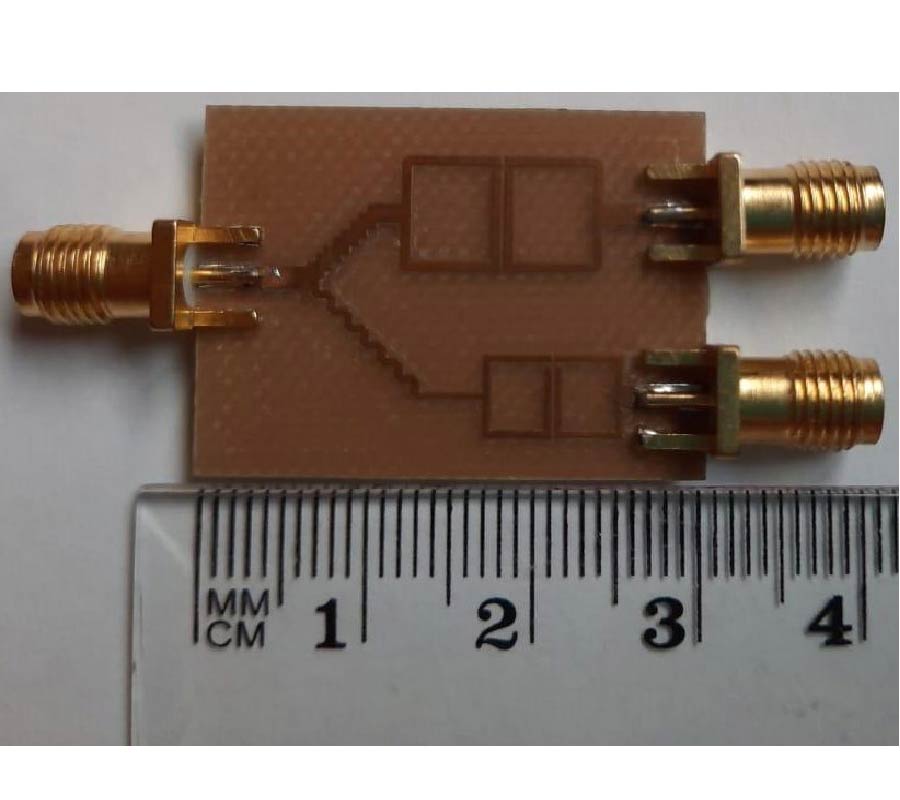
A Compact Negative Group Delay Circuit Topology Based on Asymmetric Coplanar Striplines and Double-Sided Parallel Striplines
Zhongbao Wang , Yu Bai , Yuwei Meng , Shao-Jun Fang and Hongmei Liu
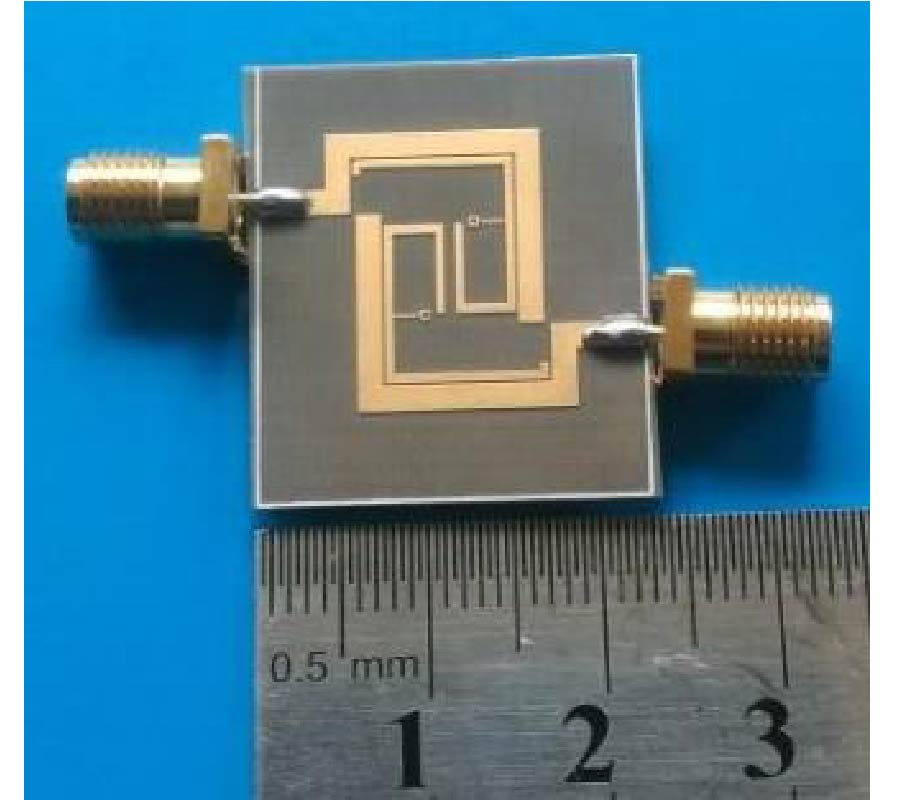
An innovative negative group delay (NGD) circuit topology based on asymmetric coplanar striplines (ACPSs) and double-sided parallel striplines (DSPSs) is proposed. The original NGD circuit topology consists of two sections of ACPS, one section of open-circuited DSPSs, a connecting hole, and a group of grounding holes. The NGD characteristic is achieved by the open-circuited DSPS combined with the connecting hole. To verify the proposed NGD circuit topology, a prototype is designed, fabricated, and measured. From the measured results, an NGD time of -2.42 ns at the center frequency of 1.577 GHz is obtained with an NGD bandwidth of 36 MHz (1.561-1.597 GHz). The insertion loss is less than 4.75 dB with the return loss larger than 11.7 dB in the NGD band.
A COMPACT NEGATIVE GROUP DELAY CIRCUIT TOPOLOGY BASED ON ASYMMETRIC COPLANAR STRIPLINES AND DOUBLE-SIDED PARALLEL STRIPLINES
2021-07-01
PIER C
Vol. 113, 227-238
K-Band Ka-Band Planar Spiral Antenna Arrays with Integrated Corporated Feeding Network
Paul Tcheg and David Pouhè
Although spiral antennas have undergone continuous development and refinement since Edwin Turner conceived them in 1954, only a few compact planar arrays exist. The shortcoming is even more significant when it comes to spiral antenna arrays in mode M2 operation. The present work addresses this issue, among other things. It presents two planar arrays of spiral antennas operating in the same frequency band and radiating for the first one an axial mode M1 and a conical mode M2 for the second. Both arrays are modeled, simulated, and fed with a corporate feeding network embedded in a dielectric substrate. It is shown that keeping the same topology, the array for conical M1 mode can be obtained from the array for mode M2 by a simple introduction of a phase shift on one branch of the feed and vice versa, providing thus the possibility to obtain in the same structure a spiral antenna array operating in both modes in the same frequency band simultaneously. Comparison between simulated and measured data shows good agreement.
K-BAND KA-BAND PLANAR SPIRAL ANTENNA ARRAYS WITH INTEGRATED CORPORATED FEEDING NETWORK
2021-06-30
PIER Letters
Vol. 25, 11-20
A Novel Dual-Band Π-Shaped Branch-Line Coupler with Stepped-Impedance Stubs
Nan Zheng , Liang Zhou and Wen-Yan Yin
A novel compact branch-line coupler operating in two arbitrary frequencies is proposed, analyzed and designed. Stepped-impedance stubs are used in the branch-line coupler to achieve dual-band applications. Parameters of the structure are chosen and provided for design guidelines. Broader operating frequency ratios and compactness are achievable. For the purpose of validation, a microstrip coupler operating at 2.4/5.2 GHz is fabricated and measured.
A NOVEL DUAL-BAND Π-SHAPED BRANCH-LINE COUPLER WITH STEPPED-IMPEDANCE STUBS
2021-06-30
PIER C
Vol. 113, 211-226
A Compact Low SAR and High Gain Circularly Polarized AMC Integrated Monopole Antenna for WBAN Applications
Nibash Kumar Sahu and Sanjeev Kumar Mishra
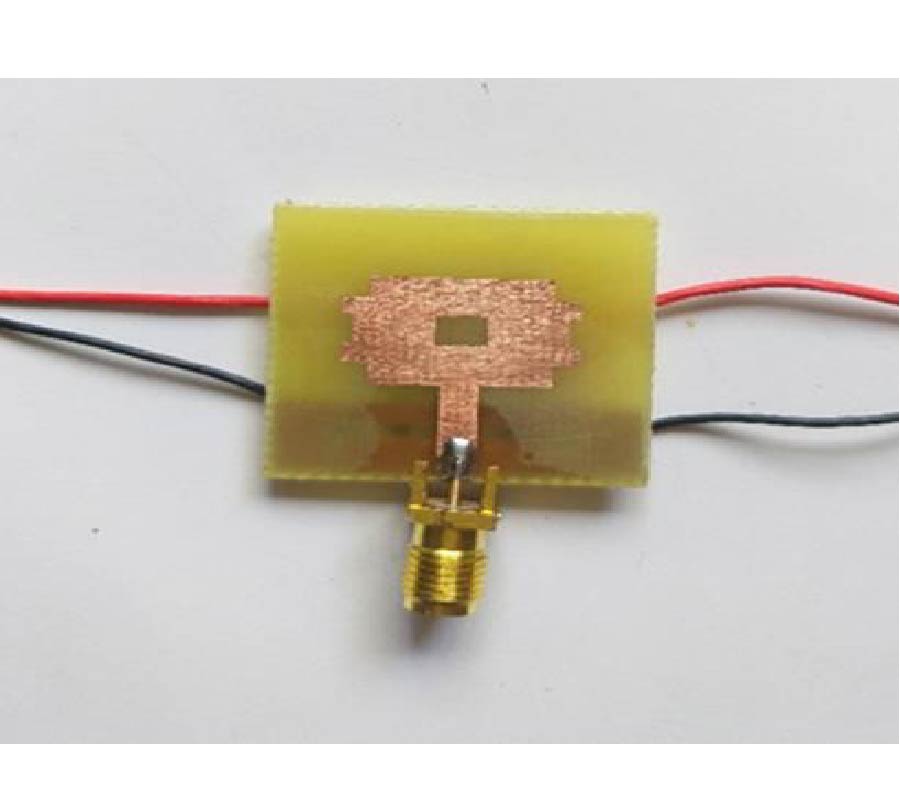
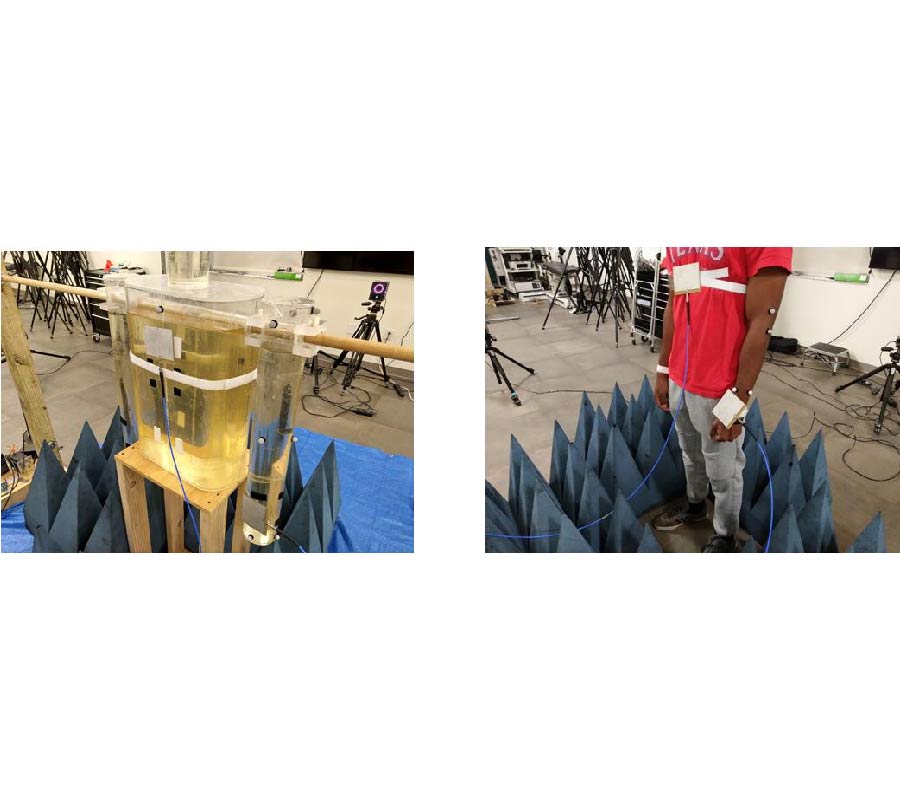
This paper presents a compact CPW fed circularly polarized AMC integrated monopole antenna with low SAR and high gain for 2.4 GHz WBAN applications. The proposed design is achieved through a four-stage progression. Stage-1 consists of a straight monopole with an extended vertical stub at one of the ground planes to generate circular polarization. In stage-2, a novel ring-type isotropic AMC is implemented beneath the monopole antenna to mitigate the antenna's back radiations towards the human body. On the body at `0' mm distance, it reduces the SAR by 99.47% and increases the impedance bandwidth, radiation efficiency, and gain to 480 MHz, 77% and 7.1 dBi, respectively. However, there is a decrease in AR bandwidth that indicates AR > 3-dB, which is compensated in stage-3 by optimizing the monopole. The optimization results an AR BW of 190 MHz and a size reduction of monopole antenna by 30.862%. Due to the size reduction of monopole with same AMC, the SAR reduction and peak gain are improved to 99.63% and 7.4 dBi, respectively. In Stage-4, the 3×3AMC is replaced by 2×2 AMC, results in total size and SAR reduction of 55.56% and 97.72% respectively. Stage-4 provides a simulated impedance bandwidth of 350 MHz, peak gain of 6.4 dBi and AR bandwidth of 170MHz, whereas the fabricated structure on felt substrate provides 650 MHz, 6.5 dBi and 150 MHz respectively.
A COMPACT LOW SAR AND HIGH GAIN CIRCULARLY POLARIZED AMC INTEGRATED MONOPOLE ANTENNA FOR WBAN APPLICATIONS
2021-06-28
PIER Letters
Vol. 98, 129-137
Analysis and Design of Miniaturized Wideband Rat-Race Coupler with Improved Phase Performance
Hongmei Liu , Yao Wang , Tielin Zhang , Shao-Jun Fang and Zhongbao Wang
In the paper, a miniaturized wideband rat-race coupler with improved phase performance is designed and analyzed. Flat output ports phase differences are obtained by utilizing a component-loaded T-type transmission line (CLT-TL) with a stub-loaded short-circuited coupled line (SLS-CL). Let the CLT-TL and SLS-CL sections be equivalent to uniform 90° and 270° transmission lines, respectively. Design equations are derived, and an optimization is proceeded to obtain the circuit parameters. For validation, a prototype is designed, fabricated, and measured. Including the feeding lines, the circuit size is 0.31λg × 0.31λg. Under the criterion of return loss (RL) > 10 dB, the measured bandwidths for ports 1 and 3 excitations are both reach 48%. For amplitude imbalance (AP) < 0.5 dB, the overlap relative bandwidth is 46.88%. The measured bandwidths with 2° phase imbalance are 49.58% and 54.01% for ports 1 and 3 excitations, respectively.
ANALYSIS AND DESIGN OF MINIATURIZED WIDEBAND RAT-RACE COUPLER WITH IMPROVED PHASE PERFORMANCE
2021-06-27
PIER M
Vol. 103, 61-70
Statistical Channel Models for Millimeter-Wave Wireless Data Centers
Mohammed Zakarya Zaaimia , Rachida Touhami , Larbi Talbi , Mourad Nedil and Mustapha Yagoub
This paper presents a set of statistical channel models based on 60 GHz radio measurements in a server room. The channel models are developed for possible use-cases, corresponding to potential deployment scenarios in wireless data centers (WDCs). A simple parametric channel model is used to model both the deterministic and stochastic channel parameters in the delay domain, within the 57-64 GHz unlicensed band. A simulation framework is accordingly provided to generate channel realizations for WDC use cases. The accuracy of the simulation framework is verified using the delay spread as a validation metric. The reported models are useful for practical system design and evaluation of WDCs millimeter-wave systems.
STATISTICAL CHANNEL MODELS FOR MILLIMETER-WAVE WIRELESS DATA CENTERS
2021-06-25
PIER C
Vol. 113, 197-209
Design of Triple Band-Notched UWB MIMO/Diversity Antenna Using Triple Bandgap EBG Structure
Priyanka Dalal and Sanjeev Kumar Dhull
This paper presents the design of a compact triple band-notched ultra-wideband (UWB) two element multiple-input multiple-output (MIMO) antenna. For validation of the simulation results, the prototype of the design is fabricated and experimentally measured. From the experimental results, it is observed that the proposed design, operating in the frequency range 2.5-12 GHz, successfully rejects three interfering bands i.e. the WiMAX band, WLAN band, and satellite communication X-band, when a triple bandgap CSRR-loaded EBG structure is embedded close to the feedline of the UWB antenna. In the ground plane of MIMO antenna, a rectangular slot and a mirrored pair of F-shaped stubs are added to minimize the mutual coupling between the UWB elements. The proposed MIMO antenna has good wideband isolation between the elements (> 20 dB), high diversity gain (10 dB), and low envelope correlation coefficient (< 0.02) over the entire UWB.
DESIGN OF TRIPLE BAND-NOTCHED UWB MIMO/DIVERSITY ANTENNA USING TRIPLE BANDGAP EBG STRUCTURE
2021-06-24
PIER Letters
Vol. 98, 121-127
A Novel Planar Filtering Magic-T
Jun-Mei Yan , Hai-Ying Zhou and Liangzu Cao
This paper presents a planar filtering magic-T with a simple structure. It consists of four half-wavelength microstrip resonators with one loaded with a shorted microstrip stub at its central location. The resonator loaded with a shorted microstrip stub has the even-symmetry resonant mode. Other three resonators have the odd-symmetry resonant mode. The planar filtering magic-T has four ports, which all adopt a tapped line structure. Its novelty lies in the simple structure. Compared with previous works in the literature, its inter-resonator coupling zones are apart away and have no influence on each other, which means a simple design. Furthermore, a different-properties coupling is not needed, and its filtering response can be easily extended to the high-order case. The operational mechanism and design method are introduced in details. A planar filtering magic-T with center frequency of 920 MHz was designed and fabricated. The measured results show that, at the center frequency, the return losses (S11/S44) is less than 20/12 dB; an isolation degree of 25 dB (S41) can be observed; the insertion loss of the difference port (S21/S31) and sum port (S24/S34) are 4.5/4.7 dB and 4.3/4.6 dB; the phase unbalance is 8˚/7˚(Σ/Δ). Totally, these results can verify the effectiveness of the proposed novel planar fiiltering magic-T.
A NOVEL PLANAR FILTERING MAGIC-T
2021-06-24
PIER Letters
Vol. 98, 113-120
Plastronic Circular Line Matched Dipole Antenna
Gildas Bengloan , Anne Chousseaud , Bruno Froppier , Jacques Girard , Marc Brunet and Eduardo Motta Cruz
A compact 3-D, circular line matched dipole (CLMD) antenna is presented in this paper. The realization of the antenna is based on Laser Direct Structuring (LDS) plastronic technology, enabling metallization on plastic parts. Cylindrical holder is chosen to carry the dipole, which implies high bending constraints on the antenna. Miniaturization of the radiating element is obtained by an effective use of 3-D space, resulting in a very low profile length dimensions of 0.14λ × 0.14λ × 0.05λ operating at 868 MHz. Specific attention is paid to the input impedance change due to conformation. An equivalent circuit model is proposed to take into account the conformation and design the matching line. Both simulated and measured results demonstrate good performances, with a 30 MHz bandwidth (i.e., a relative bandwidth of 3.5% with S11 < -10 dB) around the working frequency. The LDS prototype achieves a maximum gain of 1.2 dBi with a quasi-omnidirectional radiation pattern. This compact and conformed design presents a real interest for pervasive highly integrated ISM band IoT sensors.
PLASTRONIC CIRCULAR LINE MATCHED DIPOLE ANTENNA
2021-06-24
PIER C
Vol. 113, 177-195
Evaluating Performance of Heating, Ventilation & Air Conditioning Duct Communication Channel at 60 GHz Using Ray Tracing
Esha Bangar and Kamran Kiasaleh
In this paper, we developed a 3-dimensional (3D) ray-tracing simulator using MATLAB for establishing the viability of heating, ventilation, and air conditioning (HVAC) ducts as a reliable communication channel for indoor communication at millimeter-wave (mm-wave) frequencies. We present theoretical analysis of image theory ray-tracing and provide the equations for total electric field due to different rays undergoing reflections at the duct walls. We also computed the received signal strength indicator (RSSI) for the dry and moisture-laden air flowing through the HVAC ducts. The ray-tracing results are compared with the experimental and theoretical results we obtained for the HVAC ducts. With transmitter effective isotropic radiated power (EIRP) of 7 dBm, we obtain RSSI which varies between -34 dBm and -53 dBm for dry atmospheric pressure and temperature of 1013.25 hPa and 294.26 K, respectively, and duct lengths of up to 8 m at 60 GHz.
EVALUATING PERFORMANCE OF HEATING, VENTILATION & AIR CONDITIONING DUCT COMMUNICATION CHANNEL AT 60 GHZ USING RAY TRACING
2021-06-23
PIER C
Vol. 113, 161-175
Novel Design and Characterization of Wide Band Hook Shaped Aperture Coupled Circularly Polarized Antenna for 5G Application
Ravikanti Swetha and Lokam Anjaneyulu
This research paper presents a wideband hook shaped aperture coupled circularly polarized antenna for 5G application. It consists of three layers; a radiating copper plate (0.5 mm) as a top layer, a foam material of 2 mm thickness as a middle layer, an FR4 substrate with hook-shaped apertures in the ground plane, and a bent feed line as the bottom layer. The performance characteristics of the proposed design are improved by feeding mechanism, which entails the use of a bent shape microstrip line coupling through four hook shaped slots to generate four sequentially phased sources to excite the single layer patch antenna. The proposed antenna exhibits return loss bandwidth of 29.10% (2.8-3.81 GHz), axial ratio bandwidth of 13.47% (3.61-4.11 GHz), and cross polarization level is 20 dB which is attained at boresight and Gain of 4.08 dBic at the resonant frequency of 3.47 GHz. The proposed antenna design is fairly applicable to 5G radio band and discussed about the azimuth, elevation patterns and surface current distribution in frequency band of interest. The proposed design is simulated using High frequency structure simulator (v.13), and measured results are in good agreement with simulated ones.
NOVEL DESIGN AND CHARACTERIZATION OF WIDE BAND HOOK SHAPED APERTURE COUPLED CIRCULARLY POLARIZED ANTENNA FOR 5G APPLICATION