Search Results(13789)

2021-05-18
PIER C
Vol. 112, 239-250
A Comparative Study of Some Novel Wideband Tulip Flower Monopole Antennas with Modified Patch and Ground Plane
Nurhayati Nurhayati , Alexandre Manicoba de Oliveira , Warangkana Chaihongsa , Bagus Edy Sukoco and Akbar Kurnia Saleh
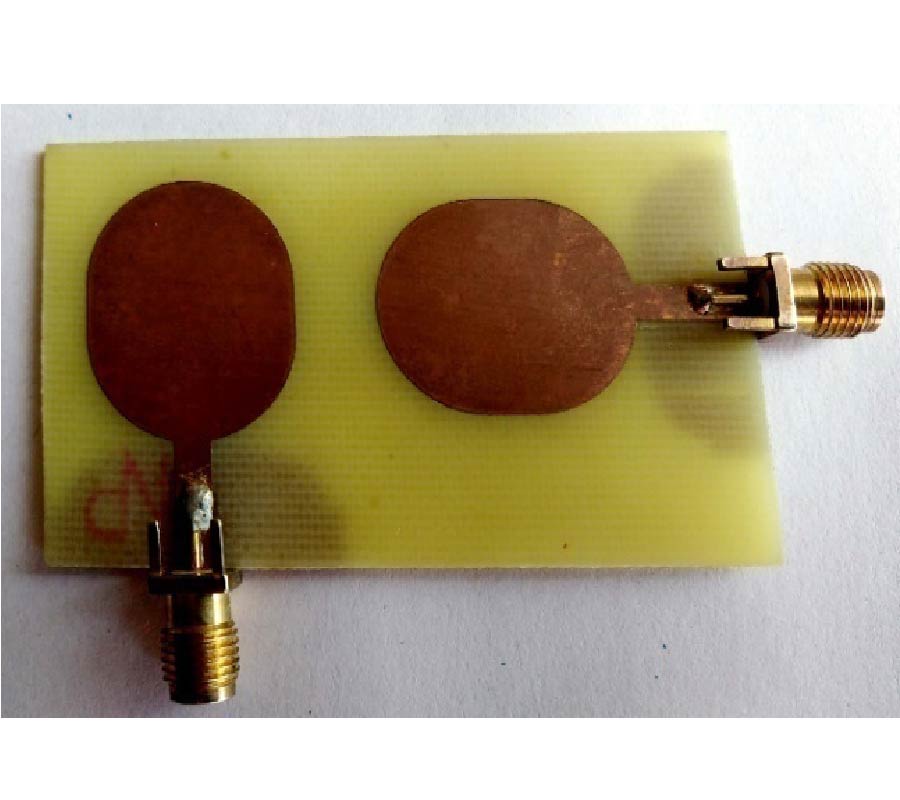
Comparative study of some novel wideband Tulip Flower Monopole Antennas (TFMAs) is presented in this paper. To Improve the bandwidth and increase the gain, modification of the shape of the curves and slots in the patch and ground plane was carried out on the seven TFMAs. TFMA-A, TFMA-B, TFMA-C, and TFMA-D have dimensions of 50×50 mm2, while TFMA-E, TFMA-F, and TFMA-G have dimensions of 30×70 mm2. From the simulation result, TFMA-A operated from 2 GHz to more than 30 GHz with a return loss of 15 dB occupies most of its operating frequency. In the whole frequency work, the peak directivity performance in the order of superiority is obtained for TFMA-G, TFMA-F, TFMA-D, TFMA-E, TFMA-C, TFMA-B, and TFMA-A. The improvement of directivity is reached for TFMA-D of 5.03 if it is compared to TFMA-A at 24 GHz. TFMA-G obtains the peak of directivity of 10.148 dBi at 23 GHz. The impedance bandwidth and directivity of the antenna element change by varying the curvature, the shape, and the position of slot in the radiator and ground plane also the height of the microstrip feeding line and ground plane. The return losses of the TFMA-A and TFMA-E show good agreement between simulation and measurement results.
A COMPARATIVE STUDY OF SOME NOVEL WIDEBAND TULIP FLOWER MONOPOLE ANTENNAS WITH MODIFIED PATCH AND GROUND PLANE
2021-05-18
PIER M
Vol. 102, 149-158
Global Inductance Computation of a Multilayer Circular Air Coil with a Wire of Rectangular Cross Section: Case of a Uniform Current Distribution
Samir Bensaid
In this paper we present a simple approach to compute quickly and accurately the global inductance of multilayer circular air coils with a wire of rectangular cross section. The case of the uniform current density distribution in the wire cross section is considered. The approach, implemented under GNU Octave, computes the inductance of the multilayer coil in three steps. First, the self-inductance of each coil turn is computed using the Maxwell's formula. Secondly, each wire section is subdivided into several negligible square or rectangular subsections to form a filiform turn, and then the mutual inductances between the turns are computed using Rosa's formula. The last step sums all obtained self-inductances and mutual inductances to deduce the global inductance of the multilayer coil. To verify the efficiency and accuracy of the proposed approach, the obtained equivalent inductance of each turn is compared to the computed one using finite element method implemented in FEMM open source. Furthermore, the global coil inductance is compared to the measured one. The proposed approach shows a good accuracy with a relative error less than 1% for all considered coils.
GLOBAL INDUCTANCE COMPUTATION OF A MULTILAYER CIRCULAR AIR COIL WITH A WIRE OF RECTANGULAR CROSS SECTION: CASE OF A UNIFORM CURRENT DISTRIBUTION
2021-05-17
PIER Letters
Vol. 98, 17-24
Orbital Angular Momentum Orthogonality Based Crosstalk Reduction
Unaiza Tariq , Hiva Shahoei , Guang Yang and Duncan L. MacFarlane
We report a reduction in crosstalk between a transmitting antenna and an adjacent receiving antenna due to the use of radiation patterns with different orbital angular momentum (OAM). This crosstalk reduction is based on the orthogonality between different OAM modes. To generate OAM beams, patch array antennas are designed using High frequency simulation software (HFSS). The designed antennas are fabricated and characterized. An experiment is carried out to determine the amount of crosstalk reduction achieved due to the OAM nature of the signals transmitted. The variation of this crosstalk reduction with the distance between the transmitting and receiving antennas is also studied. The results obtained are verified through theoretical analysis using simulations in HFSS. A maximum theoretical crosstalk reduction of 3.6 dB has been obtained, and a crosstalk reduction of 2.6 dB has been realized experimentally. The results may benefit full-duplex communication links.
ORBITAL ANGULAR MOMENTUM ORTHOGONALITY BASED CROSSTALK REDUCTION
2021-05-17
PIER C
Vol. 112, 221-238
Compact-Size Quad-Band Patch and MIMO Antenna System for 5G Mobile Handsets
May Abd Abo-Elhassan , Asmaa Elsayed Farahat and Khalid Fawzy Ahmed Hussein
A compact-size quad-band (28/45/51/56 GHz) microstrip patch antenna is proposed for the Fifth Generation (5G) mobile handsets. The present paper introduces a new method to reduce the size of a 28-GHz rhombic patch antenna so as to properly operate at the higher frequency bands (45/51/56 GHz) without negative effects on the antenna characteristics at 28 GHz. A novel design is introduced for the quad-band patch antenna to include complicated radiation mechanisms required for multiple-band operation. The proposed (single-element) antenna is constructed as primary and secondary patches which are capacitively coupled and designed to realize impedance matching and to produce appropriate radiation patterns in the four frequency bands. Two-port and four-port MIMO antenna systems that employ the quad-band patch antenna are proposed in the present work for the 5G mobile handsets. Numerical and experimental investigations are achieved to assess the performance of both the single-element antenna and the proposed MIMO antenna systems including the return loss at each antenna port and the coupling coefficients between the different ports. It is shown that the simulation results agree with the experimental measurements, and both show good performance. The bandwidths achieved around 28, 45, 51, and 56 GHz are about 0.6, 2.0, 1.8, and 1.3 GHz, respectively. The radiation patterns produced when each port is excited alone are shown to be suitable for spatial diversity scheme with high radiation efficiency. It is shown that the envelope correlation coefficient (ECC) and diversity gain (DG) are perfect over the four frequency bands.
COMPACT-SIZE QUAD-BAND PATCH AND MIMO ANTENNA SYSTEM FOR 5G MOBILE HANDSETS
2021-05-16
PIER C
Vol. 112, 207-219
A High Isolation Multiband MIMO Antenna Without Decoupling Structure for WLAN/WiMAX/5G Applications
Dhanasekaran Dileepan , Somasundaram Natarajan and Rengasamy Rajkumar
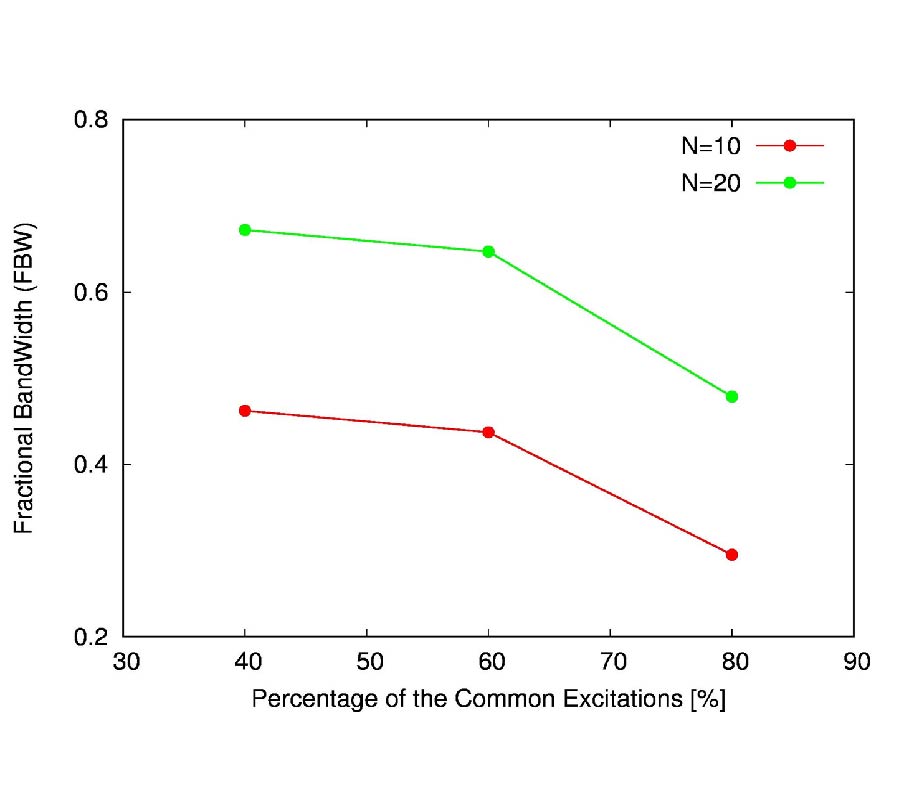
In this paper, 1 × 1 and 2 × 2 Multiple-input Multiple-output (MIMO) antenna is designed for a multiband application. The antenna consists of three concentrated decagon shaped rings which are responsible for obtaining the three resonance frequencies. The proposed antenna has a unique design technique; without using any decoupling structure the antenna attains better isolation performance. First, a two (1 × 1) element MIMO antenna with three different orientations (Orientation-I, II, and III) is studied. Second, a four-element MIMO antenna is designed without any decoupling structure for better performance. The above two antenna designs are fabricated and measured. The dimension of the proposedantenna element is 23.5 mm × 26.5 mm, and it has -10 dB impedance bandwidth over 2.4-2.52 GHz, 3.66-4 GHz, and 4.62-5.54 GHz, which cover various applications such as WLAN (2.4/5.2 GHz), WiMAX (2.5/5.5 GHz), public safety (4.9 GHz), and 5G (3.6-3.8 GHz). The proposed MIMO antenna diversity performances such as isolation, ECC, Directivity Gain, TARC, Channel Capacity Loss (CCL), and Mean Effective Gain (MEG) are studied.
A HIGH ISOLATION MULTIBAND MIMO ANTENNA WITHOUT DECOUPLING STRUCTURE FOR WLAN/WIMAX/5G APPLICATIONS
2021-05-13
PIER
Vol. 170, 169-176
Directional Polaritonic Excitation of Circular, Huygens and Janus Dipoles in Graphene-Hexagonal Boron Nitride Heterostructures
Yuyu Jiang , Xiao Lin and Hongsheng Chen
Polariton assisted tunable directionality provides an intrinsic ingredient to various micro/nano integrated optical systems. Their capabilities of light manipulation in mesoscopic structures allow numerous beneficial properties in information processing. The realization of active near-field directionality by tuning the input signal of system bias is more preferable than that by reconfiguring the nanostructures. Recent progresses on the multiple hybrid dipole radiations ensure another methodology in realizing tunable directionality. Here we investigate some exotic near-field phenomena in a 5-layer waveguide consisted of graphene and hexagonal boron nitride (hBN) illuminated by hybrid dipole sources such as a Circular dipole, a Huygens dipole or a Janus dipole. We demonstrate divergent behaviors of hybrid polariton excitations subject to various source types and the tunability of switching between phonon-like polaritons and plasmon-like polaritons. We also show that the flipping of the group velocity of excited hybrid polaritons can be used to flexibly tune the transportation direction away from the dipolar sources. To be specific, when the group velocity of supported polariton flips its sign, the energy flow will shift to the opposite side accordingly. Such phenomena are promising in the design of reconfigurable and multifunctional nanophotonic devices.
DIRECTIONAL POLARITONIC EXCITATION OF CIRCULAR, HUYGENS AND JANUS DIPOLES IN GRAPHENE-HEXAGONAL BORON NITRIDE HETEROSTRUCTURES
2021-05-12
PIER B
Vol. 92, 127-148
A High Gain Inverse Concentric Yagi Director Antenna for 5G Millimetre-Wave and Satellite Communication
Raqeebur Rehman , Javaid Ahmad Sheikh , Khurshed A. Shah and Ghulam Mohiuddin Bhat
A novel high gain two port planar antenna for 5G millimetre-wave and satellite band is presented. The proposed antenna besides working in the millimetre-wave range has an added feature to work for the satellite X-band as well. The antenna has a miniaturised low-cost planar geometry having the dimensions of 1.83λ x 1.83λ x 0.07λ at 27.5 GHz, designed and fabricated on a Rogers RT/duroid substrate of thickness 0.8 mm. The proposed antenna has return loss values of 12.34 dB and 17.94 dB for the two resonant millimetre wave frequencies of 27.24 GHz and 28.88 GHz respectively and 12.66 dB for the satellite band frequency of 8.42 GHz. The antenna attains a peak gain of 10.2 dBi for 28 GHz millimetre wave band and 6.2 dBi for satellite X-band by exploiting an inverse micro-strip Yagi director geometry. The isolation between two ports has been found satisfactory thus making it operate efficiently forthe available Ka and X band capacity of the Wideband Global Satcom system (WGS). The experimental results regarding the fabricated prototype are presented and compared with the simulated results, which are in good agreement. The performance of proposed antenna regarding radiation efficiency, directivity, gain, radiation pattern, and good isolation between the two ports makes the antenna employed as a suitable candidate for satellite communication and especially for 5G millimetre-wave communication.
A HIGH GAIN INVERSE CONCENTRIC YAGI DIRECTOR ANTENNA FOR 5G MILLIMETRE-WAVE AND SATELLITE COMMUNICATION
2021-05-12
PIER C
Vol. 112, 193-205
Compact Quad-Port High Performance UWB MIMO/Diversity Antenna with Slotted Ground Structure
Pankaj Kumar Keshri , Richa Chandel , Sanjay Kumar Sahu and Anil Kumar Gautam
A compact 30×30 mm2 high performance four elements ultra-wide band multi-input multi-output (UWB MIMO) diversity antenna is proposed. The prototype antenna consists of four symmetrical antenna elements which are orthogonally placed on top surface of the substrate with partial slotted ground plane. The isolationamong the antenna elements is improved by placing antenna elements orthogonally without any additional decoupling structure. The various antenna characteristic parameters, i.e. return loss (< -10 dB), isolation parameter (<-22 dB), radiation patterns near omnidirectional, and maximum realized gain 4.8 dB, were measured. The MIMO performances of prototype antenna were also measured in terms of various MIMO diversity parameters and found ECC<0.06, DG>9.98 dB, TARC<-10 dB and MEG<-3 dB throughout the frequency band. This design provides an operational bandwidth from 2.15 to 16.75 GHz which covers the whole UWB spectrum and is suitable for portable devices.
COMPACT QUAD-PORT HIGH PERFORMANCE UWB MIMO/DIVERSITY ANTENNA WITH SLOTTED GROUND STRUCTURE
2021-05-11
PIER
Vol. 170, 153-167
An Efficient Method for Dimensioning Magnetic Shielding for an Induction Electric Vehicle Charging System
Karim Kadem , Fethi Benyoubi , Mohamed Bensetti , Yann Le Bihan , Eric Labouré and Mustapha Debbou
Recently, the number of electric vehicles (EVs) is increasing due to the declining of oil resources and rising of greenhouse gas emission. However, EVs have not received wide acceptance by consumers due to the limitations of the stored energy and charging problems in batteries. The dynamic or in motion charging solution becomes a suitable choice to solve the battery related issues. Many researchers and vehicle manufacturers are working to develop an efficient charging system for EVs which is based on magnetic emissions to transfer power. These emissions must be evaluated and compared to limits specified by standards (in and outside the vehicle) in order to not cause harmful effects on their environment (humans, pets, electronic devices...). This paper presents an efficient method for modeling electromagnetic emission in near field and sizing a magnetic shield for a wireless power transfer (WPT) system for EVs. A model based on elementary magnetic dipoles is developed in order to obtain the same radiation as the real WPT coil. This model is used to size a magnetic shield which will be placed under the vehicle to protect human body from magnetic emissions. The obtained shielding plate allows to respect the standards of magnetic emission by bringing a decrease of 43 dB to the levels of magnetic fields. This approach is experimentally validated.
AN EFFICIENT METHOD FOR DIMENSIONING MAGNETIC SHIELDING FOR AN INDUCTION ELECTRIC VEHICLE CHARGING SYSTEM
2021-05-11
PIER M
Vol. 102, 137-148
Transverse-EPT: A Local First Order Electrical Properties Tomography Approach Not Requiring Estimation of the Incident Fields
Reijer Leijsen , Wyger Brink , Xin An , Andrew Webb and Rob F. Remis
A new local method for magnetic resonance electrical properties tomography (EPT), dubbed transverse-EPT (T-EPT), is introduced. This approach iteratively optimizes the dielectric properties (conductivity and permittivity) and the z-component of the electric field strength, exploiting the locally E-polarized field structure typically present in the midplane of a birdcage radiofrequency (RF) coil. In contrast to conventional Helmholtz-based EPT, T-EPT does not impose homogeneity assumptions on the object, and requires only first order differences, which makes the method more accurate near tissue boundaries and more noise robust. Additionally, in contrast to integral equation-based approaches, estimation of the incident fields is not required. The EPT approach is derived from Maxwell's equations and evaluated on simulated data of a realistic tuned RF coil model to demonstrate its potential.
TRANSVERSE-EPT: A LOCAL FIRST ORDER ELECTRICAL PROPERTIES TOMOGRAPHY APPROACH NOT REQUIRING ESTIMATION OF THE INCIDENT FIELDS
2021-05-10
PIER C
Vol. 112, 179-192
An Improvised Non-Invasive Method with Clutter Removal for Dielectric Characterization of Terrestrial Rock Samples at S-Band Frequency
Anamiya Bhattacharya , Deepak Putrevu , Dharmendra Kumar Pandey and Arundhati Misra
This paper presents a free-space reflection measurement technique for estimating dielectric constant and loss tangent of different materials, demonstrated for rock samples, at S-band. The method is non-contact as well as non-invasive, which is used to characterize the electromagnetic properties of different materials (in our case, rock samples) at S-band in a non-anechoic chamber environment. The technique involves measurement of reflected signals (S11 data from Vector Network Analyzer) from the material under test (MUT) as well as for the surroundings. By taking the inverse-Fourier Transform of S11 data, the impulse-response corresponding to the reflected power from the MUT can be estimated. The proposed scheme overcomes the portability issue as well as the requirement of an anechoic environment. The measurement system consists of a single antenna (centered at 2.5 GHz), rock samples (i.e. material under test (MUT)), a perfectly conducting plate and a mounting fixture. By processing and analyzing the reflection coefficient data, the values of dielectric constant and loss tangent are calculated using the proposed algorithms which take care of clutter removal as well. The technique is validated using the estimated values of rock samples corresponding to their composition values available in the literature and found to be in good agreement. Estimation of dielectric properties of rock samples will be used to validate algorithms for science studies using SAR data of Chandrayaan-2 and other planetary missions. Hence, this measurement process will play a key role towards understanding of surface composition and features of the planetary bodies.
AN IMPROVISED NON-INVASIVE METHOD WITH CLUTTER REMOVAL FOR DIELECTRIC CHARACTERIZATION OF TERRESTRIAL ROCK SAMPLES AT S-BAND FREQUENCY
2021-05-08
PIER B
Vol. 92, 109-126
Optimization Design and Modeling of a Built-in Hybrid Magnetic Bearing with a Permanent Magnet Motor
Yanjun Yu , Qianwen Xiang and Weiyu Zhang
In this paper, a built-in hybrid magnetic bearing (BHMB) with a permanent magnet (PM) motor is proposed to reduce the axial length of the system. The BHMB shares the same distributed hollow rotor with an external PM motor. The structure and principle of BHMB are illustrated. The mathematic model of BHMB is deduced to design parameters, and the influences of parameters are analyzed. To improve the performance indexes of BHMB, a multi-objective optimization method based on Taguchi method is proposed. The values of parameters of BHMB can be chosen according to the proportion of each parameter. Finally, the finite element analysis (FEA) and experiment are used to verify the correctness of BHMB.
OPTIMIZATION DESIGN AND MODELING OF A BUILT-IN HYBRID MAGNETIC BEARING WITH A PERMANENT MAGNET MOTOR
2021-05-05
PIER C
Vol. 112, 165-177
A Dual-Band, Miniaturized, AMC-Based Wearable Antenna for Health Monitoring Applications
Bo Yin , Ming Ye , Youhai Yu and Jing Gu
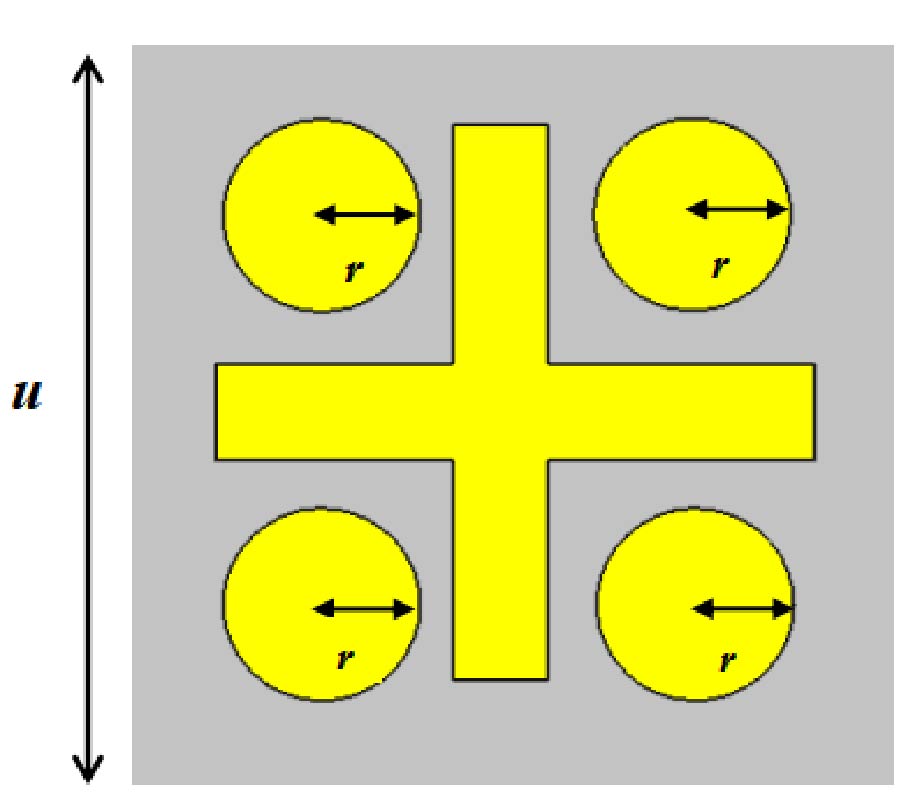
A dual-band wearable antenna operating at 2.45 GHz and 5.80 GHz with compact Artificial Magnetic Conductor (AMC) plane is proposed in this paper. The design is based on a U-shaped printed monopole antenna operating in the Industrial, Science, Medical (ISM) bands, and it is integrated with a square looped AMC plane which can reduce the overall size of the antenna system and realize miniaturization. The U-shaped monopole antenna is miniaturized by folding its arms, and its resonant frequency can be tuned easily by adjusting the length of two branches. The AMC unit, which is composed of concentric square double rings, realizes dual-band resonance. Meanwhile, a crossed patch is loaded into the inner ring to increase the electromagnetic coupling and reduce the resonance frequency of the two rings, thus miniaturizing the AMC unit. Therefore, the total size of the AMC plane which contains 3×3 elements is only 59.1 mm × 59.1 mm. Specific Absorption Rate (SAR) is examined by loading a three-layer human body tissue under the AMC antenna, and the simulation results show that SAR value is only 0.018 W/kg, which is far below the Institute of Electrical and Electronics Engineer (IEEE) standard. Finally, a prototype of the proposed antenna was fabricated and tested, and the experimental results agree well with the simulation responses.
A DUAL-BAND, MINIATURIZED, AMC-BASED WEARABLE ANTENNA FOR HEALTH MONITORING APPLICATIONS
2021-05-05
PIER C
Vol. 112, 153-164
Substrate Integrated Waveguide Slot Array Antenna for 77 GHz Automotive Angular Radar Applications
Xin Liao , Xing Jiang , Xue-Long Zhu , Lin Peng , Kai-Fa Wang , Ji-Heng Wang and Li-Mei Huang
A single-layer substrate integrated waveguide (SIW) longitudinal slot array antenna with low sidelobe level (SLL) in H plan and wide beamwidth in E plan is presented for 77 GHz millimeter-wave angular radar applications. The radiation energy of the antenna is determined by the length and offset of the slot. The conductance of the slot that satisfies the Taylor distribution can effectively suppress the sidelobe of antennas. Measured results indicate that the SLL of the E plane is -28.5 dB, and the 3 dB beamwidth is 98.3°. A measured peak gain of 12.7 dB is observed with a -10 dB impedance bandwidth of 75.5 GHz~77.4 GHz. The measured results are in good agreement with the theoretical calculations, and the proposed antenna has been demonstrated as a promising candidate used for millimeter-wave automotive angular radar for the proposed antenna array.
SUBSTRATE INTEGRATED WAVEGUIDE SLOT ARRAY ANTENNA FOR 77 GHZ AUTOMOTIVE ANGULAR RADAR APPLICATIONS
2021-05-04
PIER C
Vol. 112, 139-151
Circularly Polarized Multiple Layer Dielectric Resonator Antennas
Richa Gupta , Ankit Gaur , Sandeep Gupta and Garima Bakshi
A sequence of anisotropic and isotropic materials of dielectric constant 12 and 10 respectively have been stacked alternatively to form a four-layer stack structure with aperture coupled feed mechanism for excitation. Applying this excitation, orthogonal mode pair TEδ21x and TE2δ1y has been excited at frequencies 7.54 GHz and 7.8 GHz, respectively in YZ and ZX planes to generate circular polarization. A circularly polarized bandwidth in the region (7.54 GHz-7.92 GHz) in conjunction with impedance bandwidth in the region (5.23 GHz-5.52 GHz) with a gain of 5.2 dBi has been accomplished. The designed antenna is appropriate for C-band and weather radar applications. The design assessment has been done using Ansys HFSS. The three stages of antenna design are examined. Further, the design is investigated with a 6-layer structure and an 8-layer structure.
CIRCULARLY POLARIZED MULTIPLE LAYER DIELECTRIC RESONATOR ANTENNAS
2021-05-04
PIER M
Vol. 102, 127-135
Triple-Band Highly Efficient Multi-Polarization Converter Based on Reflective Metasurface
Lili Yuan , Lei Hou and Zhengping Zhang
In this paper, a triple-band reflective polarization converter with high efficiency for both linear-to-linear and linear-to-circular polarizations based on a metasurface is proposed, which can rotate a linearly polarized (LP) incident wave into its orthogonal direction with over 90% polarization conversion ratio (PCR) in the bands of 5.5-5.9 GHz (relative bandwidth of 7%) and 12-17.7 GHz (relative bandwidth of 38.4%). Besides, the proposed converter can also transform a linearly polarized incident wave to circularly polarized (CP) wave in the band of 6-12 GHz (relative bandwidth of 66.7%). Additionally, the performance of proposed polarization converter stays in considerable stability with the incident angle increasing 60˚ in circular polarization and 30˚ in linear polarization. Moreover, the physical mechanism of multiple resonances is discussed based on surface current distributions and equivalent circuit model. A prototype of the proposed converter is fabricated and measured, and the experiments and simulations are in great agreement. This polarization converter can be employed to manipulate the polarization of the signal in microwave communication.
TRIPLE-BAND HIGHLY EFFICIENT MULTI-POLARIZATION CONVERTER BASED ON REFLECTIVE METASURFACE
2021-05-02
PIER C
Vol. 112, 127-137
Wide-Band Log-Periodic Microstrip Antenna with Defected Ground Structure for C-Band Applications
Kunal Krishna Upadhyay , Alkesh Agrawal and Mukul Misra
The manuscript presents a log-periodic microstrip antenna with a defective ground structure (LPMADGS). The antenna is simulated, designed, and validated for C-band applications. The design of the antenna consists of three layers with upper most layer consisting of log-periodic, copper patches with a thickness of 0.035 mm; the middle layer is a 2 mm thick dielectric layer of FR-4 substrate; and the bottom layer is a defected ground structure (concentric ring resonators of 0.035 mm thickness). The suggested antenna design is simulated with a complete ground plane, without ground plane, and with a defective ground plane. The proposed antenna with optimized design is fabricated by wet etched method. The simulated results are approximately similar to the experimentally measured results. The experimentally measured results show transmission peaks at 7.65 GHz and 7.90 GHz. The resonating effect of log-periodic patches with a defected ground structure results in wide-band of 0.91 GHz (-10 dB bandwidth). The proposed antenna structure exhibits a wide bandwidth transmission which mostly resonates in frequency range that lies in C-band. It has future applications for mobile as well as wireless communication.
WIDE-BAND LOG-PERIODIC MICROSTRIP ANTENNA WITH DEFECTED GROUND STRUCTURE FOR C-BAND APPLICATIONS
2021-05-01
PIER M
Vol. 102, 117-126
Feedforward Decoupling Control of Interior Permanent Magnet Synchronous Motor with Genetic Algorithm Parameter Identification
Yanfei Pan , Xin Liu , Yilin Zhu , Bo Liu and Zhongshu Li
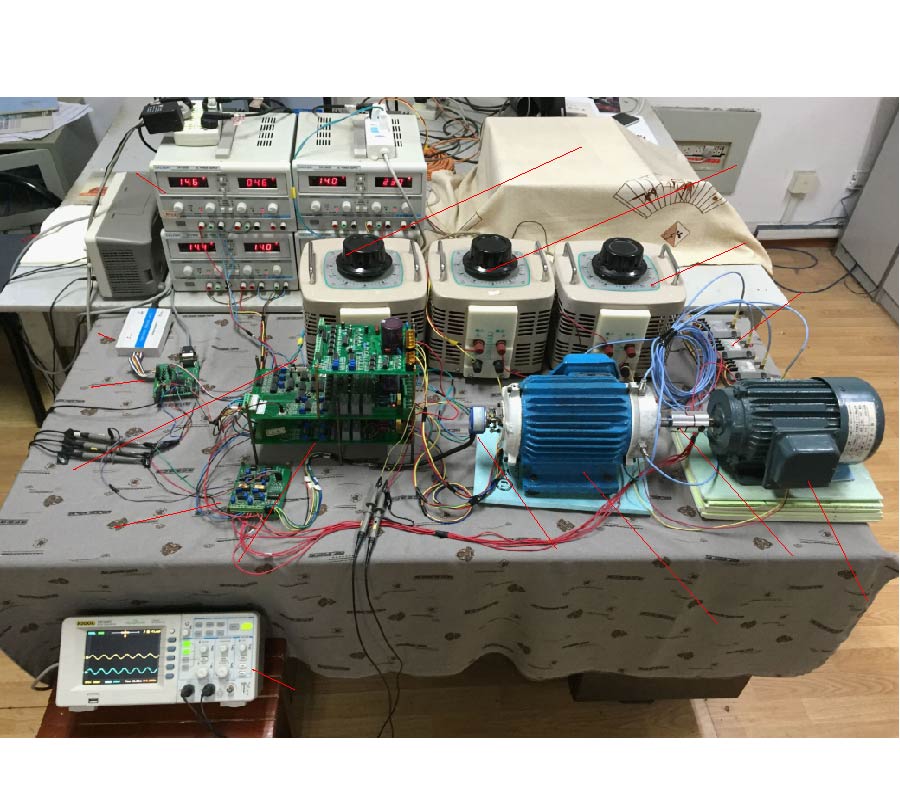
The goal of vector control of interior permanent magnet synchronous motor (IPMSM) is to make IPMSM have excellent dynamic and steady-state performance, but there is coupling between the d-q axis in the synchronous rotating coordinate system, which affects the torque response performance. In view of the fact that the traditional voltage compensation strategy is sensitive to the change of motor parameters, genetic algorithm is introduced to identify the parameters, and a feedforward voltage compensation control based on genetic algorithm parameter identification is proposed. The compensation voltage is calculated by the inductance and flux value of the motor identified by genetic algorithm. Compensation voltage is used to counteract the change of feedback voltage caused by the change of motor parameters in feedforward decoupling control. Simulated and experimental results show that the proposed strategy can effectively achieve d-q axis current decoupling, improve the dynamic performance of the system, and have excellent robustness.
FEEDFORWARD DECOUPLING CONTROL OF INTERIOR PERMANENT MAGNET SYNCHRONOUS MOTOR WITH GENETIC ALGORITHM PARAMETER IDENTIFICATION
2021-04-30
PIER C
Vol. 112, 113-125
Enhanced Ultra-Wide Band Multistage Rectifier for Pulsed Signal Power Transmission
Ahmed Moulay and Tarek Djerafi
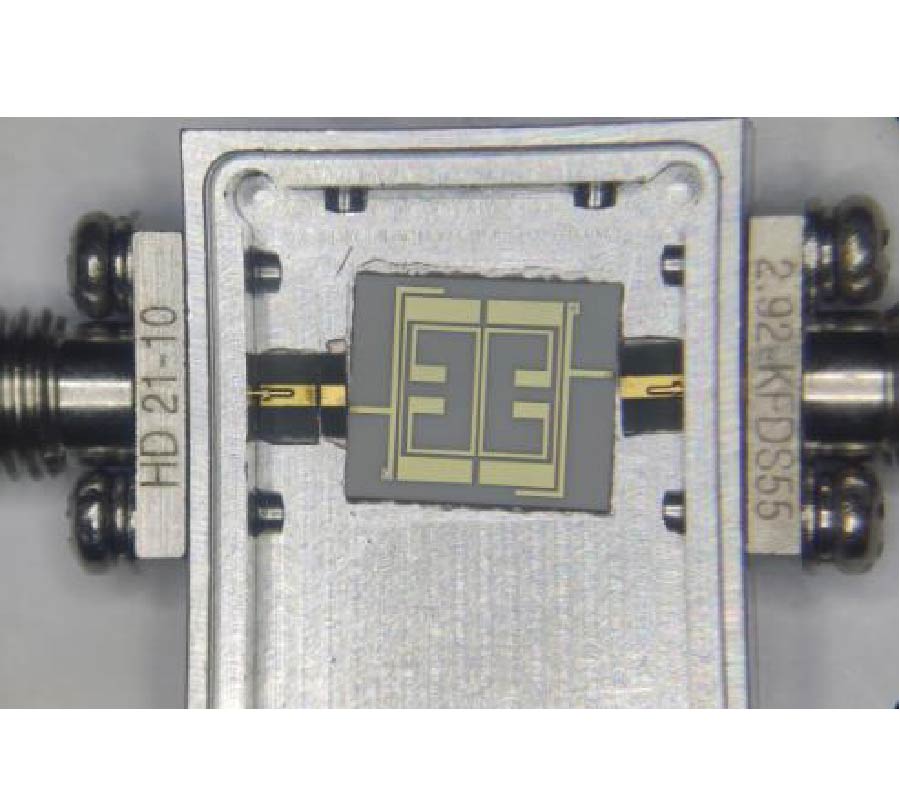
This paper presents a multi-sections broad-band radio-frequency (RF) to direct-current (dc) power rectifier for pulsed signal transfer. The power transfer using a pulse allows to use a signal with low power spectral density. The optimal distributed configuration with critical parameters is studied to enhance the efficiency over broadband frequency and wide power range. A five stage distributed RF-dc converter arrangement with micro-strip transmission line ensures the power harvesting from 100 MHz to 11 GHz. The designed and fabricated circuit is characterized at multi-frequencies of ultra-wide band (UWB). The distributed harvester significantly improves the detected voltage over a wide bandwidth compared to conventional RF detectors. The achieved efficiency with optimized parameters is 48% with five-stage harvester. A maximum dc output of 956 mV is reached at 8 dBm of input power of sinusoidal single tone signal at 1 GHz of frequency. The designed prototype is associated with a square wave signal to show the circuit potential in terms of power transfer. The output voltage can be controlled with input signal level, frequency as well as the pulse width. For the power transfer circuit, 996 mV of maximum dc output voltage is reached for 1 V of input amplitude at 1 GHz with duty cycle of 50%. The efficiency increases significantly with duty cycle ratio of the input signal. The power harvester associated with a UWB antenna confirms the benefit of using a square wave signal in the case of power harvesting or transfer.
ENHANCED ULTRA-WIDE BAND MULTISTAGE RECTIFIER FOR PULSED SIGNAL POWER TRANSMISSION
2021-04-29
PIER Letters
Vol. 98, 9-16
Mechanisms and Influence Factors of Dynamic Behavior of Water Droplets on the Composite Insulator Surface Under ac Electric Field
Wen Cao , Hua Feng , Hao Xue , Wei Shen , Long Zhao and Hao Yang
The deformation behaviors of a droplet on surface of composite insulator can strengthen local electric field, which could finally lead to flashover. Both experiments and numerical simulations for dynamic behaviors of a droplet on the surface of a composite insulator under applied AC voltage are investigated in this paper. Experiments are performed to study the influences of water droplet's volume and conductivity on the dynamic behaviors. Two critical parameters are proposed to describe the morphological change process of water droplet, and it is shown that the process can be divided into three stages. Moreover, these motion laws are explained by establishing theoretical factors and physical influence models. In addition, we perform computer simulation to study the dynamic behaviors of a water droplet under AC field, and the findings are in good consistency with our experimental results, proving the rationality of the theoretical physical model. It is found that the vibration frequency of droplet changes regularly with at different stages under the AC electric field.
MECHANISMS AND INFLUENCE FACTORS OF DYNAMIC BEHAVIOR OF WATER DROPLETS ON THE COMPOSITE INSULATOR SURFACE UNDER AC ELECTRIC FIELD