Search Results(13789)

2021-11-23
PIER C
Vol. 116, 221-233
Simulation Research on Magnetoacoustic Concentration Tomography with Magnetic Induction Based on Uniaxial Anisotropy of Magnetic Nanoparticles
Xiaoheng Yan , Yuxin Hu , Weihua Chen , Xiaoyu Shi , Ye Pan and Zhengyang Xu
Magnetoacoustic concentration tomography with magnetic induction (MACT-MI) is a noninvasive imaging method that reconstructs the concentration image of magnetic nanoparticles (MNPs) based on the acoustic pressure signal generated by the magnetic properties of MNPs. The performance of MNPs is of great significance in MACT-MI. To study influences of the uniaxial anisotropy of MNPs on MACT-MI, firstly, based on the static magnetization curve, the force characteristic that the MNPs with uniaxial anisotropy experienced was analyzed. The magnetic force equation with the space component separated from the time term was deduced. The acoustic pressure equation containing the concentration of the MNPs with uniaxial anisotropy was derived. Then, a two-dimensional axisymmetric simulation model was constructed to compare magnetic force, acoustic source, and acoustic pressure before and after considering the uniaxial anisotropy of MNPs. The effect of scanning angle and detection radius of ultrasonic transducer on the acoustic pressure was studied. Finally, the concentration image of the MNPs with uniaxial anisotropy was reconstructed by the time reversal method and the method of moments (MoM). Theoretical considerations and simulation results have shown that the magnetic force has a triple increase after taking into account the uniaxial anisotropy of MNPs. The take-off time of acoustic pressure waves is only related to the position of the uniaxial anisotropy MNPs region. From the reconstructed image, concentration distribution and spatial location and size information of the uniaxial anisotropy MNPs region can be distinguished. The research results may lay the foundation for MACT-MI in subsequent experiments and even clinical applications.
SIMULATION RESEARCH ON MAGNETOACOUSTIC CONCENTRATION TOMOGRAPHY WITH MAGNETIC INDUCTION BASED ON UNIAXIAL ANISOTROPY OF MAGNETIC NANOPARTICLES
2021-11-20
PIER C
Vol. 116, 207-219
A Novel Dual-Band Printed SIW Antenna Design Based on Fishnet & Ccrr DGS Using Machine Learning for Ku-Band Applications
Mohammed Farouk Nakmouche , Muhammad Idrees Magray , Abdemegeed Mahmoud M. A. Allam , Diaa E. Fawzy , Ding-Bing Lin and Jenn-Hwen Tarng
This paper analyzes and solves the complexity to determine the optimum positions of the Fishnet & Complementary Circular Ring Resonator (CCRR) based Defected Ground Structures (DGS) for Substrate Integrated Waveguide (SIW) based antennas. A new state-of-art technique based on Artificial Neural Network (ANN)-Machine Learning (ML) is proposed for overcoming the lack of solid and standard formulations for the computation of this parameter related to a targeted frequency. As a proof of concept and to test the performance of our approach, the algorithm is applied for the determination of the CCRR and Fishnet-DGS's optimal positions for a SIW based antenna. The SIW technique provides the advantages of low cost, small size and convenient integration with planar circuits. The ANN-ML based technique is optimized to attain dual-band resonances with optimal gain and radiation efficiency. The simulation results of the first Fishnet-DGS based antenna show good minimum return losses at two center frequencies, namely, 16.6 GHz (with gain of 6 dB and radiation efficiency of 95%) and 17.7 GHz (with gain and radiation efficiency of 9 dB and 96%, respectively). The second CCRR-DGS based antenna shows about 8\,dB gain and a radiation efficiency of 87% at 17.3 GHz, and gain and efficiency of about 8.5 dB and 85% are observed at 17.8 GHz. The proposed CCRR and Fishnet-DGS based antenna are low profiles, low costs, with good gains and radiation efficiencies, making both designs very suitable for Ku-band applications. There is a fair agreement between the measured and simulated results. The achieved dual-band resonances act as a proof of concept that the proposed ANN-ML techniques can be employed for the determination of the optimal positions for CCRR and Fishnet thereby attaining any target dual-bands in the Ku-band with good accuracy of about 98% and a save of 99% in the overall the computational time.
A NOVEL DUAL-BAND PRINTED SIW ANTENNA DESIGN BASED ON FISHNET & CCRR DGS USING MACHINE LEARNING FOR KU-BAND APPLICATIONS
2021-11-16
PIER C
Vol. 117, 1-16
Numerical Analysis of a ITO Based Circularly Polarized Optically Transparent THz Antenna Employing Characteristic Mode Analysis
Muhammad Asad Rahman , Md. Sarwar Uddin Chowdhury , Md. Azad Hossain and Ahmed Toaha Mobashsher
An optically transparent circularly polarized indium tin oxide based antenna having operability in THz region is proposed in this paper. An E-shaped slot and an I-shaped slot are embedded into an E-shaped radiating E-shaped radiating patch modeled by ITO and conductive carbon nanotube (CNT) on a polyimide substrate to obtain circular polarization. The unequal parallel slits of the E-shaped patch with an E-shaped slot lead to introduce two orthogonal modes, and hence circular polarization is achieved. Besides, integration of a I-shaped slot also helps to create the difference in magnitude of current distribution between the two working modes to get better axial ratio. Due to the high resistivity of indium tin oxide thin film, the patch of the antenna is covered with highly CNT film which improves the overall performance of the antenna. To overcome the limitations of the traditional design process, characteristic mode analysis is carried out which helps to realize and analyze circular polarization generation mechanism effectively. The proposed antenna shows a wide 3-dB axial ratio bandwidth of 9.66%. A reasonable gain of 2.61 dBic is obtained at 1.11 THz with excellent radiation performance. Wide 3-dB axial ratio bandwidth with reasonable gain makes this light weight transparent small-antenna competent for wireless and satellites applications.
NUMERICAL ANALYSIS OF A ITO BASED CIRCULARLY POLARIZED OPTICALLY TRANSPARENT THZ ANTENNA EMPLOYING CHARACTERISTIC MODE ANALYSIS
2021-11-15
PIER M
Vol. 106, 15-24
Design and Optimization of Electromagnetic Parameters in a Linear Magnetic-Geared Generator Based on Orthogonal Statistical Method
Qiaoling Yang , Hai Ping Zhang , Shenghui Guo and Bo Liang Song
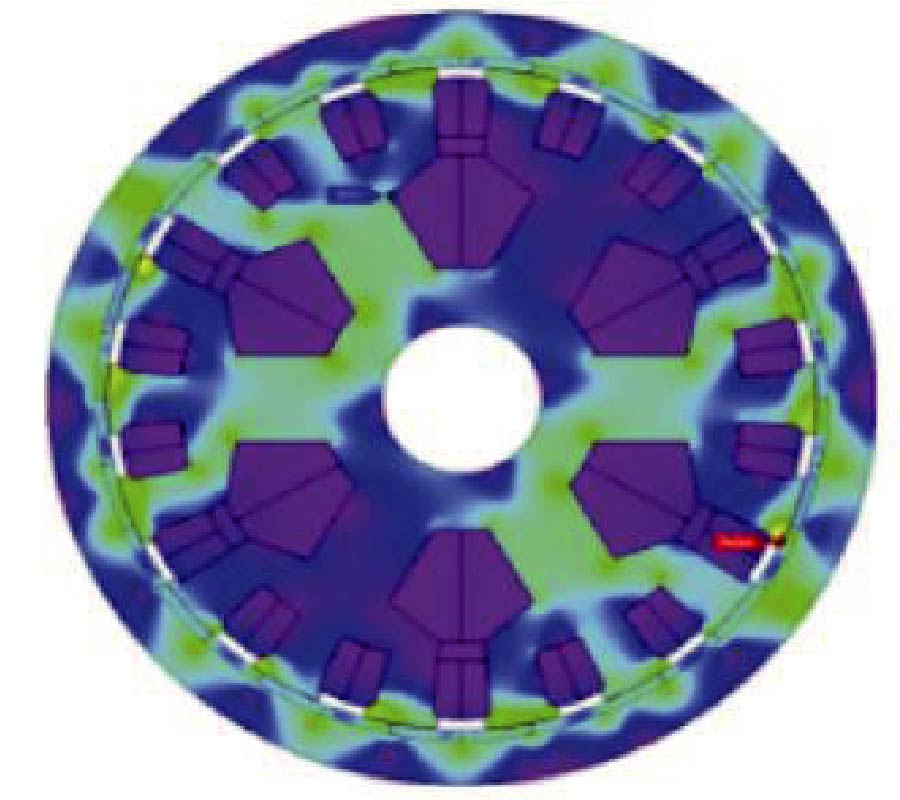
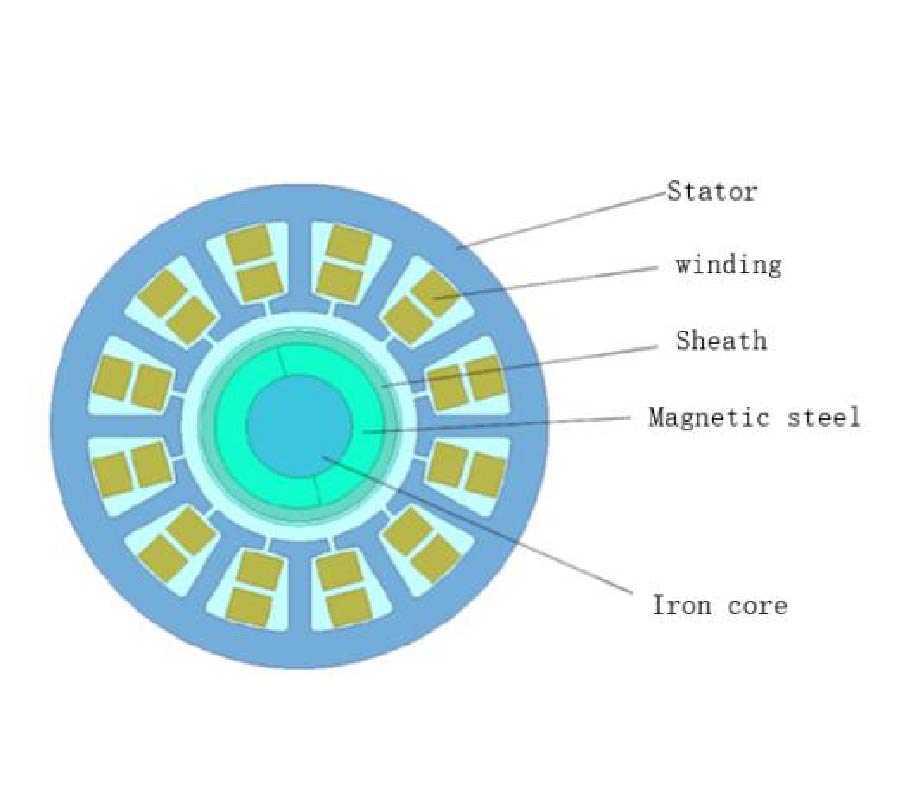
The magnetic-geared generator integrates the magnetic gear and the generator by using the magnetic field modulation technology. It has the characteristics of high power density, high material utilization, and has a wide application prospect. However, compared with the general generator, its structure is relatively complex which makes its design and optimization become more complex. Therefore, a new structure and an optimization method based on orthogonal regression statistics is proposed. The experimental results fully prove the effectiveness of the proposed structure and optimization method.
DESIGN AND OPTIMIZATION OF ELECTROMAGNETIC PARAMETERS IN A LINEAR MAGNETIC-GEARED GENERATOR BASED ON ORTHOGONAL STATISTICAL METHOD
2021-11-14
PIER M
Vol. 106, 1-14
Half-Mode Substrate Integrated Waveguide Evanescent-Mode Filters with Slots-Embedded Complementary Split-Ring Resonators for Depressed Machining Tolerance Sensitivity
Bo Wang and Yong Mao Huang
In this paper, half-mode substrate integrated waveguide (HMSIW) bandpass filters with modified complementary split-ring resonators (CSRRs) for the reduction of machining tolerance sensitivity are presented. Profiting from the evanescent-mode resonance operation, the conventional CSRR and its modified versions have been successfully utilized to miniaturize the physical sizes of SIW components. However, few investigations have focused on the fabrication tolerance. Performance of most CSRR-loaded SIW components, as well as their modified versions, is significantly sensitive to the fabrication tolerance. Hence, as the conventional machining process is with large fabrication tolerance, the CSRR-loaded SIW components suffer from limited performance and restrained application practicability. To decrease the influence from the machining tolerance on the components' performance, the slots-embedded CSRR (SECSRR) is proposed and loaded into HMSIW to design evanescent-mode filters. Numerical simulations exhibit that the proposed SECSRR can help to decrease the machining tolerance sensitivity effectively as the fractional frequency offset resulting from the fabrication error is reduced from ±8.11% to ±4.95%, which indicates that the proposed SECSRR is able to improve the suitability of SIW/HMSIW components and circuits for practical radio frequency (RF) and microwave applications.
HALF-MODE SUBSTRATE INTEGRATED WAVEGUIDE EVANESCENT-MODE FILTERS WITH SLOTS-EMBEDDED COMPLEMENTARY SPLIT-RING RESONATORS FOR DEPRESSED MACHINING TOLERANCE SENSITIVITY
2021-11-11
PIER C
Vol. 116, 193-205
Machine Learning Approaches for Automated Stroke Detection, Segmentation, and Classification in Microwave Brain Imaging Systems
Majid Roohi , Jalil Mazloum , Mohammad-Ali Pourmina and Behbod Ghalamkari
In this paper, an intracranial hemorrhage stroke detection and classification method using microwave imaging system (MIS) based on machine learning approaches is presented. To create a circular array-based MIS, sixteen elements of modified bowtie antennas around a multilayer head phantom with a spherical target with radius of 1 cm as an intracranial hemorrhage target are simulated in CST simulator. To obtain satisfied radiation characteristics in the desired frequency band of 0.5-5 GHz a suitable matching medium is designed. Initially, in the processing section, a confocal image-reconstructing method based on delay-and-sum (DAS) and delay-multiply-and-sum (DMAS) beam-forming algorithms is used. Then, reconstructed images are generated, which shows the applicability of the confocal method in detecting a spherical target in the range of 1 cm. Separating and categorizing targets is a challenging task due to the ambiguity in the extracted target from MIS. Thus, to distinguish between healthy and unhealthy brain tissues, a new compound machine learning technique, including filtering, edge-detection based segmentation, and applying K Means and fuzzy clustering techniques, which reveal intracranial hemorrhage area from reconstructed images is adopted. Simulated results are presented to validate the proposed method effectiveness for precisely localizing and classifying bleeding targets.
MACHINE LEARNING APPROACHES FOR AUTOMATED STROKE DETECTION, SEGMENTATION, AND CLASSIFICATION IN MICROWAVE BRAIN IMAGING SYSTEMS
2021-11-09
PIER C
Vol. 117, 17-30
Staired-Slitted Flag Central Resonator Based Wide Band Bandpass Filter for Super Spurious Harmonic Suppressions
Ami Iqubal and Parambil Abdulla
A novel staired-slitted flag central resonator based wide band bandpass filter with sharp selectivity and super spurious harmonic suppression is proposed in this paper. Input-output ports based on three line edge coupling with ground plane aperture cutting contribute to the rejection of harmonics in the lower stopband. The spurious harmonic at the upper stopband is rejected with the help of embedded open stub suppression cells. The generation of two transmission zeros at the lower and upper cut-off frequencies are due to the staired slitted-flag main resonator, which contributes to the better selectivity of the filter, and it is verified with the help of mathematical equations. The fractional bandwidth of the developed filter is 107.2% with 7.82 GHz centre frequency. This work demonstrates the design, theory and implementation aspects for the realization of bandpass filters with sharp selectivity and very good spurious suppression.
STAIRED-SLITTED FLAG CENTRAL RESONATOR BASED WIDE BAND BANDPASS FILTER FOR SUPER SPURIOUS HARMONIC SUPPRESSIONS
2021-11-09
PIER M
Vol. 105, 195-204
Manipulating LOS and NLOS MIMO Propagation Environments Using Passive Repeaters
Dmitry Y. Sukhanov and Mahmoud Eissa
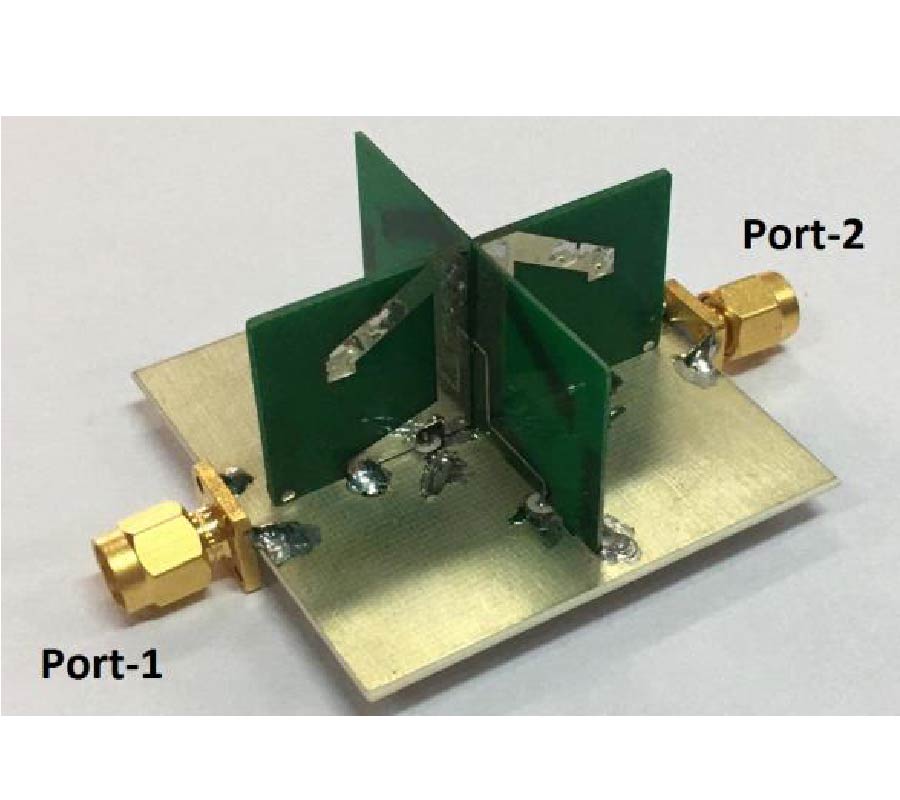
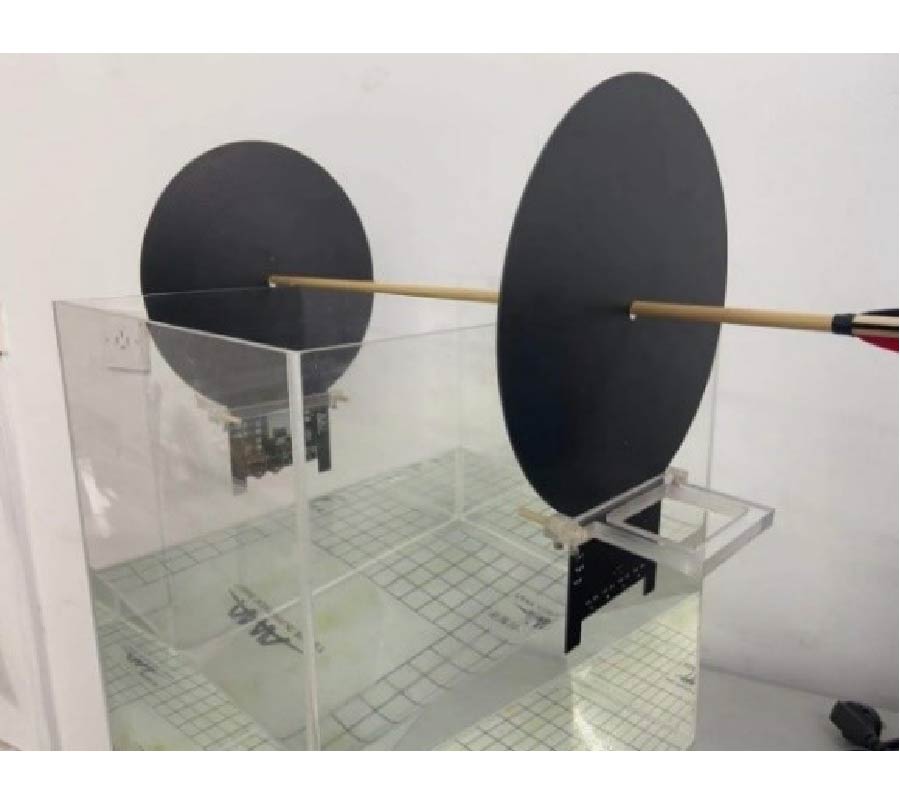
This paper presents a novel method of multiple input multiple output (MIMO) communication on the basis of a passive repeater that achieves enhanced performance in both line-of-sight and non-line-of-sight environments. The passive repeater is implemented as a back-to-back antenna system. The advantage of the proposed system is an increase in the effective aperture of the base station, which allows to sufficiently extend the communication distance and ensure spatial resolution. The configuration of the passive repeater is simple, based on two connected antennas with parabolic reflectors. This configuration helps to avoid phase controller that allows to spread repeaters in the communication environment. This spreading provides multipath propagation and improves MIMO performance. In this paper we suggest to implement the proposed passive repeater with optimal placements to create multipath wave propagation and ensure spatial resolution in a line-of-sight environment, and to enhance coverage and access blind spots in a non-line-of-sight environment. The numerical analysis is performed to verify the validity of using the proposed repeater, and it is found that the proposed method helps to ensure features in the propagation environment which leads to enhanced MIMO performance.
MANIPULATING LOS AND NLOS MIMO PROPAGATION ENVIRONMENTS USING PASSIVE REPEATERS
2021-11-09
PIER Letters
Vol. 101, 35-42
Modified CSRR Based Dual-Band Four-Element MIMO Antenna for 5G Smartphone Communication
Pankaj Jha , Anubhav Kumar , Asok De and Rakesh Kumar Jain
A four-element multiple-input multiple-output (MIMO) antenna based on a modified Complementary Split Ring Resonator (MCSRR) is presented in this paper for dual-band 5G smartphone applications. An inverted L-shaped radiator is used with MCSRR as an open stub in the ground, where MCSRR is responsible for dual operating bands and enhances the impedance matching. The MCSRR as an open stub in the ground plane creates a notch band that minimizes the interference in 5G wireless communication. The four elements of the antenna are placed in such a way that minimum isolation between antenna elements is obtained, 16.5 dB, without any decoupling, whereas more than 20 dB isolation is achieved by using T-shaped decupling. The antenna achieves dual 10 dB bandwidths from 3.40 GHz to 3.625 GHz and from 3.90 GHz to 4.525 GHz. Envelop correlation coefficient (ECC) is extracted from far-field results to analyse the MIMO antenna performance in practical design consideration.
MODIFIED CSRR BASED DUAL-BAND FOUR-ELEMENT MIMO ANTENNA FOR 5G SMARTPHONE COMMUNICATION
2021-11-08
PIER B
Vol. 94, 75-103
A Review of Metasurface-Assisted RCS Reduction Techniques
Akila Murugesan , Krishnasamy Selvan , Ashwin K. Iyer , Kumar Vaibhav Srivastava and Arokiaswami Alphones
This review discusses the evolution of the various radar cross-section (RCS) reduction techniques, with an emphasis on metasurfaces. The paper first introduces the terms RCS and RCS reduction and then discusses conventional and modern techniques to reduce RCS. The two main strategies used are scattering and absorption. The traditional methods of shaping and Radar Absorbing Material (RAM) are first briefly reviewed, followed by an extensive review of metasurface-based RCS reduction. RCS-reducing metasurfaces have the unique characteristics of acting as scatterers and absorbers. They are also described with regard to their passive and active configurations. The RCS reduction techniques are discussed with respect to profile, bandwidth, angular stability, polarization sensitivity, design complexity, and cost-effectiveness. A comprehensive comparison chart based on the performance parameters such as bandwidth, size and angular stability is tabulated for the different types of metasurfaces. The review also details areas that require further investigation.
A REVIEW OF METASURFACE-ASSISTED RCS REDUCTION TECHNIQUES
2021-11-08
PIER C
Vol. 116, 181-192
A Dual-Beam Switchable Self-Oscillating Ku-Band Active Array Antenna Integrating Positive Feedback Type Push-Push Oscillator and PSK Modulator
Maodudul Hasan , Eisuke Nishiyama , Takayuki Tanaka and Ichihiko Toyoda
This paper proposes a dual-beam switchable self-oscillating active integrated array antenna for Ku-band wireless power transfer systems. The oscillation is sourced by a positive feedback type Push-Push oscillator, which shows an excellent measured output power of +9.3 dBm obtained at the second harmonic frequency as well as good suppression of the undesired harmonics. The generated RF power from the oscillator excites four patch antenna elements. Moreover, a PSK modulator is adopted for binary phase switching between 0˚ and 180˚. Using in/anti-phase RF signal combination of the antenna elements, it is possible to switch between two beams, sum and difference radiation patterns. The proposed structure is fabricated and tested; the measured results verify the dual-beam switching concept with an effective isotropic radiated power (EIRP) of +17.77 dBm, DC-to-RF efficiency of 0.43%, and an oscillator figure of merit (FOM) of -158.05 dBc/Hz at the second harmonic frequency of 14.7 GHz.
A DUAL-BEAM SWITCHABLE SELF-OSCILLATING KU-BAND ACTIVE ARRAY ANTENNA INTEGRATING POSITIVE FEEDBACK TYPE PUSH-PUSH OSCILLATOR AND PSK MODULATOR
2021-11-08
PIER M
Vol. 105, 183-194
Development of a High Gain FSS Reflector Backed Monopole Antenna Using Machine Learning for 5G Applications
Mohammed Farouk Nakmouche , Abdemegeed Mahmoud M. A. Allam , Diaa E. Fawzy and Ding-Bing Lin
This work is devoted to the development of a high gain Frequency Selective Surface (FSS) reflector backed monopole antenna using Machine Learning (ML) techniques for 5G applications. It analyzes and solves the complexity of the determination of the optimum position of the FSS reflector and the ground dimension of the monopole in this composite antenna structure since there are no solid and standard formulations for the computation of these two parameters. ML modelling is involved in the development process for the sake of gain enhancement. It is applied to get the optimum position of the FSS reflector layer and the ground dimension of the monopole antenna. The proposed antenna structure is 50 mm × 50 mm, implemented on a Rogers 5880 substrate (thickness = 1.6 mm). Two different patch antenna structures, with and without FSS, are developed and considered in the current work. The antenna performance in terms of operating frequency, return loss, and gain is analysed using the finite element methods. The design is optimized for a targeting frequency band operating at 6 GHz (5.53 GHz to 6.36 GHz), which is suitable for 5G Sub-6 GHz applications. The obtained results show that the integration of the FSS layer below the antenna structure provides a simple and efficient method to obtain a low-profile and high-gain antenna. Finally, the proposed design is fabricated and measured, and a good agreement between the simulated and measured results is obtained. A comparison with similar studies in the literature is presented and shows that the current design is more compact in size, and the obtained radiation efficiency and gain are higher than other designs.
DEVELOPMENT OF A HIGH GAIN FSS REFLECTOR BACKED MONOPOLE ANTENNA USING MACHINE LEARNING FOR 5G APPLICATIONS
2021-11-08
PIER Letters
Vol. 101, 29-34
Improvement of IR Pyroelectric Detector Performance in THz Range Using Wavelength-Scale Sphere-Based Terajet Effect
Oleg Minin , Igor Minin , Yanfeng Li and Jiaguang Han
An infrared (IR) pyroelectric detector for applying to the terahertz (THz) waveband that uses diffraction limited focusing of the THz beam on the sensitive area of the detector is studied. The signal to be detected is coupled to the optical window of the detector through a two-wavelength diameter polytetrafluoroethylene spherical particle-lens based on the terajet effect. We have experimentally demonstrated an enhancement of the IR detector sensitivity by 5.6 dB at 0.2 THz without degradation of the noise equivalent power value. The results show that the proposed method could be applied to increase the sensitivity of various commercial IR sensors in the THz range, requiring no modification of the internal structure and may be applied also to acoustics and plasmonics.
IMPROVEMENT OF IR PYROELECTRIC DETECTOR PERFORMANCE IN THZ RANGE USING WAVELENGTH-SCALE SPHERE-BASED TERAJET EFFECT
2021-11-06
PIER M
Vol. 105, 173-181
Generalized Kronecker Array Transform
Piero Angeletti
Fast evaluation of the array response matrix and its vector or matrix products play a central role in several applied electromagnetics and array processing applications. In this context, the Kronecker Array Transform (KAT) has been introduced by Ribeiro and Nascimento as an efficient factorization technique that can be applied when the elements of a planar array and the wavevectors exhibit separability. The computational savings leverage on the decomposition of the full array response matrix in the Kronecker product of two smaller array response matrices. In this contribution we extend and apply the generalized Kronecker product introduced by Fino and Algazi to the array response matrix decomposition problem. The resulting Generalized Kronecker Array Transform (GKAT) broadens the class of problems that can be addressed while achieving the same computational savings. The complexity of GKAT is compared with Non-Uniform Fast Fourier Transform (NUFFT), and optimal integration of the two techniques is elaborated.
GENERALIZED KRONECKER ARRAY TRANSFORM
2021-11-05
PIER C
Vol. 116, 171-180
Efficient Diplexer with High Selectivity and Low Insertion Loss Based on SOLR and DGS for WiMAX
Asmaa E. Ammar , Nessim Mahmoud , Mohmoud Ahmed Attia Ali and Amr H. Hussein
In this paper, a highly efficient microstrip diplexer with low insertion loss, high selectivity, and high isolation is introduced. The proposed diplexer employed two compact size coupled squared open-loop resonator (SOLR) based band pass filters (BPFs). Firstly, a matching network is utilized to ensure that the two BPFs and the antenna load are properly matched. This is accomplished by connecting the two BPFs and the antenna with a conventional T-junction that acts as a combining circuit, resulting in good isolation between the up-link and down-link BPFs. As a second step, a defected ground structure (DGS) is used to improve the overall filter response in terms of insertion loss and isolation without affecting the diplexer selectivity. Based on this structure, the proposed diplexer has two resonance frequencies of 2.5 GHz and 2.8 GHz. The structure provides good insertion losses of about 1.6 and 1.3 dB for the two channels, respectively with fractional bandwidth of 2.8% at 2.5 GHz and 3.2% at 2.8 GHz. The measured isolation levels are 70 dB and 50 dB for 2.5 GHz and 2.8 GHz, respectively. The proposed diplexer is useful for several wireless communication applications such as WiMAX. The good agreements between simulated and measured results verified the practical validation of the proposed diplexer.
EFFICIENT DIPLEXER WITH HIGH SELECTIVITY AND LOW INSERTION LOSS BASED ON SOLR AND DGS FOR WIMAX
2021-11-04
PIER M
Vol. 105, 161-172
Sensorless Control of Permanent Magnet Synchronous Motor Based on T-S Fuzzy Inference Algorithm Fractional Order Sliding Mode
Yilin Zhu , Yang Bai , Hao Wang and Lei Sun
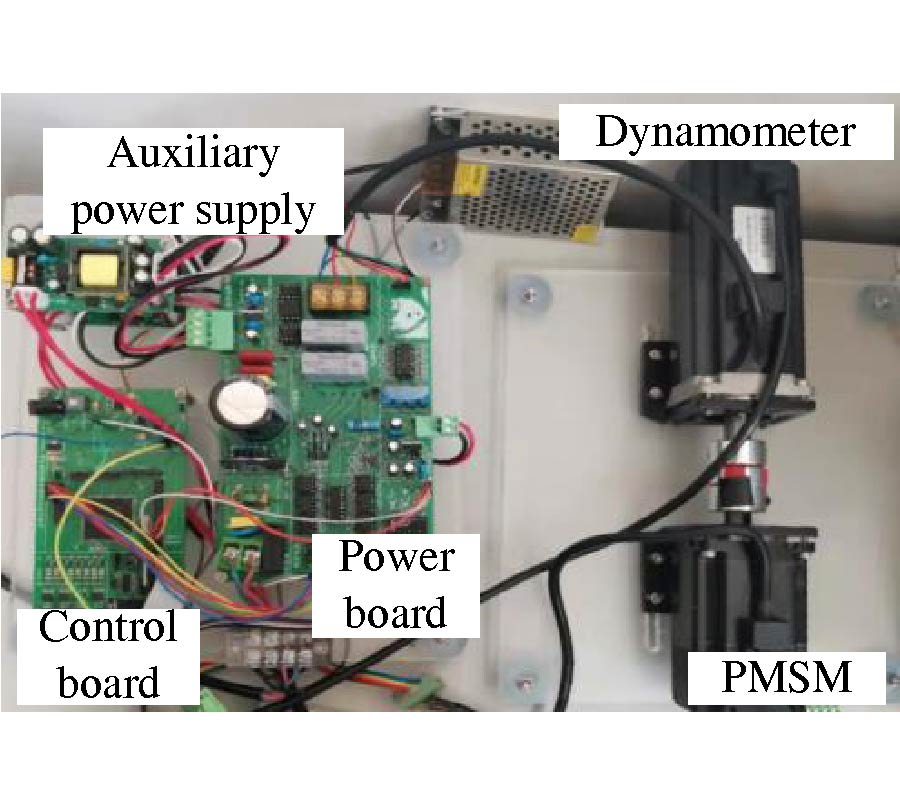
In order to improve the robustness of the fractional order sliding mode controller (FSMC) for permanent magnet synchronous motor (PMSM) sensorless control, a fractional order sliding mode controller based on T-S fuzzy inference algorithm (FFSMC) is proposed to observe the rotor speed and position information. Based on the mathematical model of PMSM and sliding mode controller, a fractional order sliding mode controller is designed, and its stability is proved. The T-S fuzzy inference algorithm is used to tune the reaching law parameters of the FSMC, so that the reaching law parameters are no longer fixed values, but change with the state of the system. The correctness of the proposed method is verified by MATLAB simulation software. The effectiveness of the simulation results is verified by building a PMSM sensorless control experimental platform. The results show that the PMSM sensorless control based on FFSMC achieves parameter self-tuning and improves the observation accuracy. And the robustness of the control system is enhanced.
SENSORLESS CONTROL OF PERMANENT MAGNET SYNCHRONOUS MOTOR BASED ON T-S FUZZY INFERENCE ALGORITHM FRACTIONAL ORDER SLIDING MODE
2021-11-03
PIER B
Vol. 93, 195-213
Theory of Gaussian Beam Diffraction by a Transmission Dielectric Grating
Vladimir Serdyuk
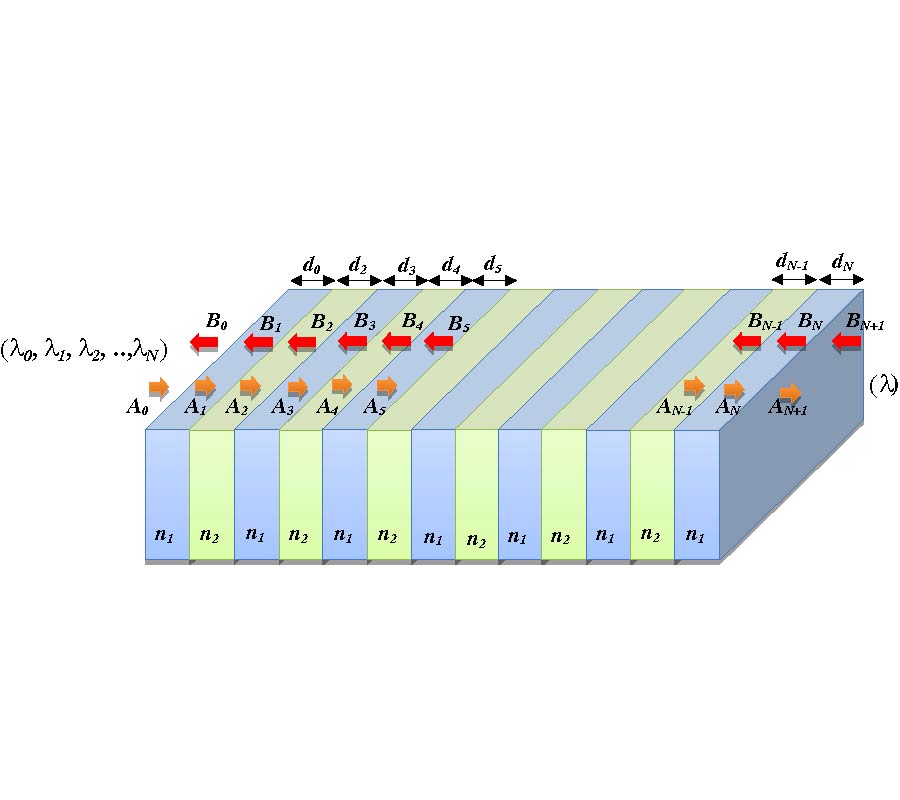
An advanced 2D mode theory of plane electromagnetic wave diffraction by a transmission dielectric grating (rectangular relief or planar sinusoidal one) is considered. On the bases of this theory, a new model of diffraction of a spatially inhomogeneous light field (a Gaussian beam) by a transmission grating with arbitrary thickness is developed. It provides the opportunity to compute the transverse spatial structure of radiation diffraction orders and to estimate character of their distortions in comparison with the initial Gaussian beam structure. It is shown that such distortions appear under abrupt variations of intensity of all orders and can be caused by transformation of a certain diffraction order from the radiation regime of propagation into the waveguide regime and inversely (Wood's anomalies), and also it can be induced by a set of additional reflections on the boundaries of a thick substrate.
THEORY OF GAUSSIAN BEAM DIFFRACTION BY A TRANSMISSION DIELECTRIC GRATING
2021-11-02
PIER M
Vol. 105, 151-160
Influence of Materials, Windows and Shielding Layers on Low-Frequency Electromagnetic Environment of Subway Vehicle and Human Exposure Research
Zhiyuan Wang and Weinan Liu
The numerous high-power devices and cables gathered around the subway vehicle will aggravate the deterioration of the electromagnetic environment, which may cause the train to fail to operate normally or threaten the health of passengers with a pacemaker or defibrillator. In order to study the distribution characteristics of low-frequency magnetic field of the subway in complex electromagnetic environment and the influence of various factors on human electromagnetic exposure, the magnetic flux density nephograms of the subway train with different vehicle body materials, with or without windows and with the shielding layer are calculated and analyzed. Specific energy absorption rate (SAR) values have been calculated in a standing voxel model from exposure to electromagnetic fields at 2.4 GHz, frequencies commonly used by Wi-Fi devices. The numerical results show that the average value of magnetic flux density in the stainless-steel carriage is less than that in the aluminum alloy carriage and the carbon fiber reinforce plastic (CFRP) carriage. Compared with the vehicle with windows, the average value of magnetic flux density in the vehicle without windows is less. The added shielding layer decreases the average value of magnetic flux density from 10.5 uT to 3 uT. The maximum value of magnetic flux density in the carriage under different factors is about 10 uT, which is far less than the magnetic flux density reference limit of 0.1 mT of the International Commission of Non-Ionizing Radiation Protection (ICNIRP) standard. Whenthe Wi-Fi device is closest to the human body, the highest Specific Absorption Ratio (SAR) value of human tissue is 0.00749 W/kg, which is far less than the electromagnetic exposure limit of 1.6 W/kg of IEEE standard.
INFLUENCE OF MATERIALS, WINDOWS AND SHIELDING LAYERS ON LOW-FREQUENCY ELECTROMAGNETIC ENVIRONMENT OF SUBWAY VEHICLE AND HUMAN EXPOSURE RESEARCH
2021-10-31
PIER M
Vol. 105, 141-150
Breaking the Diffraction Limit Manifold Using Specially Designed Metamaterial Split Ring Resonator
Cherala Bindu , Sikha Kolamkanny Simon , Anju Sebastian , Panattil Viswanathan Aswathi , Dona Joseph , Jolly Andrews and Vallikkavumkal Paily Joseph
A novel and efficient method to overcome the barriers of conventional diffraction limit using a specially designed metamaterial Split Ring Resonator (SRR) structure as an imaging sensor at microwave frequency is proposed. The topology of the proposed sensor is ingeniously designed to identify imaging objects having dimensions much less than the interacting wavelength λ. The split gap field region of the conventional SRR, used as the sensing region of the imaging sensor, is modified for enhancing the resolution capacity, by slightly raising the split region of the outer ring structure perpendicular to the plane of the resonator (Projected Split Ring Resonator - PSRR) which will reduce the area of the sensing region of the SRR probe considerably. The isolation of the structural parts of the SRR other than projected split region helps in using the localized evanescent field at the split region of the PSRR for imaging of minute objects having dimension ranges up to 0.0001λ by precisely choosing the split gap. The required projection height of the split region and the possible resolution limits of the PSRR sensor probe are evaluated by simulation. Experimental 2-dimensional sub-wavelength images obtained for various dielectric objects using a typical PSRR test probe having resolution capability up to 0.01λ are also presented.
BREAKING THE DIFFRACTION LIMIT MANIFOLD USING SPECIALLY DESIGNED METAMATERIAL SPLIT RING RESONATOR
2021-10-29
PIER
Vol. 171, 159-169
Biosensing Performance of a Plasmonic-Grating-Based Nanolaser (Invited Paper)
Haoran Zhang , Jiacheng Sun , Jie Yang , Israel De Leon , Remo Proietti Zaccaria , Haoliang Qian , Hongsheng Chen , Gaofeng Wang and Tao Wang
We introduce and numerically investigate a high-quality resonant structure formed by a dielectric low-order diffraction grating combining materials with high refractive index contrast. The proposed structure is capable of supporting multiple plasmonic modes owing to hybridization effects, modes having the characteristic of exhibiting remarkable sensing response to the change of the environment refractive index yet limited figure of merit. To improve the figure of merit, the proposed architecture is modified by adding a layer of semiconductor gain medium, as it can compensate the internal losses. The result is an active sensor showing multi-modal lasing behaviour, with very low threshold and large mode spacing. It is found that the device shows switchable response upon modification of the pump amplitude or polarization, a very important feature when it comes to sensing devices. Finally, the achieved figure of merit is 3400 RIU-1, one order of magnitude higher than the passive case and much higher than the theoretical limit for sensors based on Kretschmann configuration. Thus, the proposed architecture possesses great potentials as an optical sensor for bio-detection and environmental monitoring.
BIOSENSING PERFORMANCE OF A PLASMONIC-GRATING-BASED NANOLASER (INVITED PAPER)