Search Results(13796)

2016-11-27
PIER Letters
Vol. 64, 43-49
A Miniaturized Quasi-Self-Complementary UWB Antenna with Band-Rejection Characteristic
Li Xu and Peng Gao
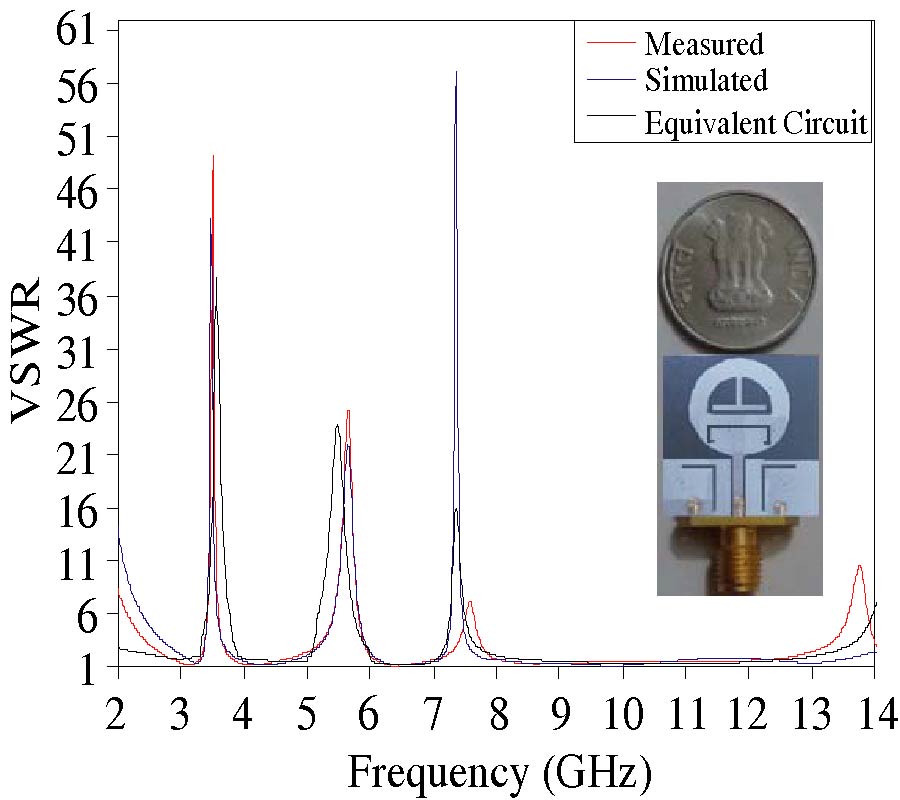
A miniaturized ultra-wideband (UWB) quasi-self-complementary antenna (QSCA) with band-rejection characteristic is presented and discussed. With the tapered microstrip-fed line and flower-shaped QSC structure, a lower cut-in frequency (3.18 GHz) is obtained with a compact size (9x17.5x1 mm3). By embedding a five-star-shaped ring resonator under the radiation patch, a band-notched feature is achieved. The measured impedance bandwidth below 2:1 VSWR is from 3.18 GHz to 13.4 GHz with a rejection band from 5.45 GHz to 5.95 GHz, and the simulated and measured results of the proposed antenna are in good agreement. Thus, the antenna is suitable to be integrated with the space-limited wireless system without electromagnetic interference at the WLAN (5.47-5.825 GHz) band.
A MINIATURIZED QUASI-SELF-COMPLEMENTARY UWB ANTENNA WITH BAND-REJECTION CHARACTERISTIC
2016-11-25
PIER B
Vol. 71, 119-135
Theoretical Spectral Analysis of the IR-UWB Radar Chest Reflection with Arbitrary Periodic Breathing- and Heart-Induced Displacements
Van Nguyen and Mary Ann Weitnauer
The moving chest wall imparts a delay modulation onto the reflected IR-UWB radar signal, making the radar return a nonlinear function of chest wall displacement. Existing theoretical spectral models of the IR-UWB radar reflections from the human chest wall have restrictive assumptions that preclude realistic modeling of chest wall displacement and assume an aliased version of the radar signal. This paper presents novel theoretical analysis of the un-aliased spectrum, without the restrictive assumptions. Potential applications not specifically treated in this paper, but illustrative of the novelty and broader scope of the presented analysis, include heart-induced displacements that are realistically more bursty in nature and breathing-induced displacements consistent with, for example, non-unity inspiration-to-expiration ratios characteristic of asthma; neither of these could be analyzed using previous models. As well known, the un-aliased spectrum cannot generally be recovered from the aliased spectrum. In particular, the paper shows that the clusters of the non-aliased spectrum are not just scaled versions of each other; rather they have complex variations that if measurable, could enable estimation of parameters such as displacement amplitude; such variations are not apparent in the existing aliased spectrum model, which has just one cluster. This paper analyzes the degree to which the aliased model di↵ers from the non-aliased model. The paper also addresses some practical aspects of the spectral model, such as the number of significant components in a spectral cluster and computational complexity of the theoretical model.
THEORETICAL SPECTRAL ANALYSIS OF THE IR-UWB RADAR CHEST REFLECTION WITH ARBITRARY PERIODIC BREATHING- AND HEART-INDUCED DISPLACEMENTS
2016-11-25
PIER B
Vol. 71, 107-118
Comparing Different Schemes for Random Arrays
Giovanni Buonanno and Raffaele Solimene
In this work, four types of random arrays are compared. In particular, the mean and variance of the array factor are derived. This provides a partial statistical characterisation that allows pointing out some important aspects of random arrays and link them to the number of elements and array aperture. In the absence of a simple and effective analytical apparatus, here great importance is also given to the experimental aspect, especially as far as the side-lobe level is concerned. To this end, Monte Carlo simulations are run to experimentally build the side-lobe distribution as a function of the number of radiators and the average spacing between two adjacent radiators. The obtained results show that random arrays where one is free to impose constraints on the minimum spacing between adjacent elements can obtain performance analogous to those achievable by other schemes which do not put such constraints. However, the former are preferable because they are able to zero the probability that adjacent radiators are separated with less than a certain minimum distance and this allows the mitigation of mutual coupling effects.
COMPARING DIFFERENT SCHEMES FOR RANDOM ARRAYS
2016-11-25
PIER C
Vol. 70, 1-7
Enhancing the Resolution of Hyperlens by the Compensation of Losses Without Gain Media
Xu Zhang , Wyatt Adams , Mehdi Sadatgol and Durdu Oe Guney
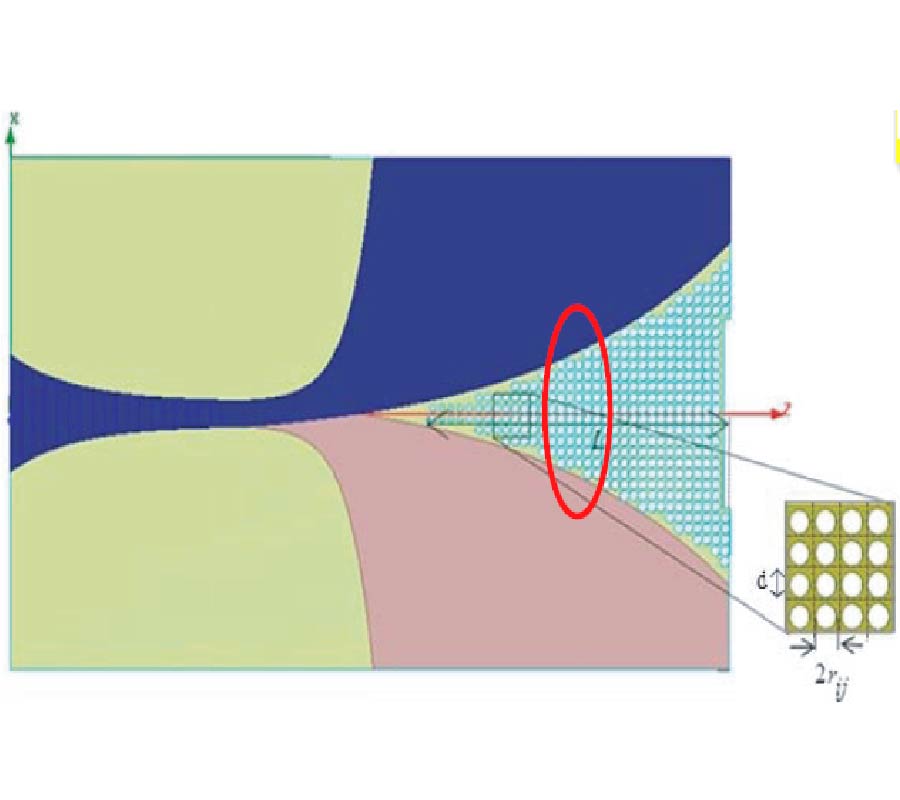
We present a method to improve the resolution of available hyperlenses in the literature. In this method, we combine the operation of hyperlens with the recently proposed plasmon injection scheme for loss compensation in metamaterials. Image of an object, which is otherwise not resolvable by the hyperlens alone, was reconstructed up to the minimum feature size of one seventh of the free-space wavelength.
ENHANCING THE RESOLUTION OF HYPERLENS BY THE COMPENSATION OF LOSSES WITHOUT GAIN MEDIA
2016-11-23
PIER B
Vol. 71, 91-106
Compact Rotman Lens Structure Configurations to Support Millimeter Wave Devices
Toan Khanh Vo Dai and Ozlem Kilic
The development of modern communication devices for the latest technologies such as 5G has brought the millimeter wave technology into the spotlight because it offers higher data rates and bandwidth. Since highly directional transmissions are necessary for communication in these frequencies due to high path loss and atmospheric absorption, the use of adaptive antennas is inevitable. Rotman lenses have long been used as analog beam forming networks to support linear array antennas for electronic scanning. Their broad bandwidth and planar structure make them ideal for a variety of applications. However, their overall dimensions can be prohibitive especially for large scan angles. In this paper, we propose a few compact configurations that reduce the overall dimensions of Rotman lens as much as 50% without degrading its performance.
COMPACT ROTMAN LENS STRUCTURE CONFIGURATIONS TO SUPPORT MILLIMETER WAVE DEVICES
2016-11-23
PIER C
Vol. 69, 191-198
400 GHz 1.3 dBi Leaky Wave Antenna in CMOS 1.3 um Process
Qianru Weng , Xinru Li , Hsien-Shun Wu and Ching-Kuang Tzuang
A 400 GHz monolithic leaky wave antenna (LWA) is presented in this paper. The proposed LWA, constructed by the unit cell with multiple structural parameters, is regarded as the on-chip microstrip with perforation on the signal trace and the ground plane. A hybrid full-wave eigenvalue method theoretically extracts the complex propagation constants of first higher-order mode (EH1) of the perforated microstrip to improve the unit cell design. The extracted results also assist in realizing the differential feeding network to excite the leaky mode of the proposed antenna in high efficiency. A 400 GHz LWA prototype is designed and fabricated in CMOS 0.13 μm 1P8M process. The on-chip experiments show the measured input return loss including the effects of the contact pad lower than 10 dB from 380 GHz to 420 GHz. The measured antenna gain is higher than 0.8 dBi and has a maximum value of 1.3 dBi at 400 GHz. From 390 GHz to 405 GHz, the measured main beam is at 33° to 43° from broadside, indicating good agreement with the calculated results.
400 GHZ 1.3 DBI LEAKY WAVE ANTENNA IN CMOS 1.3 UM PROCESS
2016-11-23
PIER C
Vol. 69, 181-190
Mechanism of Two Resonant Modes for Highly Resonant Wireless Power Transfer and Specific Absorption Rate
Sang Wook Park
In this work, the dosimetry for two resonant modes of a highly resonant wireless power transfer (HR-WPT) system is investigated, and the results are compared. The physical mechanism of the two resonant modes, which occur when the two transmitting and receiving resonators are extremely close to one another, is presented with the simulated results and the equivalent circuit models for the HR-WPT system. The difference between the two resonant modes for the specific absorption rate induced in the head model is discussed by comparing the electromagnetic fields for each mode. Furthermore, the dosimetry for the four-coil HR-WPT system is also investigated under the conditions of a single resonant mode and two resonant modes. The specific absorption rates (SARs) are calculated with head-size and body-size simplified human models at various distances from the WPT system and in each mode. The electric and magnetic fields of the odd mode show stronger distribution than those of the even mode in the area near to the WPT system, while the opposite results are found in the area farther away.
MECHANISM OF TWO RESONANT MODES FOR HIGHLY RESONANT WIRELESS POWER TRANSFER AND SPECIFIC ABSORPTION RATE
2016-11-23
PIER C
Vol. 69, 169-179
Design of Continuous Beam Steerable and Scalable Unit Module for Wireless Power Transmission Using Injection-Locked Oscillator Array
Ce Zhang , Bingnan Wang and Koon Hoo Teo
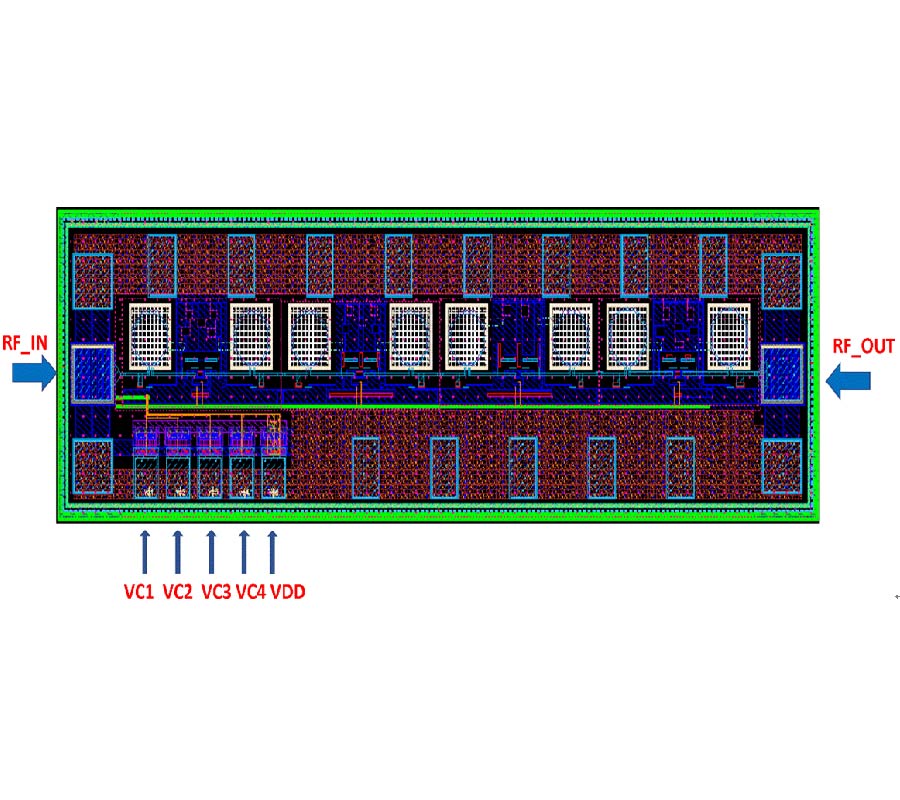
Long-range wireless power transmission (WPT) is implemented with the phased array transmitter technology, which has been extensively applied in the field of the radar systems. The cost of a conventional phased array transmitter module scales up in proportion to the number of antenna elements, as the massive number of transmit channels results in the increasing complexity of hardware and feeding antenna elements. Besides, the conventional phase-shifting transmitter architecture has lower DC to RF power conversion efficiency due to the insertion loss of power combining network at microwave frequency. In this paper, the concept of spatial power combining transmitter is utilized, and the upconversion circuit is greatly simplified to an injection locked oscillator. Our WPT system is implemented with the technology of oscillator array antenna at 2.4 GHz, which converts DC power to RF power and radiates into the air directly. The feedback voltage controlled oscillator (VCO) is implemented as the microwave source using a off-the-shelf bandpass filter, and the external signal is injected to the oscillator via a microstrip coupler. {The oscillator core shows the DC-to-RF conversion efficiency of 45.87% with the injected power of 0 dBm at 2.4 GHz. Then the digital phase shifter is used to phase shifting the injected signal to extend the beam coverage. From the link budget analysis, the overall DC-to-DC efficiency of our highly-integrated system shows 1.5 times (0.22%) of the conventional phased array (0.15%) when the separation between the transmit array and the receive horn antenna is 1.2 meter. Therefore, as an modularized array, the proposed system demonstrates the promising capability of upscaling to an efficient massive array with greatly reduced bill-of-materials (BOM).
DESIGN OF CONTINUOUS BEAM STEERABLE AND SCALABLE UNIT MODULE FOR WIRELESS POWER TRANSMISSION USING INJECTION-LOCKED OSCILLATOR ARRAY
2016-11-23
PIER Letters
Vol. 64, 37-41
Statistical Investigation of Clear Air Propagation in the Coastal and Plateau Regions of Nigeria
Israel Emmanuel and Babatunde Adeyemi
The long-term meteorological data of Era-interim from 1979 to 2014 covering the observation at 00, 06, 12 and 18 have been used to derive vertical refractivity gradient in the lowest 100. Diurnal, seasonal and annual variations of refractivity gradient and its component are analyzed for coastal and plateau areas of Nigeria. The relative frequency of the occurrence of gradient below -100 N-units/km used in clear air propagation study is derived from cumulative distribution of the gradient. Occurrence of anomalous propagation in each region is also estimated. The result will help in the effective wireless link planning and design.
STATISTICAL INVESTIGATION OF CLEAR AIR PROPAGATION IN THE COASTAL AND PLATEAU REGIONS OF NIGERIA
2016-11-22
PIER B
Vol. 71, 77-89
Analytical and Numerical Evaluations of Flexible V-Band Rotman Lens Beamforming Network Performance for Conformal Wireless Subsystems
Ardavan Rahimian , Yasir Alfadhl and Akram Alomainy
This paper presents the analytical design and numerical performance evaluation of novel V-band millimetre-wave (mm-wave) beamforming networks (BFNs), based on the Rotman lens array feeding concept. The devices are intended for operation in the unlicensed 60-GHz frequency band. The primary objective of this work is to study the feasibility of designing flexible V-band beamformers, based on liquid-crystal polymer (LCP) substrates. The planar Rotman lens device has been initially developed, and the output performances, in terms of the scattering parameters and accuracy, have been analysed. This is further continued with the detailed designs of the Rotman lens BFNs based on the four different proposed flexural cases, namely the concave-axial bending, the convex-axial bending, the concave-circumferential bending, and the convex-circumferential bending. Each of the flexures has been analysed, and the performance in terms of the surface currents and phase distributions, as the primary functionality indicators, has been presented. The presented flexible beamformers exhibit significant characteristics to be potentially employed as low-cost and efficient units of the mm-wave transceivers with the in-built beam steering capabilities for the conformal wireless subsystems.
ANALYTICAL AND NUMERICAL EVALUATIONS OF FLEXIBLE V-BAND ROTMAN LENS BEAMFORMING NETWORK PERFORMANCE FOR CONFORMAL WIRELESS SUBSYSTEMS
2016-11-22
PIER C
Vol. 69, 159-167
AMC-Integrated Reconfigurable Beamforming Folded Dipole Antenna with Parasitic and RF MEMS
Herwansyah Lago , Mohd Faizal Bin Jamlos , Ping Jack Soh and Guy Vandenbosch
A beam-reconfigurable printed antenna on an Artificial Magnetic Conductor (AMC) is proposed for navigation and radiolocation applications at a frequency of 9.41 GHz. The AMC is formed based on a periodic Jerusalem cross shaped slot structure and is located in between two substrate layers, close to the radiator. The AMC plane has a bandwidth of 1.95 GHz around the targeted frequency of 9.41 GHz. By integrating micro-electro-mechanical system (MEMS) switches on the folded patches in combination with parasitic elements, a beam steering capability of up to ±58° is achieved with a rear full ground plane. This eliminates the need for a mechanical steering system, which is traditional in the applications targeted. The antenna achieves a high gain of 8.08 dB and 90% efficiency. A good agreement between simulated and measured results is obtained.
AMC-INTEGRATED RECONFIGURABLE BEAMFORMING FOLDED DIPOLE ANTENNA WITH PARASITIC AND RF MEMS
2016-11-21
PIER C
Vol. 69, 147-157
Complex Impedance Transformers Based on Branch-Line Hybrid Couplers
Pablo Alcon Garcia , Nuria Esparza Lopez , Luis Herran Ontanon and Fernando Las Heras Andres
A topology, equations and design methodology for complex impedance-transforming branch-line hybrid couplers are presented. This method also allows the realization of real impedance-transforming to higher impedances. Limitations for real, imaginary and complex impedances are discussed. Test results are shown for a 3 dB 50 to 450 Ω hybrid coupler, at a 2 GHz center frequency, with a 21% bandwidth, an amplitude balance of 4.35±1 dB and a phase balance of 92.16°±8.8°. To showcase the complex impedance scenario, two 3 dB 50 Ω to 70-200j Ω are measured at a 2 GHz center frequency. One of these couplers uses a technique for reducing the chip size, yielding a 22.5% bandwith, 4-0.9 dB amplitude balance and 93.22°-6.74° phase balance, while acomplishing a 25% size reduction.
COMPLEX IMPEDANCE TRANSFORMERS BASED ON BRANCH-LINE HYBRID COUPLERS
2016-11-21
PIER C
Vol. 69, 139-146
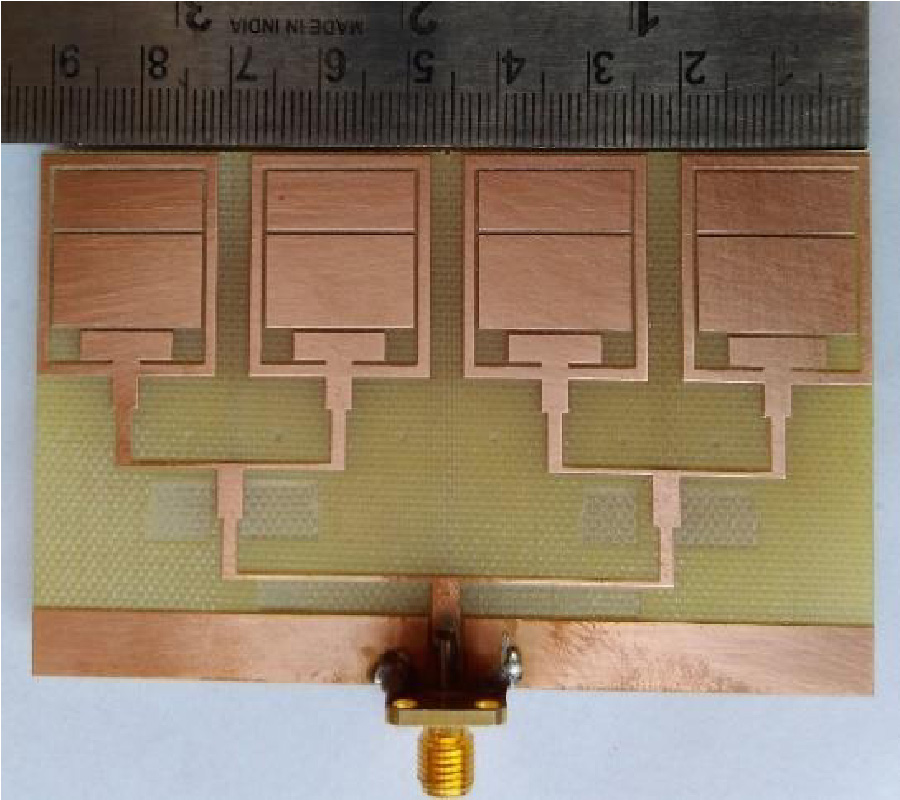
Compact UHF RFID Handheld Reader Antenna and Array Based on Resonant Quadrifilar Spiral Structure
Xuefeng Zhao , Yongjun Huang , Jian Li , Qing Zhang and Guangjun Wen
In this paper, a compact circularly polarized antenna based on a resonant quadrifilar spiral structure for the application of UHF RFID handheld reader is proposed and demonstrated experimentally. To reduce antenna size and improve impedance matching, the original resonant arms are revised by bending inverted-F structures and printing them on dielectric substrate, and the four arms are fed by a four-way phase shift network. Such an antenna indicates stable circular polarization performance and wide beam-width. The gain bandwidth (>2 dBi) can cover the frequency band from 902 MHz to 928 MHz, which is suitable for most of the popular UHF RFID system in the world. Moreover, the 1×4 array and 2×2 array based on previously demonstrated antenna unit are numerically investigated. The array performances, including the gain, beam scanning and low side-lobe are discussed.
COMPACT UHF RFID HANDHELD READER ANTENNA AND ARRAY BASED ON RESONANT QUADRIFILAR SPIRAL STRUCTURE
2016-11-21
PIER C
Vol. 69, 125-138
Photonic Band Gap Aperture Coupled Fractal Shape Tri-Band Active Antenna
Tale Saeidi , Idris Bin Ismail , Mojtaba Ahadi and Adam Reda Hasan Alhawari
A modified Koch fractal shape is used to decrease the dimensions of an antenna and resonates at more than one band for agricultural application. A new feeding technique of aperture coupled method called a non-uniform annular Photonic Band Gap is applied in order to integrate the designed antenna to the active elements. Subsequently, a transmission line transformer is designed using Genetic algorithm to achieve a perfect matching between the active element (amplifier) and the load (antenna). The proposed antenna is designed and fabricated. The results show that the proposed antenna has a high gain of 20.5 dB, 21 dB, and 22 dB at 0.915 GHz, 1.8 GHz and 2.45 GHz respectively with a compact size and low cost. The results predict its prospect as a promising alternative to the conventional one, which is compatibly applicable to agriculture applications especially when multiband function is required.
PHOTONIC BAND GAP APERTURE COUPLED FRACTAL SHAPE TRI-BAND ACTIVE ANTENNA
2016-11-21
PIER Letters
Vol. 64, 29-36
Dual-Polarized Complementary Structure Antenna Based on Babinet's Principle
Junrui Zhang and Lizhong Song
Based on the theory of Babinet's principle, a type of dual-polarized antenna working in C band with complementary structures is designed. The structures comprise a wire loop antenna and a slot loop antenna, which is complemented and fed by a coaxial line. A ground is placed to improve the front-to-back ratio of the antenna. The performance of the antenna is studied numerically and experimentally. A prototype antenna was built, stable and symmetric radiation patterns are obtained within the frequency of 4.9 GHz~5.1 GHz, and the port isolation is less than -24dB. The measured results coincide with the simulated ones. This explains the feasibility of the proposed dual-polarized antenna.
DUAL-POLARIZED COMPLEMENTARY STRUCTURE ANTENNA BASED ON BABINET'S PRINCIPLE
2016-11-21
PIER M
Vol. 52, 79-87
EMI Shielding Effectiveness of Composites Based on Barium Ferrite, PANI, and MWCNT
Muhammad Hanif Zahari , Beh Hoe Guan , Ee Meng Cheng , Muhammad Farham Che Mansor and Kean Chuan Lee
An electromagnetic interference (EMI) shielding material based on the composite of BaFe12O19, polyaniline (PANI) and multi-walled carbon nanotube (MWCNT) was proposed. The constituents of the composite were brought together through mechanical mixing and the in-situ polymerization of aniline on the BaFe12O19 and MWCNT surfaces. A series of composite with different MWCNT wt% loadings (0, 5, 10, 15, 20 and 25wt%) was prepared, and its effect on the EMI shielding performance was investigated. X-ray diffraction analysis was performed on all synthesized composites to confirm the phase formations. FESEM micrographs reveal the PANI particle formation on both BaFe12O19 and MWCNT surfaces. Electromagnetic measurements were done by using a rectangular waveguide connected to a network analyser to obtain the permeability, μr, permittivity, εr, and shielding effectiveness (SEA and SER). The increase in the MWCNT loading results in the enhancement of the composite's shielding performance to a certain limit. Optimum EMI shielding performance are shown by sample PBM4 (20wt% MWCNT) with SER and SEA values of 5.14 dB at 8.2 GHz and 36.41 dB at 12.4 GHz, respectively. influence of different MWCNT loadings (0, 5, 10, 15, 20 and 25wt%) on the EMI shielding performance of a composite consisting of BaFe12O19, polyaniline (PANI) and multi-walled carbon nanotube (MWCNT) were investigated.
EMI SHIELDING EFFECTIVENESS OF COMPOSITES BASED ON BARIUM FERRITE, PANI, AND MWCNT
2016-11-18
PIER C
Vol. 69, 115-124
Improvement of Compactness of Low Pass Filter Using New Quasi-Yagi-DGS-Resonator and Multilayer-Technique
Ahmed Boutejdar and Wael Abd Ellatif Ali
A novel 1.8 GHz compact microstrip low-pass filter (LPF) based on quasi-yagi defected ground structure (DGS) and compensated capacitors is proposed in this paper. The filter has a very sharp cut-off frequency response with low insertion loss and achieves a wide reject band with overall 20 dB attenuation from 2.8 GHz up to 10 GHz. The equivalent circuit model of Yagi-DGS-unit is derived using AWR software, and the circuit parameters are extracted by using a simple circuit analysis method. The advantage of this structure is that the reject band can be controlled by tuning the dimension of Yagi-arms at higher frequency rang. The proposed 1.8 low-pass filter is designed using microwave office electromagnetic software and fabricated on the RO4003 ceramic structure with dielectric constant of 3.38. The compact filter occupies an area of (0.45λg × 0.35λg) with λg = 44 mm. A comparison between simulation and measurement results confirms the validity of the LPF configuration and design procedure. In order to improve the compactness of the proposed LPF, a new multi-layer method has been employed. Finally, a new minimized LPF-topology 50% more compact than the conventional is realized.
IMPROVEMENT OF COMPACTNESS OF LOW PASS FILTER USING NEW QUASI-YAGI-DGS-RESONATOR AND MULTILAYER-TECHNIQUE
2016-11-18
PIER Letters
Vol. 64, 21-28
A Design of Compact Radial Line Slot Array (RLSA) Antennas for Wi-Fi Market Needs
Teddy Purnamirza , Donny Kristanto and Imran Mohd Ibrahim
This paper proposes a compact Radial Line Slot Array (RLSA) antenna for 5.8 GHz Wi-Fi devices, which meets market needs. Various small RLSA antenna models with radius of 140 mm, were designed using extreme beamsquint technique. The models then were simulated to result in a best model. A prototype of the best model was then fabricated and measured to verify the simulation. The measured parameters are: a gain of 18 dBi, bandwidth of 1 GHz, beamwidth of 20˚, and mainlobe to sidelobe ratio of 15 dB, which meet antenna specifications for market needs. The prototype was tested as an antenna for a Wireless Fidelity (Wi-Fi) device in order to show its performance. The test showed that the prototype worked properly. Lastly, we compared the size of the prototype with the average size of various antennas available in markets. We found that the prototype had the advantage of small size and flat, with similar performance.
A DESIGN OF COMPACT RADIAL LINE SLOT ARRAY (RLSA) ANTENNAS FOR WI-FI MARKET NEEDS
2016-11-16
PIER M
Vol. 52, 67-77
Large Linear Random Symmetric Arrays
Giovanni Buonanno and Raffaele Solimene
In this work linear random arrays are studied. It is shown that random symmetric linear arrays can be more easily characterised (with respect to the asymmetric ones) in terms of the first and second order statistics of the array factor magnitude. In particular, the non-stationarity of the array factor can be taken into account while studying the array response. Accordingly, this leads to more accurate predictions as far as the side-lobe level is concerned.
LARGE LINEAR RANDOM SYMMETRIC ARRAYS
2016-11-15
PIER M
Vol. 52, 57-66
Calculation and Analysis of the Effective Electromagnetic Parameters of Periodic Structural Radar Absorbing Material Using Simulation and Inversion Methods
Ding Zhou , Xiaozhong Huang , Zuojuan Du and Qiang Wang
Effective electromagnetic parameters (EEPs) of periodic structures fabricated mainly by carbonyl iron powders are calculated in this paper. A method of inverting the scattering parameters obtained from simulation software was used. The effect of the absorbent volume ratio and the cycle length on EEPs was studied and analyzed. The correlation of the shapes with EEPs was also researched. The empirical formulas were proposed to calculate EEPs, in which the interaction between two adjacent cells was considered. By using this method, any material could be designed as a periodic structure with controlled EEPs, and the values of EEPs were located between the electromagnetic parameter (EP) of air and that of the original material by a specific rule. The EEPs can be used to design new absorbers as the fundamental data of electromagnetic property of some fresh materials.
CALCULATION AND ANALYSIS OF THE EFFECTIVE ELECTROMAGNETIC PARAMETERS OF PERIODIC STRUCTURAL RADAR ABSORBING MATERIAL USING SIMULATION AND INVERSION METHODS