Search Results(13796)

2016-11-07
PIER M
Vol. 52, 9-20
A Novel Resistance Network Node Potential Measurement Method and Application in Grounding Grids Corrosion Diagnosis
Kai Liu , Fan Yang , Xiaoyu Wang , Bing Gao , Xiaokuo Kou , Manling Dong and Ammad Jadoon
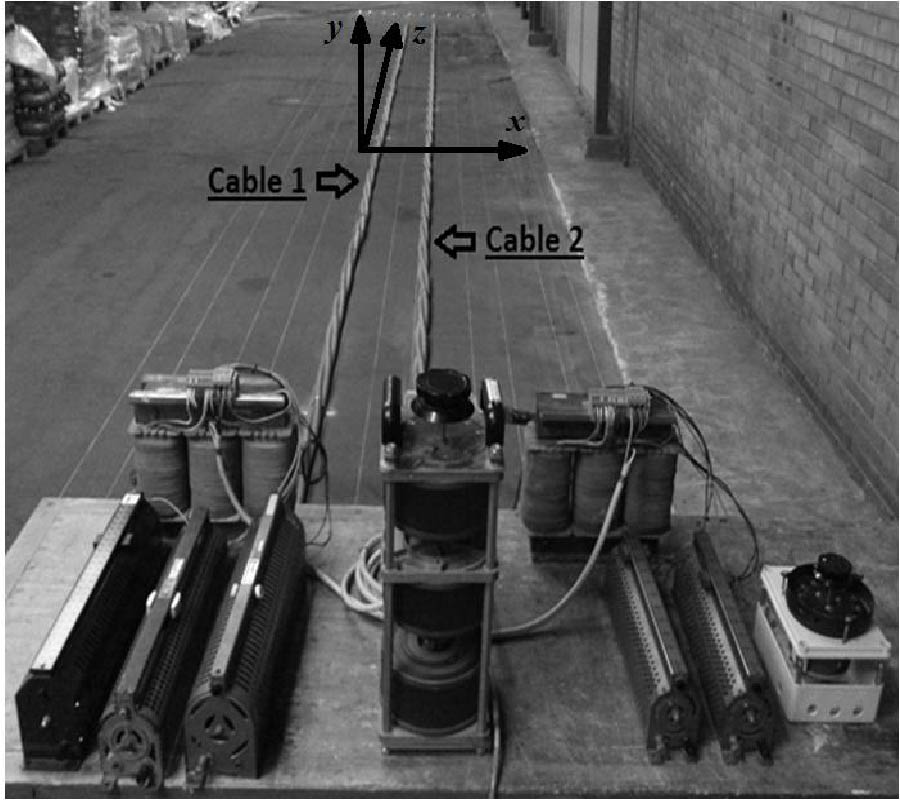
In this paper, a novel resistance network node potential measurement technique based on 16-channel cycle method is presented, and a grounding grids corrosion diagnosis measurement system with 16 channels is built from this method. Through this measurement system, 1,680 valid potential data and 1,560 effective branch voltage data can be collected in one measurement by only 16 accessible node downleads on the grounding grid. The stability error of the excitation current source is less than 0.15%, and the error of the applicable acquisition data is about 1% according to system data tests. Built on the measurements, an underdetermined sensitivity equation for solving the increasing multiple of branch resistance is put in place to determine the corrosion status of grounding grids. The experimental results show that the plenty of data is necessary when solving the underdetermined equation and also show that the system is under a high stability, high accuracy, and can comply with the requirements of corrosion diagnosis for grounding grids.
A NOVEL RESISTANCE NETWORK NODE POTENTIAL MEASUREMENT METHOD AND APPLICATION IN GROUNDING GRIDS CORROSION DIAGNOSIS
2016-11-07
PIER M
Vol. 52, 1-8
Optimal Design of Photonic Band-Gap Structure Based on Kriging Surrogate Model
Hongxia Li , Bao Zhu and Jiefu Chen
Toward an engineering optimization for photonic band-gap structures in waveguide filter, this paper presents an effective optimization method using Kriging surrogate model combing with semi-analytical spectral element method to maximize photonic band-gaps. Photonic crystals are assumed to be finite periodic structures composed of two dielectric materials with different permittivities. Kriging surrogate model is used to build an approximate function relationship between the photonic band-gaps and the design parameters of photonic crystals, replacing the expensive reanalysis for electromagnetic simulations of 3D periodic structure. The semi-analytical spectral element method is used to calculate the photonic band-gaps at different sampling points. Numerical results demonstrate that the proposed optimization method can effectively obtain maximum photonic band-gaps.
OPTIMAL DESIGN OF PHOTONIC BAND-GAP STRUCTURE BASED ON KRIGING SURROGATE MODEL
2016-11-06
PIER M
Vol. 51, 195-203
Diagnosis of Coupled Resonator Bandpass Filters Using VF and Optimization Method
Rui Wang , Le-Zhong Li , Long Peng , Xiao-Qiang Tu and Xiao-Xi Zhong
This paper presents a hybrid method combining a vector fitting (VF) and a global optimization for diagnosing coupled resonator bandpass filters. The method can extract coupling matrix from the measured or the electromagnetically simulated admittance parameters (Y-parameters) of a narrow band coupled resonator bandpass filter with losses. The optimization method is used to remove the phase shift effects of the measured or the EM simulated Y-parameters caused by the loaded transmission lines at the input/output ports of a filter. VF is applied to determine the complex poles and residues of the Y-parameters without phase shift. The coupling matrix can be extracted (also called the filter diagnosis) by these complex poles and residues. The method can be used to computer-aided tuning (CAT) of a filter in the stage of this filter design and/or product process to accelerate its physical design. Three application examples illustrate the validity of the proposed method.
DIAGNOSIS OF COUPLED RESONATOR BANDPASS FILTERS USING VF AND OPTIMIZATION METHOD
2016-11-04
PIER Letters
Vol. 63, 115-121
Compact Planar Quad-Band Bandpass Filter for Application in GPS, WLAN, WiMAX and 5G WiFi
Mojtaba Mirzaei and Mohammad Amin Honarvar
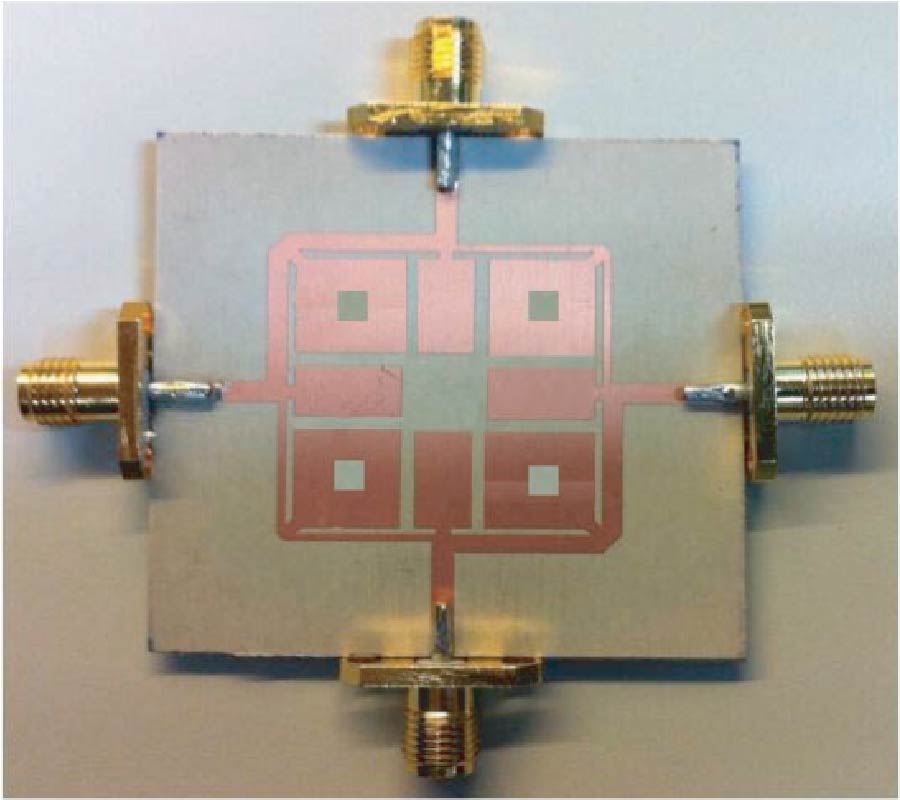
In this paper, a novel compact second-order quad-band bandpass filter (BPF) is applied based on a novel quintuple-mode stub-loaded trigonal ring resonator. Resonant characteristics are extracted by even- and odd-mode method. Designing procedure of resonant frequencies has also been presented. The last two resonant modes are utilized to cover a wide bandwidth for 5G WiFi application. The rest of other three resonant modes are used to form three passbands for GPS, WLAN and WiMAX applications. According to pseudo-interdigital structure four transmission zeros are generated among passbands to improve the band to band rejection and enhance the frequency selectivity. The measurement results agree well with the EM simulation ones.
COMPACT PLANAR QUAD-BAND BANDPASS FILTER FOR APPLICATION IN GPS, WLAN, WIMAX AND 5G WIFI
2016-11-04
PIER Letters
Vol. 63, 107-113
On the Miniaturization of Log Periodic Koch Dipole Antenna Using Split Ring Resonators
Jolly Rajendran and Sreedevi K. Menon
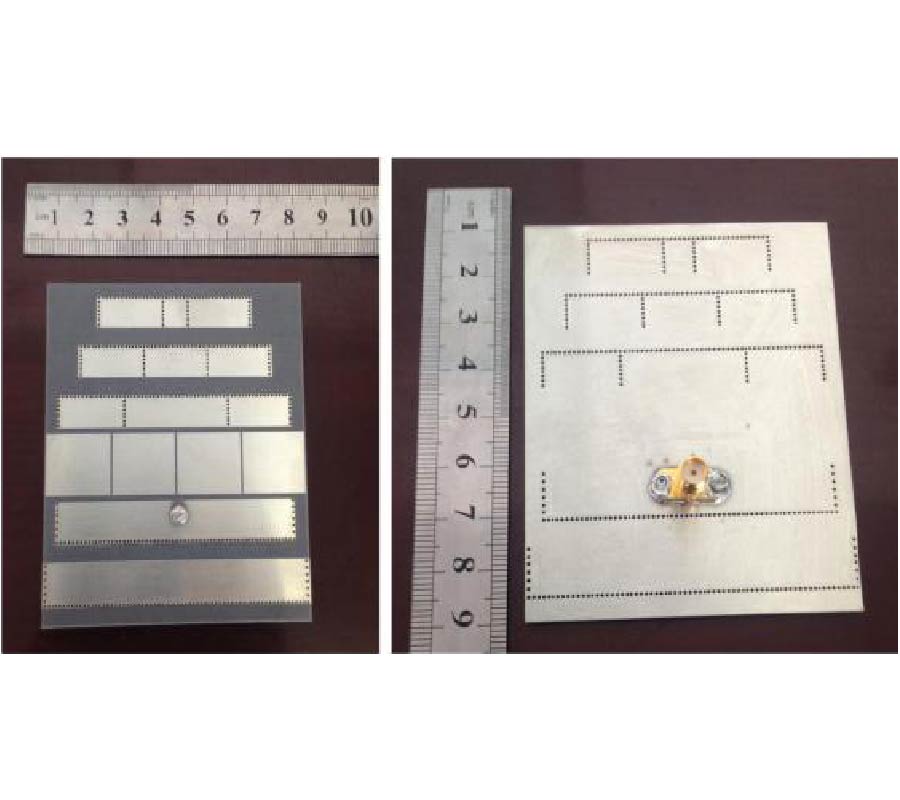
In this paper, a printed split ring resonator (SRR) loaded log-periodic Koch dipole antenna (SLPKDA) is proposed. Koch-shaped dipoles when being loaded with split ring resonator (SRR) yielded a compact antenna, still preserving the radiation properties of log-periodic dipole antenna (LPDA). Measurement results show that the proposed antenna has a wide bandwidth, good impedance match and gain of 4 dBi over the band of frequencies from 0.9 GHz to 2.5 GHz. Both vertical and horizontal dimension reductions are achieved by loading Koch dipoles with SRR.
ON THE MINIATURIZATION OF LOG PERIODIC KOCH DIPOLE ANTENNA USING SPLIT RING RESONATORS
2016-11-04
PIER M
Vol. 51, 185-194
A Novel Micro-g Emulation System Using Active Magnetic Compensator for Complex Space Operations
Tao Wen , Zhengfeng Ming , Zhanxia Zhu , Wenzhi Zhu and Shuang Ning
To perform the ground simulation experiments of the complex space operations, this work proposes a new active magnetic suspension compensator. The large-gap magnetic suspension compensator (LGMSC) is a conceptual design for a ground-based experiment which could be used to investigate the technology issues associated with accurate suspended element control at large gaps. This compensator can be used as the out-of-plane electromagnetic actuator for the 3-DOF fine stage in certain high precision positioning applications. Based on the equivalent current method, we explain the basics of the magnetic suspension compensator and analyze its advantages. A gravity compensator has been realized in a test setup that shows the feasibility of the chosen modeling technique and of magnetic gravity compensation.
A NOVEL MICRO-G EMULATION SYSTEM USING ACTIVE MAGNETIC COMPENSATOR FOR COMPLEX SPACE OPERATIONS
2016-11-04
PIER M
Vol. 51, 175-183
Radiation Field and Optical Coupling Evaluation Using a New Mathematical Model
Mansour Bacha and Abderrahmane Belghoraf
The mathematical model elaborated in this paper is based on the concept of intrinsic modes in order to analyze and synthesize optical wave propagation along a non-uniform optical structure which is used in integrated optics communication as tapered optical coupler. The new mathematical model is simply developed by introducing modifications to the intrinsic integral, and its numerical evaluation illustrate the electromagnetic field distribution inside a taper thin film and also outside the waveguide constituted by the substrate and the cladding of lower refractive index. The proposed method permits efficiently tracking the behaviour of the optical waves both inside and outside of the optical waveguide, and quantifying the radiation and optical coupling occurring from the taper thin film of higher refractive index to adjacent mediums until a total energy transfer; this happens at thicknesses lower than waveguide cutoff thickness of each mode. The new model can be applied to all types of tapered optical coupler, having a high or low contrast of the refractive indexes, and different wedge angles formed by the different mediums of the waveguide.
RADIATION FIELD AND OPTICAL COUPLING EVALUATION USING A NEW MATHEMATICAL MODEL
2016-11-04
PIER M
Vol. 51, 165-173
Application of Group Theory for Computation Reduction in Microwave Imaging of Human Breast Model at 500 MHz
Hardik N. Patel and Deepak Ghodgaonkar
In microwave imaging, accuracy of breast cancer detection depends on complex permittivity profile reconstruction in breast. Inverse scattering problem is solved to reconstruct complex permittivity profile of breast. In this paper, computation time to solve inverse scattering problem is reduced by exploiting symmetry present in breast models using group theory. Forward problem is solved using method of moments. Levenberg-Marquardt algorithm is used to solve inverse scattering problem with and without group theory. Results show that computation time is reduced considerably by exploiting symmetry present in breast models using group theory. At higher SNR, error in complex permittivity reconstruction with group theory is approximately same as error without group theory.
APPLICATION OF GROUP THEORY FOR COMPUTATION REDUCTION IN MICROWAVE IMAGING OF HUMAN BREAST MODEL AT 500 MHZ
2016-11-04
PIER
Vol. 157, 93-110
Optimal Illumination Schemes for Near-Field Microwave Imaging
Denys S. Shumakov , Alexander S. Beaverstone and Natalia K. Nikolova
Axial-null illumination (ANI) is proposed to simplify the calibration of microwave imaging systems. The illumination also enhances the spatial resolution. ANI can be achieved with various array configurations, but a minimum of two transmitting antennas are required, which is a well-known form of differential illumination. Here, ANI is achieved with four transmitting antennas, and its implementation is investigated in a planar scanning scenario. The receiving antenna resides at the radiation null of the ANI array. Back-scattered reception requires an antenna at the center of the ANI array whereas forward-scattered reception requires an antenna aligned with the ANI axis, but on the opposite side of the imaged volume. The most important advantage of the proposed imaging setup is that it eliminates the need for background (or baseline) measurements, thus simplifying the system calibration. Also, it is proven that at least two-fold improvement in the spatial resolution can be achieved in near-field imaging scenarios compared to the conventional single-source illumination.
OPTIMAL ILLUMINATION SCHEMES FOR NEAR-FIELD MICROWAVE IMAGING
2016-11-03
PIER Letters
Vol. 63, 99-105
A Dual-Band Two Order Filtering Antenna
Jingli Guo , Haisheng Liu , Bin Chen and Bao-Hua Sun
A dual-band two order filtering antenna is designed to cover both the GSM900 and GSM1900 bands. The resonator of the two order filter containsa half wavelength open-loop resonator and a T-shaped open stub. The antenna is composed of two parts. One is a printed monopole which covers lower frequency band, and the other is a strip with slot protruded from the ground plane, which covers higher frequency band. By substituting the antenna for the last resonator of the filter, the filtering antenna owns not only a good radiation function but also a good character of filter at the two working frequency bands.
A DUAL-BAND TWO ORDER FILTERING ANTENNA
2016-11-03
PIER M
Vol. 51, 157-163
Electromagnetic Waves Radiation by a Vibrators System with Variable Surface Impedance
Sergey L. Berdnik , Viktor A. Katrich , Mikhail Nesterenko and Yuriy M. Penkin
The problem of electromagnetic waves radiation by a vibrators system with variable distributed surface impedance along their axes located in free space is solved by the generalized method of induced electromotive forces (EMF). The distinctive peculiarity of this method is the use of the functional distributions, obtained as a result of the analytical solution of the integral equation for the current by the asymptotic averaging method before, as the basic approximations for the currents along the impedance vibrators. The multi-parameter characteristics of three-element and multi-element antennas with variable impedance vibrators are calculated.
ELECTROMAGNETIC WAVES RADIATION BY A VIBRATORS SYSTEM WITH VARIABLE SURFACE IMPEDANCE
2016-11-03
PIER
Vol. 157, 79-91
Retro-Directive Beamforming Versus Retro-Reflective Beamforming with Applications in Wireless Power Transmission
Xin Wang , Bodong Ruan and Mingyu Lu
This paper studies the difference between retro-directive beamforming technique and retro-reflective beamforming technique in the context of wireless power transmission applications. In all of our studies, a wireless power receiver broadcasts continuous-wave pilot signal; the wireless power transmitter receives and analyzes the pilot signal; finally, the wireless power transmitter transmits continuous-wave power with phase profile conjugate to that of the received pilot signal. Our study demonstrates that a linear equi-spaced array configuration employed by the wireless power transmitter behaves as a retro-directive beamformer when the wireless power receiver resides in the far-zone of the wireless power transmitter, whereas it behaves as a retro-reflective beamformer when the wireless power receiver is not in the far-zone. This paper further investigates two types of array configurations other than linear equi-spaced array when the wireless power transmitter behaves as a retro-reflective beamformer. One is a V-shaped array, which is obtained by deforming the linear equi-spaced array to a ``V'' shape. The other is termed ``perturbed array:'' on the basis of linear equi-spaced array, all the elements' locations are perturbed randomly. It is particularly interesting to compare the equi-spaced array and perturbed array. When the wireless power receiver resides 5 or 6 wavelengths away, a 6-element equi-spaced array and a 6-element perturbed array produce the same power level at the near-zone focal point, but the maximum far-zone gain associated with the perturbed array is 1 dB lower than the equi-spaced array. All the conclusions drawn in this paper are supported by numerical results as well as experimental results.
RETRO-DIRECTIVE BEAMFORMING VERSUS RETRO-REFLECTIVE BEAMFORMING WITH APPLICATIONS IN WIRELESS POWER TRANSMISSION
2016-11-02
PIER Letters
Vol. 63, 93-97
Temperature Coefficient Measurement of Microwave Dielectric Materials Using Closed Cavity Method
Liangzu Cao , Jun-Mei Yan and Lixia Yin
The closed cavity method is proposed to measure the frequency temperature coefficient (τf) of a dielectric resonator. The τf polynomial, which is linear combination of the temperature coefficient of relative dielectric constant and the linear expansion coefficient of the dielectric and cavity, is given. The coefficients of τf polynomial are discussed in detail. The intrinsic temperature coefficient of resonant frequency (τf0) is introduced to improve the measurement precision. Resonators made of BaO-TiO2-Sm2O3 and (Zr0.8Ti0.2)TiO4 ceramics with Teflon and alumina as supports were measured. The results show that the τf values of the same resonator with above supports are different, and the measured variation between them is more than 3 ppm/˚C. Using the concept of τf0, the variation is less than 2 ppm/˚C.
TEMPERATURE COEFFICIENT MEASUREMENT OF MICROWAVE DIELECTRIC  MATERIALS USING CLOSED CAVITY METHOD
2016-10-31
PIER Letters
Vol. 63, 85-92
An Extended Wavenumber-Domain Algorithm Combined with Two-Step Motion Compensation for Bistatic Forward-Looking SAR
Yuebo Zha and Wei Pu
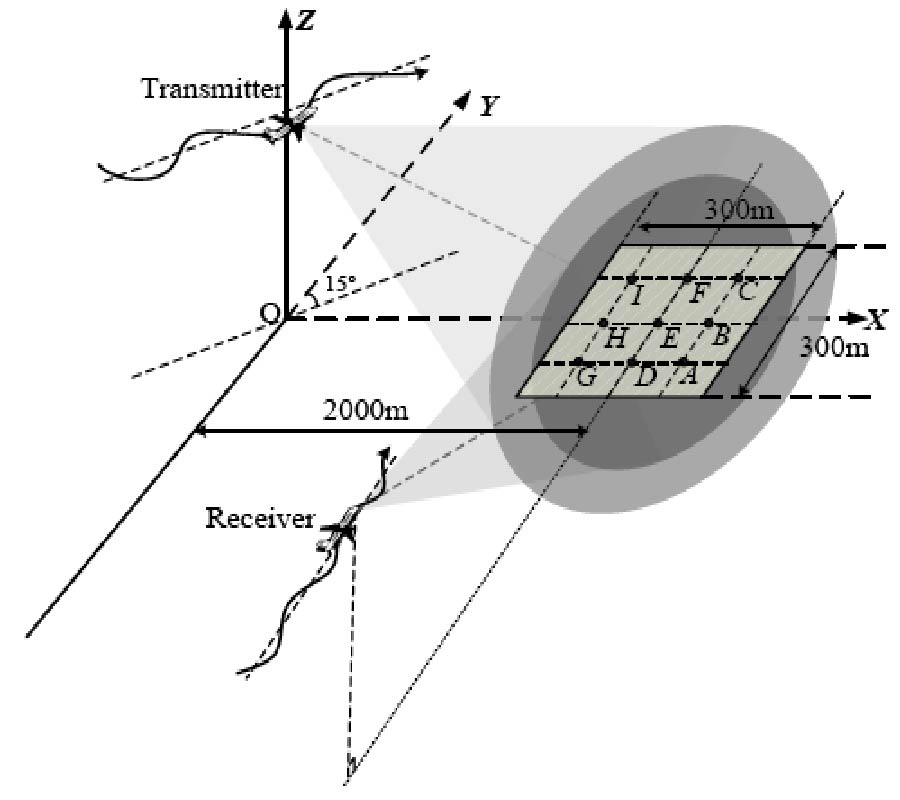
With appropriate geometry configurations, bistatic Synthetic Aperture Radar (SAR) can break through the limitations of monostatic SAR on forward-looking imaging. Thanks to such a capability, bistatic forward-looking SAR (BFSAR) has extensive potential applications. For the focusing problem of BFSAR, wavenumber-domain algorithm is accepted as the ideal solution. However, in practical application, the processing is limited because of its inability to combine the range-dependent motion compensation (MoCo). To cope with such a problem, an extended wavenumber-domain algorithm for BFSAR is derived in this paper. By modifying the reference function and mapping relationship in frequency interpolation, the extended wavenumber-domain algorithm of BFSAR integrates a two-step motion compensation. Simulation results verify the effectiveness of the proposed method.
AN EXTENDED WAVENUMBER-DOMAIN ALGORITHM COMBINED WITH TWO-STEP MOTION COMPENSATION FOR BISTATIC FORWARD-LOOKING SAR
2016-10-31
PIER M
Vol. 51, 147-156
Design and Analysis of Novel Bearingless Permanent Magnet Synchronous Motor for Flywheel Energy Storage System
Huangqiu Zhu and Ronghua Lu
To effectively simplify system structure and improve power density and efficiency, a design for a motor/generator suitable for flywheel energy storage system (FESS) is proposed. The machine is an outer-rotor and coreless-stator-type bearingless permanent magnet synchronous motor (BPMSM) with a Halbach array. Firstly, the operation principle of the outer-rotor BPMSM is described. Then, the structure and performance of the Halbach permanent magnet (PM) array are analyzed. The airgap magnetic field, back-EMF, suspension force, unilateral magnetic pull force and electromagnetic torque are calculated and analyzed by the finite element analysis (FEA). Finally, it is verified that the magnetic field of the suspension force windings increases the rotor eddy current loss by transient FEA coupled with external circuit. The rotor eddy current losses of BPMSM with different structures are compared. The comparison results show that the rotor eddy current loss of the coreless-stator-type BPMSM with Halbach array is the lowest. The simulation results verify the theoretical analysis and structure design, which can provide reference for the application of the motor in the FESS.
DESIGN AND ANALYSIS OF NOVEL BEARINGLESS PERMANENT MAGNET SYNCHRONOUS MOTOR FOR FLYWHEEL ENERGY STORAGE SYSTEM
2016-10-30
PIER B
Vol. 70, 113-130
Analytical Electromagnetic Analysis of Multi-Phases Cage Rotor Induction Motors in Healthy, Broken Bars and Open Phases Conditions
Lazhar Roubache , Kamel Boughrara and Rachid Ibtiouen
This paper presents an analytical calculation of magnetic field and electromagnetic performances of 3-, 5-, 7-, 9-, 11-phases cage rotor induction machines in healthy, broken bars and open phase's conditions. This model is formulated to consider all types of multi-phase/multipoles windings and used for the identification of electrical equivalent circuit (EEC) parameters. It's based on the subdomain model and the resolution of Poisson's, Laplace's, and Helmholtz's equations in each subdomain issued from Maxwell equations using the method of separation of variables and Fourier series when the machines are fed with sinusoidal current and voltage. The developed analytical model permits the calculation of magnetic field distribution, eddy current, circuit model parameters, and unbalanced magnetic radial force due to broken bars, electromagnetic torque and absorbed stator current. A comparative analysis between the studied five multi-phases machines is done with considering identical power rate. The analytical results are validated by those issued from the finite-element method (FEM).
ANALYTICAL ELECTROMAGNETIC ANALYSIS OF MULTI-PHASES CAGE ROTOR INDUCTION MOTORS IN HEALTHY, BROKEN BARS AND OPEN PHASES CONDITIONS
2016-10-30
PIER C
Vol. 69, 53-62
Investigation of Taper Profile in Development of Compact Tapered Slot Microstrip Antennas for X-Band SATCOM Applications
Emrah Ugurlu and Seyfettin Sinan Gultekin
In this paper, four novel wide-band dual tapered slot (DTS) microstrip antennas (MSAs) are proposed for X-Band Satellite Communications (SATCOM) applications. Three of them have stripline feeds between SMA connector and tapering profile, whereas the fourth one omits the stripline feed. Each antenna consists of two microstrip lines on each side of an FR-4 substrate, fed with a coaxial connector from one face. Towards the edges, the distance between conductors is increasing gradually. The aim of this study is to design receiver antennas capable of operating in X-Band Satellite Communications (7250-7750 MHz) range and investigate the effects of tapering profiles on the performance. For this purpose, each antenna is defined in terms of parameters, and the optimum values for all parameters are calculated using High Frequency Structure Simulator (HFSS) software. The antennas are simulated and practically fabricated. Results show good agreement between simulations and measurements. The antennas have impedance bandwidth of 380 MHz centered at 7448 MHz for dual linearly tapering, 540 MHz centered at 7434 MHz for dual circularly tapering, 900 MHz centered at 7555 MHz for dual exponentially tapering, within the aimed Super High Frequency (SHF) range. Also, the designed fourth antenna having dual circularly tapering without the stripline feed has a bandwidth of 1150 MHz centered at 7676 MHz. It is proposed that taper profile affects bandwidth, gain, radiation efficiency, radiation pattern and antenna dimensions.
INVESTIGATION OF TAPER PROFILE IN DEVELOPMENT OF COMPACT TAPERED SLOT MICROSTRIP ANTENNAS FOR X-BAND SATCOM APPLICATIONS
2016-10-30
PIER C
Vol. 69, 37-51
A Novel Design Approach for a 60 GHz Circularly Polarized EBG Antenna
Taieb Elkarkraoui , Nadir Hakem , Gilles Y. Delisle and Yacouba Coulibaly
This article focuses on the development of a high gain, broadband, circularly polarized Electromagnetic Band Gap (EBG) antenna operating at 60 GHz. The designed antenna is configured with a superstrate based on a frequency selective surface (FSS) placed in front of a cross dielectric resonator antenna (XDRA), installed into a ground plane, which acts as an excitation source. A fast Leaky-Wave approach based on transverse equivalent network (TEN) is used to deduce analytical radiation patterns formulas of the proposed antenna. The proposed analytical model was implemented and verified by a comparison with both numerical and experimental results. The reported results showed very satisfactory performances with an achievable impedance bandwidth (S11< -10 dB) of 11.7% from 56 to 63 GHz, an axial-ratio bandwidth (AR<3 dB) of 5.4% from 58.9 to 62.1 GHz and a stable gain of 16.7 dBi within the passband. A good agreement among analytical, numerical and measured results is successfully achieved and falls well within initially set specifications.
A NOVEL DESIGN APPROACH FOR A 60 GHZ CIRCULARLY POLARIZED EBG ANTENNA
2016-10-30
PIER C
Vol. 68, 221-233
Two-Way Modified Wilkinson Power Divider for UWB Applications Using Two Sections of Unequal Electrical Lengths
Shaimaa Abdelaziz Mahmoud Osman , Ayman Mohamed Elsayed El-Tager , Fawzy Ibrahim Abdelghany and Ismael Mohamed Hafez
This paper presents 2-way Power Divider (PD) for Ultra-Wideband (UWB) applications. The proposed power divider is realized using two cascaded sections of Wilkinson Power Divider (WPD) of equal characteristic impedances and unequal electrical lengths with inserted open stub to improve matching, isolation and to broaden the bandwidth. It is proved analytically using the ``Even Odd Mode'' analysis method and the ABCD matrix to obtain exact closed-form design equations. A detailed design methodology is introduced to facilitate the implementation without needing CAD optimization. To verify the proposed design methodology, a 2-way power divider is designed, fabricated on a Rogers RT/Duroid 5880 substrate and compared to other published 2-way microstrip power dividers. Measured data show good agreement with Electromagnetic (EM)-Circuit Co-Simulation, which proves the design equations and methodology. The proposed planar 2-way PD achieves an isolation ≥ 13.5 dB, input return loss ≥10 dB, output return loss ≥14.5 dB and exceeded insertion loss ≤ 0.9 dB (over the -3 dB splitting ratio) through the whole UWB range from 3.1 GHz to 10.6 GHz. Furthermore, it has a compact area of 22 mm × 15 mm, which provides 50% enhancement over similar microstrip PD circuits while achieving better isolation and matching.
TWO-WAY MODIFIED WILKINSON POWER DIVIDER FOR UWB APPLICATIONS USING TWO SECTIONS OF UNEQUAL ELECTRICAL LENGTHS
2016-10-30
PIER Letters
Vol. 63, 79-84
Circular Polarization Fractal Slot by Jerusalem Cross Slot for Wireless Applications
Samaneh Heydari , Payam Jahangiri , Afsaneh Saee Arezoomand and Ferdows B. Zarrabi
In this letter, a new model of antenna with Jerusalem crosses (JC) as fractal slots for circular polarization applications is designed. The proposed slot antenna has a fractal cross formation with four Jerusalem crosses (JC) to achieve wide bandwidth and a compact size as well as circular polarization. A T-shaped feed line is implemented in the proposed antenna for improving the bandwidth while the interaction of the feed line with cross-shaped slots makes circular polarization. The proposed antenna shows bidirectional pattern and bandwidth at 2.42-3.0 GHz with VSWR<2, which can be used in Wi-Fi and Bluetooth applications with a gain of 3.5 dBi. The proposed fractal antenna size is 40×40 mm, and it is designed and fabricated on an FR-4 low-cost substrate with thickness of 1.6 mm. It is simulated by HFSS full wave software. In addition, the experimental results are presented and compared with the simulation for VSWR, radiation pattern and axial ratio.
CIRCULAR POLARIZATION FRACTAL SLOT BY JERUSALEM CROSS SLOT FOR WIRELESS APPLICATIONS