Search Results(13796)

2016-10-02
PIER Letters
Vol. 63, 15-21
Compact Triple-Band Bandstop Filters Using Embedded Capacitors
Ashwani Kumar , Anand Kumar Verma and Qingfeng Zhang
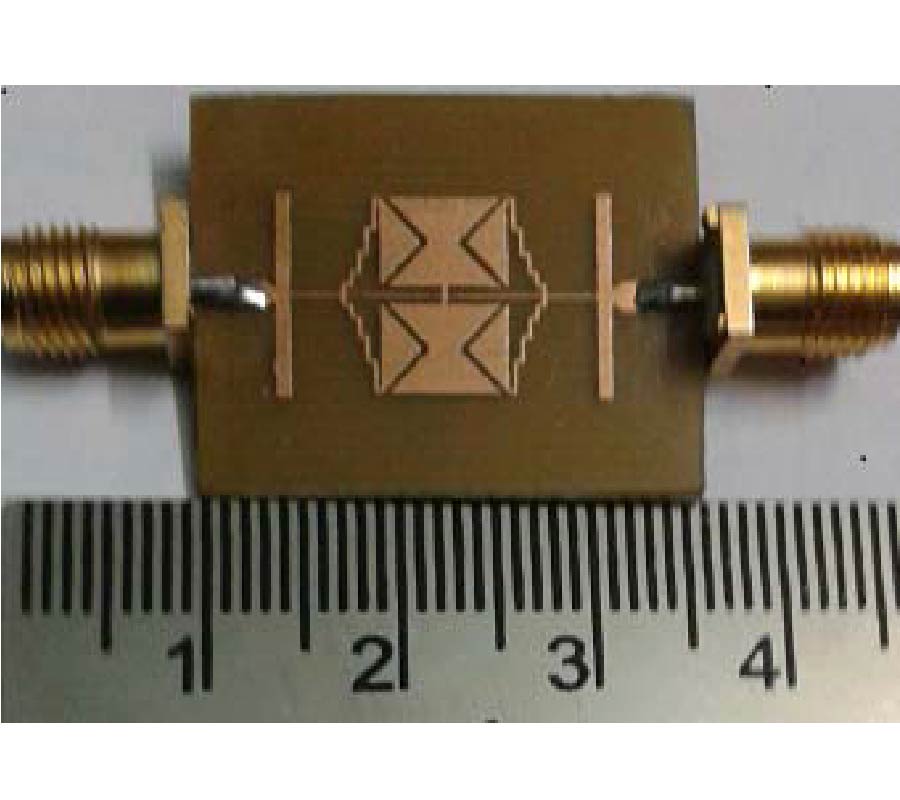
This paper presents a design of a compact triple-band bandstop filter (BSF) using embedded capacitors. The presented BSF is useful to suppress the signal frequencies 2.2 GHz, 5.53 GHz and 4.15 GHz from the WLAN and UWB band with attenuation level 33.5 dB, 27.6 dB and 24.9 dB, respectively. The quality factors of the three bands are 5.21, 31.92 and 79.0, respectively. The simulated and measured results are presented to validate the concept. Such BSFs could find application in modern communication systems to suppress the potential interference of the unwanted frequencies from the WLAN and UWB band.
COMPACT TRIPLE-BAND BANDSTOP FILTERS USING EMBEDDED CAPACITORS
2016-09-30
PIER Letters
Vol. 62, 133-139
Manipulation of One-Dimension Photonic Crystal Spectrum via Perforated Silicon Slab
Borys Chernyshov and Sergey I. Tarapov
This paper is devoted to research of zone-spectra of one-dimension finite-element photonic crystal quartz/silicon in millimeter waveband. It is supposed that holes with dimensions in order of wavelength are fabricated in the silicon slabs. It is shown by the numerical and experimental investigations the possibility of using of effective medium approximation for the silicon element of photonic crystal. The paper introduces the simple phenomenological formula for calculation of effective permittivity of perforated silicon slab.
MANIPULATION OF ONE-DIMENSION PHOTONIC CRYSTAL SPECTRUM VIA PERFORATED SILICON SLAB
2016-09-29
PIER C
Vol. 67, 193-201
Experimental Verification of a Compact Zeroth Order Metamaterial Substrate Integrated Waveguide Antenna
Walaa Wahba , Mahmoud Abdelrahman Abdalla and Abdemegeed Mahmoud M. A. Allam
This paper presents a zeroth order metamaterial substrate integrated waveguide antenna. The antenna is designed to have a compact size based on employing only one composite right/left-handed cell. The antenna resonates at 6.1 GHz with overall radiator size of 14.4 mm × 8 mm2 which represents 50% size reduction compared to conventional microstrip antenna operates at the same frequency. The zeroth order mode of the antenna has been verified using both analytical explanation and full wave simulations. Moreover, the full wave simulations in addition to experimental measurements have been employed to demonstrate the antenna resonance and radiation characteristics.
EXPERIMENTAL VERIFICATION OF A COMPACT ZEROTH ORDER METAMATERIAL SUBSTRATE INTEGRATED WAVEGUIDE ANTENNA
2016-09-29
PIER Letters
Vol. 63, 7-14
A 2-4 GHz Octave Bandwidth GaN HEMT Power Amplifier with High Efficiency
Hao Guo , Chun-Qing Chen , Hao-Quan Wang and Ming-Li Hao
In this paper, a broadband power amplifier with high efficiency and output power based on GaN HEMT is presented. The design of broadband matching network and transistor package modeling is presented, and a simulation strategy is proposed to increase the simulation accuracy. According to measured results, the PA module shows a linear gain of 10~13 dB during 1.9-4 GHz. The efficiency can reach 74.5%, and the maximum output power reaches 33.2 Watt. For a 5-MHz WCDMA signal, the designed power amplifier achieves an average output power above 20 W when ACLR = -30 dBc over the entire working band.
A 2-4 GHZ OCTAVE BANDWIDTH GAN HEMT POWER AMPLIFIER WITH HIGH EFFICIENCY
2016-09-29
PIER Letters
Vol. 63, 1-6
Fast Design Technique for Lumped-Element Multilayered Bandpass Filters
Ke Cao and Chong-Hu Cheng
A fast design technique for lumped-element multilayered bandpass filters is proposed. With this technique, the difference between multilayered component values and theoretical component values can be quickly estimated and tuned. The design procedure for filters can be obviously simplified, and the efficiency can be improved. This technique is discussed in detail, and mathematic explanation is given. An example is used to show the entire design procedure. The measurement result agrees well with the desired result, which shows the effectiveness of proposed technique.
FAST DESIGN TECHNIQUE FOR LUMPED-ELEMENT MULTILAYERED BANDPASS FILTERS
2016-09-29
PIER Letters
Vol. 62, 125-131
Design of a Compact Planar Quasi-Yagi Antenna with Enhanced Gain and Bandwidth Using Metamaterial
Moumita Sarkar , Rhitam Datta , Pujayita Saha and Debasis Mitra
In this paper, a compact planar quasi-Yagi antenna with enhanced radiation characteristics is presented. The proposed structure is designed by incorporating metamaterial unit cells in place of conventional directors. Here, the technique used for directivity improvement is that the refractive index of the metamaterial is lower than that of the antenna substrate, which acts as a regular lens for beam focusing. Loading the quasi-Yagi antenna with metamaterial results in directivity as well as gain enhancement at the end-fire direction as compared to the quasi-Yagi antenna with directors. In addition, reduction in the overall size of the proposed quasi-Yagi antenna by 26.67% is achieved. An enhanced impedance bandwidth has also been noticed. The gain performance of the proposed antenna within the frequency band has been studied.
DESIGN OF A COMPACT PLANAR QUASI-YAGI ANTENNA WITH ENHANCED GAIN AND BANDWIDTH USING METAMATERIAL
2016-09-29
PIER M
Vol. 50, 161-168
Electromagnetic Analysis of Different Geometry of Transmitting Coils for Wireless Power Transmission Applications
Mohammad Haerinia , Ali Mosallanejad and Seyed Ebrahim Afjei
Inductive power transfer is recently a common method for transferring power. This technology is developing as the modern technologies need to get more efficient and updated. The power transfer efficiency has potential to get better. There are different ways to achieve a desirable efficiency. In this paper, a suitable geometry of a coil for transferring power as a transmitting coil is examined. In this work, three types of geometries are designed. Frequency analysis at frequency range (10 kHz-50 kHz) is done to investigate behaviour of various geometries. Magnetic field, electric field, magnetic flux density, and current density for various geometries are presented and compared. Magnetic flux density is measured via an experimental setup and is compared to simulated one to verify the validity of simulation results.
ELECTROMAGNETIC ANALYSIS OF DIFFERENT GEOMETRY OF TRANSMITTING COILS FOR WIRELESS POWER TRANSMISSION APPLICATIONS
2016-09-29
PIER M
Vol. 50, 151-160
Direction-Controllable Electromagnetic Acoustic Transducer for SH Waves in Steel Plate Based on Magnetostriction
Yu Zhang , Songling Huang , Shen Wang and Wei Zhao
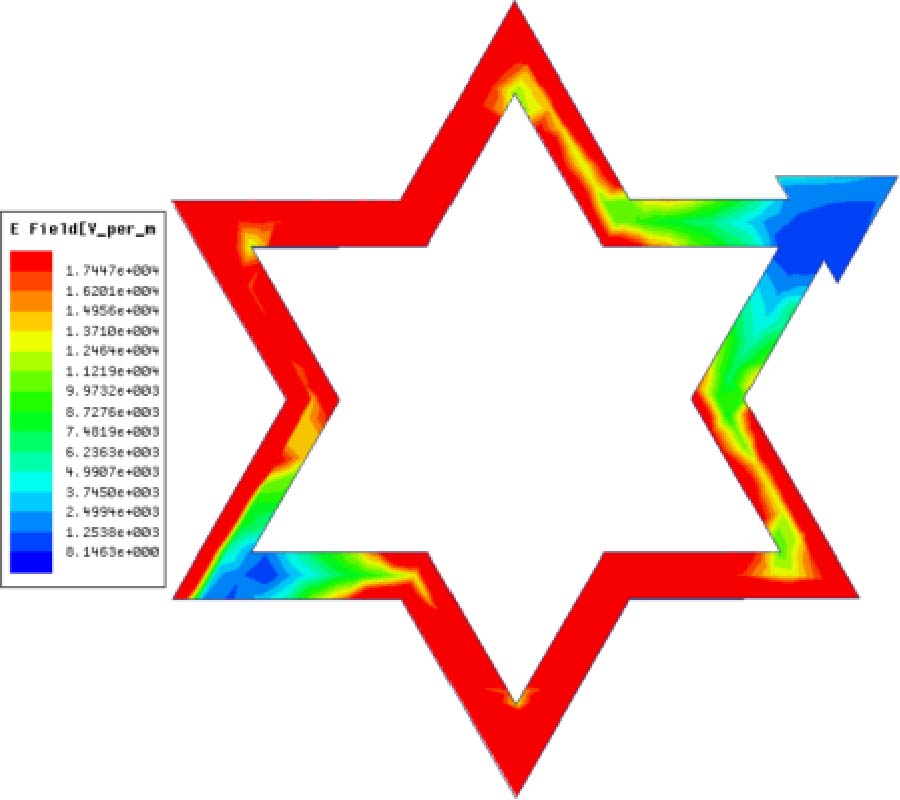
Shear-horizontal (SH) wave is commonly used in monitoring and detecting steel plate structures. Electromagnetic acoustic transducer (EMAT) based on magnetostriction owns higher transducing efficiency and can be applied in non-contact situations. In some practical applications, it is necessary to inspect the structure on a specific direction and the inspecting direction is required to be variable and accurately controllable. This work proposes a novel direction-controllable EMAT for SH0 mode waves based on magnetostriction. Theoretical foundation and analysis on the magnetostriction model of the new EMAT and working parameters determination are conducted. The detailed structure and design of the new EMAT are presented, with the pre-magnetized open annular nickel strap bonded to the steel plate providing the circumferential static bias magnetic field, and the cooperation of embedded conductors in the rotating slider and open metal rings providing the dynamic magnetic field. Besides, the experimental system for the performance verification of the new EMAT is setup. Three indexes, the dead zone angle, focus angle and consistency error are defined to evaluate the performance quantitatively. The dead zone angle of the new EMAT is 28.74°; the focus angle is 10.7°; the consistency error is only 1.4%. Experimental results show that the proposed direction-controllable EMAT is highly directional. The stimulating direction can be accurately controlled, and the circumferential consistency is fairly high. The direction-controllable EMAT can hopefully provide a practical solution for directional monitoring and inspecting for steel plate structures.
DIRECTION-CONTROLLABLE ELECTROMAGNETIC ACOUSTIC TRANSDUCER FOR SH WAVES IN STEEL PLATE BASED ON MAGNETOSTRICTION
2016-09-29
PIER M
Vol. 50, 141-150
Thermal Distribution Based Investigations on Electromagnetic Interactions with the Human Body for Wearable Wireless Devices
Karthik Varshini and Thipparaju Rama Rao
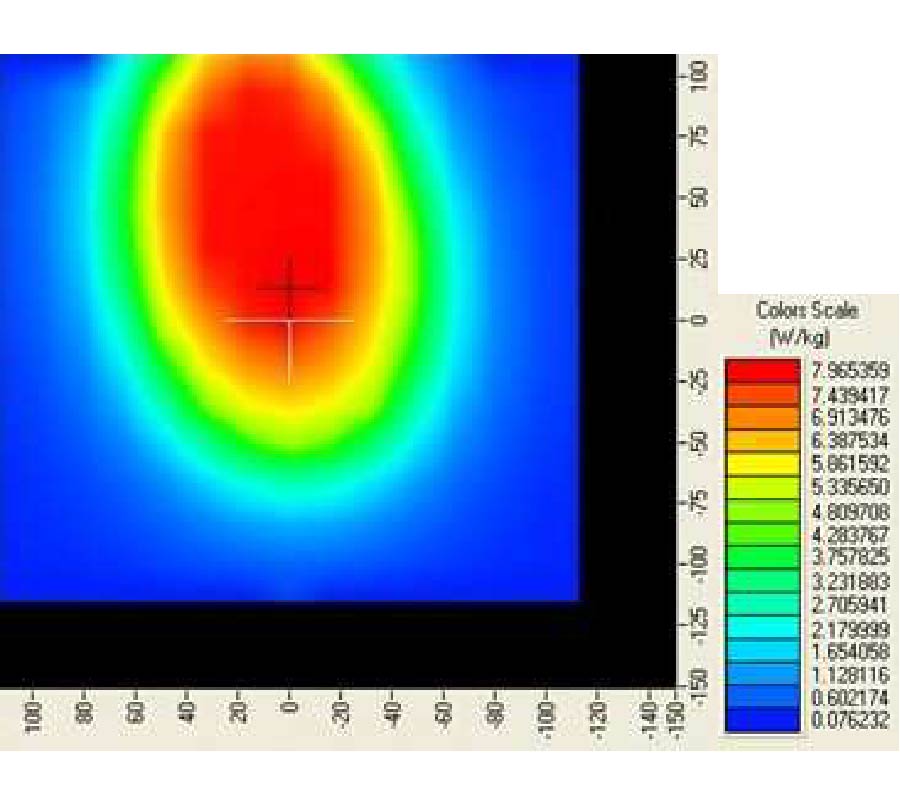
With increasing interest in the usage of wearable wireless communication technologies at 1.8 & 2.4 GHz and 5 & 9 GHz band of frequencies, investigations on the human body interaction with these devices are becoming important. This paper provides a microstrip-based multi-band monopole antenna for body Wearable Wireless Devices (WWD), covering licensed and license-free wireless technologies at UHF/UWB when placed on human body. Five parts of the body were considered to evaluate the electromagnetic (EM) effects on the body. Specific Absorption Rate (SAR) values were found to range from 0.09-0.25 W/kg by using numerical modelling. The thermal effects were investigated experimentally using infrared thermography, and temperature changes not exceeding 1˚C were noticed. Analyses of numerical, simulated and experimental results show that infrared thermography, a temperature-based technique, can be used to evaluate the compliance of WWDs with safety exposure limits for various wireless applications.
THERMAL DISTRIBUTION BASED INVESTIGATIONS ON ELECTROMAGNETIC INTERACTIONS WITH THE HUMAN BODY FOR WEARABLE WIRELESS DEVICES
2016-09-27
PIER C
Vol. 67, 185-192
An Improved Broadband SIW Phase Shifter with Embedded Air Strips
Hao Peng , Xinlin Xia , Serioja Ovidiu Tatu and Tao Yang
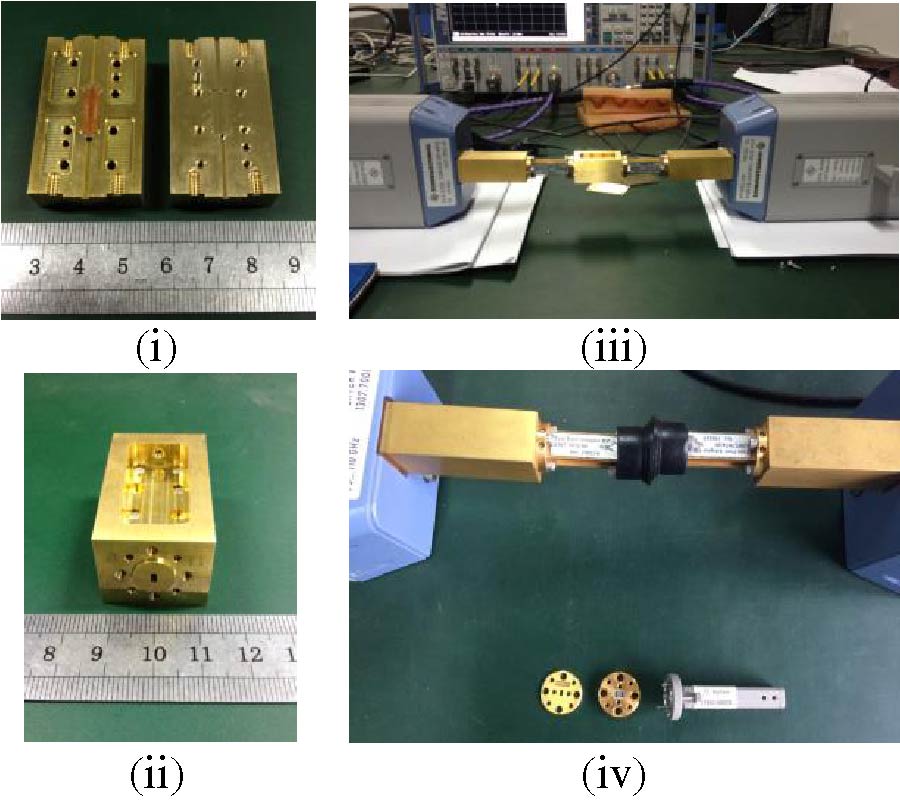
In this paper, an improved broadband substrate integrated waveguide (SIW) phase shifter with embedded air strips is presented. Phase shifter can be generated based on the variable widths of SIW, variable lengths of microstrip line and a row of embedded air strips. The simulated and measured results both show that this kind of SIW phase shifter has excellent performance for a wider bandwidth. Measured results indicate that the proposed SIW phase shifters for the 45° and 90° versions have achieved the fractional bandwidths of 59.6% from 10.2 to 18.85 GHz with the accuracy of 2.5°, and of 62.3% from 9.5 to 18.1 GHz with the accuracy of 5°, respectively. The return losses are better than 15.8 dB and 14.5 dB for 45° and 90° modules, respectively. In addition, the insertion losses are both found to be better than 1.6 dB in the considered band.
AN IMPROVED BROADBAND SIW PHASE SHIFTER WITH EMBEDDED AIR STRIPS
2016-09-27
PIER C
Vol. 67, 173-184
A New Method of Driving Wire Dipole Antennas to Multiband Operation via Non-Uniform EBG Lattices for Employment to Wireless Communication Applications
Christos Mourtzios and Katherine Siakavara
In this paper, a novel approach is attained to the design of low profile antenna structures with wire dipoles and multiband operation. The aim is achieved by utilization of non-uniform Electromagnetic Band Gap (EBG) lattices as reflectors, and this potential comes to be added to the total of special capabilities of this type of Artificial Magnetic Conductors (AMC). It is proved that a properly designed EBG of this type can resonate at more than one frequency and is capable to drive, inside these bands, the dipole to higher order modes of operation besides its basic one. The resulting hybrid radiator apart from its multiband operation exhibits high gain that reaches the value of 9.6 dB, satisfactory Mean Effective Gain (MEG) and very low correlation coefficients, much less than 0.1, between the signals at the input of the dipoles in the case that the radiator is configured as an antenna array. The study of these quantities was performed using the signal parameters of a real mobile communication environment along with the hybrid antenna properties of operation. The presented analytical results show that the designed radiators are competitive to the classical microstrip ones and can be effectively used in modern wireless communication networks, incorporated either into stationary or into mobile units.
A NEW METHOD OF DRIVING WIRE DIPOLE ANTENNAS TO  MULTIBAND OPERATION VIA NON-UNIFORM EBG LATTICES FOR EMPLOYMENT TO WIRELESS COMMUNICATION APPLICATIONS
2016-09-27
PIER Letters
Vol. 62, 117-123
Design of Miniaturized and Ultrathin Absorptive/Transmissive Radome Based on Interdigital Square Loops
Bo Yi , Liang Yang and Peiguo Liu
This paper designs a miniaturized and ultrathin absorptive/transmissive radome based on interdigital square loops. The thickness of designed radome is only 4.5 mm. The period of the radome is 10 mm, which is λ/17.5 (λ corresponding to the wavelength of center frequency of passband). In order to verify the transmission and reflection properties, a prototype is fabricated. Its effectiveness is verified by both synthetic experiments and measurements in the anechoic chamber. Furthermore, the oblique incidents are also evaluated for both the transmission coefficients and reflection coefficients.
DESIGN OF MINIATURIZED AND ULTRATHIN ABSORPTIVE/TRANSMISSIVE RADOME BASED ON INTERDIGITAL SQUARE LOOPS
2016-09-27
PIER M
Vol. 50, 129-140
A New MIMO Channel Model Incorporating Antenna Effects
Qiuming Zhu , Cuiwei Xue , Xiaomin Chen and Ying Yang
Antenna characteristics including mutual coupling and polarization/depolarization have great effects on the performance of Multiple-input multiple-output (MIMO) system. In this paper, new close-form expressions of signal vector, signal power and signal correlation incorporating mutual coupling and polarization/depolarization are derived firstly. On this basis, we presents a new MIMO channel model, which takes into account antenna effects such as mutual coupling and antenna polarization, as well as propagation effects like scattering, clustering and channel depolarization. In particular, the detailed expressions of a 2×2 MIMO channel considering mutual coupling and polarization configurations of slanted ±45° and V/H are derived. Finally, these expressions are applied on the propagation scene of suburban macro cellular to analyze the channel correlation and capacity, which is very helpful in designing and optimizing a MIMO system.
A NEW MIMO CHANNEL MODEL INCORPORATING ANTENNA EFFECTS
2016-09-26
PIER B
Vol. 70, 13-26
Hierarchical Layer-Multiple-Scattering Theory for Metamaterials of Clusters of Nonspherical Particles
Vassilios Yannopapas
We present a hierarchical layer-multiple-scattering method of electromagnetic waves for the study of photonic structures consisting of many-scatterers per unit cell (clusters of scatterers) where the scatterers are in general non-spherical and/or anisotropic or inhomogeneous. Our approach is a two-stage process where we take into account all the multiple-scattering events involved: (a) among the scatterers of the cluster comprising the unit cell of the structure, and (b) among the clusters within the structure. As text cases, we model the optical properties of plasmonic metamaterials made from clusters of gold nanocubes.
HIERARCHICAL LAYER-MULTIPLE-SCATTERING THEORY FOR METAMATERIALS OF CLUSTERS OF NONSPHERICAL PARTICLES
2016-09-26
PIER B
Vol. 69, 137-155
Performance Improvement of Patch Antenna Using Circular Split Ring Resonators and Thin Wires Employing Metamaterials Lens
Adel A. A. Abdelrehim and Hooshang Ghafouri-Shiraz
In this paper, the left-handed metamaterial which acts as a lens is employed to improve the performance of a microstrip patch antenna. The left-handed metamaterial used in this work is a three-dimensional periodic structure which consists of circular split ring resonators and thin wires. The metamaterials three dimensional periodic structure shows angular independency characteristics in wide range angles, so it acts as a metamaterial lens. However, the MTM structure infinite periodicity truncation has no impacts on the MTM lens scattering, effective parameters and homogeneity. The left-handed metamaterial is placed in front of the microstrip patch antenna and due to the negative refractive index property of the left-handed metamaterial; the radiated electromagnetic beam size decreases which results in a highly focused beam. The proposed antenna has been designed and simulated using CST microwave studio, and the metamaterial effective parameters are extracted from the S parameters by using Nicolson-Ross-Weir algorithm and by selecting the appropriate ambiguity branch parameter. Furthermore, the angular independency of the metamaterial lens has been verified by rotating the metamaterial structure with respect to the excitation probe of the transverse electromagnetic waves and extracting the S-parameters and the effective parameters for each rotation angle. A parametric analysis has been performed to study the effects of the patch antenna and left-handed metamaterial lens separation and the size of the three dimensional left-handed metamaterial structure on the radiating properties and the impedance matching of the proposed antenna. For the experimental verification, the proposed antenna operating at 10 GHz is fabricated; the return loss, radiation pattern and gain for the proposed antenna with and without metamaterial are measured. Furthermore, the results show that the antenna gain is improved by 4.6 dB which validates the concept of beam focusing using negative refractive index metamaterial structure, while the return loss and bandwidth are slightly reduced. The simulation and experiment investigated the idea of the beam focusing using negative refractive index metamaterial lens in microwave regime.
PERFORMANCE IMPROVEMENT OF PATCH ANTENNA USING CIRCULAR SPLIT RING RESONATORS AND THIN WIRES EMPLOYING METAMATERIALS LENS
2016-09-26
PIER Letters
Vol. 62, 111-116
A Wideband Horizontally Polarized Omnidirectional Antenna with Coupling Lines
Shilei Zhang and Ming Ye
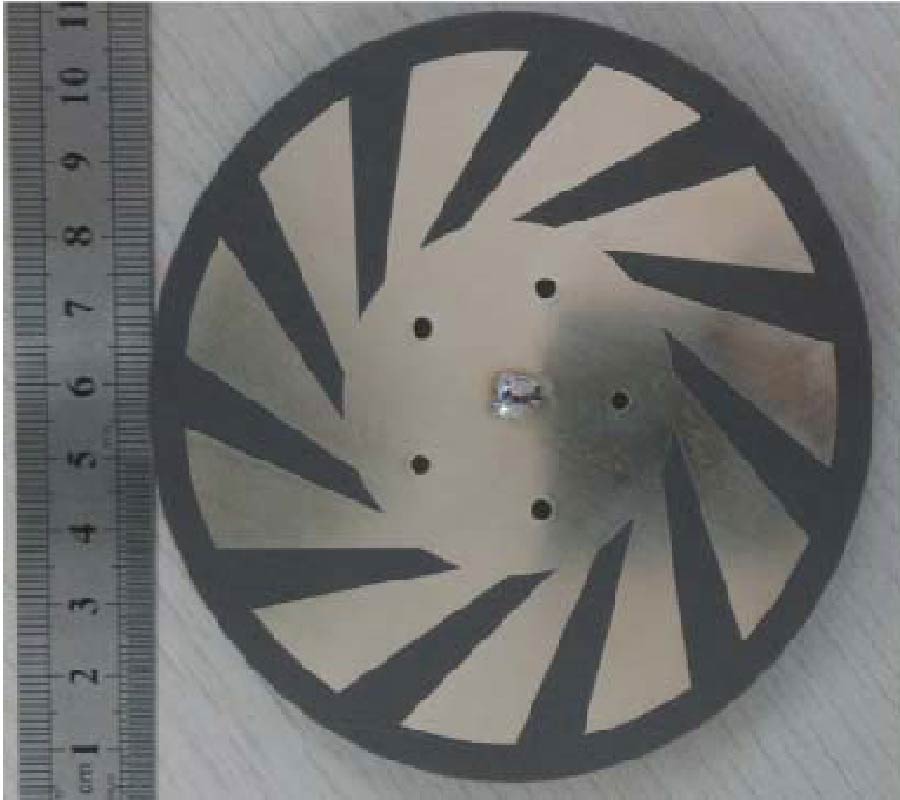
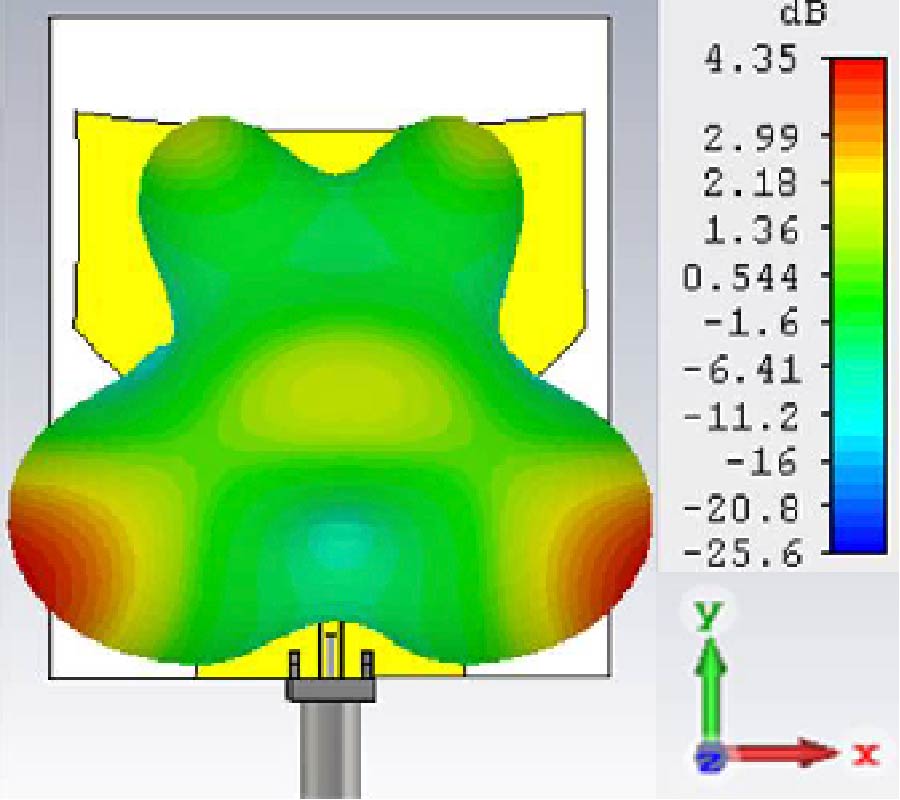
A novel wideband horizontally polarized omnidirectional (HPO) antenna with coupling lines is proposed for indoor wireless base station applications. It consists of four microstrip dipoles, a tune disk with four square-shaped perturbations and four pairs of tapered parallel transmission lines. Each right arm of the microstrip dipole has been engraved with a coupling line. The measured 10 dB return loss (RL) relative bandwidth is 51% (1.6-2.72 GHz). In horizontally plane, the proposed antenna has an omnidirectional radiation pattern and anaverage gain of 2.4 dBi.
A WIDEBAND HORIZONTALLY POLARIZED OMNIDIRECTIONAL ANTENNA WITH COUPLING LINES
2016-09-26
PIER Letters
Vol. 62, 105-110
Wideband Frequency Selective Surface with a Sharp Band Edge Based on Mushroom-Like Cavity
Tao Zhong , Hou Zhang , Xue-Liang Min , Qiang Chen and Guo-Cheng Wu
A wideband frequency selective surface (FSS) with a sharp band edge is proposed. The periodic cell includes a mushroom-like cavity and four L-type slots etched on the top and bottom conductor claddings of the cavity. The measured results show that the proposed FSS operates at X band with a 12.5% bandwidth (7.85-8.90 GHz), in which the insertion loss is less than 3 dB. Comparing with the FSSs based on substrate integrated waveguide cavity, the proposed FSS not only realizes high selectivity, but also realizes a 55.8% reduction in cell size.
WIDEBAND FREQUENCY SELECTIVE SURFACE WITH A SHARP BAND EDGE BASED ON MUSHROOM-LIKE CAVITY
2016-09-25
PIER C
Vol. 67, 165-172
Defected Ground Magneto-Electric Dipole with Trivial Back Radiation
Idayachandran Govindanarayanan and Nakkeeran Rangaswamy
A magneto-electric dipole antenna with high front to back ratio (FBR) for femtocell base station is proposed. By using circular defects in the ground plane, the back radiation of the antenna is reduced. The prototype antenna achieves high FBR without affecting the bandwidth and gain. At S11 = -10 dB, the simulated and measured impedance bandwidths of the proposed antenna are 58.06% (1.54-2.8 GHz) and 60.9% (1.55-2.91 GHz), respectively. The measured FBR value ranges from 21 to 29 dB. Stable unidirectional radiation pattern at both planes and average gain of 7 dBi are also obtained.
DEFECTED GROUND MAGNETO-ELECTRIC DIPOLE WITH TRIVIAL BACK RADIATION
2016-09-24
PIER C
Vol. 67, 153-164
Compact High Isolation Meandered-Line PIFA Antenna for LTE (Band-Class-13) Handset Applications
Ahmed A. Naser Ogaili , Khalil Hassan Sayidmarie and Jabir S. Aziz
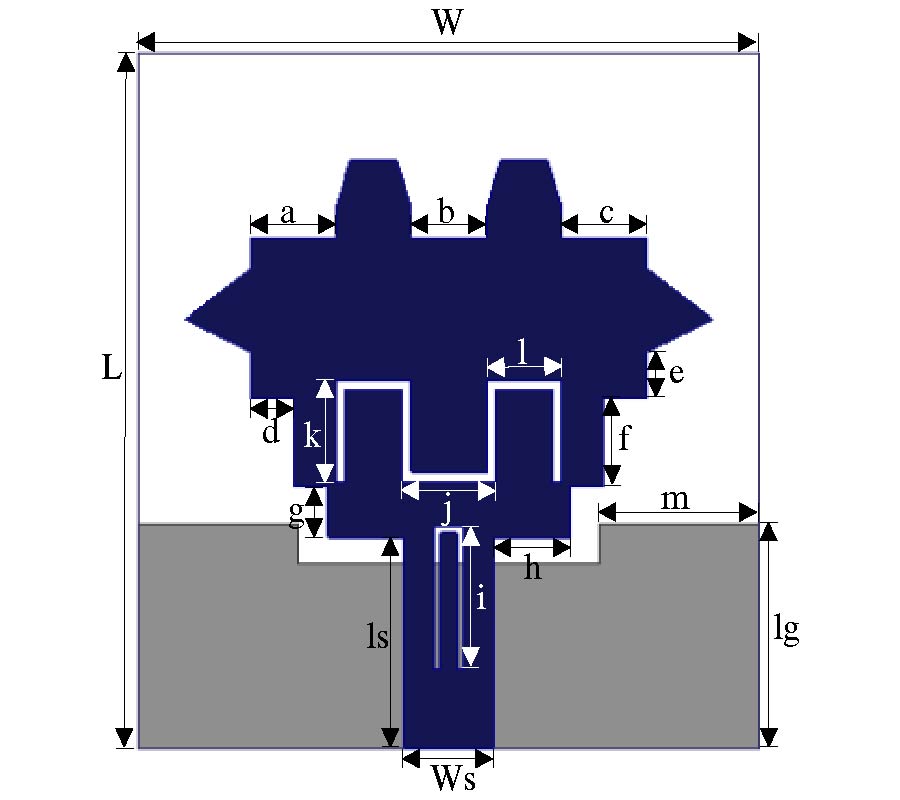
MIMO systems have become an essential part in many communications networks and Long Term Evolution (4G) mobile communication systems. Mobile handsets using lower band of LTE (LTE-700 band) require antennas of reduced size that can be adapted to the limited space in the handset. This paper presents the design, optimization and implementation of two meandered-line PIFA antennas working as an MIMO system with high isolation for LTE-700 band mobile applications. To solve the problem of mutual coupling, a combination of decoupling arrangements was used to improve the isolation between the two antennas. The influences of various design parameters are investigated using the CST Microwave Studio Suite. A prototype of the proposed Meandered-line PIFA Antenna was fabricated and tested using vector network analyzer. Good agreement was found between the simulated and measured results. The fabricated MIMO antenna shows an isolation better than 12 dB and a -6 dB bandwidth of (75 MHz) in the frequency range from (720 MHz) to (795MHz). The antenna has 1.94 dB gain, total efficiency of 85%, and volume of 110 x 65 x 1.6 mm3, that is (0.275 x 0.1625 x 0.004) in wavelengths.
COMPACT HIGH ISOLATION MEANDERED-LINE PIFA ANTENNA FOR LTE (BAND-CLASS-13) HANDSET APPLICATIONS
2016-09-23
PIER M
Vol. 50, 117-128
Comparative Analysis of Electromagnetic Field Exposure Levels and Determination of the Minimum Safe Distances from Mobile-Phone Base Stations in Urban Areas
Enver Hamiti , Mimoza Ibrani , Luan Ahma , Vlerar Shala and Rreze Halili
Theoretical, software-computed and experimental evaluations of the exposure levels to electromagnetic fields generated by GSM 900, GSM 1800 and 3G base stations in urban areas, including determination of the minimum safe distances for population and occupational exposure, are presented. Using the software package SPECTRAemc with the P.1546 propagation wave model and a topographic digital map, the electromagnetic field levels were assessed considering the height of the receiving antenna to be at the height of human. At a few locations in the direction of maximum radiation intensity, in situ measurements of the electric field strength were performed. The base station power densities measured at a few exposure sites were in the range of 0.11 (μW/cm2) to 6.73 (μW/cm2). The results of Kosovo experimental survey are compared with surveys done in 21 countries in five continents. The power density values obtained in Kosovo are higher, but many times below the safety standard limits.
COMPARATIVE ANALYSIS OF ELECTROMAGNETIC FIELD EXPOSURE LEVELS AND DETERMINATION OF THE MINIMUM SAFE DISTANCES FROM MOBILE-PHONE BASE STATIONS IN URBAN AREAS