Search Results(13796)

2016-09-15
PIER Letters
Vol. 62, 71-75
CPW-Fed Dual-Band MIMO Antenna with Common Radiating Element
Nan Zhao and Wen-Peng Tian
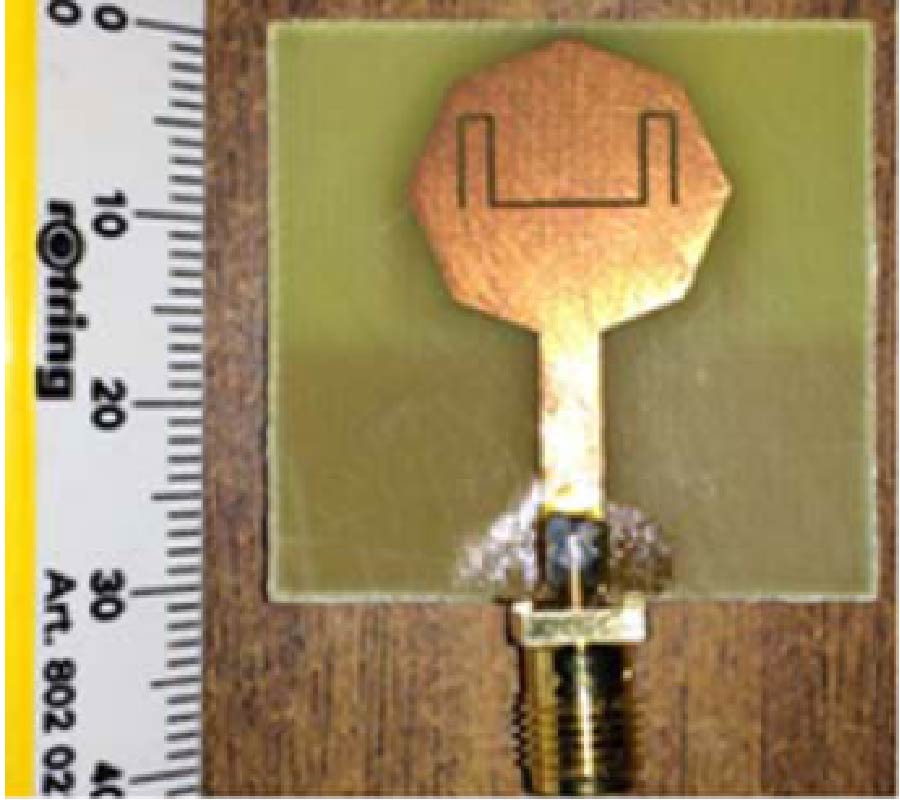
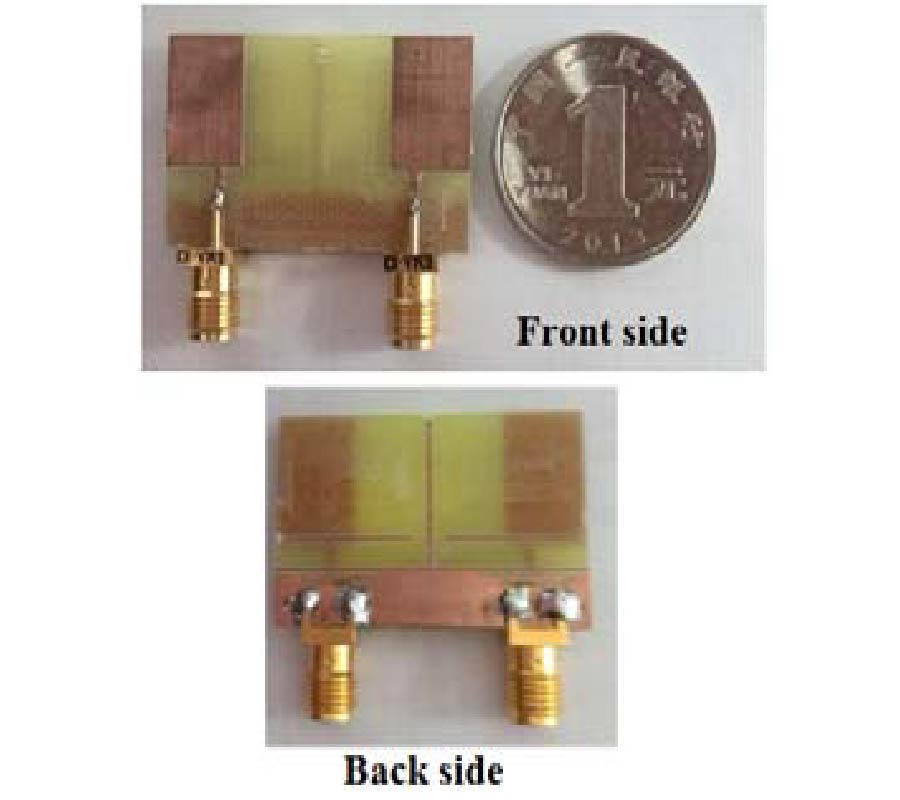
A novel CPW-fed dual-band multiple-input multiple-output (MIMO) antenna with a common radiating element for WiMax/3.5G and WLAN/5.8G is proposed in this paper. The proposed MIMO antenna which has dimensions of 30 mm×30 mm×1.6 mm consists of an irregular ring-shaped ground plane and a shared radiating element. Furthermore, this MIMO antenna has a good performance in the port isolation by using a T-shaped structure and four slots on the ground. The measured bandwidths of the designed MIMO antenna are 3.32-3.74 GHz and 5.45-6.05 GHz. In the meantime, the measured isolation of the MIMO antenna is higher than 20 dB in both bands.
CPW-FED DUAL-BAND MIMO ANTENNA WITH COMMON RADIATING ELEMENT
2016-09-14
PIER B
Vol. 69, 103-116
Utilization of Riemann-Silberstein Vectors in Electromagnetics
Igor V. Belkovich and Boris L. Kogan
Electromagnetic field modal expansion is traditionally an effective technique for solving Maxwell's Equations for numerous high-frequency engineering problems. In this paper, an alternative form of electromagnetic field representation is described. It is based on the Riemann-Silberstein vectors, which are a linear combination of the electric and magnetic field vectors. Utilizing such combination in homogeneous space, Maxwell's Equations are converted into a system of two independent equations. Under these circumstances, each vector describes the total electromagnetic field of an ideal circular polarization. Electromagnetic fields are simply expressed in the form of the Riemann-Silberstein vectors using the helical coordinate system and special functions, which form a set of generalized spherical harmonics. The new representation of vector spherical harmonics differs in simplicity and symmetry while having a more physically apparent expression. The amount of computational work is reduced due to the initial independence of the Riemann-Silberstein vectors. The purpose of this paper is to show the efficiency of a new approach that is based on Riemann-Silberstein vector field representation and spherical wave expansion.
UTILIZATION OF RIEMANN-SILBERSTEIN VECTORS IN ELECTROMAGNETICS
2016-09-14
PIER B
Vol. 69, 87-101
Analytical Investigation into the S-Parameters of Metamaterial Layers
Mohsen Kalantari Meybodi and Kian Paran
Making use of mode matching method, a theoretical analysis of a metamaterial layer is presented. The unit cell of the structure is modeled by a TEM waveguide, and the metamaterial element is supposed as a discontinuity in the waveguide. Analyzing the structure using this model, mathematical relations between s-parameters of a metasurface are extracted. It is evident that the variation of each s-parameter is limited to an arc of circle on Smith chart. The key factors determining the location of each circle on plane are specified. Moreover, a discussion on the role of metasurface element in the determination of s-parameters of the structure is given. The variations of scattering transfer parameters on the plane are determined, too. The steps needed to derive these relations are described. Using these relations, simple and straightforward formulas are devised which can be used to predict the response of the metasurface. Finally, some metasurfaces will be analyzed by full-wave method. The new relations are well-agreed with simulation results.
ANALYTICAL INVESTIGATION INTO THE S-PARAMETERS OF METAMATERIAL LAYERS
2016-09-14
PIER M
Vol. 50, 47-54
A Hybrid Method to Accelerate the Calculation of Two-Dimensional Monostatic Radar Cross Section on PEC Targets
Chao Fei , Xinlei Chen , Yang Zhang , Zhuo Li and Chang Qing Gu
This paper proposes a hybrid method to accelerate the calculation of the monostatic radar cross section (RCS) of perfect electric conducting (PEC) targets. In a sense, the proposed method can be considered as a fast adaptive cross approximation (FACA)-based method. The FACA is firstly used to compress the excitation matrix which come from the beforehand defined incident plane waves. It decreases the time and memory on the generation of decomposition form matrices throughout the comparison with the conventional adaptive cross approximation (ACA). Furthermore, the computational complexity of solution is further reduced by using the sparsified ACA (SPACA) algorithm after dividing the target into blocks. Consequently, the proposed method turns out to be efficient and accurate for calculating two-dimensional (2D) monostatic RCS.
A HYBRID METHOD TO ACCELERATE THE CALCULATION OF TWO-DIMENSIONAL MONOSTATIC RADAR CROSS SECTION ON PEC TARGETS
2016-09-14
PIER M
Vol. 50, 33-46
Performance Evaluation of Micro Rain Radar Over Sumatra through Comparison with Disdrometer and Wind Profiler
Marzuki Marzuki , Hiroyuki Hashiguchi , Toyoshi Shimomai , Indah Rahayu , Mutya Vonnisa and Afdal
Micro Rain Radar (MRR) is a vertical pointing microwave profiler to measure hydrometeors and related parameters in high resolution. However, it is known that the MRR suffers from certain limitations due to several factors. This paper evaluates the performance of the MRR installed at Kototabang, west Sumatra, Indonesia (0.20˚S, 100.32˚E, 864 m above sea level). The DSD and rainfall rate from the MRR standard processing method had been evaluated by using collocated measurements of MRR, Parsivel disdrometer and Optical Rain Gauge (ORG) during 2014. Furthermore, 1.3 GHz wind profiler (BLR) observation was used to examine the vertical profiles of radar reflectivity and Doppler velocity. It was found that there were noticeable differences between the MRR and Parsivel in the small and large size ends of the DSD. At small sized drop (< 1 mm), the DSD spectra of MRR was higher than that obtained by the Parsivel otherwise it was smaller for large sized drop (> 2 mm). Underestimation of large sized drops in the MRR could be responsible for the underestimation of surface rainfall rate and daily rainfall. The source of differences in the DSD seems the measurement shortcomings such as attenuation correction and vertical wind effects, particularly during heavy rain. The shortcomings were observed from the comparison of mean Doppler velocity profiles between the MRR and the BLR. While the melting layer height of the two instruments was the same, the mean Doppler velocities of MRR shown downward increasing (DI) pattern through all rainfall intensities. On the other hand, for the BLR, the DI was only observed for heavy rain (> 10 mm/h), while downward decreasing was observed for light rain (< 5 mm/h). Similar pattern was also observed for the vertical profile of radar reflectivity. Thus, some corrections are needed for heavy rain, nevertheless, the MRR installed at Kototabang can be utilized for light rain. Comparisons indicated that the mean Doppler velocity and the DSD for the light rain as well as Z-R relation were in reasonable agreement with the reference of BLR, Parsivel and previous studies using the MRR.
PERFORMANCE EVALUATION OF MICRO RAIN RADAR OVER SUMATRA THROUGH COMPARISON WITH DISDROMETER AND WIND PROFILER
2016-09-13
PIER C
Vol. 67, 59-69
A Novel Tunable Dual-Band Bandstop Filter (DBBSF) Using BST Capacitors and Tuning Diode
Hassan Aldeeb and Thottam S. Kalkur
A novel approach to design Tunable Dual Band Band-Stop filters will be presented in this paper. These filters have a new configuration which have a coplanar microstrip line loaded with Stepped-Impedance Resonators (SIRs). These can be tuned by using tuning elements such as a tuning diode and ferroelectric capacitor. The Dual-Band Band-Stop Filter (DBBSF) and Band-Pass Filter (DBBPF) have become the most attractive circuit components in modern communication devices. Several studies have been done in this area but without tuning. Tuning is important in these circuits because the same circuit could be used in multiple band frequencies by applying a voltage, without needing to design new circuits. Thus, this approach leads the circuits to become smaller, increases the efficiency of the circuits, and reduces the costs. The filters were designed with notch frequencies at 1.5 GHz and 3.5 GHz, and then loaded respectively with Tuning Diode or BST capacitors, to compare their performance. The filter circuits were simulated with an Agilent ADS and Matlab program and were fabricated on FR-4 substrates. By loading the resonators with BST capacitors or tuning diodes, with no DC applied voltage, the first and second notch frequency shifts significantly. The application of DC bias to these varactors changes the center frequencies of the dual band filter.
A NOVEL TUNABLE DUAL-BAND BANDSTOP FILTER (DBBSF) USING BST CAPACITORS AND TUNING DIODE
2016-09-13
PIER Letters
Vol. 62, 65-70
Synthesis of Dual Beam Pattern of Planar Array Antenna in a Range of Azimuth Plane Using Evolutionary Algorithm
Debasis Mandal , Jyotirmay Tewary , Kalyan Sundar Kola and Ved Prakash Roy
In this paper a pattern synthesis method based on Differential Evolution Algorithm (DE) is presented to generate dual beam patterns from a planar array of isotropic antennas. These are cosec2 pattern and pencil beam pattern. These patterns are obtained by finding out an optimum set of common elements amplitude (for cosec2 pattern as well as a pencil beam pattern), and a set of phases, for cosec2 pattern only. 4-bit discrete amplitudes and 5-bit discrete phases are used to reduce the design complexity of feed network. The beam patterns have been generated in two different azimuth planes instead of one particular plane. The evaluated excitations are also verified by considering a range of arbitrarily chosen azimuth planes, where the patterns are generated with some minor variations of the desired parameters. Obtained results clearly established the effectiveness of the proposed method.
SYNTHESIS OF DUAL BEAM PATTERN OF PLANAR ARRAY ANTENNA IN A RANGE OF AZIMUTH PLANE USING EVOLUTIONARY ALGORITHM
2016-09-12
PIER B
Vol. 69, 75-86
Variation in Phase Shift of Multi-Circuits HVTLs Phase Conductor Arrangements on the Induced Voltage on Buried Pipeline: A Theoretical Study
Akinlolu A. Ponnle , Kazeem Bolade Adedeji , Bolanle Tolulope Abe and Adisa A. Jimoh
Alternating current interference from power transmission lines on nearby metallic pipelines has been a topic of research in the past years. Of particular interest is the induced voltage on metallic pipelines due to the time varying electromagnetic fields coupling from the transmission lines. Several related studies dealing with this problem have been published. Nevertheless, the issue of current phase shift variation and its effect on the voltage induced on metallic pipelines has not been fully covered yet. In view of this, we present the computation of the induced open circuit voltage on a buried metallic pipeline running in parallel with the power transmission lines in three Rand Water sites, South Africa. The computation was performed using Carson's relations and power system concepts of mutual impedances between two circuits. The variation in current phase shift was considered for six different phase conductor arrangements. The overall simulation results yield useful information. The computations show that the induced open circuit voltage changes significantly with different phase arrangements and with variations in the current phase shift between the two circuits. In this work, the characteristic nature of the variation in the induced open circuit voltage for the six phase arrangements and phase shifts are examined in more detail. We concluded that in placing buried pipelines in the vicinity of AC double-circuits power lines, it is essential to consider the phase arrangement of the line and current phase shift between the two circuits. These, together with other line parameters, are vital in evaluating the induced voltage with the pipe position before installation and for the design of effective AC mitigation techniques.
VARIATION IN PHASE SHIFT OF MULTI-CIRCUITS HVTLS PHASE CONDUCTOR ARRANGEMENTS ON THE INDUCED VOLTAGE ON BURIED PIPELINE: A THEORETICAL STUDY
2016-09-12
PIER Letters
Vol. 62, 57-64
Studying the Influence of the Number Vanishing Moments of Daubechies Wavelets for the Analysis of Microstrip Lines
Mohamed Bayjja , Mohamed Boussouis and Naima Amar Touhami
Using Daubechies wavelet with one, two, three, and four vanishing moments, basis functions for the efficient solution of electromagnetic integral equations are studied. Due to the vanishing moments, the moment matrices resulting in these problems are sparsified by wavelet, and consequently, the solution can be obtained rapidly. The microstrip line is examined in order to demonstrate the advantages of this suggested wavelet-moments method over the traditional moment method. To demonstrate the effectiveness and accuracy of the proposed technique, numerical results for error relative for different vanishing moments of Daubechies wavelets are presented. It is found that Daubechies wavelets with larger number of vanishing moments generally give higher accuracy.
STUDYING THE INFLUENCE OF THE NUMBER VANISHING MOMENTS OF DAUBECHIES WAVELETS FOR THE ANALYSIS OF MICROSTRIP LINES
2016-09-12
PIER M
Vol. 50, 23-31
Design of Polarization-Insensitive Dual Band Metamaterial Absorber
Sekar Ramya and Inabathini Srinivasa Rao
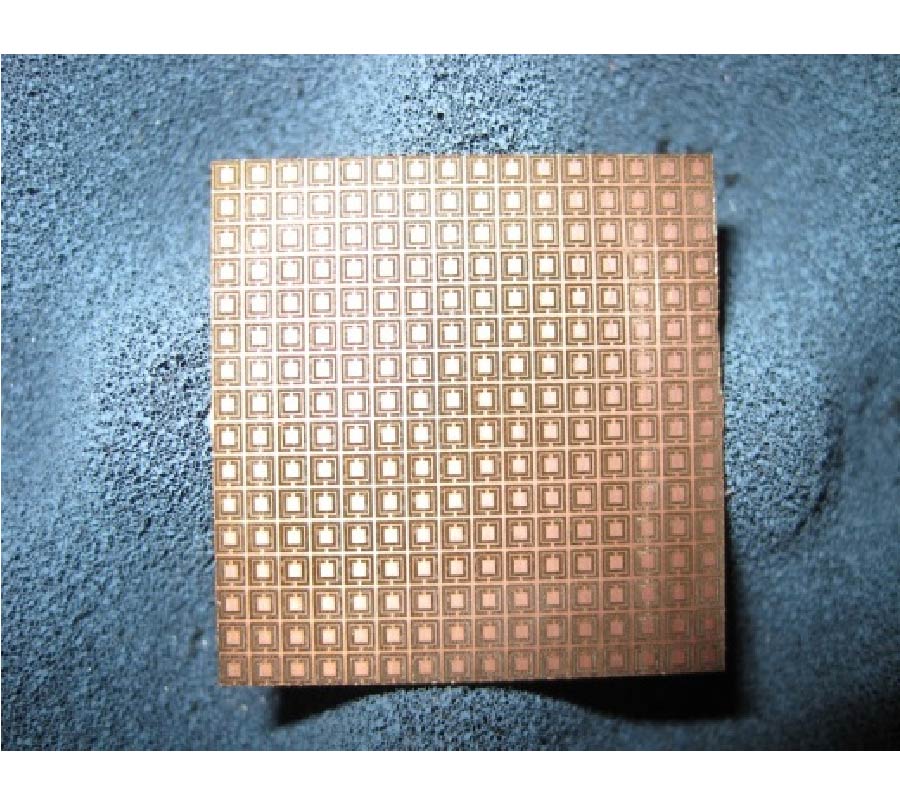
A new design has been proposed for a single layer polarization-insensitive dual-band metamaterial absorber at C and X bands. The proposed structure consists of a periodic arrangement of a circular resonator embedded in a square resonator. A commercially available FR4 dielectric has been used as a substrate with metallic grounded bottom and imprints on the other side. This structure resonates at 5.5 GHz and 8.9 GHz with absorptivity of 99.8% and 99.97%, respectively. It exhibits polarization-insensitive behaviour for Transverse Electric and Transverse Magnetic polarization under oblique and normal angles of incidence. The field distributions have been studied for better understanding of the absorption mechanism. The fabricated structure has been tested, and the experimental results are similar to the simulated ones. This polarization-insensitive metamaterial absorber with its ease of design and nearly unity absorption can be used for radar applications.
DESIGN OF POLARIZATION-INSENSITIVE DUAL BAND METAMATERIAL ABSORBER
2016-09-12
PIER M
Vol. 50, 11-22
Magnetic Coenergy Based Modelling of PMSM for HEV/EV Application
Zaimin Zhong , Shang Jiang , Yingkun Zhou and Shuihua Zhou
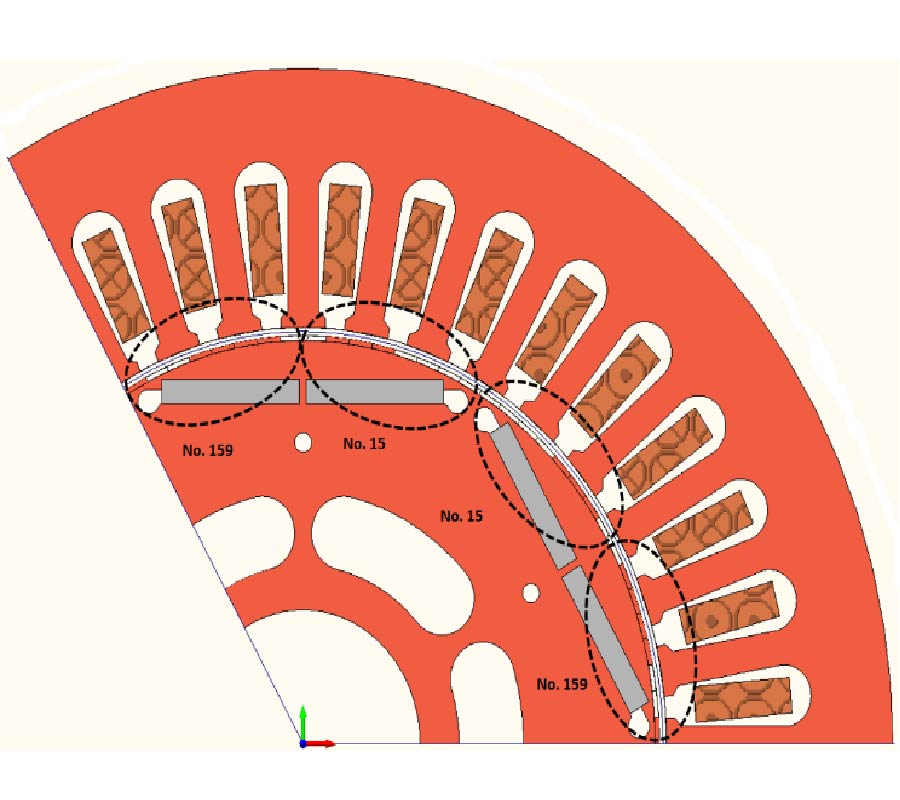
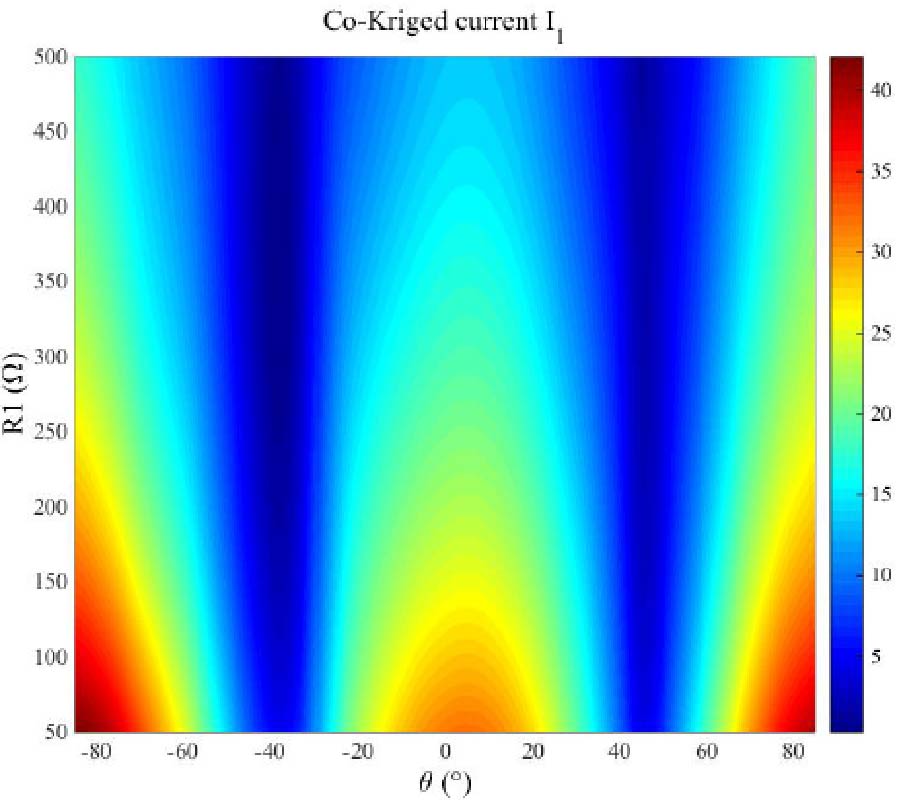
Permanent-magnet synchronous motors (PMSM) used for HEV/EV drivetrain have many non-linear characteristics including saturation, slotting effects and non-sinusoidal back-emf. However, accurate torque control and rigorous on-board-diagnose require precise modelling that goes far beyond capacity of conventional Space Vector based PMSM model considering only fundamental frequency. By considering the higher harmonics of PMSM, this paper introduces a novel PMSM model named Generalized Space Vector Model (GSVM) based on Fourier series reconstruction of magnetic coenergy. Firstly, two-dimensional Fourier series supplemented by polynomial fitting is introduced to reconstruct the numerical solution of coenergy from Finite Element Analysis (FEA). Secondly, analytical models of flux linkage, electric torque and voltage equation in stator current oriented synchronous frame are derived based on the reconstructed coenergy model. Finally, the steady and dynamic characteristics of GSVM are validated against experimental results.
MAGNETIC COENERGY BASED MODELLING OF PMSM FOR HEV/EV APPLICATION
2016-09-12
PIER M
Vol. 50, 1-10
Correlation Effects on the MIMO Capacity for Conformal Antennas on a Paraboloid
Christos Kalialakis , Theodoros Kaifas and Apostolos Georgiadis
The use of conformal antennas in a MIMO link scenario is investigated. Conformal slot antennas are considered both in the transmitter and the receiver. First, a new modified correlation coefficient is derived that goes beyond the Clarke coefficient and takes into account the element radiation pattern. Secondly, a hybrid formulation that accounts for the impact of the mutual coupling and the pattern dependent correlation on the capacity is presented. The mutual coupling for slots placed circumferentially on a paraboloid substrate is derived using a rigorous approach based on Uniform Theory of Diffraction (UTD). The capacity is evaluated for the case of Rayleigh fading channel considering the new pattern dependent correlation coefficient and the conformal antenna mutual coupling. The planar case is included as a limiting case. It is shown that for conformal antennas on a paraboloid the capacity degradation compared to the planar case is up to 0.5 bps/Hz due to coupling and correlation.
CORRELATION EFFECTS ON THE MIMO CAPACITY FOR CONFORMAL ANTENNAS ON A PARABOLOID
2016-09-12
PIER M
Vol. 49, 211-219
Non-Conventional Discretization Grid Based FDTD for EM Wave Propagation in Magnetized Plasma Metallic Photonic Crystal
Mayank Kumar Chaudhari
Photonic band gaps of plasma metallic photonic crystals can be tuned dynamically by subjecting it to external magnetic field leading to variety of applications. Dispersion characteristics of 2D photonic crystals are often studied by Finite Difference Time Domain (FDTD) method based on standard Yee's grid discretization schema, in which x- and y-components of fields are defined on different edges of the Yee's cell. However, finite difference equations for electromagnetic wave propagation in magnetized plasma involve interdependence of polarization currents and electric field in a manner that requires both x- and y-components of fields to be evaluated at the same spatial location. A non-conventional discretization technique is presented in which x- and y-components of fields are evaluated at the same spatial location. In this paper analysis of magnetized plasma metallic photonic crystals (PMPC) is presented using the new grid. However, the proposed discretization scheme can be used to introduce magnetized plasmas in any type of structures that can be studied on the basis of standard Yee's grid. For example, topics such as photonic band gap (PBG) cavities based on PMPC, PBG waveguides involving plasma, meta-materials, etc. can be very effectively studied using the approach presented in this paper. Interesting results are found when PMPC is subject to external magnetic field. Several new bands including two dispersion-less flat bands appear and the existing bands with an exception of first band slightly shift upward when PMPC is subjected to an external transverse magnetic field. The location of flat bands and the location and width of forbidden band gaps can be controlled by external magnetic field as well as plasma parameters. New band gaps appearing for lower r/a for magnetized PMPC can be utilized for several applications such as PBG cavity design for gyrotron devices.
NON-CONVENTIONAL DISCRETIZATION GRID BASED FDTD FOR EM WAVE PROPAGATION IN MAGNETIZED PLASMA METALLIC PHOTONIC CRYSTAL
2016-09-12
PIER
Vol. 156, 135-144
Satellite Multibeam Coverage of Earth: Innovative Solutions and Optimal Synthesis of Aperture Fields
Andrea Francesco Morabito , Antonia Rita Lagana and Loreto Di Donato
The problem of the synthesis of optimal continuous aperture sources to optimally realize the satellite multibeam coverage of Earth is stated and solved. The design approach relies on a far-field representation which exploits at best the degrees of freedom arising from the geometrical structure of the well-known four-colors colour coverage map. The overall synthesis is stated as a convex-programming problem wherein the fast achievement of the (unique) globally optimal solution is guaranteed. The introduced tools allow stating the ultimate theoretical radiation performances achievable by any circular-aperture antenna of fixed size and, at the same time, can be exploited as a reference in the synthesis of isophoric direct-radiating arrays. Numerical examples concerning a mission scenario recently proposed by the European Space Agency are provided.
SATELLITE MULTIBEAM COVERAGE OF EARTH: INNOVATIVE SOLUTIONS AND OPTIMAL SYNTHESIS OF APERTURE FIELDS
2016-09-11
PIER M
Vol. 49, 203-209
Fast Direct Solution of Composite Conducting-Dielectric Arrays Using Sherman-Morrison-Woodbury Algorithm
Yang Zhang , Xinlei Chen , Chao Fei , Zhuo Li and Chang Qing Gu
In this paper, the Sherman-Morrison-Woodbury (SMW) Formula-based algorithm (SMWA) is used to enable the fast direct solution of conducting-dielectric arrays. To speed up the direct solution of the matrix equation, the dense impedance matrix is transformed into a product of several block diagonal matrices via the SMW formula. In the grouping process, the situation that the elements of an array simultaneously belong to two different subgroups at peer level is avoided in order to promote the efficiency. The SMWA conducts the calculation with a respectable reduction in the computational time as well as memory.
FAST DIRECT SOLUTION OF COMPOSITE CONDUCTING-DIELECTRIC ARRAYS USING SHERMAN-MORRISON-WOODBURY ALGORITHM
2016-09-10
PIER Letters
Vol. 62, 49-55
A Compact n-Way Wilkinson Power Divider Using a Novel Coaxial Cable Implementation for VHF Band
Sandeepak S. Kakatkar , Prafull Irpache and Kamla Prasan Ray
A novel implementation of N-way Wilkinson power divider using series and parallel combination of coaxial cables has been proposed in this paper. This arrangement results in a very compact power divider at VHF and lower frequencies, has good isolation between all the ports and is capable of handling high power with a low insertion loss. Frequency tuning and phase equalisation are easily accomplished using this technique. The measured results on fabricated 7-way and 4-way power dividers exhibited good input and output matching as well as amplitude and phase balance with an overall length of less than λ/8 at 221 MHz, with potential for further reduction in length.
A COMPACT N-WAY WILKINSON POWER DIVIDER USING A NOVEL COAXIAL CABLE IMPLEMENTATION FOR VHF BAND
2016-09-09
PIER Letters
Vol. 62, 41-47
Metal-Frame GPS Antenna for Smartwatch Applications
Saou-Wen Su and Cheng-Tse Lee
The integration of a loop antenna into the top metal frame of a smartwatch wearable device is introduced. The loop antenna was made of a 1-mm thick, rectangular metal frame, which was stacked 1.5 mm above the lower metal frame of the watch having a size of 7 mm × 35 mm × 40 mm. The system circuit board was encircled by the lower, rectangular metal frame with a 1 mm gap between the perimeter of the ground plane and the metal frame. The top metal frame was fed in a corner on the frame's longer edge with two shorting portions short-circuited to the system ground. By carefully positioning the two shorting for the top metal frame, the proposed loop antenna can provide the global positioning system (GPS) operation at 1575 MHz for smartwatch applications.
METAL-FRAME GPS ANTENNA FOR SMARTWATCH APPLICATIONS
2016-09-08
PIER B
Vol. 69, 61-73
Design and Evaluation of an Inductive Powering Unit for Implantable Medical Devices Using GPU Computing
Arseny Anatolievich Danilov , Eduard Adipovich Mindubaev and Sergey Vasilyevich Selishchev
Nowadays inductive powering has become a widely spread technique in existing and emerging implanted medical devices (IMD). The geometry of coils couple plays a key role in the design, optimization and evaluation of a biomedical inductive powering unit (IPU). We have proposed a relatively fast method for an execution of these procedures, which is based on a mutual induction calculation using GPU parallel computing. Generally, our approach is to calculate mutual inductance as a function of uncontrolled (axial distance, lateral distance, inclination) and controlled (coils radii, turns numbers, distance between turns) geometric parameters of a coil couple. Calculated geometric functions in its turn are used in the design and optimization procedure to evaluate an IPU performance (e.g., load power). Achieved time gain of the GPU calculations in comparison with the host CPU computing is up to 80 for sequential summation and up to 8 for parallel computing. Also, it is shown that precision of our method is comparable to the precision of existing electromagnetic field solvers, and at the same time, computation time is substantially less (time gain is about 7...8 for 2D case and about 100 and higher for 3D case). Additionally, we have verified our method experimentally and shown that results of the calculations are accurate enough to predict real IPU performance. Finally, we have given an example of an IPU design optimization using geometric functions calculated with the help of the proposed method.
DESIGN AND EVALUATION OF AN INDUCTIVE POWERING UNIT FOR IMPLANTABLE MEDICAL DEVICES USING GPU COMPUTING
2016-09-08
PIER B
Vol. 69, 47-59
Comparison, with an Analytical Optimization Process, of Two Synchronous Halbach Permanent Magnet Machines, for a Direct Drive Stick Application
Jean-Francois Allias , Jean-Francois Llibre , Carole Henaux , Yves Briere and Soheib Fergani
This paper deals with the comparison of two actuators with different frameworks, for a direct drive active stick application. Each actuator will be compared with three different sets of specifications which impose many constraints as: high torque, small volume, low temperature, etc. The high required torque per unit of mass and the small volume allowed involve the use of synchronous Halbach permanent magnet (PM) topologies which have the best torque performances. In this article, an analysis and a comparison of two optimized actuators designed with a Halbach configuration are done. It is a linear actuator and a double airgap rotating actuator. The electromagnetic torque is calculated by the Laplace force for which the flux density generated by the Halbach PM configuration is defined by a Laplace equation and a Poisson equation. An analytical optimization under a set of nonlinear constraints will be realized with the analytical expressions of the torque we got previously. In order to validate the analytical model, finite-element analysis (FEA) simulations will be performed on the optimized structure. Finally, two actuators will be compared in order to give the best compromises for the stick application for each set of specifications.
COMPARISON, WITH AN ANALYTICAL OPTIMIZATION PROCESS, OF TWO SYNCHRONOUS HALBACH PERMANENT MAGNET MACHINES, FOR A DIRECT DRIVE STICK APPLICATION
2016-09-08
PIER C
Vol. 67, 49-57
An Improved DBF Processor with a Large Receiving Antenna for Echoes Separation in Spaceborne SAR
Hongbo Mo , Wei Xu and Zhimin Zeng
Digital beamforming (DBF) on receive in elevation with a large receiving antenna will be widely adopted in future spaceborne synthetic aperture radar (SAR) missions to improve system performances. Furthermore, DBF can be used to separate echoes corresponding to different sub-pulses in some novel spaceborne SAR imaging modes. This paper proposes an improved DBF processor with a large receiving antenna for separating echoes. The proposed DBF processor includes three important parts: multiples sharp receiving beam generation, range compression and null steering. Compared with the conventional DBF processor in spaceborne SAR, the proposed DBF processor can separate echoes with better performances. Simulation results on point targets demonstrate the validity of the proposed DBF processor.
AN IMPROVED DBF PROCESSOR WITH A LARGE RECEIVING ANTENNA FOR ECHOES SEPARATION IN SPACEBORNE SAR