Search Results(13796)

2016-08-10
PIER C
Vol. 66, 183-190
A Pattern Reconfigurable Antenna for WLAN and WiMAX Systems
Santasri Koley , Lakhindar Murmu and Biswajit Pal
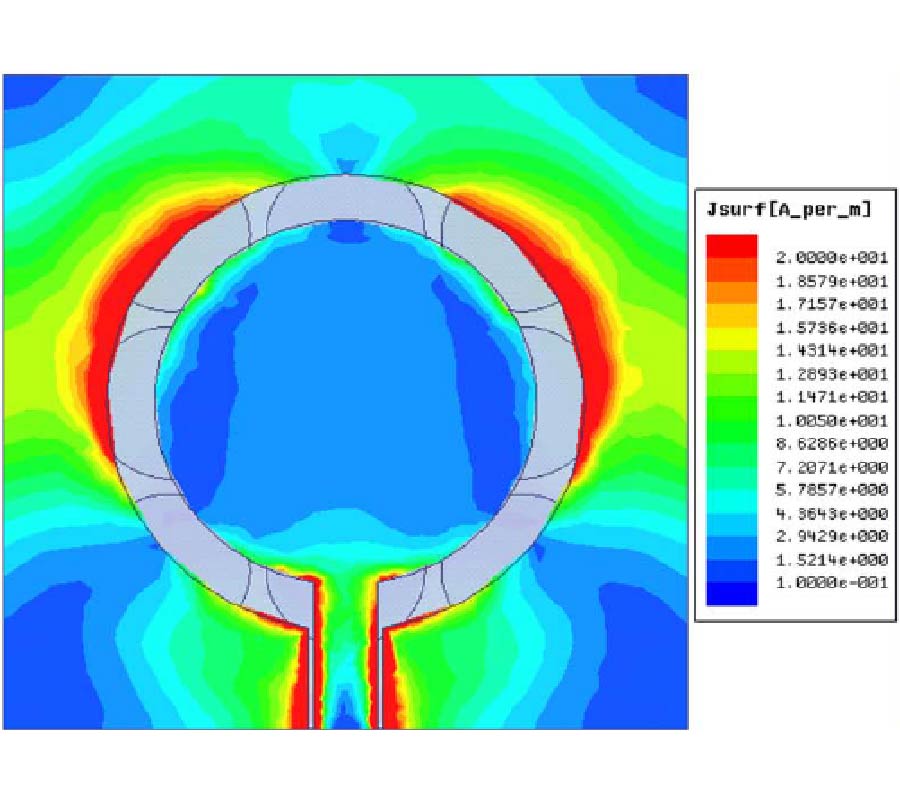
A novel tri-band pattern reconfigurable planar antenna is proposed. Tri-band is achieved by inserting a bandstop filter at the feed line of a wideband monopole antenna with complementary split ring resonator (CSRR) on a circular patch. Two parasitic arc-shaped stubs are in the back side of the radiator that works as a reflector. The antenna radiation pattern is switched from omnidirectional to one of two different directional modes by activating one of the stubs. Three different radiation modes are controlled by four ideal switches. Radiation pattern reconfigurability makes it suitable for the use of flexible cognitive radio front-end system. The proposed antenna is suitable for WLAN 2.4/5.2/5.8 GHz and WiMAX 3.5/5.5 GHz applications. Good agreement between simulated and measured results validates its possible application.
A PATTERN RECONFIGURABLE ANTENNA FOR WLAN AND WIMAX SYSTEMS
2016-08-10
PIER M
Vol. 49, 117-129
Curved Space-Time for Light by an Anisotropic Medium: Media with the Variable Optical Axes
Sayed Alireza Mousavi , Rasoul Roknizadeh , Sahar Sahebdivan and Shahram Dehdashti
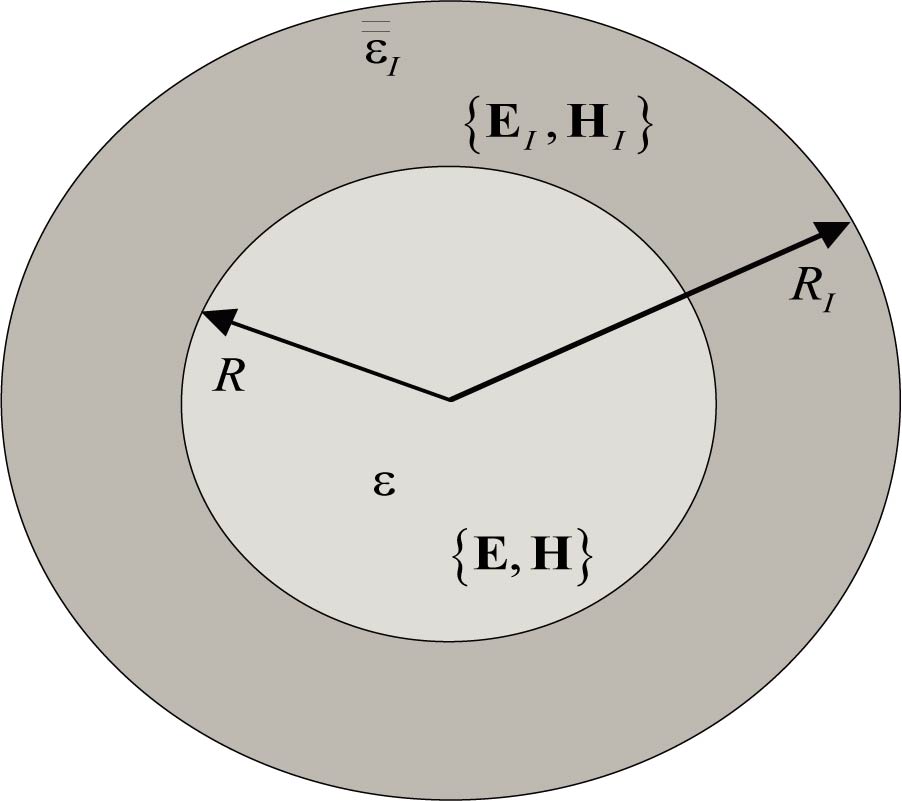
An optical impedance-matched medium with a gradient refractive index can resemble a geometrical analogy with an arbitrary curved space-time. In this paper, we show that a non-impedance-matched medium with a varying optical axis can also resemble the features of a space of non-trivial metric for light. The medium with a varying optical axis is an engineered stratified slab of material, in which the orientation of the optical axis in each layer slightly differs from the other layers, while the magnitude of refractive index remains constant. Instead of the change in refractive index, the inhomogeneity of such a medium is induced by the local anisotropy. Therefore, the propagation of light depends on the local optical axis. We study the conditions that make the analogy between curved space-time and a medium with a varying optical axis. Extension of the transformation optics to the media with optical axis profile might ease some fabrication difficulties of gradient refractive index materials for particular frequencies.
CURVED SPACE-TIME FOR LIGHT BY AN ANISOTROPIC MEDIUM: MEDIA WITH THE VARIABLE OPTICAL AXES
2016-08-08
PIER C
Vol. 66, 173-182
A CPW-Fed Microstrip Fork-Shaped Antenna with Dual-Band Circular Polarization
Chien-Jen Wang and Yu-Wei Cheng
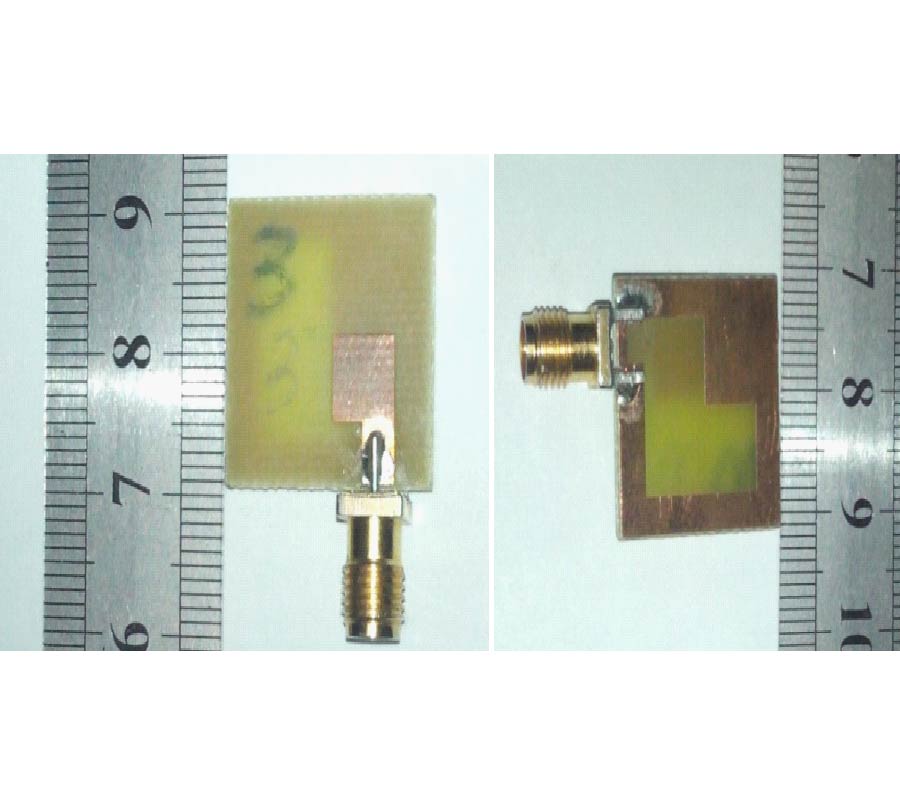
This paper presents a microstrip wideband antenna and its utilization in integration of multiple wireless communication systems. A simple fork-like strip antenna, fed by a coplanar-waveguide (CPW) transmission line, is designed to excite a right-hand circularly polarized wave at 1.57 GHz. A rectangular patch is added at the end of one prong to enhance the circular polarization performance. By modifying the geometry of the ground plane, a left-hand circularly polarized wave is excited at 2.33 GHz, and the wideband frequency response is derived. To reduce the lower resonant frequency, a stub is added at the left side of the ground plane. The measured impedance bandwidth of reflection coefficients (S11) < -10 dB ranges from 1.49 to 2.92 GHz, which satisfies the system bandwidths of most of commercial wireless communication systems. The 3-dB axial-ratio bandwidths are approximately 40 MHz at the lower band (1.57 GHz) and 290 MHz at the upper band (2.33 GHz).
A CPW-FED MICROSTRIP FORK-SHAPED ANTENNA WITH DUAL-BAND CIRCULAR POLARIZATION
2016-08-08
PIER M
Vol. 49, 103-115
Propagation Properties of Partially Coherent Lorentz-Gauss Beams in Uniaxial Crystals Orthogonal to the X-Axis
Guoquan Zhou , Zhiyue Ji and Guoyun Ru
Analytical expressions of the elements of a cross spectral density matrix are derived to describe the partially coherent Lorentz-Gauss beam propagating in uniaxial crystals orthogonal to the x-axis. The intensity and degree of polarization for the partially coherent Lorentz-Gauss beam propagating in uniaxial crystals orthogonal to the x-axis are also presented. The evolution properties of the partially coherent Lorentz-Gauss beam are numerically demonstrated. The influences of the uniaxial crystal and coherence length on the propagation properties of the partially coherent Lorentz-Gauss beam in uniaxial crystals orthogonal to the x-axis are examined. The uniaxial crystal considered here has the property of the extraordinary refractive index being larger than the ordinary refractive index. The partially coherent Lorentz-Gauss beam in the direction along the x-axis spreads more rapidly than that in the direction along the y-axis. With increasing the ratio of the extraordinary refractive index to the ordinary refractive index, the spreading of the partially coherent Lorentz-Gauss beam increases in the direction along the x-axis, but decreases in the direction along the y-axis. Meanwhile, the degree of polarization in the edges of the long and short axes of the beam spot increases. With increasing the coherence length, the beam spot of the partially coherent Lorentz-Gauss beam uniformly becomes less, and the maximum degree of polarization in the edge of the beam spot decreases.
PROPAGATION PROPERTIES OF PARTIALLY COHERENT LORENTZ-GAUSS BEAMS IN UNIAXIAL CRYSTALS ORTHOGONAL TO THE X-AXIS
2016-08-03
PIER Letters
Vol. 61, 125-130
A Planar End-Fire Antenna with Wide Beamwidth for 60 GHz Applications
Rongda Wang , Peng Gao , Peng Wang and Kai Kang
A novel 60 GHz end-fire antenna for point-to-multipoint applications is presented. The prototype of this antenna is a dipole structure with a wide beamwidth. Then, the radiators are tilted with the ground is also modified to improve its directive gain while maintaining wide signal coverage. The antenna has a compact size of 10 mm × 7 mm × 0.254 mm. Measured results show that the antenna has favorable properties of 3-dB beamwidth up to 150° at 60 GHz, S11 less than -10 dB and stable gain of 5.9 to 6.8 dBi over 57 to 64 GHz, where these characteristics denote it fitting for 60 GHz wireless communication systems.
A PLANAR END-FIRE ANTENNA WITH WIDE BEAMWIDTH FOR 60 GHZ APPLICATIONS
2016-08-03
PIER M
Vol. 49, 91-101
Modified GO Solutions for the High Frequency Reflected Wave in the Focal Region of a 3D Elliptical Reflector Placed in Isotropic Chiral Medium
Tariq Rahim , Muhammad Ibrahim , Murad Ali Shah and Jia-Dong Xu
High frequency electromagnetic (EM) fields in the focal region of a 3D elliptical reflector placed in a homogeneous and reciprocal chiral background have been analyzed using geometrical optics (GO) approximation and Maslov's method. The GO solutions becomes invalid at the focal region of a 3D elliptical reflector due to unreal singularities. Therefore, an asymptotic method based on Maslov's theory has been applied to derive high frequency EM fields, which is also valid at the focal points. Moreover, the effect of chirality parameter of the background medium on the position of focal points for both Left circularly polarized wave (LCP) and right circularly polarized (RCP) wave are described by plotting the derived expressions numerically using MATLAB.
MODIFIED GO SOLUTIONS FOR THE HIGH FREQUENCY REFLECTED WAVE IN THE FOCAL REGION OF A 3D ELLIPTICAL REFLECTOR PLACED IN ISOTROPIC CHIRAL MEDIUM
2016-08-02
PIER C
Vol. 66, 163-171
Wideband Balanced Antipodal Vivaldi Antenna with Enhanced Radiation Parameters
Li Li , Xinlin Xia , Yu Liu and Tao Yang
A novel balanced antipodal Vivaldi antenna (BAVA) with high gain and good directivity is proposed in this paper. The outer edges of the flare are modified by a binomial curve to broaden the impedance bandwidth. A metal director is adopted to improve the antenna gain and directivity. The measured results show that the proposed BAVA achieves a bandwidth from 2 to more than 40 GHz with peak gain >0 dBi and >10 dBi over the 8-40 GHz range. The squinting beam of E-plane is less than 5° from 4 to 40 GHz and less than 3° from 22 to 40 GHz.
WIDEBAND BALANCED ANTIPODAL VIVALDI ANTENNA WITH ENHANCED RADIATION PARAMETERS
2016-08-02
PIER M
Vol. 49, 81-89
RF and Microwave Low Power Dielectric Heating Using Parallel Plate Applicator to Control Insect Pests on Tomato Plant
Sandeep Vinayak Gaikwad and Arun N. Gaikwad
This paper focuses on electromagnetic exposure to control insect pests in agriculture using parallel plate applicator. A tomato plant and ``Helicoverpa armigera'' eggs and larvae are exposed to 915 MHz and 2450 MHz. A parallel plate applicator is fabricated and matched with Radio Frequency and Microwave source at 50 Ω. The power up to 250 W was applied to parallel plate applicator in an anechoic chamber to observe the behavior and heating effect on commodities inside the applicator. The rise in temperature of the tomato plant and tomato with insect pest stages were different for different dielectric properties. The reduction in the hatching was observed after the exposure. The first instar to fifth instar larvae erratic movement was observed during exposure. The faster response of heating was observed at the higher side of exposed power. The effect on the heating rate considering the variations in the space between two parallel plates of the applicator is analyzed in this research. The parallel plate capacitor is referred to as an applicator in this paper.
RF AND MICROWAVE LOW POWER DIELECTRIC HEATING USING PARALLEL PLATE APPLICATOR TO CONTROL INSECT PESTS ON TOMATO PLANT
2016-07-31
PIER C
Vol. 66, 149-161
Design of Sub-Harmonic Mixer MMIC for EHF Satellite Links
Diego Palombini , Tommaso Cavanna , Sergio Arena and Ernesto Limiti
This paper presents the design flow of a compact GaAs MMIC for Extremely High Frequency (EHF) satellite communications. The proposed circuit enables sub-harmonic mixing capability and integrates a LO buffering section, thus allowing for low frequency and low power reference signal interface. Circuit design is described in detail providing a comprehensive view of the followed theoretical approach, starting from mixer core definition until the complete synthesis of LO/RF/IF interfaces. In particular, the design flow of an innovative three-conductor Marchand balun is deeply analysed. Fabricated MMIC operates in the 43.5-50 GHz band and results in a compact layout (2.4x2.4 mm2) featuring a port-to-port isolation better than 25 dB with a typical conversion loss of 12 dB.
DESIGN OF SUB-HARMONIC MIXER MMIC FOR EHF SATELLITE LINKS
2016-07-31
PIER C
Vol. 66, 139-147
Triple Band Notched UWB Antenna Design Using Electromagnetic Band Gap Structures
Naveen Jaglan , Binod Kanaujia , Samir Dev Gupta and Shweta Srivastava
A circular monopole antenna for ultra wideband (UWB) applications with triple band notches is proposed. The proposed antenna rejects worldwide interoperability for microwave access WiMAX band (3.3 GHz-3.8 GHz), wireless local area network WLAN band (5.15 GHz-5.825 GHz) and X-Band downlink satellite communication band (7.1 GHz-7.9 GHz). The antenna utilises mushroom-type and uniplanar Electromagnetic Band Gap (EBG) structures to achieve band-notched designs. The advantages of band-notched designs using EBG structures such as notch-frequency tuning, triple-notch antenna designs and stable radiation pattern are shown. The effect of variation of EBG structure parameters on which notched frequency depends is also investigated. Fabricated and measured results are in good agreement with simulated ones.
TRIPLE BAND NOTCHED UWB ANTENNA DESIGN USING ELECTROMAGNETIC BAND GAP STRUCTURES
2016-07-29
PIER C
Vol. 66, 129-137
Gain Enhancement in Planar Monopole Antennas
Lin-Chuan Tsai
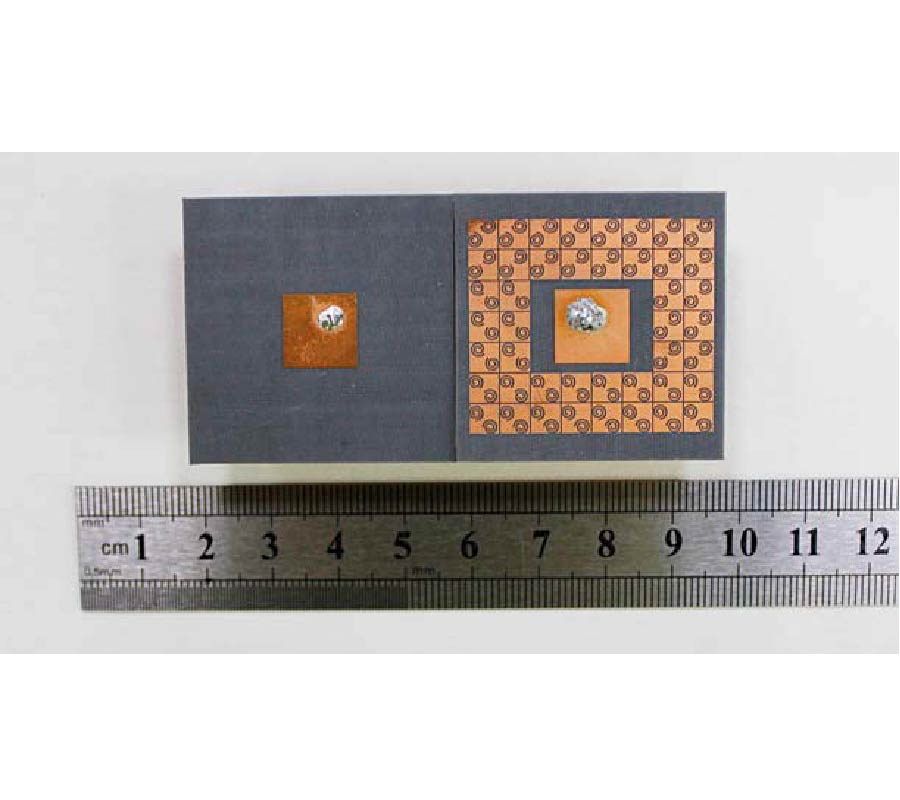
This paper proposes a planar monopole antenna design for achieving gain enhancement. The radiation pattern is achieved straightforwardly by employing a detached glass slab and placing a reflected metal slab after the glass slab onto the antenna structure. Geometrical parameters were examined to optimize the performance of the proposed antenna. Such a configuration causes constructive interference between the incident and reflected fields. The radiation patterns can be adjusted the thickness of the glass slab and dielectric constants. The radiated fields are redistributed because of the inclusion of the glass slab, which has a permittivity of εr = 7.75 and a thickness of h = 1 mm. Consequently, the planar monopole gain achieved using the glass slab and reflected metal slab is increased to approximately 5 dBi, whereas the antenna resonant frequency remains almost unchanged at nearly 14% in impedance bandwidth. The results obtained for the directional pattern, return loss, gain, and radiation efficiency of the proposed antenna were analyzed. The antenna volume of the radiation area and ground plane was 3 × 32 × 52 mm3. Detailed simulations and experiments were conducted to optimize the gain enhancement operations, and the measured results agreed with the simulated ones.
GAIN ENHANCEMENT IN PLANAR MONOPOLE ANTENNAS
2016-07-27
PIER Letters
Vol. 61, 119-123
Electromagnetic Boundaries with PEC/PMC Equivalence
Ismo Veikko Lindell and Ari Sihvola
The most general electromagnetic boundary, defined by linear and local boundary conditions, is defined in terms of conditions which can be called generalized impedance boundary conditions. Requiring that the boundary be equivalent to PEC and PMC boundaries for its two eigenplane waves, which property is known to exist for many of its special cases, it is shown that the recently introduced Generalized Soft-and-Hard/DB (GSHDB) boundary is the most general boundary satisfying this property.
2016-07-26
PIER B
Vol. 69, 31-45
Suspension Force Modeling and Electromagnetic Characteristics Analysis of an Interior Bearingless Permanent Magnet Synchronous Motor
Xiaodong Sun , Shuai Luo , Long Chen , Ruoyu Zhao and Zebin Yang
Interior bearingless permanent magnet synchronous motors (IBPMSMs) are a new type of machines having two sets of windings in the stator, offering no lubrication and no mechanical friction, high efficiency, robust rotor construction, hybrid torque production nature and flux-weakening capability. In this paper, the suspension force modeling and the static electromagnetic characteristics of an IBPMSM are studied. The suspension force model of the IBPMSM is established and investigated based on the Maxwell tensor method. And then the static electromagnetic characteristics, including permanent magnet (PM) flux linkage, EMF, inductances, electromagnetic torque and suspension force, are discussed with the finite element analysis (FEA) method. The electromagnetic characteristics of the IBPMSM are very helpful for the design and optimization of the motor. The effectiveness of the proposed suspension force mathematical model is verified by comparing the theoretical results with FEA-based predictions. The work in this paper lays an important foundation for the optimization design and control strategies of the IBPMSM.
SUSPENSION FORCE MODELING AND ELECTROMAGNETIC CHARACTERISTICS ANALYSIS OF AN INTERIOR BEARINGLESS PERMANENT MAGNET SYNCHRONOUS MOTOR
2016-07-26
PIER C
Vol. 66, 117-128
Rotated Quadrilateral Dipole UWB Antenna for Wireless Communication
Rajveer Singh Brar , Sarthak Singhal and Amit Kumar Singh
A double printed rotated quadrilateral dipole UWB antenna for wireless communication is presented. The rotation of quadrilateral and modification of integrated balun structure is employed to enhance bandwidth and impedance matching. The proposed antenna shows impedance bandwidth of 3.8-18.1 GHz which covers the entire C, X and Ku bands. The Radiation patterns of the designed antenna structure are relatively stable and omnidirectional over the entire obtained bandwidth with an average gain of 3.6 dB. A good agreement is found between the simulated and experimental results. The proposed antenna has a simple design, comparatively compact size and more bandwidth than previous reported double rhombus antenna.
ROTATED QUADRILATERAL DIPOLE UWB ANTENNA FOR WIRELESS COMMUNICATION
2016-07-26
PIER Letters
Vol. 61, 111-118
Wideband Circularly Polarized Square Slot Array Fed by Slotted Waveguide for Satellite Communication
Min Wang , Lei Hu , Jingjing Chen , Shishan Qi and Wen Wu
A wideband circularly polarized (CP) slot array with high radiation efficiency is proposed. The cavity-backed square slots are designed to achieve wideband CP radiation with a unidirectional pattern. The slotted waveguide is adopted to feed the array with high efficiency. The square slot, cavity and feeding slot in the waveguide can be viewed as a radiating element. A CP slot array can be conveniently designed as traditional waveguide slot arrays, once the element admittance characteristic is determined. A 1-by-8 CP array operating at 12.5 GHz has been developed. Measured impedance bandwidth of 6.9%, axial-ratio (AR) bandwidth of 8.8% and a gain of 15.4 dBi have been achieved. This array can be conveniently expanded to a larger wideband CP array with a higher gain, which is preferred for the specific satellite communication applications.
WIDEBAND CIRCULARLY POLARIZED SQUARE SLOT ARRAY FED BY SLOTTED WAVEGUIDE FOR SATELLITE COMMUNICATION
2016-07-25
PIER C
Vol. 66, 109-116
Multichannel Narrowband Tunable Filters Based on Multilayer Structures Made of Yttrium Barium Copper Oxide and Strontium Titanate Layers
Hadi Rahimi and Ahmad Heshmati Sis
The purpose of this paper is to theoretically investigate the properties of electromagnetic wave propagating in both one-dimensional periodic and quasiperiodic photonic crystals consisting of high-temperature yttrium barium copper oxide and strontium titanate dielectric nano-scale materials in the ultraviolet wavelength region. By using the transfer matrix method, angle-, polarization- and thickness-dependences of created PBGs are explored individually for periodic and quasiperiodic structures, and some interesting features are presented in the results section. Such supposed structures can be acts as very compact polarization sensitive splitters and defect-free multichannel narrowband tunable filters.
MULTICHANNEL NARROWBAND TUNABLE FILTERS BASED ON MULTILAYER STRUCTURES MADE OF YTTRIUM BARIUM COPPER OXIDE AND STRONTIUM TITANATE LAYERS
2016-07-22
PIER Letters
Vol. 61, 105-109
Analysis of Different Probe Geometries for Ethanol Fuel Qualification Using Time-Domain Reflectometry
Daniel Bras Rochinha Rodrigues , Wesley Beccaro , Henrique E. M. Peres and Fatima S. Correra
This paper proposes sensors based on the time-domain reflectometry (TDR) technique for qualifying ethanol fuel. Four different probe geometries were proposed: bifilar, microstrip, coaxial, and helical. All probes allowed qualification of ethanol adulterated with water. Helical probe showed the best response. Thus, this proposal contributes to the development of electronic tongues.
ANALYSIS OF DIFFERENT PROBE GEOMETRIES FOR ETHANOL FUEL QUALIFICATION USING TIME-DOMAIN REFLECTOMETRY
2016-07-22
PIER Letters
Vol. 61, 99-103
A Novel W-Band Dual-Polarized Cassegrain Antenna for Cloud Radar
Bing Yu , Han Xia , Xiaoye Chen , Fei Yang , Fayu Wan , Zhen-Hua Chen , Yong Zhou and Jun-Xiang Ge
A W-band dual-polarized Cassegrain antenna for cloud radar is proposed. The aperture diameter of the main reflector of the antenna is 50 cm. By using a modified Magic-T structure in the feed horn, the antenna is dual-polarized with high port isolation. The measured results show that the port isolation is 44.7 dB. The gains are 47.3 dB and 49.5 dB for the two ports at 94 GHz, respectively, and the efficiency of the antenna is better than 87%.
A NOVEL W-BAND DUAL-POLARIZED CASSEGRAIN ANTENNA FOR CLOUD RADAR
2016-07-21
PIER B
Vol. 69, 17-29
A Waveguide Horn Antenna with Coupled Resonator Notch Filter Designed by the Lagrangian Formulation for Metamaterials
Joshua W. Shehan and Ryan S. Adams
This paper presents the design and analysis of guided wave notch filters using the Lagrangian formulation for metamaterials. It is shown that the application of the Lagrangian is a convenient and effective way to select an appropriate filtering structure and determine the necessary configuration for desired filter performance. A WR-187 waveguide horn antenna is investigated with notch filters composed of broadside coupled and gap coupled split ring resonators. It is shown that broadside coupling offers significant tunability in a compact size. The filter exhibits an operational bandwidth from approximately 3.9-5.7 GHz with 40-150 MHz of instantaneous bandwidth. The fabrication of the horn antenna and split ring resonators is presented along with simulated and measured data that confirms the approach.
A WAVEGUIDE HORN ANTENNA WITH COUPLED RESONATOR NOTCH FILTER DESIGNED BY THE LAGRANGIAN FORMULATION FOR METAMATERIALS
2016-07-21
PIER C
Vol. 66, 97-107
Circularly Polarized 2×2 MIMO Antenna for WLAN Applications
Leeladhar Malviya , Rajib Kumar Panigrahi and Machavaram Kartikeyan
A 2×2 circularly polarized (CP) MIMO antenna is proposed to resonate at 5.8 GHz IEEE 802.11 WLAN band for non-line of sight (NLOS) communication. The proposed design achieves circular polarization with two optimized 90˚ apart rectangular slots etched at the center of a truncated rectangular patch. The proposed MIMO covers 5.49-6.024 GHz frequency band. The achieved isolation between two ports is more than 33 dB. The gain at the 5.8 GHz resonant frequency is 5.34 dBi. The diversity performance in terms of gain, ECC, and MEG has been reported.
CIRCULARLY POLARIZED 2×2 MIMO ANTENNA FOR WLAN APPLICATIONS