Search Results(13797)

2015-06-29
PIER M
Vol. 42, 179-187
The Response of Layered Materials to EMG Waves from a Pulse Source
Radim Kadlec and Pavel Fiala
The authors present an analysis of conditions on the boundary between layers having varied electromagnetic properties. The research is performed using consistent theoretical derivation of analytical formulas, and the underlying problem is considered also in view of multiple boundaries including the effect of the propagation of electromagnetic waves with different instantaneous speeds. The paper comprises a theoretical analysis and references to the generated algorithms. The algorithms were assembled to enable simple evaluation of all components of the electromagnetic field in relation to the wave propagation speed in a heterogeneous environment. The proposed algorithms are compared by means of different numerical methods for the modelling of electromagnetic waves on the boundary between materials; moreover, the electromagnetic field components in common points of the model were also subject to comparison. When in conjunction with tools facilitating the analysis of material response to the source of a continuous signal, the algorithms constitute a supplementary instrument for the design of a layered material. Such design allows us to realize, for example, a recoilless plane, recoilless transition between different types of environment, and filters for both optical and radio frequencies.
THE RESPONSE OF LAYERED MATERIALS TO EMG WAVES FROM A PULSE SOURCE
2015-06-28
PIER C
Vol. 58, 61-68
Varying the Operation Bandwidth of Metamaterial-Inspired Filtering Modules for Horn Antennas
Mirko Barbuto , Fabrizio Trotta , Filiberto Bilotti and Alessandro Toscano
Recently, we have presented a novel approach to design metamaterial-inspired notch filters that can be integrated within horn antennas of receiving systems to mitigate the effects of narrowband interfering signals. The filter module consists of a single Split Ring Resonator (SRR), whose rejection band needs to be matched to the bandwidth of the particular interfering signal we want to suppress. Extending our previous work, we show here how it is possible to control the bandwidth of such a filtering module by using different metamaterial-inspired resonators. In particular, we show that, while a reduction of the rejection band can be easily obtained by increasing the miniaturization rate of the resonator, the enlargement of the rejection band cannot be obtained in the same way by simply reducing the resonator quality factor. We show that a solution of the latter problem can be worked out by applying the ``critical coupling'' concept and considering the filtering module to be made of two equal SRRs with a proper optimal separation. The effectiveness of the approach is demonstrated trough proper full-wave simulations and experiments on a fabricated prototype. The proposed technique, used here to design a filtering module for a specific radiating system, has a more general relevance and can be applied to all cases where the operation bandwidth of a component is limited by the resonant nature of a single metamaterial-inspired particle.
VARYING THE OPERATION BANDWIDTH OF METAMATERIAL-INSPIRED FILTERING MODULES FOR HORN ANTENNAS
2015-06-28
PIER Letters
Vol. 54, 27-32
A Horizontally Polarized Omnidirectional Antenna with a Reflector for Ceiling-Mounted Indoor Applications
Xiao-Yan Zhang , Xinxing Zhong , Zhiwei Liu and Bincheng Li
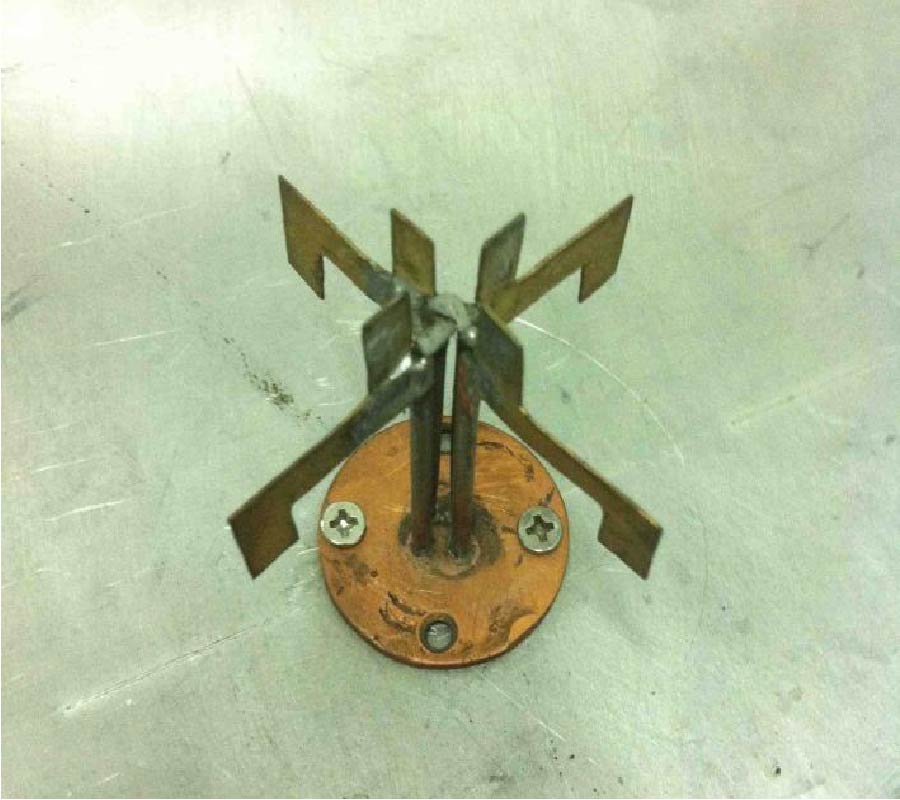
A novel wideband horizontally polarized omnidirectional antenna (HPOA) with an electrical conductor reflector is proposed for the 4th generation (4G) Long Term Evolution (LTE) applications. The proposed antenna consists of four pairs of printed dipoles distributed on the front and back of the substrate, and a star-shape patch integrated with stepped parallel strip lines constitutes a balun for the unbalance-balance transition from the coax feeding to the antenna. Both simulated and measured reflection coefficients (S11) demonstrate a wide -10 dB impedance bandwidth of 39.6%, from 1.82 to 2.72 GHz. This band covers PCS, UMTS, LTE 2300, LTE 2500, WLAN and Bluetooth bands. The presented antenna has a peak gain of 3.2 and 4.0 dBi at 1.95 and 2.48 GHz, respectively, and an omnidirectional radiation pattern in E-plane. HPOA may be suitable for ceiling-mounted indoor 4G applications.
A HORIZONTALLY POLARIZED OMNIDIRECTIONAL ANTENNA WITH A REFLECTOR FOR CEILING-MOUNTED INDOOR APPLICATIONS
2015-06-26
PIER C
Vol. 58, 51-60
Social Network Optimization for Microwave Circuits Design
Alessandro Niccolai , Francesco Grimaccia , Marco Mussetta , Paola Pirinoli , Van Ha Bui and Riccardo Enrico Zich
This paper presents the Social Network Optimization, a new population based algorithm inspired by the recent explosion of social networks and their capability to drive people's decision making process in everyday life. Early experimental studies have already proven the SNO effectiveness in the optimized design of planar and conformal antennas. Here this novel optimization procedure is described in detail, tested and compared with other traditional evolutionary algorithms, and finally used for the design of different microwave circuits.
SOCIAL NETWORK OPTIMIZATION FOR MICROWAVE CIRCUITS DESIGN
2015-06-26
PIER
Vol. 152, 41-58
Pathological Brain Detection in Magnetic Resonance Imaging Scanning by Wavelet Entropy and Hybridization of Biogeography-Based Optimization and Particle Swarm Optimization
Yudong Zhang , Shuihua Wang , Zhengchao Dong , Preetha Phillip , Genlin Ji and Jiquan Yang
(Background) We proposed a novel computer-aided diagnosis (CAD) system based on the hybridization of biogeography-based optimization (BBO) and particle swarm optimization (PSO), with the goal of detecting tumors from normal brains in MRI scanning. (Methods) The proposed method used wavelet entropy (WE) to extract features from MR brain images, followed by feed-forward neural network (FNN) with training method of a Hybridization of BBO and PSO (HBP), which combined the exploration ability of BBO and exploitation ability of PSO. (Results) The 10×K-fold cross validation result showed that the proposed HBP outperformed existing FNN training methods and that the proposed WE + HBP-FNN outperformed state-of-the-art CAD systems of MR brain classification in terms of classification accuracy. Moreover, the proposed method achieved accuracy of 100%, 100%, and 99.49% over Dataset-66, Dataset-160, and Dataset-255, respectively. The offline learning cost 208.2510 s for Dataset-255, and merely 0.053 s for online prediction. (Conclusion) The proposed WE + HBP-FNN method achieved nearly perfect detection on tumors in MRI scanning.
PATHOLOGICAL BRAIN DETECTION IN MAGNETIC RESONANCE IMAGING SCANNING BY WAVELET ENTROPY AND HYBRIDIZATION OF BIOGEOGRAPHY-BASED OPTIMIZATION AND PARTICLE SWARM OPTIMIZATION
2015-06-25
PIER M
Vol. 42, 169-177
Through Wall Detection with Relevance Vector Machine
Fang-Fang Wang , Ye-Rong Zhang , Hua-Mei Zhang , Lin Hai and Gong Chen
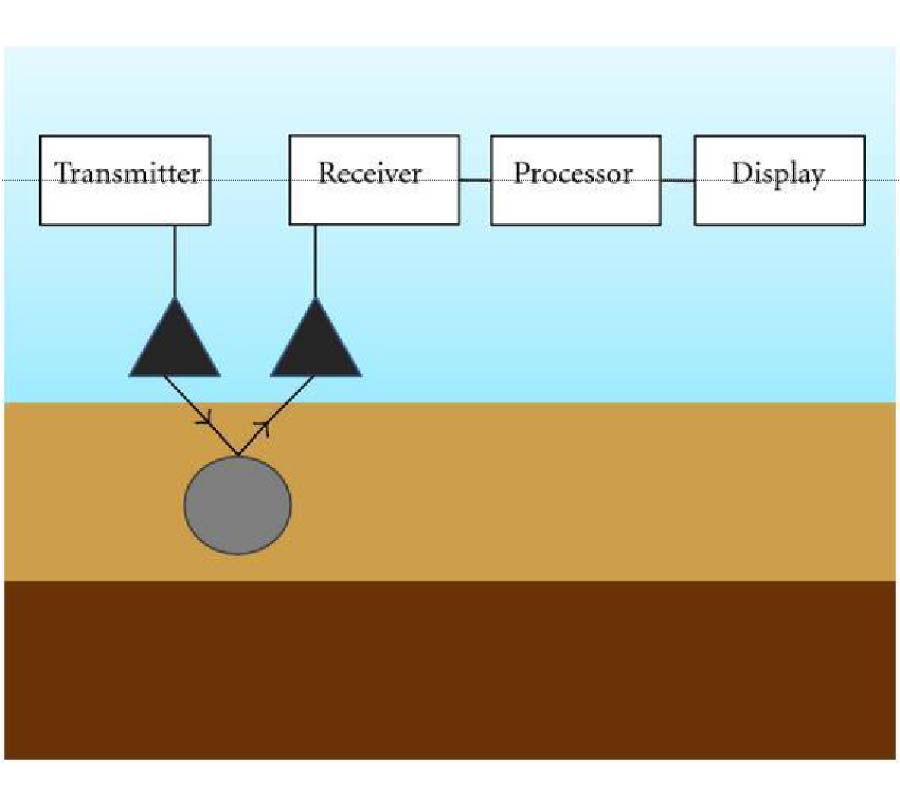
In this paper, through-wall detection problem using a data-driven model is addressed. The original problem is cast into a regression one and successively solved by means of the relevance vector machine (RVM). Multiple scattering is included in the nonlinear relationship between the feature vector extracted from the backscattered field and the position of the target obtained through a training phase using RVM; hence the nonlinearity inherent in the problem is considered. Besides, the presence of the wall is also contained in this relationship. The predictions obtained by RVM are probabilistic which capture uncertainty, and we can define error-bars for the predicted results. Therefore, the ill-posed nature of the problem is accounted for naturally, rather than using other regularization schemes. To access the effectiveness, accuracy and robustness of the proposed approach, numerical results related to a two-dimensional geometry are presented. This method is demonstrated efficient qualitatively and quantitatively.
THROUGH WALL DETECTION WITH RELEVANCE VECTOR MACHINE
2015-06-25
PIER
Vol. 152, 33-40
Extremely Thin Dielectric Metasurface for Carpet Cloaking
Li Yi Hsu , Thomas Lepetit and Boubacar Kante
We demonstrate a novel and simple geometrical approach to cloaking a scatterer on a ground plane. We use an extremely thin dielectric metasurface to reshape the wavefronts distorted by a scatterer in order to mimic the reflection pattern of a flat ground plane. To achieve such carpet cloaking, the reflection angle has to be equal to the incident angle everywhere on the scatterer. We use a graded metasurface and calculate the required phase gradient to achieve cloaking. Our metasurface locally provides additional phase to the wavefronts to compensate for the phase difference amongst light paths induced by the geometrical distortion. We design our metasurface in the microwave range using highly sub-wavelength dielectric resonators. We verify our design by full-wave time-domain simulations using micro-structured resonators and show that results match theory very well. This approach can be applied to hide any scatterer under a metasurface of class C1 (first derivative continuous) on a ground plane not only in the microwave regime, but also at higher frequencies up to the visible.
EXTREMELY THIN DIELECTRIC METASURFACE FOR CARPET CLOAKING
2015-06-24
PIER C
Vol. 58, 43-50
Transparent Dielectric Resonator Reflectarray with Bottom-Loading Strip
You-Xuan Tan , Eng Hock Lim and Fook-Loong Lo
A transparent dielectric resonator (DR) reflectarray that works in the C-band (6.5 GHz) is proposed in this paper. Here, the reflectarray element has a metallic stripof adjustable length placed underneathto act as a phase shifter. Floquet method isapplied for characterizing the reflection properties of the element anda 7×7 full-fledge reflectarray was constructed using glass and the low-cost FR4. By varying the length of the under-loading strip, it is found that the proposed DRA reflectarray element is able to provide a compensating phase of greater than 300˚. Measurements and simulations were conducted to analyze the reflection coefficient, antenna gain, and radiation patterns. The reflectarray has a maximum gain of 14.38 dBi in the broadside direction, and the 1-dB bandwidth of the DRA reflectarray is found to be around 8%. The use of DR has enabled antenna size miniaturization, and it can be useful for the design of small-size reflectarrays.
TRANSPARENT DIELECTRIC RESONATOR REFLECTARRAY WITH BOTTOM-LOADING STRIP
2015-06-24
PIER Letters
Vol. 54, 21-26
One-Step Leapfrog HIE-FDTD Method for Lossy Media
Jian-Yun Gao , Xiang-Hua Wang and Hong-Xing Zheng
The one-step leapfrog hybrid implicit-explicit finite-difference time-domain (HIE-FDTD) method for lossy media is presented. By adopting the Crank-Nicolson and Peaceman-Rachford schemes, the derived method involves calculations of the lossy terms at two different time steps. Different from the original HIEFDTD method, the proposed method can also be considered as a second order perturbation of the conventional FDTD method. To verify the effectiveness of the proposed method, numerical experiments are performed by using different FDTD methods. It is shown that the proposed method can be more efficient than the conventional HIE-FDTD method with almost the same accuracy.
ONE-STEP LEAPFROG HIE-FDTD METHOD FOR LOSSY MEDIA
2015-06-24
PIER M
Vol. 42, 159-167
Selective-Band Metaparticle Based on Bright-Bright Mode Coupling for Obscuration Applications
Sharhabeel Alyones , Al. V. Jelinek , Michael Granado and Charles W. Bruce
In this paper, we propose a planar metamaterial particle that consists of two bright elements imprinted on a dielectric substrate in the microwave region. The two bright elements are a circular ring resonator (CRR) and an asymmetric single-split rectangular resonator (ASRR). The structure exhibits a narrow transparency band in a wide absorption/reflection band through coupling between the two bright modes. We study the proposed structure through numerical simulation and experiment. We also test different orientations of the structure for possible application as an efficient frequency selective-band obscurant.
SELECTIVE-BAND METAPARTICLE BASED ON BRIGHT-BRIGHT MODE COUPLING FOR OBSCURATION APPLICATIONS
2015-06-23
PIER B
Vol. 63, 79-93
Decomposition of Electromagnetic q and P Media
Ismo Veikko Lindell and Alberto Favaro
Two previously studied classes of electromagnetic media, labeled as those of Q media and P media, are decomposed according to the natural decomposition introduced by Hehl and Obukhov. Six special cases based on either non-existence or sole existence of the three Hehl-Obukhov components, are defined for both medium classes.
2015-06-23
PIER B
Vol. 63, 67-78
Physical and Computational Aspects of Antenna Near Fields: the Scalar Theory
Said Mikki and Yahia M. Antar
The main goal of the present paper is to analyze the structure of the near field radiated by scalar point sources. The motivations for this study are the strong connection with interaction problem and the need for some insights to be utilized in the later, much more involved study of the full-wave vectorial case. We first suggest that the radial direction is the most convenient at the current time for observing the structure of the near field and proceed to derive the radial Green's function of the problem in a simple analytical closed form. The obtained expressions are then studied and their physical features are illuminated, especially in connection with the engineering radiation problem. The overall understanding of the near field problem obtained here will help in guiding the devolvement for the more complicated sources sometimes encountered in applications and theory.
PHYSICAL AND COMPUTATIONAL ASPECTS OF ANTENNA NEAR FIELDS: THE SCALAR THEORY
2015-06-23
PIER Letters
Vol. 54, 15-20
Off-Grid Direction-of-Arrival Estimation Using a Sparse Array Covariance Matrix
Xiaoyu Luo , Xiao Chao Fei , Lu Gan and Ping Wei
An off-grid direction-of-arrival (DOA) estimation method that utilizes a sparse array covariance matrix is proposed. In this method, the array covariance matrix is sparsely represented in the form of a vector and then modified to become an off-grid DOA estimation model according to the first-order Taylor series. By solving for the two sparse vectors in the resulting array covariance matrix, the off-grid DOA estimation can thus be achieved. We present an alternating iterative algorithm that exploits the alternating update of a convex optimization problem and a least-squares problem to solve for these two sparse vectors. Our method also extends the aperture. The effectiveness and efficiency of the proposed method are demonstrated in the simulation results.
OFF-GRID DIRECTION-OF-ARRIVAL ESTIMATION USING A SPARSE ARRAY COVARIANCE MATRIX
2015-06-23
PIER M
Vol. 42, 153-158
Two Finite-Difference Time-Domain Methods Incorporated with Memristor
Zaifeng Yang and Eng Leong Tan
Two finite-difference time-domain (FDTD) methods incorporated with memristor are presented. The update equations are derived based on Maxwell's equations, and the physical model is given by Hewlett-Packard (HP) lab. The first method is derived by calculating the memristance directly while the second method is derived by the relationship between electric charge and flux. Numerical results are given to discuss the accuracy, efficiency and stability of both proposed methods.
TWO FINITE-DIFFERENCE TIME-DOMAIN METHODS INCORPORATED WITH MEMRISTOR
2015-06-21
PIER Letters
Vol. 54, 7-13
Wideband Antenna with Reconfigurable Band Notched Using EBG Structure
Huda Abdul Majid , Mohamad Kamal Abd Rahim , Mohamad Rijal Hamid , Mohd Fairus Mohd Yusoff , Noor Asniza Murad , Noor Asmawati Binti Samsuri , Osman Ayop and Raimi Dewan
A wideband antenna with band notch function using electromagnetic bandgap (EBG) structure is proposed. The antenna is capable of reconfiguring up to three band notch operation. Three EBGs are aligned underneath the feed line of the wideband antenna. The transmission lines over EBGs unit cells perform as a band stop filter. A switch is placed on each of the EBG structure, which enables the reconfigurable band stop operation. The simulated and measured reflection coefficients, together with the radiation patterns, are shown to demonstrate the performance of the antenna.
WIDEBAND ANTENNA WITH RECONFIGURABLE BAND NOTCHED USING EBG STRUCTURE
2015-06-19
PIER C
Vol. 58, 33-41
A Compact Dual-Band Reconfigurable Open-End Slot Antenna for Cognitive Radio Front End System
Santasri Koley and Debjani Mitra
A compact dual-band frequency reconfigurable microstrip-line fed open-end omnidirectional slot antenna is proposed in this paper suited for cognitive radio front end system. The antenna is capable of frequency switching at different frequency bands by changing the resonance length using two PIN diodes. The resonance frequency is tuned by a single varactor diode, placed at a certain location along the slot. The proposed antenna has a wide tuning range in the dual bands: 1.57 to 3.1 GHz and 3.8 to 5 GHz. The designed antenna has compact size of 40×40 mm2. An approximate transmission line model of the proposed antenna is derived to calculate the proper positioning of the diodes, and the design has been verified through numerical simulations and measured results.
A COMPACT DUAL-BAND RECONFIGURABLE OPEN-END SLOT ANTENNA FOR COGNITIVE RADIO FRONT END SYSTEM
2015-06-19
PIER C
Vol. 58, 21-31
Propagation and Radiation Characteristics of Multilayer Coupled-Line Bandpass Filters Using Conductor-Backed Coplanar Transmission Lines
Chi-Jung Kuo , Chong-Yi Liou and Shau-Gang Mao
This paper presents the analytical design formulas for the bandpass filters which are built on the asymmetrically coupled-line conductor-backed coplanar transmission lines (CBCTLs) in multilayer configuration. The full-wave simulation is employed to characterize the far-field patterns of space-wave and surface-wave radiations as well as the frequency-dependent conductor, dielectric, and radiation losses. Good agreement among the results of full-wave simulation, transmission-line model, and measurement justifies the design procedure and validates the analytical design formulas. By properly placing the dielectric materials in multilayer configuration, a bandpass filter for minimizing the radiated power loss and improving the stopband characteristic can be achieved.
PROPAGATION AND RADIATION CHARACTERISTICS OF MULTILAYER COUPLED-LINE BANDPASS FILTERS USING CONDUCTOR-BACKED COPLANAR TRANSMISSION LINES
2015-06-19
PIER C
Vol. 58, 11-19
Study of Multi-Band Circularly Polarized Microstrip Antenna with Compact Size
Kun Wei , Jian-Ying Li , Ling Wang , Zijian Xing and Rui Xu
In some satellite navigation receiver systems, there is not enough space to settle several antennas for multi-port multi-band application generally. A triple-deck circularly polarized antenna with three ports for receiving and sending satellites signal is studied in this paper. The design idea in this paper is to place several single-feed microstrip antennas layer by layer for saving space. All patch antennas are probe-fed, and the probe connected to the upper patch goes through the clear hole in lower substrates. The structure of the multi-band antenna is investigated thoroughly. How to tune this kind of antenna is a big problem in application, and one special parameter is given to adjust the performance of the antenna. The designed triple-deck antenna works at the bands of GPS, BDS and 1.66 GHz independently. The formal two bands are RHCP, and the third band is LHCP, so it can receive and send signals at the same time. Both simulated and measured results show that all three working bands can cover the system use differently. Axial ratio less than 3 dB at center frequency is obtained, and absolute gain at center frequency is more than 4 dBic. The advantages of this antenna are compact in size for multi-port multi-band use and easy fabrication.
STUDY OF MULTI-BAND CIRCULARLY POLARIZED MICROSTRIP ANTENNA WITH COMPACT SIZE
2015-06-19
PIER C
Vol. 58, 1-10
Design of Dual-Band Series-Fed Dipole Pair Antenna Using Proximity-Coupled Strip and Split-Ring Resonator Directors
Junho Yeo and Jong-Ig Lee
In this paper, a design of a dual-band series-fed dipole pair (SDP) antenna using proximity-coupled strip and split-ring resonator (SRR) directors is presented. Two different types of directors are placed close to the top element of the SDP antenna. First, a thick strip director is used to enhance the bandwidth and gain characteristics of the SDP antenna. Next, a pair of SRR directors is appended to both sides of the strip director to create a new resonance for dual-band operation. The performance of three different SDP antenna structures (with a strip director, with a pair of SRRs, and with both directors) are compared with the conventional SDP antenna without directors. When the strip and SRR directors are used together, the mutual coupling might affect the impedance matching of the original frequency band of the SDP antenna, and the distance between the two directors is an importance parameter to decide the performance of the antenna. The effects of the distance between the strip and the SRR directors on the input voltage standing wave ratio (VSWR) and realized gain characteristics are studied. A prototype of the proposed dual-band SDP antenna operating in the global positioning system L1 (1.563-1.587 GHz) and 1.7-2.8 GHz bands is designed and fabricated on an FR4 substrate. The experiment results show that the antenna has dual-band characteristics in the 1.56-1.63 GHz and 1.68-2.87 GHz frequency bands for a VSWR < 2. Measured gain is 5.9-7.5 dBi in the former frequency band, whereas it ranges from 6.2 dBi to 7.3 dBi in the latter.
DESIGN OF DUAL-BAND SERIES-FED DIPOLE PAIR ANTENNA USING PROXIMITY-COUPLED STRIP AND SPLIT-RING RESONATOR DIRECTORS
2015-06-19
PIER Letters
Vol. 53, 127-135
Compact Differential Bandpass Filters Based on Coupled-Line Resonators with Improved Performance and Miniaturized Size
Hui Wang , Yi Yang , Zhi-Hong Ren and Cheng Feng
Two compact differential bandpass filters (BPFs) based on coupled-line resonators and loaded capacitors are proposed in this work. By properly designing the coupled resonator and the loaded capacitance of original filter model, differential-mode (DM) passband responses and common-mode (CM) rejection can be obtained .For validation, two differential BPFs named Filter I and Filter II are discussed and experimentally characterized. One more DM transmission zero generated by out-of-phase cross-coupling is employed to control the DM bandwidth and sharpen the selectivity in Filter I while lumped capacitors are loaded in Filter II to replace capacitive coupled resonators for miniaturized size. Both filters are centered at 4.5 GHz with about 9% DM fractional bandwidth (FBW), less than 1.5 dB insertion loss, more than 15 dB return loss, and wideband CM suppression with more than 18 dB rejection. Furthermore, the size of Filter II is substantially smaller than Filter I and previously reported differential BPFs.
COMPACT DIFFERENTIAL BANDPASS FILTERS BASED ON COUPLED-LINE RESONATORS WITH IMPROVED PERFORMANCE AND MINIATURIZED SIZE