Search Results(13797)

2015-05-04
PIER B
Vol. 62, 303-317
An Efficient Method for Solving Frequency Responses of Power-Line Networks
Bing Li , Daniel Mansson and Guang Yang
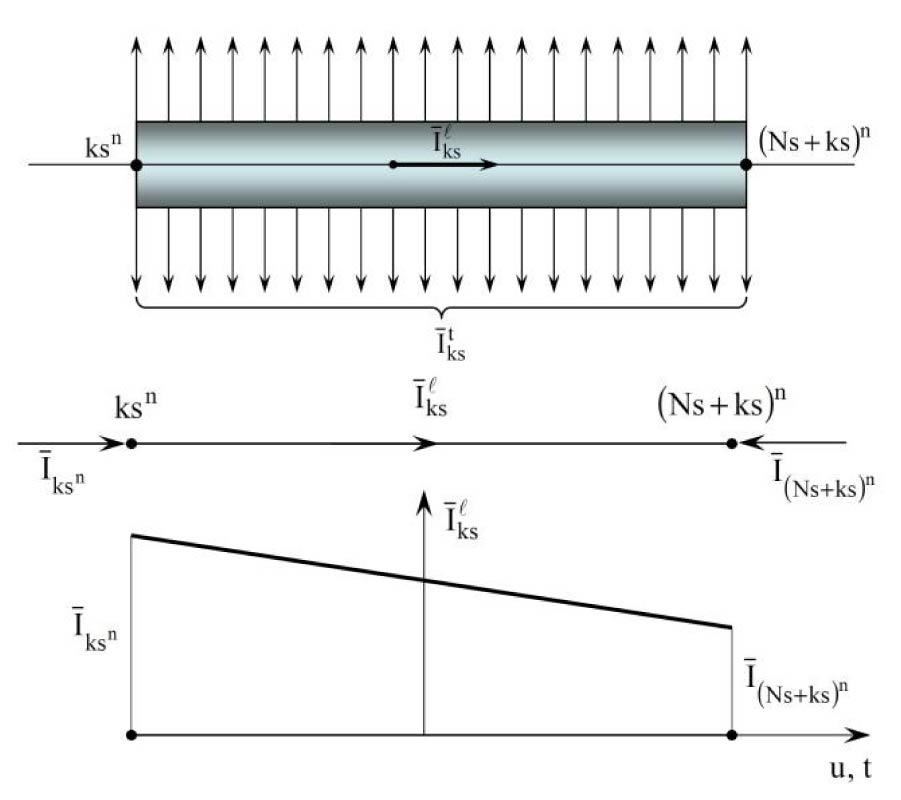
This paper presents a novel approach for solving the frequency responses of a powerline network, which is a two-parallel-conductor system with multiple junctions and branches. By correcting the reflection coefficient and transmission coefficient of each junction, a complex network can be decomposed into several, single-junction, units. Based on the Baum-Liu-Tesche (BLT) equation, we preliminarily propose the calculation method of frequency responses for single-junction network. In accordance with the direction of power transfer, we calculate the frequency responses of loads connected to each junction sequentially, from the perspective of the network structure. This approach greatly simplifies the computational complexity of the network frequency responses. To verify the proposed algorithm, networks with various numbers of junctions and branches are investigated, and the results are compared with a commercial electromagnetic simulator based on the topology. The analytical results agree well with the simulated ones.
AN EFFICIENT METHOD FOR SOLVING FREQUENCY RESPONSES OF POWER-LINE NETWORKS
2015-05-04
PIER M
Vol. 42, 61-70
Inter-Subject Variability Evaluation Towards a Robust Microwave Sensor for Pneumothorax Diagnosis
Maria Christopoulou and Stavros Koulouridis
Pneumothorax is the medical condition caused by the air concentration inside the pleural cavity, the space between the lung and the chest wall. Apart from traditional diagnostic methods, it can be detected by using microwave sensors that capture variations in reflected electromagnetic field (EMF). Sex and obesity, related to the internal composition of the biological tissues, can influence the reflected EMF and therefore the sensor diagnostic ability. This paper investigates the effect on the performance of a proposed on-body dual-patch antenna sensor for pneumothorax diagnosis, due to inter-subject variability in underlying tissue structure. The sensor operates at frequency range of 1-4 GHz. The challenge of the paper is to propose frequency bands for robust and safe sensor operation. S12 parameter alternation versus frequency is assessed for healthy and pathological cases. Implemented thorax numerical models include modified (i) closed rectangular multilayered and (ii) MRI-based anatomical ones. In rectangular models, thickness and configuration of muscle, fat and bone tissues are varied, according to literature. Additionally, sex-related anatomical differences are taken into account in MRI-based models. All scenarios are solved using Finite Difference Time Domain method. Results revealed that the proposed frequency bands lie within 1-2.7 and 2.9-3.5 GHz, for muscle, 1.4-3.5 GHz for fat and 1-2.2 and 2.8-3.5 GHz, for bone variations. Numerical evaluations for accurate anatomical models verify the findings.
INTER-SUBJECT VARIABILITY EVALUATION TOWARDS A ROBUST MICROWAVE SENSOR FOR PNEUMOTHORAX DIAGNOSIS
2015-05-01
PIER Letters
Vol. 53, 51-55
A Novel Printed Helical Antenna for a Circularly Polarized Tilted Beam
Xiao-Qiang Yang , Ze-Hong Yan , Tian-Ling Zhang and Binbin Fan
A new printed helical antenna (PHA) for a circularly polarized (CP) titled beam is proposed. With the introduction of a multiple sections technique into the PHA's helical arm, the antenna radiates a CP titled beam. To feed the antenna, a matching network composed of a 50 Ω microstrip transmission line and two symmetrical λ0/8 open stubs is designed. The simulated and measured results show that the PHA radiates a CP tilted beam with a maximum radiation direction of (θmax, φmax) = (32°, 135°) at f0 = 2.11 GHz. The measured bandwidth with a reflection coefficient lower than −10 dB is 11.8% (1.99-2.24 GHz), and the experimental results for the radiation pattern, gain, and axial ratio (AR) are also presented.
A NOVEL PRINTED HELICAL ANTENNA FOR A CIRCULARLY POLARIZED TILTED BEAM
2015-05-01
PIER
Vol. 151, 95-107
Full Wave Modeling of Brain Waves as Electromagnetic Waves (Invited Paper)
Sidharath Jain , Raj Mittra and Joe Wiart
This paper describes a novel technique which has the potential to make a significant impact on the mapping of the human brain. This technique has been designed for 3D full-wave electromagnetic simulation of waves at very low frequencies and has been applied to the problem of modeling of brain waves which can be modeled as electromagnetic waves lying in the frequency range of 0.1-100 Hz. The use of this technique to model the brain waves inside the head enables one to solve the problem on a regular PC within 24 hrs, and requires just 1 GB of memory, as opposed to a few years of run time and nearly 200 Terabyte (200,000 GB) needed by the conventional FDTD (Finite Difference Time Domain) methods. The proposed technique is based on scaling the material parameters inside the head and solving the problem at a higher frequency (few tens of MHz) and then obtaining the actual fields at the frequency of interest (0.1-100 Hz) by using the fields computed at the higher frequency. The technique has been validated analytically by using the Mie Series solution for a homogeneous sphere, as well as numerically for a sphere, a finite lossy dielectric slab and the human head using the conventional Finite Difference Time Domain (FDTD) Method. The presented technique is universal and can be used to obtain full-wave solution to low-frequency problems in electromagnetics by using any numerical technique.
FULL WAVE MODELING OF BRAIN WAVES AS ELECTROMAGNETIC WAVES (Invited Paper)
2015-04-29
PIER C
Vol. 57, 89-97
A Miniaturized Tunable Bandpass Filter with Constant Fractional Bandwidth
Liangzu Cao , Guangwen Li , Jian Hu and Lixia Yin
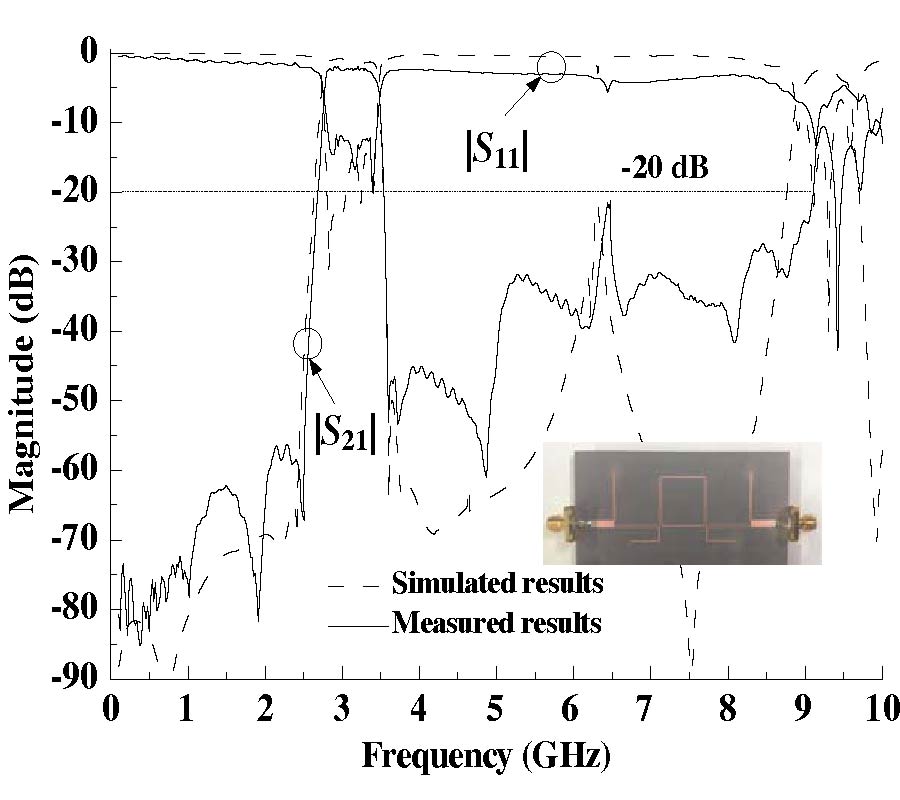
This paper presents a miniaturized tunable bandpass filter, consisting of two coaxial dielectric resonators and a pair of parallel-coupled lines. A coaxial dielectric resonators and a microstrip line form a new step-impedance resonator (SIR), which is different from a conventional SIR. Varactor diodes are connected to SIRs to tune the center frequency. The gap between parallel-coupled lines controls the inter-stage coupling coefficient. Lumped inductors used for coupling to I/O ports can reduce design complexity. The variations of coupling coefficient and external quality factor with tuning frequency are analyzed using HFSS software. A appropriate coupling coefficient which satisfies with constant fractional bandwidth within the tuning range is available. A tunable filter has been made of dielectric ceramics with dielectric constant of 38, fabricated on dielectric substrate and measured using Networks analyzer. Center frequencies vary from 0.43 GHz to 0.78 GHz, 3 dB fractional bandwidth from 6.4% to 6.8% when bias voltages are applied from 0 V to 10 V. The measured results validate the approach and agree with the simulation.
A MINIATURIZED TUNABLE BANDPASS FILTER WITH CONSTANT FRACTIONAL BANDWIDTH
2015-04-28
PIER M
Vol. 42, 49-59
Analytical Modeling and Analysis of through Silicon Vias (TSVs) in High Speed Three-Dimensional System Integration
Md Amimul Ehsan , Zhen Zhou and Yang Yi
This paper gives a comprehensive study on the modeling and design challenges of Through Silicon Vias (TSVs) in high speed three dimensional (3D) system integration. To investigate the propagation characteristics incurred by operations within the ultra-broad band frequency range, we propose an equivalent circuit model which accounts for rough sidewall effect and high frequency effect. A closed-form expression for TSV metal oxide semiconductor (MOS) capacitance in both depletion and accumulation regions is proposed. The coupling of TSV arrays and near and far field effect on crosstalk analysis are performed using 3D EM field solver. Based on the TSV circuit model, we optimize the TSVs' architecture and manufacturing process parameters and develop effective design guidelines for TSVs which could be used to resolve the signal integrity issues arising at high frequency data transmission in 3D ICs.
ANALYTICAL MODELING AND ANALYSIS OF THROUGH SILICON VIAS (TSVS) IN HIGH SPEED THREE-DIMENSIONAL SYSTEM INTEGRATION
2015-04-27
PIER C
Vol. 57, 81-87
A Novel Internal NFC/FM Antenna with Parasitic-Patch-Enhanced NFC Interrogation Range and FM Passive Gain
Woo-Su Kim and Sun-Ho Choi
An internal dual-band flexible antenna is described. The antenna employs a rectangular patch to improve the interrogation range (above 100 mm) for near-field communications (NFC), as well as the passive average gain performance (above -20 dBi) for FM radio. A preliminary prototype antenna exhibits an interrogation range of 110 mm at 13.56 MHz and a passive average gain performance from -15.6 to -13.5 dBi in the range 86-108 MHz, while demonstrating an omnidirectional radiation pattern for FM radio applications.
A NOVEL INTERNAL NFC/FM ANTENNA WITH PARASITIC-PATCH-ENHANCED NFC INTERROGATION RANGE AND FM PASSIVE GAIN
2015-04-27
PIER C
Vol. 57, 71-79
Design and Simulation of a Single Fed Multi-Band Circularly Polarized Microstrip Antenna with Slots
Mai F. Ahmed , Abdelhameed Abdelmoneim Shaalan and Kamal Awadalla
Nowadays the mobile personal communication systems and wireless networks are commonly used. Experience has revealed that the antennas suitable for these applications should have small size and operate in assigned different frequency bands. For this purpose, circularly polarized (CP) multi-band square microstrip antenna with three N-slots and a pair of truncated corners is proposed, designed and simulated. To reduce the losses and improve the antenna efficiency in addition to the bandwidth, an efficient electromagnetic band gap (EBG) structure is introduced. The proposed antenna has produced a higher efficiency, an improved operational bandwidth, and a higher gain relative to the conventional microstrip antenna.
DESIGN AND SIMULATION OF A SINGLE FED MULTI-BAND CIRCULARLY POLARIZED MICROSTRIP ANTENNA WITH SLOTS
2015-04-27
PIER Letters
Vol. 53, 45-50
A New Omnidirectional Circular Polarization Microstip Antenna
Kun Wei , Jian-Ying Li , Ling Wang and Zijian Xing
The configuration of a new circularly polarized microstrip antenna with omnidirectional radiation pattern for GPS-L1 application is proposed in this paper. The designed antenna has a back-to-back rectangular-patch structure, and two patches are fed by coaxial cable connected with a Wilkinson power divider. The horizontal omnidirectional radiation pattern was achieved by both simulation and measurement. Axial ratio in the peak gain plane was around 3 dB ranging from 1.5 dB to 3.6 dB. The variation of RHCP gain in the horizontal omnidirectional circular polarization plane was smaller than ±1 dBic. And peak RHCP gain of the designed antenna was about 2.3 dBic.
A NEW OMNIDIRECTIONAL CIRCULAR POLARIZATION MICROSTIP ANTENNA
2015-04-24
PIER Letters
Vol. 53, 37-44
Miniaturized Microstrip Patch Antenna with Spiral Defected Microstrip Structure
Hanae Elftouh , Naima Amar Touhami and Mohamed Aghoutane
Use of discontinuities in microstrip lines is currently employed to improve the performance of different passive circuits, including reduction of amplifiers, enhancement of filter characteristics and applications to suppress harmonics in patch antennas. This paper presents an improved method of size reduction of a microstrip antenna using Defected Microstrip Structure (DMS) that it is used to perform serious LC resonance property in certain frequency. The DMS is integrated in antenna structure, and therefore this method keeps the antenna size unchanged and makes a resonance frequency. This resonance is due to the abrupt change of current path of antenna that resonates at 5.8 GHz which is shifted to 2.69 GHz thanks to spiral DMS. A prototype of the antenna was fabricated with an FR4 substrate and tested.
MINIATURIZED MICROSTRIP PATCH ANTENNA WITH SPIRAL DEFECTED MICROSTRIP STRUCTURE
2015-04-24
PIER M
Vol. 42, 39-47
Relativistic Bateman-Hillion Solutions for the Electromagnetic 4-Potential in Hermite-Gaussian Beams
Robert Ducharme
The electromagnetic field equations are solved to give the 4-potential in Hermite-Gaussian beams as a function of both the 4-positions of the beam waist and each point in the field. These solutions are the sums of products of position-dependent complex 4-vectors and modified Bateman-Hillion functions. It is assumed that the time difference between the beam waist and each other point is equal to the distance between the points divided by the speed of light. This method is shown to generate solutions that preserve their forms under Lorentz transformations that also correspond to the well known paraxial solutions for the case of nearly parallel beams.
2015-04-23
PIER
Vol. 151, 83-93
Evaluation of Electron Beam Deflections Across a Solenoid Using Weber-Ritz and Maxwell-Lorentz Electrodynamics
Ray T. Smith , Fred P. M. Jjunju and Simon Maher
The deflection of charged particle beams by electric and/or magnetic fields is invariably based on the field centred approach associated with Maxwell-Lorentz and incorporated into the Lorentz force formula. Here we present an alternative method of calculation based on the force formula of Weber-Ritz and which does not involve, directly, the field entities E and B. In this study we evaluate the deflection of an electron beam by a long solenoid carrying direct current and positioned centrally across the beam. The experiment has some bearing on the Aharonov-Bohm effect in that our calculations indicate that even for very long solenoids the classical force on the beam remains finite. The standard interpretation of the effect is, however, in terms of quantum mechanics and vector potential. Experimental measurements have been made of electron beam deflections by three solenoids, 0.25 m, 0.50 m and 0.75 m long; each solenoid is doubly wound with the same winding density (2600 turns per metre) and carrying the same current of 5.00 A d.c. Our results indicate that, within the limits of experimental error, both Weber-Ritz and Maxwell-Lorentz theories correlate with measurements for the longer solenoids. However in the case of the shortest solenoid, the lack of uniformity of the magnetic field, leads to significant error in the calculation of beam deflection by the Lorentz force. By contrast in a Weber-Ritz calculation a precise value of beam deflection is obtained by equating the impulse of the non uniform beam force to the vertical momentum change of the electron. This is a fundamentally different approach which uses a statistical summation of forces on the beam in terms of relative velocities between moving electrons and involves a direct computation of the vertical force on the beam due to the circling solenoid current. This method has distinct advantages in terms of economy; that is, it does not involve directly field entities E and B, nor the leakage flux from the solenoid or the vector potential.
EVALUATION OF ELECTRON BEAM DEFLECTIONS ACROSS A SOLENOID USING WEBER-RITZ AND MAXWELL-LORENTZ ELECTRODYNAMICS
2015-04-21
PIER B
Vol. 62, 289-302
Near-Field Measurements for Safety Related Systems and Jamming Attack
Simone Soderi , Mario Papini , Jari Iinatti and Matti Hamalainen
Nowadays new safety related systems design include electromagnetic analysis (EMA) during their development. Each of these systems is composed by smaller apparatuses that contain electronic components able to emit electromagnetic (EM) waves. On the other hand, the usage of smaller integrated circuit increase their susceptibility to EM interference. Companies often underestimate the importance of emissions lower than standard limits. A method based on near-field (NF) to far-field (FF) transformation is introduced in order to evaluate radiated emission leakage. This study is an important novelty to analyze electromagnetic issues in the case of safety related systems. Moreover, authors presented how this method is positioned as to current standards. Effectively NF-FF is proposed for site survey analysis on assembled systems where EM leakages should be mitigated to avoid EM attacks. Tools and measurements presented here can be used to sketch the virtual EM (VEM) interface of device-under-test (DUT) in terms of emissions amplitude, frequency and direction. An opponent could use this information to jam these systems utilizing an attack model based on a circular antenna here presented. The results indicate that it is feasible to use this methodology to analyze EM radiated emissions starting from NF information. Compared with current immunity test levels, the EM attack planned on VEM interface characteristics can be deemed efficiently against safety related systems.
NEAR-FIELD MEASUREMENTS FOR SAFETY RELATED SYSTEMS AND JAMMING ATTACK
2015-04-21
PIER C
Vol. 57, 61-69
A New Class of Compact Linear Printed Antennas
Mohammad Almalkawi , Khair Alshamaileh , Said A. Abushamleh and Hussain M. Al-Rizzo
A new miniaturization methodology suitable for printed linear antennas is presented. Miniaturization is accomplished by replacing a linear radiator element of a conventional antenna with a compact continuously varying-impedance profile governed by a truncated Fourier series. A design example of a printed half-wavelength dipole antenna is designed and realized in microstrip technology. The performance of the proposed antenna is compared with its equivalent uniform dipole to highlight the performance equivalency. With a 25% reduction in the dipole arm length, both antennas show a measured peak gain and a fractional bandwidth of 5.4 dBi and 16%, respectively at 2.5 GHz; hence, the overall electrical performance is preserved. It will be shown that the design procedure is systematic and accurate. The proposed approach has potential for achieving advanced frequency characteristics, such as broad- and multi-band antenna responses.
A NEW CLASS OF COMPACT LINEAR PRINTED ANTENNAS
2015-04-21
PIER M
Vol. 42, 31-38
Graphene Assisted Radiation Adjustable OAM Generator
Fuchun Mao , Ming Huang , Jialin Zhang , Jingjing Yang and Tinghua Li
Graphene is increasingly being used in the design of electromagnetic devices. The resistivity of graphene can be adjusted via chemical potential tuning, which truly benefits the implementation of tunable and reconfigurable devices. This paper investigates the switch-like attribute of parasitic graphene surface used in a dipole operating at 0.39 THz. Further, a novel orbital angular moment (OAM) generator with radiation reconfiguration is proposed. Spiral beams carrying variety of OAM modes can be produced easily using the generator.
GRAPHENE ASSISTED RADIATION ADJUSTABLE OAM GENERATOR
2015-04-21
PIER
Vol. 151, 73-81
Push-Pull Phenomenon of a Dielectric Particle in a Rectangular Waveguide
Nayan Kumar Paul and Brandon A. Kemp
The electromagnetic force acting on a Rayleigh particle placed in a rectangular waveguide is studied. The particle is excited using the lowest order TE10 mode. It is determined that the particle is laterally trapped at the high intensity region of the electric field and either pushed away from or pulled toward the light source. This push-pull phenomenon depends on whether the frequency of the light wave is above or below the cutoff frequency (i.e. the particle can be pushed or pulled by tuning the frequency). While conventional optical tweezers rely on a balance of scattering and gradient force in the propagation direction, the phenomenon predicted here switches between the two forces near the lowest cutoff in a waveguide.
PUSH-PULL PHENOMENON OF A DIELECTRIC PARTICLE IN A RECTANGULAR WAVEGUIDE
2015-04-20
PIER C
Vol. 57, 53-60
Impact of Feeding Location on on-Body Performance of Small On-Ground Antennas
Tommi Tuovinen , Markus Berg and William G. Whittow
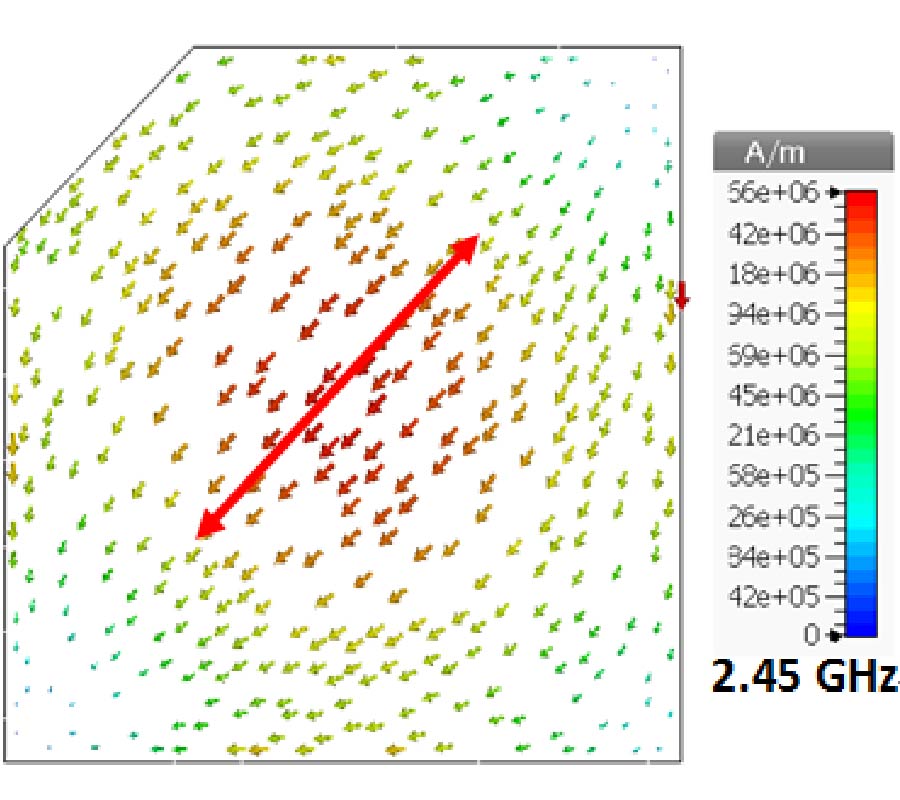
In this paper, three commonly used on-ground antenna types (loop, monopole and planar inverted-F antenna) are compared in the scope of wireless body area networks (WBAN) for on-body communications at 2.45 GHz. The bandwidth of the antennas can be enhanced by placing them towards the edge or the corner of the small ground plane (25 × 35 mm2) which has, as a consequence, detrimental effects on radiation characteristics that motivates the examination of the impact of feeding location for on-body propagation in detail. The present study quantifies the trade-off between on-body efficiency, the gain in the direction tangential to the surface, applicability to launch creeping waves and bandwidth potential of the different antenna types with various feeding locations. The simulated channel gain |S11| around tissue-equivalent numerical phantoms is compared to an analytical WBAN path loss model.
IMPACT OF FEEDING LOCATION ON ON-BODY PERFORMANCE OF SMALL ON-GROUND ANTENNAS
2015-04-17
PIER C
Vol. 57, 43-52
A Modfied Real-Valued Feed-Forward Neural Network Low-Pass Equivalent Behavioral Model for RF Power Amplfiers
Luiza Beana Chipansky Freire , Caroline De Franca and Eduardo Goncalves de Lima
This work addresses the low-pass equivalent behavioral modeling of radio frequency (RF) power amplifiers (PAs) for modern wireless communication systems. Similar to a previous approach, here the PA behavioral modeling is based on two independent real-valued feed-forward artificial neural networks (ANNs). A careful analysis is first presented to show that the nonlinear training algorithm for the previous ANN-based approach can be easily trapped into local minima, especially for the ANN that estimates the polar angle component of a complex-valued signal. Then, a modified ANNbased model is proposed to eliminate the local minimum problem, in this way significantly improving the modeling accuracy. Indeed, in the proposed model the two real-valued ANNs are responsible for estimating the in-phase and quadrature components of a complex-valued base-band signal. When applied to the behavioral modeling of a GaN HEMT class AB PA, the proposed ANN-based model reduces normalized mean-square error (NMSE) by up to 2.2 dB, in comparison with the previous ANN-based model having an equal number of network parameters.
A MODFIED REAL-VALUED FEED-FORWARD NEURAL NETWORK LOW-PASS EQUIVALENT BEHAVIORAL MODEL FOR RF POWER AMPLFIERS
2015-04-17
PIER C
Vol. 57, 35-42
A Compact Dual-Mode Metamaterial-Inspired Antenna Using Rectangular Type CSRR
Ashish Gupta , Sameer Kumar Sharma and Raghvendra Kumar Chaudhary
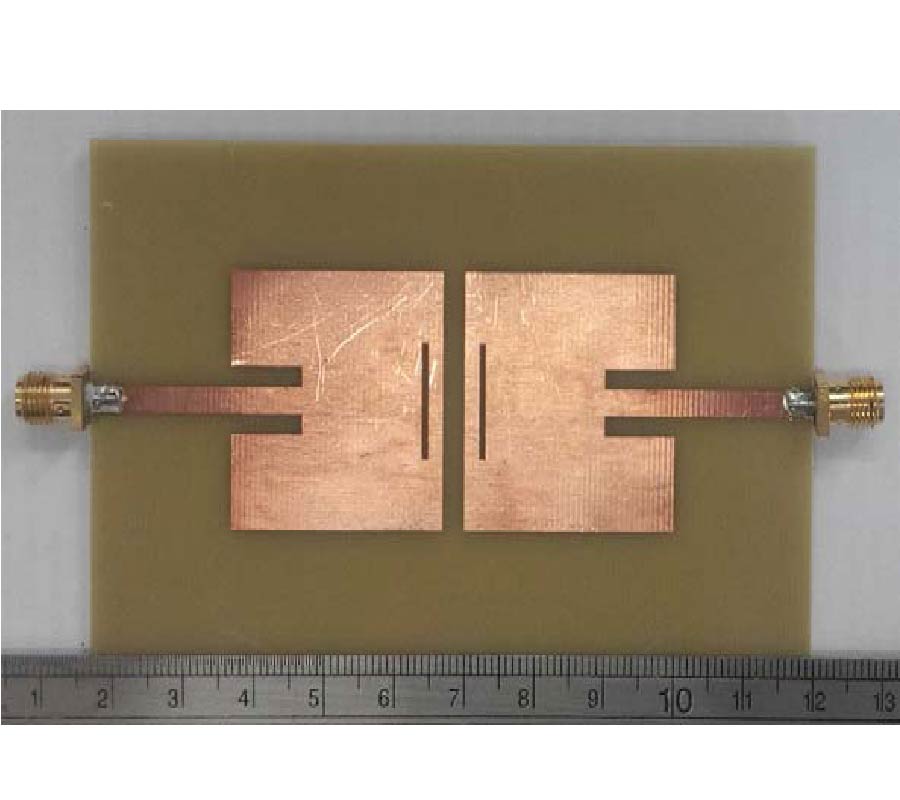
In this paper a compact planar dual-mode metamaterial (MTM) antenna using rectangular type complementary split ring resonator (CSRR) is proposed. It is observed that an increase in series capacitance tends to decrease resonant frequency at which n = 1 mode is obtained in the proposed antenna. Zeroth order mode (ZOR) is obtained by means of rectangular type CSRR, tends to provide the miniaturized area. Dispersion relations are shown in order to characterize the metamaterial behavior by extracting the equivalent circuit parameters. The resonant frequency of the antenna is 2.14 GHz with input reflection coefficient up to -45 dB. The electrical size of the proposed MTM antenna is 0.321λ0 × 0.285λ0 × 0.011λ0. ZOR mode is observed at 1.15 GHz although the proposed antenna is operated at 2.14 GHz. Furthermore, it achieves simulated antenna gain of 2.60 dB with 70% radiation efficiency. In order to verify the simulation results of antenna, a prototype is fabricated and measured.
A COMPACT DUAL-MODE METAMATERIAL-INSPIRED ANTENNA USING RECTANGULAR TYPE CSRR
2015-04-16
PIER B
Vol. 62, 277-288
On the Optimization of Halbach Arrays as Energy Storage Media
Daniel Mansson
In the paper presented here the optimization of Halbach arrays as storage media for mechanical potential energy is investigated with numerical simulations using FEMM and analytical calculations using the Maxwell stress tensor. Two opposing Halbach arrays form a ``magnetic spring'' and mechanical potential energy is stored when this structure is compressed. It is here seen that the wavelength of the magnetization in the material and the dimensions greatly in fluence the stored energy density. A clear region of maximum is identified which leads to important conclusions on how the material should be employed. The suggested approach for storing energy have advantages and approximately 250 kJ/m3 can be reached. The main drawback is the large prize of rare earth metals such as Neodymium.
ON THE OPTIMIZATION OF HALBACH ARRAYS AS ENERGY STORAGE MEDIA