Search Results(13891)

2015-07-14
PIER Letters
Vol. 54, 47-53
Compact Printed Four-Element MIMO Antenna System for LTE/ISM Operations
Lingsheng Yang , Su Yan and Tao Li
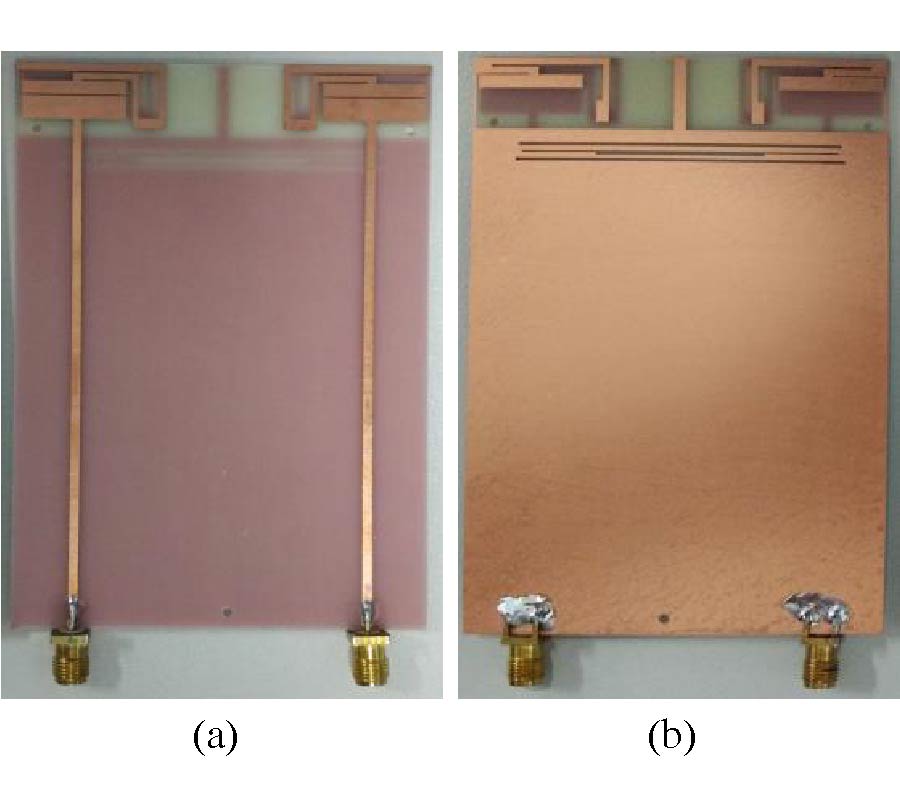
A novel four-element multiple input multiple output (MIMO) antenna system for LTE 2300 and 2.45 GHz ISM applications is presented. The total size of the proposed MIMO antenna system is 34 mm×18 mm, and the whole antenna system has a wide working bandwidth of 350 MHz (2.19-2.54 GHz). The measured isolation between antenna elements is higher than 15 dB with a close edge-to-edge separation of 0.03λ. Correlation coefficient of the MIMO antenna system is lower than 0.12, which can meet the requirements of 4G wireless systems.
COMPACT PRINTED FOUR-ELEMENT MIMO ANTENNA SYSTEM FOR LTE/ISM OPERATIONS
2015-07-14
PIER M
Vol. 42, 199-209
Computational Fluid Dynamics Thermal Prediction of Fault-Tolerant Permanent-Magnet Motor Using a Simplified Equivalent Model
Wenxiang Zhao , Liyang Chen , Guohai Liu and Jinghua Ji
The thermal characteristic of a new out-rotor fault-tolerant permanent-magnet (FTPM) motor is modeled and predicted in this paper. Flow characteristics and thermal characteristics of this FTPM motor are calculated by using computational fluid dynamics method. The key is that an equivalent model is developed to replace the real motor, offering the merits of simplified meshing progress and convenient thermal calculation. Furthermore, the effectiveness of the developed equivalent model has been verified by simulation and experiment. In addition, the temperature distribution of the entire motor is given by using equivalent models. The results can be provided to improve motor thermal performance.
COMPUTATIONAL FLUID DYNAMICS THERMAL PREDICTION OF FAULT-TOLERANT PERMANENT-MAGNET MOTOR USING A SIMPLIFIED EQUIVALENT MODEL
2015-07-13
PIER C
Vol. 58, 105-115
Theoretical and Simulation Studies on Water-Loaded Metal Diagonal Horn Antenna for Hyperthermia Application
Soni Singh and Surya Pal Singh
This paper is a continuation of our previous published work in which a water-loaded metal diagonal horn antenna has been designed at 2450 MHz for hyperthermia application and simulated results are compared with those measured. In the present study, theoretical investigations of Specific Absorption Rate (SAR) distribution in a homogeneous biological phantom (muscle) due to direct contact water-loaded metal diagonal horn antenna at 915 and 2450 MHz for hyperthermia application is presented. It is estimated theoretically that, at both the operating frequencies, a reasonable impedance matching is achieved at the interface between the antenna aperture and the biological phantom, where a computation of aperture admittance and reflection coefficient has been performed. Furthermore, it is confirmed through theoretical and simulation studies that the proposed horn antenna gives circularly symmetric SAR distribution in transverse plane in the biological phantom at 915 and 2450 MHz. The simulated and theoretical SAR distributions at 2450 MHz are compared with those determined at 915 MHz. In addition, thermal simulation results based on Pennes' Bio-heat equation (BHE) are applied to the realistic muscle model at 915 and 2450 MHz. The reduction of blood flow rate on temperature distribution is also studied.
THEORETICAL AND SIMULATION STUDIES ON WATER-LOADED METAL DIAGONAL HORN ANTENNA FOR HYPERTHERMIA APPLICATION
2015-07-11
PIER C
Vol. 58, 97-104
Design of Miniaturized Quasi-Yagi Antenna for Portable RFID Reader Applications
Junho Yeo and Jong-Ig Lee
A method to design a miniaturized two-element quasi-Yagi antenna (QYA) with size and gain requirements is presented for portable ultra high frequency (UHF) radio frequency identification (RFID) reader applications. The antenna consists of a driver dipole and a ground reflector, and these elements are serially connected with a coplanar strip line. The ends of both elements are folded back toward each other to reduce the lateral size of the antenna. A detailed design procedure of the proposed antenna is explained, along with a performance comparison for the input impedance, voltage standing wave ratio (VSWR), broadside gain, front-to-back (F/B) ratio, and total efficiency. A prototype antenna, covering the 860―960 MHz UHF RFID band with a gain > 4 dBi, is fabricated on an FR4 substrate with dimensions limited to 90 mm by 90 mm. The total width of the proposed antenna is reduced by approximately 41% compared to the conventional QYA without miniaturization, and an F/B ratio is improved by 1―8 dB in the band. Experiment results show that the proposed antenna has the desired impedance characteristics with a frequency band of 853―1,098 MHz for a VSWR < 2, and a stable broadside gain of 4.0―5.3 dBi in the UHF RFID band. Moreover, a measured F/B ratio > 13 dB is obtained.
DESIGN OF MINIATURIZED QUASI-YAGI ANTENNA FOR PORTABLE RFID READER APPLICATIONS
2015-07-11
PIER C
Vol. 58, 89-96
SRR Inspired Microstrip Patch Antenna Array
Chirag Arora , Shyam Sundar Pattnaik and Rudra Narayan Baral
This paper presents a novel approach for bandwidth enhancement and gain improvement of a microstrip patch antenna array for IEEE 802.16a 5.8 GHz Wi-MAX applications. A split ring resonator (SRR) has been designed to load the microstrip patch antenna array. The unloaded antenna array resonates at 5.8 GHz with gain of 4.3 dBi and bandwidth of 425 MHz, whereas when loaded with split ring resonator the gain approaches to 5.7 dBi and bandwidth increases to 610 MHz which corresponds to bandwidth enhancement of 3%. The electrical dimension of the patch is 0.23λ x 0.3λ.
SRR INSPIRED MICROSTRIP PATCH ANTENNA ARRAY
2015-07-10
PIER M
Vol. 43, 9-18
Attenuation Properties of Dusty Media Using Mie Scattering Solution
Sami M. Sharif
A more realistic model is developed to predict the specific attenuation when electromagnetic signals propagate through dusty media (dust storms). The model is based on Mie approximation for the scattering of electromagnetic signal by a spherical particle. Variation of the dust particles dimensions is considered in this model. Reliable published values for dust dielectric constant are used for computations over the frequency range from 2 GHz to 100 GHz, (i.e. S-band, X band, K-band, Ka-band, Ku-band and W-band). The model outcome is compared with the results from other models suggested in literature. The effect of air humidity on specific attenuation is also investigated.
ATTENUATION PROPERTIES OF DUSTY MEDIA USING MIE SCATTERING SOLUTION
2015-07-08
PIER C
Vol. 58, 79-87
Design and Implementation of Connected Antenna Array for Ultra-Wideband Applications
Yanfang Wang , Fuguo Zhu and Steven Gao
An integrated eight-element antenna array has been proposed for ultra-wideband (UWB) applications. It consists of eight UWB antenna elements and an eight-way binary-tree modified Wilkinson power divider. Any two adjacent elements in the array are connected to each other and share a common side, thus leading to a connected antenna array. Moreover, this arrangement can be utilized to avoid grating lobe level at higher frequencies. Each antenna element comprises a square ring patch and is excited by a tapered balun to achieve low cross-polarization levels. In order to validate the design, a prototype has been fabricated and measured. Both simulated and measured results confirm that the proposed integrated antenna array achieves a good performance of a reflection coefficient below -10 dB from 2.9 GHz to 10.8 GHz, including stable radiation patterns with low side lobe and cross-polarization levels, thus the antenna is promising for applications in UWB imaging systems.
DESIGN AND IMPLEMENTATION OF CONNECTED ANTENNA ARRAY FOR ULTRA-WIDEBAND APPLICATIONS
2015-07-08
PIER Letters
Vol. 54, 39-45
Small-Size 11-Band LTE/WWAN/WLAN Planar Handset Antenna
Hui-Fen Huang and Wei Zhao
This work presents a planar handset antenna having a small size 47×15×0.8mm3 and providing four wide operating bands of at least 698-960, 1710-2690, 3100-3900 and 5150-5850 MHz for the 11-band LTE700/GSM850/900, GSM1800/1900/UMTS/LTE2300/LTE2500, WiMAX 3.5GHz/ 5.4GHz, WLAN 5.8GHz. The multi-broadband antenna consists of Br-1, Br-2, Br-3, C-Strip and Ground plane. The structure is analyzed by S11 and surface current distribution. The simulated and measured results agree well. The gain of the proposed antenna is 1.51-4.12dBi, and the radiation efficiency is about 75%-94%.
SMALL-SIZE 11-BAND LTE/WWAN/WLAN PLANAR HANDSET ANTENNA
2015-07-08
PIER M
Vol. 43, 1-8
Improvement of Computational Performance of Implicit Finite Difference Time Domain Method
Hasan Khaled Rouf
Different solution techniques, computational aspects and the ways to improve the performance of 3D frequency dependent Crank Nicolson finite difference time domain (FD-CN-FDTD) method are extensively studied here. FD-CN-FDTD is an implicit unconditionally stable method allowing time discretization beyond the Courant-Friedrichs-Lewy (CFL) limit. For the solution of the method both direct and iterative solver approaches have been studied in detail in terms of computational time, memory requirements and the number of iteration requirements for convergence with different CFL numbers (CFLN). It is found that at higher CFLN more iterations are required to converge resulting in increased number of matrix-vector multiplications. Since matrix-vector multiplications account for the most significant part of the computations their efficient implementation has been studied in order to improve the overall efficiency. Also the scheme has been parallelized in shared memory architecture using OpenMP and the resulted improvement of performance at different CFLN is presented. It is found that better speed-up due to parallelization always comes at higher CFLN implying that the use of FD-CN-FDTD method is more appropriate while parallelized.
IMPROVEMENT OF COMPUTATIONAL PERFORMANCE OF IMPLICIT FINITE DIFFERENCE TIME DOMAIN METHOD
2015-07-07
PIER B
Vol. 63, 95-106
Electric Quadrupolarizability of a Source-Driven Dielectric Sphere
Arthur D. Yaghjian , Mario Silveirinha , Amirnader Askarpour and Andrea Alu
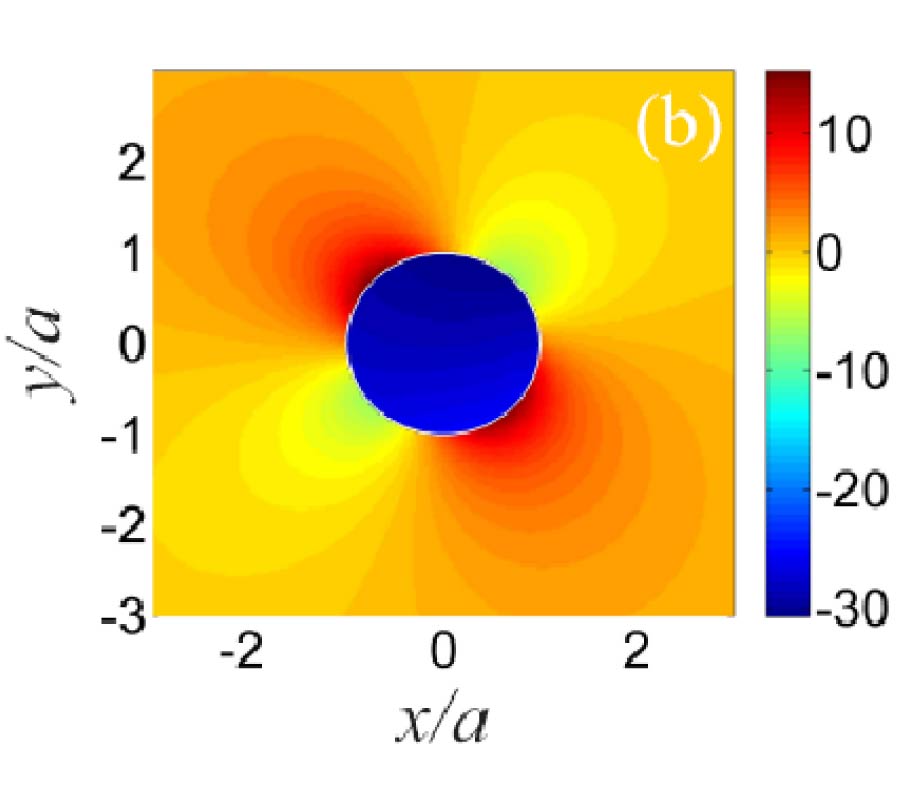
Since both metamaterials comprised of artificial molecules (inclusions in a host material) and natural molecular materials at optical and greater frequencies can exhibit significant electric quadrupolarization as well as electric and magnetic dipolarization, we determine the passive, causal electric quadrupolarizability for a spherically symmetric molecule, namely a dielectric sphere subject to source-driven applied fields. For source-driven excitations, it is found that two electric quadrupolarizability constants are generally required to characterize the electric quadrupolar response of the sphere, with one of the constants multiplying the divergence of the applied electric field. For source-free fields, such as the fields of the eigenmodes of an electric quadrupolar array, the local electric field illuminating each inclusion is solenoidal. The constitutive relation is characterized by just one quadrupolarizability constant, and the electric quadrupolarization becomes traceless. It is also found that the electric quadrupolarization becomes very large and effectively traceless near the resonant frequencies of electrically small plasmonic spheres with negative permittivity and for somewhat larger spheres with positive permittivity.
ELECTRIC QUADRUPOLARIZABILITY OF A SOURCE-DRIVEN DIELECTRIC SPHERE
2015-07-07
PIER
Vol. 152, 59-76
Extension and Validation of an Advanced Integral Equation Model for Bistatic Scattering from Rough Surfaces
Kuan-Liang Chen , Kun-Shan Chen , Zhao-Liang Li and Yu Liu
This paper deals with the modeling of bistatic scattering from a randomly rough surface. An advanced integral equation model is presented by giving its general framework of model developments, model expressions, and predictions of bistatic scattering for various surface parameters. Extension work to improve the model accuracy is also reported in more detail. In particular, the transition function for the Fresnel reflection coefficient is in more general form. Model predictions are illustrated, demonstrated, and validated by extensive comparisons with numerical simulations. The updated advanced integral equation model remains a compact algebraic form for single scattering and substantially improves prediction accuracy in bistatic scattering that is drawing more emerging applications in earth remote sensing.
EXTENSION AND VALIDATION OF AN ADVANCED INTEGRAL EQUATION MODEL FOR BISTATIC SCATTERING FROM ROUGH SURFACES
2015-07-06
PIER Letters
Vol. 54, 33-38
Equivalent Verification of the Effect of the Ionospheric Faraday Rotation on GEO SAR Imaging by Ferrite
Wei-Mei Li , Bo Liu and Hong-Yi Zhao
In Geosynchronous earth orbit synthetic aperture radar (GEO SAR) working system, the radar signal travelling through the atmosphere is sensitive to the ionosphere. One of the effects is the Faraday rotation under geomagnetic field, which is similar to the phenomenon when the signal traveling through a ferrite medium. So based on the theoretical inference, we semi-physically simulate Faraday rotation of the ionosphere with that of the ferrite in the ground, which is one of the experiments of the ground railway prototype testing for GEO SAR system. The measurements of a mountain without ionospheric Faraday rotation and under the equivalent Faraday rotation of ionosphere are given experimentally. Imaging studies show that the influence of the ionosphere Faraday rotation on the distributed targets imaging is not visually obvious. Our work provides experimental basis for the GEO SAR to successfully image on the satellite.
EQUIVALENT VERIFICATION OF THE EFFECT OF THE IONOSPHERIC FARADAY ROTATION ON GEO SAR IMAGING BY FERRITE
2015-07-06
PIER M
Vol. 42, 189-197
A New Analytical Description and FEA Validation of an Effective Method to Reduce the Cogging Torque in SM-AFPM Motors
Mohammadreza Pahlavani and Hamid Reza Gholinejad Omran
So far, several methods to reduce the cogging torque of permanent magnet motors have been introduced. Implementation and evaluation of these methods have usually been done on radial flux types of motors. Nowadays, as axial flux permanent magnet motors have more advantages over radial ones, they are more attractive. Therefore, in this paper analytical modeling and calculation of the most effective method impact in reducing the cogging torque in axial flux permanent magnet motors will be studied. In fact, in this method the radial edges of the magnets will be curved to have a significant impact on reducing this unwanted component. This paper introduces a new concept to model this method. Finally, the accuracy of the proposed method will be verified by finite element analysis.
A NEW ANALYTICAL DESCRIPTION AND FEA VALIDATION OF AN EFFECTIVE METHOD TO REDUCE THE COGGING TORQUE IN SM-AFPM MOTORS
2015-07-01
PIER C
Vol. 58, 69-77
Performance Investigations with Antipodal Linear Tapered Slot Antenna on 60 GHz Radio Link in a Narrow Hallway Environment
Purva Shrivastava and Thipparaju Rama Rao
The performance of wireless communication systems is predominantly dependent on propagation environment and respective radiating antennas. Due to the shorter wavelength at Millimeter Wave (MmW) frequencies, the propagation loss through the objects in indoor environments is typically very high. To improve the channel capacity and to reduce inter-user interference, a high gain directional antenna is desired at MmW frequencies. Traditional antennas used in MmW devices are not suitable for low-cost commercial devices due to their heavy, bulky and expensive configurations. This paper focuses on design and development of a very compact (44.61 mm x 9.93 mm x 0.381 mm) high gain Antipodal Linear Tapered Slot Antenna (ALTSA) utilizing Substrate Integrated Waveguide (SIW) technology at 60 GHz. Received signal strength (RSS), path loss (PL) and capacity are studied for MmW based wireless applications utilizing ALTSA with Radio Frequency (RF) measurement equipment in narrow hallway environment.
PERFORMANCE INVESTIGATIONS WITH ANTIPODAL LINEAR TAPERED SLOT ANTENNA ON 60 GHZ RADIO LINK IN A NARROW HALLWAY ENVIRONMENT
2015-06-29
PIER M
Vol. 42, 179-187
The Response of Layered Materials to EMG Waves from a Pulse Source
Radim Kadlec and Pavel Fiala
The authors present an analysis of conditions on the boundary between layers having varied electromagnetic properties. The research is performed using consistent theoretical derivation of analytical formulas, and the underlying problem is considered also in view of multiple boundaries including the effect of the propagation of electromagnetic waves with different instantaneous speeds. The paper comprises a theoretical analysis and references to the generated algorithms. The algorithms were assembled to enable simple evaluation of all components of the electromagnetic field in relation to the wave propagation speed in a heterogeneous environment. The proposed algorithms are compared by means of different numerical methods for the modelling of electromagnetic waves on the boundary between materials; moreover, the electromagnetic field components in common points of the model were also subject to comparison. When in conjunction with tools facilitating the analysis of material response to the source of a continuous signal, the algorithms constitute a supplementary instrument for the design of a layered material. Such design allows us to realize, for example, a recoilless plane, recoilless transition between different types of environment, and filters for both optical and radio frequencies.
THE RESPONSE OF LAYERED MATERIALS TO EMG WAVES FROM A PULSE SOURCE
2015-06-28
PIER C
Vol. 58, 61-68
Varying the Operation Bandwidth of Metamaterial-Inspired Filtering Modules for Horn Antennas
Mirko Barbuto , Fabrizio Trotta , Filiberto Bilotti and Alessandro Toscano
Recently, we have presented a novel approach to design metamaterial-inspired notch filters that can be integrated within horn antennas of receiving systems to mitigate the effects of narrowband interfering signals. The filter module consists of a single Split Ring Resonator (SRR), whose rejection band needs to be matched to the bandwidth of the particular interfering signal we want to suppress. Extending our previous work, we show here how it is possible to control the bandwidth of such a filtering module by using different metamaterial-inspired resonators. In particular, we show that, while a reduction of the rejection band can be easily obtained by increasing the miniaturization rate of the resonator, the enlargement of the rejection band cannot be obtained in the same way by simply reducing the resonator quality factor. We show that a solution of the latter problem can be worked out by applying the ``critical coupling'' concept and considering the filtering module to be made of two equal SRRs with a proper optimal separation. The effectiveness of the approach is demonstrated trough proper full-wave simulations and experiments on a fabricated prototype. The proposed technique, used here to design a filtering module for a specific radiating system, has a more general relevance and can be applied to all cases where the operation bandwidth of a component is limited by the resonant nature of a single metamaterial-inspired particle.
VARYING THE OPERATION BANDWIDTH OF METAMATERIAL-INSPIRED FILTERING MODULES FOR HORN ANTENNAS
2015-06-28
PIER Letters
Vol. 54, 27-32
A Horizontally Polarized Omnidirectional Antenna with a Reflector for Ceiling-Mounted Indoor Applications
Xiao-Yan Zhang , Xinxing Zhong , Zhiwei Liu and Bincheng Li
A novel wideband horizontally polarized omnidirectional antenna (HPOA) with an electrical conductor reflector is proposed for the 4th generation (4G) Long Term Evolution (LTE) applications. The proposed antenna consists of four pairs of printed dipoles distributed on the front and back of the substrate, and a star-shape patch integrated with stepped parallel strip lines constitutes a balun for the unbalance-balance transition from the coax feeding to the antenna. Both simulated and measured reflection coefficients (S11) demonstrate a wide -10 dB impedance bandwidth of 39.6%, from 1.82 to 2.72 GHz. This band covers PCS, UMTS, LTE 2300, LTE 2500, WLAN and Bluetooth bands. The presented antenna has a peak gain of 3.2 and 4.0 dBi at 1.95 and 2.48 GHz, respectively, and an omnidirectional radiation pattern in E-plane. HPOA may be suitable for ceiling-mounted indoor 4G applications.
A HORIZONTALLY POLARIZED OMNIDIRECTIONAL ANTENNA WITH A REFLECTOR FOR CEILING-MOUNTED INDOOR APPLICATIONS
2015-06-26
PIER C
Vol. 58, 51-60
Social Network Optimization for Microwave Circuits Design
Alessandro Niccolai , Francesco Grimaccia , Marco Mussetta , Paola Pirinoli , Van Ha Bui and Riccardo Enrico Zich
This paper presents the Social Network Optimization, a new population based algorithm inspired by the recent explosion of social networks and their capability to drive people's decision making process in everyday life. Early experimental studies have already proven the SNO effectiveness in the optimized design of planar and conformal antennas. Here this novel optimization procedure is described in detail, tested and compared with other traditional evolutionary algorithms, and finally used for the design of different microwave circuits.
SOCIAL NETWORK OPTIMIZATION FOR MICROWAVE CIRCUITS DESIGN
2015-06-26
PIER
Vol. 152, 41-58
Pathological Brain Detection in Magnetic Resonance Imaging Scanning by Wavelet Entropy and Hybridization of Biogeography-Based Optimization and Particle Swarm Optimization
Yudong Zhang , Shuihua Wang , Zhengchao Dong , Preetha Phillip , Genlin Ji and Jiquan Yang
(Background) We proposed a novel computer-aided diagnosis (CAD) system based on the hybridization of biogeography-based optimization (BBO) and particle swarm optimization (PSO), with the goal of detecting tumors from normal brains in MRI scanning. (Methods) The proposed method used wavelet entropy (WE) to extract features from MR brain images, followed by feed-forward neural network (FNN) with training method of a Hybridization of BBO and PSO (HBP), which combined the exploration ability of BBO and exploitation ability of PSO. (Results) The 10×K-fold cross validation result showed that the proposed HBP outperformed existing FNN training methods and that the proposed WE + HBP-FNN outperformed state-of-the-art CAD systems of MR brain classification in terms of classification accuracy. Moreover, the proposed method achieved accuracy of 100%, 100%, and 99.49% over Dataset-66, Dataset-160, and Dataset-255, respectively. The offline learning cost 208.2510 s for Dataset-255, and merely 0.053 s for online prediction. (Conclusion) The proposed WE + HBP-FNN method achieved nearly perfect detection on tumors in MRI scanning.
PATHOLOGICAL BRAIN DETECTION IN MAGNETIC RESONANCE IMAGING SCANNING BY WAVELET ENTROPY AND HYBRIDIZATION OF BIOGEOGRAPHY-BASED OPTIMIZATION AND PARTICLE SWARM OPTIMIZATION
2015-06-25
PIER M
Vol. 42, 169-177
Through Wall Detection with Relevance Vector Machine
Fang-Fang Wang , Ye-Rong Zhang , Hua-Mei Zhang , Lin Hai and Gong Chen
In this paper, through-wall detection problem using a data-driven model is addressed. The original problem is cast into a regression one and successively solved by means of the relevance vector machine (RVM). Multiple scattering is included in the nonlinear relationship between the feature vector extracted from the backscattered field and the position of the target obtained through a training phase using RVM; hence the nonlinearity inherent in the problem is considered. Besides, the presence of the wall is also contained in this relationship. The predictions obtained by RVM are probabilistic which capture uncertainty, and we can define error-bars for the predicted results. Therefore, the ill-posed nature of the problem is accounted for naturally, rather than using other regularization schemes. To access the effectiveness, accuracy and robustness of the proposed approach, numerical results related to a two-dimensional geometry are presented. This method is demonstrated efficient qualitatively and quantitatively.
THROUGH WALL DETECTION WITH RELEVANCE VECTOR MACHINE