Search Results(13797)

2015-04-03
PIER
Vol. 150, 1-12
An Adaptive Path Loss Channel Model for Wave Propagation in Multilayer Transmission Medium
Mohammad H. Ramezani , Victoria Blanes-Vidal and Esmaeil S. Nadimi
Advances in micro robots in non-invasive medicine have enabled physicians to perform diagnostic and therapeutic procedures with higher resolution and lower risk than before. However, navigation and precise localisation of such micro robots inside human body still remains a challenge. This is mostly due to the 1) lack of precise communication channel models, 2) inhomogeneity of the propagation medium and 3) non-geometric boundaries of the tissues morphometric parameters. In this study, we derive novel intra-body path loss channel models for wave propagation in wireless capsule endoscopy, i.e., propagation through the gastrointestinal tract and the abdominal wall. We formulate an adaptive attenuation parameter as a function of permittivity, conductivity and the thickness of various layers between the transmitter and the receiver. The standard deviation of modelling error of the path loss using our adaptive channel model is smaller than 50% of that of existing channel models. We further analyse the sensitivity of the path loss model to the variations of thickness of different abdominal wall layers. We finally show that the thickness of the fat layer has the greatest influence on the total attenuation parameter of the path loss model and therefore, we modify our adaptive model accordingly.
AN ADAPTIVE PATH LOSS CHANNEL MODEL FOR WAVE PROPAGATION IN MULTILAYER TRANSMISSION MEDIUM
2015-04-01
PIER C
Vol. 56, 183-193
Design of a Broadband Right-Angled Bend Using Transformation Optics
Mozhdeh Mola and Alireza Yahaghi
A right-angled waveguide bend using conformal transformation optics is proposed which guides the input electromagnetic wave smoothly through the waveguide, reduces the reflections and broadens the bandwidth of the device significantly. The isotropic material parameters are obtained through solving Laplace's equations with Dirichlet and Neumann boundary conditions. It is shown that the performance of the proposed bend is mainly determined by refractive indices lower than one. Utilizing this, the approximated resulting medium is implemented by drilling hole arrays in a dielectric background. In order to take advantage of planar technology, it can be implemented in a substrate integrated waveguide.
DESIGN OF A BROADBAND RIGHT-ANGLED BEND USING TRANSFORMATION OPTICS
2015-03-31
PIER C
Vol. 56, 173-181
Design and Development of Halbach Electromagnet for Active Magnetic Bearing
Kootta Parambil Lijesh and Harish Hirani
Active Magnetic Bearings (AMBs) are advantageous due to their active control on rotor position, but are disadvantageous due to their high initial as well running costs. The running cost of AMB can be reduced by improving design of electromagnet so that the same magnetic field can be generated with reduced supply of electric current. In the present paper, analyses of various arrangements of electromagnets using 2D finite element (FE) have been presented. To validate the results of magnetic flux density obtained from theoretical study, experiments were performed, and comparisons have been presented. The electromagnet using Halbach winding arrangement provides the best results.
DESIGN AND DEVELOPMENT OF HALBACH ELECTROMAGNET FOR ACTIVE MAGNETIC BEARING
2015-03-31
PIER
Vol. 151, 17-31
Statistical Maxwell's Electromagnetic Theories Applied to Imaging of Objects in Geophysical and Biological Media (Invited Paper)
Akira Ishimaru , Ce Zhang and Yasuo Kuga
Statistical Maxwell's Electromagnetic Theories have been developed over many years and applied to a wide range of practical problems in remote sensing of geographical media, imaging in biological media, medical optics, ultrasound imaging, and object detection and imaging and communications in clutter environment. This paper gives a review of recent advances, development and applications of statistical wave theory. Many important problems on imaging in geophysical and biological media have been treated often as separate problems. This paper attempts to present unified theoretical work and viewpoints under the statistical theories which may help further advance and understanding of theories and applications. The statistical electromagnetic theories encompass most advanced mathematical and theoretical work and most practical applications. This includes time-reversal imaging through multiple scattering media, super resolution, communication channel capacity in clutter, space-time vector radiative transfer, bio-electromagnetics and ultrasound in tissues, coherence in multiple scattering, memory effects, the use of transformation electromagnetics, seismic coda, and the fundamental multiple scattering theories. Statistical Electromagnetics Theories are one of the most challenging theoretical problems today involving many applications in geographical and biological media.
STATISTICAL MAXWELL'S ELECTROMAGNETIC THEORIES APPLIED TO IMAGING OF OBJECTS IN GEOPHYSICAL AND BIOLOGICAL MEDIA (Invited Paper)
2015-03-29
PIER Letters
Vol. 52, 105-112
Design and Analysis of a Controllable Miniaturized Tri-Band Frequency Selective Surface
Huangyan Li and Qunsheng Cao
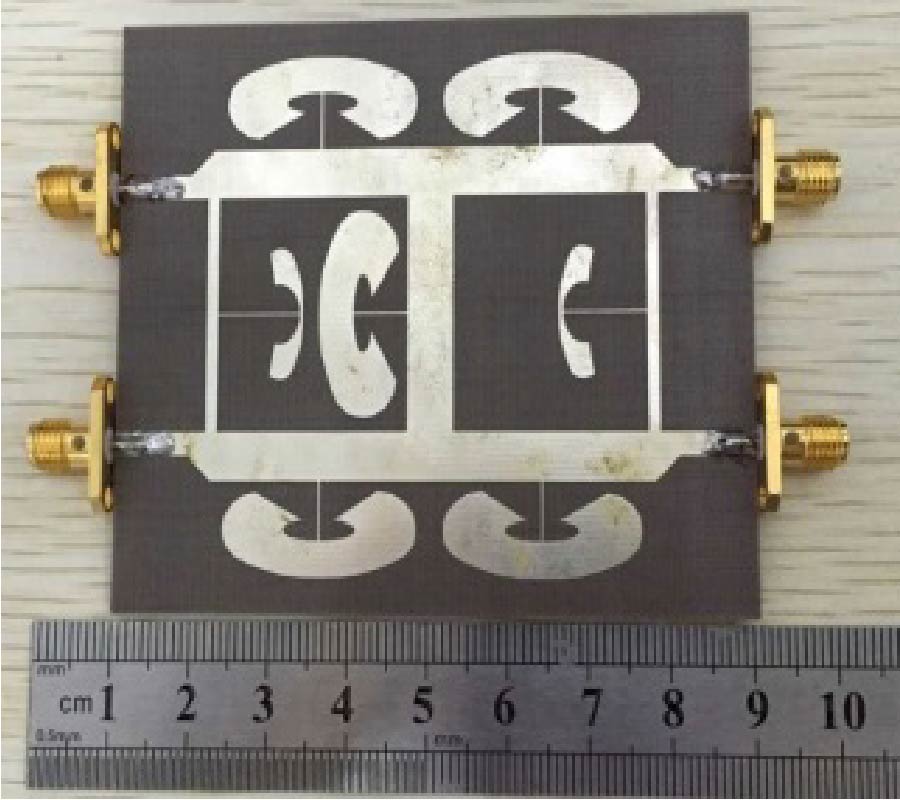
A novel miniaturized combined-element frequency selective surface (CEFSS) with simple design process is proposed for multiband applications. In this article, complementary meandered structures and complementary grid structures are combined to realize controllable tri-band characteristics, which allow the designed FSS to transmit different frequency signals at 3.3, 4.5 and 5.4 GHz while reflecting signals at 4.0 and 4.9 GHz. The miniaturized combined-element FSS in this paper has the advantage of smaller size comparing to traditional tri-band FSSs due to the use of meandered structures, which contributes to its independence of both angle and polarization. The associated equivalent circuit is provided to analyze its transmission characteristics. Furthermore, the performances of the proposed structure are evaluated by simulation and measurement, and they agree well.
DESIGN AND ANALYSIS OF A CONTROLLABLE MINIATURIZED TRI-BAND FREQUENCY SELECTIVE SURFACE
2015-03-29
PIER Letters
Vol. 52, 99-104
A Planar UWB Antenna with Triple-Notched Bands
Zhiyong Wang and Cuiping Zhang
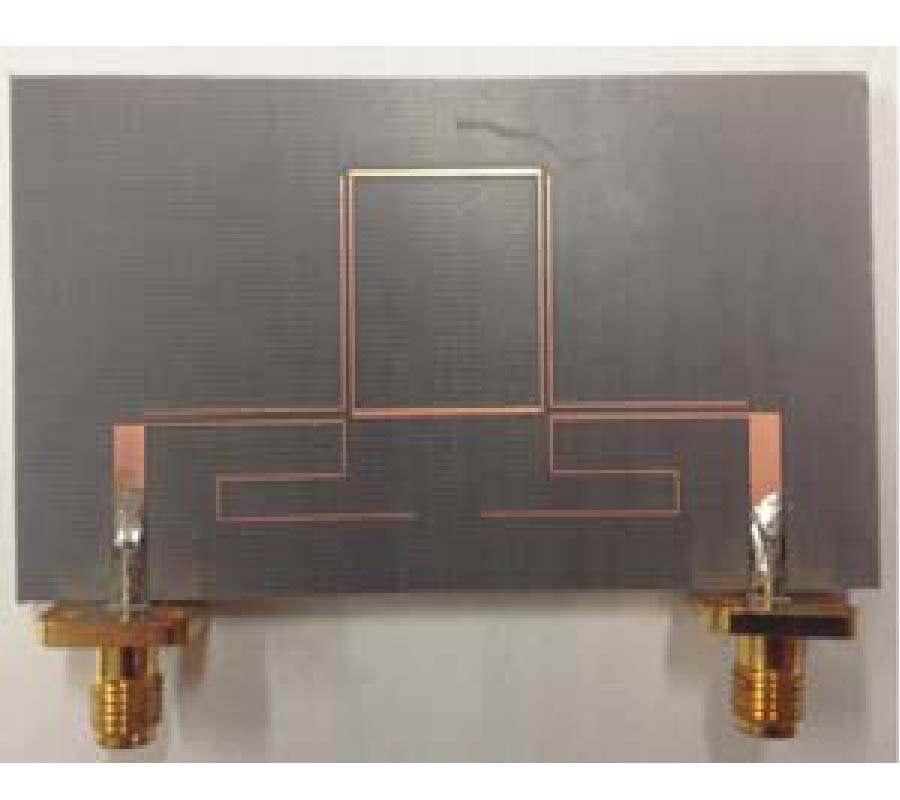
A planar ultra-wideband (UWB) antenna with triple-notched bands based on square ring short stub loaded resonator (SRSSLR) is presented in this paper. By coupling a SRSSLR beside the microstrip feedline, band-rejected filtering properties around the C-band satellite communication band, 5.8 GHz WLAN band, and 6.8 GHz RFID band are generated. The notched frequencies can be adjusted according to specification by altering the SRSSLR. The results indicate that proposed planar antenna not only retains an ultra wide bandwidth, but also owns triple band-rejections capability. The UWB antenna demonstrates omnidirectional radiation patterns across nearly whole operating bandwidth that is suitable for UWB communications.
A PLANAR UWB ANTENNA WITH TRIPLE-NOTCHED BANDS
2015-03-29
PIER M
Vol. 41, 189-198
Electromagnetic Waves Under Sea: Bow-Tie Antennas Design for Wi-Fi Underwater Communications
Evangelia A. Karagianni
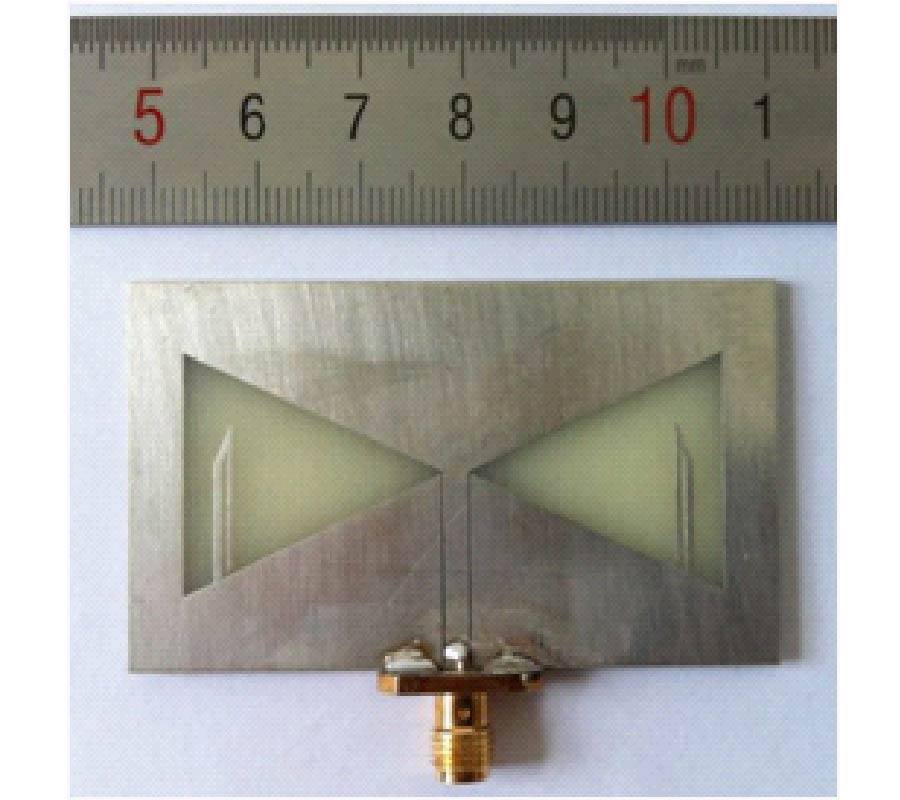
In this paper the propagation of electromagnetic waves in a medium with non zero conductivity is discussed, analyzing the dielectric properties of the sea water, in order to accurately characterize a wireless communication channel. Mathematical models for sea water dielectric constant, wavelength, propagation speed and path loss when an electromagnetic wave at 2.4 GHz propagates through sea water are presented. A Bow-Tie microstrip antenna that is required to overcome the high path loss and bandwidth requirements in sea water is studied. A dual-band antenna, with arc-shaped circular slots, operating for IEEE802.11 b/g/n standards, at 2.4 GHz and 5.1 GHz for WLAN communications, with dimensions 1.4 cm2 is implemented. Return loss, input impedance and gain have been extracted in order to characterize antennas' performance in a conductive medium.
ELECTROMAGNETIC WAVES UNDER SEA: BOW-TIE ANTENNAS DESIGN FOR WI-FI UNDERWATER COMMUNICATIONS
2015-03-25
PIER Letters
Vol. 52, 93-97
A Novel Coupled-Defected Ground Structure with Enhanced Coupling-Coefficient and Its Application in Filter Design
Si-Si Chen , Lin Li and Zhi-Yong Chen
A novel coupled-defected ground structure (C-DGS) with inductors inserted between the adjacent defected ground structure (DGS) cells is presented in this paper. In comparison to conventional C-DGS structure, the proposed C-DGS exhibits a larger coupling-coefficient, resulting in a wider stop-band. Moreover, the stopband can be adjusted flexibly without modification since the coupling-coefficient varies with the change of the inductance of the inserted inductor. Based on this new C-DGS, a low-pass filter (LPF) using cascaded C-DGS is constructed. The proposed structure is experimentally verified through the demonstration of a low-pass filter design.
A NOVEL COUPLED-DEFECTED GROUND STRUCTURE WITH ENHANCED COUPLING-COEFFICIENT AND ITS APPLICATION IN FILTER DESIGN
2015-03-24
PIER C
Vol. 56, 163-172
Clean Deconvolution Applied to Passive Compressed Beamforming
Thomas Fromenteze , Ettien Kpre , David Carsenat and Cyril Decroze
In this article, a matching pursuit algorithm is developed to improve the performance of a passive multiplexing technique based on compressed sensing. This deconvolution technique is applied to RADAR imaging in the microwave range, starting from previous studies based on a compact coding device and L1-norm regularizations. This study demonstrates that in this context, the quality of the reconstructed RADAR images can be improved using an algorithm close to Hogbom's Clean, and based on a dictionary built with Tikhonov pseudo-inversions. The theoretical principle of this new algorithm is developed, followed by a parameters study. Finally, an experimental validation is presented to demonstrate the efficiency of this iterative algorithm.
CLEAN DECONVOLUTION APPLIED TO PASSIVE COMPRESSED BEAMFORMING
2015-03-24
PIER Letters
Vol. 52, 87-92
Compact Band-Notched UWB Dielectric Resonator Antennas
Yangzhou Shao , Yuehe Ge , Yinyan Chen and Hai Zhang
Novel compact ultra-wideband (UWB) rectangular stacked dielectric resonator antennas (DRAs) with band-notched characteristics are proposed. The DRAs are designed to cover the FCC band (3.1-10.6 GHz) and have very compact sizes, due to the shorting conductor. Printed dipoles that are placed on one side of the dielectric resonator will resonate and generate band notches within the ultra-wide operating band. Simulations and measurements confirm the validation of the design principle.
COMPACT BAND-NOTCHED UWB DIELECTRIC RESONATOR ANTENNAS
2015-03-24
PIER Letters
Vol. 52, 79-85
An MNG-TL Loop Antenna for UHF Near-Field RFID Applications
Hu Liu , Ying Liu , Ming Wei and Shu-Xi Gong
A loop antenna is designed and fabricated for ultra-high frequency (UHF) near-field radio frequency identification (RFID) readers. The artificial mu-negative transmission line (MNG-TL) structure has been applied to the antenna design, which will help the current distribution along the loop to keep in phase even with the perimeter of the loop more than two operating wavelengths. Thus a strong and uniform magnetic field distribution in the near field of the antenna can be generated. The simulated and measured results indicate that a relatively large impedance bandwidth from 762 MHz to 1048 MHz has been obtained. The overall size of the antenna is 216 mm×216 mm×0.4 mm, and a large interrogation zone with uniform and strong magnetic field distribution of up to 187.2 mm×187.2 mm has been achieved.
AN MNG-TL LOOP ANTENNA FOR UHF NEAR-FIELD RFID APPLICATIONS
2015-03-23
PIER M
Vol. 41, 177-188
Modeling and Analysis of Halbach Magnetized Permanent-Magnets Machine by Using Lumped Parameter Magnetic Circuit Method
Guohai Liu , Mingming Shao , Wenxiang Zhao , Jinghua Ji , Qian Chen and Qian Feng
Permanent-magnets (PMs) with tangential and parallel magnetization directions are combined in the Halbach PM (HPM) machine, which can offer high performances. However, the existing lumped parameter magnetic circuit (LPMC) model can only calculate one PM magnetization direction, namely either tangential direction or parallel direction. The key of this paper is to propose a method to divide and establish equivalent magnetic motive force (MMF) for HPM machine with both tangential and parallel magnetizations. Then, a LPMC model, using equivalent MMF, is developed to predict the electromagnetic performances for a four-phase HPM machine. In order to verify the effectiveness of the proposed LPMC model, a 6-pole/8-slot 15 kW HPM prototype is built. The comparative results of the proposed LPMC model, finite-element results and the experiments verify the effectiveness of the proposed LPMC model.
MODELING AND ANALYSIS OF HALBACH MAGNETIZED PERMANENT-MAGNETS MACHINE BY USING LUMPED PARAMETER MAGNETIC CIRCUIT METHOD
2015-03-20
PIER B
Vol. 62, 241-253
Antenna Correlation and Its Impact on Multi-Antenna System
Xiaoming Chen
It is generally believed that antenna correlations of up to 0.5 in magnitude have negligible effects on the performance of multi-antenna systems, and that antenna correlation only affects the system performance via its magnitude. In this paper, we show that antenna correlations of 0.5 in magnitude that has negligible effect in capacity (i.e., theoretically maximum data rate) can cause noticeable degradation on the throughput (i.e., actual achievable data rate); and that, when the number of antennas is larger than two, the phase of the correlation also has an impact on the performance of multi-antenna system. We demonstrated these via simulations and measurements in a reverberation chamber.
ANTENNA CORRELATION AND ITS IMPACT ON MULTI-ANTENNA SYSTEM
2015-03-20
PIER B
Vol. 62, 225-239
Modeling of Imbalance in Differential Lines Targeted to SPICE Simulation
Flavia Grassi , Xinglong Wu , Yuehong Yang , Giordano Spadacini and Sergio A. Pignari
In this paper, a SPICE model representative for the mode conversion occurring in differential lines affected by imbalance either of the line cross-section and the terminal networks is developed. The model is based on the assumption of weak imbalance and allows approximate prediction of modal quantities, through separate modeling of the contributions due to line and termination imbalance by controlled sources with (possibly) frequency dependent gain. The proposed SPICE model is used to perform worst-case prediction of undesired modal voltages induced at line terminals by mode conversion.
MODELING OF IMBALANCE IN DIFFERENTIAL LINES TARGETED TO SPICE SIMULATION
2015-03-19
PIER C
Vol. 56, 153-162
An Improved Design of Dual-Band 3 dB 180° Directional Coupler
Bayaner Arigong , Jin Shao , Mi Zhou , Han Ren , Jun Ding , Qianli Mu , Yang Li , Song Fu , Hyoungsoo Kim and Hualiang Zhang
A novel design concept of dual-band 180° hybrid ring coupler is presented in this paper. Coupler is a key element in front-end building blocks of wireless transceiver systems such as industrial systems and consumer electronic devices. The proposed design is realized by combining multiple arbitrary length transmission lines operating at two frequencies with one dual-band 180° phase shifter. The even-odd mode method is applied to derive the design equations for proposed dual-band 3 dB 180° directional coupler. Based on the analysis, it is found that the realizable frequency ratio of the proposed coupler is very flexible (i.e. the ratio between the two operating frequencies). Moreover, the 180° phase shifter features arbitrary characteristic impedance (i.e. its characteristic impedance can be arbitrarily chosen), which further ensures the easy implementation of proposed structures. To prove the design concept, full-wave electromagnetic simulations are performed to design a dual-band ring hybrid coupler working at 0.9 and 1.98 GHz. An experimental prototype is fabricated on Rogers RT/Duroid 5880 board. The measurement results match well with the theoretical and numerical ones.
AN IMPROVED DESIGN OF DUAL-BAND 3 DB 180° DIRECTIONAL COUPLER
2015-03-19
PIER Letters
Vol. 52, 71-78
A Compact Uniplanar Rat-Race Coupler with Arbitrary Power Division Ratio and Harmonics Suppression
Qing He , Yinghong Wen , Song Chen and Kai Wang
In this paper, a miniaturized planar rat-race coupler is proposed to achieve arbitrary power division ratio and harmonic suppression performance simultaneously. It consists of six enhanced T-shaped line sections. The T-shaped lines can be equivalent to arbitrary electrical length lines rather than the conventional λ/4 lines. The explicit design formulas are derived and the characteristic impedances variations with the freedom variable are discussed. Simulated and experimental results show the harmonic suppression to be over -35 dB, while maintaining the conventional performance at the fundamental frequency. The circuit area of the prototype is only 30.8% of the conventional coupler.
A COMPACT UNIPLANAR RAT-RACE COUPLER WITH ARBITRARY POWER DIVISION RATIO AND HARMONICS SUPPRESSION
2015-03-18
PIER B
Vol. 62, 195-223
A Survey of Motion-Based Multitarget Tracking Methods
Changzhen Qiu , Zhiyong Zhang , Huanzhang Lu and Huiwu Luo
Multitarget tracking (MTT) in surveillance system is extremely challenging, due to uncertain data association, maneuverable target motion, dense clutter disturbance, and real-time processing requirements. A good many methods have been proposed to cope with these challenges. However, no up-to-date survey is available in the literature that can help to select suitable tracking algorithm for practical problem. This paper provides a comprehensive review of the state-of-the-art motion-based MTT techniques, classifies existing methods into two groups, i.e., the detect-before-track (DBT) scheme and the track-before-detect (TBD) scheme. The DBT scheme is employed to achieve robust and tractable tracking performance when the signal-noise-ratio (SNR) is strong. The TBD scheme is used in the scenarios of low SNR, and it aims to cumulate target energy by multiple sensor frames. Furthermore, depending on the data association mechanism, the DBT methods can be classified into two categories, data association based approaches and finite set statistics (FISST) based approaches. And the TBD methods can be classified into non-Bayesian approaches and Bayesian approaches depending on the basis theory used for tracking. For each category, this paper provides the detailed descriptions of the representative algorithms, and examines their pros and cons. Finally, new trends for future research directions are offered.
A SURVEY OF MOTION-BASED MULTITARGET TRACKING METHODS
2015-03-18
PIER C
Vol. 56, 145-151
DOA Estimation by Using Luneburg Lens Antenna with Mode Extraction and Signal Processing Technique
Xiang Gu , Sidharath Jain , Raj Mittra and Yunhua Zhang
We propose a framework based on the use of a flat-base Luneburg lens antenna with a waveguide array for Direction-of-Arrival (DOA) estimation, and also present a hybrid approach which combines waveguide mode extraction and signal processing techniques for enhancing the angular resolution of the lens antenna. The hybrid method involves sampling the electric field at specified positions when the lens is operating in the receive mode, and extracting the weights of the possible propagating modes in each waveguide. Following this, we correlate these weights with the known ones that have been derived by either simulated or measured signals from single targets located at different look angles, to make an initial estimate of the angular regions of possible DOAs. We then apply an algorithm based on the Singular Value Decomposition (SVD) of the simulated or measured database to estimate the angles of incidence. Numerical results show that the proposed framework, used in conjunction with the hybrid approach, can achieve an enhanced resolution over the conventional limit base on the 3 dB beamwidth of the lens antenna. Furthermore, it is capable of locating targets with different scattering cross-sections and achieving an angular resolution as small as 2˚, for a Luneburg lens antenna with an aperture size of 6.35λ and a Signal-to-Noise Ratio (SNR) of 30 dB.
DOA ESTIMATION BY USING LUNEBURG LENS ANTENNA WITH MODE EXTRACTION AND SIGNAL PROCESSING TECHNIQUE
2015-03-18
PIER M
Vol. 41, 167-175
Theoretical Approach of Electromagnetic Shielding of Multilayer Conductive Sheets
Sidi Mohamed Benhamou , Mohammed Hamouni and Smain Khaldi
This paper evaluates and compares the reflection loss, absorption loss and electromagnetic shielding effectiveness of a diverse range of shield. A design methodology is presented to yield these three quantities and propose a new relation of equivalent impedance for multilayer conductive sheets with considering the equivalence between single and the laminated structure. Analysis is carried out for the study of three shields: i) Polyaniline/polyurethane (PANI/PU), ii) Aluminum-Polyaniline/polyurethane-Aluminum (Al-(PANI/PU)-Al), iii) Nickel-Polyaniline/polyurethane-Aluminum (Ni-(PANI/PU)-Al) in the case of oblique incidence for electrical and magnetic polarization.
THEORETICAL APPROACH OF ELECTROMAGNETIC SHIELDING OF MULTILAYER CONDUCTIVE SHEETS
2015-03-16
PIER Letters
Vol. 52, 63-69
Array Aperture Extension Algorithm for 2-d DOA Estimation with L-Shaped Array
Xi Nie and Ping Wei
In this paper, an array aperture extension algorithm is developed for two-dimensional (2-D) direction-of-arrival (DOA) estimation with L-shaped array. We enlarge the dimension of the covariance matrix by using the rotational invariance in conjunction with the property that the signal covariance matrix is real diagonal matrix. Estimation of DOAs is performed by processing this larger dimensional matrix. The simulation results indicate that our method can improve the DOA estimation accuracy.
ARRAY APERTURE EXTENSION ALGORITHM FOR 2-D DOA ESTIMATION WITH L-SHAPED ARRAY