Search Results(13797)

2015-03-01
PIER
Vol. 150, 183-196
An Efficient and Accurate Method to Solve Low Frequency and Non-Conformal Problems Using Finite Difference Time Domain (FDTD) (Invited Paper)
Kadappan Panayappan and Raj Mittra
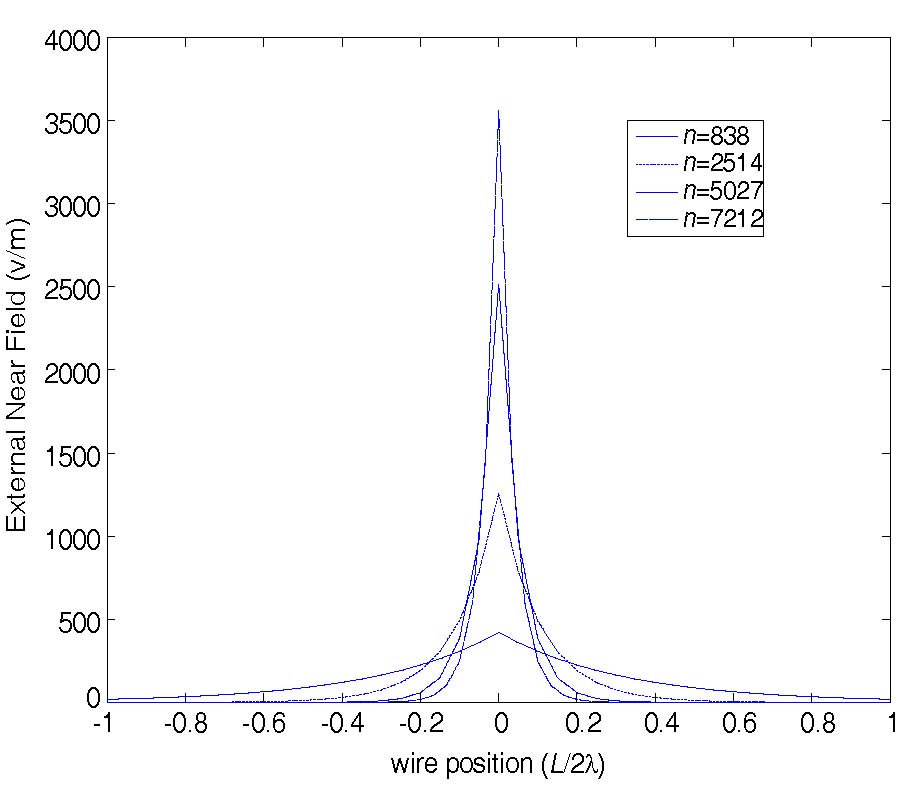
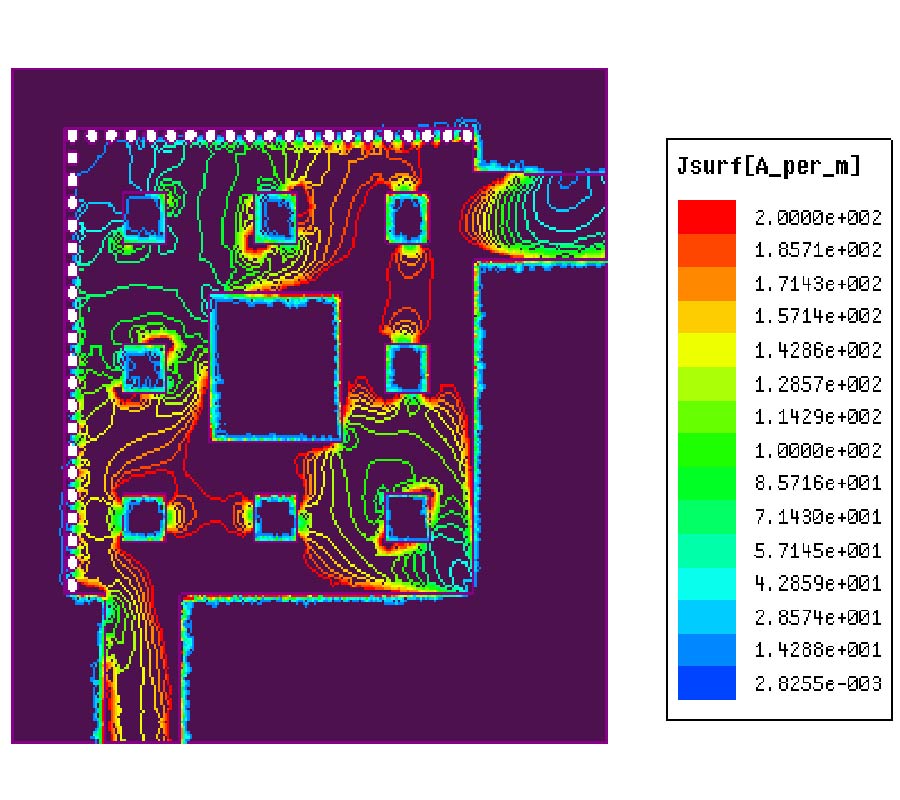
In this article we present νFDTD (New FDTD), an efficient and accurate method for solving low frequency problems and with those non-conformal geometries by using the Finite Difference Time Domain (FDTD) method. The conventional time domain technique FDTD demands extensive computational resources when solving low frequency problems, or when dealing with dispersive media. The νFDTD technique is a new general-purpose field solver, which is designed to tackle the above mentioned issues using some novel approaches, which deviate significantly from the legacy methods that only rely on minor modifications of the FDTD update algorithm. The νFDTD solver is a hybridized version of the conformal FDTD (CFDTD), and a novel frequency domain technique called the Dipole Moment (DM) approach. This blend of time domain and frequency domain techniques empowers the solver with potential to solve problems that involve: (i) calculating low frequency response accurately and numerically efficiently; (ii) handling non-Cartesian geometries such as curved surfaces accurately without staircasing; (iii) handling thin structures, with or without finite losses; and (iv) dealing with multi-scale geometries.
AN EFFICIENT AND ACCURATE METHOD TO SOLVE LOW FREQUENCY AND NON-CONFORMAL PROBLEMS USING FINITE DIFFERENCE TIME DOMAIN (FDTD) (INVITED PAPER)
2015-03-01
PIER
Vol. 150, 163-182
Recent Advances in the Asymptotic Theory of Diffraction by Elongated Bodies (Invited Paper)
Ivan Viktorovitch Andronov and Raj Mittra
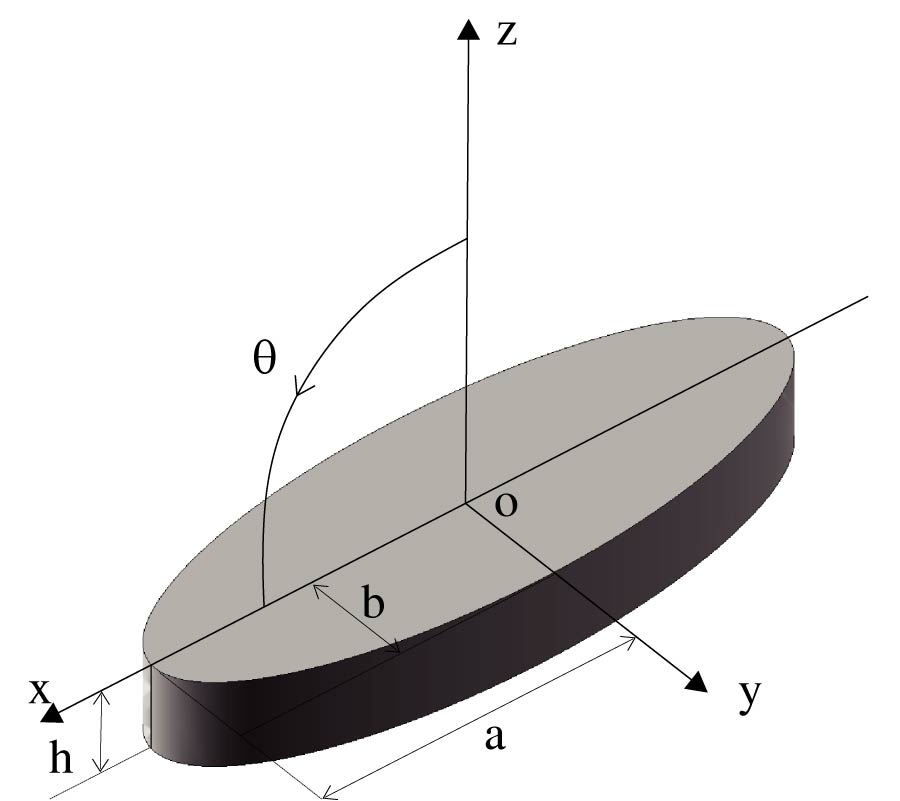
The asymptotic approach to the problem of high-frequency diffraction by elongated bodies is discussed in this work. The classical expansion is shown to require the frequencies to be too high for it to be applicable. Attempts to improve the approximating properties of the asymptotic methods are discussed. It is shown that effective approximations appear under the supposition that the squared transverse dimension of the body is proportional to its longitudinal size measured in wavelengths. This is referred to herein as the case of strongly elongated body and is examined in detail. It is assumed that the body has a rotational symmetry and can be well approximated by a spheroid. The cases of axial incidence and that of incidence at a grazing angle to the axis are considered. Both the asymptotics of the induced currents on the surface and of the far field amplitude are developed. Comparison with numerical results for a set of test problems shows that the leading terms of the new asymptotics provide good approximation in a uniform manner with respect to the rate of elongation. Some effects typical for scattering by elongated bodies are discussed.
RECENT ADVANCES IN THE ASYMPTOTIC THEORY OF DIFFRACTION BY ELONGATED BODIES (Invited Paper)
2015-02-28
PIER C
Vol. 56, 125-135
Bandwidth Optimisation for Semiconductor Junction Circulators
Ghassan Nihad Jawad and Robin Sloan
This paper presents for the first time a systematic algorithm to optimise the bandwidth for a semiconductor junction circulator with minimum magnetic bias requirements. The behaviour of the gyroelectric parameters was studied to describe the optimum biasing magnetic field for millimetre wave operation with maximum bandwidth. Perfect circulation conditions derived using a Green's function approach were analysed to determine the optimum radius and coupling half-angle for the semiconductor disk forming the circulator. Previously measured data for InSb at 77 K were used to find design parameters for optimum bandwidth of circulation at millimetre wave frequencies. The performance of the design was verified using a full-wave electromagnetic simulation package, where up to 90% 10 dB bandwidth centred at 200 GHz was achieved with magnetic biasing as low as 0.214 T.
BANDWIDTH OPTIMISATION FOR SEMICONDUCTOR JUNCTION CIRCULATORS
2015-02-27
PIER M
Vol. 41, 125-138
Compensation of Phase Errors for Compressed Sensing Based ISAR Imagery Using Inadequate Pulses
Qingkai Hou , Lijie Fan , Shaoying Su and Zeng Ping Chen
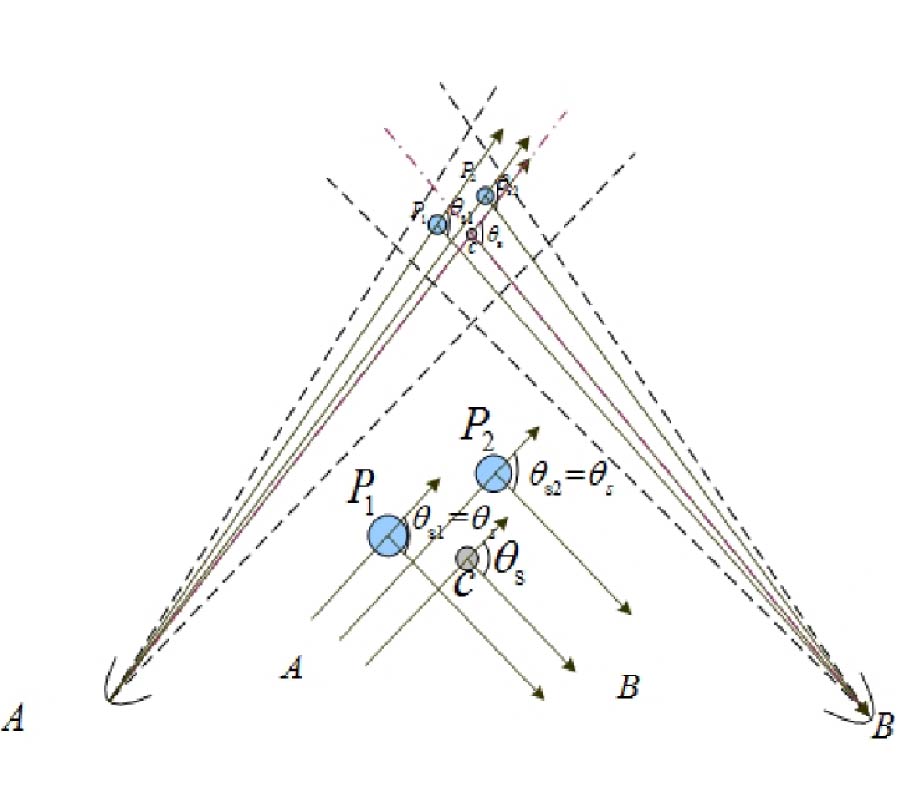
Due to the inaccuracies in radar's measurement, autofocus including range alignment and phase compensation is always essential in inverse synthetic aperture radar (ISAR) imagery. Compressed sensing (CS) based ISAR imagery suggests that the image of target can be reconstructed from much fewer random pulses. Because the number of pulses is inadequate and the pulse intervals are nonuniform, conventional phase compensating algorithms can't work in CS imaging. In this paper, an iterative algorithm is proposed to compensate the phase errors and reconstruct high-resolution focused image from limited pulses. In each iteration, the image of target is reconstructed by CS method, and then the estimation of phase errors is updated based on the reconstructed image. By cycling these steps, well-focused image can be obtained. The smoothed ℓ0 algorithm is used to reconstruct the image, and the idea of minimum entropy optimization is used to estimate the phase errors. Besides, a method of extracting range bins in range profile based on amplitude information is proposed, which can reduce the computational complexity and improve the speed of convergence considerably. Both simulation and experiment results from real radar data demonstrate the effectiveness and feasibility of our method.
COMPENSATION OF PHASE ERRORS FOR COMPRESSED SENSING BASED ISAR IMAGERY USING INADEQUATE PULSES
2015-02-27
PIER M
Vol. 41, 115-123
Scattering from a Target Above Rough Sea Surface with Breaking Water Wave by an Iterative Analytic-Numerical Method
Runwen Xu , Li-Xin Guo , Qiang Wang and Wei Liu
Two-dimensional (2D) electromagnetic scattering from a target above the sea with breaking water wave is studied by a multiregional iterative analytical-numerical method that combines the boundary integral method (BIM) and the Kirchhoff approximation (KA). Based on the ``Pierson-Moskowitz'' (PM) sea surface and the LONGTANK breaking wave, a theoretical model of a target above the rough sea surface with breaking wave is built firstly in this paper. Unlike traditional sea surface, the multipath scattering between the crest of the breaking wave and the target cannot be accurately predicted based on KA alone. To improve the algorithm precision, a multiregional hybrid analytical-numerical method is proposed. In our multiregional model, the whole sea is divided into two subregions: the breaking wave and the PM sea surface. The scattering from the breaking wave and the object is well approximated by BIM, while the PM sea surfaces can be estimated very well by KA based on Fresnel theories. Taking the interaction between KA region and BIM region into account, an iterative system is developed which gives a quick convergence. The hybrid technique presented here is highly efficient in terms of computing memory, time consumed, and versatility.
SCATTERING FROM A TARGET ABOVE ROUGH SEA SURFACE WITH BREAKING WATER WAVE BY AN ITERATIVE ANALYTIC-NUMERICAL METHOD
2015-02-26
PIER Letters
Vol. 51, 119-125
Experimental Study of a Low-Cost Radiometer for Hostile Scenarios
German Leon Fernandez and Angel G. Martino
Noncontact temperature measurements in industrial scenarios present great variety of difficulties (dust, vapor...). In this work, the authors study the use of a low-cost microwave power radiometers to measure the temperature of hot metal plate during its cooling with water. Two different radiometer, centred at different frequency bands, have been experimentally considered. The radiometers have been surrounded with a metal box to reduce undesirable radiation. Several experiments have been carried out, showing the ability of these radiometers to detect the cooling of the plates. A recalibration of the radiometers gain can be done to compensate the gain variation of the circuitry of the radiometers.
EXPERIMENTAL STUDY OF A LOW-COST RADIOMETER FOR HOSTILE SCENARIOS
2015-02-26
PIER M
Vol. 41, 105-114
Effect of Temperature on Nanocomposite of Metal Nanoparticles in Photonic Crystals
Nambi Ramachary Ramanujam , Kuladaisamy Wilson and Vasan Revathy
We theoretically investigate the photonic band gaps in one-dimensional photonic crystals based on nanocomposite of silver nanoparticles. The dielectric permittivity is calculated in accordance with temperature dependence of plasma frequency of silver nanoparticle. The effect of temperature on these structures by incorporating the volume expansion coefficient of nanoparticle is analysed. The behaviors of photonic band gaps with variation of nanoparticle concentration, radii of nanoparticle, thickness of the layers and temperature are observed. The evolution of these results leads to designing the desired photonic crystals.
EFFECT OF TEMPERATURE ON NANOCOMPOSITE OF METAL NANOPARTICLES IN PHOTONIC CRYSTALS
2015-02-24
PIER B
Vol. 62, 137-151
Electrodynamic Characteristics of a Radial Impedance Vibrator on a Perfect Conduction Sphere
Dmitriy Yu. Penkin , Victor A. Katrich , Yuriy M. Penkin , Mikhail Nesterenko , Victor M. Dakhov and Sergey L. Berdnik
A problem of the spherical antenna consisting of a thin radial monopole located on a perfectly conducting sphere is solved. The antenna is excited at the base by a voltage δ-generator. An approximate analytical solution of the integral equation for the current on a thin impedance vibrator was found by the method of successive iterations. The solution is physically correct for arbitrary dimensions of the spherical antenna and for any value of surface impedance distributed along the monopole. The validity of the problem formulation is provided by using the Green's function for the Hertz vector potential in unbounded space outside the perfectly conducting sphere and by writing the initial integral equation for the current on the monopole. Influence of the monopole dimensions and surface impedance upon the radiation characteristics and the input impedance of the spherical antenna is studied by numerical evaluations using zero order approximation. The input impedance of the monopole was determined by the method of induced electromotive forces (EMF) using the current distribution function thus obtained.
ELECTRODYNAMIC CHARACTERISTICS OF A RADIAL IMPEDANCE VIBRATOR ON A PERFECT CONDUCTION SPHERE
2015-02-23
PIER Letters
Vol. 51, 117-118
A Note on DAS's PCA in Online Phases
Yudong Zhang , Shuihua Wang , Genlin Ji and Jie Yan
PCA was effective and helpful in developing a classification system. However, it was inappropriate to perform two independent PCA models on ground truth images and query image, which was described in Figure 1 in Reference ``BRAIN MR IMAGE CLASSIFICATION USING MULTISCALE GEOMETRIC ANALYSIS OF RIPPLET, Progress in Electromagnetics Research, 137, 1-17, 2013''. In this note, we analyze the reason and revise Figure 1.
A NOTE ON DAS'S PCA IN ONLINE PHASES
2015-02-22
PIER B
Vol. 62, 121-135
Particle Swarm Optimization for Optimal Design of Broadband Multilayer Microwave Absorber for Wide Angle of Incidence
Subhanwit Roy , Souptik Dutta Roy , Jyotirmay Tewary , Ananya Mahanti and Gautam Mahanti
Microwave absorbers find a plethora of applications in the modern-day military and civil industries. This paper compares the performance of different variations of the Particle Swarm Optimization (PSO) algorithm to obtain optimal designs for multilayer microwave absorber over different frequency ranges, angles of incidence and polarizations. The goal of this optimization is to minimize maximum overall reflection coefficient of the absorber by choosing suitable layers of materials from a predefined database and simultaneously make the overall thickness the least practically possible. Numerical optimal results for each variation of the PSO are presented and the best results are compared with those existing in literature.
PARTICLE SWARM OPTIMIZATION FOR OPTIMAL DESIGN OF BROADBAND MULTILAYER MICROWAVE ABSORBER FOR WIDE ANGLE OF INCIDENCE
2015-02-21
PIER M
Vol. 41, 95-104
Resolution Enhancement for LASAR 3D Imaging via ℓ1 Regularization and SVA
Gao Xiang , Xiaoling Zhang , Jun Shi and Shun-Jun Wei
Linear array SAR (LASAR) has been attracting more and more attention for its capability of obtaining three dimensional (3D) resolutions. However, the low resolution in cross track (CT) direction limited by the length of its linear antenna array has become the bottleneck of its practical applications. To overcome this problem, we present a novel algorithm based on sparse reconstruction (SR) to improve the resolution in CT direction. First, it establishes a 1D real-valued sparse model for LASAR, which deals with the 3D image column by column along CT direction in each equi-range slice. This enables it to handle large scenes. Second, it employs the spatially variant apodization (SVA) to filter bases of the measurement matrix. As a result, the cross coherence gets suppressed as well, and it is helpful to improve the performance of sparse reconstruction algorithms (SRAs). Third, we propose the resolution enhancement ability (REA), which provides a new idea to evaluate how many times the resolution could be improved. Experimental results validate that when the signal to noise ratio (SNR) is 30 dB, LASAR could usually obtain 2 times of resolution improvement in CT direction, while the proposed method further improves the REA by a factor about 2.5. Moreover, the 3D surface terrain simulation shows a great improvement for the digital elevation map (DEM) in resolution enhancement.
RESOLUTION ENHANCEMENT FOR LASAR 3D IMAGING VIA ℓ<sub>1</sub>  REGULARIZATION AND SVA
2015-02-19
PIER C
Vol. 56, 119-124
Wide-Band Two-Stage GaAs LNA for Radio Astronomy
Jim Kulyk , Ge Wu , Leonid Belostotski and James W. Haslett
This paper presents the design, simulation and measurements of wideband two-stage LNAs using commercially available discrete components and targeting Square Kilometre Array (SKA) focal-plane-array verification studies. The design optimization was implemented through simulations based on theoretical work that shows that low wide-band noise figures and power match are achievable by inner-stage component selection and device bias. In contrast to the conventional practice of having each stage of a discrete LNA matched to 50 Ω, the inner stage was designed with a mismatching capacitor between the two stages. The measured results are presented for 0.7-1.4 GHz and achieve noise figures below 0.4 dB, gain of at least 28 dB, mid-band input return loss of 7 dB, output P1dB of 18.3 dBm, input-referred IP3 of -15.47 dBm, and power consumption of 500 mW with a supply voltage of 5 V.
WIDE-BAND TWO-STAGE GAAS LNA FOR RADIO ASTRONOMY
2015-02-19
PIER C
Vol. 56, 109-118
A Novel Range-Instantaneous-Doppler ISAR Imaging Algorithm for Maneuvering Targets via Adaptive Doppler Spectrum Extraction
Lijie Fan , Si Shi , Yang Liu , Shi You Xu and Zeng Ping Chen
A novel range-instantaneous-Doppler (RID) algorithm of inverse synthetic aperture radar (ISAR) imaging based on adaptive Doppler spectrum extraction is proposed in this paper. Regarding maneuvering targets, such as military aircraft, the ISAR image is blurred on cross-range domain when the range-Doppler (RD) algorithm is applied. The RID imaging method is often used to resolve the Doppler ambiguity, but there are some scatterers that could be lost because the sliced time is fixed in traditional RID imaging. To the method proposed in this paper, the optimal Doppler spectrum of each range bin is extracted by gradient energy function (GEF) after time-frequency (TF) analysis, and then all of the optimal Doppler spectrums are combined to obtain a final 2-D RID image of the target. Compared with the traditional RID method, the novel algorithm can obtain image with better focused quality. The results obtained from simulated and field-measured data verify the superiority of the proposed algorithm.
A NOVEL RANGE-INSTANTANEOUS-DOPPLER ISAR IMAGING ALGORITHM FOR MANEUVERING TARGETS VIA ADAPTIVE DOPPLER SPECTRUM EXTRACTION
2015-02-19
PIER M
Vol. 41, 85-93
Incomplete Bessel Polynomials: A New Class of Special Polynomials for Electromagnetics
Diego Caratelli , Galina Babur , Alexander A. Shibelgut and Oleg Stukach
A new class of incomplete Bessel polynomials is introduced, and its application to the solution of electromagnetic problems regarding transient wave radiation phenomena in truncated spherical structures. The definition of said special functions is introduced, and the relevant analytical properties are derived. The definition is such that the interrelationships between the incomplete polynomials parallel, as far as is feasible, those for canonical Bessel polynomials.
INCOMPLETE BESSEL POLYNOMIALS: A NEW CLASS OF SPECIAL POLYNOMIALS FOR ELECTROMAGNETICS
2015-02-19
PIER M
Vol. 41, 73-84
Electrical Capacitance Volume Tomography: A Comparison Between 12- and 24-Channels Sensor Systems
Aining Wang , Qussai M. Marashdeh , Fernando Lisboa Teixeira and Liang-Shih Fan
Spatial resolution represents akey performance aspect in electrical capacitance volume tomography (ECVT). Factors affecting the resolution include the ``soft-field'' nature of ECVT, the number of capacitance channels used, the ill-conditioned nature of the imaging reconstruction problem, and the signal-to-noise ratio of the measurement apparatus. In this study, the effect of choosing different numbers of capacitance plates on the performance of ECVT is investigated. Specifically, two ECVT sensors with 12 and 24 capacitance channels but covering equal volumes of a cylinder are used to examine the resulting impact on the image resolution.
ELECTRICAL CAPACITANCE VOLUME TOMOGRAPHY: A COMPARISON BETWEEN 12- AND 24-CHANNELS SENSOR SYSTEMS
2015-02-17
PIER C
Vol. 56, 101-108
Design of a 225 GHz High Output Power Tripler Based on Unbalanced Structure
Jin Meng , De Hai Zhang , Chang Fei Yao , Chang Hong Jiang and Xin Zhao
We report the results of a high-output power unbalanced tripler at 225 GHz, in which a pair of discrete Schottky varactor chips in parallel is adopted. Considering the present situation of domestic processing technology, the advantage of unbalanced structure is that it could provide bias to the diodes without a on-chip capacitor, which is essential in the balanced tripler scheme. The whole circuits are built on a 50 um-thick quartz substrate, and the novel field-circuit method is applied to the design process that enables us to calculate the impact of the parastics. The measured results indicate that the output power is more than 7 dBm in 215~228 GHz, and the output power is 12.3 dBm at 224 GHz when driven with 23.8 dBm of input power at room temperature. In general, this tripler has important practical value.
DESIGN OF A 225 GHZ HIGH OUTPUT POWER TRIPLER BASED ON UNBALANCED STRUCTURE
2015-02-16
PIER B
Vol. 62, 105-120
Antenna Aperture Localization for Arrival Time Correction Using First-Break
Kay Yuhong Liu , Elise C. Fear and Mike E. Potter
For microwave imaging systems that utilize antennas with spatially separated feeds and apertures, arrival time correction based on the antenna aperture location is one of the fundamental steps in radar data processing. The estimates of the antenna aperture time and the corresponding average velocity in the material in contact with the antenna are expected to have a significant impact on the quality of the reconstructed image. In this paper, we propose antenna aperture and average velocity estimation by least-squares regression analysis of the first-breaks. The results indicate that the proposed method is able to process either the reflection data or the transmission data measured by antennas with different structures. Compared to those readily identifiable characteristics in the signal, the first-break is less influenced by waveform distortion and is able to provide more consistent reference. Differences in the images of test objects are also noted.
ANTENNA APERTURE LOCALIZATION FOR ARRIVAL TIME CORRECTION USING FIRST-BREAK
2015-02-16
PIER B
Vol. 62, 87-103
Novel Wearable Eagle Shape Microstrip Antenna Array with Mutual Coupling Reduction
Mohamed Ismail Ahmed , Esmat A. F. Abdallah and Hadia El-Hennawy
Novel eagle shape microstrip wearable antennas (element and array) are presented. The single- and two-element antenna arrays are designed and fabricated on a Roger RT/Duroid 5880 substrate with dielectric constant of 2.2, thickness of 1.5748 mm, and tan δ = 0.001. The measured results show that a reduction in mutual coupling of 36 dB is achieved at the first band (1.68-2.65) GHz and 22.1 dB over the second band (6.5-8.86) GHz due to introducing electromagnetic bandgap (EBG) structures. EBG structure has an eagle-like shape with more gaps. By increasing the number of EBG cells and varying the gap distance between cells to certain limit, the mutual coupling reduction is improved. Also, a size reduction of 80% is achieved. The microstrip array was simulated by CST simulator version 2014 and fabricated by proto laser machine with precision 25 μm. The specific absorption rate (SAR) investigation is carried out on CST2014 Simulator. Maximum SAR value is 1.953 W/Kg which indicates that the eagle-shaped microstrip wearable antennas are safe for human. The antennas can be used in the official or RFID applications.
NOVEL WEARABLE EAGLE SHAPE MICROSTRIP ANTENNA ARRAY WITH MUTUAL COUPLING REDUCTION
2015-02-16
PIER C
Vol. 56, 93-100
A Thin and Broadband Microwave Absorber Based on Magnetic Sheets and Resistive FSS
Dong Wan , Shaowei Bie , Jie Zhou , Haibing Xu , Yongshun Xu and Jianjun Jiang
To achieve broadband microwave absorption, a three-layer structure is designed and manufactured. It involves a resistive frequency selective surface (FSS) sandwiched between two layers of magnetic sheets. The measurement results reveal that this structure exhibits -13 dB reflectivity in the frequency range of 7.9-18 GHz while the thickness is only 1.7 mm. The reflectivity bandwidth at the level of -10 dB is 11.4 GHz which is much wider than that of magnetic sheets with non-resistive FSS or the magnetic sheets without FSS. The effect of resistive FSS on the performance of the multilayered absorber is discussed in detail. It is concluded that an embedded resistive double loops FSS can result in a secondary resonance peak which obviously broadens the reflectivity bandwidth of the magnetic sheets.
A THIN AND BROADBAND MICROWAVE ABSORBER BASED ON MAGNETIC SHEETS AND RESISTIVE FSS
2015-02-16
PIER
Vol. 150, 145-161
Omnidirectional Radiation in the Presence of Homogenized Metasurfaces
David Di Ruscio , Paolo Burghignoli , Paolo Baccarelli and Alessandro Galli
Analytical and numerical approaches are presented for modeling the interaction of azimuthally symmetric fields with omnidirectional metasurfaces, based on the use of locally homogenized equivalent sheet impedances. Radially uniform metasurfaces on layered dielectric media are described in terms of a spectral impedance dyadic, thus allowing for the derivation of the field excited by omnidirectional sources through a simple transmission-line model. In a first approximation, the effect of circular edges in laterally truncated structures is taken into account through an efficient physicaloptics method. Then, truncated and radially non-uniform homogenized layered structures are treated numerically with the method of moments, by suitably extending a recently developed spectral-domain formulation. Numerical results are presented for planar radiating structures based on omnidirectional metasurfaces, comparing the radiation patterns obtained through the proposed homogenized models with those calculated by means of full-wave simulations. The discussion emphasizes the validity of the proposed approaches and their usefulness in the analysis of two-dimensional leaky-wave antennas based on printed omnidirectional metasurfaces.
OMNIDIRECTIONAL RADIATION IN THE PRESENCE OF HOMOGENIZED METASURFACES