Search Results(13797)

2015-02-14
PIER Letters
Vol. 51, 109-115
An Improved Wideband 180-Degree Hybrid Applied to Balanced Mixer
Wei Zhao , Yong Zhang , Shuang Liu , Li Li and Rui-Min Xu
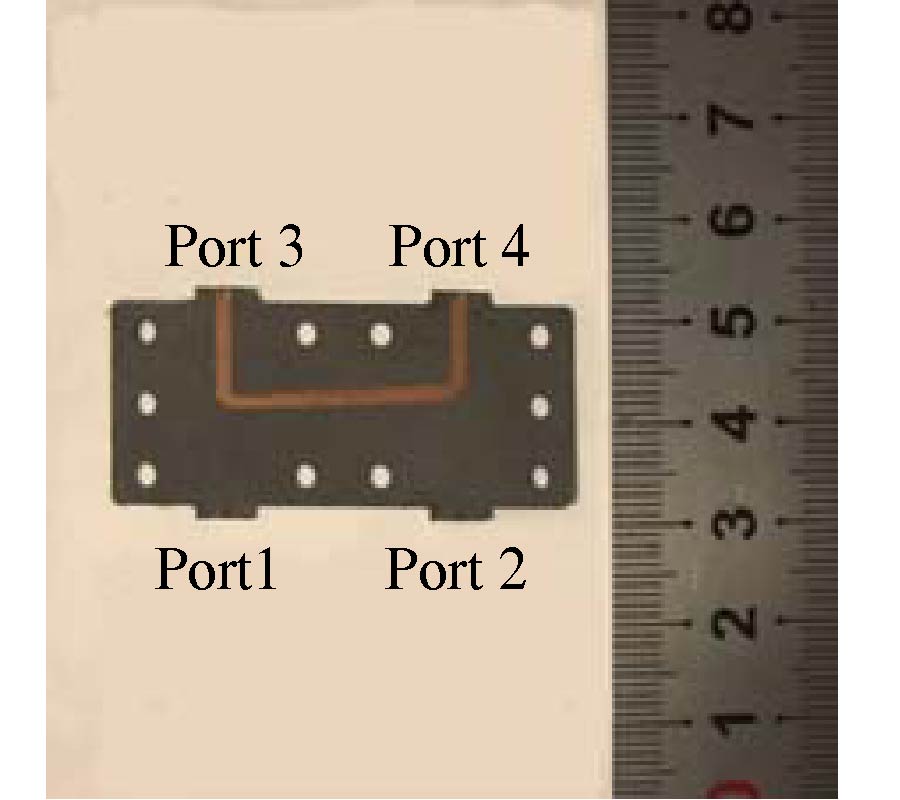
In this paper, an improved wideband millimeter-wave 180° hybrid is proposed to apply to balanced mixers and multipliers. The proposed hybrid consists of a transition of standard waveguide to suspended coplanar waveguide (SCPW) and a transition of SCPW to suspended stripline. According to the inherent electromagnetic field characteristics of the two transitions, the proposed hybrid has merits of broadband power distribution and high isolation, which does not rely on resonant circuits. The measured insertion losses and isolation of two transitions at Ka-band are typically 1.4 dB and 25 dB, respectively. To verify the application of the proposed hybrid, A W-band single balanced mixer based on the hybrid has been designed and fabricated. The measured single-sideband (SSB) conversion losses of the fabricated mixer are less than 9.5 dB for the radio frequency (RF) range from 80 to 108 GHz. The presented hybrid has been proven to be efficient for the design of millimeter-wave balanced mixers and could be well applied in multipliers and other integrated circuits.
AN IMPROVED WIDEBAND 180-DEGREE HYBRID APPLIED TO BALANCED MIXER
2015-02-14
PIER Letters
Vol. 51, 101-107
Analysis of Complex Discontinuities in Circular Waveguides Using Hybrid Finite Element Method and Multimodal Variational Method
Mohamed Yahia , Junwu Tao and Hedi Sakli
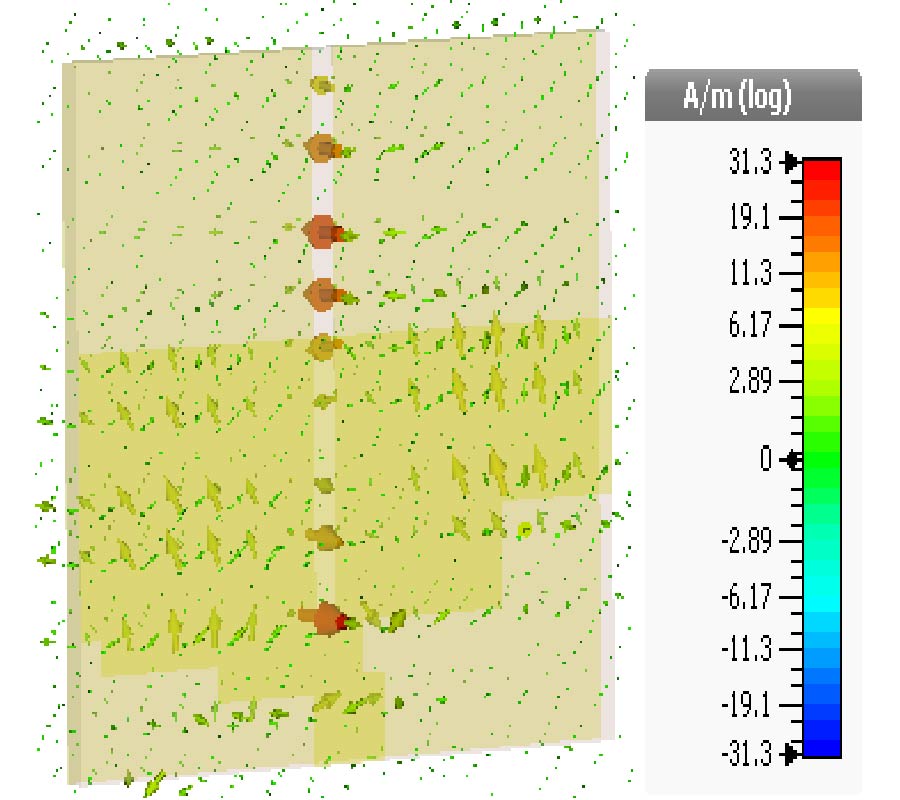
We propose a hybrid multimodal variational method (MVM) and finite element method (FEM) to the analysis of complex 2D discontinuities in circular waveguides. The finite element method characterizes waves in arbitrarily shaped discontinuities, and the total response of the circuit is obtained by applying the multimodal variational method. The proposed hybrid method is successfully applied to the full-wave analysis of discontinuities with great practical interest (i.e., circular, crossshaped, off-centered, ridged, multi-aperture irises, etc.), thus improving CPU time and memory storage against several full-wave finite element method based computer aided design (CAD) tools (i.e. HFSS High Frequency Structural Simulator).
ANALYSIS OF COMPLEX DISCONTINUITIES IN CIRCULAR WAVEGUIDES USING HYBRID FINITE ELEMENT METHOD AND MULTIMODAL VARIATIONAL METHOD
2015-02-14
PIER Letters
Vol. 51, 95-99
Homogenization of Periodic Objects Embedded in Layered Media
Teng Zhao , Jiming Song , Telesphor Kamgaing and Yidnekachew S. Mekonnen
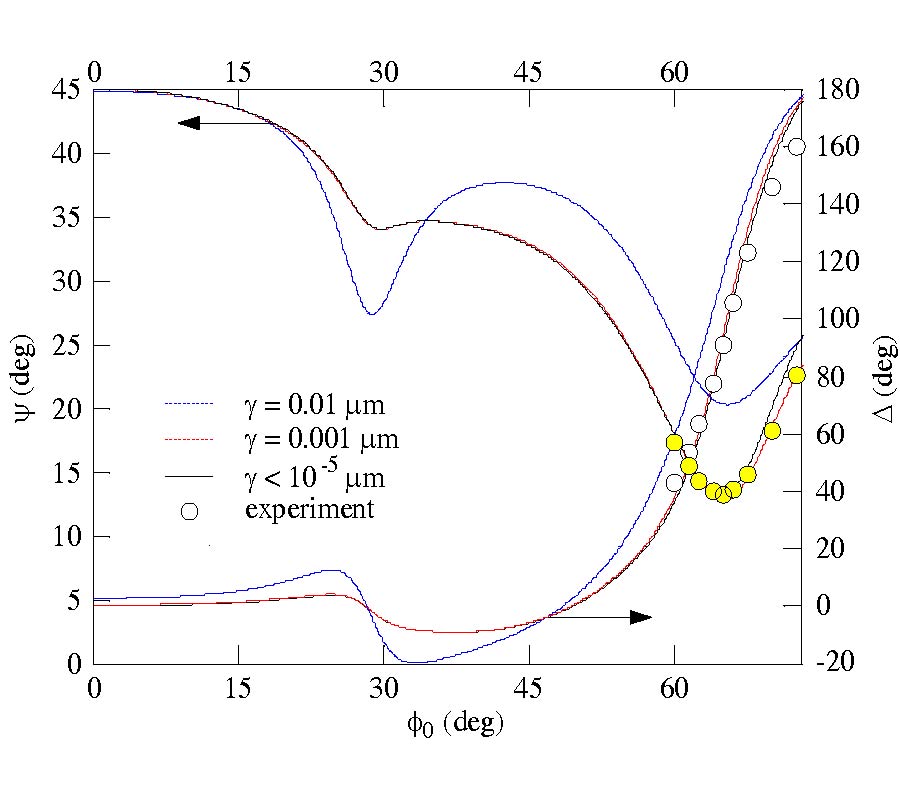
An effective medium modeling technique is proposed to homogenize the periodic objects embedded in layered media. The homogenization is based on the same scattering coefficients. An integral equation based approach is adopted to solve the scattering problem of original structures. Our modeling results are compared with Maxwell-Garnett mixing formula and published results. Good agreements have been observed. Periodic metal patches embedding in layered dielectric structure is fabricated and measured to validate the modeling technique. The difference between experiment results and proposed modeling results is less than 3%.
HOMOGENIZATION OF PERIODIC OBJECTS EMBEDDED IN LAYERED MEDIA
2015-02-14
PIER M
Vol. 41, 63-72
Equivalent Model from Two Layers Stratified Media to Homogeneous Media for Overhead Lines
Zeyneb Belganche , Abderrahman Maaouni , Ahmed Mzerd and Amine Bouziane
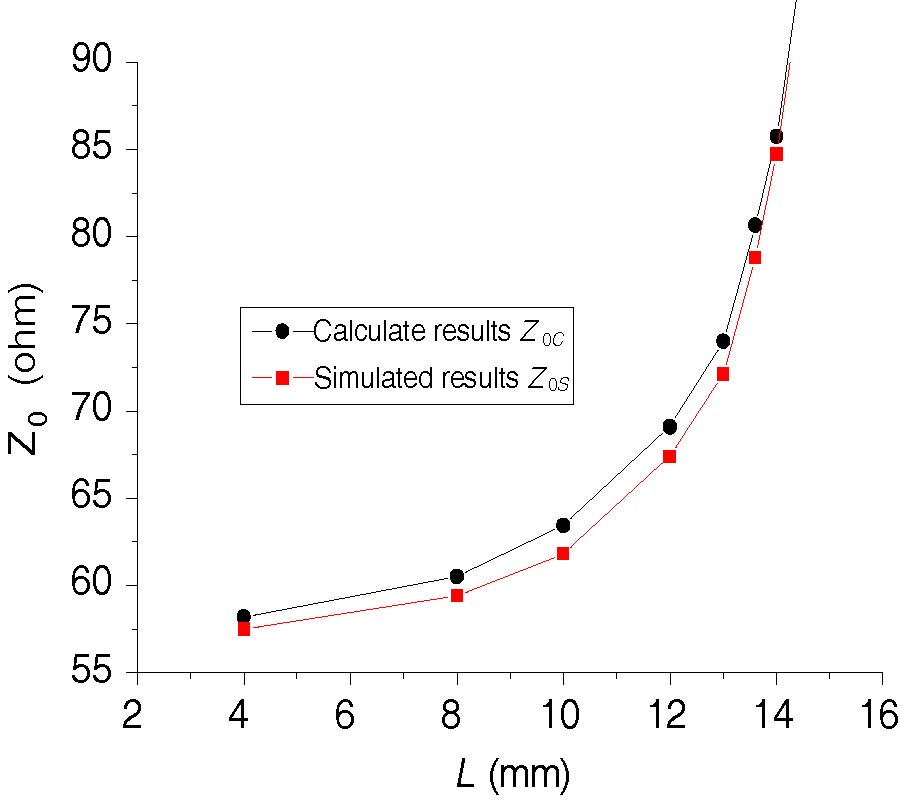
Overhead power transmission line is influenced by the resistivity of earth return path. The topic is developed in literature by considering a homogeneous and isotropic earth, or verily the soil is more represented by several layers. The scope of this paper is to provide an equivalent homogeneous soil to the two layers stratified soil. The equivalent electromagnetic properties of the soil are calculated using an accurate minimization method. Numerical results presented in this paper, show the efficiency of the proposed model.
EQUIVALENT MODEL FROM TWO LAYERS STRATIFIED MEDIA TO HOMOGENEOUS MEDIA FOR OVERHEAD LINES
2015-02-13
PIER B
Vol. 62, 63-86
Floquet Modal Analysis to Modelize and Study 2-d Planar Almost Periodic Structures in Finite and Infinite Extent with Coupled Motifs
Bilel Hamdi , Taoufik Aguili and Henri Baudrand
Studying of mutual coupling parameters between the antenna elements in an array environment has been considered as the subject of feature research. That is why, in this paper, we present a new Floquet modal analysis procedure for analyzing almost periodic structures. Accurate evaluation of the mutual coupling could be achieved by this analysis. It is shown how Floquet analysis can be exploited to study a finite array with arbitrary amplitude and linear phase distribution in both x-y directions including mutual coupling effects. Two different calculation methods of coupling coefficients between the array elements are presented, in spectral and spatial domains, to solve the suggested problem. For modeling the given structures, the moment method combined with Generalized Equivalent Circuit (MoM-GEC) is proposed. High gain in the running time and memory used is given using Floquet analysis. To validate this work, several examples are shown.
FLOQUET MODAL ANALYSIS TO MODELIZE AND STUDY 2-D PLANAR ALMOST PERIODIC STRUCTURES IN FINITE AND INFINITE EXTENT WITH COUPLED MOTIFS
2015-02-13
PIER C
Vol. 56, 83-91
Compact Printed Diversity Antenna for LTE700/GSM1700/1800/UMTS/Wi-Fi/Bluetooth/LTE2300/2500 Applications for Slim Mobile Handsets
Hari Shankar Singh , Gaurav Kumar Pandey , Pradutt Kumar Bharti and Manoj Kumar Meshram
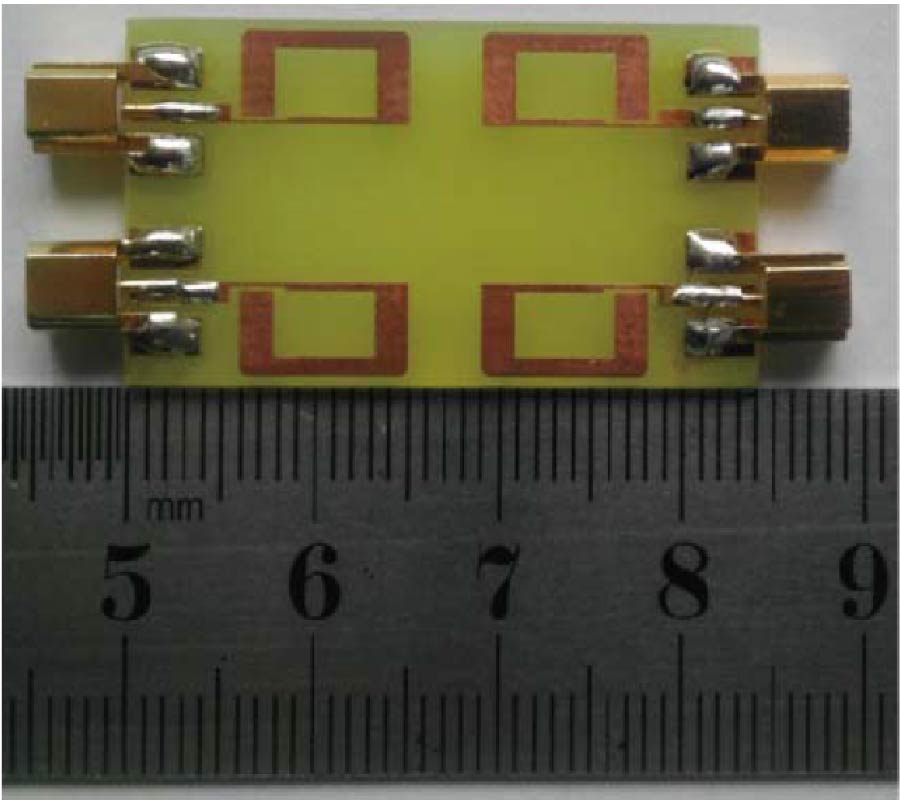
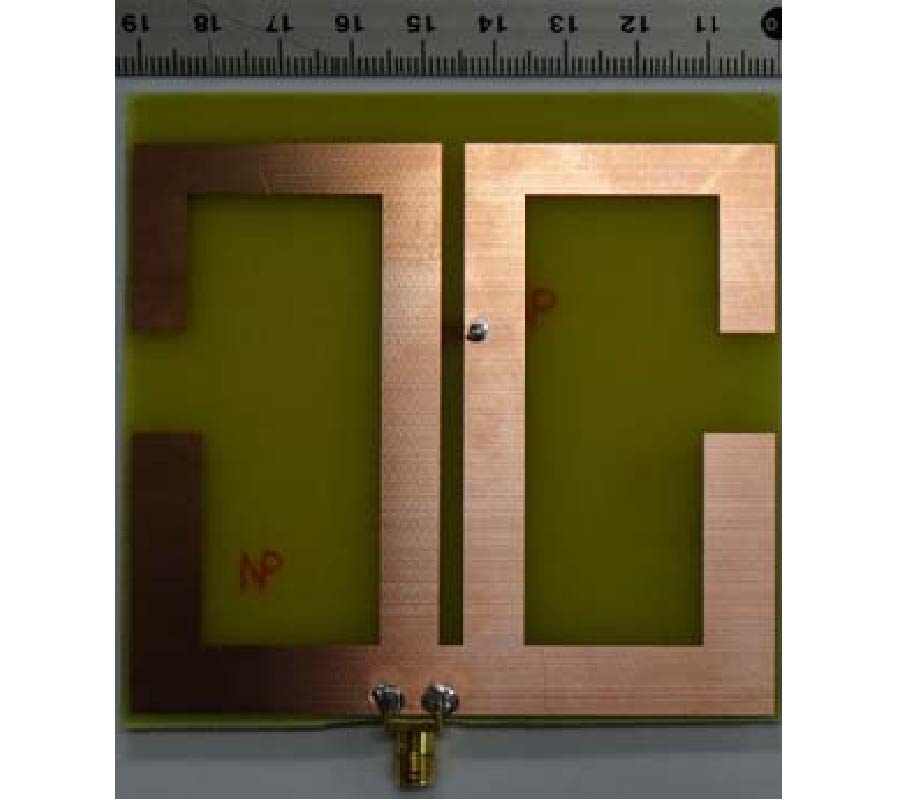
A planar, printed multiple-input multiple-output (MIMO) antenna for slim mobile handset is presented. The dual-antenna system, comprises two symmetric antenna elements, is printed on a printed circuit board (PCB) of mobile phone. Each antenna element consists of coupled-fed loop antenna. The loop antenna is formed by a quarter wavelength (at 762 MHz) meandered loop strip with end terminal short-circuited to the ground plane. A Tshaped protruded ground is deliberately designed to enhance the impedance matching and decoupled the two closely deposed antenna elements (distance between antenna elements are 0.03λ at 762 MHz). The integrity of the T-shaped decoupling structure and coupled-fed loop antenna array covers LTE700 (0.747 GHz−0.787 GHz) and WWAN (1.7 GHz-3.04 GHz) based on -6 dB reflection coefficient and achieves isolation between elements well below -10 dB over all the operating bands. The application platform is LTE700, GSM1700, GMS1800, UMTS, Wi-Fi, Bluetooth, LTE2300, and LTE2500 bands for the 2G/3G/4G mobile terminals. The effect of user proximity by considering the actual mobile environment is also studied in the form of total radiated power (TRP), specific absorption rate (SAR), diversity performances, and radiation performances. Finally, a prototype is fabricated and tested with network analyser. The measured results are found in good agreement with simulated ones.
COMPACT PRINTED DIVERSITY ANTENNA FOR LTE700/GSM1700/1800/UMTS/WI-FI/BLUETOOTH/LTE2300/2500 APPLICATIONS FOR SLIM MOBILE HANDSETS
2015-02-09
PIER C
Vol. 56, 73-82
Wideband Gap Coupled Sectoral Antenna for Communication Systems
Abhishek Kandwal , Jai Verdhan Chauhan and Sunil Kumar Khah
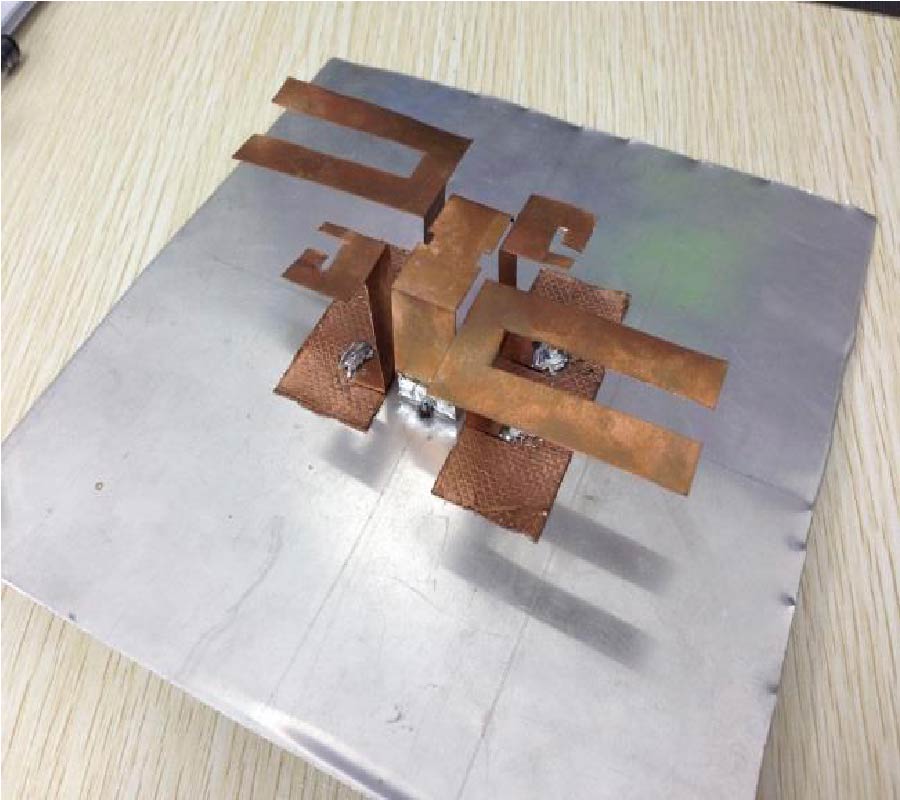
This paper presents the design of a novel wideband gap coupled sectoral antenna for communication systems. The circular patch is placed in the aperture of four sectoral rings. The antenna parameters are optimized using various simulations to attain good return loss and corresponding resonant frequency. The antenna operates in X-band at 10.35 GHz showing wideband characteristics along with high directivity and reduced side lobe level to a good extent. The antenna has also been studied using fuzzy inference system (FIS). The return loss and analogous frequency obtained from simulated results and fuzzy system are compared and in good agreement. Design is extended to an array of nine elements mutually coupled to the active fed patch. The antenna is fabricated, and the simulated results are found to be in good agreement with experimentally measured ones. A bandwidth of 900 MHz at resonant frequency of 10.35 GHz with a directivity of 7.0 dBi and reduced side lobe level of -18.9 dB is therefore obtained.
WIDEBAND GAP COUPLED SECTORAL ANTENNA FOR COMMUNICATION SYSTEMS
2015-02-08
PIER
Vol. 147, 203-226
Performance Enhancement of Microwave Sub-Wavelength Imaging and Lens-Type DOA Estimation Systems by Using Signal Processing Techniques (Invited Paper)
Xiang Gu , Raj Mittra , Chiara Pelletti , Sidharath Jain and Yunhua Zhang
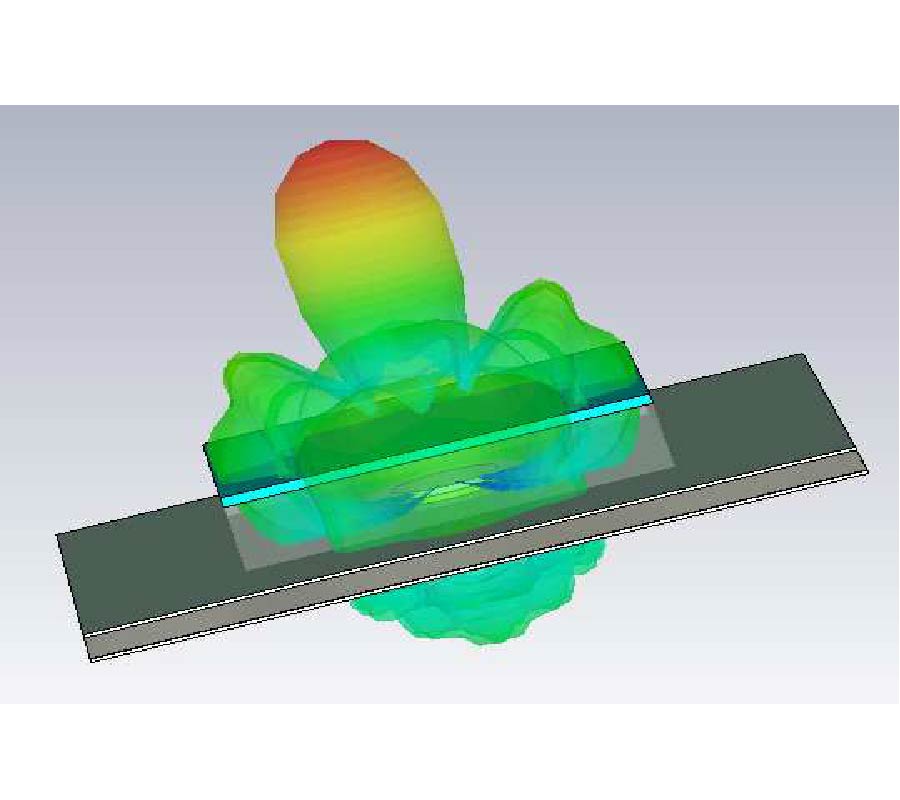
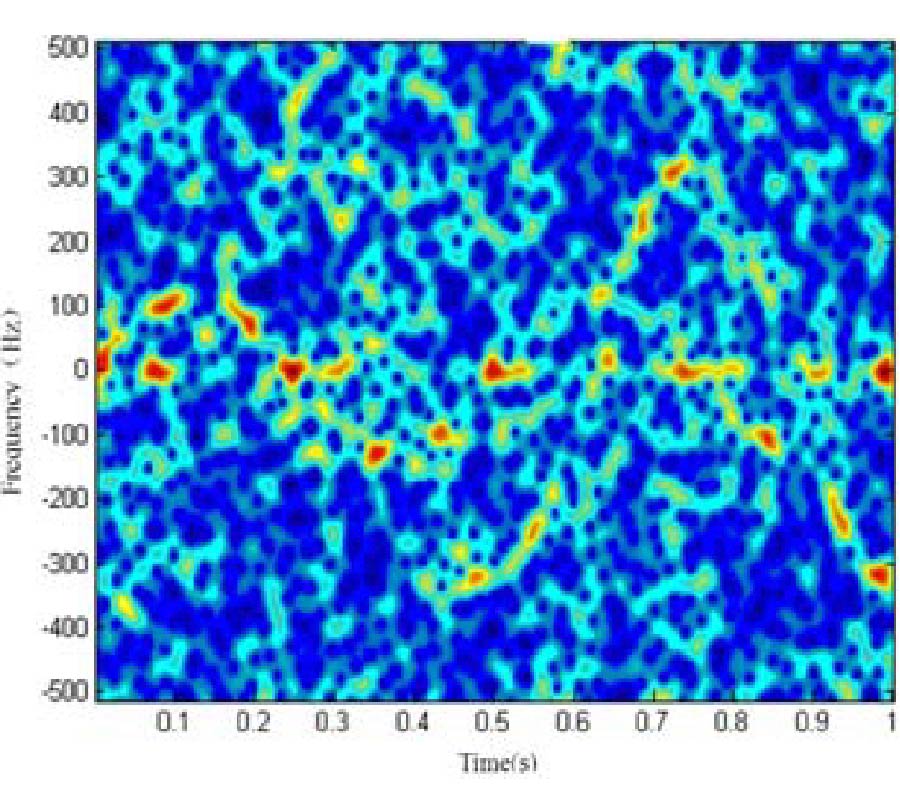
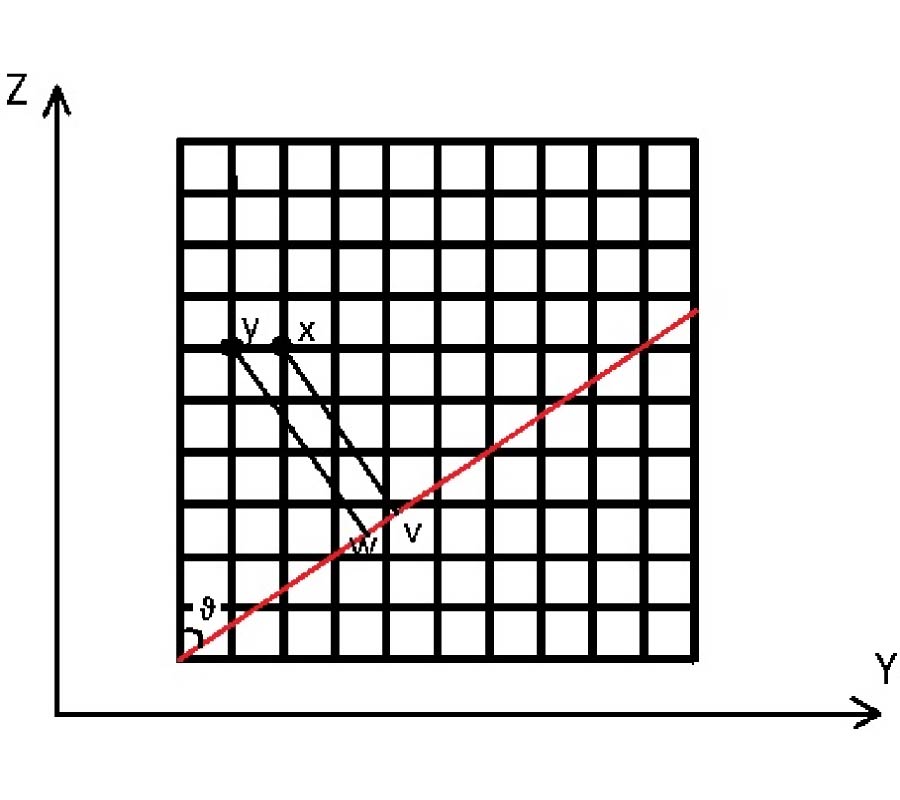
In this work, we show how we can improve the image resolution capabilities of a Phase Conjugating (PC) lens as well as the angular resolution of Luneburg lens antennas by employing signal processing techniques, such as the Correlation Method (CM), the Minimum Residual Power Search Method (MRPSM), the sparse reconstruction method, and the Singular-Value-Decomposition (SVD)-based basis matrix method. In the first part, we apply these techniques for sub-wavelength imaging in the microwave regime by combining them with the well-known phase conjugation principle. We begin by considering a one-dimensional microwave sub-wavelength imaging problem handled by using three signal processing methods, and then we move on to two- or three-dimensional problems by using the SVD-based basis matrix method. Numerical simulation results show that we can enhance the resolution significantly by using these methods, even if the measurement plane is not located in the very near-field region of the source. We describe these proposed algorithms in detail and study their abilities to resolve at the sub-wavelength level. Next, we investigate the sparse reconstruction method for a normal Luneburg lens antenna, and the Correlation Method and the SVD-based basis matrix method for a flat-base Luneburg lens antenna to estimate the Direction-of-Arrival (DOA). Numerical simulation results show that the signal processing techniques are capable of enhancing the angular resolution of the Luneburg lens antenna, enabling the lens to locate multiple targets with different scattering cross-sections, and achieving higher angular resolution.
PERFORMANCE ENHANCEMENT OF MICROWAVE SUB-WAVELENGTH IMAGING AND LENS-TYPE DOA ESTIMATION SYSTEMS BY USING SIGNAL PROCESSING TECHNIQUES (INVITED PAPER)
2015-02-07
PIER
Vol. 147, 171-202
Cloaking and Invisibility: A Review (Invited Review)
Romain Fleury and Andrea Alu
Invisibility has been a tantalizing concept for mankind over several centuries. With recent developments in metamaterial science and nanotechnology, the possibility of cloaking objects to incoming electromagnetic radiation has been escaping the realm of science fiction to become a technological reality. In this article, we review the state-of-the-art in the science of invisibility for electromagnetic waves, and examine the different available technical concepts and experimental investigations, focusing on the underlying physics and the basic scientific concepts. We discuss the available cloaking methods, including transformation optics, plasmonic and mantle cloaking, transmission-line networks, parallel-plate cloaking, anomalous resonance methods, hybrid methods and active schemes, and give our perspective on the subject and its future. We also draw a parallel with cloaking research for acoustic and elastodynamic waves, liquid waves, matter waves and thermal flux, demonstrating how ideas initiated in the field of electromagnetism have been able to open groundbreaking venues in a variety of other scientific fields. Finally, applications of cloaking to non-invasive sensing are discussed and reviewed.
CLOAKING AND INVISIBILITY: A REVIEW (Invited Review)
2015-02-06
PIER C
Vol. 56, 65-72
CPW-Fed Small Slot Antenna with Reconfigurable Circular Polarizion and Impdeance Bandwidth Characteristics for DCS/WiMAX Applications
Arash Valizade , Mouhammad Ojaroudi and Naser Ojaroudi Parchin
A novel printed reconfigurable square slot antenna with switchable right/left-handed circular-polarization (CP) and switchable dual-band performances for use in DCS/WiMAX applications is designed and manufactured. In the proposed antenna, in order to create a reconfigurable structure with switchable dual-band performance, a meander-line shaped radiating stub is utilized. This radiating stub can select between two operating frequency bands with respect to the number of its steps, and also right- or left-handed circular polarization at one of the operating bands (WiMAX) is determined by the growth direction of this meander-line structure. Moreover, through embedding an L-shaped slot on the ground section, circular polarization can be provided for the other operating frequency band (DCS). Having right or left handed circular polarization at this frequency band can be determined by the location and orientation of the L-shaped slot on the ground plane. In order to achieve a reconfigurable antenna structure with simultaneous switchable dual-band and circular polarization functions, six PIN diodes were utilized. The designed antenna has a small size of 30×30 mm. Simulated and experimental results obtained for the designed antenna reveal good radiation behavior within the DCS (1.85 GHz) and WiMAX (3.5 GHz) frequency ranges.
CPW-FED SMALL SLOT ANTENNA WITH RECONFIGURABLE CIRCULAR POLARIZION AND IMPDEANCE BANDWIDTH CHARACTERISTICS FOR DCS/WIMAX APPLICATIONS
2015-02-06
PIER
Vol. 150, 123-143
Propagation of Partially Coherent Beam in Turbulent Atmosphere: A Review (Invited Review)
Fei Wang , Xianlong Liu and Yangjian Cai
Partially coherent beam is preferred in many applications, such as free-space optical communications, remote sensing, active laser radar systems, etc., due to its resistance to the deleterious effects of atmospheric turbulence. In this paper, after presenting a historical overview on propagation of optical beams in turbulent atmosphere, we describe the basic theory for treating the propagation of optical beams in turbulent atmosphere and we mainly introduce recent theoretical and experimental developments on propagation of partially coherent beam in turbulent atmosphere. Recent progress on the interaction of a partially coherent beam with a semirough target in turbulent atmosphere and the corresponding inverse problem are also reviewed.
PROPAGATION OF PARTIALLY COHERENT BEAM IN TURBULENT ATMOSPHERE: A REVIEW (Invited Review)
2015-02-05
PIER C
Vol. 56, 55-64
Multiband Circularly Polarized Stacked Microstrip Antenna
Dinesh Kumar Singh , Binod Kanaujia , Santanu Dwari , Ganga Prasad Pandey and Sandeep Kumar
In this paper, a multiband circularly polarized capacitive coupled stacked microstrip antenna is proposed. The multiband circular polarization (CP) is achieved by corner truncation, embedding slits and inclined slots on a three layered antenna structure. The proposed antenna also shows wideband behavior with an impedance bandwidth of 52.13% in the frequency range of 4.85 GHz to 8.27 GHz, while 3 dB axial ratio bandwidths in five CP bands are 0.51%, 4.54%, 0.33%, 0.83% and 1.29% in the frequency range of 5.12 GHz to 5.15 GHz, 5.45 GHz to 5.70 GHz, 5.90 GHz to 5.92 GHz, 6.25 GHz to 6.31 GHz and 7.68 GHz to 7.78 GHz, respectively. The antenna prototype is fabricated, and simulated results as axial ratio, radiation pattern and the reflection coefficient are validated with measured result.
MULTIBAND CIRCULARLY POLARIZED STACKED MICROSTRIP ANTENNA
2015-02-05
PIER Letters
Vol. 51, 87-93
Design of Compact Quad-Channel Diplexer Using Quad-Mode Stub-Loaded Resonators
Lei Lin , Yu-Tong Zhao , Bian Wu and Chang-Hong Liang
In this paper, a compact quad-channel diplexer utilizing quad-mode stub-loaded resonators (QMSLRs) is proposed. The proposed quad-channel diplexer is composed of two dual-band bandpass filters (BPFs) based on QMSLRs and source-load coupling lines. Due to the symmetry of the proposed quad-mode resonator, its resonance characteristics are analyzed by using the even-odd-mode method twice. All four modes equivalent circuits of the resonator are quarter wavelength resonators, so the circuit size can be very compact, and the first resonance frequencies is three times of the fundamental ones. Stub-to-stub coupling is introduced to split two identical resonance modes, which is in favor of implementing dual-band BPF by using a single quad-mode resonator. By tuning the corresponding physical dimensions of the stubs, the resonant modes can be individually adjusted. The source-load coupling lines are properly designed to provide appropriate external coupling for the passbands and high isolation level between channels. For demonstration, a quad-channel diplexer (0.9/1.2 GHz at Load 1 and 1.5/1.8 GHz at Load 2) using the quad-mode resonator is designed, fabricated and measured. The simulated and measured results with good agreement are presented.
DESIGN OF COMPACT QUAD-CHANNEL DIPLEXER USING QUAD-MODE STUB-LOADED RESONATORS
2015-02-05
PIER M
Vol. 41, 51-62
A Novel Analytical Expressions Model for Corona Currents Based on Curve Fitting Method Using Artificial Neural Network
Gaohui Fan , Shanghe Liu , Ming Wei and Xiao-Feng Hu
The analytical expressions for corona discharge currents are usually represented by the mathematic models based on curve fitting method. For the complex mechanisms, none of these currently models can describe a measured corona current with arbitrary waveforms. A novel curve fitting method using BP neural network (BPNN) technique is applied to describe the mathematic model of the corona currents in time domain. The analytical expressions for the currents can be established via extracting the weights and thresholds parameters of the trained BPNN. The expressions all have the same structure which has only four types of parameters, and the structure is independent of the corona current waveforms. A curve fitting for the measured corona currents with arbitrary waveforms by different models was carried out, and the results were analyzed, which indicate that the BPNN method performs best. Compared with the current expressions fitted by the double exponential function and Gaussian function, the expressions by BPNN can fit the current waveforms with the lowest mean square error (MSE) in time domain and the highest accuracy to spectra of the currents in frequency domain. The proposed method is suitable for establishing a unified analytical expressions model for corona currents with arbitrary shapes.
A NOVEL ANALYTICAL EXPRESSIONS MODEL FOR CORONA CURRENTS BASED ON CURVE FITTING METHOD USING ARTIFICIAL NEURAL NETWORK
2015-02-05
PIER M
Vol. 41, 43-50
Dynamic Properties of Rain Attenuation in Athens, Greece: Slant Path Rain Attenuation Synthesizer and Dynamic Diversity Gain
Charilaos I. Kourogiorgas , Athanasios Panagopoulos , Spiros N. Livieratos and George Chatzarakis
In this paper, the dynamics of rain attenuation are examined, and dynamic diversity gain is evaluated for a pico-scale site diversity system. Since modern satellite communication systems operate at frequencies above 10 GHz, their efficient design requires the adoption of Propagation Impairment Mitigation techniques and so rain attenuation time series synthesizers. For rain attenuation, which is the most dominant fading mechanism, the dynamic stochastic model, proposed by Maseng-Bakken, based on the lognormal distribution is the most widely accepted and used. In this latter model, the dynamic parameter is required for the generation of slant path rain attenuation time series. In this paper, firstly, a simple expression is proposed for the calculation of the dynamic parameter in terms of the mean wind speed, elevation angle of the link, and dynamic parameter of rainfall rate. The new theoretical expression is tested with simulated data with very encouraging results. This expression is then used into a unified rain attenuation synthesizer with inputs from the rainfall rate statistics and the satellite slant path characteristics. Finally, the dynamic diversity gain is calculated for pico-scale site diversity systems for various link characteristics.
DYNAMIC PROPERTIES OF RAIN ATTENUATION IN ATHENS, GREECE: SLANT PATH RAIN ATTENUATION SYNTHESIZER AND DYNAMIC DIVERSITY GAIN
2015-02-03
PIER C
Vol. 56, 39-53
Effect of Second and Third Harmonic Input Impedances in a Class-F Amplifier
Sadegh Abbasian and Thomas Johnson
In this paper, the design of a class-F radio frequency power amplifier with a multiharmonic input transmission line network is presented. Harmonic signal components at the gate come from several sources including nonlinear device capacitances and imperfect output harmonic terminations that create harmonic components that are fed back to the gate through the gate-drain capacitance. The effect of these harmonic generation mechanisms and the potential to shape the gate waveform to improve power efficiency are investigated. The study shows that a second harmonic short is most beneficial and the effect of a third harmonic termination is small. The concepts are applied to the design of a 10 W GaN class-F amplifier and the design is supported by theoretical, simulation and experimental results. The fabricated design has a measured drain efficiency of 78.8% at an output power of 40.5 dBm for a frequency of 990 MHz. The amplifier was also tested with a 8.8 dB peak-to-average power ratio 5 MHz WCDMA signal. With the modulated signal, the adjacent channel power ratio was -33.1 dBc at a drain efficiency of 46.1% without predistortion correction.
EFFECT OF SECOND AND THIRD HARMONIC INPUT IMPEDANCES IN A CLASS-F AMPLIFIER
2015-02-02
PIER M
Vol. 41, 33-41
Omnidirectional Reflection from Generalized Kolakoski Multilayers
Volodymyr I. Fesenko
The origin of omnidirectional band gaps in one-dimensional layered photonic structures which are aligned according to the generalized Kolakoski in flation rule are studied using the transfer matrix formalism. On their basis some particular designs of cascaded aperiodic heterostructures are proposed. It is found that the proposed cascaded structures stand out by the omnidirectional reflection bands which cover whole near-infrared spectral region.
OMNIDIRECTIONAL REFLECTION FROM GENERALIZED KOLAKOSKI MULTILAYERS
2015-01-30
PIER C
Vol. 56, 29-38
CPW-Fed UWB Compact Antenna for Multiband Applications
Saira Joseph , Binu Paul , Shanta Mridula and Pezholil Mohanan
A planar UWB antenna with added GSM 1800/WMTS and UMTS bands is presented. A CPW-fed circular patch is used to obtain wideband characteristic covering the UWB range. A novel slot formed by merging the alternate sides of a hexagon with isosceles triangles is inserted in the patch to obtain dual-band operation with the lower band suitable for GSM 1800 operation. By inserting a bent monopole in the space created by the slot, a triple-band antenna is developed with two lower bands suitable for WMTS and UMTS operation. The antenna prototype is fabricated and tested. Simulated and experimental results are in good agreement. The antenna exhibits stable radiation characteristics and nearly constant group delay in the UWB range.
CPW-FED UWB COMPACT ANTENNA FOR MULTIBAND APPLICATIONS
2015-01-30
PIER C
Vol. 56, 15-28
Design of Slotted Waveguide Antennas with Low Sidelobes for High Power Microwave Applications
Hilal M. El Misilmani , Mohammed Al-Husseini and Karim Youssef Kabalan
Slotted waveguide antenna (SWA) arrays offer clear advantages in terms of their design, weight, volume, power handling, directivity, and efficiency. For broadwall SWAs, the slot displacements from the wall centerline determine the antenna's sidelobe level (SLL). This paper presents a simple inventive procedure for the design of broadwall SWAs with desired SLLs. For a specified number of identical longitudinal slots, and given the required SLL and operating frequency, this procedure finds the slots length, width, locations along the length of the waveguide, and displacements from the centerline. Compared to existing methods, this procedure is much simpler as it uses a uniform length for all the slots and employs closed-form equations for the calculation of the displacements. A computer program has been developed to perform the design calculations and generate the needed slots data. Illustrative examples, based on Taylor, Chebyshev and the binomial distributions are given. In these examples, elliptical slots are considered, since their rounded corners are more robust for high power applications. A prototype SWA has been fabricated and tested, and the results are in accordance with the design objectives.
DESIGN OF SLOTTED WAVEGUIDE ANTENNAS WITH LOW SIDELOBES FOR HIGH POWER MICROWAVE APPLICATIONS
2015-01-30
PIER Letters
Vol. 51, 79-85
A Novel Compact Dual-Wideband Bandpass Filter with Multi-Mode Resonators
Jun Li , Shan Shan Huang , Hui Wang and Jian Zhong Zhao
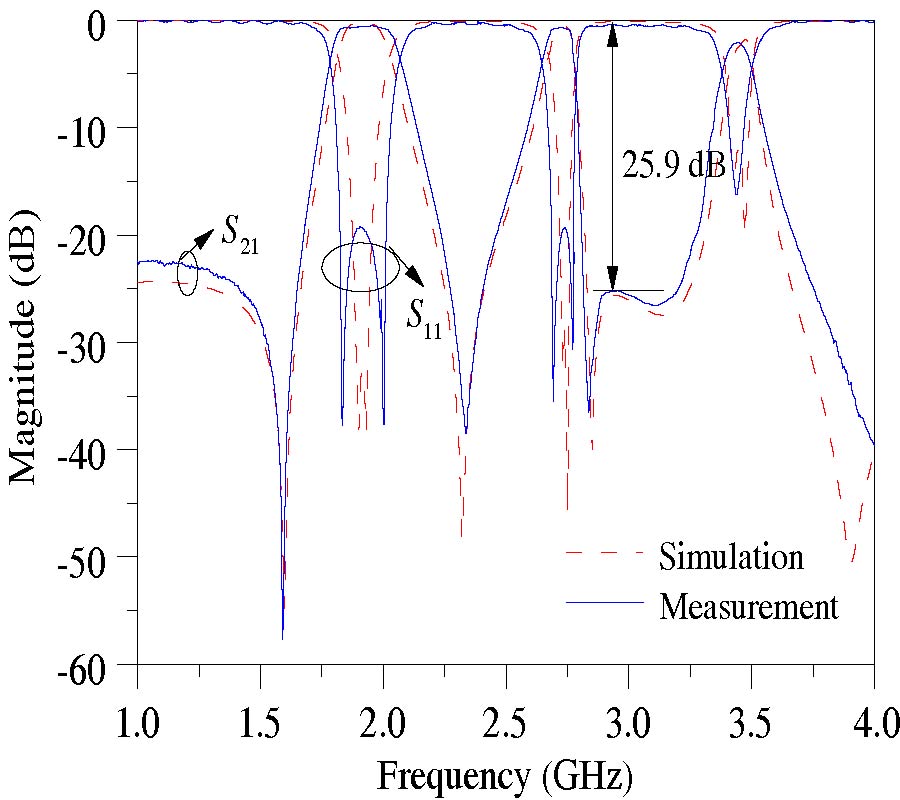
A novel compact dual-wideband bandpass filter (BPF), with two multi-mode resonators (MMRs), a quad-mode one (QMR) and a triple-mode one (TMR), is proposed in this paper. The first passband is generated by a QMR loaded with a short-ended stub and two open-ended stubs, and the second one is realized by a TMR loaded with a square ring and a short-ended stub. Each passband can be tuned separately by controlling the corresponding resonator. The classical even-/odd-mode analysis is applied to characterize the presented MMRs due to their symmetric configurations. In order to validate the design methodology, a dual-wideband BPF prototype centered at 2.34 and 3.46 GHz with fractional bandwidths of 25.6% and 21.4% for WLAN and WiMAX applications is designed, fabricated and measured. Measurements have good agreement with simulations.
A NOVEL COMPACT DUAL-WIDEBAND BANDPASS FILTER WITH MULTI-MODE RESONATORS