Search Results(13797)

2015-06-19
PIER M
Vol. 42, 145-152
Unilateral Mini NMR Sensor Used for Assessing the Aging Status of the Sheds of Composite Insulators
Yunfeng Xia , Zheng Xu , Jianhua Huang , Jianhua Lin and Dengjie Yu
The number of composite insulators used in power transmission lines increases year by year. To detect and assess the aging status accurately concerns the security and stability of the power system. In order to achieve nondestructive testing of the sheds of composite insulators, a unilateral mini Nuclear Magnetic Resonance (NMR) sensor is proposed in this paper. The design of the magnet body and the optimization of the RF coil are presented. The Carr-Purcell-Meiboom-Gill (CPMG) sequence was employed to record the 1H relaxation curves of the sheds of three composite insulators from 110 kv lines with different service years. The curves were fitted to both single exponential function and inverse Laplace transformation functions. The results demonstrate that an increase of service year of the insulator results in a decrease of the effective transverse relaxation time (T2eff). It is indicated that the sensor has a potential to assess the aging status of the composite insulators.
UNILATERAL MINI NMR SENSOR USED FOR ASSESSING THE AGING STATUS OF THE SHEDS OF COMPOSITE INSULATORS
2015-06-19
PIER
Vol. 152, 17-31
Generation of Complex Source Point Expansions from Radiation Integrals (Invited Paper)
Enrica Martini and Stefano Maci
This paper discusses methods for expanding fields radiated by arbitrary sourcesenclosed by a certain minimum sphere in termsof Complex Source Point (CSP) beams. Two different approaches are reviewed; the first one is based on a spectral radiation integral, where the Fourier-spectrum is obtained by far field matching. The second approach consists of two steps: first, the equivalence principle is applied to a sphere enclosing the real sources, and a continuous equivalent electric current distribution is obtained in terms of spherical waves; then, the continuous current is extended to complex space and its SW components are properly filtered and sampled to generate the discrete set of CSPs. In both cases, the final resultis a compact finite series representation with a number of terms that matches the degrees of freedom of arbitrary radiated fields;it is particularly efficient when the fields are highly directional and the observation domain is limited to a given angular sector. The fact that the CSPs rigorously respect Maxwell's equations ensures the validity of the expansion from near to far zone and allows one to incorporate the CSP representation in a generalized admittance matrix formalism for the analysis of complex problems.
GENERATION OF COMPLEX SOURCE POINT EXPANSIONS FROM RADIATION INTEGRALS (Invited Paper)
2015-06-19
PIER
Vol. 151, 169-173
Homogenous Optic-Null Medium Performs as Optical Surface Transformation
Fei Sun and Sailing He
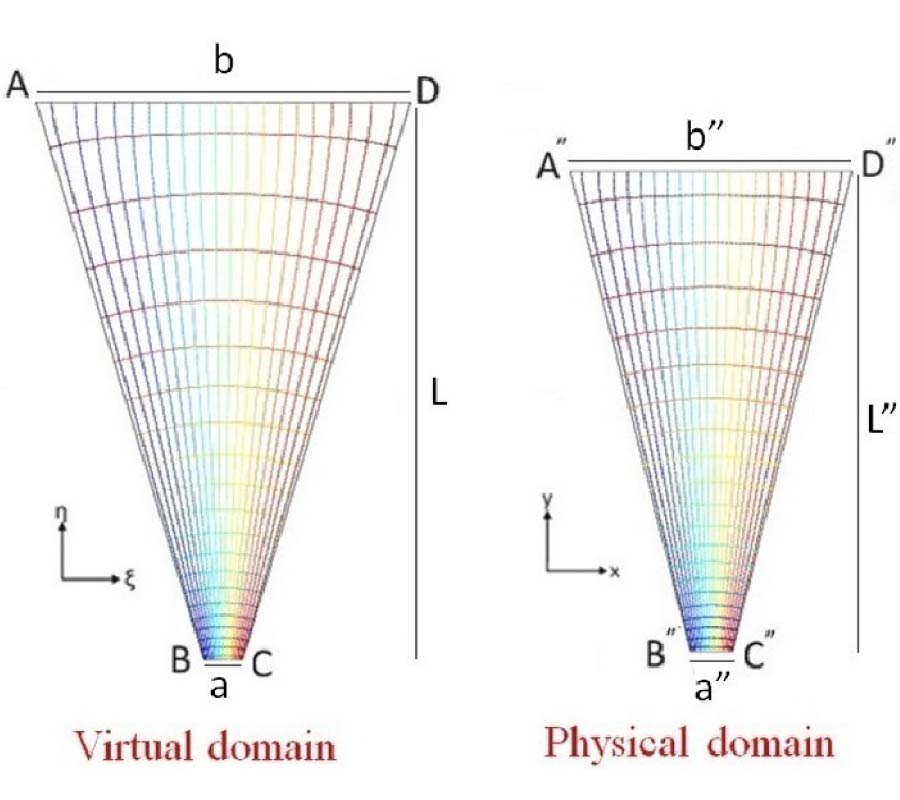
A new theory on designing electromagnetic/optical devices has been proposed, namely, a surface transformation (ST). Compared with Transformation Optics (TO), we do not need to consider any mathematics on how to make a coordinate transformation, and what we need to do is simple to design the shapes of the input and the output surfaces of the device with pre-designed functions. Unlike the devices designed by TO which are often inhomogeneous anisotropic media, all the devices designed by ST only need one homogeneous anisotropic medium (referred as the optic-null medium) to realize. Our method will lead a new way to device design without considering any coordinate transformations.
HOMOGENOUS OPTIC-NULL MEDIUM PERFORMS AS OPTICAL SURFACE TRANSFORMATION
2015-06-18
PIER C
Vol. 57, 193-203
Design of Offset Dual-Reflector Antennas for Improving Isolation Level Between Transmitter and Receiver Antennas
Ki-Bok Kong , Hee-Su Kim , Rao Shahid Aziz and Seong-Ook Park
This paper presents the improved isolation property of the signals among transmitter and receiver antennas. The separation wall is laid at the center of the antennas to improve the isolation level between them. The introduced separation wall has serrated edges mounted on three sides i.e., top, left and right sides. These mounted serrated edges are implemented to reduce the diffraction which may occur due to the linear edge of the wall. The Fresnel diffraction problem has been solved using analytical method in order to get the optimized structure of the serration. The Fresnel diffraction patterns due to the different sizes of the serration are obtained, and their relative powers are compared to each other. The implemented antenna system with the serration wall is composed of corrugated feed horn, orthogonal mode transducer, and offset dual-reflector parabolic antennas. The effect of serration is well demonstrated by the measurement of isolation level of the antenna system. The measured results show that the serrated edges enhanced the isolation property among transmitter and receiver antennas.
DESIGN OF OFFSET DUAL-REFLECTOR ANTENNAS FOR IMPROVING ISOLATION LEVEL BETWEEN TRANSMITTER AND RECEIVER ANTENNAS
2015-06-16
PIER Letters
Vol. 53, 121-126
A Novel Dumbbell-Shaped Defected Ground Structure with Embedded Capacitor and Its Application in Low-Pass Filter Design
Zhi-Yong Chen , Lin Li and Si-Si Chen
A novel dumb-bell-shaped defected ground structure (DB-DGS) with embedded capacitor is presented in this paper. Compared with conventional DB-DB-DGS structure, the proposed DB-DGS exhibits many attractive characteristics including double resonance, high Q value and compact size. The equivalent lumped circuit model for the novel DGS is developed, and its parameters are extracted. Based on this new DB-DGS, a low-pass filter (LPF) using the novel DB-DGS has been constructed, which provides a more steep rejection property, a wider stopband and compact size. The proposed structure is experimentally verified through the demonstration of a low-pass filter design.
A NOVEL DUMBBELL-SHAPED DEFECTED GROUND STRUCTURE WITH EMBEDDED CAPACITOR AND ITS APPLICATION IN LOW-PASS FILTER DESIGN
2015-06-16
PIER M
Vol. 42, 135-144
Design of a Low Loss Silicon Based Hybrid Dielectric-Loaded Plasmonic Waveguide and a Compact High Performance Optical Resonator
Cheng-Hung Hsieh , Yu-Ting Chu , Min-Jyun Huang , Chien-Ming Kuo and Keh-Chyang Leou
Here we present the design of a low loss top metal silicon (Si) hybrid dielectric-loaded plasmonic waveguide (TM-SiHDLW) and a compact, high performance optical resonator by numerical simulation based on finite element method. The waveguide adopted a thick (200 nm) top metal stripe structure to yield optimal performance due to reduced Ohmic loss in conductor around the stripe edge/corner. Moreover, a relatively thick (150 nm) dielectric spacer between the Si ridge and the metal stripe was employed to achieve both long propagation length and good field confinement. The effect of a thin (10 nm) silicon nitride (SiNx) layer covering the waveguide which was added for minimizing uncertainties on optical properties of SiHDLW resulting from high density of dangling bonds on Si surface was also investigated. Simulation results show that there is no significant degradation on the performance of the TM-SiHDLW. For the proposed plasmonic waveguide, a propagation length of 0.35 mm and a mode area around 0.029 μm2 were demonstrated. The TM-SiHDLW waveguide was then used as the basis for anoptical resonator, which was designed to operate at the fundamental TE011 mode for yielding high quality factor at a relatively small footprint size. A metal enclosure was also adopted to reduce the radiation loss, and a high quality factor of ~1900 was obtained, more than double the results in other disk or ring resonators of comparable size. Compared to the resonatorsbased on a rounded top metal Si hybrid dielectric-loaded plasmonic waveguide (RTM-SiHDLW) which has a much longer propagation length than the TM-SiHDLW, as reported in our previous work, the performance is essentially the same. This is simply because, for the resonators, the radiation loss is the dominate loss mechanism and the dissipation in the waveguide structure itself, thus, contribute little to the final quality factor of the plasmonic resonators.
DESIGN OF A LOW LOSS SILICON BASED HYBRID DIELECTRIC-LOADED PLASMONIC WAVEGUIDE AND A COMPACT HIGH PERFORMANCE OPTICAL RESONATOR
2015-06-15
PIER C
Vol. 57, 181-191
A Robust Augmented Combination of Digital Predistortion and Crest Factor Reduction for RF Power Amplifiers
Jingmei Zhao , Cuiping Yu , Jianguo Yu , Yuan'an Liu and Shulan Li
This paper proposes a robust combination of digital predistortion (DPD) and crest factor reduction (CFR) for radio frequency (RF) power amplifiers (PAs). It is constructed using the architecture of CFR-DPD connected with a compensation module (CM). The compensation module is introduced to achieve mutual compensation between the output signals of CFR and DPD, and this can reduce the damage to the signal by CFR. The combination of CFR-DPD-CM provides the means to exploit margins in the transmitter performance, allowing the tradeoff among peak-to-average power ratio (PAPR), adjacent channel power ratio (ACPR) and error vector magnitude (EVM). The proposed combination of CFR-DPD-CM is assessed using a GaN Class-F PA driven by two modulated signals (a 4-carrier OFDM signal and a WCDMA 1001 signal with 20-MHz bandwidth), and a GaN Doherty PA driven by a 15-MHz long-term evolution (LTE) signal. The experimental results show that when the CFR reduces the PAPR about 4 dB, applying the proposed combination of CFR-DPD-CM, the average reduction of ACPR is 5.12 dB, and the average reduction of EVM is 1.26% compared with the conventional architecture of CFR-DPD.
A ROBUST AUGMENTED COMBINATION OF DIGITAL PREDISTORTION AND CREST FACTOR REDUCTION FOR RF POWER AMPLIFIERS
2015-06-10
PIER M
Vol. 42, 121-134
Analysis on the Azimuth Shift of a Moving Target in SAR Image
Jiefang Yang and Yunhua Zhang
As we know, a moving target's azimuth shift in SAR image is proportional to the projected velocity of its across-track velocity in the slant-range plane. Therefore, we can relocate the moving target in SAR image after estimating its velocity. However, when Doppler ambiguity occurs due to the limitation of the SAR system's pulse repetition frequency (PRF), this relationship will not hold any more, in this case, we cannot relocate the moving target to the right position. The Doppler spectrum of a moving target with arbitrary velocity may entirely situate in a PRF band or spans in two neighboring PRF bands. In this paper, we conduct a detailed theoretical analysis on the moving target's azimuth shift for these two scenarios. According to the derived formulas, one can relocate a moving target with arbitrary velocity to the right position no matter Doppler ambiguity occurs or not. Simulated data are processed to validate the analysis.
ANALYSIS ON THE AZIMUTH SHIFT OF A MOVING TARGET IN SAR IMAGE
2015-06-09
PIER B
Vol. 63, 35-48
Matrix Method for Far-Field Calculation Using Irregular Near-Field Samples for Cylindrical and Spherical Scanning Surfaces
Mohamed Farouq , Mohammed Serhir and Dominique Picard
A matrix method which takes into account the probe positioning errors in cylindrical and spherical near-field (NF) measurement techniques is proposed. The near-field irregularities made impossible the determination of the cylindrical or spherical wave expansion from the measured data using classical techniques based on 2D Discrete Fourier Transformation (2D-DFT) in cylindrical case (CC) and orthogonality properties in spherical case (SC). The irregularities can be randomly distributed but known and the matrix method expresses the linear relation between the measured near-field and the corresponding cylindrical or spherical modal expansion coefficients. Once the coefficients of the cylindrical and the spherical wave expansions are known the far-field of the antenna under test (AUT) is easily determined. Accuracy of the matrix method is numerically studied as a function of the irregularities magnitude and for different noise levels (data Signal to Noise Ratio). Also, experimental results have shown the efficiency of the proposed technique.
MATRIX METHOD FOR FAR-FIELD CALCULATION USING IRREGULAR NEAR-FIELD SAMPLES FOR CYLINDRICAL AND SPHERICAL SCANNING SURFACES
2015-06-09
PIER Letters
Vol. 54, 1-6
A Novel Dual-Band and High-Gain Antenna for 2G/3G Base Station
Zhiwei Liu , Jun Liu , Zhiqing Liu , Yueyuan Zhang and Xiao-Yan Zhang
A dual-band and ±45° dual-polarized antenna is proposed for 2G/3G mobile communications in this paper. The proposed antenna consists of five elements for the lower band and ten elements for the upper band. Results for a single element and antenna array are presented. The front-to-back ratio is from 25 dB to 30 dB, and the axial cross polarization ratio is from 19 dB to 22 dB in a single low band unit. The dual-band array achieves a bandwidth of 15.7% (820-960 MHz) for the lower band and a bandwidth of 23.7% (1710-2170 MHz) for the upper band, covering the frequency bands required by 2G/3G systems. Simulation results show that the gains for antenna array are 15.7 dBi for the lower band and 19.1 dBi for the upper band, which is suitable for base stations applications.
A NOVEL DUAL-BAND AND HIGH-GAIN ANTENNA FOR 2G/3G BASE STATION
2015-06-05
PIER C
Vol. 57, 173-180
Metamaterial Inspired CPW Fed Compact Low-Pass Filter
Basil J. Paul , Shanta Mridula , Binu Paul and Pezholil Mohanan
A metamaterial inspired co-planar waveguide (CPW) fed compact low-pass filter is presented in this paper. The 3 dB cut off frequency of the filter is 1.4 GHz. The roll-off rate achieved for this filter is 47.4 dB/GHz. Sharp roll-off is obtained by introducing an additional resonance using an inductor in series with the shunt capacitor. The usage of chip inductor also results in a compact filter structure. The overall filter dimensions are 39 mm x 32 mm x 1.6 mm. The filter uses defected ground structure (DGS) for attaining stop band attenuation. The measured insertion loss of the filter in the pass band is less than 0.8 dB and average stop band attenuation is better than 23 dB. The equivalent circuit of the proposed filter is similar to that of a dual-CRLH (D-CRLH) transmission line.
METAMATERIAL INSPIRED CPW FED COMPACT LOW-PASS FILTER
2015-06-04
PIER C
Vol. 57, 159-171
Design & Analysis of Miniaturized Asymmetric Coplanar Strip Fed Antenna for Multi-Band WLAN/WiMAX Applications
Praveen Vummadisetty Naidu and Akshay Malhotra
A novel, compact asymmetric coplanar strip (ACS)-fed multi-band antenna for Bluetooth/WLAN/WiMAX applications is proposed and discussed in this paper. The proposed antenna is composed of a simple monopole structure with a mirror-L shaped branch and two rectangular radiating strips. It has a very small size of 13.75 x 26 mm2 including the ground plane. The mirror-L shaped branch excites a resonant mode at 2.5 GHz, and on the other side, ACS-fed monopole structure with two rectangular strips (one horizontal and one vertical) excite the resonant modes at 3.3 GHz and 5.75 GHz respectively. By properly selecting the lengths and positions of these radiating branches, multiband operation with wider impedance bandwidth can be achieved. The measured and simulated results show that the antenna has impedance bandwidth of 200 MHz (2.40-2.60 GHz), and 2800 MHz (3.2-6.0 GHz), and it can cover the 2.4 GHz Bluetooth, 2.4/5.2/5.8 GHz WLAN and 3.5/5.5 GHz WiMAX bands. The resonances achieved with this technique can be tuned independently, and the equations governing the resonances are given and confirmed by parametric studies. The proposed technique is further validated by designing another antenna working at 1.8/1.9 GHz PCS, 3.5/5.5 GHz WiMAX, 5.2/5.8 GHz WLAN bands.
DESIGN & ANALYSIS OF MINIATURIZED ASYMMETRIC COPLANAR STRIP FED ANTENNA FOR MULTI-BAND WLAN/WIMAX APPLICATIONS
2015-06-03
PIER M
Vol. 42, 109-119
Effects of Inflated Cone on Satellite's Radar Cross Sections in S-Band via FDTD Simulations
Shen Shou Max Chung
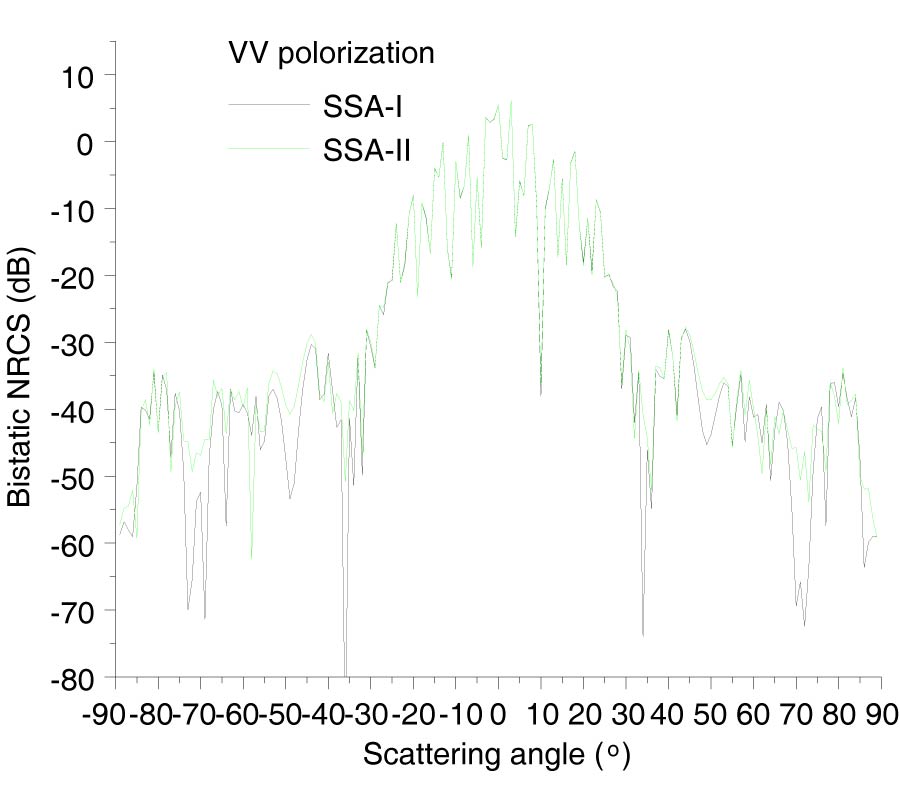
Satellites are the most important link in today's battle field, and with the advancement of anti-satellite technologies like anti-satellite missiles and directed energy weapons, satellites are becoming vulnerable to attack. The vulnerability of satellite depends highly on its probability of being detected and tracked, and optics or radars are the two major means of detection. To avoid detection, several suggestions have been made in the past to deflect ambient light and decrease the RCS (radar cross section) to avoid detection. The most notable RF stealth suggestion among them is the proposal of using an inflatable polymer cone to change its shape and reduce satellite's RCS. In this study we examine the RCS of this so-called stealth satellite in S-band with FDTD simulations, and analyze its frequency and radar incident angle dependence. Results indicate this shape is advantageous in bore sight monostatic backscatter RCS reduction, but in other directions the RCS increases due to sheer size effect, which makes it even more vulnerable to bi-static radar tracking. When it is slant illuminated, the RCS of the stealth satellite shows no RCS reduction effects. Such inflated device is susceptible to space debris damage and cumbersome to operate, and may interfere with the original mission of the satellite. Best strategy for satellite self-defense is orbit change.
EFFECTS OF INFLATED CONE ON SATELLITE'S RADAR CROSS SECTIONS IN S-BAND VIA FDTD SIMULATIONS
2015-06-02
PIER Letters
Vol. 53, 115-119
Wideband Balun Bandpass Filter Based on Substrate Integrated Waveguide and CSRRs
Wenjie Feng , Shunyu Yao , Jialiang Shen and Rui Cao
A high selectivity wideband balun bandpass filter based on substrate integrated waveguide (SIW) and complementary split rings resonators (CSRRs) is proposed. 180° reverse phase characteristic between the two output ports can be easily realized by the multi-layer SIW power divider. Eight complementary split rings resonators are used to achieve the sharp rejection upper stopband. The proposed wideband balun filter exhibits a fractional bandwidth of 37% centered at 9.45 GHz and amplitude and phase imbalance less than 0.5 dB and 1°.
WIDEBAND BALUN BANDPASS FILTER BASED ON SUBSTRATE INTEGRATED WAVEGUIDE AND CSRRS
2015-06-02
PIER
Vol. 152, 1-15
Can Maxwell's Fish Eye Lens Really Give Perfect Imaging? Part III. a Careful Reconsideration of the ``Evidence for Subwavelength Imaging with Positive Refraction''
Sailing He , Fei Sun , Shuwei Guo , Shuomin Zhong , Lu Lan , Wei Jiang , Yungui Ma and Tiantian Wu
Many scientists do not believe that Maxwell's fish eye mirror (MFEM) can provide perfect imaging even if there is a drain array around the imaging points. However, one microwave experiment found a case where a 0.2λ resolution could be achieved in an MFEM experiment [New J. Phys. 13 (2011) 033016]. In this paper, we show that the MFEM cannot resolve two imaging points at such a subwavelength resolution in most cases even in the presence of a drain array, and an extraordinary case of subwavelength imaging requires a particular phase difference between two coherent sources. Both numerical simulations and experimental results show that the phase difference of two subwavelength-distanced coherent sources greatly influences the field distribution around the drain array. In very few cases (when the phase difference of the two sources is chosen to be a very specific value), we might resolve the image points in the drain array under the assumption that the power absorbed by the scanning cable on the left side of the drain array should be symmetric to that on the right side of the drain array [New J. Phys. 13 (2011) 033016]. However, in most cases, we cannot obtain a super-resolution imaging, as other drains around the image points will greatly influence the imaging. We also note that the experiment assumed that the power absorbed by the scanning cable on the left and the right sides of the drain array is symmetric is not correct for the experiment reported in [New J. Phys. 13 (2011) 033016], as the drain array itself is not symmetric. The highly non-symmetric distribution of the absorbed power is also verified by our simulation and experimental results. The experimental ``result'' of resolving two image peaks could potentially be recovered using only a single image peak, which demonstrates the wrong assumption of mirror symmetry. Comparisons and comments on perfect passive drains, ``super-resolution'' in a spherical geodesic waveguide, and time reverse imaging are also given.
CAN MAXWELL'S FISH EYE LENS REALLY GIVE PERFECT IMAGING? PART III. A CAREFUL RECONSIDERATION OF THE ``EVIDENCE FOR SUBWAVELENGTH IMAGING WITH POSITIVE REFRACTION''
2015-06-01
PIER M
Vol. 42, 95-107
Analysis of Bistatic Scattering Due to Hydrometeors on SHF and EHF Links in a Subtropical Location: A Comparative Study Based on the Rain Cell Models
Pius Adewale Owolawi and Tom Walingo
The inevitable increase in radio interference within microwave systems continue to be of major concern as more of radio communication services compete with bandwidth assigned to the fixed service, fixed satellite service and broadcasting satellite service. Interference hampers coverage and capacity of these services often lead to the reduction in the signal to noise ratio at the receiving terminals. The existing global hydrometeor scatter model proposed by the International Telecommunication Union, when applied to the tropical and subtropical location often leads to considerable inaccuracies due to the wide range of intense climatic and geographical nature of this region. In this study, the bistatic intersystem interference due to hydrometeors between satellite systems and terrestrial downlink receiver terminal systems in a subtropical station computation is based on the Awaka and Capsoni cell models. For the attenuation of both wanted and unwanted paths to the receiver, the existing model based on the specific attenuation has been modified to include the equivalent path length through rain in the estimation of the attenuation. Results obtained show that the Capsoni model exhibits the normal trend under a moist atmosphere with a gaseous attenuation more pronounced at frequencies greater than or equal to 30 GHz. Also at high rain rates greater than 70 mm/h and considering the rain with melting layer, up to about 70 dB difference was observed between transmission losses estimated using Awaka and Capsoni models at link probabilities ranging between 1-10-3% unavailability of the time.
ANALYSIS OF BISTATIC SCATTERING DUE TO HYDROMETEORS ON SHF AND EHF LINKS IN A SUBTROPICAL LOCATION: A COMPARATIVE STUDY BASED ON THE RAIN CELL MODELS
2015-05-31
PIER B
Vol. 63, 17-33
A Novel LMMSE Based Optimized Perez-Vega Zamanillo Propagation Path Loss Model in UHF/VHF Bands for India
Sridhar Bolli and Mohammed Zafar Ali Khan
Cognitive radio is the enabling technology for license-exempt access to the TV White Spaces (TVWS). There is ever increasing demand of users in the broadcasting and communication services. Large portions of unused spectrum in the UHF/VHF bands exist in India which can be used on geographical basis. This paper describes a study on path loss variation in UHF/VHF bands in India. The aim of this study is to develop and optimize a path loss model based on Linear minimum mean square error estimation (LMMSE) for India. We propose the LMMSE based Optimized Perez-Vega Zamanillo propagation path loss model. The measured path loss values, collected across India, are compared with proposed Optimized Perez-Vega Zamanillo path loss model and other existing path loss models. It is found that Optimized Perez-Vega Zamanillo propagation path loss model has the least root mean square Error (RMSE) of 13.98 dB. Other existing path loss models have root mean square Error (RMSE) value greater than 24 dB. Therefore, Optimized Perez-Vega Zamanillo propagation path loss model is best suited for predicting coverage area, interference analysis in India for TVWS.
A NOVEL LMMSE BASED OPTIMIZED PEREZ-VEGA ZAMANILLO PROPAGATION PATH LOSS MODEL IN UHF/VHF BANDS FOR INDIA
2015-05-31
PIER Letters
Vol. 53, 107-113
An Efficient Algorithm for the Novel Weakly Conditionally Stable FDTD Method
Qi Liu , Xi-Kui Ma and Feng Chen
In this paper, we present an efficient formulation of the novel weakly conditionally stable finite-difference time-domain (NWCS-FDTD) method for the electromagnetic problems with very fine structures in one or two directions. The formulation is obtained by using only algebraic manipulation of the original method, and therefore the numerical stability and dispersion properties can be preserved. Moreover, due to its simpler right-hand sides of the updating equations, the proposed algorithm is more efficient than the existing WCS-FDTD methods, allowing a significant reduction in the cost of CPU time. Numerical experiments are finally given to verify the accuracy and efficiency of the proposed method.
AN EFFICIENT ALGORITHM FOR THE NOVEL WEAKLY CONDITIONALLY STABLE FDTD METHOD
2015-05-31
PIER Letters
Vol. 53, 101-106
A Low-Complexity Dual-Band Model for Dual-Band Power Amplifiers Based on Volterra Series
Tianjing Zhang , Cuiping Yu , Yuan'an Liu , Shulan Li and Bihua Tang
A novel low-complexity dual-band digital predistortion (2D-LCMP) model for linearization of dual-band power amplifiers (PAs) is proposed in this paper. The in-band intermodulation (IM) and cross-band modulation (CM) distortion terms in the prior two-dimensional models have different impacts on the model performance. Therefore, they are considered respectively in the proposed model. Some redundant distortion terms are removed away to decrease the model complexity. In addition, the nonlinearity order and memory depth are frequency dependent for each band. Experimental measurements were performed on two types of wideband PAs. The results prove the superiority of the 2D-LCMP model.
A LOW-COMPLEXITY DUAL-BAND MODEL FOR DUAL-BAND POWER AMPLIFIERS BASED ON VOLTERRA SERIES
2015-05-28
PIER Letters
Vol. 53, 95-100
Microstrip Monopolar Patch Antenna for Bandwidth Enhancement
Qiao Zhang , Tongbin Yu and Jundong Ye
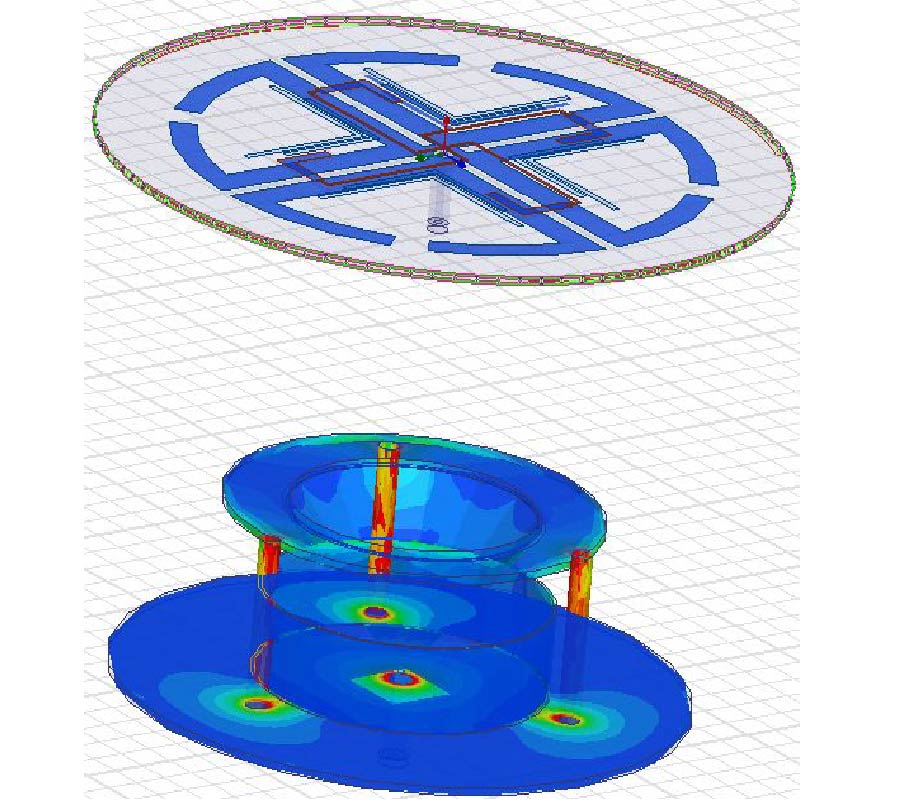
A microstrip monopolar patch antenna with shorting vias in the circular patch and coupled ring for bandwidth enhancement is proposed. The bandwidth of the proposed antenna with shorting vias in the annular coupled ring is over 40% wider than that of the antenna without shorting vias in the annular ring. The proposed antenna provides a wide bandwidth because of four resonant modes, including the TM01 mode of the circular patch, TM01 mode of the coupled annular ring, TM02 mode of the circular patch, TM02 mode of the coupled annular ring. These modes can generate a omnidirectional pattern in the azimuth plane like a monopole antenna. A prototype was fabricated to confirm the simulation verdictions. Measured results show that 10-dB return loss bandwidth of 38.4% from 4.42 to 6.52 and average gain of 5 dBi acrossing the operating band are achieved for the proposed antenna with a low profile of 0.027 wavelength.
MICROSTRIP MONOPOLAR PATCH ANTENNA FOR BANDWIDTH ENHANCEMENT