Search Results(13891)

2015-10-13
PIER
Vol. 153, 23-32
Design and Analysis of a New Axial-Field Magnetic Variable Gear Using Pole-Changing Permanent Magnets
Mu Chen , Kwok-Tong Chau , Christopher H. T. Lee and Chunhua Liu
This paper presents a new non-rare-earth axial-field magnetic variable gear (MVG). By real-time changing the numbers of permanent magnet (PM) pole-pairs in the input and output rotors, the gear ratio becomes controllable. The key is to propose a new stationary ring integrated with magnetizing windings in such a way that various PM pieces can be independently magnetized to form different pole-pair numbers. After introducing the unique features of the non-rare-earth PM material aluminum-nickel-cobalt (AlNiCo), the proposed topology and design principle are discussed. By using finite element analysis, the electromagnetic performances of the proposed MVG under different gear ratios are analyzed. In particular, the corresponding torque transmission capability is assessed, and the influence caused by the introduction of the magnetizing windings is discussed. Hence, the validity of the proposed MVG can be verified.
DESIGN AND ANALYSIS OF A NEW AXIAL-FIELD MAGNETIC VARIABLE GEAR USING POLE-CHANGING PERMANENT MAGNETS
2015-10-12
PIER
Vol. 153, 11-22
FEM Method for the EEG Forward Problem and Improvement Based on Modification of the Saint Venant's Method
Takfarinas Medani , David Lautru , Denis Schwartz , Zhuoxiang Ren and Gerard Sou
The finite-element method (FEM) is applied to solve the EEG forward problem. Two issues related to the implementation of this method are investigated. The first is the singularity due to the punctual dipole sources and the second is the numerical errors observed near the interface of different tissues. To deal with the singularity of the punctual dipole sources, three source modeling methods, namely, the direct, the subtraction and the Saint Venant's methods, are examined. To solve the problem of numerical instability near the interface of different tissues, a modification on the Saint Venant's method is introduced. The numerical results are compared with analytical solution in the case of the multilayer spherical head models. The advantages of the proposed method are highlighted.
FEM METHOD FOR THE EEG FORWARD PROBLEM AND IMPROVEMENT BASED ON MODIFICATION OF THE SAINT VENANT'S METHOD
2015-10-08
PIER M
Vol. 44, 59-68
Analysis and Compensation of Subreflector Displacement for the Parabolic Antenna of a Radio Telescope
Lan Chen , Zheng Xiong Sun , Jin Qing Wang , Guochun Wan and Mei Song Tong
A subreflector system in the parabolic antenna of a 65 m radio telescope has been installed for compensating the gravitational deformation of the supporting frame in the antenna. This paper investigates the influence caused by the displacement of subreflector on the performance of the antenna and the corresponding compensation method. The investigation focuses on Ku-band frequencies and a new fitting formulation which is different from that of low-frequency bands is proposed to reduce the fitting error in the Y direction. In addition, the pointing deviation caused by the offset of the subreflector is analyzed and the model of pointing deflection caused by the displacement of subreflector is established, which can be used to improve the pointing accuracy. The model can determine the position and attitude of the subreflector with elevation and an extensive test shows that it can effectively improve the efficiency of the antenna at each elevation.
ANALYSIS AND COMPENSATION OF SUBREFLECTOR DISPLACEMENT FOR THE PARABOLIC ANTENNA OF A RADIO TELESCOPE
2015-10-08
PIER M
Vol. 44, 47-58
Single-Antenna Time-Reversal Imaging Based on Independent Component Analysis
Payman Rasekh , Mojtaba Razavian , Amir Torki , Hossein Khalili Rad and Reza Safian
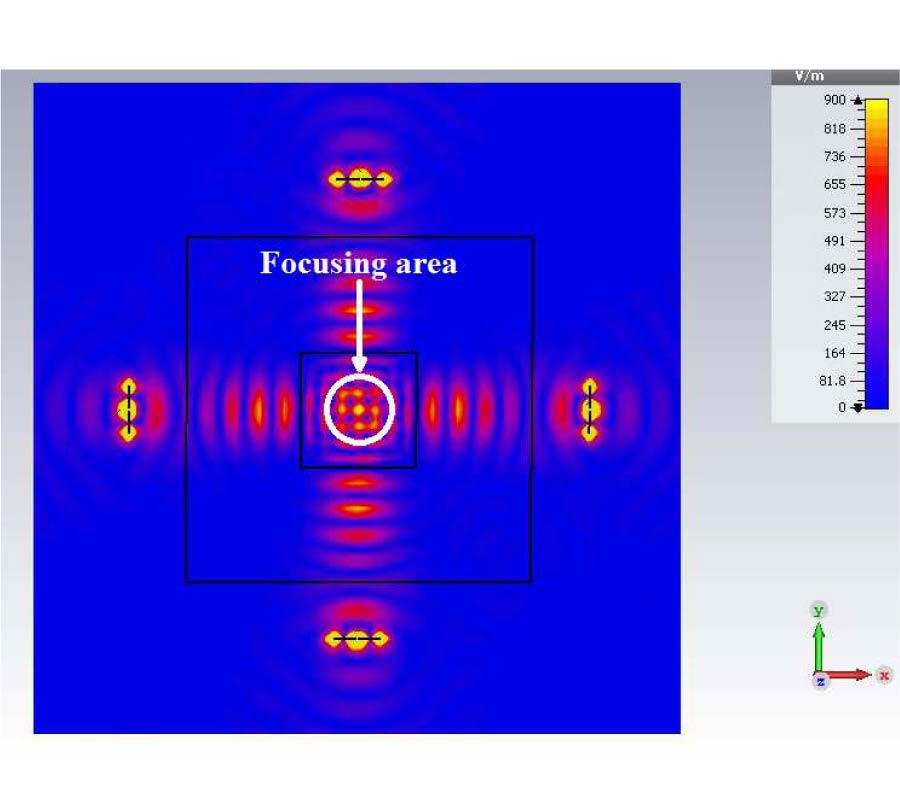
Time reversal techniques are based on the time reversal invariance of the wave equation. They use time-reversed fields recollected by an array antenna to perform imaging and focusing on the source of received signals. Two widely used time reversal techniques are DORT and time reversal MUSIC which are based on eigenvalue decomposition of the time reversal operator. We introduce a new time reversal technique based on independent component analysis (ICA). Time reversal ICA (TR-ICA) exploits the independence of scattered signals of the well-resolved targets to perform imaging. It breaks the mixed backscattered received signals to independent components by maximizing the non-Gaussianity of basic signals. The main advantage of this method is that imaging and focusing are achieved using only one transmitting antenna which simplifies the physical implementation drastically. We have simulated the performance of the introduced method in different scenarios such as selective focusing in the presence of scatterers with different materials, sizes and distances. In addition, the effect of noise on TR-ICA and through-the-wall imaging (TWI) are studied. Some of the results are compared to the DORT method. Finally, the validity of this algorithm is verified by performing physical measurements.
SINGLE-ANTENNA TIME-REVERSAL IMAGING BASED ON INDEPENDENT COMPONENT ANALYSIS
2015-10-07
PIER M
Vol. 44, 39-46
A Wideband Wide-Angle Ultra-Thin Metamaterial Microwave Absorber
Deepak Sood and Chandra Charu Tripathi
A novel design of wideband, ultra-thin, wide-angle metamaterial microwave absorber has been presented. The unit cell of the proposed structure is designed by using parametric optimization in such a way that absorption frequencies come closer and give wideband response. For normal incidence, the simulated FWHM bandwidth of the proposed structure is 1.94 GHz, i.e. from 5.05 GHz to 6.99 GHz and -10 dB absorption bandwidth is 1.3 GHz from 5.27 GHz to 6.57 GHz. The proposed structure has been analyzed for different angles of polarization, and it gives high absorption (more than 50%) for oblique angles of incidence up to 60˚. The designed absorber is in low profile with a unit cell size of λ0/6 and ultrathin with a thickness of λ0/32 at the center frequency of 5.92 GHz corresponding to 10 dB absorption bandwidth. The current and electromagnetic field distributions have been analyzed to understand the absorption mechanism of the absorber. An array of the proposed absorber has been fabricated and experimentally tested for various polarization angles and oblique incidences of electromagnetic wave. The proposed absorber is well suited for surveillance and other defense applications.
A WIDEBAND WIDE-ANGLE ULTRA-THIN METAMATERIAL MICROWAVE ABSORBER
2015-10-06
PIER B
Vol. 63, 249-261
Dyadic Green's Functions for a Parallel Plate Waveguide Filled with Anisotropic Uniaxial Media
Neil G. Rogers and Michael John Havrilla
The dyadic Green's functions for magnetic and electric currents immersed in a parallel plate waveguide (PPWG) filled with dielectric-magnetic anisotropic uniaxial media are developed via a field-based approach. First, the principal Green's function is derived from the forced wave equation for currents immersed in an unbounded uniaxial media. Next, the scattered Green's function is developed from the unforced wave equation. Finally, the total Green's function is found by superposition and subsequent application of the appropriate boundary conditions. The Green's functions are derived from Maxwell's equations, using a spectral domain analysis and reveals several key physical insights. First, the expected longitudinal depolarization dyads are observed. The expected depolarizing terms arise through careful application of complex-plane analysis, leading to expressions that are valid both internal and external to the source region. Secondly, the identification and decomposition of the total Green's function into TEz and TMz field contributions is demonstrated. Thirdly, the mathematical forms of the principal and total Green's functions are shown to be physically intuitive. The primary contribution of this research is the development of the Green's functions for a parallel plate waveguide containing a dielectric and magnetic uniaxial medium directly from Maxwell's equations. Prior derivations considered dielectric-only uniaxial media in a parallel-plate waveguide, due to the relative ease of analysis and readily available inverse identities found in \cite{Chen_1983}. Inclusion of magnetic uniaxial characteristics adds considerable complexity (since no simplifying identities are available) and provides additional insight into the field behavior, thus representing a significant contribution to the electromagnetic analysis of complex media. Finally, practical applications of the Green's functions are considered, such as the non-destructive electromagnetic characterization of a variety of anisotropic uniaxial media.
DYADIC GREEN'S FUNCTIONS FOR A PARALLEL PLATE WAVEGUIDE FILLED WITH ANISOTROPIC UNIAXIAL MEDIA
2015-10-06
PIER M
Vol. 44, 31-38
Discriminating the Frequency Dispersive Scattering Centers of Complex Targets by Wideband Group Delay Analysis
Hamid Heidar and Rahman Sofiani
Waveguide geometry is one of the most critical frequency Dispersive Scattering Centres (DSCs) in actual complex radar targets. Because of the occurrence of nonlinear dispersive scattering phase or range extension phenomena the nearby scatterers may be hidden in such cases. So, degradation of spatial resolution occurs in corresponding range profiles. According to a relatively simple parametric scattering model, a computationally efficient technique is introduced to analyze the complex range profiles including both backscattering field intensity and phase. The group delay of each scatterer is used as a criterion for discriminating the dispersive and non-dispersive ones. The wideband measured data samples are used for evaluating the technique, and the comparison is performed relative to Fourier-based results.
DISCRIMINATING THE FREQUENCY DISPERSIVE SCATTERING CENTERS OF COMPLEX TARGETS BY WIDEBAND GROUP DELAY ANALYSIS
2015-10-06
PIER
Vol. 153, 1-10
Ka-Band Circularly Polarized High Efficiency Wide Band Reflectarray Using Cross Bow-Tie Elements
Muhammad M. Tahseen and Ahmed A. Kishk
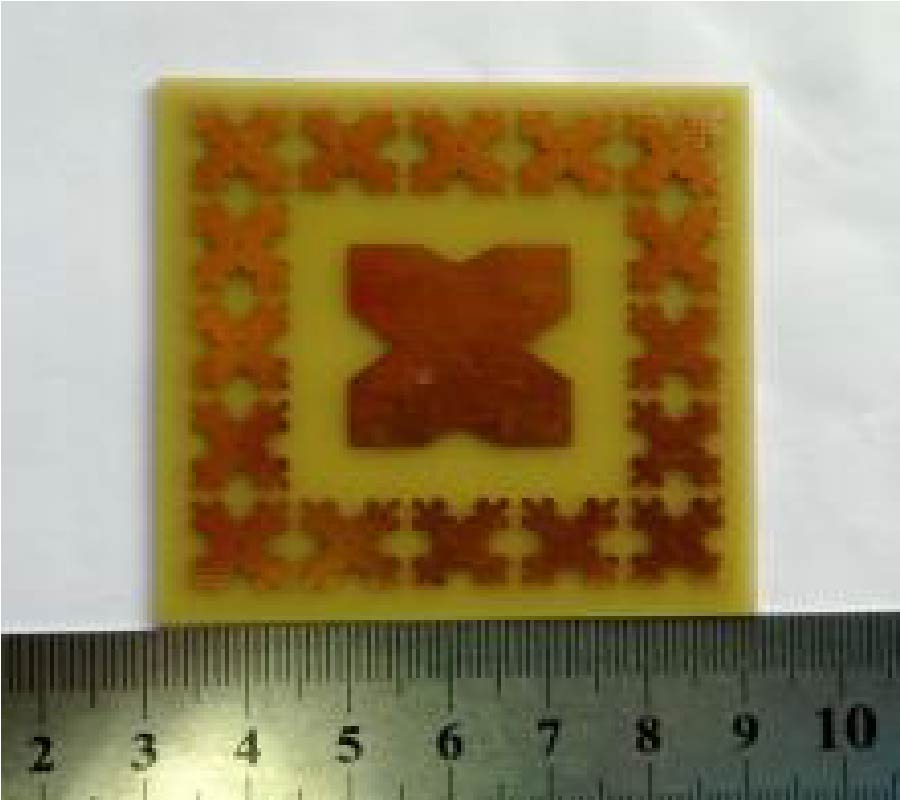
A Circularly Polarized (CP) high efficiency wide band Reflectarray (RA) antenna is designed for Ka-band using cross bow-tie elements. The reflected wave phase curve is obtained by anti-clockwise bowtie rotation. The linear phase curve with complete 360° degree is obtained when left-hand circularly polarized (LHCP) is incident normally in unit cell environment. The proposed method provides high gain, high aperture efficiency, wideband axial ratio (AR), in circularly polarized bow-tie RA using multiple copies of unit cell to form 25*25 antenna array. Before designing RA, the unitcell is analyzed, for oblique incidence to predict its bandwidth. The proposed antenna provided good performance in terms of Half Power Beam width HPBW, Side Love Level (SLL), cross polarization, gain bandwidth and AR bandwidth. A 25*25 bow-tie RA antenna provides the highest aperture efficiency of 57%, HPBW of 9.0 degrees, SLL -19 dB, cross polarization -27 dB. A 1-dB gain bandwidth of 32.5%, 3-dB gain bandwidth of 51.4% and 1.5-dB AR bandwidth of 32.9% while 3-dB AR bandwidth of 48.7% is achieved in simulation. These results are validated through fabricated cross bow-tie RA, and the measurements make good agreement with simulation results.
KA-BAND CIRCULARLY POLARIZED HIGH EFFICIENCY WIDE BAND REFLECTARRAY USING CROSS BOW-TIE ELEMENTS
2015-10-02
PIER Letters
Vol. 57, 23-29
The Eikonal Equation for Metamaterials Optics from a Moving Boundary Variational Principle
Consuelo Bellver-Cebreros and Marcelo Rodriguez-Danta
The eikonal equation for inhomogeneous anisotropic metamaterials with equal relative permittivity and permeability tensors (ε(r) = μ(r)) is derived from a free boundary variational principle. An original approach is proposed considering the wavefront as a moving discontinuity surface in an extended continuous media described by the Lagrangian density of electromagnetic fields. The eikonal equation arises as natural (non prescribed) boundary conditions for variational problems.
2015-10-02
PIER Letters
Vol. 57, 17-22
An Improved TEM Antenna Designing Used in Electromagnetic Pulse Directed Radiation
Hang Li and Shoulin Yin
As we all know, traditional transmission electromagnetic pulse simulator has restricted test space problem. This paper proposes a new directed radiation fast rising time electromagnetic pulse (FREMP) simulator scheme which is based on transverse electric magnetic (TEM) wave antenna of a wire edge curl structure. Through numerical simulation, we study the influence of the parameters of wire edge curl TEM horn antenna and the effect of absorption resistance on radiation field. The simulation results show that the wire edge curl TEM horn antenna can effectively improve the ability of low frequency radiation. It can provide a theoretical support for developing FREMP simulator. We also demonstrate the feasibility of developing FREMP simulator using wire edge curl TEM horn antenna through experiments. Finally, the experimental results show that the radiation field of FREMP simulator developed by wire edge curl TEM horn antenna can meet high-altitude nuclear electromagnetic pulse (HEMP) requirements.
AN IMPROVED TEM ANTENNA DESIGNING USED IN ELECTROMAGNETIC PULSE DIRECTED RADIATION
2015-10-01
PIER Letters
Vol. 57, 9-16
Mutual Coupling Calibration for L-Shaped Microstrip Antenna Array with Accurate 2-d Direction of Arrival Estimation
Jianhui Bao , Qiulin Huang , Xin Huai Wang , Peng Liu and Xiao-Wei Shi
An improved mutual coupling calibration approach based on the element pattern reconstruction (EPR) method is proposed in this paper. Compared to previous calibration methods in which the calibration is carried out in the entire space, the space angle ranges to be calibrated in this method is partitioned according to the interested directions. Through the partition of the space angle region, the angle ranges to calibrate are narrowed, and thus more accurate calibration matrix can be obtained in corresponding angle regions. With the employment of the calibration matrix on 2-D DOA estimation, more effective mutual coupling calibration and more accurate DOA estimations are achieved by alternate iteration in each angle region. The validity of this method is verified by an L-shaped microstrip antenna array, and the performance of mutual coupling calibration is presented by the better accuracy in 2-D DOA estimations.
MUTUAL COUPLING CALIBRATION FOR L-SHAPED MICROSTRIP ANTENNA ARRAY WITH ACCURATE 2-D DIRECTION OF ARRIVAL ESTIMATION
2015-10-01
PIER M
Vol. 44, 21-30
Analysis of a Vertical Interconnection Access by Using Longitudinal Wave Concept Iteratve Process (LWCIP)
Noureddine D. Sboui , Jamel Hajri and Henri Baudrand
A new formulation of the Wave Concept Iterative Process (WCIP) method is presented in this work. This approach uses an analysis with the longitudinal components instead of the transverse components. This approach includes decomposing the transverse TM modes into two longitudinal terms: the TM and TEM modes. This approach is applied to model a Vertical Interconnect Access VIA hole. The current density behavior is studied in the two cases with and without VIA hole. Also this method is used to study a SIW slot antenna. Compared to those obtained by available published data, our results show that the proposed method gives convincing results.
ANALYSIS OF A VERTICAL INTERCONNECTION ACCESS BY USING LONGITUDINAL WAVE CONCEPT ITERATVE PROCESS (LWCIP)
2015-10-01
PIER M
Vol. 44, 13-20
A Photomixer Driven Terahertz Dipole Antenna with High Input Resistance and Gain
Wenfei Yin , Kenneth Kennedy , Jayanta Sarma , Richard A. Hogg and Salam Khamas
A terahertz (THz) antenna is proposed that offers high input resistance and gain in the presence of an electrically thick GaAs substrate. The antenna is centrally fed using two vertical probes connected to a photomixer on a thin low temperature grown gallium arsenide (LTG-GaAs) film which is supported by the GaAs substrate. An input impedance of ~3.3 kΩ has been achieved using a dipole antenna that is printed on a thin dielectric slab, and isolated from the supporting substrate using a metal ground plane. A square aperture has been introduced to facilitate the illumination of the photomixer with two laser beams. Furthermore, a frequency selective surface (FSS) has been incorporated in the configuration, which results in a broadside gain of ~19 dBi at a resonance frequency of 0.97 THz.
A PHOTOMIXER DRIVEN TERAHERTZ DIPOLE ANTENNA WITH HIGH INPUT RESISTANCE AND GAIN
2015-10-01
PIER M
Vol. 44, 1-12
Fixed-Image-Method-Based Transient Electromagnetic Model of Grounding System in Horizontally Stratified Multilayer Medium
Dino Lovrić and Slavko Vujević
In this paper, a frequency-domain-based transient electromagnetic model of grounding system in horizontally stratified multilayer medium is presented. The basis of the model is an improved version of the time-harmonic electromagnetic model of grounding system. Using the originally developed continuous numerical Fourier transform algorithm, the results obtained by the time-harmonic model are synthesized into a complete time domain solution. The presented model features very high accuracy and fast execution speed and is validated through several numerical examples.
FIXED-IMAGE-METHOD-BASED TRANSIENT ELECTROMAGNETIC MODEL OF GROUNDING SYSTEM IN HORIZONTALLY STRATIFIED MULTILAYER MEDIUM
2015-09-30
PIER Letters
Vol. 57, 1-7
Reflection and Transmission of an Electromagnetic Wave Due to Fractal Slab Sandwiched Between Ordinary Material
Safiullah Khan Marwat , Muhammad Junaid Mughal and Qaisar Abbas Naqvi
εThis paper presents an analytical solution to study the reflection and transmission of an electromagnetic wave impinged upon a multilayered structure. The structure is composed of a fractal slab sandwiched by ordinary material on either side. Modified Maxwell equations for fractional dimension space are used to represent the fields in a fractal slab. The electromagnetic characteristics of the structure are studied for different dimensions (D) and numerical results are presented for both the classical (D is integer) and fractal (D is non-integer) slabs. This study provides foundations for investigating the waveguides filled with fractal media and electromagnetic waves propagation in multilayered structures at fractional boundaries.
REFLECTION AND TRANSMISSION OF AN ELECTROMAGNETIC WAVE DUE TO FRACTAL SLAB SANDWICHED BETWEEN ORDINARY MATERIAL
2015-09-30
PIER Letters
Vol. 56, 133-139
RCS Reduction of Cylindrical Structure Using Mixed-Impedance Boundary Conditions
Ali Azarbar and Mostafa Mashhadi
In this paper, the problem of RCS reduction in cylindrical structures with various boundary conditions are investigated comprehensively. It has been done through a general form of boundary conditions called Mixed-Impedance boundary conditions. Genetic algorithm, a powerful optimization method, is used to explore specific conditions that provide major reduction of cylindrical structure's RCS. The optimizations are performed in case of normally and obliquely incident illuminations. Finally, the optimized values are formulated in terms of incident angle to construct a simple and fast way of evaluation of the minimum RCS situation. The results are compared with a cylindrical PEC structure, and it has been verified that the optimized values of MI boundary conditions could result in significant backward RCS reduction for both normal and oblique incident.
RCS REDUCTION OF CYLINDRICAL STRUCTURE USING MIXED-IMPEDANCE BOUNDARY CONDITIONS
2015-09-30
PIER Letters
Vol. 56, 129-132
Bandpass Filter with Four Transmission Zeros Using Dual-Mode Ring Resonator
Kuan Deng , Wenjie Feng and Zhengyu Chen
A novel microstrip bandpass filter with four transmission zeros is proposed. Four transmission zeros close to the passband are realized to improve the selectivity for the passband. A sixth-order passband is realized with two shorted stubs and a dual-mode ring resonator. The transmission zeros near the passband can be adjusted conveniently by only changing the characteristic impedances of the coupled lines. For demonstration, a planar bandpass filter (3-dB bandwidth 21.9%) was designed and fabricated.
BANDPASS FILTER WITH FOUR TRANSMISSION ZEROS USING DUAL-MODE RING RESONATOR
2015-09-30
PIER Letters
Vol. 56, 123-128
A Novel Meander Line Microstrip Log-Periodic Dipole Antenna for Dual-Polarized Radar Systems
Lizhong Song , Yuming Nie and Jun Wang
A novel log-periodic dipole antenna for dual-polarized radar systems is presented. The proposed antenna employs meander line technology and matched loads. The simulated and measured results show that the -6 dB reflection coefficient bandwidth of the dual-polarized antenna covers the desired band of 2-8 GHz and the port isolation is higher than 32 dB, along with -20 dB cross-polarization discrimination for both E- and H-planes.
A NOVEL MEANDER LINE MICROSTRIP LOG-PERIODIC DIPOLE ANTENNA FOR DUAL-POLARIZED RADAR SYSTEMS
2015-09-30
PIER Letters
Vol. 56, 115-122
Transmission Line Theory and Thermal Analysis of Coaxial Coupler for TWTs
Rupasree Roy , Vishant Gahlaut , Abhishek Jain , Parvez Ahmad Alvi , Sanjay Kumar Ghosh and Ashok Kumar Sinha
This paper presents the transmission line analysis, thermal and structural analysis of a multi-section coaxial coupler (MSCC) used in traveling-wave tubes (TWTs) to handle high average power over a wide frequency range. Power transmission through coupler from the device demands very good matching between load and source impedances such that low VSWR is achieved. Modeling of the MSCC for wideband TWTs in commercially software packages takes very long iteration time even in high-end computers. An analytical approach has been developed to model MSCC which takes less iteration time even in ordinary computer. Analytical results have been compared to those obtained from CST microwave studio. Finally, thermal and structural analysis has been carried out to study the thermal aspects for handling high average RF power.
TRANSMISSION LINE THEORY AND THERMAL ANALYSIS OF COAXIAL COUPLER FOR TWTS
2015-09-29
PIER Letters
Vol. 56, 107-113
Compact UWB Antennas with Inverted E- and F-Shaped Slots for Bandnotch Characteristics
Arsalan Modirkhazeni , Pejman Rezaei and Iraj Arghand Lafmajani
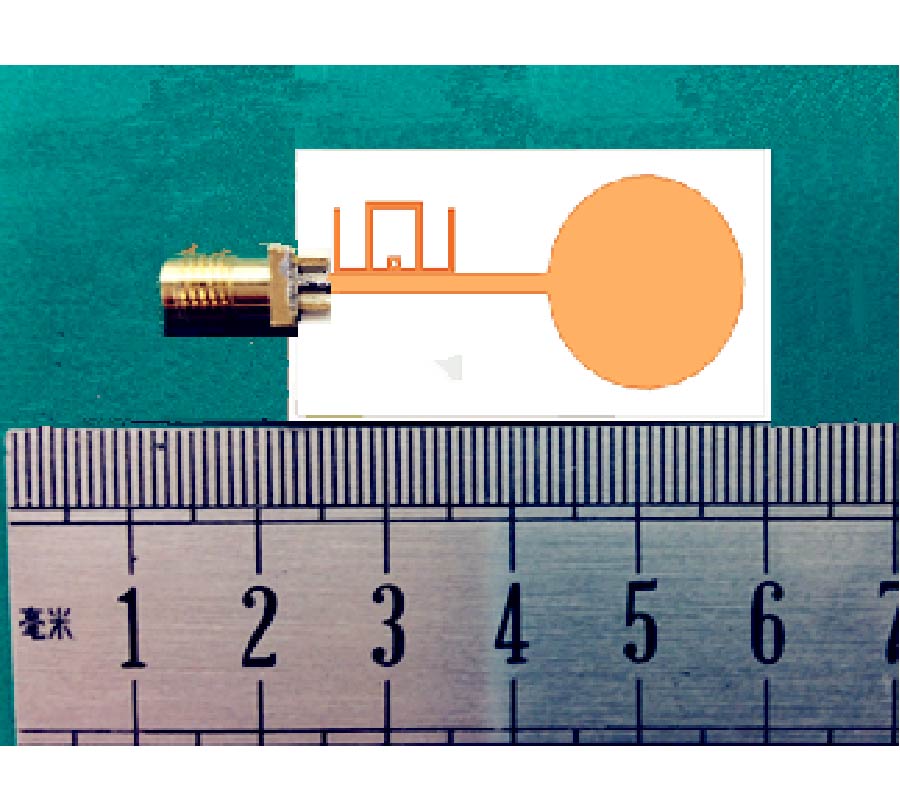
A compact microstrip notched ultrawideband patch antenna (UWB) with inverted E- and F-shaped slots is presented. By introducing a new inverted E-shaped notch in the radiating plane, band-notch about 2.68 to 3.55 GHz is achieved. A new type of Defected Ground Structure (DGS) in the ground plane is employed to extend the lower limit of the bandwidth so as to cover ISM 2.4 GHz WLAN-frequency band. The proposed antenna offers 126% bandwidth overall dimension of 13×17×1.6 mm3. The experiment results indicate that the proposed antenna can meet the requirement for UWB communication with size miniaturization.
COMPACT UWB ANTENNAS WITH INVERTED E- AND F-SHAPED SLOTS FOR BANDNOTCH CHARACTERISTICS