Search Results(13797)

2015-08-19
PIER Letters
Vol. 55, 45-52
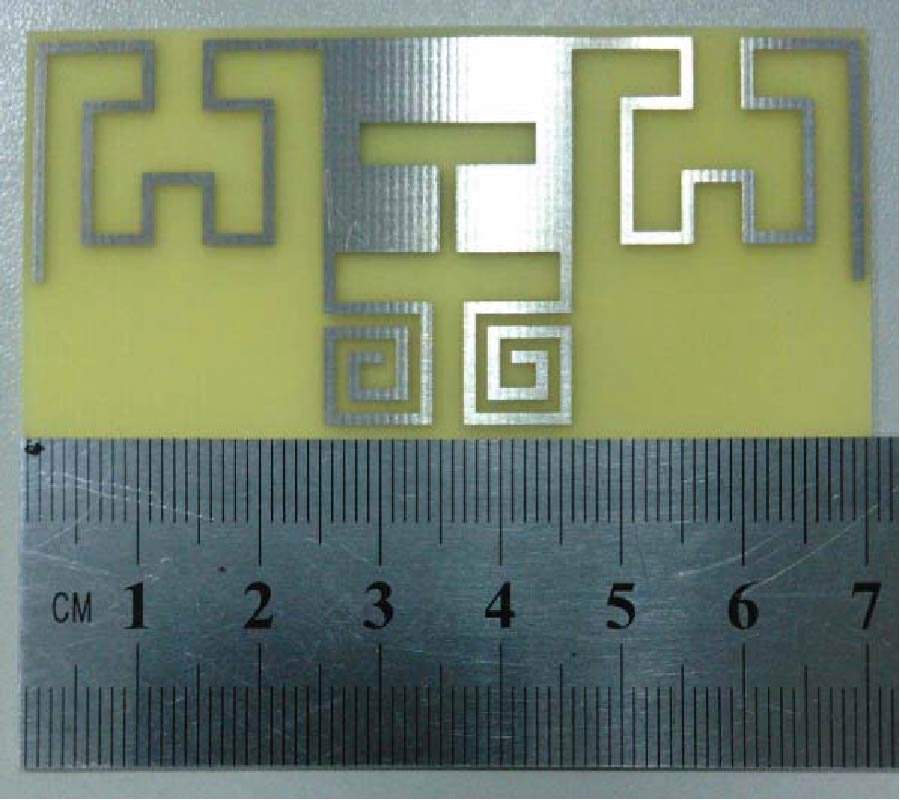
A Planar UWB Antenna with Triple-Notched Bands Using Triple-Mode Stepped Impedance Resonator
Shaoming Pan , Gongkun Luo , Baozhong Ke and Kejian Li
A planar ultra-wideband (UWB) antenna with triple-notched bands using triple-mode stepped impedance resonator (SIR) is presented in this paper. By coupling the novel triple-mode SIR beside the microstrip feedline, band-rejected filtering properties around the C-band satellite communication band, the 5.8 GHz WLAN band, and the X-band satellite communication band are generated. The notched frequencies can be adjusted according to specification by altering the triple-mode SIR. The results indicate that the proposed planar antenna not only retains an ultra wide bandwidth but also owns triple band-rejections capability. The UWB antenna demonstrates omnidirectional radiation patterns across nearly whole operating bandwidth, which is suitable for UWB communications.
A PLANAR UWB ANTENNA WITH TRIPLE-NOTCHED BANDS USING TRIPLE-MODE STEPPED IMPEDANCE RESONATOR
2015-08-19
PIER M
Vol. 43, 119-133
Light Scattering from Two-Dimensional Periodic Arrays of Noble-Metal Disks and Complementary Circular Apertures
Xiaowei Ji , Daiki Sakomura , Akira Matsushima and Taikei Suyama
Numerical solution is presented for light scattering from two kinds of free-standing periodic arrays, that is, disks made of noble-metal and circular apertures perforated in a thin noble-metal sheet. The shapes of them are complementary to each other, and the circular areas are allocated along two orthogonal coordinates with the same periodicity. Using the generalized boundary conditions of the surface impedance type, we formulate the boundary value problem into a set of integral equations for unknown electric and magnetic current densities defined over the circular area. Employment of the method of moments allows us to solve the integral equations and give the expansion coefficients of the current densities, from which we can find reflected, transmitted, and absorbed powers. Dependence of the powers on the array parameters and wavelength is discussed in detail from the viewpoint of grating resonance. Special attention is paid to the extraordinary transmission which occurs in the arrays of apertures of sub-wavelength size by analytical derivation of the quasi-static solutions.
LIGHT SCATTERING FROM TWO-DIMENSIONAL PERIODIC ARRAYS OF NOBLE-METAL DISKS AND COMPLEMENTARY CIRCULAR APERTURES
2015-08-18
PIER M
Vol. 43, 109-118
Adaptive Beamforming Algorithms for Cancellation of Multiple Interference Signals
Lay Teen Ong
This paper proposes a fast Minimum-Variance-Distortionless-Response (MVDR) beamforming algorithm for an antenna array for cancellation of multiple interference signals. The proposed algorithm uses Sample-Average Estimate (SAE) of the data covariance matrix and reduces its computational effort by applying the Matrix-Inversion-Lemma (MIL) to its covariance Matrix Inversion (MI) operation. The proposed algorithm is compared to two SAE-based algorithms: the Sample Matrix Inversion (SMI) algorithm that requires an MI operation and the Auxiliary Vector (AV) algorithm that does not need an MI operation. A non-SAE based algorithm using the Least Mean Square (LMS) method is also included for comparison. Simulation results show that the proposed algorithm converges slower than the SMI scheme but outperforms the AV and LMS schemes during the transient phase. Once convergence is achieved, the proposed algorithm converges to a better Mean Square Error than the rest of the algorithms evaluated.
ADAPTIVE BEAMFORMING ALGORITHMS FOR CANCELLATION OF MULTIPLE INTERFERENCE SIGNALS
2015-08-18
PIER M
Vol. 43, 101-108
Design and Performance Index Comparison of the Permanent Magnet Linear Motor
Fairul Azhar bin Abdul Shukor , Hiroyuki Wakiwaka , Kunihisa Tashiro and Masami Nirei
In this paper, a cylindrical permanent magnet linear motor (PMLM), which has a high performance, was designed and developed, because the motor has a zero normal force and a higher thrust density. The structure of the motor plays a vital role at the stage of design. During the design stage, several models of the PMLM that had different structural parameters were simulated using FEM software, and the model that produced the high-performance was identified. The structural parameters involved include the radius and height of the permanent magnet, rpm, and hpm, the height of coil, hc, and the shaft radius, rs, within a fixed total radius, rtotal. Each model of the PMLM was simulated using FEM software and the model that produced the highest thrust was identified. To prove its high-performance characteristics, the performance of the PMLM was then compared to the commercialized PMLM using four performance indexes which are thrust F, thrust constant kf, motor constant km and motor constant square density G. About 200 commercialized PMLMs with three different types have been chosen which are the slot type PMLM, slotless type PMLM and shaft motor. Based on the comparisons, the designed PMLM had a better performance than the commercialized PMLM. In order to validate the simulation result, the PMLM was manufactured. The simulation and measurement static thrust characteristics were then compared, and it was found that the simulated thrust had a good agreement with the measured one.
DESIGN AND PERFORMANCE INDEX COMPARISON OF THE PERMANENT MAGNET LINEAR MOTOR
2015-08-17
PIER Letters
Vol. 55, 39-43
Three Optimized Omnidirectional Microstrip Antennas (OMA) for WLAN Applications
Seyed Hassan Esmaeli , Mohammad Khalaj-Amirhosseini and Seyed Hassan Sedighy
In this paper, three omnidirectional microstrip array antennas are optimized, fabricated and measured. The proposed planar antennas are composed from series of microstrip line sections with inverted top and bottom conductors at each section. The antenna design parameters are optimized to design three different antennas: wide bandwidth, high-gain and dual-band antennas. In the wideband antenna, a good impedance matching is obtained for relative bandwidth of 31% that covers the frequency range of WLAN. The dualband omnidirectional antenna operates at 2.45 GHz and 5.25 GHz with gain of 6.69 dBi and 7.71 dBi, respectively. Also, the optimized high-gain antenna achieves 9.3 dBi gain. The three optimized antennas are fabricated and tested. The measurement results show a very good agreement with the simulation ones. The optimization results verify the ability and capability of the antenna to achieve the desired specifications.
THREE OPTIMIZED OMNIDIRECTIONAL MICROSTRIP ANTENNAS (OMA) FOR WLAN APPLICATIONS
2015-08-15
PIER Letters
Vol. 55, 31-38
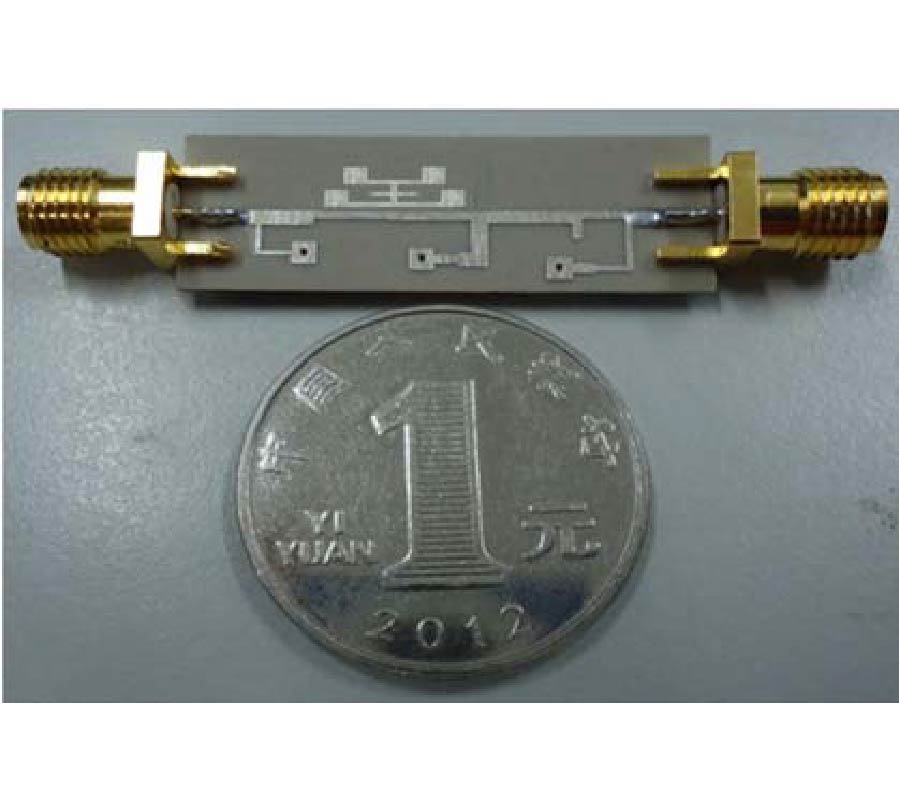
Dual-Band Bandpass Filters Using a Novel Quad-Mode Stub-Loaded Ring Resonator
Lei Lin , Pan-Pan Xu , Jin-Lin Liu , Bian Wu , Tao Su and Chang-Hong Liang
This paper presents two dual-band bandpass filters with controllable passband frequencies and bandwidths. The filters are realized utilizing a novel quad-mode stub-loaded ring resonator. All the four mode equivalent circuits of the resonator are quarter-wavelength resonators, and their fundamental resonance frequencies are used to form the passbands. So the designed filters have a compact circuit size and relatively wide upper stopband. For validation, two experimental filters operating at 1.5/2.4 GHz and 1.5/3.5 GHz are designed. In the design of the second filter, hook-shape feed-lines and source-load coupling are applied to generate more transmission zeros, which greatly improve the selectivity of the filter. Finally, the filters are fabricated, and measured. The measured results have good agreement with the simulated ones.
DUAL-BAND BANDPASS FILTERS USING A NOVEL QUAD-MODE STUB-LOADED RING RESONATOR
2015-08-15
PIER Letters
Vol. 55, 23-29
Design of a Low-Profile Antenna by Using Orthogonal Parasitic Meandered Monopoles
Mirko Barbuto , Fabrizio Trotta , Filiberto Bilotti and Alessandro Toscano
In this paper, we present the design of a low-profile antenna consisting of two orthogonal parasitic meandered monopoles excited by the near-filed coupling with a feeding bow-tie. The two parasitic radiators and the driven element are placed on two different faces of the same dielectric substrate and a coaxial probe excites the bow-tie through a metallic ground plane. In this way, the antenna has compact dimensions of 21×10.5×1.6 mm30/6×λ0/12×λ0/75, excluding the ground plane) and exhibits a good impedance matching in the 2.4-2.485 GHz Wi-Fi band with an overall efficiency around 50%.
DESIGN OF A LOW-PROFILE ANTENNA BY USING ORTHOGONAL PARASITIC MEANDERED MONOPOLES
2015-08-15
PIER M
Vol. 43, 91-100
Characterization of an off-Body Channel at 2.45 GHz in an Underground Mine Environment
Moulay El Hassan El Azhari , Mourad Nedil , Ismail Ben Mabrouk , Khalida Ghanem and Larbi Talbi
Underground mines are challenging environments for off-body wireless communication, since the signal propagation is majorly affected by small scale and large scale fading. The use of multiple antennas at the transmitter and the receiver sides is a known technique to combat fading and enhance capacity. In this paper, the channel parameters of a 2×2 Multiple-Input Multiple-Output (MIMO) off-body system are investigated in an underground gold mine and compared to the Single-Input Single-Output (SISO) system parameters. Measurement campaigns were conducted using monopole antennas at a center frequency of 2.45 GHz for both Line Of Sight (LOS) and None Line of Sight (NLOS) scenarios. The measured frequency responses are converted into impulse responses through an Inverse Fourier Transform (IFT). The results show that for a constant transmitted power, the path loss exponents at NLOS are smaller than their counterpart values at LOS. The channel capacity values decrease as the propagation distance increases and when the link is obstructed at NLOS. The RMS delay spread is generally increasing with distance for both LOS and NLOS situations. When a fixed Signal-to-Noise Ratio (SNR) is assumed, MIMO topologies improved the SISO capacity by roughly 8 bps/Hz. The channel characterization results demonstrate that the MIMO configurations provided a remarkable improvement in terms of capacity, coherence bandwidth, and time delay spread compared to the SISO topologies.
CHARACTERIZATION OF AN OFF-BODY CHANNEL AT 2.45 GHZ IN AN UNDERGROUND MINE ENVIRONMENT
2015-08-14
PIER Letters
Vol. 55, 15-22
Time Domain Sparse Representation for Multi-Aspect SAR Data of Targets
Jin-Rong Zhong , Gongjian Wen , Conghui Ma and Bai-Yan Ding
Sparse representation is the fundamental technology of compressive sensing, sparse three-dimensional (3-D) imaging, and dictionary-based parameter estimation. Typical sparse representation models of radar signal work in the frequency domain, which may encounter high dimension and large data amount of dictionary. This paper presents a time-domain (TD) representation model for multi-aspect SAR data. We generate the multi-aspect two-dimensional (2-D) TD responses of the 3-D scattering center model. Then we cut off the low-energy area of the 2-D TD response and use cutoff responses to construct the dictionary of sparse representation. Such a TD dictionary is a sparse matrix. Moreover, we build and solve the sparse representation model based on the TD dictionary. Compared with the frequency-domain (FD) sparse representation model, the data size of our TD dictionary is remarkably lower, and the solving of TD sparse representation problem is in higher efficiency. We utilize the TD sparse representation to reconstruct 3-D images from multi-aspect SAR data. Experimental results demonstrate the effectiveness and efficiency of the TD sparse representation model.
TIME DOMAIN SPARSE REPRESENTATION FOR MULTI-ASPECT SAR DATA OF TARGETS
2015-08-13
PIER C
Vol. 59, 21-30
Substrate Integrated Evanescent Filters Employing Coaxial Stubs
Vitaliy Zhurbenko
Evanescent mode substrate integrated waveguide (SIW) is one of the promising technologies for design of light-weight low-cost microwave components. Traditional realization methods used in the standard evanescent waveguide technology are often not directly applicable to SIW due to dielectric filling and small height of the waveguide. In this work, one of the realization methods of evanescent mode waveguides using a single layer substrate is considered. The method is based on the use of coaxial stubs as capacitive susceptances externally connected to a SIW. A microwave filter based on these principles is designed, fabricated, and tested. The filter exhibits a transmission zero due to the implemented stubs. The problem of evanescent mode filter analysis is formulated in terms of conventional network concepts. This formulation is then used for modelling of the filters. Strategies to further miniaturization of the microwave filter are discussed. The approach is useful in applications where a sharp roll-off at the upper stop-band is required.
SUBSTRATE INTEGRATED EVANESCENT FILTERS EMPLOYING COAXIAL STUBS
2015-08-12
PIER B
Vol. 63, 123-143
A Method to Calculate the Spherical Multipole Expansion of the Electrostatic Charge Distribution on a Triangular Boundary Element
John Barrett , Joseph A. Formaggio and Thomas Joseph Corona
We describe a technique to analytically compute the multipole moments of a charge distribution confined to a planar triangle, which may be useful in solving the Laplace equation using the fast multipole boundary element method (FMBEM) and for charged particle tracking. This algorithm proceeds by performing the necessary integration recursively within a specific coordinate system, and then transforming the moments into the global coordinate system through the application of rotation and translation operators. This method has been implemented and found use in conjunction with a simple piecewise constant collocation scheme, but is generalizable to non-uniform charge densities. When applied to low aspect ratio (≤100) triangles and expansions with degree up to 32, it is accurate and efficient compared to simple two-dimensional Gauss-Legendre quadrature.
A METHOD TO CALCULATE THE SPHERICAL MULTIPOLE EXPANSION OF THE ELECTROSTATIC CHARGE DISTRIBUTION ON A TRIANGULAR BOUNDARY ELEMENT
2015-08-12
PIER Letters
Vol. 55, 7-13
Analysis of Numerical Dispersion in the High-Order 2-d WLP-FDTD Method
Wei-Jun Chen , Jun Quan and Shi-Yu Long
A theoretical analysis of numerical dispersion in the high-order finite-difference time-domain (FDTD) method with weighted Laguerre polynomials (WLPs) is proposed in this paper. According to the numerical dispersion relation for the two-dimensional (2-D) case, the numerical phase velocities relevant to the direction of wave propagation, grid discretization and time-scale factor are obtained. For a fixed relative error of the numerical phase velocity, the suitable sampling point density and time-scale factor can be determined. Compared with the low-order WLP-FDTD, the high-order one shows its good dispersion characteristics while a low sampling density is used. Three numerical examples are included to validate the effectiveness of the high-order scheme.
ANALYSIS OF NUMERICAL DISPERSION IN THE HIGH-ORDER 2-D WLP-FDTD METHOD
2015-08-12
PIER Letters
Vol. 55, 1-6
Compact Triple-Band Monopole Antenna with Inverted-L Slots and SRR for WLAN/WiMAX Applications
Yuan Xu , Cilei Zhang , Ying-Zeng Yin and Zhao Yang
A compact coplanar waveguide-fed tri-band monopole antenna for WLAN/WiMAX applications is proposed. By employing a pair of inverted-L slots etched on the ground plane and a split-ring resonator (SRR) and further carefully adjusting the lengths and positions of these structures, two notched bands can be obtained. Measured results show that a tri-band of 280 MHz (2.28-2.56 GHz), 920 MHz (3.29-4.21 GHz), and 860 MHz (5.05-5.91 GHz) with reflection coefficient less than -10 dB is obtained covering all the 2.4/5.2/5.8 GHz WLAN bands and 3.5/5.5 GHz WiMAX bands. In addition, good dipole-like radiation characteristics over the required bands is achieved in both E- and H-planes.
COMPACT TRIPLE-BAND MONOPOLE ANTENNA WITH INVERTED-L SLOTS AND SRR FOR WLAN/WIMAX APPLICATIONS
2015-08-12
PIER Letters
Vol. 54, 129-135
Design of Miniaturized Planar SIW Diplexers Using Dual-Mode Resonators
Homayoon Oraizi and Elham Bidaki
In this paper, two planar diplexers using dual-mode resonators are designed, which have achieved significant size miniaturization. The first diplexer is made of a simple single dual-mode resonator as a square cavity in the substrate integrated waveguide technology. The two degenerate modes with 90° rotation are perturbed by the placement of metallic via and CPW lines as input and output ports. A prototype model of this diplexer is designed and fabricated in the X-band. Its simulation results and measurement data agree very well. An isolation of 22 dB is achieved between two ports, which is quite suitable for receiving systems. For the improvement of isolation and bandwidth, the degree of structure is increased, whereby dual-mode resonators are used to connect the channel filters to the input port. Those types of channel filters are used which generate a transmission zero in the frequency band of the other channel. The isolation and bandwidth of the diplexer have been improved significantly, where its size is much smaller than the common diplexers.
DESIGN OF MINIATURIZED PLANAR SIW DIPLEXERS USING DUAL-MODE RESONATORS
2015-08-12
PIER M
Vol. 43, 81-90
Dispersion Analysis of Double-Sided Open Periodic Media Using Inhomogeneous Plane Wave Excitation
Sakineh Tooni , Larissa Vietzorreck and Thomas F. Eibert
Double-sided open periodic structures are analyzed using inhomogeneous plane wave scattering. The leaky and surface wave modes of several unit cells of different structures are computed using the poles of generalized reflection and transmission coefficients of inhomogeneous plane waves in the spectral domain. It is shown that the reflection and transmission coefficients of the zeroth order Floquet mode contain the poles of the Green's function of the complex stratified periodic structure. The properties of evanescent mode amplification as well as super resolution near field imaging in a wire medium are addressed. A balanced leaky wave antenna unit cell with double-sided radiation feature is introduced and it is shown that, in contrast to grounded structures, total absorption in lossless non-chiral double-sided open unit cells is not feasible as long as the behavior of the unit cell is well described by its fundamental mode.
DISPERSION ANALYSIS OF DOUBLE-SIDED OPEN PERIODIC MEDIA USING INHOMOGENEOUS PLANE WAVE EXCITATION
2015-08-12
PIER M
Vol. 43, 71-79
All-Optical Logic Gates Based on Spatial-Soliton Interactions in Optical Communication Spectral Region
Yaw-Dong Wu
New designs of all-optical logic gates based on spatial-soliton interactions in optical communication spectral regions were proposed. The proposed structures are composed of local nonlinear Mach-Zehnder interferometer (MZI) waveguide structures with multi-input ports and two nonlinear output ports. They can be used to design various all-optical logic gates. The nonlinear MZI waveguide structure with local nonlinear waveguides functions like a phase shifter. It employs angular deflection of spatial solitons controlled by the phase modulation created in the local nonlinear MZI. The light-induced index changes in the local nonlinear MZI waveguide structures break the symmetry of structure and make the output signal beam propagate through different nonlinear output waveguides. By properly choosing the input control power, the spatial solitons will be switched to different output ports. The numerical results show that the proposed local nonlinear MZI waveguide structures could really function as all-optical logic gates in the optical communication spectral region.
ALL-OPTICAL LOGIC GATES BASED ON SPATIAL-SOLITON INTERACTIONS IN OPTICAL COMMUNICATION SPECTRAL REGION
2015-08-11
PIER C
Vol. 59, 11-20
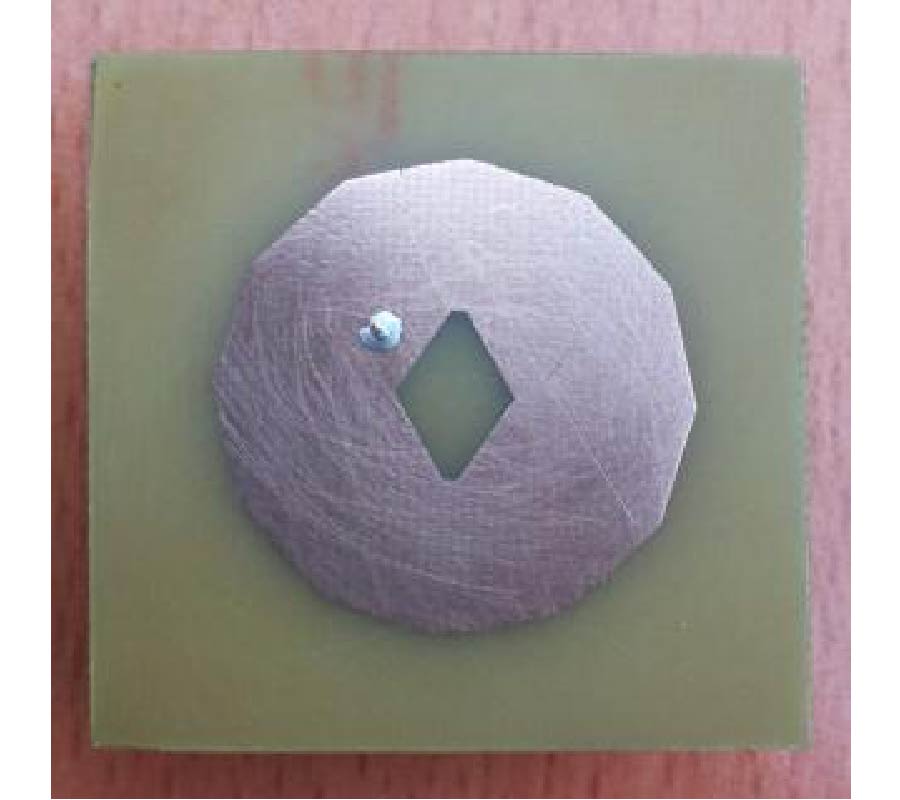
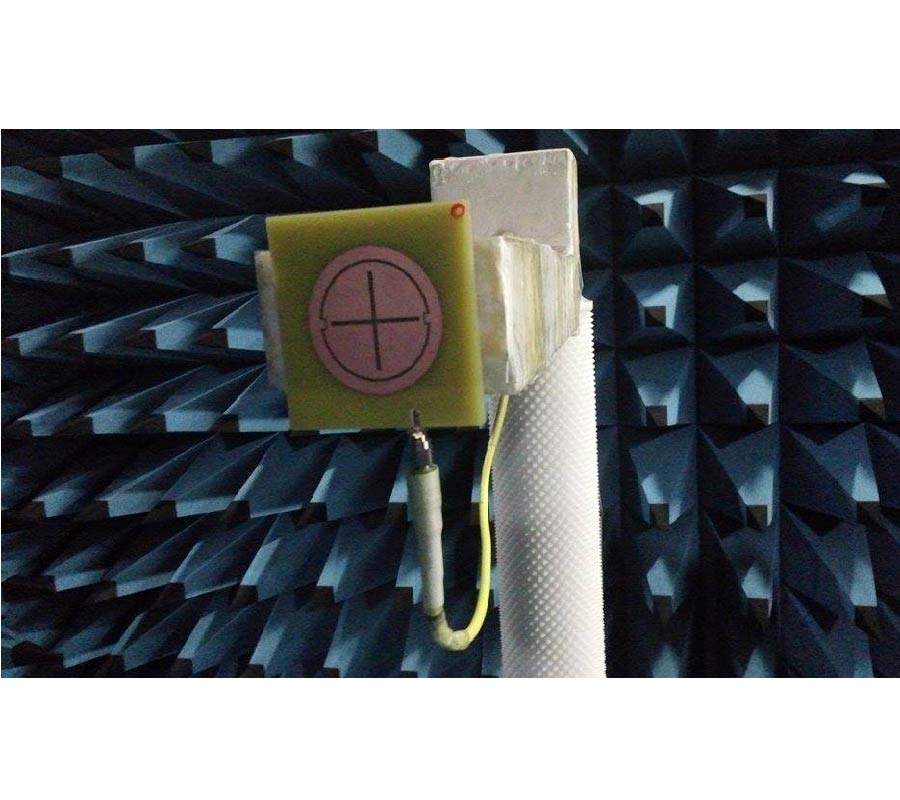
Multi-Band Cylindrical Dielectric Resonator Antenna Using Permittivity Variation in Azimuth Direction
Raghvendra Kumar Chaudhary , Kumar Vaibhav Srivastava and Animesh Biswas
A novel multi-band cylindrical dielectric resonator antenna (CDRA) using microwave laminates with permittivity variation in azimuth direction fed by coaxial probe is proposed in this paper. The proposed structures are constructed using different materials having different permittivities in azimuth direction in cylindrical dielectric resonator (DR). In order to determine the performance of various design parameters on resonance frequency and bandwidth, parametric studies have been performed. The operating band can be scaled up or down by adjusting the design parameters. Dualband and triple-band CDRAs have been fabricated using commercially available microwave laminates to validate the simulation results. For each case, the input reflection coefficient, radiation pattern and antenna gain are simulated and measured. Good agreement between simulated and measured results has been observed. The proposed antennas may be suitable for WLAN applications.
MULTI-BAND CYLINDRICAL DIELECTRIC RESONATOR ANTENNA USING PERMITTIVITY VARIATION IN AZIMUTH DIRECTION
2015-08-11
PIER C
Vol. 58, 135-142
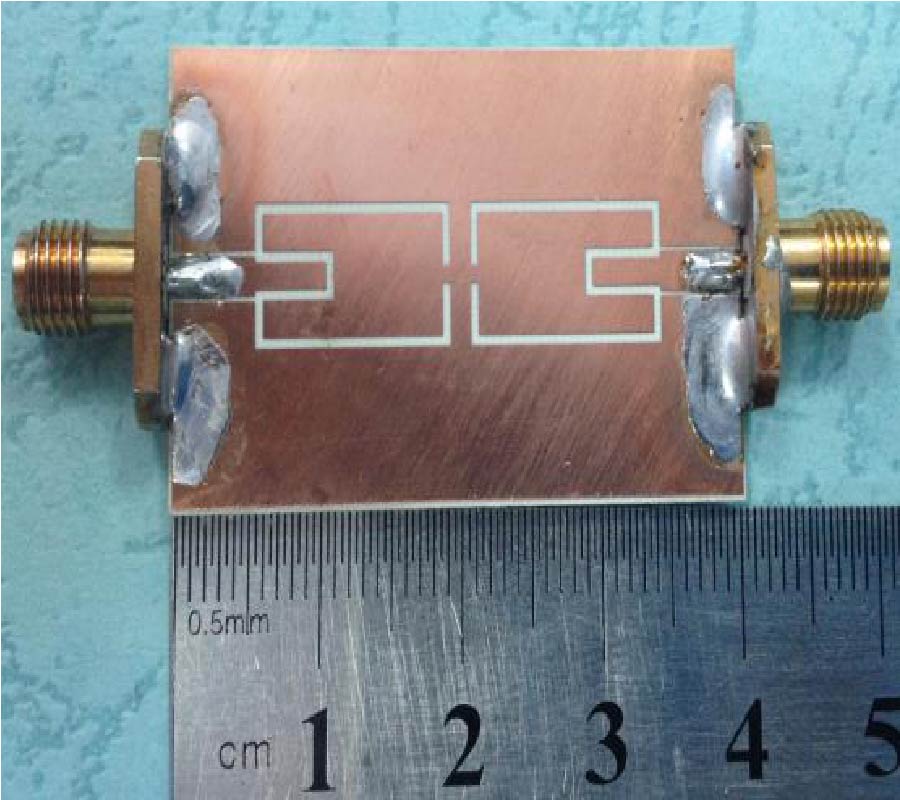
Microstrip Tri-Mode Bandpass Filters Using Modified Ring Resonators
Kai-Da Xu , Yong-Hong Zhang , Jiang Ai and Qing Huo Liu
Two new microstrip tri-mode modified ring resonators (Resonator A and Resonator B) are presented and discussed through mode analysis method. The characteristic difference between these two resonators is that the center frequency of the tri-mode Resonator B is still the same as that of traditional dual-mode ring resonator, while the center frequency of Resonator A will be shifted up compared with that of traditional ring resonator. Based on these two novel resonators, two bandpass filter examples are designed, fabricated and measured. The simulations and measurements are in good agreement which validate the design ideas.
MICROSTRIP TRI-MODE BANDPASS FILTERS USING MODIFIED RING RESONATORS
2015-08-11
PIER M
Vol. 43, 63-70
Diffraction Calculation of Arbitrarily Curved Wedge Modeled with NURBS Surfaces
Jun Yan , Jun Hu , Huapeng Zhao and Zai-Ping Nie
In this paper, we present an equivalent current-based numerical routine for calculating the diffraction of arbitrarily curved wedge modeled with non-uniform rational B-spline (NURBS) curves and surfaces. The NURBS curves and surfaces obtained from CAD systems need to be parameterized for numerical calculation; however, available parameterizing approaches in rendering computer graphics, which use straight line segments and flat facets for tessellation, are not suitable for the computation of the wedge diffraction. To make the full use of NURBS modeling technique in high-frequency asymptotic approaches, the proposed numerical routine utilizes a curvature adaptive tessellation scheme to parameterize the edge curve of the wedge with varying curvature as well as the method of parameter alignment to maintain the C0 continuity between the edge curve and the wedge surfaces, which is essential in evaluating the diffraction coefficients. Based on the proposed parameterizing method, the equivalent edge current can be implemented for diffraction computation of arbitrarily curved wedge modeled with NURBS curves and surfaces, complementing with the NURBS based physical optics (PO) as a fully NURBS-based high-frequency approach, which provides high geometrical accuracy and computational efficiency for calculating diffraction of electrically large curved wedges. Numerical examples are presented to validate the proposed method.
DIFFRACTION CALCULATION OF ARBITRARILY CURVED WEDGE MODELED WITH NURBS SURFACES
2015-08-09
PIER C
Vol. 59, 1-9
Analysis of Generic Near-Field Interactions Using the Antenna Current Green's Function
Said Mikki and Yahia M. Antar
We investigate the problem of near field interactions with general antenna systems using the antenna current Green's function formalism recently proposed by the authors as a framework for the theoretical and computational analysis of the interaction problem. The paper focus is on conceptual and numerical issues related to the analysis of the electromagnetic response of generic devices to arbitrary illumination fields produced, for example, by nearby source or scattered by surrounding objects. We provide some method of moment numerical examples involving wire antenna systems substantiating the ACGF approach to the problem of near field excitations.
ANALYSIS OF GENERIC NEAR-FIELD INTERACTIONS USING THE ANTENNA CURRENT GREEN'S FUNCTION