Search Results(13798)

2014-02-12
PIER C
Vol. 47, 111-117
Application of Protruded Strip Resonators to Design an UWB Slot Antenna with WLAN Band-Notched Characteristic
Naser Ojaroudi Parchin
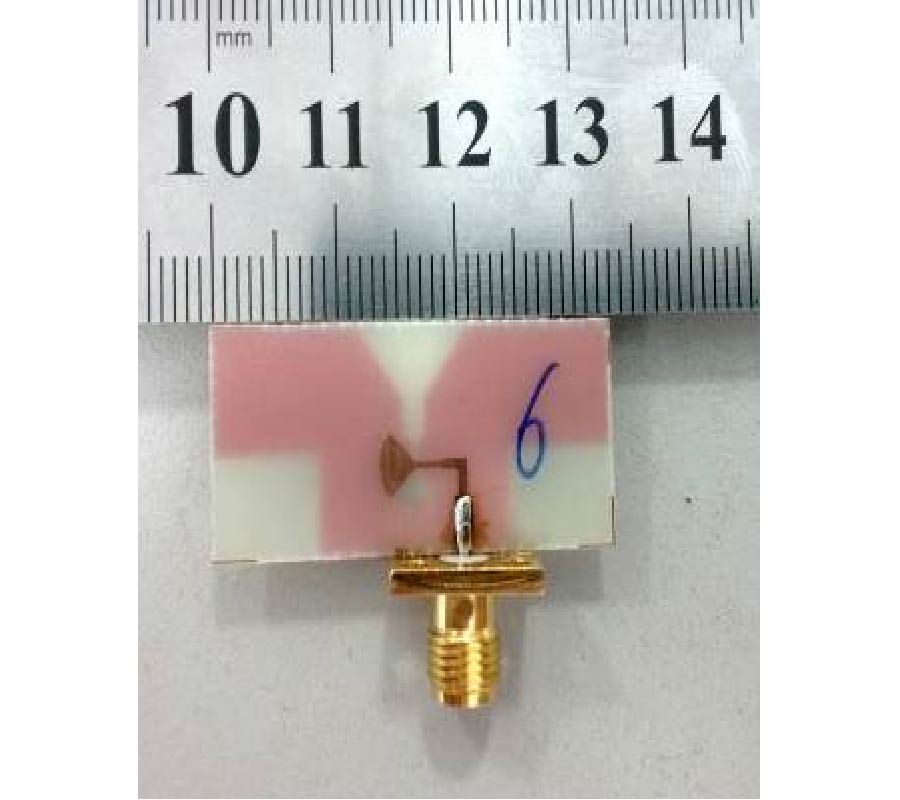
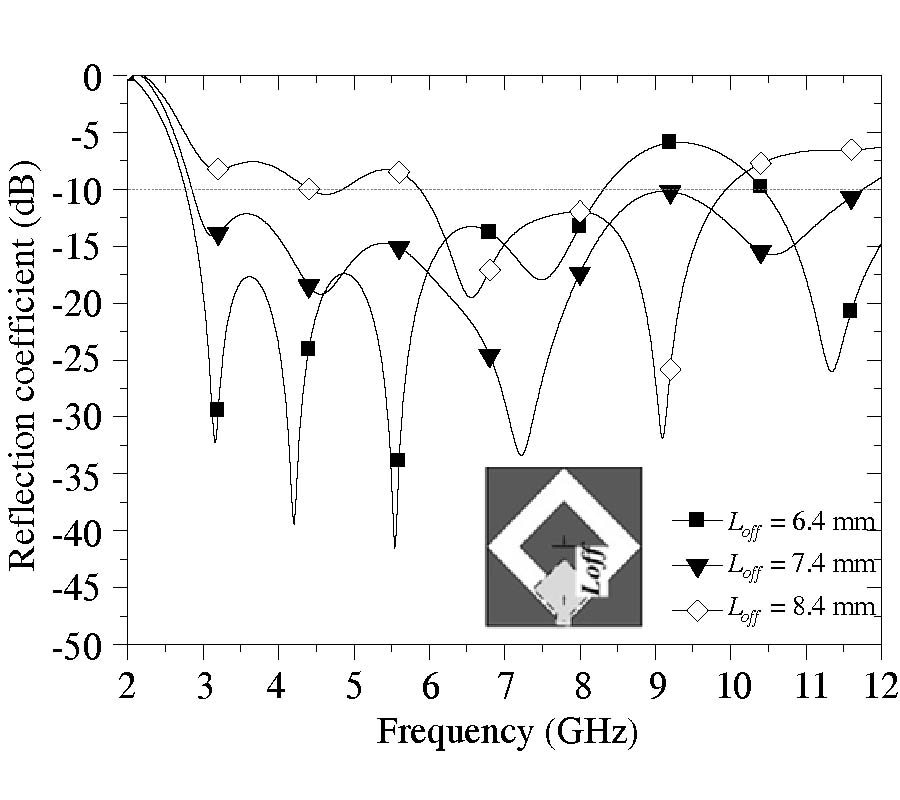
In this paper, a different method for designing a novel and compact microstrip-fed slot antenna with band-notched characteristic for UWB application is proposed. In the proposed antenna, a pair of cross-shaped strips protruded inside an extra rectangular slot in the ground plane are used to crate an additional resonance in higher frequencies. By obtaining this resonance, the usable upper frequency of the antenna is extended from 9 to 14.8 GHz which provides a wide usable fractional bandwidth of more than 135%. Additionally, by using a square-ring radiating stub with a pair of protruded T-shaped strips inside the ring, a desired frequency band-stop performance has been obtained. Simulated and experimental results obtained for this antenna show that it exhibits good radiation behavior within the UWB frequency range. The proposed antenna can operate from 3.04 to 14.8 GHz for VSWR < 2 with a rejection band around 5.1 to 6 GHz to suppress any interference from wireless local area network (WLAN) systems. Simulated and experimental results obtained for this antenna show that it exhibits good radiation behavior within the UWB frequency range.
APPLICATION OF PROTRUDED STRIP RESONATORS TO DESIGN AN UWB SLOT ANTENNA WITH WLAN BAND-NOTCHED CHARACTERISTIC
2014-02-12
PIER Letters
Vol. 45, 19-24
Experimental Research of the Electric Field Potential of a Rotating Magnetized Sphere
Vladimir Borisovich Timofeev and Tamara Egorovna Timofeeva
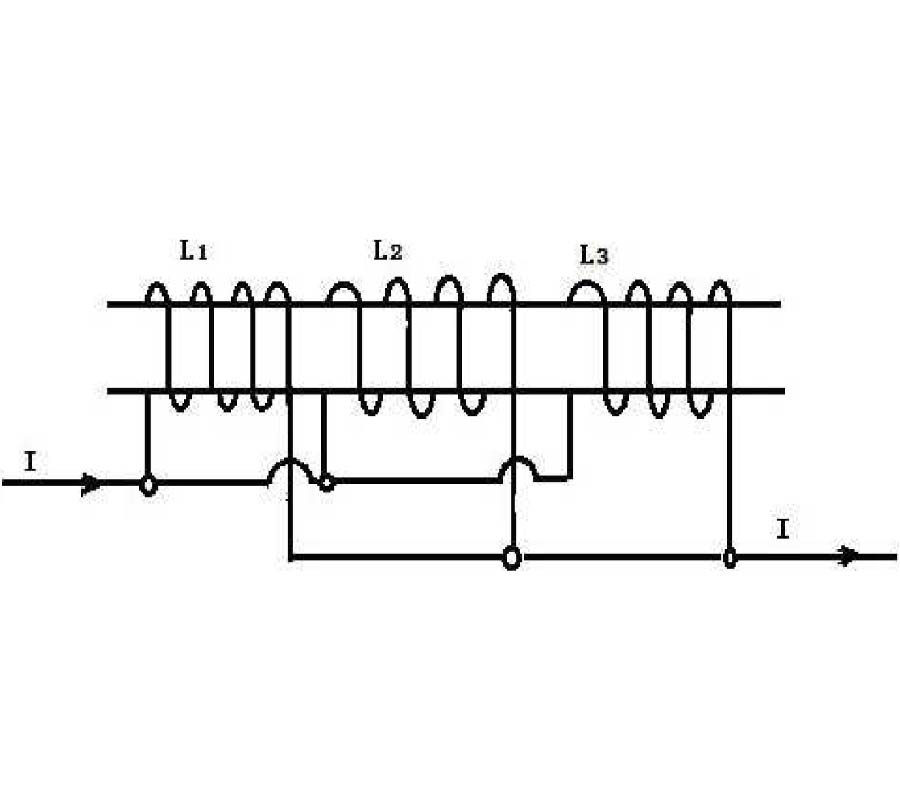
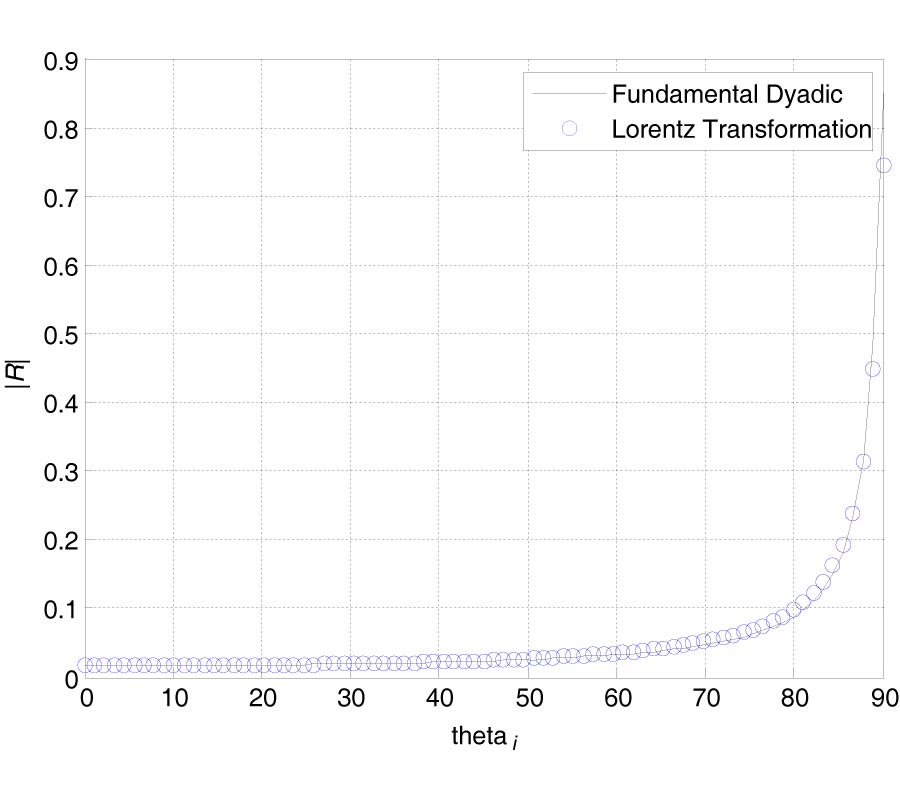
We performed an experiment for the verification of existing theoretical formulas for the electric field potential of a rotating magnetized sphere. Measurements of the electric field potential differences across cylindrical capacitors were carried out. Experimental results are essentially in accord with the potential obtained using the special relativity transformations and contradict formula for the quadrupole field potential.
EXPERIMENTAL RESEARCH OF THE ELECTRIC FIELD POTENTIAL OF A ROTATING MAGNETIZED SPHERE
2014-02-12
PIER M
Vol. 35, 11-19
Ultra Slow EM Wave Propagation Characteristics of Left-Handed Material Loaded Helical Guide
Dushyant Kumar Sharma and Surya Kumar Pathak
The dispersion characteristics (ω-β diagram) of a left-handed material (LHM) loaded helical guide is analytically solved and numerically computed for different metamaterial medium properties as well as helical guide parameters. The modal behaviour of this structure has been studied with an aim to achieve ultra slow wave over wide bandwidth which finds potential applications in optical switches and memories for optical processing. Significant amount of phase velocity reduction has been achieved in comparison to when helix is in free space or loaded with normal dielectric column. Other modal properties such as presence of two fundamental modes - backward and forward wave and their lower cut-off frequency (LCF) as well as bandwidth spectrum are also revealed thoroughly.
ULTRA SLOW EM WAVE PROPAGATION CHARACTERISTICS OF LEFT-HANDED MATERIAL LOADED HELICAL GUIDE
2014-02-11
PIER B
Vol. 58, 139-149
Huygens Principle Based Imaging of Multilayered Objects with Inclusions
Navid Ghavami , Gianluigi Tiberi , David J. Edwards , Ahmad Safaai-Jazi and Agostino Monorchio
The application of a recently introduced microwave imaging technique based on the Huygens principle (HP), has been extended to multilayered objects with inclusions in this paper. The methodology of HP permits the capture of contrast such that different material properties within the region of interest can be discriminated in the final image, and its simplicity removes the need to solve inverse problems when forward propagating the waves. Therefore the procedure can identify and localize significant scatterers inside a multilayered volume, without having apriori knowledge on the dielectric properties of the target object. Additionally, an analyticallybased approach for analyzing UltraWide Bandwidth (UWB) body propagation is presented, where the body is modeled as a 3-layer stratified cylinder with an eccentric inclusion. Validation of the technique through both simulations and measurements on multilayered cylindrical objects with inclusions has been performed.
HUYGENS PRINCIPLE BASED IMAGING OF MULTILAYERED OBJECTS WITH INCLUSIONS
2014-02-11
PIER Letters
Vol. 45, 13-18
Miniature Folded Printed Quadrifilar Helical Antenna with Integrated Compact Feeding Network
Ping Xu , Ze-Hong Yan , Xiao-Qiang Yang , Tian-Ling Zhang and Geng Yuan
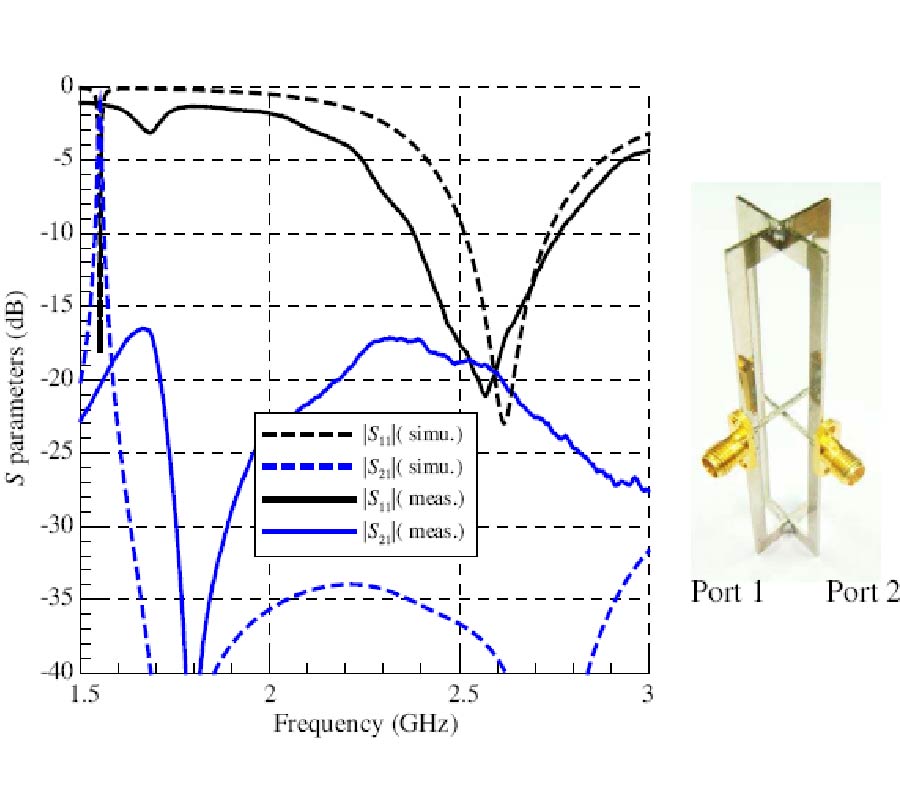
A miniature folded printed quadrifilar helical antenna (FPQHA) using a novel compact feeding network is proposed. Folding and meandering techniques are used to obtain 66% of size reduction for the axial length of the printed quadrifilar helical antenna. A compact feeding network using an out-of-phase power divider based on double-sided parallel-strip lines and a Wilkinson power divider is designed. A fabricated prototype of the FPQHA employing the compact feeding network is presented. The measured positive gain bandwidth is from 380 MHz to 425 MHz with a reflection coefficient less than -20 dB and an axial ratio below 2 dB. The measured maximum gain is 3.08 dBic at 395 MHz with a half-power beamwidth of 1500. With good radiation performance and integrated feeding network, the proposed antenna can become a better candidate in satellite and mobile communications.
MINIATURE FOLDED PRINTED QUADRIFILAR HELICAL ANTENNA WITH INTEGRATED COMPACT FEEDING NETWORK
2014-02-11
PIER M
Vol. 35, 1-10
Analysis of the Generalized Case of Scattering from a Ferromagnetic Microwire Grid
Tarun Kumar , Natarajan Kalyanasundaram and Bhaurao Kashirao Lande
This paper investigates the generalized case of scattering from a planar grid, containing an infinite number of axially magnetized ferromagnetic microwires placed parallel to each other in free space. A semi-analytical solution is obtained by calculating the local field at the surface of the reference microwire which is the sum of the scattered field from the other microwires as well as the incident field. Graf's theorem is used to transform the scattered field from one coordinate system to the other. Scattering field coefficients for the reference microwire are obtained by matching the tangential field components at the surface of the reference microwire. Simulated results are expressed in terms of the Reflection, Transmission, and Absorption Coefficients for the (TMz) and (TEz) polarizations. For validation, results of the proposed analysis specialized to the case of normal incidence with TMz polarization are compared with the results available in the literature.
ANALYSIS OF THE GENERALIZED CASE OF SCATTERING FROM A FERROMAGNETIC MICROWIRE GRID
2014-02-11
PIER
Vol. 145, 11-18
Micro-Air-Vehicle-Borne Near-Range SAR with Motion Compensation
Huaming Wu and Thomas Zwick
The major difficulty of realizing a micro-air-vehicle-borne (MAV-borne) synthetic aperture radar (SAR) is the motion errors that need to be precisely measured and compensated. This paper presents two novel motion measuring algorithms specifically for near-range applications. These algorithms use only low-cost micro-electronicmechanical system (MEMS) inertial measurement units (IMU). A MAV-borne SAR system was built equipped with a commercial off-the-shelf (COTS) motion sensing board. Several MAV-borne SAR measurements were performed for the first time in a hall with a realistic scene. SAR images were generated with proposed motion measuring algorithms in off-line mode. Obvious improvements in SAR image quality in terms of focusing have been observed after motion compensation with the proposed motion measuring algorithms. These results show that MAV-borne SAR together with low-cost IMU can yield very useful images.
MICRO-AIR-VEHICLE-BORNE NEAR-RANGE SAR WITH MOTION COMPENSATION
2014-02-11
PIER
Vol. 145, 1-10
GPR Signal Enhancement Using Sliding-Window Space-Frequency Matrices
Mehmet Emre Yavuz , Ahmed E. Fouda and Fernando Lisboa Teixeira
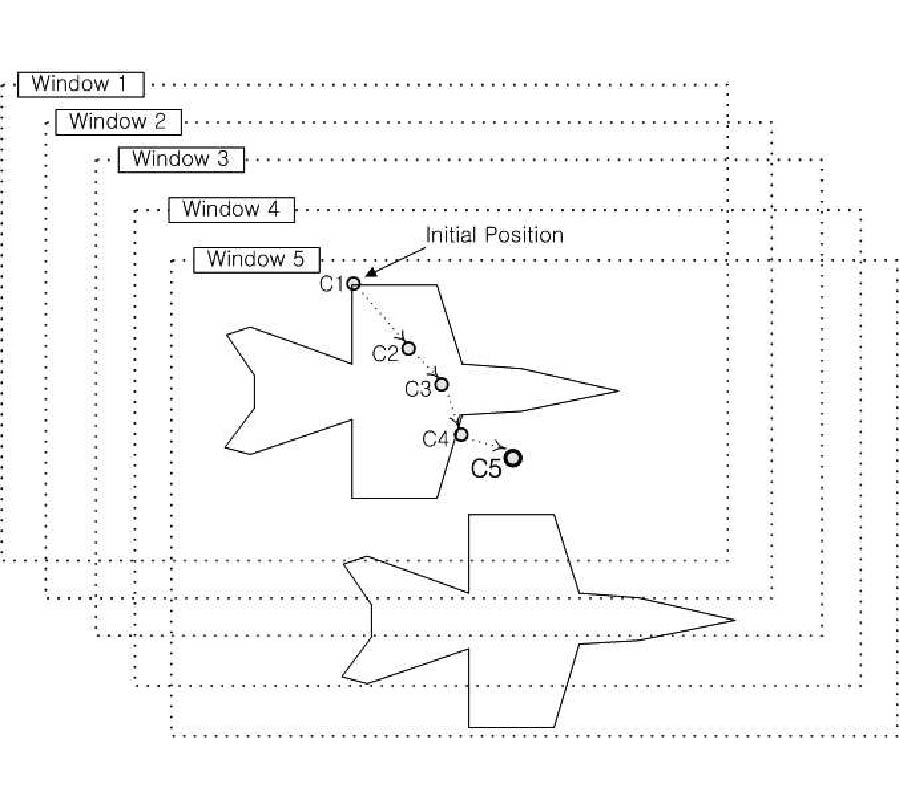
Ground penetrating radar (GPR) has shown to provide useful results for detection of buried objects. However, its performance suffers from strong reflection from ground surface especially for shallowly buried targets. In such cases, the detection problem depends on the separation of the target signal from the ground backscatter such as landmines and unexploded ordnances. In this paper, we discuss and analyze the use of space-frequency time-reversal matrices for the enhancement of ground penetrating radar signals and potential clutter reduction. Through the use of sliding windows, submatrices from a given B-scan (radargram) are utilized to extract localized scattering information of a given detection scenario. Each sub-B-scan is decomposed to its singular vectors and later used to render synthetic aperture time-domain singular vector distributions corresponding to different scattering mechanisms. Later, they are weighted by the singular values and subtracted from the full B-scan to achieve reduced clutter and enhanced target response. The method shows satisfactory results for shallowly buried dielectric targets even in the presence of rough surface profiles.
GPR SIGNAL ENHANCEMENT USING SLIDING-WINDOW SPACE-FREQUENCY MATRICES
2014-02-10
PIER
Vol. 143, 821-848
Developing One-Dimensional Electronically Tunable Microwave and Millimeter-Wave Components and Devices Towards Two-Dimensional Electromagnetically Reconfigurable Platform (Invited Paper)
Sulav Adhikari and Ke Wu
An overview of state-of-the-art frequency tunable technologies in the realization of tunable radio frequency (RF) and microwave tunable circuits is presented with focus on filter designs. Those enabling techniques and materials include semiconductors, micro-electro-mechanical systems (MEMS), ferroelectric and ferromagnetic materials. Various performance indicators of one-dimensional tunable filters are addressed in terms of tunability, losses, signal integrity and other aspects. Fundamental limitations of the classical onedimensional tuning method are discussed, which makes use of only one type of tunable elements such as either electric or magnetic tuning/controlling of circuit parameters. Requirements of simultaneous electric and magnetic two-dimensional tuning techniques are highlighted for achieving an unprecedented and advantageous wider modal tuning. It is believed that this emerging scheme will lead its way in the realization of future highly efficient and tunable RF and microwave components and devices.
DEVELOPING ONE-DIMENSIONAL ELECTRONICALLY TUNABLE MICROWAVE AND MILLIMETER-WAVE COMPONENTS AND DEVICES TOWARDS TWO-DIMENSIONAL ELECTROMAGNETICALLY RECONFIGURABLE PLATFORM (Invited Paper)
2014-02-07
PIER C
Vol. 47, 103-109
A Multi-Status Behavioral Model for the Elimination of Electrothermal Memory Effect in Dpd System
Huadong Wang , Hong Ma and Jinfeng Chen
In this paper, a behavioral model with multi-status is represented to describe electrothermal memory of power amplifiers. In the model, a multi-point linearity approximation method is introduced to estimated the model coefficients at random status. The parameters of the new model can be identified by traditional identification algorithms such as recursive least square (RLS) with the input and feedback data at predetermined status points captured by the digital predistortion (DPD) system. Compared with traditional models, the coefficients estimation speed for the new model at new status is very fast. The final experiment result proves that the multi-status model can efficiently ameliorate the performance deterioration caused by electrothermal memory in the the DPD system, and at the same time it still keeps very high DPD performance.
A MULTI-STATUS BEHAVIORAL MODEL FOR THE ELIMINATION OF ELECTROTHERMAL MEMORY EFFECT IN DPD SYSTEM
2014-02-04
PIER B
Vol. 58, 123-138
Electromagnetic Interactions Analysis Between Two 3-D Scatterers Using the E-Pile Method Combined with the PO Approximation
Mohammad Kouali , Gildas Kubicke and Christophe Bourlier
In this paper, the electromagnetic scattering from two scatterers is analyzed from a rigorous integral formulation solved by the method of moments (MoM). G. Kubicke has recently developed the E-PILE (Extended Propagation-Inside-Layer Expansion) method to calculate the scattering from an object above a rough surface for a two-dimensional problem. This method allows us to calculate separately and exactly the interactions between the object and the rough surface. The purpose of this paper is to extend the E-PILE method to a three-dimensional problem. Such a 3-D problem involves a large number of unknowns and can not be solved easily with a conventional method of moments by using a direct LU inversion. Thus to solve this issue, the E-PILE method is combined with the physical optics (PO) approximation to calculate the local interactions on both the object and the rough surface. By using this hybrid method, the requirements of memory and CPU time can be reduced significantly.
ELECTROMAGNETIC INTERACTIONS ANALYSIS BETWEEN TWO 3-D SCATTERERS USING THE E-PILE METHOD COMBINED WITH THE PO APPROXIMATION
2014-02-04
PIER C
Vol. 47, 95-101
Design and Characterization of a Dual-Band Metamaterial Absorber Based on Destructive Interferences
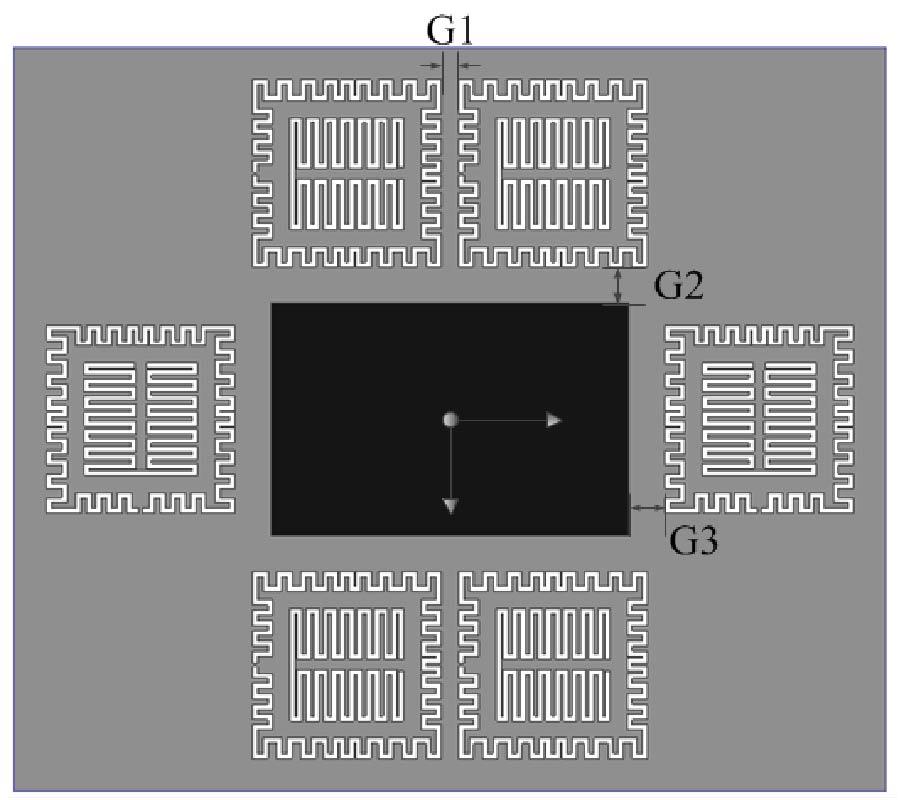
Saeid Jamilan , Mohammad Naghi Azarmanesh and Davoud Zarifi
We present the design, characterization, and experimental verification of a dual-band metamaterial absorber (MA) in the microwave frequencies. The proposed MA consists of a metallic gammadion-shaped structure and a complete metal layer, separated by a dielectric spacer. The results show that the proposed MA has two absorption peaks at nearly 5.6 GHz and 6 GHz with absorption rates of 97% and 99%, respectively. The interference theory is used to investigate the physical mechanism of the proposed MA. The experimental results are in good agreement with the theoretical predictions.Furthermore, it is verified by simulations that the absorption of the proposed MAis almost insensitive to the incident wave polarization and oblique incident angle for the both TM and TEmodes. This MA has broad prospect of potential applications.
DESIGN AND CHARACTERIZATION OF A DUAL-BAND METAMATERIAL ABSORBER BASED ON DESTRUCTIVE INTERFERENCES
2014-02-03
PIER B
Vol. 58, 111-121
Printed Egg Curved Slot Antennas for Wideband Applications
Sudhanshu Verma and Preetam Kumar
This paper presents a novel design of an egg curve based wide-slot antenna for various wideband applications. The proposed printed antenna consists of an egg curved slot with a similar tuning stub. The egg curve is obtained by introducing an egg shaping parameter into standard elliptic curve equation. The effect on the impedance bandwidth through the variations in antenna design parameters has been investigated and analysed in detail. To validate the theoretical design, various egg curved slot antennas were designed, fabricated and measured. Good agreement between the simulated results and the measured ones is observed. An empirical formula is also proposed to approximately determine the frequency corresponding to the lower edge of -10 dB operating bandwidth. The results demonstrate that the proposed egg curved slot antenna (ECSA) can obtain a measured bandwidth (BW) of 164.46% (1.95-20.0 GHz) for |S11|≤10 dB. A stable realised gain of about 4.1-5.1 dBi with consistent radiation patterns are measured over more than the entire ultrawideband (UWB) bandwidth (3.1-10.6 GHz) which makes it a suitable candidate for wideband and UWB wireless system applications.
PRINTED EGG CURVED SLOT ANTENNAS FOR WIDEBAND APPLICATIONS
2014-02-03
PIER C
Vol. 47, 85-93
An Alternative Approach in Power Line Communication Channel Modelling
Fulatsa Zwane and Thomas Joachim Odhiambo Afullo
In this paper, we present the measurement methodology and results for a low voltage Power line Communications (PLC) network under different configurations. Based on the measurements, a correlation of the channel transfer characteristics to the network topology is established and a deterministic model based on two-wire transmission line theory for transverse electromagnetic (TEM) wave propagation is proposed. The channel frequency response in frequency range of 1-30 MHz is determined, where the model results agree well with the measurements.
AN ALTERNATIVE APPROACH IN POWER LINE COMMUNICATION CHANNEL MODELLING
2014-02-03
PIER C
Vol. 47, 75-83
Effects of Non-Fixed Scatterers' Random Movements on Ultra-Wideband MISO Channels
Ana-Maria Pistea
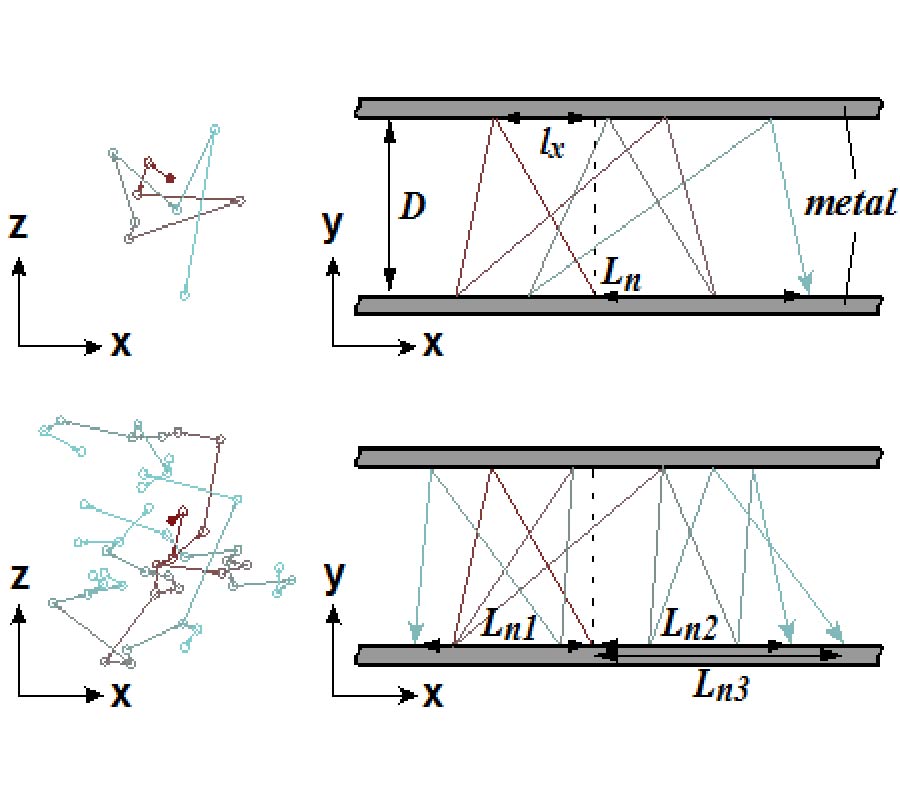
Most wireless channel models assume fixed scatterers with specific geometrical distributions in the propagation environment. In reality most scatterers move with random movements on the azimuth plane. In this paper, the effects of such scatterers' random movements on the cross correlation function (CCF) of wideband (WB) and ultra-wideband (UWB) non-isotropic multiple-input multiple-output (MIMO) channels are characterized. The CCF of WB/UWB MIMO channels is calculated not by assuming a specific geometry for scatterers in space but based on specific mathematical relationships between physical parameters of the wireless channel along with appropriate assumptions on their probability density functions (pdfs). The CCF is used to determine the inuence of moving scatterers, in a stationary scenario, on the power spectral density (PSD) and the coherence time of WB and UWB multiple-input single-output (MISO) channels, as a particular case of MIMO channels. Unlike the fixed scatterers case, the PSD is not a band-limited process, it decays with frequency.
EFFECTS OF NON-FIXED SCATTERERS' RANDOM MOVEMENTS ON ULTRA-WIDEBAND MISO CHANNELS
2014-02-03
PIER M
Vol. 34, 171-179
Analytical Optimization of High Performance and High Quality Factor MEMS Spiral Inductor
Parsa Pirouznia and Bahram Azizollah Ganji
In this paper, design and simulation of optimized MEMS spiral inductor are presented. The effects of design parameters on characteristics of inductor have been considered. The suspended spiral inductor was designed on silicon substrate using MEMS technology to reduce the metal and substrate losses of inductor. The results show that the quality factor of the inductor is 27 at 5.23 GHz and that the maximum Q-factor is 42 at 26.56 GHz. The dimension of the inductor is 185×200 μm2, which occupies less area on chip than other works. In this work, the high quality factor inductor with small size is obtained.
ANALYTICAL OPTIMIZATION OF HIGH PERFORMANCE AND HIGH QUALITY FACTOR MEMS SPIRAL INDUCTOR
2014-02-03
PIER
Vol. 144, 329-343
About the Physical Reality of ``Maxwell's Displacement Current'' in Classical Electrodynamics
Marco Landini
This work aims to provide a physical interpretation of the ``Maxwell's displacement current'' and generalize the use of the derivative function of the electrical flux ``dΨ/dt'' in the magnetic field calculation. The innovative contribution of this study is a mathematical model to describe the origin of magnetic field as a variation of electric flux. By this approach, it follows that only the function ``dΨ/dt'' can generate a ``magnetic tension'': this leads to an interesting unification of electrical phenomena. Displacement current and conduction current are interpreted as complementary aspects of the same phenomena. It is shown how the use of the ``dΨ/dt'' allows the recovery of a formal symmetry in Maxwell's relations of electromagnetic induction law and circuit magnetic law. Included also is a generalized expression of the function ``dΨ/dt''.
ABOUT THE PHYSICAL REALITY OF ``MAXWELL'S DISPLACEMENT CURRENT'' IN CLASSICAL ELECTRODYNAMICS
2014-02-03
PIER
Vol. 144, 319-328
Frequency Reconfigurable Microstrip Patch-Slot Antenna with Directional Radiation Pattern
Huda Abdul Majid , Mohamad Kamal Abd Rahim , Mohamad Rijal Hamid and Muhammad Faizal Ismail
In this paper, frequency reconfigurable slot-patch antenna with reflector at the back of an antenna is presented. The proposed antenna consists of a microstrip patch antenna and a microstrip slot antenna where the slot antenna is positioned at the ground plane underneath the patch. Three switches are placed in the slot. The antenna is capable to reconfigure up to six different frequency bands from 1.7 GHz to 3.5 GHz. The microstrip patch antenna produces three different frequency bands with directional radiation pattern while the microstrip slot antenna produces another three frequency bands with bidirectional radiation pattern. Due to the reflector placed at the back of the antenna, the radiation pattern is directional at all frequency bands. Simulated and measured results are used to demonstrate the performance of the antenna. The simulated and measured reflection coefficients and radiation patterns are presented and compared.
FREQUENCY RECONFIGURABLE MICROSTRIP PATCH-SLOT ANTENNA WITH DIRECTIONAL RADIATION PATTERN
2014-02-01
PIER Letters
Vol. 45, 7-12
Compact Microstrip Bandpass Filter Improved by DMS and Ring Resonator
Mahdi Oliaei , Majid Tayarani and Mahmood Karami
In this paper, complementary split ring resonators (CSRRs) as band-stop elements are used in combination with coupled microstrip lines as high and low pass elements to design and fabricate very compact bandpass filter (BPF) having controllable characteristics. The proposed filter provides several advantages such as compactness (occupying area less than 0.1λg × λg in which λg is calculated at center frequency of pass band), sharp rejection, low insertion loss (IL less than -8.5 dB in all of the bandwidth), good return loss (RL 3-dB bandwidth of roughly 2 GHz from 0.7 GHz to 2.7 GHz i.e. more than 115% FBW) and low cost. Defected Microstrip and Ring Resonator Structures have been used for eliminating the created spurious pass band in upper frequencies. The simulation results have been done with full-wave softwares i.e. CST and HFSS by time and frequency domain solvers, respectively. Also, the equivalent lossless lumped circuit of total structure has been obtained and simulated by ADS software. These simulated results show good agreements with experimental ones.
COMPACT MICROSTRIP BANDPASS FILTER IMPROVED BY DMS AND RING RESONATOR
2014-02-01
PIER Letters
Vol. 45, 1-6
Differential Fed Ultra-Wideband Multiple-Mode Antenna Using Uniform Narrow Slot Radiator
Xiu-Hua Jin , Xiao-Dong Huang and Chong-Hu Cheng
A new ultra-wideband antenna based on a uniform narrow slot is proposed. The slot radiator is fed by a pair of differential microstrip-lines, to implement a balanced and vialess antenna. The multiple-mode resonances of the radiator are excited simultaneously to form an ultra-wideband radiation, by optimizing antenna dimensions and port impedance. Comparing with other ultra-wideband slot antennas, this antenna has improved radiation patterns and low cross polarization due to its symmetry in structure. Antenna samples are designed and fabricated for verification. The measured impedance bandwidth has successfully achieved a fractional bandwidth of 106% (VSWR < 2.5). The radiation patterns are also measured and agree well with the prediction.
DIFFERENTIAL FED ULTRA-WIDEBAND MULTIPLE-MODE ANTENNA USING UNIFORM NARROW SLOT RADIATOR