Search Results(13800)

2012-12-31
PIER B
Vol. 47, 145-178
Analytical Calculation of Parallel Double Excitation and Spoke-Type Permanent-Magnet Motors; Simplified Versus Exact Model
Kamel Boughrara , Thierry Lubin , Rachid Ibtiouen and Mohamed Nadjib Benallal
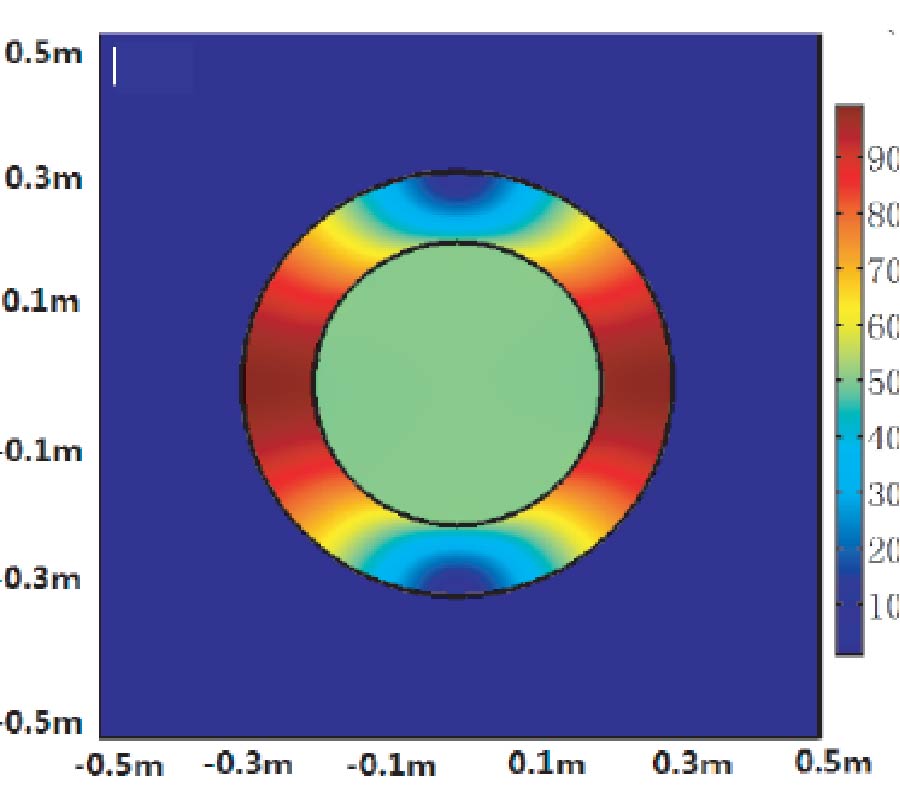
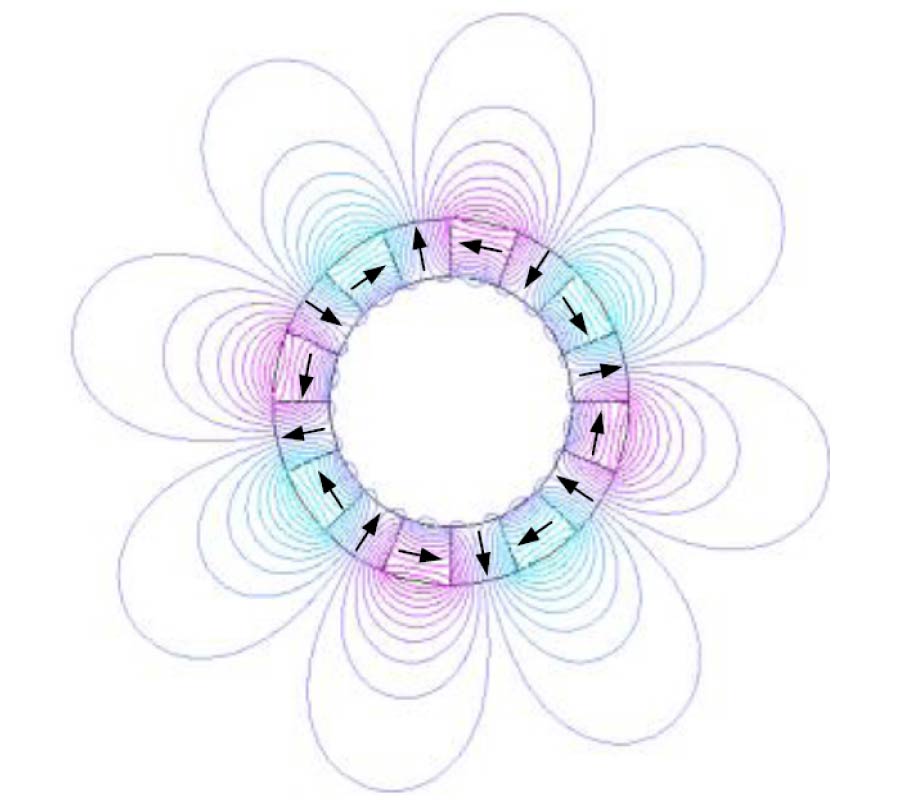
This paper deals with the prediction of magnetic field distribution and electromagnetic performances of parallel double excitation and spoke-type permanent magnet (PM) motors using simplified (SM) and exact (EM) analytical models. The simplified analytical model corresponds to a simplified geometry of the studied machines where the rotor and stator tooth-tips and the shape of polar pieces are not taken into account. A 2D analytical solution of magnetic field distribution is established. It involves solution of Laplace's and Poisson's equations in stator and rotor slots, airgap, buried permanent magnets into rotor slots and non magnetic region under magnets. A comparison between the results issued from the simplified model with those from exact model (EM) (which represents a more realistic geometry with stator and rotor tooth-tips and the shape of polar pieces) is done to show the accuracy of the simplified geometry on magnetic field distribution and electromagnetic performances (cogging torque, electromagnetic torque, flux linkage, back-EMF, self and mutual inductances). The analytical results are verified with those issued from finite element method (FEM).
ANALYTICAL CALCULATION OF PARALLEL DOUBLE EXCITATION AND SPOKE-TYPE PERMANENT-MAGNET MOTORS; SIMPLIFIED VERSUS EXACT MODEL
2012-12-28
PIER C
Vol. 35, 253-267
A Planar Self-Complementary Bow-Tie Antenna for UWB Applications
Khalil Hassan Sayidmarie and Yasser A. Fadhel
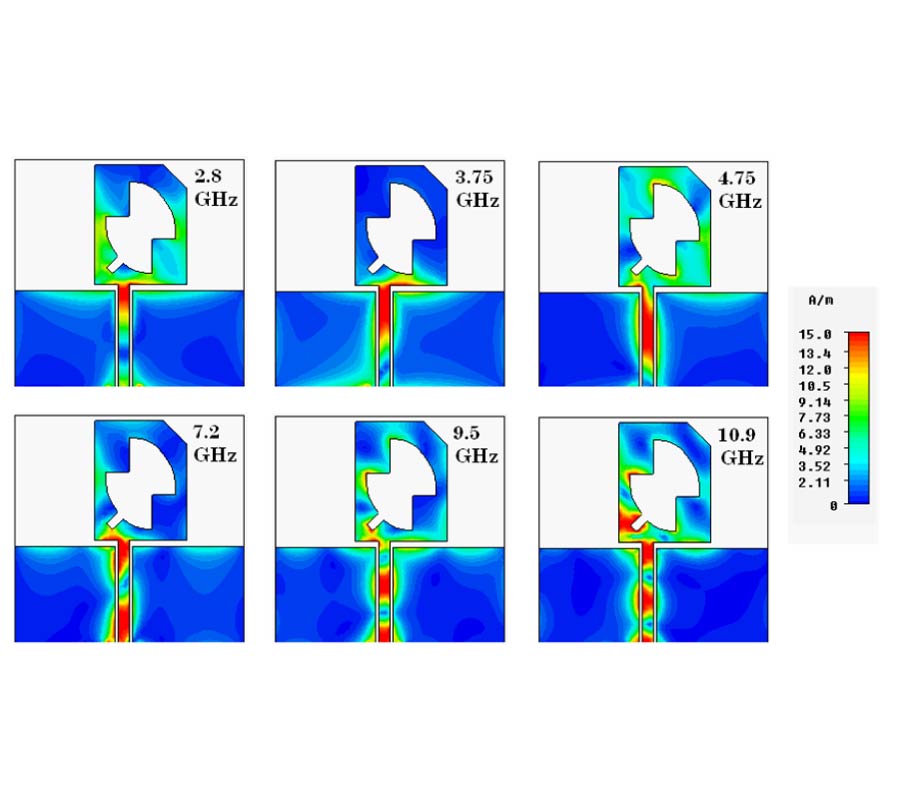
A new planar bow-tie antenna is proposed here for UWB applications. The self-complementary principle has been applied to a planar triangular monopole antenna along with bending the microstrip feed line. The antenna has a wider frequency band compared to the traditional bow-tie antenna, complies with the UWB requirements and it is directly matched to the (SMA) connector via 50 Ω microstrip feed line. This antenna has a simple shape which overcomes the complicated matching techniques using baluns or impedance matching sections that are commonly used in bow-tie antennas for widening their limited bandwidths. Another improvement on this new bow-tie antenna is achieved through fractal self-similarity repetition of the triangular shape on each of the patch and its complimentary slot. The simulation results obtained from the CST and HFSS software packages are verified by experimental measurements.
A PLANAR SELF-COMPLEMENTARY BOW-TIE ANTENNA FOR UWB APPLICATIONS
2012-12-28
PIER C
Vol. 35, 237-252
A Minimized Wideband Antenna Array with Decoupling Networks for UHF RFID Applications
Tianyu Jia , Hua Zhu and Xiuping Li
A minimized wideband antenna array is presented for ultra-high frequency (UHF) radio frequency identification (RFID) reader applications. The antenna array consists of two E-shaped patch antennas and a feeding network, with the overall size 200×100×20 mm3. The feeding network could effectively decrease the antenna mutual coupling and improve the bandwidth. The measured bandwidth is about 68 MHz (896-964 MHz) under the condition of voltage standing wave ratio (VSWR) less than 2, which covers various RFID bands including North American (902-928 MHz), partial Chinese (920-925 MHz) and Japanese (952-955 MHz). The average gain is 4.5 dBi in UHF band. The principles of the antenna and the feeding network are also discussed and analyzed in this paper. At last, the key parameters are studied and show the antenna robustness.
A MINIMIZED WIDEBAND ANTENNA ARRAY WITH DECOUPLING NETWORKS FOR UHF RFID APPLICATIONS
2012-12-28
PIER
Vol. 135, 515-525
Design of Compact Dual-Band Filter in Multilayer LTCC with Cross Coupling
Chunxia Zhou , Yong-Xin Guo , Lei Wang and Wen Wu
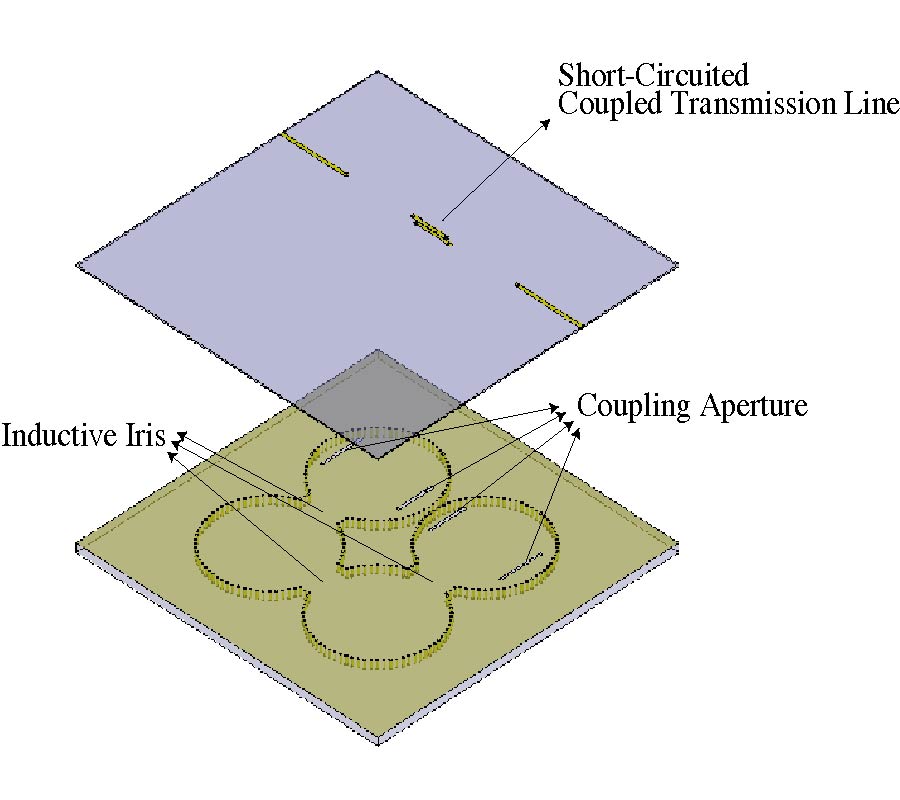
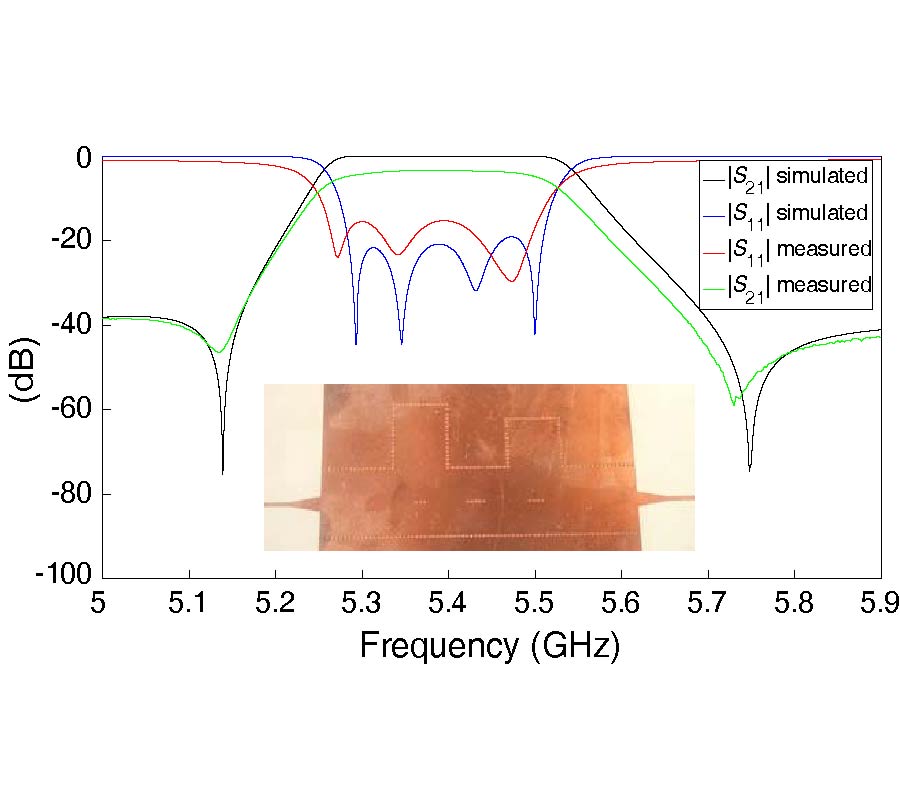
A very compact low temperature co-fired ceramic (LTCC) dual-band filter is designed based on the proposed novel cross-coupling structure in this paper. A six-pole dual-band filter with four transmission zeros is synthesized using an analytical procedure. By incorporating the proposed novel cross-coupling structure and analyzing the coupling characteristic, the dual-band filter is realized with canonical topology in multilayer LTCC. It is demonstrated by the simulation and experiment that the proposed dual-band filter has both compact size and good selectivity.
DESIGN OF COMPACT DUAL-BAND FILTER IN MULTILAYER LTCC WITH CROSS COUPLING
2012-12-26
PIER B
Vol. 47, 127-144
Approximate Model for Universal Broadband Antireflection Nano-Structure
Alexander Sergeevich Shalin and Sergey Apollonovich Nikitov
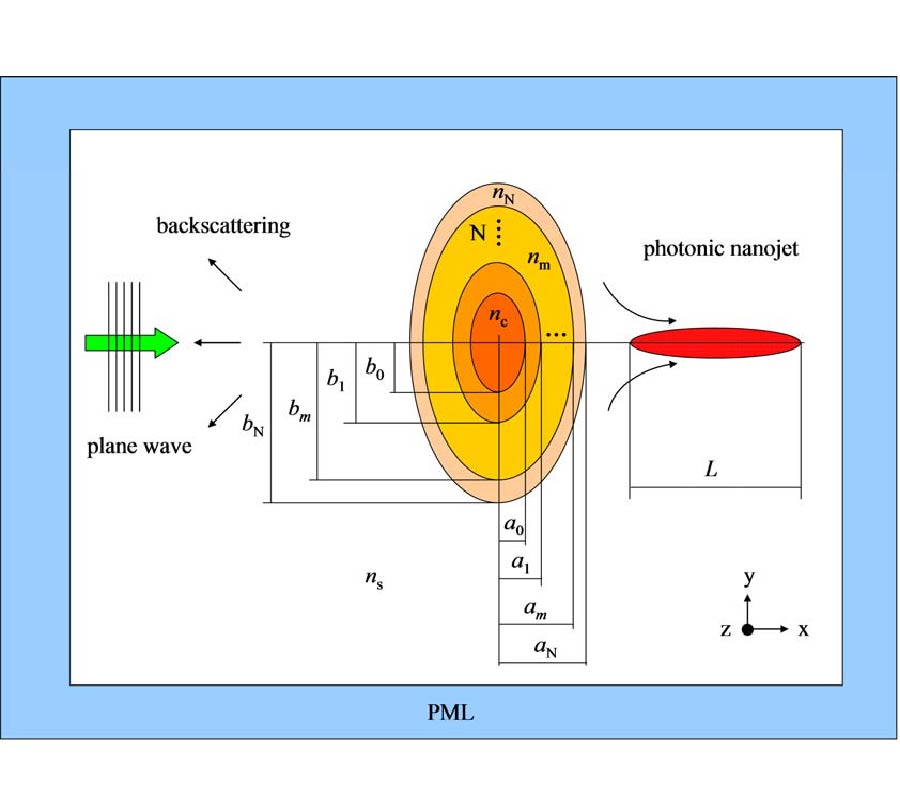
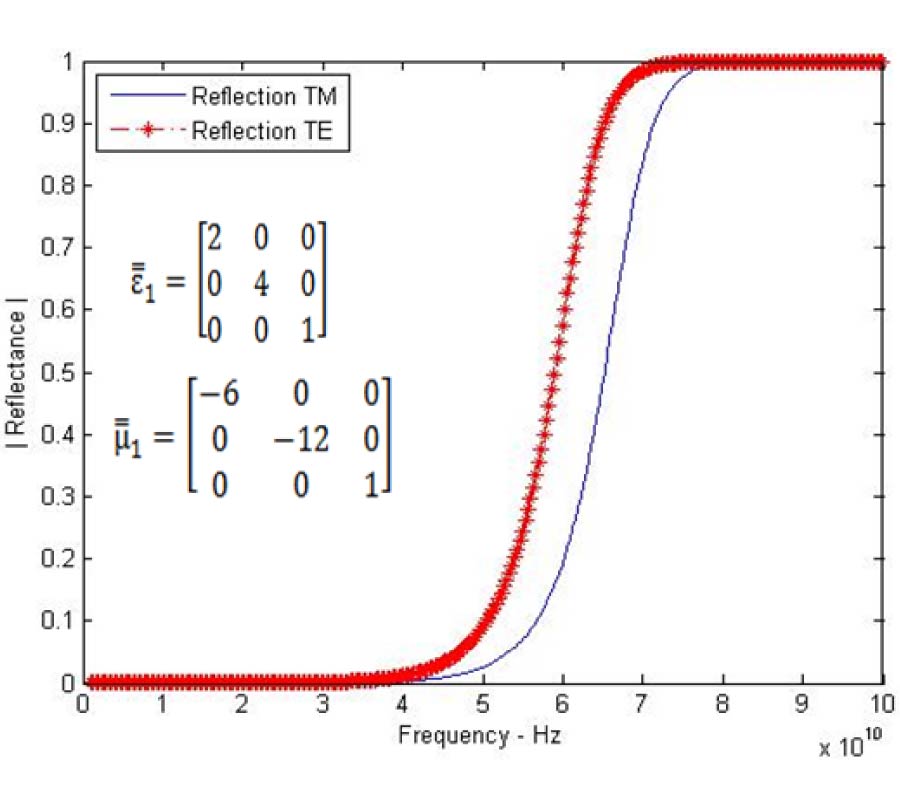
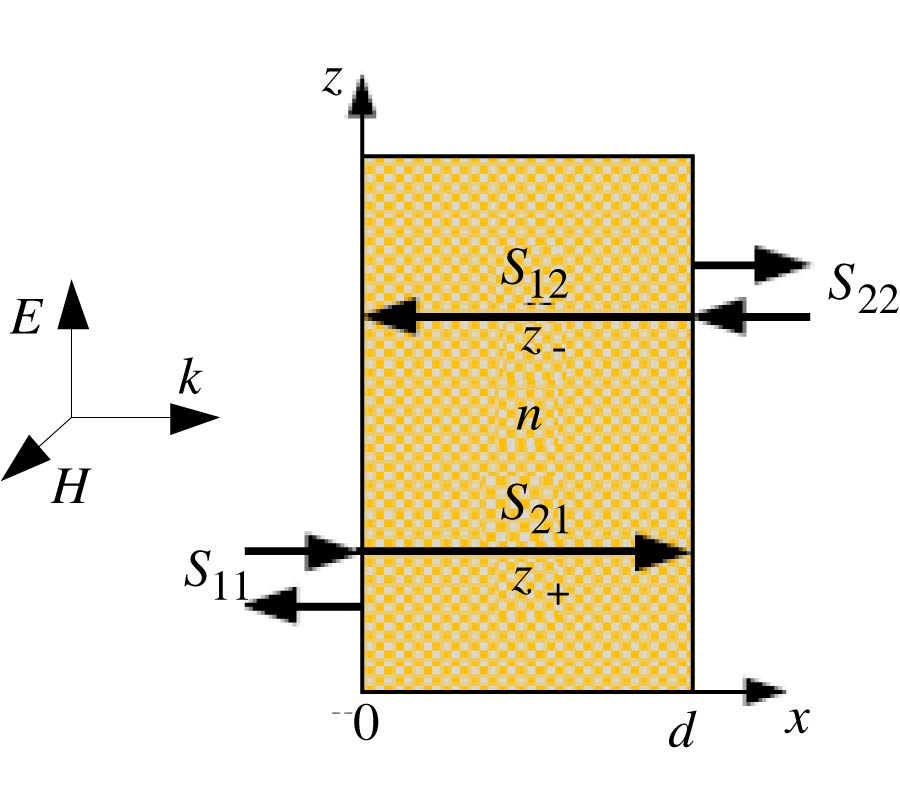
In this work we investigate the effect of broadband antireflection of a medium by a layer of embedded nano-cavities arranged near the surface. It is shown that this structure is versatile and allows near 100% transmittance in a wide spectral range practically for any dielectric material. The approximate model of nano-structured layer is suggested that allows to determine the parameters of the system necessary for achieving antireflection of any a priori given media without complicated numerical calculations. The transmission spectrum of a medium modified by such a structure is entirely defined by a radius and a depth of bedding of the nano-porous layer.
APPROXIMATE MODEL FOR UNIVERSAL BROADBAND ANTIREFLECTION NANO-STRUCTURE
2012-12-26
PIER C
Vol. 35, 221-236
A New Compensating Method for the Mutual Coupling Effect in Adaptive Antenna Arrays Composed of Wire Elements
Qiulin Huang , Hongxing Zhou and Xiao-Wei Shi
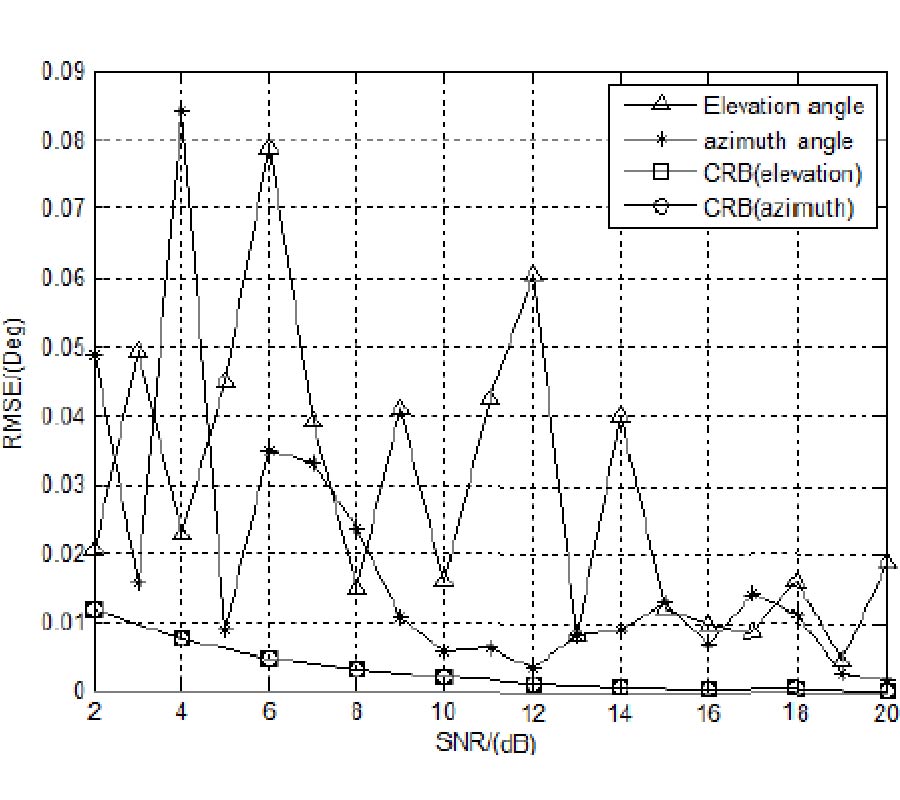
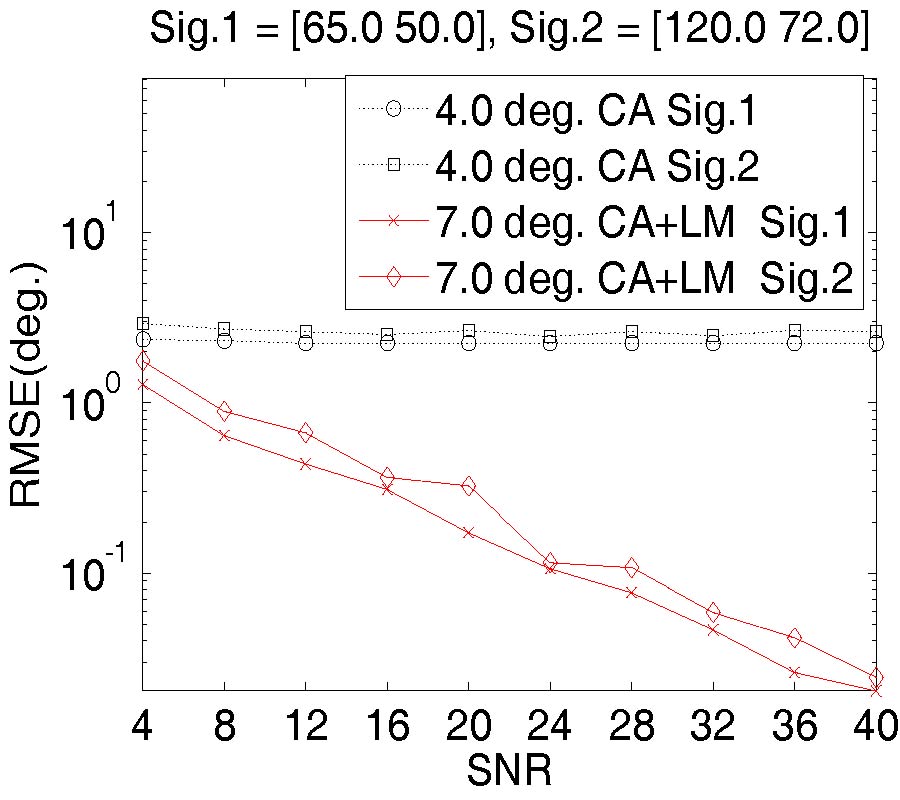
A new compensation method for the mutual coupling of adaptive antenna arrays composed of wire elements is introduced. For the antenna array composed of wire elements, the new compensation method can decouple the terminal voltages with high accuracy for both the 1-D incident signals and 2-D incident signals. The new compensation method is based on the mutual coupling grid and the transient mutual coupling coefficient proposed in this paper. By contrast with the CMIM and RMIM, the new compensation method can provide better compensation for the DOA estimations. Even for the ultra compact antenna array and the incident signals inclined with respect to the azimuth the new compensation method can work well. The numerical results verify the validity and the effectiveness of the new compensation method.
A NEW COMPENSATING METHOD FOR THE MUTUAL COUPLING EFFECT IN ADAPTIVE ANTENNA ARRAYS COMPOSED OF WIRE ELEMENTS
2012-12-26
PIER C
Vol. 35, 205-219
A Compact CPW-Fed UWB Antenna with GSM, GPS, Bluetooth and Dual Notch Bands Applications
Yong-Lun Luo , Liang Xu , Zhen-Yu Xin and Shuang He
A novel compact ultrawideband (UWB) CPW-fed antenna with triple lower pass bands and dual notched bands for wireless applications is presented. The low-profile antenna comprises of an approximate hexagonal-shaped radiator for covering the UWB band (3.1~10.8 GHz). Triple lower pass bands, the 1.5G band, 1.8 GHz GSM band and 2.4 GHz Bluetooth band, can be realized by adding three handstand semielliptical-shaped stubs bilaterally at the upper part of antenna ground. A notched band of 3.3~3.7 GHz for rejection of WIMAX radio signals can also be obtained by adjusting the geometry of the three stubs. In addition, an U-shaped slot on the radiating patch generates a notched band in 5.15~5.825 GHz for rejection of WLAN radio signals. The proposed antenna is designed and built on a FR-4 substrate, with overall size of 25 mm×24 mm. The simulated and measured results are presented and show that the proposed compact antenna has a stable and omnidirectional radiation patterns across all the relevant bands.
A COMPACT CPW-FED UWB ANTENNA WITH GSM, GPS, BLUETOOTH AND DUAL NOTCH BANDS APPLICATIONS
2012-12-26
PIER
Vol. 135, 481-513
An Improved Nonlinear Chirp Scaling Algorithm Based on Curved Trajectory in Geosynchronous SAR
Cheng Hu , Teng Long and Ye Tian
Geosynchronous synthetic aperture radar (GEO SAR) has the characteristics of long aperture time and large imaging area. Therefore, the conventional imaging algorithm in Low Earth Orbit (LEO) SAR loses effect. In this paper, based on curved trajectory model under an ideal acquisition and not considering some acquisition perturbations (atmosphere, orbital deviations), an accurate two-dimensional frequency spectrum is analytically obtained via series reversion principle and high order Taylor expansion. Then, an improved Nonlinear Chirp Scaling (NCS) algorithm is proposed in GEO SAR, which includes novel range migration correction factor, coupling phase compensation factor, NCS factor and azimuth compression function. Finally, the correctness of the proposed NCS algorithm is verified via imaging results of point array targets and area targets.
AN IMPROVED NONLINEAR CHIRP SCALING ALGORITHM BASED ON CURVED TRAJECTORY IN GEOSYNCHRONOUS SAR
2012-12-26
PIER
Vol. 135, 465-480
Using Wave-Coefficients as Feature Vectors to Identify Aerospace Targets
Xiao-Min Jiang , Shouqing Jia , Mingyao Xia and Chi Hou Chan
An original target identification method using Wave-Coefficients (WCs) as feature vector is proposed. The scattering fields of arbitrary shaped targets are expressed as a sum of spherical waves and the distinctive coefficients are exploited as the target feature. Decision rule based on correlation coefficient is established, and some analyses on the properties of the WCs are conducted. Numerical simulations of four targets are carried out and the recognition performances without and with noise are provided and discussed.
USING WAVE-COEFFICIENTS AS FEATURE VECTORS TO IDENTIFY AEROSPACE TARGETS
2012-12-26
PIER
Vol. 135, 451-464
Filter Tuning Based on Linear Decomposition of Scattering Characteristics
Tomasz Kacmajor and Jerzy Julian Michalski
This paper proposes a microwave filter post-production tuning based on an optimization process which finds the vector of deviations of tuning elements that should be applied to tune the filter. To build the system, the coarse set of scattering parameters is collected in such a way that every tuning element is detuned while other elements remain in their proper positions. In the concept, it is assumed that the relation between the positions of tuning elements and filter scattering characteristics can be modelled by the sum of one argument polynomial functions. Each polynomial function depends on the value of only one tuning element. Therefore, the measured filter characteristics can be linearly decomposed to characteristics from the collected coarse set and corresponding tuning element deviations can be found. This is done by way of optimization process. The presented numerical and physical experiments on the 7th order cross-coupled, bandpass filter have verified our approach.
FILTER TUNING BASED ON LINEAR DECOMPOSITION OF SCATTERING CHARACTERISTICS
2012-12-26
PIER
Vol. 135, 435-449
New Compact Triple-Mode Resonator Filter with Embedded Inductive and Capacitive Cross Coupling
Jen-Tsai Kuo , Tsu-Wei Lin and Shyh-Jong Chung
Two new compact planar triple-mode resonators embedded with inductive or capacitive cross coupling are proposed for bandpass filter design. Both resonators consist of a shorted half-wave ring. In the first resonator, two shorted half-wave sections with inductive coupling are connected to the shorted via of the ring. In the second, two quarter-wave sections with capacitive coupling are connected. The inductive coupling is realized by a short grounded high-impedance segment, and the capacitive coupling is implemented by an interdigital capacitor. When both the inductive and capacitive coupling coefficients are properly realized, a transmission zero can be created at designated position in either upper or lower stopband. The shorted ring is accommodated inside the area of the other two resonance sections so that a compact area can be achieved. As compared with a conventional dual-mode ring resonator filter, the proposed resonators use only 46.7% and 22.5% in area. Two triple-mode resonator bandpass filters are fabricated and measured to validate the ideas. Measurement results have good agreement with the simulation responses.
NEW COMPACT TRIPLE-MODE RESONATOR FILTER WITH EMBEDDED INDUCTIVE AND CAPACITIVE CROSS COUPLING
2012-12-26
PIER
Vol. 135, 411-433
Optimization of the E-Plane Loaded Rectangular Waveguide for Low-Loss Propagation
Daniel Sanchez-Escuderos , Miguel Ferrando-Bataller , Jose I. Herranz and Mariano Baquero-Escudero
The insertion of vertical slabs in a metallic rectangular waveguide distorts the power distribution of the waveguide, producing new modes and modifying the existing ones. The resulting waveguide, known as E-plane loaded rectangular waveguide, is studied in this paper, focusing the attention on the TE-type modes in a symmetrical case. A quasi-TE10 is found which may confine the energy in the central air region by suitably choosing the dielectric slabs' dimensions. An algorithm to optimize these dimensions is proposed in order to maximize the confinement of power in the air region and minimize the attenuation of the mode. This minimization is specially important at high frequencies, where the ohmic losses and the dielectric absorption become extremely high. This paper includes an example at THz frequencies and presents the design of several devices using the E-plane loaded rectangular waveguide.
OPTIMIZATION OF THE E-PLANE LOADED RECTANGULAR WAVEGUIDE FOR LOW-LOSS PROPAGATION
2012-12-26
PIER
Vol. 135, 391-410
WIP Study of Multiple Metallic Obstacle Scattering
Nicolae Lucanu , Ion Bogdan and Henri Baudrand
The Wave Iterative Process is applied and validated for the study of the scattering of a plane wave by a multiple metallic dipole diffraction structure. The case of a single metallic dipole is treated, at first in normal incidence, than arbitrarily placed with respect to the incident wave. A double dipole scattering structure is studied, mutual influence being taken into account. The diffraction system is further enlarged to 5 randomly placed dipoles, the results issued from the WIP study being compared with those given by the Moments Method. Finally, the possibility of taking into account a very large number of dipoles is examined, by introducing an equivalent dipole distribution. The influence of this approximation on the WIP precision is presented.
WIP STUDY OF MULTIPLE METALLIC OBSTACLE SCATTERING
2012-12-25
PIER B
Vol. 47, 107-126
Energy Estimation Based TR-MUSIC Microwave Imaging for Extended Targets
Guangfu Zhang , Williams Weiji Wang and Wei Wang
A simple and effective double-thresholding strategy based on energy estimation is proposed to choose the optimal boundary between the signal subspace and noise subspace in TR-MUSIC algorithm for microwave imaging of extended targets. Simulations and imaging results are given to demonstrate its strong noise rejection and super-resolution capability. In the new method, the shape details of extended targets can be obtained from single frequency or multi-frequency scattering data.
ENERGY ESTIMATION BASED TR-MUSIC MICROWAVE IMAGING FOR EXTENDED TARGETS
2012-12-25
PIER C
Vol. 35, 193-203
Novel Design of Stacked Dual Layer Strip Lines Fed Wideband Patch Antenna for GNSS Application
Xi Li , Lin Yang and Qiong Chen
This paper presents a novel design of stacked dual layer strip lines fed patch antenna. The wideband characteristics can be achieved by employing approximate L-probes coupling feeding schemes. Dual layer strip lines which are composed of one broadband 180° hybrid and two wideband 90° hybrids are introduced as feeding network in this design. As a result, the designed antenna has a 59.4% 10-dB input reflection coefficient bandwidth and 48.3% 3-dB axial ratio (AR) bandwidth relative to the center frequency respectively. The designed antenna occupies a compact size of 80 mm×80 mm×32 mm. The final antenna provides a very good circularly polarized radiation for Global Navigation Satellite System applications including GPS, GLONASS, Galileo and Compass.
NOVEL DESIGN OF STACKED DUAL LAYER STRIP LINES FED WIDEBAND PATCH ANTENNA FOR GNSS APPLICATION
2012-12-25
PIER C
Vol. 35, 177-191
A Novel Interacting Multiple Model Particle Filter for Maneuvering Target Tracking in Clutter
Jian-Tao Wang , Bo Fan , Yan-Peng Li and Zhaowen Zhuang
In this paper, a novel interactive multiple model particle filter (IMMPF) is developed after a Bayesian estimator for maneuvering target tracking in clutter is derived theoretically. In this new algorithm, base state estimation and modal state estimation are completely separated to control the number of particles in each maneuvering mode. Only continuous-valued particles are used to numerically implement the procedure of Bayesian base state estimation, whereas modal state is estimated analytically without dependence on the number of particles. Density mixing is performed by aggregation of the total particles and mixing associated weights. To prevent the exponentially growing number of particles with the time, a resampling step is included following the interaction step. Through MC simulations, the new IMMPF has been tested and shown to provide reliable performance improvements with different sample sizes and under various clutter conditions.
A NOVEL INTERACTING MULTIPLE MODEL PARTICLE FILTER FOR MANEUVERING TARGET TRACKING IN CLUTTER
2012-12-25
PIER M
Vol. 28, 15-25
Modeling Shielding Effectiveness for Composite Walls of Concrete and Carbon Filaments
Anders Ellgardt and Daniel Mansson
Concrete walls reinforced with rebars have poor shielding effectiveness for telecommunication frequencies (frequencies above 0.5 GHz). An effective method to increase the shielding effectiveness of the walls is to increase the complex permittivity of the concrete. This can be done by mixing in thin filaments of a material with high conductivity. One such material is carbon. In this paper the Maxwell Garnett mixing rule is used to model a concrete material with carbon filaments. The shielding effectiveness computed with the mixing rule is found to agree with previously published measurement results.
MODELING SHIELDING EFFECTIVENESS FOR COMPOSITE WALLS OF CONCRETE AND CARBON FILAMENTS
2012-12-25
PIER
Vol. 135, 373-390
PLRC and ADE Implementations of Drude-Critical Point Dispersive Model for the FDTD Method
Kyungwon Chun , Huioon Kim , Hyounggyu Kim and Youngjoo Chung
We describe the implementations of Drude-critical point model for describing dispersive media into finite difference time domain algorithm using piecewise-linear recursive-convolution and auxiliary differential equation methods. The advantages, accuracy and stability of both implementations are analyzed in detail. Both implementations were applied in studying the transmittance and reflectance of thin metal films, and excellent agreement is observed between analytical and numerical results.
PLRC AND ADE IMPLEMENTATIONS OF DRUDE-CRITICAL POINT DISPERSIVE MODEL FOR THE FDTD METHOD
2012-12-25
PIER
Vol. 135, 363-371
Differential Transformer Using Bonder-Wires and Patterns on a Printed Circuit Board for RF Circuit Applications
Byungjoo Kang , Hoyong Hwang and Changkun Park
A transformer that uses bonder-wires and printed circuit board (PCB) patterns is proposed for RF circuit applications. The proposed transformer can be constructed without any additional processes. The PCB patterns are implemented using a typical FR4 substrate and gold bonder wires are used. The self-inductance of the transformer can be controlled according to the number of unit-transformers. Although the size of the transformer is larger than that of a fully-integrated transformer, the maximum available gain (MAG) is almost identical to that of other-types of transformers, which require additional cost or bulky size to obtain sufficient inductance. Additionally, we proposed a method to design the transformer with a symmetric structure for differential RF CMOS circuit applications. The transformer can applied to GHz-order RF CMOS circuits as an input and output matching component with low loss characteristics.
DIFFERENTIAL TRANSFORMER USING BONDER-WIRES AND PATTERNS ON A PRINTED CIRCUIT BOARD FOR RF CIRCUIT APPLICATIONS
2012-12-24
PIER Letters
Vol. 36, 191-200
A Novel Bandpass Filter of Substrate Integrated Waveguide (SIW) Based on S-Shaped EBG
Dan Li , Chuang-Ming Tong , Jun-Song Bao , Peng Peng and Ding-Wang Yu
A novel S-shaped electromagnetic band gap (EBG) middling bandwidth bandpass filter based on substrate integrated waveguide (SIW) was proposed. The filter was designed based on the band-stop characteristics of EBG by etching different dimensional S-shaped on the surface of substrate integrated waveguide. The bandpass filter with a center frequency at 7.765 GHz and relative fractional bandwidth 7.31% shows good bandpass characteristics with frequency band between 7.38~7.94 GHz, while the insertion loss is less than 1.6 dB and achieve middling bandwidth in SIW by EBG and has the advantage of bandpass, low insertion loss, compacted and good selectivity etc. The good agreement between the measured results and the simulated results demonstrates that the design of this proposed filter is effective.
A NOVEL BANDPASS FILTER OF SUBSTRATE INTEGRATED WAVEGUIDE (SIW) BASED ON S-SHAPED EBG