Search Results(13800)

2013-01-16
PIER
Vol. 136, 101-122
Theory and Realization of Simple Bandpass Filters with Antiparallel Configuration
Sinisa Jovanovic , Bratislav Milovanovic and Miodrag Gmitrovic
This paper introduces a theoretical analysis as well as a design example for bandpass filters (BPF) with a distinctive topology. Based on the analysis of simple two-port symmetrical lossless networks with a parallel structure, a method for obtaining normalized BPF prototypes with desired bandwidths was developed. These prototypes can be scaled to any central frequency and symmetrical real termination in the same way as conventional filters. It is also demonstrated that with a slight modification of the basic BPF prototypes, transmission zeros with controllable frequencies can be introduced in both the lower and the upper stopband region. Such modified prototypes are more convenient for the realization of printed filters than the basic BPF prototypes. The proposed filters have almost identical characteristics in the broad vicinity of the passband region either when composed of ideal lumped elements or of transmission lines (TLs). Due to its simplicity, the proposed concept could be applied for the realization of a printed BPF at a large variety of PCB types, substrates and practical design configurations. A microstrip BPF model is realized for the experimental verification of the presented theory. The measured and theoretical results show excellent agreement, confirming the proposed concept and the exactness of the methodology.
THEORY AND REALIZATION OF SIMPLE BANDPASS FILTERS WITH ANTIPARALLEL CONFIGURATION
2013-01-16
PIER
Vol. 136, 79-99
An Advanced UWB Channel Model for Body-Centric Wireless Networks
Rafaele Di Bari , Qammer Hussain Abbasi , Akram Alomainy and Yang Hao
This paper presents a novel ultra wideband (UWB) channel model in the 3-10 GHz range for body-centric wireless communications. The tests are performed in both indoor anechoic chamber environments, addressing on-body and off-body propagation scenarios. The body channel model is extracted by using a single spatial grid over all the body, and by distinguishing between LOS and NLOS condition. The large number and the uniform placement of the receiver locations attempt a representation of the body propagation links more comprehensive than previously published models. The statistical reliability of the model is investigated by applying jointly the Kolmogorov-Smirnov and the Akaike criteria. The analysis suggested that the Lognormal model fits the channel amplitude distributions with a percentage ≥ 64%. The on-body indoor channel amplitudes are modeled with a stochastic terms of about 4-5 dB higher than previously published models. Finally, a Negative-Binomial and Inverse Gaussian distribution are used to model the expected number of paths and inter-arrival time, respectively. Based on the results presented in this paper, clear recommendations are given with regards to the optimum statistical distribution of an accurate UWB body-centric radio channel modeling.
AN ADVANCED UWB CHANNEL MODEL FOR BODY-CENTRIC WIRELESS NETWORKS
2013-01-16
PIER
Vol. 136, 61-77
Computational Performance of a Weighted Regularized Maxwell Equation Finite Element Formulation
Ruben Otin , Luis E. Garcia-Castillo , Ignacio Martinez-Fernandez and Daniel Garcia-Donoro
The aim of this work is to asses the computational performance of a finite element formulation based on nodal elements and the regularized Maxwell equations. We analyze the memory requirements and the condition number of the matrix when the formulation is applied to electromagnetic engineering problems. As a reference, we solve the same problems with the best known finite element formulation based on edge elements and the double curl Maxwell equations. Finally, we compare and discuss the computational efficiency of both approaches.
COMPUTATIONAL PERFORMANCE OF A WEIGHTED REGULARIZED MAXWELL EQUATION FINITE ELEMENT FORMULATION
2013-01-16
PIER
Vol. 136, 43-59
Radiation Analysis of Large Antenna Array by Using Periodic Equivalence Principle Algorithm
Kaizhi Zhang , Jun Ou Yang , Feng Yang , Chuan Wu , Yan Li and Jian Zhang
In this paper, an improved equivalence principle algorithm is proposed to solve the radiation problems of large antenna arrays with periodic structures. This method is a hybridization in which the typical scheme of periodic Green's function is combined with the original equivalence principle algorithm. The repeated elements are changed from the original antenna units into the surfaces enclosing the original ones. The proposed approach is compared with periodic method of moments which is based on the integral equation and the periodic Green's function. Numerical results validate the feasibility of the improved method.
RADIATION ANALYSIS OF LARGE ANTENNA ARRAY BY USING PERIODIC EQUIVALENCE PRINCIPLE ALGORITHM
2013-01-14
PIER B
Vol. 47, 405-421
Design of Temple Shape Slot Antenna for Ultra Wideband Applications
Raghupatruni Ram Krishna and Raj Kumar
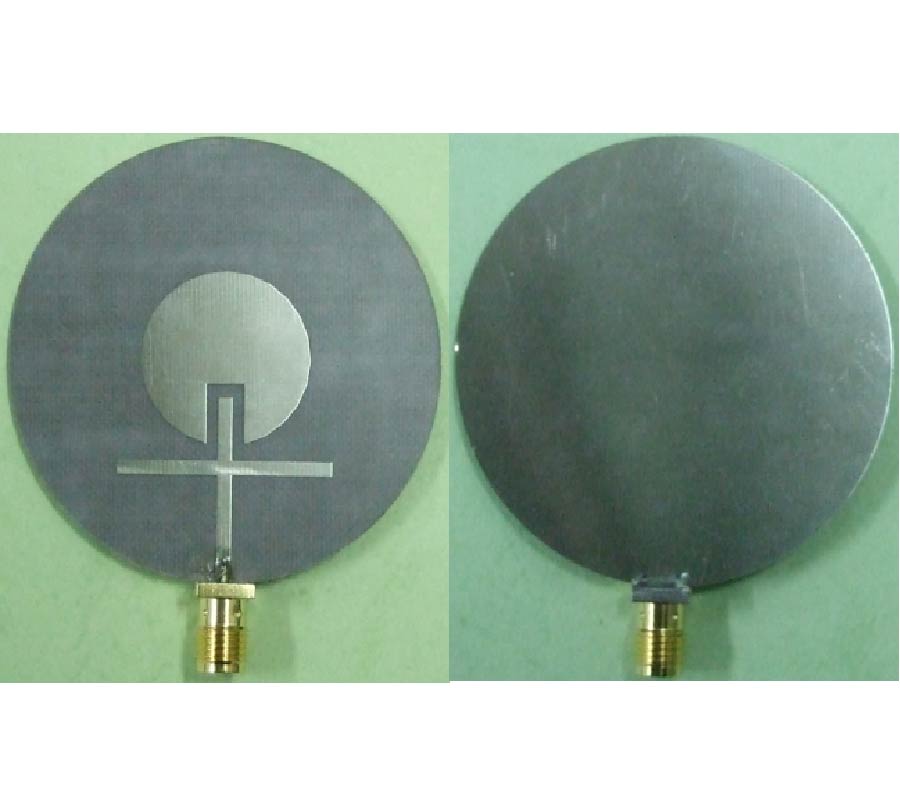
A novel design of a temple shaped printed slot antenna for circular polarization applications is presented in this paper. The slot, half trapezoidal and half semi-circular in shape, is excited by a 50 Ω CPW feed terminated with a tuning stub. Modifications of the initial design for improving return loss and circular polarization characteristics are proposed and discussed. The antenna is very compact (40 mm x 35 mm) in size and simple to design. The final version of the antenna offers an experimentally measured impedance bandwidth of 108% i.e., from 2.75 GHz to 9.25 GHz. The 3-dB axial ratio bandwidth achieved is 51.6% i.e., from 4.6 GHz to 7.8 GHz. The antenna is further characterized by a peak gain of about 5 dB and a relatively stable radiation pattern in the useful band.
DESIGN OF TEMPLE SHAPE SLOT ANTENNA FOR ULTRA WIDEBAND APPLICATIONS
2013-01-14
PIER Letters
Vol. 37, 83-90
Waveguide Filter Using Frequency Selective Surface with Miniaturized Element
Yuan Yang , Hang Zhou , Qian Li and Hao Li
In this paper, a waveguide filter using miniaturized-element frequency selective surface (FSS) is presented. The proposed FSS is composed of periodic array of metallic patches separated by small gaps and metallic lines. The array of patches constitutes a capacitive surface and the lines a coupled inductive surface, which together act as a resonant structure. At about 5.0 GHz, a narrow bandpass response is designed. Dimensions of the FSS element are much smaller than the operating wavelength, which is less than 1/13λ. For this miniaturized element, grating lobes are restrained and do not appear event to 25 GHz. Moreover, the FSS has stable performances for various incident angles. Design procedure and measurement results of the FSS are presented and discussed.
WAVEGUIDE FILTER USING FREQUENCY SELECTIVE SURFACE WITH MINIATURIZED ELEMENT
2013-01-14
PIER
Vol. 136, 29-42
Synthesis of Large Planar Thinned Arrays Using IWO-IFT Algorithm
Xin-Kuan Wang , Yong-Chang Jiao , Yan Liu and Yan Yan Tan
The iterative Fourier technique (IFT) is a high efficiency method that was proposed in recent past for the synthesis of large planar thinned arrays with isotropic radiating elements. However, the selection mechanism of IFT cannot always include the most useful elements in the "turned ON" families, which make the method trap in some local minima. Therefore, in this paper, inspired by invasive weed optimization (IWO) algorithm, a developed version of the iterative Fourier technique (IFT), IWO-IFT, is proposed for thinning large planar arrays. In this new method, the initial weeds are produced by IFT, and are further perturbed by IWO through repeatedly reproduction, dispersion, and exclusion over search space to find better weeds. Numerical results for synthesizing different circular thinned arrays demonstrated the superiority of IWO-IFT over the IFT method.
SYNTHESIS OF LARGE PLANAR THINNED ARRAYS USING IWO-IFT ALGORITHM
2013-01-13
PIER Letters
Vol. 37, 73-82
Compact Mixed-Cross Coupled Bandpass Filter with Enhanced Frequency Selectivity
Xubo Wei , Peng Wang and Yu Shi
In this paper, a compact three-order mixed-cross coupled bandpass filter (BPF) with enhanced frequency selectivity is proposed. Multiple transmission zeros (TZs) can be obtained near the passband for high frequency selectivity by introducing mixed-cross coupling between the nonadjacent resonators. The frequency-dependent mixed-cross coupling matrix of the proposed filter is presented to explain the occurrence of the TZs caused by mixed-cross coupling. A new BPF centered at 2.7 GHz with 11.5% fractional bandwidth has been designed and fabricated to verify the validity of the proposed method. The measurement result shows four finite TZs in the stopband, located at 1.74 GHz with 52.16 dB rejection, 2.53 GHz with 24.67 dB rejection, 3.83 GHz with 47.52 dB rejection, and 7.75 GHz with 54.83 dB rejection, respectively. The circuit only occupies 6.2×7.6 mm2.
COMPACT MIXED-CROSS COUPLED BANDPASS FILTER WITH ENHANCED FREQUENCY SELECTIVITY
2013-01-13
PIER Letters
Vol. 37, 65-71
Compact Microstrip Bandpass Filter Using Miniaturized Hairpin Resonator
Sung Yun Jun and Kai Chang
A compact microstripbandpass filter using miniaturized hairpin resonators is presented in this letter. Two modified stepped impedance hairpin resonators connected by parallel coupling are designed for the bandpass filter. The proposed miniaturized hairpin resonator is composed of amicrostrip line and rectangular ring structures between parallel high impedance lines. A big capacitance in the hairpin resonator is provided by the gaps ofrectangular ring structures in the parallel high impedance lines. Therefore, the proposed bandpass filter using the hairpin resonators has a low insertion loss, low return loss and compact size. The proposed bandpass filter with acenter frequency of4.96GHz is designed with EM full wave simulator IE3D andverified with experiment.
COMPACT MICROSTRIP BANDPASS FILTER USING MINIATURIZED HAIRPIN RESONATOR
2013-01-12
PIER B
Vol. 47, 383-404
Analysis of Scattering from Three-Dimensional Objects Buried Below a Random Rough Surface by Monte-Carlo Mpstd Method
Wei Liu , Yueyang Dai and Xiao-Bang Xu
This paper presents a Monte-Carlo multidomainpseudospectral time-domain (MPSTD) algorithmdeveloped for the analysis of scattering from a three dimensional (3D)objectburied below arandom rough surface separating two half spaces. In the development, special attention is paid to the 3Dcomputation domain decomposition and subdomain mapping involving the random rough surfaceas well as the subdomain patching along the rough surface. The Mote-Carlo MPSTD algorithm is then employed to determine the scattering of 3D objects of various shapes and electromagnetic properties; embedded in the lower half space with different permittivity and the roughness of the random rough surface may vary.Sample numerical results are presented, validated, and analyzed.Through the analysis, it is observed that the roughness of the random rough surface and the electromagnetic properties of the lower half space can significantly affect the scattered signature of the buried object.
ANALYSIS OF SCATTERING FROM THREE-DIMENSIONAL OBJECTS BURIED BELOW A RANDOM ROUGH SURFACE BY MONTE-CARLO MPSTD METHOD
2013-01-12
PIER Letters
Vol. 37, 55-64
Compact Bandstop Filter with Multiple Rejection Zeros
Guotao Yue , Xubo Wei , Bo Fu , Shuanglin Yuan , Meijuan Xu and Jiaxuan Liao
This paper presents a compact band stop filter (BSF) based on the dual metal plane configuration with multiple rejection zeros (RZs). Quasi-lumped technique with novel patch-via-spiral dual mode resonator is applied to the design of the proposed filter. Multiple rejection zeros are introduced by open-end stubs for high selectivity. Design equations are obtained by using a lossless transmission line model. The calculated results show that the lower and upper rejection zeros can be easily tuned by the coupling capacitor and the open-end stubs respectively. By using the Microstrip-Coplanar-Waveguide (CPW) structure, the size of the proposed filter can be reduced to 12.8 mm x 9 mm(i.e., 0.24λg x 0.17λg), where λg denotes the guided wavelength at center frequency.
COMPACT BANDSTOP FILTER WITH MULTIPLE REJECTION ZEROS
2013-01-12
PIER C
Vol. 36, 131-143
New Method for Ultra Wide Band and High Gain Rectangular Dielectric Rod Antenna Design
Jingping Liu , Safieddin Safavi-Naeini , Yung Leonard Chow and Huichang Zhao
A novel method for tapered rectangular dielectric rod antenna design is presented. This method can be used to design from millimetre to terahertz antennas. The work modes of antenna have been analyzed. The input modes are fundamental mode and second mode, and the end-fire mode is only fundamental mode. The calculation formulas for bottom diameter and top diameter are given according to the work modes. In order to avoid standing wave in the antenna, the wave will not reflect on the boundary surface of antenna. The calculation formula of antenna length is given based on the radial theory. Different shaped 300 GHz antennas have been designed based on the method. The results indicate that this method is suitable for different shapes of rectangular rod antennas. We also give the other two 1 THz and 32 GHz antenna design to demonstrate this method. The antenna gain will increase with the length expanding based on our design. The bottom and top diameters can be tuned slightly because the work mode formulas of rectangular dielectric waveguide are derived approximately. As an example different tuning designs of 100 GHz indicate that the tuning region is based on the calculation results. The design results have ultra wide bandwidth which is almost 50% of center frequency and high gain.
NEW METHOD FOR ULTRA WIDE BAND AND HIGH GAIN RECTANGULAR DIELECTRIC ROD ANTENNA DESIGN
2013-01-12
PIER
Vol. 136, 17-27
Finite-Boundary Bowtie Aperture Antenna for Trapping Nanoparticles
Huapeng Ye , Haifeng Wang , Swee Ping Yeo and Cheng-Wei Qiu
We have found that a single finite-boundary bowtie aperture (FBBA) antenna with gap separation of 10 nm between its tips is capable of confining the electric field to a 18 nm X 18 nm region (λ/39.4) and enhancing its near-field intensity by 365-fold at 5 nm beneath the gold film enhancing its near-field intensity by 1, 800-fold inside the gap. The FBBA antenna is thus able to provide enhanced trapping potential by virtue of such extraordinarily high (but exponentially decaying) optical near-fields. We have been able to show that 12 nm gold nanoparticles can, in principle, be trapped by the FBBA antenna with 20 nm gap separation; stable trapping is assured where the trapping potential is found to be several times higher than Brownian-motion potential in water. In addition to trapping nanoparticles, this simple but efficient FBBA antenna may find ready application in near-field optical data storage.
FINITE-BOUNDARY BOWTIE APERTURE ANTENNA FOR TRAPPING NANOPARTICLES
2013-01-11
PIER B
Vol. 47, 359-381
RF Propagation Investigations at 915/2400 MHz in Indoor Corridor Environments for Wireless Sensor Communications
Thipparaju Rama Rao and Balachander Dhanavanthan
Propagation of Radio Frequency (RF) waves in indoor corridors is very complex and diverse as the propagation effects in the indoor scenarios are those that change over fractions of wavelength. Therefore, understanding of RF propagation characteristics is vital for the design of air interface and estimation of propagation losses is very much needed especially for wireless networks such as randomly deplorable Wireless Sensor Communications. In this research work, short-range, near floor/ground RF propagation path loss measurements at low antenna heights of 2 cm and 50 cm from the floor were made in typical narrow and wide straight indoor corridors at 915/2400 MHz in a modern multi-storied building utilizing RF equipment. Comparisons between measured and simulated path loss values were made utilizing Matlab simulations of Ray-tracing technique, free space and ITU-R models. Mean path loss exponent values were deduced from the measured data. The research work reported in this paper is predominately geared towards characterizing radio link for Wireless Sensor Communications/Networks in typical indoor corridor environments.
RF PROPAGATION INVESTIGATIONS AT 915/2400 MHz IN INDOOR CORRIDOR ENVIRONMENTS FOR WIRELESS SENSOR COMMUNICATIONS
2013-01-11
PIER Letters
Vol. 37, 47-54
Design of a Novel Wideband Loop Antenna with Parasitic Resonators
Shou-Tao Fan , Shu-Feng Zheng , Yuan-Ming Cai , Ying-Zeng Yin , Ya-Jun Hu and Jing Hua Yang
A novel coax-fed wideband loop antenna loaded with rectangular patches and U-shaped elements is presented and studied. By inserting a pair of rectangular patches inside the strip loops and employing a pair of U-shaped elements as the parasitic resonators, two additional resonances are excited and a good performance of bandwidth enhancement can be obtained. The measured results indicate that the impedance bandwidth (VSWR≤2) is about 87.1% from 1.58 to 4.02 GHz, which covers the required operating bands of DCS1800 (1710-1880 MHz), PCS1900 (1850-1990 MHz), UMTS2100 (1920-2170 MHz), WLAN2400 (2400-2484 MHz), LTE2300/2500 (2300-2690 MHz) and WiMAX3500 (3300-3690 MHz). In addition, good radiation characteristics such as symmetrical radiation pattern, moderate peak gain, low back radiation, and low cross-polarization are observed over the entire operating band.
DESIGN OF A NOVEL WIDEBAND LOOP ANTENNA WITH PARASITIC RESONATORS
2013-01-11
PIER C
Vol. 36, 119-130
Experimental Study of 2-d Electrochemicallydeposited Random Fractal Monopole Antennas
Christophe Dumond , Mokhtar Khelloufi and Levi Allam
Two 2-D natural fractal monopoles generated by electro-deposition are characterized in term of measured return loss. Depending on their different shapes, previously reported multi-band behaviour and new ultra-wideband (UWB) characteristics are obtained. Finally, sufficient efficiencies are measured for both antennas proving their possible use as radiating element.
EXPERIMENTAL STUDY OF 2-D ELECTROCHEMICALLYDEPOSITED RANDOM FRACTAL MONOPOLE ANTENNAS
2013-01-11
PIER
Vol. 136, 1-16
Novel Compact Waveguide Dual Circular Polarizer
Chao Chang , Sami Tantawi , Sarah Church , Jeffery Neilson and Patricia Larkoski
A novel type of dual circular polarizer for simultaneously receiving and transmitting right-hand and left-hand circularly polarized waves is developed and tested. It consists of a H-plane T junction of rectangular waveguide, one circular waveguide as an E-plane arm located on top of the junction, and two metallic pins used for matching. The theoretical analysis and design of the three-physical-port and four-mode polarizer were researched by solving Scattering-Matrix of the network and using a full-wave electromagnetic simulation tool. The optimized polarizer has the advantages of a very compact size with a volume smaller than 0.8λ3, low complexity and manufacturing cost. A couple of the polarizer has been manufactured and tested, and the experimental results are basically consistent with the theories.
NOVEL COMPACT WAVEGUIDE DUAL CIRCULAR POLARIZER
2013-01-11
PIER
Vol. 135, 759-771
Directional Coupler with Good Restraint Outside the Passband and Its Frequency-Agile Application
Yu Jian Cheng , Lei Wang , Jie Wu and Yong Fan
In this paper, a directional coupler incorporating the bandpass frequency response characteristic is proposed and characterized. This structure is modified from a conventional branch-line coupler. Two wide open-ended coupled lines are used instead of microstrip branch lines. As such, good restraint performance outside the passband can be achieved. The even-odd mode technique is employed to analyze and synthesize such a coupler. After that, frequency tuning is achieved by modifying the electrical length of the open-ended coupled lines with varactors. Measured results validate the correctness of our theory and design.
DIRECTIONAL COUPLER WITH GOOD RESTRAINT OUTSIDE THE PASSBAND AND ITS FREQUENCY-AGILE APPLICATION
2013-01-11
PIER
Vol. 135, 747-758
Study on an S-Band Rectenna Array for Wireless Microwave Power Transmission
Wen Huang , Biao Zhang , Xing Chen , Kama Huang and Changjun Liu
The microwave power transmission is an approach for wireless power transmission. As an important component of a microwave wireless power transmission systems, microwave rectennais widely studied. A rectenna based on a microstrip dipole antennas and a microwave rectifier with high conversion efficiencywere designed at 2.45 GHz.The dipole antenna achieved a gain of 5.2 dBi, a return loss greater than 10 dB, and a bandwidth of 20%. The microwave to DC (MW-DC) conversion efficiency of the rectifier was measured as 83% with 20 dBm input power and 600 Ω load. There are 72 rectennasto form an array with an area of 50 cm by 50 cm. The measured results show that the arrangement of the rectenna connection is an effective way to improvethe total conversion efficiency,when the microwave power distributionis not uniform on rectenna array. The experimental results show that the highest microwave power transmission efficiency reaches 67.6%.
STUDY ON AN S-BAND RECTENNA ARRAY FOR WIRELESS MICROWAVE POWER TRANSMISSION
2013-01-10
PIER B
Vol. 47, 339-357
Design and Time-Domain Analysis of Compact Multi-Band-Notched UWB Antennas with EBG Structures
Lin Peng and Cheng-Li Ruan
Four ultra-wideband (UWB) antennas are proposed: one referenced antenna without notch and three novel antennas with one, two and three notched-bands, respectively. The UWB referenced antenna consists of a beveled rectangular metal patch, a 50 Ω microstrip line and a defective ground plane. Then, by utilizing one, two and three electromagnetic bandgap (EBG) structures on the UWB antenna, respectively, the antennas present one, two and three notched-band responses. The frequency domain characteristics including VSWR, transfer coefficient S21, radiation patterns and Group delay are investigated. It is found that the EBG design approach is a good candidate for frequency rejection at the desired frequencies, owing to high performance of notch design and the notched-band bandwidth controlling abilities. Meanwhile, these abilities also enable less useful frequencies false rejected. The design examples exhibit good band-rejected characteristics in the WiMAX/WLAN interference bands (3.4, 5.2 and 5.8-GHz bands). Moreover, good time-domain characteristics of the antennas are checked based on group delay, waveform response, correlation factor and pulse width stretch ratio (SR). Therefore, the antennas are good candidates for portable UWB devices.
DESIGN AND TIME-DOMAIN ANALYSIS OF COMPACT MULTI-BAND-NOTCHED UWB ANTENNAS WITH EBG STRUCTURES