Search Results(13982)

2013-02-27
PIER B
Vol. 49, 301-318
Sidelobes Reduction Using Synthesis of Some Nlfm Laws
Iulian Constantin Vizitiu
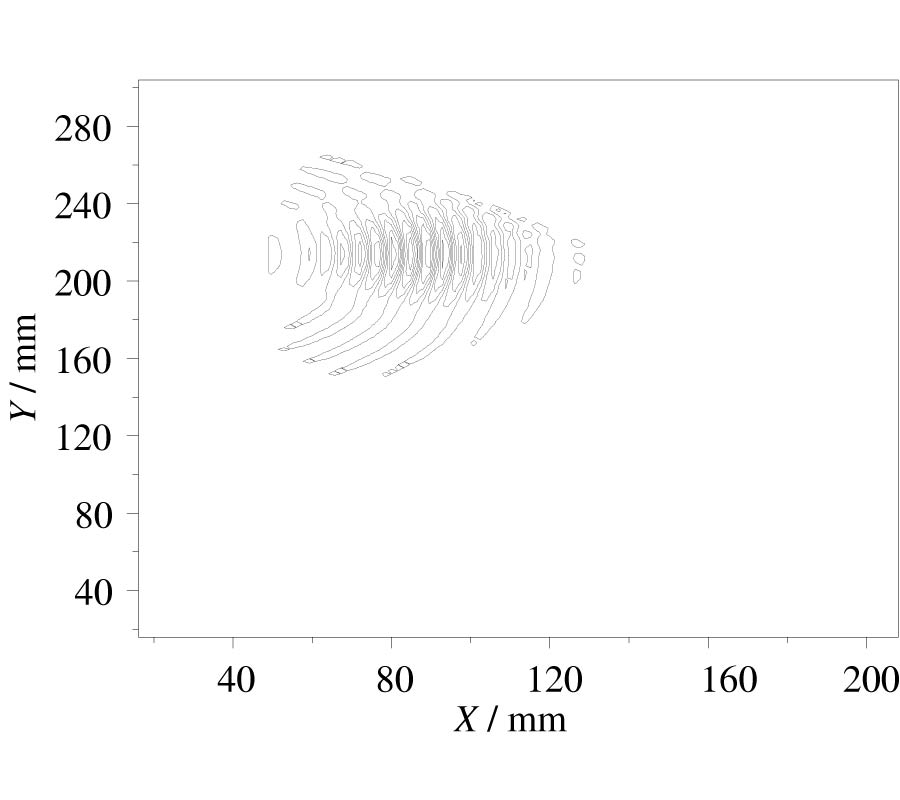
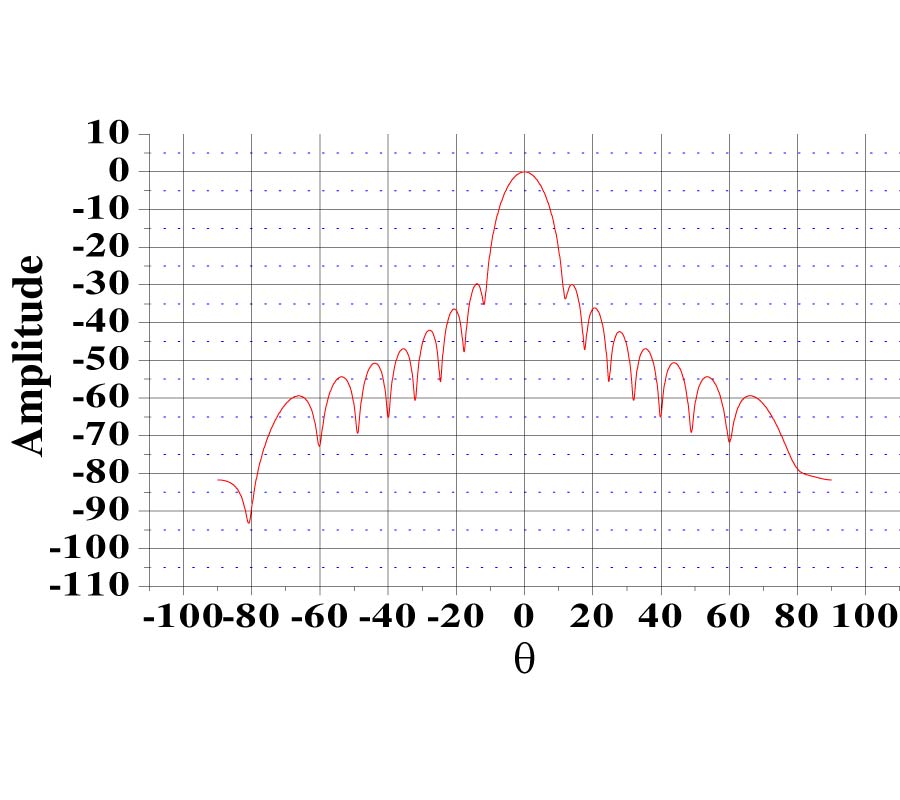
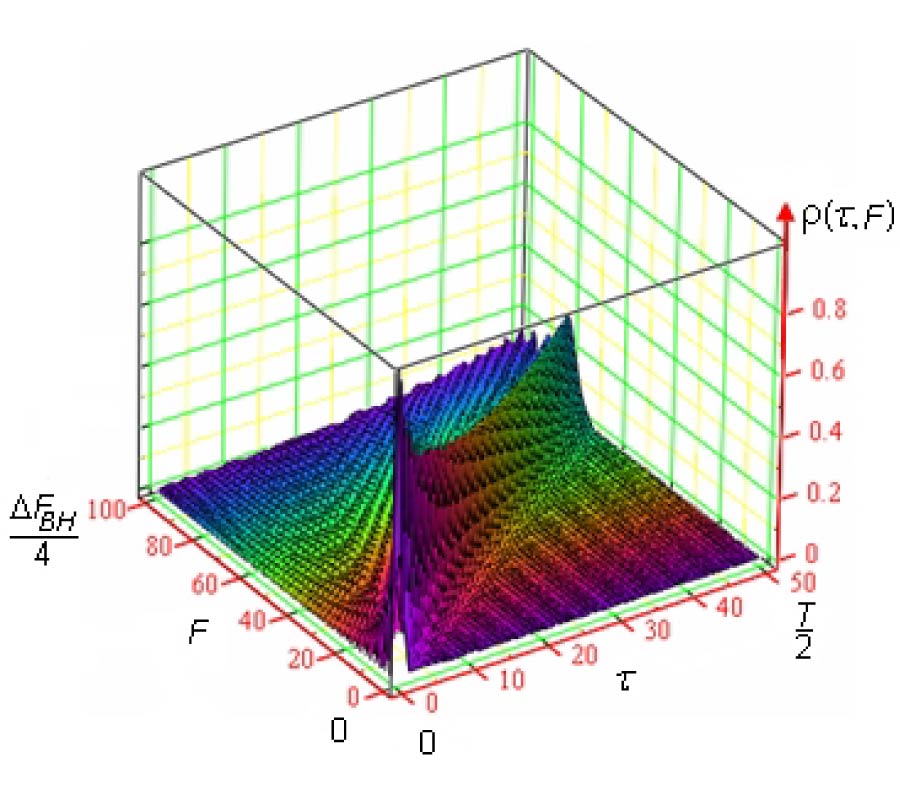
It is well known that using proper signal compression techniques, the range resolution of the radar systems can be enhanced without having to increase the peak transmits power. Whereby the range resolution is inverse proportional with the frequency band of the scanning signals, in the last period of time, in radar systems literature a lot of suitable wideband signals were designed and analyzed as performance level. However, for the large majority of these signals, the compression filter response contains significant sidelobes which may cause difficulties in the target detection and range estimation process. Consequently, in the radar signal processing theory, the sidelobes reduction techniques using synthesis of some proper nonlinear FM (NLFM) laws represents a major scientific research direction. In order to assure the sidelobes suppression, the main objective of this paper is to present an adequate synthesis algorithm of some NLFM laws based on stationary phase principle. The achieved experimental results confirm a significant sidelobes reduction (i.e., more than -40 dB) without necessity to apply some weighting techniques. Finally, the analysis of the synthesized NLFM laws by ambiguity function tool was also discussed.
SIDELOBES REDUCTION USING SYNTHESIS OF SOME NLFM LAWS
2013-02-27
PIER Letters
Vol. 38, 17-23
Compact Square DC-Block Bandpass Filter with Slots
Sung Yun Jun and Kai Chang
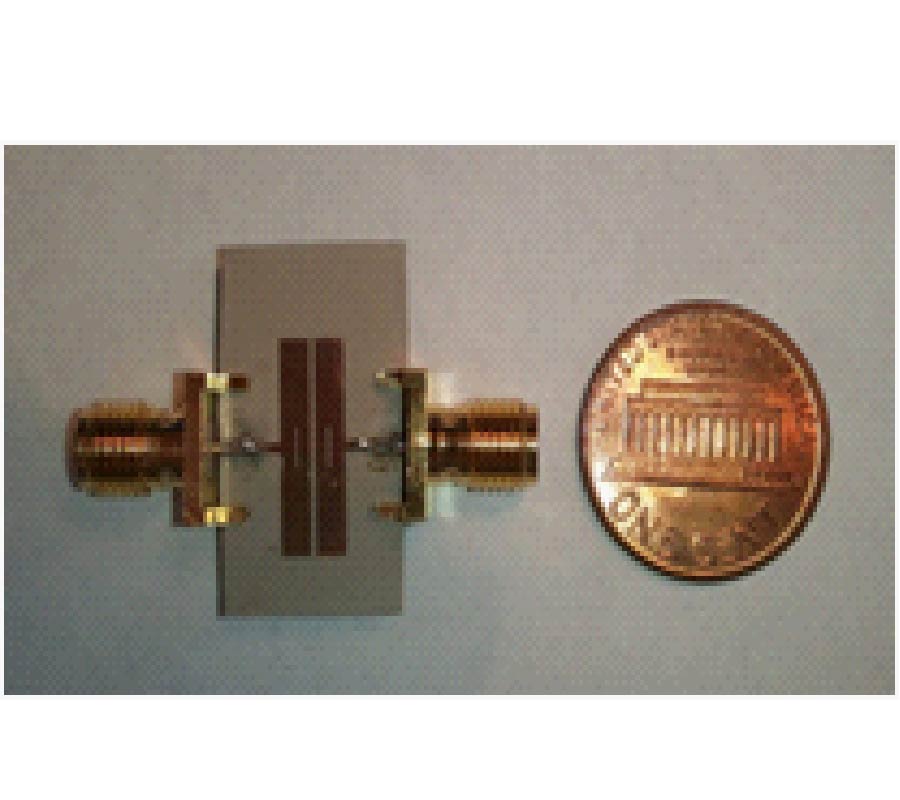
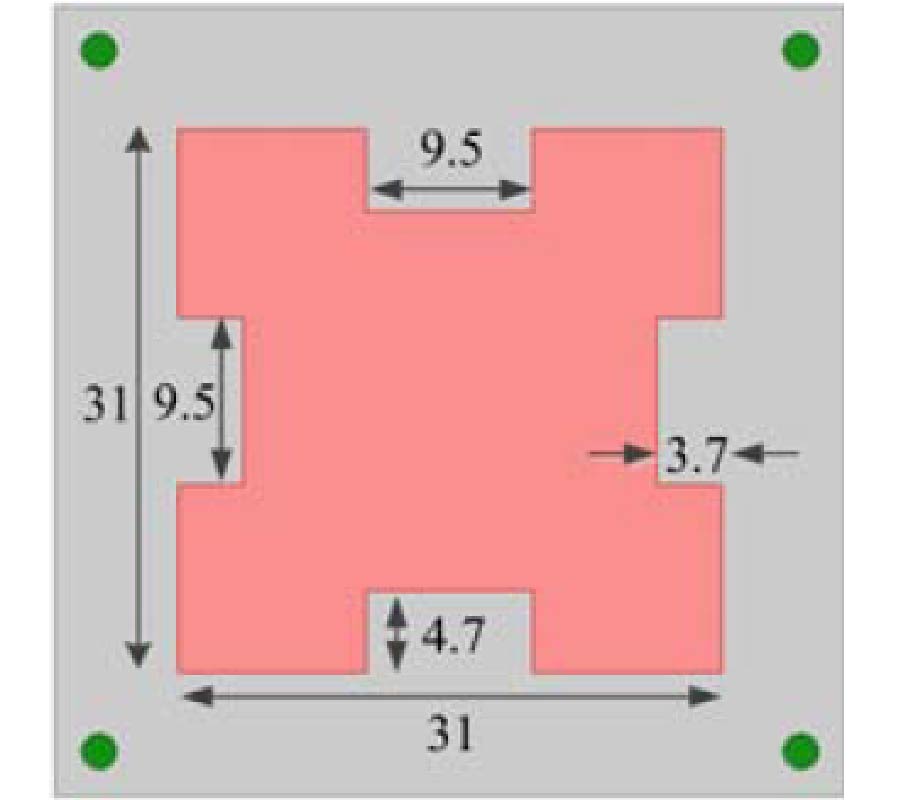
A compact square dc-block bandpass filter with slots is presented. The proposed dc-block bandpass filter using square shapes produces compact size and improved performance as compared to the conventional dc-block bandpass filter using cymbal shapes. Two filters with the same dimensions provide different center frequencies respectively. In other words, the center frequency of the square bandpass filter is lower than that of the cymbal bandpass filter. The center frequency and transmission zeros can also be controlled by the slots of the square shape in the proposed square bandpass filter. The proposed square bandpass filter has an insertion loss of better than 2 dB and a return loss better than 10 dB at center frequency of 7.2 GHz. The proposed square dc-block bandpass filter is optimized by electromagnetic simulator IE3D.
COMPACT SQUARE DC-BLOCK BANDPASS FILTER WITH SLOTS
2013-02-27
PIER M
Vol. 29, 181-192
A New Open Cavity at Millimeter Wave Band for Permittivity Measurement of Dielectrics
Wen-Bin Dou and Bo Xiang
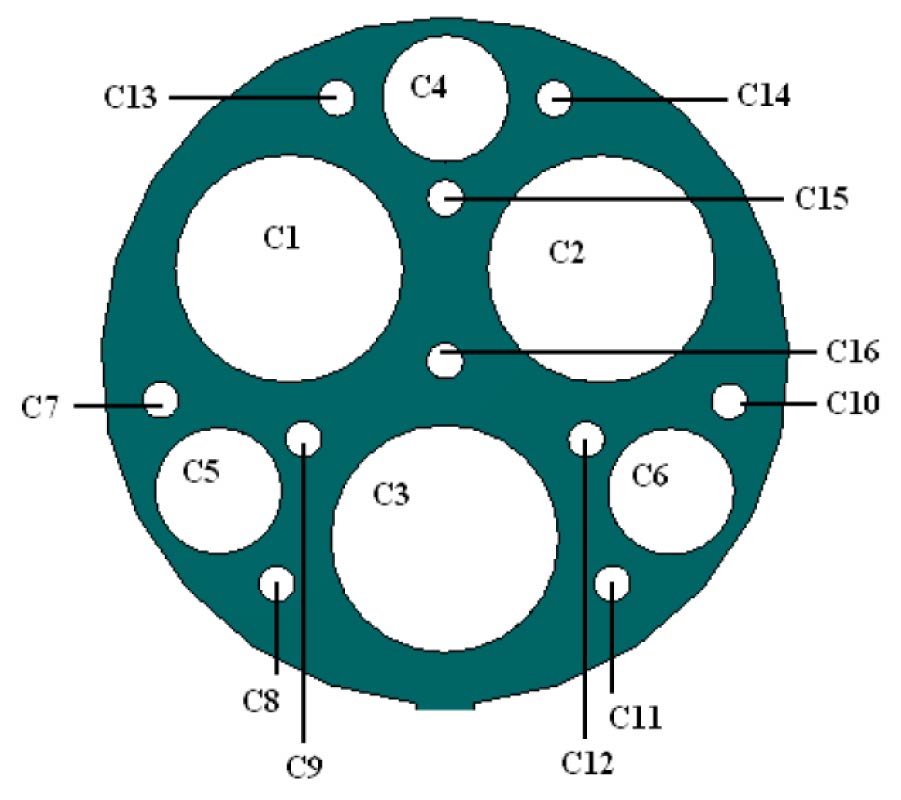
In this paper, an open cavity is proposed to measure the permittivity of dielectrics. The cavity consists of an ellipsoidal mirror and two planar mirrors. The relationship between the parameters of the beam in the open cavity and the cavity geometrical parameters is presented. The transcendental equation of dielectric loaded cavity is presented, from which the permittivity of the dielectric can be solved. The resonance frequencies of the vacuum cavity and loaded cavity are computed by the resonance frequency formula and the transcendental equation. they are compared to the results from FDTD simulation. The results from two methods are almost same with each other. The advantage of the proposed open cavity over the conventional open cavity composed of spherical mirror and planar mirror is demonstrated.
A NEW OPEN CAVITY AT MILLIMETER WAVE BAND FOR PERMITTIVITY MEASUREMENT OF DIELECTRICS
2013-02-27
PIER
Vol. 137, 425-438
Compact EBG Structure for Alleviating Mutual Coupling Between Patch Antenna Array Elements
Mohammad Tariqul Islam and Md. Shahidul Alam
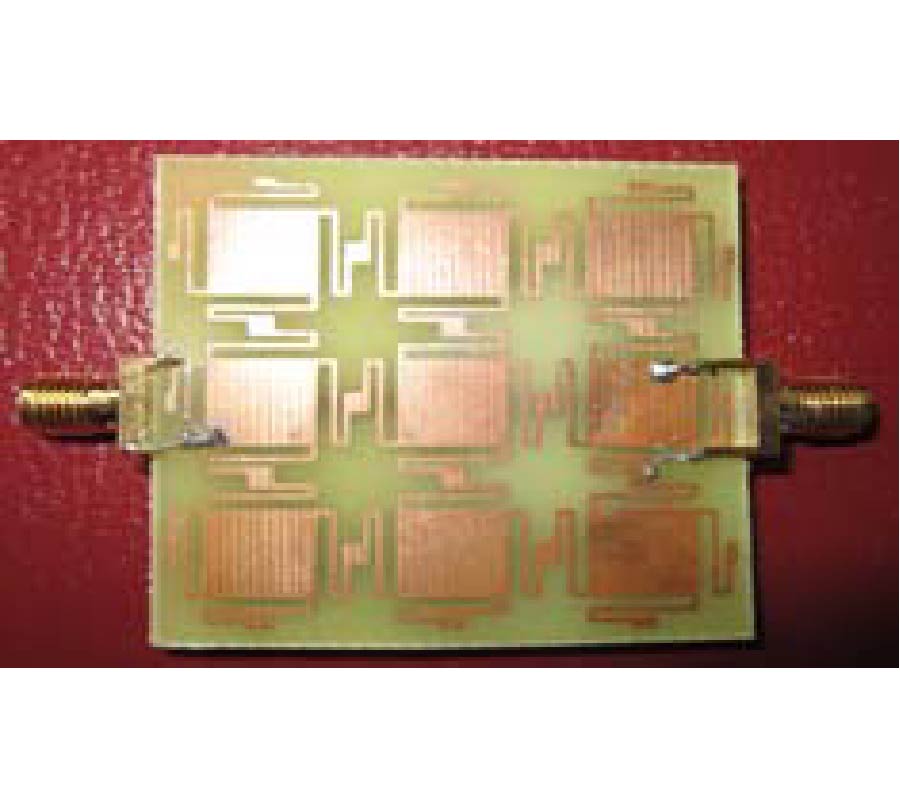
The periodic structure like electromagnetic band gap (EBG) is a hot research topic in the academia and RF-microwave industry due to their extraordinary surface wave suppression property. This study involved in designing a compact uni-planar type EBG structure for a 2.4 GHz resonant frequency band. Double folded bend metallic connecting lines are successfully utilized to realize a low frequency structure while a size reduction of 61% is achieved compared to the theoretically calculated size. From the transmission response, the surface wave band gap (SWBG) is found to be 1.2 GHz (1.91-3.11 GHz) whereas the artificial magnetic conductor (AMC) characteristic is observed at 3.3 GHz. The FEM based EM simulator HFSS is used to characterize the EBG structure. The SWBG property is utilized for alleviation of mutual coupling between elements of a microstrip antenna array. A 2 x 5 EBG lattice is inserted between the E-plane coupled array which reduced the coupling level by 17 dB without any adverse effect on the radiation performances.
COMPACT EBG STRUCTURE FOR ALLEVIATING MUTUAL COUPLING BETWEEN PATCH ANTENNA ARRAY ELEMENTS
2013-02-26
PIER B
Vol. 49, 281-300
Penalty Function Solution to Pattern Synthesis of Antenna Array by a Descent Algorithm
Tiao Jun Zeng and Quanyuan Feng
In this paper, an algorithm based on penalty cost function for synthesizing at-top patterns is proposed. A descent algorithm (DA) as its optimizing approach is proposed in this paper as well. Apparently, whole algorithm efficiency totally depends on the DA. Unlike traditional descent method, the DA defines step length by solving a inequality, instead of Wolf or Armijo-type search rule, stimulation results indicate that it can improve the computational efficiency. Under mild conditions, we prove that the DA has strong convergence properties. Several numerical examples are presented to illustrate the effectiveness of the proposed algorithm. The results indicate that the approach is effective in the pattern shape precisely in both mainlobe and sidelobe region for arbitrary linear arrays.
PENALTY FUNCTION SOLUTION TO PATTERN SYNTHESIS OF ANTENNA ARRAY BY A DESCENT ALGORITHM
2013-02-26
PIER Letters
Vol. 38, 1-16
WDM Performances of Two- and Three-Waveguide Mach-Zehnder Switches Assembled into 4x4 Matrix Router
Giovanna Calo and Vincenzo Petruzzelli
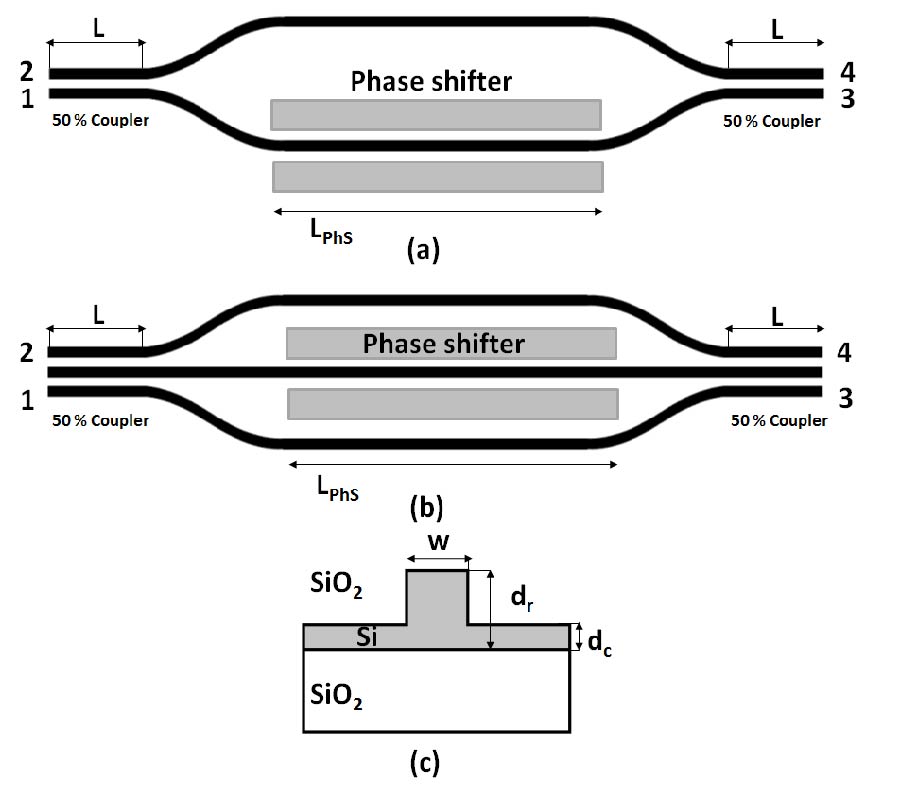
The performance comparison of two configurations of broadband Mach-Zehnder Switches exploiting, respectively, two and three waveguides, assembled into 4x4 matrices is reported in this paper. The simulations are performed by the Finite Element Method and the Finite Difference Beam Propagation Method. In particular, we have found that, to parity of maximum insertion loss, about equal to 1 dB for the single switch and 3 dB for the 4x4 matrix, the proposed three-waveguide configuration exhibits an almost doubled bandwidth Δλ=115 nm, making it suitable for efficient routing of the Wavelength Division Multiplexing signals over photonic Networks on Chip.
WDM PERFORMANCES OF TWO- AND THREE-WAVEGUIDE MACH-ZEHNDER SWITCHES ASSEMBLED INTO 4X4 MATRIX ROUTER
2013-02-26
PIER C
Vol. 37, 235-248
A Circular Fractal UWB Antenna Based on Descartes Circle Theorem with Band Rejection Capability
Rowdra Ghatak , Balaka Biswas , Anirban Karmakar and Dipak Poddar
A novel planar circular Apollonian fractal shaped UWB monopole antenna with band rejection capability is presented in this paper. The antenna performs satisfactorily in the frequency range 1.8-10.6 GHz which gives a wide impedance bandwidth of 142% for VSWR within 2. The proposed antenna has the capability to reject the frequency band 5.125-5.825 GHz assigned for IEEE802.11 a and HIPERLAN/2. This is achieved by a pair of narrow band resonant L-shaped slots in the CPW ground plane. The antenna exhibits satisfactory omnidirectional radiation characteristics throughout its operating band. The measured peak gain varies from 2 dBi to 6 dBi in the entire UWB band except the notch band. The performances of time domain characteristic is satisfactory with a group delay variation of 1 ns that shows the antenna is non dispersive. To ensure the usefulness of the proposed antenna in pulse communications systems, the correlation between the time-domain transmitting antenna input signal and the receiving antenna output signal is calculated. This antenna can be effectively used for medical imaging and military radar system along with other common UWB applications.
A CIRCULAR FRACTAL UWB ANTENNA BASED ON DESCARTES CIRCLE THEOREM WITH BAND REJECTION CAPABILITY
2013-02-26
PIER Letters
Vol. 37, 189-197
A Compact Tri-Band Passband Filter Based on Three Embedded Bending Stub Resonators
Yatao Peng , Lijun Zhang , Yongqing Leng and Jin Guan
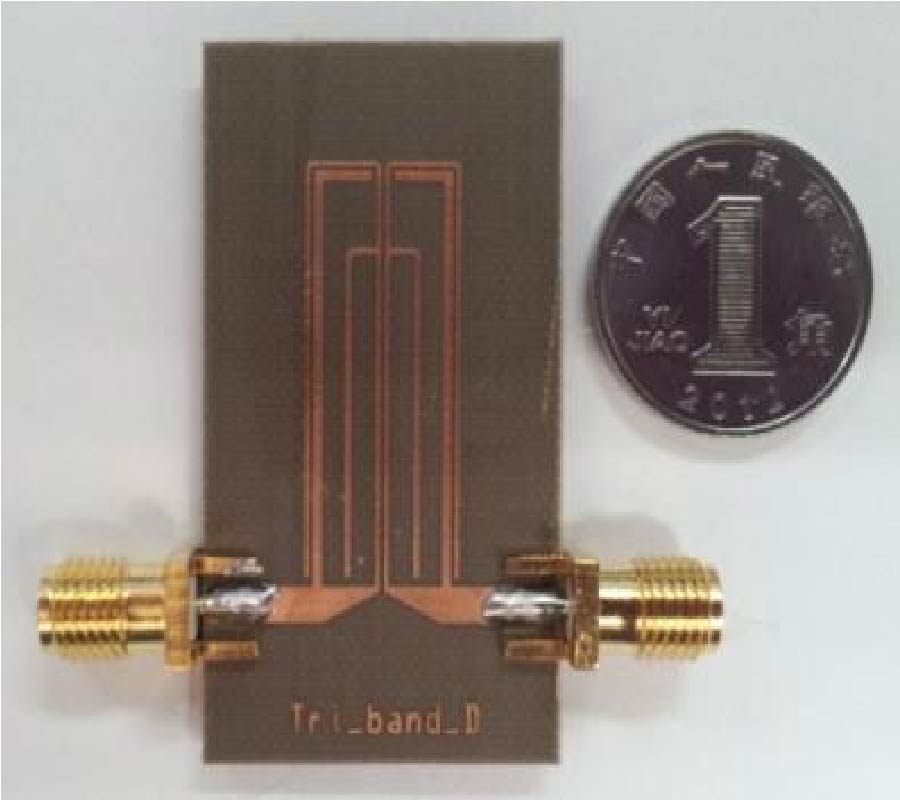
A microstrip tri-band bandpass filter (BPF) based on three embedded bending stub resonators (EBSRs) is proposed in this paper. Three resonant paths that resonate at three different frequencies can achieve three passbands. The lumped circuit models of the proposed filter are given for designing. The filter is extremely compact, whose area is about 0.047λg×0.12λg. There are two transmission zeros located between the first two passbands and a transmission zero between the second and third passbands, which results in good selectivity. For demonstrating the proposed filter structure, a filter at 0.9/2.14/3.6 GHz is designed and fabricated. The measured results are well agreed with simulated ones, which indicate the validity.
A COMPACT TRI-BAND PASSBAND FILTER BASED ON THREE EMBEDDED BENDING STUB RESONATORS
2013-02-26
PIER M
Vol. 29, 165-179
On the Rotationally-Cylindrical Model of the Human Body Exposed to ELF Electric Field
Abdelmalek Laissaoui , Bachir Nekhoul , Kamal Kerroum , Khalil El Khamlichi Drissi and Dragan Poljak
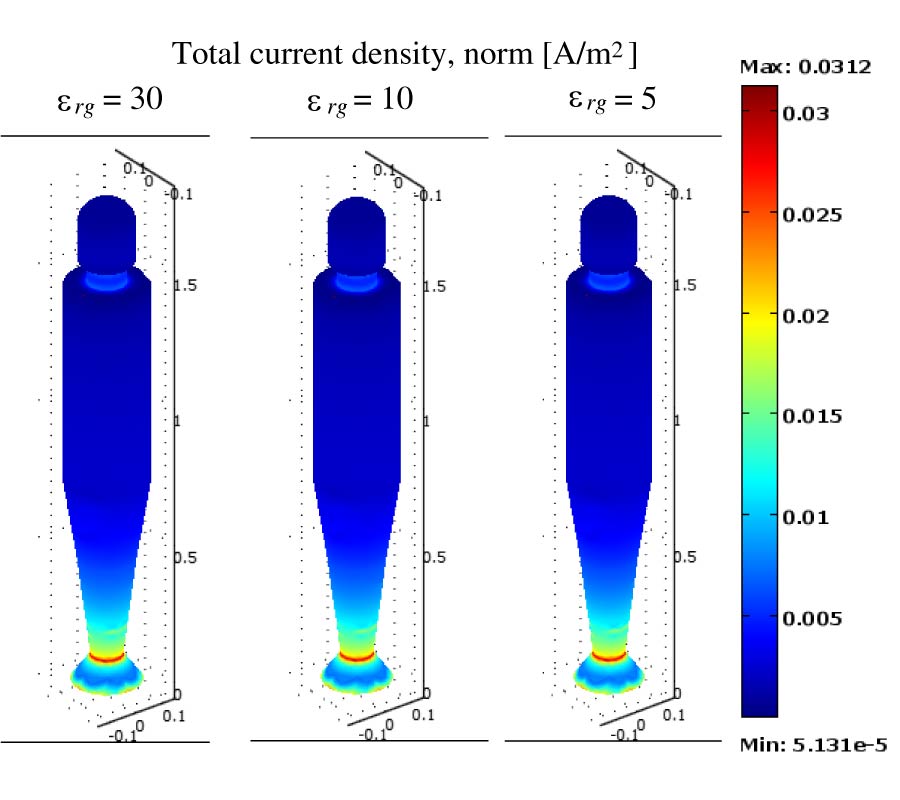
The paper presents an assessment of human exposure to extremely-low-frequency (ELF) electric field generated by a power line using the rotationally-cylindrical body model. The formulation is based on the Laplace type continuity equation. The induced current density in the three-dimensional (3D) model human body is obtained by solving the Laplace equation via the Finite element method (FEM). The main objective is to highlight some parameters influencing the distribution of the induced current density, such as the ohmic contact between the feet and the soil due to the soles of the shoes, and the electrical parameters of the soil. Furthermore, the influence of internal organs (the human model) to the induced current density distribution. The human body is represented by a homogeneous model and also by an inhomogeneous model composed of several organs namely brain, heart, lungs, liver and intestines, whose shapes were spheroid. The proposed model has been validated through comparison to either the experimental results or the theoretical results available in literature being computed by the aid of a homogeneous body model.
ON THE ROTATIONALLY-CYLINDRICAL MODEL OF THE HUMAN BODY EXPOSED TO ELF ELECTRIC FIELD
2013-02-26
PIER
Vol. 137, 407-424
A New Scheme for the Design of Balanced Frequency Tripler with Schottky Diodes
Jian Guo , Jie Xu and Cheng Qian
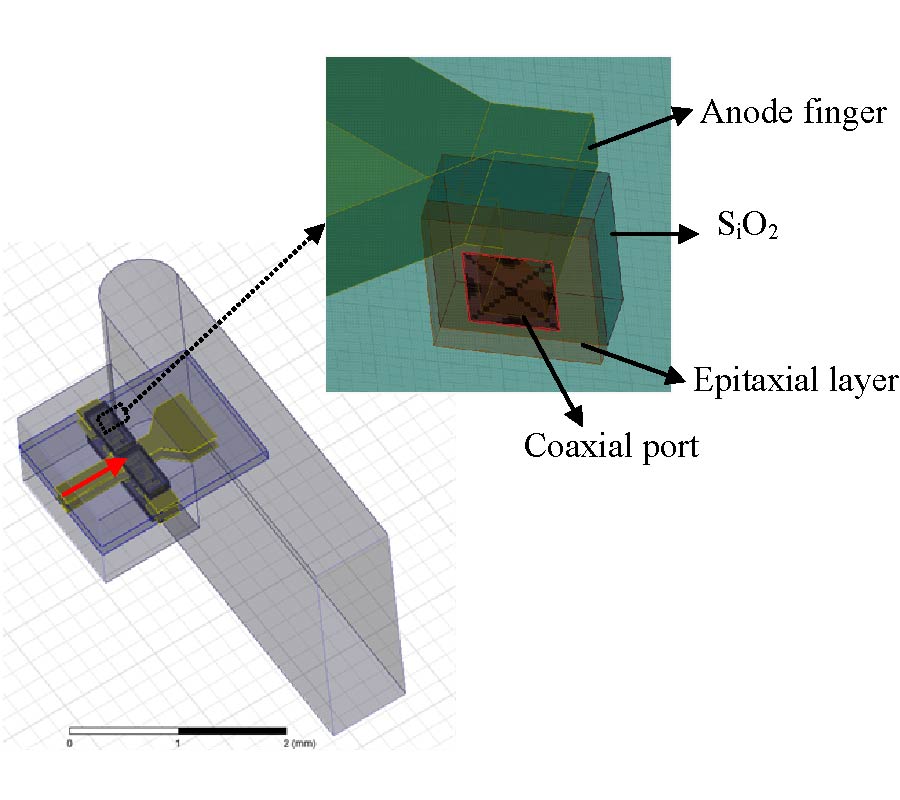
We propose a balanced frequency tripler scheme for millimeter-wave and submillimeter-wave application, in which double-sided suspended stripline is adopted. Two arms of Schottky diodes are mounted on the upper side of the substrate, and the other two arms of diodes are mounted on the lower side. The diodes are DC biased without bypass chip capacitor, which is essential in the common used balanced tripler scheme. Furthermore, the numbers of the diodes are doubled as there are only two arms of diodes in the common balanced tripler scheme, and this will double the power handling capability of the tripler. A W-band frequency tripler is designed according to the proposed scheme with commercial Schottky Varistors. The output power is from 2.9 to 5.7 dBm at the frequencies from 89.7 to 94.8 GHz, with the conversion efficiency from 1.95% ~3.7%.
A NEW SCHEME FOR THE DESIGN OF BALANCED FREQUENCY TRIPLER WITH SCHOTTKY DIODES
2013-02-26
PIER
Vol. 137, 389-406
A Theoretical Model for the Frequency-Dependent Dielectric Properties of Corneal Tissue at Microwave Frequencies
Mehrdad Saviz and Reza Faraji-Dana
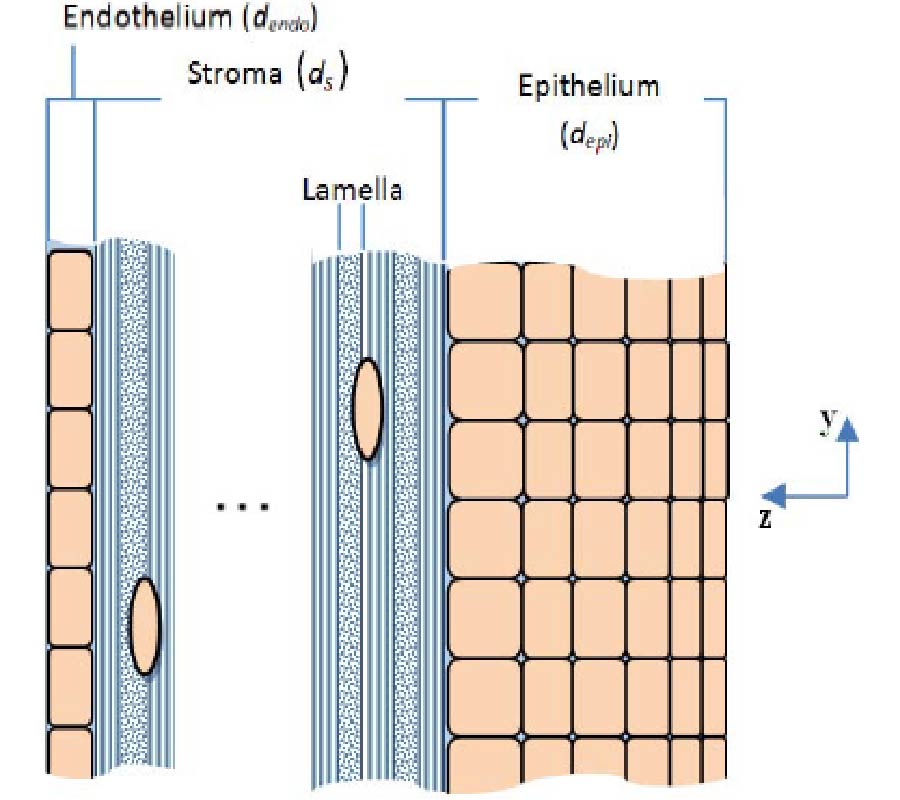
This paper presents a structured model of the dielectric properties of the corneal tissue at microwave frequencies, based on the fine structure and chemical composition of its constituents. This is accomplished by appropriately combining the known properties of tissue substructures using mixing rules, in order to obtain the effective macroscopic properties of the medium. The presented approach is multi-scale: it begins from the microscopic scale and derives the macroscopic properties after several scale-steps. The predictions of the model agree with the existing measured data in the literature. Verification and analysis of the model sensitivity to input parameters has been presented. The model is expected to find application in non-invasive medical sensing where it can relate dielectric response to pathological structural changes in the tissue. The model is also useful for the prediction of dielectric properties for high-frequency computational dosimetry, and for understanding the physical mechanisms behind the macroscopic dielectric behaviour in general.
A THEORETICAL MODEL FOR THE FREQUENCY-DEPENDENT DIELECTRIC PROPERTIES OF CORNEAL TISSUE AT MICROWAVE FREQUENCIES
2013-02-25
PIER Letters
Vol. 37, 177-187
Application of Transmission/Reflection Method for Permittivity Measurement in Coal Desulfurization
Licun Han , En Li , Gaofeng Guo and Hu Zheng
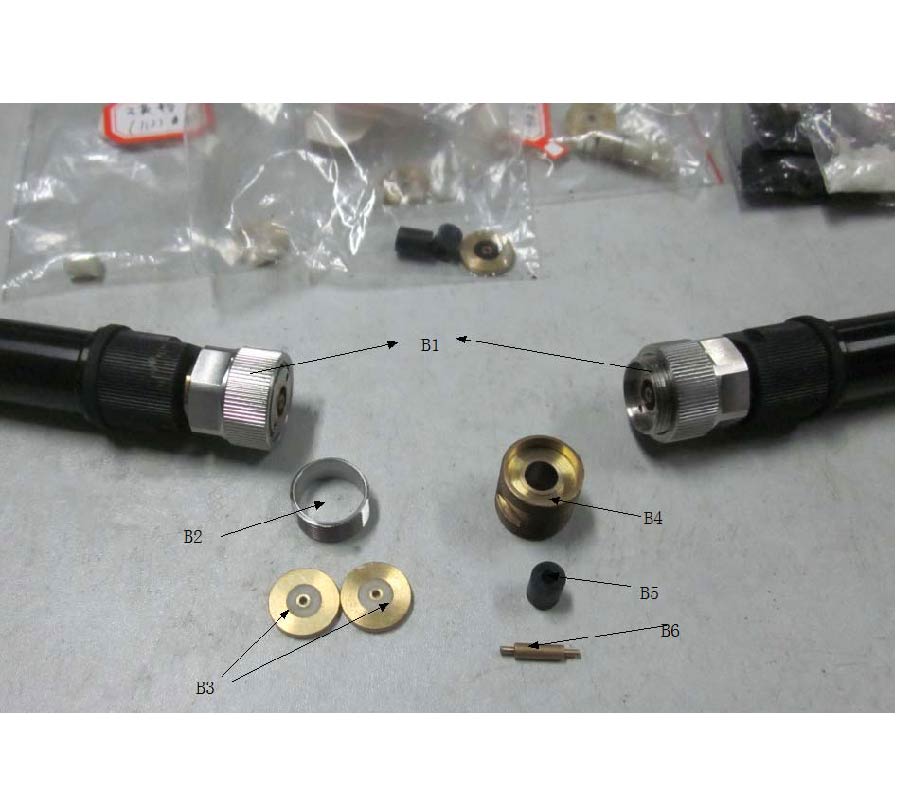
In recent years, the transmission/reflection (TR) method has been successfully emplolyed to determine the complex permittivity of dielectric material. Based on the principle that different coals have different abilities to absorb microwave energy at different frequencies, it is essential to analyze the electromagnetic property of coal to realize microwave desulfurization. Samples composed of a known dielectric and coal are manufactured in order to obtain the accurate permittivity of coal. In the article, we propose an improved TR method which is insensitive to the position of the sample in its cell. Additionally, we get the suitable mass ratio of the known dielectric and sample under test in the composite sample, and the suitable thickness of the composite sample in the permittivity measurements.
APPLICATION OF TRANSMISSION/REFLECTION METHOD FOR PERMITTIVITY MEASUREMENT IN COAL DESULFURIZATION
2013-02-23
PIER
Vol. 137, 371-388
Modified Differential Evolution Algorithm for Pattern Synthesis of Antenna Arrays
Xin Li , Wen-Tao Li , Xiao-Wei Shi , Jing Yang and Jian-Feng Yu
A modified differential evolution algorithm (MDE) for pattern synthesis of antenna arrays is proposed in this paper. By employing the novel strategies of best of random mutation and randomized local search, the convergence of standard differential evolution algorithm (SDE) is significantly accelerated. Five standard benchmark functions are optimized to testify the proposed algorithm by comparison with several other optimization algorithms. The numerical results verify the superior performance of the proposed MDE. Furthermore, the MDE is applied to two pattern synthesis examples, including a linear array and a cylindrical conformal array. Experiment results demonstrate that the proposed MDE has better performance than the other optimization methods in both of these two examples, which indicate the proposed algorithm is a competitive optimization algorithm in pattern synthesis.
MODIFIED DIFFERENTIAL EVOLUTION ALGORITHM FOR PATTERN SYNTHESIS OF ANTENNA ARRAYS
2013-02-22
PIER B
Vol. 49, 253-279
Wire Troubleshooting and Diagnosis: Review and Perspectives
Fabrice Auzanneau
Electrical cables of all types are subject to aggressive environments that can create defects or accelerate aging. Many application domains require diagnosis methods and tools. Among many methods, reflectometry has proven to be the best candidate and can be easily applied to the detection and localization of hard defects, while only requiring one access point to the wire. But soft defects are more difficult to track and require new powerful methods. This paper presents a review of the recent state of the art in the field of wired network diagnosis and shows the evolution of future activities in this domain. It provides new perspectives and new research domains are proposed.
WIRE TROUBLESHOOTING AND DIAGNOSIS: REVIEW AND PERSPECTIVES
2013-02-22
PIER B
Vol. 49, 235-252
Electromagnetic Fields Excitation by a Multielement Vibrator-Slot Structures in Coupled Electrodynamics Volumes
Dmitriy Yu. Penkin , Sergey L. Berdnik , Victor A. Katrich , Mikhail Nesterenko and Victor I. Kijko
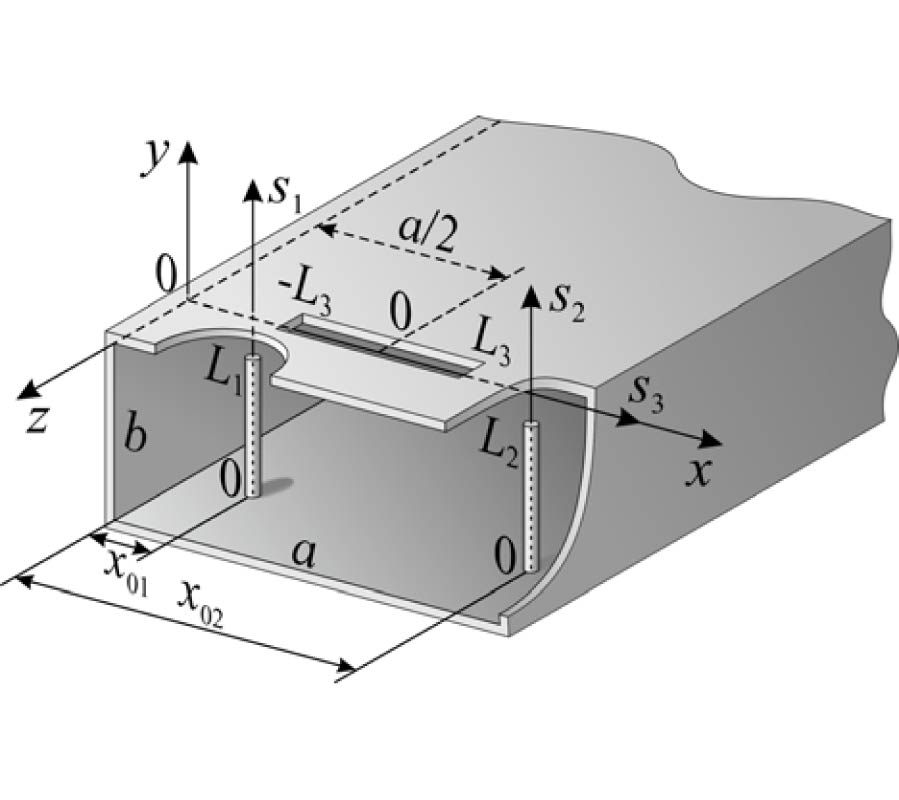
A problem of electromagnetic fields excitation by a system of finite-dimensional material bodies in two arbitrary electrodynamic volumes coupled by holes, cut in a common boundary of the volumes, is defined in a rigorous formulation. For the system containing two material bodies and one coupling hole, the problem is reduced to a system of two-dimensional integral equations relative to surface electric currents on the material bodies and equivalent magnetic current in the coupling hole. The resulting integral equations are correctly transformed to a system of one-dimensional equations for currents in a narrow slot and on thin impedance vibrators, which may have irregular electrophysical and geometrical parameters. The resulting equations system for a transverse slot in a broad wall of a rectangular waveguide and impedance vibrators with variable surface impedance is solved by a generalized method of induced electro-magneto-motive forces (EMMF) under assumption that interaction between the vibrators and the slot is absent. Calculated and experimental plots of electrodynamic characteristics for this vibrator-slot structure are presented.
ELECTROMAGNETIC FIELDS EXCITATION BY A MULTIELEMENT VIBRATOR-SLOT STRUCTURES IN COUPLED ELECTRODYNAMICS VOLUMES
2013-02-22
PIER B
Vol. 49, 215-234
Data-Driven Polinsar Unsupervised Classification Based on Adaptive Model-Based Decomposition and Shannon Entropy Characterization
Hui Song , Wen Yang , Xin Xu and Mingsheng Liao
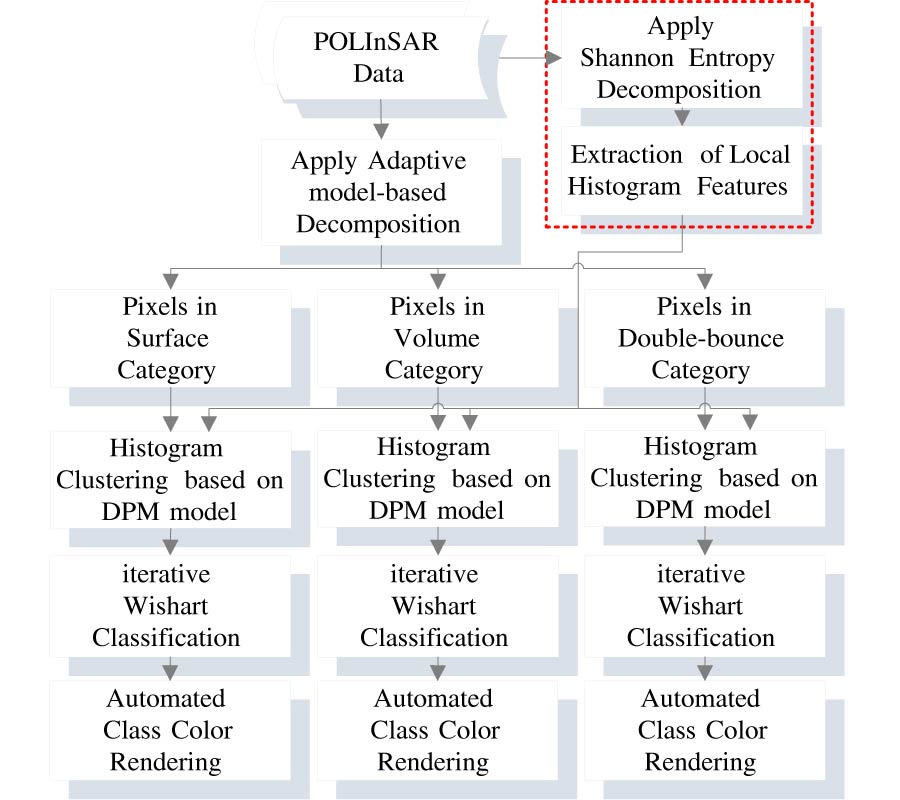
We introduce a data-driven unsupervised classification algorithm that uses polarimetric and interferometric synthetic aperture radar (PolInSAR) data. The proposed algorithm uses a classification method that preserves scattering characteristics. Our contribution is twofold. First, the method applies adaptive model-based decomposition (AMD) to represent the scattering mechanism, which overcomes the flaws introduced by Freeman decomposition. Second, a new class initialization scheme using a histogram clustering algorithm based on a Dirichlet process mixture model is applied to automatically determine the number of clusters and effectively initialize the classes. Therefore, our algorithm is data-driven. In the first step, the Shannon entropy characteristics of the PolInSAR data are extracted and used to calculate the local histogram features. After applying AMD, pixels are divided into three canonical scattering categories according to their dominant scattering mechanism. The histogram clustering algorithm is applied to each scattering category to obtain the number of classes and initialize them. The iterative Wishart classifier is applied to refine the classification results. Our method not only can obtain promising unsupervised classification results but also can automatically assign the number of classes. Experimental results for E-SAR L-band PolInSAR images from the German Aerospace Center demonstrate the effectiveness of the proposed algorithm.
DATA-DRIVEN POLINSAR UNSUPERVISED CLASSIFICATION BASED ON ADAPTIVE MODEL-BASED DECOMPOSITION AND SHANNON ENTROPY CHARACTERIZATION
2013-02-22
PIER M
Vol. 29, 151-164
Research on Millimeter-Wave Radiation Characteristics of Solid Target
Xi Chen and Jianzhong Xu
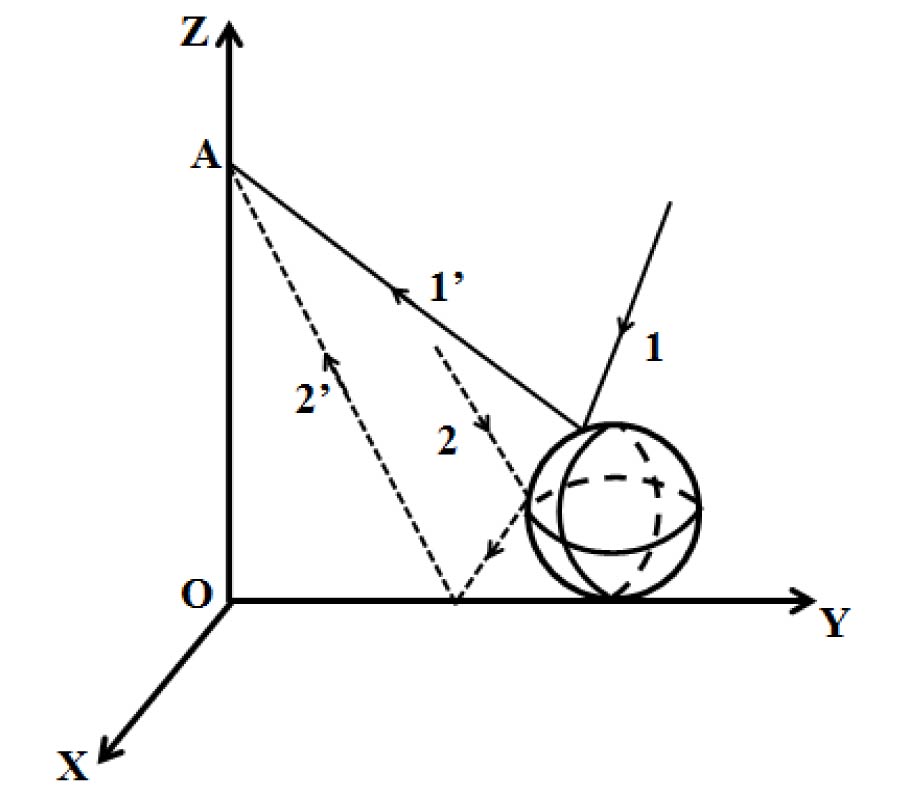
Millimeter-wave (MMW) radiation characteristics of solid targets are very complicated, and this paper starts with the research on modeling and simulation of the simple solid metal target. On the basis of the optical property of MMW, the two-ray propagation (direct reflection and ground secondary reflection of the solid target surface) is analyzed by means of the ray tracing theory in the geometrical optics, the radiation temperature calculation model is established; Furthermore, in combination with the panel-method-based geometric model and in accordance with the spatial analytic geometry and vector algebra theory, model calculation of the intersection movement between the radiometer and the target is analyzed and the MATLAB simulation platform for MMW radiation characteristics of the solid target is built. Under the assumed simulation conditions, simulation experiments on three types of solid metal targets (sphere, cylinder and cone) are performed to verify the proposed method in this paper. Meanwhile, comparative analysis between the MMW radiation characteristics of the circular metallic plate and those of the metallic ball with the same radius indicates that the spherical metallic target is equivalent to the non-ideal metallic circular planar target which is increased about 1.3 times in the linear size, and the result is validated through the measured data, which provides more accurate and effective data and theoretical support for target recognition and location in the millimeter-wave passive detection.
RESEARCH ON MILLIMETER-WAVE RADIATION CHARACTERISTICS OF SOLID TARGET
2013-02-22
PIER M
Vol. 29, 137-149
Design of Low SAR Planar Monopole Antenna for Mobile Wireless Communication Applications
Dalia Mohammed Nasha Elsheakh and Esmat A. F. Abdallah
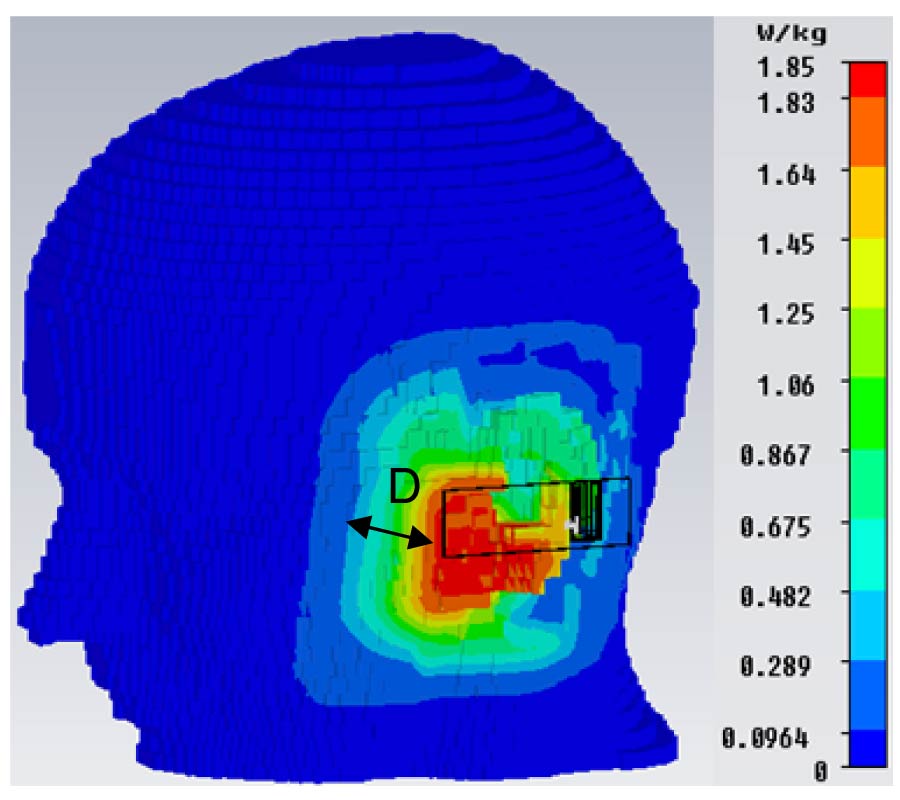
Simple internal multiband monopole antenna with low SAR for most of wireless mobile communication applications is presented in this paper. The proposed antenna is a unequal arms monopole antenna with a meander strip in the other substrate side. The antenna has a simple structure and is sufficiently small in size to be easily fit on the housing of mobile or USB dongle with size 18 × 15 × 0.8 mm3. The antenna is designed to operate at multi-bands to occupy most of allocated wireless communication devices by using high frequency structure simulator ver. 13 (HFSS). The proposed antenna has acceptable gain and efficiency while providing broadside radiation pattern that covers the horizontal plane. The antenna design and experimental results are in agreement. Moreover, the specific absorption rate (SAR) in the human head is investigated by CST 2012 Microwave Studio Hugo Voxel Model.
DESIGN OF LOW SAR PLANAR MONOPOLE ANTENNA FOR MOBILE WIRELESS COMMUNICATION APPLICATIONS
2013-02-22
PIER
Vol. 137, 359-370
Near Infrared Filtering Properties in Photonic Crystal Containing Extrinsic and Dispersive Semiconductor Defect
Chi-Chung Liu and Chien-Jang Wu
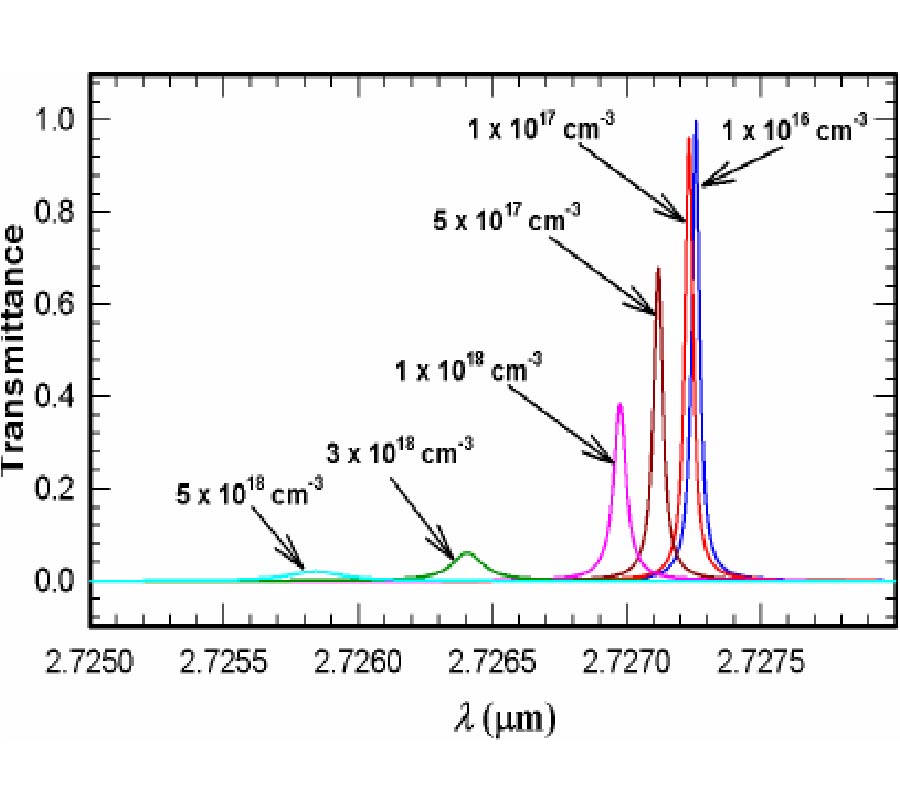
In this work, near infrared filtering properties in a transmission narrowband filter are theoretically investigated. The filter is a defective photonic crystal of (LH)ND(HL)N, where N is the stack number, L is SiO2, H is InP, and defect layer D is an extrinsic semiconductor of n-type silicon (n-Si). It is found that there are multiple transmission peaks within the photonic band gap (PBG) as the defect thickness increases. The filtering position can be changed by varying the doping density in n-Si. That is, the peak (channel) wavelength is blued-shifted when the doping density increases. In the angle-dependent filtering property, the channel wavelength is also blued-shifted as the angle of incidence increases for both TE and TM waves. These filtering properties are of technical use in the applications of semiconductor optoelectronics.
NEAR INFRARED FILTERING PROPERTIES IN PHOTONIC CRYSTAL CONTAINING EXTRINSIC AND DISPERSIVE SEMICONDUCTOR DEFECT
2013-02-22
PIER
Vol. 137, 335-357
A Novel Sparse Stepped Chaotic Signal and Its Compression Based on Compressive Sensing
Jiefang Yang and Yunhua Zhang
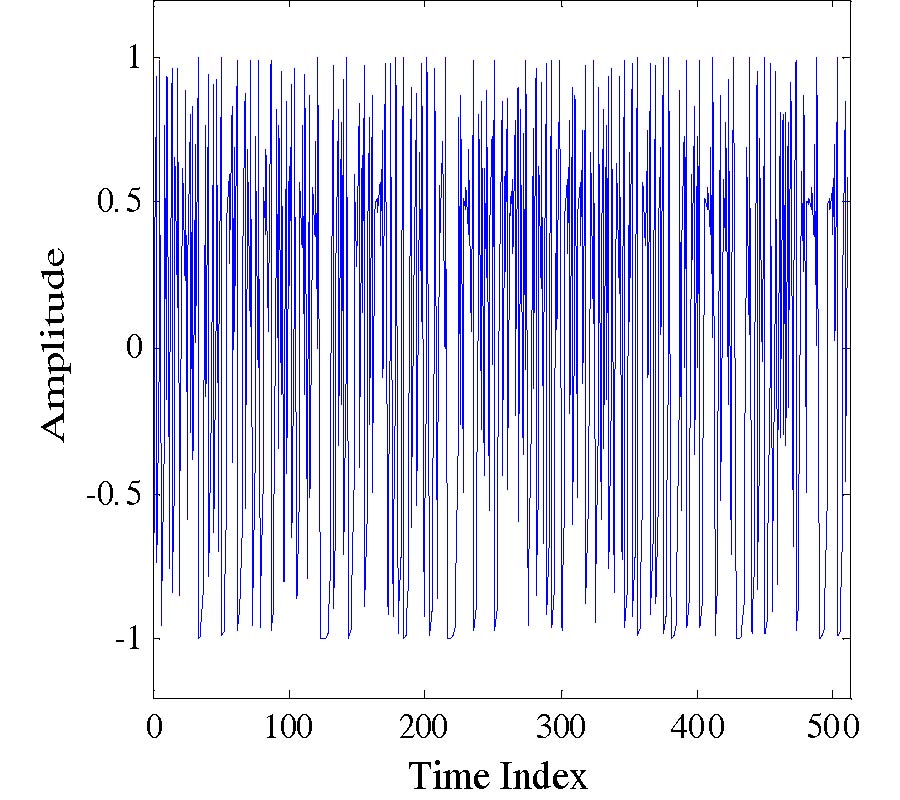
We propose a novel signal model by combining the sparse stepped frequency signals with chaotic signals, i.e. the sparse stepped chaotic signal (SSCS) model, as well as the corresponding compression algorithm based on compressed sensing. In SSCS, the chaotic signals are modulated to sparse stepped frequencies to compose a transmitting burst. When receiving, the echo signals are demodulated to the baseband and then can be sampled directly at a rate much lower than the Nyquist rate determined by the bandwidth of chaotic signal of each subpulse. Compared with radars using conventional stepped frequency waveforms, the SSCS radar can transmit fewer subpulses in a burst and directly use lower speed ADC next to the receiver. Both simulated and real radar data are processed to demonstrate the effectiveness of the proposed SSCS as well as the compression algorithm by which high resolution range profiles are very well reconstructed.
A NOVEL SPARSE STEPPED CHAOTIC SIGNAL AND ITS COMPRESSION BASED ON COMPRESSIVE SENSING