Search Results(13802)

2010-09-10
PIER
Vol. 108, 101-130
Electromagnetic Transients in Radio/Microwave Bands and Surge Protection Devices
Chandima Gomes and Vernon Cooray
A comprehensive review has been done on the types of electromagnetic transients that may affect low voltage electrical systems. The paper discusses various characteristics of lightning, switching, nuclear and intentional microwave impulses giving special attention to their impact on equipment and systems. The analysis shows that transients have a wide range of rise time, half peak width, action integral etc. with respect to both source and coupling mechanism. Hence, transient protection technology should be more specific with regard to the capabilities of the protection devices. Furthermore, we discuss the components and techniques available for the protection of low voltage systems from lightning generated electrical transients and the adequacy of International Standards in addressing the transient protection issues. The outcome of our analysis questions the suitability of 8/20 μs test current impulse in representing characteristics such as the time derivative and the energy content of lightning impulses. The 10/350 μs test current impulse better represents the integrated effects of the energy content of impulse component and long continuing current. A new waveform is required to be specified for testing the ability of protective devices to respond to the fast leading edges of subsequent strokes that may appear 100s of millisecond after the preceding stroke. The test voltage waveform 1.2/50 μs should also be modified to evaluate the response of protective devices for fast leading edges of induced voltage transients. A surge protective device that is tested for lightning transients may not be able to provide defense against other transients.
ELECTROMAGNETIC TRANSIENTS IN RADIO/MICROWAVE BANDS AND SURGE PROTECTION DEVICES
2010-09-10
PIER
Vol. 108, 81-99
Efficient Solutions of Metamaterial Problems Using a Low-Frequency Multilevel Fast Multipole Algorithm
Ozgur Ergul and Levent Gurel
We present fast and accurate solutions of electromagnetics problems involving realistic metamaterial structures using a lowfrequency multilevel fast multipole algorithm (LF-MLFMA). Accelerating iterative solutions using robust preconditioning techniques may not be sufficient to reduce the overall processing time when the ordinary high-frequency MLFMA is applied to metamaterial problems. The major bottleneck, i.e., the low-frequency breakdown, should be eliminated for efficient solutions. We show that the combination of an LF-MLFMA implementation based on the multipole expansion with the sparse-approximate-inverse preconditioner enables efficient and accurate analysis of realistic metamaterial structures. Using the robust LF-MLFMA implementation, we demonstrate how the transmission properties of metamaterial walls can be enhanced with randomlyoriented unit cells.
EFFICIENT SOLUTIONS OF METAMATERIAL PROBLEMS USING A LOW-FREQUENCY MULTILEVEL FAST MULTIPOLE ALGORITHM
2010-09-10
PIER
Vol. 108, 65-80
Adaptive Beam Steering of RLSA Antenna with RFID Technology
Mohd Faizal Bin Jamlos , Tharek Bin Abdul Rahman , Muhammad Ramlee Kamarudin , P. Saad , Omar Abdul Aziz and M. Amir Shamsudin
A form of a novel adaptive antenna system that combines radio frequency identification (RFID) technology, programmable intelligent computer (PIC) microcontroller and reconfigurable beam steering antenna is proposed. Localization and adaptive response are the most challenging issues in smart antenna system. In this research, the localization technique relying on the received signal strength (RSS) signals has been done intensively where the capability of the RFID tag in producing certain level of signal strength has been exploited as a stimulator for the system to adaptively activate certain PIN diode switches of reconfigurable beam steering antenna. It is found that the detecting ability of the RSSI signals is extremely influenced by the 45°angle of the RFID reader's directive antenna. The combination of four 90°triangles which have 'adjacent' and 'opposite' angle of 45°forming pyramid antenna which has four sections; 1, 2, 3 and 4 enable the RFID readers to receive the RSS signals from the angles of 0°/360°, 90°, 180°and 270°respectively. When the RFID tag is directly facing a certain section, certain RSS signals will 'flow' from particular section into their respected RFID readers to automatically detect the range and angles' location of the RFID tag through the input ports of PIC microcontroller: A1, A4, C4 and C7. The PIN diode switches of the reconfigurable beam steering antenna are then activated by the output ports of PIC microcontroller: B0 up to B4, to steer the beam adaptively towards the RFID tag at four different angles: 0°/360°, 90°, 180°, and 270°according to the algorithm programmed in the microcontroller. It is found that the Ground Reflection (Two-Ray) propagation model is very crucial in determining the projection and height of reconfigurable antenna to efficiently cover the scattered measurement points of 1 up to 10 at four angles with different ranges of distance. The proposed antenna has a great potential in realizing the new smart antenna system replacing the conventional adaptive array antenna and Wimax application.
ADAPTIVE BEAM STEERING OF RLSA ANTENNA WITH RFID TECHNOLOGY
2010-09-09
PIER B
Vol. 25, 211-224
Rain Attenuation Modeling in the 10-100 GHz Frequency Using DROP Size Distributions for Different Climatic Zones in Tropical India
Saurabh Das , Animesh Maitra and Ashish Kumar Shukla
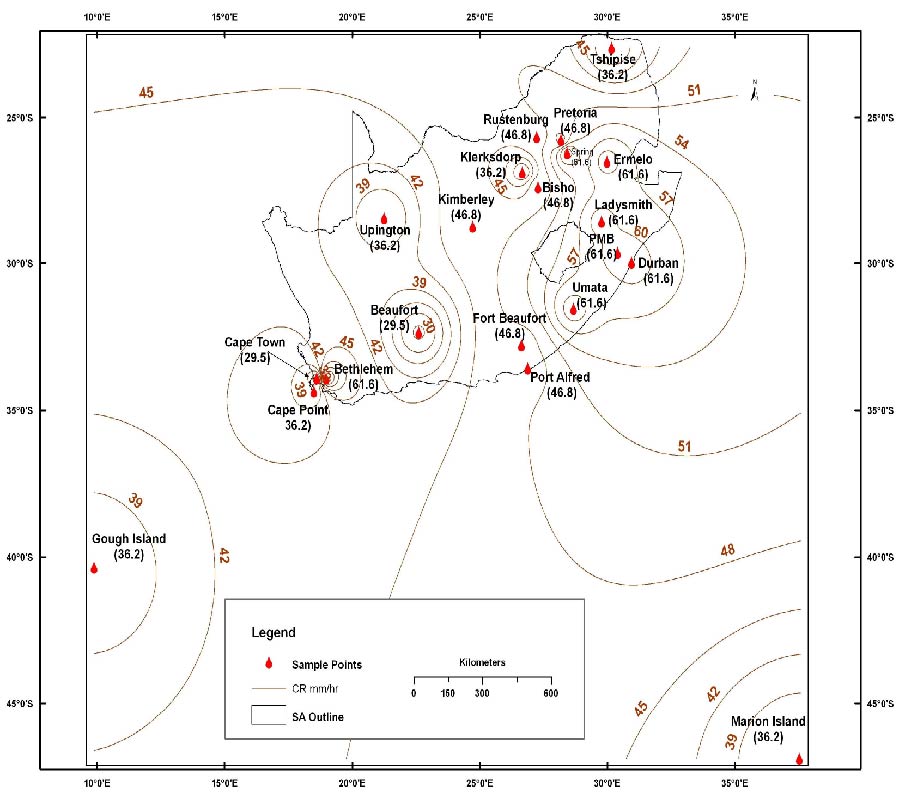
Rain drop size distributions (DSD) are measured with disdrometers at five different climatic locations in the Indian tropical region. The distribution of drop size is assumed to be lognormal to model the rain attenuation in the frequency range of 10-100 GHz. The rain attenuation is estimated assuming single scattering of spherical rain drops. Different attenuation characteristics are observed for different regions due to the dependency of DSD on climatic conditions. A comparison shows that significant differences between ITU-R model and DSD derived values occur at high frequency and at high rain rates for different regions. At frequencies below 30 GHz, the ITU-R model matches well with the DSD generated values up to 30 mm/h rain rate but differ above that. The results will be helpful in understanding the pattern of rain attenuation variation and designing the systems at EHF bands in the tropical region.
RAIN ATTENUATION MODELING IN THE 10-100 GHz FREQUENCY USING DROP SIZE DISTRIBUTIONS FOR DIFFERENT CLIMATIC ZONES IN TROPICAL INDIA
2010-09-09
PIER C
Vol. 16, 25-35
Pythagoras Tree: A Fractal Patch Antenna for Multi-Frequency and Ultra-Wide Bandwidth Operations
Ankur Aggarwal and Machavaram Kartikeyan
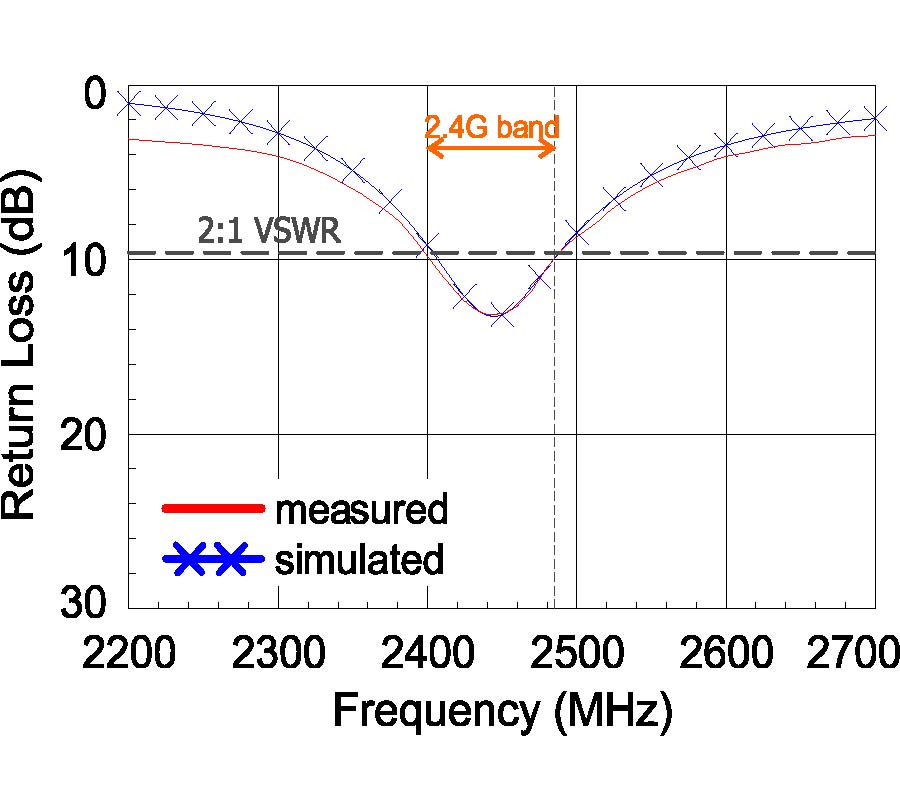
This paper shows the design of a fractal patch antenna, which uses a unique fractal geometry known as Pythagoras tree with co-planer waveguide (CPW) feeding. The antenna has been designed for dual band operation at the WLAN/WiMAX (2.4 GHz) and WiMAX (3.5 GHz) for Ultra-Wideband applications. The antenna was simulated using CST Microwave Studio. The fabricated antenna's measurement results were found to be in good agreement with the simulated ones.
PYTHAGORAS TREE: A FRACTAL PATCH ANTENNA FOR MULTI-FREQUENCY AND ULTRA-WIDE BANDWIDTH OPERATIONS
2010-09-09
PIER
Vol. 108, 51-64
Generalized Synthesis of Rat Race Ring Coupler and Its Application to Circuit Miniaturization
Jen-Tsai Kuo and Cheng-Hsiu Tsai
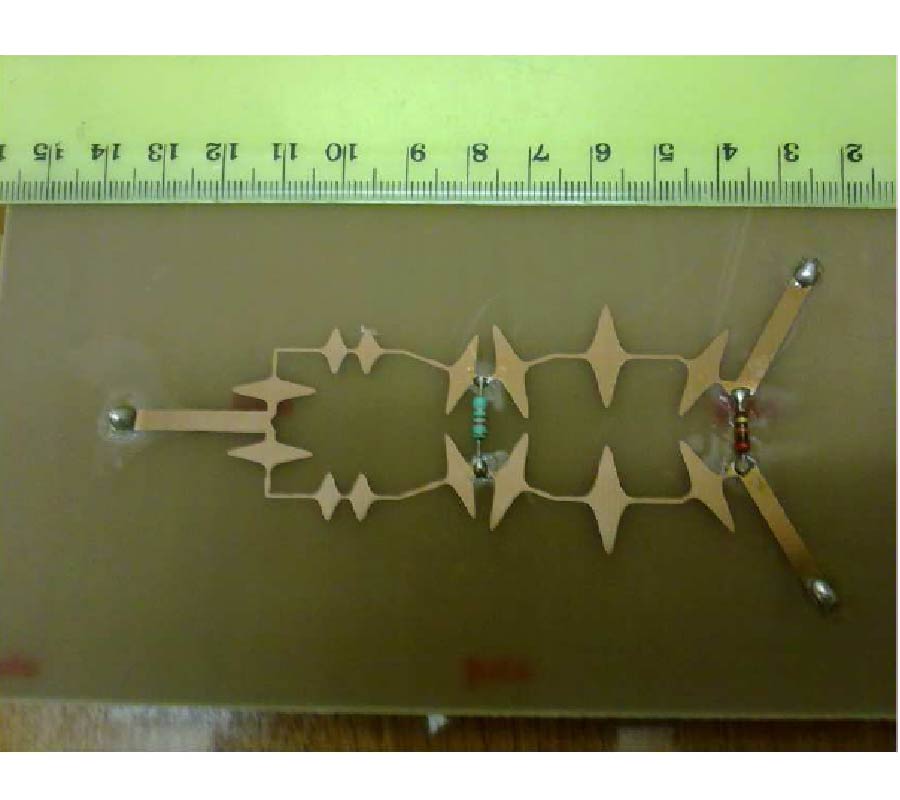
Generalized synthesis of the rat race ring coupler is developed with its four arms being allowed to have different characteristic impedances. The transmission line theory incorporated with the even-odd analysis is used to formulate the conditions for solving the circuit parameters. The solution shows that a rat race ring with a normalized area of 41.82% or 0.97λ-circumference can be achieved. Based on the solutions, simulated bandwidths of the new ring hybrids are reported. Two experimental circuits are measured for validation check. One uses stepped-impedance sections to realize the four arms for further size reduction. This circuit occupies only 13.12% of that of a conventional hybrid ring at 1 GHz. It is believed that this implementation has the best size reduction for a microstrip ring hybrid in open literature. Measured scattering parameters show good agreement with the simulated results.
GENERALIZED SYNTHESIS OF RAT RACE RING COUPLER AND ITS APPLICATION TO CIRCUIT MINIATURIZATION
2010-09-09
PIER
Vol. 108, 37-49
Perfect Metamaterial Absorber with Dual Bands
Minhua Li , Helin Yang , Xi-Wen Hou , Yan Tian and Dong-Yun Hou
In this paper, we present the design, simulation, and measurement of a dual-band metamaterial absorber in the microwave region. Simulated and experimental results show that the absorber has two perfect absorption points near 11.15GHz and 16.01GHz. Absorptions under different polarizations of incident EM waves are measured with magnitude of over 97% at low-frequency peak and 99% at high-frequency peak respectively. Current distribution at the dual absorptive peaks is also given to study the physical mechanism of power loss. Moreover, it is verified by experiment that the absorptions of this kind of metamaterial absorber remain over 90% at the low-frequency peak and 92% at the high-frequency peak with wide incident angles ranging from 0° to 60° for both transverse electric wave and transverse magnetic wave.
PERFECT METAMATERIAL ABSORBER WITH DUAL BANDS
2010-09-08
PIER Letters
Vol. 17, 95-103
A Novel Small-Size Single Patch Microstrip Antenna Based on Koch and Sierpinski Fractal-Shapes
Zhong-Wu Yu , Guang-Ming Wang , Xiang-Jun Gao and Ke Lu
A novel fractal structure using Koch and Sierpinski fractal-shapes is proposed. By inserting the Sierpinski carpets into the single patch and etching the inner and outer patch edges according to Koch curves, the resonant frequency of the patch antenna can be lowered significantly. And the higher of the iteration order of the fractal shapes, the lower the resonant frequency becomes. In this paper, a novel small-size single patch microstrip antenna based on the proposed fractal-shapes is designed, fabricated and measured. It is experimentally found that the size reduction can reach 80.3%. Compared to the conventional square single patch antenna, the proposed antenna maintains comparable radiation patterns. Therefore, the small-size single patch microstrip antenna considered here can be applied to portable wireless communication systems requiring small devices.
A NOVEL SMALL-SIZE SINGLE PATCH MICROSTRIP ANTENNA BASED ON KOCH AND SIERPINSKI FRACTAL-SHAPES
2010-09-08
PIER C
Vol. 16, 13-23
A Compact Microstrip-Line-Fed Slot Antenna with Dual-Band Notched for WiMAX Operation
Wen-Shan Chen , Bau-Yi Lee and Po-Yuan Chang
A compact wide-slot antenna fed by microstrip-line for wideband operation is proposed and studied. The proposed antenna consists of a microstrip-fed line and a wide rectangular slot with a reverse L-shaped slot. The proposed antenna resonates the 10-dB bandwidth from 2.17 GHz to 6.25 GHz, and these frequency bands cover the standard IEEE 802.11b/g (2.4--2.485 GHz) and IEEE 802.11a (5.15--5.35 GHz, 5.725--5.875 GHz) for WLAN applications and 2.5 GHz (2.5--2.69 GHz), 3.5 GHz (3.3--3.8 GHz) and 5GHz (5.25--5.85 GHz) for WiMAX applications. In order to remove unwanted bands, we used two methods to reject the bands. By inserting a strip in the slot of the broadband antenna, a reject frequency band from 4.13 to 4.95 GHz can be obtained; by etching a U-slot on the the broadband antenna, a reject frequency band from 2.96 to 3.17 GHz can be achieved. The slot antenna with dual band-notched for WiMAX operation has been obtained. Detailed design and experimental results are shown and discussed in this paper.
A COMPACT MICROSTRIP-LINE-FED SLOT ANTENNA WITH DUAL-BAND NOTCHED FOR WIMAX OPERATION
2010-09-07
PIER B
Vol. 25, 191-209
Shape Slope Parameter Distribution Modelling of Electromagnetic Scattering by Rain Drops
Lakshmi Sutha Kumar , Yee Hui Lee and Jin Teong Ong
Gamma model parameters using 2nd, 3rd and 4th moments are calculated from the drop size data of Singapore. The gamma model is simplified into two parameter model by finding a relation between the shape and slope parameters, μ and Λ. Due to the poor correlation found between μ and Λ, the drop size data is filtered based on their rain rates before a good correlation between the two parameters can be found. The μ-Λ relations are then fitted for the different ranges of rain rate filtering. Scatter plots of μ and Λ are plotted with constant median volume diameter (D0) lines. The μ-Λ relations for the different rain types for the tropical island of Singapore are proposed and compared with the μ-Λ relations from three other countries of different climatic zones. T-Matrix calculations are performed to find the polarimetric variables at S-band by using the gamma DSD calculated from the Singapore's drop size data. The calculated differential reflectivity and horizontal reflectivity are used along with the best μ-Λ relations to find the gamma model parameters. The retrieved rain rate using polarimetric variables is compared with the distrometer's measured rain rate. Results show a good agreement between the retrieved rain rate and the measured rain rate. Therefore, the proposed shape slope relationship is found to be suitable for rain rate retrieval.
SHAPE SLOPE PARAMETER DISTRIBUTION MODELLING OF ELECTROMAGNETIC SCATTERING BY RAIN DROPS
2010-09-07
PIER M
Vol. 14, 85-100
Time-Domain Inverse Scattering of a Two-Dimensional Metallic Cylinder in Slab Medium Using Asynchronous Particle Swarm Optimization
Chi-Hsien Sun , Chien-Ching Chiu and Ching-Lieh Li
This paper presents asynchronous particle swarm optimization (APSO) applied to the time-domain inverse scattering problems of two-dimensional metallic cylinder buried in slab medium. For this study the finite-difference time-domain (FDTD) is employed for the analysis of the forward scattering part, while for the APSO is applied for the reconstruction of the two-dimensional metallic cylinder buried in slab medium, which includes of the location and shape the metallic cylinder. For the forward scattering, conceptually several electromagnetic pulses are launched to illuminate the unknown scatterers, and then the scattered electromagnetic fields around are measured. In order to efficiently describe the details of the cylinder shape, sub-gridding technique is implemented in the finite difference time domain method. Then, the measured EM fields are used for inverse scattering, in which APSO is employed to transform the inverse scattering problem into optimization problem. By comparing the measured scattered fields and the calculated scattered fields, the shape and location of the metallic cylinder are reconstructed. In addition, the effects of Gaussian noises on imaging reconstruction are also investigated.
TIME-DOMAIN INVERSE SCATTERING OF A TWO-DIMENSIONAL METALLIC CYLINDER IN SLAB MEDIUM USING ASYNCHRONOUS PARTICLE SWARM OPTIMIZATION
2010-09-07
PIER
Vol. 108, 23-36
Transmission Zero Design Graph for Dual-Mode Dual-Band Filter with Periodic Stepped-Impedance Ring Resonator
Yi-Chyun Chiou , Ping-Shiang Yang , Jen-Tsai Kuo and Cho-Yuh Wu
Compact dual-mode dual-band bandpass filters are realized with a single periodic stepped-impedance ring resonator. Neither extra resonator nor substrate layer is required for implementing the second passband. Based on the transmission line theory, a transmission zero design graph consisting of the transmission zeros together with the resonant frequencies of the resonator is developed against the space separation angle between the input and output ports. Based on this graph, when the line-to-ring feed structure is implemented, the space angle can be determined for the dual-mode dualband design with designated zeros near the two passbands. It is believed that this is the first design graph for designating the transmission poles and zeros of a dual-mode ring resonator filter before the excitation structure is realized. Three dual-mode dual-band bandpass filters are carried out for demonstration. All circuits occupy only 60% of the area of the conventional ring resonator bandpass filter at the first frequency. Measured results of experimental circuits show good agreement with simulated responses.
TRANSMISSION ZERO DESIGN GRAPH FOR DUAL-MODE DUAL-BAND FILTER WITH PERIODIC STEPPED-IMPEDANCE RING RESONATOR
2010-08-31
PIER M
Vol. 14, 71-83
Analysis of Microwave Cavity Loaded with Lossy Dielectric Slab by Means of Mode Matching Method and Optimization of Load Location
Okan Sule and Sedef Kent
An analysis has been presented by means of mode matching method for two microwave cavities of different sizes which are fed by TE10 waveguide and which are loaded with lossy dielectric slab type material. The accuracy of the results obtained is presented together with the comparison of the results which are obtained by HFSS numerical method. The optimization of the load location has been performed in order to maximize the electrical field on the material. The principle of this optimization is based on finding the existence of the positions in which S11 reflection coefficient is the lowest. When the feeding guide for the two different microwave cavities is entirely at the centre of the resonator, the reflection coefficient distribution change has been detected according to the different positions of the material in the oven, and then the lowest positions have been found out. The electric field changes in the detected positions have been recorded.
ANALYSIS OF MICROWAVE CAVITY LOADED WITH LOSSY DIELECTRIC SLAB BY MEANS OF MODE MATCHING METHOD AND OPTIMIZATION OF LOAD LOCATION
2010-08-28
PIER
Vol. 108, 1-21
Parallel MoM-PO Method with Out-of-Core Technique for Analysis of Complex Arrays on Electrically Large Platforms
Xun-Wang Zhao , Yu Zhang , Hong-Wei Zhang , Daniel Garcia-Donoro , Sio-Weng Ting , Tapan Kumar Sarkar and Chang-Hong Liang
A Message Passing Interface (MPI) parallel implementation of a hybrid solver that combines the Method of Moments (MoM) with higher order basis functions and Physical Optics (PO) has been successfully used to solve a challenging problem including a 2160-slot waveguide array on an airplane with a maximum dimension larger than 1000 wavelengths. The block-partitioned scheme for the large dense MoM matrix combined with the process-cyclic scheme for the PO discretized triangles is designed to achieve excellent load balance and high parallel efficiency. To break the limitation of physical memory, the parallel out-of-core technique is introduced to tackle large dense systems generated using the MoM formulation. This research provides a solution with reasonable accuracy for solving large on-board antenna problems but has very low memory usage.
PARALLEL MOM-PO METHOD WITH OUT-OF-CORE TECHNIQUE FOR ANALYSIS OF COMPLEX ARRAYS ON ELECTRICALLY LARGE PLATFORMS
2010-08-27
PIER B
Vol. 25, 171-189
E-Field Extraction from h-Near-Field in Time-Domain by Using Pws Method
Blaise Ravelo
A novel technique of the electric- or E- field extraction from the magnetic- or H- near-field in timedomain is reported. This technique is based on the use of the Maxwell-Ampere relation associated to the plane wave spectrum (PWS) transform. It is useful for the E-near-field computations and measurements which are practically complicated in time-domain in particular, for the EMC applications. The considered EM-field radiation is generated by a set of electric dipoles excited by an ultra-short duration current having frequency bandwidth of about 10-GHz. The presented EM-field calculation technique is carried out by taking into account the evanescent wave effects. In the first step, the time-dependent H-field data mapped in 2-D plan placed at the height z0 above the radiating devices are transposed in frequency-dependent data through the fast Fourier transform. In order to respect the near-field approach, the arbitrary distance z0 between the EM-field mapping plan and radiating source plan should be below one-sixth of the excitation signal minimal wavelength. In the second step, one applies the PWS transform to the obtained frequency-data. Then, through the Maxwell-Ampere relation, one can extract the E-field from the calculated PWS of the H-field. In the last step, the inverse fast Fourier transform of the obtained E-field gives the expected time-dependent results. The relevance of the proposed technique was confirmed by considering a set of five dipole sources placed arbitrarily in the horizontal plan equated by z = 0 and excited by a pulse current having amplitude of 50 mA and half-width of about 0.6 ns. As expected, by using the Hx, Hy and Hz 2-D data calculated with Matlab in the rectangular plan placed at z0 = 3 mm and z0 = 5 mm above the radiating source, it was demonstrated that with the proposed technique, one can determine the three components of the E-field Ex, Ey and Ez.
E-FIELD EXTRACTION FROM H-NEAR-FIELD IN TIME-DOMAIN BY USING PWS METHOD
2010-08-27
PIER B
Vol. 25, 155-169
How Lightning Tortuosity Affects the Electromagnetic Fields by Augmenting Their Effective Distance
Scott L. Meredith , Susan K. Earles , Ivica N. Kostanic , Niescja E. Turner and Carlos E. Otero
A novel approach for developing the electromagnetic fields from a lightning return stroke which follows a tortuous path will be presented. The proposed model is unique in that it recognizes that the symmetrical tortuosity of lightning directly impacts the observable distance r, which in turn, alters the resulting electromagnetic fields. In the literature, lightning return stroke models typically employ the assumption that the cloud-to-ground path is straight. Although this assumption yields fairly consistent results across an array of varying approaches, it does not account for lightning's natural physical appearance. Furthermore, straight-line models only account for the cloud-to-ground discharges and do not address branching and/or cloud-to-cloud discharges which are far more common. In reality, the ``steps'' which make up the lightning channel's initial descent are staggered or tortuous with respect to each other. Given this fact, the upward traveling current wavefront which follows this prescribed path will exhibit the same characteristics. In doing so, each current segment, which forms along its respective step, induces electromagnetic fields with angular aggregates that propagate outward from their origin. This, in turn, will generate spatial points where there are fields of higher and lower intensities. The results presented in this paper will show how the effective observable distance due to symmetrical tortuosity alters the resulting electromagnetic fields. Furthermore, it will be shown that as the observable distance r is increased, results from the proposed model closely resemble the straightline model which strongly suggests that symmetrical tortuosity is only influential at relatively close distances.
HOW LIGHTNING TORTUOSITY AFFECTS THE ELECTROMAGNETIC FIELDS BY AUGMENTING THEIR EFFECTIVE DISTANCE
2010-08-27
PIER C
Vol. 15, 233-241
Wide Band Linear Printed Antenna Array with Low Sidelobe Cosecant Square-Shaped Beam Pattern
Juan Lei , Guang Fu , Lin Yang and De-Min Fu
A wide band, integrated linear printed antenna array with low sidelobe cosecant square-shaped beam pattern is presented. Array synthesis mainly about the wide shaped coverage, low ripple and sidelobe level (SLL) has been done using the modified least square method by matrix inversion. A printed dipole integrated with wideband balun has been chosen as the array element for wide bandwidth and good integration with the feeding network. Simulated results have shown good agreement with the measured asured results of the antenna array, which has a VSWR≤1.3 bandwidth 15% and good pattern with cosecant square-shaped region beyond 30°and SLL≤−27 dB in L-band.
WIDE BAND LINEAR PRINTED ANTENNA ARRAY WITH LOW SIDELOBE COSECANT SQUARE-SHAPED BEAM PATTERN
2010-08-27
PIER
Vol. 107, 413-425
A Compact Planar Hexa-Band Internal Antenna for Mobile Phone
Jia-Yi Sze and Yi-Feng Wu
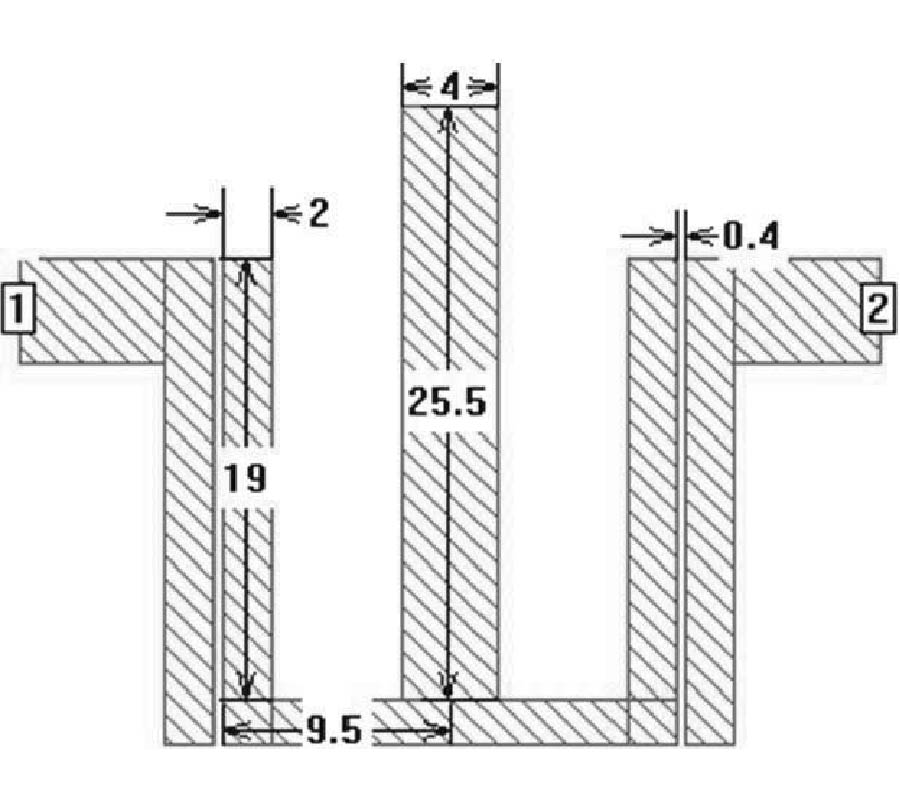
A planar hexa-band internal antenna designed for mobile phone applications is presented. The antenna occupying a small area of 45×12 mm2 is placed on the top no-ground portion of the system circuit board with a ground-plane size of 45×100 mm2. The design begins with constructing a meandered monopole. With a parasitic and an impedance-adjustment structure subsequently added, the resulting antenna can be viewed as a printed planar inverted-F antenna with a parasitic resonant element. Two wide impedance bands can be generated by the designed antenna to support GSM 850, GSM 900, DCS, PCS, UMTS, and 2.4-GHz WLAN operations. The measurement was found to agree reasonably well with the simulation. Design procedures and rules along with the design concepts behind are all presented in detail.
A COMPACT PLANAR HEXA-BAND INTERNAL ANTENNA FOR MOBILE PHONE
2010-08-25
PIER B
Vol. 25, 131-154
The Level Set Shape Reconstruction Algorithm Applied to 2D PEC Targets Hidden Behind a Wall
Mohammad Reza Hajihashemi and Magda El-Shenawee
The level set algorithm is extended to handle the reconstruction of the shape and location of objects hidden behind a dielectric wall. The Green's function of stratified media is used to modify the method of moments and the surface integral equation forward solver. Due to the oscillatory nature of the Sommerfeld integrals, the stationary phase approximation is implemented here to achieve fast and accurate reconstruction results, especially when the targets are located adequately far from the wall. Transverse Magnetic (TM) plane waves are employed for excitation with limited view for transmitting and receiving the waves in the far field at one side of the wall. The results show the capability of the level set method for retrieving the shape and location of multiple 2D PEC objects of arbitrary shapes even when there are located at a small distance from the wall. To reduce the computational expenses of the algorithm in the case of multiple hidden objects, the MPI parallelization technique is implemented leading to a reduction in the CPU time from hours on a single processor to few minutes using 128 processors on the NCSA Supercomputer Center.
THE LEVEL SET SHAPE RECONSTRUCTION ALGORITHM APPLIED TO 2D PEC TARGETS HIDDEN BEHIND A WALL
2010-08-25
PIER B
Vol. 25, 113-130
Performance Evaluation of Phase-Angle Gradient Method for Phase Retrieval Based on Low-Frequency Amplitude-Only Near-Field Data
Markus Johansson , Hoi-Shun Lui and Mikael Persson
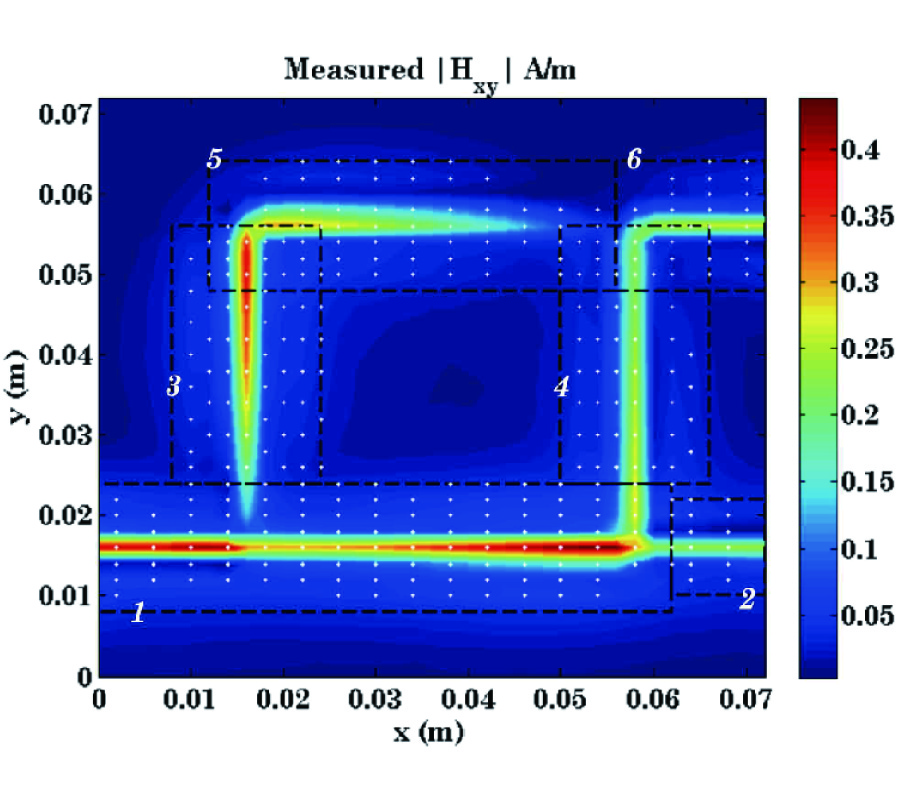
The Phase Angle Gradient Method (PAGM) is a recent technique developed for phase retrieval based on amplitude-only measurement data. Preliminary results have shown that the PAGM is able to perform phase retrieval at 100 MHz with accurate phase information based on measured field components on three planar surfaces. In this paper, a performance evaluation of the PAGM under different configurations is conducted. Phase retrieval based on field measurements for different plane sizes and separations between the planes are studied rigorously. In addition, the PAGM is tested for different initial phase distributions. The results show that the PAGM is capable of retrieving phase information even if the separation between the measurement planes is small in terms of wavelengths.
PERFORMANCE EVALUATION OF PHASE-ANGLE GRADIENT METHOD FOR PHASE RETRIEVAL BASED ON LOW-FREQUENCY AMPLITUDE-ONLY NEAR-FIELD DATA