Search Results(13901)

2009-06-22
PIER B
Vol. 15, 375-400
New Version of Twa Using Two-Dimensional Non-Uniform Fast Fourier Mode Transform (2D-Nuffmt) for Full-Wave Investigation of Microwave Integrated Circuits
Mohamed Ayari , Taoufik Aguili and Henri Baudrand
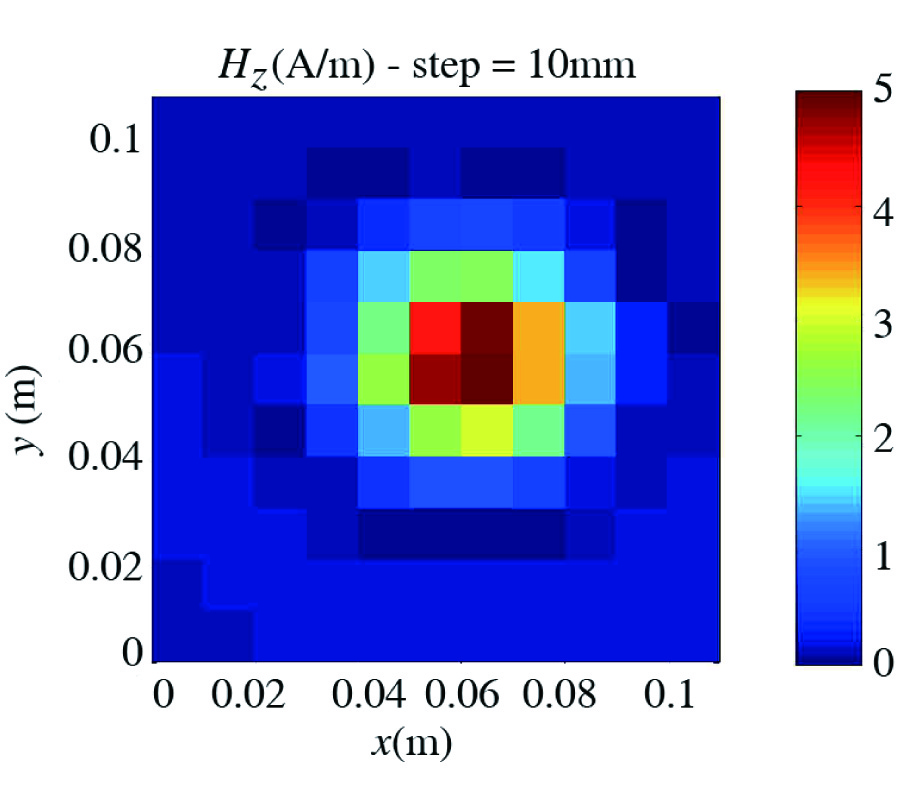
In this paper, a novel version of the transverse wave approach (TWA) based on two-dimensional non-uniform fast Fourier mode transform (2D-NUFFMT) is presented and developed for full-wave analysis of RF integrated circuits (RFICs). An adaptive mesh refinement is applied in this advanced TWA process and CPU computation time is evaluated throughout 30 GHz patch antenna, application belonging to wireless systems. The TWA in its novel version is favorably compared with the conventional one in presence of AMT technique in the context of EM simulations. Another version of TWA is outlined to illustrate a computationally efficient way to handle an arbitrary mesh for RFICs analysis with high complexity problems.
NEW VERSION OF TWA USING TWO-DIMENSIONAL NON-UNIFORM FAST FOURIER MODE TRANSFORM (2D-NUFFMT) FOR FULL-WAVE INVESTIGATION OF MICROWAVE INTEGRATED CIRCUITS
2009-06-19
PIER
Vol. 93, 275-289
A Metamaterial-Based E-Plane Horn Antenna
Ruey-Bing Hwang , Hung-Wang Liu and Cheng-Yuan Chin
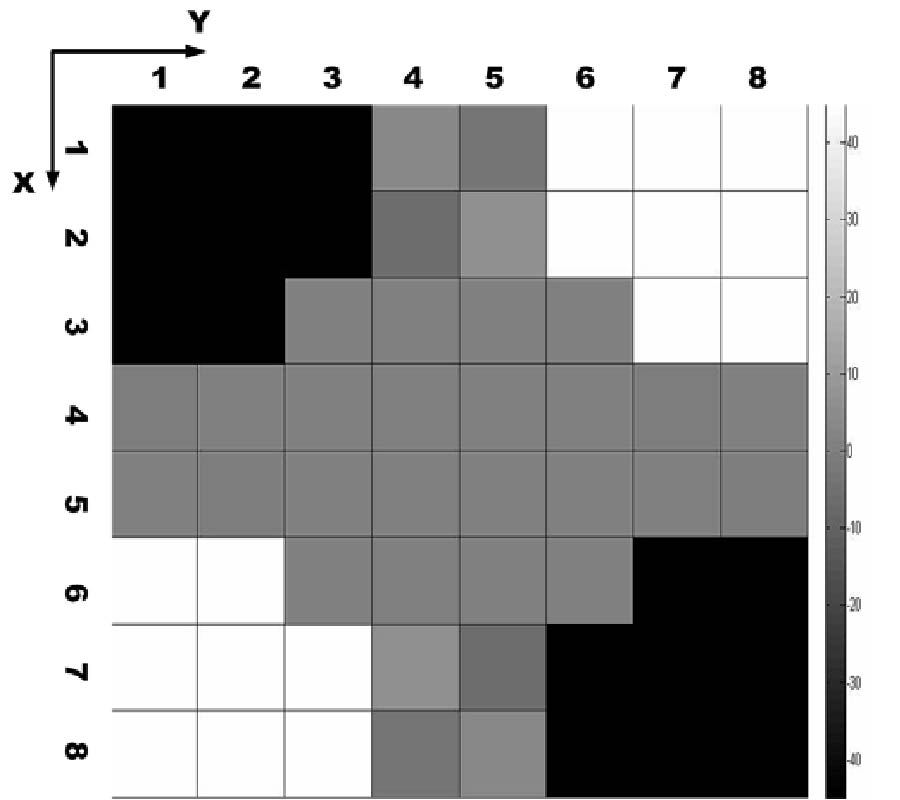
In this paper, we reported an E-plane horn antenna incorporating a metamaterial. Such a metamaterial is made up of metallic cylinders organized in a two-dimensional square lattice. After properly designing the lattice constant and unit cell pattern, we synthesized a medium with the effective refractive index smaller than unity. Therefore, once the waves were excited within the metamaterial, the refractive waves tend to be perpendicular to the interface between the metamaterial and uniform medium. Based on this concept, a 4-way beam splitter was designed to equally distribute the input power into 4 different directions. We then guide each of the power into individual E-plane flared opening to radiate a directional beam pattern in each sector. We have fabricated this antenna and measured its radiation characteristics including the return loss and far-field pattern. The excellent agreement between the measured and simulated results was obtained. Due to the properties of robust, low-loss, and low-cost, this antenna may have promising application in a point-to-multiple-point downlink system.
A METAMATERIAL-BASED E-PLANE HORN ANTENNA
2009-06-19
PIER Letters
Vol. 9, 93-100
New Approach to Design Digitally Tunable Optical Filter System for Wavelength Selective Switching Based Optical Networks
Anirudh Banerjee
A new approach to design digitally tunable optical filter system by using semiconductor optical amplifiers (SOAs) and Dense Wavelength Division Multiplexed (D.W.D.M.) thin film filter based wavelength selection elements is presented. The system designed with this approach is very easy to configure and expand, smaller in size, lesser in weight, cheaper in cost and consuming less power as compared to design suggested by other researchers recently.
NEW APPROACH TO DESIGN DIGITALLY TUNABLE OPTICAL FILTER SYSTEM FOR WAVELENGTH SELECTIVE SWITCHING BASED OPTICAL NETWORKS
2009-06-19
PIER Letters
Vol. 9, 85-91
Scattering Cross Section of a Meta-Sphere
Aris Alexopoulos
The scattering cross section of a meta-sphere is determined and comparison is made to a normal right-handed spherical dielectric scatterer. A meta-sphere is a term used for a sphere embedded inside a medium that gives effective doubly-negative permittivity and permeability. It is found that the scattering resonances can be manipulated via the meta-sphere parameters while the issue of reducing the scattering cross section to zero is examined.
SCATTERING CROSS SECTION OF A META-SPHERE
2009-06-19
PIER C
Vol. 8, 121-133
Analysis of an Injection-Locked Bistable Semiconductor Laser with the Frequency Chirping
Mahmoud Aleshams
Modifying the rate equations of an injection-locked semiconductor laser, we have analyzed its optical bistability with the effect of frequency chirping of injected light. Comparison between the bistable steady-state characteristics of the laser in two cases: with and without frequency chirping is done by studying the effect of parameters such as frequency detuning, carrier injection rate, and cavity length. Then we have made a comparison between the bistable dynamic characteristics of the laser for these two cases. The results of the analysis show that the effect of frequency chirping on the bistability behavior is negligible.
ANALYSIS OF AN INJECTION-LOCKED BISTABLE SEMICONDUCTOR LASER WITH THE FREQUENCY CHIRPING
2009-06-19
PIER C
Vol. 8, 107-120
Equilateral Triangular Microstrip Antenna for Circularly-Polarized Synthetic Aperture Radar
Merna Baharuddin , Victor Wissan , Josaphat Tetuko Sri Sumantyo and Hiroaki Kuze
An equilateral triangular microstrip antenna is proposed for circularly-polarized synthetic aperture radar (CP-SAR) systems operated in L-Band (1.27 GHz). For airborne application, a prototype antenna patch is designed, fabricated and tested. Electromagneticallycoupled, dual-feeding method is applied to generate the circularly-polarized wave radiating from the patch. The fabricated patch exhibits an axial ratio bandwidth (< 3 dB) of about 0.58% (7.4 MHz), which is consistent with the value of 0.57% (7.24 MHz) from the simulation.
EQUILATERAL TRIANGULAR MICROSTRIP ANTENNA FOR CIRCULARLY-POLARIZED SYNTHETIC APERTURE RADAR
2009-06-19
PIER B
Vol. 15, 347-373
Linear and Circular Array Optimization: A Study Using Particle Swarm Intelligence
Majid M. Khodier and Mohammad Al-Aqeel
Linear and circular arrays are optimized using the particle swarm optimization (PSO) method. Also, arrays of isotropic and cylindrical dipole elements are considered. The parameters of isotropic arrays are elements excitation amplitude, excitation phase and locations, while for dipole array the optimized parameters are elements excitation amplitude, excitation phase, location, and length. PSO is a high-performance stochastic evolutionary algorithm used to solve N-dimensional problems. The method of PSO is used to determine a set of parameters of antenna elements that provide the goal radiation pattern. The effectiveness of PSO for the design of antenna arrays is shown by means of numerical results. Comparison with other methods is made whenever possible. The results reveal that design of antenna arrays using the PSO method provides considerable enhancements compared with the uniform array and the synthesis obtained from other optimization techniques.
LINEAR AND CIRCULAR ARRAY OPTIMIZATION: A STUDY USING PARTICLE SWARM INTELLIGENCE
2009-06-19
PIER B
Vol. 15, 325-346
Charge Transport by a Pulse E-Wave in a Waveguide with Conductive Medium
Alexander Butrym and Maxim N. Legenkiy
An E-wave excites longitudinal conductivity currents in a waveguide filled with lossy medium. Total flow of this current through a cross-section is nonzero for odd E-modes; it means that some charge is transported by the pulse along the waveguide. This phenomenon is considered in the paper using analytical approach based on mode expansion of the fields in Time Domain (known as Mode Basis Method) and using Finite Difference in Time Domain method (FDTD). Volume conductivity charges being moved by the pulse wave are determined. In order to set the problem as much physically as possible we consider diffraction of a pulse E-wave on the boundary between a hollow waveguide and a waveguide with conductive medium. Behavior of the transient fields and surface charges at the interface are also examined. It is shown that an incident pulse wave excites a surface wave at the interface that results in transversal resonance with relaxation time much greater than that of the conductive medium. Characteristics of the travelling charge pulse wave are studied based on the obtained closed-form solution.
CHARGE TRANSPORT BY A PULSE E-WAVE IN A WAVEGUIDE WITH CONDUCTIVE MEDIUM
2009-06-19
PIER B
Vol. 15, 307-324
Patch Shape Influence Upon Radar Cross Section of a Cylindrical Microstrip Antenna
Alexander Svezhentsev and Volodymyr Vitalievich Kryzhanovskiy
The patch shape influence on the radar cross section (RCS) of a cylindrical microstrip antenna (CMA) is discussed. The RCS of the CMA is evaluated from a plane wave scattering problem solution to a cylindrical microstrip antenna. The method of moments is employed in the spectral domain using sub-domain basis functions. It is shown that the patch shape has a pronounced effect such that new resonance modes appear at frequencies substantially shifted towards the low-frequency end compared to a cylindrical rectangular patch.
PATCH SHAPE INFLUENCE UPON RADAR CROSS SECTION OF A CYLINDRICAL MICROSTRIP ANTENNA
2009-06-19
PIER B
Vol. 15, 285-306
Indoor Location Based on IEEE 802.11 Round-Trip Time Measurements with Two-Step NLOS Mitigation
Alfonso Bahillo Martinez , Santiago Mazuelas Franco , Javier Prieto Tejedor , Ruben Mateo Lorenzo Toledo , Patricia Fernandez Reguero and Evaristo Jose Abril
This paper presents a comprehensive location scheme in a rich multipath environment. It is based on the estimation of the distance between two wireless nodes in line-of-sight (LOS) from the best statistical estimator of the round-trip time (RTT), assuming a linear regression as the model that best relates this statistical estimator to the actual distance. As LOS cannot be guaranteed in an indoor environment, the effect of non-line-of-sight (NLOS) is mitigated by a two-step correction scheme. At a first step, the severe NLOS error is corrected from distance estimates applying the prior NLOS measurement correction (PNMC) method. At a second step, a new multilateration technique is implemented together with received signal strength (RSS) information to minimize the difference between the estimated position and the actual one. The location scheme coupled with measurements in a real indoor environment demonstrates that it outperforms the conventional time-based indoor location schemes using neither a tracking technique nor a previous calibration stage of the environment and no need for time synchronization between wireless nodes.
INDOOR LOCATION BASED ON IEEE 802.11 ROUND-TRIP TIME MEASUREMENTS WITH TWO-STEP NLOS MITIGATION
2009-06-18
PIER
Vol. 93, 255-274
Retrieving the Green's Function from Cross Correlation in a Bianisotropic Medium
Evert C. Slob and Kees Wapenaar
Development of theory and experiments to retrieve Green's functions from cross correlations of recorded wave fields between two receivers has grown rapidly in the last seven years. The theory includes situations with flow, mechanical and electromagnetic disturbances and their mutual coupling. Here an electromagnetic theory is presented for Green's function retrieval from cross correlations that incorporates general bianisotropic media, which is the most general class of linear media. In the presence of dispersive non-reciprocal media, the Green's function is obtained by cross correlating the recordings at two locations of fields generated by sources on a boundary. The only condition for this relation to be valid is that the medium is non-dissipative. The principle of bianisotropic Green's function retrieval by cross correlation is illustrated with a numerical example.
RETRIEVING THE GREEN'S FUNCTION FROM CROSS CORRELATION IN A BIANISOTROPIC MEDIUM
2009-06-18
PIER M
Vol. 7, 165-177
A New Integral Equation Formulation for Scattering of Electromagnetic Waves by 2D Conducting Structures, Using Cylindrical Harmonics
Nima Chamanara
Using cylindrical harmonics and Fourier series, a new integral equation formulation is derived for perfectly conducting 2D scattering problems. This new integral equation is based on the fact that, all of the electric and magnetic field components are zero inside a perfect electric conductor. The incident and scattered fields are expressed in the cylindrical coordinate system with respect to a common origin inside the scatterer, using the addition theorem for Bessel and Hankel functions. The resulting electric or magnetic field is set equal to zero for all the points inside the largest cylinder that is contained in and tangent to the surface of the scatterer. As a result the field point variables are eliminated from the integral equation and only the source points are present in this formulation. Therefore the size of the problem is reduced considerably. A dramatic improvement in the computation speed is seen compared to the classical method of moments. TE and TM scattering problems are considered and the integral equation formulation is derived and solved for both cases.
A NEW INTEGRAL EQUATION FORMULATION FOR SCATTERING OF ELECTROMAGNETIC WAVES BY 2D CONDUCTING STRUCTURES, USING CYLINDRICAL HARMONICS
2009-06-18
PIER B
Vol. 15, 267-283
Grounded Uniaxial Material Slabs as Magnetic Conductors
Olli Luukkonen , Constantin R. Simovski and Sergei Tretyakov
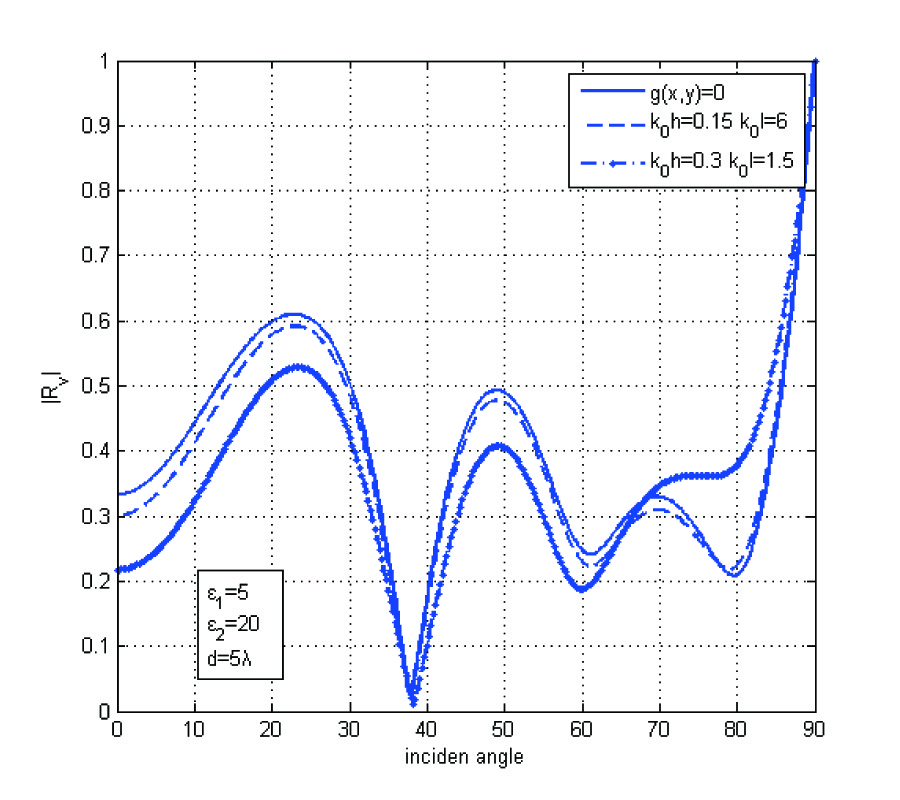
The objective of this paper is all-angle artificial magnetic conductor, i.e., artificial magnetic conductor that has stable magnetic-wall effect with respect to the incidence angle. Furthermore, we seek for a design that would be easy for manufacturing. In order to achieve this we use grounded uniaxial material slabs and we do not constrict ourselves to naturally available materials. Instead, we assume that the desired parameters can be synthesized using the emerging artificial electromagnetic materials. It is found that it is possible to have an all-angle magnetic-wall effect for both TE and TM polarization. Especially for the TM fields the structure would be easily manufacturable. The proposed structure has similar appearance as more well-known artificial impedance surfaces, but the design parameters and the physical properties behind the magnetic wall effect are novel. The performance of the proposed artificial magnetic conductor is verified with numerical simulations. This paper introduces a new approach how to obtain a magnetic-wall effect. It is possible to use this this approach also together with other ways of obtaining the magnetic-wall effect for dual-band operation.
GROUNDED UNIAXIAL MATERIAL SLABS AS MAGNETIC CONDUCTORS
2009-06-15
PIER
Vol. 93, 237-254
Grey Prediction Based Particle Filter for Maneuvering Target Tracking
Jun-Feng Chen , Zhi-Guo Shi , Shao-Hua Hong and Kang Chen
For maneuvering target tracking, we propose a novel grey prediction based particle filter (GP-PF), which incorporates the grey prediction algorithm into the standard particle filter (SPF). The basic idea of the GP-PF is that new particles are sampled by both the state transition prior and the grey prediction algorithm. Since the grey prediction algorithm is a kind of model-free method and is able to predict the system state based on historical measurements other than establishing a priori dynamic model, the GP-PF can significantly alleviate the sample degeneracy problem which is common in SPF, especially when it is used for maneuvering target tracking. Simulations are conducted in the context of two typical maneuvering motion scenarios and the results indicate that the overall performance of the proposed GP-PF is better than the SPF and the multiple model particle filter (MMPF) when the tracking accuracy, computational complexity and tracking lost probability are considered. The performance improvements can be attributed to that the GP-PF has both model-based and model-free features.
GREY PREDICTION BASED PARTICLE FILTER FOR MANEUVERING TARGET TRACKING
2009-06-15
PIER B
Vol. 15, 245-465
Application of Neural Network with Error Correlation and Time Evolution for Retrieval of Soil Moisture and Other Vegetation Variables
Dharmendra Singh , Vandita Srivastava , Basant Pandey and Devesh Bhimsaria
Present paper utilizes the time evolution for estimating the soil moisture and vegetation parameter with Radar remote sensing data. For this purpose, vegetation ladyfinger has been taken as a test field and experimental observations have been taken by bistatic scatterometer at X-band in the regular interval of 10 days for both like polarization (i.e., Horizontal-Horizontal, HH-; Vertical-Vertical, VV-) and at different incidence angles. At this interval, all the vegetation parameters and scattering coefficient have been recorded and computed. Three similar types of field of size 5 x 5 m have been especially prepared for this purpose. The observed data is critically analyzed to understand the effect of incidence angle and polarization effect on scattering coefficient of the ladyfinger. It is observed that VV-polarization gives better result than HH-polarization and incidence angle 55ο is the best suited to observe composite effect of vegetation ladyfinger biomass (Bm) and vegetation covered soil moisture at X-band. This analysis is further used for retrieval of soil moisture and biomass of ladyfinger using Neural Network. The important aspect of the retrieval algorithm is that it includes the time evolution. The retrieval results for soil moisture and Bm are in good agreement with the actual values of the soil moisture and biomass.
APPLICATION OF NEURAL NETWORK WITH ERROR CORRELATION AND TIME EVOLUTION FOR RETRIEVAL OF SOIL MOISTURE AND OTHER VEGETATION VARIABLES
2009-06-13
PIER
Vol. 93, 221-236
Composite Compact Triple-Band Microstrip Antennas
Majeed Alkanhal
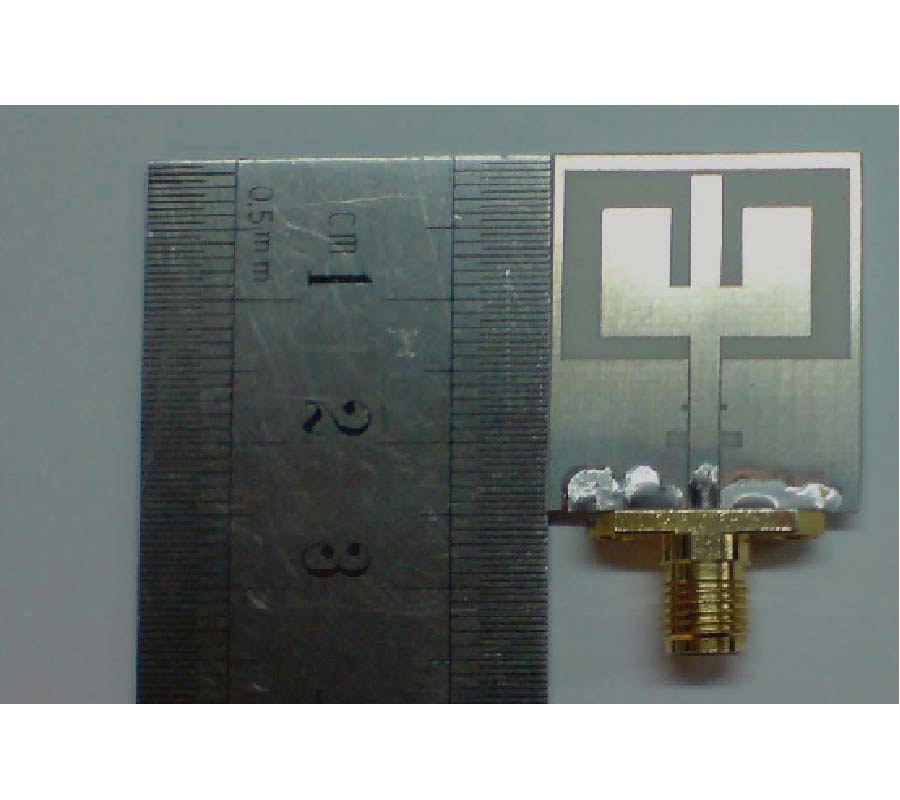
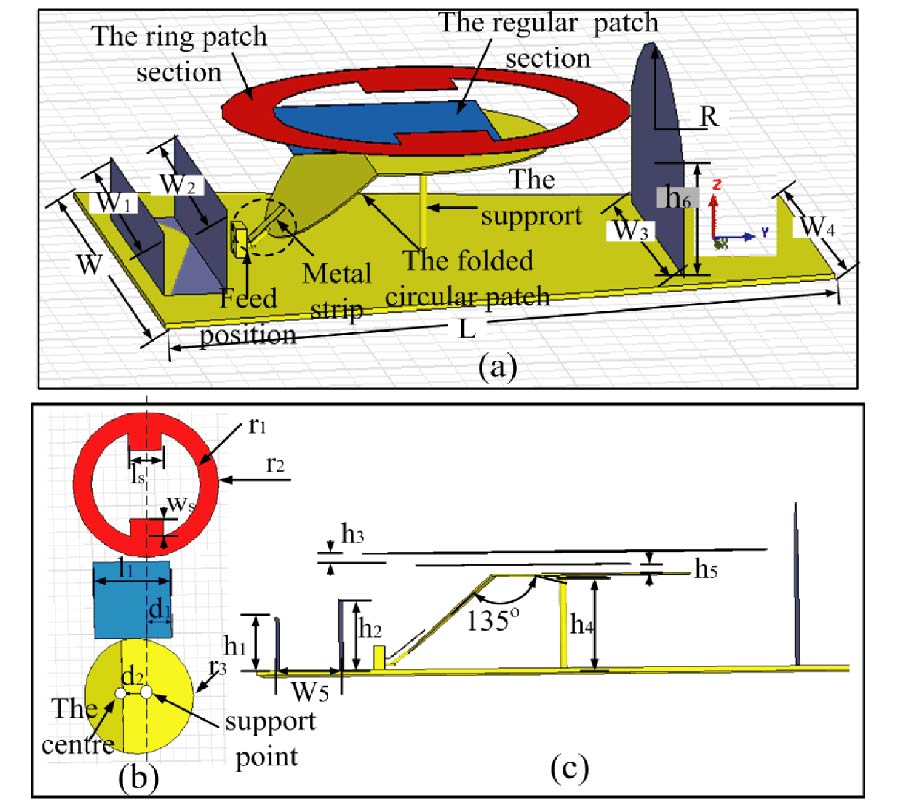
Two new triple band small size composite-resonator microstrip antenna configurations for wireless communications are presented in this paper. The proposed antennas, each is built of three resonant elements. Two types of compact short-circuited resonators are used; stepped impedance and quarter-wave resonators. The design procedure based on composing the antenna resonators is straightforward and can be applied to design any triple band antenna at three pre-specified bands using simple relations and design curves. The resonator integration has been performed to maintain single feed, reduce the overall antenna size, and preserve the quality-performance at each band. The two designed antennas are simulated, optimized, and realized on RT-Duroid substrate to verify the concept. Simulation and experimental results are in good agreement and demonstrate the performance of both triple band compact antennas.
COMPOSITE COMPACT TRIPLE-BAND MICROSTRIP ANTENNAS
2009-06-13
PIER
Vol. 93, 205-219
Quasi-Optical Bessel Resonator
Yan-Zhong Yu and Wen-Bin Dou
In this paper, a quasi-optical Bessel resonator (QOBR) for generating approximations to Bessel-type modes at millimeter wavelengths have been designed and analyzed. A design approach is based on the quasi-optical techniques. In order to analyze the designed QOBR rigorously, a new method based on iterative Stratton-Chu formula (ISCF) is developed from the classical Fox-Li algorithm. And its validity is demonstrated. Numerical results reveal that at the output plane the intensity distributions of the Bessel-type modes of the QOBR are modulated by a bell-shaped envelope, and their phase patterns have a block-shaped profile except slight distortion on the edges of the element due to aperture diffraction. The effect of varying the parameters of the designed QOBR on the relevant output characteristics is also examined in our study.
QUASI-OPTICAL BESSEL RESONATOR
2009-06-13
PIER
Vol. 93, 189-203
Thickness-Independent Complex Permittivity Determination of Partially Filled Thin Dielectric Materials into Rectangular Waveguides
Ugur Cem Hasar
A microwave method has been proposed for accurate complex permittivity measurement of thin dielectric materials partially filling the waveguide. The method employs propagation constant measurements at two locations of the sample inside its holder. It increases the accuracy of permittivity measurements of similar methods in the literature since it utilizes the measurements of the distances between the inner waveguide walls and sample lateral surfaces instead of directly measuring the sample thickness. It has been validated by comparing the measured complex permittivity of a thin Plexiglas sample by the proposed method with that of the method in the literature.
THICKNESS-INDEPENDENT COMPLEX PERMITTIVITY DETERMINATION OF PARTIALLY FILLED THIN DIELECTRIC MATERIALS INTO RECTANGULAR WAVEGUIDES
2009-06-13
PIER
Vol. 93, 177-188
X-Band Miniaturized Wideband Bandpass Filter Utilizing Multilayered Microstrip Hairpin Resonator
Helmi Adam , Alyani Ismail , Mohd Adzir Mahdi , Mohammad Shahrazel Razalli , Adam Reda Hasan Alhawari and Babak Kazemi Esfeh
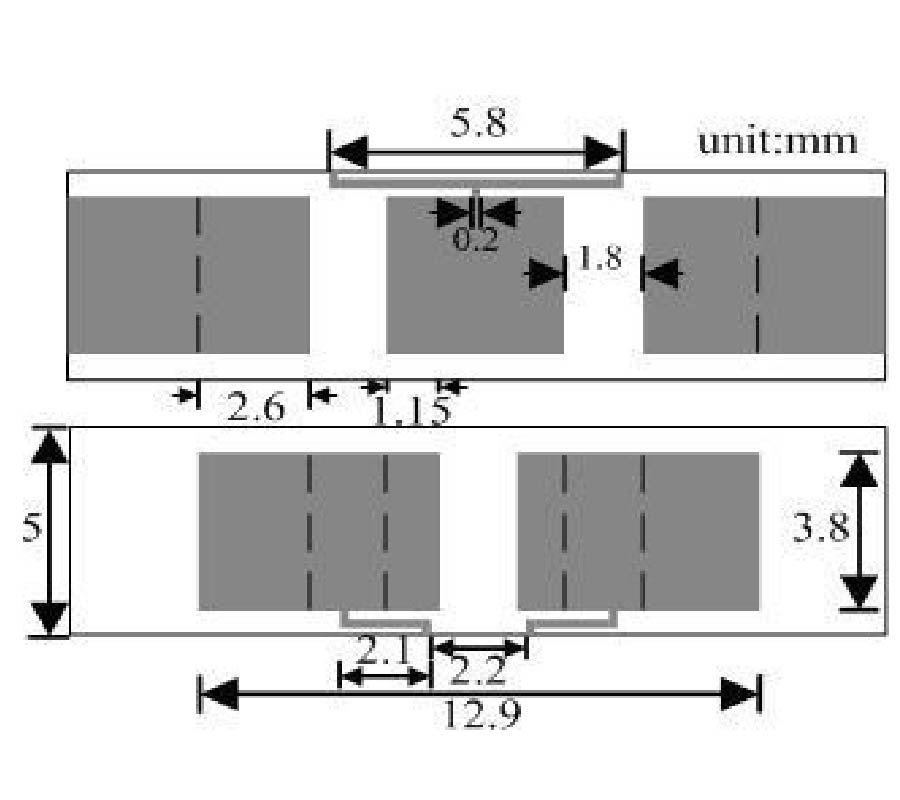
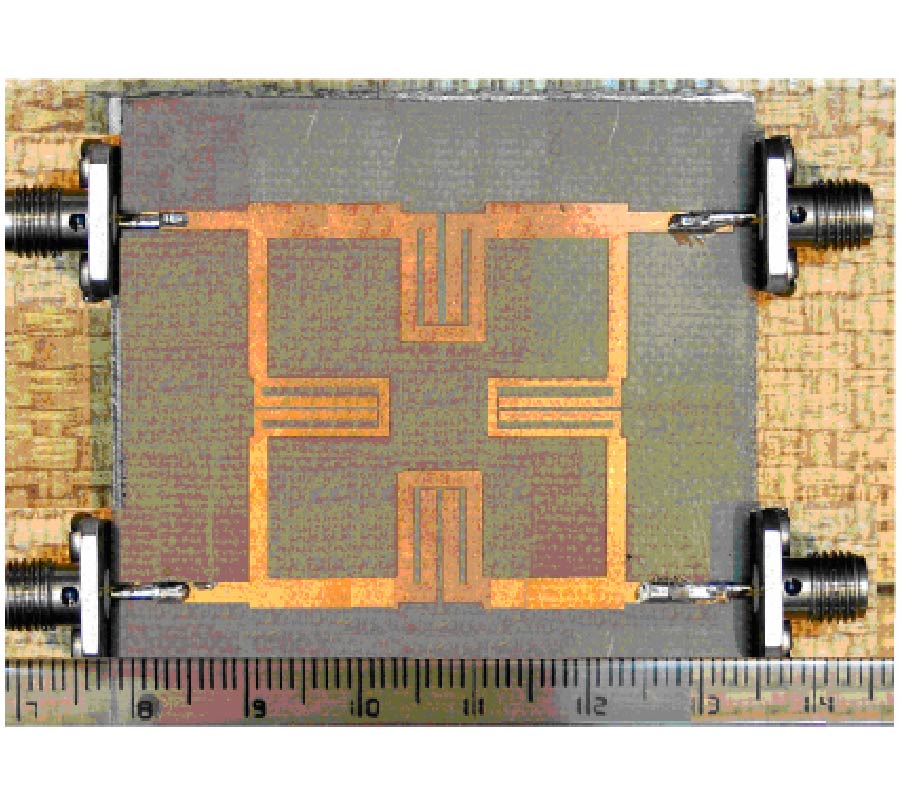
This paper presents a new design of miniaturized wideband bandpass filter using microstrip hairpin in multilayer configuration for X-band application. The strong coupling required for wideband filter is realized by arranging five hairpin resonators in two layers on different dielectric substrates. Since adjacent resonator lines are placed at different levels, there are two possible ways to change coupling strength by varying the overlapping gap between two resonators; vertically and horizontally. In this paper, simulated and measured result for a wideband filter of 4.4 GHz bandwidth at 10.2 GHz center frequency with fifth order Chebyshev response is proposed. The filter is fabricated on 0.254 mm thickness R/T Duroid 6010 and R/T Duroid 5880 with dielectric constant 10.2 and 2.2 respectively using standard photolithography technique. Two filter configurations based on vertical (Type 1) and horizontal (Type 2) coupling variation to optimize the coupling strength are presented and compared. Both configurations produce very small and compact filter size, at 5.0 x 14.6 mm2 and 3.2 x 16.1 mm2 for the first and second proposed filter type respectively. The measured passband insertion losses for both filters are less than 2.3 dB and the passband return loss is better than -16 dB for filter Type 1 and -13 dB for filter Type 2. Very small and compact filter is achieved where measured results show good agreement with the simulated responses.
X-BAND MINIATURIZED WIDEBAND BANDPASS FILTER UTILIZING MULTILAYERED MICROSTRIP HAIRPIN RESONATOR
2009-06-13
PIER
Vol. 93, 161-176
A New Microwave Method Based on Transmission Scattering Parameter Measurements for Simultaneous Broadband and Stable Permittivity and Permeability Determination
Ugur Cem Hasar
A new microwave method has been proposed for simultaneous broadband and stable complex permittivity and complex permeability determination of magnetic and nonmagnetic materials. The method utilizes complex transmission scattering measurements at different frequencies. For a change in constitutive parameters determination, we considered zero-order and higher-order approximations. We have verified the proposed method from measurements of two medium- and low-loss materials with another method and available reference data in the literature.
A NEW MICROWAVE METHOD BASED ON TRANSMISSION SCATTERING PARAMETER MEASUREMENTS FOR SIMULTANEOUS BROADBAND AND STABLE PERMITTIVITY AND PERMEABILITY DETERMINATION