Search Results(13807)

2008-05-09
PIER C
Vol. 3, 169-182
Microwave Characterization of Dielectric Materials Using Bayesian Neural Networks
Hulusi Acikgoz , Yann Le Bihan , Olivier Meyer and Lionel Pichon
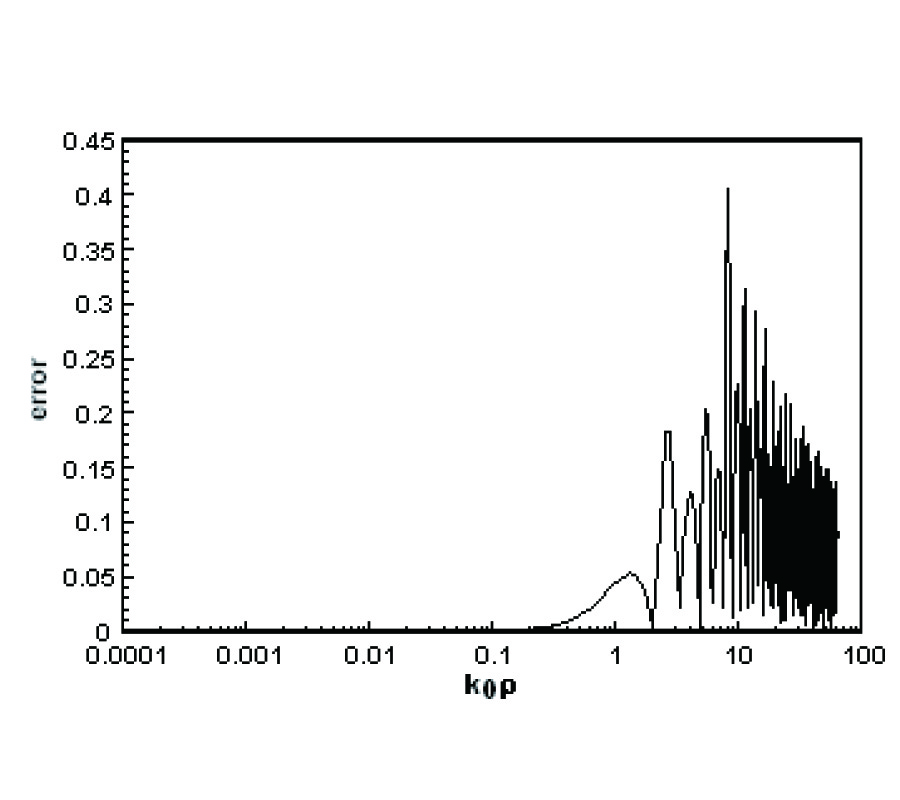
This paper shows the efficiency of neural networks (NN), coupled with the finite element method (FEM), to evaluate the broadband properties of dielectric materials. A characterization protocol is built to characterize dielectric materials and NN are used in order to provide the estimated permittivity. The FEM is used to create the data set required to train the NN. A method based on Bayesian regularization ensures a good generalization capability of the NN. It is shown that NN can determine the permittivity of materials with a high accuracy and that the Bayesian regularization greatly simplifies their implementation.
MICROWAVE CHARACTERIZATION OF DIELECTRIC MATERIALS USING BAYESIAN NEURAL NETWORKS
2008-05-08
PIER
Vol. 83, 43-54
Resistances and Inductances Extraction Using Surface Integral Equation with the Acceleration of Multilevel Green Function Interpolation Method
Zhao Peng and Hao-Gang Wang
In this paper, we consider the resistances and inductances extraction from finite conducting metals. To remedy the weakness of volume integral equation, we extend the usage of a surface integral equation method from analyzing finite conducting rectangular wire strip to analyzing arbitrarily shaped geometry. Moreover the multilevel Green function method (MLGFIM) with a complexity of O(N) is employed to accelerate the matrix-vector multiplications in iterations. The numerical results shows the efficacy of the proposed method.
RESISTANCES AND INDUCTANCES EXTRACTION USING SURFACE INTEGRAL EQUATION WITH THE ACCELERATION OF MULTILEVEL GREEN FUNCTION INTERPOLATION METHOD
2008-05-08
PIER
Vol. 83, 25-42
Focusing of Electromagnetic Plane Wave into Uniaxial Crystal by a Three Dimensional Plano Convex Lens
Abdul Ghaffar and Qaisar Abbas Naqvi
A three dimensional plano-convex lens which is placed at a certain distance from a plane uniaxial interface has been considered. High frequency fields refracted by the geometry are derived. The treatment is based on Maslov's method. The method combines the simplicity of asymptotic ray theory and generality of the transform method to remedy the problem of geometrical optics around the caustic point of a focusing system. Field patterns are obtained which includes the observation points around the caustic region. The results are found in good agreement with obtained using Huygens-Kirchhoff Principle.
FOCUSING OF ELECTROMAGNETIC PLANE WAVE INTO UNIAXIAL CRYSTAL BY A THREE DIMENSIONAL PLANO CONVEX LENS
2008-05-08
PIER
Vol. 83, 13-24
A New Link-Level Simulation Procedure of Wideband MIMO Radio Channel for Performance Evaluation of Indoor WLANs
Mahdi Roozbahani , Esrafil Jedari and Amir Shishegar
Inspired by the requirement of proper link simulation methods in performance analysis of communication systems, we present in this paper a recipe for channel implementation in simulation environments. Our focus here is the indoor applications of wireless local-area networks (WLANs). Specifically, we describe a procedure that beginning with statistical description of the channel impulse response leads to an efficient multi-input multi-output (MIMO) channel simulating method for arbitrary antenna configurations at both ends. A sample set of distributions for model parameters are also provided at the 5-GHz band, which is the operating frequency band of IEEE 802.11a, HIPERLAN/2, and the emerging IEEE 802.11n standards, and the corresponding software implementation of the simulator is addressed for public use.
A NEW LINK-LEVEL SIMULATION PROCEDURE OF WIDEBAND MIMO RADIO CHANNEL FOR PERFORMANCE EVALUATION OF INDOOR WLANS
2008-05-08
PIER
Vol. 83, 1-11
A Novel Dual Band Transmitter Using Microstrip Defected Ground Structure
Xiao-Qun Chen , Xiao-Wei Shi , Yu-Chun Guo and Min-Xiao Xiao
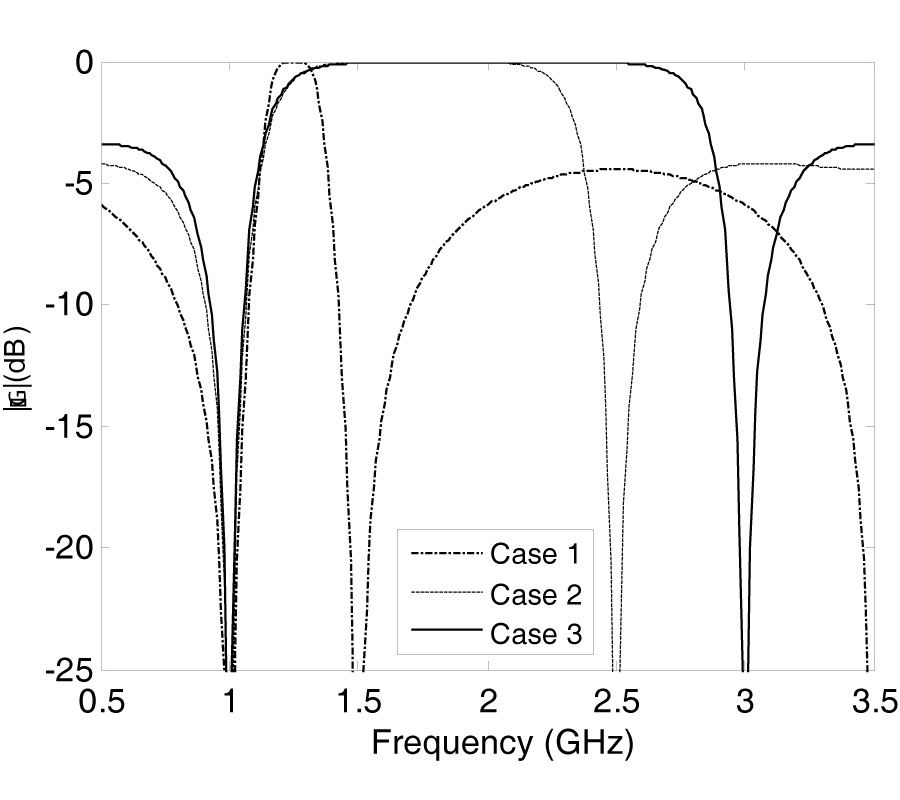
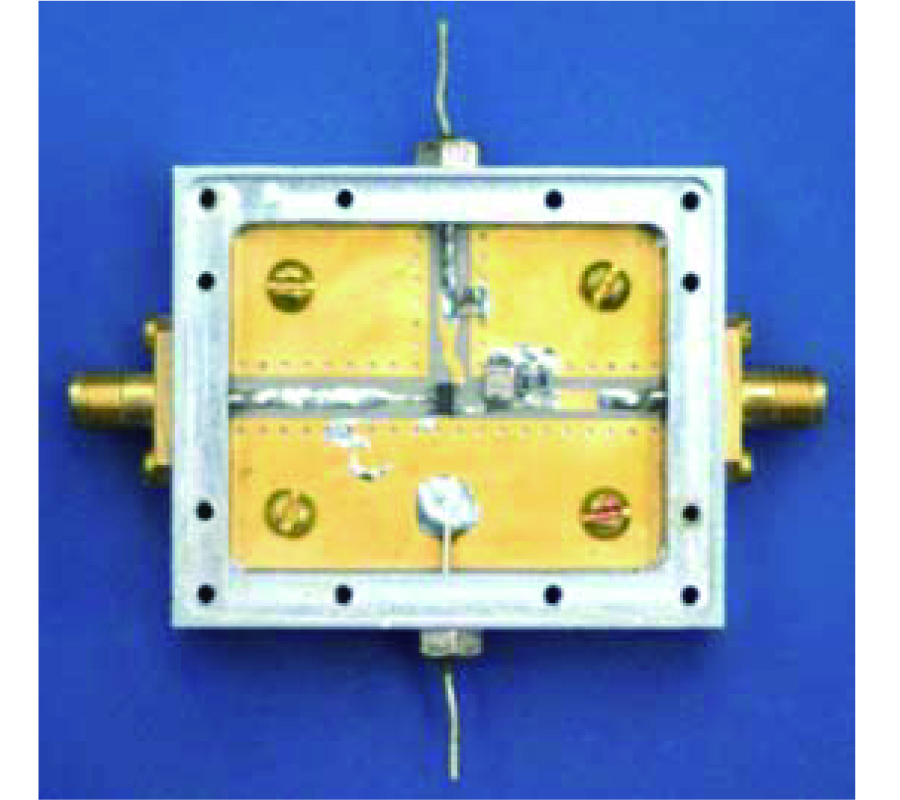
This paper presented a novel dual band transmitter which operates as power amplifier or frequency doubler with the stop band characteristic of defected ground structure (DGS). It works as a power amplifier at 2.4GHz which satisfies the 802.11b/g wireless LAN standard or performs as an active frequency doubler at 6.8GHz which depends on the input frequency and. The equivalent circuit and the stop band characteristic of the proposed microstrip DGS are analyzed and simulated. For the proposed transmitter, second harmonic suppression is below -52.6dBc in the amplifier mode, and fundamental suppression is below -41dBc in the frequency doubler mode with the stop band characteristic of DGS. The designed transmitter used GaAs InGaP Heterojunction broadband MMIC. It achieves 13.7dBm of P1dB and its gain is 16.5dB in amplifier mode, and its maximum output power is 7.8dBm at 6.8GHz in frequency double mode.
A NOVEL DUAL BAND TRANSMITTER USING MICROSTRIP DEFECTED GROUND STRUCTURE
CHARACTERISTIC BASIS FUNCTION METHOD FOR ITERATION-FREE SOLUTION OF LARGE METHOD OF MOMENTS PROBLEMS
2008-05-07
PIER B
Vol. 6, 295-306
Propagation of Waves in a Bifurcated Cylindrical Waveguide with Wall Impedance Discontinuity
Alinur Buyukaksoy , Ahmet Demir and Feray Hacivelioglu
In the present work the radiation of sound from a bifurcated circular waveguide formed by a semi-infinite rigid duct inserted axially into a larger infinite tube with discontinuous wall impedance is reconsidered through an alternative approach which consists of using the mode matching technique in conjunction with the Wiener-Hopf method. By expressing the total field in the appropriate waveguide region in terms of normal modes and using the Fourier transform technique elsewhere, we end up with a single modified Wiener-Hopf equation whose solution involves an infinite system of algebraic equations. This system is solved numerically and the influence of some parameters on the radiation phenomenon is shown graphically. The equivalence of the direct method described in [1] and the present mixed method are shown numerically.
PROPAGATION OF WAVES IN A BIFURCATED CYLINDRICAL WAVEGUIDE WITH WALL IMPEDANCE DISCONTINUITY
2008-05-07
PIER B
Vol. 6, 267-294
Plane Wave Diffraction by a Finite Parallel-Plate Waveguide with Four-Layer Material Loading: Part II - the Case of h Polarization
Er-Hao Shang and Kazuya Kobayashi
The diffraction by a finite parallel-plate waveguide with four-layer material loading is rigorously analyzed by means of the Wiener-Hopf technique for the H-polarized plane wave incidence. Taking the Fourier transform for the unknown scattered field as well as the Helmholtz equation and applying boundary conditions in the transform domain, the problem is formulated in terms of the simultaneous Wiener-Hopf equations. The Wiener-Hopf equations are solved via the factorization and decomposition procedure together with the use of rigorous approximation procedures leading to an efficient approximation solution. The scattered field in the real space is evaluated explicitly by taking the inverse Fourier transform. Illustrative numerical examples on the radar cross section (RCS) are presented and the far field scattering characteristics of the waveguide are discussed.
PLANE WAVE DIFFRACTION BY A FINITE PARALLEL-PLATE WAVEGUIDE WITH FOUR-LAYER MATERIAL LOADING: PART II - THE CASE OF H POLARIZATION
2008-05-07
PIER B
Vol. 6, 1-36
Plane Wave Diffraction by a Finite Parallel-Plate Waveguide with Four-Layer Material Loading: Part I - the Case of E Polarization
Jian-Ping Zheng and Kazuya Kobayashi
The plane wave diffraction by a finite parallel-plate waveguide with four-layer material loading is rigorously analyzed for the case of E polarization using the Wiener-Hopf technique. Introducing the Fourier transform for the scattered field and applying boundary conditions in the transform domain, the problem is formulated in terms of the simultaneous Wiener-Hopf equations, which are solved via the factorization and decomposition procedure together with a rigorous asymptotics. The scattered field is evaluated explicitly by taking the inverse Fourier transform and applying the saddle point method. Representative numerical examples of the radar cross section (RCS) are shown for various physical parameters and the far field scattering characteristics are discussed in detail.
PLANE WAVE DIFFRACTION BY A FINITE PARALLEL-PLATE WAVEGUIDE WITH FOUR-LAYER MATERIAL LOADING: PART I - THE CASE OF E POLARIZATION
2008-05-06
PIER B
Vol. 7, 299-307
Periodicity Defect Influence on the Electromagnetic Properties of a Sequence with BI-Isotropic Layers
Vladimir Tuz and Vadim Kazanskiy
A series of N identical periods of pairs of isotropic and biisotropic layers with defect in j-th basic element is investigated. The universal method that simultaneously allows to taking into account different types of defects in the structure is proposed. The problem is solved using the circuit theory and the transfer matrix methods. The analysis of the dynamic of electromagnetic properties of the investigated structure was carried out for different types of defects.
PERIODICITY DEFECT INFLUENCE ON THE ELECTROMAGNETIC PROPERTIES OF A SEQUENCE WITH BI-ISOTROPIC LAYERS
2008-05-06
PIER M
Vol. 2, 153-165
DESIGN OF L-BAND HIGH SPEED PULSED POWER AMPLIFIER USING LDMOS FET
2008-05-04
PIER Letters
Vol. 3, 187-195
Resonant Length Calculation and Radiation Pattern Synthesis of Longitudinal Slot Antenna in Rectangular Waveguide
Moutusi Mondal and Ajay Chakraborty
Main intension is to calculate admittance and radiation pattern of longitudinal shunt slot in rectangular waveguide using Method of Moments (MoM) technique. Resonant length calculation of the slot is a critical parameter in the design of waveguide slot array antenna. All computed results are compared with simulated results. CST Microwave studio is used for the simulation and is totally based on FIT techniques. For computation purpose MATLAB 7.0 is used. The numerical data on transmission and reflection coefficient are evaluated. Method of moment solution is used to calculate resonant length versus slot offset for given waveguide dimension and frequency. E and H field radiation pattern are calculated for different offset in different frequencies.
RESONANT LENGTH CALCULATION AND RADIATION PATTERN SYNTHESIS OF LONGITUDINAL SLOT ANTENNA IN RECTANGULAR WAVEGUIDE
2008-05-04
PIER C
Vol. 3, 161-167
L-Probe Fed Circular Polarized Wideband Planar Patch Antenna on Cylindrical Structure
Mojaba Pirai and Hamid Reza Hassani
In this paper, the characteristics of an L probe fed planar rectangular patch antenna mounted on a cylindrical surface for circular polarization is investigated. To obtain a large bandwidth an L probe feed is used which is in the shape of a fork attached to a coaxial cable and is placed under a corner of the patch antenna. Simulation results, obtained via HFSS, on the return loss and radiation pattern of the antenna for circular polarization are presented. Results show an impedance bandwidth of 74.6%, an average gain of 7.5 dBi with stable radiation patterns across the entire passband and a bandwidth of 58% for AR< 3 dB.
L-PROBE FED CIRCULAR POLARIZED WIDEBAND PLANAR PATCH ANTENNA ON CYLINDRICAL STRUCTURE
2008-04-30
PIER C
Vol. 2, 233-241
An Efficient Technique for Reducing Papr of OFDM System in the Presence of Nonlinear High Power Amplifier
Hefdhallah Sakran , Mona Mohammed Shokair and Atef Elazm
Peak to Average Power Ratio (PAPR) is one of the serious problems in any wireless communication system using multi carrier modulation technique like OFDM, which reduces the efficiency of the transmit high power amplifier. In this paper, proposed scheme will be introduced that combine interleaving method with peak windowing. Simulation results show that our technique simultaneously decrease Bit Error Rate (BER), reduce the PAPR by 3.5 dB and improve out-of- band radiation, in presence of nonlinear power amplifier model.
AN EFFICIENT TECHNIQUE FOR REDUCING PAPR OF OFDM SYSTEM IN THE PRESENCE OF NONLINEAR HIGH POWER AMPLIFIER
2008-04-29
PIER B
Vol. 7, 281-297
Class of Electromagnetic BI-Quadratic (Bq) Media
Ismo Veikko Lindell
Electromagnetic fields and media can be compactly represented by applying the four-dimensional differential-form formalism. In particular, classes of linear (bi-anisotropic) media can be defined in terms of the medium dyadic mapping between the electromagnetic two-forms. As a continuation to the process started by medium dyadics satisfying linear and quadratic algebraic equations, the class of biquadratic (BQ) media is defined by requiring that the medium dyadics satisfy the bi-quadratic algebraic equation. It is shown that the corresponding four three-dimensional medium dyadics are required to satisfy only two dyadic conditions. After studying general properties of BQ media, a special case is analyzed in detail as an example.
2008-04-29
PIER C
Vol. 3, 143-160
FDTD Hard Source and Soft Source Reviews and Modifications
Mojtaba Mansourabadi and Ali Pourkazemi
We intend to study two kinds of sources known as Hard Source and Soft Source, which are the simplest kinds of sources used in FDTD. We introduce an exact method to control the direction of propagation of a plane wave which can be either a hard source or soft source. Also we show that a simple implementation of a soft source in the Yee algorithm causes an undesired propagation which can result in incorrect answers. To remove this error we suggest a method for different kinds of sources and modes.
FDTD HARD SOURCE AND SOFT SOURCE REVIEWS AND MODIFICATIONS
2008-04-28
PIER B
Vol. 7, 265-280
A Cwa-Based Detection Procedure of a Perfectly-Conducting Cylinder Buried in a Dielectric Half-Space
Fabrizio Frezza , Pasquale Martinelli , Lara Pajewski and Giuseppe Schettini
The electromagnetic scattering problem of a short-pulse plane wave by a perfectly-conducting circular cylinder, buried in a dielectric half-space, is solved by means of a cylindrical-wave approach (CWA). The incident plane wave may have a rather general shape in the time domain. The technique is applicable for arbitrary polarization, or any cylinder size and burial depth, and it gives results both in the near- and in the far-field regions. In this work, an application of the technique to a basic but practical detection problem is presented, showing good results.
A CWA-BASED DETECTION PROCEDURE OF A PERFECTLY-CONDUCTING CYLINDER BURIED IN A DIELECTRIC HALF-SPACE
2008-04-28
PIER B
Vol. 7, 257-264
Subwavelength Diffractive Photonic Crystal Lens
Igor Minin , Oleg Minin , Yevgeny Triandaphilov and Victor Kotlyar
We designed two type binary 2D subwavelength (wavelength was λ = 10mm) focus diffractive photonic crystal lens and calculated the diffraction of plane TE-wave by use FDTD-method (our program in C++). It has been shown that diffractive photonic crystal lens designs have not an unique solution. Diameter lens was in 5 times more than her width and full width half maximum diameter of focal spot was 0.48λ.
SUBWAVELENGTH DIFFRACTIVE PHOTONIC CRYSTAL LENS
2008-04-28
PIER B
Vol. 7, 245-255
Waveguide as a Near-Field Measuring Probe of the Two-Element Array Radiator
Paramesha and Ajay Chakraborty
In the analysis, an open-ended rectangular waveguide in an infinite ground plane is used as a near-field probe and the two-element waveguide array in an infinite ground plane is used as a radiator. Moment method analysis is used to find the reflection coefficient of the array element and probe voltage. The reflection coefficient of the array element, which is also an open-end of a rectangular waveguide, is computed and compared with the reflection coefficients, when the probe is at different positions in the near-field. The computations have also been carried out to find the induced probe voltage, when the probe scan in transverse plane (planar scanning) at a distance z1 from the radiator. Good agreement is obtained between measured and MOM results.
WAVEGUIDE AS A NEAR-FIELD MEASURING PROBE OF THE TWO-ELEMENT ARRAY RADIATOR
2008-04-26
PIER B
Vol. 7, 223-244
Some Far Field Features of Cylindrical Microstrip Antenna on an Electrically Small Cylinder
Alexander Svezhentsev
The far field behavior of a small wave size cylindrical microstrip antenna (CMA) has been originally analyzed for a small elevation angle, where a pronounced maximum has been found. Also it has been found that a similar maximum takes place in the far field of an electric dipole taken instead of the patch. It has been shown that the phenomenon originates to the far field behavior of the annular electric current given in the form of n = 1 azimuthally traveling wave harmonic held in the series representation of the electric dipole field. Approximate analytical expressions have been obtained describing the far-field components for two different polarizations. Also, the CMA radiation pattern is shown to bear similarities to the pattern of an electric dipole placed on a dielectric substrate surrounding a circular metal cylinder.
SOME FAR FIELD FEATURES OF CYLINDRICAL MICROSTRIP ANTENNA ON AN ELECTRICALLY SMALL CYLINDER