Search Results(13979)

2008-01-15
PIER B
Vol. 4, 79-99
Unified Derivation of the Translational Addition Theorems for the Spherical Scalar and Vector Wave Functions
Tommi Dufva , Jukka Sarvas and Johan Sten
The translational addition theorems for the spherical scalar and vector wave functions are derived in a novel, unified way based on the simple and well-known concepts of the radiation and incoming wave patterns. This approach makes the derivation simpler and more transparent compared to the previous approaches. As a result, we also obtain alternative and partly simpler expressions for the translation coefficients in the vector case.
2008-01-15
PIER B
Vol. 4, 67-77
The Calculation of Angular Side-Play Amount Produced by Radiation Pressure Acting on the Space Object
Yan-Qun Zhang and Zhen-Sen Wu
In this paper, the angular side-play amount created by radiation pressure acting on active space object has been detailed investigated based on the physical optics, and the results are compared with the results by Mie theory; the correctness of the physical optics model is validated. The curves of angular side-play amount varied with the energy density of incident wave, mass of the object, and the angular between the direction of incident wave and initial velocity of the space etc. Using the results having been calculated, we analyzed the detectable conditions of angular side-play amount. A new method, which identifies different active object in space, has been taken out.
THE CALCULATION OF ANGULAR SIDE-PLAY AMOUNT PRODUCED BY RADIATION PRESSURE ACTING ON THE SPACE OBJECT
2008-01-15
PIER B
Vol. 4, 41-66
Analytical Study of the Interaction Structure of Vane-Loaded Gyro-Traveling Wave Tube Amplifier
Ghanshyam Singh
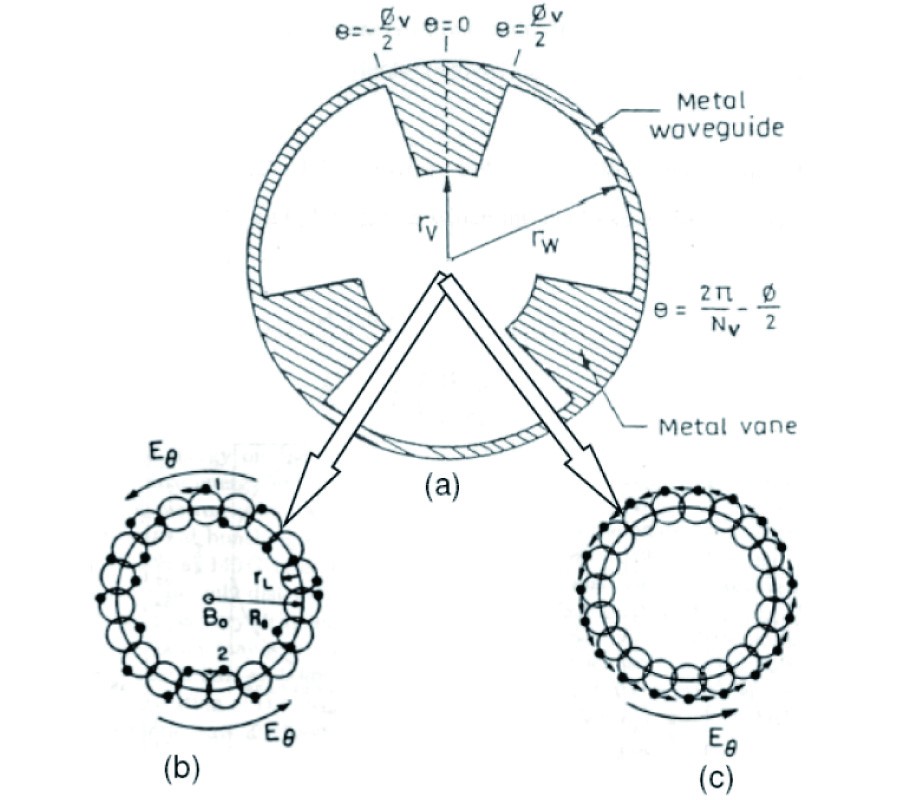
This article discusses the-state-of-the-art of the vaneloaded gyrotron traveling wave tube (gyro-TWT) amplifier, which is device of increasing importance for high resolution radar and high information density communication systems because of its high-power and broad bandwidth capabilities. Vane loading is identified as a means to achieve a low-beam energy, high-harmonic, low-magnetic field, mode-selective and stable operation of a gyro-TWT. Thus, the development of a simple approach to the analysis of the interaction structure of vane-loaded gyro-TWT has been identified as a problem of practical relevance.
ANALYTICAL STUDY OF THE INTERACTION STRUCTURE OF VANE-LOADED GYRO-TRAVELING WAVE TUBE AMPLIFIER
2008-01-15
PIER Letters
Vol. 2, 135-140
Multiple Cavity Modeling of a Feed Network for Two Dimensional Phased Array Application
Debendra Kumar Panda and Ajay Chakraborty
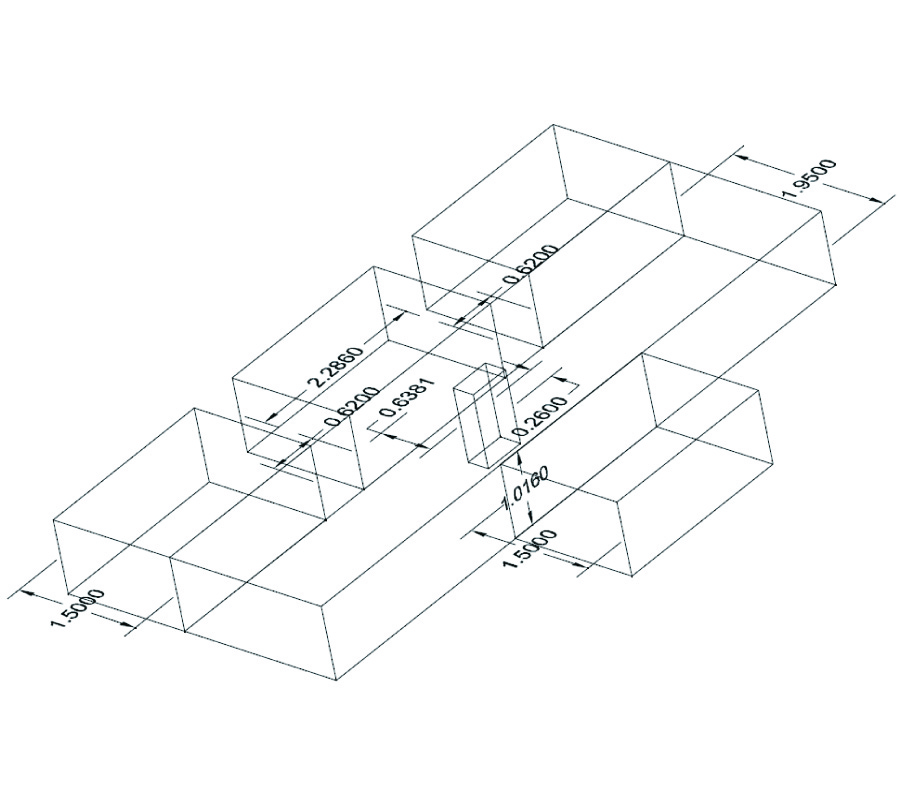
In this paper a method of moment based analysis of an H-plane 1:3p ower divider has been presented using Multi Cavity Modeling Technique (MCMT) in transmitting mode. Finally attempt has been made to improve the frequency response characteristic of the above mentioned waveguide circuit using a sorting post to diversify the power equally in all the ports. Codes have been written for analyzing the frequency response characteristic of the structure, mentioned above. Numerical data have been compared with the data obtained with laboratory measurement, and CST Microwave Studio simulation. In the present analysis global basis function has been used. The existence of cross polarization components of the field inside the waveguide structures if exists, have also been considered to obtain an accurate result. The proposed power divider has good agreement with the theoretical; CST microwave studio simulated data and measured data. The power divider can be used in the input at 9.8 GHz frequency band, over 800 MHz.
MULTIPLE CAVITY MODELING OF A FEED NETWORK FOR TWO DIMENSIONAL PHASED ARRAY APPLICATION
2008-01-15
PIER C
Vol. 1, 45-54
V-Shaped Monopole Antenna for Broadband Applications
Ali Dastranj , Ali Imani and Hamid Reza Hassani
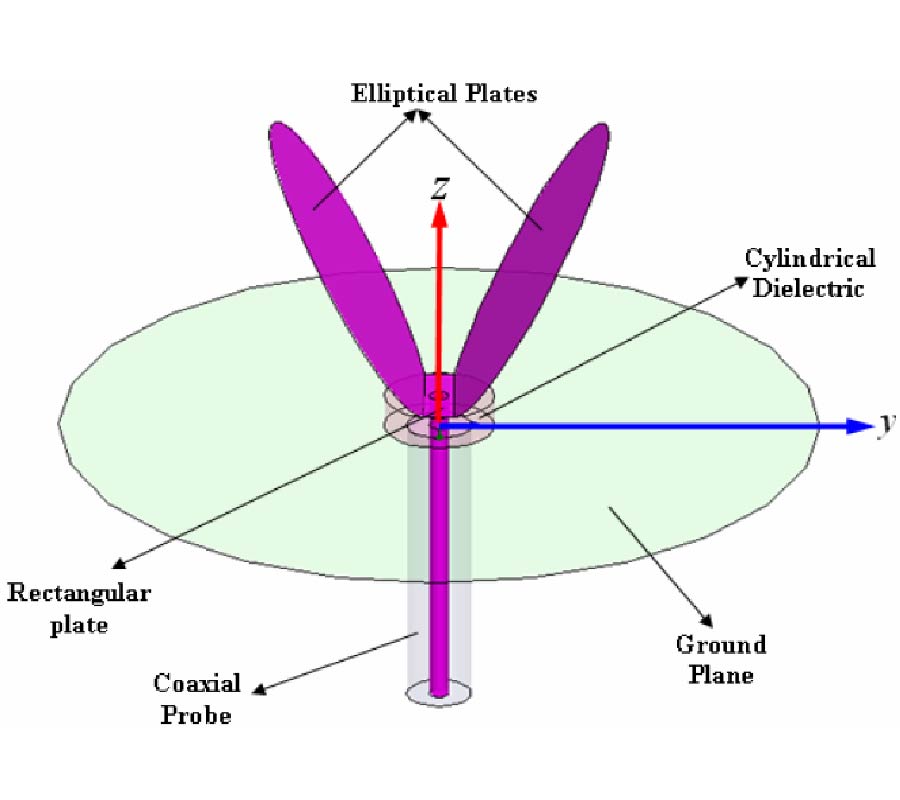
In this paper, design and analysis of a novel broadband V-shaped monopole antenna is presented. The proposed antenna has a simple configuration to fabricate with low cost. The antenna is composed of two elliptical conducting plates connected to the two edges of a small horizontal rectangular plate and placed over a small circular ground plane. The designed antenna has a very wide bandwidth range of 3-18 GHz, low cross polarization, relatively high gain and good far-field radiation characteristics in the entire operating bandwidth. To obtain the broad bandwidth, the antenna dimensions have been optimized. A comprehensive parametric study has been carried out to understand the effects of various parameters and to optimize the performance of the final design. The designed antenna is simulated with software packages CST microwave studio and Ansoft' HFSS in the operating frequency range. Simulation results for VSWR and far-field radiation patterns of the antenna over the frequency band 3-18 GHz are presented and discussed.
V-SHAPED MONOPOLE ANTENNA FOR BROADBAND APPLICATIONS
2008-01-14
PIER
Vol. 81, 41-59
A Novel Method for Testing Ultra Wideband Antenna-Feeds on Radio Telescope Dish Antennas
Shubhendu Joardar and Ashit Bhattacharya
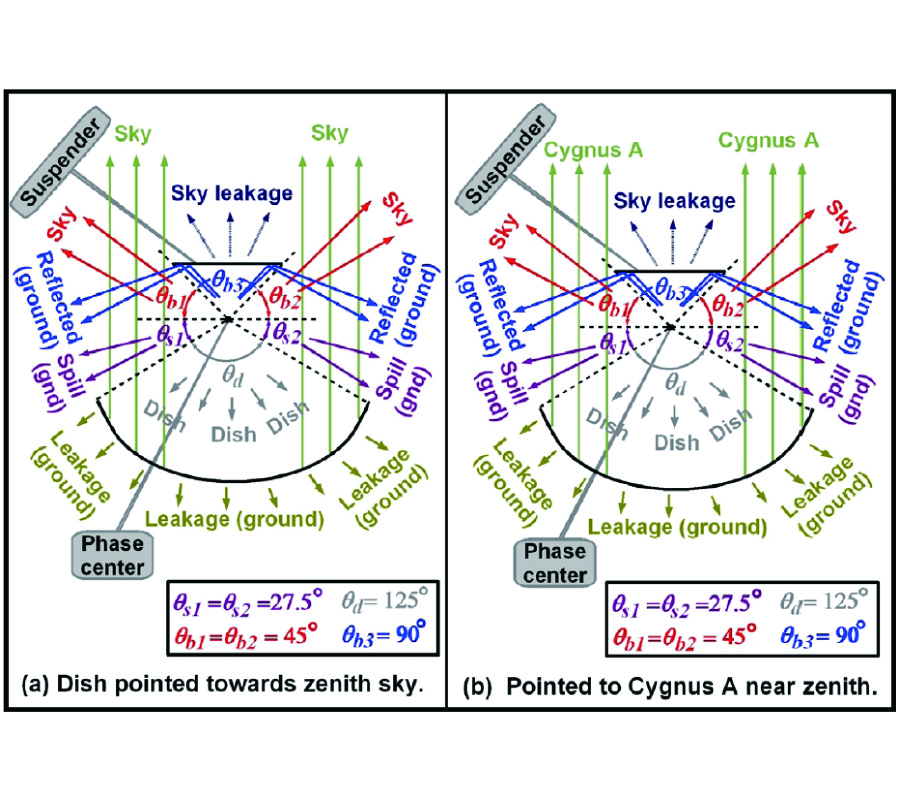
A prototype of dual polarized ultra wideband antenna-feed was fabricated (200 MHz-2000 MHz) for usage in low frequency radio astronomy at the GMRT (Giant Meterwave Radio Telescope). The feed was mounted on one of the GMRT dish antennas and tested using signals from the radio galaxy Cygnus A and zenith sky. Modeling of the GMRT dish with the antenna-feed mounted at its focus has been done. With the use of simulated radiation patterns of the antennafeed and the measured results, the system independent deflections at various frequencies were computed. The performances of the GMRT dish with present mesh and RMS (root mean square) efficiencies have been studied. Performance of the GMRT dish with 100% mesh and RMS efficiencies were computed. Future guidelines of ultra wideband antenna-feed design for GMRT have been indicated. Improvements of the GMRT dishes have also been suggested.
A NOVEL METHOD FOR TESTING ULTRA WIDEBAND ANTENNA-FEEDS ON RADIO TELESCOPE DISH ANTENNAS
2008-01-14
PIER B
Vol. 4, 27-39
Microstrip Antenna with Defected Ground Plane Structure as a Sensor for Landmines Detection
Saber Zainud-Deen , Mosad Badr , Emadeldeen Hassan , Kamal Awadalla and Hamdy Sharshar
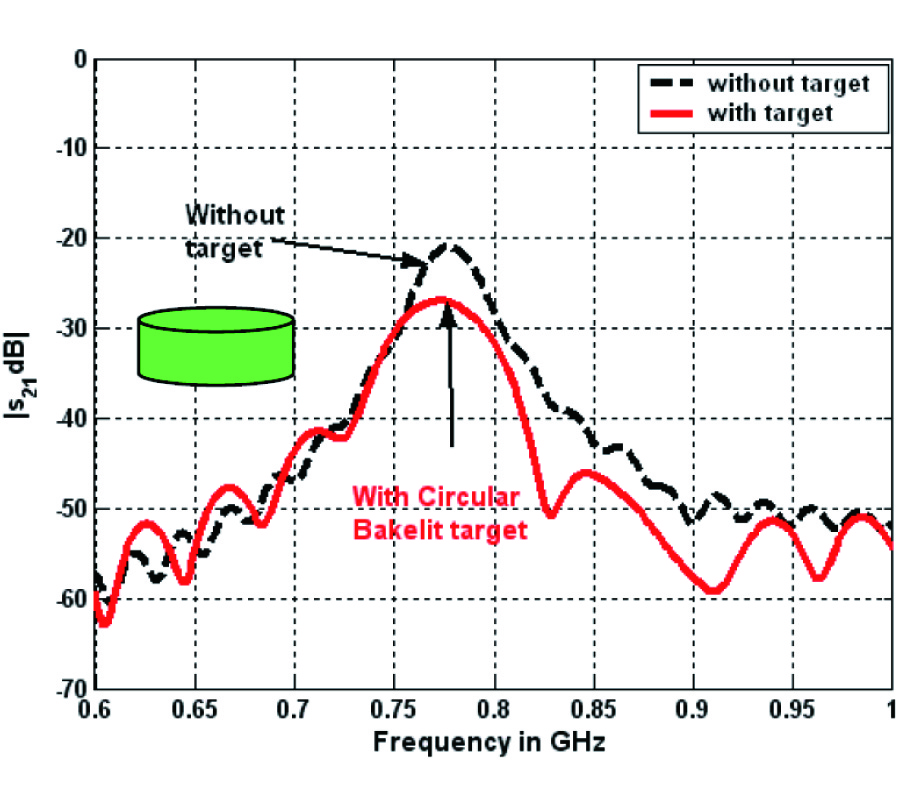
A proposed sensor for landmines detection consists of two parallel microstrip antennas placed on the same ground plane and with defected ground structure between them has been investigated. The microstrip patch array with defected ground structure has the advantage of a low mutual coupling compared with the classic one. The Finite-Difference Time-Domain (FDTD) is used to simulate the sensor for landmines detection.
MICROSTRIP ANTENNA WITH DEFECTED GROUND PLANE STRUCTURE AS A SENSOR FOR LANDMINES DETECTION
2008-01-14
PIER Letters
Vol. 2, 125-133
Interferometric ISAR Imaging on Squint Model
Changzheng Ma , Tat Yeo , Hwee Tan and Guangyue Lu
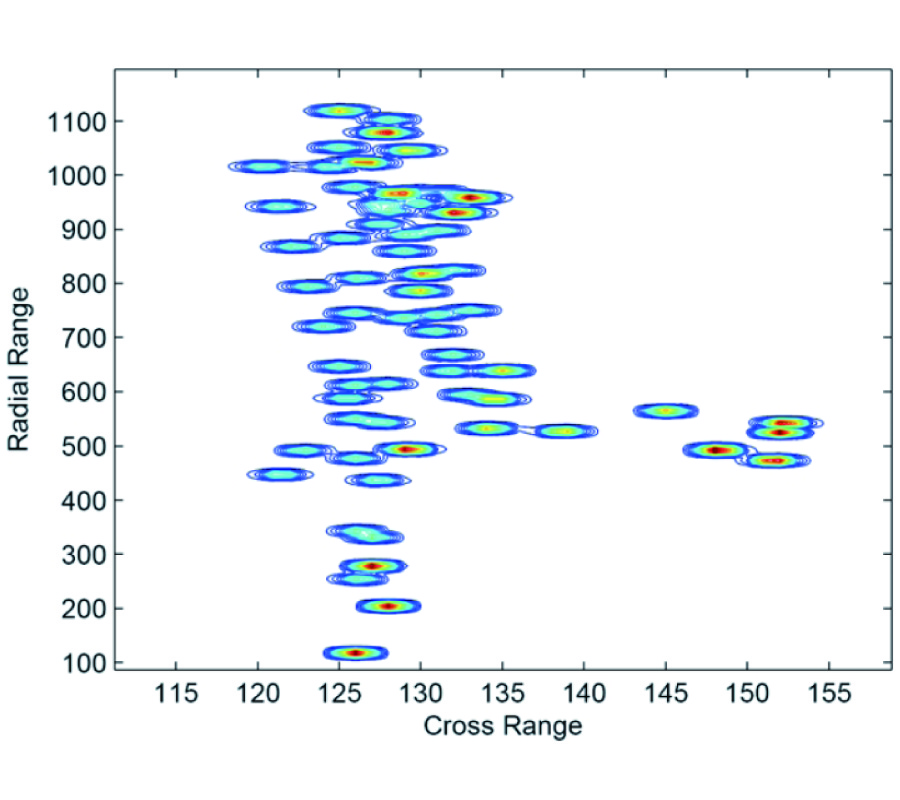
Conventional interferometric inverse synthetic aperture radar three dimensional imaging only consider broadside imaging condition. In this paper, squint model imaging configuration is discussed and the coordinate transform equation is given. The ISAR range profile envelope alignment problem among different antennas are also discussed. Simulation results show the effectiveness of our proposed method.
INTERFEROMETRIC ISAR IMAGING ON SQUINT MODEL
2008-01-10
PIER B
Vol. 4, 13-25
Evaluation of MIMO Channel Capacity in Indoor Environments Using Vector Parabolic Equation Method
Narges Noori and Homayoon Oraizi
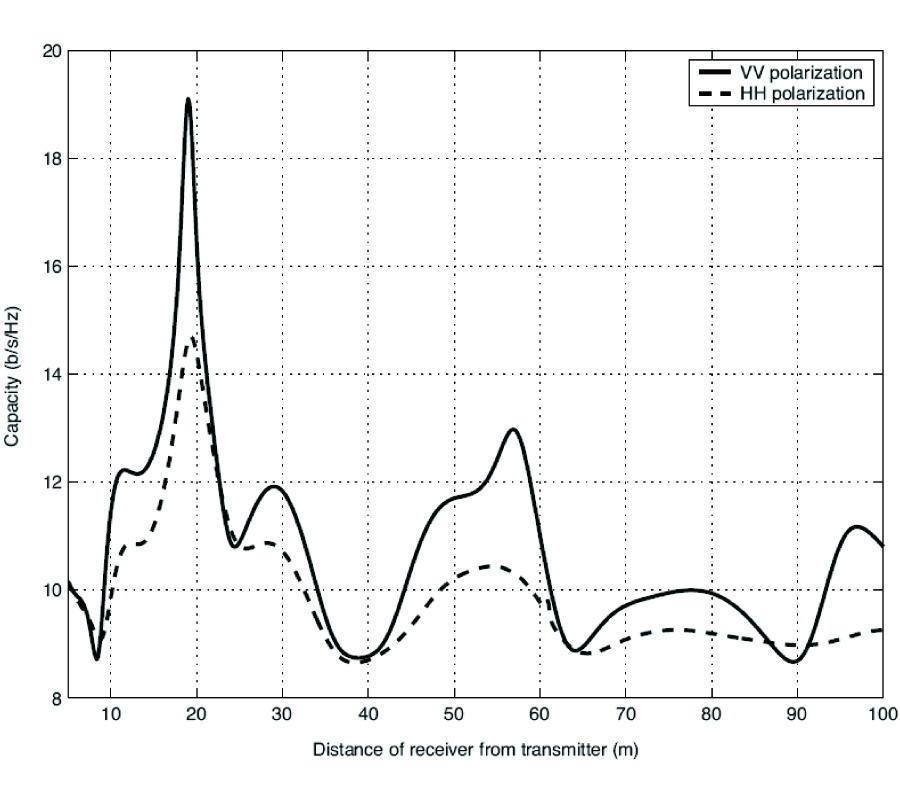
In this paper, the vector parabolic equation method (VPEM) is used to investigate the Shannon capacity of multiple-input multiple-output (MIMO) communication systems in indoor corridors. This deterministic three-dimensional (3-D) full-wave method is capable to demonstrate the effects of antennas and propagation environment on the channel capacity. The VPEM can model any field depolarization effects which are caused by the corridor walls. This method is particularly useful for evaluation of MIMO channel capacity in corridors with local narrowing of cross section. The channel capacity is computed for both single and hybrid polarizations and simulation results are compared with those obtained by the ray tracing method.
EVALUATION OF MIMO CHANNEL CAPACITY IN INDOOR ENVIRONMENTS USING VECTOR PARABOLIC EQUATION METHOD
2008-01-10
PIER B
Vol. 4, 1-12
Analysis of Output Power Delay in Coaxial Vircator
Gholamreza Moradi , Ayaz Ghorbani , M. Rahdan and H. Khadem
In this paper, a virtual cathode oscillator (VCO) is simulated based on FDTD algorithm. The geometrical structure is coaxial. Electromagnetic fields and current graphs are calculated. For the first time it has been shown that the delay between input pulse and output microwave signal originate from the waveguide transition delay time and the virtual cathode generation loop delay time.
ANALYSIS OF OUTPUT POWER DELAY IN COAXIAL VIRCATOR
2008-01-09
PIER Letters
Vol. 2, 115-123
Holographic Femtosecond Laser Processing and Three-Dimensional Recording in Biological Tissues
Yoshio Hayasaki
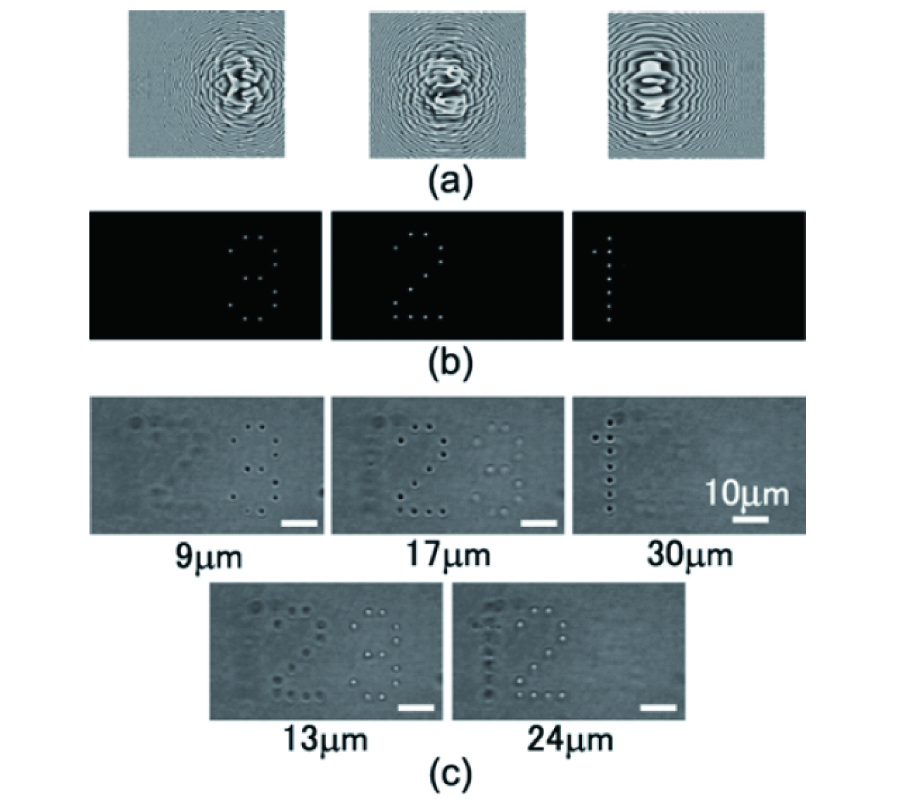
Data recording on biological tissues and prostheses with femtosecond laser processing for personal identification is demonstrated. The target materials are human fingernails (fingernail memory) and dental prostheses (dental memory). Because they have unexpected movements and individual three-dimensional shapes, the processing system is required an adaptive focusing and highthroughput recording capability. The adaptive focusing is performed with a target surface detection. The high throughput is realized by parallel laser processing based on a computer-generated hologram displayed on a spatial light modulator. Two-dimensional and threedimensional parallel laser processing of glass is demonstrated.
HOLOGRAPHIC FEMTOSECOND LASER PROCESSING AND THREE-DIMENSIONAL RECORDING IN BIOLOGICAL TISSUES
2008-01-08
PIER
Vol. 81, 99-119
A Moment Method Simulation of Electromagnetic Scattering from Conducting Bodies
Saeed Hatamzadeh , Mohammad Naser-Moghadasi and Zahra Masouri
In this paper a moment method simulation of electromagnetic scattering problem is presented. An effective numerical method for solving this problem based on the method of moments and using block-pulse basis functions is proposed. Some examples of engineering interest are included to illustrate the procedure. The scattering problem is treated in detail, and illustrative computations are given for some cases. This method can be generalized to apply to objects of arbitrary geometry and arbitrary material.
A MOMENT METHOD SIMULATION OF ELECTROMAGNETIC SCATTERING FROM CONDUCTING BODIES
2008-01-08
PIER
Vol. 81, 73-97
Truncated Cosine Fourier Series Expansion Method for Solving 2-d Inverse Scattering Problems
Abbas Semnani and Manouchehr Kamyab
Truncated cosine Fourier series expansion method is applied for reconstruction of lossy and inhomogeneous 2-D media by using inverse scattering method in time domain. In this method, the unknown parameters are expanded in a cosine Fourier series and coefficients of this expansion are optimized in particle swarm optimization (PSO) routine with the aid of finite difference time domain (FDTD) method as an electromagnetic (EM) solver. The performance of the algorithm is studied for several 2-D permittivity and conductivity profile reconstruction cases. It is shown that since only a limited number of terms are retained in the expansion, using the proposed method guarantees the well-posedness of the problem and uniqueness of the solution and various types of regularization may be used to only have more precise reconstruction. It is also shown that the number of unknowns in optimization routine is reduced more than 75 percent as compared with conventional methods which leads to a considerable reduction in the amount of computations with negligible adverse effect on the precision of reconstruction. Sensitivity analysis of the suggested method to the number of expansion terms in the algorithm is studied, as well.
TRUNCATED COSINE FOURIER SERIES EXPANSION METHOD FOR SOLVING 2-D INVERSE SCATTERING PROBLEMS
2008-01-08
PIER
Vol. 81, 61-72
Characterization of the Susceptibility of Integrated Circuits with Induction Caused by High Power Microwaves
Sun-Mook Hwang , Joo-Il Hong and Chang-Su Huh
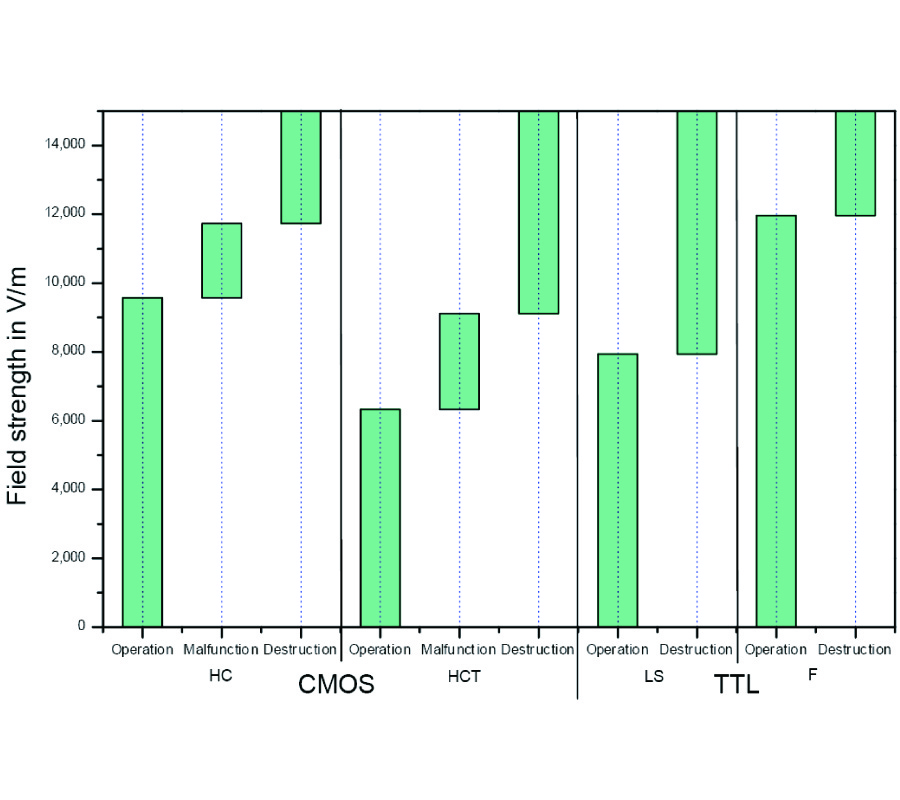
This paper examines malfunction and destruction of semiconductors by high power microwaves. The experiments employ a waveguide and a magnetron to study the influence of high power microwaves on TTL/CMOS IC inverters. The TTL/CMOS IC inverters are composed of a LED circuit for visual discernment. A CMOS IC inverter damaged by a high power microwave is observed with power supply current and delay time. When the power supply current was increased 2.14times for normal current at 10 kV/m, the CMOS inverter was broken by latch-up. The CMOS inverter damaged by latch-up returned its original level of functioning, because parasitic impedance inside the chip increased with the elapse of time. Three different types of damage were observed by microscopic analysis: component, onchipwire, and bondwire destruction. Based on the results, TTL/CMOS IC inverters can be applied to database to elucidate the effects of microwaves on electronic equipment.
CHARACTERIZATION OF THE SUSCEPTIBILITY OF INTEGRATED CIRCUITS WITH INDUCTION CAUSED BY HIGH POWER MICROWAVES
2008-01-08
PIER Letters
Vol. 2, 103-114
An Support Vector Regression Based Nonlinear Modeling Method for SiC Mesfet
Yuehang Xu , Yunnchuan Guo , Lei Xia and Yunqiu Wu
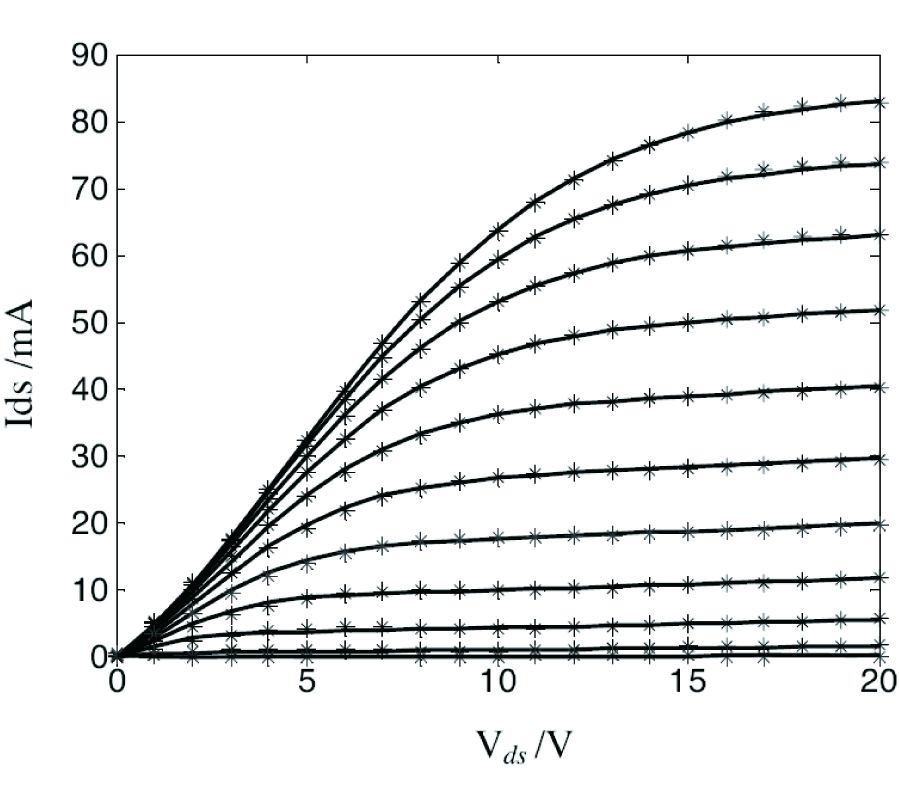
An approach for the microwave nonlinear device modeling technique based on a combination of the conventional equivalent circuit model and support vector machine (SVM) regression is presented in this paper. The intrinsic nonlinear circuit elements are represented by Taylor series expansions, coefficients of which are predicted by its support vector regression (SVR) model. Example of a SiC MESFET nonlinear model is demonstrated, and good results is achieved.
AN SUPPORT VECTOR REGRESSION BASED NONLINEAR MODELING METHOD FOR SIC MESFET
2008-01-08
PIER Letters
Vol. 2, 95-102
Waveguide Structures for Generation of Terahertz Radiation by Electro-Optical Process in GaAs and Zugep2 Using 1.55μm Fiber Laser Pulses
Tianxin Yang , Shupeng Song , Hongtao Dong and Rongsheng Ba
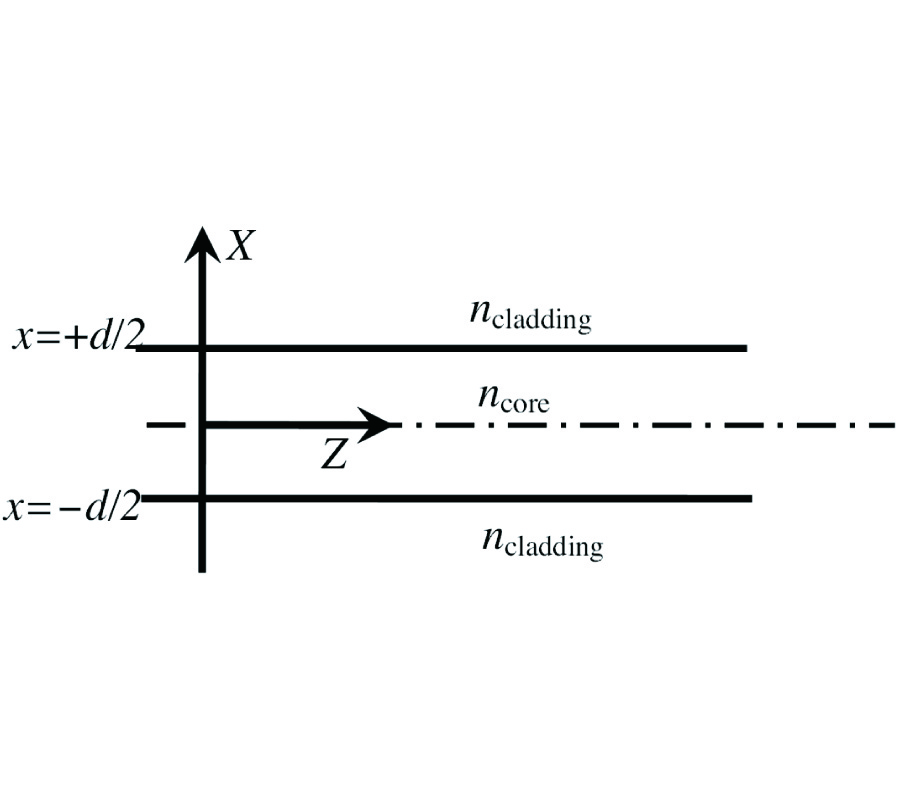
By discussing the basic schemes of the terahertz generation methods based on the 1550-nm ultrafast lasers briefly, GaAs and ZnGeP2 are likely to be promising nonlinear optical crystals for terahertz waves generation by using optical rectification process. However, the mismatches of velocities between the terahertz waves and optical pulses are so large that the phase-matching coherent lengths are quite short, for example, the coherent length of 0.7mm for GaAs and 0.5mm for ZnGeP2 at 2 THz around, respectively. That limited extremely the applications of these bulk excellent nonlinear optical crystals in terahertz regime. In this paper, we demonstrated theoretically that the dielectric planar waveguide could be used to enhance the coherent length of optical rectification process in THz regime. And for the first time, a dielectric planar THz waveguide that has potential applicable value in THz generation by optical rectification method was proposed. We predicted that the effective coherent length could be extended to 4mm at 2 THz in a GaAs/ZnGeP2 dielectric planar waveguide during optical rectification process pumped by ultrafast optical pulses at wavelength of 1550 nm.
WAVEGUIDE STRUCTURES FOR GENERATION OF TERAHERTZ RADIATION BY ELECTRO-OPTICAL PROCESS IN GaAs AND ZuGeP<sub>2</sub> USING 1.55μm FIBER LASER PULSES
2008-01-05
PIER B
Vol. 3, 315-329
Autofocus Algorithms Performance Evaluations Using an Integrated SAR Product Simulator and Processor
Tien Sze Lim , Chee Siong Lim , Voon Koo , Hong-Tat Ewe and Hean-Teik Chuah
The design and development of synthetic aperture radar (SAR) system for a particular application often requires redesign of software and hardware to optimize the system performance. In addition, evaluations of the performance of existing autofocus and image formation algorithms are required for the SAR system designers to select a most suitable algorithm for a given image quality requirements. This is a time-consuming taskwithout a reconfigurable and comprehensive software package. Thus, a comprehensive SAR integrated simulator and processor software is needed to aid the system designers in optimizing all the system parameters and performance. This paper presents an integrated SAR simulator and processor (iSARSIMP) software package and the performance of three selected SAR autofocus algorithms has been evaluated as examples to demonstrate the usefulness of the iSARSIMP for SAR system designers. In the performance evaluation, simulated and actual SAR raw data were used for further analysis and comparison of the three selected autofocus algorithms.
AUTOFOCUS ALGORITHMS PERFORMANCE EVALUATIONS USING AN INTEGRATED SAR PRODUCT SIMULATOR AND PROCESSOR
2008-01-05
PIER B
Vol. 3, 295-314
Optimizing Included Angle of Symmetrical V-Dipoles for Higher Directivity Using Bacteria Foraging Optimization Algorithm
Biswa Binayak Mangaraj , Iti Misra and A. Barisal
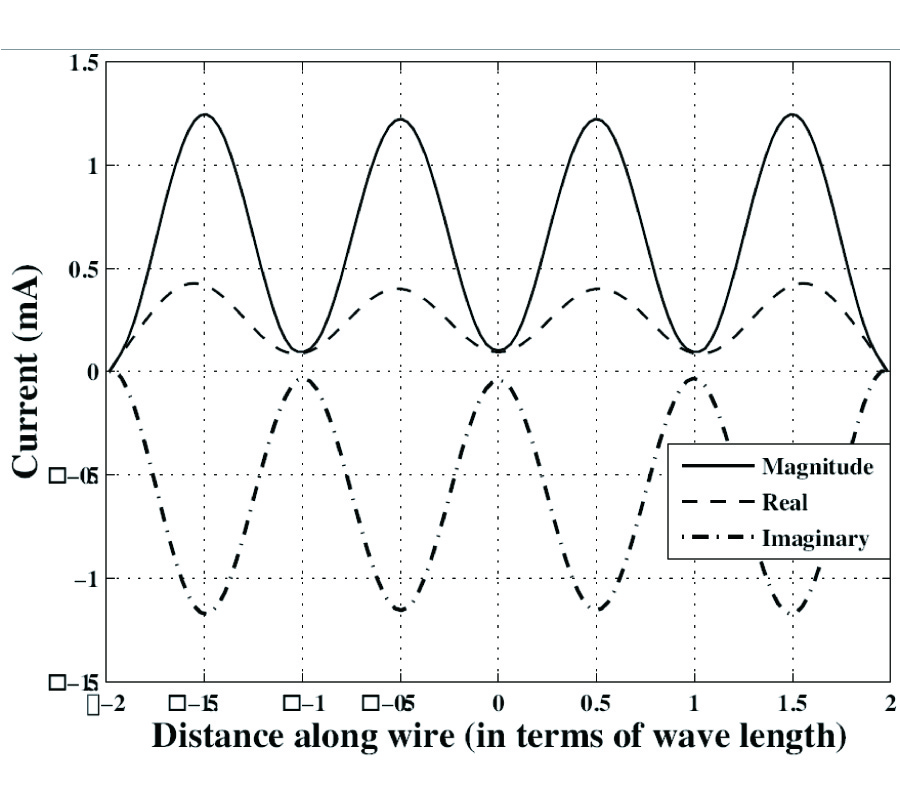
Recently the social foraging behavior of E. coli bacteria has been used to solve optimization problems. This paper presents an approach involving Bacterial Foraging (BF) to find appropriate included angle (ψ) and there by two other slant angles (θ1, θ2) for which the V-dipole provides higher directivity in comparison to straight dipole. Symmetrical V and Straight dipole is analyzed completely using Method of Moments (MoM). MoM codes in MATLAB environment have been developed both for straight dipole and Vdipole to obtain impedance, directivity, and radiation patterns in both E-plane and H-plane. Then MoM codes is coupled with well known Bacteria Foraging Algorithm (BFA) to get best included angle. Moreover, some modification of BFA is done for the faster convergence.
OPTIMIZING INCLUDED ANGLE OF SYMMETRICAL V-DIPOLES FOR HIGHER DIRECTIVITY USING BACTERIA FORAGING OPTIMIZATION ALGORITHM
2008-01-05
PIER Letters
Vol. 2, 89-94
A Concept of Moving Dielectrophoresis Electrodes Based on Microelectromechanical Systems (MEMS) Actuators
Lijie Li and Deepak Uttamchandani
A concept of moving dielectrophoresis electrodes (MDEP) based on Microelectromechanical Systems (MEMS) actuators is introduced in this letter. An example design of tuneable dielectrophoresis filter is presented. Finite Element Analysis of the electrostatic field of the tuneable filter has been conducted. Results show that the trapping force can be adjusted by actuating the MEMS actuators.
A CONCEPT OF MOVING DIELECTROPHORESIS ELECTRODES BASED ON MICROELECTROMECHANICAL SYSTEMS (MEMS) ACTUATORS
2008-01-03
PIER
Vol. 81, 21-39
Vector Finite Element Analysis of Multicomponent Induction Response in Anisotropic Formations
Xiangyang Sun and Zai-Ping Nie
Multicomponent induction logging responses are simulated by using hierarchical mixed order vector finite element method (FEM). In order to modeling three orthogonal magnetic dipoles, we adopt the method that the total field is separated into incident field and secondary field, and only the secondary field is computed by FEM. In addition, two techniques are applied to improve the modeling accuracy and computational efficiency: 1) Hierarchical mixed order vector basis functions are applied to FEM. Different order basis functions are used in different elements in accordance with the changing speed of the field. The mixed order scheme reduces greatly the number of unknowns without reducing accuracy, and can attain much higher computational efficiency. 2) The systemof the FEM equations is solved by Distributed-SuperLU, and the results of multiple measure points can be got simultaneously. The FEM result is validated against volume integral equation method and the approach of planar layered media Green's functions, and the comparisons show very good agreement. Finally, the multicomponent induction response in anisotropic formations involving eccentric tools and dipping beds is included to demonstrate the flexibility of the method.
VECTOR FINITE ELEMENT ANALYSIS OF MULTICOMPONENT INDUCTION RESPONSE IN ANISOTROPIC FORMATIONS