Search Results(13878)

2006-11-10
PIER
Vol. 65, 287-308
Extended Cavity Model Analysis of Stacked Circular Disc
Madhurika Mahajan , Sunil Kumar Khah and Tapas Chakravarty
Stacked microstrip antennas deserve special attention due to their advantageous properties like dual frequency operation and wide bandwidth. In the present communication a theoretical model for single stacked microstrip disc antenna is proposed using extended cavity model. The method of analysis by this model is easier and intuitive than the full wave analysis. Single stacked microstrip disc antenna with co-axial feed locations at different radial positions is analyzed with this model taking different ratios of patch sizes. Antenna properties like return loss, input impedance, gain and radiation efficiency are calculated with the proposed model different cases and compared with the simulated and experimental results. The results are in fairly good agreement.
EXTENDED CAVITY MODEL ANALYSIS OF STACKED CIRCULAR DISC
2006-11-08
PIER
Vol. 65, 275-286
A Study of Using the Double Negative Structure to Enhance the Gain of Rectangular Waveguide Antenna Arrays
Le Liang , Bin Li , Song-Hua Liu and Chang-Hong Liang
In this paper we propose a new method to enhance the gain of rectangular waveguide antenna arrays using the double negative medium (DNG) structure composed of strip wires (SW) and split ring resonators (SRR). The electromagnetic parameters of the DNG structure are retrieved and the rectangular waveguide antennas with and without the DNG structure are studied using numerical simulation method. The simulation results show that the DNG structure can congregate the radiation energy when the index of refraction approximates zero,since that the gain of the antenna arrays is enhanced and the radiation performance of the antenna arrays is effectively improved. Far-field radiation patterns are measured, which indicate that this method is effective to enhance the gain.
A STUDY OF USING THE DOUBLE  NEGATIVE STRUCTURE TO ENHANCE THE GAIN OF RECTANGULAR WAVEGUIDE ANTENNA ARRAYS
2006-11-07
PIER
Vol. 65, 261-273
Design of a Novel 3db Microstrip Backward Wave Coupler Using Defected Ground Structure
Rohit Y. Sharma , Tapas Chakravarty , Sunil Bhooshan and A. Bhushan Bhattacharyya
In this paper an edge coupled microstrip coupler with defected ground structure is presented. A normally 7 dB coupler designed on Alumina substrate is converted into a 3 dB coupler by cutting single rectangular slot in the ground plane encompassing the two transmission lines. Other properties of backward wave coupler remain the same, except for a tighter coupling. With this method of design optimization, it will be possible to fabricate a 3 dB coupler in compact form without strain in fabrication process. The structure is analyzed considering magnetic and electric coupling between the two transmission lines. Simulation based studies show reasonable agreement between analytical results and corresponding simulation results.
DESIGN OF A NOVEL 3DB MICROSTRIP BACKWARD WAVE COUPLER USING DEFECTED GROUND STRUCTURE
2006-11-07
PIER
Vol. 65, 233-259
A Simple and Novel Model for Edged Microstrip Line (Emtl)
Ali Arshadi and Ahmad Cheldavi
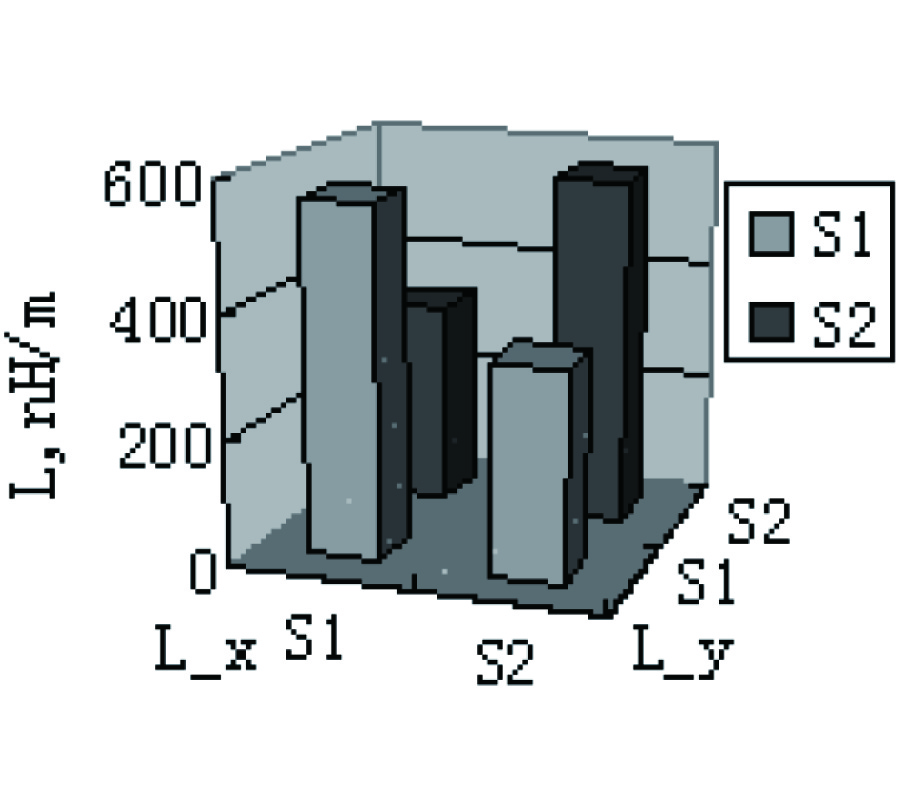
In this paper a simple model has been introduced to simulate the propagation of signal in a so called edged microstrip transmission line (EMTL). EMTL is a transmission line in which the signal strip is laid on the edge of the structure (Fig. 1). First a simple structure of EMTL is modeled with an ordinary MTL with improved per unit length inductances and capacitances, and an additional resistance to represent the radiation from the edges. This method is then applied to model a multilayer cross orthogonal EMTL structure as shown in Fig. 2. The model is finally validated using full wave analysis simulator, HFSS. The S-parameters of our model show good agreement with the results of the full wave analysis (HFSS) up to some GHz.
A SIMPLE AND NOVEL MODEL FOR EDGED MICROSTRIP LINE (EMTL)
2006-11-07
PIER
Vol. 65, 233-246
A Triple Wire Medium as an Isotropic Negative Permittivity Metamaterial
Martin Hudlicka , Jan Machac and Igor Nefedov
This paper presents an effective medium approach to calculate the attenuation and phase constants of modes in a 3D connected wire medium both below and above the plasma frequency. Physical and nonphysical modes in the structure are identified for all the important lattice directions. According to this, the medium behaves as an isotropic material in the vicinity of the plasma frequency. These results were compared with the numerical simulation and it was observed that the wave spreads below the plasma frequency along all the important lattice directions with the same attenuation constant. This implies isotropic behavior of the 3D wire lattice below the plasma frequency, and thus this medium can be considered as an isotropic negative permittivity medium.
A TRIPLE WIRE MEDIUM AS AN ISOTROPIC NEGATIVE PERMITTIVITY METAMATERIAL
2006-11-07
PIER
Vol. 65, 201-232
Vector Spectral-Domain Method for the Analysis of Frequency Selective Surfaces
Anyong Qing
Standard spectral-domain method (SDM) is one of the popular approaches to analyze frequency selective surfaces (FSS). However, it is inherently incapable of handling normal incidence because of its dubious definition of excitation fields, reflection and transmission coefficients using z-component of vector potentials. Moreover, as far as the author knows, it has never been applied to analyze FSS with gangbuster arrays. In this paper, an improved SDM, the vector spectral-domain method, is presented. By proving the equivalence of the spectra of unit cell current and element current, the scattered field from FSS structures is formulated in terms of spectraldomain element current instead of spectral-domain unit cell current. Galerkin's method is applied to obtain the unknown induced surface current. Well-established definition of excitation fields, reflection and transmission coefficients is adopted. Extensive experimental validation has been conducted.
VECTOR SPECTRAL-DOMAIN METHOD FOR THE ANALYSIS OF FREQUENCY SELECTIVE SURFACES
2006-11-05
PIER
Vol. 65, 187-200
Efficient Sidelobe Reduction Technique for Small-Sized Concentric Circular Arrays
Moawad Ibrahim Dessouky , Hamdy Sharshar and Yasser Albagory
Concentric circular antenna array (CCAA) has interesting features over other array configurations.A uniform arrangement of elements is assumed where the interelement spacing is kept almost half of the wavelength and the array parameters such as the steering matrix and gain are determined.The array performance such as beam power pattern, sidelobe level and beamwidth are discussed in two cases of central element feeding.The two cases are compared showing the reduction in the sidelobe level to more than 20 dB in the case of central element feeding without extra signal processing especially for smallsized arrays that have smaller number of elements and rings.
EFFICIENT SIDELOBE REDUCTION TECHNIQUE FOR SMALL-SIZED CONCENTRIC CIRCULAR ARRAYS
2006-10-26
PIER
Vol. 68, 261-279
Oblique Incidence Plane Wave Scattering from an Array of Circular Dielectric Cylinders
Bassem Henin , Atef Elsherbeni and Mohamed Al Sharkawy
A rigorous semi-analytical solution is presented for electromagnetic scattering from an array of circular cylinders due to an obliquely incident plane wave. The cylinders are illuminated by either TMz or TEz incident plane wave. The solution is based on the application of the boundary conditions on the surface of each cylinder in terms of the local coordinate system of each individual cylinder. The principle of equal volume model is used to represent cylindrical cross-sections by an array of circular cylinders for both dielectric and conductor cases in order to proof the validity of the presented technique.
OBLIQUE INCIDENCE PLANE WAVE SCATTERING FROM AN ARRAY OF CIRCULAR DIELECTRIC CYLINDERS
2006-10-26
PIER
Vol. 67, 205-230
Application of Mode Matching Method to Analysis of Axisymmetric Coaxial Discontinuity Structures Used in Permeability and/or Permittivity Measurement
Ruifeng Huang and Daming Zhang
This paper presents a mode matching method to analyze axisymmetric coaxial discontinuity structures, commonly used in the permeability and/or permittivity measurement.By performing the mode matching procedures at all discontinuity interfaces, a set of general simultaneous equations are derived, which can be easily solved.The s parameters and field distribution in the structures are readily obtained from the solution to the simultaneous equations. As a preliminary preparation for the mode matching method, the propagation constants of all the sections in the structure have to be solved.A one-dimensional frequency domain finite difference method is presented in this paper to efficiently solve the propagation constants for the multi-layered axisymmetric structures. Numerical examples show that the results obtained from the method in this paper are in good agreement with those from other methods in the published literature papers, and the method presented here has much higher efficiency.
APPLICATION OF MODE MATCHING METHOD TO ANALYSIS OF AXISYMMETRIC COAXIAL DISCONTINUITY STRUCTURES USED IN PERMEABILITY AND/OR PERMITTIVITY MEASUREMENT
2006-10-26
PIER
Vol. 67, 181-203
Microwave Emission from Two-Dimensional Inhomogeneous Dielectric Rough Surfaces Based on Physics-Based Two-Grid Method
Kunshan Chen , Leung Tsang and Jian-Cheng Shi
Numerical simulations of emission for two-dimensional randomly rough surfaces with an inhomogeneous layered medium are presented. The inhomogeneous layered medium is modeled by a generalized n-layered stratified media. The numerical method was adopted from the physics-based two-grid method (PBTG). To ensure the strict accuracy requirement while to relief the memory and CPU resources, the PBTG in conjunction with the sparse-matrix canonical grid method (SMCG) was used in this paper. In so doing the reflected terms of the dyadic Green's function that accounts for layered media were added into the integral equations governing the surface tangential fields. Since the reflected part of the dyadic Green's function does not contain any singularity, the normal components of the fields remain the same as in the case of homogeneous surfaces. It was found that the elements of Green's tensor are only important to the near-field since they decay very fast as spatial distance goes beyond a few wavelengths. The resulting integral equations are then solved by the Method of Moment (MoM). Comparisons between the inhomogeneous and the homogeneous rough surfaces suggest that the presence of the inhomogeneous layered medium has non-negligible contributions to emission, depending on the dielectric gradient and is polarization dependent.
MICROWAVE EMISSION FROM TWO-DIMENSIONAL INHOMOGENEOUS DIELECTRIC ROUGH SURFACES BASED ON PHYSICS-BASED TWO-GRID METHOD
2006-10-26
PIER
Vol. 67, 173-179
A Compact Microstrip Square-Ring Slot Antenna for UWB Applications
Saeed Sadat , Masum Fardis , Fatemeh Gharakhili and Gholamreza R. Dadashzadeh
A microstrip square-ring slot antenna (MSRSA) for UWB (Ultra Wideband) antenna applications is proposed and improved by compaction. This structure is fed by a single microstrip line with a fork like-tuning stub. By splitting the square-ring slot antenna (SRSA) and optimization ofthe feeding network, the required impedance bandwidth is achieved over the UWB frequency range (3.1 to 10.6 GHz). The experimental and simulation results exhibit good agreement together. Parametric study is applied to compaction of structure. This compaction provides a good radiation pattern and a relatively constant gain over the entire band off requency.
A COMPACT MICROSTRIP SQUARE-RING SLOT ANTENNA FOR UWB APPLICATIONS
2006-10-26
PIER
Vol. 67, 153-172
Ray Tracing Radio Waves in Wildfire Environments
Kgakgamatso Mphale and Mal Heron
Wildfires are uncontrolled exothermic oxidation of vegetation. Flame combustion temperatures could be in excess of 1600 K. Under the high temperature environment, plants' organic structure crumbles to release omnipresent alkali nutrients into the combustion zone. The alkali based compounds thermally decomposed to constituent atoms which ultimately ionised to give ions and electrons. The presence of electrons in the flame lowers its refractive index, thereby creating a medium of spatially varying refractive index. In the medium, incident radio waves change speed and are consequently deflected from their original path. The refraction has an effect of decreasing signal intensity at a targeted receiver which is at the same height as a collimated beam transmitter which is at a considerable distance away from the former. A numerical experiment was set to investigate the sub refractive behaviour of a very high intensity eucalyptus wildfire (90 MWm−1) plume using two dimensional (2D) ray tracing scheme. The scheme traces radio rays as they traverse the plume. The ratio of number rays in a collimated beam reaching the targeted receiver to number of rays leaving the transmitter is used to calculate signal intensity loss in decibels (dB) at the receiver. Assuming an average natural plant alkali (potassium) content of 0.5%, attenuation (dB) was observed to be factor of both propagation frequency and temperature at the seat of the fire plume; and only of temperature at cooler parts of the plume. The 2D ray tracing scheme predicted a maximum attenuations of 14.84 and 5.47 dB for 3000 and 150 MHz respectively at 0.8 m above canopy-flame interface over propagation path of 48.25 m. An attenuation of 0.85 dB was predicted for frequencies from 150-3000 MHz over the same propagation distance at plume height of 52.8 m above ground.
RAY TRACING RADIO WAVES IN WILDFIRE ENVIRONMENTS
2006-10-26
PIER
Vol. 67, 135-152
Analysis of Radiation from a Cylindrical-Rectanguar Microstrip Patch Antenna Loaded with a Supersrate and an Air Gap, Using the Electric Surface Current Model
Francis Cooray and John Kot
Radiation from a superstrate loaded cylindrical-rectangular microstrip patch antenna with an air gap between the substrate and the superstrate, is analyzed using the full-wave approach and the electric surface current model. Results are presented in the form of normalized radiation patterns for various thicknesses of the air gap and also for superstrates made of lossy dielectric material, to show the effects of these on the radiation from the antenna. Both axialand azimuthal current elements are considered.
ANALYSIS OF RADIATION FROM A CYLINDRICAL-RECTANGUAR MICROSTRIP PATCH ANTENNA LOADED WITH A SUPERSRATE AND AN AIR GAP, USING THE ELECTRIC SURFACE CURRENT MODEL
2006-10-26
PIER
Vol. 67, 113-134
Electromagnetic Scattering by a Metallic Spheroid Using Shape Perturbation Method
Aristides Kotsis and John Roumeliotis
The scattering of a plane electromagnetic wave by a perfectly conducting prolate or oblate spheroid is considered analytically by a shape perturbation method. The electromagnetic field is expressed in terms of spherical eigenvectors only, while the equation of the spheroidal boundary is given in spherical coordinates. There is no need for using any spheroidal eigenvectors in our solution. Analytical expressions are obtained for the scattered field and the scattering cross-sections, when the solution is specialized to small values of the eccentricity h = d/(2a), (h<<1), where d is the interfocal distance of the spheroid and 2a the length of its rotation axis. In this case exact, closed-form expressions, valid for each small h, are obtained for the expansion coefficients g(2) and g(4) in the relation S(h) = S(0)[1 + g(2)h2 + g(4)h4 + O(h6)] expressing the scattering cross-sections. Numerical results are given for various values of the parameters.
ELECTROMAGNETIC SCATTERING  BY A METALLIC SPHEROID  USING SHAPE PERTURBATION METHOD
2006-10-26
PIER
Vol. 67, 39-112
A Rapidly-Convergent, Mixed-Partial Derivative Boundary Condition Green's Function for an Anisotropic Half-Space: Perfect Conductor Case
John Jarem
The problem of determining the Green's function of an electric line source located in a permeable, anisotropic (Ëœμxx, Ëœμxy, Ëœμyx, Ëœμyy and Ëœεzz nonzero interacting parameters) half-space above a Perfect Magnetic Conductor (PMC) ground plane (called the TMz case herein) for the case where image theory cannot be applied to find the Green's function of the PMC ground plane system has been studied. Monzon [2, 3] studied the Green's function TEz problem dual to the present one for two cases; (1) when the system was unbounded, anisotropic space where Ëœεxx, Ëœεxy, Ëœεyx, Ëœεyy and Ëœμzz were the nonzero interacting parameters; and (2) when the scattering system was an anisotropic half-space located above a Perfect Electric Conductor (PEC) ground plane and where Ëœεxx, Ëœεyy and Ëœμzz were the nonzero interacting parameters and Ëœεxy = Ëœεyx = 0. Monzon [2] referred to the latter ground plane case as the case where "usual image" theory could be used to find the Green's function of the system. The Green's function for the TMz-PMC case studied herein was derived by introducing and using a novel, linear coordinate transformation, namely Ëœx = (σP /Ï„)Ëœx + σMËœy, Ëœy = Ëœy, (Eqs. (6c,d), herein). This transformation, a modification of that used by [2, 3], reduced Maxwell's anisotropic equations of the system to a non-homogeneous, Helmholtz wave equation from which the Green's function, G, meeting boundary conditions, could be determined. The coordinate transformation introduced was useful for the present PMC ground plane problem because it left the position of the PMC ground plane and all lines parallel to it, unchanged in position from the original coordinate system, thus facilitating imposition of EM boundary conditions at the PMC ground plane. In transformed (or primed) coordinates, for the TMz-PMC and TEz-PEC ground plane problems, respectively, the boundary conditions for the Green's functions GTM ≡ Ez and GTE ≡ Hz were shown to be [α*(∂G/∂˜x) + (∂G/∂˜y) |Ëœy=0 = 0, where G = GTM or GTE, α = αTM or αTE, where αTM and αTE are complex constants (dually related to each other by Ëœμ ↔ Ëœε), and where Ëœy' = 0 is the position of the ground plane. An interesting result of the analysis was that the constant αTE (as far as the author knows) coincidently turned out to be the same as the first of two important constants, namely S1(dlv/dl) and S2(dlv/dl), which were used by Monzon [2, 3] to formulate integral equations (based on Green's second theorem) from which EM scattering from anisotropic objects could be studied. Spatial Fourier transform (k-space) techniques were used to determine the Green's function of the Helmholtz wave equation expressed in transformed coordinates which satisfied the mixed-partial derivative boundary condition of the system. The Green's function G was expressed as a sum of a "free space" Green's function gf (proportional to a Hankel function H(2)0 and assumed excited by the line source in unbounded space) and a homogeneous Green's function g whose spectral amplitude was chosen such that, when g was added to gf , the sum G = gf + g, satisfied boundary conditions. The k-space, Sommerfeld integrals making up g turned out to converge slowly, and so, using contour integration in the complex plane (Appendix B), g was expressed in a rapidly convergent form, and thus one leading to its practical numerical evaluation. Extensive numerical testing of how well the Green's functions G = gf + g satisfied boundary conditions and how well the homogeneous Green's function g satisfied Green's second theorem was performed. Excellent verification of the numerical and analytical procedures were found and displayed in the error tables of Tables 1-4 of the paper. Plots illustrating the novel coordinate transformation introduced were presented and several numerical plots of the Green's function developed herein were presented. The application of the present work to find the Green's function for the case when a negative-index, anisotropic metamaterial is adjacent to a conducting ground plane is discussed. Application of the Green's function theory developed herein to multi-layer anisotropic systems is discussed.
A RAPIDLY-CONVERGENT, MIXED-PARTIAL DERIVATIVE BOUNDARY CONDITION GREEN'S FUNCTION FOR AN ANISOTROPIC HALF-SPACE: PERFECT CONDUCTOR CASE
2006-10-26
PIER
Vol. 67, 25-37
Propagation of Electromagnetic Waves in Planar Bounded Plasma Region
Ezzeldin A. Soliman , A. Helaly and A. Megahed
This paper aims at developing a technique to calculate the reflection, absorption, and transmission of electromagnetic waves by a bounded plasma region. The model chosen for this study is a magnetized,steady-state, two-dimensional,non uniform plasma slab, which is presented by a number of parallel flat layers. It is assumed that the electron density is constant in each layer such that the overall electron density profile across the slab follows any prescribed distribution function. The proposed technique is referred to as Scattering Matrix Model (SMM). The fields in each layer are written in the form of summation of the appropriate eigen functions weighted by unknown scattering coefficients. These coefficients are determined via the application of the appropriate boundary conditions at each interface. The effect of varying the wave frequency and the plasma parameters on the reflected,transmitted,and absorbed powers are presented and discussed.
PROPAGATION OF ELECTROMAGNETIC WAVES IN PLANAR BOUNDED PLASMA REGION
2006-10-26
PIER
Vol. 67, 1-24
Electromagnetic Scattering from Arbitrarily Shaped Chiral Objects Using the Finite Difference Frequency Domain Method
Lokman Kuzu , Veysel Demir , Atef Elsherbeni and Ercument Arvas
In this paper, finite difference frequency domain (FDFD) formulation has been developed for the analysis of electromagnetic wave interaction with chiral materials, and the validity of the formulation for three dimensional scattering problems has been confirmed by comparing the numerical results to exact or other numerical solutions. The influences of the chirality on the scattered field components are investigated. Numerical results for bistatic radar cross section (RCS) are presented and compared to reference solutions and it is found that the proposed FDFD method shows good agreement. It is realized that the presented method is relatively easy to program and can be applied to a wide variety of problems of complex and composite structures efficiently.
ELECTROMAGNETIC SCATTERING FROM ARBITRARILY SHAPED CHIRAL OBJECTS USING THE FINITE DIFFERENCE FREQUENCY DOMAIN METHOD
2006-10-22
PIER
Vol. 65, 169-185
Tabu Search Tracker with Adaptive Neuro-Fuzzy Inference System for Multiple Target Tracking
Ilke Turkmen and Kerim Guney
In this paper, a tabusearc h tracker with adaptive neurofuzzy inference system (TST-ANFIS) is presented for multiple target tracking (MTT). First, the data association problem, formulated as an N-dimensional assignment problem, is solved using the tabu search algorithm (TSA), and then the inaccuracies in the estimation are corrected by the adaptive neuro-fuzzy inference system (ANFIS). The performances of the TST-ANFIS, the joint probabilistic data association filter (JPDAF), the tabusearc h tracker (TST), Lagrangian relaxation algorithm (LRA), and cheap joint probabilistic data association with adaptive neuro-fuzzy inference system state filter (CJPDA-ANFISSF) are compared with each other for six different tracking scenarios. It was shown that the tracks estimated by using proposed TST-ANFIS agree better with the true tracks than the tracks predicted by the JPDAF, the TST, the LRA, and the CJPDAANFISSF.
TABU SEARCH TRACKER WITH ADAPTIVE NEURO-FUZZY INFERENCE SYSTEM FOR MULTIPLE TARGET TRACKING
2006-10-18
PIER
Vol. 65, 157-167
A Low Voltage MEMS Structure for RF Capacitive Switches
Saeid Afrang and Ebrahim Abbaspour-Sani
A novel structure for the capacitive micromachined switches with low actuation voltage is proposed. In this structure both contact plates of the switch are designed as displaceable membranes. Two structures with similar dimensions and conditions, differing on only the number of the displaceable beams are analytically investigated as well as simulated using ANSYS software. The obtained results indicate about 30% reduction in actuation voltage from the conventional single beam to our proposed double beam structure. The stress on the beam due to the actuation voltage is also reduced increasing the switching life time. The dynamic simulation results in switching time of 6.5 μsec compared to the 8.9 μsec of the analytical results. It can be implemented by the well established surface micromachining for RF applications.
A LOW VOLTAGE MEMS STRUCTURE FOR RF CAPACITIVE SWITCHES
2006-10-17
PIER
Vol. 66, 89-103
Focusing Characteristics of a Metallic Cylindrical Electromagnetic Band Gap Structure with Defects
Halim Boutayeb , Anne-Claude Tarot and Kouroch Mahdjoubi
The focusing characteristics of 2D-Cylindrical Electromagnetic Band Gap (CEBG) structures constituted of metallic wires and with defects are analyzed numerically for directive antennas application. The introduction of defects into the periodic structures consists of removing one or multiple wires. The simulations were carried out with a Finite Difference Time Domain (FDTD) code, where the excitation is a line source and the CEBG structure is considered infinite in the vertical direction. Numerical results showing the effects of the number of cylindrical layers and of the number of defects are presented and discussed. These results allow to determine the structures giving best focusing performance and to obtain the frequency band for directive radiation.
FOCUSING CHARACTERISTICS OF A METALLIC CYLINDRICAL ELECTROMAGNETIC BAND GAP STRUCTURE WITH DEFECTS