Search Results(13876)

0000-00-00
PIER
Vol. 30, 213-249
Reflection and Transmission of an Electromagnetic X-Wave Incident on a Planar Air-Dielectric Interface: Spectral Analysis
Amr Shaarawi , Ioannis Besieris , Ahmed Mohamed Attiya and E. El-Diwany
The spectral structure of the reflected and transmitted fields due to a three dimensional electromagnetic X-wave incident on a planar air-dielectric interface is examined. Using a novel superposition of azimuthally dependent pulsed plane waves, it is shown that for oblique incidence the reflected pulse has a localized wave structure. On the other hand, the transmitted field maintains its localization up to a certain distance from the interface beyond which it starts disintegrating. A study of the effects of polarization on the amplitudes of the reflected and transmitted wave fields is presented.
REFLECTION AND TRANSMISSION OF AN ELECTROMAGNETIC X-WAVE INCIDENT ON A PLANAR AIR-DIELECTRIC INTERFACE: SPECTRAL ANALYSIS
0000-00-00
PIER
Vol. 30, 191-211
Reflection and Transmission of X-Waves in the Presence of Planarly Layered Media: the Pulsed Plane Wave Representation
Ahmed Mohamed Attiya , E. El-Diwany , Amr Shaarawi and Ioannis Besieris
In this paper, a general ray-theoretical representation of the X-wave pulse is introduced. This representation is based on pulsed plane waves having wave vectors lying on a conic surface. The pulsed plane wave representation is used to study the behavior of X-waves in the presence of planarly layered media. In the case of an interface separating two semi-infinite media, the pulsed plane wave representation provides a clear explanation for the disintegration of the transmitted field. It shows that unlike the incident and reflected fields, the wave vectors associated with the transmitted field do not lie on a cone. Furthermore, this approach allows one to estimate several characteristic properties of the layered media (e.g., dielectric constant and thickness of each layer) from the time of arrival of the reflected X-waves.
REFLECTION AND TRANSMISSION OF X-WAVES IN THE PRESENCE OF PLANARLY LAYERED MEDIA: THE PULSED PLANE WAVE REPRESENTATION
0000-00-00
PIER
Vol. 30, 179-190
The Possible Effects of the Magnetic Declination on the Wave Polarisation Coeffcients at the Cutoff Point
Mehmet Aydogdu and Osman Ozcan
The dispersion relation and the wave polarisation coefficients of the electromagnetic waves in the ionospheric plasma have been obtained by considering the magnetic declination. If the magnetic declination is taken into account, the polarisation coefficients have real and imaginary parts. It is pointed out that the peculiarity of the real parts of the wave polarisation coefficients become more obvious in the vicinity of the frequency ω(= ωpe + ωpi) in the ionospheric plasma, while has no effect on the imaginary parts. This result is different from as in the absence of the magnetic declination.
THE POSSIBLE EFFECTS OF THE MAGNETIC DECLINATION ON THE WAVE POLARISATION COEFFCIENTS AT THE CUTOFF POINT
0000-00-00
PIER
Vol. 30, 157-178
Antenna Measurements in the Presence of Multipath Waves
Hsueh-Jyh Li , Ting-Yu Liu and J. L. Leou
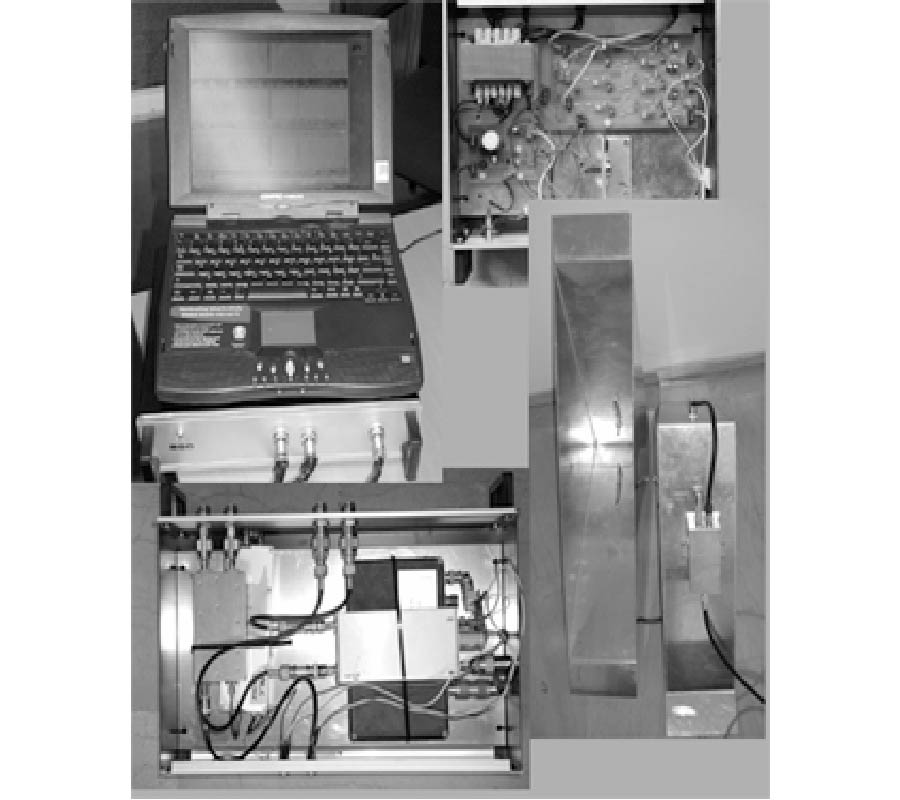
In this paper antenna measurements in the presence of multipath waves are discussed. Methods are proposed to diagnose the degradation sources of a compact range measurement system operating at a frequency much lower than the designed frequency range. A range-gating technique is employed to improve the capability of the compact range measurement system. With this technique, the field responses over a bandwidth for each rotation angle are coherently measured, and the fast Fourier transform is applied to obtain the range profile. A suitable window function is applied to extract the desired path and eliminate all other undesired paths. The antenna pattern is plotted according to the filtered response of the desired path. We have expressed the receiving voltage of a testing antenna in terms of its gain pattern and input impedance of the testing antenna operating in multipath environment. If the bandwidth of the testing antenna is very narrow and the mismatch problem is very serious over the required bandwidth, an algorithm is proposed to compensate the mismatch effect so that the obtained radiation pattern and the antenna gain are more accurate. Numerical and experimental results have verified the effectiveness of our method.
ANTENNA MEASUREMENTS IN THE PRESENCE OF MULTIPATH WAVES
0000-00-00
PIER
Vol. 30, 131-156
Electromagnetic Fields of a Thin Circula Loop Antenna Above a (Un)Grounded Multi-Layered Chiral Slabs: the Non-Uniform Current Excitation
W.-Y. Yin , L.-W. Li , T. S. Yeo and M.-S. Leong
The technique of dyadic Green's function (DGF) expressed in terms of the normalised cylindrical vector wave functions is adopted in this study for examining the electromagnetic fields excited by one thin circular loop antenna above a (un)grounded multi-layered chiral slabs. The current carried on such a circular loop antenna is expressed in a generalized Fourier series so as to incorporate practical situations. Thereby, exact representations of the radiated fields in both near and far zones are obtained in closed form, in a superposition of the rightand left-handed circularly polarized waves. Furthermore, numerical results are presented to show the radiation characteristics of the loop antenna in different layered chiral slab structures. The contributions of the lower- as well as higher-order current excitations to the far-zone field are examined in detail.
ELECTROMAGNETIC FIELDS OF A THIN CIRCULA LOOP ANTENNA ABOVE A (UN)GROUNDED MULTI-LAYERED CHIRAL SLABS: THE NON-UNIFORM CURRENT EXCITATION
0000-00-00
PIER
Vol. 30, 105-130
The Mueller Matrix of a Two-Layer Eccentrically Bianisotropic Cylinder Linear Array with Double Helical Conductances of the Surfaces: Clarification of the Magnetic Symmetry Groups
W.-Y. Yin , L.-W. Li , T. S. Yeo and M.-S. Leong
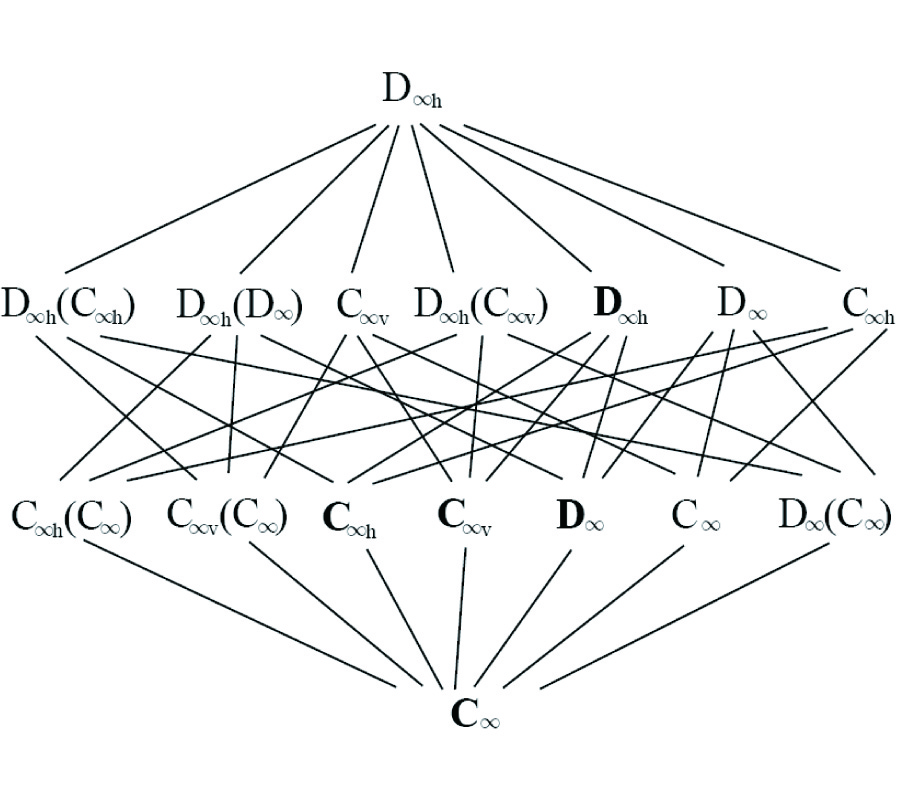
Unique effects of the double helical conductances of the surfaces (HCS) on the Mueller matrix (Mm) of a two-layer eccentrically bianisotropic cylinder linear array are investigated in this paper. The mathematical treatment is conducted based on the boundaryvalue approach combined with the technique of generalized separation variables. Both the TMz - and TEz-polarization of the obliquely incident waves are taken into account in the analysis. To gain insight into some physical mechanisms, numerical examples are presented to show the influences of the variations of the twist angles on the behavior of Mm of a linear array of four bianisotropic cylinders. Correspondingly, various magnetic symmetry groups (such as D∞(C∞), C∞v(C∞), D∞h(D∞), C∞h(C∞)) and some generalized symmetry and anti-symmetry relations, which govern all the elements of Mm or the scattering cross section under special chiral operations, are demonstrated. The present studies can be exploited to identify the constitutive characteristics of some bianisotropic media and to provide better understanding of the electromagnetic wave interaction with bianisotropic cylindrical objects with complex boundaries.
THE MUELLER MATRIX OF A TWO-LAYER ECCENTRICALLY BIANISOTROPIC CYLINDER LINEAR ARRAY WITH DOUBLE HELICAL CONDUCTANCES OF THE SURFACES: CLARIFICATION OF THE MAGNETIC SYMMETRY GROUPS
0000-00-00
PIER
Vol. 30, 85-104
Space-Harmonic Effects in Helical Slow-Wave Structure --- an Equivalent Circuit Analysis
S. Ghosh , Ashok Kumar Sinha , R. K. Gupta , S. N. Joshi , Pradip Kumar Jain and B. N. Basu
The analysis of a lossless helical slow-wave structure (SWS) using equivalent circuit approach, reported elsewhere, had been carried out for the fundamental mode only. This is essentially used to predict the transmission line parameters. Moreover, in the analysis the effect of permittivity on the radial propagation constant has not been considered. The radial propagation constant was considered to be same over the different structure regions. In this paper, the analysis has been developed for the space-harmonic modes considering different radial propagation constant over different structure regions. Due to it, the present analysis becomes more general, accurate and capable of dealing with a wide range of structure parameters. The dispersion relation developed here in terms of the equivalent line parameters for a lossless structure, namely, shunt capacitance per unit length and series inductance per unit length for the space-harmonic modes, as a special case, passes on to those obtained earlier by considering same radial propagation constants over different structure regions and for the fundamental mode. Besides the dispersion characteristics, characteristics impedance has also been predicted in terms of line parameters. The results presented here in terms of the structure parameters can be used for structure design and performance evaluation as well as for the control of any space harmonic of interest. The present analysis has also been validated with those experimental values reported elsewhere.
SPACE-HARMONIC EFFECTS IN HELICAL SLOW-WAVE STRUCTURE --- AN EQUIVALENT CIRCUIT ANALYSIS
0000-00-00
PIER
Vol. 30, 59-84
Polynomial Operators and Green Functions
Ismo Veikko Lindell and Femke Olyslager
Green functions corresponding to various polynomial partial differential operators of second, fourth and higher order are derived and the results are collected in tabular form for quick reference. The results and the methods suggested for their derivation are of importance in solving electromagnetic field problems associated with various linear (bi-anisotropic) media.
0000-00-00
PIER
Vol. 30, 47-57
Phase-Only Control of Antenna Sum Patterns
A. Trastoy and F. Ares
We describe how antenna sum patterns can be controlled by modifying just the phase distribution of the excitation. As examples, we calculate linear and circular aperture distributions affording symmetric sum patterns with low side lobe levels, and linear aperture distributions affording patterns with low sidelobe levels on one side of the beam.
PHASE-ONLY CONTROL OF ANTENNA SUM PATTERNS
0000-00-00
PIER
Vol. 30, 33-46
Efficient Capacitance Computation for Three-Dimensional Structures Based on Adaptive Integral Method
C.-F. Wang , L.-W. Li , P.-S. Kooi and M.-S. Leong
The adaptive integral method (AIM) is applied in this paper to calculate the capacitance coefficients for an arbitrarily shaped three-dimensional structure. The uniformity of multipole moment approximation is revealed theoretically and numerically; it is realized that the approach can guarantee the accuracy of AIM for computing capacitance of any structure. The memory requirement and computational complexity of the present method are less than O(N1.5) and O(N1.5 logN) for three-dimensional problems, respectively. Numerical experiments for several conducting structures demonstrate that the present method is accurate and efficient to compute capacitance of an arbitrarily shaped three-dimensional structure.
EFFICIENT CAPACITANCE COMPUTATION FOR THREE-DIMENSIONAL STRUCTURES BASED ON ADAPTIVE INTEGRAL METHOD
0000-00-00
PIER
Vol. 29, 321-335
Propagation of Electromagnetic Waves on the Lateral Surface of a Ferrite/Semiconductor Superlattice at Quantum Hall-Effect Conditions
Roland Tarkhanyan and Nikolaos Uzunoglu
The principal result of this work is the existence of coupled magnon-plasmon surface polaritons, i.e., nonradiative spin-electromagnetic surface waves on the lateral surface of a superlattice that consists of the alternating layers of GaAs-AlGaAs quantum well system and ferromagnetic insulator. Dispersion relations for the waves are considered at quantum Hall-effect conditions when a static quantizing magnetic field is perpendicular to the quantum well plane.
PROPAGATION OF ELECTROMAGNETIC WAVES ON THE LATERAL SURFACE OF A FERRITE/SEMICONDUCTOR SUPERLATTICE AT QUANTUM HALL-EFFECT CONDITIONS
0000-00-00
PIER
Vol. 29, 295-320
Analysis of Scattering and Coupling Problem of Directional Coupler for Rectangular Dielectric Waveguides
Masaji Tomita and Yoshio Karasawa
In this paper, scattering and coupling problems of the directional coupler for the dielectric rectangular waveguides are analyzed by the mode-matching method in the sense of least squares for the fundamental mode incidence. This directional coupler is composed of three parallel dielectric rectangular waveguides cores which are placed at equal space in the dielectric medium. Namely, respective cores are core regions of three respective rectangular waveguides. The central rectangular core among them has periodic groove structures of finite extent on its two surfaces which face each other and other two waveguide cores are perfect. In the central waveguide, the fundamental mode is incident from perfect part toward the periodic structure of this waveguide. The power of the incident mode to the central waveguide is coupled to other two waveguides through periodic groove structure. The coupled mode propagates in the other waveguides to the same or opposite direction for the direction of the incident mode when the Bragg condition is selected appropriately. The method of this paper results in the integral equations of Fredholm type of the second kind for the unknown spectra of scattered fields. The results of the first order approximate solutions of the integral equations are presented in this paper.
ANALYSIS OF SCATTERING AND COUPLING PROBLEM OF DIRECTIONAL COUPLER FOR RECTANGULAR DIELECTRIC WAVEGUIDES
0000-00-00
PIER
Vol. 29, 261-294
Power Flow Structures in Two Dimensional Electromagnetic Fields
Azhar Abbas Rizvi and C. H. Papas
Qualitative behaviour of time average power flow in electromagnetic fields can be studied by observing the critical points of the Poynting vector field, S. In order to analyze the behaviour of the flow lines of a plane Poynting vector field in the neighbourhood of a critical point, the S field is expanded in a Taylor series. Using this expansion, critical points can be classified according to their order and degeneracy. A formula for the index of rotation of the S field at a critical point is derived. The behaviour of the transverse electric or magnetic field component in the neighbourhood of the critical point is also studied. Lowest order critical points are always nondegenerate and they have interesting properties with regards to polarization and energy distribution. Examples involving linearly polarized system of interfering plane and/or cylindrical waves are given to show the critical points. The behaviour of flow lines is illustrated in these examples.
POWER FLOW STRUCTURES IN TWO DIMENSIONAL ELECTROMAGNETIC FIELDS
0000-00-00
PIER
Vol. 29, 231-259
Theory of Gyroelectric Waveguides
S. Liu , L.-W. Li , M.-S. Leong and T. S. Yeo
Circular conducting waveguides filled with gyroelectric media are studied in this paper and the dyadic Green's functions in these waveguides are obtained for the first time. The electric and magnetic fields in the waveguide are expressed in terms of cylindrical vector wave function expansion. It is shown that each of the eigenmodes in the waveguide consists of two eigenwaves whose wave numbers can be determined by the characteristic equation. Dispersion relation is obtained by applying boundary conditions to the eigenmodes. Mode orthogonality is discussed before the orthogonal relations are formulated and then used to determine the expansion coefficients of electric and magnetic fields. The complete expansions of both the electric and the magnetic dyadic Green's functions are finally obtained. The calculated dispersion curves are depicted and discussed while effects of gyrotropy are shown.
THEORY OF GYROELECTRIC WAVEGUIDES
0000-00-00
PIER
Vol. 29, 221-230
Measurement of Complex Natural Resonances of Targets in Free Space and Lossy Media
Y. Wang , I. D. Longstaff and C. J. Leat
The scattered fields of a number of targets in free space are measured. Their complex natural resonances are extracted from the late time responses, using the generalized pencil-of-function method. The complex natural resonances, as the targets are immersed in a lossy medium, are investigated using Baum's transform. The results of the complex natural resonances for various targets are expected to be utilized for target identification.
MEASUREMENT OF COMPLEX NATURAL RESONANCES OF TARGETS IN FREE SPACE AND LOSSY MEDIA
0000-00-00
PIER
Vol. 29, 187-220
Simultaneity, Causality, and Spectral Representations
Dan Censor
Recently Zangari and Censor discussed the non-uniqueness of the spatiotemporal world-view, and proposed a representative alternative based on the Fourier transform as a mathematical model. It was argued that this so called spectral representation, by virtue of the invertibility of the Fourier transform, is fully equivalent to our conventional spatiotemporal world-view, although in the two systems the information is ordered in a radically different manner. Criticism of the new conception can be traced back to the fundamental principles of simultaneity and causality, whose role in the spectral domain has not been sufficiently demonstrated. These questions are carefully investigated in the present study. Simple but concise examples are used to verbally and graphically clarify the mathematics involved in integral transforms, like the Fourier transform under consideration. The transition from the spatiotemporal domain to the spectral domain entails not only a different patterning of data points. What is involved here is that every point in one domain is affecting all points in the other domain, and to follow what happens to simultaneity and causality under such circumstances is not a trivial feat. Even for the general reader, the discussion based on the simple examples should suffice to critically follow the arguments as they unfold. For completeness, the general mathematical formulations are given too. In order to follow the footprints of the spatiotemporal simultaneity and causality concepts into the spectral domain, a special strategy is implemented here: Certain spatiotemporal situations are stated, and then their outcome in the spectral domain is examined. For example, it is shown that if a causal sequence of events is flipped over in time, thus reversing the order of cause and effect, in the spectral domain the associated spectrum will become a mirror image of the original one. The claim that the spectral transforms are invertible, consequently no information is lost in the spectral world-view, is thus substantiated. These ideas are extended to situations involving both space and time. Of particular interest are cases where relatively moving observers are involved, each at rest with respect to an appropriate spatial frame of reference, measuring proper time in this frame. In such cases, time and space are intertwined, hence simultaneity and causality must be appropriately redefined. Both the Galilean, and the Special Relativistic Lorentzian transformations in the spatiotemporal domain, and their corresponding spectral domain Doppler transformations, fit into our argument. Special situations are assumed in the spatiotemporal domain, and their consequent footprints in the spectral domain are investigated. Although a great effort is made to keep the presentation and notation as simple as possible, in some places more sophisticated mathematical concepts, such as the Jacobian associated with the change of integration variables, must be incorporated. Here the general reader will have to accept the (mathematical) facts without proof.
SIMULTANEITY, CAUSALITY, AND SPECTRAL REPRESENTATIONS
0000-00-00
PIER
Vol. 29, 169-185
Pulse Signal Scattering from Perfectly Conducting Complex Object Located Near Uniform Half-Space
Oleg Sukharevsky , S. A. Gorelyshev , Vitally Vasilets and A. V. Muzychenko
The approximative calculation technique of the pulse signal backscattering for the perfectly conducting electrically large object (with small curvatures) located near the boundary of the uniform half-space (perhaps, with the complex parameters) is proposed. The calculation results of electromagnetic fields scattered from perfectly conducting sphere and complex shape objects located near the ground surface are demonstrated and discussed.
PULSE SIGNAL SCATTERING FROM PERFECTLY CONDUCTING COMPLEX OBJECT LOCATED NEAR UNIFORM HALF-SPACE
0000-00-00
PIER
Vol. 29, 107-168
Application-Oriented Relativistic Electrodynamics (2)
Dan Censor
This article is a revised and upgraded edition of a previous one published in this journal, hence the label (2), see the General Remarks section below. Relativistic Electrodynamics, for many years a purely academic subject from the point of view of the applied physicist and electromagnetic radiation engineer, is nowadays recognized as pertinent to many practical applications. We therefore need to define a syllabus and explore the best methods for educating future generations of such users. Such an attempt is presented here, and is of course biased by personal preferences. What emerges as general guidelines are the facts that Relativistic Electrodynamics should be presented axiomatically, without trying to "explain the physical meaning" of Special Relativity, that four-vectors and their mathematical properties should be emphasized, and that the field tensors, an elegant formalism, albeit of limited practical use, should be avoided. Use of four-fold Fourier transforms not only greatly simplifies the relevant manipulations, it is also of paramount importance for discussion of dispersive media. This approach yields many concepts as mathematical results, e.g., the Relativistic Doppler effect, which therefore do not require a long phenomenological discussion with many "explanations". Introducing this approach as early as possible opens new vistas for the student and the educator, indeed some of the new results here do not appear in textbooks on Special Relativity. One of the main results shown here is the fact that the generalized Fermat principle states that the ray will propagate in such a manner that the proper time will be minimized (or extremized, in general). It also strips the mystique of this principle, showing that it is in fact equivalent to a modest mathematical condition on the smoothness of the phase function. The presentation is constructed in a way that allows the student to gradually overcome difficulties in assimilating new concepts and applying them. In that too it is different from many conventional presentations.
0000-00-00
PIER
Vol. 29, 87-106
Scattering by an Arbitrarily Shaped Rotationally Uniaxial Anisotropic Object: Electromagnetic Fields and Dyadic Green's Fucntions
S. Liu , L.-W. Li , M.-S. Leong and T. S. Yeo
The electromagnetic scattering by a three-dimensional arbitrarily shaped rotationally uniaxial anisotropic object is studied. Electromagnetic fields in a uniaxial medium are solved for first using the method of separation of variables, and then expressed in a very compact form by introducing the modified spherical vector wave functions. The equivalence theorem and the T-matrix method are applied in the analysis of the scattering problem. The scattered fields and the dyadic Green's functions both external and internal to the scatterer are derived in terms of spherical vector wave functions and matrix-form coefficients. Through making use of the dyadic Green's functions obtained, numerical results are provided for an incident field excited by an infinitesimal dipole. The scatterers are assumed to be prolate and oblate dielectric spheroids with the rotational z-axis. The angular scattering intensities in far-zone are plotted for all these cases. And some conclusions are also drawn eventually from numerical discussions.
SCATTERING BY AN ARBITRARILY SHAPED ROTATIONALLY UNIAXIAL ANISOTROPIC OBJECT: ELECTROMAGNETIC FIELDS AND DYADIC GREEN'S  FUCNTIONS
0000-00-00
PIER
Vol. 29, 69-85
Electromagnetic Scattering from Periodic Arrays of Two Circular Cylinders Per Unit Cell
Taras Kushta and Kiyotoshi Yasumoto
An efficient and accurate method to the problem of planewave scattering from periodic arrays of two circular-cylinders per unit cell is presented. The scattered fields are calculated using the lattice sums characterizing a periodic arrangement of scatterers and the aggregate T-matrix for the isolated two-cylinders system in free space. The cylinders may be of dielectric, perfect conductor, or their mixture with different dimensions. The numerical examples for the resonant scattering are presented with an emphasis on the application to the polarization-dependent or polarization independent narrow-band filters.
ELECTROMAGNETIC SCATTERING FROM PERIODIC ARRAYS OF TWO CIRCULAR CYLINDERS PER UNIT CELL