Search Results(13789)

2020-09-29
PIER C
Vol. 105, 253-269
Sparse Self-Calibration for Microwave Staring Correlated Imaging with Random Phase Errors
Bo Yuan , Zheng Jiang , Jianlin Zhang , Yuanyue Guo and Dongjin Wang
Microwave Staring Correlated Imaging (MSCI) technology can obtain high-resolution images in staring imaging geometry by utilizing the temporal-spatial stochastic radiation field. In MSCI, sparse-driven approaches are commonly used to reconstruct the target images when the radiation fields are accurately calculated. However it is challenging to compute radiation filed with high precision due to existence of random phase errors in MSCI systems. Therefore, in this paper, a self-calibration method is proposed to handle the problem. Specifically, a two-step self-calibration framework is applied which alternately reconstructs the target image and estimates the random phase errors. In the target image reconstruction step, sparse-driven approaches are utilized, while in the random phase errors calibration step, an adaptive learning rate method is adopted. Moreover, the batch--learning strategy is utilized to reduce computation burden and obtain effective convergence performance. Numerical simulations verify the advantage of the proposed method to obtain good imaging results and improve random phase errors correction performance.
SPARSE SELF-CALIBRATION FOR MICROWAVE STARING CORRELATED IMAGING WITH RANDOM PHASE ERRORS
2020-09-29
PIER C
Vol. 105, 241-251
Compact Triple-Band CPW-Fed Square Slot Antenna with Dual-Polarization Characteristics for Wireless Applications
Ting Wu , Juan Chen and Peng-Fei Wu
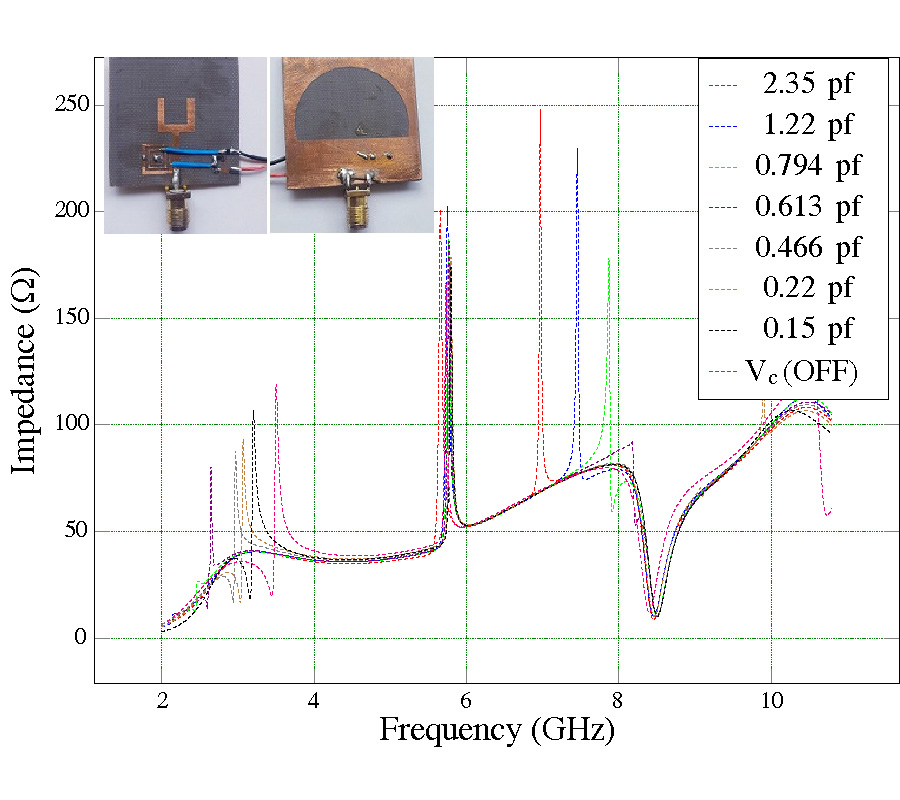
In this paper, a compact triple-band coplanar waveguide (CPW)-fed patch antenna with dual-polarization characteristics for wireless applications is proposed. The antenna is composed of an F-shaped patch, a grounded-C strip, a rectangular strip, and a horizontal rectangular grounded slot. The first circular polarized band is obtained by the F-shaped feed-line, and the second is achieved by the left C-shaped strip, while the right rectangle strip is responsible for the lower linearly polarized band. By inserting a slot at the right of the square slot, a notched band centered at 5.5 GHz is achieved. Both simulated and experimental results show that the antenna can generate three separate impedance bandwidths to cover frequency bands of 2.4/5.2/5.8-GHz WLAN band and X band. And the antenna is circularly polarized in the 5.8 GHz and 10GHz band. Furthermore, the antenna structure is extremely simple and occupies small space. The proposed antenna has its applications in compact and portable devices operating at multiple frequency bands like cellular phones, Tablets, Wi-Fi devices, etc.
COMPACT TRIPLE-BAND CPW-FED SQUARE SLOT ANTENNA WITH DUAL-POLARIZATION CHARACTERISTICS FOR WIRELESS APPLICATIONS
2020-09-28
PIER M
Vol. 97, 35-44
Photonic-Crystal Substrates for Harmonic Suppression in Multi-Band Smart Devices
Omar F. Siddiqui , Raghied Atta , Muhammad Amin and Hattan Abutarboush
We propose photonic crystal substrates that support microstrip structures to mitigate the problem of spurious harmonics in microwave devices. The wave propagation in microwave transmission lines can be controlled by employing substrates that have modulated dielectric constant such that there exist forbidden spectral regions, which are known as bandgaps in the photonic crystal terminology. With proper selection of crystalline geometry, these bandgaps can be designed to suppress the spurious harmonics. To show the existence of bandgaps in microstrip structures, we present Bloch analysis with a bi-layered photonic crystal configuration of high and low permittivities. For a practical microstrip structure that incorporates a bi-layered photonic crystal substrate, we show suppression of spurious harmonics via circuit analysis and transmittance measurements. Furthermore, a 2.5 GHz coupled-line filter is designed on a photonic crystal substrate, and 30 dB second harmonic suppression at 5 GHz is experimentally demonstrated. With the current trend multiple device integration on single platform, the photonic crystal substrates can potentially provide the noise suppression and spurious harmonic rejection needed for microwave components occupying close proximity.
PHOTONIC-CRYSTAL SUBSTRATES FOR HARMONIC SUPPRESSION IN MULTI-BAND SMART DEVICES
2020-09-28
PIER M
Vol. 97, 25-34
An Investigation into the Diffraction Effects of Building FAÇADE for Propagation Modelling
Yujia Zhang and Soo Yong Lim
This paper investigates the problem of wave propagation on periodic building façade with ray tracing method. Compared with the common practice, which is to replace a complex building structure with a flat surface and cause reduction in simulation accuracy, in this research, the Uniform Theory of Diffraction (UTD) is utilized with ray tracing method to include diffraction effects on building facades in propagation simulation. Two scenarios have been modelled which are Moore Hall's façade and Malaysia shop houses respectively. First, the façade models were created based on real buildings, and propagation simulations were conducted for flat surface and knife edge approximations. Then, for different approximations, the accuracy of simulation results was further examined, which varied with the degree of simplification and the frequency of the signal. Also, the computation time was evaluated to consider the speed of simulation. This study is beneficial to the improvement of accuracy in propagation prediction and supports the development of ray-tracing propagation prediction software and the design of wireless communication system.
AN INVESTIGATION INTO THE DIFFRACTION EFFECTS OF BUILDING FAÇADE FOR PROPAGATION MODELLING
2020-09-28
PIER Letters
Vol. 93, 107-114
A Novel Single Layer Ultra-Wideband Metamaterial Absorber
Pegah Nochian and Zahra Atlasbaf
Electromagnetic interference (EMI) is a crucial problem, and for solving this problem, absorbers especially very thin absorbers are used. Factors like frequency increasing in a device, high integration in electronic systems, higher power densities, and decreasing the size and thickness of PCB make it crucial. So, a novel ultra-wideband and thin metamaterial absorber is proposed in this paper. The absorber consists of metamaterial unit cells, which have a single FR4 layer, metallic ground, and four metallic spirals. A one hundred ohms SMD resistor is placed between two of the spirals. The size of the unit cell is 5.85×5.85×3.2 mm3. The proposed absorber is ultra-thin (λ0/10), and the absorption occurs over a wide incident angle [0°-40°]. The reflection is less than -12dB in [6.5 GHz -12 GHz], and the absorption is more than 94% in this bandwidth. The structure is fabricated, and the outcomes of simulation and measurement are compared with each other. The values of front to back ratio of the fabricated measurements are -12.8, -7.31, and -15.36 dB at 8, 10, and 12 GHz, respectively. The values obtained from simulation are -13, -9.4, and -14 dB, respectively. There is a good agreement(accordance) between the simulation and measurement results of this absorber.
A NOVEL SINGLE LAYER ULTRA-WIDEBAND METAMATERIAL ABSORBER
2020-09-27
PIER C
Vol. 105, 229-240
Differentially Fed Dual-Polarized SIW Cavity-Backed Patch Antenna with Wide Bandwidth Under Multimode Resonance
Jiao-Jiao Xie and Zi Chen
A differentially fed dual-polarized patch antenna with wide bandwidth is presented in this paper using Substrate-Integrated Waveguide (SIW) technology. The antenna comprises a circular patch radiator, a square SIW cavity and four symmetric arc-shaped slots. The circular patch is internally embedded in the square SIW cavity with a surrounded ring slot. Two pairs of differential L-shaped probes are used for the excitation of the differential signals. These signals excite the orthogonal linearly-polarized modes. The dominant resonant mode of the circular patch resonator (TM11) and the modes of the SIW cavity (TE110 and TE120/TE210) are employed to achieve effective radiation under these resonances. Besides, four symmetric arc-shaped slots are etched on the top surface of the cavity to enhance the impedance bandwidth. The resonant properties of these modes are studied based on the cavity model theory. Then, their resonant frequencies are discussed to provide information for designing and optimizing such an antenna. Finally, the feeding positions of the differential L-shaped probes are investigated for good impedance matching. The proposed antenna has been fabricated and measured. The measured results show that the proposed antenna achieves a wide impedance bandwidth of about 64.8% (4.37-8.56 GHz) and 64.2% (4.48-8.72 GHz) for horizontal and vertical polarization, respectively. High differential isolation of better than 30 dB and low cross-polarization are obtained by adopting the differential feeding mechanism. Due to the SIW cavity-backed structure, the antenna shows unidirectional radiation patterns and low back-lobe radiation, making it conveniently integrated with microwave differential circuits and applied in the base station systems.
DIFFERENTIALLY FED DUAL-POLARIZED SIW CAVITY-BACKED PATCH ANTENNA WITH WIDE BANDWIDTH UNDER MULTIMODE RESONANCE
2020-09-27
PIER C
Vol. 105, 217-227
Small Signal BI-Period Harmonic Undulator Free Electron Laser
Ganeswar Mishra , Avani Sharma and Saif Md Khan
In this paper, we discuss the spectral property of radiation of an electron moving in a bi-period harmonic undulator field with a phase between the primary undulator field and the harmonic field component. We derive the expression for the photons per second per mrad2 per 0.1% BW of the radiation. A small signal gain analysis is also discussed highlighting this feature of the radiation. A bi-period index parameter, i.e., Λ is introduced in the calculation. According to the value of the index parameter, the scheme can operate as one period or bi-period undulator. It is shown that when Λ = π, the device operates at the fundamental and the third harmonic. However, when Λ = π/2, it is possible to eliminate the third harmonic.
SMALL SIGNAL BI-PERIOD HARMONIC UNDULATOR FREE ELECTRON LASER
2020-09-25
PIER M
Vol. 97, 13-24
Microwave Imaging Solutions for Medical Imaging Using Re-Weighted Basic Pursuit Algorithm
Thathamkulam Agamanandan Anjit , Ria Benny , Philip Cherian and Mythili Palayyan
This paper describes an innovative technique for the quantitative reconstruction of the dielectric and conductivity distribution of objects in a microwave tomography framework using sparse data. The proposed method tries to extract information about the size, shape, localisation and dielectric distribution of various inclusions within the object under study using an iterative reconstruction methodology in the sparse domain. The proposed algorithm combines the Distorted Born Iteration method (DBIM) and a convex optimization technique for solving the inverse ill-posed problem. The Re-weighted Basis Pursuit (RwBP) algorithm is chosen as the convex optimization technique in this work. The performance of the proposed algorithm has been compared with the TV-norm method, and the results obtained are highly encouraging. The proposed method produces a significant reduction in the reconstruction error as compared to the TV norm method with an error value of 0.083 as against 0.32 in the case of TV norm in the presence of 25 dB noise. By accurately preserving the edges of the inclusions the proposed technique is found to provide an overall improvement in the reconstruction in terms of tissue differentiation (permittivity and conductivity), dimensions of inclusions, resolution, shape, size and coordinate localisation of inclusions. The proposed algorithm converges within 10-12 iterations as compared to other complex imaging algorithms available in the literature. Further, this proposed technique is validated using experimental data from an actual breast imaging setup. The three inclusions of 10 mm, 6 mm, and 3 mm have been localised with errors of 0.052, 0.04, and 0.09, respectively The results obtained from the real-time data show the applicability and feasibility of the proposed algorithm in breast tumor imaging application
MICROWAVE IMAGING SOLUTIONS FOR MEDICAL IMAGING USING RE-WEIGHTED BASIC PURSUIT ALGORITHM
2020-09-25
PIER B
Vol. 89, 1-27
Recent Advances in Wearable Antenna Technologies: A Review
Sarmad Nozad Mahmood , Asnor Juraiza Ishak , Tale Saeidi , Hussein Alsariera , Sameer Alani , Alyani Ismail and Azura Che Soh
Wearable antennas have received a great deal of popularity in recent years owing to their enticing characteristics and opportunities to realize lightweight, compact, low-cost, and versatile wireless communications and environments. These antennas must be conformal, and they must be built using lightweight materials and constructed in a low-profile configuration when mounted on various areas of the human body. These antennas ought to be able to function close to the human body with limited deterioration. These criteria render the layout of wearable antennas demanding, particularly when considering factors such as investigating the usability of textile substrates, high conductive materials during fabrication processes, and the effect of body binding scenarios on the performance of the design. Although there are minor differences in magnitude based on the implementations, several of these problems occur in the body-worn deployment sense. This study addresses the numerous problems and obstacles in the production of wearable antennas, their variety of materials, and the techniques of manufacturing alongside with bending scheme. This is accompanied by a summary of creative features and their respective approaches to address these problems recently raised by work in this area by the science community.
2020-09-24
PIER M
Vol. 96, 191-202
Detection of Depth of the Tumor in Microwave Imaging Using Ground Penetrating Radar Algorithm
Vanaja Bensingh , John Bosco Joselin Jeya Sheela , Rahul Krishnan , Lalitha Kandasamy and Sasirekha Devarajulu
Microwave Imaging (MI) is a new technique for detecting breast cancer using electrical property difference between the non-malignant and malignant tissues present in the breast. Numerous studies show that detecting the depth of the tumor is the essential measure in determining additional management. Developing evidence in many of the literature surveys illustrate that detecting tumor depth is a precise parameter for identifying the affected area. Thus, Ground Penetrating Radar (GPR) algorithm is applied successfully to detect the exact depth of the malignant tissue. Generally, GPR is originally conceived for archaeological investigations, building condition assessment, detection of buried mines, etc. But here an effort has been made to apply GPR to Radar-based breast cancer detection. The simulated bandwidth of the proposed UWB antenna starts at 2.4GHz and ends at 4.7 GHz. The electromagnetic wave reflected due to dielectric property variation is used by GPR algorithm to identify the depth of the tumor. Before applying a depth migration technique, preprocessing steps like Cartesian form transformation, Hermitian Signal Processing, and Inverse Fast Fourier Transform (IFFT) have to be followed in the backscattered signal to convert positive frequency data into time-domain data. Depth details can be noticed in the migrated image, after applying the migration procedure. Results show that GPR algorithm can be effectively used for detecting the tumor embedded in the depth of the breast tissue. To understand the effectiveness of this imaging scheme, an experimental analysis is done using a combination of wheat flour and water-petroleum jelly. The measured impedance bandwidth of the UWB antenna ranges from 2.8 GHz to 4.48 GHz. The observation is done for a known spherical tumor of diameter 13mm which is placed at different depths from the skin layer. While applying the algorithm in the received backscattered signal, we were able to detect correctly the tumor at a depth of 45mm embedded in the breast tissue. The experimental results are compared with simulation ones to validate the aptness of a microwave imaging approach for detecting the depth of the tumor.
DETECTION OF DEPTH OF THE TUMOR IN MICROWAVE IMAGING USING GROUND PENETRATING RADAR ALGORITHM
2020-09-24
PIER M
Vol. 96, 181-190
An Extended Hybrid Analytical Model for Shielding Effectiveness Prediction of Multi-Cavity Structure with Numerous Apertures
Wei Shen , Sen Wang , Wei Li , Hai Jin and Hongliang Zhang
In this paper, we extend our previously published hybrid analytical model for estimation of shielding effectiveness of a dual-cavity structure with an aperture array to generalize the model for a wider range of applications. The aperture array in the center and off-center, higher order modes, and multi-cavity are taken into consideration, respectively. At last, comparations of the results calculated by the extended hybrid analytical model with those obtained by the simulation software CST are given. The results show that the extended hybrid analytical model for shielding effectiveness prediction of a three-cavity structure with numerous apertures has high precision and high efficiency.
AN EXTENDED HYBRID ANALYTICAL MODEL FOR SHIELDING EFFECTIVENESS PREDICTION OF MULTI-CAVITY STRUCTURE WITH NUMEROUS APERTURES
2020-09-24
PIER M
Vol. 96, 169-179
Application of Stub-Loaded Step-Impedance Resonator for Quint-Band Bandpass Filter Design
Liqin Liu , Min-Hang Weng , Yabin Weng , Chin-Yi Tsai and Ru-Yuan Yang
Stub-loaded step-impedance resonator (SLSIR) is a multi-mode resonator and can be applied to implement multi-band or wideband filters. In this paper, odd- and even mode impedance analysis is used to resonant properties of the SLSIR. Only two SLSIRs are applied to design a quint-band bandpass filter (BPF). To find the required five resonant modes, the frequency ratios of the high order modes to the fundamental mode of the SLSIR are calculated depending on the impedance ratio and the length ratio of the SLSIR. Several coupling types of the SLSIRs are considered first to have enough energy for all the five passbands. When forming the quint-band, a pair of the SLSIR are coupled electrically and connected with 0o feeding input/output structure. The center frequencies are designed at 1.38 GHz, 2.58 GHz, 3.69 GHz, 5.36 GHz, and 5.8 GHz, corresponding to the different communication applications. The filter is designed, fabricated, and measured. Simulated and experimental results are in agreement, verifying the design concept.
APPLICATION OF STUB-LOADED STEP-IMPEDANCE RESONATOR FOR QUINT-BAND BANDPASS FILTER DESIGN
2020-09-24
PIER M
Vol. 96, 157-167
Applying Electromagnetic Field Analysis to Minimize the Earth Resistance on High Resistivity Soils
Silvia Ronda , Clara Oliver , OIbar Martínez Vilchez , Patricia Márquez Paniagua and Jose Miguel Miranda
Different optimization strategies to reduce the earth resistance in a high resistivity soil are discussed in this work and illustrated with a practical example. Finite Element simulations reproducing real-world conditions in terms of structure design and soil profiles have been made to evaluate the improvements that should be adopted to minimize earth resistance. We analyze an example of an earthing system of an array of four identical telescopes installed on high resistivity (k­¢m order) soils with two different behaviors. In the first one, current dissipation occurs in an uniform soil. In the second one, a terrain with four layers of different resistivities is considered. This situation corresponds to a real world case of an observatory constructed in a volcanic terrain. It was found that the best strategy in each case differs: extend horizontal electrodes as far as possible from the foundation in the first case and combine these electrodes with buried vertical electrodes that connect with deep high conductive layers in the second. The results are discussed in terms of the achieved improvements depending on the modifications introduced in the main structure.
APPLYING ELECTROMAGNETIC FIELD ANALYSIS TO MINIMIZE THE EARTH RESISTANCE ON HIGH RESISTIVITY SOILS
2020-09-24
PIER Letters
Vol. 93, 99-106
An Improved Loop Ultra-Wideband MIMO Antenna System for 5G Mobile Terminals
Zhong Yu , Meng Wang and Yongbin Xie
An eight-element ultra-wideband multiple-input multiple-output antenna system is proposed for the 5G mobile terminals. Each radiating branch is composed of a Loop and a monopole antenna. The ultra-wideband characteristics of the antenna are obtained by a T-shaped feed branch coupling a radiation branch. Furthermore, the isolation is lower than -15 dB by introducing a T-shaped neutralization line structure. The results of simulation and measurement show that the antenna system can cover 3.3-5.6 GHz, and the antenna efficiency is 45%-80%. At the same time, the envelope correlation coefficient between any two elements is lower than 0.03. Therefore,the proposed antenna in this study is very suitable for the eight-element MIMO antenna system as a reference.
AN IMPROVED LOOP ULTRA-WIDEBAND MIMO ANTENNA SYSTEM FOR 5G MOBILE TERMINALS
2020-09-24
PIER Letters
Vol. 93, 89-97
Wideband Triple Resonance Patch Antenna for 5G Wi-Fi Spectrum
Arvind Kumar , Ayman Abdulhadi Althuwayb and Mu'ath Al-Hasan
This study presents a triple resonance microstrip slotted antenna element for 5G (5.15-5.875 Wi-Fi band) applications. This antenna constitutes a rectangular patch stimulated with an I-shaped slot and two shorted metallic vias. This arrangement results in an enhancement of the bandwidth. The antenna features a wide impedance bandwidth (IBW) matching due to triple resonances when being properly excited by coax-probe feed. The IBW of the antenna ranges from 5-6 GHz band with three resonances at around 5.2, 5.5, and 5.8 GHz. Finally, the antenna is fabricated and measured, which displays a -10 dB IBW of 5.04-6.05 GHz (18.2%) featuring stable radiation and gain (around 7 dBi). Moreover, the measurements are in good agreement with simulations. On the account of the single-layered dielectric, this antenna can be easily mounted with active electronics.
WIDEBAND TRIPLE RESONANCE PATCH ANTENNA FOR 5G WI-FI SPECTRUM
2020-09-23
PIER M
Vol. 96, 147-156
Refractive Index Sensor MIM Based Waveguide Coupled with a Slotted Side Resonator
Salah Eddine Achi , Abdesselam Hocini , Hocine Ben Salah and Ahlam Harhouz
In this paper, a plasmonic sensor based on a metal-insulator-metal (MIM) waveguide with a slotted side-coupled elliptical cavity is proposed. The transmission characteristics of the cavity are analyzed theoretically, and the improvements of performance for the elliptical cavity structure compared to a single disk cavity are studied. The influence of structural parameters on the transmission spectra and sensing performances is investigated thoroughly. The achieved sensitivity for the first mode was S = 959 nm/RIU and S = 2380 nm/RIU for the second one. Its corresponding sensing resolution is 1.04 x 10⁻⁵RIU for mode 1 and 4.20 x 10⁻⁶RIU for mode 2, respectively, and high transmissions are achieved at the two resonant wavelengths of 898.8 nm and 1857.1 nm. The proposed plasmonic sensor is a good candidate for designing novel devices and applications, in the field of chemical and biological sensing, and also in the field of plasmonic filters, switches, etc.
REFRACTIVE INDEX SENSOR MIM BASED WAVEGUIDE COUPLED WITH A SLOTTED SIDE RESONATOR
2020-09-23
PIER B
Vol. 88, 151-173
Physical Optics Scattering by a PEC Plate Located Vertically Over a Dielectric Half-Space
Burak Polat and Ramazan Daşbaşı
Analytical solution and numerical results are provided for the problem of plane wave scattering by an electrically large Perfect Electric Conductor plate located vertically over a simple lossy dielectric half-space. The incoming monochromatic homogeneous plane wave is assumed to be incident from an arbitrary direction and decomposed into TE and TM components. Physical Optics approximation is used for estimating the currents induced on the plate. The scattered fields are obtained explicitly by evaluating the Electric Field Integral Equation analytically incorporating the set of Green functions by R.W.P. King which apply under High Contrast Approximation. Amplitude and phase variations of the numerical distance and attenuation function are illustrated in HF-MW band ranges. Azimuth and elevation patterns for total scattered electric fields are illustrated with emphasis on the relative contributions of surface wave fields depending on operating frequency and refractivity. An analytical procedure to extract free space RCS information from measured/calculated data is introduced based on the asymptotic behaviours of surface waves and its stability is tested numerically.
PHYSICAL OPTICS SCATTERING BY A PEC PLATE LOCATED VERTICALLY OVER A DIELECTRIC HALF-SPACE
2020-09-22
PIER M
Vol. 96, 139-146
Analysis of the Noise Components for Affecting the Imaging Performance of the Synthetic Aperture Interferometric Radiometer (SAIR)
Jinguo Wang , Zhaozhao Gao , Jie Gu , Shiwen Li , Xiaoyun Zhang , Zitong Dong , Zilong Zhao , Fan Jiang , Bo Qi and Wei Zhao
Microwave radiometer is a high-sensitivity ``camera'', which realizes high-resolution imaging by receiving the natural radiation signal in microwave band from the observation scene. Due to the imperfection of the system hardware, the measured data include not only the radiated signal of interest but also the noise generated by the system hardware itself. These unexpected noises will affect the imaging performance of the system, especially for the synthetic aperture interferometric radiometer (SAIR). In this paper, the noise behavior of the SAIR system is analyzed and modeled for the first time. Based on the noise behavior model, a method is proposed to pick the optimal averaging time for imaging with high fidelity in the SAIR system. Some experiments are carried out to verify the correctness of the noise behavior model and the optimal averaging time picking method for SAIR. With the noise behavior model and the optimal averaging time picking method, it can provide an effective guide for the SAIR system design, error correction, and reconstruction.
ANALYSIS OF THE NOISE COMPONENTS FOR AFFECTING THE IMAGING PERFORMANCE OF THE SYNTHETIC APERTURE INTERFEROMETRIC RADIOMETER (SAIR)
2020-09-22
PIER Letters
Vol. 93, 81-87
Analysis and Design of a New Ring Bandstop Filter Using Lumped Equivalent Circuit
Chaoyue Yang and Chengfang Fu
A new ring wideband bandstop filter (BSF) and its exact design method is proposed and investigated in this letter. The BSF is devised by introducing an additional transmission line to a traditional hairpin bandstop filter in parallel, hence giving enhanced selectivity and attenuation performance. A lumped lowpass equivalent circuit is introduced to explain the mechanism of the filter. Rigorous correspondence between the BSF and its equivalent circuit is established by comparing their even- and odd-mode input admittances. This enables the BSF to be synthesized the same way as lumped filters. Both the BSF and the method have been documented by a design example.
ANALYSIS AND DESIGN OF A NEW RING BANDSTOP FILTER USING LUMPED EQUIVALENT CIRCUIT
2020-09-22
PIER C
Vol. 105, 203-215
A New Non-Convex Approach for Compressive Sensing MRI
Huihui Yue and Xiangjun Yin
Compressive sensing (CS) is an effective method for reconstructing magnetic resonance imaging (MRI) image from under-determined linear system (ULS). However, how to improve the accuracy of MRI image reconstructed by CS is still a serious problem, especially in noisy conditions. To solve this problem, in this paper, we propose a novel approach, dubbed as regularized maximum entropy function (RMEF) minimization algorithm. Specifically, motivated by the entropy function in information theory, we propose a maximum entropy function (MEF) to approximate Lq-norm (0 < q < 1) as sparsity promoting objectives, and then the regularization mechanism for improving the de-noising performance is adopted. Combining the above two ideas, a new objective function of RMEF method is proposed, and the global minimum is iteratively solved. We further analyze the convergence to verify the robustness of the RMEF algorithm. Experiments demonstrate the state-of-the-art performances of the proposed RMEF algorithm and show that the RMEF achieves higher PSNR and SSIM than other widely-adopted methods in MRI image recovery.
A NEW NON-CONVEX APPROACH FOR COMPRESSIVE SENSING MRI