Search Results(13789)

2020-10-10
PIER M
Vol. 97, 97-106
Flexible Frequency Selective Surface in Convoluted Square Form with Microstrip Patch for X-Band Application
Paulpandian Palniladevi and Priya Dharshini Ramaraj
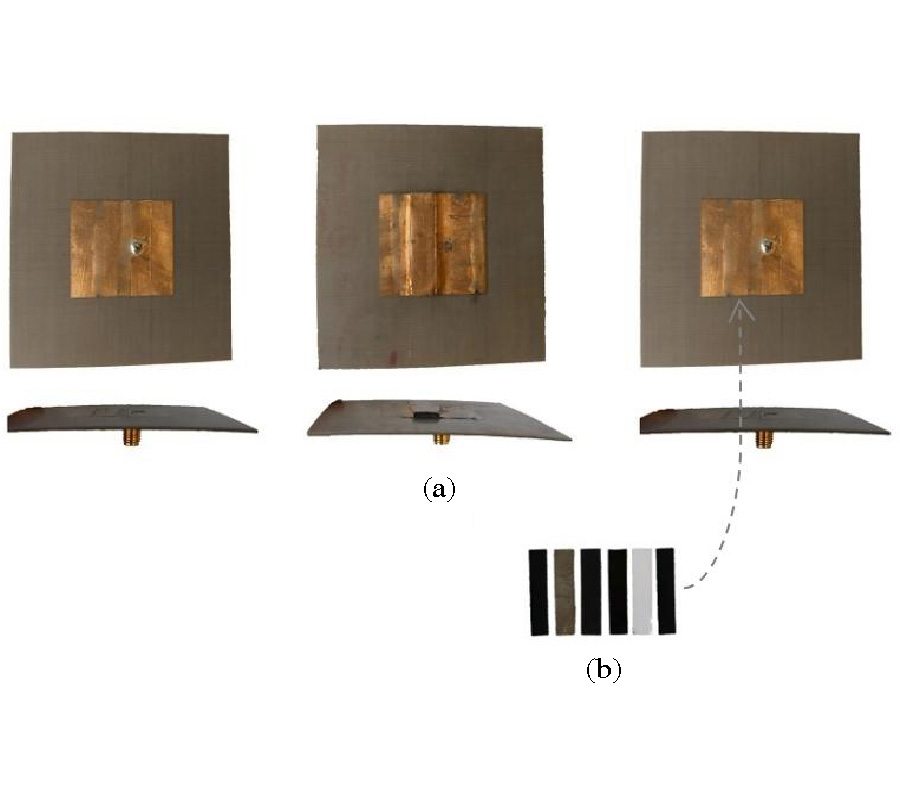
This article reports a very efficient Frequency Selective Surface (FSS) with Convoluted Square Loop (CSL) shape is designed for applications in the X-band. They are designed on the surfaces of an FR-4 substrate. Frequency selective surface (FSS) is a combination of a periodic structure designed to selectively absorb, reflect, and transmit the electromagnetic (EM) waves. FR-4 material provides durability and flexibility. A convoluted square loop structure reduces the size of the unit cell, and it also has a better stability with good gain. So, a CSL patch with a CSL FSS array with a slot on dual FR4 substrates is introduced for the improvement in overall gain and bandwidth. As per the design parameters, a structure is designed at 10GHz. This structure is designed with ANSYS HFSS. The proposed antenna structure has a return loss of -36.424 db, and VSWR value is 1.0307. The measurement results show a gain improvement of 6.266db and bandwidth of 5.882 db.
FLEXIBLE FREQUENCY SELECTIVE SURFACE IN CONVOLUTED SQUARE FORM WITH MICROSTRIP PATCH FOR X-BAND APPLICATION
2020-10-09
PIER B
Vol. 89, 63-86
Theory of Electromagnetic Radiation in Nonlocal Metamaterials --- Part I: Foundations
Said Mikki
Nonlocal radiating systems are new functional structures composed of externally applied currents radiating in nonlocal material domains, for example hot plasma, optically active media, or nanoengineered spatially dispersive metamaterials. We here develope the requisite mathematical foundations of the subject needed for investigating how such new generation of radiating systems may be analyzed at a very general level (Part I), while radiation pattern constructions for applications are provided in Part II. A key feature in our approach is the adoption of a fully-fledged momentum space perspective, where the spacetime Fourier transform method is exploited to derive, analyze, and understand how externally-controlled currents embedded into nonlocal media radiate. In particular, we avoid working in the spatio-temporal domain popular in conventional local radiation theory. Instead, we focus on the basic but nontrivial problem of infinite generic (anisotropic or isotropic) homogeneous nonlocal domain excited by an external source and investigate this structure in depth by deriving the dyadic Green's functions of nonlocal media in momentum space. Afterwords, the radiated energy in the far-zone is estimated directly in the spectral domain using a generalized momentum space energy density concept after the use of a suitable power theorem. The derived expressions of the radiation power pattern of the source can be computed analytically provided that the medium dielectric functions and the dispersion relation data of the nonlocal metamaterial are available. Detailed examples and applications of the theory and its algorithm are given in Part II of the present paper.
THEORY OF ELECTROMAGNETIC RADIATION IN NONLOCAL METAMATERIALS --- PART I: FOUNDATIONS
2020-10-09
PIER B
Vol. 89, 45-62
Advanced Radio Frequency Energy Harvesting with Power Management from Multiple Sources for Low Power Sensors and Mobile Charging Applications
Manee Diagarajan , Agileswari K. Ramasamy and Norashidah Md. Din
A complete energy harvesting system via Radio Frequency (RF) is designed in a broadcast station where multiple frequency sources are readily available. These frequency sources are the Intermediate Frequency (IF), 70 MHz, Wi-Fi frequency band, 2.4 GHz, and the Ku-band frequency, 13 GHz. The RF source via the Wi-Fi band (2.4GHz) is harvested via a microstrip patch antenna designed with its matching network. The harvested RF energy is transformed into usable DC power via a 8-stage Villard voltage doubler circuit. The DC power is managed by a power management system handled by the BQ25570 circuit which gives a regulated output of 3V, powers up a low power motion sensor and charges a battery at the same time. This system comes with a backup source which is the battery and able to take over the system in case the incoming RF signal fails. The RF energy harvested from the IF 70 MHz and Ku-band at 13 GHz is derived from coupler outputs which are available in broadcast stations, transmission lines, etc. Both these RF signals are converted to DC signals via a 5-stage Villard voltage doubler circuit with different matching networks. The DC power is managed by a power mux via the TPS2122 which selects the highest available power. Over the years, no works on RF harvesting have focused on smart phone charging as its application, due to the limitation in power availability. This work strives to provide enough power to charge phones and effectively gives a 5V output to charge smart phones with a charging current of 0.5A which is similar to a USB charging port.
ADVANCED RADIO FREQUENCY ENERGY HARVESTING WITH POWER MANAGEMENT FROM MULTIPLE SOURCES FOR LOW POWER SENSORS AND MOBILE CHARGING APPLICATIONS
2020-10-08
PIER M
Vol. 97, 87-96
Robust Adaptive Beamforming Based on Interference-Plus-Noise Covariance Matrix Reconstruction Method
Yang Bi , Xi'an Feng and Tuo Guo
Aiming at the problem of look direction error in the desired signal, a novel robust adaptive beamforming method based on covariance matrix reconstruction is proposed. Firstly, the Sparse Bayesian Learning (SBL) is performed to acquire the true signal direction and the spatial spectrum simultaneously. Secondly, the SBL spatial spectrum is used to reconstruct the interference-plus-noise covariance matrix. Compared with other reconstruction algorithms, this approach can realize the position estimation without any optimization procedures. Theoretical analysis, simulation results and water pool experiments demonstrate the effectiveness and robustness of the propose algorithm.
ROBUST ADAPTIVE BEAMFORMING BASED ON INTERFERENCE-PLUS-NOISE COVARIANCE MATRIX RECONSTRUCTION METHOD
2020-10-07
PIER M
Vol. 97, 77-86
Design Analysis of One-Dimensional Photonic Crystal Based Structure for Hemoglobin Concentration Measurement
Amit Kumar Goyal
In this manuscript, a porous one-dimensional Photonic Crystal (1D-PhC) based sensor is designed for bio-chemical sensing application (i.e. hemoglobin concentration). The alternate layers of silicon are considered for design optimization, where, the porosity is introduced to obtain the desired index contrast value. The sensing capability of the proposed design is enhanced by modifying the dispersion property of the structure. For this, a defect middle layer is deliberately introduced. The number of layers, defect layer optical thickness and porosity values are optimized to confine a defect mode of desired wavelength. Finally, the detailed analysis of proposed structure is carried out. This provides the average sensitivity of around 323nm/RIU (0.05nm/(g/L) along with considerably higher FOM of 517RIU-1.
DESIGN ANALYSIS OF ONE-DIMENSIONAL PHOTONIC CRYSTAL BASED STRUCTURE FOR HEMOGLOBIN CONCENTRATION MEASUREMENT
2020-10-07
PIER Letters
Vol. 93, 123-130
Research on DM Conducted EMI Suppression Method of Switching Power Supply
Ru Li , Ke Lin Zhao , Zheng Feng Ming and Tao Wen
On the basis of serious electromagnetic interference (EMI) produced by power electronic equipment,coupling capacitance existing between transistor and transistor is considered as the main factor disturbing differential-mode(DM) loop. Calculation model of coupling capacitance is established by using FEM (Finite Element Method)and Moment method, and computing method is also derived.EMI improvement method for converter system is proposed by controlling the coupling capacitance impedance. Experimental results show that changing the placement distance and position of the transistor can reduce the conducted interference.
RESEARCH ON DM CONDUCTED EMI SUPPRESSION METHOD OF SWITCHING POWER SUPPLY
2020-10-07
PIER C
Vol. 106, 61-75
Biophysical Parameters Retrieval and Sensitivity Analysis of Rabi Crops (Mustard and Wheat) from Structural Perspective
Dipanwita Haldar , Abhinav Verma and Om Pal
The sensitivity of dual-polarized Sentinel-1 backscatter towards biophysical parameters (height and biomass) of wheat and mustard crop was investigated. The plant height and biomass observations categorized into three groups, were useful in understanding the sensitivity across a particular biomass and height range whose significance was determined using a statistical measure (student's t-test). The crop parameters were retrieved only for the C-band sensitive biomass (< 5 Kg m-2) and height (< 160 cm for mustard and < 80 cm for wheat) range considering the saturation of signals at advanced crop stages and based on the detailed investigation. The sensitivity towards the mustard plant height becomes very weak as the crop proceeds to a height > 190 cm. A low RMSE (11.50 cm) was observed when the retrieval was done for height < 160 cm. The cross-polarized responses were more sensitive to crop biomass than co-polarized responses mainly due to the dominant depolarization of the transmitted power. An early saturation was found at co-polarized VV (4 Kg m-2) as compared to cross-polarized VH (6 Kg m-2) particularly for planophiles like mustard and little later in the case of erectophile such as wheat. The backscatter response was found to be sensitive at early crop stages for both the crop geometry, and hence retrieval of biophysical parameters at these stages can yield better accuracy than the overall retrieval. The retrieval of wheat height resulted in a low RMSE of 9.25 cm when the retrieval was carried out for crop height < 80 cm. Retrieval was attempted using the simplistic logarithmic model which can find ways in the operational application using wide swath dual-polarized datasets.
BIOPHYSICAL PARAMETERS RETRIEVAL AND SENSITIVITY ANALYSIS OF RABI CROPS (MUSTARD AND WHEAT) FROM STRUCTURAL PERSPECTIVE
2020-10-06
PIER C
Vol. 106, 45-59
Highly Directive Planar End-Fire Antenna Array
Sruthi Dinesh , Chaluvayalil Vinisha , Deepti Das Krishna , Jean Marc Laheurte and Chandroth K. Aanandan
This paper describes the design and development of a highly directive planar end-fire array using arc dipoles as the array elements. The inter element spacing, shape and size of the array elements are optimized for maximum directivity and gain. The array is printed on a substrate whose dimensions are also optimized for better performance. The overall length of the proposed six element array is 1.9λ, giving directivity and gain values as 12.0 dBi and 10.2 dBi respectively at 5.8 GHz.
HIGHLY DIRECTIVE PLANAR END-FIRE ANTENNA ARRAY
2020-10-06
PIER C
Vol. 106, 29-44
Small-Cell Waveguide Antenna Array for E-Band Point to Point Wireless Communications
Mamadou B. Gueye and Habiba Hafdallah Ouslimani
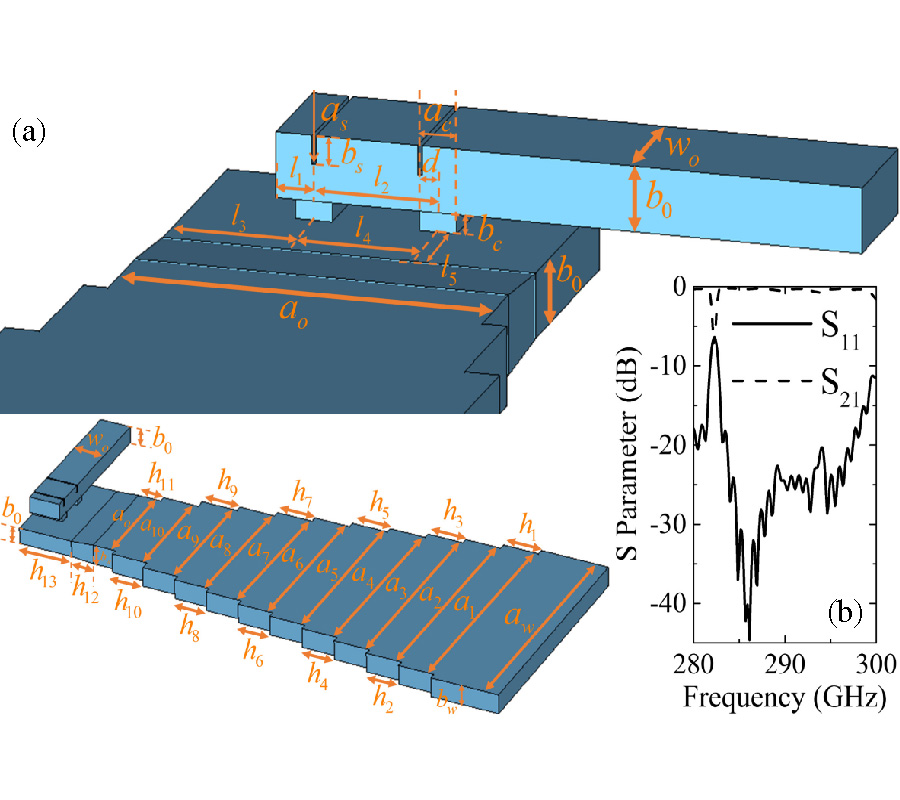
In this paper, a highly directive small-cell waveguide antenna array for point to point wireless communication in E-band radio frequency systems is presented. The antenna array is designed and dedicated for the paired bandwidths 71-76 and 81-86 GHz. It is composed of 32 x 32 horn elements with a total surface of ~100 x 100 mm2 to achieve a directivity ≥38 dBi, narrow beam (~2°) and low-level sidelobe ≤-26 dB. A compact stepped horn antenna element (SHE) (6.6 mm) is designed. It is 25% smaller than a standard horn element (in the same band) keeping the same aperture surface (3.4 x 3.4 mm2). Layer-by-layer micromachining process is employed for the fabrication. A compact feeding network (25 mm) is realized using ridged waveguide technique with a cut-off frequency of 55 GHz, much lower than standard WG one in the same band. A bow-tie multi-section waveguide polarizer rotator (±90°) is optimized and associated with the WG transitions to re-phase the fields applied to SHE elements. Electric discharge machining (EDM) process was used to manufacture a 4×4 sub-array prototype including the entire WG power-feed network. The antenna is characterized in an anechoic chamber, and experimental results are compared to 3-D electromagnetic simulations with good agreements over the two bands.
SMALL-CELL WAVEGUIDE ANTENNA ARRAY FOR E-BAND POINT TO POINT WIRELESS COMMUNICATIONS
2020-10-05
PIER Letters
Vol. 93, 115-122
Miniaturization of Microstrip Slot Antenna Using High Refractive Index Metamaterial Based on Single Ring Split Ring Resonator
Gudibandi Bharath Reddy , Murugan Harish Adhithya and Dhamodharan Sriram Kumar
In this paper, the miniaturization of the slot antenna is presented for the first time with the use of high refractive index metamaterial. Based on the effective parameter extraction, the studies conducted on Single Ring Split Ring Resonator (SR-SRR) reveal that the unit cell can produce high values of positive refractive index. By taking the advantage of the principle of duality, the slot is loaded with two Complementary SR-SRRs (CSR-SRRs) on either side of it to create an effective HRI medium. With the partial loading of HRI metamaterial medium, the resonance frequency of the slot is brought down from 4.225 GHz to 2.5 GHz. The radiation characteristics of the loaded slot antenna were found to be almost similar to that of the conventional slot antenna. The simulated and measurement results were found in good agreement.
MINIATURIZATION OF MICROSTRIP SLOT ANTENNA USING HIGH REFRACTIVE INDEX METAMATERIAL BASED ON SINGLE RING SPLIT RING RESONATOR
2020-10-05
PIER B
Vol. 89, 29-44
Reducing the Dimension of a Patch-Clamp to the Smallest Physical Limit Using a Coaxial Atom Probe
Pushpendra Singh , Subrata Ghosh , Pathik Sahoo , Kanad Ray , Daisuke Fujita and Anirban Bandyopadhyay
For the last half a century, neurophysiology relies on patch clamp which neutralizes the ions to sense a signal. The smaller the patch, the efficiency is better. However, the limit has not been reached yet, and we accomplish it here. We add a spiral and a ring antenna to a coaxial probe to significantly reduce its self-resonance as the tip filters the ultra-low vibrations of protein's sub-molecular parts (10-18 watts to 10-22 watts) in a living cell environment with 10-6-watt noise. A probe tip added by a cavity resonator & a dielectric resonator acquires four distinct ultra-low noise signals simultaneously from a biomolecule, which is not possible using a patch clamp. Protein transmits ions and small molecules. Our probe estimates the ionic content of the molecule. Simultaneously it also measures the dipolar oscillations of its sub-molecular parts that regulates ionic interaction. We experimentally measure signals over a wide frequency domain. In that frequency domain, we map the mechanical, electrical, and magnetic vibrations of the element and record the relationship between its electric and ionic conductions. Dimension wise it is the ultimate resolution, consistent both in silico & in real experiments with the neuron cells --- the atomic pen instantly monitors a large number of dynamic molecular centers at a time.
REDUCING THE DIMENSION OF A PATCH-CLAMP TO THE SMALLEST PHYSICAL LIMIT USING A COAXIAL ATOM PROBE
2020-10-05
PIER C
Vol. 106, 17-27
A Circuit-Coupled FEM Model with Considering Parasitic Capacitances Effect for Galvanic Coupling Intrabody Communication
Zhiying Chen , Yueming Gao , Min Du and Feng Lin
Characterization of the human body channel is a necessity to pave way for practical implementation of intrabody communication (IBC) in body area networks (BAN). In this paper, a circuit-coupled finite element method (FEM) based model is proposed to represent the galvanic coupling type IBC on human arm. In contrast with other models for IBC, both the finite element method and the parasitic capacitances between electrodes are taken into account in the modeling. To understand the characteristics of IBC, simulations with multiple frequencies, excitation voltages, channel lengths and values of parasitic capacitors are carried out using the model. The current density and electric field distribution in different human tissues reveal an insight into signal transmission path through the human body intuitively. The body channel gain presents a band-pass property after adding the parasitic capacitances into the model, while it performs an increasing characteristic with the frequency before the adding. Finally, a galvanic coupling IBC measurement setup is fulfilled, and the outcome shows a good agreement with the proposed model. It is indicated that the parasitic capacitances are the major factors to cause the band-pass and affect the bandwidth, and they should not be neglected in the real IBC applications.
A CIRCUIT-COUPLED FEM MODEL WITH CONSIDERING PARASITIC CAPACITANCES EFFECT FOR GALVANIC COUPLING INTRABODY COMMUNICATION
2020-10-03
PIER
Vol. 168, 39-59
Fundamental Implicit FDTD Schemes for Computational Electromagnetics and Educational Mobile Apps (Invited Review)
Eng Leong Tan
This paper presents an overview and review of the fundamental implicit finite-difference time-domain (FDTD) schemes for computational electromagnetics (CEM) and educational mobile apps. The fundamental implicit FDTD schemes are unconditionally stable and feature the most concise update procedures with matrix-operator-free right-hand sides (RHS). We review the developments of fundamental implicit schemes, which are simpler and more efficient than all previous implicit schemes having RHS matrix operators. They constitute the basis of unification for many implicit schemes including classical ones, providing insights into their inter-relations along with simplifications, concise updates and efficient implementations. Based on the fundamental implicit schemes, further developments can be carried out more conveniently. Being the core CEM on mobile apps, the multiple one-dimensional (M1-D) FDTD methods are also reviewed. To simulate multiple transmission lines, stubs and coupled transmission lines efficiently, the M1-D explicit FDTD method as well as the unconditionally stable M1-D fundamental alternating direction implicit (FADI) FDTD and coupled line (CL) FDTD methods are discussed. With the unconditional stability of FADI methods, the simulations are fast-forwardable with enhanced efficiency. This is very useful for quick concept illustrations or phenomena demonstrations during interactive teaching and learning. Besides time domain, many frequency-domain methods are well-suited for further developments of useful mobile apps as well.
FUNDAMENTAL IMPLICIT FDTD SCHEMES FOR COMPUTATIONAL ELECTROMAGNETICS AND EDUCATIONAL MOBILE APPS (INVITED REVIEW)
2020-10-02
PIER
Vol. 168, 31-38
A Novel Millimeter-Wave Backward to Forward Scanning Periodic Leaky-Wave Antenna Based on Two Different Radiator Types
Yiming Zhang , Hui Liu , Chenyang Meng , Yuxin Lin , Yuan Zhang , Erik Forsberg and Sailing He
A periodic millimeter wave leaky-wave antenna (LWA), which has two different types of radiator elements that enable backward to forward radiation, is proposed. The unit-cell of the LWA consists of two quarter-wavelength microstrip lines and two corrugated substrate integrated waveguide (CSIW) cells with S-shaped quarter-wavelength open-circuit stubs. In addition to two parallel edge radiators, a single etched transverse slot with a tilt angle acts as an ancillary radiator, which ensures impedance matching in a large frequency range and achieves the backward to forward scanning. We analyze the proposed design through simulations, characterize a fabricated prototype and find it to have good radiation properties including broad impedance bandwidth. The measurement results show a high peak gain from 11 to 15.8 dBi with a large scanning angle range from -34° to +22° in the K-band operating frequency range.
A NOVEL MILLIMETER-WAVE BACKWARD TO FORWARD SCANNING PERIODIC LEAKY-WAVE ANTENNA BASED ON TWO DIFFERENT RADIATOR TYPES
2020-10-02
PIER C
Vol. 106, 1-16
A Hybrid Multi-Port Antenna System for Cognitive Radio
Rajeev Kumar Parida , Rashmirekha Kalyani Mishra , Nihar Kanta Sahoo , Arjuna Muduli , Dhruba Charan Panda and Rabindra Kishore Mishra
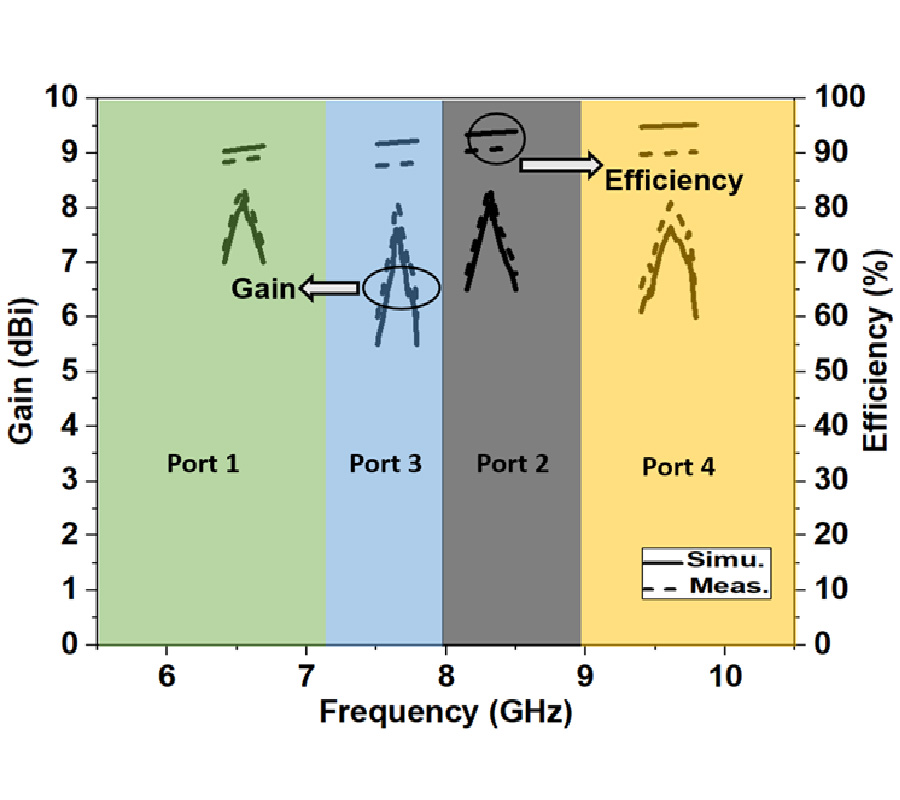
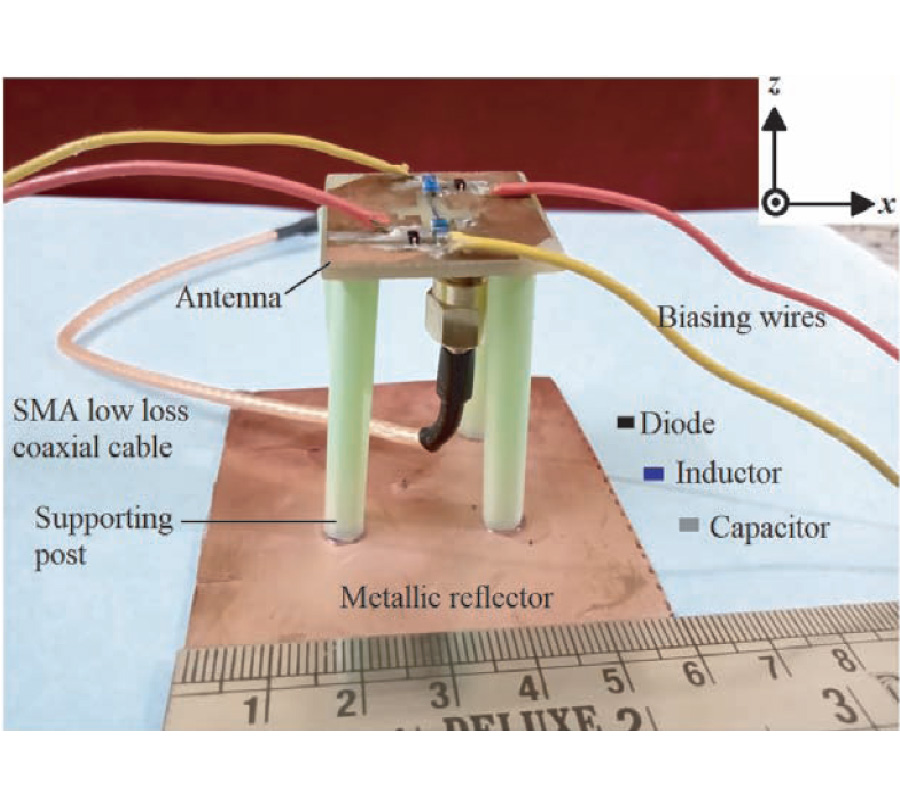
This paper proposes a hybrid, compact, low profile, and multi-port antenna system for Cognitive Radio (CR). This system consists of a CPW fed sensing UWB monopole (2-11 GHz) and three NB antennas, out of which one is standalone (7.355 GHz); one is dual-band (5.834 GHz and 8.786 GHz); and the other is reconfigurable (3.863 GHz, 4.664 GHz, 5.2 GHz, and 6.13 GHz) using switching mechanism. This antenna system exhibits less than -15 dB isolation over the operating band. The system is simulated using CST Microwave Studio, and a prototype is fabricated to verify the results. The simulated results are in good agreement with measured ones. The proposed antenna is suitable to operate in C-band, ISM/WLAN/Military application, mid-band 5G, maritime radio navigation, X-band satellite communication, and public safety wireless communications.
A HYBRID MULTI-PORT ANTENNA SYSTEM FOR COGNITIVE RADIO
2020-10-01
PIER M
Vol. 97, 1-12
Microwave Staring Correlated Imaging Based on Quasi-Stationary Platform with Motion Measurement Errors
Zheng Jiang , Bo Yuan , Jianlin Zhang , Yuanyue Guo and Dongjin Wang
Microwave staring correlated imaging (MSCI) is a promising technique for remote sensing due to its ability to achieve high-resolution microwave imaging without the limitation of relative motion between target and radar. In practical applications, unsteady quasi-stationary platforms, such as tethered aerostat, are often used as carriers of MSCI radar. However, these platforms cannot keep ideally stationary during the imaging process. The platform's motion caused by atmospheric effects will cause time-varying inaccuracy of observation positions. Although navigation systems can measure the platform's motion to compensate for the errors of observation positions, the imaging performance of MSCI may still suffer from degradation due to the measurement errors of navigation systems since MSCI is sensitive to model error. This paper focuses on MSCI based on the quasi-stationary platform with motion measurement errors. First, the MSCI model based on the quasi-stationary platform with motion measurement errors is established under the assumption that the translation and the rotation of the platform are uniform during a coherent imaging interval. Then we propose a self-calibration imaging method for MSCI based on the quasi-stationary platform with motion measurement errors. This method iterates over the steps of target reconstruction and motion measurement errors correction until convergent conditions are met. Simulation results show that the proposed method can correct the motion measurement errors and improve imaging performance significantly.
MICROWAVE STARING CORRELATED IMAGING BASED ON QUASI-STATIONARY PLATFORM WITH MOTION MEASUREMENT ERRORS
2020-10-01
PIER B
Vol. 88, 175-195
Dual Feed Wideband Annular Ring Microstrip Antenna with Circular DGS for Reduced SAR
Mahesh Munde , Anil Nandgaonkar and Shankar B. Deosarkar
In this article quad-band circular antenna is designed for multiband devices operated close to human body, and the investigation on parametric study for length of feed, width of feed, and length of ground is carried out. Specific absorption rate (SAR) is also evaluated and found to exceed standard limits for lower band. Further investigation to reduce the value of SAR leads to the design of an annular ring antenna with partial ground. Parametric study on the ratio of outer to inner ring radii is carried out to excite higher resonant modes and optimize the performance of annular ring antenna. SAR is evaluated for different bands, and 9{\%} reduction is observed for same dimensions of circular antenna with partial ground, but SAR still exceeds the limit for lower band. A novel approach of using dual feeds with half operating input power in magnitude and 180° out phase at each port for SAR reduction and performance optimization is presented in this work. Annular ring antenna with parametric study on variation in the ratio of ring radii and circular defect in ground structure is performed, and it leads to wideband operation, gain enhancement, and reduction in SAR. SAR reduction achieved is in the range of 66.93% to 82.15% in 1-gram of tissue and 64.43% to 82.20% in 10-gram of tissue at different bands and well within the limits for all the operating bands.
DUAL FEED WIDEBAND ANNULAR RING MICROSTRIP ANTENNA WITH CIRCULAR DGS FOR REDUCED SAR
2020-09-29
PIER M
Vol. 97, 69-76
Extensive Comparison Results of Coverage Map of Optimum Base Station Location of Digital Terrain with UTD Based Model
Mehmet Baris Tabakcioglu
In order to provide high quality of service broadcasting systems, predicting the electric field strength in all the receiving points and generating the coverage map of the transmitter are svery important. Uniform Theory of Diffraction (UTD) based ray theoretical models could be used to predict the electric field and generate the coverage map in a short time. In order to eliminate the non-successive obstacles in the scenario and to reduce the computation time of UTD Model, Convex Hull (CH) technique is used for the first time. After this point, this model is named as Uniform Theory of Diffraction with Convex hull (UTD-CH) Model. Moreover, how operating frequency, obstacle height and the distance between the obstacles affect the coverage map of optimum base station location are researched by using UTD based models. In this study, UTD, Slope Uniform Theory of Diffraction (S-UTD), Slope Uniform Theory of Diffraction with Convex Hull (S-UTD-CH), and UTD-CH models are used for comparisons. Furthermore, computation times of UTD based models are compared.
EXTENSIVE COMPARISON RESULTS OF COVERAGE MAP OF OPTIMUM BASE STATION LOCATION OF DIGITAL TERRAIN WITH UTD BASED MODEL
2020-09-29
PIER M
Vol. 97, 57-68
Simplified Rectangular Planar Array with Circular Boundary for Side Lobe Suppression
Jafar Ramadhan Mohammed
The thinning methods were usually used to simplify the array complexity by turning off some of the radiating elements in large planar arrays which lead to unavoidable reduction in the directivity. In this paper, an alternative method is used to simplify the array complexity by partitioning a large array into two contiguous subarrays. The first subarray is in circular planar shape in which its elements are uniformly excited, while the second subarray in which its elements surround the circular subarray, and they have significant impacts on the array radiation features and are chosen to be adaptive. The desired radiation characteristics are then obtained by optimizing only the adaptive elements which are far less than the total number of the original array elements. Since the majority of the elements in the proposed array are uniformly excited, its directivity and taper efficiency are found very close to that of the benchmark solutions. Simulation results verify the effectiveness of the proposed array.
SIMPLIFIED RECTANGULAR PLANAR ARRAY WITH CIRCULAR BOUNDARY FOR SIDE LOBE SUPPRESSION
2020-09-29
PIER M
Vol. 97, 45-56
NLOS Target Localization with an L-Band UWB Radar via Grid Matching
Huagui Du , Chongyi Fan , Zhen Chen , Chun Cao and Xiaotao Huang
This paper considers utilizing radar multipath returns to locate a target in an L-shaped non-line of sight (NLOS) environment and proposes a NLOS target localization algorithm based on grid matching. The algorithm first establishes a multipath propagation model based on real data from an L-band single-input single-output (SISO) ultra-wideband (UWB) radar. Then, it calculates the times of arrival (TOAs) of each grid based on the multipath propagation model and matches the grid which is closest to the measured TOAs of round-trip multipath returns. Both simulation and real-data experiment results validate the effectiveness of the multipath model and the proposed localization algorithm.
NLOS TARGET LOCALIZATION WITH AN L-BAND UWB RADAR VIA GRID MATCHING