Search Results(13789)

2020-09-22
PIER C
Vol. 105, 185-202
Band Notched UWB MIMO/Diversity Antenna Design with Inductance Boosted Compact EBG Structures
Naveen Jaglan , Priyanka Dalal , Samir Dev Gupta and Mahmoud Abdelrahman Abdalla
A triple band notch MIMO/Diversity antenna using Inductance Boosted Compact Electromagnetic Band Gap (IB-CEBG) cells is presented in this paper. For obtaining compactness in the conventional EBG cell, spiral shaped defects are introduced. The proposed antenna obtains triple band notches in WiMAX (3.3-3.6 GHz), WLAN (5-6 GHz), and the X-band satellite communication (7.2-8.4 GHz) bands. IB-CEBG cells exhibits miniaturization of approximately 46% for WiMAX band, 50% for WLAN band and 48% for X-band Satellite communication band, compared to conventional EBG cells. To enhance the isolation among all four compact UWB monopoles, rectangular slots in the ground plane and parasitic decoupling arrangement are utilised. Further, a stepped structure with an angular separation of 90˚ is incorporated with individual monopoles to reduce mutual coupling effects. Stepped structure also helps in the better impedance matching by incrementing the path length. The results show that the magnitude of transmission coefficient is greater than 15 dB in between the ports of proposed antenna elements. Envelope Correlation Coefficient is less than 0.5, which lies in tolerable limits for Ultra-Wide band (UWB) frequency range. It has been noticed that notched frequency is dependent on IB-CEBG cell parameters. The proposed antenna is fabricated using an FR-4 substrate with overall dimensions of 58 x 90 x 1.6 mm3.
BAND NOTCHED UWB MIMO/DIVERSITY ANTENNA DESIGN WITH INDUCTANCE BOOSTED COMPACT EBG STRUCTURES
2020-09-20
PIER C
Vol. 105, 175-184
A Loop Antenna with Enlarged Bandwidth of Circular Polarization --- Its Application in a Comb-Line Antenna
Kazuhide Hirose , Motoshi Nakatsu and Hisamatsu Nakano
Using the moment method, we analyze a loop antenna with a perturbation segment in the presence of a ground plane. First, the radiation characteristics versus loop height above the ground plane are investigated. It is found that as the loop height increases to more than 0.2 wavelengths a novel antenna other than a conventional one can exist, showing an enlarged bandwidth of 9% for a 3 dB axial-ratio criterion. Next, the radiation mechanism of the novel antenna is compared with that of the conventional one. Last, the novel loop is used in a comb-line antenna as a radiation element. It is found that the CP wave bandwidth is five times as wide as that of a conventional comb-line antenna. The analysis results are verified by experimental work.
A LOOP ANTENNA WITH ENLARGED BANDWIDTH OF CIRCULAR POLARIZATION --- ITS APPLICATION IN A COMB-LINE ANTENNA
2020-09-17
PIER M
Vol. 96, 129-138
Rigorous Quantum Formulation of Parity-Time Symmetric Coupled Resonators
Shaolin Liao and Lu Ou
Rigorous quantum formulation of the Parity-Time (PT) symmetry phenomenon in the RF/microwave regime for a pair of coupled coil resonators with lump elements has been presented. The coil resonator is described by the lump-element model that consists of an inductor (L), a resistor (R) and a capacitor (C). Rigorous quantum Hamiltonian for the coupled LRC coil resonators system has been derived through twice basis transforms of the original basis. The first basis transform rotates the original basis such that off-diagonal terms of the governing matrix of the equation system of the coupled coil resonators is reduced to constants. Then a second basis transform obtains the quantum Hamiltonian, including the diagonal effective complex frequencies and off-diagonal coupling terms, together with the transformed basis. With the obtained quantum Hamiltonian, the eigenvalues and eigenvectors of the coupled coil resonators can be obtained as usual as the quantum Hamiltonian. Finally, numerical simulation verifies the correctness of the theory. The quantum formulation of the coupled coil resonators can provide better guideline to design a better PT-symmetric system.
RIGOROUS QUANTUM FORMULATION OF PARITY-TIME SYMMETRIC COUPLED RESONATORS
2020-09-17
PIER B
Vol. 88, 119-149
Wiener-Hopf Analysis of Planar Canonical Structures Loaded with Longitudinally Magnetized Plasma Biased Normally to the ExtraordinaryWave Propagation: Near and Far Field
Xenophon M. Mitsalas , Theodoros Kaifas and George Kyriacou
This work aims at completing the Wiener-Hopf analysis of a canonical problem referring to an extra-ordinary transverse electromagnetic wave propagating within a parallel plane waveguide loaded with magnetized plasma when incident normally at the truncated edge of its upper conductor. The complicated mathematical issues faced herein comes from the non-symmetric Kernel functions involved in the related integral equation. This property puts two challenging issues, first the rarely occurring factorization of non-symmetric Kernels and secondly the handling of unidirectional surface and leaky waves. Although the formulation of the Wiener-Hopf equations was carried out in our previous work, these two challenges were not confronted, since that work has been completed only in regard to the closed-shielded geometry which involves a symmetric Kernel. Thus, the novel contribution of this work refers to completing the analysis of the open geometry by handling the factorization of the related non-symmetric Kernel, to evaluate the radiated field as well as to study the unidirectional waves for their near and far fields.
WIENER-HOPF ANALYSIS OF PLANAR CANONICAL STRUCTURES LOADED WITH LONGITUDINALLY MAGNETIZED PLASMA BIASED NORMALLY TO THE EXTRAORDINARY
WAVE PROPAGATION: NEAR AND FAR FIELD
2020-09-17
PIER C
Vol. 105, 161-174
Parallel Hardware Architecture of the 3D FDTD Algorithm with Convolutional Perfectly Matched Layer Boundary Condition
Chang Kong and Tao Su
The finite-difference time-domain (FDTD) algorithm is a numerical stencil computation method, which is widely used in solving electromagnetic simulation problems. However, this algorithm is both computing and storage intensive, so the simulation efficiency is usually restricted in software implementation on CPUs. Recently, hardware accelerators have proved to be effective in improving the performance of various stencil computations. In this paper, we propose a hardware architecture of the 3D FDTD algorithm along with a practical convolutional perfectly matched layer (CPML) boundary condition and implement it on a field programmable gate array (FPGA). By applying the chain processing elements array and temporal parallel strategy, the proposed accelerator can achieve a maximum of 608 mega cells per second (Mcells/s), which is approximately 6 times higher than that of other reported designs on FPGAs. Moreover, the accelerator can maintain the speed above 467 Mcells/s for different grid sizes and CPML layers without modifying the hardware design, which demonstrates the performance stability and flexibility of the architecture under various applications.
PARALLEL HARDWARE ARCHITECTURE OF THE 3D FDTD ALGORITHM WITH CONVOLUTIONAL PERFECTLY MATCHED LAYER BOUNDARY CONDITION
2020-09-17
PIER C
Vol. 105, 147-159
Three-Dimensional Magnetic Resonance Electrical Properties Tomography Based on Linear Integral Equation Derived from the Generalized Cauchy Formula
Motofumi Fushimi and Takaaki Nara
Magnetic resonance electrical properties tomography has attracted attentions as an imaging modality for reconstructing the electrical properties (EPs), namely conductivity and permittivity, of biological tissues. Current reconstruction algorithms assume that EPs are locally homogeneous, which results in the so-called tissue transition-region artifact. We previously proposed a reconstruction algorithm based on a Dbar equation that governed electric fields. The representation formula of its solution was given by the generalized Cauchy formula. Although this method gives an explicit reconstruction formula of EPs when two-dimensional approximation holds, an iterative procedure is required to deal with three-dimensional problems, and the convergence of this method is not guaranteed. In this paper, we extend our previous method to derive an explicit reconstruction formula of EPs that is effective even when the magnetic field and EPs vary along the body axis. The proposed method solves a linear system of equation derived from the generalized Cauchy formula using the conjugate gradient method with fast Fourier transform algorithm instead of directly performing a forward calculation, as was done in our previous method. Numerical simulations with cylinder and human-head models and phantom experiments show that the proposed method can reconstruct EPs precisely without iteration even in the three-dimensional case.
THREE-DIMENSIONAL MAGNETIC RESONANCE ELECTRICAL PROPERTIES TOMOGRAPHY BASED ON LINEAR INTEGRAL EQUATION DERIVED FROM THE GENERALIZED CAUCHY FORMULA
2020-09-15
PIER M
Vol. 96, 119-127
Penetration through Slots in Cylindrical Cavities Operating at Fundamental Cavity Modes in the Presence of Electromagnetic Absorbers
Salvatore Campione , Larry Kevin Warne , Isak C. Reines , Roy K. Gutierrez and Jeffery T. Williams
Placing microwave absorbing materials into a high-quality factor resonant cavity may in general reduce the large interior electromagnetic fields excited under external illumination. In this paper, we aim to combine two analytical models we previously developed: 1) an unmatched formulation for frequencies below the slot resonance to model shielding effectiveness versus frequency; and 2) a perturbation model approach to estimate the quality factor of cavities in the presence of absorbers. The resulting model realizes a toolkit with which design guidelines of the absorber's properties and location can be optimized over a frequency band. Analytic predictions of shielding effectiveness for three transverse magnetic modes for various locations of the absorber placed on the inside cavity wall show good agreement with both full-wave simulations and experiments, and validate the proposed model. This analysis opens new avenues for specialized ways to mitigate harmful fields within cavities.
PENETRATION THROUGH SLOTS IN CYLINDRICAL CAVITIES OPERATING AT FUNDAMENTAL CAVITY MODES IN THE PRESENCE OF ELECTROMAGNETIC ABSORBERS
2020-09-15
PIER M
Vol. 96, 109-118
Hybrid Antenna Array for 4G/5G Smartphone Applications
Ming Yang , Yufa Sun and Jinzhi Zhou
In this paper, a hybrid antenna array for 4G/5G smartphone applications is presented. The hybrid antenna system is composed of one array of two antenna elements for 4G application and another array of six antenna elements for 5G application. By loading PIN diodes and changing the on/off state of the PIN switch, then the resonance point will shift. The 2-antenna array broadens the bandwidth of 4G frequency band and is capable of covering GSM850/900/DCS1800/PCS1900/UMTS2100 and LTE2300/2500 operating bands. A U-shape monopole strip and an S-shape slot coupling technologies are also introduced, the 6-antenna array improves the impedance matching for the proposed 5G antenna array, and is capable of covering the 5G (3300 3600 MHz and 4800 5000 MHz), which can meet the demand of 5G application. Spatial and polarization diversity techniques are implemented on these antenna elements so that high isolation can be achieved. This hybrid antenna array is fabricated, and typically experimental results such as S11, isolation, radiation pattern, efficiency, and channel capacity are presented. The measured results are in good agreement with the simulated ones.
HYBRID ANTENNA ARRAY FOR 4G/5G SMARTPHONE APPLICATIONS
2020-09-14
PIER C
Vol. 105, 129-146
Dual Band Circular Polarized Printed Dipole Antenna for S and C Band Wireless Applications
Gunaram , Jitendra Kumar Deegwal and Vijay Sharma
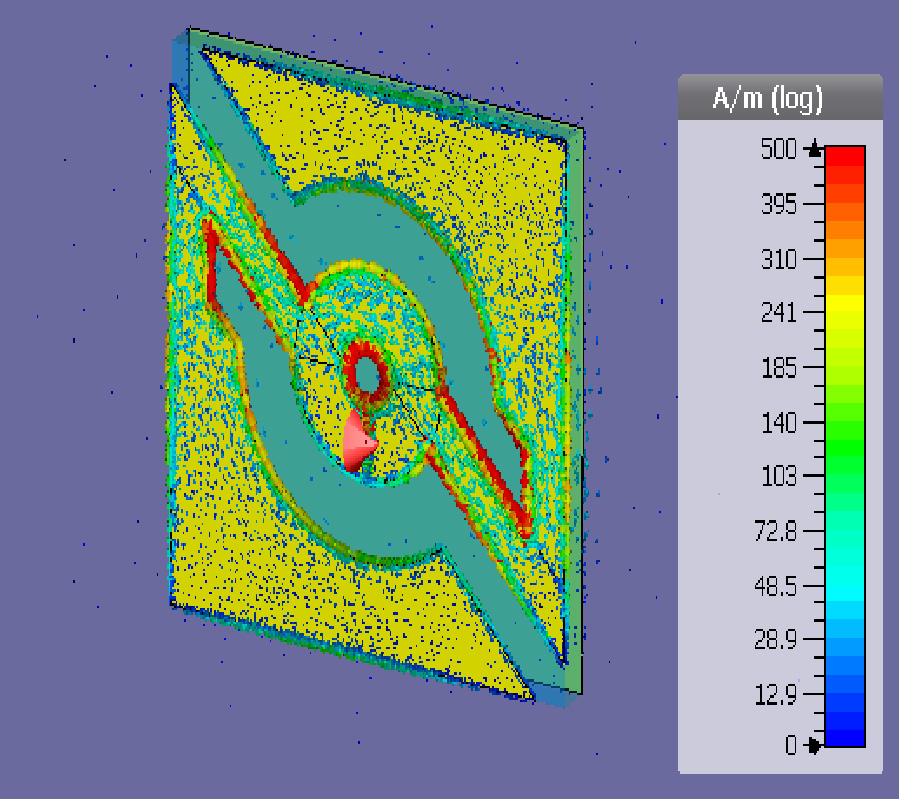
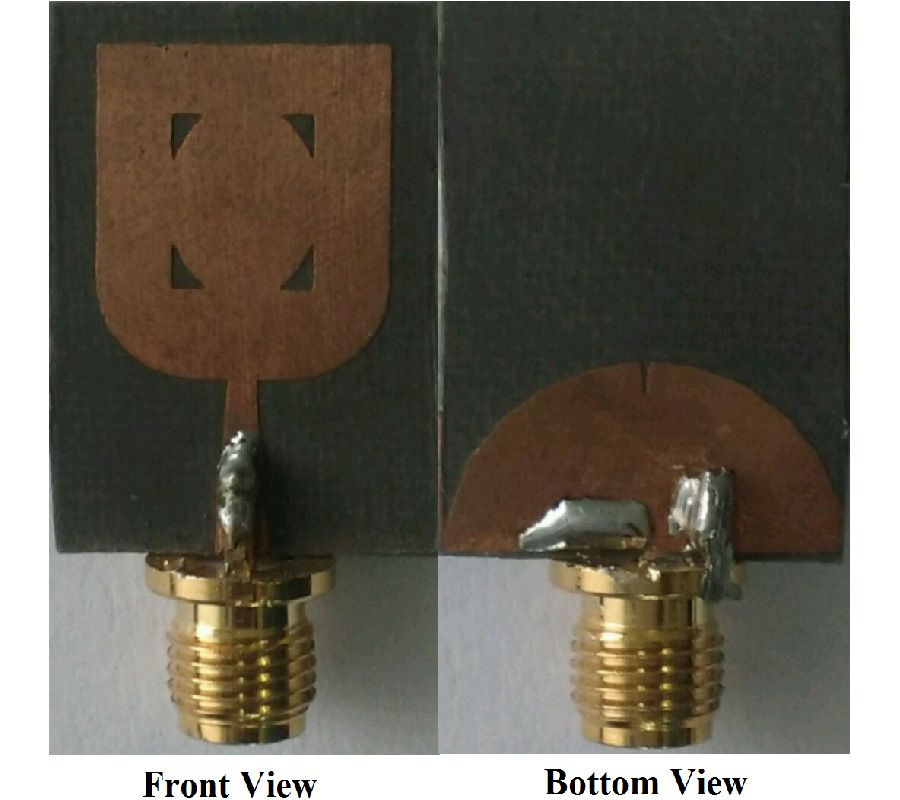
In this article, a modified circular shape printed dipole structure is studied to achieve wide bandwidth and dual-band circular polarization (CP) behavior along with dual polarizations. The idea behind this structure is that asymmetric geometry can give rise to circular polarization with an optimized position of coaxial probe feed. The circular patches on both sides of the substrate are altered with elliptical slots at an optimized location in association with opening slots. With these alterations the impedance bandwidth for S11<-10 dB is ranging from 2.36-7.34 GHz (4.97 GHz) which is nearly 102.5% about mid-point frequency 4.85 GHz. The antenna resonates at a lower band (1.55 GHz) and shows linear polarization (LP) operation at that band whereas dual CP bands with dual senses are obtained at higher frequency ranges 4.00-4.60 GHz and 6.07-7.13 GHz respectively with 3-dB axial ratio bandwidth of 13.7% and 16.6%. The simulated and measured experimental results are in close agreement. This antenna is suitable to be used for navigation purposes, radar communication, and wireless communication (especially wireless avionics intra communications) in S and C bands, respectively.
DUAL BAND CIRCULAR POLARIZED PRINTED DIPOLE ANTENNA FOR S AND C BAND WIRELESS APPLICATIONS
2020-09-13
PIER C
Vol. 105, 117-128
A Grating-Coupled Plasmon Index Sensor Observing the 0th Reflection Carefully and Sensibly for Recognizing the Resonance Curve with the Absorption Center: the Existing State of Affairs Aiming for Seven-Digit Resolution
Xun Xu , Miaoning Zheng and Yoichi Okuno
First of all we inform the audiences that this article is a Review Paper (RP) for the PIERS17 Proceedings Paper (Zheng et al. [17]). The reason why we publish this RP is that: although the paper [17] reported important ideas and simulation facts, details of the contents were insufficient, and the audiences of the report were not satisfied. This was because the page number was limited, and we saved the number of pages. However, because the contents of~[17] are important, we decided to publish an RP, which would provide additional explanations or give considerations supporting main issues. Now, we start the abstract from Section~1. Here, we mention historical topics and RP-related things. In Section~2, we explain the problem of diffraction by a conically-mounted metal grating. To save the page number, we skip the method of solution. In Section~3, we explain our method in noise free case. We show the high precision of the quadratic (or parabola) approximation. We define the workspace (WS: relation between index range of a sample and a proper azimuth angle) and one-to-one correspondence between sample index and resonance angle. In Section~4, we try our method in a noisy environments. A curve-fitting procedure and three types of noise filters work to find satisfactory solutions. That is, in both 3. and 4., the resolution of the index is 7-digit usually, which is our target from the beginning. We think that the introduction of AI or statistical processing would increase the stability of the result. In Section~5, we mention some of future works. In APPENDIX A, we explain the method: How to find the azimuth angle, which we need in solving the diffraction problems by conically-mounted grating.
A GRATING-COUPLED PLASMON INDEX SENSOR OBSERVING THE 0TH REFLECTION CAREFULLY AND SENSIBLY FOR RECOGNIZING THE RESONANCE CURVE WITH THE ABSORPTION CENTER: THE EXISTING STATE OF AFFAIRS AIMING FOR SEVEN-DIGIT RESOLUTION
2020-09-12
PIER M
Vol. 96, 99-107
A Highly Bendable Log-Periodic Array Antenna for Flexible Electronics
Hattan Abutarboush , Omar F. Siddiqui , Muhammad Rizwan Wali and Farooq Ahmad Tahir
An eleven element log-periodic dipole-array (LPDA) antenna, occupying a surface area of only 90 x 52 mm2, printed on an ultra-thin flexible Kapton substrate of thickness 0.035 mm , is proposed. The antenna operates with a stricter 10 dB reflection coefficient bound in the frequency bands 2.75-3.53 GHz and 4-6.2 GHz. For a less stringent bound of 6 dB (which is acceptable for wearable applications), it operates in the wider range of 2.7-6.8 GHz. The antenna has an end-fire radiation pattern with a maximum measured gain of 6 dBi. The flexibility of the antenna is illustrated by reflection and radiation pattern measurements for three different radii, i.e., 50, 30, and 10 mm in both the convex and concave configurations. It is experimentally demonstrated that LPDA exhibits stable input-impedance characteristics and consistent radiation properties over the whole operating band under all bending conditions. The low cost, light weight, and flexible design, as well as the broadband performance in both concave and convex bent configurations, prove the suitability of the antenna for the contemporary flexible electronic devices.
A HIGHLY BENDABLE LOG-PERIODIC ARRAY ANTENNA FOR FLEXIBLE ELECTRONICS
2020-09-11
PIER Letters
Vol. 93, 73-80
A Novel ZOR Antenna with a Capability to Change Polarization and Diversity
Saeid Karamzadeh and Vahid Rafiei
In this paper, a novel zeroth-order resonator (ZOR) antenna by exciting two asymmetric coplanar strips (ACS) is reported. In order to attain ZOR resonance, the antenna has resorted to two annular ring resonators (ARRs) which control antenna characteristics at 2.7 GHz. In this frequency, antenna treats such as a planar dipole antenna with omnidirectional patterns and linear polarization. The proposed antenna by utilizing two ports can change circular polarization diversity at the second band region. The proposed miniaturized antenna covering more than 80% bandwidth overall two bands and a more than -15 dB isolation between two input ports can be used in portable systems.
A NOVEL ZOR ANTENNA WITH A CAPABILITY TO CHANGE POLARIZATION AND DIVERSITY
2020-09-11
PIER Letters
Vol. 93, 65-71
A Novel Dual Band Notched MIMO UWB Antenna
Venkata Naga Koteswara Rao Devana and Avula Maheswara Rao
A novel, miniature multiple input multiple output (MIMO) ultra wide band (UWB) antenna with dual notched characteristics is proposed. The antenna incorporates a tapered microstrip feed line with two radiating patch structures procured by the incorporation of two ellipses with a circle and a reduced ground structure. The proposed antenna is printed on an FR-4 substrate having a concise size of 40 x 22 mm2 to cover -10 dB bandwidth of 3.18-11.26 GHz with fractional bandwidth of 112%. The two notched bands 3.31-3.99 GHz for WiMAX and 4.97-5.93 GHz for WLAN accomplished by two T-shaped parasitic structures are etched above ground plane and inverted U- shaped slots etched on radiating patch, respectively. The isolation of < -15 dB is realized by inserting a T-shaped stub in between two patch elements. The measured MIMO diversity characteristics are the evidence of that the proposed antenna is appropriate for portable wireless applications.
A NOVEL DUAL BAND NOTCHED MIMO UWB ANTENNA
2020-09-11
PIER C
Vol. 105, 101-115
Surface Magnetic Resonance Tomography for Three-Dimensional Groundwater Using a Complex Model
Jian Chen , YuJing Yang , Ling Wan and Tingting Lin
In recent years, surface magnetic resonance tomography (MRT), which is applied to the direct determination of the presence of groundwater, has been developed from underground two-dimensional to three-dimensional (3D) imaging. However, because of the influence of subsurface electrical conductivity, the magnetic resonance sounding (MRS) signal has been proved to be a complex-valued form. Moreover, the real and imaginary parts of MRS signals show different sensitivities to aquifers of different depths. In this study, a complex model of 3D MRT with separated loops configuration is introduced to provide accurate water-bearing imaging. Through simulation experiments, we demonstrate that the separated loops configuration is conducive to obtaining the imaginary part signal of MRS. Compared with a conventional model, the complex model has better 3D imaging resolution and sensitivity, especially for the deep regions. Moreover, in the case of noise interference and the presence of a multi-aquifer, the imaging results of complex inversion are reliable. As a result, this study is significant to the further development of multi-channel MRS instruments and provides a feasible method for high-precision imaging.
SURFACE MAGNETIC RESONANCE TOMOGRAPHY FOR THREE-DIMENSIONAL GROUNDWATER USING A COMPLEX MODEL
2020-09-08
PIER C
Vol. 105, 85-99
Performance Evaluation of a Neural Network Model and Two Empirical Models for Estimating Soil Moisture Based on Sentinel-1 SAR Data
Yan Li , Songhua Yan , Nengcheng Chen and Jianya Gong
The objective of this paper is to propose an inversion model of soil moisture using a neural network, and compare the performance of this method with two empirical models in soil moisture inversion. A wide dataset of backscattering coefficients extracted from Sentinel-1 images and in situ soil surface parameter measurements (moisture content and roughness) are used. Since the available backscattering models have limited performances of describing the nonlinear relationship between soil parameters and backscatter coefficient, the retrieval of soil parameters from radar backscattering coefficient remains challenging. The proposed inversion method of a neural network is used for establishing this relationship. At the same time, two empirical models are employed to estimate the soil moisture for comparison. The results show that for most of the six measuring stations the inverted soil moisture with the neural network model has higher correlation coefficient with the in-situ soil moisture than those by the empirical models. Moreover, the neural network model inversion results under multi-polarization input conditions are discussed in this paper. The results of stations 2, 4, and 5 show that R2 of multi-polarization inputs are increased by 0.1928, 0.4821, and 0.2758 respectively, compared with those of single-polarization inputs.
PERFORMANCE EVALUATION OF A NEURAL NETWORK MODEL AND TWO EMPIRICAL MODELS FOR ESTIMATING SOIL MOISTURE BASED ON SENTINEL-1 SAR DATA
2020-09-07
PIER M
Vol. 96, 89-97
Adaptive Antijamming Based on Space-Time 2-d Sparse Array for GNSS Receivers
Ruiyan Du , Fulai Liu , Kai Tang and Hui Song
Space-time adaptive antijamming problem has received significant attention recently for global navigation satellite system (GNSS). It can jointly utilize spatial filters and temporal filters to suppress interference signals. However, most of the works on space-time antijamming problem presented in the literature require a space-time two-dimension (2-D) array with multiple antennas and delay taps. In this paper, an effective adaptive antijamming method based on space-time a 2-D sparse array is proposed. The maximum array gain is utilized to construct a space-time 2-D sparse array. The space-time antijamming weight vector is given by minimizing the 2-D sparse array output power. Compared with the previous works, the presented method can have better antijamming performance than a space-time 2-D uniform array. Simulation results verify the effectiveness and feasibility of the proposed method.
ADAPTIVE ANTIJAMMING BASED ON SPACE-TIME 2-D SPARSE ARRAY FOR GNSS RECEIVERS
2020-09-07
PIER B
Vol. 88, 97-118
Improved Semi-Analytical Magnetic Field Solution for High-Speed Permanent-Magnet Machines with Permeable Retaining Sleeve Including Diffusion Effect
Gabriel Alves Mendonça , Thales Alexandre Carvalho Maia and Braz de Jesus Cardoso Filho
This work presents a novel semi-analytical model for magnetic field calculation in a high-speed surface-mounted permanent-magnet machine with conducting and permeable retaining sleeve. The retaining sleeve with conducting material and non-homogeneous permeability affects the machine electromagnetic performance by altering main flux inductance and developed torque profile. This performance deviation can be attributed to eddy-current reaction field and saturation, the latter occurring due to pole-to-pole leakage flux. Saturation is modeled with a space-varying relative permeability, expressed as a Fourier series. Eddy currents are evaluated with an auxiliary winding, defined as a surface current density in the conducting region. The proposed method is based on well-established Maxwell-Fourier method. This permits other analysis, such as slotting effect through subdomain technique. The assumptions considered for the developed semi-analytical solution in two-dimensional problem are presented in depth and confronted with finite-element method results, confirming validity of proposed methodology.
IMPROVED SEMI-ANALYTICAL MAGNETIC FIELD SOLUTION FOR HIGH-SPEED PERMANENT-MAGNET MACHINES WITH PERMEABLE RETAINING SLEEVE INCLUDING DIFFUSION EFFECT
2020-09-06
PIER C
Vol. 105, 73-84
A Dual Circularly Reconfigurable Polarization Patch Antenna for Fifth Generation Mobile Communication Systems
Nazih Khaddaj Mallat , Mahdi Nouri , Sajjad Abazari Aghdam , Muhammad Talha Zia , Bassam Harb and Alireza Jafarieh
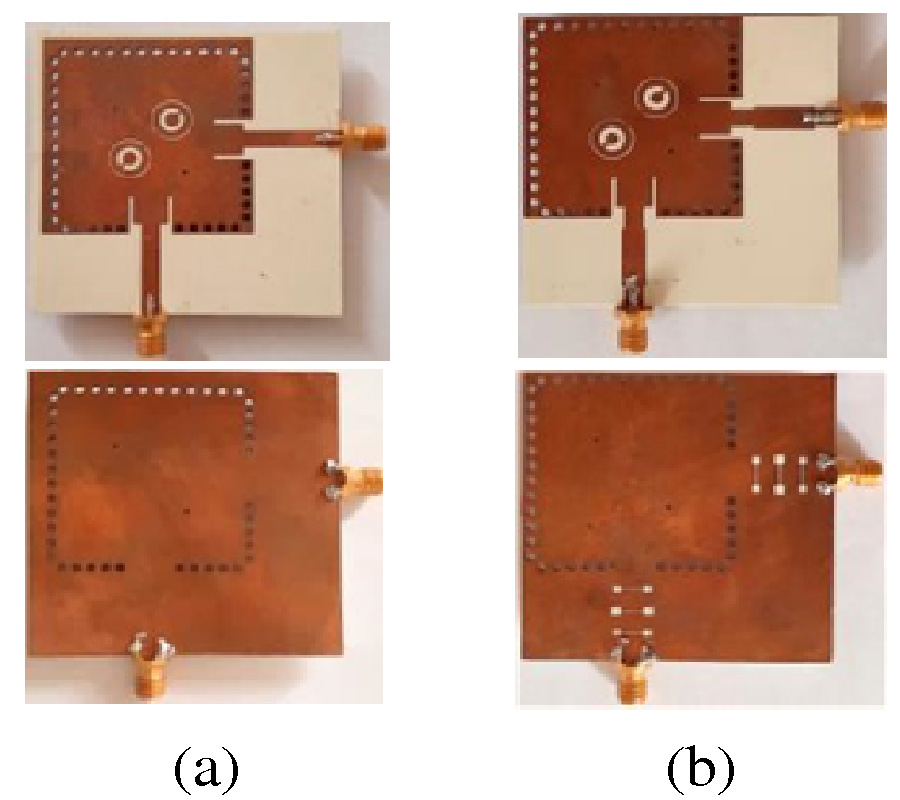
In this paper, a reconfigurable patch antenna with Circular Polarization (CP) diversity with theoretical discussion and verification is proposed for the fifth generation (5G) of mobile communication systems. The proposed antenna contains two PIN diodes, which are correctly placed on the ground plane to attain polarization diversity. By switching between two ON/OFF modes in the PIN diodes, the proposed antenna can support the RHCP mode or the LHCP mode. An antenna with the well-matched impedance bandwidths (S11 ≤ -10 dB) of 2.5 GHz (27~29.5 GHz) and 3 GHz (36~39 GHz) and the dual-band 3-dB axial ratios of 6% (27.3-29 GHz) and 8.4% (35-38.2 GHz) operates at both the RHCP and LHCP modes. The experimental result shows that the proposed antenna has a circular polarization bandwidth at the center frequencies of 28 and 38 GHz for both the RHCP and LHCP.
A DUAL CIRCULARLY RECONFIGURABLE POLARIZATION PATCH ANTENNA FOR FIFTH GENERATION MOBILE COMMUNICATION SYSTEMS
2020-09-05
PIER M
Vol. 96, 79-87
Design of Compact Transversal Wideband Bandpass Filter with Wide Upper Stopband
Li Tian Wang , Yang Xiong , Wan-Jing Wang , Li Gong , Zhao Li , Xia Qing Li and Zhe-Long Liang
A compact wideband bandpass filter (BPF) with stopband suppression by utilizing transversal signal interaction concepts is proposed in this article. Two transmission paths from Port I to Port II are separately constructed by multi-mode step impedance resonator (SIR) and shorted coupled lines. The proposed configuration generates two controllable transmission poles, and wideband characteristic can be realized. Moreover, multiple transmission zeros are implemented by signals superposition of two transmission paths and stub loaded fans resulting in steepness sideband and broad upper stopband suppression up to 100 GHz. For clarification, the designed wideband centered at 4.5 GHz with fractional bandwidth of 14.2% is designed, assembled and measured. The circuit size of prototype BPF only occupies 0.94 cm2, and the presented BPF is evaluated by test results and simulated predictions with good agreement.
DESIGN OF COMPACT TRANSVERSAL WIDEBAND BANDPASS FILTER WITH WIDE UPPER STOPBAND
2020-09-05
PIER M
Vol. 96, 69-78
Design of Circular Polarized Antenna Using Gammadion Chiral Metamaterial as Linear-to-Circular Polarization Transformer
Preet Kaur and Pravin R. Prajapati
In this paper, the application of gammadion chiral metamaterial for converting linearly polarized waves to circularly polarized waves is presented and using this a circular polarized antenna for wireless application is proposed. First of all, a traditional rectangular microstrip patch antenna has been designed at resonance frequency of 5.15 GHz, which gives linear polarization. The linearly polarized waves are allowed to feed gammadion chiral metamaterial, which is placed at a height of 33 mm above the reference antenna. The gammadion chiral metamaterial produces two special effects that are responsible for polarization rotation: circular dichroism and optical activity. As a result of these effects, the necessary conditions for circularly polarized radiation are fulfilled, and antenna is converted to the circularly polarized antenna. This method gets rid of designing of complicated feeding structure that is necessary for circular polarization. The role of gammadion chiral metamaterial to convert linear polarization to circular polarization has been described. The antenna is fabricated, and the measurement of return loss, axial ratio, etc. is also carried out. Simulation and measurement results agree with each other.
DESIGN OF CIRCULAR POLARIZED ANTENNA USING GAMMADION CHIRAL METAMATERIAL AS LINEAR-TO-CIRCULAR POLARIZATION TRANSFORMER