Search Results(13789)

2020-08-23
PIER M
Vol. 95, 165-176
Pentagonal Shaped UWB Antenna Loaded with Slot and EBG Structure for Dual Band Notched Response
Ameya A. Kadam and Amit A. Deshmukh
In this paper, a planar, compact, and low cost printed microstrip line fed pentagon-shaped ultra-wideband antenna offering dual band notched characteristics response is proposed and investigated. By introducing modified V-shaped slots in the pentagonal patch and hexagonal electromagnetic band gap structures near the feedline, dual band notched response can be realized. The proposed antenna is successfully simulated, designed, and fabricated on an FR-4 substrate. The measured results show that the proposed antenna having dimensions of 35 × 33 × 1.6 mm3 has a bandwidth over the frequency band 2.7-10.6 GHz with magnitude of S11 ≤ -10 dB (VSWR ≤ 2), except 3.7-4.6 GHz (C-band Satellite Communication) and 5.16-6.08 GHz (WLAN) frequency bands. The presented antennas show small group delay variation, nearly omnidirectional radiation pattern and stable gain at working frequencies. Satisfactory results have been obtained in frequency and time-domain analysis of the proposed antenna. The formulation of the center frequency of dual notched frequency band is also proposed.
PENTAGONAL SHAPED UWB ANTENNA LOADED WITH SLOT AND EBG STRUCTURE FOR DUAL BAND NOTCHED RESPONSE
2020-08-23
PIER
Vol. 167, 111-126
A Combined Active and Passive Method for the Remote Sensing of Ice Sheet Temperature Profiles
Haokui Xu , Leung Tsang , Joel Tidmore Johnson , Kenneth C. Jezek , Jie-Bang Yan and Prasad Gogineni
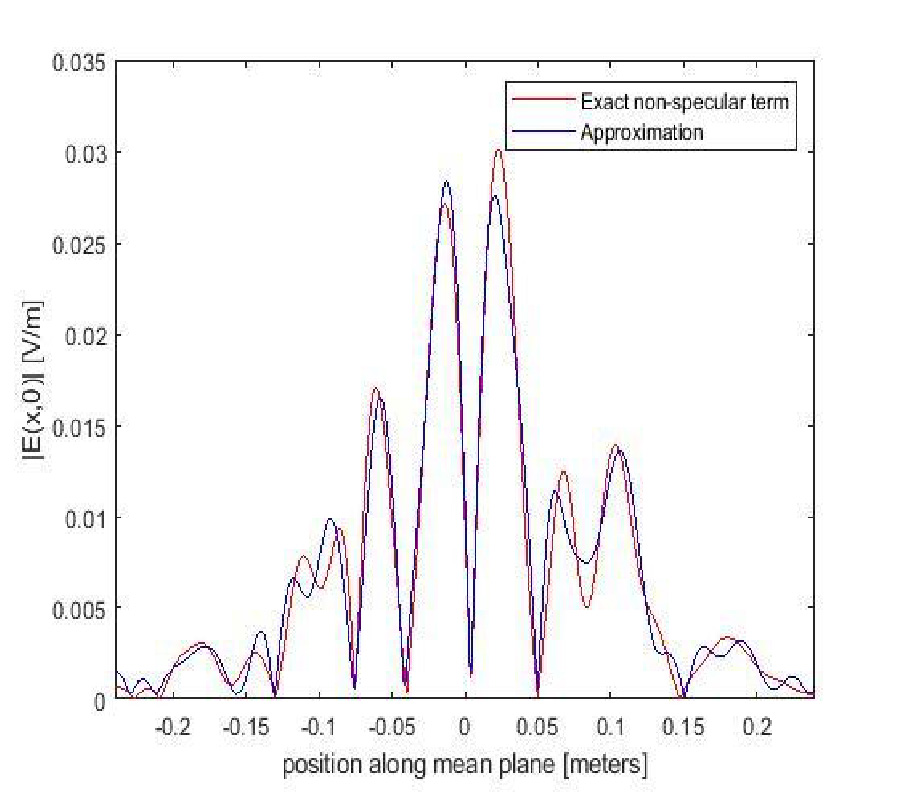
The Ultra-Wideband Software defined microwave radiometer (UWBRAD) was developed to probe internal ice sheet temperatures using 0.5-2 GHz microwave radiometry. The airborne brightness temperature data of UWBRAD show a significant reduction due to reflections of surface layering of density fluctuations making difficult the retrieval of subsurface temperature in the kilometer range of depth. Such reflections can be measured by the ultra-wideband radar in the same frequency range suggesting a combined active and passive remote sensing of polar ice sheets. In this paper, we develop a coherent reflectivity model for both ice sheet thermal emission and backscattering. Maxwell equations are used to calculate the coherent reflections from the cap layers, and the WKB approximation is used to calculate the transmission for the slowly varying profile below the cap layers. Results are then shown to demonstrate the use of radar measurements to compensate reflection effects on brightness temperatures. It is shown that the reflections corrected brightness temperature is directly related to the physical temperature and absorption profile making possible the retrieval of subsurface temperature profile with multi-frequency measurements
A COMBINED ACTIVE AND PASSIVE METHOD FOR THE REMOTE SENSING OF ICE SHEET TEMPERATURE PROFILES
2020-08-22
PIER M
Vol. 96, 1-8
Boundary Value-Free Magnetic Resonance Electrical Properties Tomography Based on the Generalized Cauchy Formula with the Complex-Derivative Boundary Condition
Motofumi Fushimi and Takaaki Nara
Recently, magnetic-resonance-based electrical properties tomography, by which the electrical properties (EPs), namely conductivity and permittivity, of biological tissues are reconstructed, has been an active area of study. We previously proposed an explicit reconstruction method based on the Dbar equation and its explicit solution given by the generalized Cauchy formula. In this method, as in some other conventional methods, the values of EPs on the boundary of the region of interest must be specified by the Dirichlet boundary condition of the partial differential equation. However, it is difficult to know the precise values in practical situations. In this paper, we propose a novel method that reconstructs EPs without the prior information of boundary EP values by deriving a new representation formula of the solution of the Dbar equation with the complex-derivative boundary condition. Numerical simulations and phantom experiments show that the proposed method can reconstruct EPs without knowledge of the boundary EP values. Therefore, the proposed method greatly enhances the applicability of the current EPT methods to practical situations.
BOUNDARY VALUE-FREE MAGNETIC RESONANCE ELECTRICAL PROPERTIES TOMOGRAPHY BASED ON THE GENERALIZED CAUCHY FORMULA WITH THE COMPLEX-DERIVATIVE BOUNDARY CONDITION
2020-08-22
PIER Letters
Vol. 93, 27-34
Single-Layer Single-Feed Wideband Omnidirectional Microstrip Antenna with Rotating Square Patches
Hao Zhang and Ying-Zeng Yin
A single-layer single-feed wideband omnidirectional microstrip antenna with rotating square patches is investigated in this paper. To obtain wide impedance band, the proximity-fed structure are introduced to the antenna to generate dual resonating modes. Two square patches with rotating angle of 90 degrees are used as the main radiator to improve the omnidirectional feature of the radiation pattern. For verifying the design, an antenna prototype with wide operation bandwidth is designed, simulated, fabricated, and measured. The results indicate that the impedance bandwidth (|S11| < -10 dB) as high as 48.6% (3.02-4.96 GHz) is obtained. Meanwhile, the height of the antenna is only 0.11λ00 is the free space wavelength corresponding the lowest frequency). What's more, omnidirectional radiation pattern is obtained over the operation band. The advantages ofwideband, low-profile and simple feed structure make the antenna good candidate in modern communication systems.
SINGLE-LAYER SINGLE-FEED WIDEBAND OMNIDIRECTIONAL MICROSTRIP ANTENNA WITH ROTATING SQUARE PATCHES
2020-08-22
PIER
Vol. 168, 15-23
Superscattering of Light in Refractive-Index Near-Zero Environments
Chan Wang , Chao Qian , Hao Hu , Lian Shen , Zuojia Wang , Huaping Wang , Zhiwei Xu , Baile Zhang , Hongsheng Chen and Xiao Lin
Enhancing the scattering of light from subwavelength structures is of both fundamental and practical significance. While the scattering cross section from each channel cannot exceed the single-channel limit, it is recently reported that the total cross section can far exceed this limit if one overlaps the contribution from many channels. Such a phenomenon about enhancing the scattering from subwavelength structures in free space is denoted as the superscattering in some literature. However, the scatterer in practical scenarios is not always in free space but may be embedded in environments with non-unity refractive index n. The influence of environments on the superscattering remains elusive. Here the superscattering from subwavelength structures in the isotropic environment with near-zero index are theoretically investigated. Importantly, a smaller n can lead to a larger total cross section for superscattering. The underlying mechanism is that a smaller n can give rise to a larger single-channel limit. Our work thus indicates that the scattering from subwavelength structures can be further enhanced if one simultaneously maximizes the single-channel limit and the contribution from many channels.
SUPERSCATTERING OF LIGHT IN REFRACTIVE-INDEX NEAR-ZERO ENVIRONMENTS
2020-08-22
PIER C
Vol. 105, 11-21
Surface Crack Detection in Pipelines Using CSRR Microwave Based Sensor
Euclides Lourenço Chuma , Yuzo Iano , Sergio Barcelos , Luis Ernesto Ynoquio Herrera , Laez Barbosa da Fonseca Filho and Rodolfo Cruz
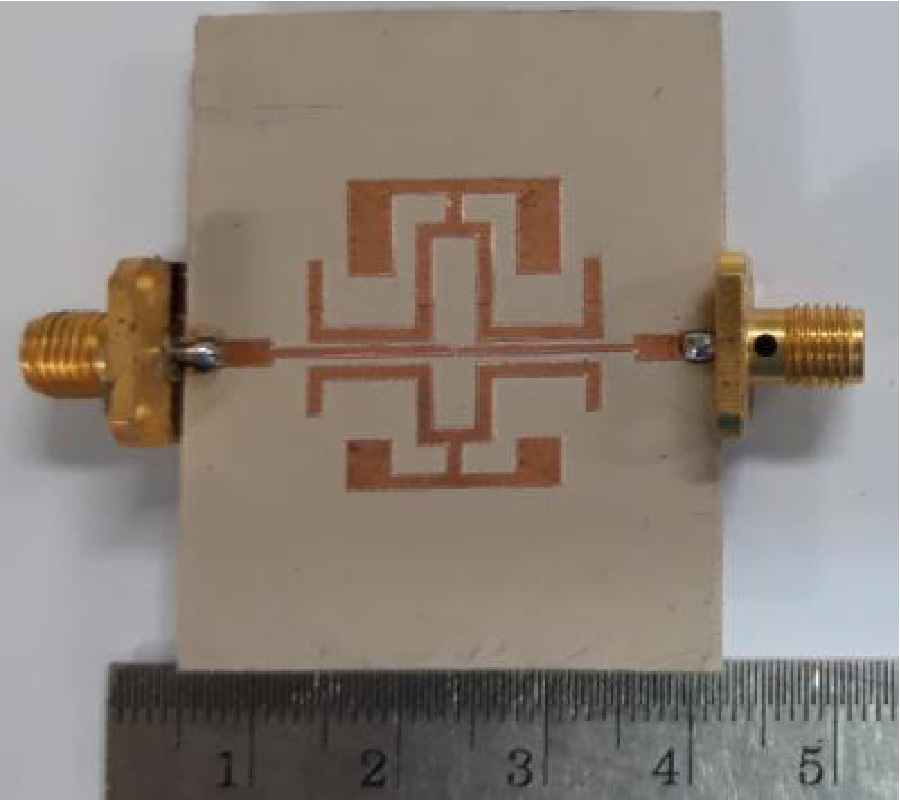
This article presents a metamaterial-based microwave sensitive sensor with a complementary split-ring resonator (CSRR) structure for nondestructive surface crack detection in pipelines. The CSRR resonator is etched in the ground plane of a microstrip line and is produced using printed circuit board technology. The novelty of the proposed sensor is its structure that allows it to be directly used for nondestructive crack detection in pipelines, based on frequency and Q factor variations, even for cracks under a coating. A measurement setup was used to test the proposed sensor in pipelines of different materials: steel, PVC, and aluminum. The sensor could detect cracks of 1 mm. For a crack of 1 mm, the frequency shift was 6.10 MHz in steel, 2.62 MHz in polyvinyl chloride (PVC), and 1.70 MHz in aluminum. In some conditions, the Q-factor shift measurements were 6.72, 5.18, and 7.15 for steel, PVC, and aluminum, respectively. The proposed sensor features high sensitivity, small dimension, simple design, and easy fabrication.
SURFACE CRACK DETECTION IN PIPELINES USING CSRR MICROWAVE BASED SENSOR
2020-08-22
PIER C
Vol. 105, 1-10
A High-Gain Polarization Reconfigurable Antenna Using Polarization Conversion Metasurface
Xiang Zhang , Chang Chen , Shan Jiang , Yangyang Wang and Weidong Chen
A novel high-gain polarization reconfigurable antenna composed of a polarization conversion metasurface (PCM) and a linearly polarized source patch antenna is presented in this article. The PCM is placed above the source patch antenna with an air gap. The proposed PCM can convert the linear polarization (LP) wave radiated by the source patch antenna to LP wave, right-hand circular polarization (RHCP) wave and left-hand circular polarization (LHCP) wave by rotating the PCM around the center of the antenna. Meanwhile, the proposed PCM can serve as the partially reflective surface (PRS) of a Fabry-Perot (FP) resonant cavity which can achieve gain enhancement. In order to validate the performance of the proposed design, a prototype antenna is fabricated and measured. Simulated and measured results agree well. From 10.43 GHz to 11.2 GHz, the polarization reconfiguration can be achieved by rotating the PCM to different angles while maintaining the high gain performance simultaneously.
A HIGH-GAIN POLARIZATION RECONFIGURABLE ANTENNA USING POLARIZATION CONVERSION METASURFACE
2020-08-21
PIER C
Vol. 104, 269-283
Capacity and Efficiency Improvement of MIMO Antenna Systems for 5G Handheld Terminals
Ahmad Hamdi Abdelgwad and Mohammod Ali
The efficacy of including a defected ground structure (DGS) for mobile communication on a mobile phone PCB in improving the multiple input multiple output (MIMO) system performance is evaluated and demonstrated in the context of single and multiple-element two-port planar inverted-F antennas (PIFAs). The proposed scheme designed and developed for operation in the 3.5 GHz long term evolution (LTE) and future 5G frequency bands demonstrates efficiency improvement by 15% and capacity improvement by around 7% because of the significant reduction in mutual coupling between the antenna ports. Results in free space as well as next to a human head and hand phantom are presented.
CAPACITY AND EFFICIENCY IMPROVEMENT OF MIMO ANTENNA SYSTEMS FOR 5G HANDHELD TERMINALS
2020-08-20
PIER
Vol. 168, 1-13
Classical and Quantum Electromagnetic Interferences: What Is the Difference?
Dong-Yeop Na and Weng Cho Chew
The zeroing of second order correlation functions between output fields after interferences in a 50/50 beam splitter has been accepted decades-long in the quantum optics community as an indicator of the quantum nature of lights. But, a recent work [1] presented some notable discussions and experiments that classical electromagnetic fields can still exhibit the zero correlation under specific conditions. Here, we examine analytically classical and quantum electromagnetic field interferences in a 50/50 beam splitter in the context of the second order correlation function for various input conditions. Adopting the Heisenberg picture in quantum electromagnetics, we examine components of four-term interference terms in the numerator of second order correlation functions and elucidate their physical significance. As such, we reveal the fundamental difference between the classical and quantum interference as illustrated by the Hong-Ou-Mandel (HOM) effect. The quantum HOM effect is strongly associated with: (1) the commutator relation that does not have a classical analogue; (2) the property of Fock states needed to stipulate the one-photon quantum state of the system; and (3) a destructive wave interference effect. Here, (1) and (2) imply the indivisibility of a photon. On the contrary, the classical HOM effect requires the presence of two destructive wave interferences without the need to stipulate a quantum state.
CLASSICAL AND QUANTUM ELECTROMAGNETIC INTERFERENCES: WHAT IS THE DIFFERENCE?
2020-08-20
PIER C
Vol. 104, 253-268
High Quality Factor Microwave Multichannel Filter Based on Multi-Defectives Resonators Inserted in Periodic Star Waveguides Structure
Youssef Ben-Ali , Ilyass El Kadmiri , Zakaria Tahri and Driss Bria
The transmission spectrum of electromagnetic waves through a one-dimensional photonic star waveguides (SWGs) structure is obtained using the Green function method (GFM). The proposed structure is composed of a finite number of periodic cells; each cell contains a segment of length d1 grafted in its extremity by resonators of length d2. This periodic system is altercated by insertion of defects resonators located in three different sites, which have lengths d02, d04, and d06 different from that of the perfect resonators. The properties of such a multi-defects structure are suitable for tunable very narrow band multichannel filter applications in microwave domain. The perfect photonic structure demonstrates large microwave photonic band gaps (PBGs) in which the propagation of electromagnetic waves is prohibited. For the sake of comparison, we first introduce single defect resonators located in one site; this defect creates hence two transmission peaks (defect modes) in the gaps. These induced modes of noticeable transmissions and good quality factors permit our proposed SWGs to behave like a single narrow band channel filter. Several localized modes appear in the band gaps whenweintroduce three resonators defects of different lengths and located in three different sites. With an appropriate choice of the geometrical parameters d1 = 1 m,d2 = 0.5 m, d02 = d04=d06 = 2 m, our thrice defectives system can create, in the microwave frequencies range, till eight transmission peaks in the gaps when the defects are located in three consecutive sites.These peaks have very high values of transmission rates and important quality factors reaching Q=610000. Therefore, our proposed system acts as very narrow band multichannel filters for which defects modes shift towards the low frequencies when the defects resonators lengths increase. The results obtained demonstrate the dependence of the defect modes frequencies, transmission coefficient, and the quality factor on the resonators defects lengths, their numbers, and their positions inside the defective structure.
HIGH QUALITY FACTOR MICROWAVE MULTICHANNEL FILTER BASED ON MULTI-DEFECTIVES RESONATORS INSERTED IN PERIODIC STAR WAVEGUIDES STRUCTURE
2020-08-20
PIER C
Vol. 104, 241-252
Design and Implementation of a Very Compact MIMO Antenna Providing Dual Notches at WLAN and Xband
Guvvala Ramya Sri , Areti Jhansi Rani and Vanka Saritha
A very compact Multiple-Input-Multiple-Output (MIMO) radiator providing dual notches is presented in this paper. It comprises circular ring monopoles fed by a microstrip line embedded with a slot of inverted U-shape. By etching a crescent slot, a split ring resonator slot, a circular slot in the circular monopole, a reversed U-shaped slot inserted along the feeding line, two notches are attained. It operates from 3.5 GHz to 12 GHz that overcomes interference from the Wireless Local Area Network(WLAN) (5.15-5.85 GHz) and X-band (7-8.1 GHz). MIMO antenna has a very compacted dimension of x 44 mm x 1.6 mm at the lowest operating frequency and hence is suitable for portable devices. It has dimensions of 0.51λ x 0.51λ x 0.018λ where λ is the wavelength of the lowest operating frequency 3.5 GHz.
DESIGN AND IMPLEMENTATION OF A VERY COMPACT MIMO ANTENNA PROVIDING DUAL NOTCHES AT WLAN AND XBAND
2020-08-20
PIER C
Vol. 104, 229-240
Wideband 10-Port MIMO Antenna Array for 5G Metal-Frame Smartphone Applications
Peng Liu , Yufa Sun , Tao Liu , Qing Li and Xuefeng Wang
A wideband 10-port multiple input multiple output (MIMO) antenna array operated below 6 GHz for the fifth generation (5G) metal-frame smartphones is presented and discussed in this paper. The proposed MIMO antenna array element is composed of a microstrip line with a tuning stub and rectangular slot. The size of the rectangular slot is only 15 mm x 2 mm (0.211λ0 x 0.028λ0, and λ0 is the wavelength with the resonance frequency of 4.2 GHz). U-shaped slots on the substrate are used to reduce the mutual coupling between the antenna elements. At the same time, in order to improve the radiation characteristics of the antenna arrays, narrow slits are etched in the metal-frame. The proposed antenna covers 3.3-5.5 GHz (S11 < -6 dB), which is ultra-wide bandwidth for the 5G communications. The proposed MIMO antenna array is fabricated and measured. Results show that in the desired wide frequency band, the proposed antenna array can achieve desirable performances, including antenna isolation better than -13 dB with decoupling structures, efficiency, and envelope correlation coefficient (ECC)<0.06. Moreover, radiation pattern, calculated ergodic channel capacity, the effects of the user's hand effects and head specific absorption rate (SAR) are also given in the paper. Good agreement between measured and simulated results is obtained, which means that the proposed MIMO array is a good candidate for 5G metal-frame smartphone applications.
WIDEBAND 10-PORT MIMO ANTENNA ARRAY FOR 5G METAL-FRAME SMARTPHONE APPLICATIONS
2020-08-19
PIER M
Vol. 95, 155-163
A Novel Single-Layer Anisotropic Unit for Transmit-Reflect Double Function Array
Hui-Fen Huang and Shuai-Nan Li
In this paper, a novel single-layer anisotropic unit with both reflection and transmission functions is proposed. The unit is a ring-encircled two mirror-symmetry fan-shaped patches, and is fabricated in one side of an F4B substrate. The unit structure is asymmetry with respect to x- and y-axes, and both transmitted and reflected cross-polarized fields are generated simultaneously when the co-polarized field is incident on the symmetry broken surface. Full 360° phase shift range is achieved by utilizing the cross-polarized field, and the transmitted and reflected coefficient magnitudes are above 0.49 close to the theoretical limit. Using this anisotropic unit, three single-layer transmit-reflect-arrays are designed: (1) Two high-gain beams in (θ1 = 0°, φ1 = 0°) and (θ1 = 180°, φ1 = 0°) directions. The gain is 20.9 dBi, and the 3 dB beam width is 8.9°. (2) Two OAM beams with l = 1 at (θ1 = 45°, φ1 = 0°) and (θ2 = 135°, φ2 = 0°). (3) Four OAM beams with l = 1 at (θ1 = 30°, φ1 = 0°), (θ2 = -30°, φ2 = 180°), (θ3 = 150°, φ3 = 0°) and (θ4 = -150°, φ4 = 180°). The simulated and measured results agree well and validate the design principle. The proposed metasurface has the following advantages: single-layer, transmission and reflection dual-functions, multi-beam, and high gain.
A NOVEL SINGLE-LAYER ANISOTROPIC UNIT FOR TRANSMIT-REFLECT DOUBLE FUNCTION ARRAY
2020-08-18
PIER Letters
Vol. 93, 21-26
An Oscillator Type Active Integrated Antenna Using GaN/AlGaN HEMT with Maximum Power at Second Harmonic
Rakhi Kumari , Ananjan Basu and Shiban Kishen Koul
In this paper an oscillator-type GaN HEMT based active integrated antenna is proposed where the active part of the circuit and patch antenna are in series. The patch antenna is designed to offer optimum impedance at second harmonic to generate maximum power at second harmonic and overall negative resistance at fundamental frequency for sustained oscillation. The circuit has been designed, fabricated and characterized. The fundamental frequency of oscillation of this circuit is 1.5 GHz. This circuit has Effective Isotropic Radiated Power (EIRP) of 32.1 dBm at 3 GHz. Power at fundamental frequency is suppressed due to mismatch of input impedance of patch antenna and deviation from optimum load required for maximum radiation at fundamental frequency. The power radiated at fundamental frequency is 15.7 dB lower than the power radiated at second harmonic. This design technique can be used for radiating useful high power much beyond the cutoff frequency of the transition of active device.
AN OSCILLATOR TYPE ACTIVE INTEGRATED ANTENNA USING GAN/ALGAN HEMT WITH MAXIMUM POWER AT SECOND HARMONIC
2020-08-18
PIER B
Vol. 87, 193-209
Sensitivity Analysis of Microstrip Tree S-Parameters by Using Tensorial Analysis of Networks
Lucius Ramifidisoa , Rivo Randriatsiferana , Sebastien Lallechere , Zhifei Xu and Blaise Ravelo
This paper introduces a tensorial analysis of networks (TAN) applied to a tree asymmetrical structure. To illustrate the TAN concept easily, the present investigation is applied to a three-port structure represented by a Y-tree topology. The unfamiliar method of TAN circuit modelling is elaborated from the graph topology. The fast formulation of the Y-matrix model of the structure is established from branch and mesh space TAN analyses. The TAN model is validated with commercial tool simulation and measurements from DC up to 0.5 GHz in the frequency domain and two different waveform signals in the time domain. The proof of concept circuit is implemented in microstrip technology on an FR4-epoxy dielectric substrate. Mapping sensitivity analysis with respect to the Y-tree RLC-parameters is realized by showing that local variations around initial set of R, L, and C do not equally influence reflection and transmission coefficients over the frequency bandwidth. If a similar impact is observed at the lowest frequency, maximum variations up to 250% show the importance of parameters ranking to improve both microstrip design and modelling.
SENSITIVITY ANALYSIS OF MICROSTRIP TREE S-PARAMETERS BY USING TENSORIAL ANALYSIS OF NETWORKS
2020-08-17
PIER M
Vol. 95, 145-153
Ionic Liquid-Gr Attached PVDF Composite Film for Shielding of Microwave Radiations
Vikas Rathi , Varij Panwar and Divya Kuriyal
To diminish electromagnetic interference (EMI) for microwave radiations, effects of graphite (Gr) modified by a long alkyl chain ionic liquid (IL) 1-Butyl-3-methylimidazolium hydrogen sulphate ([BMIM][HSO4]) on poly(vinylidene fluoride) (PVDF), was investigated. The pre-localized Gr coated polymer powders were fabricated, using solvent blending method, with different concentrations of Gr over PVDF matrix to prepare a series of PVDF/Gr/IL composites. The surface morphology of the fabricated composite films was examined by scanning electron microscopy (SEM). The composites, with a thickness of ~0.15 mm, exhibit good EMI shielding properties, besides low cost production and flexibility. The enhanced properties are due to high ionic conductivity of the IL and formation of a connecting network by Gr facilitating electron conduction. Absorption is the key factor due to which the total shielding effectiveness in the frequency band of 12 to 18 GHz has been improved significantly.
IONIC LIQUID-GR ATTACHED PVDF COMPOSITE FILM FOR SHIELDING OF MICROWAVE RADIATIONS
2020-08-17
PIER M
Vol. 95, 135-144
Flexible Metamaterial Electromagnetic Harvester Using Modified Split-Ring Resonator
Mohammed M. Bait-Suwailam , Thamer S. Almoneef and Saud M. Saeed
In this paper, a flexible metamaterial-based electromagnetic harvester is proposed for wearable applications at microwave regime. The proposed harvesting structure is composed of a modifi ed confi guration from the conventional Split-Ring Resonator (SRR) inclusion and is printed on a grounded very thin flexible substrate. The proposed wearable harvester structure provides several interesting features, including its robustness, sustainability and ease of integration with flexible electronics and sensors. Numerical full-wave studies are conducted, where results from a periodic arrangement of the proposed harvesting unit cell along with several two-dimensional arrays of harvesters are presented and discussed. Based on the numerical studies, the proposed electromagnetic harvesting structure exhibits good efficiency capability of power conversion from radio frequency received power to alternating-current harvested power across collecting loads above 90% for the three studied cases.
FLEXIBLE METAMATERIAL ELECTROMAGNETIC HARVESTER USING MODIFIED SPLIT-RING RESONATOR
2020-08-17
PIER M
Vol. 95, 125-133
Sensitivity Considerations for Inline Fully Canonical Filters at Ku-Band
Jordi Verdú Tirado , Ivan Baro , Eloi Guerrero , Patricia Silveira , Angel Triano , Gary Junkin and Pedro de Paco
In this paper, a planar inline fully-canonical topology is proposed to reduce sensitivity to fabrication tolerances compared to conventional inline all-pole configurations. Major concerns are related with errors in the absolute positioning of via-holes to ground which affect inter-resonator (main-line) couplings. The total expanded sensitivity considering variations of the main-line couplings have been obtained for fully and non-fully canonical configurations. The result shows that sensitivity is lower in the case of fully-canonical topologies. Moreover, the allocation of the transmission zeros plays a key role in terms of sensitivity. A prototype has been designed for the Ku-band based on asymmetrical coupled lines obtaining IL=-1.6 dB, RL below -18 dB, and out-of-band rejection higher than -50 dB.
SENSITIVITY CONSIDERATIONS FOR INLINE FULLY CANONICAL  FILTERS AT KU-BAND
2020-08-17
PIER C
Vol. 104, 215-228
Sub-Domain Analysis of Asymmetrical Magnetic Field in Electrical Machines
Sohrab Amini Velashani and Jawad Faiz
Beside magnetic equivalent circuit and finite element methods, sub-domain analysis (SDA) is an alternative method, which can be used to evaluate electrical machines behavior. It has a reasonable accuracy, and its parametric nature is allowed to apply to optimization or sensitivity analysis. Commonly this method is based on variables separation technique of Maxwell equations and Fourier series, eigenvalues and eigen-functions are so important for obtaining accurate results. In this paper, Maxwell equations are solved for two adjacent regions, i.e., copper (Cu) and permanent magnet (PM). It was paid less attention before, and it introduces supplementary eigenvalue and eigen function for asymmetry conditions in Cu or PM magnetic field regions.
SUB-DOMAIN ANALYSIS OF ASYMMETRICAL MAGNETIC FIELD IN ELECTRICAL MACHINES
2020-08-17
PIER C
Vol. 104, 201-214
A Switchable Triple-Band Notched UWB Antenna Using Compact Multi-via Electromagnetic Band Gap Structure
Vijay Ramesh Kapure , Pramod P. Bhavarthe and Surendra S. Rathod
In this paper, a miniaturized triple-band gap multi-via electromagnetic band gap (TBMV-EBG) structure is proposed. Lumped LC modelling method is used for the analysis of the proposed TBMV-EBG structure. Triple band gaps in both x and y-directions are obtained since TBMV-EBG unit cell consists of three resonance parallel LC circuits. Ansys (HFSS) simulation is used in eigen mode to simulate a unit cell of the proposed EBG. There is a strong agreement between simulated and experimental results. Comparing the proposed TBMV-EBG with triple band slotted EBG, triple band CSRR-EBG, fractal EBG, and dual band split EBG, size reductions of 6.52%, 7.53%, 23.21%, and 25.86% are obtained respectively which is validated by simulated and experimental results. Demonstration of the proposed TBMV-EBG structure for ultra-wideband (UWB) application is also presented. Simulation and measurement results prove that by using a single TBMV-EBG cell at the feed line of a UWB monopole antenna triple band-notches can be obtained. Moreover, switching characteristics of the proposed antenna are also demonstrated using single P-I-N diode. Depending on the ON and OFF switching status of P-I-N diode, the UWB antenna provides switching from triple band-notches to dual band-notches, respectively. The proposed switchable monopole UWB antenna as a single unit can be useful in applications wherein switching between multi-bands is desirable without changing the geometry of the structure.
A SWITCHABLE TRIPLE-BAND NOTCHED UWB ANTENNA USING COMPACT MULTI-VIA ELECTROMAGNETIC BAND GAP STRUCTURE