Search Results(13789)

2020-10-16
PIER M
Vol. 97, 157-166
Wideband Low-Profile SIW Cavity-Backed Bilateral Slots Antenna for X-Band Application
Bollavathi Lokeshwar , Dorai Venkatasekhar and Alapati Sudhakar
In this article, a new approach has been demonstrated for the bandwidth enlargement of a substrate integrated waveguide (SIW) cavity-backed antenna. The proposed structure employs bilateral slots, instead of unilateral slots, which is a distinct approach, in contrast to traditional cavity antennas. The proposed antenna embodies SIW cavity with a height less than 0.017λ0 and thus holds low-profile planar geometry, while retaining lower losses and light weight. The non-resonant slot, at the bottom plate, produces two-hybrid modes (odd TE210 and even TE210). The quality factor (Q) of these hybrid modes is greatly reduced by loading the resonant slot cut at the top metallic plate of the SIW cavity which leads to achieving a wideband response. A sample is fabricated and investigated at X-band. It is shown that the experimental results are well-matched with the simulated ones. The measured impedance bandwidth of the proposed antenna is 860 MHz (8.6%). Moreover, it renders a maximum gain of 6.56 dBi at 9.78 GHz and 6.75 dBi at 10.35 GHz, within the operating bandwidth. The cross-polarization radiation levels of maximum -26 dB and -28 dB are obtained at the corresponding resonant frequencies, respectively.
WIDEBAND LOW-PROFILE SIW CAVITY-BACKED BILATERAL SLOTS ANTENNA FOR X-BAND APPLICATION
2020-10-16
PIER M
Vol. 97, 145-156
A Robust Approach for Three-Dimensional Real-Time Target Localization Under Ambiguous Wall Parameters
Hua-Mei Zhang , Sheng Zhou , Cheng Xu and Jiao Jie Zhang
To obtain three-dimensional (3-D) high-precision and real-time through-wall location under ambiguous wall parameters, an approach based on the extreme learning machine (ELM) which is a neural network is proposed. The wall's ambiguity and propagation effects are both included in the hidden layer feedforward network, and then the through-wall location problem is converted to a regression problem. The relationship between the scattered signals and the target properties are determined after the training process. Then the target properties are estimated using the ELM approach. Numerical results demonstrate good performance in terms of effectiveness, generalization, and robustness, especially for the kernel extreme learning machine (KELM) approach. Noiseless and noisy measurements are performed to further demonstrate that the approach can provide good performance in terms of stability and reliability. The location time, including the training time and the test time, is also discussed, and the results show that the KELM approach is very suitable for real-time location problems. Compared to the machine learning approach, the KELM approach is better not only in the aspect of accuracy but also in location time.
A ROBUST APPROACH FOR THREE-DIMENSIONAL REAL-TIME TARGET LOCALIZATION UNDER AMBIGUOUS WALL PARAMETERS
2020-10-16
PIER Letters
Vol. 94, 1-7
A Multiband Compact Low-Profile Planar Antenna Based on Multiple Resonant Stubs
Jianwei Jing , Jiafei Pang , Hang Lin , Zhenyu Qiu and Changjun Liu
In this letter, a multiband compact low-profile planar antenna based on multiple resonant stubs is proposed and studied. By utilizing two pairs of stubs embedded on a defected ground, the reflection coefficient less than -10 dB can be achieved with broadband characteristic for applications of wireless local area network (WLAN) and worldwide interoperability for microwave access (WiMAX). Meanwhile, a pair of inserted slots on both sides of a curve slot is applied to the antenna design, which decreases the cross polarization. A multiband antenna is fabricated and measured to verify the design. The antenna is compact with operation frequencies for WLAN (2.45/5.2/5.8 GHz) and WiMAX (2.8/3.8/5.5 GHz) applications. The measured peak gains are 5.5, 4.4, 0.0, and 5.6 dBi at 2.45, 2.8, 3.8, and 5.5 GHz, respectively.
A MULTIBAND COMPACT LOW-PROFILE PLANAR ANTENNA BASED ON MULTIPLE RESONANT STUBS
2020-10-16
PIER C
Vol. 106, 137-150
Miniaturized Multi-Band Stopband Filter Using Circular Split Ring Resonator and Null Gap Separations Between All Parallel Lines
Badiaa Ait Ahmed , Otman Aghzout , Azzeddin Naghar and Ana Vazquez Alejos
This paper presents a new multi-band stopband filter loaded by a shorted metamaterial circuit. Firstly, two filters loaded by stubs and open ring resonators (ORRs) are studied and compared. The ORRs allow more effects in terms of miniaturization by a shifting toward low frequencies and rejection bandwidth (57.34%). To improve the filter efficiency, coupled split ring resonators (SRRs) are used. The final filter is characterized by a miniaturized size of 18.8 x 40 mm2, wide rejection bandwidth, high selectivity level and multiple resonances over S, C, X and Ku bands. L-C equivalent circuit model filter and other characteristics are investigated. A prototype of the filter with coupled SRRs has been fabricated and measured. Good matching among EM-simulation, equivalent circuit modelling, and measured results are achieved.
MINIATURIZED MULTI-BAND STOPBAND FILTER USING CIRCULAR SPLIT RING RESONATOR AND NULL GAP SEPARATIONS BETWEEN ALL PARALLEL LINES
2020-10-15
PIER
Vol. 168, 87-111
Multiple Scattering of Waves by Complex Objects Using Hybrid Method of T-Matrix and Foldy-Lax Equations Using Vector Spherical Waves and Vector Spheroidal Waves
Huanting Huang , Leung Tsang , Andreas Colliander , Rashmi Shah , Xiaolan Xu and Simon Yueh
In this paper, we develop numerical methods for using vector spherical and spheroidal waves in the hybrid method to calculate the multiple scattering of objects of complex shapes, based on the rigorous solutions of Maxwell equations in the form of Foldy-Lax multiple scattering equations (FL). The steps in the hybrid method are: (1) calculating the T-matrix of each single object using vector spherical/spheroidal waves and (2) vector spherical/spheroidal waves addition theorem. We utilize the commercial software HFSS to calculate the scattered fields of a complex object on the circumscribing sphere or spheroid for multiple incidences and polarizations. The T-matrix of spherical waves or spheroidal waves are then obtained from these scattered fields. To perform wave transformations (i.e. addition theorem) for vector spherical/spheroidal waves, we develop robust numerical methods. Numerical results are illustrated for T-matrices and numerical vector addition theorems.
MULTIPLE SCATTERING OF WAVES BY COMPLEX OBJECTS USING HYBRID METHOD OF T-MATRIX AND FOLDY-LAX EQUATIONS USING VECTOR SPHERICAL WAVES AND VECTOR SPHEROIDAL WAVES
2020-10-15
PIER
Vol. 168, 73-86
Radiation Gauge Potential-Based Time Domain Integral Equations for Penetrable Regions
Thomas Edgar Roth and Weng Cho Chew
Potential-based integral equations are being explored to develop numerical methods that avoid low frequency breakdown issues and are better suited to couple to quantum physics computations. Important classes of quantum electrodynamics problems are typically formulated in the radiation gauge, leading to interest in efficient numerical solutions able to be performed directly in this gauge. This work presents time domain integral equations for penetrable regions that are developed in the radiation gauge. An appropriate marching-on-in-time discretization scheme is developed that fully conforms to the spatial and temporal Sobolev space properties of the integral equations. It is shown that following this approach leads to a discrete system with improved stability properties that produces accurate results down to very low frequencies. The accuracy and stability of this formulation at low frequencies are shown through numerical results.
RADIATION GAUGE POTENTIAL-BASED TIME DOMAIN INTEGRAL EQUATIONS FOR PENETRABLE REGIONS
2020-10-15
PIER
Vol. 168, 61-71
Polarization Reconfigurable Slot-Fed Cylindrical Dielectric Resonator Antenna
Mahbubeh Esmaeili and Jean-Jacques Laurin
A new design for a cylindrical dielectric resonator antenna (DRA) with a capability of switching between circular, linear horizontal and linear vertical polarizations is introduced. The DRA, operating at the center frequency of 3.25 GHz, is fed by a microstrip line through two dog-bone slots. In this design, only two PIN diodes are employed as switching elements which significantly decreases the complexity of DC biasing circuits compared to existing designs. The PIN diodes are embedded in transformers connected to the feeding microstrip lines. This technique conveniently allows to make compensations for parasitic effects of the PIN diodes junction capacitors on the antenna matching bandwidth. The circular, linear horizontal and linear vertical polarizations have a bandwidth of 22%, 17% and 18%, respectively. The 3-dB axial ratio bandwidth for the circular polarization is 12%. The measured results obtained from prototyped antenna agree well with simulated results of the designed antenna system, which confirms the validity of the design process.
POLARIZATION RECONFIGURABLE SLOT-FED CYLINDRICAL DIELECTRIC RESONATOR ANTENNA
2020-10-14
PIER C
Vol. 106, 121-136
Optimal Design Methodology for Planar Multi-Layered Radomes for Multiband Applications Using Nature Inspired Algorithm
Vineetha Joy , Ambika Jose Teena , Hema Singh and Raveendranath Nair
An efficient nature inspired algorithm based on particle swarm optimization (PSO) is presented in this paper for the optimal design of planar multi-layered radomes for multiband applications. Material layer sequence and thickness profile are the two critical factors determining the position of pass bands in the frequency range of operation as well as the transmission performance in those bands. These design aspects have to be appropriately optimized to achieve the desired performance, and it becomes a daunting task for radome designers when a comparatively large database of suitable materials is available in the solution space. Even though commercially available software packages provide options (like particle swarm optimization (PSO), genetic algorithm (GA) etc.) for the optimization of thickness profile, they do not have the functionality for optimizing the position of a specific material inside the multi-layered radome wall configuration. In this regard, the proposed PSO-based algorithm automatically chooses suitable materials from the predefined database and optimizes the thickness for each layer, in order to achieve superior transmission in user defined pass bands. Furthermore, the superiority of the indigenously developed algorithm over the optimization techniques available in full wave simulation software (FEKO) w.r.t. accuracy and computational efficiency is also established using suitable case studies and validations. Although PSO has been used in the context of radomes, its application for the simultaneous optimization of material layer sequence and thickness profile of multi-layered radomes is not reported in literature to the best of our knowledge.
OPTIMAL DESIGN METHODOLOGY FOR PLANAR MULTI-LAYERED RADOMES FOR MULTIBAND APPLICATIONS USING NATURE INSPIRED ALGORITHM
2020-10-14
PIER C
Vol. 106, 105-120
Application of Digital Lock-in Amplifier in Complex Electromagnetic Interference of Substation
Jiabing Song , Hengli Song , Xuan Yang and Haobin Dong
There is complex electromagnetic interference in the substation. In order to improve detection accuracy, a digital lock-in amplifier is used in the detection of the grounding grid. This paper introduces the principle of non-destructive testing of grounding grid based on electromagnetic method. Firstly, the distribution characteristics of surface magnetic induction intensity at different frequencies are obtained by CDEGS simulation. At the same time, it describes the principle and structure of an orthogonal vector type digital lock-in amplifier in detail. In order to realize the high-precision grounding grid detection system, the hardware circuit of the digital lock-in amplifier is designed by FPGA and analog-to-digital converter. The digital lock-in amplifier algorithm is implemented in the FPGA. Finally, the digital lock-in amplifier is tested. The test results show that when the signal-to-noise ratio of the signal to be tested is -20 db, the signal amplitude measurement error is less than 3%. The designed digital lock-in amplifier is applied to the actual grounding grid detection, and the topology and corrosion of the grounding network can be detected. Therefore, the digital lock-in amplifier can be effectively applied to non-destructive testing of grounding grid.
APPLICATION OF DIGITAL LOCK-IN AMPLIFIER IN COMPLEX ELECTROMAGNETIC INTERFERENCE OF SUBSTATION
2020-10-13
PIER M
Vol. 97, 133-144
A Compact Wideband Antenna Using Partial Ground Plane with Truncated Corners, L – Shaped Stubs and Inverted T – Shaped Slots
Sumeet Singh Bhatia and Narinder Sharma
The design of a wideband antenna using truncated corners partial ground plane loaded with L-shaped stubs and inverted T-shaped slots has been presented in this manuscript. The different concepts and structures related to antenna designing have been employed to attain the optimized model of antenna. L-shaped stubs and inverted T-shaped slots incised in the structure of antenna improve the impedance matching and bandwidth of proposed antenna. The fed 50Ω microstrip line has been applied to the proposed structure for attaining distinct performance parameters like reflection coefficient, gain and radiation pattern. The distinct structures of proposed antenna have been juxtaposed, and it is found that the structure with L-shaped stubs and inverted T-shaped slots shows improved antenna performance parameters. The designed antenna exhibits the bandwidth of 133.04% (3.14-15.62 GHz) and 16.96% (18.56-2.0 GHz) with improved reflection coefficient and gain. The proposed antenna has also been fabricated and tested for validation of simulated and measured results, and found in good agreement with each other. The design of proposed antenna is carved on a low cost thick substrate with compact electrical size of 0.566λ x 0.452λ x 0.0301λ mm3 at 5.45 GHz frequency and can be used for different wireless applications in the frequency range 3.14-15.62 GHz and 18.56-22.0 GHz.
A COMPACT WIDEBAND ANTENNA USING PARTIAL GROUND PLANE WITH TRUNCATED CORNERS, L – SHAPED STUBS AND INVERTED T – SHAPED SLOTS
2020-10-13
PIER Letters
Vol. 94, 9-17
Decoupling of Dual-Band Microstrip Antenna Array with Hybrid Resonant Structure
Xin-Hong Li
A novel hybrid resonant structure is proposed to decouple a dual-band microstrip antenna array. The decoupling structure is composed of two H-shaped strips, and the lower and upper ones respectively collaborate with an X-shaped slot to reduce mutual coupling at 4.5 GHz and 5.5 GHz. Two sub-patches of different sizes share a connection feeding line to construct the dual-band array element, which is arranged along H-plane with the edge-to-edge spacing 0.15 λl and 0.24λhl and λh are the free-space wavelengths of 4.5 GHz and 5.5 GHz, respectively). Simulated and measured results indicate that through loading the hybrid resonant structure, 31.6dB and 24.0dB reductions of mutual coupling at two frequencies are obtained, while the levels of coupling coefficients are both below -30 dB in two operating bands. Moreover, the modified radiation patterns, improved diversity metrics and weakened coupled current distributions further verify its superior decoupling capability. The proposed decoupling structure reveals its promise in being employed in communication system and multielement linearly antenna arrays.
DECOUPLING OF DUAL-BAND MICROSTRIP ANTENNA ARRAY WITH HYBRID RESONANT STRUCTURE
2020-10-13
PIER C
Vol. 106, 89-103
Modeling and Experimental Analysis of Three-Dimensional Cross Coil Structure for Misaligned Wireless Power Transfer System
Jiaxiang Song , Huilin An , Yanhong Li , Chao Zhang and Guo-Qiang Liu
The coaxiality of the transmitter and receiver has a significant impact on the efficiency in a wireless power transfer system. In order to keep high system efficiency, a novel coil structure is studied in this paper. Several plane coils are crossed to make up a three-dimensional coil structure in the transmitter, which will make sure the system in the state of strong magnetic field coupling. In the theory part, the magnetic field equation of different relationships between transmitter and receiver is deducted in detail. In the simulation part, the performance of the three-dimensional coil structure has been studied. The simulation results show that the new coil structure can generate a rotating magnetic field, and the rotating magnetic field will keep the system in the state of the strong magnetic field coupling in the simulation model. In the experimental part, the three-dimensional coil structure has been compared to a plane coil structure. The experimental results show that the efficiency of the three-dimensional coil structure is increased above 10% in the misalignment situation. The simulated and experimental results show that the new three-dimensional coil structure has a better performance in the misalignment situation than the plane coil structure in a wireless power transfer system.
MODELING AND EXPERIMENTAL ANALYSIS OF THREE-DIMENSIONAL CROSS COIL STRUCTURE FOR MISALIGNED WIRELESS POWER TRANSFER SYSTEM
2020-10-12
PIER M
Vol. 97, 119-131
Low SLL Pattern of Elliptical Aperture Array Based on Innovative Optimization Method
Amirsaman Zare
An elliptical array, composed of 10 uniform elliptical apertures as the radiating elements, is presented. Assume that each aperture in an electric conducting plane spreads on the elliptic orbit and is fed by the uniform plane wave in order to obtain a low SLL array pattern with high directivity, the elliptic orbit eccentricity and the angular position of each array element are stimulated. The applied parameters are determined by an elaborate optimization procedure. The utilized procedure, comprising the geometric computational technique (GCT), and angular positions excitation (APE) is stated in detail, respectively to determine a satisfactory eccentricity and the angular position of each element.
LOW SLL PATTERN OF ELLIPTICAL APERTURE ARRAY BASED ON INNOVATIVE OPTIMIZATION METHOD
2020-10-12
PIER M
Vol. 97, 107-117
Temperature Effect on a Lumped Element Balanced Dual-Band Band-Stop Filter
Dubari Borah and Thottam S. Kalkur
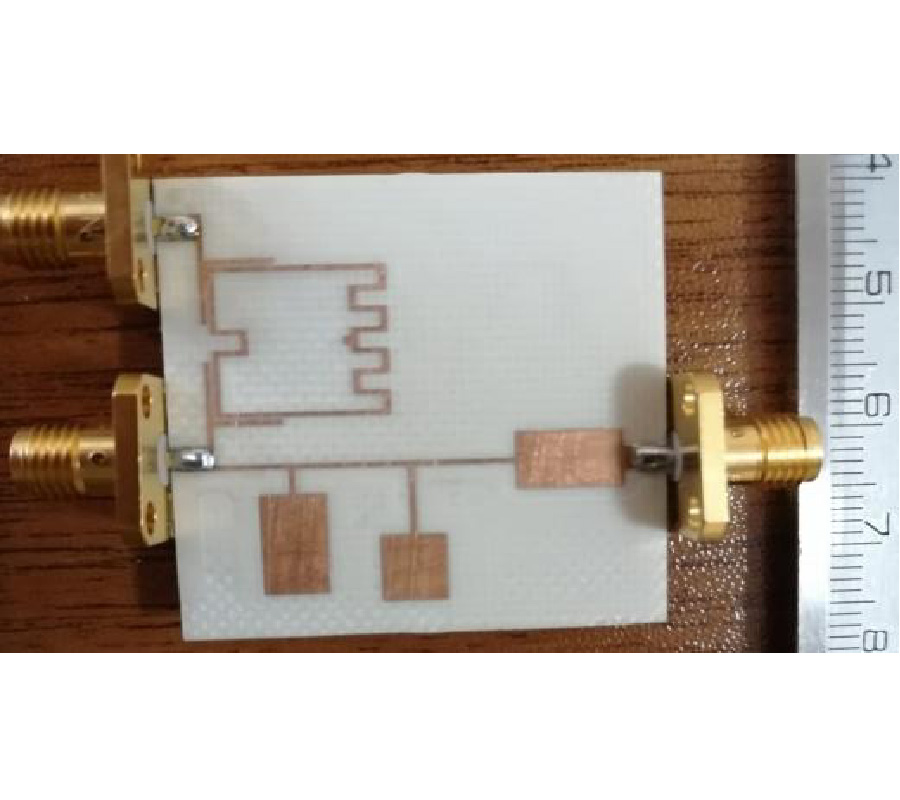
In this manuscript, the thermal effect on a lumped element balanced dual-band band-stop filter (BSF) has been discussed in detail for the first time. The response of a novel filter should maintain consistency over a wide range of temperature. Although any microwave filter in general is designed for room temperature condition, the filter is employed for applications where the operating temperature constantly changes. Therefore, it is necessary to check the reliability of the filter response within a specific temperature range based on its application. Modern simulation software helps to make an initial assumption about the filter performance at different thermal conditions before its lab testing or actual application. Here, a quantitative analysis has been provided to show how change in temperature contributes to the change in each component value of a lumped element filter. This analysis is followed by a simulation to show that a balanced lumped element filter exhibits lower loss than its single-ended counterpart. Also, as the temperature varies, the balanced design demonstrates less deviation in the loss value than a two-port design. Next, a balanced dual-band BSF prototype with center frequencies 1.151GHz and 1.366GHz (25℃)is characterized with a 4-port network analyzer under different temperature conditions. The experimental results exhibit a good match with the simulation results. For a variation of 80℃ in temperature, the maximum deviation obtained for the filter center frequency, absolute bandwidth (ABW) and insertion loss (Sdd21) are 5MHz, 2.8MHz and 2dB, respectively.
TEMPERATURE EFFECT ON A LUMPED ELEMENT BALANCED DUAL-BAND BAND-STOP FILTER
2020-10-12
PIER Letters
Vol. 93, 143-151
Development of Compact and Flexible Quadrature Hybrid Coupler Using Coaxial Cable with Capacitive Loading for 1.5t Indigenous MRI System
Rohit Apurva , Niraj Yadav , Tapas Bhuiya and Rajesh Harsh
Quadrature feeding is an essential in magnetic resonance imaging radio frequency (MRI-RF) coils, to improve the homogeneity of the magnetic field of surface coil, the signal to noise ratio (SNR) of the image by a factor of √2 , and to create a circularly polarized magnetic field inside the volume coil. The quadrature feeding is incorporated, using hybrid coupler. However, at 63.87MHz the Larmor frequency of hydrogen proton, corresponding to 1.5 Tesla, the size of the hybrid coupler and other microwave circuits become large. So, to minimize its physical size, a coaxial cable transmission line with lumped capacitive loading has been proposed. The size of the proposed hybrid coupler is reduced by 68%, as compared to the conventional hybrid coupler. The proposed device is then fabricated as a both rigid and flexible structure, which provides isolation (S41) of around 19 dB and a 900phase difference between coupled and the through ports. Both structures provide return loss S11 > -15 dB and coupling at output ports S21, S31 around 3 dB.
DEVELOPMENT OF COMPACT AND FLEXIBLE QUADRATURE HYBRID COUPLER USING COAXIAL CABLE WITH CAPACITIVE LOADING FOR 1.5T INDIGENOUS MRI SYSTEM
2020-10-12
PIER Letters
Vol. 93, 137-142
RF Sensor for Food Adulteration Detection
K. I. Ajay Menon , Pranav S , Sachin Govind and Yadhukrishna Madhu
Microwave testing is an area of research where material characterization is done using interrogating microwaves over a frequency band, and this technique can provide excellent diagnostic engineering, geophysical prospecting. Every material has a unique set of electrical characteristics that are dependent on its dielectric properties. Accurate measurements of these properties can provide valuable information about the material. This work presents a non-destructive technique for the detection of adulterants in food using the proposed RF sensor. The proposed RF sensor is operational at C-band with its resonant frequency at 5.7 GHz. The structure is designed using Ansys HFSS, and a predicted model of the proposed sensor is developed and fabricated. Some common food samples are tested using the fabricated sensor, and a shift in resonant frequency is obtained, which indicates the rate of adulteration. From the obtained results, a general conclusion is obtained on the dependency of the rate of adulteration and permittivity of the food sample. A precise correlation of permittivity of common food samples and its resonant frequency is obtained. The predicted model and the experimental results harmonize, which indicates that the model is proficient in real time testing.
RF SENSOR FOR FOOD ADULTERATION DETECTION
2020-10-12
PIER B
Vol. 89, 87-109
Theory of Electromagnetic Radiation in Nonlocal Metamaterials --- Part II: Applications
Said Mikki
We deploy the general momentum space theory developed in Part I in order to explore nonlocal radiating systems utilizing isotropic spatially-dispersive metamaterials. The frequency-dependent angular radiation power density is derived for both transverse and longitudinal external sources, providing detailed expressions for some special but important cases like time-harmonic- and rectangular-pulse-excited small dipoles embedded into such isotropic metamaterial domains. The fundamental properties of dispersion and radiation functions for some of these domains are developed in examples illustrating the features in nonlocal radiation phenomena, including differences in bandwidth and directivity performance, novel virtual array effects, and others. In particular, we show that by a proper combination of transverse and longitudinal modes, it is possible to attain perfect isotropic radiators in domains excited by small sinusoidal dipoles. The directivity of a nonlocal small antenna is also shown to increase by possibly four times its value in conventional local domains if certain design conditions are met.
THEORY OF ELECTROMAGNETIC RADIATION IN NONLOCAL METAMATERIALS --- PART II: APPLICATIONS
2020-10-12
PIER C
Vol. 106, 77-87
Compact Modified Hexagonal Spiral Resonator Based Tri-Band Patch Antenna with Octagonal Slot for Wi-Fi/WLAN Applications
Pitchai Rajalakshmi and Nagarajan Gunavathi
In this paper, a compact modified hexagonal spiral resonator-based tri-band patch antenna with an octagonal slot is presented for Wi-Fi/WLAN applications. The proposed antenna is designed on a low-cost FR4 substrate with a dielectric constant of εr=4.4 and loss tangent δ=0.02. The tri-band operations have been achieved by the a Modified Hexagonal Complementary Spiral Resonator (MHCSR) and an Octagonal slot. The loading of the MHCSR at the bottom of the substrate is to cover the 900MHz (IEEE 802.11ah) band, and an Octagonal slot on top of the 5 GHz (IEEE 802.11a/h/j/n/ac/ax) rectangle patch is to cover the 2.4 GHz (IEEE 802.11b/g/n/ax)band. The prototype of the proposed antenna is fabricated and tested to validate the simulation results. The measured impedance bandwidth is 105 MHz at 900 MHz, 160 MHz at 2.4 GHz, 18 0MHz at 5 GHz. The designed antenna has a compact size with overall dimensions of 0.054λ0 x 0.066 λ0 x 0.0048 λ0 (18 x 22 x 1.6 mm3). The 82.2% reduction in size has been accomplished as compared to a conventional patch antenna at 900MHz (lower resonance frequency). The waveguide setup method has been used to validate a negative permittivity property of the MHCSR. The parametric analysis of the proposed antenna had been carried out using the Ansoft HFSS19 software.
COMPACT MODIFIED HEXAGONAL SPIRAL RESONATOR BASED TRI-BAND PATCH ANTENNA WITH OCTAGONAL SLOT FOR WI-FI/WLAN APPLICATIONS
2020-10-11
PIER M
Vol. 96, 203-211
Efficient Antenna Selection Strategy for a Massive MIMO Downlink System
J. Roscia Jeya Shiney , Ganesan Indumathi and A. Allwyn Clarence Asis
This paper focuses on an efficient antenna selection strategy for a distributed massive MIMO system. The objective of the proposed algorithm is to attain ergodic achievable rate as much as possible with antenna selection in a constrained capacity limited system. In this proposed work, the initial selection of antenna set is based on channel amplitude and correlation which then follows an iterative approach in order to select the best subset of transmit antenna elements from the overall antenna set. The proposed scheme significantly outperforms, in terms of ergodic rate with low complexity, the prevailing transmit antenna selection methods. Simulation results show that the performance of the proposed antenna selection method is close to select all transmission with a minimum throughput loss. Thus the proposed method is best suited for a large scale distributed Massive MIMO system without degradation in system performance and is of low computational complexity.
EFFICIENT ANTENNA SELECTION STRATEGY FOR A MASSIVE MIMO DOWNLINK SYSTEM
2020-10-11
PIER Letters
Vol. 93, 131-136
Novel 3-DB Tandem Coupler with Wide Bandwidth by Using 4 Short Stubs
Takeru Inaba and Hitoshi Hayashi
A new wideband 3-dB tandem coupler is presented that has wide bandwidth using four 90° short stubs. The proposed tandem coupler does not require a higher transmission line impedance or a narrower coupling gap than conventional couplers. Measurements of the fabricated tandem coupler operated at a center frequency of f0 = 1 GHz are presented as verification of the design concept. The fractional bandwidth (FBW) at which the return loss is suppressed to a level better than 15 dB was 71%. Theoretical calculations and measurements of the tandem coupler were in good agreement
NOVEL 3-DB TANDEM COUPLER WITH WIDE BANDWIDTH BY USING 4 SHORT STUBS