Search Results(13789)

2020-10-28
PIER C
Vol. 106, 177-186
A Tri-Band Impedance Transformer Based Output Network for Efficient RF Power Amplifiers
Antra Saxena and Mohammad S. Hashmi
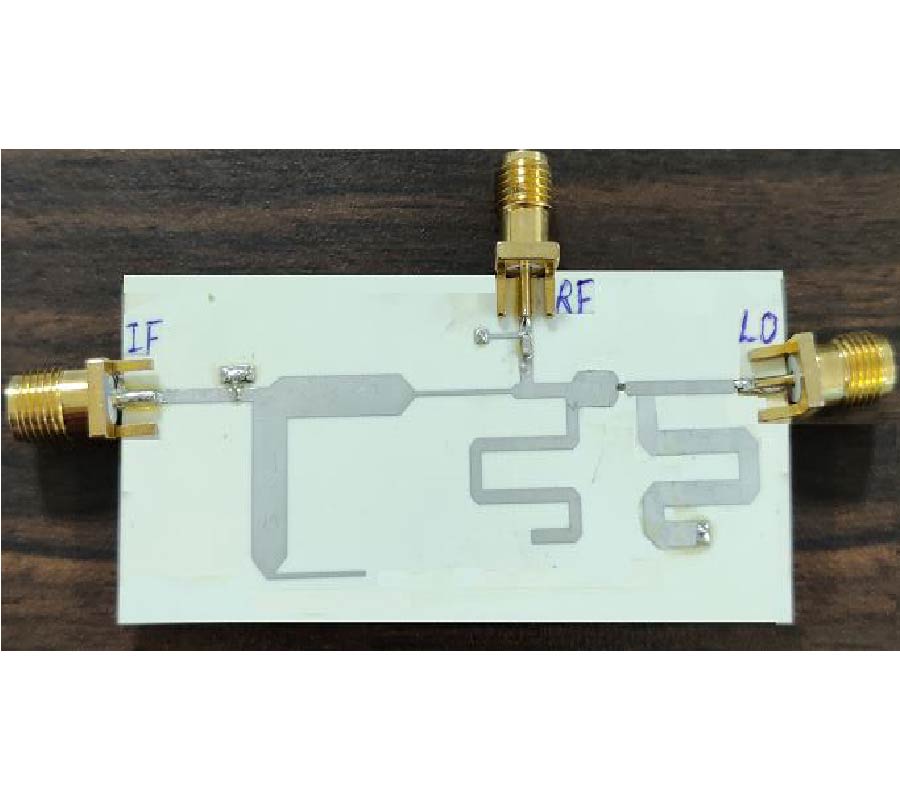
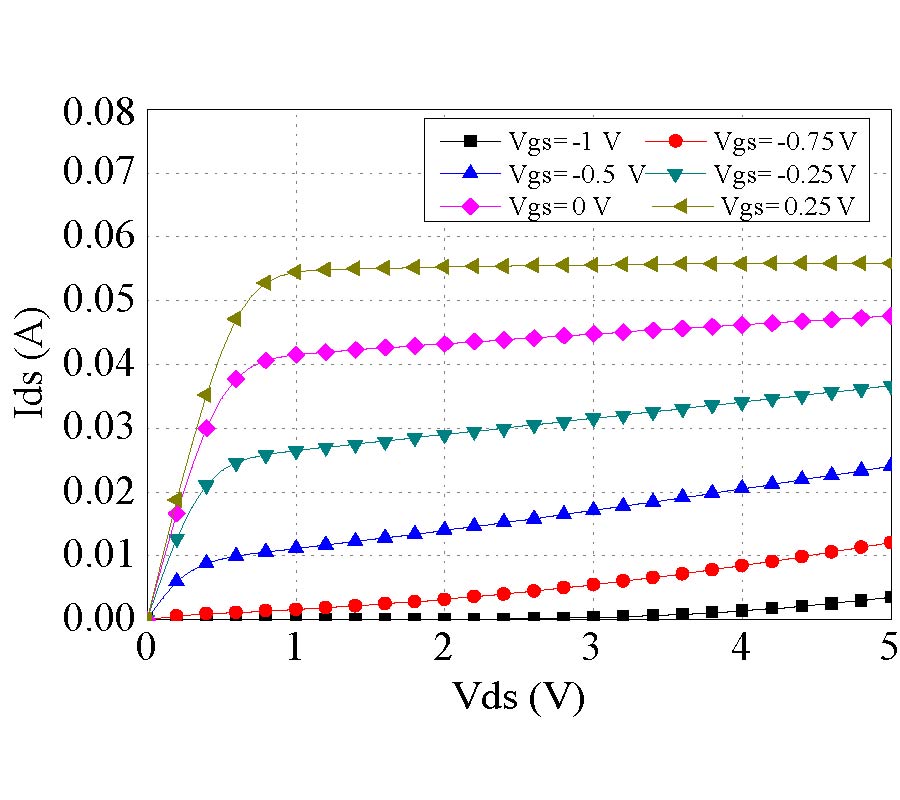
Design of a harmonically tuned RF Power Amplifier (PA) with enhanced efficiency and gain is presented in this letter. It makes use of a tri-band impedance transformer as a two-port output network for facilitating concurrent optimum fundamental and harmonic impedances at the drain terminal. The design is augmented by analytical formulations and analysis to identify the optimal impedance matching scenario at the fundamental, second harmonic, and third harmonic. A thorough analysis reveals that the proposed PA design scheme is very simple while maintaining the performance obtained from the load-pull. A prototype operating at a frequency of 3.5 GHz is developed on RO5880 using 10W GaN HEMT. An excellent agreement between the measured and the EM simulated results validates the proposed design technique.
A TRI-BAND IMPEDANCE TRANSFORMER BASED OUTPUT NETWORK FOR EFFICIENT RF POWER AMPLIFIERS
2020-10-28
PIER C
Vol. 106, 163-176
Broadband Four Elements PIFA Array for Access-Point MIMO Systems
Erik Fritz-Andrade , Ricardo Gomez-Villanueva , José Alfredo Tirado-Méndez , Luis Alberto Vasquez-Toledo , Arturo Rangel-Merino and Hildeberto Jardon-Aguilar
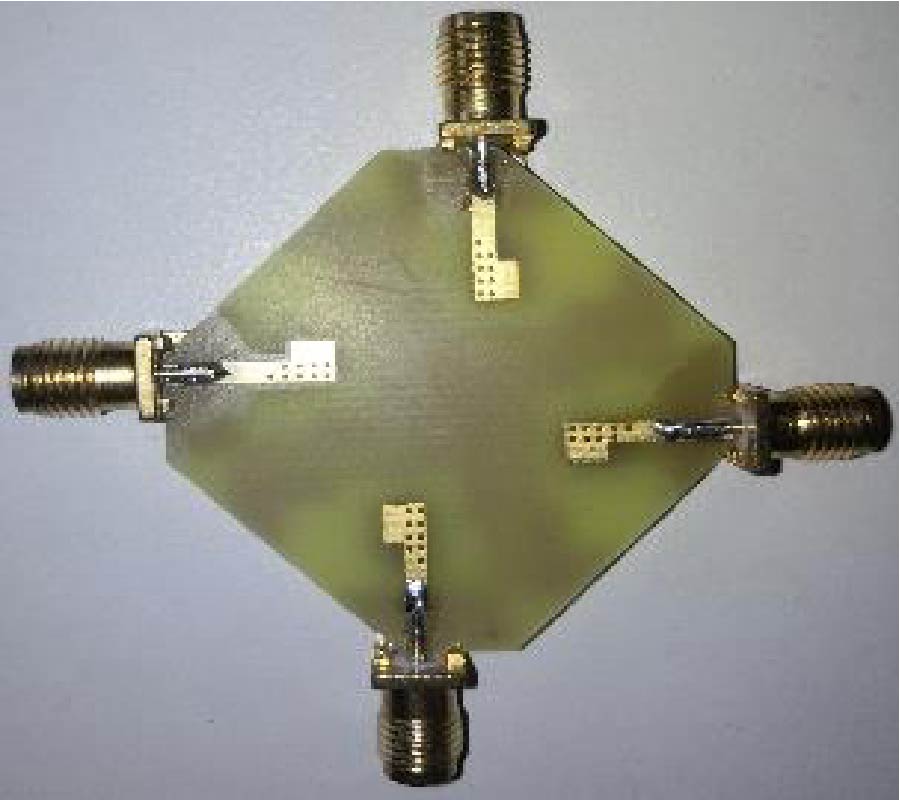
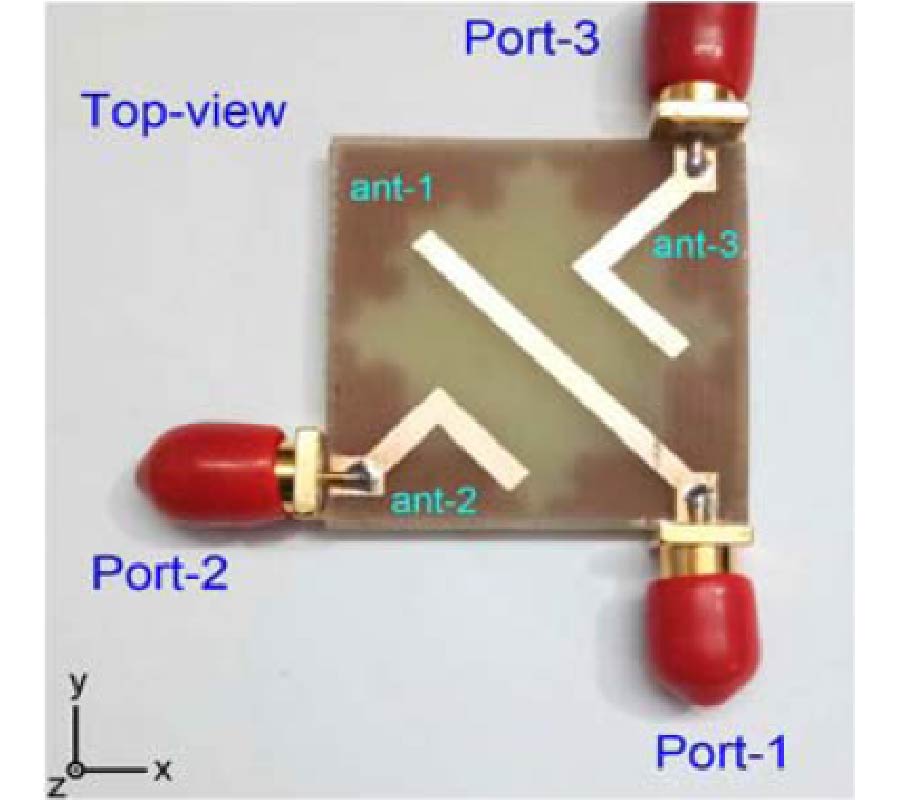
An antenna array formed by four PIFA elements located very close to each other, with low inter-element matching for MIMO applications is proposed. The antenna array consists of four F-inverted wideband radiators, with a fractional bandwidth around 56%, spaced one to each other by a very short distance (< 0.065 λ0) at a centre frequency of 2.55 GHz. The operational bandwidth goes from 1.88 to 3.15 GHz considering the Sii < -10 dB at each port. Moreover, the coupling among ports reaches values below Sij < -10 dB and getting values less than -30 dB at 1.8 GHz, just by employing an uncomplicated technique implemented by a neutralization line between elements. The antenna array gain goes from 2 dB to 6 dB over the operating bandwidth. Concerning MIMO figures of merit, the radiation pattern of each element is orthogonal to each other. The Envelope Correlation Coefficient is below 0.04 at the designed frequency, reaching a peak around 0.082 at 1.8 GHz, but still achieving the requirement for MIMO operation (less than 0.5). The Total Active Reflection Coefficient (TARC) is almost convergent at the design frequency, showing low dependence on random signals at different elements, and finally, the diversity gain reaches values close to 20 dB, making the array suitable for MIMO access point applications.
BROADBAND FOUR ELEMENTS PIFA ARRAY FOR ACCESS-POINT MIMO SYSTEMS
2020-10-27
PIER M
Vol. 98, 21-34
Comparison of High Impedance Textured Substrates for Suppression of Surface Waves in Microstrip Antennas with Solid and Hollow Metallic Pins
Manidipa Roy and Ashok Mittal
High Impedance Textured Substrate is presented for suppression of Surface Waves in Microstrip Antennas. Surface wave propagation limits the radiation efficiency, bandwidth, gain, alters the main beam radiation pattern and increases side lobe levels as well as the back lobes. A novel technique to suppress the surface waves with periodic arrangement of metallic cylindrical pins embedded in the substrate except the area underneath the radiating microstrip patch is presented here. Two structures with solid as well as hollow cylindrical pins are analysed with Spectral Domain Analysis. The textured pin bed structure creates negative permittivity and high capacitive impedance and thus suppresses the propagation of TM-surface waves. The gain of 11.83 dB with an enhancement of 6dB over normal microstrip patch antenna is achieved. Further an increase of 1.61 dB gain with 12.27% improvement in radiation bandwidth is observed in the antenna structure with hollow cylindrical pins as compared to that of solid cylindrical pins. A uniform gain of more than 11 dB is achieved with a percentage bandwidth of 17.43%.
COMPARISON OF HIGH IMPEDANCE TEXTURED SUBSTRATES FOR SUPPRESSION OF SURFACE WAVES IN MICROSTRIP ANTENNAS WITH SOLID AND HOLLOW METALLIC PINS
2020-10-27
PIER M
Vol. 98, 11-20
A CPW-Fed Dual-Band MIMO Antenna with Enhanced Isolation for 5G Application
Chengzhu Du and Zhuolin Zhao
In this paper, a dual-band Multiple Input Multiple Output (MIMO) antenna for fifth-generation (5G) band (3.3-3.6 GHz and 4.8-5.0 GHz) is presented. The proposed MIMO antenna fed by coplanar waveguide (CPW) contains two symmetric antenna elements with two inverted L-shaped stubs. High isolation is successfully acquired by adopting a double-Y-shaped stub and partial ground plane. To obtain compactness, the antenna printed on an FR4 substrate has two triangle corners cut off. To study the performance, the antenna is simulated by Ansoft HFSS 13.0, and then fabricated and tested. The measurement results demonstrate that the antenna has achieved impedance bandwidths (S11 < -10 dB) of 790 MHz (3.08-3.87 GHz) and 880 MHz (4.7-5.58 GHz) with fractional bandwidths of 22.7% and 15.8% respectively, which covers 3.45/4.9 GHz 5G bands. Meanwhile, the measurement results exhibit an enhanced isolation more than 20 dB, a low envelope correlation coefficient (ECC) below 0.001, an average gain better than 2 dB and a stable radiation pattern within operation bands. In addition, the parameters including efficiency, DG, CCL, MEG and TARC are also analysed. The simulated and measured results indicate that the proposed MIMO antenna can be applied to 5G communication system.
A CPW-FED DUAL-BAND MIMO ANTENNA WITH ENHANCED ISOLATION FOR 5G APPLICATION
2020-10-27
PIER Letters
Vol. 94, 85-92
An Electrically Small Dual-Band Antenna Covered with SRs and SRR
Ke Xiao , Jun Dong , Liang Ding and Shunlian Chai
A dual-band antenna operating in dual bands is presented. The antenna is composed of two substrate layers covered with three printed patch layers. The top layer is an electrically small ring; the middle consists of four spiral resonators (SRs); and the bottom is a split-ring resonator (SRR). Inductive couplings between layers change the radiation Q factor of the original ring antenna and promote resonating modes in UHF and S bands. Besides, the input matching property is also improved. The measured return loss agrees well with the calculated results, and the radiation patterns are also presented. From experiments it is found that the proposed antenna is electrically small at operation dual-bands.
AN ELECTRICALLY SMALL DUAL-BAND ANTENNA COVERED WITH SRS AND SRR
2020-10-26
PIER Letters
Vol. 94, 75-84
Low RCS Microstrip Patch Array with Hybrid High Impedance Surface Based Ground Plane
Avinash Singh and Hema Singh
For a radiating structure such as dipole/patch array mounted on an aerospace platform, the radiation mode radar cross section (RCS) plays a significant role compared to the structural mode RCS. Thus the estimation and control of array RCS without degrading its radiating characteristics poses a challenge for an antenna engineer. In this paper, a novel design of a low profile 4-element patch array with hybrid HIS-based ground plane is presented to demonstrate both in-band and out-of-band structural RCS reductions. A significant broadband reduction in structural RCS has been achieved from 1 GHz to 80 GHz. The radiation mode RCS of the patch array is computed and controlled through optimized design parameters without degrading the radiation characteristics. The computed array RCS shows that even radiation mode RCS can be reduced except in operating frequency range.
LOW RCS MICROSTRIP PATCH ARRAY WITH HYBRID HIGH IMPEDANCE SURFACE BASED GROUND PLANE
2020-10-25
PIER Letters
Vol. 94, 67-73
Miniaturized Triple-Section Spiral Antenna with Improved Radiation
Guangyao Yang , Shengbo Ye , Yi-Cai Ji , Xiaojuan Zhang and Guangyou Fang
A triple-section arm structure is proposed for designing a planar spiral antenna. All three sections are designed by combining logarithmic, rooted, and sine equations. The slowly outstretched and contractive structure is innovatively realized. According to the radiation characteristics of the spiral antenna, each section corresponds to different in-band enhancement effects. Numerical simulation in the frequency domain and experiments using two different baluns are carried out. The results show that the novel spiral topology could simultaneously achieve improved axial ratio, low cross-polarized gain, and excellent impedance matching throughout the whole band. The axial ratio is reduced by 1.5 dB at mid frequencies and more at low frequencies, comparing the proposed arm with a sinusoid-added equiangular spiral arm. Without applying the resistive loading method, a lower cut-off frequency of 750 MHz is still realized both in impedance bandwidth and axial ratio bandwidth. The low cut-off frequency of the proposed arm is 30.2% lower than the conventional Equiangular spiral arm. Besides, the polarization isolation is significantly improved, especially at low frequencies. Therefore, the proposed miniaturized spiral arm structure could be a competitive form for designing spiral antennas.
MINIATURIZED TRIPLE-SECTION SPIRAL ANTENNA WITH IMPROVED RADIATION
2020-10-24
PIER Letters
Vol. 94, 57-65
Miniaturized Twelve-Stubbed Microstrip Balun with Twelfth Higher Order Harmonic Suppression and Improved Bandwidths
Vuppuloori Ravi Reddy , Vamsi Krishna Velidi and Bhima Prabhakara Rao
The design of a compact stubbed microstrip balun with very wide range higher order harmonic suppression, is presented based on multiple open stub units, for which advantages are twofold, compared to single and double open-stub based designs. First, the high degree of size and harmonic reduction is achieved within the realizable impedance values. Second, the achieved bandwidths are fairly large (close to those of conventional balun) for a given set of electrical lengths. Unlike other methods, here, predetermined bandwidth analysis is provided for various levels of size and harmonic reduction. A prototype balun, having 75% size reduction and simultaneous wide higher order harmonic suppression extended up to 12f0, while maintaining good input matching, amplitude and phase balance bandwidths, is fabricated for validation.
MINIATURIZED TWELVE-STUBBED MICROSTRIP BALUN WITH TWELFTH HIGHER ORDER HARMONIC SUPPRESSION AND IMPROVED BANDWIDTHS
2020-10-23
PIER B
Vol. 88, 197-215
Optimum Design Methodology for Axially Polarized Multi-Ring Radial and Thrust Permanent Magnet Bearings
Siddappa Iranna Bekinal and Mrityunjay Doddamani
This article deals with the generalized procedure of designing and optimizing multi-ring radial and thrust permanent magnet bearings (PMBs) with an axial air gap for maximum force and stiffness per volume of the magnet. Initially, the procedure of determining optimized design variables in both the configurations is presented using the MATLAB codes written for solving the three dimensional (3D) equations of force and stiffness in PMB having `n' number of rings on the stator and rotor. The maximized results of the forces in both radial and thrust multi-ring PMBs are validated with the values obtained using finite element analysis (FEA). Then, the correlation between the optimized parameters and the air gap is obtained, and curve fit equations for the same are proposed in terms of stator outer diameter. Further, curve fit equations establishing the relationship between the maximized bearing features, and the aspect ratio (L/D4) of the bearing are expressed for different values of air gap in both the radial and thrust bearings. Finally, the generalized method of designing and optimizing the multi-ring PMB is demonstrated with a specific application. A designer can use the presented curve fit equations for optimizing design variables and calculating maximized bearing features in multi-ring radial and thrust PMBs easily just by knowing the bearing features for a single ring pair.
OPTIMUM DESIGN METHODOLOGY FOR AXIALLY POLARIZED MULTI-RING RADIAL AND THRUST PERMANENT MAGNET BEARINGS
2020-10-23
PIER C
Vol. 106, 151-161
A Compact Frequency Reconfigurable Printed Antenna for WLAN, WiMAX Multiple Applications
Prem Pal Singh , Sudhir Kumar Sharma and Pankaj Kumar Goswami
In this research work a compact patch antenna which is reconfigurable for frequency is presented. Frequency reconfigurability is achieved by the use of two PIN diodes. Antenna operates over four frequencies, i.e., for WiMax (4.94 GHz), WLAN (5.35), and C-Band (6.25 and 6.83 GHz) applications. The overall dimension of antenna is 25×25 mm2, and an FR-4 substrate having dielectric constant of 4.4 and thickness 1.6 mm is used to fabricate the prototype of the proposed antenna. Different resonant frequencies are obtained by cutting a ∏-slot and a U-slot in radiating patch and by modifying ground slot with a modified slotted structure. One diode is used in ground, and another PIN diode is used on the patch at an appropriate position. Maximum gain of 3.91 dBi and stable radiation characteristics and VSWR < 2 are obtained at the operating bands in simulation and measurement. The antenna elicits its novelty through compactness, portability for communication devices through combination of only two PIN diode switching in cellphones, tablets PCs, and other satellite communication devices operating in C-band as per FCC standard. A prototype of antenna is fabricated, and the measured and simulated parameters are in good agreement.
A COMPACT FREQUENCY RECONFIGURABLE PRINTED ANTENNA FOR WLAN, WIMAX MULTIPLE APPLICATIONS
2020-10-22
PIER M
Vol. 97, 215-227
The Influence of Different Structure of Magnetic Modulation Ring on the Torque Performance of Coaxial Magnetic Gear
Jungang Wang , Shuairui Xu , Aiguo Ouyang and Ruina Mo
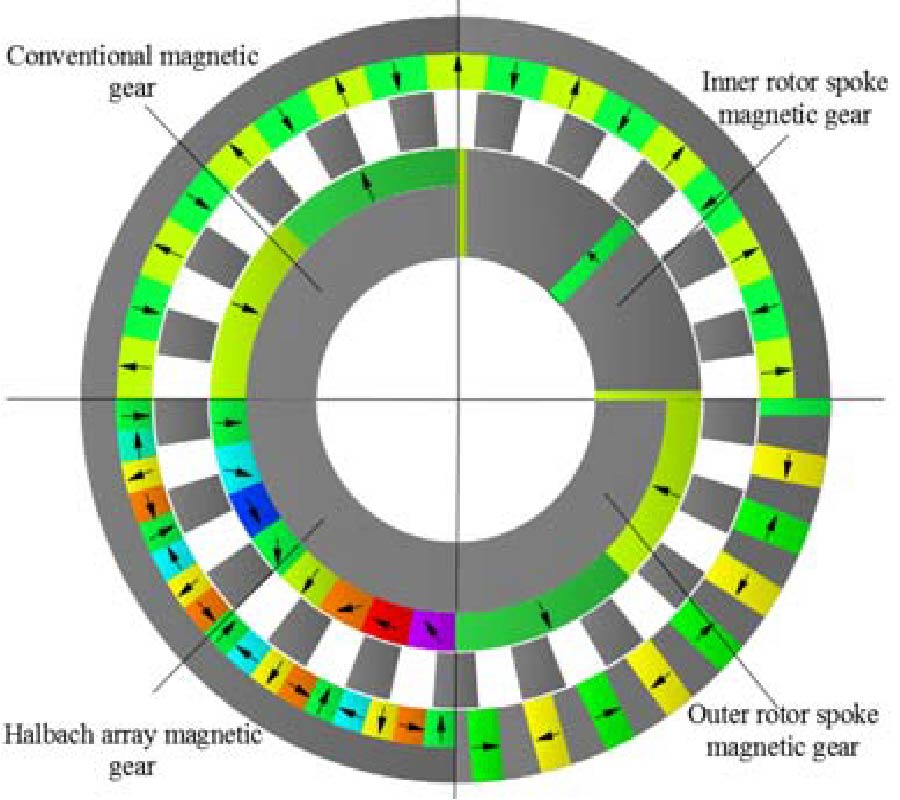
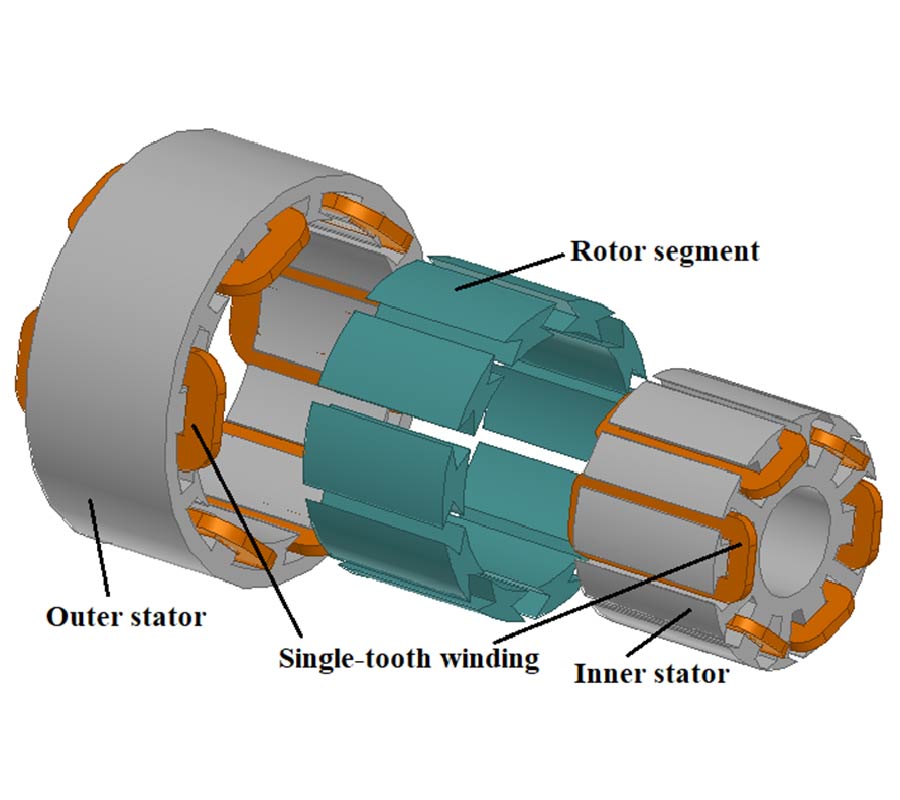
In coaxial magnetic gear (CMG), magnetic modul ation ring is composed of a modulator and a connecting bridge. The torque performance of the magnetic gear are affected by the different structures of the magnetic modulation ring. In this paper, fifteen different kinds of magnetic modulation rings with different structures are proposed; they consist of three different shapes of modulators and five different locations of connection bridges. By using the two-dimensional finite element method (FEM), the magnetic flux density, magnetic line distribution, static torque, and steady-state torque of the CMG with different structures of magnetic modulation ring are analyzed. The results show that the innermost bridge has the least effect on the torque and torque ripple of the CMG, while the outermost bridge has the opposite effect. The torque capacity of the circular modulator and arc modulator is higher than that of the square modulator, and the circular modulator helps to reduce the inner torque ripple, while the square modulator helps to reduce the outer torque ripple. This paper can provide some references for the design of the magnetic modulation ring.
THE INFLUENCE OF DIFFERENT STRUCTURE OF MAGNETIC MODULATION RING ON THE TORQUE PERFORMANCE OF COAXIAL MAGNETIC GEAR
2020-10-22
PIER Letters
Vol. 94, 49-55
Design and Evaluation of a Planar I-Shaped Folded-Patch Antenna for Compact Passive UHF RFID Tags to Cohere on Metal
Yongtao Ma , Hongfei Ning , Weijia Meng and Chenglong Tian
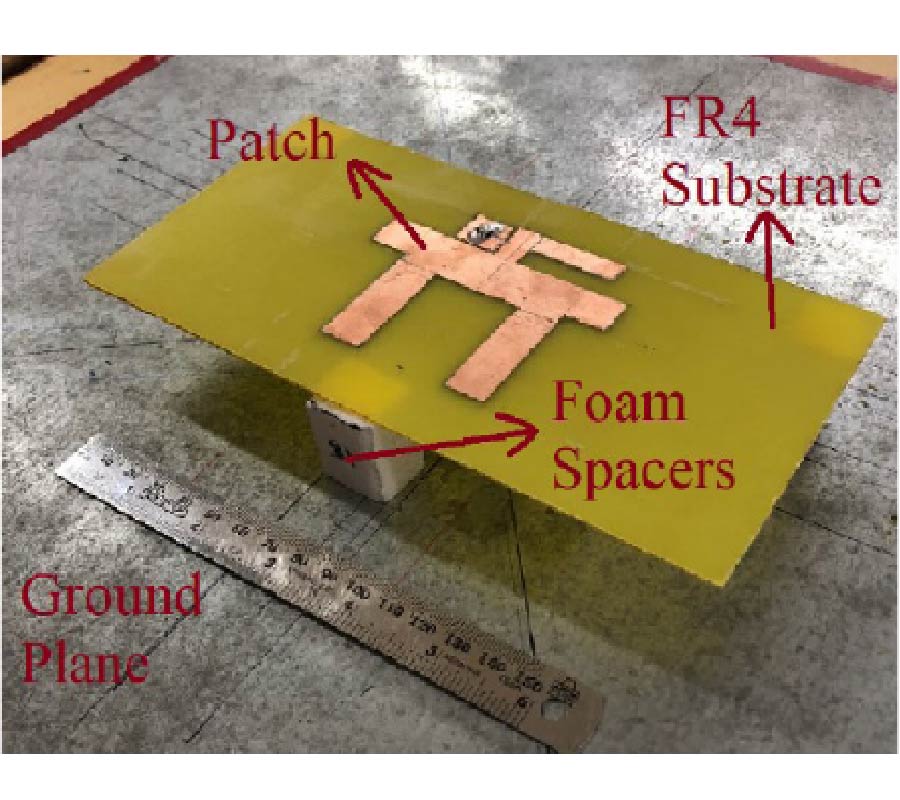
A planar I-shaped folded-patch antenna with a footprint of 21 mm x 21 mm x 1.6 mm is designed for compact UHF RFID tags to cohere on metal. The antenna consists of three parts: a square ground plane, an I-shaped patch and a ring resonator. The I-shaped patch is interconnected to the ground plane through a narrow shorting stub, and the microstrip feed line is inserted into the patch to reduce the input impedance of the patch. Extra capacitance and inductance introduced by the ring resonator can lower the tag's resonant frequency down to the expected UHF RFID band. The proposed antenna is manufactured, and there is excellent consistency between simulation and measurement results. The proposed tag antenna achieves a far read distance up to 6.3 m on metal (with 4 W equivalent isotropic radiated power) at resonant frequency of 920 MHz.
DESIGN AND EVALUATION OF A PLANAR I-SHAPED FOLDED-PATCH ANTENNA FOR COMPACT PASSIVE UHF RFID TAGS TO COHERE ON METAL
2020-10-21
PIER M
Vol. 97, 201-213
A Study on Electromagnetic Field and Force for Magnetic Micro-Robots Applications
Chuan Qu , Yong-Chen Pei , Long Xu , Zheng-Rong Xia and Qing-Yuan Xin
Magnetic micro-robots are used widely in a narrow space, such as internal inspections and desilting of slender pipelines, minimal- or non-invasive diagnoses and treatments of various human diseases in blood vessels, and micro-manipulations, micro-sensing fields. Magnetic micro-robots are usually driven by several electromagnetic coils. It is essential to understand the magnetic field and magnetic forces acting on micro-robots to drive the magnetic micro-robots more effectively. In this paper, the finite element method is applied to simulate the magnetic field generated by a coil assembly. Moreover, a three-dimensional magnetic force simulation is also performed to reveal the magnetic forces acting on a cylindrical magnetic micro-robot. Experimental measurements validate the simulated results. A Hall sensor is used to measure the magnetic field along the coil assembly's axial and radial direction. The micro-robot is glued to a connecting rod, fixing a force sensor to measure the magnetic forces acting on it. The measured results are in good accordance with the simulated ones, which prove the validity of the simulation. The results from this study show potential to provide a reference to magnetic micro-robot applications.
A STUDY ON ELECTROMAGNETIC FIELD AND FORCE FOR MAGNETIC MICRO-ROBOTS APPLICATIONS
2020-10-21
PIER Letters
Vol. 94, 43-48
Effect of Noise Jamming on Compressed Sensing SAR Imaging
Xiaohong Lin , Zhifeng Cheng , Xin Man and Wei Tian
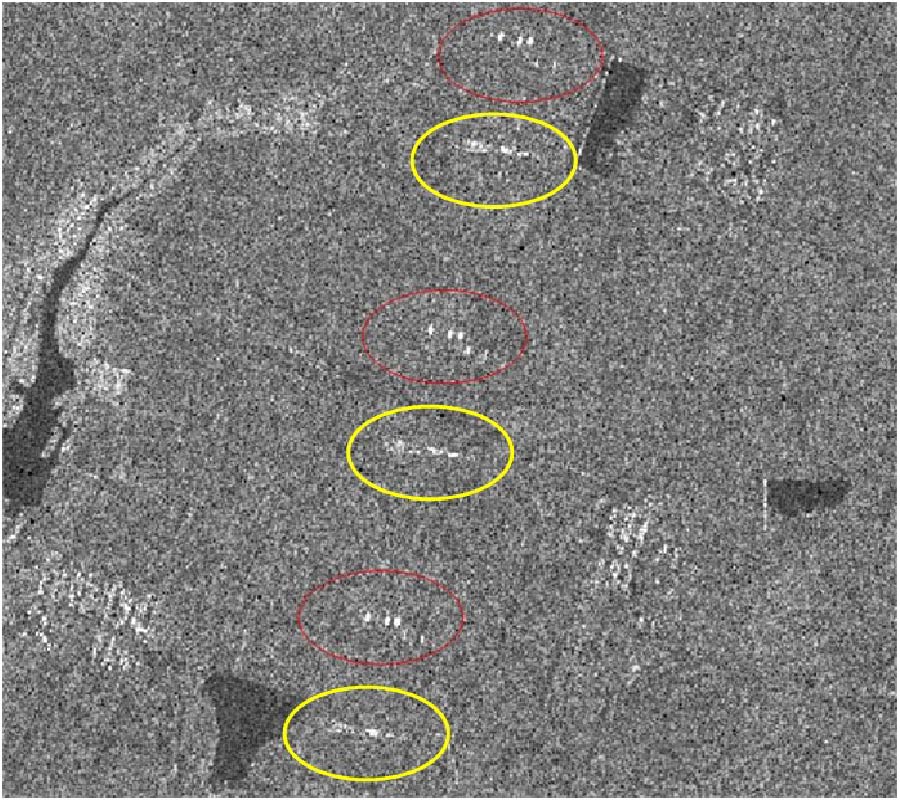
Compressed sensing (CS) imaging radar can obtain higher resolution than the traditional synthetic aperture radar (SAR) with less data, which makes it important for military and civilian applications. However, noise, especially active noise jamming will degrade its performance. This paper describes the signal model of the CS imaging radar under noise jamming. Through theoretical analysis and simulation experiments, the influences of different jamming patterns, jamming parameters and reconstruction algorithms on the performance of CS imaging are compared. It can provide reference for the research of anti-jamming technology of CS imaging radar.
EFFECT OF NOISE JAMMING ON COMPRESSED SENSING SAR IMAGING
2020-10-20
PIER M
Vol. 97, 189-200
Design of a Long Linear Helical Subarray for High-Power Cylindrical Conformal Array Antenna
Jianqiong Zhang , Pengyou Huang , Xiang-Qiang Li and Qingfeng Wang
A Ku-band long linear helical subarray (LLHS) for a high-power cylindrical conformal array antenna has been developed. The LLHS consists of 80 helical antennas can be used to constitute conformal array of cylindrical surface. Through the research on the embedded probe structure, the adjustment of the coupling ability of different types of unit probes and the sealing method of the whole feeding, the problems of large feed reflection, the uneven coupling amount of the unit probe in the rectangular waveguide system are solved, and the LLHS which can be used in the high-power conformal array is realized. The LLHS which is 52.35λ length can obtain 25.2 dB gain, 2.31 dB axis ratio, 90% aperture efficiency, -15.65 dB reflection at 12.5 GHz, and the reflection is lower than -14 dB during 12-13 dB. In addition, it could handle a pulse power of 166 MW under vacuum condition.
DESIGN OF A LONG LINEAR HELICAL SUBARRAY FOR HIGH-POWER CYLINDRICAL CONFORMAL ARRAY ANTENNA
2020-10-20
PIER M
Vol. 97, 177-188
Flexible Vivaldi Antenna Based on a Fractal Design for RF-Energy Harvesting
Mustafa A. Al-Janabi and Sema K. Kayhan
Radio frequency (RF) energy harvesting technologies have attracted different efforts from researchers to employ low energy in powering portable electronic devices. In this article, an Ultra-Wide Band (UWB) antenna based on a Vivaldi fractal antenna backed with a Metamaterial (MTM) array is exemplified for RF-energy harvesting in the modern 5G networks. The antenna is connected to a full wave rectifier circuit to obtain a rectified DC current. It is found that the exemplified antenna provides a maximum output voltage of 1.4V and 1.3 V at 3.1 GHz and 4 GHz, respectively, when the incident RF power is around 17 Bm. The measured results and simulations show excellent agreement. The antenna is printed a flexible Kodak photo paper of 0.5 mm thickness with εr = 2 and loss tangent of 0.0015. The numerical simulations are conducted using CST MWS and HFSS software packages. The proposed antenna structure is fabricated using an ink jet printing technology based on conductive silver nanoparticle ink. Finally, from the obtained measurements after the comparison to their simulations, the proposed antenna is covers the frequency band from 2.4 GHz up to 20 GHz with a gain of 1.8 dBi at 3.1 GHz and 4 dBi at 4 GHz.
FLEXIBLE VIVALDI ANTENNA BASED ON A FRACTAL DESIGN FOR RF-ENERGY HARVESTING
2020-10-20
PIER Letters
Vol. 94, 35-41
A Novel Frequency Selective Surface with Two Non-Interfering Passbands
Chenglong Wang and Chunyang Wang
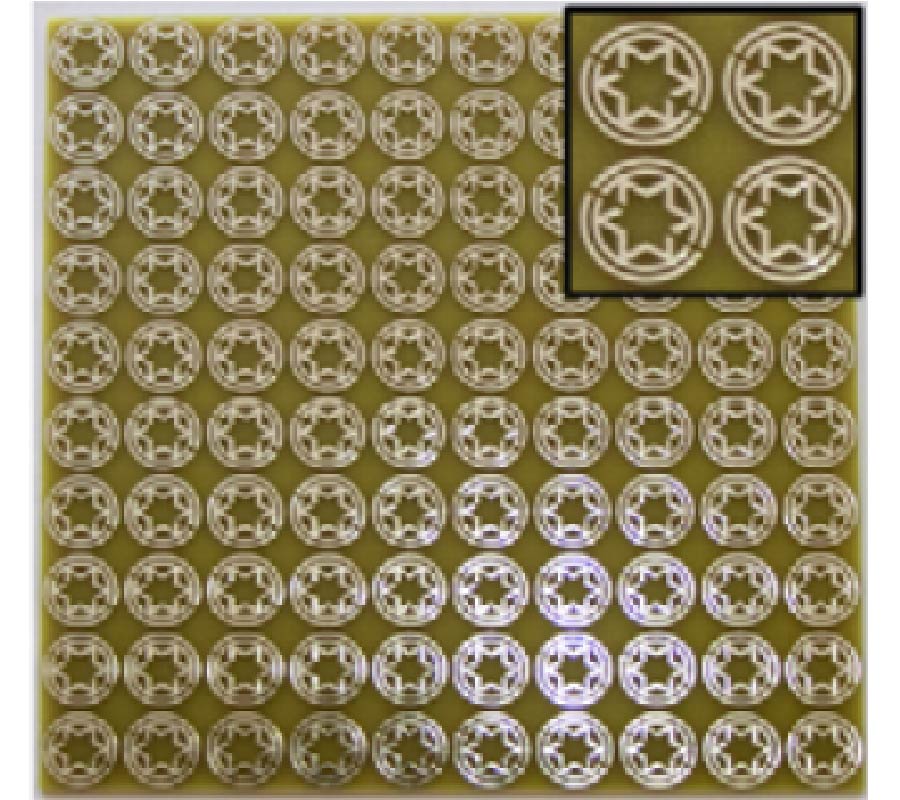
A novel dual-band frequency selective surface (FSS) operating at Ku- and Ka- bands is presented in this paper. The proposed FSS is an aperture element constituted by a square loop loaded with four symmetrical umbrella-shaped stubs on the front side of the dielectric substrate. A good angular stability up to 60° angle of incidence for both TE and TM polarizations is provided by the FSS. Moreover, the two passbands of FSS can be controlled independently and flexibly by changing corresponding structural parameters. A prototype of the FSS is fabricated and measured. The good agreement between simulation and measurement results further proves the performance of the FSS.
A NOVEL FREQUENCY SELECTIVE SURFACE WITH TWO NON-INTERFERING PASSBANDS
2020-10-19
PIER Letters
Vol. 94, 27-34
A Compact CPW Bandpass Filter Based on Spiral-Shaped DGSs for 5G Frequency Band
Wen Huang , Lu Li , Liang Li and Jinsheng Dong
A CPW (coplanar waveguide) bandpass filter based on spiral-shaped DGSs (defected ground structures) which can be used in the 5G band is proposed. Two pairs of face-to-face symmetrical spiral-shaped DGSs are added to the ground planes of a CPW main transmission line. A cross-shaped notch is adopted in the central strip of the CPW main transmission line to generate the passband, while two m-shaped DGSs are brought in to improve the passband performance of the filter. The measured results show that the central frequency is 3.54 GHz, and the 3-dB bandwidth is from 3.29 GHz to 3.79 GHz. The filter has a 10.1% bandwidth with a return loss better than 10 dB from 3.35 GHz to 3.71 GHz, and the insertion loss is less than 2.0 dB in the passband. Besides, there are two transmission zeros near the passband at 2.45 GHz and 4.81 GHz, which can improve the stopband rejection.
A COMPACT CPW BANDPASS FILTER BASED ON SPIRAL-SHAPED DGSS FOR 5G FREQUENCY BAND
2020-10-18
PIER M
Vol. 97, 167-176
Analysis of Surface Wave Attenuation in Double-Layer Magnetic Absorbing Sheet for Wide Frequency Range Application
Yinrui Li , Jiaji Yang , Dongmeng Li , Wei Gong , Xian Wang and Rong Zhou Gong
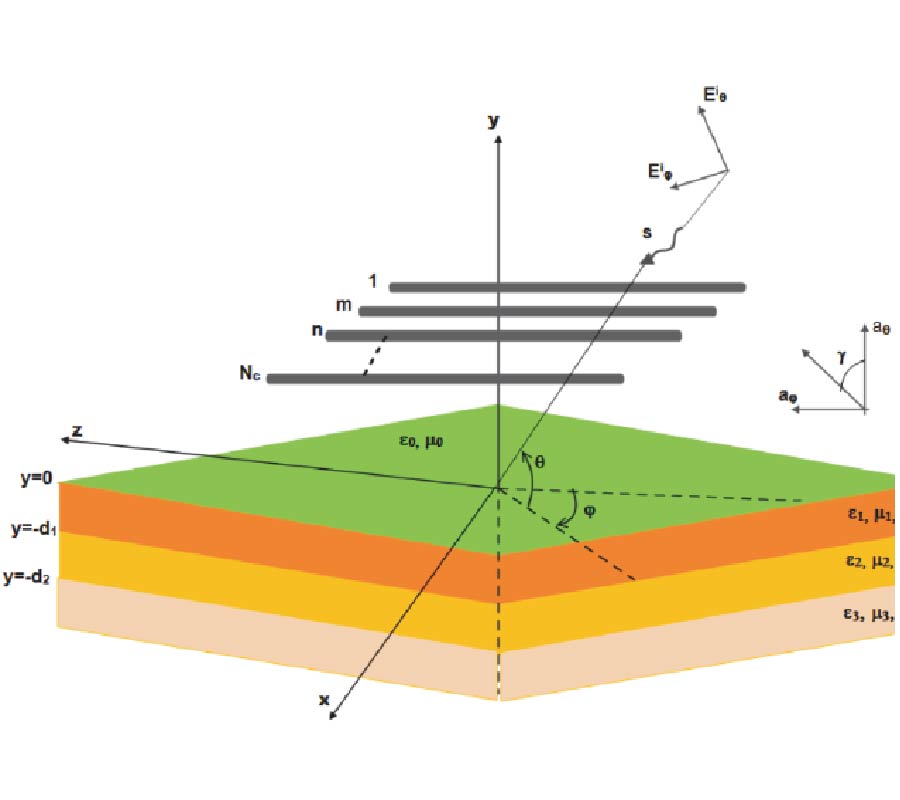
We firstly derived the simplified formulas for calculating attenuation constants of surface wave in double-layer magnetic absorbing sheets (MASs). The fabricated two kinds of magnetic absorbing sheets, having advantages in the low and high frequency range respectively, were used to design a group of 0.5 mm-thick double-layer sheets. Numerical calculation results show that the surface wave attenuation constants of double-layer absorbing sheet with a proper combination of the two MASs can be significantly enhanced in the whole frequency range, compared to those single-layer sheets of the same thickness. Furthermore, the simulations of mono-static RCS reduction of the metal slab coated with double-layer MAS well confirm the calculation analysis. This work demonstrates that it is feasible for double-layer magnetic absorbing sheet to enhance the surface wave attenuation ability and broaden application frequency range.
ANALYSIS OF SURFACE WAVE ATTENUATION IN DOUBLE-LAYER MAGNETIC ABSORBING SHEET FOR WIDE FREQUENCY RANGE APPLICATION
2020-10-18
PIER Letters
Vol. 94, 19-25
A Method for Planar Phased Array Calibration
Yangyi Lu , Lei Zhou , Mantang Cui , Xiaodong Du and Yongjun Hu
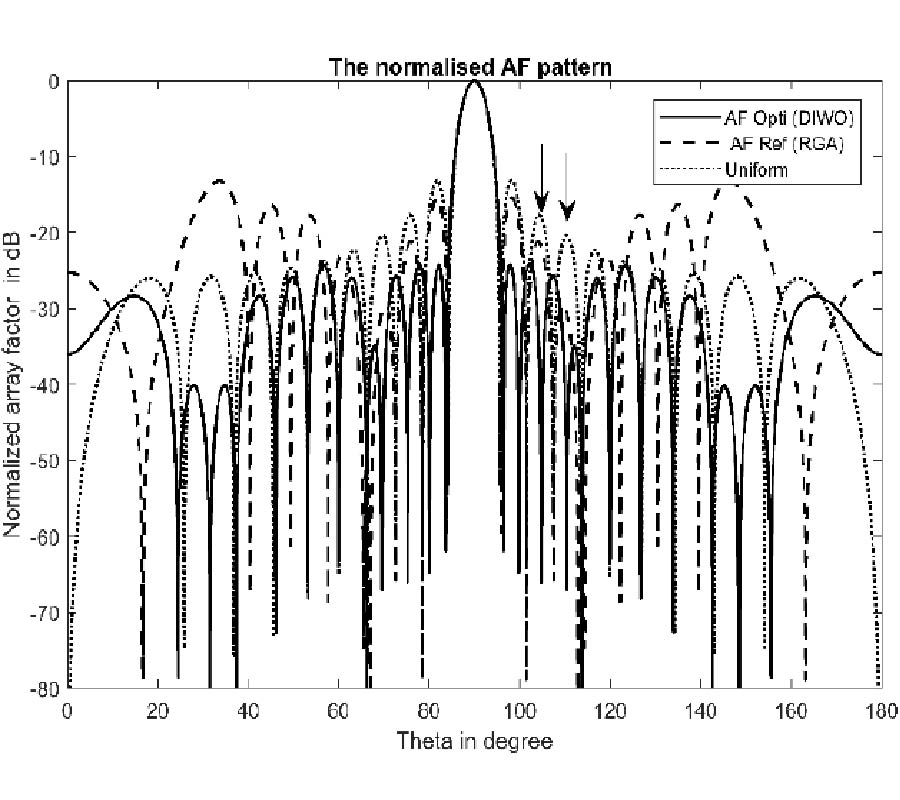
A method is proposed to calibrate a planar phased array by reconstructing its aperture distribution, in which the aperture distribution is superposed within the physical range of radiating element. Consequently, the calibration coefficients are solved for the linear relationship between the superposed aperture distribution and elements' excitations. The calibration accuracy that is influenced by resolution of aperture distribution is also discussed in this paper. In practice, the reconstruction procedure of aperture distribution is based on the plane wave spectrum (PWS) theory, utilizing FFT and IFFT techniques. This method turns out to be valid by experiment.
A METHOD FOR PLANAR PHASED ARRAY CALIBRATION