Search Results(13790)

2020-05-23
PIER M
Vol. 93, 11-21
Design of a Dual-Band Antenna System for LTE-m and LTE-MIMO by Exploiting the Characteristic Mode Theory
Kadidiatou Diallo , Aliou Diallo , Ibra Dioum , Samuel Ouya and Jean Marc Ribero
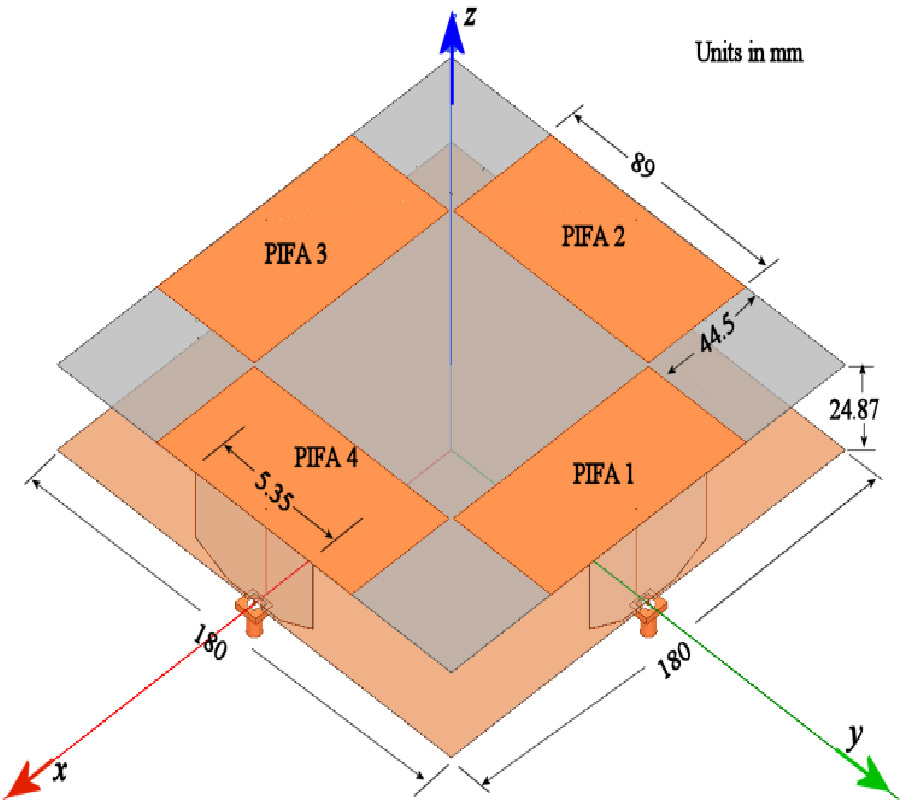
In this article, a compact dual-band antenna system for LTE-M (700-900 MHz) and LTE-2500 dedicated to mobile handsets is presented. The system consists of a dual-band Planar Inverted-F-Antenna (PIFA) for LTE-M and LTE-2500 bands where this designed PIFA is frequency reconfigurable in the LTE-M band. Additionally, another PIFA is designed to cover the LTE-2500 band to enable Multiple-Input-Multiple-Output (MIMO) communication for this band. Frequency reconfiguration between 700 MHz and 900 MHz is performed by a varactor diode biased from the RF port using a decoupling circuit to separate DC and RF signals. The compactness of the system and the good isolation between the two antennas were obtained thanks to the study of the characteristic modes of the mobile phone chassis, where the ideal positions of the antennas can be easily obtained. A prototype of our system was fabricated where good frequency reconfiguration and good MIMO performance (TARC and envelope correlation) were achieved.
DESIGN OF A DUAL-BAND ANTENNA SYSTEM FOR LTE-M AND LTE-MIMO BY EXPLOITING THE CHARACTERISTIC MODE THEORY
2020-05-22
PIER M
Vol. 92, 213-221
Millimeter-Wave Ultra-Wideband PCB 180˚ Hybrid for 12-67 GHz
Carl Pfeiffer , Thomas Steffen and Boris Tomasic
A myriad of ultra-wideband (UWB) 180˚ hybrids have been reported that operate at frequencies below 20 GHz. However, parasitics from printed circuit board (PCB) transmission lines become significantly more problematic as the frequency is extended to mm-wave frequencies. Here, abroadside coupled transmission line hybrid is investigated for operation at 12-67 GHz. It is shown that a parasitic time delay for the odd mode exists at the junction between coupled and uncoupled transmission lines. A heterogeneous multi-layer PCB stack-up is leveraged to compensate for the junction parasitics over an ultra-wide bandwidth. Measurements have an insertion loss between 2 and 12 dB across the band, < 1.5 dB amplitude balance, < 10˚ phase balance, and > 19 dB isolation.
MILLIMETER-WAVE ULTRA-WIDEBAND PCB 180˚ HYBRID FOR 12-67 GHZ
2020-05-22
PIER Letters
Vol. 91, 77-83
Mid-Infrared Micro-Displacement Measurement with a Bidimensional Silicon Photonic Crystal
Tarek Zouache and Abdesselam Hocini
In this work, a micro displacement sensor based on dual micro-cavities coupled to a photonic crystal waveguide is proposed. The defects are introduced to create a sharp resonance in the structure which makes it useful for detecting micro displacement changes. The sensing principle is based on the change of the output signal transmission with the change of the displacement of a moving part compared to a fixed part of sensor structure. The proposed structure reached a good sensitivity of 9.52a-1.
MID-INFRARED MICRO-DISPLACEMENT MEASUREMENT WITH A BIDIMENSIONAL SILICON PHOTONIC CRYSTAL
2020-05-21
PIER Letters
Vol. 91, 67-75
Analysis of the Effect of Temperature on the Wideband Characteristics of EMI Filters
Dong Chao , Chen Han and Ming-Xing Du
This paper analyzes the variation trend of transmission coefficients of two electromagnetic interference filters with different structures in different temperature environments. Considering the influence of mutual-inductance between capacitors and temperature on parasitic parameters, we construct a wideband equivalent circuit model of electromagnetic interference filter and calculate the coefficient of the parameter as a function of temperature by measuring the parasitic parameters of common mode chokes (CMC) in different temperature environments. Because the wide range of selected temperature changes, it is necessary to divide the entire temperature range into two temperature segments and calculate the temperature coefficients respectively to ensure the accuracy of the data. Through the simulation and experiment, we have obtained the variation trend of the transmission coefficient of two kinds of structural electromagnetic interference filters under different temperature environments, and the trend shows that the attenuation performance of the filter rises first and then decreases with the increase of temperature, which verifies that the temperature will affect the performance of the filter.
ANALYSIS OF THE EFFECT OF TEMPERATURE ON THE WIDEBAND CHARACTERISTICS OF EMI FILTERS
2020-05-21
PIER C
Vol. 102, 109-125
Applications of the Random Coupling Model to Assess Induced Currents or Voltages in Reverberant Environment
Valentin Houchouas , Muriel Darces , Marc Hélier , Emmanuel Cottais and José Lopes Esteves
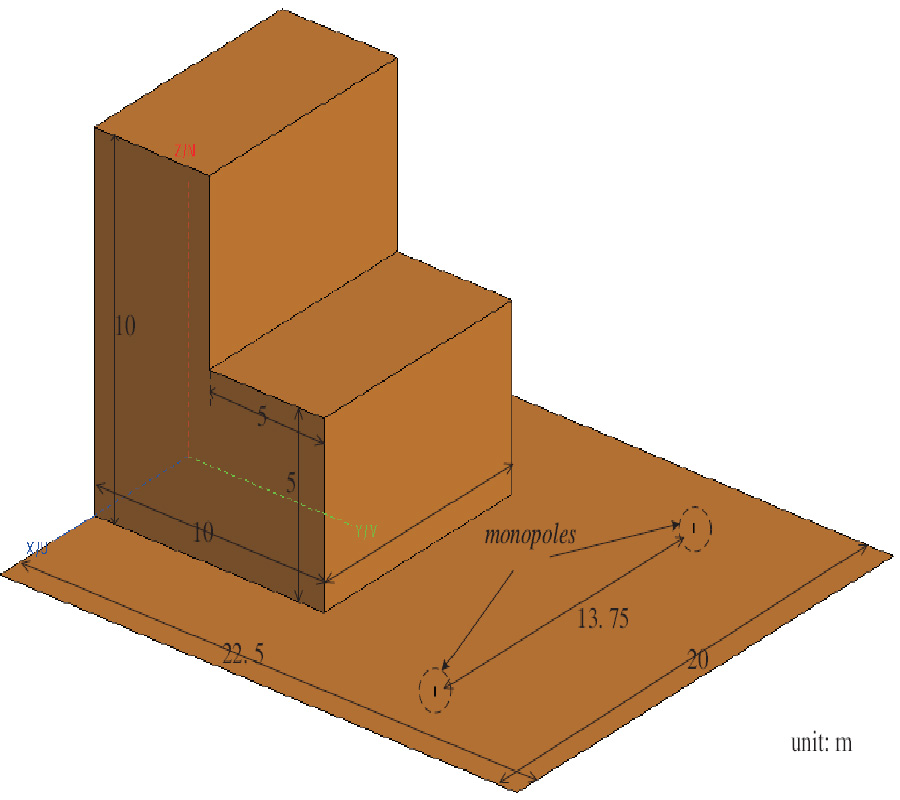
Coupling in electronic devices may be a threat for the security of the information they process. Indeed, a current flowing into a conductor may radiate an electromagnetic field that will couple onto other conductors creating parasitic signals. If this current conveys sensitive information, its confidentiality may not be guaranteed. Moreover, depending on the amplitude of these parasitic signals, dysfunction may occur. It is thus valuable to assess the coupling effects in order to evaluate the probability that a current or a voltage reaches a given magnitude. This relevant quantity may be an input for a risk analysis process. In this study, we will focus on the study of couplings in reverberant cavities, and especially into the chassis of desktop computers. We will highlight that the Random Coupling Model (RCM) may be applied to determine statistical quantities related to induced currents or voltages between several ports placed inside a reverberant environment. Comparisons with experimental data, for several system configurations, show that the application of this model is relevant and allows to rapidly obtain the percentiles of the induced currents. At first, the coupling between two monopoles is studied, and then the coupling between printed circuit boards that are stacked together is investigated. Finally, the effect of adding broadband absorbers in casings is assessed.
APPLICATIONS OF THE RANDOM COUPLING MODEL TO ASSESS INDUCED CURRENTS OR VOLTAGES IN REVERBERANT ENVIRONMENT
2020-05-21
PIER C
Vol. 102, 93-107
Pilot Contamination Mitigation Based on Interfering User's Angle of Arrival in Massive MIMO Systems
Parfait Ifede Tebe , Guangjun Wen and Kwadwo Ntiamoah-Sarpong
A new approach to mitigate pilot contamination in massive MIMO systems is proposed in this paper. We consider two cells from the first tier of copilot cells of a cellular network where the base stations (BSs) are equipped with uniform linear arrays with hybrid beamforming adopted. We consider one cell as the cell of interest containing a typical desired user, and the other cell contains an interfering user sending data and contaminating pilot signals to the BS of the cell of interest. We derive a closed-form expression for the desired user's achievable rate as a function of the interfering user's angle of arrival (AoA). We model the ray propagation from the interfering user to the BS of the cell of interest and its related AoA as Gaussian distribution. Based on the model, we derive closed-form expressions for the pilot contamination level in the cell of interest, and for the desired user's data path gain estimation error due to pilot contamination. A perfect agreement is found between theoretical and Monte Carlo simulation results which show that when the interfering user's AoA is increased the pilot contamination level is significantly minimized, the desired user's data path gain estimation error also minimized, and hence its data rate is significantly increased. Moreover, we show in our analysis that the interfering user's AoA can be effectively controlled and increased by reducing the copilot cells' radius.
PILOT CONTAMINATION MITIGATION BASED ON INTERFERING USER'S ANGLE OF ARRIVAL IN MASSIVE MIMO SYSTEMS
2020-05-20
PIER C
Vol. 102, 79-91
Design, Analysis, and Optimization of Dual Side Printed Multiband Antenna for RF Energy Harvesting Applications
Rashmi Pandey , Ashok Kumar Shankhwar and Ashutosh Singh
In this paper, the performance of a compact, multiband, and dual side printed microstrip patch antenna is introduced. The proposed antenna configuration is designed using a nested triangular patch and defected ground structure (DGS). A simple rectangular DGS is constituted in the ground plane, which helps to enhance the multiband characteristics of the antenna with its size. The proposed design exhibits compact size, better radiation, and reflection characteristics over a multiband frequency ranging from 1 GHz to 6 GHz. These entire bands are allied with various wireless communication services, such as GSM 1400 MHz and 1900 MHz, ISM, WLAN, Bluetooth, LTE, Wi-Fi, and GPS applications. The receiving Triangular Nested Patch (TNP) antenna offers omnidirectional radiation with 4.45 dBi gain and maximum return loss -34.31 dB at 3.75 GHz. Moreover, extraction of parameters has been presented in this paper with the variation of feed width and ground length. The proposed design shows the enhancement of gain and improved return loss. A comparative analysis has also been shown with the four different antennas parameters. Furthermore, this paper also presents the compact structure to cover efficient frequency ranging from 1400 MHz to 5.8 GHz for radiofrequency energy harvesting applications.
DESIGN, ANALYSIS, AND OPTIMIZATION OF DUAL SIDE PRINTED MULTIBAND ANTENNA FOR RF ENERGY HARVESTING APPLICATIONS
2020-05-19
PIER M
Vol. 92, 203-211
A PCB Planar Ground Radiation Antenna with Small Resonant Hole
Zhiyi Tang , Chao Ma , Bin Zhang and Jiangtao Huangfu
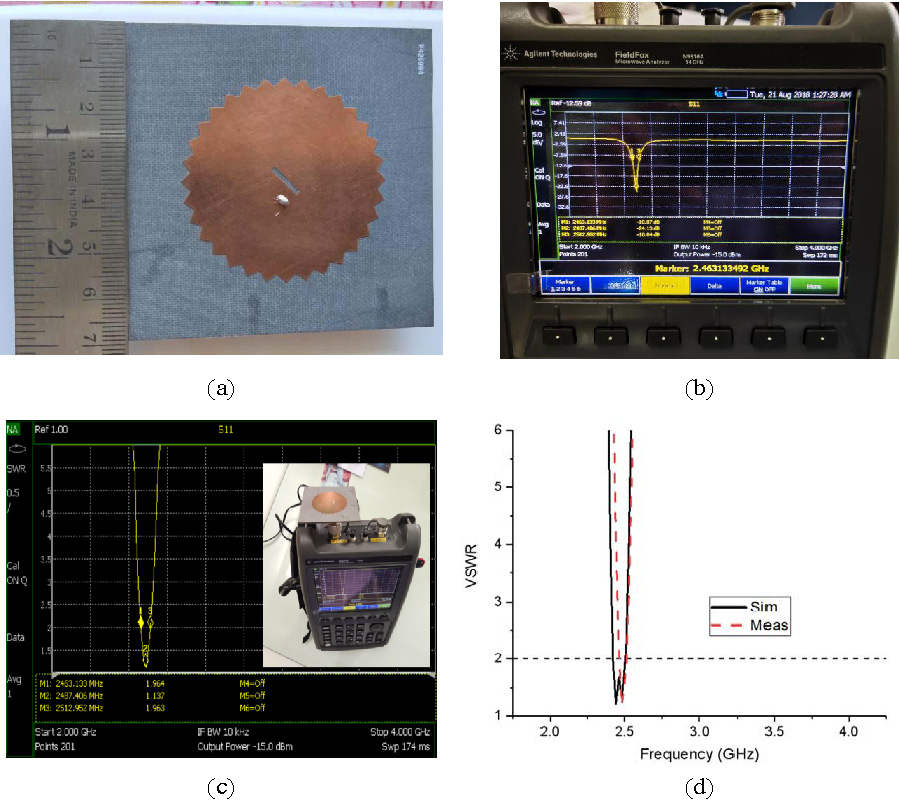
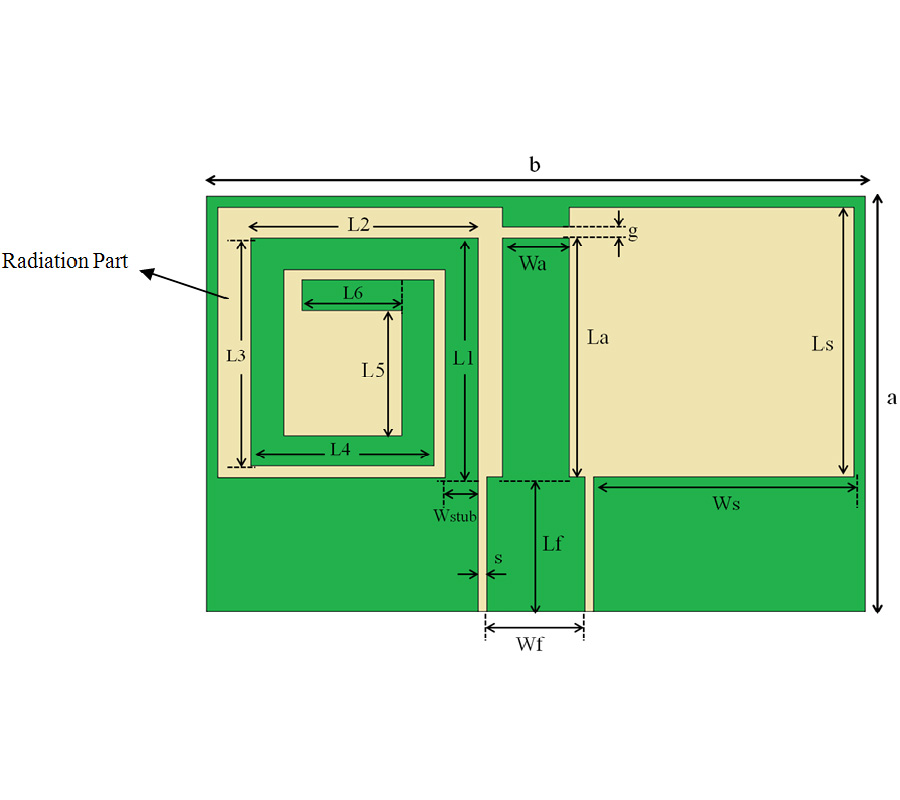
Nowadays compact terminal is one of the general requirements of modern wireless communication systems. The size of antenna limits further reduction of the structure size. To reduce size, a compact planar antenna based on Printed Circuit Board (PCB) is presented in this paper. This antenna has a new small-scale radiation coupling structure with a small hole and a matching element. This structure makes the ground structure of the circuit become an effective radiator through resonant coupling. This compact design avoids an independent big size radiator and the coupling structure over one quarter wavelength. Meanwhile, it can make the circuit have a good antenna matching effect at specific frequency by adjusting the lumped capacitance. Through the simulation and experiment, the design of antenna in 2.4 GHz ISM band is verified. The measurement results show that the antenna has 1.82 dBi gain and 151˚ beamwidth. It can be used in the compact wireless communication devices with advantages of low profile, adjustable frequency, and compact size.
A PCB PLANAR GROUND RADIATION ANTENNA WITH SMALL RESONANT HOLE
2020-05-18
PIER M
Vol. 92, 193-202
Dual-Band Dual-Polarized Magneto-Electric Dipole Antenna with Dual-Layer Structure
Ming Yang , Jinzhi Zhou , Wenlei Lian and Bingbing Chen
In this paper, a dual-band dual-polarized magneto-electric (ME) dipole antenna with a dual-layer structure is proposed. The antenna consists of a dual-layer magneto-electric dipole, a Γ-shaped feeding line, and a rectangular box-shaped reflector. The dual-layer magneto-electric dipole is able to generate two resonant frequencies. Both simulated and measured results show that the antenna can obtain two wide impedance bandwidths of 47.5% (1.70-2.76 GHz) in lower frequency band and 30.2% (4.50-6.10 GHz) in higher frequency band with the reflection coefficients lower than -10 dB for both input ports. The isolation between ports is greater than 25 dB in the corresponding frequency band. The gains of the measured antenna are 8.5-9.7 dBi in the low frequency band and 7.5-8.5 dBi in the high frequency band, respectively.
DUAL-BAND DUAL-POLARIZED MAGNETO-ELECTRIC DIPOLE ANTENNA WITH DUAL-LAYER STRUCTURE
2020-05-18
PIER Letters
Vol. 91, 59-66
Multi-Band Printed Monopole Antenna Conforming Bandwidth Requirement of GSM/WLAN/WiMAX Standards
Jayshri Kulkarni
A novel multifrequency printed monopole antenna applied to GSM, WLAN, and WiMAX standards in laptop devices is developed. The novelty of the proposed monopole antenna is the simple design without using any reactive components, expensive substrate, or any additional hardware to operate in multi-band frequencies for laptop applications. It is noteworthy that the dimensions of the proposed antenna structure is only 0.105λ × 0.05λ, at lower resonating frequency 1.8 GHz, thus attaining a height of only 9 mm above the system ground. This antenna mainly incorporates an `F'-shaped strip and a `C'-shaped strip together printed on an FR-4 substrate. The coaxial feeding results in the generation of three bands with measured impedance bandwidth spanned in the range of (1.74-1.87 GHz) in lower band (fl), (2.40-2.50 GHz) in a medium band (fm), and (5.12-6.06 GHz) in upper band (fu). Furthermore, the aforementioned antenna exhibits excellent radiation performances including gain around 4-5 dBi followed by efficiency greater than 80% in all the operating bands. The simulated and measured results are found in good agreement which demonstrates the applicability of proposed antenna for GSM1800/WLAN/WiMAX applications in laptop devices.
MULTI-BAND PRINTED MONOPOLE ANTENNA CONFORMING BANDWIDTH REQUIREMENT OF GSM/WLAN/WIMAX STANDARDS
2020-05-18
PIER C
Vol. 102, 63-77
Compact Two-Port MIMO Antenna with High Isolation Using Parasitic Reflectors for UWB, X and Ku Band Applications
Tathababu Addepalli and Vaddinuri Rajareddy Anitha
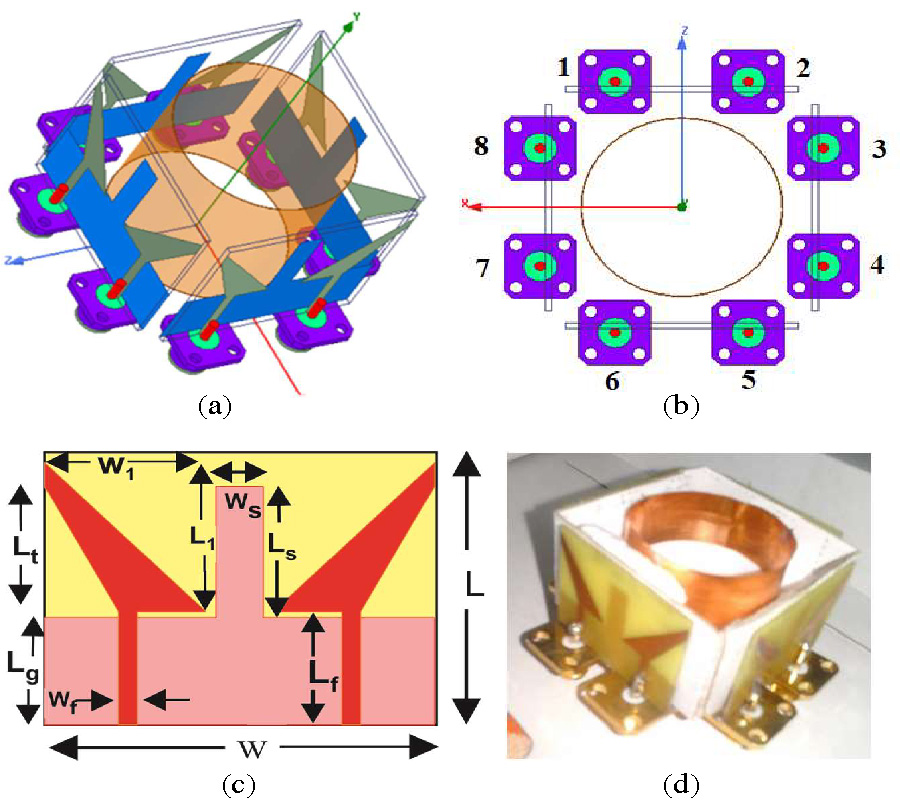
In this communication, a compact two-port multiple input multiple output (MIMO) antenna with high isolation is presented for multiband applications. The size of the proposed structure is 0.15λ0x 0.27λ00, measured at lower frequency, is 2.95 GHz), and the antenna elements are separated by a distance of 0.04λ0. The truncated partial ground offers good impedance performance with a fractional bandwidth of 136.5% from 2.95 to 15.65 GHz and covers the uninterrupted ultra-wideband (UWB), X and Ku band applications. High isolation of more than 25 dB is attained by placing parasitic elements between the antennas in a precise manner. The proposed structure is simulated, fabricated, tested, and verified practically. The radiation efficiency is more than 90% of the entire band. The peak gain values vary from 1.2 to 6.8 dB in the desired band, and its maximum value is 6.8 dB at 11.6 GHz. Diversity performance is also studied. The proposed structure offers an envelope correlation coefficient (ECC) of less than 0.04, diversity gain (DG) of greater than 9.996 dB, total active reflection coefficient (TARC) of below -10 dB, mean effective gain (MEG) of around -3 dB, and channel capacity losses (CCL) values are below 0.2 bits/sec/Hz. The measured and simulation results are in good concord.
COMPACT TWO-PORT MIMO ANTENNA WITH HIGH ISOLATION USING PARASITIC REFLECTORS FOR UWB, X AND KU BAND APPLICATIONS
2020-05-17
PIER M
Vol. 93, 1-9
A Polarization Reconfigurable Cylindrical Dielectric Resonator Antenna
Lei Zhong
A reconfigurable cylindrical dielectric resonator antenna with polarization diversity is proposed for S-band and C-band in this paper. An annular slot is used as the feeding aperture, which can not only excite two orthogonal modes (HEMx11δ and HEMy11δ) of the cylindrical dielectric resonator at 3.2 GHz, but also produce a 90˚ phase difference. Two switches, whose locations are carefully optimized, are used to control HEMx11δ being a phase-lagging or phase-leading component. Thus the antenna can achieve either left- or right-hand circular polarization (LHCP or RHCP) in S band, depending on the switch states. The higher order mode of HEM21δ is also excited at 4.7 GHz for linear polarization (LP), regardless of the switch states. With the advantages of compact structure, simple biasing network and easy fabrication, this antenna can be widely applied to wireless communication systems, especially for polarization diversity applications.
A POLARIZATION RECONFIGURABLE CYLINDRICAL DIELECTRIC RESONATOR ANTENNA
2020-05-16
PIER C
Vol. 101, 261-273
UWB Microstrip-Fed Slot Antenna with Improved Bandwidth and Dual Notched Bands Using Protruded Parasitic Strips
Naser Ojaroudi Parchin , Haleh Jahanbakhsh Basherlou and Raed A. Abd-Alhameed
In this research work, a new and simple design method of a compact slot antenna with dual notched bands is demonstrated for ultra-wideband (UWB) wireless networks. The presented antenna design is printed on a low-cost FR-4 substrate. Initially, an antenna with improved impedance bandwidth is designed. This is archived by employing the an extra slot with two T-shaped strips which increases the upper-frequency band of the design from 9 to 15 GHz. Later, undesirable bands including 4 GHz C-band, worldwide interoperability for microwave access (WiMAX) at 3.5/5.5 GHz (3.3 to 3.7 GHz and 5.15-5.85 GHz), wireless area network (WLAN) systems at 5-6 GHz (5.15-5.35 and 5.725-5.825 GHz) are eliminated by modifying the upper layer of the antenna using the protruded L-shaped strips inside the square radiation stub and the protruded E-shaped strip inside the feed-line. The proposed antenna offers quite good fundamental properties in terms of impedance bandwidth, gain, fidelity, radiation pattern, etc. A good agreement is observed between the measured and simulated results. Due to the simple structure and excellent performance of the design with controllable band-notch function, the presented microstrip antenna is useful for modern UWB wireless networksand can be an attractive
UWB MICROSTRIP-FED SLOT ANTENNA WITH IMPROVED BANDWIDTH AND DUAL NOTCHED BANDS USING PROTRUDED PARASITIC STRIPS
2020-05-15
PIER M
Vol. 92, 181-192
Estimation and Analysis of the Radio Refractivity, Its Gradient and the Geoclimatic Factor in Arctic Regions
Yamina Bettouche , Basile Agba , Ammar B. Kouki , Huthaifa Obeidat , Ali Alabdullah , Fathi Abdussalam , Sabir Ghauri and Raed A. Abd-Alhameed
In this paper, local meteorological data of one year have been used to calculate the surface atmospheric radio refractivity (N) and estimate the vertical refractivity gradient (dN1) as well as the geoclimatic factor (K) in the lowest atmospheric layer above the ground surface in the station Kuujjuaq (Quebec, Canada). In this region, the climate is arctic, characterized by very long and very cold winters (on average the temperature is below -20˚C for almost 240 days per year). The precipitations are almost nonexistent, and the vegetation is scarce. Average daily, monthly, seasonal, and yearly variations of the N, dN1, and K are estimated and analysed. The obtained values of these indices are compared to the corresponding values provided by the ITU. The results show that the more negative values of dN1 lie in the summer season. This is mainly due to the important variations of the temperature and humidity during this season. However, the estimated values lie in the limits mostly corresponding to standard refraction.
ESTIMATION AND ANALYSIS OF THE RADIO REFRACTIVITY, ITS GRADIENT AND THE GEOCLIMATIC FACTOR IN ARCTIC REGIONS
2020-05-15
PIER M
Vol. 92, 169-179
A Low-Profile Spilt Ring Monopole Antenna Loaded with Hexagonal Split Ring Resonator for RFID Applications
Raphael Samson Daniel and Rajapriya Selvaraj
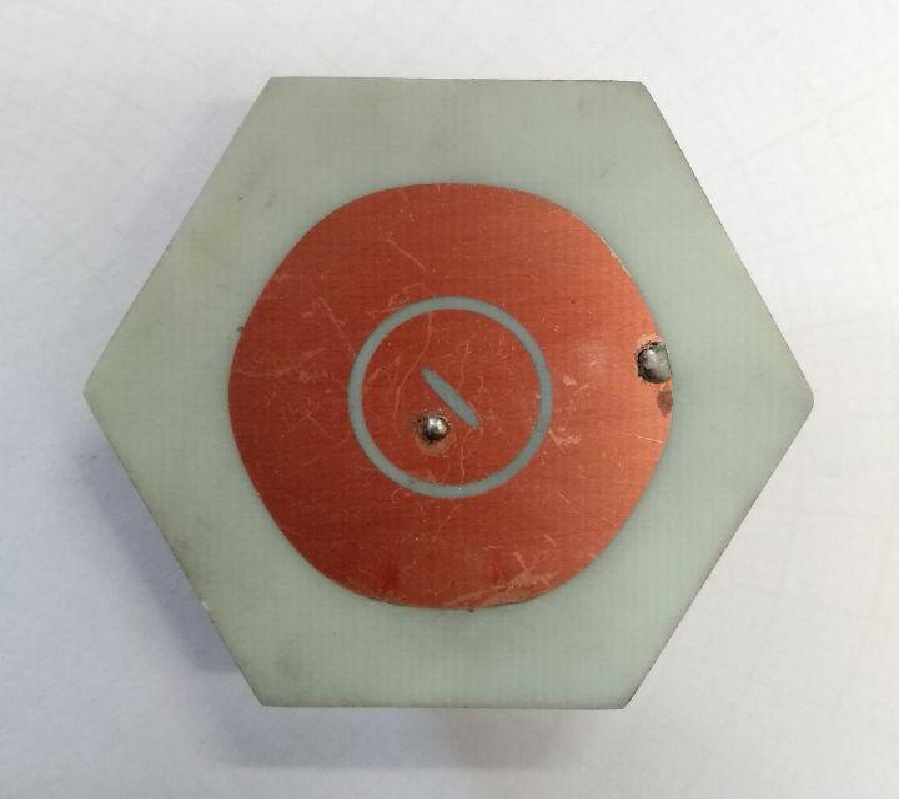
This article describes a compact split ring monopole antenna loaded with a Hexagonal Split Ring Resonator (Hex-SRR) for Wireless Local Area Network (WLAN) and Radio frequency Identification (RFID) applications. The resonance frequency of the proposed antenna is obtained by making use of a split ring structure and a metamaterial element Hex-SRR. The prototype antenna is printed on an FR-4 substrate having a dielectric constant (εr) of 4.4 with dimensions of 21×21×1.6 mm3. The split in the ring radiating element is used to achieve good impedance matching, and the Hex-SRR creates a new resonance frequency of 5.8 GHz. This paper includes equivalent circuit investigation, operating mechanism, and band characteristics of Hex-SRR as well as negative permeability details. The fabricated antenna provides an impedance bandwidth of 1180 MHz (5.23-6.41 GHz), which is suitable for WLAN and RFID applications. Good similarity is inferred between the simulated and measured results of the proposed antenna.
A LOW-PROFILE SPILT RING MONOPOLE ANTENNA LOADED WITH HEXAGONAL SPLIT RING RESONATOR FOR RFID APPLICATIONS
2020-05-15
PIER Letters
Vol. 91, 49-57
On the Possibility of Using Non-Ionizing Electromagnetic Radiation (Millimeter Waves) in Oncology
Vitaly P. Kalantaryan , Radik Martirosyan , Yura Babayan and Ruzanna Khazaryan
A study on the use of non-ionizing and non-thermal millimeter electromagnetic radiation in tumor chemotherapy was conducted. DNA released from sarcoma 45 tumor (tDNA) and healthy rats (hDNA) in water-saline solution was irradiated during 90 min by frequencies at both resonates for oscillations of water molecular structures (at 64.5 GHz and 50.3 GHz) and non-resonance (48.3 GHz). Non-irradiated and irradiated tDNA and hDNA binding constants with anti-tumorous drugs doxorubicin (DX) and netropsin (NT) were studied. The absorption spectra of non-irradiated and irradiated complexes of DNA with DX and NT were obtained by spectroscopic method. From the absorption spectra, binding constants at 290 K, 300 K, and 310 K temperatures have been determined. According to our calculations doxorubicin and netropsin with irradiated DNA form were more stable complexes and much stronger with tDNA irradiated at resonant frequencies: it was observed doxorubicin and netropsin binding selectivity to irradiated tDNA in-vitro experiments. For a DNA irradiation at resonant frequencies of 64.5 GHz and 50.3 GHz the binding constant K to DX and to NT is almost an order of magnitude higher than for the non-irradiated DNA. The obtained data suggest that the irradiation of malignant tumors by non-thermal (ultra-weak intensity) millimeter electromagnetic waves in combination with anticancer drugs may be promising for clinical oncology. The same antitumor effect can be achieved at much lower doses of medicines (considerable dose reduction). This is essential from the point of view of the application of gentle therapies for patients and the reduction of expenses associated with acquisition of expensive medicines.
ON THE POSSIBILITY OF USING NON-IONIZING ELECTROMAGNETIC RADIATION (MILLIMETER WAVES) IN ONCOLOGY
2020-05-15
PIER C
Vol. 102, 47-62
Compressed Sensing DOA Estimation in the Presence of Unknown Noise
Amgad A. Salama , M. Omair Ahmad and M. N. S. Swamy
A new compressive sensing-based direction of arrival (DOA) estimation technique for source signal detection in the presence of unknown noise, based on the generalized correlation decomposition (GCD) algorithm, is presented. The proposed algorithm does not depend on the singular value decomposition nor on the orthogonality of the signal and the noise subspaces. Hence, the DOA estimation can be done without an a priori knowledge of the number of sources. The proposed algorithm can estimate more sources than the number of physical sensors used without any constraints or assumptions about the nature of the signal sources. It can estimate coherent source signals as well as closely-spaced sources using a small number of snapshots.
COMPRESSED SENSING DOA ESTIMATION IN THE PRESENCE OF UNKNOWN NOISE
2020-05-14
PIER M
Vol. 92, 157-167
Computational Analysis of Graphene-Based Periodic Structures via a Three-Dimensional Field-Flux Eigenmode Finite Element Formulation
Vasilis Salonikios , Michalis Nitas , Savvas Raptis and Traianos V. Yioultsis
We present a three-dimensional finite element (FEM) field-flux eigenmode formulation, able to provide accurate modeling of the propagation characteristics of periodic structures featuring graphene. The proposed formulation leads to a linear eigenmode problem, where the effective refractive index is an unknown eigenvalue; the electric field intensity and magnetic flux density are the state variables; and graphene's contribution is efficiently incorporated via a finite conductivity boundary condition. The FEM formulation is spurious-mode free and capable of providing accurate dispersion diagrams and field distributions for arbitrary propagation directions, as opposed toother analytical or numerical approaches, while also efficiently dealing with graphene's dispersive nature. The novelty of the presented approximation is substantiated by computational results for structures incorporating graphene of random periodicity, both within passbands and bandgap frequencies.
COMPUTATIONAL ANALYSIS OF GRAPHENE-BASED PERIODIC STRUCTURES VIA A THREE-DIMENSIONAL FIELD-FLUX EIGENMODE FINITE ELEMENT FORMULATION
2020-05-14
PIER C
Vol. 102, 31-46
A Review of Remotely Sensed Surface Urban Heat Islands from the Fresh Perspective of Comparisons Among Different Regions (Invited Review)
Zhao-Liang Li , Menglin Si and Pei Leng
Urban heat islands (UHIs) threaten the ecological environment and human health. A large number of studies have focused on surface UHIs (SUHIs) across different spatial and temporal scales around the world with the development of satellite remote sensing technology. However, the influences of heterogeneous urbanization processes and background climates on SUHIs are still unclear and are important for targeted mitigation policies. A systematic review of the current status of SUHI studies, particularly from the perspective of comparisons among different regions, is urgently needed. We first introduce the commonly used satellite-retrieved data products and quantification methods used in SUHI studies. Subsequently, we summarize the potential driving factors of SUHI and compare the specific findings for different regions. Finally, we point out the deficiencies in the existing research and propose several prospects for the consideration of future SUHI studies. Additional global-scale research should be conducted using more advanced spatial statistical models. This can help better explore the spatially heterogeneous relationship between the SUHI and its associated driving factors. The effects of urbanization and climate from different regions should be further explored. Moreover, the problems of imperfections in the satellite data and from dynamic land use should not be ignored.
A REVIEW OF REMOTELY SENSED SURFACE URBAN HEAT ISLANDS FROM THE FRESH PERSPECTIVE OF COMPARISONS AMONG DIFFERENT REGIONS (INVITED REVIEW)
2020-05-13
PIER M
Vol. 92, 147-155
Performance Analysis of Stator Hybrid Excitation Magnetic Planetary Gear Machines
Yifei Yang , Zhi Hua Liang and Chun Hua Sun
Drawing on the ideas of stator permanent magnet motors, hybrid planetary gears are integrated into permanent magnet motors using hybrid excitation on the stator side, and a new type of stator-hybrid magnetic planetary gear motor for steering systems is proposed. The magnetic gear motor overcomes the shortcomings of the existing magnetic gear structure and performance, and has the advantages of high reliability, strong torque transmission capacity and large transmission ratio. At the same time, it can adjust the levitation force and power in real time as the working conditions change, improving motor efficiency. This paper focuses on the topology and working principle of the stator-excited planetary magnetic gear motor. According to the finite element analysis, the magnetic field distribution is obtained, and the rationality of the magnetic field is analyzed. Theoretical analysis and experimental results show that the magnetic circuit of the stator-hybrid excitation planetary gear motor is correct, and the torque can meet the design requirements. This method provides reference and application value for the development of high performance and low cost permanent magnet planetary gear motors.
PERFORMANCE ANALYSIS OF STATOR HYBRID EXCITATION MAGNETIC PLANETARY GEAR MACHINES