Search Results(13790)

2020-05-13
PIER C
Vol. 102, 13-30
Compact Dual-Band MIMO Antenna System for LTE Smartphone Applications
Haneen Sobhi Aziz and Dhirgham Kamal Naji
The design of an eight-port MIMO antenna at the sub-6-GHz (LTE 42/43 and 46) bandsfor fifth-generation (5G) smartphone is presented. First, based on the Babinet's principle, a microstrip slot antenna (MSA) is designed from its counterpart complementary structure, microstrip patch antenna (MPA) to operate over the LTE 46 band. In order to make the MSA to operate at the specified three LTE bands, a proposed single antenna, namely RMSA, is achieved by adding a strip-ring resonator within the grounded slot of MSA which shows a good measured impedance bandwidth (S11 ≤ -6 dB) of 3.28 ~ 3.84 GHz and 5.14 ~ > 6.0 GHz. Then, eight similar antenna elements of RMSA are printed on a smartphone printed circuit board (PCB). An FR4 substrate is used as the system PCB with an overall dimension of 80 × 150 × 0.8 mm3. Two techniques, namely polarization and pattern diversity, are exhibited by designing the MIMO system due to the orthogonal arrangement of microstrip lines feeding the RMSAs. Simulated and experimental results are conducted to examine the performance of the designed MIMO antenna. Good isolation, acceptable gain, and efficiency are obtained over the bands of interest which verify the suitability of the proposed system for MIMO smartphone applications.
COMPACT DUAL-BAND MIMO ANTENNA SYSTEM FOR LTE SMARTPHONE APPLICATIONS
2020-05-12
PIER Letters
Vol. 91, 41-48
Dual Circularly Polarized Crescent-Shaped Slot Antenna for 5G Front-End Systems
Naser Ojaroudi Parchin , Haleh Jahanbakhsh Basherlou and Raed A. Abd-Alhameed
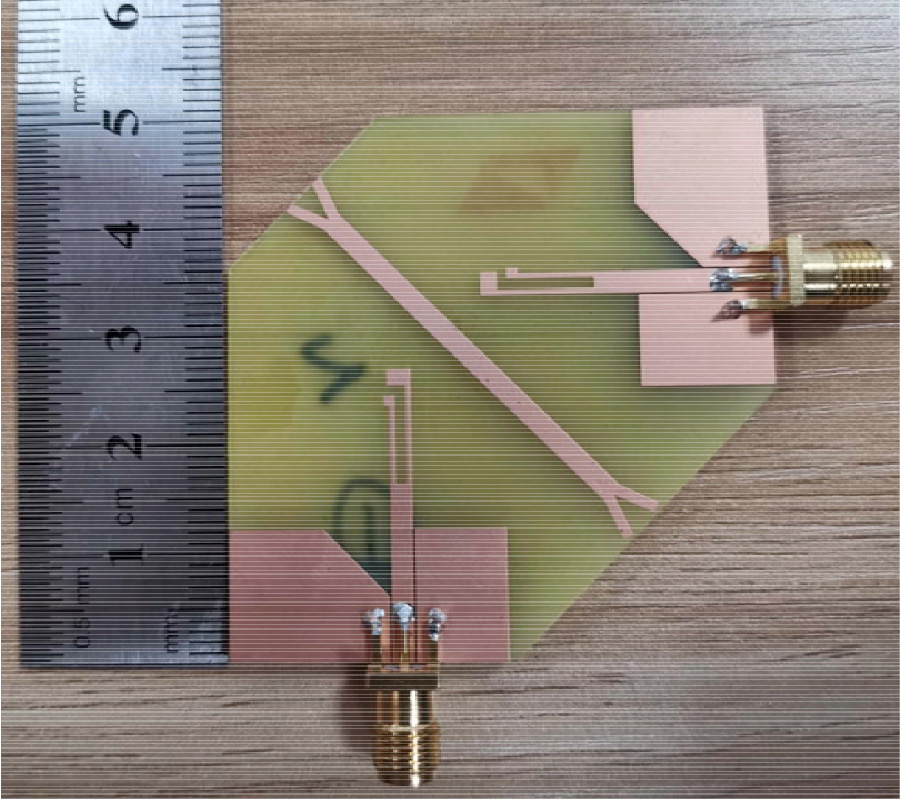
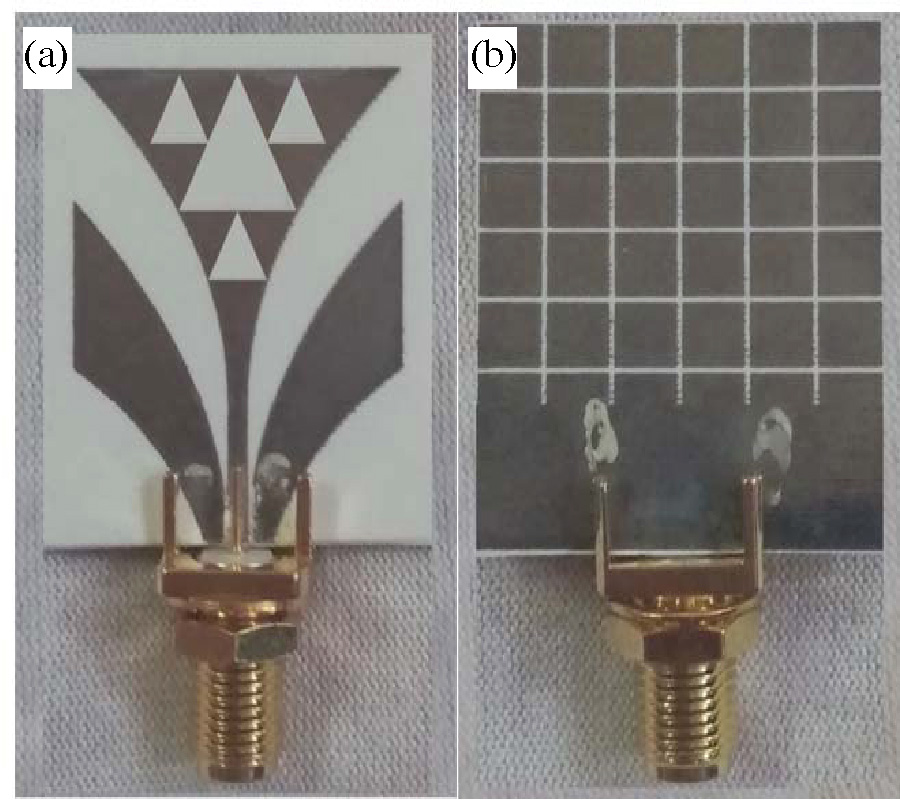
This paper introduces a new simple-structured dual circularly polarized (CP) antenna design for fifth-generation (5G) front end systems. The antenna configuration consists of a crescent-shaped slot radiator fed by a pair of rectangular 50-Ohm microstrip lines. The antenna is designed on an FR-4 dielectric substrate with an overall size of 48 × 48 × 1.6 mm3 to operate at 3.5 GHz, a 5G candidate band. A wide dual CP characteristics supporting both left-hand circular polarization (LHCP) and right-hand circular polarization (RHCP) is achieved in the frequency of 3-4.2 GHz. In addition, the mutual coupling (S21) between two ports of the proposed antenna is better than 15 dB. A prototype sample of the proposed design is fabricated and measured to validate the design concept. The antenna offers sufficient efficiency, gain level, and axial ratio bandwidth which make it suitable for different 5G front end applications such as cognitive radio, base station, satellite communications, imaging, and radar systems.
DUAL CIRCULARLY POLARIZED CRESCENT-SHAPED SLOT ANTENNA FOR 5G FRONT-END SYSTEMS
2020-05-12
PIER C
Vol. 102, 1-11
Multipole-Based Cable Braid Electromagnetic Penetration Model: Magnetic Penetration Case
Salvatore Campione , Larry Kevin Warne and William L. Langston
The goal of this paper is to present, for the first time, calculations of the magnetic penetration case of a first principles multipole-based cable braid electromagnetic penetration model. As a first test case, a one-dimensional array of perfect electrically conducting wires, for which an analytical solution is known, is investigated: we compare both the self-inductance and the transfer inductance results from our first principles cable braid electromagnetic penetration model to those obtained using the analytical solution. These results are found in good agreement up to a radius to half spacing ratio of about 0.78, demonstrating a robustness needed for many commercial and non-commercial cables. We then analyze a second set of test cases of a square array of wires whose solution is the same as the one-dimensional array result and of a rhomboidal array whose solution can be estimated from Kley's model. As a final test case, we consider two layers of one-dimensional arrays of wires to investigate porpoising effects analytically. We find good agreement with analytical and Kley's results for these geometries, verifying our proposed multipole model. Note that only our multipole model accounts for the full dependence on the actual cable geometry which enables us to model more complicated cable geometries.
MULTIPOLE-BASED CABLE BRAID ELECTROMAGNETIC PENETRATION MODEL: MAGNETIC PENETRATION CASE
2020-05-12
PIER C
Vol. 101, 247-259
Characterization Study of Mutual Coupling Between Monopole Antennas on Finite Ground Plane at Out of Band Resonant Frequencies
Prasobh Martin , Kamla Prasan Ray and Nalli Naga Satya Sai Rama Krishna Prasad
When multiple antennas, operating at different frequencies, are installed on a single platform where the typical inter antenna spacing is a few wavelengths at the lowest frequency, the mutual coupling between the antennas can be optimized by the suitable selection of frequencies and the separation of adjacent antennas. This paper characterizes the dependency of mutual coupling between monopoles on the frequency and separation of the radiating/interfering monopole as well as on the size and shape of the ground plane. The out of band (off-band) characteristics of the monopoles are studied, and the effect of frequency offset between the adjacent monopoles on off-band mutual coupling is summarized. The off-band mutual coupling is reduced by more than 15 dB when the adjacent antenna frequency is selected to be near the fourth harmonic. In the case of smaller ground planes, better isolation of more than 20 dB is possible at intermediate antenna spacing than at the edges. The effect on radiation pattern of an antenna by the proximity of nearby antennas is also studied. The operating frequency/resonant length of the nearby antenna and the inter antenna spacing are found to be the key factors causing variation in radiation pattern. Lower off-band interfering antenna of bigger size is found to have significant effect on radiation pattern at spacing less than 2λ. Analysis has been carried out using FEKO, whose findings are validated using another software HFSS and measurements.
CHARACTERIZATION STUDY OF MUTUAL COUPLING BETWEEN MONOPOLE ANTENNAS ON FINITE GROUND PLANE AT OUT OF BAND RESONANT FREQUENCIES
2020-05-11
PIER M
Vol. 92, 137-145
Formulation of THz Sensor Array Systems with Metamaterials
Brinta Chowdhury and Abdullah Eroglu
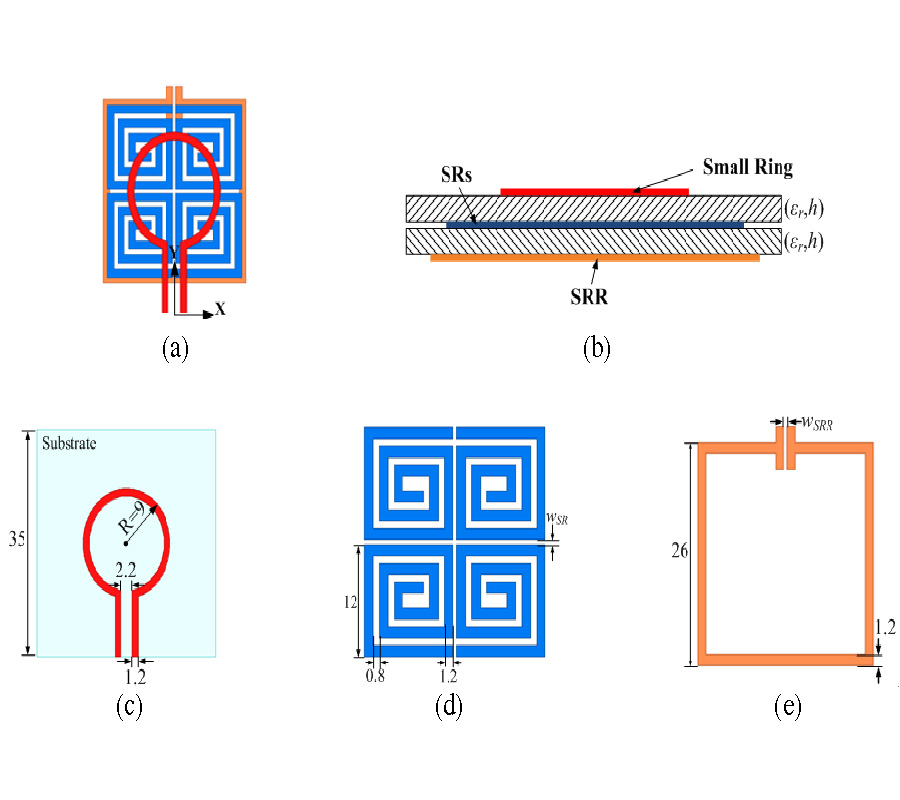
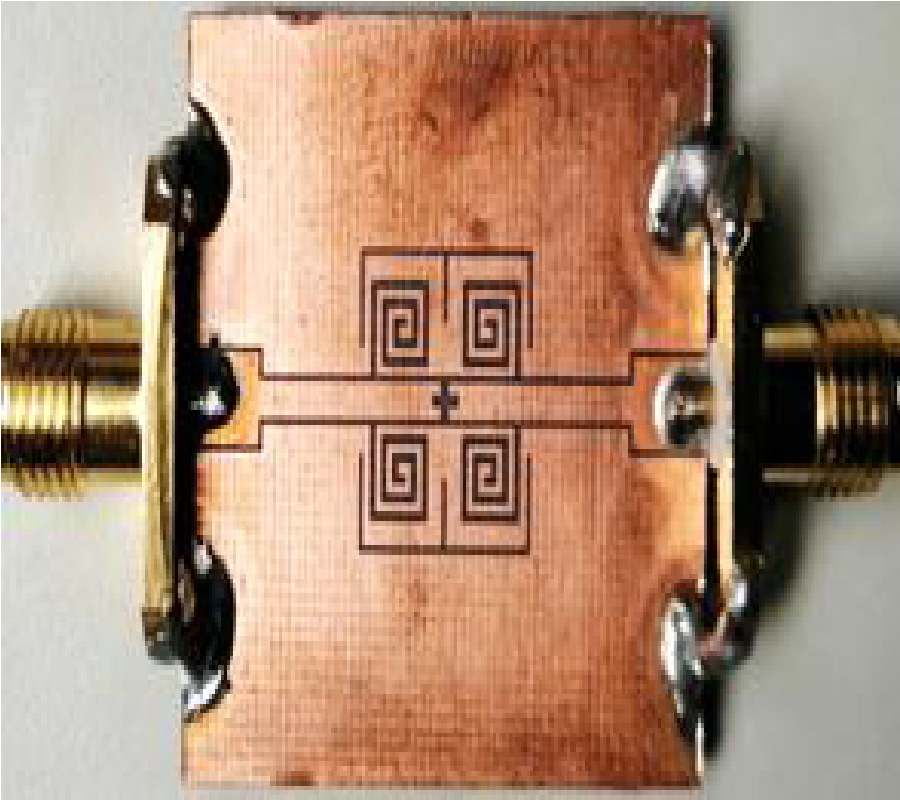
The complete analytical formulation of periodic structures using metamaterials formed with split ring resonators (SRRs) is developed. The periodic structure modeling is based on coplanar waveguide transmission line method and network parameters. The full effect of mutual inductances in the array design is integrated for the first time using curve fitting techniques with electromagnetic simulator. The simplified equivalent circuit including the effect of mutual inductance is presented. The proposed formulation is then used to design a unit cell composed of two SRRs of the sensor array. The analytical method is then verified with simulation results. The prototype of the unit cell has then been manufactured and measured at different frequencies. The analytical, simulation, and measurement results are compared, and agreement has been confirmed.
FORMULATION OF THZ SENSOR ARRAY SYSTEMS WITH METAMATERIALS
2020-05-11
PIER M
Vol. 92, 127-136
Vector Magnetic Near-Field Measurement in Unit Cell of Metamaterial
Yingyi Qi , Zehua Gao , Chuwen Lan , Maopeng Wu and Qian Zhao
Near-field magnetic measurement is a simple but effective way of researching the magical electromagnetic properties of metamaterials. However, till now, the experiments in the field of metamaterials have involved only far-field macroscopic and near-field electric measurements because of the difficulty in isolating interference from electric fields. In this research, we design and fabricate a near-field magnetic probe with about an one-tenth wavelength size and 20 dB E-field rejection ratio, which can be combined with a parallel double-plate device integrating a system for measuring anisotropic vector magnetic field. As a verification measurement of plane waves and cylindrical waves, it got the clear vector field distribution characteristics and good anisotropy. Next we used the dipole to measure the typical metal split ring structure of the metamaterial. The measurement of the distribution of magnetic fields contributes to revealing the interaction mechanism between electromagnetic waves and metamaterials as well as the relationship between microscopic structural elements and macroscopic electromagnetic properties.
VECTOR MAGNETIC NEAR-FIELD MEASUREMENT IN UNIT CELL OF METAMATERIAL
2020-05-11
PIER M
Vol. 92, 115-125
Temperature Control of Rubber Composites by Adaptive Multi-Dimensional Taylor Network During Microwave Heating Process
Shanliang Zhu , Chengcheng Li , Yi Yang and Qingling Li
Microwave technology has been widely used in rubber industry. In order to solve the problem of uneven temperature distribution, a novel control method of adaptive multi-dimensional Taylor network combined with Cuckoo Search is proposed in this paper. The adaptive multi-dimensional Taylor network control method is used to obtain the suitable output powers and phase difference under unknown system parameters. Cuckoo Search algorithm is utilized to optimize the whole situation and find the best fit input variables at sampling points. To verify the proposed control strategy, the dielectric permittivity of nitrile butadiene rubber composites is measured, and the control process is simulated based on measured values. The simulation results show that the proposed method can well control the temperature rising process with little difference between the average temperature and reference trajectory.
TEMPERATURE CONTROL OF RUBBER COMPOSITES BY ADAPTIVE MULTI-DIMENSIONAL TAYLOR NETWORK DURING MICROWAVE HEATING PROCESS
2020-05-11
PIER C
Vol. 101, 233-245
Adaptive Polarimetric Detection for MIMO Radar and Its Optimal Polarimetric Design in Compound-Gaussian Clutter
Zhikun Chen and Yinan Zhao
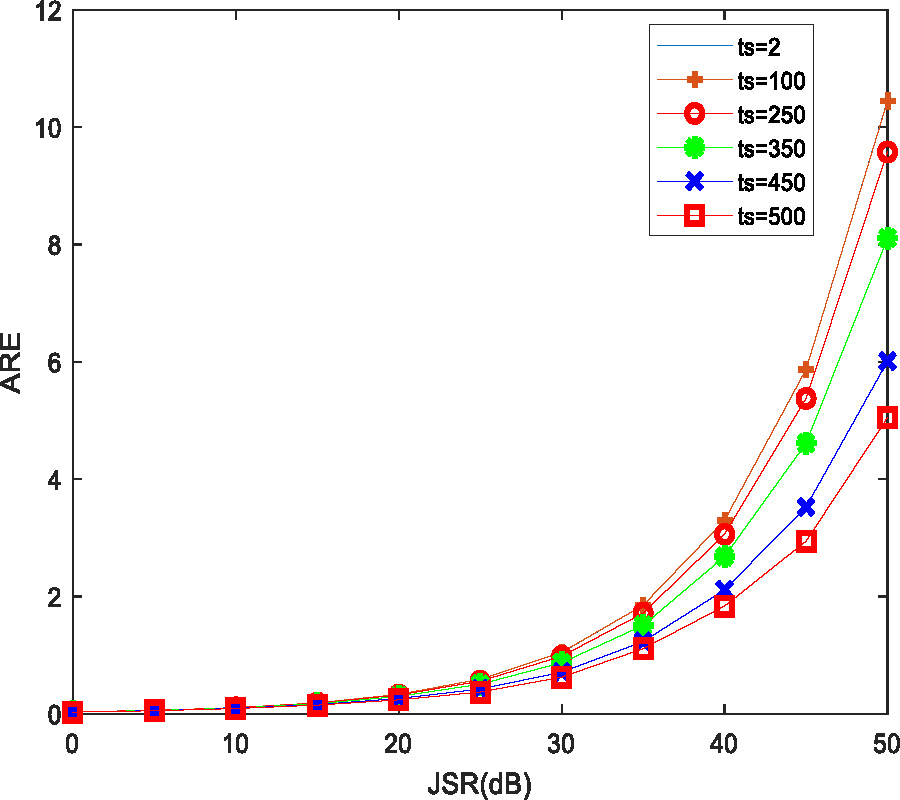
This study addresses the problem of adaptive polarimetric detector (APD) and optimal polarimetric design for the distributed multiple-input-multiple-output radar in compound-Gaussian clutter with inverse-gamma distributed texture component. We derive the APD by maximizing a posteriori estimation and performing a generalized likelihood ratio test. The false alarm probability for the detector is analyzed to validate the corresponding constant false alarm rate property. Furthermore, based on the concepts of game theory, we formulate an optimal polarimetric design as a two players zero-sum game, which further improves the performance of the proposed detector. Simulation results show that the proposed detector outperforms its counterparts, and the optimal polarimetric design algorithm can efficiently enhance the detection performance.
ADAPTIVE POLARIMETRIC DETECTION FOR MIMO RADAR AND ITS OPTIMAL POLARIMETRIC DESIGN IN COMPOUND-GAUSSIAN CLUTTER
2020-05-11
PIER C
Vol. 101, 219-232
Analysis and Optimization of Double-Side Hybrid Excitation Flux-Switching Motor
Yunyun Chen , Tongle Cai , Jiahong Zhuang and Xiaoyong Zhu
In this paper, a double-side hybrid excitation flux-switching (DSHE-FS) motor employing a double stator structure with special multi-excitations is presented. The high space utilization improves the torque density and power density of DSHE-FS motor. The addition of non-rare-earth permanent magnet material reduces the consumption of rare-earth permanent magnet material. The double-side field windings enable the motor to have more flexible magnetic modulation properties. To investigate the principle of motor operation and flux regulation, the equivalent magnetic circuit method is employed. In order to achieve higher operation performances of the motor in different driving modes, the multi-objective optimization with coupled multi-physical field calculation is carried out. The multi physical comprehensive sensitivity function is defined which couples the electromagnetic performance optimization objective and mechanical performance objective. Then multi-objective genetic algorithm (MOGA) method was used to find a feasible solution set. Response surface (RS) method and parameter scan method are used to further determine the five important dimensions. The electromagnetic characteristics of optimized DSHE-FS motor are evaluated and compared in detail. Moreover, the mechanical analysis is conducted for the cupped rotor of DSHE-FS motor to validate the operation security. Theoretical analysis and simulation results verify the rationality of the DSHE-FS motor and the proposed optimization design method.
ANALYSIS AND OPTIMIZATION OF DOUBLE-SIDE HYBRID EXCITATION FLUX-SWITCHING MOTOR
2020-05-10
PIER M
Vol. 92, 103-113
Generating Spatially-Variant Metamaterial Lattices Designed from Spatial Transforms
Eric A. Berry and Raymond C. Rumpf
Spatial transform techniques like transformation optics and conformal mapping have arisen as the dominant techniques for designing metamaterial devices. However, these techniques only produce the electrical permittivity and permeability as a function of position. The manner in which these functions are converted into physical metamaterial lattices remains elusive, except in some simple or canonical configurations. Metamaterial lattices designed by spatial transforms are composed of elements of different sizes, orientations, and designs. The elements must be distributed and oriented in a manner that makes the final lattice smooth, continuous, have uniform density, be free of unintentional defects, and have minimal distortions to the elements. Any of these would weaken or destroy the electromagnetic properties of the lattice. This paper describes a general purpose method to generate such arbitrary metamaterial lattices. Inputs to the algorithm are the permittivity and permeability functions as well as the baseline metamaterials that can provide the necessary permittivity and permeability values. In prior research, we reported a simple finite-difference technique for calculating the permittivity and permeability functions for arbitrary shaped devices using transformation optics. The present work is illustrated by generating an electromagnetic cloak of arbitrary shape that was designed using the previously reported technique. The final metamaterial cloak is simulated using the finite-difference time-domain method and performance compared to other cloaks reported in the literature.
GENERATING SPATIALLY-VARIANT METAMATERIAL LATTICES DESIGNED FROM SPATIAL TRANSFORMS
2020-05-09
PIER M
Vol. 92, 1-9
The Dependence of Time-Domain Radiation Loss on the Circumference and Wire Radius of a Circular Loop Antenna
Edmund K. Miller
The Lienard-Wiechert potentials show explicitly that charge acceleration, i.e., a change in charge velocity, causes radiation of an electromagnetic field. The goal of this discussion is to explore the rate of energy loss due to radiation from current and charge flowing on a circular loop as a function of the loop's curvature and wire radius. The results presented are obtained using a thin-wire, time-domain (TWTD) computer model for Gaussian-pulse excitation. Some results for a straight wire are also presented for comparison. Analytical estimates for the curvature and wire-radius effects are developed from best-fits expressions to the computed results.
THE DEPENDENCE OF TIME-DOMAIN RADIATION LOSS ON THE CIRCUMFERENCE AND WIRE RADIUS OF A CIRCULAR LOOP ANTENNA
2020-05-09
PIER B
Vol. 87, 93-110
Surface Film Characterization from X-to-k-Band Radar Signal Inversion, a Wind-Wave-Pool Experiment
Aymeric Mainvis , Vincent Fabbro , Christophe Bourlier , Henri-Jose Mametsa and Pierre Borderies
This paper describes an experiment in a wind-wave pool in Brest, France, to characterize surface films when observed at moderate incidence from X-to-K radar bands. Measurements of the radar backscattered field were carried out for various seawater surface states and incidence angles. From this meaningful database (mainly lying in simultaneous acquisitions in X-, Ku-, and K-bands), an inversion method is proposed to characterize the elasticity modulus of the surface film. This process is based on the minimization of the cost function correlating the values given by a physical model of the damping ratio and the measured ones. The resulting oil parameters are found in overall good agreement - but still qualitative - with the various released oils. Nonetheless, the inversion method does not work properly for the rapeseed oil slick when higher wind speeds are considered, and this failure is explained. In addition, it can be seen that the results can be applied in an ocean context by comparing the modeled normalized radar cross section (NRCS) in an ocean context (given by the Bragg scattering and the Elfouhaily spectrum) and the measured NRCS.
SURFACE FILM CHARACTERIZATION FROM X-TO-K-BAND RADAR SIGNAL INVERSION, A WIND-WAVE-POOL EXPERIMENT
2020-05-08
PIER M
Vol. 92, 89-101
Design of Universal Optical Logic Gates Using Heterogeneous Swastika Structured Hexagonal Photonic Crystal Ring Resonator
Damodaran Saranya and Anbazhagan Rajesh
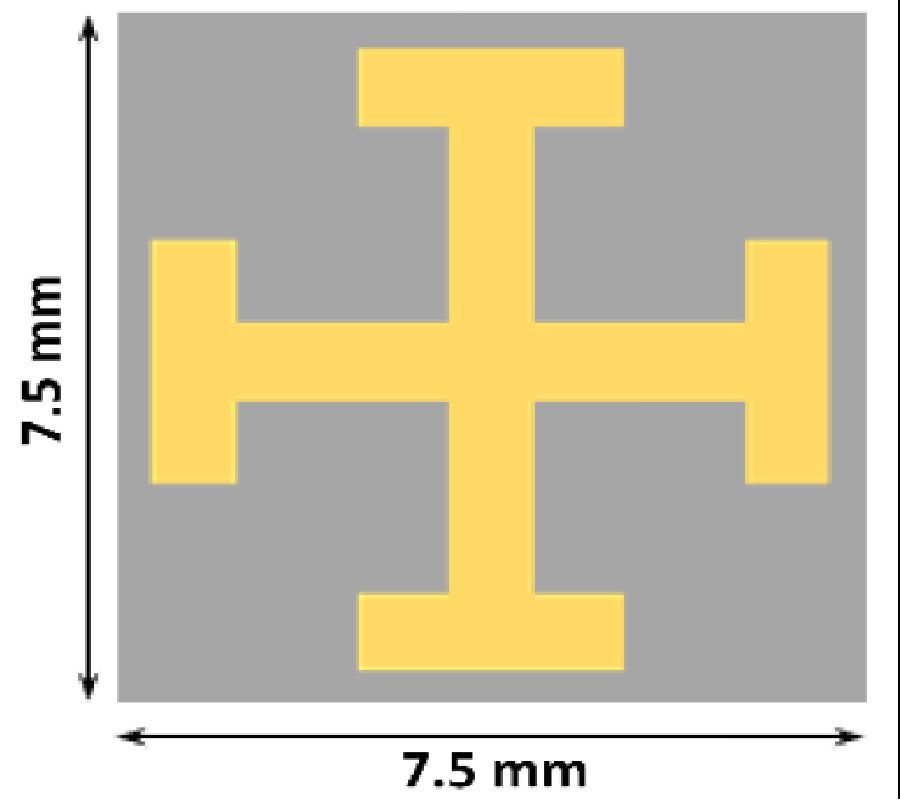
In this paper, a novel heterogeneous swastika structured hexagonal photonic crystal ring resonator for the realization of universal logic gates is designed using two dimensional photonic crystals. The proposed structure has square lattice of 16 × 16 hexagon-shaped chalcogenide glass rods embedded in an air substrate with a refractive index of 3.1. The choice of chalcogenide in the realization of optical logic gates benefits from wide optical windows in the mid-infrared region. Through plane wave expansion method, the contrast ratio for the proposed structures, namely, NAND, NOR, EX-OR, and EX-NOR gates is 22.6 dB, 17.20 dB, 18.3 dB, and 12.78 dB, respectively. Moreover, the footprint of the proposed structure is 9.24 µm × 9.24 µm.
DESIGN OF UNIVERSAL OPTICAL LOGIC GATES USING HETEROGENEOUS SWASTIKA STRUCTURED HEXAGONAL PHOTONIC CRYSTAL RING RESONATOR
2020-05-08
PIER C
Vol. 101, 203-218
A Novel Complementary Slotted Split Ring Resonator Loaded Truncated Arc Patch Antenna with Enhanced Performance
Shailesh Maroli Rao and Prabhugoud Iranna Basarkod
This paper proposes a truncated arc patch antenna loaded with a novel complementary slotted split ring resonator (CSlSRR) in the ground plane. The antenna achieves wide bandwidth, circular polarisation (CP), and omnidirectional radiation pattern in the S-band. The electrical size of the antenna is 0.36λ0 × 0.31λ0, and the radiating metal dimension is 0.18λ0 × 0.21λ00 corresponds to f0 = 2.45 GHz). Truncated corners with a semi-circular arc produce CP with the inset feed. The CSlSRR helps in improving the bandwidth and miniaturisation of the antenna. The design achieves a size reduction of 61%. The fabricated antenna exhibits 12.3% impedance bandwidth (IBW), 4.07% axial ratio bandwidth (ARBW), and a maximum gain of 2.476 dBi at 2.75 GHz. The antenna prototype is characterised in an anechoic chamber. The paper carries out a comparison of the measured and simulated results and other reported works in literature.
A NOVEL COMPLEMENTARY SLOTTED SPLIT RING RESONATOR LOADED TRUNCATED ARC PATCH ANTENNA WITH ENHANCED PERFORMANCE
2020-05-07
PIER C
Vol. 101, 187-202
A Hybrid Magnetic Couplers of Wireless Charging System for Electric Vehicles
Lei Zhang , Wei Tian , Hao Ding , Kai Lu , Wei Hong and Rongming Liu
Coupling coefficient of a magnetic coupler is a key factor that affects the efficiency of wireless charging system. DD-type couplers have the most common topology in the literature. However, they have low coupling coefficients. In order to obtain high coupling coefficient of magnetic coupler, firstly, the magnetic circuit models of DD-type and solenoid-type magnetic couplers commonly adopted in electric vehicles are built in this paper. Secondly, a hybrid DD-solenoid type coil winding is proposed based on the analytical model, and the optimized design of the magnetic core and shielding structure are also introduced in this paper. Thirdly, an optimization design method for magnetic coupler is proposed. 3-D finite-element analysis (FEA) and experimental results verify the theoretical analysis. It is shown that the performance of the hybrid winding method proposed in this paper is significantly improved compared to the traditional DD winding method, and it can also keep the high offset tolerance characteristics of DD winding. In the meantime, the proposed method can increase the coupling coefficient and decrease the cost through optimization of magnetic core, and the shielding structure can effectively reduce the electromagnetic interference.
A HYBRID MAGNETIC COUPLERS OF WIRELESS CHARGING SYSTEM FOR ELECTRIC VEHICLES
2020-05-06
PIER M
Vol. 92, 79-88
Numerical Simulation of Wideband Calorimeter for High Power Microwave
Ivan K. Kurkan , Alexey I. Klimov , Pavel V. Priputnev and Vladislav V. Rostov
The novel design of an ultra-wideband calorimeter for energy measurement of high power microwave pulses of nanosecond duration is proposed in this paper. The main idea is the use of a circular waveguide with losses in the wall and metal cone insertion at the axis to increase attenuation constant in the waveguide. The efficiency of the concept was proved with the numeric simulation and optimization of the calorimeter design with ANSYS HFSS software for frequencies from 8 to 38 GHz. The operating modes are supposed to be symmetric TM0n ones. Ethanol was chosen as an absorbing medium. It is parted from the vacuum volume by a plastic tube. The frequency dependencies of ethanol's relative permittivity and loss tangent were taken into account in the simulation model. The reflection coefficient for TM01 mode is below -20 dB at the lowest frequency of 8 GHz and well below the level of -25 dB from 10 to 38 GHz. The reflection coefficients for higher order modes remain below -30 dB until the operating frequency is close to the cut-off frequency for a particular mode. The maximum accepted power level is of hundreds of megawatts for pulses of a nanoseconds duration. The effect of waveguide modes mixture at the input of the calorimeter on the maximum accepted power level was considered. This level may differ by 4 times between specific modes mixtures. Therefore, the transition from a particular microwave source to the calorimeter input should be carefully optimized.
NUMERICAL SIMULATION OF WIDEBAND CALORIMETER FOR HIGH POWER MICROWAVE
2020-05-06
PIER M
Vol. 92, 67-78
Research on Channel Model of Broadband Power Line Communication Based on MTL and Radiation Effect
Xueyu Duan , Yizhen Wei , Donglin He , Zili Xu , Hong Zhang and Wei Hua
Nowadays, the key to design a reliable communication system is to acquire channel characteristics and improve channel capacity. In the transmission of high-speed data, the unshielded transmission channel used in power line communication has interference factors such as noise, attenuation, reflection, radiation, and time-varying. A three-wire MIMO-PLC channel transfer function priori model has been established based on the theory of MTL in this paper, which is necessary for band pre-selection, power setting, and dynamic range design in a high-speed MIMO-PLC set to improve the unshielded transmission channel capacity with the effect of noise, attenuation, reaction, radiation, and time-varying factors. The simulation results with the model parameters of geometric sizes, material, surrounding medium, and lengths of the power line network agree well with the measurement ones in the frequency band of 1-200 MHz. The research results of this paper have guiding significance for the band pre-selection, power setting, and dynamic range design of broadband MIMO-PLC.
RESEARCH ON CHANNEL MODEL OF BROADBAND POWER LINE COMMUNICATION BASED ON MTL AND RADIATION EFFECT
2020-05-06
PIER M
Vol. 92, 55-65
A Novel Approach for Human Intention Recognition Based on Hall Effect Sensors and Permanent Magnets
Van Tai Nguyen , Tien-Fu Lu , Paul Grimshaw and William Robertson
Human intention recognition is important for any interaction between the user and the exoskeleton. This study proposes a novel approach, based on a contactless sensory system, using linear Hall effect sensors to recognize human intentions. This contactless sensory system consists of four Hall effect sensors mounted on the exoskeleton, whilst a ring-shaped permanent magnet with diametrical magnetization consisting of two semi-rings is worn on the user's forearm. The model of the magnetic field created by the permanent magnet is also developed. Based on the developed magnetic field model and by interpreting the signals from the Hall effect sensory system received while the user's elbow and forearm move, the intention identification algorithm is derived. A lightweight elbow and forearm assistive exoskeleton is developed. The proposed approach for human intention recognition is used to assist in controlling the exoskeleton, following the wearer's intended motions. By implementing this contactless sensory system, wearers can use the exoskeleton easily and can move their forearm comfortably, while the human intention motion is recognized and used to control the exoskeleton. Moreover, achieved signals are unaffected by skin perspiration and muscle fatigue. As the sensory system is mounted on the exoskeleton, there is only indirect contact between the user's body and the sensors, leading to improved comfort. Finally, the system does not require expert knowledge to place the sensors on the body of the user. This approach can be extended to detect human intentions for the control of exoskeletons with more degrees of freedom.
A NOVEL APPROACH FOR HUMAN INTENTION RECOGNITION BASED ON HALL EFFECT SENSORS AND PERMANENT MAGNETS
2020-05-06
PIER B
Vol. 87, 61-91
An Overview of Microwave Imaging for Breast Tumor Detection
Ria Benny , Thathamkulam A. Anjit and Palayyan Mythili
Microwave imaging (MWI) is a non-ionizing, non-invasive and an upcoming affordable medical imaging modality. Over the last few decades, MWI has invited active research towards bio-medical imaging, with special focus on breast tumor detection. After long years of intense research and clinical trials, a breast tumour monitoring unit based on MWI is finally entering clinical imaging scenarios. In this manuscript, the vast literature in MWI to date has been consolidated, and an in-detail study of the state-of-the-art for breast tumor detection has been presented. The hurdles faced during clinical trials are discussed, and their possible solutions and future directions for a fast transition into clinical imaging have been presented. It is hoped that this paper can serve as a guide for MWI researchers and practitioners, especially those new to the field to comprehend the potential of MWI as a viable imaging tool for breast imaging.
AN OVERVIEW OF MICROWAVE IMAGING FOR BREAST TUMOR DETECTION
2020-05-05
PIER M
Vol. 92, 43-54
Diagonally Asymmetric CSRRs Loaded Circularly Polarized Antenna with Frequency Selective Surface
Soumik Dey , Ankita Indu , Santanu Mondal and Partha Pratim Sarkar
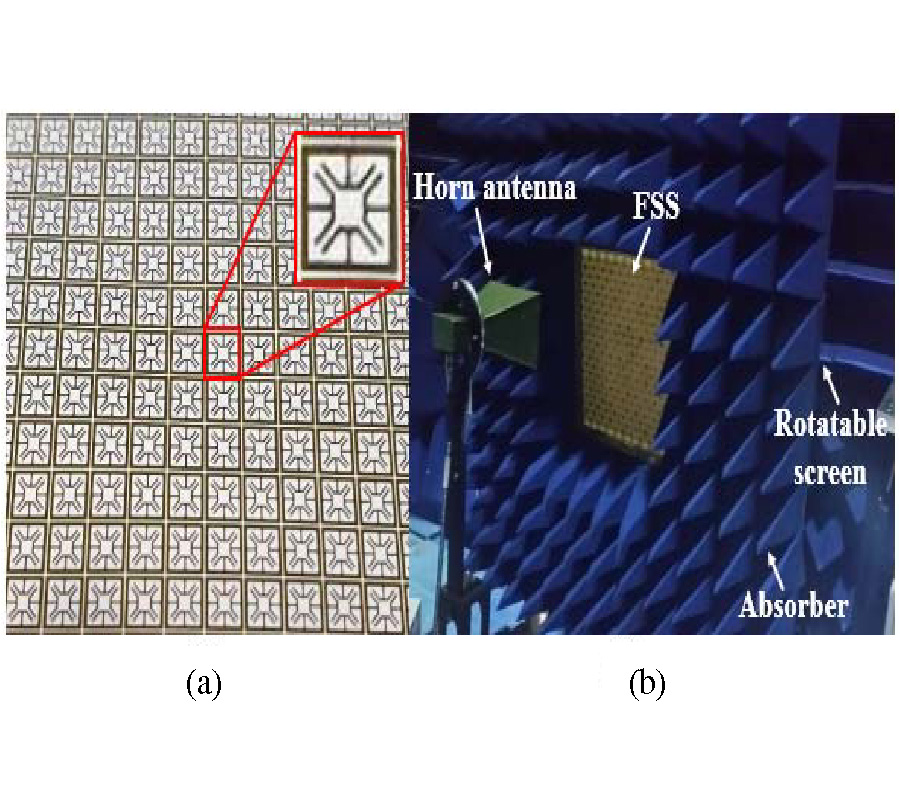
This paper presents a compact single feed circularly polarized (CP) antenna along with a frequency selective surface (FSS) that acts as a partially reflective surface over the patch. Patch is loaded with four diagonally asymmetric complementary split ring resonators (CSRRs) in order to achieve circular polarization. In this paper a novel design of reflective type FSS layer is presented at 2.4 GHz. The size of FSS unit cell is approximately 0.132λ0 × 0.132λ0, and it is placed at a distance of 0.146λ0 from the patch. Simulated impedance bandwidth of the antenna for S11 < -10 dB is from 2.385 GHz to 2.506 GHz (121 MHz or 4.95%) which covers the entire IEEE 802.11 WLAN band (2.4 GHz-2.484 GHz). Position of the four CSRRs on the patch and the height of FSS screen are determined through parametric studies, and the detailed analyses in terms of reflection coefficient, axial ratio, and gain variation are also presented. Gain of the antenna is 3.02 dBic at the operating frequency 2.45 GHz. Measured results are in good agreement with the simulated ones.
DIAGONALLY ASYMMETRIC CSRRS LOADED CIRCULARLY POLARIZED ANTENNA WITH FREQUENCY SELECTIVE SURFACE