Search Results(13790)

2020-04-17
PIER M
Vol. 91, 143-153
Dual-Band Circularly Polarized Stacked Sapphire and TMM13i Rectangular DRA
Richa Gupta , Garima Bakshi and Aakash Bansal
This paper documents a novel design of dual-band dielectric resonator antenna exhibiting circular polarization at a high-frequency band of (7.85 GHz-7.93 GHz) in addition to linearly polarized lower frequency band of (5.12 GHz-5.49 GHz) using new materials, sapphire and TMM13i for antenna design. Sapphire and TMM13i being resistant to physical change, the novel design is suitable for weather radar application as circular polarization reduces signal attenuation in adverse climatic conditions. A four-layered structure with sapphire and TMM13i stacked alternatively with aperture coupled feed is presented. Additionally, the corners of the patch have been truncated, and a slot has been etched in order to obtain the dual-band resonance and circular polarization respectively. The design is simulated using Ansys HFSS and fabricated for measurements. The VSWR (Voltage standing wave ratio) is measured to be less than two for both the bands. The simulated and measured gains of the antenna are 5.2 dB and 4.9 dB, respectively.
DUAL-BAND CIRCULARLY POLARIZED STACKED SAPPHIRE AND TMM13I RECTANGULAR DRA
2020-04-17
PIER Letters
Vol. 90, 135-142
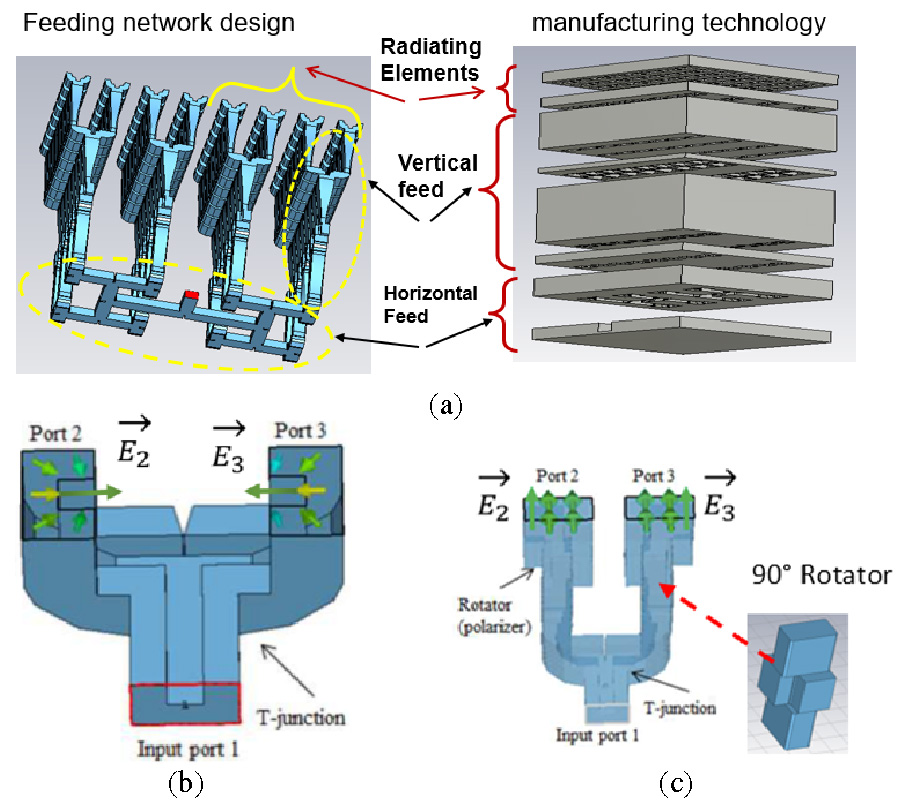
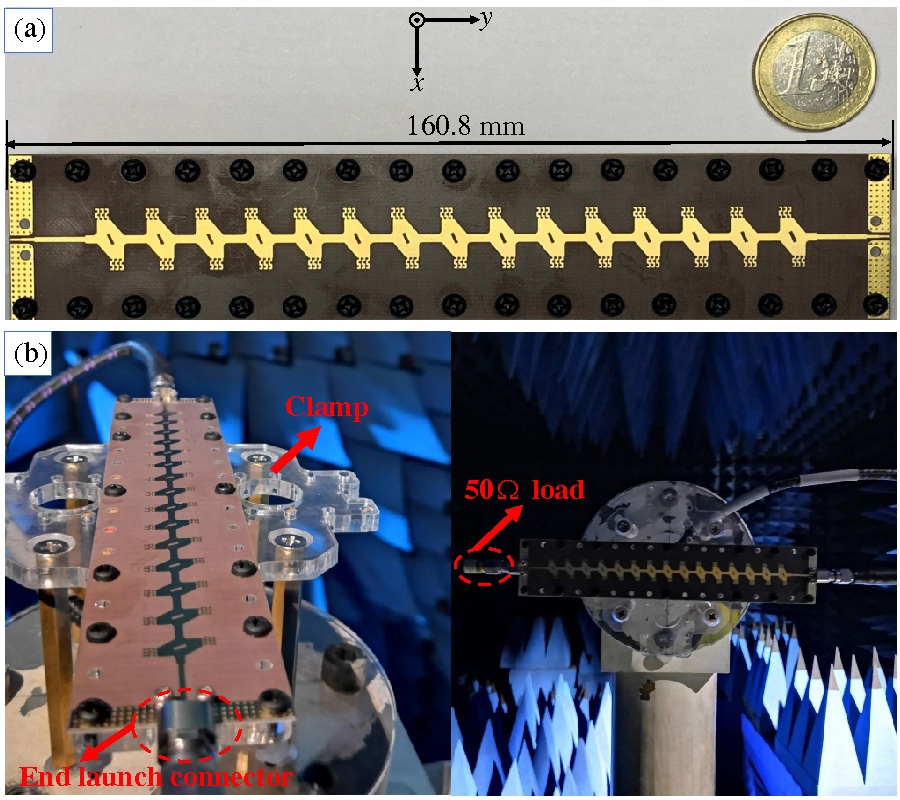
Ultra-Wideband Planar Dipole Array Antenna for Multifunction Phased Array Radars
Bin Li , Zhipeng Zhou and Lei Sun
In the study, an ultra-wideband array antenna for multifunction phased array radars (MPAR) is proposed. Due to the low-profile and ultra-wideband characteristics, the planar dipole elements are utilized to form an array antenna. Their performances are enhanced by using an optimized microstrip-sector feeding structure. The array antenna is a combination of subarrays, each of which corresponds to 4 × 4 transmit/receive channels. Four subarrays are fabricated in a standard printed circuit board (PCB) process to investigate the planar dipole array antenna theoretically and experimentally. Both simulated and measured results show that the proposed array antenna achieves 87.0% impedance bandwidth (VSWR < 2.0 in the normal direction) from 1.3 GHz to 3.3 GHz, according to the specific requirements of an MPAR project. The active VSWR is less than 2.0 and 3.0 while the scan angle is -30˚~30˚ and -45˚~45˚, respectively. It means that this array antenna has wide-scan capability. In general, the balanced optimization between the electrical and mechanical performances makes the proposed array antenna attractive for MPARs and other compact systems.
ULTRA-WIDEBAND PLANAR DIPOLE ARRAY ANTENNA FOR MULTIFUNCTION PHASED ARRAY RADARS
2020-04-17
PIER C
Vol. 101, 95-104
Compact Dual Polarised Branch-Line Printed Inverted-F Antenna Covering Both Cellular and Non-Cellular Bands with Independent Tuning
Anupa Chatterjee , Manas Midya , Laxmi Prasad Mishra and Monojit Mitra
In this paper a novel branch-line printed inverted-F antenna (IFA) loaded with a rectangular complementary split-ring resonator (CSRR) is proposed, designed and experimentally studied. The proposed antenna shows four operating frequencies and can be used for various cellular and wireless applications (900 MHz/3.5 GHz/4.2 GHz/5.5 GHz). The antenna is compact in size having dimensions 0.059λ0 × 0.053λ0 × 0.002λ0 at the lowest resonance frequency. Each of the bands is independently tunable and shows circular polarisation (CP) in the WLAN band with linear polarization (LP) in the other three bands. The axial ratio (AR) bandwidth is 1.82% in WLAN band. The simulated and fabricated results are reported in terms of S-parameters and radiation pattern. The prototype of the antenna has been fabricated and measured using VNA and simulation done in ANSYS HFSS.
COMPACT DUAL POLARISED BRANCH-LINE PRINTED INVERTED-F ANTENNA COVERING BOTH CELLULAR AND NON-CELLULAR BANDS WITH INDEPENDENT TUNING
2020-04-17
PIER C
Vol. 101, 81-93
Optimization of a Rewritable Narrowband Filter in a SBN:75 Crystal
Luis Alberto Rubio-Saavedra , Birger Seifert , Pedro A. Márquez Aguilar and Adalberto Alejo-Molina
We propose a rewritable optical frequency filter based on a volume Bragg grating recorded by holography on an SBN:75 photorefractive crystal. The theoretical results show the possibility of implementing a narrow-band filter whose reflectance is total for the characteristic wavelength of the third harmonic of the infrared for both TE and TM polarizations by optimizing the size of the interference fringes and the angle of incidence of the beam to be filtered, which must be close to 80 degrees.
OPTIMIZATION OF A REWRITABLE NARROWBAND FILTER IN A SBN:75 CRYSTAL
2020-04-17
PIER C
Vol. 101, 71-80
A Closely Spaced Dual-Band MIMO Patch Antenna with Reduced Mutual Coupling for 4G/5G Applications
Naser Ojaroudi Parchin , Yasir I. A. Al-Yasir , Haleh Jahanbakhsh Basherlou and Raed A. Abd-Alhameed
This study proposes a low-profile dual-band MIMO patch antenna array with improved isolation for 4G-LTE and 5G wireless communications. The proposed antenna design contains two closely-spaced coaxial-fed patch antennas with U-shaped slots to generate dual-band operation at 2.6/3.6 GHz 4G/5G bands. The mutual coupling between MIMO elements can be reduced simultaneously at both operation bands by employing a pair of C-shaped parasitic structures with different sizes between the radiating patches. The results show that the isolation between the antenna ports has been enhanced by about 13 dB and 10 dB at the operation frequencies with the presence of the proposed parasitic structures. The simulation and measurements of the proposed antenna design have been provided to verify the performance of the design.
A CLOSELY SPACED DUAL-BAND MIMO PATCH ANTENNA WITH REDUCED MUTUAL COUPLING FOR 4G/5G APPLICATIONS
2020-04-15
PIER Letters
Vol. 90, 127-133
Design of Compact Electronically-Tuned Bandpass Filter with Sharp Rejection Skirt Using the Trans-Directional Coupled Line
Xiaojian Guo , Shao-Jun Fang , Hongmei Liu and Zhongbao Wang
A compact frequency-tuned bandpass filter (BPF) with sharp rejection characteristic is presented. It is composed of a trans-directional (TRD) coupled line and two short-circuited stubs. By changing the capacitor values of the coupled line and the electrical lengths of the short-circuited stubs, a frequency-tuned BPF with sharp rejection is obtained. For verification, a prototype tuned from 1.0 GHz to 1.6 GHz (46.2%) is designed and fabricated. The measured results show that the proposed structure exhibits the return loss of more than 17 dB, the insertion loss of 1.4 dB, and the 3-dB fractional bandwidth (BW) of 43.2-50%. Sharp rejections are also obtained, agreeing well with the simulation results.
DESIGN OF COMPACT ELECTRONICALLY-TUNED BANDPASS FILTER WITH SHARP REJECTION SKIRT USING THE TRANS-DIRECTIONAL COUPLED LINE
2020-04-15
PIER Letters
Vol. 90, 121-126
Balanced Triple-Mode Microstrip Bandpass Filter Based on Double-Sided Parallel-Strip Line
Xiao-Bang Ji , Qing Liu and Mi Yang
This letter proposes a novel balanced triple-mode microstrip bandpass filter based on a double-sided parallel-strip line resonator for the first time. The triple-mode resonator is realized by a stub-loaded structure. Stripline-like structure is employed to excite the triple-mode resonator under differential mode operation. Meanwhile, good common mode suppression can also be achieved. For the demonstration, a balanced triple-mode microstrip filter was designed, fabricated and measured.
BALANCED TRIPLE-MODE MICROSTRIP BANDPASS FILTER BASED ON DOUBLE-SIDED PARALLEL-STRIP LINE
2020-04-14
PIER M
Vol. 91, 135-142
On the EM Field Generated in the Air-Space by a Vertical Magnetic Dipole Situated on a Plane Conducting Medium
Marcello Salis and Marco Muzi
This work presents a hybrid analytical-numerical approach to evaluate the integral representations for the time-harmonic electromagnetic (EM) field components produced in the air space by a vertical magnetic dipole (VMD) placed on a plane homogeneous conducting medium. Explicit expressions for the fields are derived by substituting a rational approximation, generated by the vector fitting algorithm, for the non-analytic part of the integrand of the electric vector potential. This permits to rewrite the representation for the electric vector potential as a combination of simple closed-contour integrals around the pole singularities of the rational approximation, which may be directly evaluated. As a result, each field component is given as a sum of cylindrical Hankel functions depending on the radial distance between source and field points, plus an exponential term that is a function of the total distance of the field point from the dipole.
ON THE EM FIELD GENERATED IN THE AIR-SPACE BY A VERTICAL MAGNETIC DIPOLE SITUATED ON A PLANE CONDUCTING MEDIUM
2020-04-14
PIER M
Vol. 91, 123-134
A Novel Compact Tri Band Notched UWB Monopole Antenna
Venkata Naga Koteswara Rao Devana and Avula Maheswara Rao
A novel compact (20 × 22 mm2) triple band eliminated monopole antenna for ultra-wideband (UWB) applications is presented. A novel radiating patch with reduced ground plane is utilized for achieving a -10 dB impedance bandwidth of 3.28-13.28 GHz. An upper inverted U-shaped slot is introduced into the radiating patch to notch C-band (3.68-4.19 GHz), and a lower inverted U-structured slot is utilized to eliminate WLAN band (5.18-5.82 GHz) interference. The interference due to down link of X-band (7.27-7.87 GHz) is rejected by via hole connected between patch and rectangular strip printed above the defected ground structure. The proposed antenna has nearly stable radiation patterns, and realized gain over UWB frequency range makes it suitable for recent portable wireless communication applications.
A NOVEL COMPACT TRI BAND NOTCHED UWB MONOPOLE ANTENNA
2020-04-14
PIER M
Vol. 91, 111-121
Preliminary Experimental Measurements of the Dielectric and Magnetic Properties of a Material with a Coaxial TDR Probe in Reflection Mode
Iman O. Farhat , Lourdes Farrugia , Raffaele Persico , Sebastiano D'Amico and Charles V. Sammut
This paper presents a technique based on time domain reflectometry (TDR) to determine the dielectric and magnetic properties of lossless materials fitted inside a transmission line section. The proposed method involves three different line terminations namely open, short, and matched load. The described technique involves placing a sample of material under test (MUT) inside a terminated transmission line and exciting this with a vector network analyser from the other end to measure the reflection coefficient. Results achieved from a transmission line model were compared with numerical simulations obtained using CST Microwave Studio. The comparison shows that the electric and magnetic properties of a material may be determined precisely with this technique. Experimental results are also presented to validate the proposed method. Estimates of measurement errors, resulting from sample length uncertainty, vector network analyser uncertainty, and open-end inaccuracy are discussed.
PRELIMINARY EXPERIMENTAL MEASUREMENTS OF THE DIELECTRIC AND MAGNETIC PROPERTIES OF A MATERIAL WITH A COAXIAL TDR PROBE IN REFLECTION MODE
2020-04-14
PIER M
Vol. 91, 101-109
Fast Method of Calculating the Air-Cored Coil Impedance Using the Filamentary Coil Model
Grzegorz Tytko
This paper presents a method for calculating the air-cored coil impedance with the employment of a mathematical model of an ideal filamentary coil. The proposed algorithm enables assigning, in a very quick way, each cylindrical air-cored coil to the corresponding filamentary coil using only two equivalent parameters. The first of them is the radius of the coil, whereas the second one is the distance between the coil and the surface of the tested material. The changes both in the parameters of the system under consideration and in the tested material bring about the same change in the impedance of the air-cored coil and the corresponding filamentary coil. This property brings a lot of advantages, since it allows using simpler final formulas for the filamentary coil and performing the calculations in a much shorter time, while obtaining the same results as in the case of the air-cored coil. At the same time, the creation of the scale of the measuring instrument and its calibration becomes far simpler since it is based on only two equivalent parameters.
FAST METHOD OF CALCULATING THE AIR-CORED COIL IMPEDANCE USING THE FILAMENTARY COIL MODEL
2020-04-14
PIER Letters
Vol. 90, 113-119
Design of a Triple-Band Antenna Based on Its Current Distribution
Xu-Bao Sun
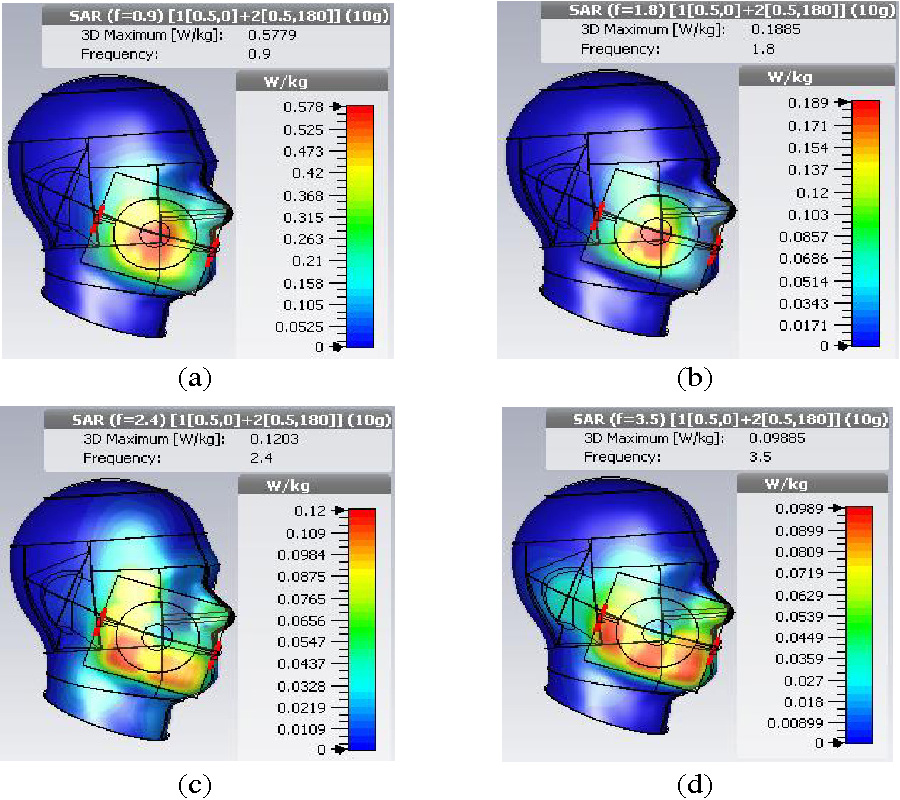
A triple-band patch antenna operating at 0.9, 1.8 and 2.4 GHz is presented. The triple-band characteristic is realized by using a radiating patch and two meander lines achieved by embedding slots in its radiating patch. According to the current distribution of the radiating patch, the locations of two meander lines are chosen. The proposed antenna has the advantages of the easy control of each resonant frequency and relatively simple antenna structure. The measured -10 dB impedance bandwidths are 30, 40, and 30 MHz at 0.9, 1.8, and 2.4 GHz, respectively. The simulated and measured radiation patterns and gains are also presented and discussed.
DESIGN OF A TRIPLE-BAND ANTENNA BASED ON ITS CURRENT DISTRIBUTION
2020-04-14
PIER C
Vol. 101, 53-69
Receiving UWB Antenna for Wireless Capsule Endoscopy Communications
Chaïmaâ Kissi , Mariella Särestöniemi , Timo Kumpuniemi , Sami Myllymäki , Marko Sonkki , Juha-Pekka Mäkelä , Mohamed Nabil Srifi , Heli Jantunen and Carlos Pomalaza-Raez
Wireless capsule endoscopy systems utilize a combination of hardware and software devices to ensure the healthcare of a human being. In praise of involved antennas in the overall medical system design, UWB (Ultra-Wideband) range occupies highest ranks in the literature. The low-band of UWB is regarded as the best frequency range, within the approved standards, to realize the better transmission of captured medical images by the capsule inside the SI tract, in terms of high resolution and low-path loss. A variety of passive capsules have been designed and made available in the literature, while the accurate design of the corresponding on-body antenna is lagging. For this purpose, this paper provides an extended study of a recently published on-body antenna operating at 3.75-4.25 GHz band. The measured antenna realizes good directivity of 5.78 dBi and 9.50 dBi towards the body without and with the cavity, respectively. The direction of the proposed on-body antenna beam is targeted to be mounted on the body surface. On-body simulations were run with CST Microwave Studio by involving an abdominal multi-layer model, and followed by navel and back areas of the voxel model to predict the antenna behavior close to different lossy body environments. Later, the antenna structure was measured next to a real human abdomen. Simulation results reveal that the proposed antenna with or without the cavity enables enhanced in-body communication when mounted on the abdomen with less path loss. This is supported by the low power totaling 20 dB at the SI (Small Intestine) tract. Furthermore, on-body measurements confirm the good antenna performance. Consequently, the planar compact antenna is regarded as a good on-body candidate for wireless capsule endoscopy systems.
RECEIVING UWB ANTENNA FOR WIRELESS CAPSULE ENDOSCOPY COMMUNICATIONS
2020-04-14
PIER C
Vol. 101, 43-52
Simplified Polarization Estimation Using Co-Located Antennas
Hui Li , Miao Wu , Yibo Cheng and Fei Wu
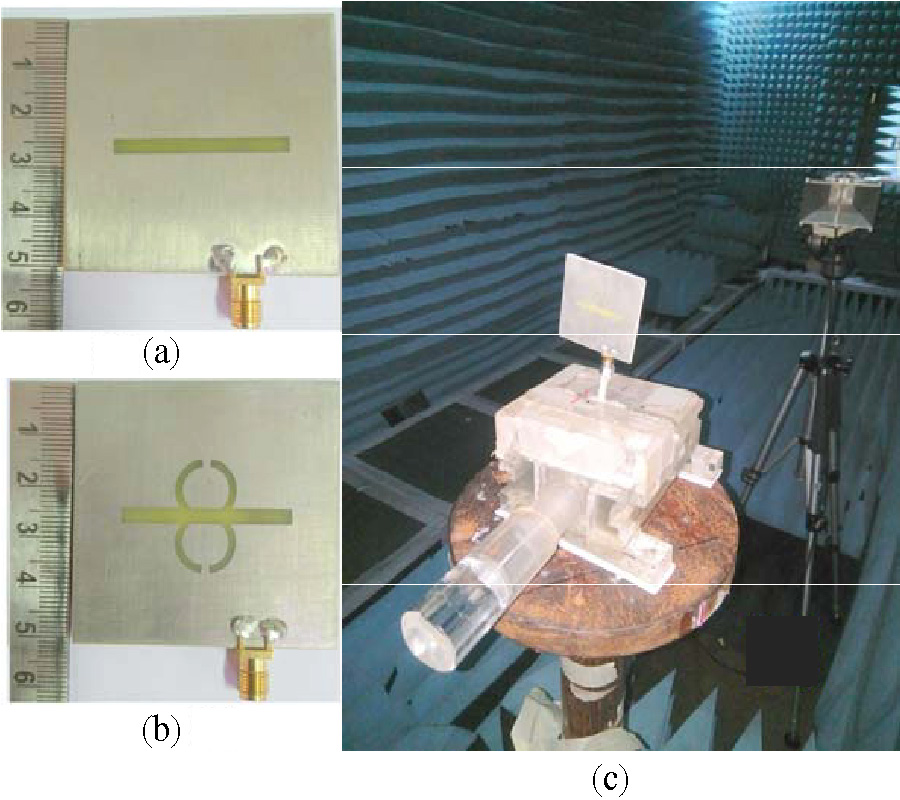
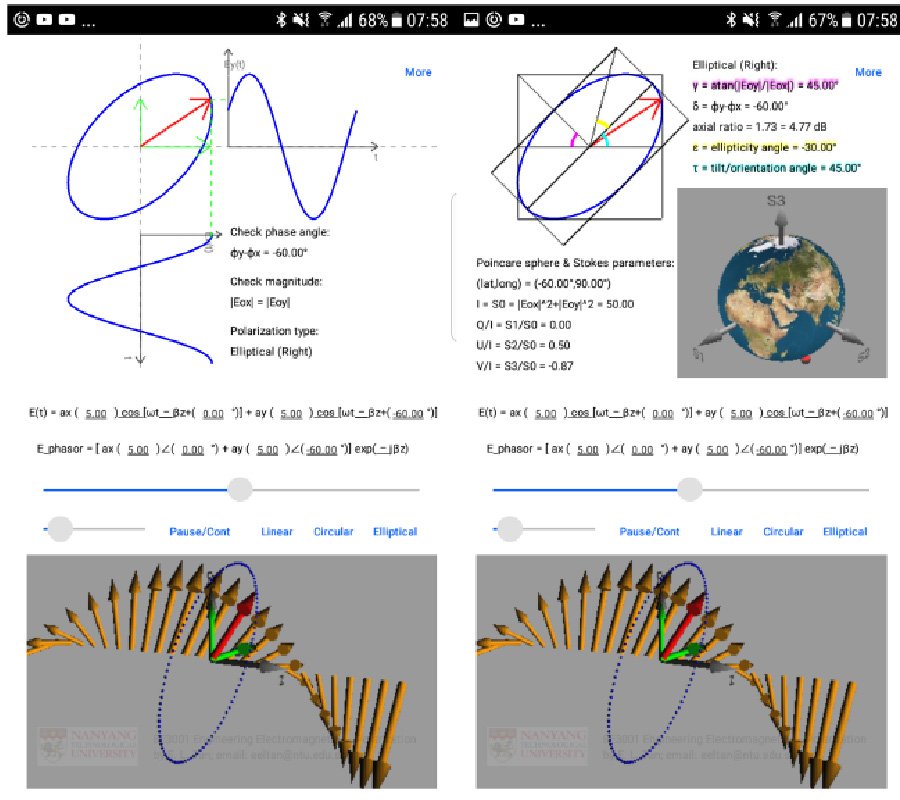
Estimating polarization information using vector antennas is of great significance in signal processing. However, the antenna patterns are normally assumed ideal without considering practical factors, such as cross polarization. Moreover, pattern calibration is required in data processing. In this work, we first illustrate the polarization estimation method, taking into account the cross polarization of antennas. To simplify the estimation, we introduce a practical co-located antenna pair comprising a sleeve monopole and a windmill loop, which share mostly identical radiation patterns but orthogonal polarizations. The cross polarizations of both antennas are below -20 dB. Besides, the phase and amplitude patterns of both antennas are almost omnidirectional in the azimuth plane, avoiding complicated calibrations. Attributed to orthogonal polarizations, good isolation is achieved, and the envelope correlation coefficient is below 0.01. With the proposed antenna, the axis ratio and phase difference of the incoming wave are reasonably estimated without pattern calibration and compensation. The co-located antenna pair was fabricated, using which the polarization information of a commercial WLAN antenna has been measured.
SIMPLIFIED POLARIZATION ESTIMATION USING CO-LOCATED ANTENNAS
2020-04-13
PIER C
Vol. 101, 29-42
Integration of 0.1 GHz to 40 GHz RF and Microwave Anechoic Chamber and the Intricacies
Sellakkutti Suganthi , Deepal Deepak Patil and Elisha Chand
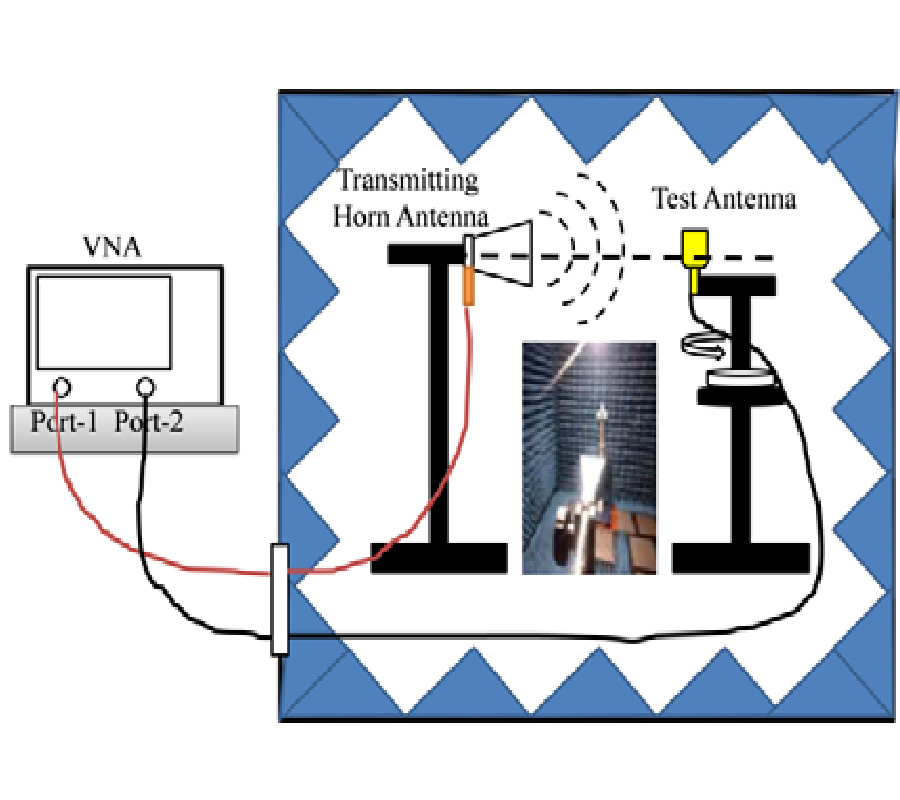
The aim of this paper is to highlight and elaborate the construction and establishment of a rectangular anechoic chamber (AC) of dimensions 7 m × 4 m × 3 m working from 0.1 GHz to 40 GHz. It is an informative checklist giving an insight on the reckoning of chamber dimensions and selection of appropriate absorbers as per the required specifications. It briefs the key features of validation of an anechoic chamber, namely, shielding effectiveness and reflectivity (quiet zone). It describes the intricacies of the integration of systems such as vector network analyzer (VNA), antenna mounting stands, three-axes motorized antenna rotation control circuitry and customized software. The validation of the established chamber is accomplished for overall shielding effectiveness of -80 dB and reflectivity of -40 dB in one cubic meter area at the receiving antenna or antenna under test (AUT) region far away from transmitter say, at 5.5 m separation. This paper covers the measurement results of three broadband horn antennas which can be used as reference antennas for characterization of other antennas in the chosen frequency range. The entire report will certainly be a guideline for any reader or aspirant who is interested in the development of a similar anechoic chamber and looking for complete intricacies.
INTEGRATION OF 0.1 GHZ TO 40 GHZ RF AND MICROWAVE ANECHOIC CHAMBER AND THE INTRICACIES
2020-04-11
PIER Letters
Vol. 90, 105-111
W-Band Subharmonic Mixer with Silica-Based Post-Wall Waveguide Interface
Tomas Thuroczy , Vitaliy Zhurbenko , Tom Keinicke Johansen , Yusuke Uemichi , Osamu Nukaga , Satoshi Okude and Ning Guan
This paper presents the design of a compact size, passive, W to K band subharmonic mixer with post-wall waveguide (substrate integrated waveguide) RF input interface. The mixer is based on a silica-glass structure where the post-wall waveguide and microstrip line are on separate substrates. This configuration maximizes the performance as the substrate thicknesses can be separately optimized for the lowest loss and mono-mode operation. Integration of different types of guiding structures also allows realization of e.g. millimetre-wave waveguide filters and microstrip circuits in a single structure, while preserving low-cost, low-weight and compact size. Furthermore, post-wall waveguides can be easily interfaced with conventional rectangular waveguides, as demonstrated in the paper, which simplifies millimeter-wave circuit packaging and eventual system integration. Design methodology of the mixer and transition circuits as well as measurements are presented. Minimum conversion loss of 19.6 dB was achieved at 86 GHz with 13.7 dBm/32.4 GHz LO signal. The presented design would be suitable for the future W-band cellular, radar or satellite communication systems.
W-BAND SUBHARMONIC MIXER WITH SILICA-BASED POST-WALL WAVEGUIDE INTERFACE
2020-04-10
PIER M
Vol. 91, 91-100
Analysing of Electromagnetic Coupling Effects of Cables in Protective Small-Room of Substation Based on the Random Coupling Model
Jie-Qing Fan , Yao Li and Ying Pan
The electromagnetic circumstance of the small-room of substation turns to be more complex with the increase of the voltage level of the power grid. In this paper, a physical model for protective small-room of substation on the basis of the random plane wave hypothesis and wave-chaotic approach is constructed to get the scattering parameters, combining the Random Coupling Model (RCM) to deduce inducted voltage of coaxial cable terminal and making statistical analysis and prediction for electromagnetic quantity coupled to the cable terminal. The results of simulation by FEKO show the validity of the method introduced in this paper, which provides a guidance for the electromagnetic protection in the protective small-room.
ANALYSING OF ELECTROMAGNETIC COUPLING EFFECTS OF CABLES IN PROTECTIVE SMALL-ROOM OF SUBSTATION BASED ON THE RANDOM COUPLING MODEL
2020-04-09
PIER M
Vol. 91, 81-89
Beam Steering Fabry Perot Array Antenna for mm-Wave Application
Saeid Karamzadeh , Vahid Rafiei and Mesut Kartal
Beam-steering antennas especially with Butler matrix feed network are an effective remedy for wireless communications systems troubles such as disruptive effects in mm-wave frequency. In this work, a novel 4×4 Butler matrix feed beam steering antenna is designed at 35 GHz. A zeroth order resonance antenna element is used for bandwidth and radiation efficiency increment. To increase the gain of the antenna a novel mm-wave Fabry Perot layer which is composed of a partially reflective surface is designed. All designing steps are presented.
BEAM STEERING FABRY PEROT ARRAY ANTENNA FOR MM-WAVE APPLICATION
2020-04-09
PIER C
Vol. 101, 1-12
A Design of Antenna Array with Improved Performance for Future Smartphones
Naser Ojaroudi Parchin , Haleh Jahanbakhsh Basherlou , Yasir I. A. Al-Yasir and Raed A. Abd-Alhameed
In this study, a new multiple-input-multiple-output (MIMO) antenna array is introduced for fifth-generation (5G) smartphones. Its schematic contains eight planar inverted-F antenna (PIFA) elements placed at edges of the mobile-phone mainboard with a 75×150×0.8 mm3 FR-4 substrate. The ground plane and antenna resonators are etched on the back layer of the mainboard. By employing arrow strips between the adjacent elements, the frequency bandwidth and isolation level of the PIFA radiators are improved. The proposed smartphone antenna array is designed to support the spectrum of commercial sub 6 GHz 5G communication and cover the frequency range of 3.25-3.85 GHz with isolation levels better than -15 dB. Due to compact size and corner placements of the PIFAs, the presented MIMO antenna array occupies a small part of the board. In addition, the proposed smartphone antenna array provides not only sufficing radiation coverage supporting different sides of the mainboard but also the polarization diversity. The MIMO performance and characteristics of the proposed smartphone antenna design in the presence of the user phantom are also discussed.
A DESIGN OF ANTENNA ARRAY WITH IMPROVED PERFORMANCE FOR FUTURE SMARTPHONES
2020-04-08
PIER M
Vol. 91, 69-79
A Silicon-Based Ferrite Loaded Miniaturized on-Chip Antenna with Enhanced Gain for Implantable Bio-Telemetry Applications
Harshavardhan Singh and Sujit Kumar Mandal
To make a truly compact size system on-chip (SoC) device for wireless bio-telemetry application, the design of a miniaturized on-chip antenna (OCA) with enhanced gain becomes a prime challenge in recent time. Unsuitable Si (Silicon) substrate and relatively larger antenna size at lower microwave frequencies make it even more challenging for the researchers. In this work, an OCA is designed on a low resistive (ρ = 10 ohm.cm) Si substrate by using standard CMOS technology process. The top metal layer of CMOS layout has been used for designing the antenna to reduce fabrication complexity. By using slot miniaturization technique, the proposed antenna size of λ0/22 x λ0/21.4 mm2 is achieved and operable at ISM 915 MHz band for biotelemetry applications. A gain enhancement technique for OCA is proposed by introducing a 0.2 μm thin film of Cobalt Zirconium Oxide (CoZrO) ferrite material, and the gain is enhanced by +12.28 dB with the bandwidth and fractional bandwidth (FBW) of 1.14 GHz and 124%, respectively. The simulation results of the proposed antenna with coating of bio-compatible material show its potential applicability for implantable bio-telemetry applications. An equivalent circuit of the proposed OCA is presented and verified by ADS circuit simulator.
A SILICON-BASED FERRITE LOADED MINIATURIZED ON-CHIP ANTENNA WITH ENHANCED GAIN FOR IMPLANTABLE BIO-TELEMETRY APPLICATIONS