Search Results(13790)

2020-03-06
PIER M
Vol. 90, 109-116
Solving Electric Current Volume Integral Equation with Nonconformal Discretization and Sherman-Morrison-Woodbury Formula-Based Algorithm
Fei Huang and Yufa Sun
A fast direct solution of the electric current volume integral equation (JVIE) with the Sherman-Morrison-Woodbury (SMW) formula-based algorithm is presented to analyze electromagnetic scattering from inhomogeneous dielectric objects. The JVIE is discretized with the nonconformal face-based Schaubert-Wilton-Glisson (SWG) basis functions. Compared with conformal discretization that is advantageous to discrete homogeneous regions, the nonconformal discretization provides a more flexible and efficient scheme to separately handle the inhomogeneous subdomains depending on local parameters. Moreover, to take full use of both discretization methods, the mixture discretization is adopted. With the increase of object size, the impedance matrix equation arising from the JVIE becomes too large to solve and store for direct solution. In this paper, the SMW formula-based algorithm is adopted, leading to remarkable reduction on the computational complexity and memory requirement in contrast with conventional direct solution. This algorithm compresses the impedance matrix into a product of block diagonal submatrices, which can be inversed rapidly in direct way. Numerical results are given to demonstrate the efficiency and accuracy of the proposed method.
SOLVING ELECTRIC CURRENT VOLUME INTEGRAL EQUATION WITH NONCONFORMAL DISCRETIZATION AND SHERMAN-MORRISON-WOODBURY FORMULA-BASED ALGORITHM
2020-03-06
PIER M
Vol. 90, 99-108
A Microstrip Lossy Diplexer with Flat Channel Passbands
Fan Zhang , Yun Wu , Liang Sun , Yang Gao , Yi Wang and Jun Xu
Passband flatness and band-edge selectivity in microwave filters with finite quality-factor resonators can be improved by the synthesis of lossy filters. This paper demonstrates the extension of this technique to a lossy diplexer by means of resistive coupling. A dual-mode stub-loaded resonator (SLR) junction and a fork-like feedline are used in the diplexer to address the challenge of independently controlling the external coupling from the common port to the two channel filters and therefore enable flexible realization of the channel bandwidth. The coupling matrices with resistive couplings for the lossy diplexer are generated. For verification, a microstrip lossy diplexer operating at 1.91 and 2.6 GHz was designed and tested. The flatness of the passband has been significantly improved, with a reduction of the passband insertion loss variation from 1.4/1.2 dB to 0.66/0.63 dB for the low/high band. The measured results are in good agreement with the simulations as well as the theoretical responses from the coupling matrix. This was also experimentally compared with a reference diplexer without resistive couplings.
A MICROSTRIP LOSSY DIPLEXER WITH FLAT CHANNEL PASSBANDS
2020-03-06
PIER M
Vol. 90, 89-97
Influence of Steel Mesh on Magnetic Proximity Detection Systems: an Experimental Study
Chenming Zhou , Bruce G. Whisner , Jacob L. Carr and Justin Srednicki
Proximity Detection Systems (PDSs) are used in the mining industry for protecting mine workers from striking, pinning, and crushing injuries when they work in close proximity to heavy machines such as continuous mining machines (CMMs). Currently all PDSs approved by the Mine Safety and Health Administration (MSHA) are magnetic field based systems which can be influenced by the presence of steel wire mesh that is commonly used for supporting roof and ribs in underground coal mines. In this paper, researchers at the National Institute for Occupational Safety and Health (NIOSH) characterized the influence of the mesh on the performance of magnetic PDSs by measuring the magnetic field difference around a CMM caused by the presence of the mesh. The results show that the magnetic fields are generally enhanced by the mesh which causes PDS detection zones to be increased correspondingly. It was discovered that the fields around the joints of two mesh sections have the greatest enhancement and thus deserve more attention. In addition, it was found that the presence of mesh can also cause a variation in the generator current. The experimental results show that the generator current variation and thus the magnetic field change caused by the mesh can be significant (on the order of ten) when the mesh is extremely close to the generator (e.g, less than 1 cm) and is negligible when mesh is relatively far (greater than 0.15 m). The findings in this paper can be used to develop guidelines and best practices to mitigate the influence of mesh on PDSs.
INFLUENCE OF STEEL MESH ON MAGNETIC PROXIMITY DETECTION SYSTEMS: AN EXPERIMENTAL STUDY
2020-03-06
PIER M
Vol. 90, 81-88
Non-Contact and Non-Invasive Driver's Monitor Using Microwave Reflectometer
Atsushi Mase , Yuichiro Kogi , Toru Maruyama , Tokihiko Tokuzawa , Masaki Kunugita , Tatsuya Koike and Hiroyasu Hasegawa
This paper describes the measurement of a driver's instantaneous heart rate corresponding to R-R interval in electrocardiogram and heart-rate variability (HRV) using 24 GHz radar reflectometers. Elimination of the spurious component due to random movement of a driver has been the most difficult problem for microwave measurement. Auto-gain control of the receiver, template matching and cross-correlation technique among multiple reflectometers enable motion artifact elimination, signal peak detection, and data processing for various parameters. The measurement of vital signals is considered useful for predicting the change in a driver's state, such as a heart attack as well as detecting drowsy driving, drunk driving, and fatigue.
NON-CONTACT AND NON-INVASIVE DRIVER'S MONITOR USING MICROWAVE REFLECTOMETER
2020-03-06
PIER M
Vol. 90, 69-79
A Low Profile Quadruple-Band Polarization Insensitive Metamaterial Absorber
Ting Wu , Yan-Ming Ma , Juan Chen and Li-Li Wang
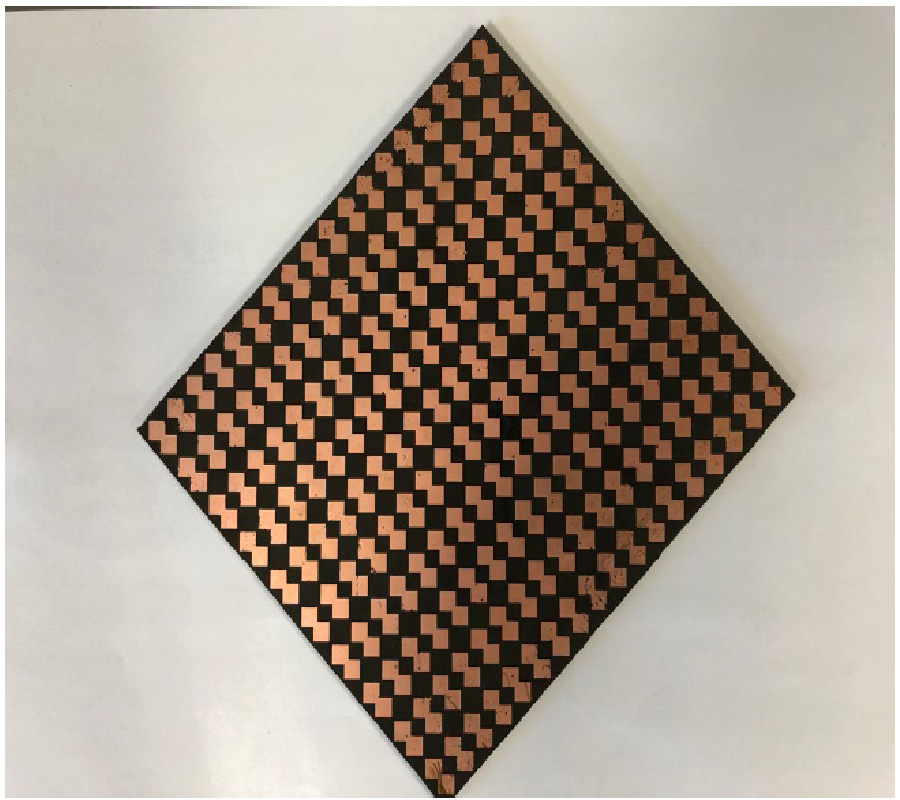
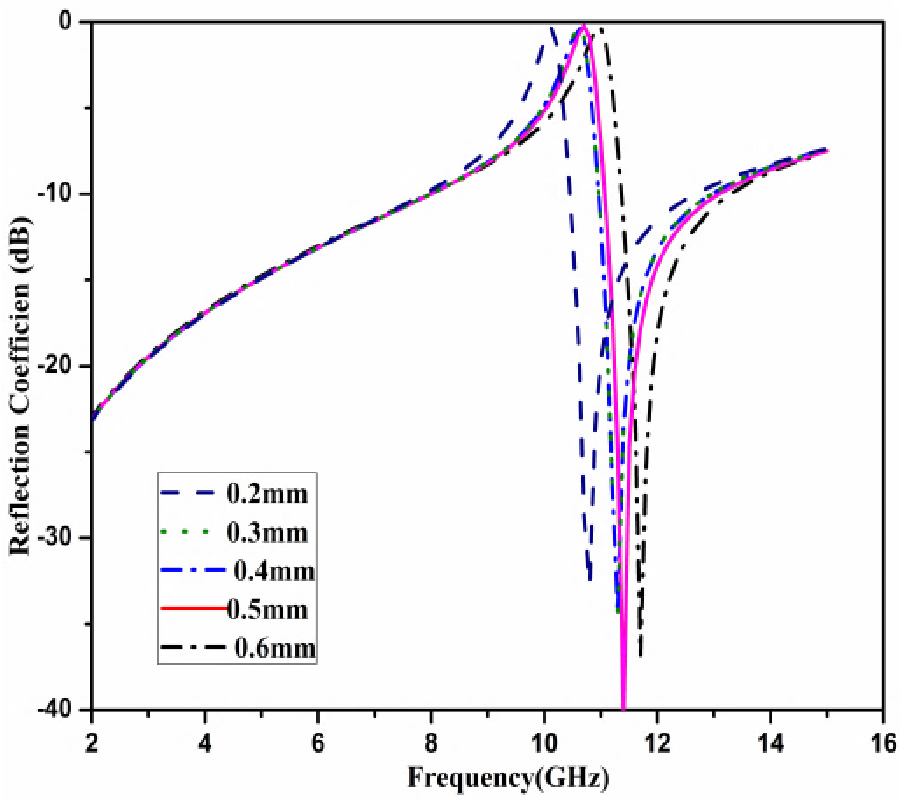
In this paper, a quadruple-band metamaterial polarization-insensitive absorber with low profile is proposed. The proposed unit cell is composed of three conformal modified rings with square patches at corners. 10*10 periodic unit cells constitute the proposed metamaterial absorber. The absorber offers low profile, and overall dimensions are 100 mm*100 mm. The surface current distribution and equivalent circuit model are presented to explain the mechanism. The proposed structure is fabricated, and experiments are carried out to validate the design principle. The simulated and measured results show that the proposed structure exhibites four absorption peaks of 98.87%, 95.11%, 93.97%, and 99.99% under normal incidence at 8.16-8.29 GHz, 10.275-10.38 GHz, 14.255-14.38 GHz, and 15.465-15.7 GHz which cover X- and Ku-bands, respectively. The designed structure is exactly symmetrical which makes it insensitive to polarization angle variations. Furthermore, the four operating bands of the absorber can be adjusted independently which makes the design suitable for absorbing electromagnetic energy and reducing the radar cross-section (RCS) of target.
A LOW PROFILE QUADRUPLE-BAND POLARIZATION INSENSITIVE METAMATERIAL ABSORBER
2020-03-05
PIER Letters
Vol. 90, 53-60
FDA Transmit Beamforming Synthesis Using Chebyshev Window Function Technique to Counteract Deceptive Electronic Countermeasures Signals
Shaddrack Yaw Nusenu , Abdul Basit and Emmanuel Asare
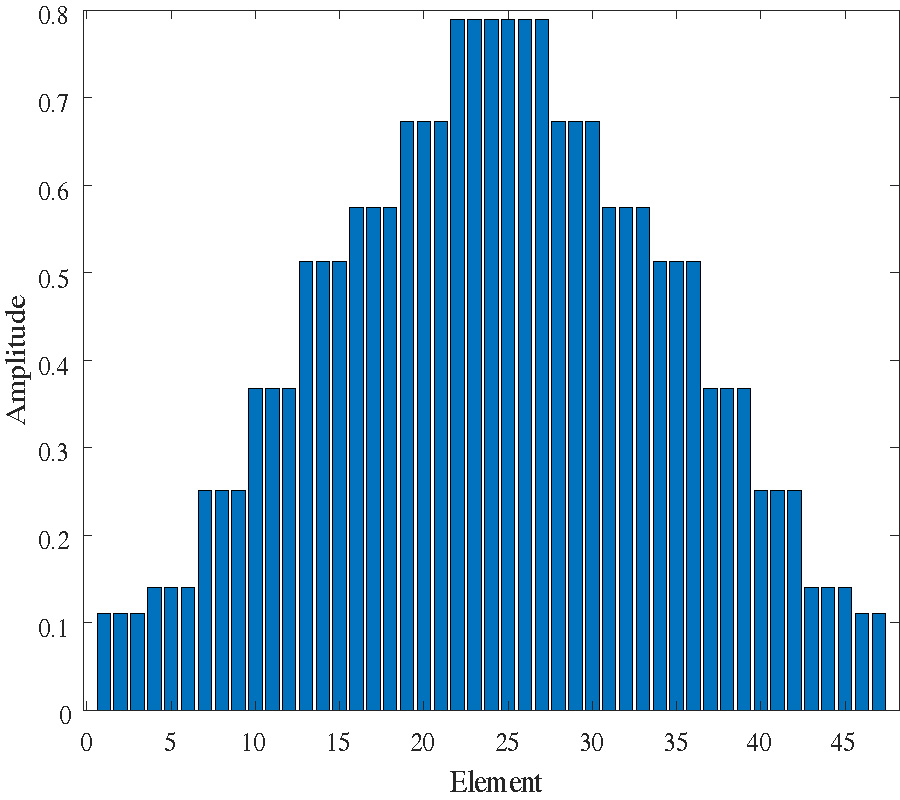
Frequency diverse array (FDA) has gained remarkable attention in both radar and communication applications over the years due to its unique range-dependent beamforming. On the other hand, extremely less attention is paid to the exploitation of FDA in electronic countermeasures (ECM). Hence, this paper proposes a symmetric frequency diverse array via Chebyshev window function in ECM applications. Specifically, we utilize Chebyshev window function to design the coefficient of both transmit weights and frequency diverse increments to uncouple range-angle response of the true target to counteract deceptive ECM signals. In addition, we consider real constraint scenario, i.e., the propagation of the electromagnetic signal arriving at the true target position, which has been usually neglected in the FDA literature. The attribute of the proposed scheme is that it is able to discriminate between true target location and false target(s) location. This implies that the generated false target(s) by the jammer can be significantly suppressed in either angular or range profiles mismatch. Further, we adopt Swerling 1 model to devise generalized Neyman-Pearson design rule to evaluate the probability of detection of the proposed scheme. Numerical results illustrate the achievements of the proposed scheme.
FDA TRANSMIT BEAMFORMING SYNTHESIS USING CHEBYSHEV WINDOW FUNCTION TECHNIQUE TO COUNTERACT DECEPTIVE ELECTRONIC COUNTERMEASURES SIGNALS
2020-03-05
PIER C
Vol. 100, 105-120
Propagation Characteristics for UAVs Operating at Short Range and Low Altitude
Giselle M. Galvan-Tejada , Jorge E. Aviles-Mejia , Aldo G. Orozco-Lugo , Luis A. Arellano-Cruz , Ruben Flores-Leal and Rogelio Lozano-Leal
Propagation mechanisms for short range, low altitude conditions are reviewed for their use in communications of unmanned aerial vehicles (UAVs). This study is based on measurements conducted in an obstacle-free area. The testbed is made up of a testing UAV (in particular a drone) and a set of four ground station terminals (GSTs) located in a football field; the antenna heights of radios (onboard the drone and GSTs) are equal to 1.4 m and the maximum distance between them is 50 m. Under these conditions, a plane earth geometry is well suited, and therefore the two-ray propagation model is considered. Measurement results for a radial configuration of the drone with respect to a ground station follow the trend of this model, but with a shift, which is attributed to the scattering from the grass. Then, an adjusted two-ray model is proposed for which experiments report good results. For another configuration where the drone has different positions in a square area of 30 × 30 m and there are four ground stations in the corners of the square, the general trend of the power decay of measurement results follows this model, but in some positions a difference around it is found even for locations at the same distance drone-GTSs. This behavior is attributed to the interaction of the print circuit board to the radiation characteristics of the antenna used in the radios. Thus, this effect is also analyzed by simulations, whose results show a deformation of the antenna radiation pattern, concentrating the energy in a certain direction and reducing it in another.
PROPAGATION CHARACTERISTICS FOR UAVS OPERATING AT SHORT RANGE AND LOW ALTITUDE
2020-03-04
PIER M
Vol. 90, 59-67
Optimization of Wide-Band and Wide Angle Cavity-Backed Microstrip Patch Array Using Genetic Algorithm
Doo-Soo Kim , Il-Tak Han , Woo-Sung Kim , Jin-Mo Yang , Yong-Hee Han and Kyung-Tae Kim
This paper specifies optimization of a low active reflection coefficient (ARC) array element with a cavity-backed microstrip patch (CBMP) using a genetic algorithm (GA) at wide-band and 2-dimensional (2D) wide angle. Both the GA implemented with a user-defined MATLAB code and a 3-dimensional (3D) full-wave electromagnetic simulator CST MWS are simulated with a real-time direct link. An optimization method using not a traditional unit cell ora small array but a 15 × 15 finite array structure is proposed to apply to a large-scale array antenna. The CBMP array antenna to meet a design goal of a max ARC is optimally designed at equally divided 9 frequencies and 11374 beam angles for S-band 400 MHz operating frequency bandwidth and beam scan coverage (Az = -60° ~ +60°, El = -3° ~ +90°). Measurement results show that a prototype and a full-scale array antenna have low ARC below -8.1 dB and -6.9 dB respectively for required wide frequency bandwidth and beam scan coverage. It is confirmed that the proposed method is a good solution for optimizing a large-scale array antenna.
OPTIMIZATION OF WIDE-BAND AND WIDE ANGLE CAVITY-BACKED MICROSTRIP PATCH ARRAY USING GENETIC ALGORITHM
2020-03-04
PIER B
Vol. 86, 139-158
H-Shaped Fractal Slots Based Highly Miniaturized Substrate Integrated Waveguide Metamaterial Bandpass Filters for C-Band Applications
Ayad Muslim Hamzah , Lukman Audah and Nasr Alkhafaji
A new family of substrate integrated waveguide metamaterial bandpass filters is proposed which support the backward and forward wave propagations with two adjacent passbands under the cutoff frequency of the structure. Through varying the fractal slots sizes etched overthe SIW structures, different frequency transmission responses were realized. Extraction of the metamaterial parameters was achieved via scattering parameters. The equivalent circuit model was analyzed to provide comprehensionon the SIW-metamaterial unit cells. The equivalent electrical length of a fractal slot is larger than the conventional slot, making it suitable to design highly miniaturized filters. Three filters using the 3rd iteration H-shaped SIW-metamaterial unit cells were designed and testedusing subwavelength resonators. Filter designwas used to extract the coupling coefficient and external quality factor to obtain the filters' optimized physical dimensions. The out-of-band rejection can be enhanced by configuring the fractal slots or the SIW. A wide upper out-of-band rejection with attenuation >50 dB with the range 5.5 GHz to 9 GHz was realized. The proposed filters offer advantages through low insertion loss, easy fabrication, high selectivity, small size, and low cost. The measured scattering parameters S21 and S11 were in agreement with the simulated.
H-SHAPED FRACTAL SLOTS BASED HIGHLY MINIATURIZED SUBSTRATE INTEGRATED WAVEGUIDE METAMATERIAL BANDPASS FILTERS FOR C-BAND APPLICATIONS
2020-03-04
PIER C
Vol. 100, 95-103
An Online Measurement Method for Noise-Source Impedance of Electrical Equipment
Ming-Xing Du , Yang Li , Hongbin Wang , Ziwei Ouyang and Ke-Xin Wei
The paper presents a method of extracting noise source impedance of electrical equipment under working condition. Firstly, based on the theory of two-port network, the measurement method of noise impedance is analyzed theoretically, and the injection probe and receiving probe are calibrated by two known resistors. No special calibration fixture is needed to calibrate the injection probe and receiving probe. Secondly, the port structure of the noise impedance measurement method is analyzed, and the noise source impedance is calculated by using the theory of microwave transmission. Compared with the traditional method, this method does not require calibration fixture and simplifies the experimental process. Finally, passive devices and active systems are tested respectively, and the experimental results show that the method is effective and feasible.
AN ONLINE MEASUREMENT METHOD FOR NOISE-SOURCE IMPEDANCE OF ELECTRICAL EQUIPMENT
2020-03-03
PIER M
Vol. 90, 47-58
Design of a Metalens for Correcting the Phase Distortions of a Hemispheric Dielectric Radome in the Ka Band
Ezgi Öziş , Andrey Osipov and Thomas F. Eibert
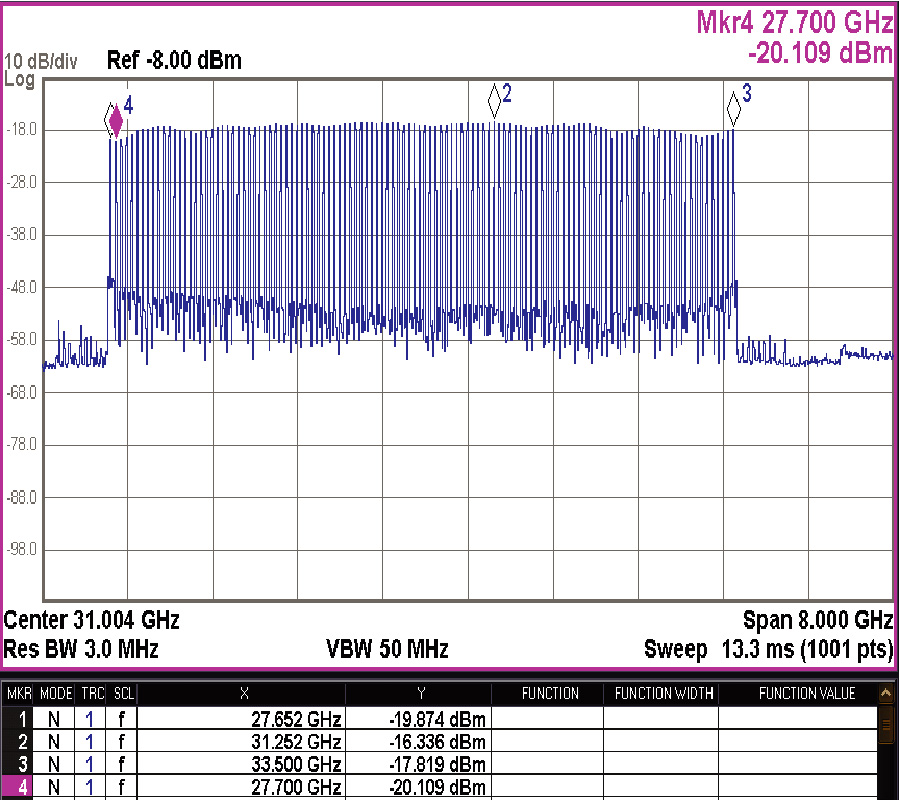
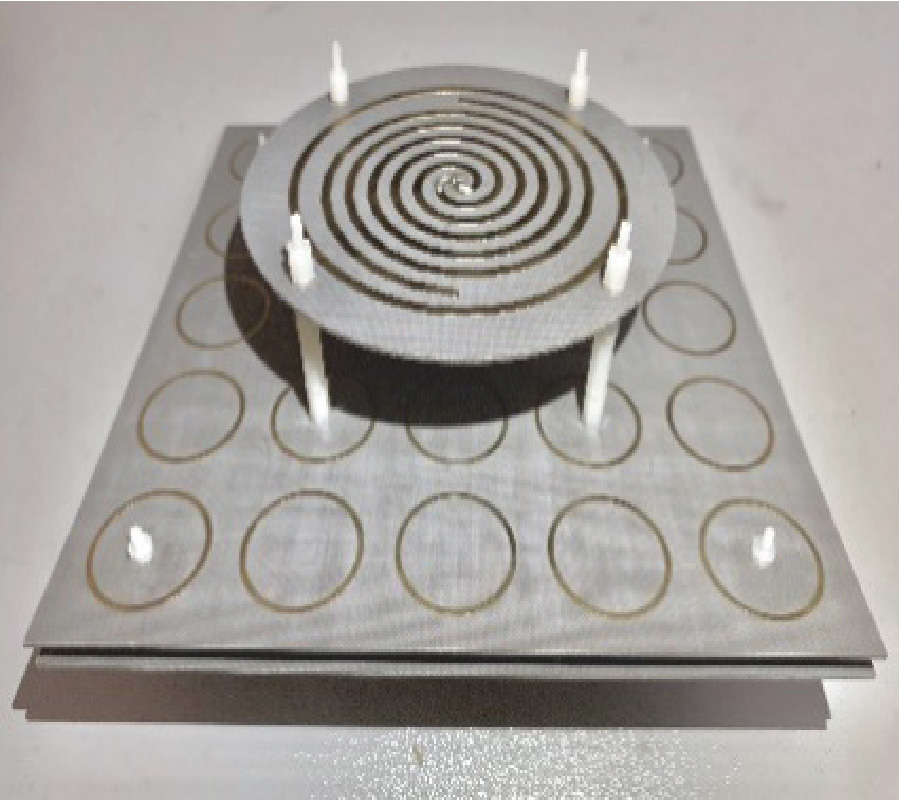
Metasheets are ultra-thin sheets built from sub-wavelength resonators designed to achieve certain frequency-dependent transmission behavior. A semianalytical approach based on an equivalent circuit representation is proposed to calculate the microwave transmission through metasheets consisting of two-dimensional periodic arrays of planar circular metal rings on a dielectric substrate. In the semianalytical approach, the impedances of the equivalent circuit are parameterized and fitted to match the values of transmission coefficients obtained by full-wave simulations at selected frequency points. As dimensional parameters, the outer radius and the width of the ring are considered. A metalens with four concentric zones is designed by using this semianalytical approach to correct the phase distortions due to a polypropylene hemispheric radome at frequencies around 28 GHz in the Ka band. It is shown that the designed metalens works well for 27 GHz, 28 GHz, 29 GHz and 29.5 GHz, implying the bandwidth of approximately 2.5 GHz. The field transmitted through the metalens and the radome is calculated by Physical Optics (PO). The electrically large integration area is divided into small square facets to calculate the PO integral. The calculated and measured results are shown to agree well.
DESIGN OF A METALENS FOR CORRECTING THE PHASE DISTORTIONS OF A HEMISPHERIC DIELECTRIC RADOME IN THE KA BAND
2020-03-02
PIER M
Vol. 90, 37-46
Low Sidelobe Wide Nulling Digital Beamforming for Large Planar Array Using Iterative FFT Techniques
Tarek Sallam and Ahmed Attiya
The combination of low peak sidelobe level (PSLL) with wide sector nulling digital beamforming (DBF) is achieved for large planar array antennas. This combination is carried out using the iterative Fourier transform (IFT) method. The method is based on the iterative Fourier technique to derive element excitations from the prescribed array factor using successive forward and backward Fourier transforms. A 1024-element rectangular uniformly spaced array is used as an example to demonstrate the performance of the proposed method. Numerical examples show that the proposed method achieves very low PSLL with very wide nulling sectors up to the half plane of the far-field pattern. Moreover, numerical results show that the proposed method is effectively functional even when the mainbeam is steered to directions other than the broadside.
LOW SIDELOBE WIDE NULLING DIGITAL BEAMFORMING FOR LARGE PLANAR ARRAY USING ITERATIVE FFT TECHNIQUES
2020-02-27
PIER Letters
Vol. 90, 45-51
A Compact Negative-Group-Delay Microstrip Bandpass Filter
Zhongbao Wang , Zheng Fu , Chengze Li , Shao-Jun Fang and Hongmei Liu
In this paper, a compact negative-group-delay (NGD) microstrip bandpass filter is proposed. The NGD characteristic is achieved by coupling a resistor-loaded microstrip line to a square open-loop resonator. To improve the selectivity, the square open-loop resonator is loaded with an open-circuited stub for realizing two transmission zeros (TZs) in the upper stopband. To verify the proposed method, an NGD microstrip bandpass filter with a size of 0.58λg × 0.35λg is designed and fabricated. From the measured results, the NGD time of -1.08 ns at the center frequency of 1.995 GHz is obtained with the NGD bandwidth of 34 MHz (1.977-2.011 GHz), in which the insertion loss is less than 7.5 dB, and the return loss is greater than 20 dB. Furthermore, three TZs at 1.520, 2.495, and 2.735 GHz are achieved with good stopband attenuation.
A COMPACT NEGATIVE-GROUP-DELAY MICROSTRIP BANDPASS FILTER
2020-02-25
PIER Letters
Vol. 90, 37-43
Joint Beamforming and Power Splitting Design for Two Way AF Relay Networks with Energy Harvesting
Jun Shao and Jinxin Zhu
In this paper, we focus on the beamforming design in a two way amplify-and-forward relay network with energy harvesting, in which a three-node system consisting of two transmitters and one relay is considered. Specifically, we investigate the joint beamforming and power splitting scheme to obtain the maximum weighted sum rate. The formulated problem is non-convex and challenging. We equivalently transform it into a more tractable problem via successive convex approximation and constrained concave-convex procedure. Then, an iterative algorithm is proposed. Numerical results demonstrate the superiority of the proposed method, as well as the e ect of dynamic power splitting in improving the sum rate of relay network.
JOINT BEAMFORMING AND POWER SPLITTING DESIGN FOR TWO WAY AF RELAY NETWORKS WITH ENERGY HARVESTING
2020-02-23
PIER
Vol. 167, 19-30
Multi-Objective Genetic Algorithm Optimization of Frequency Selective Metasurfaces to Engineer Ku-Passband Filter Responses
Kenneth W. Allen , Daniel J. P. Dykes , David R. Reid and Richard Todd Lee
Metasurfaces enable a new avenue to create electrically thin multi-layer structures, on the order of one-tenth the central wavelength (λc), with engineered responses. Altering the sub-wavelength spatial features, e.g. λc/80, on the surface leads to highly tunable electromagnetic scattering characteristics. In this work, we develop an ultra-wideband frequency selective metasurface (FSmS) that completely encompasses the Ku-band from 12-18 GHz with steep band edges. The geometrical structure of the metasurfaces is optimized by a multi-objective genetic algorithm mimicking evolutionary processes. Analysis is performed from one- to four-layer metasurface structures with various thicknesses. Computational electromagnetic simulations for these frequency selective metasurfaces (FSmS) are presented and discussed. The concepts presented in this work can be applied to design metasurfaces and metamaterials from the microwave to the optical regimes.
MULTI-OBJECTIVE GENETIC ALGORITHM OPTIMIZATION OF FREQUENCY SELECTIVE METASURFACES TO ENGINEER KU-PASSBAND FILTER RESPONSES
2020-02-21
PIER C
Vol. 100, 83-93
Distributed Sensor Diagnosis in Twisted Pair Networks for Soft Fault Identification Using Reflectometry and Neural Network
Ousama Osman , Soumaya Sallem , Laurent Sommervogel , Marc Olivas Carrion , Pierre Bonnet and Françoise Paladian
This paper aims at developing an approach allowing to detect, locate and characterize soft faults (i.e. isolation damage) in branched network composed of shielded twisted pair (STP) cables. To do so, a distributed reflectometry diagnosis where several sensors (reflectometers) are placed at different ends of the network is used to maximize the diagnosis coverage. The soft fault identification is achieved by using the Multi-Carrier Time Domain Reflectometry (MCTDR) combined with a Multi-Layer Perceptron Neural Network (MLP-NN). The main novelty here lies in the fact that the MLP-NN method is used for data fusion from several distributed reflectometers, which would eliminate ambiguities related to the fault location. The required datasets for training and testing of the NN are generated by simulation. Simulation and experimental results are dedicated to the validation of the proposed approach for locating and characterizing the soft faults in branched networks.
DISTRIBUTED SENSOR DIAGNOSIS IN TWISTED PAIR NETWORKS FOR SOFT FAULT IDENTIFICATION USING REFLECTOMETRY AND NEURAL NETWORK
2020-02-20
PIER B
Vol. 86, 121-138
High q-Factor Bandstop Filter Based on CPW Resonator Broadside-Coupled to CPW through-Line
Walid M. Fahmy , Asmaa Elsayed Farahat , Khalid Fawzy Ahmed Hussein and Abd-El-Hadi A. Ammar
High Q-factor bandstop filter based on broadside-coupling between U-shaped coplanar waveguide (CPW) resonator and CPW through-line (CPWTL) is proposed in the present paper. The CPWTL is printed on the top layer of the dielectric substrate whereas the CPWR is printed on the bottom layer. Only over very narrow frequency band, around the resonant frequency of the CPW resonator (CPWR), the microwave power flowing in the CPWTL is coupled to (absorbed by) the CPWR leading to a bandstop filter of very high Q-factor. A CPWR with side ground strips of finite width is shown to have much higher Q-factor than that of infinitely extending side ground planes. Owing to the lower profile of the CPW with finite-width, the radiation loss is reduced, and the structure has narrower frequency band for coupling, which results in much higher Q-factor than other published works. The dimensions of the CPWTL are optimized for impedance matching whereas the dimensions of the U-shaped CPWR are optimized to obtain the highest possible Q-factor. The effect of the loss tangent of the dielectric substrate material on the Q-factor is investigated. A prototype of the proposed filter is fabricated and experimentally studied for more understanding of the underlying physical principles of operation and for experimental investigation of the filter performance. The experimental measurements show good agreement with the corresponding simulation results.
HIGH Q-FACTOR BANDSTOP FILTER BASED ON CPW RESONATOR BROADSIDE-COUPLED TO CPW THROUGH-LINE
2020-02-20
PIER C
Vol. 100, 73-82
A Narrow Beam, Beam Steerable and Low Side-Lobe Reflectarray Based on Macro Electro-Mechanical Technique
Reza Asgharian , Bijan Zakeri and Mohammad Yazdi
In this paper, an X-band, nonuniform and passive beam steering reflectarray antenna is presented. The beam steering is done with a small movement of a large element, i.e. the ground plane. The maximum ±7.5° beam scanning from the antenna broadside is achieved by only ±0.05λ ground tilting. In the proposed structure, the beam steering capability is provided by using passive elements that eliminate the need for active biased circuits. The linearity of beam scanning as a function of ground tilting is also investigated. Compared to the previous similar works, the antenna's half-power beamwidth and side lobe level are improved by about 9° and 20 dB, respectively. A primarily proposed reflectarray is fabricated to validate our claim.
A NARROW BEAM, BEAM STEERABLE AND LOW SIDE-LOBE REFLECTARRAY BASED ON MACRO ELECTRO-MECHANICAL TECHNIQUE
2020-02-20
PIER C
Vol. 100, 59-71
Modified Ground Plane Multi-Band Rectangular Microstrip Antennas with Reduced Cross Polar Radiation
Poonam A. Kadam and Amit A. Deshmukh
A new design of dual and triple band rectangular microstrip antennas employing modified ground plane profiles is proposed. Slots introduced in the ground plane not only tune the higher order mode resonance frequency of the radiating patch but also alter the current distributions on the ground which yields multi-band response showing reduced cross polar level radiation pattern. Dual and triple band antennas yield 1 to 2% of impedance bandwidth at each frequency with gain around 1.5 to 2 dBi. Also in the multi-band design, 35% reduction in patch size against the conventional half wavelength counterpart is obtained. Further resonant length formulation at modified patch modes is presented which gives closer prediction of calculated frequency than the simulated value. The proposed multi-band design can find applications in personal communications systems requiring frequency agile capabilities.
MODIFIED GROUND PLANE MULTI-BAND RECTANGULAR MICROSTRIP ANTENNAS WITH REDUCED CROSS POLAR RADIATION
2020-02-19
PIER Letters
Vol. 90, 29-36
A High Gain Dual Band Rectenna for RF Energy Harvesting Applications
Mohammed Cherif Derbal and Mourad Nedil
In this article, a high gain dual band rectenna is proposed for energy harvesting applications. A dual band antenna is designed and optimized to operate at 3.5 GHz and 5.8 GHz frequency bands. The antenna is based on a multilayer substrate structure excited by aperture-coupling feed. In order to achieve a maximum gain of the antenna in both bands, a rectangular cell optimized by genetic algorithms is etched on the radiating element (patch). This antenna was simulated and fabricated, and the results show a good agreement in both bands (3.5 and 5.8 GHz) with a high gain of 10.2 dBi and 8.92 dBi for the first and second bands, respectively. A dual-band rectifier is also designed and studied to harvest the radio frequency energy absorbed by the antenna to DC energy at these frequency bands (3.5 GHz and 5.8 GHz). This rectifier shows a good performance in terms of conversion efficiency which achieves 44% in the first band and 29% in the second band. As a result, an output voltage of 656.88 mV for a low input power of 0 dBm is observed when the rectifier operates at both bands.
A HIGH GAIN DUAL BAND RECTENNA FOR RF ENERGY HARVESTING APPLICATIONS