Search Results(13790)

2020-03-19
PIER
Vol. 167, 41-54
Self-Dual Boundary Conditions in Electromagnetics
Ismo Veikko Lindell and Ari Sihvola
Invariance in duality transformation, the self-dual property, has important applications in electromagnetic engineering. In the present paper, the problem of most general linear and local boundary conditions with self-dual property is studied. Expressing the boundary conditions in terms of a generalized impedance dyadic, the self-dual boundaries fall in two sets depending on symmetry or antisymmetry of the impedance dyadic. Previously known cases are found to appear as special cases of the general theory. Plane-wave reflection from boundaries defined by each of the two cases of self-dual conditions are analyzed and waves matched to the corresponding boundaries are determined. As a numerical example, reflection from a special case, the self-dual EH boundary, is computed for two planes of incidence.
SELF-DUAL BOUNDARY CONDITIONS IN ELECTROMAGNETICS
2020-03-18
PIER M
Vol. 90, 157-166
Implementation of Cylindrical Dielectric Resonator Antenna Array for Wi-Fi/Wireless LAN/Satellite Applications
Anish Vahora and Killol Pandya
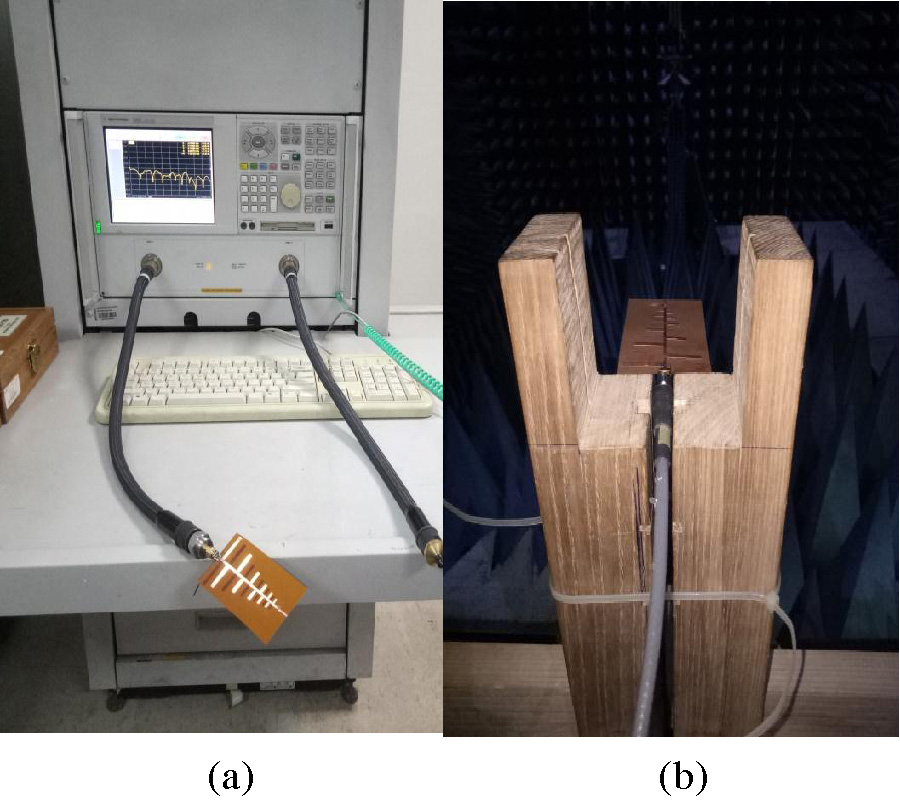
A tri-band Cylindrical Dielectric Resonator Antenna (CDRA) array is proposed for WiFi, wireless LAN, and satellite applications in this paper. CDRA is massively demanded by various smart wireless devices. The claimed antenna array structure is developed and fabricated using an FR4 substrate having relative permittivity (εr) of 4.4. Microstrip power divider line is utilised for array excitation. The variation in return loss due to effect of varying micro strip line length, dielectric resonator height and ground plane height has been carefully recorded and presented using parametric study. The array structure is engineered for triple band operations working at 2.4 GHz, 4.1 GHz, and 5.4 GHz frequencies. To achieve adequate bandwidth accompanied by acceptable gain is a very inspiring task. The proposed structure shows a promising maximum impedance bandwidth of 1.14 GHz (40%) and a maximum gain of 9 dBi. The return loss and radiation pattern computed through CST software are verified by practical measurements using VNA device and anechoic chamber atmosphere.
IMPLEMENTATION OF CYLINDRICAL DIELECTRIC RESONATOR ANTENNA ARRAY FOR WI-FI/WIRELESS LAN/SATELLITE APPLICATIONS
2020-03-17
PIER M
Vol. 90, 147-155
Miniaturized Frequency Selective Rasorber Based on Meander-Lines Loaded Lumped Resistors and a Coupled Resonator Spatial Filter
Zhaoshuzhou Shen , Na Kou , Shixing Yu , Zhao Ding and Zhengping Zhang
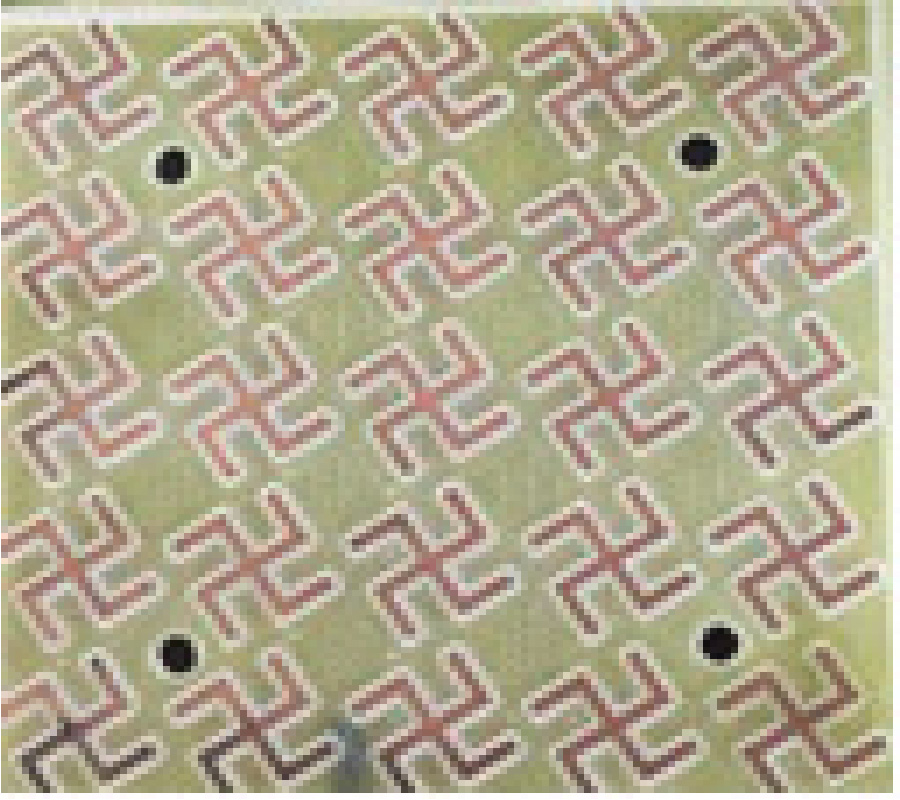
This paper presents a miniaturized frequency selective rasorber (FSR) with both wide absorption and transmission bands. The proposed FSR consists of a resistive sheet and a band-pass frequency-selective surface (FSS) with non-resonant constituting elements. The unit cell structure of the resistive sheet is a meander line loaded with four lumped resistors, which generate a wide absorption band from 2.4 to 6.2 GHz, while the layer of FSS is coupled resonator spatial filter (CRSF) which generates a wide transmission band from 7.5 to 10.2 GHz. Furthermore, there is a 10.5 mm air spacer between the resistive and FSS layers. The period of the FSR structure, which maintains its passband and absorption band performance, is only 10 mm (0.08λL). Simulated and measured results are compared and found to show good agreement.
MINIATURIZED FREQUENCY SELECTIVE RASORBER BASED ON MEANDER-LINES LOADED LUMPED RESISTORS AND A COUPLED RESONATOR SPATIAL FILTER
2020-03-17
PIER Letters
Vol. 90, 91-97
Composite Dual Transmission Lines and Its Application to Miniaturization of Gysel Power Divider
Mukesh Kumar , Gobinda Sen , Sk. Nurul Islam , Susanta Kumar Parui and Santanu Das
This letter presents novel composite dual-transmission lines. The proposed line consists of one direct series line and two identical transmission lines connected by a series lumped capacitor. The line is analyzed with an even-odd mode analysis method to have simple closed-form design equations. From the design equations, it is also observed that one can maintain a more realizable value of the impedance of the lines and achieve a good amount of miniaturization by adjusting only the lumped capacitor. To verify this technique, a 74.6% miniaturized Gysel power divider (GPD) is designed at 0.95 GHz compared to reference GPD. The physical size of the proposed GPD is 60 mm × 32 mm (equivalently 0.25λg × 0.13λg, λg is guided wavelength line). Moreover, two transmission zeros (TZs) are obtained near passband which improved the out-of-band performance.
COMPOSITE DUAL TRANSMISSION LINES AND ITS APPLICATION TO MINIATURIZATION OF GYSEL POWER DIVIDER
2020-03-17
PIER Letters
Vol. 90, 85-90
High Sensitivity Temperature Sensor Based on Photonic Crystal Resonant Cavity
Faiza Bounaas and Amel Labbani
In this paper we investigate a new design of high sensitivity photonic crystal temperature sensor (PCTS). A square lattice of silicon (Si) rods immersed in air matrix is used as a basic structure. The designed sensor consists of two inline quasi-waveguides which are coupled to a resonant cavity (RC). The sensing principle is based on Si refractive index change caused by the variation of the temperatures over a range from 0 to 80˚C. This variation leads to an important shift in the resonance wavelength. The performance of the suggested temperature sensor has been analyzed and studied using finite-difference time domain (FDTD) method. The results show that our designed structure offers a high sensibility of 93, 61 pm/˚C and quality factor of 2506.5. Its structure is very compact with total size 115.422 µm2, which is suitable for nanotechnology based sensing applications.
HIGH SENSITIVITY TEMPERATURE SENSOR BASED ON PHOTONIC CRYSTAL RESONANT CAVITY
2020-03-17
PIER B
Vol. 87, 19-38
Four-Port Rectangular Monopole Antenna for UWB-MIMO Applications
Watcharaphon Naktong and Amnoiy Ruengwaree
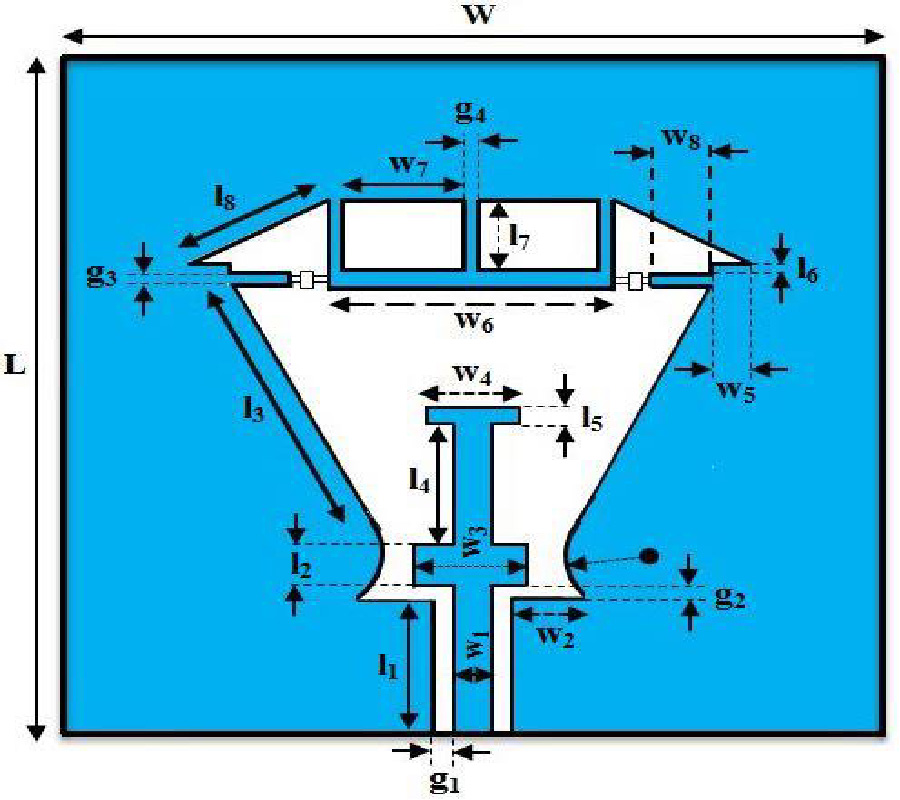
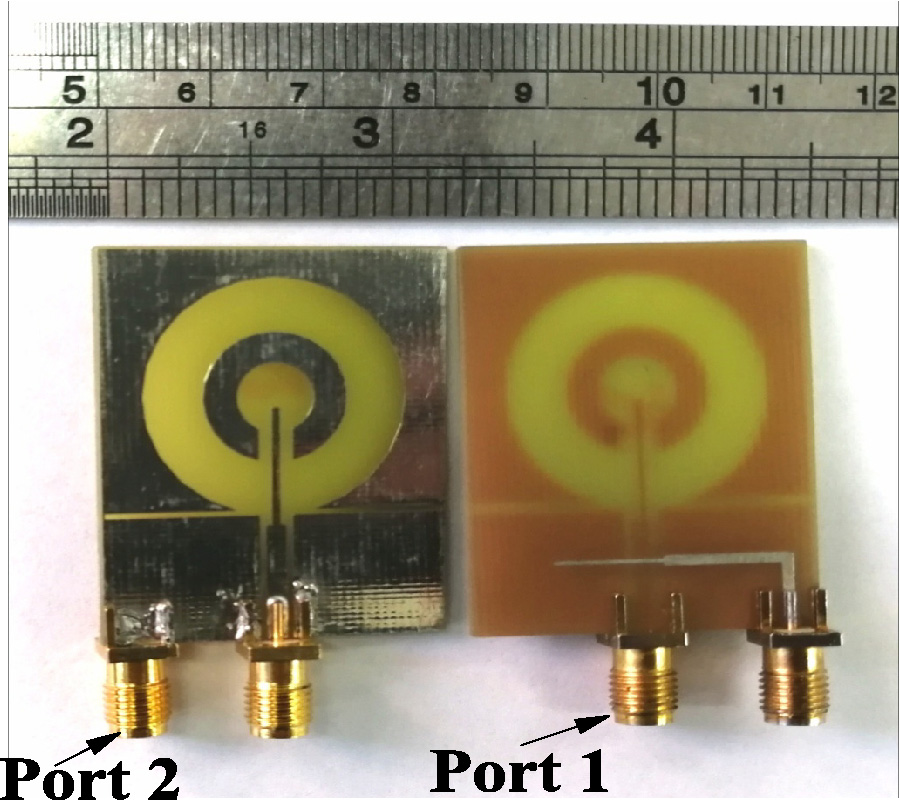
This paper proposes a four-port rectangular monopole antenna for ultra-wideband multiple-input multiple-output (UWB-MIMO) applications. The proposed antenna was designed by using step etching on the ground plane and arrow-shaped slot etching on a radiating patch to enhance bandwidth and improve performances. The homogeneous elements and angular variation techniques were applied to reduce mutual coupling between multiple antenna elements. The structural simulation technique used Computer Simulation Technology (CST) program to analyze the antenna characteristics such as reflection coefficient, group delay, mutual coupling, envelope correlation coefficient, and radiation patterns. The measured results were found to cover a frequency range of 3.1-10.6 GHz for UWB communications. The envelope correlation coefficient for the MIMO system was obtained under 0.001 which is less than the specific parameters of UWB-MIMO antennas. The radiation pattern was bi-directional. Also, the efficiency of the four-port antenna was more than 85.70%.
FOUR-PORT RECTANGULAR MONOPOLE ANTENNA FOR UWB-MIMO APPLICATIONS
2020-03-17
PIER C
Vol. 100, 173-185
Two Port Compact MIMO Antenna for ISM Band Applications
Kanhaiya Sharma and Ganga Prasad Pandey
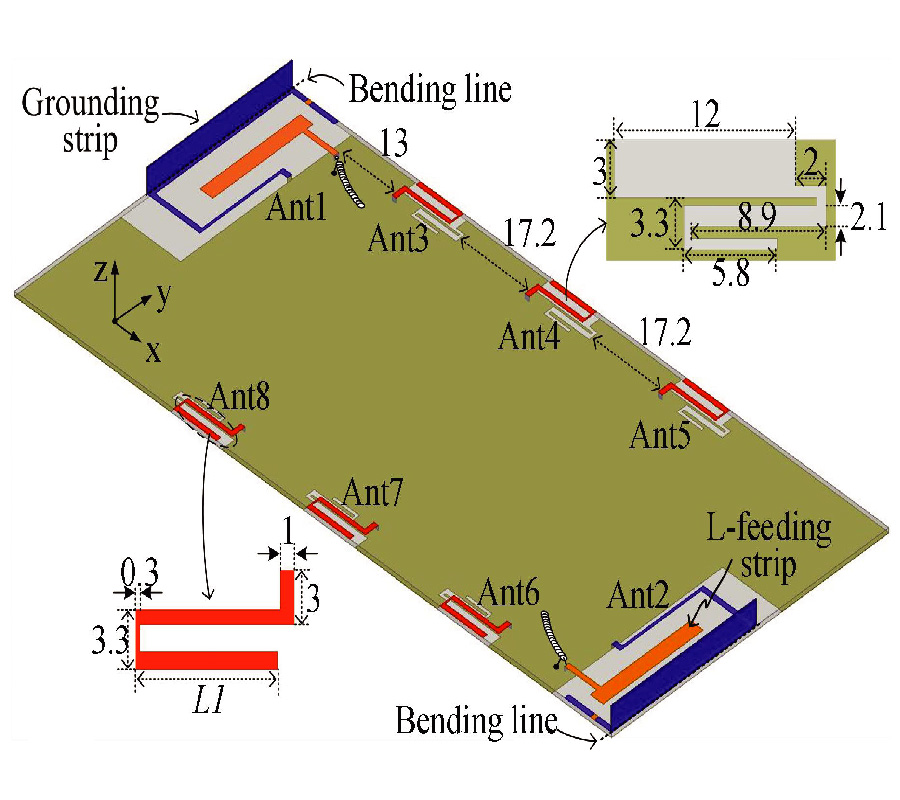
This article presents a compact size and high isolation 2×2, Multi-Input Multi-Output (MIMO) antenna for Industrial Scientific and Medical (ISM) band and 5G lower frequency band of 5G applications. Mutual coupling has been a great challenge in these applications. To improve isolation between elements of 1×2 MIMO antennas, a mushroom-shaped electromagnetic bandgap (EBG) and a fractal shaped EBG have been investigated. The overall size of the proposed antenna is 38.2×95.94×1.6 mm3 with inter-element spacing (edge to edge) of 0.140λ. The proposed antenna has been designed, simulated, fabricated, and tested. The resulting outcome shows that the antenna operates in the band of 2.43-2.50 GHz and radiates in TM10 mode. By using fractal shaped EBG, isolation of -24.67 dB is achieved. Apart from isolation, other performance parameters of the MIMO antenna are verified. The proposed antenna is suitable for weather radar, surface ship radar, satellite communication, and wireless local area network (WLAN) applications.
TWO PORT COMPACT MIMO ANTENNA FOR ISM BAND APPLICATIONS
2020-03-15
PIER
Vol. 167, 31-39
One-Antenna Radiation Pattern Measurement of on-Wafer Antennas in Probe Station Environment
Jianfang Zheng , Juha Ala-Laurinaho , Zachary D. Taylor and Antti V. Räisänen
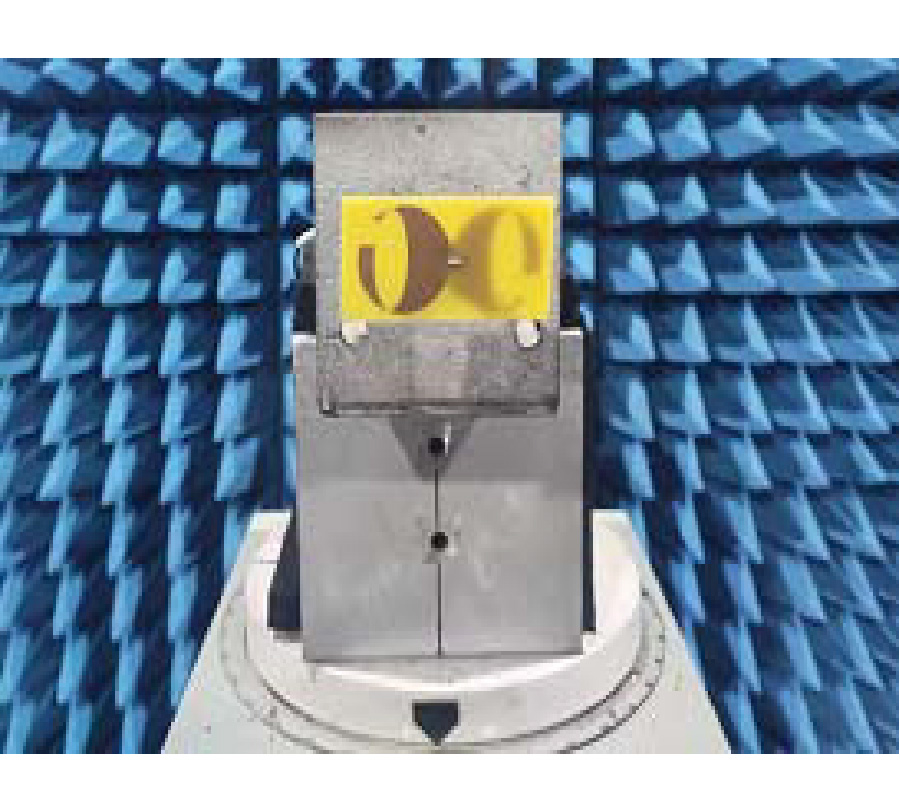
We propose and demonstrate the use of radiation pattern measurement method for on-wafer antennas for the first time that is capable of in-depth antenna characterization with limited equipment. This one-antenna method extracts gain without the need for a second antenna in the on-wafer probe station environment. A combination of reference reflector translation and rotation allows radiation pattern sampling at multiple angles enabling characterization over the relevant solid angle. Several microstrip patch antennas with varying beam directions (0˚, 20˚, and 30˚) were measured with the proposed method over 120˚ in the H-plane with good agreement between simulation and experiment. The method offers a cost-effective and time-efficient solution for probe-fed, on-wafer antenna radiation performance characterization.
ONE-ANTENNA RADIATION PATTERN MEASUREMENT OF ON-WAFER ANTENNAS IN PROBE STATION ENVIRONMENT
2020-03-14
PIER C
Vol. 100, 161-171
Upper WLAN Band Notched UWB Monopole Antenna Using Compact Two via Slot Electromagnetic Band Gap Structure
Priyanka Dalal and Sanjeev Kumar Dhull
Electromagnetic Band Gap (EBG) structures can be employed near the feed line of a UWB monopole antenna, to reject the already existing narrowband radio signals operating within the spectrum of an Ultra Wide Band (UWB) antenna. Multiple EBG structures are required to reject multiple interfering bands. However, since the ground plane of a monopole antenna is limited, there is a need for compact EBG structures. This paper presents the application of a Two Via Slot (TVS) EBG to reject the interfering upper Wireless Local Area (WLAN) band (5.725 GHz-5.825 GHz) from the spectrum of a fork-shaped UWB monopole antenna. The simulated results demonstrate that the TVS EBG gives better performance in terms of higher and sharper Voltage Standing Wave Ratio (VSWR) value at the rejection band while occupying least ground plane area than Conventional Mushroom Type (CMT) EBG, Edge Located Via (ELV) EBG, slotted-patch ELV EBG, and semi-circular EBG. The proposed design is fabricated and measured. The measurement results prove that the antenna successfully achieves wide impedance bandwidth from 3 GHz to 12 GHz while rejecting the frequencies from 5.4 GHz to 5.9 GHz.
UPPER WLAN BAND NOTCHED UWB MONOPOLE ANTENNA USING COMPACT TWO VIA SLOT ELECTROMAGNETIC BAND GAP STRUCTURE
2020-03-13
PIER M
Vol. 90, 137-146
Design of Adaptive Array with E-Shape Slot Radiator for Smart Antenna System
Vidya P. Kodgirwar , Shankar B. Deosarkar and Kalyani Joshi
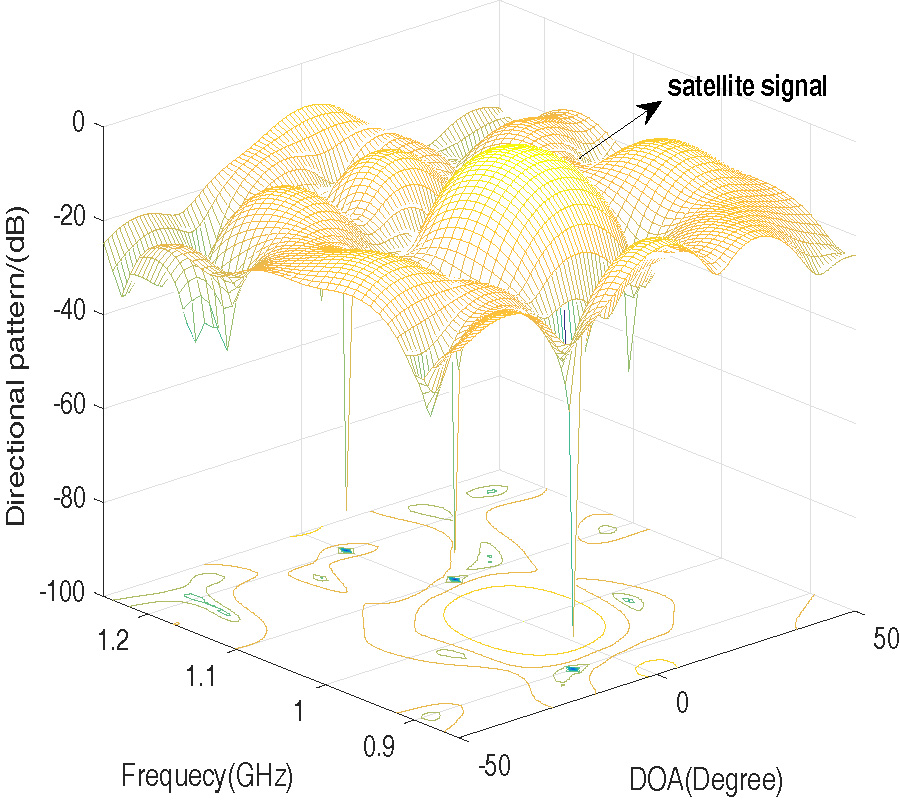
This paper presents the design of an 8-element linear array for Adaptive Antenna applications using the Least Mean Square (LMS) algorithm towards improving the directive gain, beam steering capabilities, half-power beamwidth, sidelobe level, and bandwidth of array. A conventional patch antenna is optimized to operate at 3.6 GHz (5G applications) with two symmetrical slots and Quarter Wave Transformer for feeding, and this design is extended up to 8 elements using CST Microwave Studio parameterization. The Return Loss (S11), Directivity, HPBW and VSWR of the antenna array are observed for the 2, 4, and 8 element adaptive array. The inter-element spacing for resulting eight-element antenna array geometry is optimized to obtain maximum directive gain. This geometry appears promising in improving the directive gain from 7.6 dBi to 15.1 dBi for a single element to eight elements respectively. Further, the LMS algorithm is used to compute the optimal complex weights, considering different angles for the desired User (+45˚ and -45˚) and Interferer (+20˚ and -20˚) during MATLAB simulation, and then these optimal weights are fed to antenna elements using CST for beam steering in a different direction. Maximas in the direction of user and nulls in the direction of interferer are obtained using CST software and found closely matching with MATLAB results.
DESIGN OF ADAPTIVE ARRAY WITH E-SHAPE SLOT RADIATOR FOR SMART ANTENNA SYSTEM
2020-03-13
PIER Letters
Vol. 90, 77-83
Performance Analysis of Near-Field Magnetic Induction Communication in Extreme Environments
Hongzhi Guo
Ultra-reliable and low-power wireless communications are desirable for wireless networking in extreme environments such as underground tunnels, underwater, and soil. Existing wireless technologies using electromagnetic (EM) waves suffer from unpredictable multipath fading and blockage. The recent development of magnetic induction (MI) communication provides a low-power and reliable solution, which demonstrates negligible multipath fading, high penetration efficiency, and low attenuation loss in lossy media. However, existing works neglect the fact that MI communication only demonstrates such advantages in the near-field, beyond which the MI communication converges to electromagnetic wave-based communication and all the aforementioned advantages disappear. This letter develops a magnetic field propagation model to show MI communication's different performances in the near-field and the far-field. We develop rigorous models to capture the multipath fading, the penetration efficiency through inhomogeneous media, and the attenuation loss in lossy media. The results show that although MI communication can provide reasonable signals in the far-field, it only demonstrates negligible multipath fading, high penetration efficiency, and low attenuation loss in the near-field.
PERFORMANCE ANALYSIS OF NEAR-FIELD MAGNETIC INDUCTION COMMUNICATION IN EXTREME ENVIRONMENTS
2020-03-13
PIER Letters
Vol. 90, 69-75
Design of Triband Bandstop Filters Using a Stub-Loaded Stepped-Impedance Resonator
Shujun Yang , Zhigang Xiao and Satilmis Budak
A stub-loaded stepped-impedance resonator (SLSIR) is proposed. Its input impedance is derived, and its resonant conditions are found. First order and second order triband bandstop filters (BSFs) are designed using this resonator. Simulations on both filters show that they generate three attenuation poles at 0.5, 1.2, and 2.1 GHz. The second order filter is also fabricated and characterized using a microwave vector network analyzer. Simulation and measurement results on the second order filter show good correlation.
DESIGN OF TRIBAND BANDSTOP FILTERS USING A STUB-LOADED STEPPED-IMPEDANCE RESONATOR
2020-03-11
PIER M
Vol. 90, 127-135
Optimization of Gimbal Parameters to Improve the Boresight Error Performance of Airborne Radomes
Yash Sanjay Zanwar , Aparna Parameswaran and Hrishikesh Sonalikar
This paper presents the effect of gimbal geometry parameters on the electromagnetic performance of streamlined radome for airborne applications. The work demonstrates that the gimbal position significantly affects the boresight error performance. The optimization of gimbal position is performed, and the resultant boresight error is limited to 1.5 mrad while keeping the insertion loss below 0.25 dB over the entire antenna scan angle range. The analysis of the antenna-radome system is carried out using the 3D ray tracing method. This work shows that the gimbal geometry parameters provide additional degree of freedom for improving radome performance parameters and can be applied to both the gimbal mounted and electronically scanning antennas enclosed by streamlined radomes.
OPTIMIZATION OF GIMBAL PARAMETERS TO IMPROVE THE BORESIGHT ERROR PERFORMANCE OF AIRBORNE RADOMES
2020-03-11
PIER C
Vol. 100, 145-159
Efficient Simulation Tool to Characterize the Radar Cross Section of a Pedestrian in Near Field
Giovanni Manfredi , Paola Russo , Alfredo De Leo and Graziano Cerri
A simulation tool to characterize the radar cross section of a pedestrian in near field is presented in the paper. The tool has been developed in order to predict and optimize the performance of the short-range radar systems employed in autonomous vehicle operations. It is based on an analytical model which joins the modeling of the human body with the theory of the physical optics. Our studies first focused on the implementation of the electromagnetic code where the human body, the radiation properties of the antenna and the scenario to be analyzed have been analytically expressed. Then, the proposed model has been validated in terms of accuracy comparing simulated and experimental data regarding the radar cross section of a metal sphere and of an adult, in the frequency range 23-28 GHz. In the end, an evaluation of the performance in terms of required computer memory and execution time has been carried out, comparing the proposed simulation tool with other numerical computational methods.
EFFICIENT SIMULATION TOOL TO CHARACTERIZE THE RADAR CROSS SECTION OF A PEDESTRIAN IN NEAR FIELD
2020-03-10
PIER M
Vol. 90, 117-125
Design and Analysis of a Compact and Excellent Out of Band Rejection E-CRLH Inspired Bandpass Filter
Mahmoud Abdelrahman Abdalla , Dilip Kumar Choudhary and Raghvendra Kumar Chaudhary
This paper introduces the design and analysis of a compact bandpass with sharp attenuation. The filter topology employs three different cells of a bisected-Π/Π configuration of a negative refractive index metamaterial transmission line. The filter centre frequency is 3.65 GHz, and its 3 dB cutoff frequencies are 2.55 GHz and 4.6 GHz (57% fractional bandwidth). The filter attenuation increases to 20 dB in only 100 MHz (at 4.7 GHz). Moreover, the filter has only 0.2 dB insertion loss within the passband. The filter stopband is characterized with typical flat with 0.2 dB return loss within the stopband (4.7 GHz-5.75 GHz) and very close to 20 dB insertion loss. Moreover, the filter has two frequency independent designed transmission zeros within this stopband. Along with previous specifications, the filter size is only 0.22λg × 0.20λg (12 × 11 mm2) at centre frequency. The filter performance has been validated through circuit model, electromagnetic simulation, and experimental measurements.
DESIGN AND ANALYSIS OF A COMPACT AND EXCELLENT OUT OF BAND REJECTION E-CRLH INSPIRED BANDPASS FILTER
2020-03-10
PIER B
Vol. 86, 159-176
Monitoring of Multicell Converter and DC Motor
Nabila Adjissi and Belkacem Sait
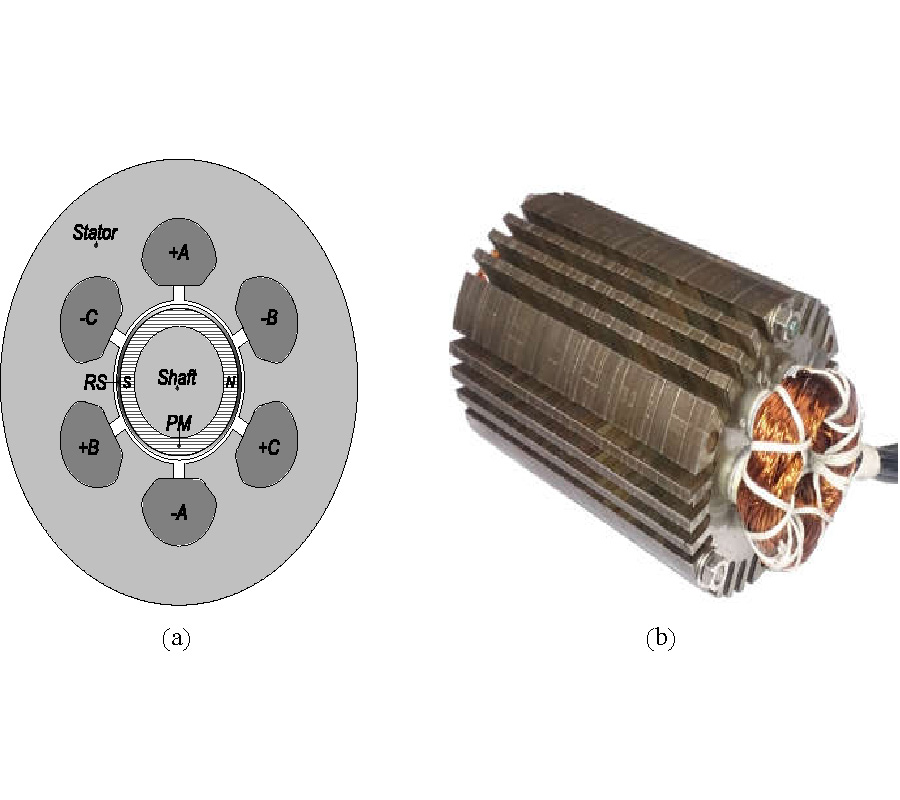
This paper presents a hybrid sliding mode control of a multicell power converter. It takes into account the hybrid aspect of the conversion structure which includes the converter continuous and discrete states The idea is based on using a hybrid control and an observer-type sliding mode to generate residuals from the observation errors of the system by including diferent types of faults in the transition between modes. The case when a DC motor is coupled to the multicell converter is also considered. In this case, it is shown that under certain admissible assumptions, the voltages across the capacitors and the speed of the motor can be acceptably estimated. The simulation results are presented at the end to illustrate the performance of the proposed approach using stateflaw in sumulink (matlab). The developed method is illustrated in an example of the DC motor supply via a three cell converter which is a real example of an SDH characterized by continuous and discrete variables.
MONITORING OF MULTICELL CONVERTER AND DC MOTOR
2020-03-10
PIER C
Vol. 100, 133-143
Ultra-Compact Balanced Multiband Fully Reconfigurable Bandstop Filter
Dubari Borah and Thottam S. Kalkur
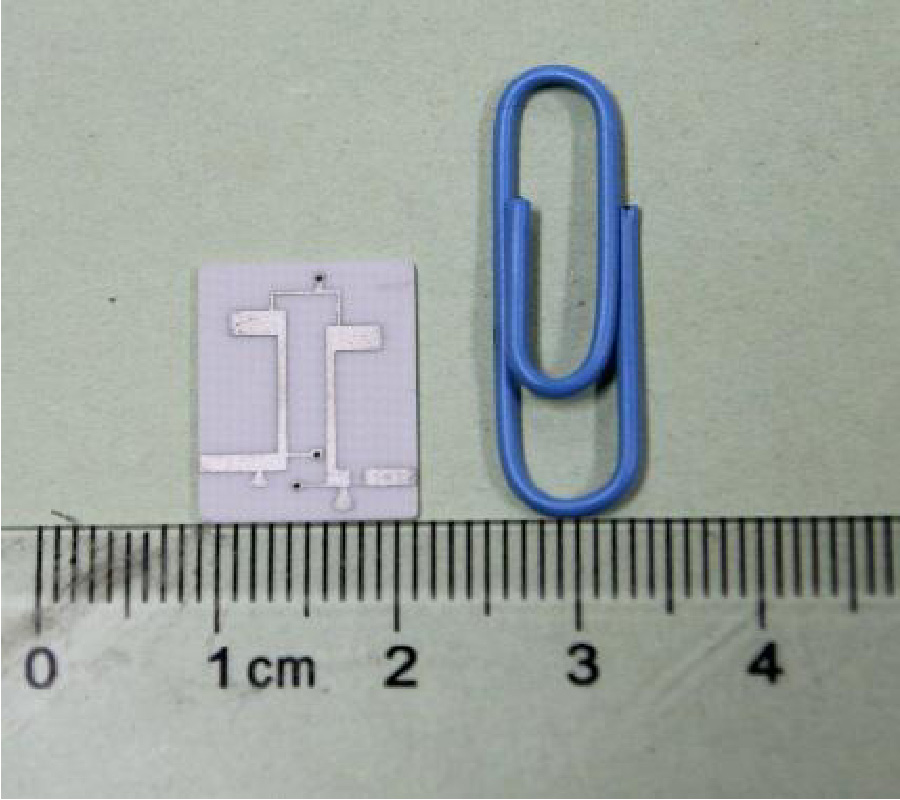
This paper introduces a balanced (differential) multiband reconfigurable (tunable) bandstop filter (BSF) using all lumped elements. The main features of the design include its ultra-compact size as well as flexibility to control any frequency band independently in terms of both center frequency and absolute bandwidth (ABW). In the proposed structure, the corresponding non-resonating nodes (NRN) of the symmetrical bisections are connected to N number of LC π-circuits (N-band cell) through capacitors. Again, in each symmetrical bisection, K number of NRNs are series cascaded through LC π-circuits. This results in a Kth order N-band stopband (notch) response in differential mode (DM) operation whereas provides a passband response when excited by a common mode (CM) signal. Reconfiguration of any DM stopband is obtained by using tunable capacitors for the corresponding LC π-circuit in each N-band cell and also, for its coupling capacitors to the NRNs. To validate the proposed topology, a dualband differential tunable BSF is designed and fabricated where both DM stopbands are controlled independently in the range of 1.16 GHz-1.32 GHz. Also, the bandwidth of each band is varied independently by 20-50 MHz without affecting the other band. At any tuning state, DM stopband rejection for each band is found to be ≥19 dB, resulting in a minimum CMRR value of 19 dB. The fabricated prototype occupies an area of 0.13λg×0.04λg (21 mm×7 mm) where λg is the guided wavelength at the center frequency of the entire spectral range, and the experimental results show a good agreement with the simulation results.
ULTRA-COMPACT BALANCED MULTIBAND FULLY RECONFIGURABLE BANDSTOP FILTER
2020-03-10
PIER C
Vol. 100, 121-131
Spectral Signature Based Chipless RFID Tag Loaded by Meandered Line Multi-Resonator
Palaniyappan Prabavathi , Sundaresan Subha Rani and Ganesan Meena
A meandered line multi-resonator design is proposed for a chipless Radio Frequency Identification (RFID) tag. The tag is equipped with a set of identical resonant elements and two orthogonally polarized monopole ultrawide band (M-UWB) antennas. The proposed multi-resonator design is realized on an FR-4 substrate (εr = 4.4; tanδ = 0.01) in a surface area of 13 x 17 mm2, occupying a coding density of 4.52 bits/cm2 by encoding 10 bits of data. The bit is encoded using absence/presence coding and frequency shift coding technique. The data can be read and transmitted from the multi-resonator structure through the orthogonally polarized M-UWB antennas operating in the frequency range of 2 GHz to 4.5 GHz. The span of the meandered line multi-resonator design is 13 mm x 17 mm. The tag is designed using ADS software and tested using vector network analyzer (VNA).
SPECTRAL SIGNATURE BASED CHIPLESS RFID TAG LOADED BY MEANDERED LINE MULTI-RESONATOR
2020-03-09
PIER Letters
Vol. 90, 61-67
Towards Embedded Radcom-Sensors in Wind Turbine Blades: Preliminary Numerical and Experimental Studies
Jonas Simon , Jochen Moll , Viktor Krozer , Thomas Kurin , Fabian Lurz , Robert Weigel , Stefan Krause , Oliver Bagemiel , Andreas Nuber and Vadim Issakov
This paper presents a numerical study on the application of radar and communication (RadCom) sensor nodes operating in the frequency band from 57-64 GHz. The sensor nodes are embedded in the laminate of wind turbine blades, enable a quality inspection directly after rotor blade manufacturing as well as a structural health monitoring (SHM) throughout the service life of the blade. Given by a lack of dielectric properties for typical rotor blade materials, we have performed experimental studies on material characterization including glass fibre composites, balsa wood, infusion glue, etc. This material database serves as input for wave propagation simulations in a full scale 3D rotor blade model. The analysis also includes a parametric study on path losses as well as an optimal sensor placement strategy.
TOWARDS EMBEDDED RADCOM-SENSORS IN WIND TURBINE BLADES: PRELIMINARY NUMERICAL AND EXPERIMENTAL STUDIES
2020-03-09
PIER B
Vol. 87, 1-17
Optimizing Heating Efficiency of Hyperthermia: Specific Loss Power of Magnetic Sphere Composed of Superparamagnetic Nanoparticles
Malka N. Halgamuge and Tao Song
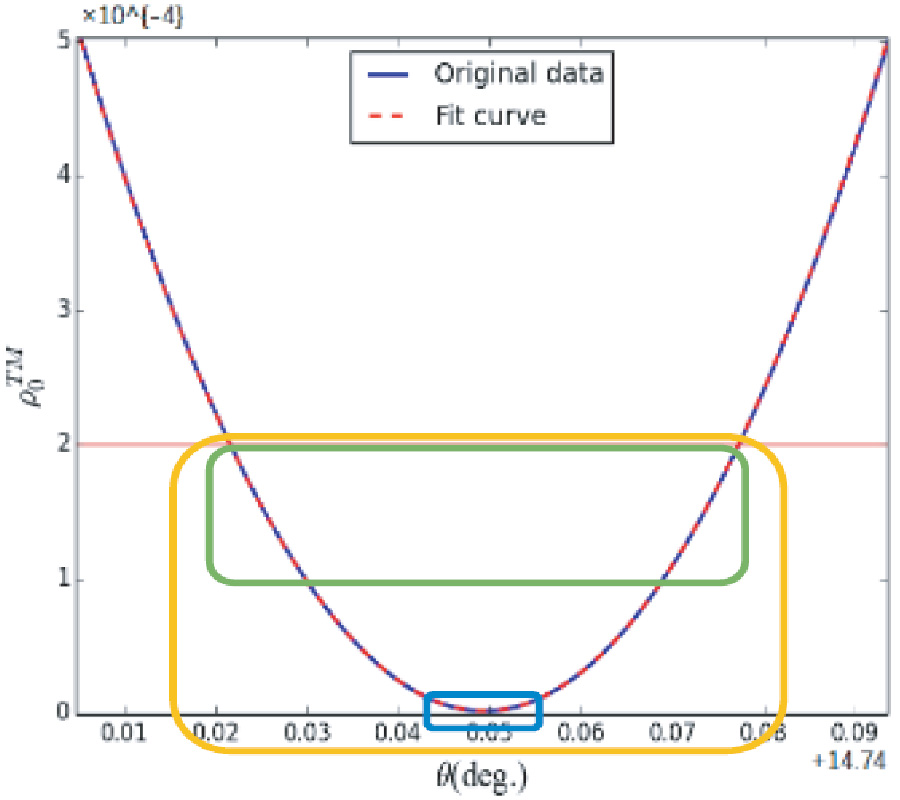
Magnetic nanoparticle (MNP) based thermal therapies have shown importance in clinical applications. However, it lacks a compromise between its robustness and limitations. We developed theoretical strategies to enhance the heating efficiency, which could be utilized in thermal therapies and calculated parameter dependence for superparamagnetic MNPs (approximative ellipsoid-shaped) within a sphere-shaped ball. Then we calculated specific loss power (SLP) for magnetic particles in a magnetic ball. The dependency of features of the nanoparticles (such as mean particle size, a number of particles, frequency and the amplitude of the exposed field, relaxation time, and volume gap between particles and a sphere-shaped ball) on the SLP or the heating effect in superparamagnetic MNPs was analyzed. In this study, optimal parameter values were calculated using Kneedle Algorithm as the optimization technique to represent the accurate heating efficiency. The influence of a number of particles in a sphere-shaped ball shows that SLP of magnetic particles increases with the increasing number of particles (N); however, after N = 10 particles, the SLP increment is insignificant. The most remarkable result arising from this analysis is that when particles are more closer together (less volume gap of a sphere-shaped ball), high SLP is found for the same number of particles. This model also predicts that the frequency dependency on the SLP is negligible when the frequency is higher than 10 kHz depending on the size of a sphere-shaped ball and nanoparticle parameters. This analysis has shown that the SLP of MNPs in a sphere-shaped ball strongly depends on magnetic parameters and properties of the particles. In brief, we have demonstrated, for the first time, impact on SLP of the accumulation of ellipsoid-shaped superparamagnetic nanoparticles into a sphere-shaped ball. This finding has essential suggestions for developing links between heating properties with loose aggregate and dense aggregate scenarios in the superparamagnetic condition.
OPTIMIZING HEATING EFFICIENCY OF HYPERTHERMIA: SPECIFIC LOSS POWER OF MAGNETIC SPHERE COMPOSED OF SUPERPARAMAGNETIC NANOPARTICLES