Search Results(13790)

2019-12-08
PIER Letters
Vol. 88, 59-65
Microstrip Diplexer with Π-Shaped Matching Circuit
Aleksandr Leksikov , Alexey Mikhailovich Serzhantov , Iliya Valerievich Govorun , Aleksey Olegovich Afonin , Andrey Vitalievich Ugryumov and Andrey Leksikov
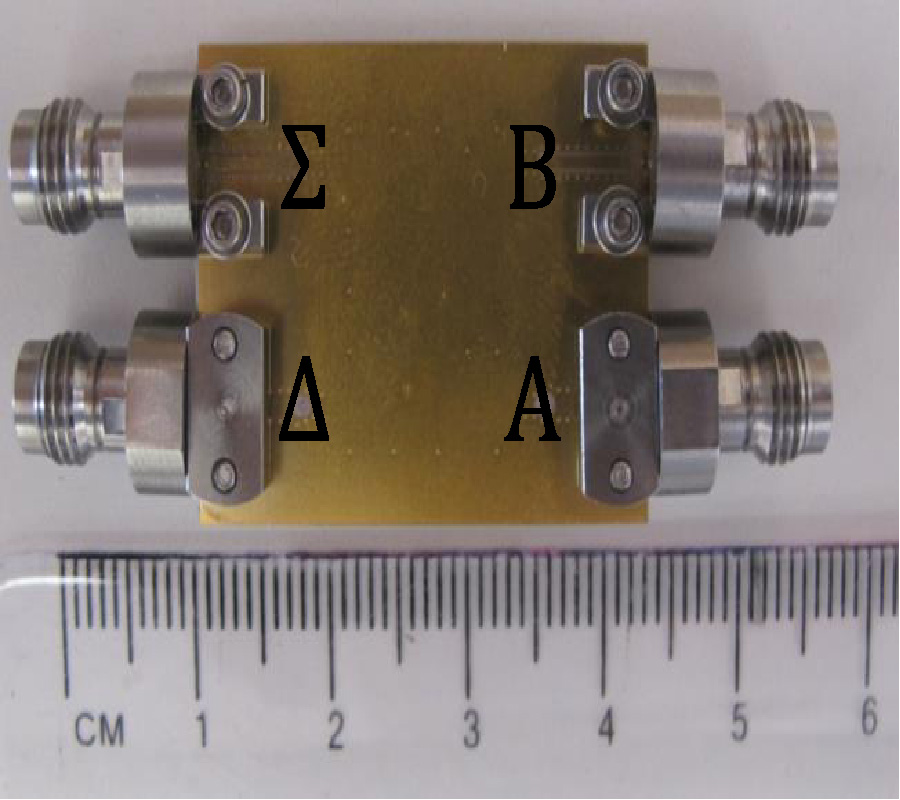
We propose a new method to match diplexer channels with a common port in which a π-shaped strip conductor is used as a matching circuit. The applicability of the method is illustrated by simulating and fabricating a microstrip diplexer for GPS/GLONASS applications. The central frequencies of the channels are 1.234 GHz and 1.597 GHz, and their fractional bandwidths are 6.8% and 7.3%, respectively; minimum insertion losses are 1.05 dB and 1.08 dB. The main advantage of the diplexer is its compact size: 16.8 mm × 11.0 mm × 6.4 mm in housing. Using 1D models and a quasi-TEM approach, the frequency-dependent coupling coefficients between the matching circuit and input resonators of the channels are calculated, and the influence of the matching circuit's geometrical parameters on its coupling with diplexer channels is studied.
MICROSTRIP DIPLEXER WITH Π-SHAPED MATCHING CIRCUIT
2019-12-07
PIER C
Vol. 97, 177-188
Effect of Losses in Printed Rectangular Coils for Compact Wireless Power Transfer Systems
Sarawuth Chaimool , Chawalit Rakluea , Prayoot Akkaraekthalin and Yan Zhao
Development and optimization of printed spiral coils have significant impacts on the efficiency and operating range for magnetic resonant wireless power transfer (WPT) applications. In this paper, the effects of different material losses (substrate and conducting coating) of printed coils are considered and experimentally studied in this paper. For the purposes of comparison and finding the dominated losses, lossy loaded capacitors with equivalent series resistances have also been investigated. A four-coil system with an external capacitor-loaded (ECL) magnetic resonant WPT system is considered, and a self-resonant coil is designed and compared. Results show that the ECL resonant coil has higher efficiency than the self-resonant coil with the same size and distance between the transmitting and receiving coils. Through observing the simulated results and analyzing experimental data, it can be concluded that the dominant cause of the decrease in efficiency of this ECL-WPT system is the strip resistive loss of coil of 57% and the ohmic loss in ECL of 37%. Meanwhile, the substrate loss significantly impacts on the efficiency of the self resonant coil. The overall measured efficiency is about 66% of the ECL coil at a distance of 50 mm when the above loss factors are considered. The measured results are in good agreement with the analysis and simulations.
EFFECT OF LOSSES IN PRINTED RECTANGULAR COILS FOR COMPACT WIRELESS POWER TRANSFER SYSTEMS
2019-12-07
PIER Letters
Vol. 88, 51-57
A Simple Numerical Solution Method for TM Scattering by Conducting Cylinders Partially Buried in a Dielectric Half-Space
Cengiz Ozzaim
The scattering of a transverse magnetic plane wave by a conducting cylinder partially buried in a dielectric half-space is solved by an aperture method. A system of coupled integral equations for the current induced on the cylinder and the scattered electric field at the dielectric interface are formulated from field equivalence principles. The scattered tangential electric field at interface is negligible at some distance from the cylinder location. Hence, for a sufficiently wide interface truncation, the coupled integral equations can be easily solved numerically by the Method of Moments. Data for the cylinder current, the scattered electric field at interface and the far-zone field are shown for cases of interest.
A SIMPLE NUMERICAL SOLUTION METHOD FOR TM SCATTERING BY CONDUCTING CYLINDERS PARTIALLY BURIED IN A DIELECTRIC HALF-SPACE
2019-12-07
PIER M
Vol. 86, 1-16
Energy Distribution Characteristics of Magnetically Coupled Resonant Wireless Power Transfer Systems Considering Four Basic Reactive Power Compensations
Wanlu Li , Quandi Wang , Jianwei Kang and Yingcong Wang
To realize the attractive Wifi-type magnetically coupled resonant (MCR) wireless power transfer (WPT) techniques, not only the optimization of power and efficiency but also the spatial energy distribution characteristics (EDCs) should be considered. In this paper, the EDCs of three two-coil systems including an alignment system and systems with an angular and lateral misalignment are explored by the Poynting vector, and unified expressions of the active power density (APD) and reactive power density (RPD) are provided. Also, it is found that the APD is mainly distributed in the transmission path, and the RPD is mainly composed of three parts. When the phase difference between the currents in the transmitter and receiver tends to be π/2, the APD increases, and RPD decreases. The active power through an arbitrary infinite plane which intersects the transmission path but does not intersect the coupler is found equal to the transferred active power of the system, which is consistent with the results obtained by the circuit theory. Furthermore, the directionality of the APD is determined, and the APD is utilized to explain the coupling impedance in circuit theory. Then four basic reactive power compensations are considered, and it is recommended to use heavy load for the system with parallel compensation on the secondary side. Finally, the theoretical analysis is verified by simulation and experiment. This paper provides a significant reference for the analysis and design of the MCR WPT system and the improvement of the electromagnetic environment around the system.
ENERGY DISTRIBUTION CHARACTERISTICS OF MAGNETICALLY COUPLED RESONANT WIRELESS POWER TRANSFER SYSTEMS CONSIDERING FOUR BASIC REACTIVE POWER COMPENSATIONS
2019-12-06
PIER C
Vol. 97, 163-176
Design and Analysis of Microstrip Patch Antenna for WLAN and Vehicular Communication
Mandar Padmakar Joshi and Vitthal J. Gond
This paper presents the design and analysis of a dual-band circularly polarized (CP) microstrip patch antenna for WLAN and vehicular communication applications. In this antenna, an L-shaped slot is cut, and a square parasitic patch with diagonally opposite corners cut is loaded in offset beneath to monopole antenna to realize dual band CP response with wideband response. The antenna exhibits dual band CP response at 2.45 GHz (WLAN) and 5.9 GHz (Vehicular) having 20.45% and 15.73% of simulated impedance bandwidth and 6.84% and 14.16% of axial ratio bandwidth for WLAN and Vehicular band respectively. The measured impedance bandwidth (S11 < -10 dB) is 19.43% and 12.73% for WLAN and vehicular band respectively. The antenna design is simple and fabricated using an economical glass epoxy FR4 substrate with size of 45 × 40 mm2. The measured results are found in good agreement with simulated results. The proposed antenna is analyzed using transmission line equivalent circuits, and the details are presented and discussed.
DESIGN AND ANALYSIS OF MICROSTRIP PATCH ANTENNA FOR WLAN AND VEHICULAR COMMUNICATION
2019-12-06
PIER C
Vol. 97, 151-162
Recursive Least Squares Dictionary Learning Algorithm for Electrical Impedance Tomography
Xiuyan Li , Jingwan Zhang , Jianming Wang , Qi Wang and Xiaojie Duan
Electrical impedance tomography (EIT) is a technique for reconstructing conductivity distribution by injecting currents at the boundary of a subject and measuring the resulting changes in voltage. Sparse reconstruction can effectively reduce the noise and artifacts of reconstructed images and maintain edge information. The effective selection of sparse dictionary is the key to accurate sparse reconstruction. The EIT image can be efficiently reconstructed with adaptive dictionary learning, which is an iterative reconstruction algorithm by alternating the process of image reconstruction and dictionary learning. However, image accuracy and convergence rate depend on the initial dictionary, which was not given full consideration in previous studies. This leads to the low accuracy of image reconstruction model. In this paper, Recursive Least Squares Dictionary Learning Algorithm (RLS-DLA) is used to learn the initial dictionary for dictionary learning of sparse EIT reconstruction. Both simulated and experimental results indicate that the improved dictionary learning method not only improves the quality of reconstruction but also accelerates the convergence.
RECURSIVE LEAST SQUARES DICTIONARY LEARNING ALGORITHM FOR ELECTRICAL IMPEDANCE TOMOGRAPHY
2019-12-06
PIER Letters
Vol. 88, 43-50
A Novel Dual-Frequency Omnidirectional Antenna with Transmission Line Resonators Loading
Honglin Zhang , Dong Chen , Ying Yu and Chunlan Zhao
A novel dual-frequency antenna with horizontally polarized (HP) omnidirectional radiation is presented in this paper. The antenna consists of four printed arched dipoles, four planar baluns and a four-way power splitter. The balun as well as the power splitter works as the feed network. By loading a transmission line resonator (TLR) as the near-field coupling parasitic element, the dual-frequency characteristics can be realized. After the design principle is stated, a sample antenna is manufactured and measured to prove the predicted performance of the proposed antenna. The measured results agree well with the predicted ones.
A NOVEL DUAL-FREQUENCY OMNIDIRECTIONAL ANTENNA WITH TRANSMISSION LINE RESONATORS LOADING
2019-12-06
PIER M
Vol. 87, 73-82
Joint Trajectories and Power Allocation Design for Dual UAV-Enabled Secrecy SWIPT Networks
Feng Zhou , Rugang Wang and Jinhong Bian
In this paper, a dual unmanned aerial vehicle (UAV)-enabled secure communication system with simultaneous wireless and information and power transfer (SWIPT) has been investigated. Specifically, assuming that the energy receivers (ERs) may be potential eavesdroppers (Eves), we aim to maximize the minimum secrecy rate among multiply legitimate receivers (LRs) within each period by jointly adjusting the UAVs' trajectories and power control (PC). Since the resulting optimization problem is very difficult to solve due to highly non-convex objective and constraints, we equivalently transform it into a more tractable problem via successive convex approximation (SCA) and constrained concave-convex procedure (CCCP), then propose an iterative method. The simulation results show that the proposed joint optimization algorithm achieves significantly better performance than the conventional algorithms.
JOINT TRAJECTORIES AND POWER ALLOCATION DESIGN FOR DUAL UAV-ENABLED SECRECY SWIPT NETWORKS
2019-12-05
PIER C
Vol. 97, 139-150
Relay Selection in Energy Harvesting Aided Mixed RF/FSO System with Transmit Antenna Selection Over Atmospheric Turbulence and Pointing Error
Kehinde Oluwasesan Odeyemi and Pius Adewale Owolawi
In this paper, the performance of relay selection in an energy harvesting aided mixed radio frequency (RF)/free space optical (FSO) system with transmit antenna selection (TAS) over atmospheric turbulence and pointing error is presented. The source of multiple antennas employs TAS to send information to the destination via multiple relay nodes. Also, the energy-limited source uses selection combining technique to harvest energy from multiple relay nodes. As a result, all the relay nodes act as a wireless power transmitting node as well as data receiving node. Moreover, it assumes that the RF/FSO links follow Rayleigh/Malaga (M) distributions with non-zero boresight (NB) pointing error on the FSO link. Therefore, the system outage probability closed-form expression is then derived which is utilized to obtain the system throughput. In addition, the results demonstrate the significant effect of atmospheric turbulence and NB pointing error on the system performance with multiple relays, and source transmit antenna offers the system better performance. The accuracy of the derived expressions is thus validated through Monte Carlo simulations.
RELAY SELECTION IN ENERGY HARVESTING AIDED MIXED RF/FSO SYSTEM WITH TRANSMIT ANTENNA SELECTION OVER ATMOSPHERIC TURBULENCE AND POINTING ERROR
2019-12-05
PIER Letters
Vol. 88, 37-42
Wideband Ultraminiaturised-Element Frequency Selective Surface Based on Interlocked 2.5-Dimensional Structures
Mingqian Jia , Xiaoxiang He , Yang Yang , Boyu Hua , Wenxiu Hu and Xiangyu Qian
An approach to synthesizing wideband ultraminiaturised-element frequency selective surface (UMEFSS) based on interlocked 2.5-dimensional (2.5D) structures is proposed. Ultra-miniaturisation and wide stopband response can be realized due to compactly staggered arrangement of 2.5D elements. The element size of the proposed UMEFSS is reduced to 0.033λ0×0.033λ0, and fractional bandwidth attains 99.8%. Stable response is achieved under oblique incidence at different polarisations. The results show a satisfactory consistency between full-wave simulations and experiments.
WIDEBAND ULTRAMINIATURISED-ELEMENT FREQUENCY SELECTIVE SURFACE BASED ON INTERLOCKED 2.5-DIMENSIONAL STRUCTURES
2019-12-05
PIER Letters
Vol. 88, 29-36
A Compact Circularly Polarized Microstrip Ring Antenna Using a Slotted Ground for GNSS Applications
Jiade Yuan and Yujie Li
A compact circularly polarized microstrip ring antenna is presented for Global Navigation Satellite systems (GNSS) application in this paper. The antenna consists of a ring-shaped slotted ground and a radiation patch which is fed by a T-like coupling feedline. The radiation patch is a square ring strip embedded within two inverted L-shaped strips and a rectangular strip. The overall size of the proposed antenna is 0.38×0.38×0.038λg3g is the guide wavelength at the frequency of 1575 MHz). The measured -15 dB |S11| bandwidth, 3 dB axial ratio (AR) bandwidth, and gain bandwidth of larger than 5 dBi are in the frequency range of 1552-1623 MHz, which can fully cover the operating frequency band of BDS B1, GPS L1, and GLONASS L1.
A COMPACT CIRCULARLY POLARIZED MICROSTRIP RING ANTENNA USING A SLOTTED GROUND FOR GNSS APPLICATIONS
2019-12-04
PIER C
Vol. 97, 123-137
Estimation of Three-Phase Currents in Overhead Power Line Conductors Using Numerical Model of Magnetic Fields
Prasad Shrawane and Tarlochan Sidhu
This paper proposes a new method of calculating currents in three-phase overhead medium and high voltage networks by measuring the magnetic fields generated in the close vicinity of the power line conductors. A mathematical model for magnetic fields is presented in the form of second order partial differential equations that are derived from Maxwell's equation. The analysis of the magnetic field surrounding overhead conductors is performed using Finite Element Method. The least squares method is used for the formulation of equations for estimating currents from the measured magnetic fields for each phase. A computational program for detail analysis is developed in MATLAB. A plan for measurement points is developed for triangular arrangement of conductors. Field measurement with increased number of measuring points gives better results than those with the single points.
ESTIMATION OF THREE-PHASE CURRENTS IN OVERHEAD POWER LINE CONDUCTORS USING NUMERICAL MODEL OF MAGNETIC FIELDS
2019-12-04
PIER M
Vol. 87, 63-72
An L-Band Bandpass Filter with Narrow Bandwidth and Miniature Based on LTCC Technology
Cheng Tan , Zhongjun Yu and Chunshuang Xie
In this paper, in order to meet the requirements for miniaturizing a microwave frequency conversion module, an L-band filter with narrow band and high out-of-band rejection is designed based on LTCC technology. The values of each element in the simplified schematic diagram are used with Chebyshev type function being the prototype, and the shapes and layout of the elements are reasonably designed for effectively utilizing the electromagnetic coupling effect inside the structure. The actually processed filter has a bandwidth of 20 MHz, and its out-of-band rejection reaches 39 dB and 42 dB at 1 GHz and 1.6 GHz, respectively.
AN L-BAND BANDPASS FILTER WITH NARROW BANDWIDTH AND MINIATURE BASED ON LTCC TECHNOLOGY
2019-12-04
PIER M
Vol. 87, 53-62
Radiation from Reflector Antenna of Finite Thickness and Conductivity in Resonant Scattering Band
Oleg Sukharevsky , Sergey V. Nechitaylo , Valery Orlenko , Vitaly Vasylets and Serhy Fryz
A method is proposed for calculating the radiation characteristics of a reflector antenna in the resonant wavelength range. The method uses the solution of the problem of electromagnetic field scattering from a well-conducting non-closed screen of finite thickness. This problem is solved by an E-field integral equation and on approximate boundary conditions by Leontovich, which are applied onto a surface of a well-conducting screen.
RADIATION FROM REFLECTOR ANTENNA OF FINITE THICKNESS AND CONDUCTIVITY IN RESONANT SCATTERING BAND
2019-12-04
PIER M
Vol. 87, 43-52
Volume Fraction Extraction for Binary Mixture of Ethanol and Methanol Using Optimized Microwave Microfluidic Sensor
Tahir Ejaz , Abdul Sami , Muhammad Ali Mughal and Hamood Ur Rahman
An optimized microfluidic sensor for extracting volume ratio of binary mixture comprising of ethanol and methanol using electrical resonance technique has been presented in this work. In order to detect small changes in composition of binary mixture, a split-ring resonator structure with enhanced sensitivity was designed to operate around 2.5 GHz. A resonator was designed using HFSS, which possessed enhanced sensitivity. A novel algorithm for optimization was devised for binary mixture of the two liquids. The resonator was fabricated and tested for validation of results. Samples of ethanol and methanol mixture in different volume ratios were prepared and filled in micro-capillary tubes. These tubes were placed inside the resonant structure to perturb electric field. Variations in resonant properties due to change in volume ratio of liquid mixtures were analyzed. Resonant frequency, s-parameters and quality factor of structure were measured. It was observed that change in volume fraction as small as 1/100 resulted a shift of 0.25 MHz in resonant frequency (relatively high level of sensitivity). Measured results were utilized by mathematical model to compute volume fraction of liquid in these mixtures.
VOLUME FRACTION EXTRACTION FOR BINARY MIXTURE OF ETHANOL AND METHANOL USING OPTIMIZED MICROWAVE MICROFLUIDIC SENSOR
2019-12-04
PIER B
Vol. 85, 181-199
Analysis of the Imaging Algorithms for Shape Detection and Shape Identification of a Target Using through-the-Wall Imaging System
Akhilendra Pratap Singh , Smrity Dwivedi and Pradip Kumar Jain
Through-the-Wall Imaging systems are a promising method for on-line applications,especially in disaster areas, where victims are buried under collapsed walls. These applications require such systems to identify the shape of thetarget. The foremost step while performing the task of shape recognition of stationary targets behind a wall is to first detect the target position, its approximate shape and size, and then, subsequent processing of these images with the use of signal processing techniques for the shape recognition of targets. For determining highly accurate information about target location and its approximate shape, a high-resolution image of the target is required. In literature, various imaging algorithms have been reported, some of which are back projection, delay sum, and frequency-wavenumber imaging algorithm. However, the use of these algorithms for shape detection of the target has not been explored so far. Therefore, it becomes essential to explore the use of these algorithms on TWI data to select an effective imaging algorithm for detecting approximate shape and size of the target. For this purpose, an experiment has been performed. The performances of these imaging algorithms have been analyzed and evaluated. The detected target images do not correspond to the actual shape and size of targets; therefore, a novel methodology using an artificial neural network has been presented for predicting the actual shape of the target. From the experimental data, the retrieved result of shape has been found in good agreement with the target original shape.
ANALYSIS OF THE IMAGING ALGORITHMS FOR SHAPE DETECTION AND SHAPE IDENTIFICATION OF A TARGET USING THROUGH-THE-WALL IMAGING SYSTEM
2019-12-01
PIER Letters
Vol. 88, 21-28
A Sub-Nyquist Sampling Digital Receiver System Based on Array Compression
Tao Chen , Xutian Han and Yongzhi Yu
In order to obtain the carrier frequency (CF) and direction-of-arrival (DOA) estimation, a uniform linear array (ULA)-based modulated wideband converter (MWC) discrete compressed sampling (CS) digital receiver system is proposed. It can achieve sub-Nyquist sampling, save the storage space and specially obtain the CF and DOA estimation by processing the CS data directly. However, the existing method for this system needs more branches to get better performance. In this paper, a compressed uniform linear array (CULA)-based MWC discrete CS digital receiver system is proposed. First, a compression matrix is used to reduce the number of branches behind the antennas. Then, the MWC discrete CS structure is used to reduce the data volume. Finally, the multiple signal classification (MUSIC) algorithm is used to jointly estimate the CF and DOA by processing the CS data directly. The simulation results validate the effectiveness of the proposed system and the proposed method for the joint CF and DOA estimation.
A SUB-NYQUIST SAMPLING DIGITAL RECEIVER SYSTEM BASED ON ARRAY COMPRESSION
2019-11-30
PIER Letters
Vol. 88, 15-20
Wideband Low-Profile Dual-Polarized Antenna with AMC Reflector
Alexander P. Volkov , Vitalii V. Kakshin , Igor Yu. Ryzhov , Kirill V. Kozlov and Alexander Yu. Grinev
A wideband low-profile dual-polarized antenna based on the use of an artificial magnetic conductor (AMC) reflector is proposed. The AMC reflector consists of 9×9 square patches. In order to obtain wide impedance and gain bandwidths, the antenna consists of four printed dipoles: two dipoles are used as a radiator of horizontal polarization, and two dipoles are used as a radiator of vertical polarization. A simple excitation scheme without balun is used for dipoles feeding. A low profile of 0.068λL is realized (λL is the wavelength at the lowest operating frequency). Simulation and measurement results show that the proposed antenna has a 40% impedance bandwidth, a 40% 3-dB gain bandwidth, and a port isolation of less than -30 dB.
WIDEBAND LOW-PROFILE DUAL-POLARIZED ANTENNA WITH AMC REFLECTOR
2019-11-30
PIER M
Vol. 87, 33-42
Polarization-Independent Wide-Angle Terahertz Metamaterial Absorber: Design, Fabrication and Characterization
Khwanchai Tantiwanichapan , Anucha Ruangphanit , Wittawat Yamwong , Rattanawan Meananeatra , Arckom Srihapat , Jia Yi Chia , Napat Cota , Kiattiwut Prasertsuk , Patharakorn Rattanawan , Chayut Thanapirom , Rungroj Jintamethasawat , Kittipong Kasamsook and Nipapan Klunngien
A metamaterial absorber in the Terahertz (THz) range is simulated and experimentally investigated in this work. The desired absorption frequency, efficiency and bandwidth can be tuned by changing the metal and dielectric geometric parameters. An absorption greater than 85% for TM polarized light with an incident angle up to 70˚ at any azimuthal direction is observed in a circular disc THz metamaterial structure. By adjusting the dielectric silicon dioxide (SiO2) thickness to 4 μm, an optimal absorption greater than 95% can be achieved at a resonance frequency of 0.97 THz. The experimental results also indicate that using Titanium (Ti) as a metamaterial metal layer provides four times broader absorption bandwidth than Aluminium (Al). This study, which works on polarization-insensitive and wide-angle metamaterial absorbers, can be fundamentally applied tomany THz applications including THz spectroscopy, imaging, and detection.
POLARIZATION-INDEPENDENT WIDE-ANGLE TERAHERTZ METAMATERIAL ABSORBER: DESIGN, FABRICATION AND CHARACTERIZATION
2019-11-29
PIER C
Vol. 97, 95-107
Double-Elliptical Shaped Miniaturized Micro Strip Patch Antenna for Ultra-Wide Band Applications
Jerry Jose , Aruldas Shobha Rekh Paulson and Manayanickal Joseph Jose
Greater design flexibility and newer miniaturization techniques are highly sought after by the commercial antenna industry and researchers. Micro-Strip Patch Antenna (MSPA) is finding huge applications in various fields of communication. In the present paper, the novel idea of Double-Elliptical Micro-strip Patch Antenna (DEMPA) is proposed for antenna miniaturization and higher design flexibility. The Double-Elliptical Patch (DEP) is made as the combination of two half-elliptical patches having the same minor axis and different semi-major axes or the same major axis and different semi-minor axes. A DEP with different lengths of horizontally arranged semi-major axes and centrally given feed was considered here. The length of semi-major axis for right half-elliptical patch was varied while keeping the length of semi-major axis for left half-elliptical patch fixed. Design of DEMPA was carried out using Ansoft HFSS software, and the antenna has been fabricated and tested. The measured results were in good agreement with the simulated ones. The percentage reduction in effective patch area was found to be 8.33 for DEMPA compared to the corresponding elliptical patch antenna. The DEMPA covered the entire frequency range of Ultra Wide Band (UWB). With this novel shape, greater design flexibility along with miniaturization is achieved. The axial ratio analysis showed that the resulted antenna was of linear polarization.
DOUBLE-ELLIPTICAL SHAPED MINIATURIZED MICRO STRIP PATCH ANTENNA FOR ULTRA-WIDE BAND APPLICATIONS